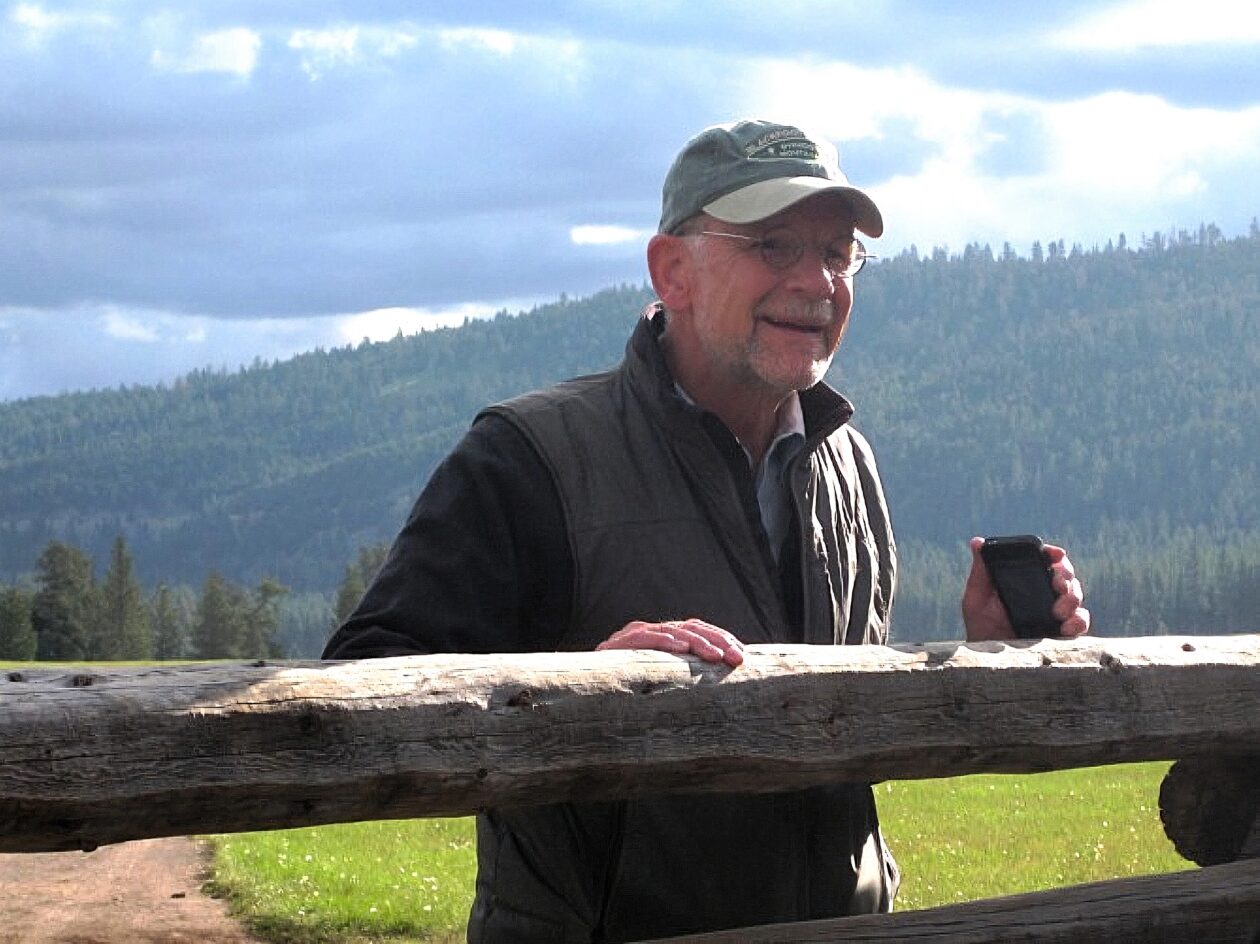
Paul Brainerd at a Brainerd Foundation retreat in Montana. (Brainerd Foundation Photo)
In the summer of 1984, Paul Brainerd and four engineers packed into his old Saab and drove south on Interstate 5 from the Seattle area. They had been laid off after Kodak bought their employer, Atex, a company whose computerized text-processing systems let newspaper reporters and editors write and edit stories on video terminals instead of typewriters.
They had six months of savings, a rough idea for a piece of software, and no company name.
They stopped in towns along the way, pitching small newspapers and magazine publishers on a page-layout tool for desktop computers. The response was discouraging. The chains that were already buying up many of the publications took years to make purchasing decisions. A startup with six months of runway would be dead long before the first purchase order arrived.
They needed a new plan. They also needed a name: incorporation papers were due in a week.
They stopped at the Oregon State University library in Corvallis, rented a room, and started digging into books on the history of publishing. Brainerd found a chapter on Aldus Manutius, a 15th-century Venetian printer who had standardized typefaces, invented the small-book format, and brought the cost of publishing down far enough to reach ordinary people.
It was the perfect name for the revolution he had in mind.
Paul Brainerd, who went on to coin the term “desktop publishing” and build Aldus Corporation’s PageMaker into one of the defining programs of the personal computer era, died Sunday at his home on Bainbridge Island, Wash., after living for many years with Parkinson’s disease. He was 78 years old.
He left two legacies. The first was a piece of software that put the power of the printed page into the hands of millions of people who had never operated a typesetting machine. The second was a three-decade commitment to environmental conservation and philanthropy in the Pacific Northwest, pursuing it with the same intensity he brought to the desktop publishing revolution.
Advertisement
Paul Brainerd at the Aldus office in Seattle’s Pioneer Square neighborhood, on July 5, 1985. (David Healy Photo)
Friends and colleagues this week remembered Brainerd as a quiet, caring and detail-oriented leader with exacting standards. He insisted that PageMaker use proper curly quotation marks instead of straight ones, and obsessed over nuances such as kerning, the precise spacing between specific letter pairs.
“Everything he did, he did with integrity,” said Laura Urban Perry, who was art director of Seattle Weekly when she spotted an ad in the back of the paper, answered it, and became Aldus’ seventh employee in 1984 when it was based in a small office near the Pioneer Square pergola.
Brainerd sat her next to the engineers so design and development would be in constant conversation. In essence, she was working in user experience before the term was widely used. They gave her the desk by the window, she said, because artists need light.
Ben Rotholtz, who had worked at a Seattle art supply store selling press-on lettering to graphic designers, went to Aldus on Christmas Eve 1985 to apply for a tech support job. He laid out a page on an Apple Macintosh and watched it come out of an Apple LaserWriter exactly as it appeared on screen. (“My jaw just dropped,” he said.)
Rotholtz started at the company in January 1986. Many of the customers needing support had never owned a computer before. PageMaker was often the reason they bought one.
Advertisement
Before shipping PageMaker 3.0, Brainerd told Rotholtz that every department had signed off on the release except his. If tech support said it wasn’t ready, they wouldn’t ship. “Customer support was basically another feature in the product,” Rotholtz said. “He valued it that highly.”
Brainerd applied the same evenhanded principles to business partnerships. When Rotholtz proved to be an effective negotiator on technology licensing deals, Brainerd told him not to “over-negotiate” — to make sure the other side could survive and thrive, too.
That focus on customers is what revealed the true market for PageMaker. Brainerd and his team had expected to sell to professional graphic designers and newspaper publishers. Instead, the calls came from churches, colleges, nonprofits, and small businesses.
Brainerd loved to tell the story of a pastor from the Midwest who called to say he was using PageMaker to print 600,000 religious pamphlets. Or the mother in San Francisco who wrote to say she had used PageMaker to design and print a picture book for her children. It might seem trivial today, but back then it otherwise would have required a professional printer.
Advertisement
Telling those stories to the public was a core part of the company’s strategy, said Laury Bryant, who worked at Aldus from 1987 to 1991 as a PR and investor relations leader. “Every day, there was some new and incredible way the product was being used,” she said.
To Rotholtz, the product had a clear and profound impact on the world: “PageMaker was ultimately about the democratization of printing and publishing.”
Brainerd had lived the journey that made it possible.
From letterpress to laser printer
He was born in 1947 in Medford, Ore., a small town in the Rogue Valley with an economy dependent on pears and lumber. His parents, Phil and VerNetta Brainerd, ran a photography studio and camera shop on Main Street. He grew up in darkrooms in the family business.
Advertisement
He was a B+ student, more interested in the yearbook than the classroom. When he got to the University of Oregon, he majored in business but spent all his time in the journalism school. He became editor-in-chief of the Oregon Daily Emerald in his senior year.
Along the way, he converted the campus newspaper from letterpress, a centuries-old method of pressing inked metal type onto paper, to offset printing, a faster and cheaper photographic process. He did the same thing later at the University of Minnesota student paper.
It would become a recurring theme: moving from one era of publishing to the next.
After getting his master’s in journalism from the University of Minnesota, he went to the Minneapolis Star Tribune as assistant operations director, overseeing a transition from hot type, in which molten lead was cast into lines of text, to cold type, which used light and film instead.
Advertisement
Paul Brainerd in 1986. (Photo By DGHealy – Own work, CC BY-SA 4.0.)
It was at the Star Tribune that Brainerd had a realization that defined his career. He was sitting in the office of Charles Bailey, the paper’s editor-in-chief, listening to Bailey discuss the day’s political coverage. “I just realized, in that moment, that I was never going to be a Charles Bailey,” Brainerd later recalled. “I could be a lot of other things, but I was never going to be him.”
But he could translate between the people who built technology and the people who used it.
He joined Atex, one of the Star Tribune’s vendors, and eventually moved to Redmond to run the company’s West Coast R&D arm. When Kodak bought Atex and shut the plant down, Brainerd was 37 and out of work. He had about $100,000 in savings. He decided it was now or never.
Brainerd put up his own money to start Aldus. The engineers who joined him from Atex worked at half salary. He took no salary at all. They gave themselves six months to write a business plan, build a prototype, and find funding.
He called 50 venture capital firms. Forty-nine said no. In 1984, most investors saw no value in software companies. Microsoft had not yet gone public. The prevailing view was that software could be replicated in a weekend by a couple of guys in a garage.
Advertisement
With about $5,000 left in the bank, a firm called Vanguard Ventures in Palo Alto said yes. Some of its general partners were former Apple executives who understood what software could do. They invested $864,000. A small local firm, Fluke Management Capital, also took a position.
Sparking a revolution
Their product was PageMaker, a program that let anyone lay out text and graphics on a computer screen and send it to a printer. Brainerd and his team realized that three things had to come together to make it work: Apple’s Macintosh, which provided the graphical interface; Adobe’s PostScript, which gave printers the ability to render high-quality type and images; and a piece of software that tied them together. Brainerd called it the “three-legged stool.”
At a board meeting in late 1984, an investor told them they needed to boil down their wordy description of what they were doing — putting text and graphics on pages — to two words, as Brainerd recalled in his 2006 oral history with the Computer History Museum.
Someone suggested “desktop something.”
Advertisement
Brainerd said, “How about desktop publishing?”
Back at the office, the engineers were skeptical, but Brainerd went with it, and it stuck.
PageMaker 1.0 shipped in July 1985. It gave Apple a reason to exist in the corporate market. Steve Jobs later said that desktop publishing had saved the Macintosh.
PageMaker shipped on Windows in 1987, before Microsoft Word did. The Microsoft program manager who convinced Aldus to build on Windows was Gabe Newell, who later founded Valve. Bill Gates and Steve Ballmer sent a bottle of Dom Perignon to celebrate the launch.
Advertisement
In 1991, Soviet hardliners attempted a coup in Moscow. They locked down the traditional printing presses to control the flow of information. But they couldn’t hold back computers. Across the city, pro-democracy activists used PageMaker to produce and distribute handouts. Aldus later ran an ad about it, with the tagline: “We helped create a revolution.”
Aldus co-founder and engineering lead Jeremy Jaech, who had been one of the engineers on that fateful 1984 road trip — along with Mark Sundstrom, Mike Templeman, and Dave Walter — said Brainerd set a high bar for the people around him.
“He wasn’t a yeller,” Jaech said. “He would talk to you in a low voice and tell you all the things you were doing wrong.” But Jaech said Brainerd got the best out of people. “I worked my ass off for him because I wanted to please him — and he was hard to please.”
Jaech, who went on to co-found Visio, the diagramming software company that Microsoft later acquired for $1.5 billion, said he wouldn’t have been prepared to start his own company without everything he learned from Brainerd.
Advertisement
“Product focus, customer focus, how to build a board, how to run a meeting,” Jaech said, running down the list. “There’s no question I got a lot.”
He wasn’t the only one. Bill McAleer, who joined Aldus as chief financial officer in 1988, said more entrepreneurs came out of Aldus, proportionally, than out of Microsoft at the time. Brainerd “created a great culture,” simultaneously entrepreneurial and collaborative, said McAleer, who went on to co-found the venture capital firm Voyager Capital.
The bonds among Aldus employees have lasted to this day, said Perry, the former Aldus art director who remained in touch with Brainerd over the years, interviewing him on video for a 2022 conference talk she gave about the desktop publishing revolution.
But after a decade at the helm, Brainerd was worn out. “It was my child, basically,” he said in his 2009 oral history, recorded at KCTS Television for MOHAI’s Speaking of Seattle: Experienced Leaders Project. “After 10 years of doing that, I was ready to let it go.”
Advertisement
He found his exit in the 1994 merger of Aldus with Adobe, the company whose PostScript technology had been one of the three legs of the desktop publishing stool from the start.
By then, PageMaker faced stiff competition from QuarkXPress, which had captured a large portion of the professional design market. PageMaker’s strength — its broad appeal to everyone from churches to corporations — had become a strategic vulnerability.
Years after the acquisition, Aldus would end up forming the nucleus of Adobe’s campus in Seattle’s Fremont neighborhood. PageMaker’s desktop publishing legacy lives on in the program known today as Adobe InDesign, built from the ground up to win back the professionals.
McAleer, who oversaw the deal for Aldus and ran the subsequent integration, said it was a natural fit: “When we merged the two companies, that really created a very broad-based graphics suite for graphics professionals and people in the publishing industry.”
Advertisement
The all-stock deal, valued at roughly $525 million at the time it was announced, closed in August 1994. Brainerd was Adobe’s largest individual shareholder, with stock worth roughly $100 million. He served on Adobe’s board for two years but never returned to management.
Perry wasn’t surprised by Brainerd’s shift in focus. “He just figured out what was important to do next and got after it,” she said. “It wasn’t about making money and becoming a billionaire.”
‘If I gave you the checkbook …‘
Brainerd took six weeks off and went to Alaska to hike and clear his head. Then he took a third of his proceeds from the Adobe deal and created the Brainerd Foundation.
He spent three months driving around the Pacific Northwest, talking to roughly a hundred people and asking a single question: If I gave you the checkbook, who would you write it to? The foundation focused on environmental conservation across Oregon, Washington, Idaho, Montana, British Columbia, and Alaska.
Advertisement
In 1997, Brainerd and fellow Seattle business leaders Scott Oki, Ida Cole, Bill Neukom, and Doug and Maggie Walker co-founded Social Venture Partners, which applied the venture capital model to philanthropy, as detailed in a 2018 GeekWire profile. Partners pooled their money, researched community needs, and invested in nonprofit organizations.
In 2000, Paul and Debbi Brainerd founded IslandWood, a children’s environmental learning center on 256 acres they purchased and donated on Bainbridge Island. About 3,000 students a year visit the campus to learn about watersheds, water quality, and forest ecology.
Paul and Debbi Brainerd did not have children, and he was clear about the fact that his goal was to give his money away. “He wasn’t going to take it with him,” said Bryant, the former Aldus PR and investor relations manager who later served on the IslandWood board.
Paul Brainerd and his wife, Debbi, at Camp Glenorchy, an eco-friendly retreat they developed in New Zealand.
In later years, the Brainerds built Camp Glenorchy, a net-zero eco-lodge near Queenstown, New Zealand, and spent about half of each year there. They revitalized the town’s struggling general store, helped bring internet access to the community, and donated proceeds to local causes.
Brainerd “personified the best of an era when tech innovators not only took smart ideas to scale but shared a broad vision of how to make the world a better place — and got to work to make it happen,” said Leonard Garfield, executive director of the Museum of History and Industry.
Advertisement
Ted Johnson, a programmer who had worked with Brainerd at the Star Tribune, Atex, and Aldus, visited Glenorchy with his wife and watched Brainerd show off the composting systems and water treatment infrastructure with all the enthusiasm he once gave to kerning and quote marks.
“He loved nature,” Johnson said, “and he loved technology.”
Brainerd is survived by his sister, Sherry, and his wife, Debbi, who described his more than 20-year battle with Parkinson’s disease in a letter to his friends and colleagues this week.
“I have never seen anyone fight so hard and for so long, looking for traditional medical treatments, as well as non-traditional healing practices that could help him manage the growing number of symptoms that his Parkinson’s presented,” she wrote.
Advertisement
He ultimately chose to take advantage of Washington state’s Death with Dignity Act, “allowing him to choose his time and place of passing,” she wrote. “He died peacefully on Sunday, viewing the Puget Sound landscape he loved, outside our home on Bainbridge Island.”
Family and friends are planning a celebration of life at IslandWood in June. Memorial donations in Paul Brainerd’s honor can be made to IslandWood at islandwood.org.
Reporting for this story included interviews with Brainerd’s former Aldus colleagues Ben Rotholtz, Laura Urban Perry, Laury Bryant, Jeremy Jaech, Bill McAleer, and Ted Johnson, coordinated with the help of Pam Miller, a former Aldus employee; oral history interviews with Brainerd conducted for the Computer History Museum (2006) and Museum of History and Industry (2009); a video interview with Brainerd conducted by Perry in 2022; and a 2018 profile by GeekWire reporter Lisa Stiffler.
Goodyear is a tire industry institution. Founded in 1898 in Akron, Ohio, it has spent more than a century building a name synonymous with reliability, performance, and American motoring heritage. Our ranking of major tire brands placed Goodyear second overall, highlighting its broad range of strong-performing models across multiple market segments. However, a trusted name does not guarantee a podium finish in every single test.
Tire science advances rapidly, and in the last two years, a cluster of brands — some familiar to enthusiasts, some largely invisible to mainstream buyers — have turned up in credible, independent tests that outperform Goodyear in specific, measurable ways. Consumer Reports‘ 2026 Best Tire Brands rankings placed Goodyear seventh among the brands it evaluated, most notably behind several names that most drivers would not immediately associate with premium performance. Either way, this piece is not a case against Goodyear.
It is more a case of looking beyond just the label and the brand. The five brands profiled below have each demonstrated, in controlled, verifiable testing, that they can stand toe-to-toe with — and in some areas even surpass — one of the world’s most recognized tire companies. Here is what you need to know and where exactly Goodyear has an underdog problem.
Advertisement
1. Nokian
Blinow61/Getty Images
The Nokian Tyres company traces its roots back to Finland in 1898, and is best known in the Nordic markets for its legendary Hakkapeliitta winter tire line, but its all-season range has been making serious noise in European testing circles. In Tyre Reviews‘ 2025 best SUV all-season tire test, the new Nokian SeasonProof 2 delivered the shortest wet braking distance in the entire test. It stopped faster than the Goodyear Vector 4Seasons Gen 3, which finished behind the Nokian in both wet braking and wet handling categories.
The tester noted that the Nokian was the fastest around the handling lap, all while having a superior blend of feedback, traction, and communication. This result is not just a one-off. When Consumer Reports tested top-ranked tires for winter and snow, the Nokian Hakkapeliitta R5 won in both SUV and passenger car/crossover categories, while the Nokian Tyres Remedy WRG5 was also placed number one in the all-season department. In both instances, these ranked higher than many well-known premium brands.
Advertisement
One notable 2025 test by TÜV SÜD, as covered by TyreReviews, compared five premium all-season 205/55 R16 tires. The Nokian Seasonproof 2 took first place, excelling in snow braking and traction (100%) and snow handling (99.6%), while remaining reasonable in wet metrics and rolling resistance. In contrast, Goodyear’s Vector 4Seasons Gen 3 finished last, struggling in dry and wet braking and hydroplaning, though its snow performance and rolling resistance were more than decent.
Advertisement
2. Vredestein
JoshBryan/Shutterstock
Vredestein is one of Europe’s oldest tire manufacturers, now owned by Apollo Tyres, and it has spent the better part of the last decade quietly compiling an impressive test record. The brand has also seen a strong reception from buyers, to the point that it ranks as Consumer Reports’ 2025 best major tire brand in terms of customer satisfaction. According to TyreReviews‘ direct cross-test comparison of the Goodyear Vector 4Seasons Gen 3 and the Vredestein Quatrac All-Season, both tires were evaluated across 15 shared tests.
In total, the Quatrac won 10 of them, while Goodyear won five. What’s interesting is that the Goodyear tire performed better in the snow, and most of the wins it earned were tied to snow and ice performance. Conversely, in a separate 2024 ADAC test comparing the Vredestein Wintrac Pro and the Goodyear UltraGrip Performance 3, the Goodyear tire won overall, losing to Vredestein in snow and ice conditions.
In the summer segment, the Vredestein Ultrac earned perhaps its most high-profile result when it won the 2024 AutoExpress summer tire test (as covered by WhatTyre), beating the Goodyear Eagle F1 Asymmetric 6 to first place through performance across wet, dry, noise, and comfort categories. Best of all, it did so at a lower price point than most of its rivals.
Advertisement
3. Hankook
Stefan Lambauer/Getty Images
Hankook has been making tires since 1941 and operates as one of the world’s largest manufacturers, supplying OEM fitments to major automakers. However, its reputation among everyday buyers has not always kept pace with its test results. So, are Hankook tires better than Goodyear? If you look at Consumer Reports’ Best Tire Brands of 2025 test results, they placed Hankook ahead of Goodyear, which was the direct result of testing 30 brands across handling, braking, snow traction, noise, hydroplaning, and tread life.
The objective test data support this. In AutoBild’s 2025 EV tire test as reported by Hankook, Hankook’s iON evo took the overall test win — ahead of Michelin, Goodyear, and Continental — for the third consecutive year, earning the magazine’s top “Exemplary” rating. In TyreReviews‘ 2025 EV tire test, Hankook led the wet handling results with 74.4 kph (46.2 mph), narrowly beating Continental and finishing ahead of Goodyear, which took third place.
Overall, both Goodyear and Hankook have positioned themselves as strong performers in the market. Brand competitiveness is also reflected in customer feedback. For example, Tyroola, one of Australia’s largest tire retailers, aggregates reviews for both brands, showing Goodyear rated 4.6 out of 5 and Hankook close behind at 4.5 out of 5. This demonstrates that consumers view both brands in a similar fashion and proves that Hankook can indeed trade punches with the industry’s finest.
Advertisement
4. Falken
Andy Waplinger / 500px/Getty Images
Falken is owned by Sumitomo Rubber Industries and has historically been viewed as a mid-tier brand. Therefore, the brand sure is credible, but not headline-grabbing in the same way Goodyear is. However, recent testing suggests that perception can point in a bad direction. TyreReviews‘ 2025 best performance summer tire test — a comparison that included the Goodyear Eagle F1 Asymmetric 6 and the Falken Azenis FK520 — showed just how close those two brands can perform.
Goodyear tied for second place with Michelin and Continental, with Falken just behind them. The reviewer noted that the Falken tire was “incredibly grippy, incredibly stable, and very easy to drive fast,” and found the results good enough to have a second driver independently confirm them. Traditionally, Goodyear is known for making some of the quietest tires on the market, but in this regard, the Falken finished just behind Goodyear in overall noise levels.
In the all-terrain segment, Falken has been equally competitive. TyreReviews‘ best all-terrain tire test found the Falken Wildpeak AT3W returning dry braking distances of 43.9 meters (144 feet) against the Goodyear Wrangler All-Terrain’s 44.6 meters (146 feet), while the publication concluded Falken was the best all-terrain tire overall, and Goodyear’s Wrangler ranked third.
Advertisement
5. Kumho
jhxfilm/Shutterstock
When talking about whether Kumho tires are better than Goodyear, we first need to mention Consumer Reports’ 2026 best tire rankings, where Kumho placed fifth among all brands evaluated — two places above Goodyear, which came seventh. Moreover, the case is sharpened considerably by specific head-to-head performance data.
In the 2026 AutoBild 245/45 R19 summer tire test, the Kumho Ecsta Sport PS72 and Goodyear Eagle F1 Asymmetric 6 traded punches in many categories. Kumho excelled in wet and dry braking and in value, outperforming Goodyear. On the other hand, Goodyear ranked higher overall thanks to its exceptional treadwear and balanced performance. In practical terms, Kumho offers targeted performance advantages, while Goodyear offers better longevity and consistency.
Advertisement
However, in the 2024 ADAC summer tire test, the Kumho Ecsta HS52 earned third place, while the Goodyear EfficientGrip Performance 2 ranked ninth. These brands are closely matched in the eyes of the consumer as well, since many owners on Reddit are quick to point out that Kumho often feels slightly more comfortable and performance-oriented, while Goodyear is considered solid, reliable, and better for mileage and all‑season use.
Advertisement
How we made the list
Standret/Getty Images
Comparing tire brands is tricky because there are so many variables—different models, submodels, sizes, and categories. While direct comparisons of specific tires can highlight strengths and weaknesses, judging an entire brand as a whole isn’t realistic. That wasn’t the goal of this article. Instead, we aimed to identify underrated, non-premium tire brands that can compete with — and sometimes even beat — Goodyear.
Experiences will naturally vary, but there’s enough credible data online to answer the main question. To create this list, we scoured verifiable tests, comparisons, expert analyses, and user reviews from sources like TyreReviews, AutoExpress, Consumer Reports, AutoBild, ADAC, Tyroola, WhatTyre, and TÜV SÜD. We cross-checked performance metrics, test results, and consumer feedback to show both sides of the coin and provide an honest assessment of where these brands stand.
A model of the inner solar system shows asteroids discovered by the Rubin Observatory in light teal. Previously known asteroids are dark blue. The model highlights almost 12,700 asteroids that the Rubin team has discovered over the course of a year and a half. (Photo: NSF–DOE Vera C. Rubin Observatory / NOIRLab / SLAC / AURA / R. Proctor. Star map: NASA / GSFC Scientific Visualization Studio. Gaia DR2: ESA / Gaia / DPAC. Image Processing: M. Zamani / NSF NOIRLab)
The Vera C. Rubin Observatory’s science team has discovered more than 11,000 new asteroids — a feat made possible by the Simonyi Survey Telescope’s advanced capabilities and data-crunching software developed at the University of Washington.
Rubin’s deluge of discoveries, based on a million early-stage observations that were collected over the course of a month and a half last summer, includes roughly 380 trans-Neptunian objects, or TNOs, and 33 previously unknown near-Earth objects. (Don’t panic: None of those near-Earth objects poses a threat to Earth.)
The data set also includes more than 80,000 previously known asteroids, some of which had been “lost” to science because of uncertainty about their orbits. The findings were confirmed by the International Astronomical Union’s Minor Planet Center, the global clearinghouse for small solar system objects.
These aren’t the first finds for the $800 million observatory in Chile, which made its “First Look” debut last June. Astronomers previously reported finding more than 1,500 asteroids during earlier test rounds.
“This first large submission after Rubin First Look is just the tip of the iceberg and shows that the observatory is ready,” UW astronomer Mario Jurić, who heads Rubin’s solar system team, said in a news release. “What used to take years or decades to discover, Rubin will unearth in months. We are beginning to deliver on Rubin’s promise to fundamentally reshape our inventory of the solar system and open the door to discoveries we haven’t yet imagined.”
Advertisement
This video highlights the asteroids discovered at the Vera C. Rubin Observatory. The discoveries come in three bursts: 73 were discovered during the first early test observations using Rubin’s Commissioning Camera in late 2024; 1,514 were discovered during First Look observations in April and May 2025; and 11,000 more asteroids were discovered in Rubin’s early optimization surveys last summer.
The observatory’s centerpiece is the Simonyi Survey Telescope, named after the family of Seattle-area software billionaire Charles Simonyi. Equipped with the world’s largest digital camera, it can generate 20 terabytes of raw data per night. That data is analyzed and interpreted by scientific institutions around the world — including UW’s DiRAC Institute. (DiRAC stands for “Data-Intensive Research in Astrophysics and Cosmology.”)
“Rubin’s unique observing cadence required a whole new software architecture for asteroid discovery,” said Ari Heinze, a UW astronomer who worked with graduate student Jacob Kurlander to create the software that detected the asteroids. “We built it, and it works. It seems pretty clear this observatory will revolutionize our knowledge of the asteroid belt.”
Once it ramps up to full operation, the Rubin Observatory is expected to identify almost 90,000 new near-Earth objects, or NEOs, in the zone around our planet’s orbit. Some of those NEOs could be hazardous, and early detection would give scientists, engineers and policymakers a head start on the development of planetary defense strategies.
The trans-Neptunian objects that were found in the broad zone of the solar system beyond the orbit of Neptune include two icy bodies that appear to have extremely elongated orbits. The Rubin team says these two objects — designated 2025 LS2 and 2025 MX348 — reach distances that are roughly 1,000 times farther out from the sun than Earth. That would place them among the 30 most distant known celestial objects of their kind.
Advertisement
If the far reaches of the solar system harbor a large trans-Neptunian object — a hypothetical world known as Planet Nine or Planet X — Rubin should be able to detect it.
The specks of light teal shown in this rendering of the wider solar system represent the roughly 380 trans-Neptunian objects discovered using observations taken during Rubin’s early optimization surveys last summer. i(Photo: NSF–DOE Vera C. Rubin Observatory / NOIRLab / SLAC / AURA / R. Proctor. Star map: NASA / GSFC Scientific Visualization Studio. Gaia DR2: ESA/Gaia/DPAC. Image Processing: M. Zamani / NSF NOIRLab)
“Searching for a TNO is like searching for a needle in a field of haystacks,” said Matthew Holman, a senior astrophysicist at the Harvard & Smithsonian Center for Astrophysics and former director of the Minor Planet Center. “Out of millions of flickering sources in the sky, teaching a computer to sift through billions of combinations and identify those that are likely to be distant worlds in our solar system required novel algorithmic approaches.”
Holman worked with Kevin Napier, a research scientist at the Center for Astrophysics, to develop the algorithms for detecting distant solar system objects with Rubin data.
Operations of the Vera C. Rubin Observatory are funded by the U.S. National Science Foundation and the U.S. Department of Energy’s Office of Science.
Advertisement
This research is available at the Rubin Asteroid Discoveries Dashboard. In addition to Jurić, Heinze, Kurlander, Holmanand Napier, the research team members includePedro Bernardinelli, a former DiRAC postdoctoral fellow at the UW, now at the Institute for Astronomy, Geophysics and Atmospheric Sciences of the University of São Paulo; Joachim Moeyens, a UW research software engineer and B612 Asteroid Institute team member who earned his doctorate in astronomy at the UW; Siegfried Eggl, a former UW postdoctoral researcher in astronomy, now at the University of Illinois Urbana-Champagne; and Erfan Nourbakhsh at Princeton University.
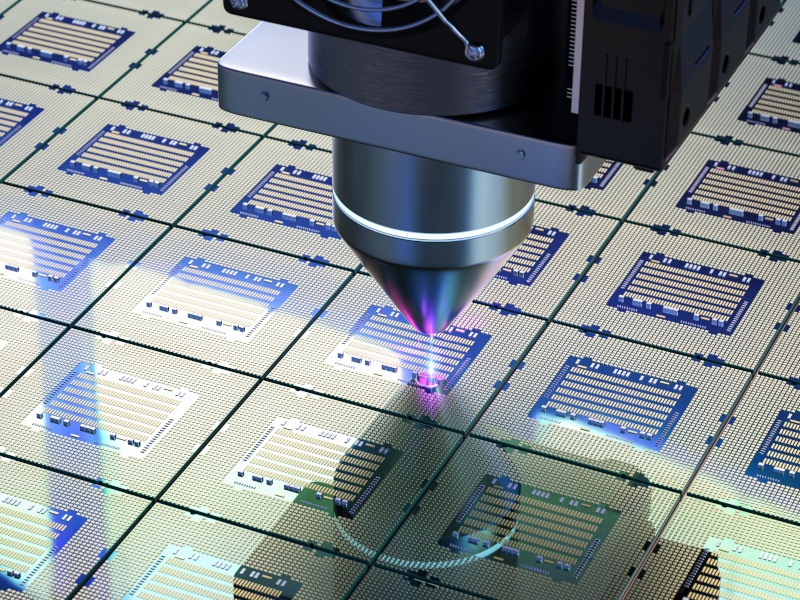
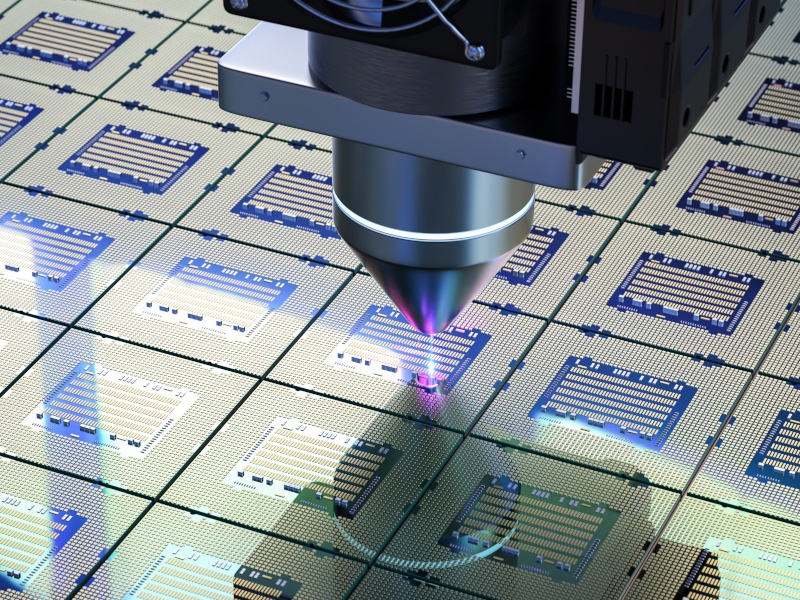
The Government said that the strategy is essential to ensuring Ireland remains competitive in attracting the next wave of large-scale, high-value manufacturing investment opportunities in sectors such as semiconductors, life sciences, and renewables.
The Irish Government has signed off on a strategic approach to developing next-generation sites (NGS) that are considered central to the country’s plans to be industrially competitive in attracting future manufacturing investments.
NGS development is to be led by IDA Ireland and the Department of Enterprise, Tourism and Employment, with collaborative efforts to be made alongside other Government departments, state agencies and utility providers as needed for the preparation and development of each site.
The Government said that the strategy is essential to ensuring Ireland remains competitive in attracting the next wave of large-scale, high-value manufacturing investment opportunities in sectors such as semiconductors, life sciences and renewables.
Advertisement
The goal of the NGS approach is to provide pre-permitted, master-planned landbanks with clear pathways to delivery of required utilities and transport, including public transport, to enable swift development and certainty for investors.
Minister for Enterprise, Tourism and Employment Peter Burke, TD said that the “plan-led” approach to NGS development would help Ireland win “high-value, employment-rich projects in future-focused sectors”, with three sites anticipated for creation in the next 15 years.
Each site is forecast to be between 500 and 1,000 acres, with one each in the west, east and south of the country, although potential locations will not be publicly disclosed to protect the integrity of negotiations and future acquisitions.
The Government said preparing sites in advance would reduce risk and accelerate decision-making for investors, “crucial to competing for large-scale investments in today’s fast moving international environment”.
Advertisement
It said that each site would be chosen by IDA Ireland for its ability to connect efficiently to energy, transport and water networks, and for its proximity to talent, third-level institutions and supply chains.
“The sectors targeted by NGS – semiconductors, life sciences and green energy, in particular – provide quality and skilled employment, pay high salaries and contribute to Ireland’s tax receipts,” said Burke.
He added that “many global companies in the semiconductor and life science sectors located and expanded in Ireland over several decades”, and are now employing tens of thousands in “well-paid jobs, with several now operating across multiple sites”.
The NGS sign-off is in line with the Government’s ‘Silicon Island’ national strategy on semiconductors, which was unveiled last May.
Advertisement
The strategy is a part of the Programme for Government, is aligned with the European Chips Act and the EU Digital Decade, and aims to supercharge the country’s semiconductor industry through skills development, boosting R&D, the development of the domestic semiconductor ecosystem and attracting foreign investment.
The plan also commits to developing large-scale manufacturing sites with the necessary infrastructure, enhance R&D capacity and support businesses working in the semiconductor industry with commercialisation support and access to finance.
Don’t miss out on the knowledge you need to succeed. Sign up for the Daily Brief, Silicon Republic’s digest of need-to-know sci-tech news.
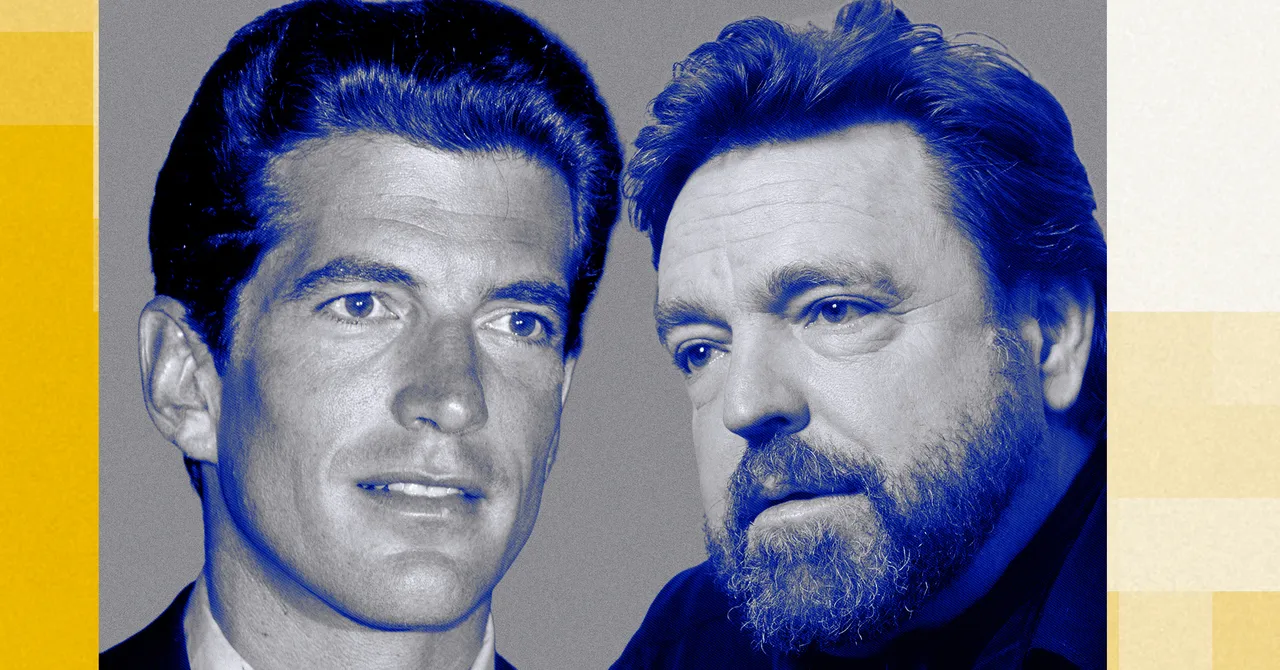
Watching the wildly popular television series Love Story took me back to a strange week in my past. One day in April 1994, I was working in a studio apartment that I used as an office. I split the cost with Cynthia Horner, a psychiatrist who’d recently moved out to live with her boyfriend, the songwriter and cyberspace philosopher John Perry Barlow, who was a friend of mine. Late in the afternoon my wife called me with the shocking news that Cynthia, just shy of her 30th birthday, was dead. I called Barlow, who told me that Cymthia had passed away suddenly on a plane. Both of them had suffered from a bad flu the previous week, and the virus had been silently attacking her heart. I dropped everything and headed to Barlow’s place. For the next six hours, Barlow and I cried, drank, and head-banged in the wake of the inexplicable, along with another friend. That friend was no stranger to tragedy. He was John F. Kennedy Jr.
Barlow, who died in 2018 at age 70, was known for many things. He was the self-described junior lyricist of the Grateful Dead, a proselytizer of the Internet, cofounder of the Electronic Frontier Foundation, and a networker nonpareil. Not to mention a key figure in WIRED’s early days. He was also among the closest friends of the so-called American prince, the son of our martyred president. The friendship was no secret—Barlow was an inveterate name-dropper. Still, the pairing was fascinating and said something about both parties.
The connection began in the summer of 1977. Barlow was tending his family ranch in Pinedale, Wyoming, when Jackie Kennedy called at the suggestion of a mutual friend. As Barlow wrote in his posthumously published autobiography, Mother American Night, Jackie wanted her 17-year-old son, JFK Jr., to get a taste of rugged ranch life. Barlow, in his retelling, said yes, and augmented the teen’s ranch chores with LSD. Things they did while dosing included long drives in Barlow’s truck and dropping explosives down gas wells. They became close, and over the years Barlow moved from a reprobate father figure to more of a friend.
It was a lifelong connection. Barlow writes of attending a 1993 Prince concert with Kennedy where both were once again tripping. Kennedy felt that the audience was too restrained, and he urged Barlow to get up and dance. As Barlow writes, all of Radio City Music Hall joined in. Later, after Barlow met Cynthia, the two would double-date with Kennedy and his then-girlfriend, Daryl Hannah. After the night I spent with Barlow and Kennedy, Hannah flew to New York and helped in the postmortem planning for a memorial service. She seemed to be a lovely person.
Advertisement
In 1994, Kennedy moved on from Hannah and wooed the charismatic Carolyn Bessette. Barlow became a confidant of his friend’s new sweetheart—even becoming part of the ceremony at their intimate wedding in 1996. One picture shows Barlow preparing for the formalities with JFK Jr., Ted Kennedy, and the priest. I don’t know what Barlow said to honor the couple, but I’d imagine the lyricist who wrote “Estimated Prophet” delivered trenchant words blending comedy and insight.
In Mother American Night, Barlow provides an alternate explanation for why Kennedy’s Cessna took off at sunset, resulting in a night flight that culminated in the man’s death, along with the deaths of his wife and her sister. Barlow says that he had just sent his 2,500 closest friends the news that his mother had died. Kennedy, he says, was late to the airport because he was composing a long condolence email to Barlow. Reasons for the late takeoff aside, Barlow claims that he had previously given Kennedy a warning that was ultimately ignored: “When you lose sight of the horizon don’t look for it. Just put your eyes on the instrument and believe it.”
Video Friday is your weekly selection of awesome robotics videos, collected by your friends at IEEE Spectrum robotics. We also post a weekly calendar of upcoming robotics events for the next few months. Please send us your events for inclusion.

Getting Digit to dance takes more than putting on some fancy shoes–our AI Team can teach Digit new whole-body control capabilities overnight. Using raw motion data from mocap, animation, and teleop methods, Digit gets new skills through sim-to-real reinforcement training.
Unitree open-sources UnifoLM-WBT-Dataset—high-quality real-world humanoid robot whole-body teleoperation (WBT) dataset for open environments. Publicly available since March 5, 2026, the dataset will continue to receive high-frequency rolling updates. It aims to establish the most comprehensive real-world humanoid robot dataset in terms of scenario coverage, task complexity, and manipulation diversity.
Autonomous mobile robots operating in human-shared indoor environments often require paths that reflect human spatial intentions, such as avoiding interference with pedestrian flow or maintaining comfortable clearance. This paper presents MRReP, a Mixed Reality-based interface that enables users to draw a Hand-drawn Reference Path (HRP) directly on the physical floor using hand gestures.
Eye contact, even momentarily between strangers, plays a pivotal role in fostering human connection, promoting happiness, and enhancing belonging. Through autonomous navigation and adaptive mirror control, Mirrorbot facilitates serendipitous, non-verbal interactions by dynamically transitioning reflections from self-focused to mutual recognition, sparking eye contact, shared awareness, and playful engagement.
Experience PAL Robotics’ new teleoperation system for TIAGo Pro, the AI-ready mobile manipulator designed for advanced research. This real-time VR teleoperation setup allows precise control of TIAGo Pro’s dual arms in Cartesian space, ideal for remote manipulation, AI data collection, and robot learning.
By automating the final “magic 5%” of production—the precise trimming of swim goggles’ silicone gaskets based on individual face scans—UR cobots allow THEMAGIC5 to deliver affordable, custom-fit goggles, enabling the company to scale from a Kickstarter sensation to selling over 400,000 goggles worldwide.
Sanctuary AI has once again demonstrated its industry-leading approach to training dexterous manipulation policies for its advanced hydraulic hands. In this video, their proprietary hydraulic hand autonomously manipulates a lettered cube, continuously reorienting it to match a specified goal (displayed in the bottom-left corner of the video).
China’s Yuxing 3-06 commercial experimental satellite, the first of its kind to be equipped with a flexible robotic arm, has recently completed an in-orbit refueling test and verification of key technologies. The test paves the way for Yuxing 3-06, dubbed a “space refueling station,” to refuel other satellites in orbit, manage space debris, and provide other in-orbit services.
This is a demonstration of natural walking, whole-body teleoperation, and motion tracking with our custom-built humanoid robot. The control policies are trained using large-scale parallel reinforcement learning (RL). By deploying robust policies learned in a physics simulator onto the real hardware, we achieve dynamic and stable whole-body motions.
Faced with aging railway infrastructure, a shrinking workforce and rising construction costs, Japan Railway West asked construction innovator Serendix to replace an old wooden building at its Hatsushima railway station using its 3D printing technology. An ABB robot enabled the company to assemble the new building in a single night ready for the first train service the next day.
Humanoid, SAP, and Martur Fompak team up to test humanoid robots in automotive manufacturing logistics. This joint proof of concept explores how robots can streamline operations, improve efficiency, and shape the future of smart factories.
Infinix has quietly but surely been doing some good work in 2026, especially when every other brand has been hiking prices thanks to RAM shortages. After introducing the super pretty Pininfarina-designed Note 60 Ultra, Infinix is ready to double down on gaming with its next GT-series smartphone. A new leak has revealed details about the upcoming Infinix GT 50 Pro, which is set to feature a redesigned “hypercar-inspired” look and some serious thermal engineering upgrades. Here’s everything we know so far.
All New Design
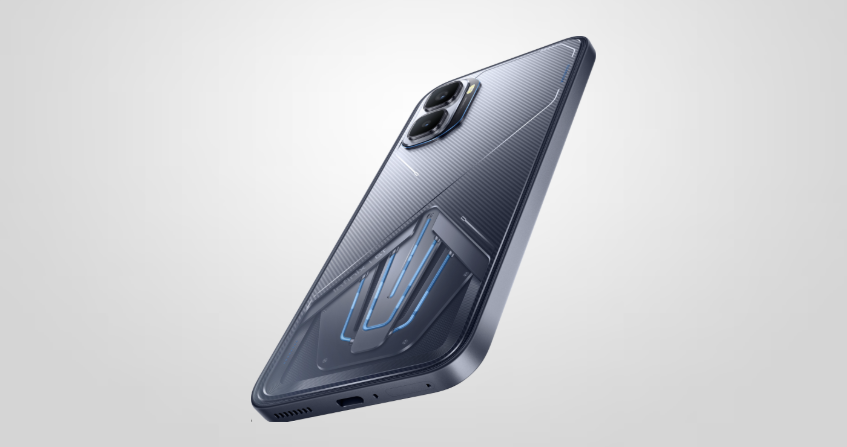
The GT 50 Pro reportedly builds on Infinix’s signature hypercar aesthetic but refines it with cleaner lines and a more premium finish. Leaked images reveal a new Kevlar-like texture and aerodynamic detailing that give it a more polished look.
However, the real star here is what Infinix calls the “Pipeline Window Display.” It’s essentially a transparent section on the back that visually exposes the cooling system underneath. According to the leak, this creates a live, almost mechanical effect in which the cooling channels appear to be actively flowing, making the phone feel like it’s “breathing” during use.
For all the eSports aficionados, the GT 50 Pro will introduce dual-pressure shoulder triggers. These triggers support pressure sensitivity, multiple mapping points, and even sliding gestures. Latency is kept to just 20ms, and they can also be configured to work with the camera to help zoom in.
Redesigned Thermals
Thermal efficiency is super important for gamers. After all, no one wants their frames dropping as the phone heats up. To tackle this exact problem, the GT 50 Pro will feature what’s being described as the industry’s largest micro-pump HydroFlow liquid-cooling system, with a massive 6437 mm² diaphragm area. With a 100% coverage of the core heat area, the goal is simple: better heat dissipation and more stable performance during long gaming sessions.
Another nice-to-have is the MagCharge Cooler 2.0 (bypass charging). This means the phone can be powered directly without routing energy through the battery, reducing heat buildup during gaming. At the same time, it delivers active cooling using TEC refrigeration, allowing users to charge and cool the device simultaneously.
Advertisement
While there’s no confirmation of the CPU, early reports indicate the MediaTek Dimensity 8400 Ultimate. An India launch is coming soon, so stay tuned for more information.
This may not be an actual “Wyden siren,” but it still has his name attached to it. What’s being said here isn’t nearly as ominous as this single sentence he sent to CIA leadership earlier this year:
I write to alert you to a classified letter I sent you earlier today in which I express deep concerns about CIA activities.
Few people are capable of saying so much with so little. This one runs a bit longer, but it has implications that likely run deeper than the surface level issue raised by Wyden and others in a recent letter to Trump’s (satire is dead) Director of National Intelligence, Tulsi Gabbard. Here are the details, as reported by Dell Cameron for Wired:
In a letter sent Thursday to Director of National Intelligence Tulsi Gabbard, the lawmakers say that because VPNs obscure a user’s true location, and because intelligence agencies presume that communications of unknown origin are foreign, Americans may be inadvertently waiving the privacy protections they’re entitled to under the law.
Several federal agencies, including the FBI, the National Security Agency, and the Federal Trade Commission, have recommended that consumers use VPNs to protect their privacy. But following that advice may inadvertently cost Americans the very protections they’re seeking.
The letter was signed by members of the Democratic Party’s progressive flank: Senators Ron Wyden, Elizabeth Warren, Edward Markey, and Alex Padilla, along with Representatives Pramila Jayapal and Sara Jacobs.
Advertisement
That’s alarming. It’s also a conundrum. VPN use (often required for remote logins to corporate systems) is a great way to secure connections that are otherwise insecure, like those made originating from people’s homes (to log into their work stuff) or utilizing public Wi-Fi. There are also more off-the-book uses, like circumventing regional content limitations or just ensuring your internet activity can’t be tied to your physical location.
The trade-off depends on the threat you’re trying to mitigate. It’s kind of like the trade-off in cell phone security. Using biometrics markers to unlock your phone might be the best option if what you’re mainly concerned with is theft of your device. A thief might be able to guess a password, but they won’t be able to duplicate an iris or a fingerprint.
But if the threat you’re more worried about is this government, you’ll want the passcode. Courts have generally found that fingerprints and eyeballs aren’t “testimonial,” so if you’re worried about being compelled to unlock your device, the Fifth Amendment tends to favor passwords, at least as far as the courts are concerned.
It’s almost the same thing here. VPNs might protect you against garden-variety criminals, but the intentional commingling of origin/destination points by VPNs could turn purely domestic communications into “foreign” communications the NSA can legally intercept (and the FBI, somewhat less-legally can dip into at will).
Advertisement
That’s the substance of the letter sent to Gabbard, in which the legislators ask the DNI to issue public guidance on VPN usage that makes it clear that doing so might subject users to (somewhat inadvertent) domestic surveillance:
Americans reportedly spend billions of dollars each year on commercial VPN services, many of which are offered by foreign-headquartered companies using servers located overseas. According to the Department of Homeland Security’s Cybersecurity and Infrastructure Security Agency, VPNs have the potential to be vulnerable to surveillance by foreign adversaries. While Americans should be warned of these risks, they should also be told if these VPN services, which are advertised as a privacy protection, including by elements of the federal government, could, in fact, negatively impact their rights against U.S. government surveillance. To that end, we urge you to be more transparent with the American public about whether the use of VPNs can impact their privacy with regard to U.S. government surveillance, and clarify what, if anything, American consumers can do to ensure they receive the privacy protections they are entitled to under the law and Constitution.
I wouldn’t expect a response from ODNI. I mean, I wouldn’t expect one in any case, but I especially don’t expect Tulsi Gabbard to respond to a letter sent by a handful of Democratic Party members.
A warning would be nice, but even an Intelligence Community overseen by competent professionals, rather than loyalists and Fox News commentators would be hard-pressed to present a solution. To be fair, this letter isn’t asking for a fix, but rather telling the Director of National Intelligence to inform the public of the risks of VPN usage, including increasing their odds of being swept up in NSA dragnets.
Certainly the NSA isn’t concerned about “incidental collection.” It’s never been too concerned about its consistent “incidental” collection of US persons’ communications and data in the past and this isn’t going to budge the needle, especially since it means the NSA would have to do more work to filter out domestic communications and the FBI would be less than thrilled with any efforts made to deny it access to communications it doesn’t have the legal right to obtain on its own.
Advertisement
Since the government won’t do this, it’s up to the general public, starting with everyone sharing the contents of this letter with others. VPNs can still offer considerable security benefits. But everyone needs to know that domestic surveillance is one of the possible side effects of utilizing this tech.
Amazon is blowing out M4 Pro 14-inch MacBook Pro inventory this weekend, with a staggering $400 discount on the upgraded spec with a 20-core GPU and 1TB SSD.
Save $400 on a blowout 14-inch MacBook Pro with 20-core GPU – Image credit: Apple
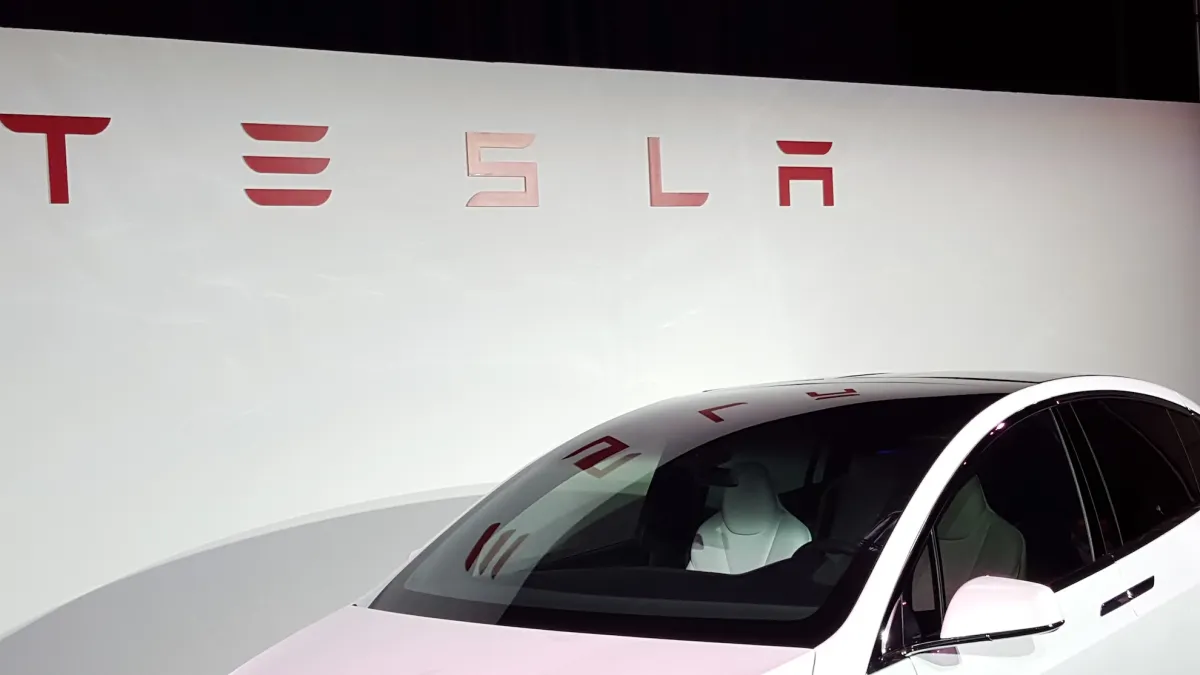
It’s been looming for weeks, but now the end is near: Just a few hundred Tesla Model S and Model X vehicles remain unsold. Tesla CEO Elon Musk confirmed this week in a post on X that custom orders of the Model S sedan and Model X SUV are over. “All that’s left are some in inventory,” he wrote.
Musk first announced Tesla’s plan to end Model S and Model X production back in January. And the data helps explain why.
Sales of the Tesla Model X and Model S have fallen steadily over the years as the company’s high volume and cheaper entries — the Model 3 and Model Y — took over. Tesla doesn’t separate S and X sales, instead combining them under “other models,” a category that now includes the Cybertruck. And those combined figures show S and X sales peaking in 2017 at 101,312 vehicles before declining to 50,850 vehicles (including Cybertruck) in 2025 — a fraction of the 1.63 million vehicles it delivered globally last year.
In other words, their deaths were inevitable. What comes next is a bit more complicated.
Advertisement
Musk isn’t filling the void left by the Model X and Model S with a traditional EV; he ditched plans to produce a lower-cost EV that was expected to be priced around $25,000. Instead, Musk is placing his bets on the Optimus robot, which has yet to go into production, and the Cybercab, an all-electric two-seater autonomous vehicle that was first shown as a concept in 2024.
Tesla plans to build Optimus robots at its Fremont, California, factory once production of the Model S and Model X end, which could be any day now that final orders have been taken. Musk has said Tesla will begin producing the Cybercab this month at its factory in Austin, Texas.
A look back
The Model S and X EVs have taken a backseat to the more affordable Model 3 and Model Y vehicles. But their debuts, and initial sales, marked two critical moments in Tesla’s colorful and often volatile history. The Model S launched in 2012 as its first volume EV. Its popularity not only changed how consumers viewed EVs, it prompted legacy automakers — long dismissive of the value of electric vehicles — to take notice.
Techcrunch event
Advertisement
San Francisco, CA | October 13-15, 2026
The Model X followed in fall 2015 and was famously described by Musk as the Fabergé egg of EVs.
Advertisement
“I think we got more carried away with the X,” Musk said in a September 2015 press interview attended by this reporter just an hour before Tesla’s Model X delivery event began. “I’m not sure anyone should make this car.”
The Model X was often delayed, and initially criticized for its complexity. But it ultimately introduced the company to a new market: women.
The Model X raised Tesla’s profile, and it set the company up for its next big move: an affordable mass-produced EV. The Model 3 had a difficult start, but it ended up catapulting Tesla into the mainstream. The Model Y clinched its status, helping Tesla widen the gap as the top-selling EV producer globally until China’s BYD took over that top global EV sales spot in 2025 when it delivered 2.26 million EVs.
Tesla continues to sell thousands of Model 3 and Model Y, but its growth has stalled, and even reversed. The company reported in January that it sold 1.69 million vehicles in 2025, a decrease for the second year in a row. Its efforts to boost sales with cheaper, stripped-down versions of the Model 3 and Model Y that were introduced in October have had a modicum of success, according to first-quarter 2026 figures that were reported April 2.
Advertisement
Tesla delivered 358,023 EVs globally in the first three months of the year, about 6% more than the same period in 2025, which also happened to be the company’s worst quarter in years. The figure was below analysts’ expectations of around 368,000.
But never mind that. In Musk’s view — one which he is well compensated for — Tesla isn’t an automaker or a sustainable energy company, as he has described it before. Tesla is an AI company and his new gambit goes all in on that mission.
Cybercab risks
The Optimus robot is one part of the Tesla AI effort. But it’s perhaps the Cybercab that best embodies, and exposes the risks of, the company’s AI-first campaign.
The Cybercab was designed to be used as an autonomous vehicle without traditional controls like a steering wheel or pedals — meaning once it launches it will be without the initial backup of a human safety operator.
Advertisement
The first Cybercab rolled off the Tesla factory assembly line in February and is supposed to go into mass production this month. Although that date could slip, as so many have in Tesla’s history.
Unlike Tesla’s previous vehicles, the challenges aren’t in its production (who can forget the production hell of the Model 3). Instead, it faces a major regulatory hurdle before it can ever hit the road. Federal motor vehicle safety standards place requirements on vehicles such as having a steering wheel and pedals. There is no evidence that Tesla has applied for an exemption, according to publicly available files with the Federal Register and the National Highway Traffic Safety Administration.
The vehicles will also rely on Tesla’s Full Self-Driving software to navigate public streets and safely shuttle passengers to their destination. Despite improvements to FSD and limited driverless robotaxi tests in Austin, Tesla has not yet demonstrated that its software can operate reliably at scale.
And that piece requires more than technical mastery. Robotaxi operations are also tricky. And in states like California, they also require permits to deploy and charge for rides in driverless vehicles.
Advertisement
Zoox, the autonomous vehicle company owned by Jeff Bezos’ Amazon, may end up clearing a path for Tesla and its Cybercab. Zoox received an exemption from the National Highway Traffic Safety Administration that allows the company to demonstrate its custom-built robotaxis, which lack pedals or a steering wheel, on public roads. Zoox is now going through a public process to have that exemption extended to commercial operations.
Musk tried to sell shareholders on why the risk was worth it during the company’s earnings call in January.
“The vast majority of miles traveled will be autonomous in the future,” Musk said at the time, later noting that the Cybercab is super optimized for minimum cost per mile and also for a much higher-duty cycle. “I would say probably less than, I’m just guessing, but probably less than 5% of miles driven will be where somebody’s actually driving the car themselves in the future, maybe as low as 1%.”
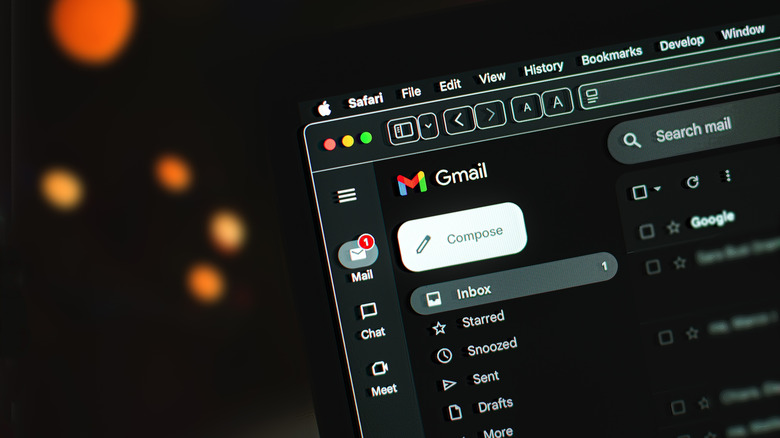
Ready to shed that embarrassing email address you’ve been stuck using for decades? Instead of abandoning it and opening up a fresh new inbox, Google’s now going to let you simply change the address. After years of user frustration and confusing workarounds for forwarding services, just swap out the part before “@gmail.com” and keep all your existing data. You can continue to send and receive emails from the old address, as well.
Now, just because Google announced the update doesn’t mean that you’ll be able to start making changes right this second. The company will be rolling it out slowly over the coming weeks. To see if you’re eligible yet, go to your Google Account, select “Personal info,” then “Email.” If you have it, click the “Google Account email” option to begin the process.
It’s the best of both worlds: Everything from your Drive to your Photos to your YouTube account can stay exactly the same while you get to ditch your humiliating username. It’s a relief for many, but also not too surprising for those who have seen the rumors. Reports back in January found support documentation in select regions, including Hindi-language pages, suggesting that Google had been testing the feature outside the U.S.
Advertisement
What does and doesn’t change for Gmail users
Mijansk786/Shutterstock
The update does come with some restrictions, of course. For one, you can only change your Gmail username once every 12 months. Newly created addresses cannot be deleted during that time, either. Google’s also limiting the total number of new Gmail addresses a single account can have. (It’s currently capped at four.)
As mentioned above, changing your Gmail address also doesn’t erase the old one. Instead, the previous address is kept as an alternate email tied to the same account. Messages sent to either the old or new address will continue to arrive in the same inbox, and you can sign in using either set of credentials across all Google services.
Advertisement
Google also noted that some app settings may reset with the change in usernames (like they would when you sign in on a new device). Certain recurring features, like calendar invites, may still display your old address. Out of precaution, you may want to back up your data to an external hard drive before making a change.




















































You must be logged in to post a comment Login