Tech
Paramount Warner Bros. Discovery Merger Delayed Until June 2027 as Antitrust Fight Heads to Trial

Paramount Skydance wanted to own Warner Bros. Discovery by September, but the $110 billion transaction is now frozen while 12 states and the Writers Guild of America pursue Clayton Act cases that could decide who controls a substantial piece of Hollywood. Instead of closing the deal, Paramount may spend much of the next ten months paying for the privilege of waiting.
Paramount, Warner Bros. Discovery, a coalition of 12 state attorneys general and the Writers Guild of America have agreed that the proposed acquisition cannot close until five days after the court rules on the merits of the antitrust cases or June 1, 2027, whichever comes first.
The agreement also prohibits Paramount and Warner Bros. Discovery from taking steps to integrate or consolidate their operations. The companies therefore remain separate, and the planned combination of Paramount Pictures, Warner Bros., CBS, CNN, HBO, Showtime, Paramount+, HBO Max and dozens of cable networks has been placed in legal cold storage.
The deal values Warner Bros. Discovery at approximately $81 billion in equity and $110 billion including debt, with Paramount agreeing to pay $31 per share in cash. It would be one of the largest media transactions ever completed, assuming it ever gets completed.
This stopped being a conventional merger review some time ago. It has become an expensive courtroom battle involving federal regulators, Democratic state attorneys general, Hollywood labor groups, international competition authorities and enough political baggage to fill several private jets.
The August Hearing Is Gone
The new agreement replaces the shorter temporary restraining order issued on July 20 by U.S. District Judge Araceli Martínez-Olguín of the Northern District of California.
The cases are The State of California et al. v. Paramount Skydance Corp. et al., Case No. 4:26-cv-07116-AMO, and Writers Guild of America, West, Inc. et al. v. Paramount Skydance Corp. et al., Case No. 4:26-cv-07212-AMO.
The judge had originally scheduled an August 3 hearing to determine whether the merger should remain blocked under a preliminary injunction. That hearing and its associated briefing deadlines have now been canceled. The WGA has withdrawn its preliminary injunction motion, although both the states and the guild may renew those requests later if necessary.
The parties must submit proposed trial schedules by July 31. No trial date has been established.
Paramount is calling this a victory because it removes the immediate preliminary injunction fight and creates a more direct path to a full trial. California Attorney General Rob Bonta and New York Attorney General Letitia James are also calling it a victory because Paramount cannot complete the transaction while their cases proceed.
Both sides are declaring victory, because nothing says “we won” quite like Paramount preparing to burn through roughly $7 million per day while everyone waits for a judge to decide whether the deal survives.
What the Judge Found
The July 20 ruling was not a final determination that the merger violates antitrust law. Judge Martínez-Olguín did, however, find that the states had presented enough evidence to justify stopping the companies from closing while the court considered the larger case.
The states identified three markets that they claim would be harmed:
- Distribution of wide release theatrical films
- Distribution of anticipated top grossing theatrical films
- Licensing of basic cable channels to distributors
For the temporary order, the judge focused primarily on wide release theatrical distribution.
According to the states’ evidence, Paramount and Warner Bros. would hold an estimated 27 percent share of that market. The proposed combination would also increase the Herfindahl Hirschman Index, a standard measure of market concentration, by approximately 359 points to 2,074.
The court found that those figures created a substantial enough presumption of reduced competition to justify maintaining the status quo. It also found that allowing the companies to close could result in operational consolidation, the exchange of competitively sensitive information and employee terminations or reassignments that would be extremely difficult to reverse.
Once the corporate omelet has been cooked, courts are generally not enthusiastic about being asked to put the eggs back in their shells.
The judge also declined to accept Paramount’s argument that greater efficiency in streaming would offset potential damage in the theatrical market. That does not mean the streaming argument is irrelevant to the final case, but it was not enough to defeat the states’ request for temporary relief.
Paramount Says the States Are Fighting the Wrong Industry

Paramount argues that the states have defined the entertainment market too narrowly.
Its position is that Paramount and Warner Bros. Discovery do not merely compete with Disney, Universal and Sony. They compete with Netflix, Amazon, Apple, YouTube and technology companies with vastly greater resources than most legacy Hollywood studios.
That argument deserves more than a dismissive shrug.
Paramount and Warner Bros. Discovery are both trying to survive an industry in which cable revenue continues to deteriorate, theatrical attendance remains inconsistent and streaming requires enormous spending before anyone discovers whether there is a sustainable business underneath it.
Paramount insists that combining the companies would create a stronger competitor, increase investment in films and television, and provide consumers with a more credible alternative to the largest technology backed entertainment platforms.
The Trump administration’s Department of Justice reached a similar conclusion when it closed its investigation in June. The Antitrust Division said its extensive review indicated that the transaction would increase competition and benefit American consumers and workers.
The European Commission has also approved the merger, although it imposed conditions involving Paramount’s European film distribution relationship with Universal. The United Kingdom’s Competition and Markets Authority is still examining the transaction.
The States and Writers See Fewer Doors
The states argue that creating scale by removing another major competitor is not a solution. It is merely concentration wearing a more fashionable suit.
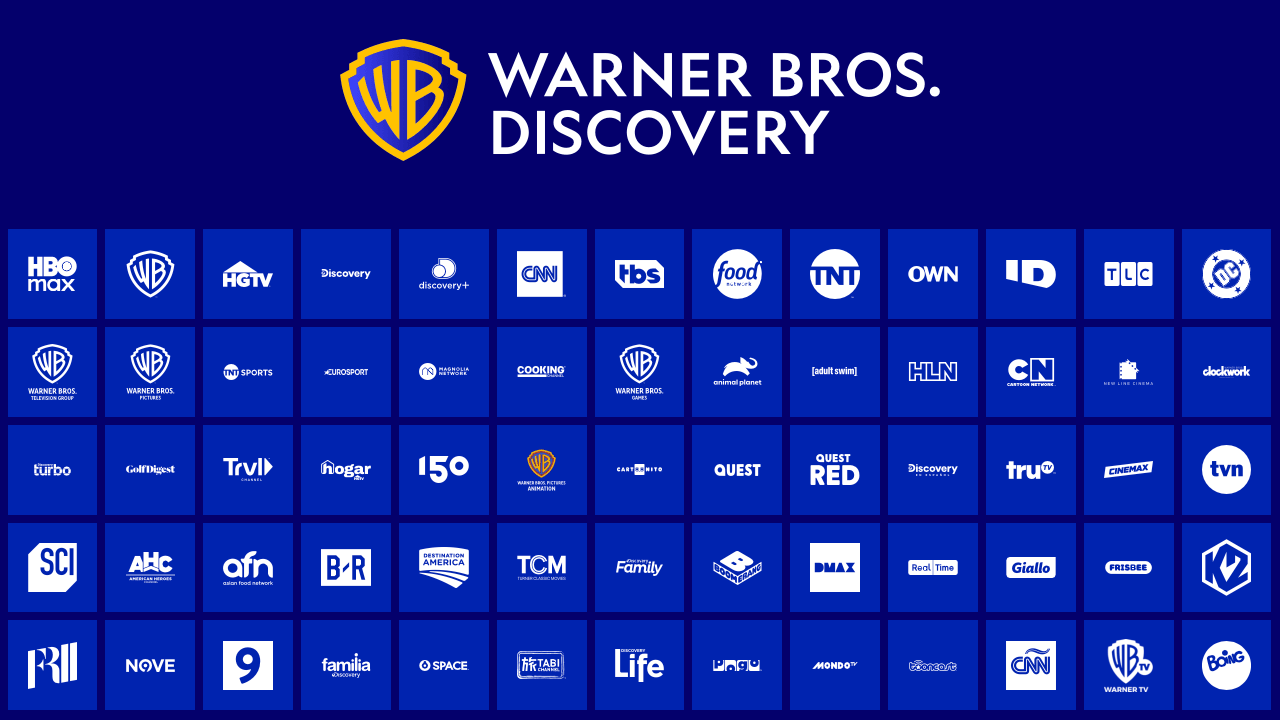
The combined company would control two of Hollywood’s five major film studios, more than 50 basic cable channels, CBS, CNN, HBO, Showtime, Paramount+, HBO Max, Discovery+ and three major television production operations.
For movie theaters, fewer major distributors could mean less negotiating leverage, less favorable revenue sharing and fewer films receiving wide theatrical releases.
For writers, actors, directors and production workers, fewer independent buyers can mean fewer places to pitch a project, fewer competing employment offers and greater power concentrated within one corporate structure.
That is the heart of the WGA’s separate Clayton Act case. The guild argues that the merger would reduce writing opportunities, weaken compensation and leave creators with fewer employers. The July 24 standstill agreement applies to both the states’ lawsuit and the WGA action.
Paramount says a stronger company would produce more. The WGA fears a larger company would have more power to produce less and pay less for it.
Welcome to the actual fight.
Has Politics Replaced What Is Best for the Industry?
The political divide is impossible to ignore.
Every attorney general involved in the state lawsuit is a Democrat. The Trump administration’s Justice Department, meanwhile, cleared the merger and issued an unusually detailed statement arguing that the transaction would strengthen competition.
Critics have also raised questions about the Ellison family’s relationship with President Trump and about what Paramount ownership could mean for CNN, particularly after the editorial upheaval surrounding CBS News.
There is no court finding that the Justice Department’s decision was politically motivated. The party affiliation of the attorneys general does not invalidate their market analysis either.
But the optics are dreadful.
One political camp sees the merger as a necessary counterweight to Netflix and Big Tech. The other sees it as an illegal concentration of entertainment, news and employment power. Each side insists it is protecting consumers, workers and democracy, which is generally the moment one should check that the silverware is still on the table.
The more important question is whether either side is still focused on the structural problem facing the industry.
Legacy studios need greater scale to compete with technology companies capable of subsidizing entertainment from cloud computing, advertising, hardware sales and other businesses. Yet repeatedly combining studios also leaves fewer buyers for creative work, fewer independent decision makers and an ever smaller number of companies deciding what gets produced and distributed.
Hollywood is being asked to choose between concentration and irrelevance. Neither option looks especially healthy.
The $7 Million Daily Meter
The delay comes with a substantial financial cost.
Paramount agreed to pay Warner Bros. Discovery shareholders an additional 25 cents per share for every quarter the merger remains incomplete after September 30, 2026. That works out to approximately $650 million per quarter, or roughly $7 million per day.
Should the legal battle run until June 2027, Paramount’s additional payments could approach $1.7 billion.
Paramount accepted that provision while competing against Netflix for Warner Bros. Discovery. It helped make Paramount’s offer more attractive by transferring much of the regulatory delay risk away from WBD shareholders.
The company cannot now act surprised that someone eventually turned on the meter.
What This Means for Subscribers
Nothing changes immediately for Paramount+ or HBO Max subscribers.
The services will remain under separate ownership while the cases proceed, and the companies cannot begin integrating their operations under the proposed transaction. Any combined streaming platform, unified technology system or larger corporate restructuring must wait.
That does not prevent Paramount+ or HBO Max from independently changing prices, programming or subscription tiers. Streaming companies have never required a federal judge’s assistance to make a monthly bill more irritating.
The longer delay also leaves open major questions involving theatrical distribution, physical media, licensing arrangements, CNN and CBS News, and the future of overlapping cable networks.
Employees face the least appealing version of corporate uncertainty: potentially ten months of waiting to learn whether their departments will eventually be combined, sold, reduced or eliminated.

The Bottom Line
The Paramount Warner Bros. Discovery merger has moved beyond regulatory review and into a full contest over what competition in modern entertainment actually means.
Paramount has a legitimate argument that traditional media companies need greater scale to compete with Netflix, Amazon, Apple and YouTube. The states and the WGA have an equally legitimate concern that combining two of Hollywood’s five major studios could reduce competition for audiences, theaters and creative workers.
The court must now decide which market definition reflects reality: the narrower world of studios, theatrical distribution and cable licensing, or the much larger ecosystem dominated by global streaming and technology platforms.
Politics has not merely entered the discussion. It is sitting at the head of the table and asking everyone else to explain themselves.
The merger might still happen. It might be blocked. It could also collapse beneath the weight of legal fees, ticking payments and corporate fatigue.
For now, Paramount and Warner Bros. Discovery remain competitors, the trial clock has started and the financial clock begins on September 30.
Hollywood wanted a new empire. It received two antitrust cases, a political war and a $7 million daily invoice.
You must be logged in to post a comment Login