The Paramount Skydance takeover of Warner Bros. Discovery has finally landed in court, which raises the obvious question: where was this lawsuit months ago?
The Paramount Skydance takeover of Warner Bros. Discovery has already cleared a major federal hurdle, but 12 state attorneys general have now decided that combining Paramount, Warner Bros., HBO, CNN, CBS, Max, and Paramount+ under one corporate roof may not be great for competition. Imagine noticing the house is on fire after everyone has already picked paint colors.
On July 13, 2026, a coalition led by California Attorney General Rob Bonta filed an antitrust lawsuit seeking to block Paramount Skydance’s proposed acquisition of Warner Bros. Discovery. The complaint argues that the nearly $111 billion transaction, including debt, would reduce competition in theatrical film distribution, basic cable programming, streaming, and the broader entertainment market.
We have covered this story from the start, beginning with Netflix’s original agreement to acquire Warner Bros., HBO, and HBO Max, followed by Paramount’s hostile bid, the Ellison-backed bidding war, and Paramount eventually winning after Netflix stepped aside. Back in February, we noted that Paramount winning the bid was not the end of the story. Regulatory scrutiny, debt, politics, and the future of HBO, CNN, Warner Bros., Paramount+, and Max were always going to remain part of the plot. Nobody said Hollywood consolidation came with a clean third act.
Advertisement
What the Lawsuit Claims
The lawsuit was filed in the U.S. District Court for the Northern District of California by California, Arizona, Colorado, Connecticut, Massachusetts, Minnesota, Nevada, New Jersey, New Mexico, New York, Oregon, and Washington. The states are asking the court to prevent Paramount from acquiring Warner Bros. Discovery. If Paramount and Warner Bros. Discovery try to close the deal before the case is resolved, the states have warned they may seek a temporary restraining order.
The complaint argues that the merger would combine two of the nation’s five major film distributors and two of the five major owners of basic cable channels. According to the filing, the combined company would leave four companies controlling more than 85 percent of wide-release theatrical films in the United States, while the merged Paramount Warner Bros. entity and Disney would control 59 percent of U.S. basic cable.
The states also claim the merger would give the combined company control of more than 50 basic cable channels, creating greater leverage in carriage negotiations with cable and satellite distributors. In plain practical terms: fewer companies owning more essential content usually means distributors have less negotiating room, and consumers eventually get invited to pay for the party.
The lawsuit also focuses heavily on theaters. The states argue that with fewer film distributors competing for screens, theaters could face worse revenue splits, stricter limits on discounts and complimentary tickets, fewer new releases, and less incentive for studios to invest in a broad theatrical slate.
Advertisement
Paramount’s Response
Paramount has rejected the lawsuit and says the states are misreading the modern entertainment market. The company argues that the merger would create a stronger competitor against dominant streaming and technology platforms, especially Netflix, and that delaying the deal would hurt entertainment workers who have already been squeezed by changes in the business.
That is the core tension. The states are framing this as a competition problem. Paramount is framing it as a survival strategy.
Both arguments are not crazy. That is what makes this more interesting than the usual “company buys company, executives discover synergies, workers discover LinkedIn” story.
Advertisement. Scroll to continue reading.
Paramount and Warner Bros. Discovery are legacy entertainment companies trying to compete against Netflix, Amazon, Apple, YouTube, and Disney. But the way they propose to do that is by combining two historic studios, two major streaming platforms, CNN, CBS, HBO, Warner Bros., Paramount Pictures, Nickelodeon, Cartoon Network, TNT, MTV, HGTV, BET, Discovery Channel, Pluto TV, and more under one roof.
Advertisement
Netflix Is Still in the Room
Netflix may have stepped away from the Warner Bros. bidding war, but it remains central to the story. Paramount’s defense depends heavily on the idea that the combined company would be better equipped to challenge Netflix and the other tech-driven streaming giants. The states, meanwhile, argue that reducing the number of major film and cable owners is still harmful even if Netflix remains the biggest streaming target.
The timing is also interesting. Netflix reports Q2 2026 financial results on Thursday, July 16, 2026, at approximately 1:01 p.m. Pacific Time, with a live video interview scheduled afterward.
That earnings report lands after a rough stretch for Netflix’s stock. Recent market coverage has noted that NFLX has lost nearly 24 percent over the past three months ahead of its Q2 results. So while Paramount wants to paint Netflix as the untouchable giant, Wall Street has been reminding everyone that even the 800-pound gorilla occasionally slips on its own banana peel.
That does not weaken Paramount’s broader argument that Netflix is still the streaming benchmark. It does complicate the idea that every legacy media company must become enormous overnight to survive.
Is This About Antitrust or Politics?
The lawsuit is formally an antitrust case. The political pattern is still hard to ignore.
Advertisement
All 12 plaintiff attorneys general are Democrats: California, Arizona, Colorado, Connecticut, Massachusetts, Minnesota, Nevada, New Jersey, New Mexico, New York, Oregon, and Washington. No Republican attorney general joined the lawsuit.
The governor breakdown is slightly different. Eleven of the 12 plaintiff states currently have Democratic governors. Nevada is the exception, with Republican Gov. Joe Lombardo.
That does not automatically make the lawsuit partisan theater. State attorneys general often pursue antitrust cases for policy reasons, economic reasons, consumer protection reasons, and, yes, political reasons. Sometimes all of the above sit in the same conference room and pretend they came separately.
But the political backdrop matters. The Justice Department under President Donald Trump’s administration cleared the deal in June without requiring divestitures, while Bonta and other Democratic attorneys general continued to signal concern. Criticism over political influence has largely fallen along party lines, with Democratic officials questioning whether federal regulators gave the deal enough scrutiny.
Advertisement
Then there is CNN. Any deal that puts CNN under the same corporate structure as CBS and Paramount under David Ellison was always going to attract political attention. Pretending otherwise would require a level of innocence normally reserved for Hallmark movies and first-time streaming subscribers.
Paramount Has Cleared Some International Hurdles
Paramount also has a fair point when it argues that the deal is not being rejected everywhere. The company has received regulatory or competition clearances in several international markets, including Australia, China, Canada, Saudi Arabia, Ukraine, Serbia, and North Macedonia. It has also received foreign-direct-investment approvals in countries including Germany, Slovenia, Belgium, Czechia, New Zealand, Italy, France, and Romania.
Advertisement. Scroll to continue reading.
That does not mean the transaction is home free. Reviews remain active in major markets, including the European Union and the U.K., where regulators have been looking at competition, media plurality, foreign investment, and the potential impact of combining HBO Max, Paramount+, CNN International, Cartoon Network, Nickelodeon, and other services under one corporate roof.
Advertisement
So yes, Paramount can accurately say the deal has cleared some meaningful international hurdles. But the lawsuit from 12 U.S. states, along with continuing U.K. and European reviews, makes it clear that approval is still very much a moving target.
The California Exit Threat
One of the more aggressive subplots involves Paramount possibly leaving California.
Semafor reported on Monday that advisers close to David Ellison have urged him to consider moving Paramount’s corporate headquarters and reallocating some of the company’s planned spending outside California if Bonta sued to block the deal. The same report stressed that no decision has been made and that the idea may be brinkmanship.
Texas is the obvious political shorthand here because major companies including Chevron, Oracle, and Tesla have already moved headquarters out of California and toward Texas in recent years. But the more immediate production option mentioned in the reporting is New Jersey, where Paramount already signed a major lease at 1888 Studios in Bayonne.
Advertisement
That is where the story gets awkward. New Jersey is one of the 12 states suing to block the deal.
So if Paramount was hoping to use New Jersey as part of a “California is hostile, we are moving somewhere friendlier” argument, Trenton just walked into the room holding a legal complaint and gave studio developers, local contractors, and Monmouth County homeowners one more reason to check Zillow with mixed emotions.
What About Paramount’s Bayonne Studio Plans?
Paramount signed a minimum 10-year lease for more than 285,000 square feet at 1888 Studios in Bayonne in October 2025. The larger 1888 Studios project is planned as a 1.5 million to 1.6 million square foot production campus on the Bayonne waterfront, with 23 soundstages and major production support facilities.
There is no evidence right now that Paramount is walking away from that lease or that the lawsuit directly jeopardizes the Bayonne project. That needs to be stated clearly.
Advertisement
But future expansion is a fair question. If Paramount is rethinking where to place corporate offices, production spending, and future studio commitments, the lawsuit complicates New Jersey’s pitch. The state still has generous film and digital media tax incentives, and Bayonne remains a serious production play. But joining a lawsuit against Paramount’s biggest strategic deal is not exactly how one usually sends a fruit basket or box of Taylor Ham.
Netflix Fort Monmouth Keeps Moving
Netflix Studio Complex in Fort Monmouth New Jersey (Artist Conception)
The New Jersey production story does not begin and end in Bayonne.
Netflix Studios Fort Monmouth is moving forward on the Jersey Shore. Officially, Netflix celebrated a construction milestone on June 23, 2026, with the installation of the final structural beam on Stages 3 and 4. The $1 billion project spans more than 292 acres across Oceanport and Eatontown and is planned to include 12 soundstages totaling nearly 500,000 square feet. Phase 1A remains on track for summer 2027, with Phase 1B targeted for fall 2028.
Advertisement. Scroll to continue reading.
From a local perspective, the project looks very real. I live about two miles away and drive through the area a few times a week as a shortcut home. Three of the soundstages on the eastern side of the property appear to be in an advanced stage of construction.
Advertisement
The broader point is that New Jersey has become a serious production battleground. Netflix is building at Fort Monmouth. Paramount has leased space in Bayonne. Lionsgate has been part of the Newark studio conversation. New Jersey has been openly trying to become a major East Coast production hub. This lawsuit may not stop any of that, but it does make the politics a lot messier.
What This Means for Viewers
For consumers, the biggest questions are not about corporate headquarters or which governor gets to cut a ribbon. The real concern is what this deal could mean for the services, studios, news divisions, theaters, and catalogs people actually watch.
If Paramount+ and HBO Max eventually combine, prices could rise, bundles could change, and another major entertainment library could end up under one corporate roof. Theatrical output is another major concern. Fewer major studios can mean fewer wide releases, less negotiating leverage for theaters, and less incentive to take risks on films that are not obvious franchise plays.
There is also the question of what happens to Warner Bros. catalog titles, HBO, CNN, CBS News, Paramount Pictures, and physical media. Will those assets be treated as distinct creative and editorial brands, or simply as inventory to be optimized? The lawsuit does not answer those questions, but it does slow the process and force Paramount to defend the deal in court after already clearing a major federal hurdle.
Advertisement
The Bottom Line
The 12-state lawsuit is the most serious legal threat yet to Paramount’s Warner Bros. Discovery takeover. It does not guarantee the deal will collapse, but it could delay closing, increase pressure on Paramount, and force more public scrutiny of how much media power one company should hold.
Paramount’s best argument is that legacy Hollywood needs scale to compete with Netflix, Amazon, Apple, YouTube, and Disney. The states’ best argument is that solving one competitive problem by creating a larger concentration problem does not magically become consumer-friendly because a streaming app is involved.
And then there is the politics. All 12 attorneys general suing are Democrats, the Trump Justice Department already cleared the deal, and CNN sits right in the middle of the transaction like a neon sign blinking “this will be normal.” Sure it will.
Advertisement
If Paramount really wants to move more production or corporate power out of California, New Jersey and Texas will both be part of the conversation. But New Jersey’s participation in the lawsuit makes that idea more complicated, especially with Paramount already attached to Bayonne and Netflix racing ahead at Fort Monmouth.
Hollywood consolidation was already messy. Now it has federal court filings, state politics, Netflix earnings week, and a possible headquarters fight.
Microsoft’s July 2026 Patch Tuesday fixed a record 622 vulnerabilities, including 58 critical, two exploited in the wild, and one publicly disclosed, plus 428 Chromium bugs
Actively abused flaws include CVE‑2026‑56155 (AD FS privilege escalation) and CVE‑2026‑56164 (SharePoint privilege escalation), alongside notable issues in BitLocker and Copilot
Surge in fixes is linked to Microsoft’s use of Anthropic’s Mythos AI, with patch volumes rising sharply since its adoption
Microsoft has released its July 2026 Patch Tuesday download, marking another record-breaking update, addressing hundreds of flaws across the ecosystem.
The release, which is currently rolling out to Microsoft users, fixes a staggering 622 vulnerabilities, including 58 critical-severity ones, two that were observed as being abused in the wild, and one which has already been publicly disclosed.
On top of that, Microsoft shipped fixes for another 428 Chromium bugs, as well.
Latest Videos From
A jump in numbers
There are simply too many vulnerabilities to mention all of them, however two that are being exploited in the wild are CVE-2026-56155 and CVE-2026-56164. The former is described as an “Insufficient granularity of access control in Active Directory Federation Services (AD FS)” bug, which allows an authorized attacker to elevate privileges locally. It carries a severity score of 7.8/10 (high).
Advertisement
The latter is a “Missing authentication for critical function in Microsoft Office SharePoint” bug that allows an unauthorized attacker to elevate privileges over a network. Microsoft assigned it a medium severity score (5.3/10), but the National Vulnerability Database gave it a 9.8/10 (critical).
Other notable mentions include CVE-2026-50661, a protection mechanism failure in Windows BitLocker that allows unauthorized attackers to bypass a security feature with a physical attack, and CVE-2026-48561, an improper neutralization of special elements used in a command in Microsoft Copilot, that allows an unauthorized attacker to execute code over a network.
If you think fixing 622 vulnerabilities in a month is a lot, you’re absolutely right. It’s well above what Microsoft is used to do, and this is most likely due to the company now using the fabled Mythos – Anthropic’s cybersecurity-oriented AI.
Advertisement
Sign up to the TechRadar Pro newsletter to get all the top news, opinion, features and guidance your business needs to succeed!
In June 2026, roughly a month and a half after the release of Mythos, Microsoft fixed 206 flaws, which raised eyebrows because it was significantly above the company’s usual amount of bugs fixed.
In May it fixed 120 flaws, in April 167, and in March – 79.
Anthony Albanese has told the AI industry that Australian books, music, and journalism are not free training data, and that any large data centre built in the country will have to put more electricity into the grid than it draws out. Neither of those things is law yet.
The prime minister used a speech at the University of Sydney on Wednesday to announce an Office of AI inside his own department, effective immediately, plus Australian Standards covering energy, water, copyright, and siting.
It lands two days after Anthropic and others were reported to be weighing tens of billions in data centre investment against a copyright carve-out Canberra had already ruled out.
The energy obligation is the sharpest thing in the speech. Operators of the next generation of large data centres would be required to underwrite new power supply, pay their full share of grid connection so that no costs land on homes or businesses, and put at least as much energy into the grid as they take out of it.
Advertisement
“To be net-generators, not net-users,” Albanese said. That means funding new renewable generation and firming rather than joining a queue for someone else’s electrons, a heavier ask than anything hyperscalers face in Europe or the US, where grids are already buckling under connection requests.
The 💜 of EU tech
The latest rumblings from the EU tech scene, a story from our wise ol’ founder Boris, and some questionable AI art. It’s free, every week, in your inbox. Sign up now!
Water got similar treatment. Operators would have to minimise water use, maximise energy efficiency, and pay for any additional water infrastructure they need, on a continent Albanese called both the sunniest and the driest on earth.
Advertisement
Copyright got the rhetoric. “Let me make this crystal clear: not everything produced in Australia is up for grabs,” he said. “Not at all.” Australian writers, musicians, artists, and journalists “must retain ownership and control of their work”, and no company should train on it without the artist’s control of its price and value. “Anything less, is theft.”
What the speech did not contain was a mechanism. The policy has been read as obliging AI firms to reach agreements with local artists and media before using their content, but Albanese never said how that control would be enforced, and the attorney-general’s consultation on copyright is still open.
The distance between announced and legislated is the story here. Nothing unveiled on Wednesday binds anyone: the Office of AI is an executive creation, the standards go to National Cabinet next month, and legislation is only targeted for introduction early next year.
Albanese was candid that he does not want an exhaustive rulebook. “It is not our goal to try and legislate for every possible eventuality or risk,” he said. That is a lighter touch than the language around it implies, and closer to the ground Brussels has been retreating to than to the AI Act as drafted.
Advertisement
His claim that Australia “will be the first country in the world to bring these issues into a single, national framework” is doing work it cannot carry. The EU adopted the AI Act in 2024 and built an AI Office to run it, as legal scholars noted within hours.
Reaction divided on schedule. Greenpeace Australia’s Joe Rafalowicz called the facilities “water-guzzling energy vampires”, accusing the government of rolling out the red carpet while leaving them unregulated until at least 2027. Opposition Leader Angus Taylor said the office would just create more bureaucracy.
New York, hours before Albanese spoke, halted large data centre builds for a year, the pause Australia has now declined to take. Washington is still arguing over who pays when data centres raise power bills, the question Albanese thinks he has answered in advance.
Anthropic, which told Treasurer Jim Chalmers that its A$21.6bn Australian investment depended on copyright certainty, said it respected the process and would meet the terms the government sets. That is a company waiting for the fine print.
Advertisement
APRA AMCOS chief executive Dean Ormston welcomed the certainty but said the Office of AI “must seriously interrogate the numbers AI platforms are putting on the table”. The numbers are not on the table yet. Neither is the bill.
A new official filing marks the conclusion of another regulatory hurdle that has been preventing Apple Intelligence from launching in Apple’s crucial Chinese market.
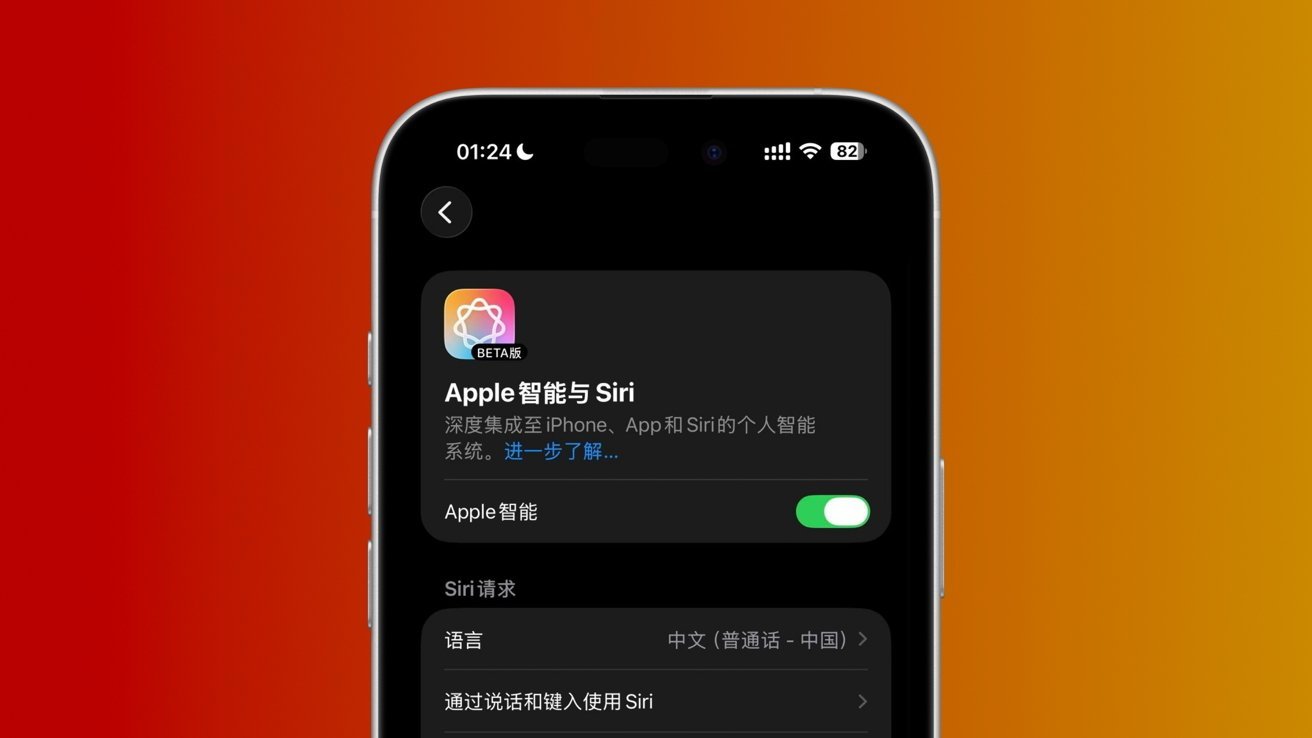
In mid-June 2026, Apple’s Chinese partner Alibaba unveiled its latest AI model and, most significantly, revealed that it was now compatible with Apple Intelligence. Now according to Reuters, China’s cyberspace regulator has allowed Apple Intelligence to be registered for use on iPhones in the region.
China has complex requirements for regulatory approval, and sufficiently so that US firms typically need to involve a local partner. It’s not certain yet whether this latest listing is the final step toward Apple Intelligence launching in China, but it appears to be, and it marks more than two years of effort from Apple.
Apple has not commented on the regulator’s listing, and Alibaba has only confirmed certain details that were already presumed. Specifically, the company stated that its new Qwen AI model will be integrated into Apple Intelligence, when that becomes available for iPhone, iPad, Mac, and Apple Vision Pro users in China.
Advertisement
The report also cites an unspecified source saying that Apple Intelligence will also incorporate technologies from Baidu. This has also been presumed, as despite seemingly choosing against Baidu as a full partner in 2024, Apple reportedly signed with the company for specific functions such as Visual Intelligence.
Apple Intelligence has effectively required partnerships with local companies even though Apple has been able to release iOS in the country without the same level of scrutiny. This is because China has restrictive laws about generative AI software, large language models, and data privacy.
It’s sufficiently difficult to obtain Chinese government approval for any such services, that OpenAI is banned in the country. Apple needed to partner with firms such as Alibaba and Baidu which already had certain approvals. Use of these Chinese firms, though, also raises issues over how Apple Intelligence will be censored in the country.
Apple appears to have worked through all the technical issues, though, and has been waiting only for regulatory approval. That’s because in March 2026, Apple Intelligence was briefly enabled in China, apparently by mistake.
Facepalm: The UK and Europe are going through an unprecedented heatwave right now. It’s causing a lot of problems, including devices that keep overheating as temperatures soar. To try to cool them down, some Brits have been placing them in their fridges and freezers, but the only thing this results in is more work for repair shops.
Jamie Farnell, a repair shop owner in the UK town of Wem told the BBC that he has been flooded with devices suffering from internal moisture damage recently.
Farnell believes the damage was caused by phones and tablets being put in fridges and freezers as the mercury soared.
During last month’s extreme heatwave, an iPad exploded in the shop after a customer brought it in with a swollen lithium battery.
Advertisement
For a lot of people, placing a device in a fridge or freezer when it shows an overheating warning, or obvious signs it is getting too hot, seems like a good idea. The practice has become more popular since social media videos started pushing it as a smart and easy solution.
In reality, of course, it’s very risky. One of the biggest problems is condensation. When a warm device enters a fridge or freezer, warm, humid air trapped around or inside the phone cools rapidly. As that air drops below its dew point, water vapor can condense on the phone’s surfaces, ports, speaker openings, or potentially inside the casing.
When the chilled phone is removed, the risk can become greater because warm room air hits the cold device and condenses on it – similar to moisture forming on a cold drink.
Moisture inside a device can lead to lots of issues, from corrosion to short circuits.
There are also risks from thermal shock, in which a sudden temperature change can stress the screen, glass, seals, adhesives, and internal components; and battery damage from the extreme cold.
Advertisement
So, while these measures will technically cool a device, there are plenty of other methods that won’t likely break them.
Farnell says this practice is reminiscent of another popular myth: drying out a wet phone with rice. This was especially popular at a time when phones had removable batteries and weren’t water-resistant. But it’s ineffective as rice cannot draw liquid out of sealed internal spaces very well. This method can also cause problems, such as the rice dust and starch entering ports and speakers.
Both Apple and Samsung recommend letting an overheating phone cool naturally in a cooler, shaded environment – not putting it in a fridge or freezer.
WHOOP does not have the presence in the wearable space as other brands, but in certain circles, it’s a household name. Their business model requires you to have a yearly app subscription to use their fitness tracker, but here at Hackaday, we are big fans of actually owning the devices you buy — which is why we were happy to hear about an open source and subscription free WHOOP compatible app!
The goal of the so-called OpenStrap project is not to re-create the WHOOP app. Rather, the algorithms and processing methods are developed from scratch, based on public research. It’s all calculated locally on a 1 Hz interval, based on the data the WHOOP 4.0 device feeds the app. As such, the health data collected from the watch, never leaves the phone. While not the main goal of the project, the privacy improvement of the app’s serverless nature cannot be overstated. However, to display metrics, you first need to get data off the WHOOP to begin with.
The crux of the issue with making the WHOOP 4.0 work without the official app is the reliance on proprietary Bluetooth protocols. Fortunately, the protocol itself ended up being relatively simple. The WHOOP 4.0 amounts to little more than a series of sensors that sit on the user’s wrist. As such, the app can subscribe to the Bluetooth feed and decode the data, right? Well, the devil is always in the details with such things, and the protocol came with its fair share of quirks. The hardware clock needs to be synchronized, or it simply defaults to zero Unix time. Moreover, the analog sensors like, ambient temperature are given in relative ADC values, and are not terribly useful without calibration. Regardless, the result of the reverse engineering effort speaks for itself with the OpenStrap app able to recreate much of the functionality in WHOOP’s official app.
As AI workloads drive soaring cloud bills, more companies are weighing whether to move computing out of public clouds and into their own data centers. But building and operating AI infrastructure is far more complicated than simply buying servers — networking has become one of the biggest technical hurdles.
That’s the opportunity Seattle startup Hedgehog is chasing.
Founded in 2022 by CEO Marc Austin, a Cisco networking veteran, Hedgehog develops open-source software designed to make private AI data centers operate more like hyperscale clouds. It has raised $11 million in seed funding, with plans to raise a series A financing round.
We caught up with Austin for the return of GeekWire’s Startup Spotlight to learn more about the 20-person company, the AI networking boom and what surprised him most about building a startup in one of tech’s fastest-moving markets.
In 50 words or less, give us your elevator pitch?
Advertisement
Hedgehog is open-source software that makes AI networking simple. AI clouds and enterprises use it to run GPU networks the way hyperscalers do — deployed in hours instead of months, operated by DevOps teams instead of armies of network engineers, on open hardware with no vendor lock-in.
What problem are you obsessed with solving?
Time to GPU value. A GPU cluster is the most expensive asset most companies will ever buy, and every day it sits idle waiting on the network is money burning. That wait is rarely the hardware — it’s the fabric: weeks or months of scarce network engineers hand-designing, cabling, tuning, and validating it across proprietary CLIs and locked-in vendor gear.
Meanwhile the people told to “own the network” usually aren’t network engineers at all — they’re platform and DevOps teams. We’re obsessed with collapsing that timeline: declare your network like intent in Kubernetes and go from racked GPUs to inference in hours instead of months — on open hardware, no lock-in, no room full of specialists. Cloud-grade networking without hyperscaler headcount.
Advertisement
What surprised you after talking to customers?
How rarely the buyer is a network engineer. It’s platform and DevOps teams, often at AI clouds who just took delivery of thousands of GPUs who are told “you own the network now.” They don’t want to learn BGP; they want a network that behaves like the rest of their cloud-native stack. The other surprise: they don’t just want to run the network, they want to sell it by carving up capacity for their own customers, like a cloud provider does.
How has AI changed the way you build your company?
Twice over.
Advertisement
Our product exists because AI broke traditional networking. Training and inference traffic melts networks designed for web apps.
And AI changed how we build: we use it heavily across engineering, testing, and go-to-market, which lets a small team continuously test every supported device and configuration in our lab and ship with hyperscaler-grade rigor. AI raised the bar for what a startup-sized team can deliver.
What’s one thing people misunderstand about your startup?
That “open source” means hobbyist. The opposite is true: openness is the enterprise feature. Our customers can audit every line of code that runs their fabric, extend it, and never get locked in. Nearly every competitor markets “open networking” while shipping a proprietary controller. Hedgehog is the only one that actually publishes the repo.
Advertisement
What’s the toughest decision you’ve made in the past year?
Betting entirely on Ethernet. We decided open, standards-based Ethernet would win AI networking and put everything behind it. Watching the industry’s largest AI operators now standardize on that same approach makes us feel good about the call — but saying no was hard.
What’s the one piece of advice you give to other entrepreneurs?
Pick the wave, not just the surfboard.
Advertisement
Product decisions are recoverable; betting against a structural industry shift isn’t. Find the standard, the architecture, or the buyer behavior that’s inevitable, align everything to it early, and be patient while the market catches up to your bet.
We’ll know our company has made it when…
Networking is boring again. When a platform engineer stands up a multi-tenant GPU cloud and the network is just a few lines of declared intent that nobody thinks twice about. When “network like a hyperscaler” describes every AI cloud, not just the giants running on Hedgehog, then we will have made it!
A look at Anthropic safety hiring shows exactly what it fears: analysts brought in to stop its models teaching anyone how to build nuclear, chemical, and biological weapons.
Most job ads sell a mission. Anthropic’s read like a threat assessment.
The company has posted a run of openings for enforcement analysts whose job is to keep its AI from helping people build weapons, run scams, or commit cybercrime, Axios first reported. One listing seeks an “Enforcement Analyst focused on Radiological & Nuclear Harms.” Others cover chemicals and explosives, financial fraud, and more.
The pay lands in the mid- to upper-$200,000s. The work is not coding. Anthropic wants real-world expertise in fields like biology and explosives. It also wants people who can think like an attacker trying to slip past its defences.
The blunt job titles are deliberate. “Ensuring our models don’t provide potentially harmful information is central to responsible development,” a spokesperson said. The company said it regularly hires experts in sensitive fields to stress-test its models before a release.
Advertisement
Spelling out the exact harm, it added, is how you recruit the right people. Anthropic says hundreds of staff now work on safety, probing for weak spots and patching them.
This is the company that critics call the industry’s biggest doomsayer. The pattern in Anthropic safety hiring is its answer to that label. It is spending real money on the risks it keeps describing.
The catastrophe Amodei keeps describing
Chief executive Dario Amodei has spent months sketching the downside. In a January essay he called biological attacks the scenario that worries him most.
“I do not think biological attacks will necessarily be carried out the instant it becomes widely possible,” he wrote. “But added up across millions of people and a few years of time, I think there is a serious risk of a major attack, with casualties potentially in the millions or more.”
Advertisement
He has also warned about AI helping cybercriminals and empowering authoritarian states. Earlier this year Anthropic broke with the US Defense Department over the use of its technology for mass surveillance and autonomous weapons.
The labs are writing their own rules
OpenAI is doing the same. It is hiring a researcher on biological and chemical risks, at a base salary of up to $445,000. As models grow more capable, every serious lab is racing to staff a red team.
That race is happening in a vacuum. The US still has no comprehensive AI safety law. Congress has tried for years and passed nothing. Some want a referee: Google’s Demis Hassabis has floated a Wall Street-style watchdog for frontier models. Fewer than one in a hundred AI PhDs go into government, so the expertise sits inside the companies.
The result is a strange kind of self-regulation. The firms building the most dangerous capability are also the ones deciding how to fence it in. Amodei has named that tension himself, calling AI companies the next tier of risk after hostile states. His careers page is the argument and the warning in one place. The people best placed to stop the catastrophe work for the company that could help cause it.
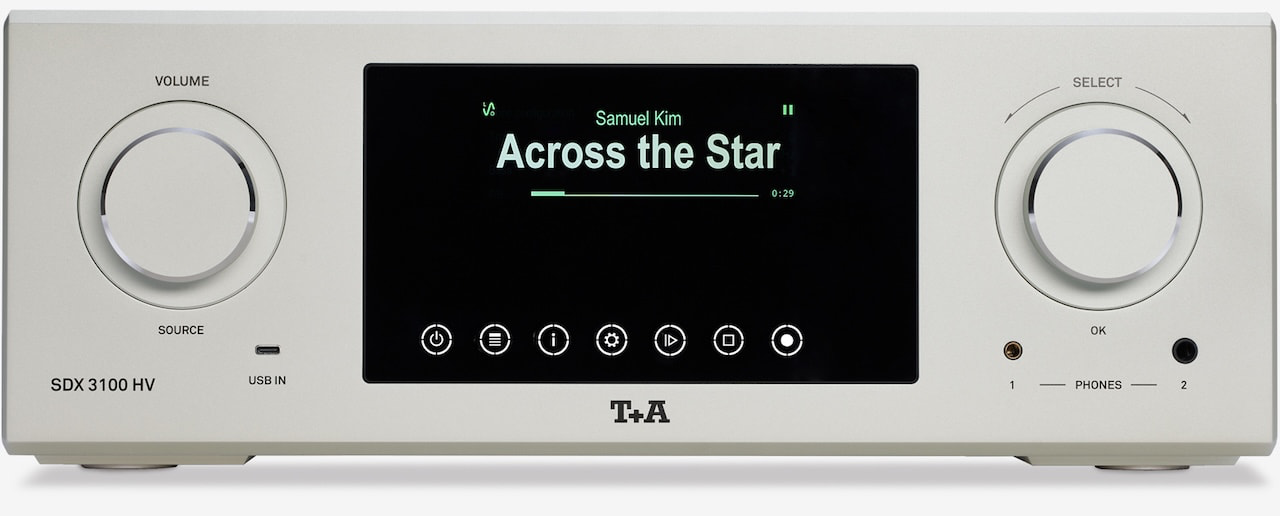
T+A does not build inexpensive audio components, and its new HV reference pairing makes no attempt to wander into that unfamiliar part of town where tourists buy four-euro spätzle and lederhosen assembled somewhere considerably less German.
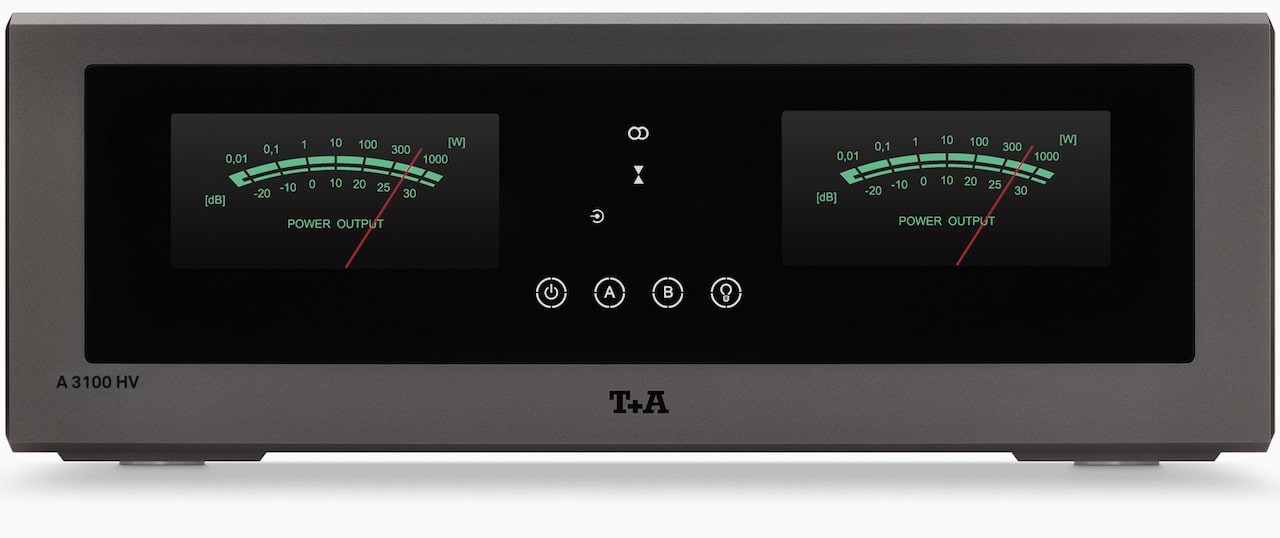
The German manufacturer has formally launched the SDX 3100 HV streaming DAC and preamplifier for $44,900 alongside the A 3100 HV stereo power amplifier for $29,900. The complete two-box system costs $74,800 before adding loudspeakers, cables, an equipment rack, or the optional $2,190 MM or MC phono module.
We first encountered both components at AXPONA 2026, but confirmed pricing, final specifications, and availability make them worthy of a closer look. The A 3100 HV began shipping on July 9th in silver or titanium, while SDX 3100 HV availability is rolling out through dealers, with some North American listings indicating August delivery.
The price will dominate the conversation, because $74,800 remains a serious amount of money even by high-end audio standards. What T+A is offering, however, is not merely another streamer connected to a large amplifier. The SDX 3100 HV and A 3100 HV represent a highly integrated reference system that combines some genuinely unusual digital architecture with enough amplification to drive almost any conventional passive loudspeaker.
Advertisement
Related Reviews:
The SDX 3100 HV Is More Than a Streamer
SDX 3100 HV
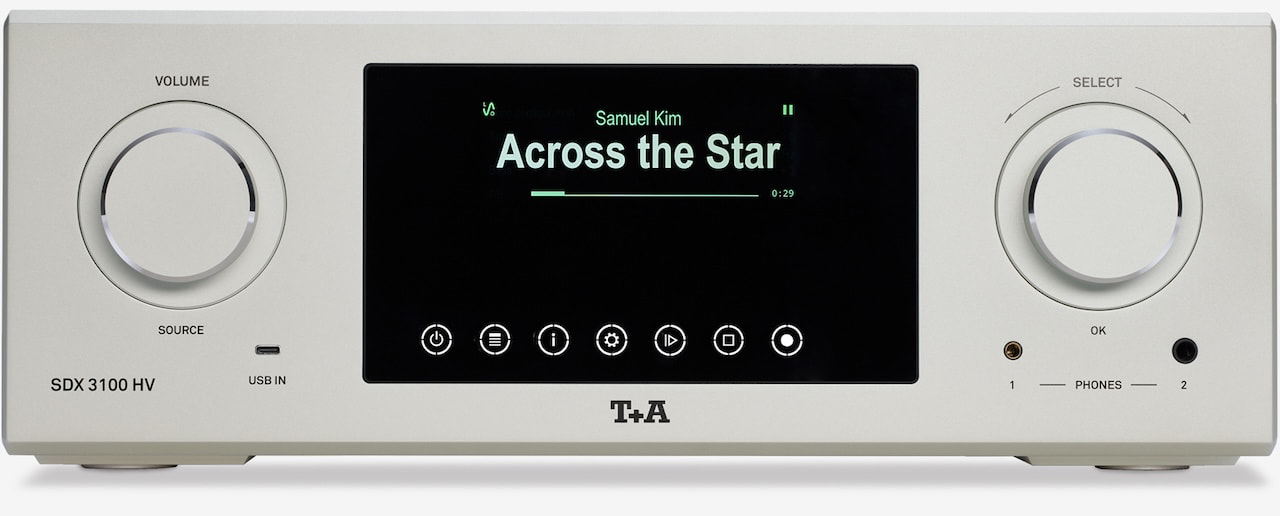
The SDX 3100 HV replaces the SDV 3100 HV at the top of T+A’s digital lineup, combining a network streamer, DAC, fully analog preamplifier, headphone amplifier, tuner, and system controller inside a 57-pound aluminum chassis.
Its most significant technical feature is T+A’s Path Separation Technology, which routes PCM and DSD through different conversion architectures rather than forcing both formats through the same DAC design.
PCM signals are handled by a double-differential quadruple converter using four 32-bit sigma-delta DAC channels per side, supporting rates up to 768kHz through USB. DSD travels through T+A’s proprietary True 1-Bit converter without first being converted to PCM, with USB playback supported up to DSD1024.
There is an important distinction buried beneath that impressive headline number. DSD512 and DSD1024 require a compatible Windows computer with T+A’s driver or a Linux system running a supported kernel. Network streaming is currently specified up to DSD256, which remains more than sufficient for almost every commercially available recording but is not quite the same as streaming DSD1024 from a NAS while congratulating yourself on having survived another firmware update.
T+A’s De-Jitter Masterclock examines incoming clock signals and routes anything failing its stability requirements through an additional PLL stage. Separate quartz oscillators are used for the 44.1kHz and 48kHz frequency families, reducing the need for sample-rate conversion between them. The SDX also provides selectable digital filters, including FIR, Bezier, and two NOS options.
Advertisement
Streaming Without Another Proprietary Island
The third-generation Audiophile Streaming Architecture, or ASA G3, supports TIDAL Connect, Qobuz Connect, Spotify Connect, Amazon Music HD, Deezer, HIGHRESAUDIO, Apple AirPlay 2, Audirvana, internet radio, and locally stored music.
Roon certification is still listed as being in progress. That will need to be completed quickly because a $44,900 streaming component should not arrive with a significant software feature still waiting in the departure lounge.
Advertisement. Scroll to continue reading.
Wired Gigabit Ethernet and dual-band Wi-Fi 6 are included, along with Bluetooth 5.4 using aptX HD, AAC, SBC, and MP3. Bluetooth is clearly present for convenience rather than as the preferred method for extracting everything the SDX can deliver.
Advertisement
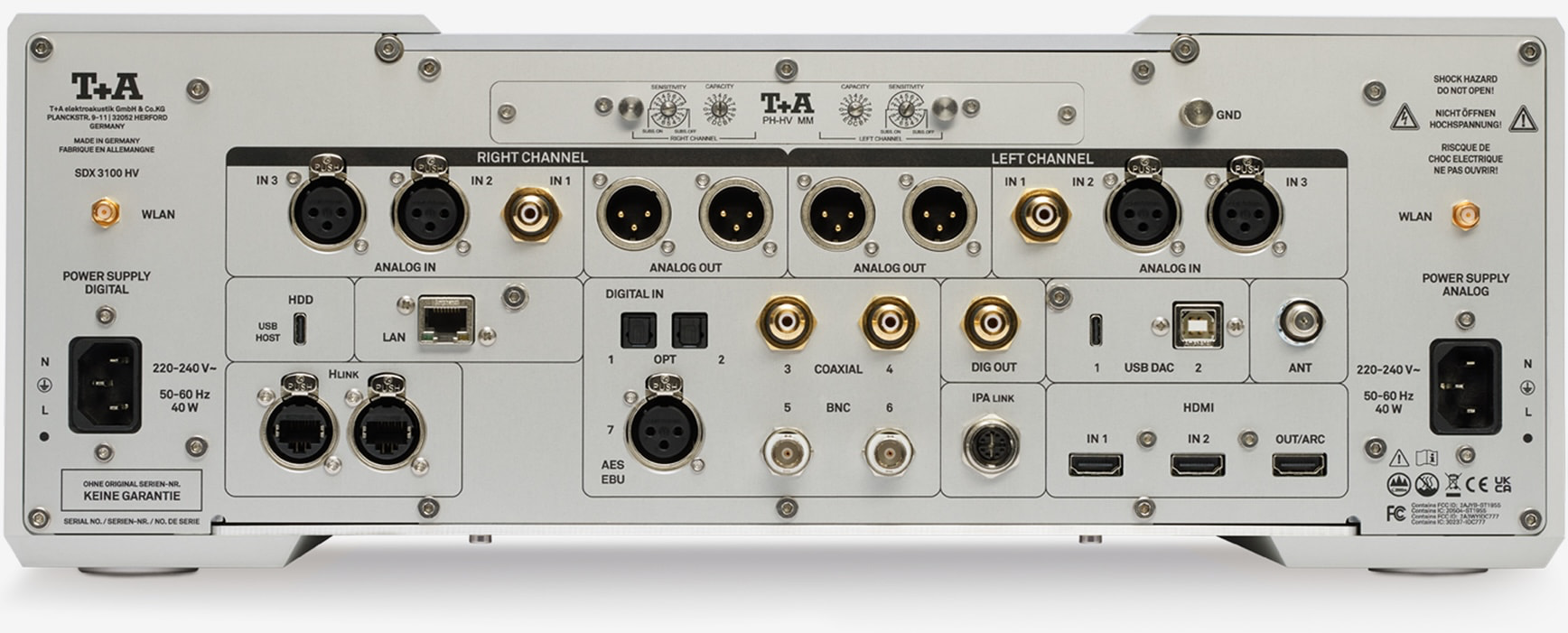
Physical connectivity is extensive. The digital section includes AES/EBU, coaxial, BNC, optical, USB, two HDMI inputs, and an HDMI output with ARC. The specification currently lists ARC rather than eARC, although that is unlikely to present a meaningful bandwidth limitation in a two-channel system.
SDX 3100 HV (rear)
A Proper Analog Preamplifier
Many streaming DACs offer variable output and describe themselves as preamplifiers. The SDX 3100 HV takes the role more seriously.
Its fully symmetrical, double-mono preamplifier is constructed with discrete components and galvanically isolated from the digital circuitry. Volume is controlled by a relay-switched network with channel matching specified within 0.05dB at minus 60dB, where less carefully designed controls can begin shifting the image toward one loudspeaker.
The SDX also includes balanced and single-ended analog inputs, making it possible to connect tape machines, external phono stages, or other analog sources without converting them into the digital domain.
Advertisement
T+A has even included fully analog tone controls with individually adjustable bass and treble levels and selectable turnover frequencies. That is a more sophisticated approach than the usual bass and treble knobs, allowing some correction for loudspeaker balance, room placement, and difficult recordings without passing the signal through DSP.
It is not room correction, and there is no automated measurement system or sophisticated subwoofer bass management. Buyers looking for Dirac Live, ARC Genesis, or Linn Space Optimisation will need to solve those problems elsewhere.
The optional phono board is available in separate MM and MC versions for $2,190. At this price, including both cartridge types in one adjustable module would not have caused the accountants to begin rationing office supplies, but the internal option is still useful for owners seeking to avoid another box.
A discrete Class A headphone amplifier supplies both 6.3mm and 4.4mm Pentaconn outputs. T+A specifies a six-ohm output impedance and up to 200mA of current, making it considerably more substantial than the convenience headphone circuits often added to digital components.
Advertisement
The A 3100 HV Offers Two Amplifiers in One
A 3100 HV
The matching A 3100 HV replaces the A 3000 HV, which remained in production for more than a decade. T+A claims more than 270 engineering changes, including revised board layouts, tighter-tolerance components, improved thermal management, and a new High Current operating mode.
T+A’s HV designation refers to its use of much higher internal operating voltages than conventional solid-state circuits. The objective is to keep the transistors working within a smaller and more linear portion of their operating range, pursuing some of the linearity associated with tubes without using tubes or their eventual maintenance requirements.
In High Current mode, the output stage runs at substantially increased idle current and can deliver up to 75 watts in pure Class A before transitioning into Class AB operation. This mode is intended for systems where listeners value the amplifier’s highest-bias operation and do not require maximum output.
Advertisement. Scroll to continue reading.
Switching to High Power mode changes the priorities. The A 3100 HV is rated at 300 watts per channel into eight ohms and 500 watts into four ohms, with short-term output reaching 380 watts into eight ohms and as much as 650 to 700 watts into four ohms, depending on the measurement listed.
Advertisement
Those figures come from a 1,000-watt toroidal transformer and 120,000µF of reservoir capacitance. The power supply is magnetically shielded and physically separated from the audio circuitry behind a 10mm aluminum partition. Voltage and current amplification are located on separate boards and galvanically isolated to reduce interaction between the input stages and the current being delivered to the loudspeakers.
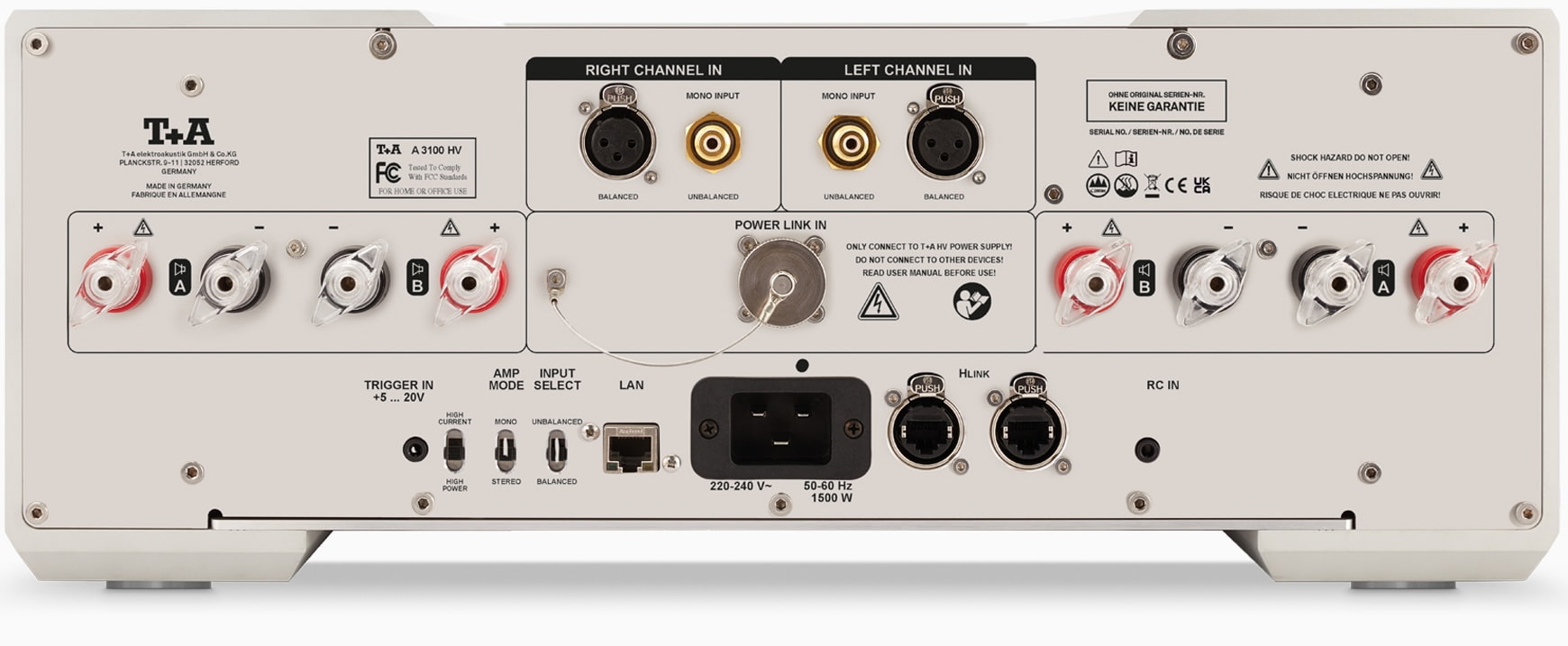
A 3100 HV (rear)
The amplifier can also be switched into mono operation, allowing owners to add a second A 3100 HV. At that point, the electronics alone rise to $104,700 before contemplating T+A’s optional external power supplies. The phrase “diminishing returns” may be heard faintly in the distance, but nobody in this market appears to be returning its calls.
What Does It Compete With?
There is no perfect direct competitor because T+A combines several product categories in an unusual two-box arrangement.
Naim’s closest conceptual alternative requires an NSS 333 streamer, NAC 332 preamplifier, and two NAP 350 mono power amplifiers. The NAP 350 delivers 175 watts into eight ohms and 345 watts into four ohms, making the Naim system less powerful on paper while requiring four chassis before optional external power supplies enter the discussion.
Advertisement
The CH Precision I1 takes the opposite approach. It combines preamplification, power amplification, DAC functionality, and optional streaming and phono modules in one configurable chassis. Its modular architecture is extremely flexible, but rated output is 100 watts per channel into eight ohms. The T+A system requires two shelves but provides far greater power and includes its full streaming platform as standard.
Boulder’s 866 Digital integrated amplifier also consolidates streaming, DAC, preamplification, and power amplification into one component. It delivers 200 watts into eight ohms and 400 watts into four ohms and supports Ethernet, USB, AES3, optical, AirPlay, and Roon. It is the more compact approach, although it lacks T+A’s separate native DSD conversion path and extensive direct streaming-service integration.
Linn’s Klimax DSM and Klimax Solo 800 amplifiers represent another logical comparison, especially for listeners interested in streaming, system integration, and room optimisation. Pricing places the T+A system in some perspective: a single Klimax Solo 800 starts at $51,190 in the United States, making a stereo pair $102,380 before adding the Klimax DSM source and preamplifier. Suddenly $74,800 starts looking merely extravagant rather than requiring intervention from concerned relatives.
Why This System Is Different
The SDX 3100 HV and A 3100 HV stand apart because they do not force buyers to choose between old-school analog engineering and a modern streaming system.
Advertisement
The SDX offers direct access to the major streaming platforms, HDMI ARC, high-resolution USB playback, analog inputs, optional phono support, proper preamplification, analog tone controls, and a robust headphone amplifier. The A 3100 HV can prioritize Class A operation for lower-level listening or switch to 500-watt Class AB output when the loudspeakers demand considerably more persuasion.
T+A has also managed to keep the complete system to two chassis. That will matter to buyers who want reference-level separates but have no desire to assemble a seven-box shrine requiring its own electrical subpanel and structural engineer.
The Bottom Line
There is no sensible way to describe $74,800 as affordable, and T+A does not need anyone performing financial gymnastics to make it sound reasonable.
Advertisement. Scroll to continue reading.
Advertisement
A complete system with the phono module costs $76,990. Adding T+A’s optional $19,490 PS 3100 HV external power supply pushes the total to $96,480. Two amplifiers in mono operation take the system comfortably beyond six figures.
That pricing excludes almost everyone, including many serious audiophiles with excellent systems and perfectly healthy credit scores.
But judged within the reference electronics category, the T+A pairing is not an outlier. It competes with systems from Linn, CH Precision, Naim, Boulder, dCS, and other manufacturers for whom five-figure source components and power amplifiers are entirely normal.
The more relevant question is whether T+A’s two-box architecture can deliver enough of the performance, flexibility, and long-term usability of those larger systems to justify its substantial price.
Advertisement
On paper, the answer is at least plausible. The engineering is ambitious, the specifications are formidable, and the combination of native DSD conversion, real analog preamplification, selectable amplifier bias, and 500-watt output is unusual at any price.
Whether it sounds like $74,800 will require far more than reading the specification sheet while making approving German noises.
Pricing & Availability
The T+A A 3100 HV is available in silver or titanium for $29,900 and began shipping through authorized dealers on July 9, 2026.
The SDX 3100 HV is priced at $44,900, with dealer availability rolling out through July and August 2026.
Advertisement
The optional MM or MC phono module is $2,190.
The complete SDX 3100 HV and A 3100 HV system costs $74,800, or $76,990 with one of the phono modules.
We may receive a commission on purchases made from links.
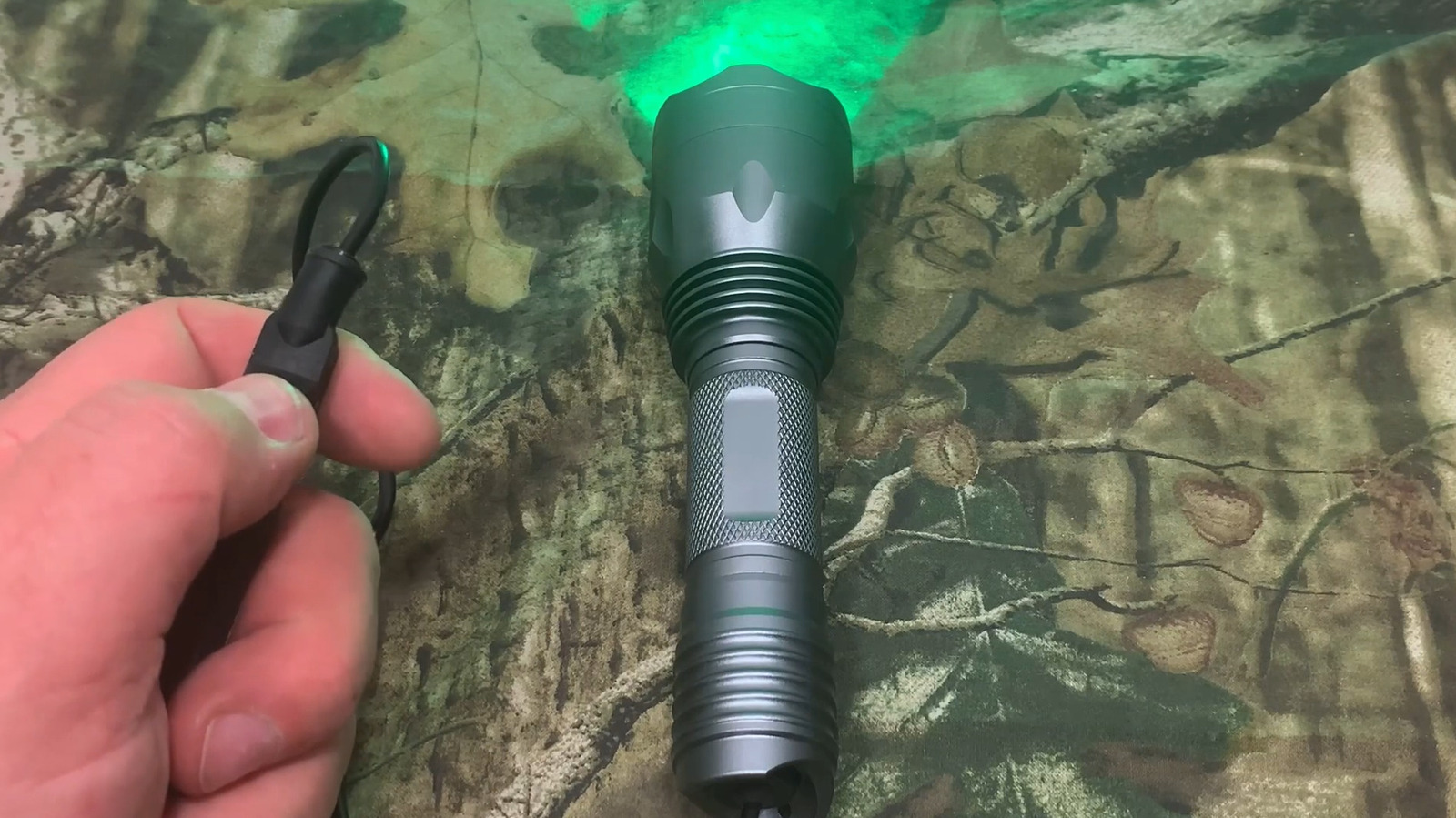
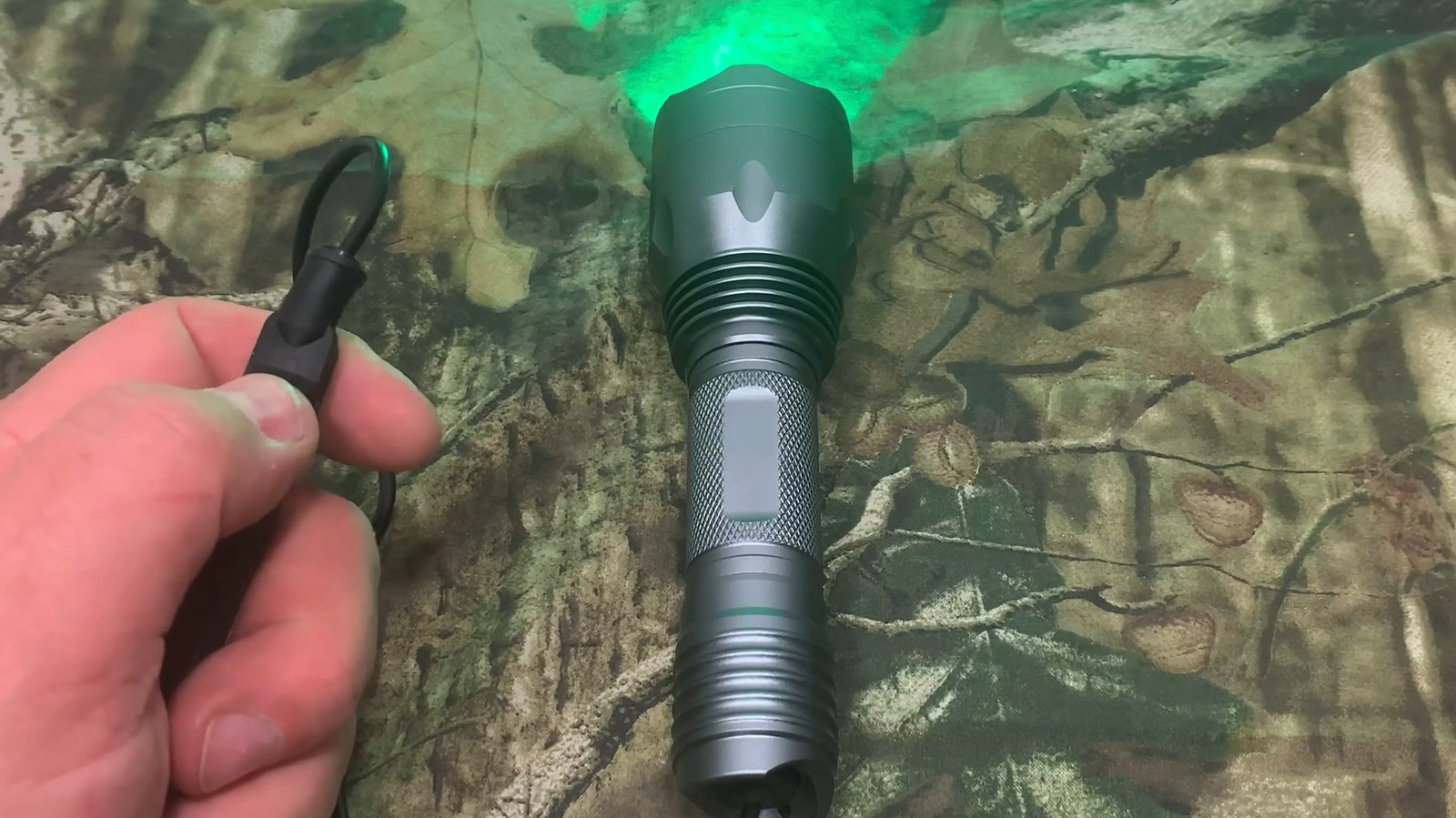
Compared to the more well-known standard that are white light flashlights, a green light flashlight is a specialized tool primarily used for certain night activities. At the mention of the words green and flashlight, the first association might be military-related, but everyday people can easily use them and acquire them from popular flashlight brands. While the military and some law enforcement indeed use them, a green light flashlight has many uses, and it’s particularly helpful for wildlife, such as during hunting or observation. It’s because green light is much less alarming to animals compared to a bright white light, so they’re less likely to get spooked.
Advertisement
Additionally, a green light is less intrusive to human sight, and it helps our eyes adjust better at night. If you have ever had a bright white light flashlight pointed at your eyes when it’s dark, you know how disorienting it is. The reason for this is that a green light sits at a medium range wavelength of around 510nm to 565nm on the visible spectrum. This is relevant because in the dark, our eyes respond best to 380nm and 650nm wavelengths, reaching peak adaptation at 507nm, which is very close to green.
Advertisement
What are the benefits of a green light flashlight?
A green light flashlight is also good for navigation at night, or if you need to read a map or an instrument. Along with the aforementioned wildlife hunting or observation, a green light flashlight is useful for night fishing as well. Just like mammals, fish are less likely to be startled by a green light. It can be used to attract baitfish, making it one of the more essential tools to keep on your boat. Because of its subtle nature and reduced glare, a green light flashlight is also used in military and law enforcement operations or surveillance.
It’s important to note that a green light flashlight, or rather the green light itself, isn’t inherently harmful to animals. It could interfere with natural behavior in some cases, but a green light flashlight isn’t physically damaging to them, since it’s designed with wavelengths less disruptive to wildlife. Most animals, especially mammals, are dichromatic, meaning they only see colors in two wavelengths, blue and yellow. In other words, they struggle to distinguish green properly, which is why the green light is a better option.
Marantz has announced the launch of two new hi-fi separates at a more affordable prices.
The Model 70 integrated amplifier and CD 70 build on the success of the PM6007 and CD6007, and shows that while everyone’s getting into hybrid hi-fi products and active speakers, there’s still room for specialist hi-fi separates in the market.
Both feature Marantz’s full-width architecture that’s made their recent products stand out, and will be available in black and silver-gold finishes, a look that Marantz hopes will “appeal to culture-driven consumers who see audio as an integral part of their home environment”.
Inside the Model 70 is Class AB amplification that can deliver 50W per channel, and is supported by an enhanced power supply and larger toroidal transformer. Marantz says that this configuration results in “greater dynamic expression, improved speaker control and increased authority across a wide range of loudspeaker pairings.”
Advertisement
There’s a “high-performance” DAC for “exceptional” digital playback quality, and even at this lower price, there’s room for Marantz’s proprietary HDAM circuitry that aims to “preserve the speed, accuracy and musical character” that’s defined the warm, detailed and musical sound of Marantz’s products.
Advertisement
Vinyl fans can make use of an MM phono stage, while there’s also HDMI ARC for connecting to a TV and aptX Adaptive Bluetooth to stream to the amplifier or connect a pair of wireless headphones to the amp. A range of analogue and digital inputs are provided, plus preamplifier and sub outputs to suit a “broad range of listening environments and system configurations”.
Image Credit (Marantz)
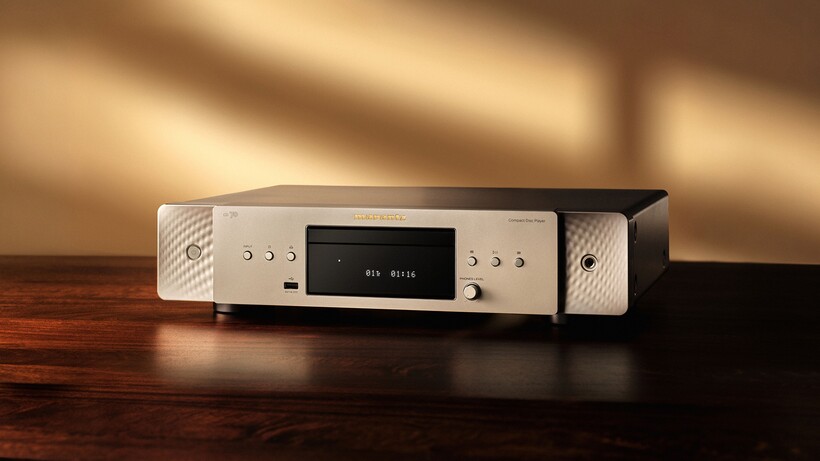
With CD enjoying some time back in the spotlight, those committed the silver disc will be able to have a Marantz CD player as part of their set-up going forward.
It has the same DAC and HDAM circuitry as the Model 70, with a front-panel USB-A input and support for FLAC, ALAC, AIFF and DSD files. A built-in headphone amplifier ensures private listening with a pair of wired headphones.
Advertisement
Marantz says that “every aspect” of the CD 70’s build has been carefully optimised to minimise noise and preserve musical detail. and this includes an upgraded power supply: double-layered chassis base, rigid isolation feet and “strategically” deployed copper hardware that contribute to “improved stability and reduced interference”
Advertisement
The Model 70 integrated amplifier is priced at €850 / £749, and reportedly won’t be available to buy in North America. However, the CD 70 will go on sale in North America, with availability starting from August 15th for $750 / €600 / £499.


























































You must be logged in to post a comment Login