Connect with us
DAPA Banner
DAPA Coin
DAPA
COIN PAYMENT ASSET
PRIVACY · BLOCKDAG · HOMOMORPHIC ENCRYPTION · RUST
ElGamal Encrypted MINE DAPA
🚫 GENESIS SOLD OUT
DAPAPAY COMING

Tech

Party With Your Grandma And Prevent Her Murder In Apple Crumble, Out This Year

Published

on

Duck Detective studio Happy Broccoli is back with a creepy-cute mystery.

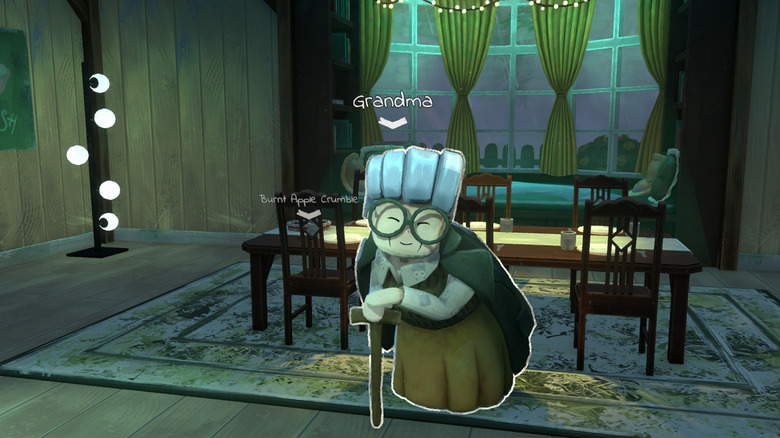
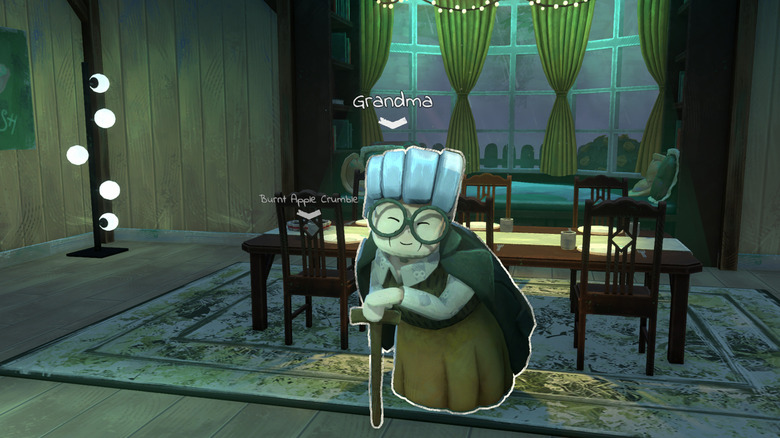
Apple Crumble is an eccentric attempted-murder mystery starring you and your closest family members, and it’s coming to Steam later in 2026. The new title from Duck Detective studio Happy Broccoli Games is an investigative walking sim about figuring out who’s trying to kill your grandmother at her 84th birthday celebration. Is it your mom? Your deluded uncle? The strange man in your bedroom? You? There’s a lot going on here, for such a small family gathering.

In Apple Crumble, you walk around your childhood home examining objects and talking with your weirdo family members, trying to uncover who’s behind the brewing grandma murder plot. It’s all a little bit Agatha Christie or Knives Out, with a touch of MOUTHWASHING for good measure, according to Happy Broccoli. 

Advertisement

The game’s reveal video, which premiered in the Day of the Devs summer showcase, is delightfully dark and supremely silly, with a cartoonish 3D art style that looks like a lot of fun to poke around in. The whole thing looks like a cozy, sassy and slightly unnerving experience, perfect for those creepy-cute days.

Happy Broccoli’s Duck Detective: The Secret Salami is highly rated on Steam with a 5 full stars and nearly 5,000 positive reviews. It seems the biggest complaint about the game is the fact that it’s too short, which is actually a compliment if you look at it sideways. Duck Detective takes about two hours to complete, three if you’re leisurely quacking around, and Apple Crumble is 60 to 90 minutes in play time, according to Happy Broccoli Games. Prepare to lock in for a short-and-sweet mystery once again, complete with full voice acting and oddball characters.

Source link

Advertisement
Continue Reading
Click to comment

You must be logged in to post a comment Login

Leave a Reply

Tech

LinkedIn co-founder Reid Hoffman to leave Microsoft board after nearly a decade

Published

on

Reid Hoffman speaks at a Tech Alliance event in Seattle in 2017. (GeekWire File Photo / Todd Bishop)

Reid Hoffman, the LinkedIn co-founder who has served on Microsoft’s board since 2017, will not stand for re-election at the company’s 2026 annual meeting, ending a board tenure that coincided with some of the most consequential years in the tech giant’s history.

Hoffman informed Microsoft on June 2 that he will not stand for re-election at its 2026 annual shareholder meeting, according to an SEC filing. He will remain a director until that meeting, later this year.

The filing states that Hoffman’s decision was not the result of any disagreement with management over the company’s operations, policies or practices. Microsoft thanked him for his contributions.

On an episode of his “Possible” podcast, released Friday morning, Hoffman told Microsoft CEO Satya Nadella that he wanted to return to “founder mode” to focus on Manas AI, the cancer drug-discovery startup he co-founded, citing early progress there.

Nadella thanked him for his board service and said he was eager to see what Hoffman builds next. “I am so grateful for all of your contributions to Microsoft and the board over the years, and excited to see you get back to founder mode with Manas,” Nadella wrote in a LinkedIn comment.

Advertisement

Hoffman joined the board after Microsoft’s $26.2 billion acquisition of LinkedIn, the professional network he co-founded in 2003. A longtime Greylock Partners investor and prominent Democratic donor, he served on the board’s Environmental, Social and Public Policy Committee.

His exit follows three consecutive years of opposition from the National Legal and Policy Center, a conservative shareholder group that urged investors to vote against his re-election, citing his political activities and other concerns. Shareholders re-elected him each time, most recently in December 2025.

Hoffman’s name has also surfaced in the long-running fallout over the late financier Jeffrey Epstein. Hoffman has said his dealings with Epstein were limited to fundraising for MIT’s Media Lab, including a 2014 visit to Epstein’s island that he has said he regrets, and he has not been accused of wrongdoing.

Documents and emails released in the federal Epstein files indicated more contact than he had previously acknowledged. In November 2025, the Justice Department said it would investigate Epstein’s ties to Hoffman and other Democrats after President Trump called for a probe. Hoffman has called the scrutiny baseless and politically motivated.

Advertisement

Hoffman has been one of Silicon Valley’s most active figures in AI, both as an investor and a hands-on experimenter. He was an early investor in OpenAI and sat on its board until resigning in March 2023, citing potential conflicts with his AI investments at Greylock and his role as a founder of Inflection AI, the startup he co-founded in 2022 with DeepMind co-founder Mustafa Suleyman.

Microsoft hired Suleyman and most of Inflection’s staff in March 2024, installing Suleyman as CEO of a new Microsoft AI division, and struck a licensing deal with Inflection reportedly worth $650 million.

Editor’s note: This story was updated to add background on Hoffman’s ties to Jeffrey Epstein.

Source link

Advertisement
Continue Reading

Tech

13 Weird Things That Can Go Wrong With Your 3D Printer

Published

on


A 3D printer might have been one of the most exciting purchases my household has ever made. First, our basic bed-slinger 3D printers were simple enough that a 12-year-old could put them together solo. Plus, the ability to print basically whatever we wanted, whenever we wanted, was super cool.

We did learn there are certain things you shouldn’t 3D print at home, of course. Still, you’ll find plenty of beginner 3D printing projects that will keep you busy for ages. But what happens when your printer starts printing wonky, or stops printing altogether?

A few years ago, as a newbie to 3D printing, I spent ages on Google researching possible fixes for all the weird problems that cropped up. Even now, as our printers are becoming old news as technology advances, the same issues continue to plague 3D printing forums. Things often go wrong with 3D printers, and often in weird ways, but especially with bed-slinger models. Here’s what to consider could go wrong, plus how to fix it — or at least a starting point for finding a fix.

Advertisement

Blown fuses

For anyone who’s worked on any kind of machine before, it’s probably not surprising to learn that 3D printers have fuses. Yet if your printer suddenly stops working, you might not suspect a blown fuse as the primary culprit. Since many different things can go wrong with a 3D printer, checking at least one of its fuses can be a good place to start troubleshooting.

A couple of signs that your printer has a blown fuse include failure to power up or a completely blank and unresponsive touch screen. With Elegoo printers, for example, the primary indicator that you’ve blown a fuse is the touch screen failing to work. Elegoo suggests checking the fuse in the power switch before moving on to other potential issues.

Advertisement

In most cases, fixing a blown fuse is straightforward. On Elegoo printers, the power switch fuse pops out of a tiny compartment next to or inside the power cable port. On other printers, like a Prusa 3D printer, you might need to change the fuses on your printer’s sandwich board, modular board, or XL Splitter board. Of course, you should proceed with caution if you’re opening up your 3D printer’s guts — especially if the manufacturer doesn’t endorse that kind of DIY fix.

Advertisement

Outdated drivers

There are plenty of important things to know about 3D printing, many of which you’ll learn through trial and error. After all, 3D printing is inherently an adventure in DIY, and we’re not just talking about the actual printing of your custom files. While we would argue that 3D printing can be accessible to just about everyone, you may need a little technical know-how.

Case in point? Like your PC or laptop, 3D printers require drivers. If something goes wrong with a driver, you might be facing a blue screen of death. Unlike a computer, though, a 3D printer can — in our experience — be brought back to life after the death screen.

Many newer printers are like your Wi-Fi-enabled home printer — they can stay connected to the internet and automatically download updates. If you’re working with an offline printer, however, you’ll need to manually download the firmware, then install it on your machine. The most important step to reviving a 3D printer with an outdated driver is to make sure you find the right firmware package for your make and model. Bambu Lab makes that easy with its Wiki, and other manufacturers have a similar offering.

Advertisement

Melted wires

Possibly one of the most frustrating yet weird things that can go wrong with your 3D printer is the heat of the bed or hot end melting your cables. Given that certain parts of a 3D printer can get very hot — the nozzle could hit 554 degrees Fahrenheit, depending on the printer and the filament you’re working with — you might expect some heatproofing on the components.

Though our Creality and Elegoo printers have the cables bundled together, we’ve still had melty experiences when leaving printers unattended. In fact, that was one of the earliest experiences my household had with 3D printers, which led us to a bunch of 3D printed accessories, including cable management pieces.

Advertisement

The good news is that even if your cables are exposed to high heat, the contact may be brief enough that you don’t have to replace the cables. We felt comfortable continuing to use our 3D printer post-melt because the inner wires were not exposed, but that’s not expert advice by any means. Our best advice is to secure your cables before you ever hit the power switch on a new printer, just in case.

Advertisement

Faulty thermistor

Sure, 3D printing can save you money, but it’s also wise to set aside a budget for not only 3D printer accessories, but also replacement parts. Plenty of things can go wrong, and you may not always be able to fix a specific part. One of the weird things that seems to go wrong more often than you may expect is a faulty thermistor.

One warning sign that your thermistor is bad, according to Creality, is temperature fluctuation. Whether your hot end doesn’t reach full heat, or your printer bed can’t maintain a steady temperature, the thermistor could be at fault. Some printers will also throw up error codes, specifically flagging thermal runaway, and a faulty thermistor could be the culprit. Fortunately, a replacement hot end with thermistor for our Creality Ender-3 V2 was only about $20 on Amazon, but it still involved some time, patience, and a bit of support from Creality.

Your printer likely has two thermistors, though some have three. For example, Prusa printers have these temperature sensors on both the hot end and the printer bed, but the Prusa i3 MK3S+ has a third for monitoring ambient temperature. You might need some basic tools (like multiple sizes of Allen keys, a screwdriver, and pliers) for thermistor replacement, and your best bet is to find a guide specific to your printer brand and model.

Advertisement

Incorrect voltage

One especially weird problem that I never expected with 3D printers was the possibility for the printer to be set to the wrong voltage. Although many newer budget-friendly 3D printers may have remedied the issue, a friend once struggled to power up their used Creality machine. Only when they realized their Ender had a voltage switch set to 230V (for Europe) instead of 115V (most common in North America) were they able to actually use the printer.

In our friend’s case, the printer wouldn’t turn on at all when plugged in and set to the wrong voltage. However, Elegoo, for one, notes that the wrong voltage can cause issues like unexpected restarts due to low power, motherboard damage, or a fire. If you have a new (or new to you) 3D printer that won’t power up or randomly powers down, checking the voltage settings could help resolve the problem.

Advertisement

That said, some newer 3D printers reportedly have auto-switching power supplies. For example, Bambu Lab has a power supply that auto-switches based on whether you’re using a filament dryer or only the printer itself. Be sure to read the manufacturer’s guide for your particular model, though. Despite a thorough search, we had a hard time finding specifics on voltage switching for big-name models like Creality, Bambu Lab, and Elegoo.

Advertisement

Filament clog

Since a 3D printer’s job is to print 3D objects, you might think that it would just… do that. Unfortunately, most 3D printers eventually stop printing, albeit temporarily, due to filament clogs. Clogs seem to be a common problem with a variety of printers (at least, in our experience with Creality and Elegoo, to name two).

Filament clogs are so common that Creality, for one, has a guide on how to clear clogs. That guide also involves steps on how to disassemble your hot end to remove filament from the extruder shell, gears, and even inside the buffer casing. It’s not exactly fun to scrape filament out of your printer, but that’s not the worst part.

The most challenging part of filament clogs is that it’s hard to figure out why they happen. Bambu Lab lists common extruder clog causes as excessive heat, extrusion gear inconsistencies, overly soft filament (or damp PVA), and inconsistent filament diameter. Nozzle clogs, however, can be caused by a lack of heat and partial pre-existing clogs. It may take some trial and error to resolve the problem that’s causing clogs. You might want some spare parts on hand, like a new hot end or, at the very least, spare nozzles.

Advertisement

Thermal runaway

In some cases, thermal runaway can be caused by a faulty thermistor. Replacing a thermistor is its own issue, but fortunately, not the most complicated fix we’ve encountered. Yet in other cases, thermal runaway is its own problem that requires some sleuthing and troubleshooting.

Though it’s frustrating, thermal runaway auto-shutoffs are a safety feature. As Prusa explains, the safety feature cuts off the heat to avoid fires. Yet thermal runaway can happen in many different situations where it’s unlikely a fire will happen. For example, Prusa gives a possible scenario where low ambient temperatures (like an unheated garage in the winter) can lead to thermal runaway because when the printer fan turns on, the printer lacks the power to maintain its necessary temperature. If you’ve determined that external temperatures aren’t a factor, and your equipment is otherwise functional, you may want to perform PID tuning.

PID stands for Proportional Integral Derivative, and tuning PID is basically calibrating your printer to get its heat calculations correct. Fortunately, most 3D printer brands offer guides on how to handle PID tuning, because the process is different between, for example, Creality and Prusa printers.

Advertisement

Layer shift

The first time you experience layer shift with a 3D printer, you might be a bit miffed. If 3D printers are meant to 3D print, why is it so difficult to get a quality print sometimes? It turns out that like any other machine, a 3D printer needs some TLC, especially if it’s a bed-slinger model (which our Creality and Elegoo machines are).

Advertisement

Bed-slinger 3D printers involve movement of the print head along the X- and Z-axes, while the bed moves along the Y-axis. With so much movement of the bed — unlike Core XY printers, where the bed is stationary — it’s inevitable that a bed-slinger 3D printer will occasionally need a mechanical tune-up.

Unfortunately, layer shift could be the first indication that your printer has loose parts, or that you’re trying to run it at a speed it can’t quite manage. Plus, the larger your printer, the higher the odds it will develop problems with speed and vibration, says Creality, because the problems essentially scale up with it. If you’re experiencing layer shift, troubleshooting can start with checking for physical barriers to the bed moving properly, making sure your filament is dry, and slowing down the print speed.

Advertisement

Cold nozzle

Failure to heat up sufficiently is a relatable problem with 3D printers of all types. How you address the problem depends on whether it’s a hot end or bed heating issue. If you’ve determined that the bed is plenty toasty, the hot end could have an unseen issue that’s making your prints fail, or fail to start at all.

A cold nozzle is another offbeat problem with 3D printers that can have a range of causes. If your nozzle (and thus the hot end itself) fails to heat up at all, the problem might be easier to troubleshoot than if you have temperature fluctuations after reaching your desired temp. If there’s no power going to the hot end, you may have a thermistor issue, a blown fuse, or an incorrect setting.

Conversely, if the hot end gets hot, but then fluctuates, you might be looking at the same issues and an array of other ones. While the problem could still be the thermistor, fuse, or firmware, partial filament clogs, dry filament, or loose wires could also be to blame. Some printers will throw an error code (an Elegoo may give code 103, for example), which gives you a place to start troubleshooting.

Advertisement

Brittle filament

Like other 3D printer mishaps, layer shift is a problem with a long list of potential causes. One of those potential causes is the filament itself. Moist filament can behave differently in a 3D printer than properly dry material, for starters. Yet temperature and humidity fluctuations can also make your filament too brittle to print properly, leading to layer shift, clogs, and other problems. Moisture basically degrades the quality of the filament over time, and that can happen even in relatively dry-feeling environments.

A brittle filament can snap between your fingers, or you might not notice a problem until you’re trying to print with it. A simple way to fix (and avoid) brittle filament is to keep it stored in a dry and temperature-controlled environment. Polymaker, a filament brand, suggests drying your filament before printing for the best results.

Advertisement

Though Polymaker mentions using an oven to dry your filament, we’d recommend a filament dryer. Not only do various filament types have ingredients that are definitely not meant to mingle with food, but filament dryers are basically set-and-forget. Most filament spools will arrive packaged in plastic, complete with desiccant packets, which are suitable for storage. Once you open your filament, check for flexibility before printing, and consider a spin in the dryer first.

Advertisement

Dirty build plate

You might expect a 3D printer to work perfectly out of the box because it’s brand-new. Unfortunately, that wasn’t our experience with our first, second, or third printer. We learned pretty quickly that a bare-bones printer required a lot more effort than we expected. On a positive note, most 3D printers are practically infinitely customizable. One of the best investments we made was flexible build plate surfaces for each of our printers.

Each time you print on a glass bed, cleaning the filament off might be a struggle. Especially if you let the printer cool down first, it may be nearly impossible to remove prints that cover a significant surface area. I admit to running some prints under hot water to get them to come off the build plate, but even that didn’t help get all the gunk off.

The problem is that even invisible debris can affect bed adhesion and, therefore, the quality of your prints, if not the success of the print job itself. A scraper is a useful 3D printed tool to help keep your print bed clean, but don’t stop there. Consider a flexible build plate add-on, and make sure to clean it regularly after you scrape any filament or printer glue off it. Isopropyl alcohol is a recommended cleaner for glass and most other bed types, according to Creality, but our advice is to follow the manufacturer’s recommendations for your printer or the build plate you add onto it.

Advertisement

Clicking

3D printers make a lot of noises, and not all of them are a bad thing. Yet a clicking noise coming from your 3D printer is probably not good. One common problem that results in a clicking sound is the extruder having problems. According to Creality, there are many reasons why your extruder may click, and all of them involve some close examination and trial and error to solve.

A filament clog could lead to clicking, as could temperature problems that trap filament inside the nozzle or cause it to get backed up into the hot end. Clicking can also be a result of the filament tension being too tight. If your filament roll has the loose end pulled taut, that’s not a good sign. Wet filament (even if it has dried) can become misshapen, which can lead to the same clogging type issues.

Temperature inconsistencies, including the extruder motor overheating because of clogs, can also cause clicking. Creality recommends checking for clogs, ensuring your filament is in good shape, and taking a close look at the mechanical inner workings of your printer to make sure gears aren’t slipping.

Advertisement

Random beeping

Have you ever turned on your 3D printer, set up a print, and it started working… only to have it freeze and start beeping almost immediately? It’s one of the weirdest problems we’ve had with 3D printers, and it seems like an inexplicable issue. What problem could possibly result in the printer stopping and screaming at us?

Advertisement

This weird problem, like many others, can have a few different causes. Newer printers may also throw up an error code while beeping, while others might act like they’re having a meltdown with no explanation. While most 3D printer brands don’t specifically address beeping (likely because they address the associated error codes), nearly any kind of issue can cause a printer to freeze and alert you.

In fact, just about every weird thing that can go wrong with your printer could create an error code. For example, some printers seem to freeze up when the file you’re using is corrupt, or if your SD card wasn’t formatted properly. Others will alert when there is a thermistor issue, while firmware incompatibility can also halt a print. In short, if your printer beeps and freezes without giving a descriptive error code, you may have to start from zero when it comes to troubleshooting.

Advertisement


Source link

Continue Reading

Tech

Questyle Unveils Lossless Wireless Audio System at HIGH END Vienna 2026 with iXStreamer and Active Bookshelf Speakers

Published

on

Questyle is moving beyond portable DACs, and desktop headphone amplification with the debut of its QMS Streaming System at HIGH END Vienna 2026. The new platform combines the iXStreamer with the E5 (5-inch) and E4 (4-inch) wireless bookshelf speakers, creating an end-to-end lossless streaming system designed for whole-home audio without turning the living room into a cable crime scene.

They are not the first Asia-based hi-fi brand to make this move over the past 12 months. Eversolo has already pushed deeper into compact streaming systems with the Play and Play CD Edition streaming amplifiers, along with its SE100 passive bookshelf speakers. WiiM has done the same from the value side with the WiiM Ultra and WiiM Amp Ultra network players/streaming amplifiers, plus the WiiM Sound wireless speaker.

That does not make Questyle late. It makes the category more interesting. Based on our extensive experience with Questyle products over the past six years, especially its portable DACs and headphone amplifiers, the QMS Streaming System could be a compelling option for listeners who want real hi-fi performance in smaller spaces without building a traditional rack-based system.

The QMS System is an integrated masterpiece of acoustic aesthetics and cutting-edge technology,” says Questyle CEO Jason Wang, “We are happy to take this next step with SEAS in our shared mission of creating world-class listening experiences for all users and scenarios.”

Advertisement

iXStreamer: Questyle’s Compact Hub for Lossless Whole-Home Audio

questyle-qms-streamer-angle

At the center of Questyle’s QMS Streaming System is the iXStreamer, a compact streaming hub designed to handle wireless and wired digital audio inside a modern home audio setup.

The iXStreamer supports Wi-Fi 6 and Bluetooth, with compatibility for LDAC and the full aptX codec family. That gives it broader wireless support than the usual “Bluetooth included, good luck” approach, especially for Android users with higher-quality codec support.

Questyle is also making a clear play for Apple households. The iXStreamer works with AirPlay 2 and can connect to Apple TV through HDMI ARC/eARC, which makes it easier to integrate into a living room system without needing a separate pile of boxes.

questyle-qms-streamer-rear

Inside, the iXStreamer uses a dual-mono dual ESS9069 DAC design paired with dual current-mode preamplifiers. That part matters because Questyle has built much of its reputation around Current Mode Amplification, and this system appears to bring that design thinking into a whole-home streaming platform rather than just another desktop DAC or portable dongle.

Streaming service support includes TIDAL, Spotify, Roon Ready, QPlay, and QQ Music. That makes the iXStreamer more than a Bluetooth receiver with better manners. It is intended to serve as the control hub for Questyle’s QMS ecosystem, including the E5 and E4 wireless bookshelf speakers.

Advertisement

E5 and E4: Questyle Teams with SEAS on Compact Wireless Bookshelf Speakers

questyle-e5-stand-mount-white-speakers

The E5 and E4 wireless bookshelf speakers are the playback end of Questyle’s QMS Streaming System, and they may be the most interesting part of the announcement.

Questyle says the new Elements series was developed in collaboration with SEAS, the long-running Norwegian driver specialist, with the partnership being introduced at HIGH END Vienna 2026.

Advertisement. Scroll to continue reading.

The E5 uses a 5-inch driver configuration, while the smaller E4 uses a 4-inch platform. Both models are designed as wireless bookshelf speakers for Questyle’s QMS ecosystem, with lossless end-to-end audio transmission, smartphone app control, and the ability to operate as independent speakers or as part of a larger grouped system.

Questyle is also leaning on its own DAC and amplifier architecture here. The E5 and E4 are equipped with a dual-mono ESS DAC design and Questyle’s patented current-mode power amplifier technology, which is intended to reduce distortion and improve control. That matters more than the usual “wireless lifestyle speaker” language, because Questyle has spent years building its reputation around DACs, portable amplifiers, and Current Mode Amplification rather than plastic countertop noise boxes.

Advertisement
questyle-e5-white-back

Connectivity includes HDMI, optical, coaxial, and analog audio inputs, giving the E5 and E4 more flexibility than many wireless speakers in this category. Matter smart home protocol compatibility is also listed, which suggests Questyle wants these speakers to fit into modern connected homes without making users manage yet another island of audio hardware.

The system supports Wi-Fi 6E high-speed transmission and uses a minimalist Bauhaus-inspired design. It also supports Apple AirPlay 2, HUAWEI HiPlay, and Roon Ready wireless streaming protocols, giving users multiple ways to send high-resolution audio across a home network with lower latency, better stability, and multi-device support.

The Questyle E5 supports PCM playback up to 768kHz/24-bit and native DSD256, placing it firmly in high-resolution territory for a wireless active loudspeaker.

The standard E5 uses a 5.25-inch mid-woofer paired with an AMT tweeter. Questyle’s folded AMT diaphragm increases the effective radiating area compared with a conventional dome tweeter, allowing it to move air quickly and reproduce upper-frequency detail with greater speed and openness.

Advertisement

Each speaker also incorporates a 400-watt gallium nitride power system, giving a stereo pair more than 800 watts of total amplification. Questyle’s patented Current Mode linear amplifier topology is built into the mainboard, while its TTA Three-tier DAC Architecture separates the DAC, preamplifier, and power amplifier stages into distinct zones. The tweeter and woofer are driven by independent amplifiers, giving the E5 a bi-amplified architecture designed to improve control, dynamics, and transient response.

Questyle says the entire acoustic system has been tuned for a balanced, smooth, and natural hi-fi presentation rather than the overly etched sound that sometimes passes for “detail” in active wireless speakers.

questyle-e5-oceanic-blue-front-back
Questyle E5 Wireless Hi-Fi Speakers in Oceanic Blue

The Bottom Line

Questyle’s QMS Streaming System looks like a logical next step for a company that has spent years building credibility around DACs, portable amplifiers, and Current Mode Amplification. The iXStreamer, E5, and E4 suggest that Questyle wants to move beyond personal audio into compact whole-home hi-fi, and the SEAS partnership gives the speaker side of the story some needed engineering weight.

The iXStreamer and E5/E4 wireless bookshelf speakers are not expected to be available until September, so this is still a rather early preview. Based on our experience with Questyle, the QMS system could be a very interesting option for smaller rooms, desktops, apartments, and listeners who want fewer boxes without giving up on sound quality. But until we know the price and hear the finished system, the jury remains out. The cable drawer may finally be nervous, but it can keep breathing for now.

Advertisement

Source link

Continue Reading

Tech

Zuckerberg’s superyacht moves north out of Seattle, dwarfing ferries along the way

Published

on

The superyacht Launchpad, right, passes in front of the Walla Walla, a Washington State Ferries vessel making the run from Kingston to Edmonds across Puget Sound on Thursday. (Tim Davis Photo / timdavisimages)

Give way, Washington State Ferries, Mark Zuckerberg’s superyacht has a new port of call — it’s now north of Seattle off Everett, Wash.

Launchpad was spotted Thursday making the move from Elliott Bay in Seattle. According to MarineTraffic, the Meta CEO’s vessel anchored in Port Gardner Bay near Naval Station Everett around 5:30 p.m. on Thursday.

Tim Davis, a Kingston, Wash., photographer, shared images on Facebook — naturally! — as he saw the yacht pass President Point. His post is loaded with comments from others who saw the ship, from land or from ferries crisscrossing Puget Sound.

Davis said MarineTraffic has the yacht’s destination as “salmon country,” which some speculated could mean it’s headed to Alaska.

A dot on a map shows the superyacht Launchpad anchored off Everett, Wash., on Friday. (Screen grab via MarineTraffic.com)

Since arriving in Seattle on May 27 and passing through the Ballard Locks before mooring on Lake Union for a couple days, the $300 million, 387-foot Launchpad has drawn gawkers and protesters. No indication has been given about why the vessel was in the Pacific Northwest or whether Zuckerberg would be joining it.

Wingman, a 262-foot support vessel that can carry tender boats, a helicopter and other toys, has been docked at Smith Cove in Seattle, where it remained on Friday morning.

Advertisement

The vessels arrived in Seattle the same day Meta disclosed plans to cut nearly 1,400 jobs in Washington state. That amounted to about 20% of its local workforce, part of a broader reduction of roughly 8,000 positions companywide.

Some on Facebook called the yacht “a grotesque display of wealth owned by a tone deaf billionaire” while others called it a “gorgeous boat” and defended Zuckerberg as someone who “earned it” and who employs thousands of people.

Source link

Advertisement
Continue Reading

Tech

How the Canon Ivy 2 Mini Photo Printer Turns Smartphone Memories Into Travel Keepsakes

Published

on

Canon Ivy 2 Mini Photo Printer
Smartphones already handle the hard part of travel photography by capturing sharp images in any light. What often gets left behind is the ability to share those images as something tangible right away, something you can hand to a new friend at a market or slip into a journal before the day ends. The Canon Ivy 2, priced at $99 (was $120), fills that gap without forcing anyone to carry a separate instant camera or deal with film.


The device is so small that it could easily fit into a jacket pocket or the side pocket of a day bag. Its dimensions, barely more than 4.7 x 3.3 x 0.8 inches, and weight of 5 ounces ensure that it never feels like a burden when packing for a long trip or trudging through a crowded train. The device’s controls are straightforward: just a power button and a pair of LED status indicators, and you won’t be bogged down by complicated menus because everything is handled through your phone.


Connecting the printer is as easy as possible. Simply download the free Canon Mini Print app, activate Bluetooth, and you’ll be ready to go in seconds due to long-range Bluetooth 5.0 technology. Once it’s up and running, simply select a photo from your camera roll, add some creative touches (frames, filters, text, or collage patterns are all available in the app), and then press print to let the Ivy 2 do its magic.

Canon Ivy 2 Mini Photo Printer
The printer’s ZINK technology removes all of the common ink-related issues. Instead of color ink, the paper contains color crystals that come to life when heated by the printer to create the image, eliminating the need for filthy cartridges, the risk of liquid leaking in your backpack, and the turmoil that occurs when the print appears. In less than a minute (around 30-50 seconds), your finished photo will measure 2 by 3 inches and have a tidy borderless edge.

Canon Ivy 2 Mini Photo Printer
Each print has a simple peel-and-stick layer on the back. Simply remove the liner, and your photograph will attach to almost any smooth surface. Travelers use them to write a few pages in their diary, label their bags, paint their water bottles, or turn their phone case into an impromptu gallery of their trip’s highlights. If you need to attach it to anything more curved, like a helmet or a bottle, pre-cut circular sticker sheets are also available.

The good news is that these prints are fairly resistant to smudges, moisture, and tears, so even if you end up stuffing them in your pocket or passing them around at dinner, they’ll still look great. A full charge will last about 20 prints, which should be plenty for most people to go through a day of active photography. If you need to recharge, a simple charge from a power bank or hotel outlet will get you back up and running in about 45 minutes. Meanwhile, the paper capacity is up to 10 sheets at a time, and a calibration sheet is included to ensure that the printer is operating correctly.

Source link

Advertisement
Continue Reading

Tech

Bitcoin Falls To $60,000 As Zcash Bug Rocks Crypto

Published

on

Bitcoin briefly fell below $60,000 on Friday, “extending its weekly loss to nearly 20% and threatening to fall below $59,000,” reports CoinDesk. Crypto was also hit by a 40%-plus plunge in Zcash after Shielded Labs disclosed a years-old bug that could have allowed undetected counterfeit ZEC creation. From the report: Now, with stocks in plunge mode — the Nasdaq down nearly 4% on Friday — bitcoin finds itself perfectly correlated. “Short term, Bitcoin feels like swallowing broken glass,” wrote Jeff Swanson Friday. “The chart goes up. It goes down. It makes grown men cry into their Robinhood accounts and CNBC anchors smugly declare the funeral, for the eleventh time.” “Here’s what uncomfortable people don’t understand: the discomfort is the yield. Every paper-handed panic seller is handing their future to someone with a longer time horizon and a colder storage device.”

[…] Earlier, Shielded Labs, a nonprofit developer on the privacy token system, disclosed a critical vulnerability in Zcash’s (ZEC) Orchard privacy pool that could have threatened the integrity of the token’s supply. The vulnerability, if exploited, could have allowed an attacker to create an unlimited number of counterfeit ZEC tokens, completely undetected. “Think of it as someone secretly gaining access to the Federal Reserve’s dollar printing press, except in this case, even the Fed wouldn’t be able to tell these extra dollars were printed,” wrote Omkar Godbole. Importantly, the vulnerability was discovered with help from Anthropic’s recently released Opus 4.8 AI model, raising difficult questions for the entire crypto industry. More to come on that. ZEC is now down 42% over the past 24 hours. On Wednesday, the Zcash Foundation said: “The vulnerability was caught before any known exploitation occurred. There is no evidence of unauthorized value creation. Zcash’s turnstile mechanism (which tracks the total ZEC balance across all value pools) confirmed that the total supply remained intact throughout. User privacy was not affected. Sapling and transparent transactions continued operating normally throughout the incident.”

Source link

Continue Reading

Tech

Grimm Audio Debuts PA1 Compact Monoblock Amplifier at High End Vienna 2026

Published

on

Founded in 2004 in Veldhoven, The Netherlands, Grimm Audio has built its reputation around loudspeakers, music streamers, and a careful approach to signal integrity. After introducing the PW1 phono preamplifier in 2025, the company is now expanding into power amplification with the PA1, a compact monoblock amplifier making its debut at High End Vienna 2026.

Rated at 200 watts into 4 ohms and 150 watts into 8 ohms, the PA1 gives Grimm Audio a dedicated amplification platform for systems built around its existing loudspeakers and streamers. It also marks an important step for the Dutch manufacturer as it continues to move beyond source components and active loudspeaker systems into a broader high-end audio lineup.

Grimm PA1: Compact Monoblock, Serious Output

Grimm Audio PA1 Monoblock Amplifier

At 9.8 x 9.8 x 9.4 inches, the Grimm Audio PA1 is compact by monoblock amplifier standards, but its 33-pound weight makes it clear that this is not a lightweight design.

The PA1 is rated at 200 watts into 4 ohms and 150 watts into 8 ohms, delivering that output to a single channel. That gives Grimm Audio’s first power amplifier enough power for a wide range of demanding loudspeakers, while keeping the design focused on control, stability, and low distortion rather than unnecessary bulk.

Grimm Audio says the PA1 uses a wide-bandwidth circuit architecture designed to reduce several forms of distortion, including phase modulation, thermal distortion, and residual crossover distortion. The amplifier also incorporates an Amplimo toroidal power transformer and a 90,000 µF current buffer, giving the compact chassis a more substantial power supply than its size might suggest.

Advertisement

Building on a traditional Class A/B amplifier topology, the PA1 uses symmetrical circuitry with 96 power transistors mounted on an aluminium printed circuit board. Grimm Audio says the aluminium PCB provides tight thermal coupling for the output devices, helping maintain stable operating conditions under load.

The output stage and driver stage are designed to work together to preserve the amplifier’s operating point, even when delivering substantial low-frequency current to a loudspeaker. That matters because bass demands can place significant stress on an amplifier’s power supply and output stage.

Although Grimm Audio describes the PA1 as combining some of the tonal qualities often associated with tube amplifiers with the control and stability expected from solid-state designs, the PA1 itself is a solid-state Class A/B monoblock amplifier. The company’s goal is clearly not nostalgia, but a compact amplifier that combines low distortion, current delivery, and thermal stability in a form factor that is smaller than many high-end monoblocks.

grimm-audio-pa1-mono-amp-inside

We have developed a solid-state amplifier capable of achieving an extraordinary combination of transparency, control, and musical naturalness,” says Eelco Grimm, Creative Director of Grimm Audio.

Advertisement

PA1 Monoblock Amplifier Specs

Grimm Audio Model PA1
Product Type Compact Monoblock Amplifier
Price Forthcoming
Balanced Design Yes
Amplifier Type Class A/B
Power Output 150 watts @ 8 Ohms
200 watts @ 4 Ohms
Frequency Response 0.1 Hz – 300 kHz 
Cross-over Distortion Limitation Yes
Coupling Capacitors None
Protection Circuitry Yes
Inputs 1 x XLR
1 x RCA
Input Impedance XLR – 33 kΩ.
RCA -16 kΩ. 
Output Impedance <10 mΩ. 
Gain 26 dB or 18 dB (selectable)
Damping Factor 800 re 8 Ω. 
THD <0.0001 % (1 W, 8 Ω)
SNR 96dB (1W,8Ω)
118dB (150W,8Ω) 
Speaker Connections 1 x 4 mm banana-style binding posts 
Auto on/off Function Yes
Power Supply >150 W in 8 Ω
Power Consumption (Operation) 65 W ~ 600 W 
Power Consumption (Low Power Mode) <5 W 
Dimensions (WDH) 250 x 250 x 240 mm 
9.8 x 9.8 x 9.4 inches
Weight 15Kg  / 33lbs
grimm-audio-pa1-mono-amp-back

The Bottom Line 

The Grimm Audio PA1 is not trying to be an integrated amplifier, lifestyle hub, or feature-packed control center. It is a compact Class A/B monoblock built to do one job: drive one loudspeaker with 150 watts into 8 ohms or 200 watts into 4 ohms from a relatively small, very dense chassis.

What makes it interesting is the combination of size, output, thermal design, and Grimm’s use of a symmetrical circuit with 96 power transistors on an aluminium PCB. That is not a typical recipe for a compact monoblock, and it suggests Grimm is focused on bandwidth, low distortion, and stability rather than just building another large metal amplifier with handles and a mortgage application.

Advertisement. Scroll to continue reading.

The catch is obvious: you need two PA1 amplifiers for a stereo system, and Grimm has not announced pricing yet. Until that number lands, It is hard to know whether the PA1 will compete more directly with compact, high-performance monoblocks from Bel Canto and Benchmark, or with larger and more expensive designs from Bryston, Pass Labs, Michi, and others. Either way, the PA1 looks like a serious first amplifier from Grimm Audio, but the price will decide whether it is merely impressive or genuinely disruptive.

Price & Availability and Price

The release date and pricing for the PA1 have not been provided as of the publication date of this report, but in the meantime, it is being shown and demonstrated for the first time at Vienna High End 2026 in Grimm Audio’s demo space Hall X4, M01. 

Advertisement

More information about the PA1 can be found on Grimm Audio’s Official PA1 product page

Source link

Advertisement
Continue Reading

Tech

Tech Moves: Salesforce names president; Microsoft execs coming and going; Amazon departures

Published

on

Rohan Kumar on the big screen. (LInkedIn Photo)

— After 28 years at Microsoft, Rohan Kumar is heading to Salesforce as president and chief platform officer, based out of the San Francisco company’s Bellevue, Wash., offices.

The rise of automated AI agents is “reshaping how every company thinks about work, software, data, productivity and customer relationships,” Kumar said on LinkedIn, adding that Salesforce is well positioned to harness the technology for better workflows.

Kumar most recently held the role of corporate vice president of Microsoft Security (see the next Tech Moves item for his successor). Previous positions included CVP of Azure Data and leadership roles in SQL Server, the company’s database management system.

Naseem Tuffaha. (LinkedIn Photo)

Naseem Tuffaha is back at Microsoft as CVP of Microsoft Security, stepping into the role vacated by Kumar. Tuffaha spent nearly two decades at the Redmond, Wash., tech giant before departing in 2022 for The Trade Desk and then Pearson, where he served as chief business officer for more than a year.

During his previous Microsoft tenure, Tuffaha held wide-ranging roles including VP of sales for a suite of products including Office 365 and Teams, along with oversight of marketing and operations across the Middle East and Africa.

Away from Microsoft, Tuffaha said he gained firsthand experience navigating the secure implementation of AI solutions — and now wants to improve that process. Microsoft is well-positioned “to make security easier to adopt, easier to use, and easier to trust,” he added.

Advertisement
Graham Sheldon. (LinkedIn Photo)

Graham Sheldon is now at Docusign as chief product officer, departing his CPO role at UiPath. The Seattle-area executive spent 20 years at Microsoft before joining UiPath in 2022.

He left Microsoft as CVP of product for Teams and served as technical advisor to Satya Nadella back when Nadella was in CVP and SVP roles — before his ascent to CEO. Sheldon also held an engineering manager role in dynamics applied research.

On LinkedIn, Sheldon cited Docusign’s track record of trust across the industry and said he’s excited to work on “the next frontier of agreement innovation” at the San Francisco-based company.

Hannah McClellan. (LinkedIn Photo)

Hannah McClellan, VP of Amazon Pharmacy Operations, is leaving the company after more than 15 years. During her tenure she served as chief of staff to the CEO of Worldwide Amazon Stores and held roles spanning retail automation, Amazon Freight and Amazon Fresh.

“We are grateful to Hannah for all of her contributions to Amazon and our customers, and wish her the best in her next endeavor,” a company spokesperson said. McClellan has not announced her next move.

Gurinder Raju. (LinkedIn Photo)

Gurinder Raju is departing Amazon after more than 18 years. Most recently general manager of Amazon WorkSpaces for AWS, he previously worked on Webstore, a now-discontinued e-commerce platform for independent sellers.

On LinkedIn, Raju reflected on “owning and growing WorkSpaces into a recognized leader” and the colleagues he’s worked alongside. His summer plans include time with family and his dog, travel and indulging his “love of computer science.” Come late summer, he added, “I’ll turn my attention to what’s next. If you feel compelled to share a suggestion or idea, or want to hear mine, feel free to ping me.”

Advertisement
Kate Coelho. (LinkedIn Photo)

Kate Coelho has joined Microsoft as director of AI Transformation Change, coming over from ServiceNow where she led AI adoption in customer service and support. Previous stops include Equinix, Point B and Infosys.

“We are already in a new era of work, and Microsoft is helping shape how it continues to unfold,” Coelho said on LinkedIn. “And I get to help with the human side of that transformation. Because technology alone doesn’t change organizations. People do.”

Chris Grusz has left Amazon after a decade, resigning from the role of managing director of technology partnerships for AWS. He was previously at IBM as director of sales.

In a LinkedIn post, Grusz said that Amazon’s “learn and be curious” principal helped change his career mindset, pushing him to take risks and embrace reinvention. Grusz did not share his new role, but said that while he’s departing from AWS, he’s not going far.

Tanya Chen. (LinkedIn Photo)

Tanya Chen is now at OpenAI as a member of technical staff, joining the company from Atlassian where she spent three years as senior VP of engineering. The Seattle-area executive has also worked at Meta and Microsoft.

Chen described her OpenAI onboarding as “a whirlwind of rapid learning” and said she was “energized to dive in together and build next-generation products at the edge of frontier AI.”

Advertisement

Fred Hutch Cancer Center promoted Nida Shekhani to a newly created role of executive VP and chief strategy and clinical growth officer. She previously served in a deputy capacity and has been with the Seattle organization for nearly three years, joining from UChicago Medicine.

— Seattle-based shipping tech startup Shipium has promoted David Panitz to chief revenue officer. He joined in 2023 as senior VP of sales and is based in Ohio.

“(Panitz) helped us redefine what kind of company Shipium is, and is the right person to guide our massive growth journey ahead,” CEO Jason Murray said. Shipium launched in 2019 and is No. 117 on the GeekWire 200, a ranked index of the Pacific Northwest’s top startups.

Matt Wargon has joined Everett-based fusion startup Zap Energy as a senior nuclear engineer. He comes from neighboring nuclear energy company TerraPower, where he spent more than eight years. Zap, which recently announced an expansion into traditional nuclear fission, ranks No. 13 on the GeekWire 200.

Advertisement

Alaska Air Group, parent company of Alaska and Hawaiian airlines, has appointed Mike Sievert to its board of directors. Sievert is the former CEO of T-Mobile and currently serves as vice chairman of the board at the Bellevue, Wash.-based telecom giant.

— Bothell, Wash.-based biotech Cocrystal Pharma has named James Sapirstein as its new CEO, succeeding co-CEOs Sam Lee and Jim Martin. Lee, a Cocrystal co-founder, will continue as president and move into the chief scientific officer role, while Martin transitions to chief financial officer. Sapirstein brings a long biotech resume, with past CEO stints at Contravir Pharmaceuticals and Tobira Therapeutics.

NuScale Power appointed two new members to its board of directors: mining executive Stuart Harshaw and Dale Klein, an engineering professor emeritus at the University of Texas. The Corvallis, Ore.-based company is developing small modular nuclear reactors.

— And in case you missed it: LinkedIn co-founder Reid Hoffman, who has served on Microsoft’s board since 2017, will not stand for re-election at the company’s 2026 annual meeting. Read GeekWire’s full coverage here.

Advertisement

Source link

Continue Reading

Tech

3D Printing A Miniature CoreXY Printer

Published

on

Although no longer so common as during the heyday of the RepRap movement, it’s easier than ever to build your own largely-printed 3D printer, with designs such as Voron’s delivering excellent quality. Nevertheless, there are still niches to be filled by new designs, such as [Alex Yu]’s mostly-printed Encore design.

The Encore uses CoreXY kinematics and linear rails for the X and Y axes. Its has no internal frame; the linear rails are mounted directly to the side panels, which were printed but provided sufficient rigidity. The printer is modular, and all the parts are designed to fit within a 225 mm print bed. The Encore itself uses a 120 mm bed, a Bowden extruder, and a lightweight Bambu-style hotend. The drive motors are NEMA 17 stepper motors, and they use sliding mounts for belt tensioning. The power supply sits behind the rods supporting the Z axis, and the controller board is in the base of the printer.

Building the printer was simple; tuning it, less so. The combination of a Bambu-type hotend with a Bowden extruder created some complications, and the hotend initially received too little cooling. [Alex] solved the cooling issues by using a stronger fan on the hotend, redesigning the ventilation shroud, and adding two inward-blowing fans along the sides of the build volume. After correcting some issues with Z-axis stability, the Encore produced some quite good-looking parts. [Alex] is still improving and documenting some aspects of the printer, but he’s uploaded his progress so far to GitHub.

Advertisement

We’ve seen some mostly-printed printers before, including a high-speed printer, one which printed all structural components, and one which was entirely 3D printed.

Thanks to [DJBiohazard] for the tip!

Advertisement

Source link

Continue Reading

Tech

Scientists Find Wind Blowing From Our Milky Way’s Black Hole

Published

on

After 50 years of searching, astronomers say they have finally found evidence of a long-sought “wind” blowing from Sagittarius A*, the supermassive black hole at the center of the Milky Way. “Unless a black hole exists in a perfect vacuum, it must blow a wind somehow. And there is no perfect vacuum in the universe,” team co-leader and Northwestern University researcher Mark Gorski said in a statement. “With new observations, this is the first time we’ve had a clean enough view to see the wind’s imprint. We looked at the data and said, ‘There it is. There is the thing that everybody’s been looking for for 50 years.’” Space.com reports: Scientists have been aware for some time that feeding black holes launch powerful outflows of material around them, including jets and winds. Winds are caused when matter falling to the black hole is accelerated to near light-speed, generating pressure that pushes infalling material away. That has been seen with ravenously feeding black holes before, but not the barely feeding Sgr A*. Its sparse consumption of material and the fact it is obscured by the plane of the Milky Way from our vantage point have made tracing this wind difficult.

Gorski’s Northwestern colleague and team co-leader Lena Murchikova pointed out that the scientists were the first to detect molecular gas very close to Sgr A* feeding the supermassive black hole. That makes Sgr A* reassuringly like other supermassive black holes. “The wind is not powerful, and its direction probably wanders with time. It shows that our black hole is not unique, and our place in the universe is not unique,” Murchikova added. “To observe our own black hole, we have to look through the plane of our galaxy. That means we have to peer through gas, dust and ionized structures, and you can’t really see through all of that easily.”

While the team’s results confirm that Sgr A* is extremely quiet compared to the supermassive black holes that sit in bright, turbulent regions of other galaxies called active galactic nuclei (AGN), this black hole wind is no slouch. In fact, the scientists think that it has been raging for around 20,000 years. “The majority of other galaxies spend most of their lives in a state where they are not particularly active,” Murchikova said. “But we can only see them when they are in a fireworks stage. It is very attractive to study black holes when they are in the fireworks stage, but that’s not actually their dominant state. “Sgr A* finally gives us a window into the life of a black hole in this quiet state.”
The team’s research was published in The Astrophysical Journal Letters.

Source link

Advertisement
Continue Reading

Trending

Copyright © 2025