
Connect with us

Tech

Peacock app is getting vertical NBA videos and a Jeopardy game, too

Published

on

Peacock is adding several AI-powered features to its mobile app, including vertical NBA broadcasts, a personalized Bravo video hub, and an in-app Jeopardy trivia game designed to keep viewers engaged beyond traditional streaming.

The new AI features are designed to make the app more interactive and turn the Peacock app into a mobile entertainment hub for fans. Instead of scrolling through titles, you will soon be able to watch sports highlights, explore personalized video feeds, and even play games tied to popular NBCUniversal franchises.

Vertical NBA video is coming to Peacock

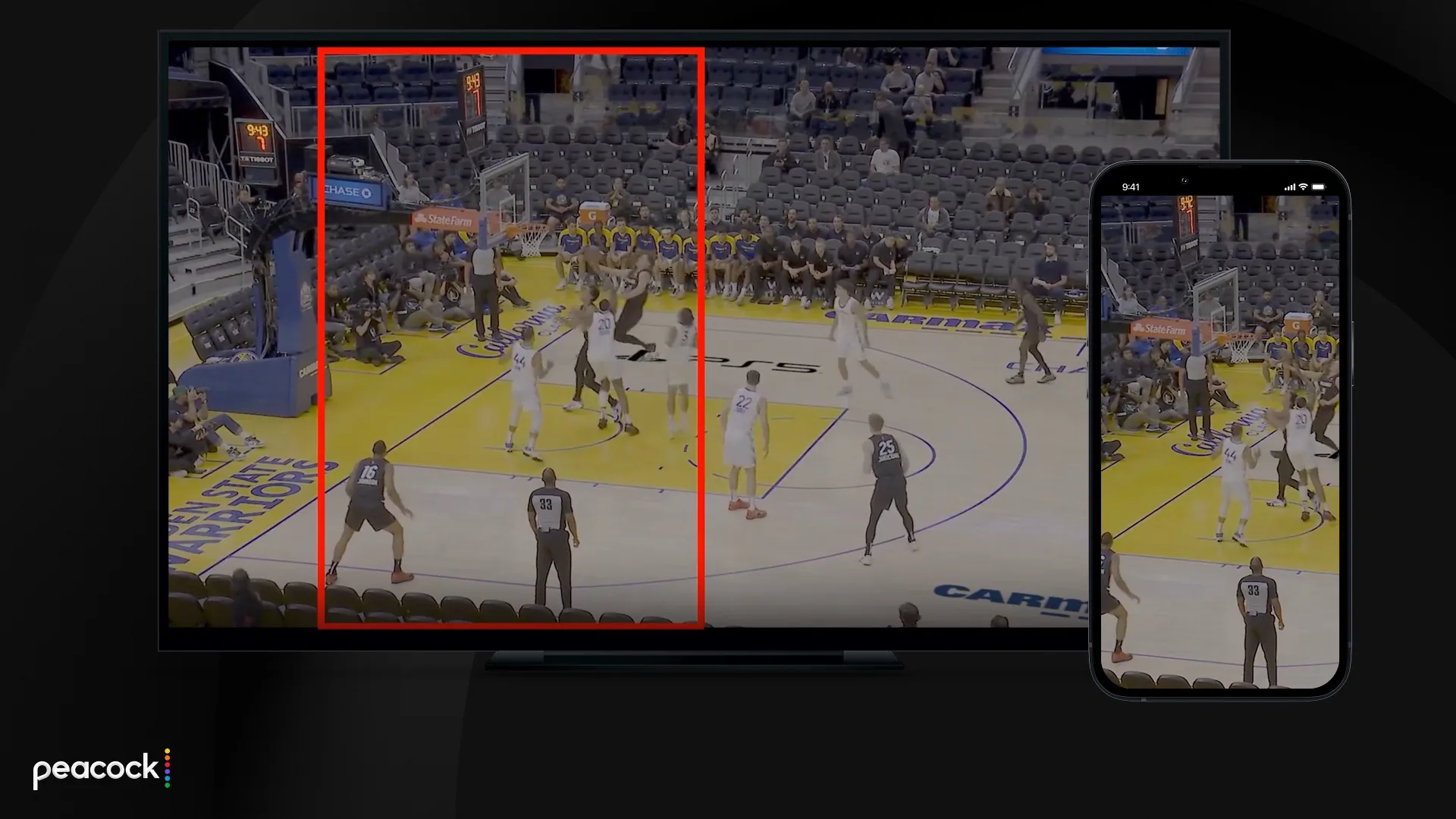
Peacock is introducing live NBA broadcasts formatted vertically for mobile viewing. The feature uses AI-powered cropping technology that tracks the action and adjusts the frame so you can watch games comfortably without turning your phone sideways.

These vertical streams will debut in beta during NBA games this spring. They will appear inside Peacock’s Courtside Live feature, which already lets you switch between different camera angles while watching a game.

Peacock is also expanding short-form video across the app. One of the biggest new experiences is called Your Bravoverse, an AI-driven vertical feed guided by a digital avatar of Bravo host Andy Cohen.

The feature pulls clips from more than 5,000 hours of Bravo programming and stitches them into personalized playlists. Cohen’s AI avatar introduces scenes, connects storylines, and helps viewers discover new shows from the Bravo catalog.

Advertisement

A Jeopardy game is also joining the Peacock app

Peacock is also expanding into mobile gaming. One of the most recognizable additions is a Jeopardy mini game launching this spring.

The game features daily trivia rounds written by the Jeopardy team. You can answer questions, track streaks, and share your results with friends, all inside the Peacock mobile app.

By mixing vertical video, AI recommendations, and games, Peacock hopes to keep viewers interacting with the app long after the credits roll.

Streaming platforms are increasingly turning to vertical video feeds and AI-driven recommendations to keep users engaged on mobile. Disney recently introduced its short-video format called Verts and Netflix already offers a TikTok-style discovery feed.

YouTube’s dominance shows why this strategy matters. The video platform generated $40.4 billion in advertising revenue last year, surpassing the combined 37.8 billion earned by major Hollywood studios, including NBCUniversal.

Advertisement

Source link

Continue Reading
Click to comment

Leave a Reply

Your email address will not be published. Required fields are marked *

Tech

How a Raspberry Pi Saved the Super Nintendo’s Infamously Inferior Version Of ‘Doom’

Published

on

“Just the anachronism of seeing Doom, one of the poster children for the moral panic around violent video games, on a Nintendo console is novel,” writes Kotaku — especially with the console’s underpowered “Super FX” coprocessor

Hampered by a nearly unplayable framerate, especially in later levels, and mired by sacrifices, like altered levels, no floor or ceiling textures, and the entire fourth episode being cut, [1995’s] Doom on the Super NES was not a good version of the game, but it was Doom running on the Super NES, and, for that alone, [programmer Randal] Linden’s genius deserves recognition.

But then in 2022 when Audi Sorlie interviewed Linden on the YouTube show DF Retro, “Not really knowing where fate was going to take us, I asked [Linden] a throwaway question regarding the source code for Doom.”

If you ever worked on this again, Sorlie asked, would you make any improvements or do anything differently?”

Advertisement

“Yeah,” Linden replied. “I have plenty of ideas if I could go back, but, you know, I don’t think anyone’s asking me to go back to Super Nintendo Doom and improve it.”

A few years passed, and Sorlie joined Limited Run Games as lead producer for their development department. When LRG asked him to run down his craziest ideas, a new, improved release of Randal Linden’s Doom loomed large. Convincing Linden was easy, and Sorlie said even the folks at license holder Bethesda were more amused than anything.

“You want to go back and develop for Super Nintendo?” they asked Sorlie. “Like, for real…?”

“The trick was actually pretty cool,” Linden said. “It’s right here.” He pointed to a chip on the prototype SNES cartridge, similar to the one Limited Run sent me to test out the game. “It’s a Raspberry Pi 2350.” Super FX chips are no longer in production for obvious reasons, but with a clever bit of programming, Linden was able to load software onto the Raspberry Pi that fools the SNES into thinking the game has one. “The Super Nintendo doesn’t know that it’s not talking to a Super FX,” he explained. When he programs for it, he writes code almost identical to what he’d write for an authentic Super FX chip.

Advertisement

“I had to go back and reverse-engineer my own code from 30 years ago,” Linden laughed. “It’s like, what was I doing here? And what was I doing there? Yeah, it was pretty tricky, some of the code. I was like, wow, I used to be very smart.” The result of Linden’s work? It’s Doom, running right on a Super Nintendo, but it’s smoother, packed with new content, and even includes rumble.

Source link

Continue Reading

Tech

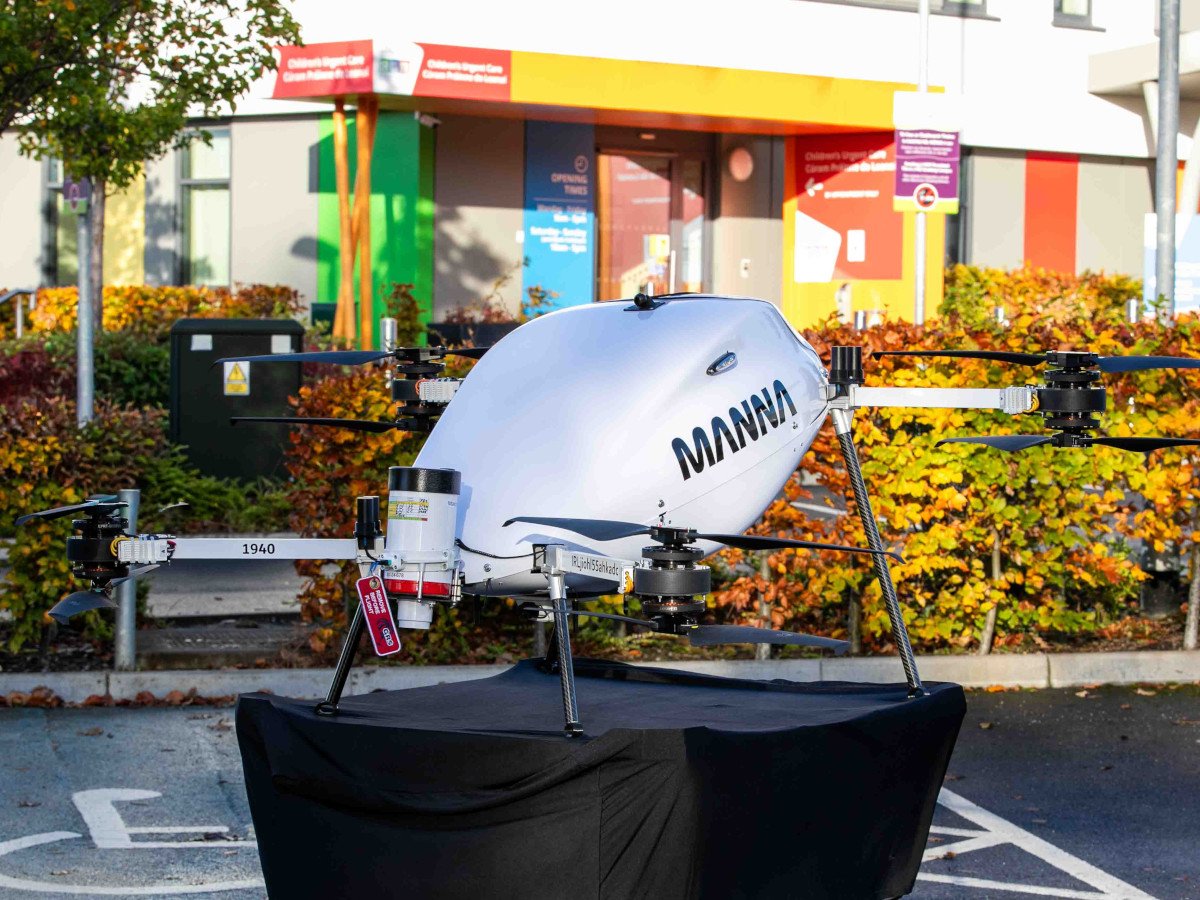
Manna’s Dublin drone trial tests deliveries between hospitals

Published

on

Manna already has a number of commercial tie-ups in Ireland with the likes of Uber, JustEat and Deliveroo.

Manna’s drones simulated deliveries between Dublin’s Rotunda and Connolly hospitals today (13 March), in a trial that hopes to encourage drone adoption in healthcare.

The partners want to demonstrate the potential in transporting blood and other life-saving medical supplies speedily using small aerial vehicles.

Manna rival Wing has previously trialled transporting medical supplies with the UK’s National Health Service in London, finding that transportation times between Guy’s Hospital and St Thomas’s Hospital were reduced from 30 minutes to two minutes when drones were used.

Advertisement

Last year, in a joint project in collaboration with the HSE, the National Ambulance Service and Community First Responders, Manna demonstrated how defibrillators could be delivered to homes much faster using drones than ambulances, while a previous study in Sweden found that drones beat ambulances to the patient 70pc of the time.

“Today’s simulation is a glimpse of that future,” commented Rotunda Hospital’s laboratory manager John O’Loughlin. “The ability to move blood, samples and other critical supplies between hospitals at speed could transform how we support emergency and planned care in Ireland.”

Manna’s CEO Bobby Healy added: “We’ve proven this technology works at scale. What we’re showing now is how it can be applied in healthcare, where minutes matter. Ireland is well-placed to lead the way, and this simulation is about building trust and momentum toward full integration.”

Manna already has a number of commercial tie-ups in Ireland with the likes of Uber, JustEat and Deliveroo to deliver food and other small goods to suburban communities.

Advertisement

Last year, it expanded its focus from Dublin and announced an entry into Cork’s airspace. Overall, it claims to have made more than 250,000 successful deliveries to date.

The 2019-founded company announced a $30m raise last year. Its backers include Tapestry VC, Molten Ventures, Coca-Cola and Dynamo Ventures.

Don’t miss out on the knowledge you need to succeed. Sign up for the Daily Brief, Silicon Republic’s digest of need-to-know sci-tech news.

Advertisement

Source link

Continue Reading

Tech

US Army announces contract with Anduril worth up to $20B

Published

on

The U.S. Army said late Friday that it has signed a 10-year contract with defense tech startup Anduril. The deal could be worth up to $20 billion.

According to the announcement, the contract starts with a five-year “base period,” with the option to extend the deal for an additional five years, and it includes Anduril hardware, software, infrastructure, and services.

The Army describes the agreement as a single enterprise contract consolidating what had been “more than 120 separate procurement actions for Anduril’s commercial solutions.” 

“The modern battlefield is increasingly defined by software,” said Gabe Chiulli, the chief technology officer at the Department of Defense’s Office of the Chief Information Officer, in a statement. “To maintain our advantage, we must be able to acquire and deploy software capabilities with speed and efficiency,”

Advertisement

Anduril was co-founded by Palmer Luckey, who was previously known for selling VR startup Oculus to Facebook (now Meta). Facebook fired Luckey after controversy erupted following a news report that he’d donated to a pro-Trump political group.

Luckey has repeatedly insisted that the media misrepresented his political views, but according to a recent feature in The New York Times, Luckey and Anduril have been embraced by the second Trump administration, thanks to his vision for remaking the U.S. military with autonomous fighter jets, drones, submarines, and more. The company (named, like Palantir, for a magical object in “The Lord of the Rings”) brought in around $2 billion in revenue last year, the NYT says.

Separate reports suggest that Anduril is in talks to raise a new funding round at a $60 billion valuation. 

Techcrunch event

Advertisement

San Francisco, CA
|
October 13-15, 2026

This announcement also comes as the Department of Defense is locked in a dispute with Anthropic, with the AI company suing the DoD over its designation as a supply chain threat following a failed contract negotiation, while OpenAI has faced consumer backlash and at least one executive departure after signing a Pentagon deal of its own.

Advertisement

Source link

Continue Reading

Tech

Microsoft EVP Rajesh Jha retiring after 35 years in latest exit from senior leadership team

Published

on

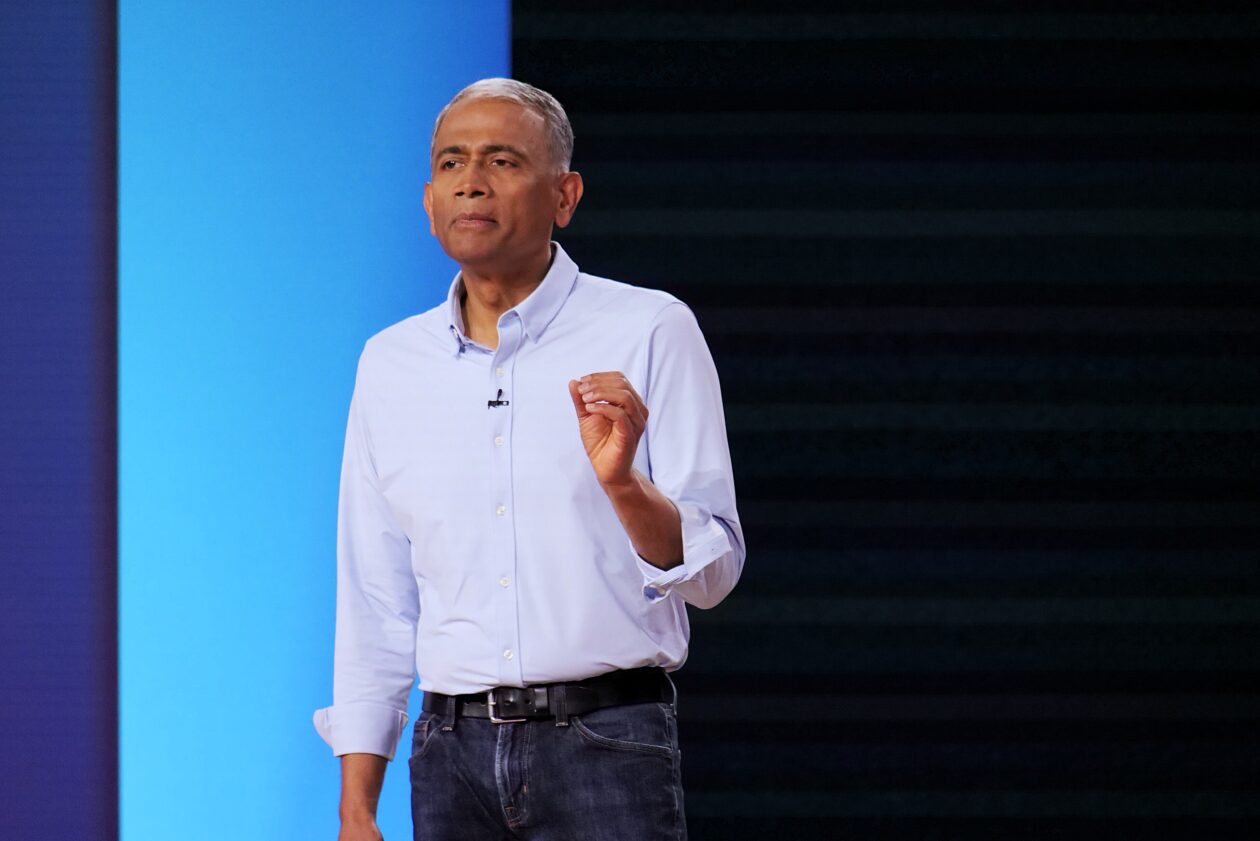
Rajesh Jha speaks at Microsoft Build in May 2024. (GeekWire Photo / Todd Bishop)

Rajesh Jha, who led Microsoft’s biggest consumer and business products as executive vice president of the Experiences + Devices group, plans to retire later this year after more than 35 years at the company. 

The plan was announced internally Thursday in emails made public by Microsoft.

“When I think about the pantheon of leaders who have truly shaped this company, Rajesh stands firmly among them,” Microsoft CEO Satya Nadella said in one of the messages.

Jha, 60, said he will transition out on July 1 and stay on in an advisory role. He said that he and Nadella have been working on succession planning for some time.

As part of the transition, four executives will now report to Nadella: Perry Clarke, Microsoft 365 core infrastructure; Charles Lamanna, business and industry Copilot; Pavan Davuluri, Windows and Devices; and LinkedIn CEO Ryan Roslansky.

Advertisement

Jeff Teper, who leads collaboration apps including SharePoint and Teams, is being promoted to EVP, and Sumit Chauhan and Kirk Koenigsbauer are being promoted to president.

It’s the latest in a series of exits from Microsoft’s senior leadership team. Xbox chief Phil Spencer announced his retirement in February after 38 years at the company, and security leader Charlie Bell shifted from his EVP role to an individual contributor position.

The departures come as Nadella reshapes the company’s leadership structure around a broader group of direct reports, with a focus on AI and Copilot as top priorities.

Jha joined Microsoft in 1990 as a software design engineer and rose through roles overseeing Exchange, SharePoint, and the launch of Office 365 before taking charge of the broader Experiences + Devices group, which encompasses Office, Teams, Windows, Search, and devices. He joined Nadella’s senior leadership team in 2016.

Advertisement

In his message, Nadella praised Jha’s operational discipline and strategic judgment, saying he has been “a constant throughout my entire life at Microsoft.” Nadella said Jha embodies the commitment that helped build and transform the company.

Source link

Continue Reading

Tech

Amazon's M5 MacBook Pro sale delivers deals from just $1,399

Published

on

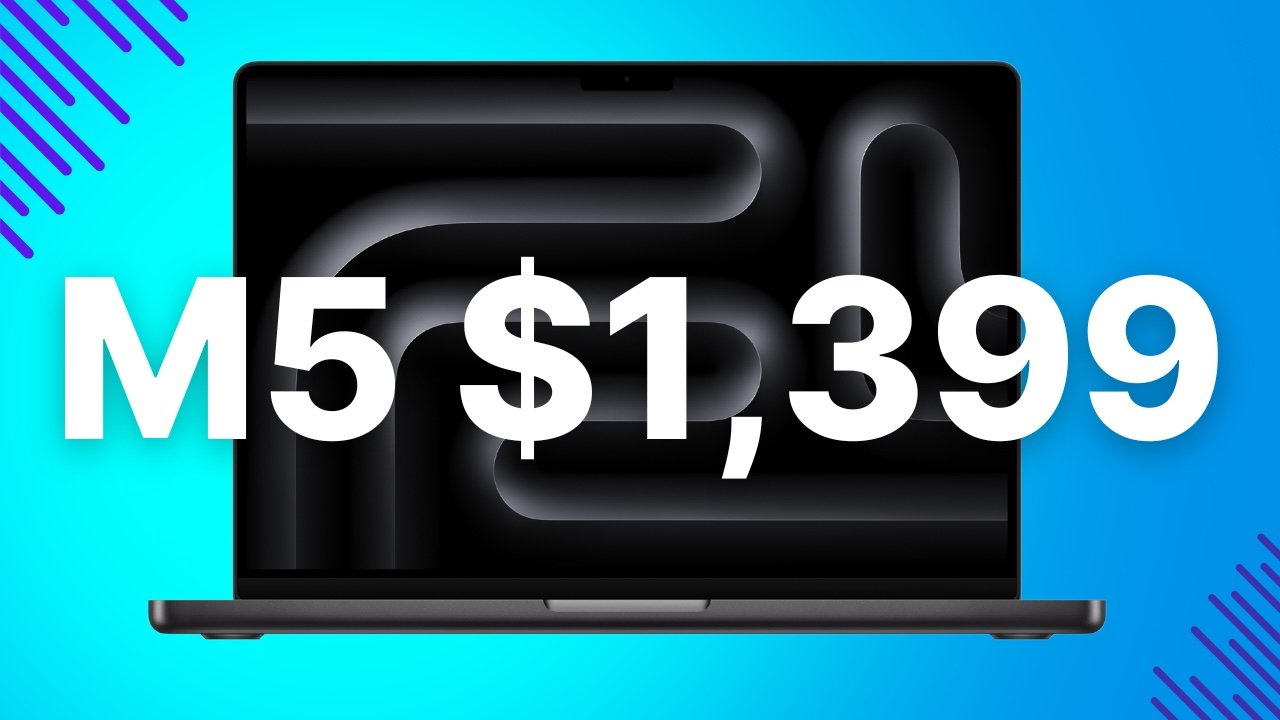
Amazon’s weekend M5 MacBook Pro sale delivers steep discounts on multiple configurations, from the standard model for $1,399 to the upgraded 1TB spec for $1,499.

Open MacBook Pro M5 laptop on bright blue background with abstract dark pattern on screen, large bold white text centered over it reading M5 $1,399
Grab the lowest prices on M5 MacBook Pro at Amazon – Image credit: Apple

Weekend MacBook Pro deals are in full swing, with the standard M5/16GB/512GB spec discounted to $1,399.99, reflecting a $200 markdown off MSRP.
Buy M5/16GB/512GB MacBook Pro for $1,399.99
Continue Reading on AppleInsider | Discuss on our Forums

Source link

Continue Reading

Tech

Survey finds Americans worry about AI data centers, but still want the jobs

Published

on


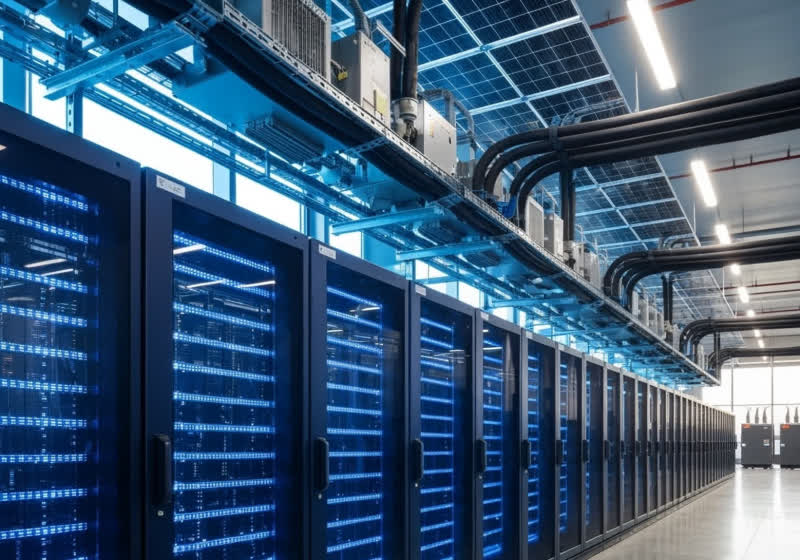
Out of 8,512 US adults surveyed in late January, more respondents expressed negative views about data centers’ effects on the environment and energy costs than positive ones. However, the largest number of respondents expect data centers to have a positive impact on jobs and tax revenue, and many remain unsure…
Read Entire Article
Source link

Continue Reading

Tech

The telephone is 150 years old. It’s still changing everything.

Published

on

On March 10, 1876, a 29-year-old Scottish immigrant named Alexander Graham Bell sat in a modest laboratory at 5 Exeter Place in Boston and did something no human being had ever done: He spoke into a wire, and someone in the next room heard his voice. His exact words, recorded in his laboratory notebook: “Mr. Watson — Come here — I want to see you.” His assistant, a 22-year-old mechanic named Thomas Watson, came running.

That was it. Nine words, shouted through a crude device that used a vibrating wire dipped in acid water to convert sound to electricity. At the time, it worked only one way. The sound, Bell admitted, was “loud but indistinct and muffled.” And yet those nine words launched a revolution in how human beings connect with each other — one that, 150 years later, may still be one of the most underappreciated good-news stories of the modern era.

The telephone took off fast. By around 1880, there were roughly 130,000 phones in the United States; by 1900, 1.4 million; by 1910, nearly 6 million. Bell himself demonstrated the device at the 1876 Centennial Exhibition in Philadelphia, where Emperor Dom Pedro II of Brazil picked up the receiver and reportedly exclaimed: “My God, it talks!” (The telegraph company Western Union, less impressed, reportedly declined to buy Bell’s patent for $100,000 — a business decision that ranks alongside passing on the Beatles.)

In the US, the telephone quickly became indispensable. During the 1918 flu pandemic, New York City’s phone traffic spiked to 3.2 million calls a day as quarantined residents relied on the telephone for groceries, medical advice, and human contact. In Los Angeles, tens of thousands of students were set up to receive instruction partly by phone during school closures — arguably the first remote learning. A New York Times editorial marveled: “Less than forty years ago the telephone was an amusing toy … Now, nobody can understand how we lived without it.”

Advertisement

By 1946, half of American homes had a telephone. By 1970, more than 90 percent did. And as a great piece this week in the New York Times by Andrew Heisel noted, for all the disruptions it brought — scammers, prank callers, concerns about disease transmission from the mouthpiece — the telephone provoked remarkably little of the technological panic seen with similarly transformative inventions like the automobile. It was simply too useful to be scared of.

A leapfrog into the future

But for all that, the most important telephone story of the past 150 years isn’t about America at all. It’s about what happened when the telephone finally went mobile — and reached the billions of people who had been left out of the wired revolution entirely.

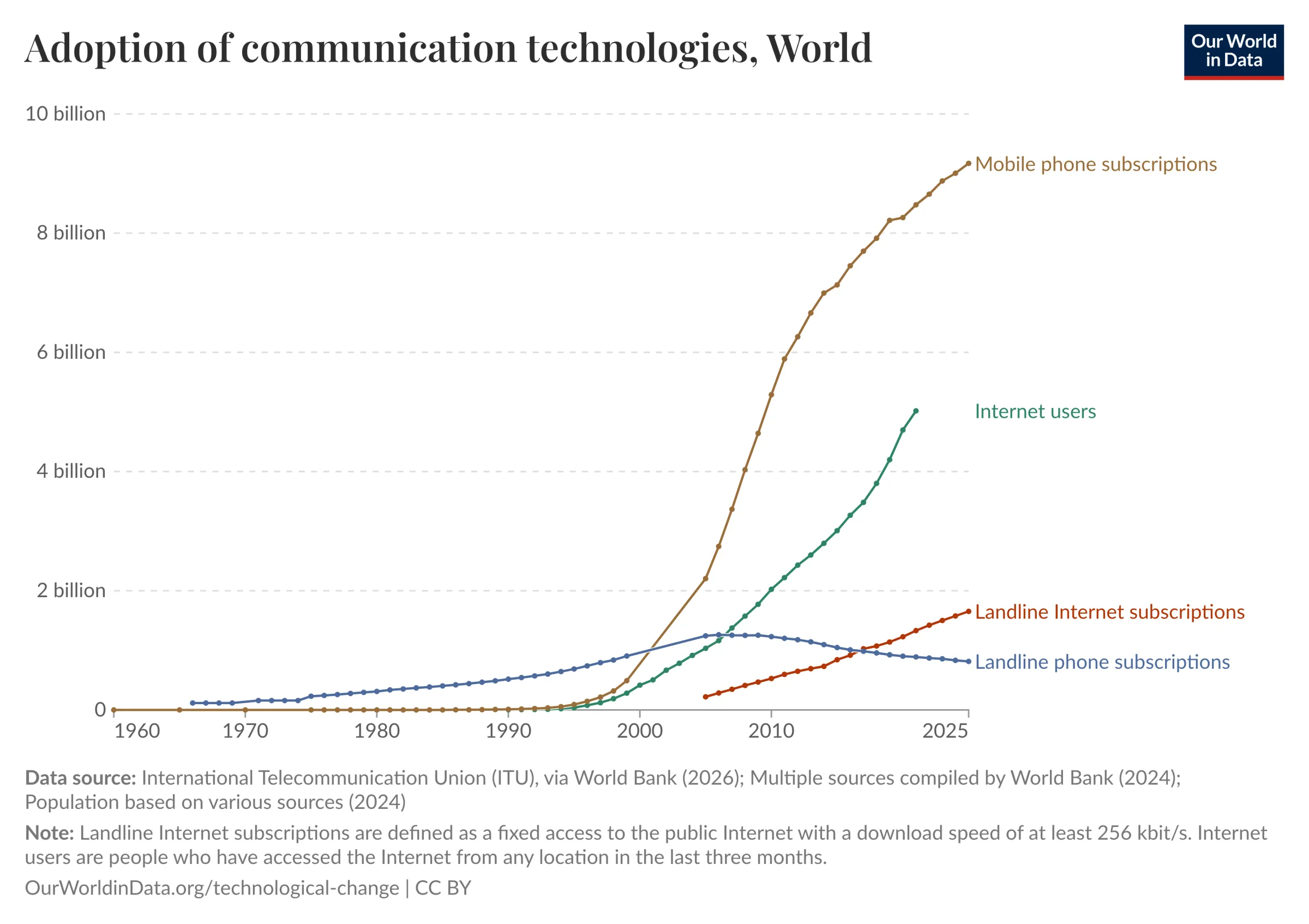
As of 2000, all of sub-Saharan Africa had fewer telephone lines than Manhattan. The entire region had roughly 1.6 landline connections per 100 people. South Asia was barely better. For much of the developing world at the dawn of the 21st century, Alexander Graham Bell’s invention, already more than a century old, still wasn’t a part of their reality.

Advertisement

Their explosive growth is one of the most extraordinary in the history of technology adoption. Sub-Saharan Africa went from about 2 mobile subscriptions per 100 people in 2000 to 89 by 2023. South Asia went from less than 1 to 84. Globally, there are now more than 9 billion mobile subscriptions — more connections than human beings on the planet. The developing world skipped past the telephone age and went straight to mobile.

A phone call out of poverty

These weren’t just phones. They were economic lifelines.

The most celebrated example is M-Pesa, a mobile money system launched by Safaricom in Kenya in 2007. M-Pesa lets users send money, pay bills, and save — all through a basic mobile phone, no bank account required.

A landmark 2016 study published in Science by economists Tavneet Suri and William Jack found that M-Pesa had been adopted by at least one person in 96 percent of Kenyan households. More remarkably, access to M-Pesa lifted an estimated 194,000 households — roughly 2 percent of the country — out of extreme poverty. The effects were strongest for female-headed households: some 185,000 women shifted from subsistence farming to business occupations. Today, mobile money platforms handle $1.68 trillion in annual transactions globally, with over 2 billion registered accounts.

Advertisement

Or consider Robert Jensen’s now-classic study of fishermen in the Indian state of Kerala. Before mobile phones arrived in the late 1990s, fishermen would land their catch at the nearest beach with no idea what prices looked like elsewhere. Some markets would have a glut; others, a shortage. Waste ran as high as 8 percent.

But when mobile coverage rolled out, fishermen could call ahead to check prices and choose the best market. Waste dropped to near zero. Their profits rose 8 percent. Consumer prices fell 4 percent. The phones paid for themselves within two months.

The big-picture numbers are staggering. World Bank research has estimated that moving a region from no mobile coverage to full coverage boosts GDP growth by 1.8 to 2.3 percentage points. The GSMA — the global mobile industry body — puts it this way: in 2025, mobile technologies and services generated $7.6 trillion for the global economy, equivalent to 6.4 percent of world GDP.

Mobile health programs have improved medication adherence for HIV patients in Africa. SMS reminders have boosted vaccination rates and prenatal care visits. In the developing world, the phone in your pocket can be a bank, a clinic, a classroom, and a market — sometimes all before lunch.

Advertisement

I can hear the objection: What about all the bad stuff? What about teen mental health and doomscrolling and the algorithmic attention trap? What about TikTok!

Jonathan Haidt’s The Anxious Generation made a forceful case that the shift to a “phone-based childhood” around 2010–2015, driven by smartphones and social media, has contributed to rising rates of depression and anxiety among adolescents. The data on teen mental health is genuinely alarming — federal survey data shows that 20 percent of American 12- to 17-year-olds experienced a major depressive episode. And as Heisel wrote, the smartphone — with the internet inside and algorithms engineered for engagement — is qualitatively different from the old landline, whose cord literally kept you tethered.

The science on this is more contested than the headlines suggest, as my Vox colleague Eric Levitz wrote about in 2024, but I don’t think you need peer-reviewed studies to realize that smartphones have changed many aspects of life for the worse, especially for young people.

Still, what gets lost in the smartphone-anxiety conversation: the people who benefit most from mobile telephony — and the ones who could stand to benefit — are precisely the ones who appear least in Western coverage of the issue.

Advertisement

Some 885 million women in low- and middle-income countries still lack mobile internet access. Closing that gap alone would add an estimated $1.3 trillion in GDP through 2030. For a Kenyan market vendor or an Indian fisherman, a mobile phone isn’t a source of anxiety. It’s the most empowering technology they’ve ever held.

Nine words, 150 years later

Alexander Graham Bell couldn’t have imagined any of this. He reportedly wanted the standard telephone greeting to be “Ahoy!” (Thomas Edison, wisely, overruled him with “Hello.”) He couldn’t have imagined M-Pesa, or a fisherman checking sardine prices from a boat off the coast of Kerala, or a pregnant woman in rural Ghana receiving prenatal reminders by text. He definitely couldn’t have imagined TikTok.

But what Bell would have realized from the start is that his invention could destroy distance. And in just a century and a half, his invention and its successors have connected billions, lifted millions from poverty, saved lives, and created economic opportunity on a scale Bell could never have dreamed of when he shouted those nine words at Thomas Watson.

Advertisement

A version of this story originally appeared in the Good News newsletter. Sign up here!

Source link

Advertisement
Continue Reading

Tech

The MacBook Neo is ‘the most repairable MacBook’ in years, according to iFixit

Published

on

Apple’s new MacBook Neo isn’t just the most affordable MacBook by far — it’s also the most repairable MacBook in “about fourteen years,” according to an in-depth teardown by how-to website iFixit.

The “big story,” in iFixit’s view, is the battery. While older MacBook batteries are supposedly glued into place, the Neo’s battery is held by a tray secured with 18 screws. That’s a lot of screws, but iFixit declared that “screws still beat adhesive every time.” In fact, this new arrangement — which should make it much easier to replace your MacBook battery —  “sent cheers across the iFixit office.”

Other changes that reportedly make the MacBook Neo more repairable: a flat disassembly tree, the fact that Repair Assistant appears to accept replacement parts without complaint, and an easier-to-replace display and keyboard.

Ultimately, iFixit still had enough concerns — like soldered RAM and storage — that it only gave the Neo repairability score of 6 out of 10. But it said that for a MacBook, “that’s a strong score.”

Advertisement

Source link

Continue Reading

Tech

3 Perks You Didn’t Realize Come With MyLowe’s Pro Rewards Program

Published

on


Rewards programs are being offered in virtually every retail environment in existence these days, and some of those programs are far more rewarding than others. However, if you’re a contractor, tradesman, or business owner looking to maximize your return at a major home improvement outlet, the finer points of programs offered by major players like The Home Depot could prove to be make-or-break for you and your employees.

You may, however, prefer Lowe’s to The Home Depot, and you are not alone in that, as J.D. Power recently ranked it as the best home improvement retailer in the game. If you slot into that particular category, you may already be a member of the MyLowe’s Pro Rewards program. If that’s the case, you’ve likely been working hard to maximize the program’s financial benefits by racking up points for your various purchases and promptly cashing them in for members’ rewards or some of that good old MyLowe’s Money. 

If not, well, you need to read the fine print of your program agreement, because those points do not stick around in your account forever. While you are taking that fine print deep dive, be sure to look beyond just the points-based deals MyLowe’s Pro is giving you, because the program offers a few other perks that make it worth your while, particularly since it is free to sign up. 

Advertisement

You get free standard shipping and same-day delivery

Buying things online has become the preferred way for many office dwellers and work site pros to procure the goods they need from their local Lowe’s Home Improvement store. Like many retailers, Lowe’s has sought to make that process easier for any consumer who prefers to drop items into a digital cart rather than a physical one.

Of course, shipping fees can be a frustrating part of shopping for anyone. MyLowe’s Pro members might be interested to know that the big box home improvement store sweetens the shopping pot a bit by also providing them with free standard shipping and same-day delivery. There are, however, caveats to each of those deals that you’ll want to account for in your shopping. For instance, free shipping is not available for residents of Alaska, Hawaii, or certain other U.S. territories. Likewise, the deal only applies to eligible in-stock items, and you’ll need to spend at least $25 to qualify.

Advertisement

That $25 spend applies to the same-day delivery feature. The deal also only applies to items up to 60 pounds, with Lowe’s capping the maximum weight for the order at 300 pounds. Similarly, the purchased items can be no bigger than 48 inches x 36 inches x 21 inches. On top of that, you’ll need to place the order before 2 p.m. for same-day delivery, with Lowe’s guaranteeing the order will arrive by 8 p.m. Additional delivery fees may still be applied for hazardous materials.

Advertisement

Access to upgraded purchasing options

Free shipping and same-day delivery might be enough to inspire a professional in need to spend extra on some Lowe’s exclusive brands and other worksite materials. The program also offers a couple of other intriguing purchasing upgrades that could tempt worksite pros who can’t always get away from a job to buy or even pick up items they need at the nearest Lowe’s.

If you’ve even casually considered signing up for a MyLowe’s Pro Rewards account, you likely already know you will receive an attractive volume discount on large materials orders. You may not, however, know that you don’t need to be present to pick those orders up, with the program allowing you to designate trusted crew members to do that for you. Designated crew members can even make purchases for you when the need arises, and if you’re using the MyLowe’s Pro app, there’s an easy-to-use Scan to Pay feature they can use when picking the order up. 

As far as procuring materials you need for a job, your MyLowe’s Pro account grants you access to the retailer’s order quoting feature, which can be used online, in-store, or through the app. That feature lets you create and edit an order via the Pro Desk assistant anywhere, including from the job site itself. On top of those purchasing features, MyLowe’s Pro includes access to its Pro Business Solutions, which can help you analyze your spending habits by tracking your purchases and calculating your savings year over year.  

Advertisement

You may also get a solid discount on paints

Savings don’t end with exclusive members’ deals, redeemable points, and volume discounts on work materials. Depending on what sort of work you do, the paint discount you get with a MyLowe’s Pro Rewards membership could be enough to seal the membership deal.

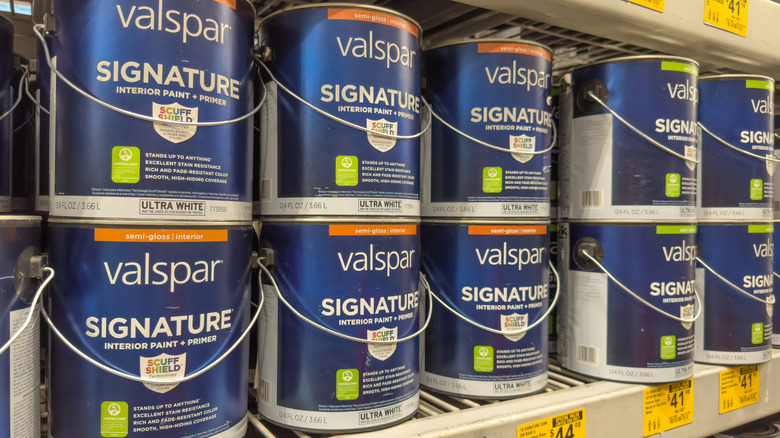
For the record, that discount is a whopping 20%. While that number might be an eye-opener for those in the house painting and interior design fields, you’ve no doubt already guessed that the discount comes with a string or two attached. First and foremost, the 20% price reduction only applies to new cans of paint. As such, it actively excludes any spray paints or so-called “mistints,” which are paints that were mixed incorrectly, resulting in an inaccurate color. 

Moreover, it’s worth noting that this feature also comes with an annual spend restriction, with the 20% discount not kicking in unless you spend $3,000 annually. Per Lowe’s, the discount applies to future qualifying paint purchases and “eligibility for subsequent program periods will be determined by the previous year’s annual qualifying spend.” You’ll also want to keep close tabs on the calendar when it comes to qualifying for your paint discount, as the spend tracking resets at the first of the year. Despite those caveats, if painting is a big part of your everyday workflow, saving 20% on your purchase is the kind of deal that may be hard to ignore.

Advertisement


Source link

Advertisement
Continue Reading

Tech

Google Maps launches Ask Maps

Published

on

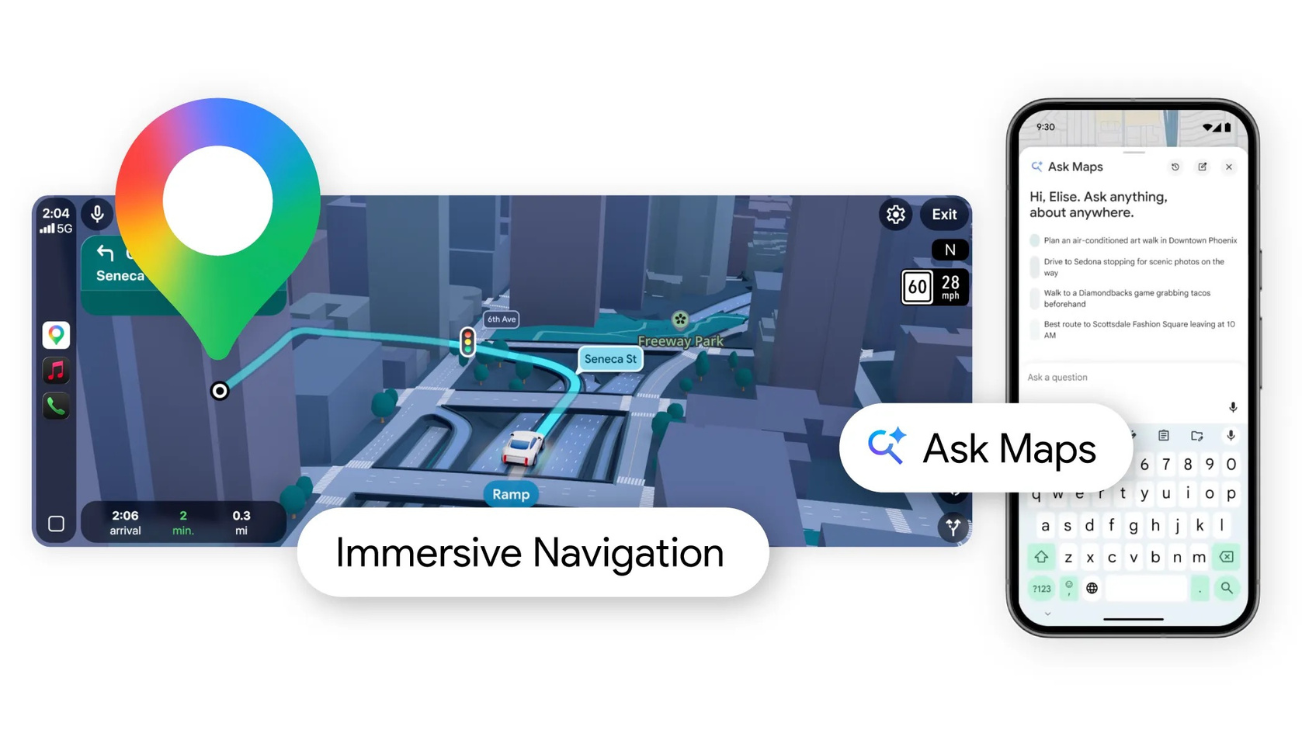
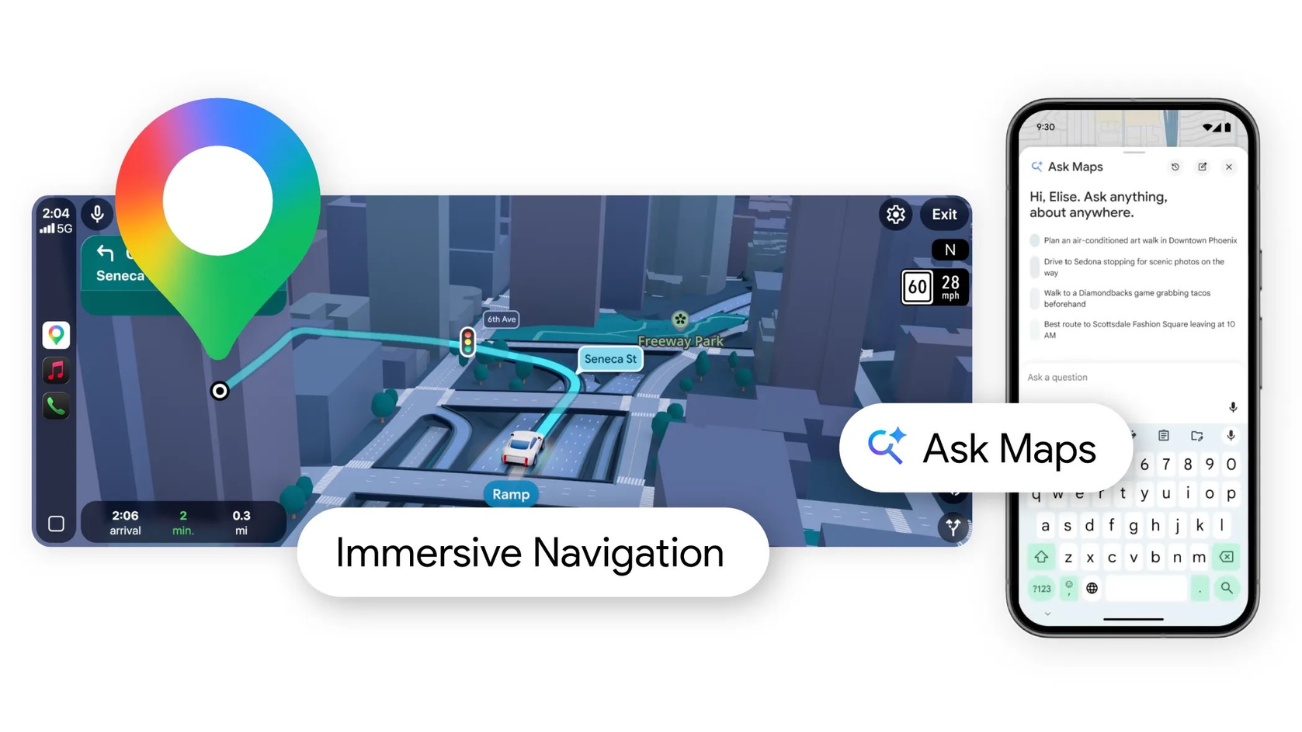
Ask Maps lets users query the world in natural language. Immersive Navigation rebuilds directions in 3D. Together, they mark the most significant overhaul of Google Maps since Street View.

The question Google is now asking its users to ask Maps is: “My phone is dying, where can I charge it without a long wait for coffee?” That a navigation app can handle that query, and actually answer it well, marks a meaningful shift in what digital cartography can do.

Google announced Ask Maps, a conversational AI feature powered by Gemini, alongside a redesigned Immersive Navigation experience that brings photorealistic 3D rendering to turn-by-turn directions. The combination represents what Google is calling its most significant Maps update in over a decade, though it is careful not to say so directly.

Ask Maps works by allowing users to pose complex, contextual queries rather than searching for a specific place or category. “Is there a public tennis court with lights on that I can play at tonight?” is the example Google offers in a blog post published March 12.

Advertisement

The system draws on personalisation signals, including a user’s saved places and past searches, to weight its answers, so a user who has previously sought out vegan restaurants will find vegan-friendly options surfaced without having to specify.

Advertisement

The feature is rolling out now in the US and India on Android and iOS, with a desktop version to follow. Google has not given a timeline for wider international expansion.

The 3D rebuild

Immersive Navigation, the second major component of the update, replaces the current flat-map navigation overlay with a 3D view that incorporates nearby buildings, overpasses, and terrain. Lane markings, traffic lights, crosswalks, and stop signs are rendered as visual cues rather than text instructions.

Voice guidance has been updated to use landmark-based phrasing, “Go past this exit and take the next one for Illinois 43 South”, rather than distance-based prompts.

The redesign brings Google Maps closer to Apple Maps’ long-standing visual approach, which introduced detailed 3D city rendering several years ago. That Google is only now deploying comparable depth in navigation, rather than its existing Immersive View, which was a separate, non-navigation mode, reflects both the computational cost of real-time 3D rendering on mobile devices and the time it takes to build the underlying map data at sufficient resolution.

Advertisement

The competitive context

Ask Maps is Google’s most direct integration of its Gemini AI into a product used by more than a billion people monthly. Until now, Gemini’s presence in Maps has been limited to AI-powered summaries of places and reviews. Ask Maps extends that to full conversational navigation, putting Google in more direct competition with AI-native tools like Perplexity, which has built search-style answers to location-based queries into its products.

The update also arrives at a moment when Apple is deepening its own Maps intelligence, and when OpenAI has been exploring location-aware features in ChatGPT. For Google, which generates a significant portion of its advertising revenue from local search queries, keeping Maps as the dominant interface for spatial intent matters enormously. Ask Maps is the company’s clearest signal yet that it intends to defend that ground.

Whether users will actually talk to their maps, or default to the familiar search box, is the open question. Google has introduced conversational search features before, and adoption has often been slower than product announcements suggest.

But the infrastructure is now in place. The next question is the one users will actually ask.

Advertisement

Source link

Continue Reading

Trending

Copyright © 2025