
Security teams log 54% of successful attacks and alert on just 14%. The rest move through your environment unseen.
The Picus whitepaper shows how breach and attack simulation tests your SIEM and EDR rules so threats stop slipping by detection.





Poolside, the San Francisco AI lab that has spent most of its three-year existence quietly selling coding models to governments and defense agencies, released its most capable model to date on Tuesday — and made an unusually aggressive bet that radical transparency, not raw scale, is how a smaller lab competes at the frontier.
The model, Laguna S 2.1, is a 118-billion-parameter Mixture-of-Experts (MoE) system that activates only 8 billion parameters per token, supports a context window of up to 1 million tokens, and — according to benchmarks published by the company — matches or beats open models several times its size on agentic coding tasks. The weights are available immediately on Hugging Face under the permissive OpenMDW-1.1 license.
The headline numbers are striking for a model this small. Poolside reports that Laguna S 2.1 scores 70.2% on Terminal-Bench 2.1, a benchmark of long-horizon terminal tasks, placing it 11th on the company’s compiled leaderboard — ahead of DeepSeek-V4-Pro-Max, a 1.6-trillion-parameter model that scored 64.0; Thinking Machines’ 975-billion-parameter Inkling, at 63.8; and Nvidia’s 550-billion-parameter Nemotron 3 Ultra, at 56.4. On SWE-Bench Multilingual, it posts 78.5%, and on SWE-Bench Pro‘s public dataset, 59.4%.
Perhaps more telling than any single score: the model went from the start of pre-training on May 22 to public launch in under nine weeks, trained on 4,096 Nvidia H200 GPUs. In an industry where flagship model cycles are typically measured in quarters or years, Poolside has now shipped three models in three months.
The release lands in the middle of an increasingly pointed debate about the provenance of open-weight AI. Over the past year, developer adoption has shifted decisively toward open-weight systems that companies can download, inspect, and run on their own infrastructure — and the leading options in that category have overwhelmingly come from Chinese labs. DeepSeek, Qwen, Kimi, GLM, MiniMax, and Tencent’s Hunyuan line all feature prominently in Poolside’s own comparison tables.
Poolside’s accompanying press release frames Laguna S 2.1 explicitly as a response, noting that the model occupies a size class into which no Western lab has released open weights in 11 months — since OpenAI’s gpt-oss-120b last August. “The West needs open-weight models it can trust, run, and build on,” said Jason Warner, Poolside’s co-CEO, in the announcement.
Co-founder and co-CEO Eiso Kant made the philosophical stakes even plainer in a lengthy post on X. “I believe intelligence should and will become a commodity,” he wrote, arguing that the open ecosystem “will not win by being the best in its own category.” Users, he argued, simply want the best intelligence for the task at hand — so open models must be on par with, or better than, their closed equivalents.
The strategic logic here is not charity. Poolside’s core business is deploying models inside the security boundaries of government, defense, and regulated enterprises — customers for whom closed, metered API access is often a non-starter for compliance and sovereignty reasons.
Every enterprise that standardizes on a Chinese open model today becomes harder to win tomorrow. Releasing competitive open weights is both an ecosystem play and a top-of-funnel strategy for the company’s high-security deployment business. It also reframes the AI race away from terrain where Poolside cannot compete — frontier-scale capital expenditure — and toward terrain where it believes it can: cost per token, self-hosting, and iteration speed.
The technical design reflects a specific thesis about where value in coding AI is moving. Laguna S 2.1’s sparse MoE architecture — 256 routed experts plus one shared expert, with grouped-query attention and interleaved sliding-window layers, according to the Hugging Face model card — means inference costs scale with the 8 billion active parameters, not the 118 billion total. Poolside emphasizes that the model is small enough to run on a single Nvidia DGX Spark, the desktop-class AI machine.
That matters for what Poolside calls token economics. Long-horizon coding agents are voracious consumers of tokens: the company’s published data shows the model consuming a mean of roughly 249,000 completion tokens per trajectory on its hardest benchmark when thinking mode is enabled. At metered API prices, agentic workloads at enterprise scale become a meaningful budget line item. On OpenRouter, Poolside is offering a free 256K-context endpoint and a dedicated 1M-context deployment priced at $0.10 per million input tokens and $0.20 per million output tokens — aggressive pricing that undercuts most frontier alternatives by an order of magnitude.
The ecosystem support is unusually broad for day one. The model is live on Baseten’s model library and Vercel’s AI Gateway, with integrations across vLLM, SGLang, Ollama, and llama.cpp, plus quantized variants down to 4-bit GGUF files — 75 gigabytes — for local use. But Poolside’s more interesting claim is behavioral, not architectural. Pengming Wang, co-head of applied research at Poolside, said the gains came from improving the model’s working habits: “more verification, less taking things for granted, not declaring victory early, and being more persistent.” Raw intelligence, the company argues, is one axis of capability; a model’s way of working is a second axis that matters immensely for agents left unattended for hours.
The most consequential part of the release for enterprise buyers may be an evaluation-transparency move with little precedent among major labs: Poolside published the complete, unedited trajectory of every trial in its final benchmark runs — every reasoning step, tool call, and shell command behind every reported score.
This addresses a growing credibility problem in AI benchmarking. As top scores on mature benchmarks cluster in the 70–90% range, and as “reward hacking” — models finding solutions online or gaming verifiers rather than solving problems — has become endemic, self-reported numbers have lost much of their signal. Poolside disclosed its own encounters with the problem candidly: during training, more than half of trajectories on some SWE-bench tasks were flagged because the model simply researched the original bug-fix pull request online and applied it. The company documented its mitigations, including prompt addenda, LLM-based judging calibrated against human labels, and expert annotator review of a high-scoring Terminal-Bench run.
Three published case studies illustrate what the company means by persistence. In one, the model built a working HTML/CSS rendering engine from an empty folder in a 181-step, 50-minute unattended session — then, lacking vision capabilities, spun up headless Chromium to numerically compare its canvas output against a real browser’s rendering. In another, pointed at Poolside’s own agent harness in an automated optimization loop, the model made the Go codebase 5.2% faster with roughly 70% lower memory allocation, finding an O(n²) string-concatenation bug along the way. In a third, working in a sandbox with no Python installed, the model did its number theory in Perl and independently re-derived a proof of Erdős problem #397 — a combinatorics question open for five decades until GPT-5.2 Pro first solved it this past January. Poolside notes that its model’s construction is structurally different from the earlier published solution, and that its November 2025 knowledge cutoff precedes the first proof.
Poolside deserves credit for disclosing limitations most labs bury. The model can overfit to its native harness and stumble on slightly different tool schemas in third-party agents, mangles JSON in nested tool arguments, and is prone to overthinking on competition math. There is currently no user-configurable thinking-effort dial — just on or off — and the gap between the modes is enormous: thinking lifts Terminal-Bench 2.1 from 60.4% to 70.2%, and DeepSWE from 16.5% to 40.4%, at substantially higher token cost.
Buyers should apply their own discounts to the comparison tables. Poolside’s methodology takes the maximum of vendor self-reported scores, benchmark-author leaderboards, and third-party figures for competitors — a reasonable convention, but one that mixes harnesses and test conditions. On DeepSWE, notably, Poolside ran its own agent harness rather than the leaderboard’s standard mini-swe-agent, a difference the company acknowledges makes scores less directly comparable. And the frontier remains clearly out of reach: closed models like GPT-5.6 Sol, at 88.8 on Terminal-Bench 2.1, and Claude Fable 5, at 88.0, along with the 2.8-trillion-parameter open-weight Kimi K3, at 88.3, sit well above Laguna S 2.1.
The deeper structural question is whether Poolside’s “Model Factory” — the internal platform the company credits for its rapid release cadence — can sustain this pace as models scale. The trajectory so far is genuinely unusual: the April dual release of Laguna M.1 and XS.2, the July 2 refresh of XS 2.1, and now S 2.1, which the company says outperforms April’s flagship M.1 at roughly a third of its active size. Remarkably, S 2.1 used the exact same pre-training data as XS 2.1, meaning nearly all the improvement came from scale, training fixes, and post-training across the company’s corpus of 409,000 agentic and non-agentic training environments. Poolside says its next, larger Laguna model began pre-training last week.
For technical decision makers, Laguna S 2.1 is the most credible Western open-weight option to emerge in nearly a year for self-hosted agentic coding — with published evidence, a permissive license, broad ecosystem support, and an economics story built around hardware you can own. Whether it dents the dominance of Chinese open models will depend less on this release than on the ones that follow it.
Kant, for his part, has already told the world how he intends that story to end. Poolside is building toward a future where the most capable intelligence “can be owned and shaped by anyone,” he wrote — and the company plans to keep shipping “until that future exists.” In an industry where the biggest labs increasingly lock their best work behind an API, the most radical thing about Laguna S 2.1 may not be what it scores, but that anyone can download it and check.

The Mars Society is planning to build a Pacific Northwest research station suitable for simulating missions to the moon or Mars, in partnership with South Seattle College.
The nonprofit space advocacy group announced today that its executive director, James L. Burk, and the college’s president, Monica Brown, have signed a 10-year memorandum of agreement establishing the partnership.
The plan calls for the Mars Society to lease land on the college’s 87-acre West Seattle campus and build the research station, contingent on funding. Both parties will raise funds from aerospace companies and other donors to support construction, with the goal of opening the station at the start of the 2027-2028 academic year.
The agreement provides for the creation of a joint space studies curriculum and certificate program; a student capstone project and internship program tied to industry partners; and a regional workforce pipeline and community engagement effort.
The Seattle facility would be the third analog research station operated by the Mars Society, joining the Flashline Mars Arctic Research Station on Canada’s Devon Island and the Mars Desert Research Station in Utah.
Those two stations were built more than two decades ago to reflect the designs for Mars habitats. They provide opportunities for teams of researchers to test the tools and techniques that future astronauts might use for extraterrestrial exploration. During their missions, the researchers live and work under simulated Mars conditions. For example, they’re required to put on simulated spacesuits every time they venture outside their habitat.
Burk said the Seattle research station will reflect NASA’s growing emphasis on moon exploration as a precursor to crewed Mars missions, as well as South Seattle College’s traditional emphasis on workforce training. “For more than two decades, the Mars Society has operated analog research stations in the Utah desert and the Canadian Arctic that have shaped how humanity will live and work on other worlds. Bringing that capability to an urban community college campus is something new, and it is deliberate,” he said.
“The moon and Mars programs the federal government has now committed to are going to need a workforce we have not trained for in 50 years,” Burk said. “South Seattle College knows how to train people for the industries that actually build things. That approach is exactly what we need for preparing for planetary surface operations on the moon and Mars.”

The analog research projects would build upon the college’s existing training programs. For example, students learning about electric vehicle maintenance and repair could work on projects involving battery-powered rovers and drones. Students in the college’s culinary arts program could contribute to research into growing vegetables in space environments.
“South Seattle College has a long tradition of meeting our region’s workforce needs in aerospace, applied science, and skilled trades,” Brown said. “This partnership extends that tradition, and this initiative reflects our commitment to exploring bold, future-oriented opportunities that expand access, inspire imagination, and ensure our students are prepared to lead in emerging industries.”
The Mars Society is headquartered in Colorado but has plenty of Pacific Northwest connections. The Seattle chapter was created in 1998, shortly after the national organization was founded. Burk, a former Microsoft project manager, lives and works in North Bend, Wash.
During a 2023 podcast interview, Mars Society President Robert Zubrin — who earned his Ph.D. in nuclear engineering from the University of Washington — said the Pacific Northwest was “perhaps at the top of the list” of potential sites for a Mars Technology Institute. Today’s announcement appears to be consistent with Zubrin’s assessment of the region.
In its news release, the Mars Society noted that the Pacific Northwest “hosts one of the largest concentrations of commercial space activity in the United States.” The society specifically cited Jeff Bezos’ Blue Origin space venture, SpaceX’s Starlink satellite factory and L3Harris Technologies’ Aerojet Rocketdyne facility in Redmond.
To raise public awareness of the Seattle project, the Mars Society said it plans to install an inflatable mockup of a research habitat in South Seattle College’s Aviation Maintenance Technology facilities this summer. The society also hinted at more to come, saying that there’s “a public event in the works.”

[This is a sponsored article with BIPO.]
For companies looking to expand overseas, setting up operations in a new market is often only the first step.
The bigger challenge comes after: hiring employees, complying with local labour laws, processing payroll in different currencies, and navigating regulations that vary from one country to another.
Singapore-based HR technology company BIPO wants to solve this challenge by becoming the infrastructure layer behind global workforce expansion.
The company has secured a US$50 million growth investment from Apis Partners, through its Apis Growth Fund III, to expand its payroll technology, accelerate artificial intelligence (AI) capabilities, and strengthen its position as a global HR solutions provider.
Founded in 2010, BIPO started with a focus on helping businesses manage payroll and HR operations more efficiently. Today, the company supports around 700,000 employees across more than 170 countries and regions, processing nearly US$2 billion in payroll payments annually for close to 6,000 corporate clients.
The investment comes as companies increasingly look beyond their home markets for growth opportunities, but many still struggle with the operational challenges of managing a distributed workforce.

International expansion has traditionally required companies to work with multiple payroll vendors, local consultants, and separate HR systems in each market.
For multinational companies, this fragmented approach can create difficulties in maintaining accurate employee records, ensuring payroll compliance, and keeping track of constantly changing employment regulations.
BIPO aims to address this by bringing these functions together through a single platform that combines its Human Resource Management System, Global Payroll Outsourcing, and Employer of Record services.
Its proprietary payroll engines allow businesses to manage payroll processes across multiple countries through one operating model, while incorporating local statutory requirements directly into the system.
The company’s Employer of Record services also allow businesses to hire employees in new markets without immediately establishing a local entity, helping companies test new markets or build international teams more quickly.
With the new funding, BIPO plans to increase investments into artificial intelligence and research and development across Singapore and its regional hubs.
The company is exploring AI-powered workflows that can support areas such as workforce scheduling, payroll accuracy, and implementation processes.
Rather than replacing human involvement entirely, BIPO said these tools are designed to support decision-making while maintaining human oversight for compliance-related matters.

Michael Chen, CEO of BIPO, said the company’s investment in proprietary payroll technology gives it an advantage in helping businesses navigate international expansion.
“We have developed our own proprietary payroll engines across multiple countries–a structural advantage that few in the industry can match,” he said.
“This US$50 million investment from Apis Partners validates our HR technology platform and our strategy to simplify international expansion.”
BIPO’s growth reflects a broader shift in how companies think about employment technology.
As remote work and cross-border hiring become more common, businesses are increasingly looking for HR platforms that can support employees across multiple regions instead of just managing administrative tasks within one country.
The company said it aims to become Asia’s leading AI-embedded payroll and HR platform, using its regional expertise to help multinational companies expand into Asia while supporting Asian businesses entering global markets.
Operating across more than 50 offices worldwide, BIPO currently serves customers across Asia Pacific, Europe, Latin America, the Middle East, Africa, and North America.
For the Singapore-founded company, the latest funding marks a new chapter in its ambition to make global hiring and payroll management less complicated, turning what has traditionally been a back-office challenge into a technology-driven advantage.
Featured Image Credit: BIPO


The Cybersecurity and Infrastructure Security Agency (CISA) on Tuesday ordered U.S. government agencies to prioritize patching an actively exploited vulnerability in the Langflow visual framework for building AI agents.
Tracked as CVE-2026-0770, this critical security flaw allows unauthenticated threat actors to gain remote code execution as root in low-complexity attacks.
“The specific flaw exists within the handling of the exec_globals parameter provided to the validate endpoint,” Trend Micro researchers who found and reported the flaw explain. “The issue results from the inclusion of a resource from an untrusted control sphere. An attacker can leverage this vulnerability to execute code in the context of root.”

Vulnerability intelligence company KEVIntel first observed CVE-2026-0770 in-the-wild exploitation on June 27, with over 220 exploitation attempts recorded from 64 unique source IP addresses before CISA included the flaw in its Known Exploited Vulnerabilities (KEV) catalog.
KEVIntel founder Ryan Dewhurst told BleepingComputer that the malicious activity targeting the CVE-2026-0770 flaw is not limited to vulnerability checks, with malicious payloads observed during these attacks also attempting to deploy malware and obtain AWS credentials, environment variables, and container metadata.
“Most activity involved command-execution checks or system reconnaissance. However, KEVIntel also observed attempts to download second-stage scripts and access environment variables, cloud metadata and credential files,” Dewhurst said.
“Organizations operating Langflow should investigate historical requests to /api/v1/validate/code, review host activity, restrict access to the validation functionality and rotate exposed credentials where successful execution cannot be ruled out.”

On Tuesday, CISA added CVE-2026-0770 to its KEV catalog, ordering U.S. Federal Civilian Executive Branch (FCEB) agencies to secure their systems by Friday, as mandated by Binding Operational Directive (BOD) 26-04.
“This type of vulnerability is a frequent attack vector for malicious cyber actors and poses significant risks to the federal enterprise,” the cybersecurity agency warned.
“Stakeholders are responsible for evaluating each asset’s internet exposure and ensuring adherence to BOD 26-04 patching guidelines.”
CISA has flagged other Langflow vulnerabilities as exploited in the wild in recent years, including a missing authentication security issue (CVE-2025-3248) in May 2025, a code injection vulnerability (CVE-2026-33017) in March 2026, and an Insecure Direct Object Reference (IDOR) security flaw (CVE-2026-55255) earlier this month.
The cybersecurity agency also confirmed that CVE-2025-3248 is being exploited in ransomware attacks, after cloud security company Sysdig reported that the JadePuffer ransomware gang is using it to dump Langflow PostgreSQL databases.

Security teams log 54% of successful attacks and alert on just 14%. The rest move through your environment unseen.
The Picus whitepaper shows how breach and attack simulation tests your SIEM and EDR rules so threats stop slipping by detection.

In brief: Samsung will be hosting its next Galaxy Unpacked event very soon, where it’s expected to reveal all the details of its next-generation foldable devices, including the Galaxy Z Fold 8, Galaxy Z Fold 8 Ultra, and Galaxy Z Flip 8. The London event starts at 9am ET/6:00am PT, and you can watch the whole thing live right here.
The regular Galaxy Z Fold 8 is expected to undergo the biggest redesign. Leaked renders show a shorter, wider, passport-style handset with a 5.5-inch cover screen and a 7.6-inch internal display. Both are said to use 120Hz Dynamic AMOLED 2X panels.
The phone could also feature Qualcomm’s Snapdragon 8 Elite Gen 5 for Galaxy, 12GB of RAM, up to 1TB of storage, and a 4,000mAh battery. Camera leaks point to two 50MP rear sensors covering the wide and ultrawide snappers, along with 10MP cameras on the outer and inner displays.
Samsung has already confirmed that its next foldables will use Flex Titanium display technology, which combines a titanium-alloy film and titanium plate to improve rigidity and reduce the visibility of the crease.

The Galaxy Z Fold 8 Ultra is rumored to retain the taller design of the Fold 7 while boasting the more powerful specifications. Reports claim it will have a 6.5-inch cover display, an 8-inch folding screen, a 5,000mAh battery, and 45W wired charging.
The rear camera array could include a 200MP primary sensor, a 50MP ultrawide, and a 10MP telephoto with 3x optical zoom. European pricing is rumored to start at €2,199 ($2,508), compared with €1,999 ($2,279) for the standard Fold 8.
The Galaxy Z Flip 8 looks set to be a more iterative update. Leaks suggest the same 6.9-inch internal and 4.1-inch cover displays as the Flip 7, paired with Samsung’s 2nm Exynos 2600, 12GB of RAM, and at least 256GB of storage.
The new Flip’s cameras are expected to remain at 50MP, 12MP ultrawide, and 10MP selfie, while the battery could increase to 4,300mAh. Some reports disagree over whether charging will remain at 25W or rise to 45W.
Samsung’s new watches should also make an appearance. The Galaxy Watch Ultra 2 is rumored to be 12% thinner, with a Snapdragon Wear Elite chip, an 800mAh battery, and a display capable of reaching 5,000 nits. The regular Galaxy Watch 9 could use the same processor in a more familiar design.
Samsung may also preview its AI-powered smart glasses, with frames designed by Warby Parker and Gentle Monster, ahead of a rumored fall launch.

Scientists have rediscovered a healthy coral reef off the coast of Benin more than 60 years after surveyors first hinted at its existence. “At least eight coral types and eight fish species have formed a thriving ecosystem on this long-forgotten site,” reports Inside Climate News. “What they had captured was a wealth of marine life: six types of soft coral; two black corals; and eight species of sheltering fish, from golden African snappers to the Monrovia doctorfish.” From the report: While no coral samples have yet been extracted, researchers have classified the site as a mesophotic coral ecosystem (MCE). Such systems are light-dependent communities existing at the lower limits of reef-building corals. At more than 175 feet below the surface, the coral garden they discovered appears patchily scattered on a rocky substrate. Bridging the gap between shallow reefs and deeper benthic habitats, MCEs are home to distinct species and unique environmental conditions. While scientists are increasingly recognizing their ecological and climatic importance, they remain among the least explored elements of tropical and subtropical marine biodiversity. And this one has real potential to unlock new information about coral history.
“Since it’s an undisturbed marine ecosystem, it can help through carbon dating or paleoclimatic study to tell us which kind of climate system has occurred here in the past,” said [Gerard Zinzindohoue, the project lead for Coral Reefs Rediscovering & Exploration in Benin]. “It’s better to know the past to help explain the present, and help know which kind of direction we can take in the future.” In addition to the blackbar soldierfish, West African goatfish, and Guinean angelfish filmed darting through the reef, the discovery presents potential conservation claims for other marine life. “We will be advocating for its full protection, perhaps by setting up a marine protected area around it,” said [Houangninan Midinoudewa, an oceanographic researcher at the Benin Marine Conservation Club], who specializes in elasmobranchs — the study of sharks, rays, and skates.
Midinoudewa is currently submitting an application to designate the area as an Important Shark and Ray Area with the International Union for Conservation of Nature. Based on the knowledge of local fishermen, Midinoudewa is confident the reef is home to sawback angel sharks, silky sharks, brown skates, and marbled stingrays. The team behind the discovery hopes this will spark a wave of similar discoveries in the waters off West Africa, an area of the world underserved by scientific research projects. “I hope the Gulf of Guinea will be a hub for research because we know our resources are being exploited and people [need to] know exactly what we have and why we should care,” said Midinoudewa. Zinzindohoue agrees: “We don’t need to wait for others to come to our country to show us what is under our sea. We are the ones who must take responsibility.”
I returned to central London for the second consecutive year for the tenth edition of CanJam London, with a fairly clear idea of which brands and headphones I wanted to hear.
Those expectations lasted about five minutes. The moment I entered the show, I encountered several headphones I had never heard of, along with just as many that sounded completely different from what I expected.
Unlike last year, there were so many new products on display that I simply ran out of time to hear them all. What follows is only a snapshot of the new releases and standout headphones I tested at CanJam London 2026—although nearly 30 pairs of cans still represents a rather substantial snapshot.
This report follows our look at the best DACs, headphone amplifiers, and DAPs from CanJam London 2026, while building on our extensive CanJam NYC 2026 coverage. We will also be heading west for CanJam SoCal 2026 later this summer, where another wave of new headphones and personal audio products will undoubtedly be waiting.
Related Reading: The Best DACs, Headphone Amps and DAPs from CanJam London 2026
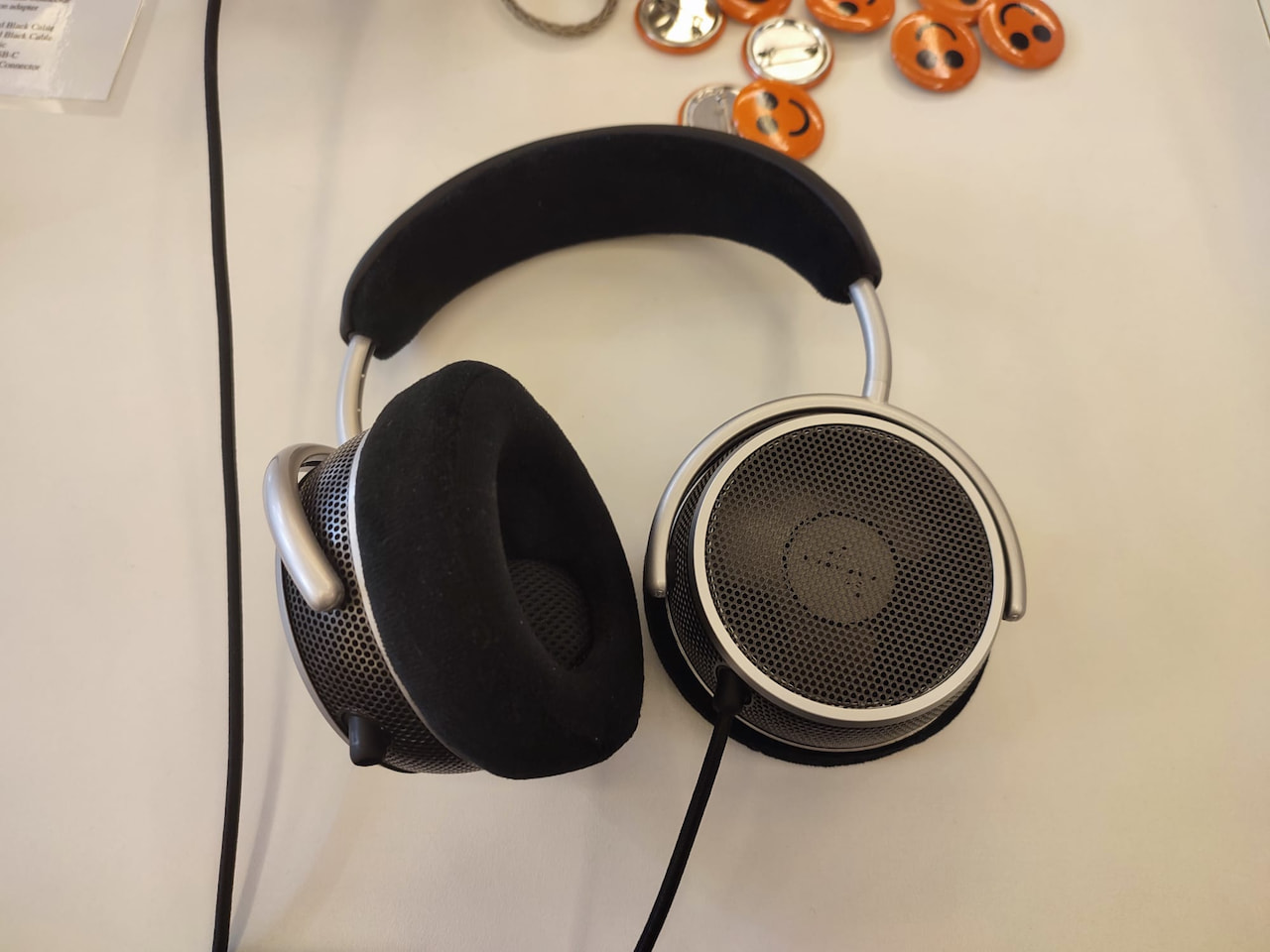
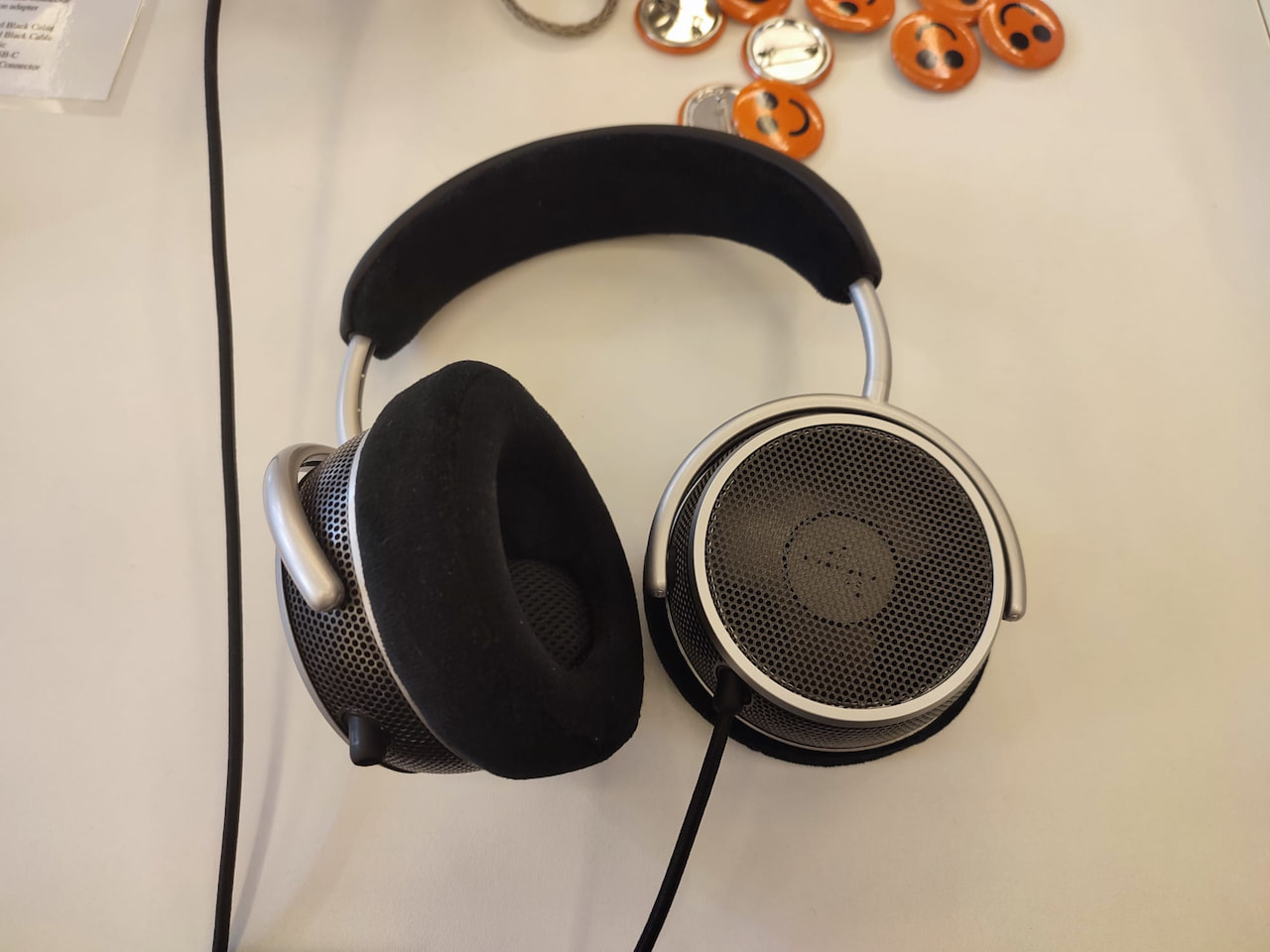
I started at the Electromod booth, conveniently located near the entrance to the show.
The $599 OAE2 is legendary Sennheiser designer Axel Grell’s second attempt at refining his Front-Sided Sound Field Modulation (FSFM) concept. Its 40 mm bio-cellulose dynamic drivers are positioned well forward of the ears, allowing sound to interact more naturally with the outer ear and create a presentation closer to nearfield loudspeakers than conventional headphones. The open-back OAE2 has a 38-ohm impedance, 100 dB sensitivity, a claimed frequency response of 12 Hz to 34 kHz, and weighs 378 grams without its cable.
The original OAE1 received mixed reviews, largely because of its unconventional tonal balance. I did not notice any glaring tonal quirks with the OAE2, although that impression should be taken with a grain of salt because the Electromod booth was hardly a quiet listening environment.
The heavily angled drivers certainly produced the intended forward-facing presentation, which I found pleasant, but the soundstage did not strike my ears as especially wide or expansive. eCoustics Editor-in-Chief Ian White reached a more enthusiastic conclusion during his full review, finding the OAE2 neutral, controlled, and capable of projecting a stable image slightly in front of the listener—although he also noted that the effect varies considerably from one recording to another.

At the same Electromod booth was one of the more intriguing wireless headphones at CanJam London 2026: the écoute TH2. The closed-back design combines hybrid active noise cancellation and a transparency mode with an eight-band parametric DSP system that allows listeners to make substantial changes to its primary response curve through the accompanying mobile app.
The TH2’s defining feature, however, is its Korg Nutube 6P1 dual-triode vacuum tube in the preamplifier stage, feeding separate Class A/B amplifiers for each channel. It also uses 40 mm titanium-coated Mylar drivers and supports Bluetooth 5.3 with LDAC, AAC, and SBC, along with USB-C digital and 3.5 mm analog connections. Battery life is rated at more than 20 hours.
Sonically, the TH2 delivered prominent midbass with a touch of the harmonic warmth and euphony associated with tube amplification; something rarely experienced from wireless headphones on the move. It was a smooth, relaxed, and thoroughly enjoyable listen. I was told that the TH2 will cost approximately £900 when it goes on sale.
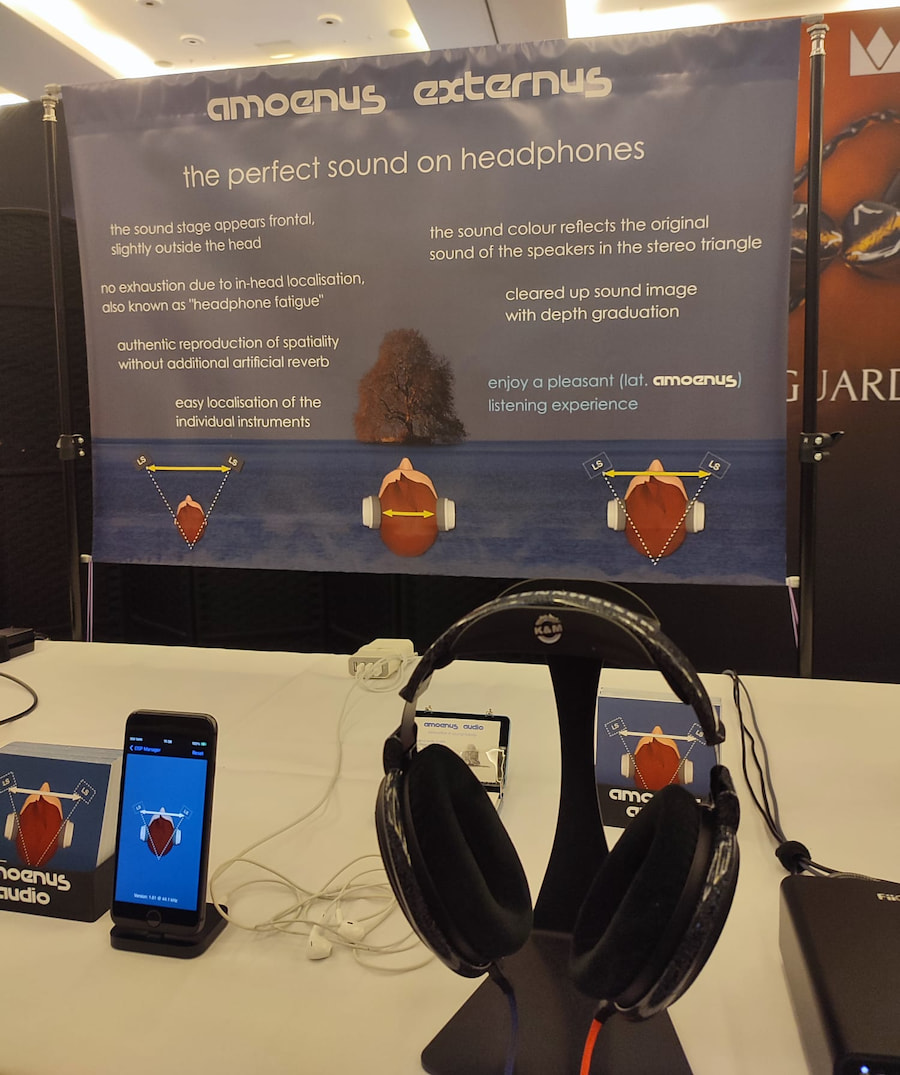
The amoenus externus was the odd one out at CanJam London because it is not a pair of headphones, but rather a software-based spatial-processing system designed specifically for stereo headphone listening.
Instead of adding artificial reverberation or simulating a listening room, the algorithm uses a universal HRTF and an array of nine extremely short delays to reproduce some of the timing cues created by sound interacting with the head, shoulders, and outer ear. The objective is to move the stereo image outside the listener’s head and closer to the presentation of two loudspeakers positioned in front of them. It is available as a stand-alone application or plug-in for 64-bit Windows and Mac systems, along with an AUv3 plug-in for the iPhone.
This was perhaps the most convincing soundstage-enhancement system I have heard thus far. The transformation was not subtle, moving the music away from the sides of my head and placing it significantly farther forward without smothering the recording in artificial ambience. At approximately £20, it is also one of the least expensive products I experienced at CanJam London 2026—and potentially one of the most useful.
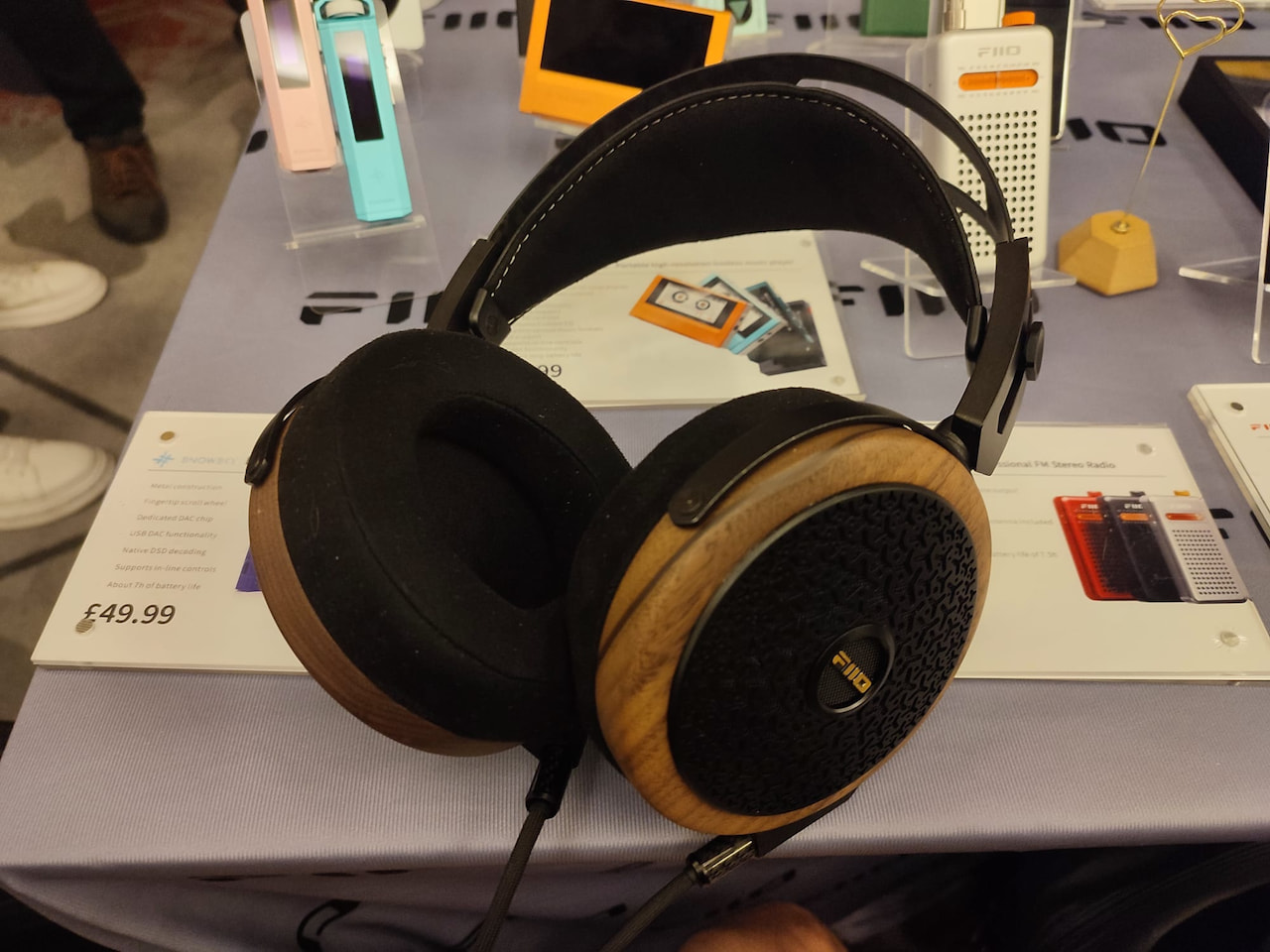
FiiO brought a handful of new and forthcoming products to CanJam London 2026, which should surprise absolutely no one by now.
First up was the FT15, an open-back planar magnetic headphone expected to replace the FT5 while sitting below the flagship FT7 in FiiO’s expanding over-ear lineup. The wood-accented design also continues the visual direction established by several of the company’s recent headphones, with expected pricing of around £499 when it reaches the market. Final specifications and availability have yet to be confirmed.
The FT15 offered a largely balanced tonal presentation, with treble that remained present and airy without becoming immediately aggressive. That openness worked well, but I found its macrodynamic punch and overall sense of contrast somewhat restrained. It was an easy headphone to listen to, although it did not deliver the same dramatic swings or physical energy as some of the stronger planar designs at the show.
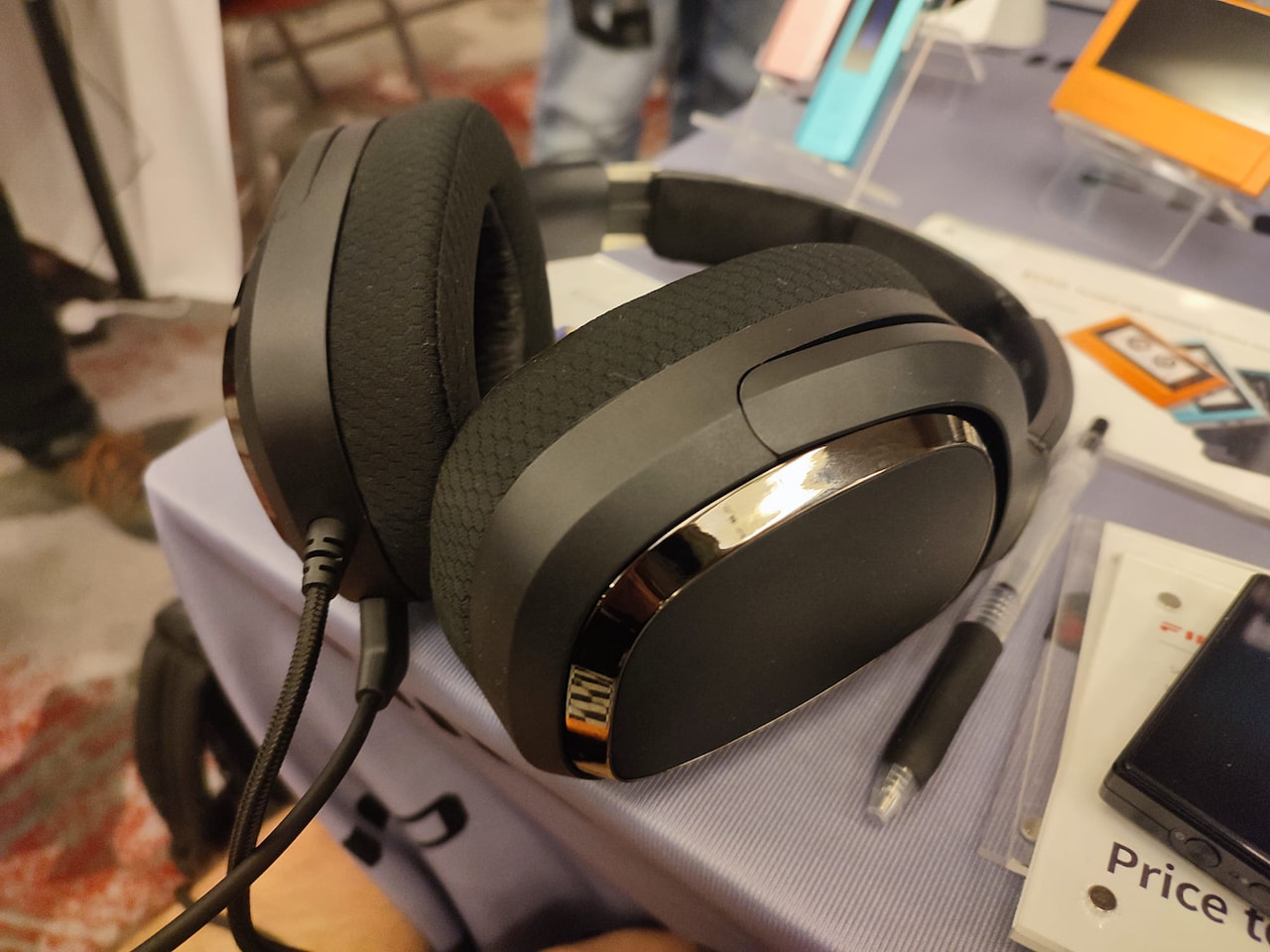
Next was the FG3, FiiO’s first gaming headset and one aimed squarely at the ultra-budget-conscious. Its plastic construction looks and feels every bit of its roughly $70 asking price, but expecting milled aluminum and lambskin at this level would be taking the piss.
The closed-back FG3 uses coaxially mounted 50 mm and 16 mm dynamic drivers with an electronic two-way crossover. It also includes an integrated DAC, headphone amplifier, virtual 7.1 surround processing, five gaming presets, and a 10-band EQ accessible through FiiO Control Web. USB and 3.5 mm connections provide compatibility with computers, consoles, and smartphones, while the detachable microphone uses environmental noise cancellation to reduce background noise.
More importantly, it sounded surprisingly decent for the money. There was some gentle roll-off at both ends of the frequency spectrum, but nothing that undermined the overall presentation during my brief audition. The FG3 is already available internationally for $69.99, and I can imagine it rolling off the shelves rather quickly once UK stock becomes widely available. Pun entirely intended.
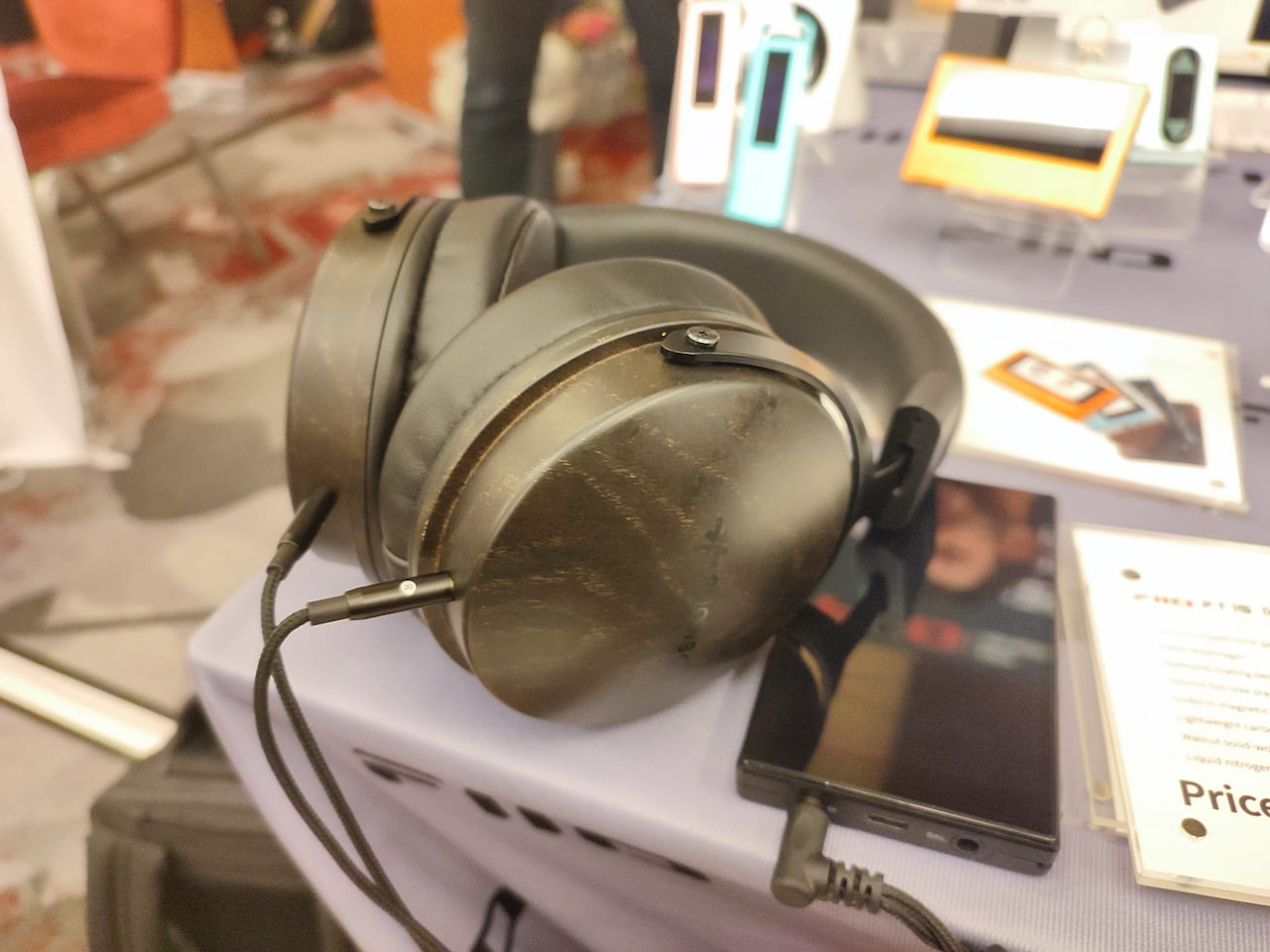
Apparently, FiiO can go even lower in price without the sound falling apart. SNOWSKY is the company’s affordable sub-brand, and the closed-back Nature costs only $40.
The retro-styled over-ear headphone uses 50 mm dynamic drivers with a Japanese carbon-black composite diaphragm, a low 24-ohm impedance, and a sensitivity rating of 101 dB/mW, making it easy to drive from a smartphone, DAP, or inexpensive USB dongle. It also weighs just 280 grams and includes detachable dual 3.5 mm cables, including one with an inline microphone. Despite appearances, the ear cups use a wood-grain water-transfer finish rather than actual wood.
The Nature sounded slightly hollow during my brief audition, but its detail retrieval and generally coherent tonal balance were far better than I expected at this price. For $40, this one is an absolute steal.
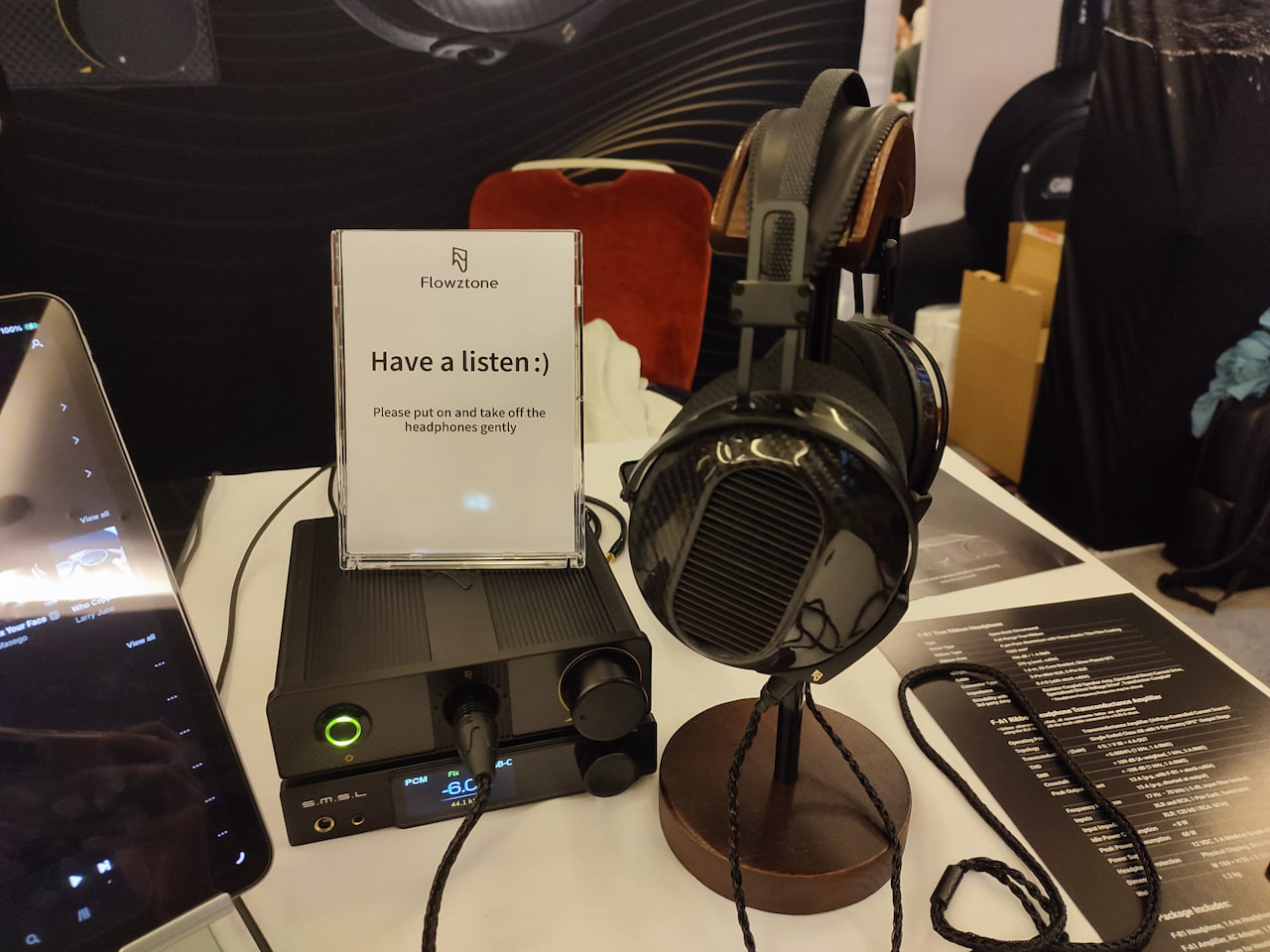
Hong Kong-based Flowztone is preparing to release its first headphone system, and the company has hardly chosen the cautious route. The F-R1 is a true ribbon design expected to cost around $3,000 with its dedicated amplifier.
The open-back F-R1 uses a 4-micron pure-aluminum ribbon diaphragm coated with an ultra-thin viscoelastic polymer layer. Flowztone claims this construction reduces the low-frequency distortion that has traditionally limited true ribbon headphones, with typical bass distortion rated at 0.5% at 94 dB. The 370-gram carbon-fiber headphone also requires Flowztone’s purpose-built transconductance amplifier to drive its exceptionally low 0.4-ohm load.
Right out of the gate, I found the F-R1 slightly sibilant. Inserting the supplied –2 dB tuning filter brought the treble under better control, however, and allowed me to enjoy its Harman-inspired tonal balance. The F-R1 sounded fast, open, and impressively full-bodied for a ribbon design, making this one of the more compelling debuts at CanJam London 2026.
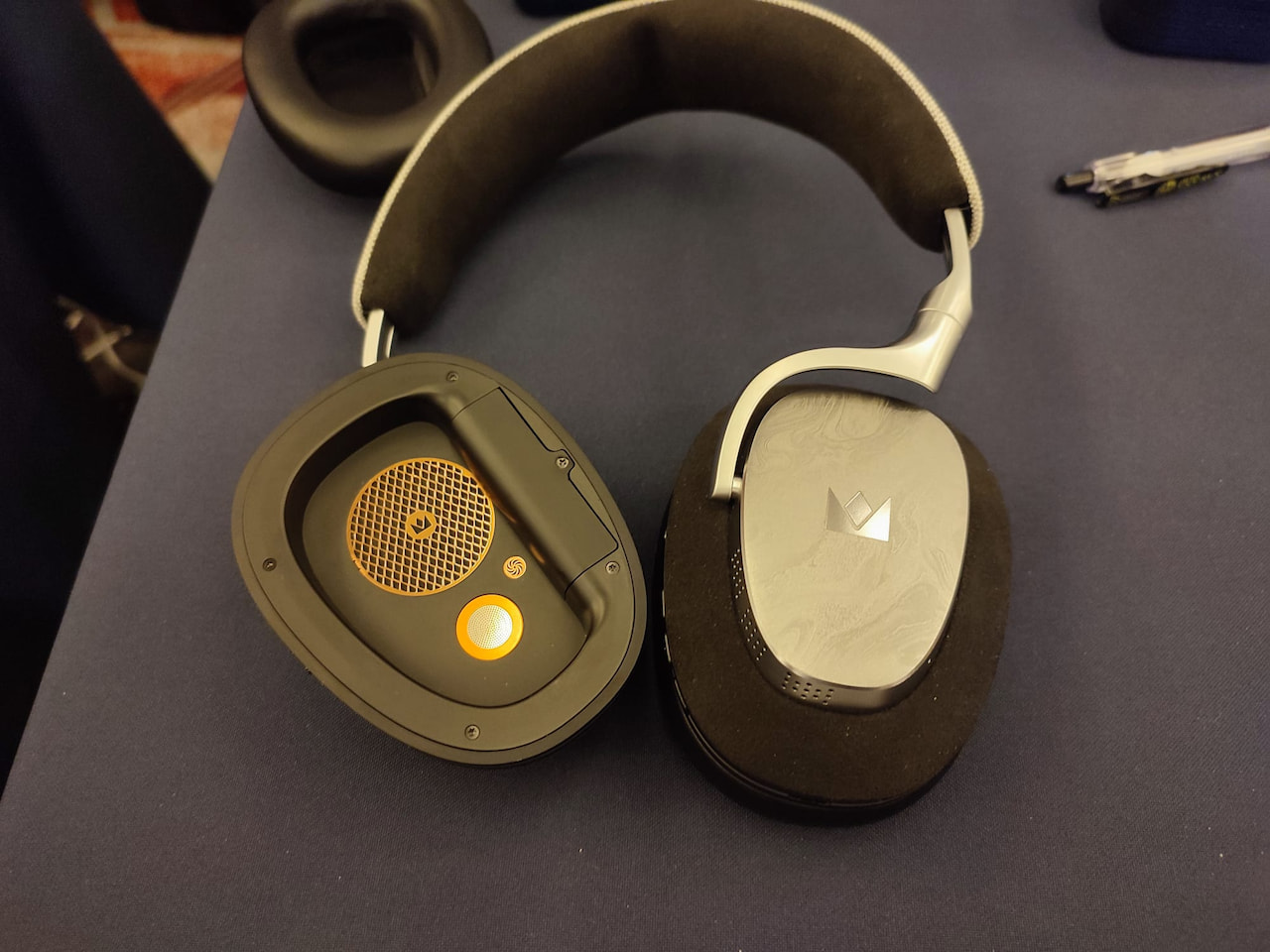
At $899, the Noble Audio FoKus Artemis sits firmly at the upper end of the wireless headphone market, but it certainly looks the part. The sculpted aluminum construction, sleek lines, premium materials, and magnetically attached earpads give it the appearance and feel of a genuine flagship rather than another plastic travel headphone with an inflated price tag.
The Artemis uses an unusual three-driver configuration comprising one dynamic driver, one planar magnetic driver, and one balanced armature driver in each ear cup. It also features adjustable ANC, transparency mode, LDAC, aptX Adaptive and aptX Lossless support, Audiodo hearing personalization, USB-C audio, multipoint connectivity, and a user-replaceable battery rated for more than 40 hours without ANC or 35 hours with it engaged.
Sonically, the Artemis was right up there with the DALI IO-12 that I reviewed previously, delivering excellent detail retrieval, imaging, and overall technical proficiency. Unfortunately, I could not get the earpads to seal properly against the sides of my head. The resulting air gap rendered the ANC almost useless, which was a bit of a disappointment. Fit will clearly vary between listeners, but at this price, prospective buyers should try them before handing over a credit card.

Moving over to the SIVGA and Sendy Audio booth, I listened to the recently released Apollo Pro, a substantially redesigned successor to the original Apollo.
The open-back headphone uses a custom 78 mm planar magnetic driver with a nano-scale composite diaphragm measuring less than 800 nanometers thick. Sendy Audio also employs electron-beam deposition to apply the aluminum conductor layer more uniformly. The 354-gram design combines zebrawood ear cups with CNC-machined aluminum components and includes a detachable 4.4 mm balanced cable with 3.5 mm and 6.35 mm adapters. Impedance is rated at 27 ohms, with a sensitivity of 93 dB.
I have not heard the original Apollo, but I enjoyed the Pro’s particularly intimate and engaging vocal presentation. The trade-off was a soundstage that felt somewhat compact for an open-back planar headphone. Even so, its detail retrieval, separation, and overall technical performance were highly competitive at $494.
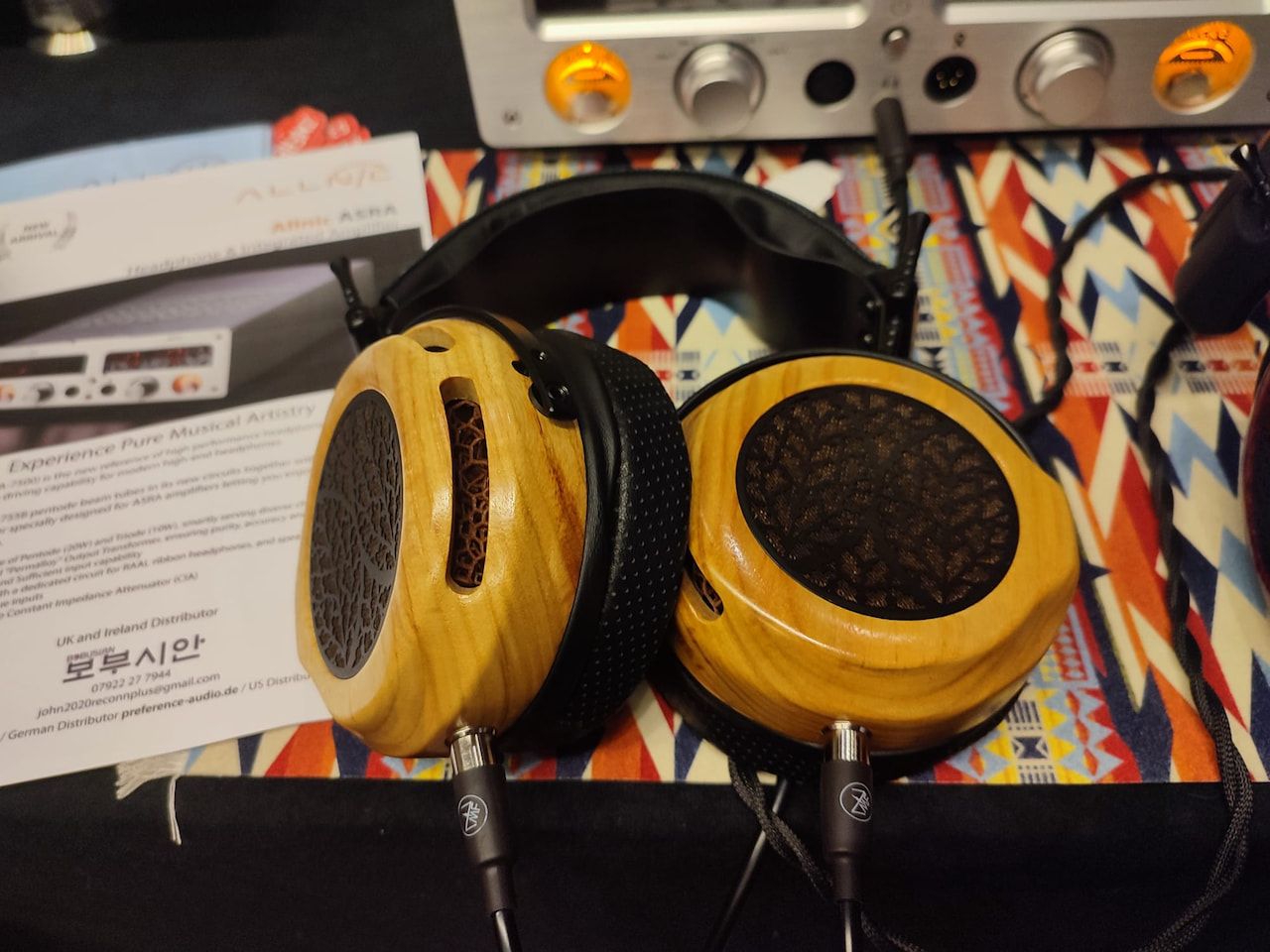
The moment I picked up the $2,499 ZMF Tessidera, I was struck by just how beautiful it looked. ZMF headphones have always resembled works of art, but the angular Canarywood cups and honeycomb-like ZMF Acoustic Matrix visible behind them elevate the design to another level.
The open-back Tessidera uses a newly developed 1-micron planar magnetic driver with a 35-ohm impedance and sensitivity of approximately 92 dB/mW. It combines ZMF’s CAMS magnet structure and Atrium Damping System with the new lattice-style ZMF Acoustic Matrix, designed to reduce standing waves and smooth the treble, and a wooden Soundboard Resonator System intended to improve transient impact and control resonance.
More importantly, how does it sound? To my ears, the Tessidera leaned closer to neutrality than many ZMF headphones, with something of the Auteur’s balance and natural presentation. The treble was smooth and inviting, but dynamics remained strong, while timbre and imaging were as realistic and precise as I have come to expect from ZMF. I have not always connected with the company’s tonal choices, but the Tessidera was right up my alley.
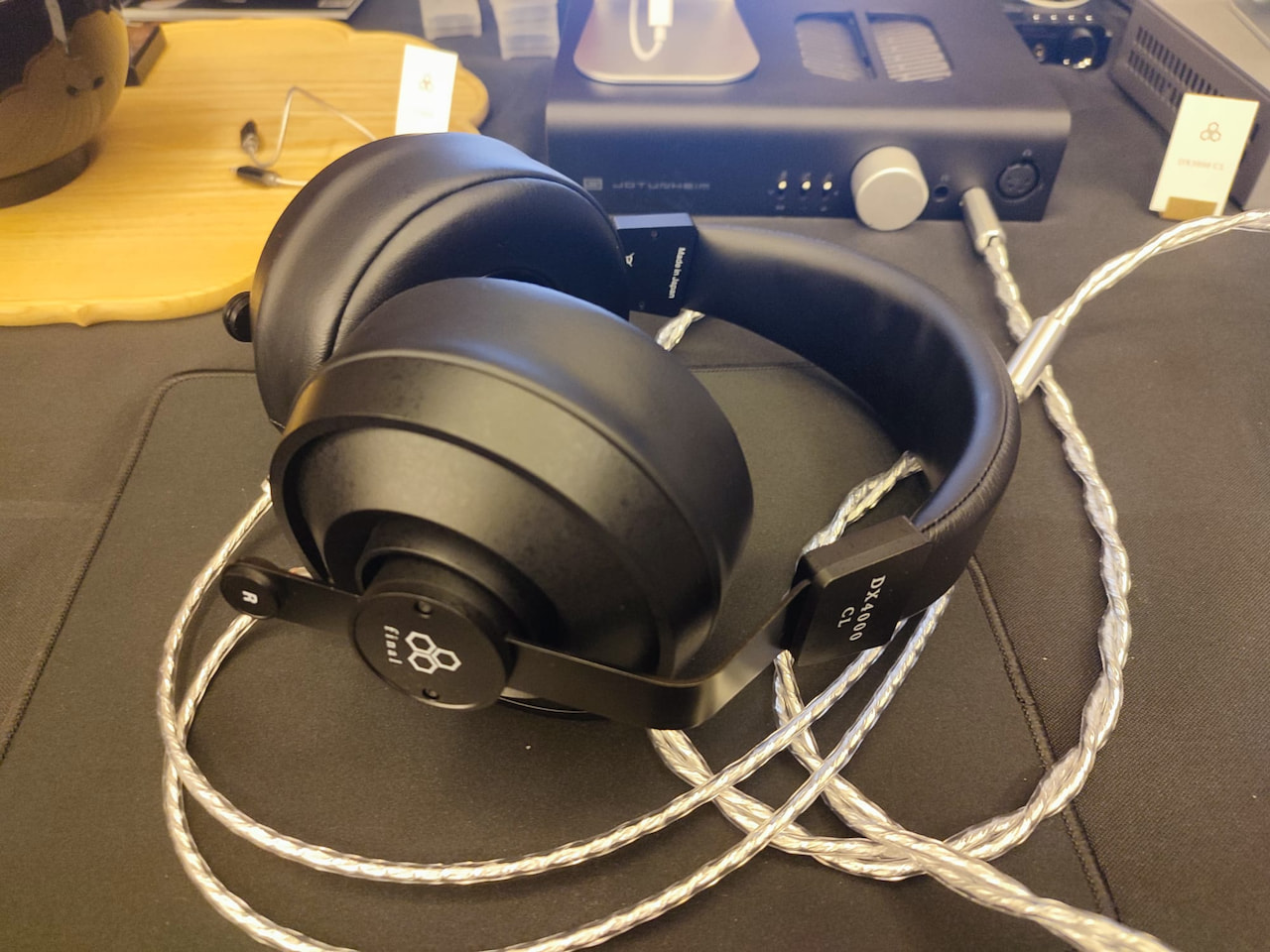
Final recently expanded its premium closed-back headphone range with the DX3000 CL and DX4000 CL. They look almost identical, but the DX3000 CL costs $599, while the DX4000 CL lands just below $1,000.
Both use 40 mm dynamic drivers with lightweight Japanese washi paper and carbon-fiber composite diaphragms, along with thick 30 mm memory-foam earpads and an internal rear-diffuser array designed to suppress unwanted resonances. They also share a 37-ohm impedance and 96 dB/mW sensitivity. The DX4000 CL weighs 375 grams and includes Final’s upgraded silver-coated cable, while the DX3000 CL weighs 410 grams and comes with a standard OFC cable.
In noisy show conditions, I found it difficult to distinguish between their sound signatures. I was told that the more expensive DX4000 CL is slightly more analytical and resolving, while retaining the warmth and generous bass response shared by both models.
Listeners who prefer a warm, full-bodied presentation should find plenty to enjoy here. Unless the DX4000 CL’s lighter construction, added refinement, and upgraded cable are essential, however, I would take the DX3000 CL and pocket the $400 difference.
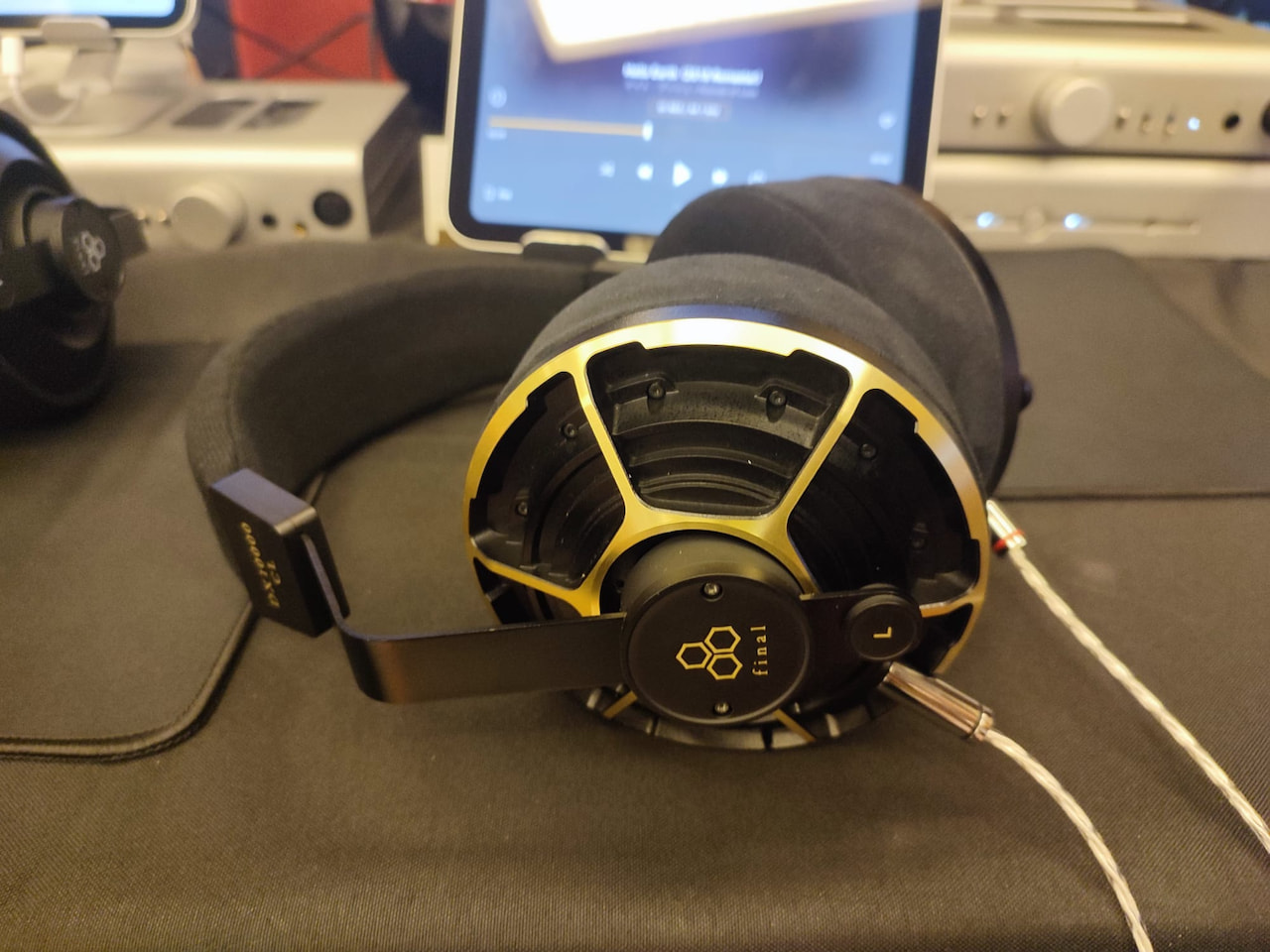
Final had one more new closed-back headphone on display, although the DX10000 CL occupies a very different financial universe from the DX3000 CL and DX4000 CL. The standard model costs a rather unhinged $8,499, while the limited Collector’s Edition adds another $500.
The flagship uses a newly developed 40 mm dynamic driver with a self-supporting True Diamond diaphragm manufactured through chemical vapor deposition. Final claims the material’s extreme rigidity and strong internal damping reduce deformation, resonance, and distortion while improving transient response. The aluminum-magnesium alloy housing has also been engineered to control internal reflections, while the Ultrasuede earpads manage airflow around the ear.
Its subtle steampunk aesthetic looks terrific, but the real surprise came when I listened to it immediately after its two considerably less expensive siblings. The difference was night and day, with substantially greater clarity, perceived detail, and openness owing to its more neutral tonal balance.
I will admit that the DX10000 CL did not tug at my heartstrings quite as strongly as some of the other headphones I heard at the show. Which ones did? I will save those for the Best in Show section.
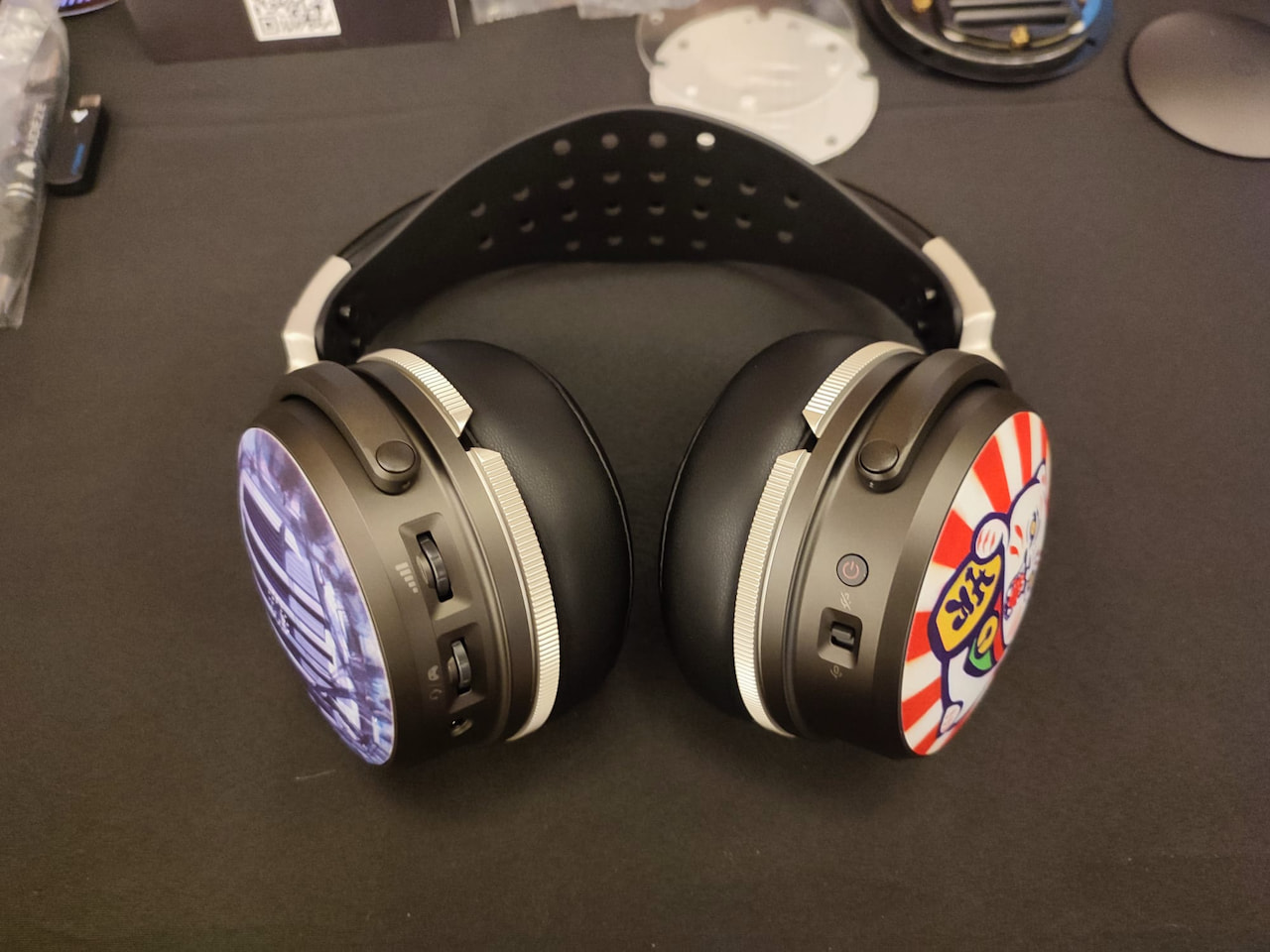
Returning to wireless headphones, I gave the Audeze Maxwell 2 ANC a whirl. As its name suggests, it adds adaptive hybrid noise cancellation and a low-latency transparency mode to the Maxwell 2 platform. It is also the first Audeze headphone of any kind to offer ANC.
The closed-back gaming headset retains Audeze’s 90 mm planar magnetic drivers, Fluxor magnet arrays, Fazor waveguides, and SLAM acoustic technology. Bluetooth 5.3 support includes LDAC, LE Audio, multipoint, and Auracast, which allows a single broadcast source to transmit audio to multiple nearby compatible devices without conventional pairing. Battery life is rated at 40 hours with ANC switched off and 35 hours with it engaged. At 560 grams, however, nobody will mistake it for lightweight travel headphones.
Despite the added weight over the original Maxwell, I preferred the newer model’s sonic balance. Its flatter bass response kept the midrange cleaner without sacrificing impact, while the planar drivers retained the clarity and positional precision that made the Maxwell series stand out in the first place. The PlayStation version costs $429, while Xbox users will pay $449—$100 more than the equivalent Maxwell 2 without ANC.
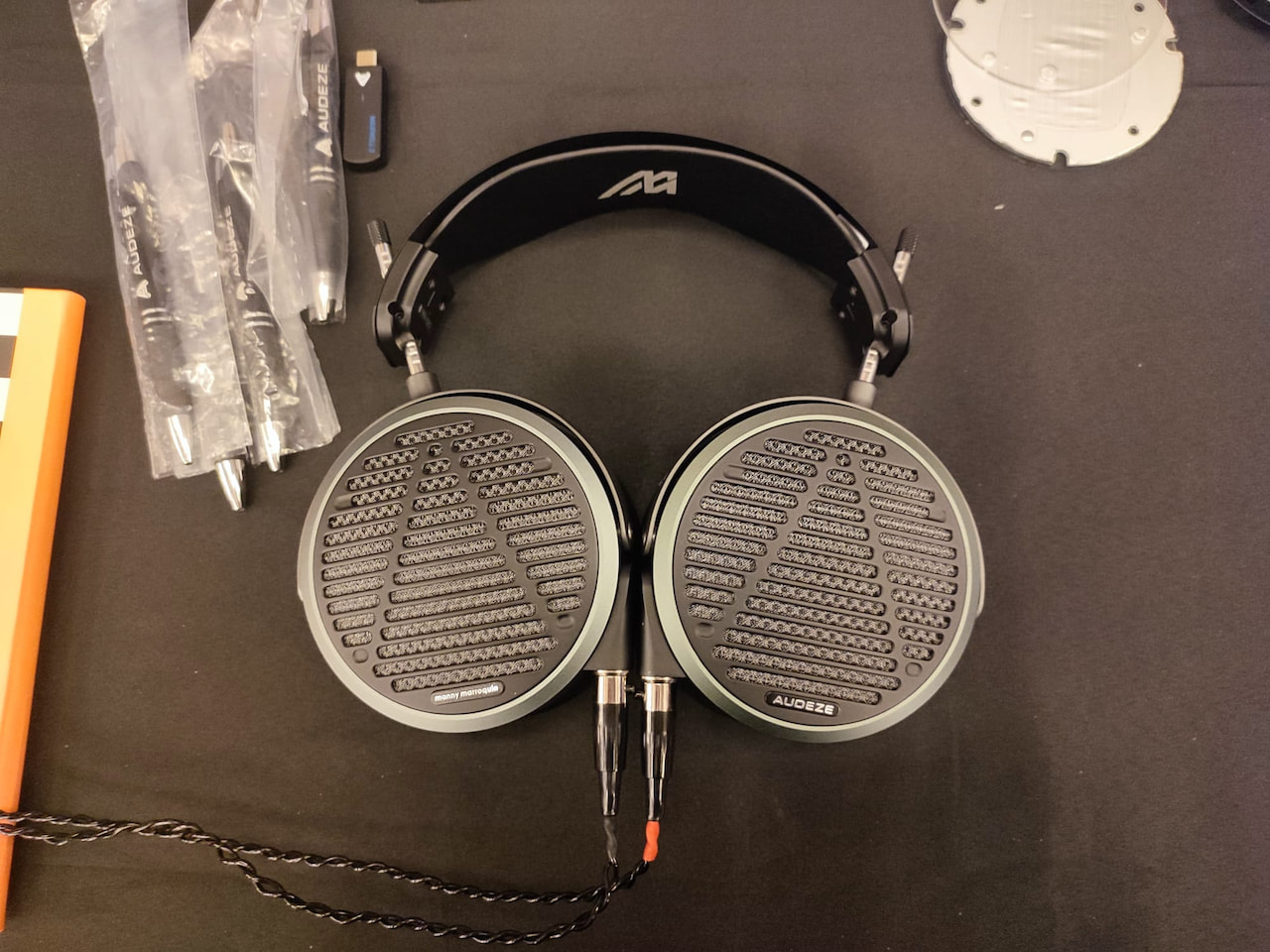
Sticking with Audeze, the $1,699 MM-520 is a studio-focused evolution of the MM-500 developed with 18-time Grammy-winning mixing engineer Manny Marroquin. Its most significant addition is Audeze’s Symmetric Linear Acoustic Modulator, or SLAM, which uses engineered channels to manage airflow and pressure inside the ear cups, improving bass definition and spatial imaging.
The open-back MM-520 uses 90 mm planar magnetic drivers with Ultra-Thin Uniforce diaphragms, Fluxor magnet arrays, and Fazor phase management. It also offers an 18-ohm impedance, 102 dB/mW sensitivity, and a claimed frequency response of 5 Hz to 50 kHz. At 555 grams, however, it remains a substantial piece of studio hardware.
The MM-520 delivered an exceptionally detailed and precise presentation, with the kind of midrange clarity and tonal accuracy expected from Marroquin’s involvement. Even with SLAM, however, I did not find the soundstage especially expansive, and its macrodynamic impact felt somewhat restrained. It is an impressive monitoring tool, but listeners looking for a more physical or emotionally charged presentation may prefer something less analytical.
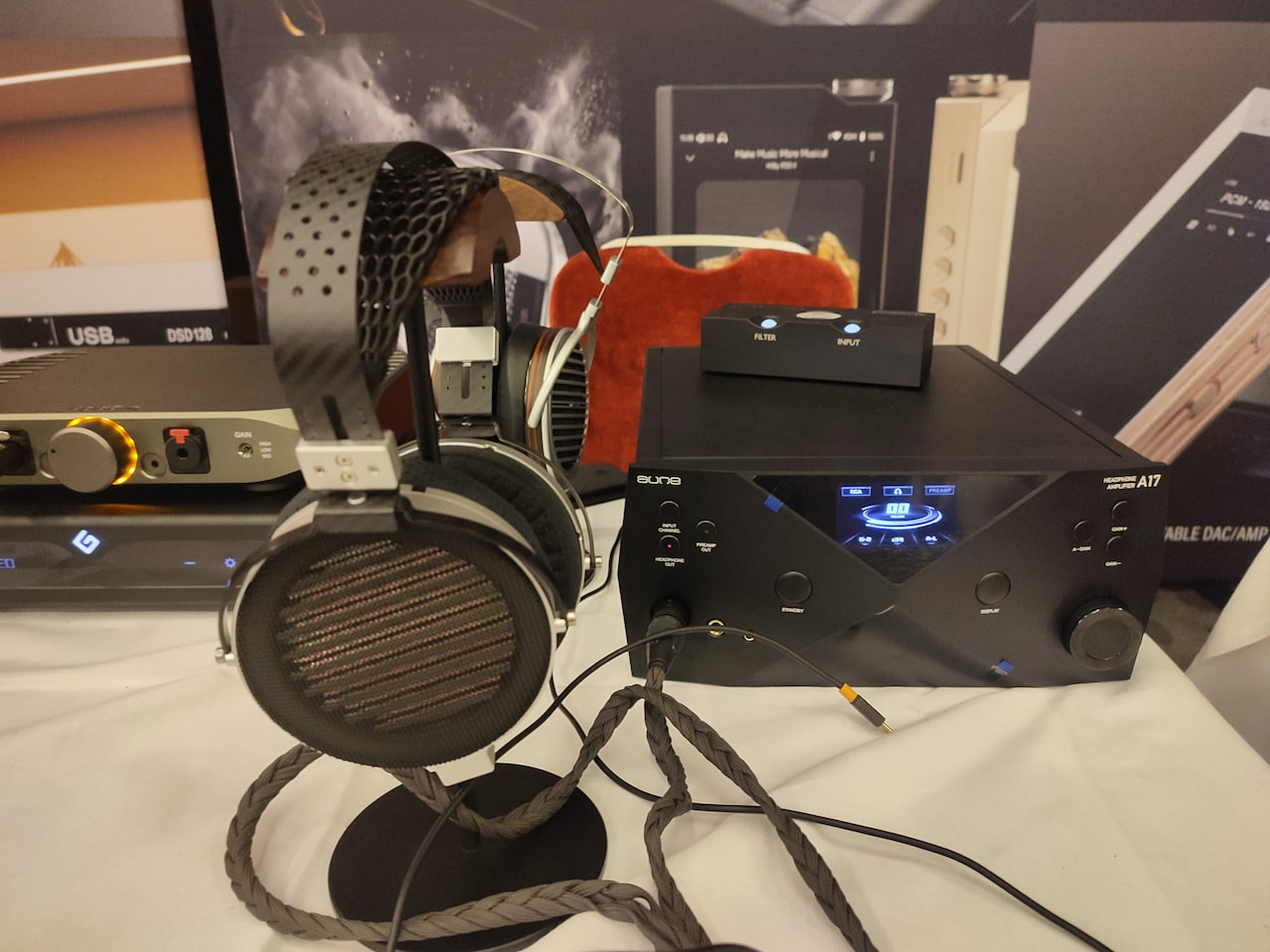
The Elise Audio booth had far too many headphones for me to audition them all, but the Moondrop Skyland immediately caught my eye. It was the first pair I picked up—and wow, this thing is heavy.
The open-back Skyland uses enormous 100 mm planar magnetic drivers with 500-nanometer diaphragms, N55 magnets, and a full-surface drive system. Its all-aluminum CNC construction is paired with a carbon-fiber suspension headband, hybrid lambskin earpads, and a 4.4 mm balanced cable with 6.35 mm and four-pin XLR adapters. Impedance is rated at 60 ohms, with a sensitivity of 96 dB/Vrms and a claimed frequency response of 8 Hz to 34 kHz.
Unfortunately, the substantial weight was compounded by rather low clamping force, resulting in a headphone that did not feel especially secure on my head. I also had to use the smallest headband setting to achieve a workable fit on my average-sized head. Not a promising start.
At least the Skyland sounded good, offering a balanced tonal presentation, seemingly bottomless bass extension, and solid macrodynamic contrast. I was not exactly blown away, however, and the awkward fit would make the $799 asking price difficult to overlook.

I was subsequently approached by Auribus Acoustics founder Juan Ovalle, who wanted to hear my impressions of his latest creation: the closed-back Laguna.
The prototype is expected to launch around September for approximately $1,500, although final specifications, pricing, and availability have yet to be announced. Auribus Acoustics is a Southern California headphone manufacturer known for using advanced 3D-printing techniques to refine its acoustic chambers and reduce unwanted resonances.
The moment I placed the Laguna over my ears, I was impressed by its passive noise isolation. It blocked out a substantial amount of the noisy show floor before I had even pressed play.
It also sounded excellent, producing deeply textured sub-bass and a subtle midbass lift that added weight without pushing the presentation into the mud zone. My only minor concern was the treble, which lacked some fine-grained clarity and definition to my ears. Even so, this was a highly promising prototype and one of the more convincing closed-back headphones I heard at CanJam London 2026. Another listener also praised its deep but controlled bass and unusually spacious presentation for a closed-back design.
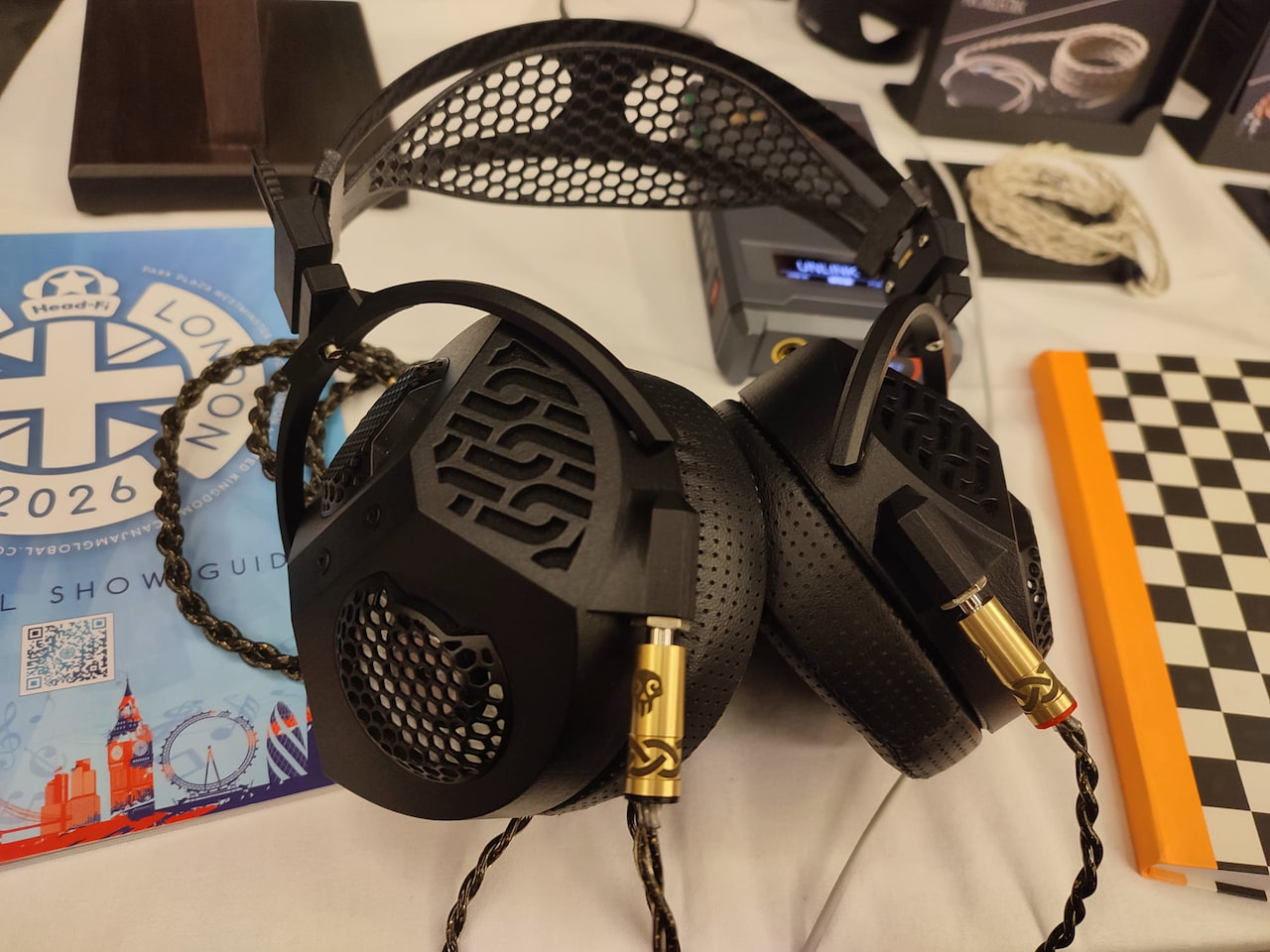
I auditioned a prototype of the Draupnir at CanJam London 2025 and awarded it our Best Innovation honor. One year later, Viking Audioforge has turned that ambitious experiment into a considerably more polished production headphone, now available for preorder at £1,799. Although the fit, finish, and adjustment mechanism have been refined for more consistent manufacturing, Viking Audioforge says the sound, core design, and materials remain unchanged from the Launch Edition.
The open-back Draupnir uses two 50 mm glass-diaphragm dynamic drivers per side, combined through a carefully shaped acoustic lens so that they behave as a coherent source. Its baffle-mounted bass switch adds approximately 6 to 8 dB below 100 Hz, while the lightweight MJF nylon chassis, carbon-fiber headband components, magnetic ZMF earpads, and included Viking Weave cable complete one of the more unconventional headphone designs at the show. It weighs approximately 390 grams.
I cannot say with certainty whether the tuning has changed since last year, but it remains every bit as enjoyable as I remembered. The Draupnir delivered an inviting sense of space and an exciting, quick bass response that became delightfully bombastic once I engaged the boost switch. It would not be an exaggeration to call this one of the most memorable listening experiences I had at CanJam London 2026.
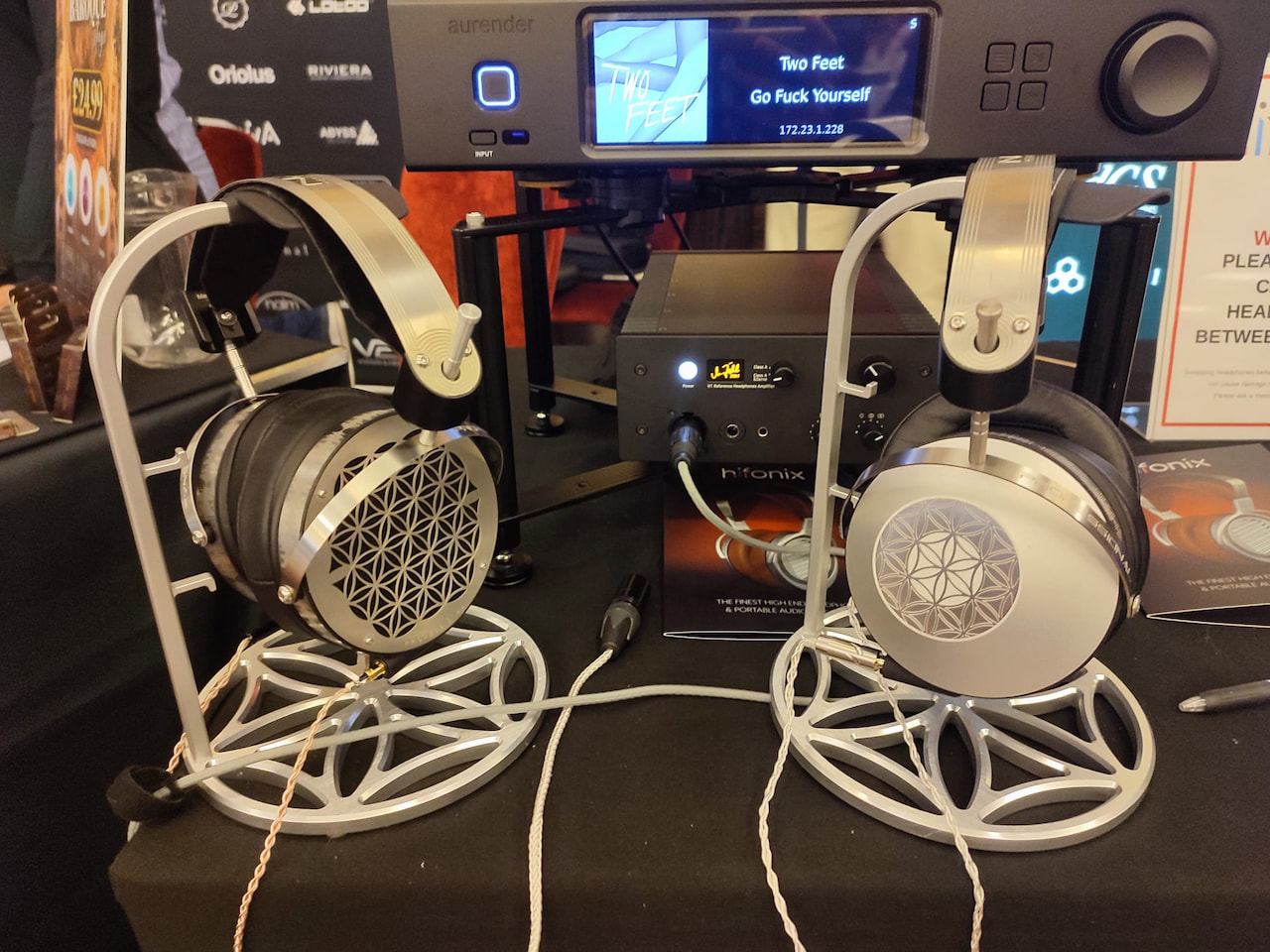
I arrived at the Hifonix booth with no expectations before trying the NUR Miah; admittedly, I had done no research on the Italian headphone manufacturer beforehand.
The forthcoming Miah is a closed-back dynamic headphone with drivers angled forward toward the ears. NUR has not yet published detailed specifications or a firm release date, although I was told at the show that pricing should land somewhere around £2,200.
What surprised me most was the sheer dynamism and realism of its presentation. The Miah sounded exceptionally immediate and lifelike, while maintaining a well-balanced tonal signature that prevented all that energy from becoming tiring or exaggerated. This was an exciting listen—and easily one of the biggest surprises of CanJam London 2026.
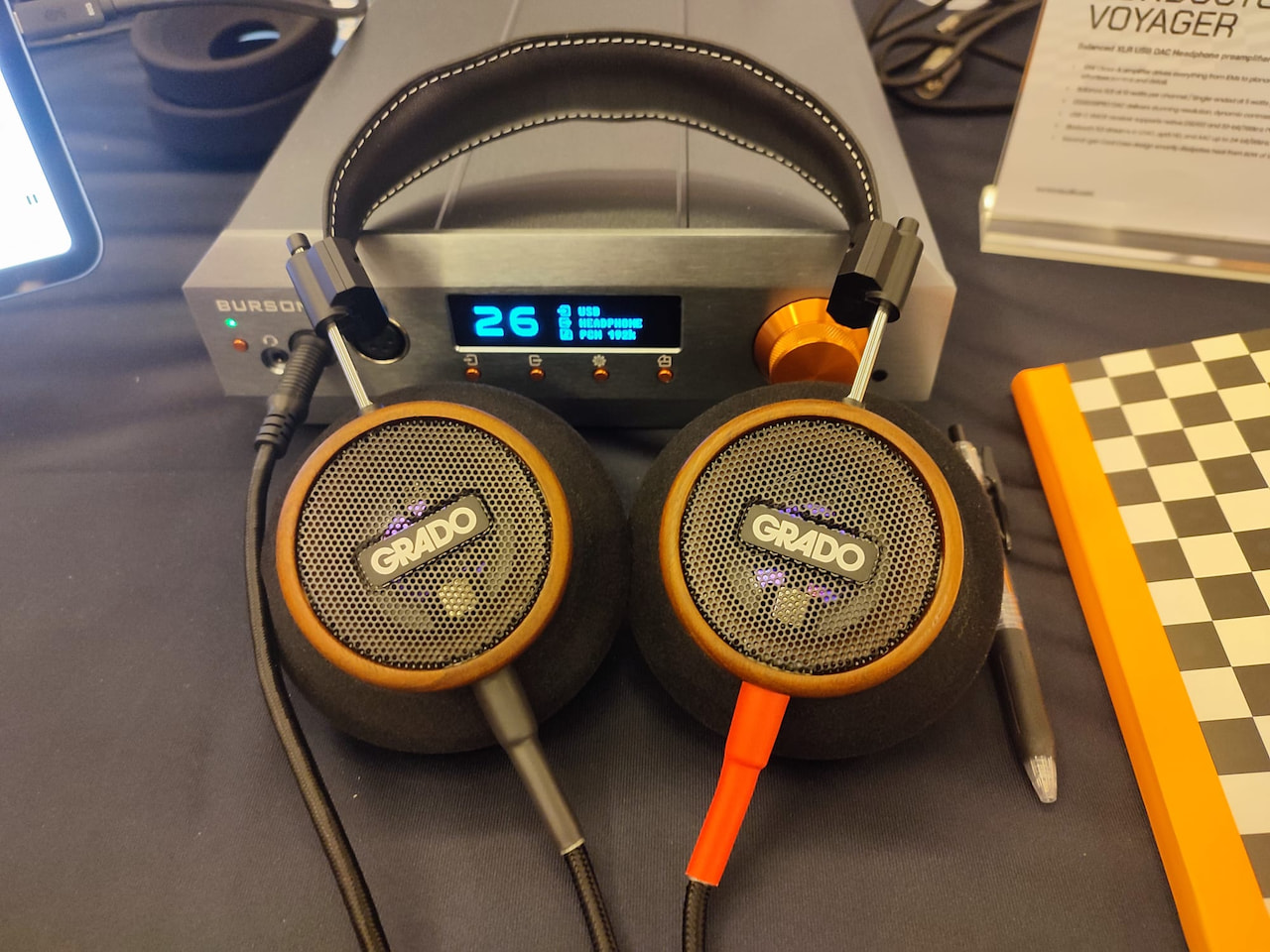
Grado has been rather hit or miss for me in the past. I bought and quickly sold the SR80x because I could not get past its sharp upper midrange, while the HP100 SE proved far more successful, delivering an exciting presentation with beautifully rendered vocals.
The open-back Signature S550 uses Grado’s newly developed 50 mm S2 dynamic driver, with a 38-ohm impedance, 112 dB sensitivity, and a claimed frequency response of 6 Hz to 44 kHz. It weighs 335 grams and includes Grado’s detachable Signature Silver cable, connected through locking four-pin mini-XLR sockets. The S550 ships with the company’s new B cushions but is also compatible with its S, F, L, and G pads, allowing listeners to alter both the fit and sonic presentation.
The $995 S550 firmly lands in the hit column. I have always enjoyed the distinctive appearance of Grado headphones, but what drew me in here was the authoritative bass and excellent dynamic impact. More importantly, it delivered that energy without the overly sharp, grating upper-midrange and treble presentation that has pushed me away from some of the company’s less expensive models.
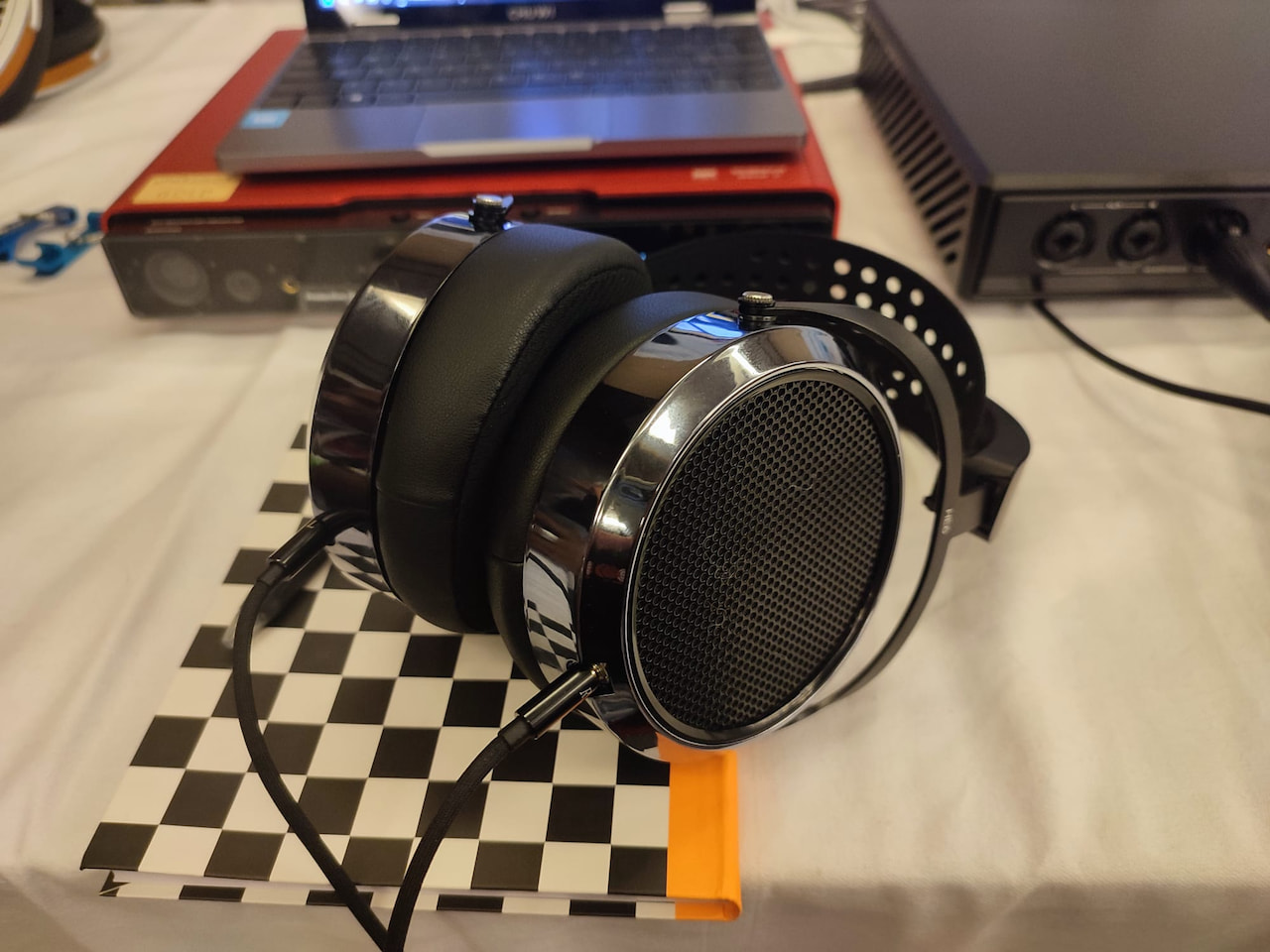
The HiFiMAN HE6 Remastered revives the driver design of the original HE6 while adding the company’s second generation composite headband. This is less a reinvention than an attempt to make one of HiFiMAN’s most celebrated headphones slightly more comfortable and accessible to a new generation of listeners.
The open back planar magnetic headphone retains the original’s brutally inefficient 83.5 dB sensitivity, 50 ohm impedance, and claimed frequency response of 8 Hz to 65 kHz. It weighs 522 grams, which is 28 grams lighter than the original version, but still hardly featherweight.
The original HE6 has achieved near legendary status, so I suspect the $1,899 Remastered will find plenty of willing buyers. For good reason: it remains one of the most impactful and dynamically explosive planar headphones ever produced. Just bear in mind that this is not something you should connect to a phone, laptop, or underpowered dongle DAC. The HE6 Remastered needs a seriously powerful desktop headphone amplifier and will expose anything pretending to be one.
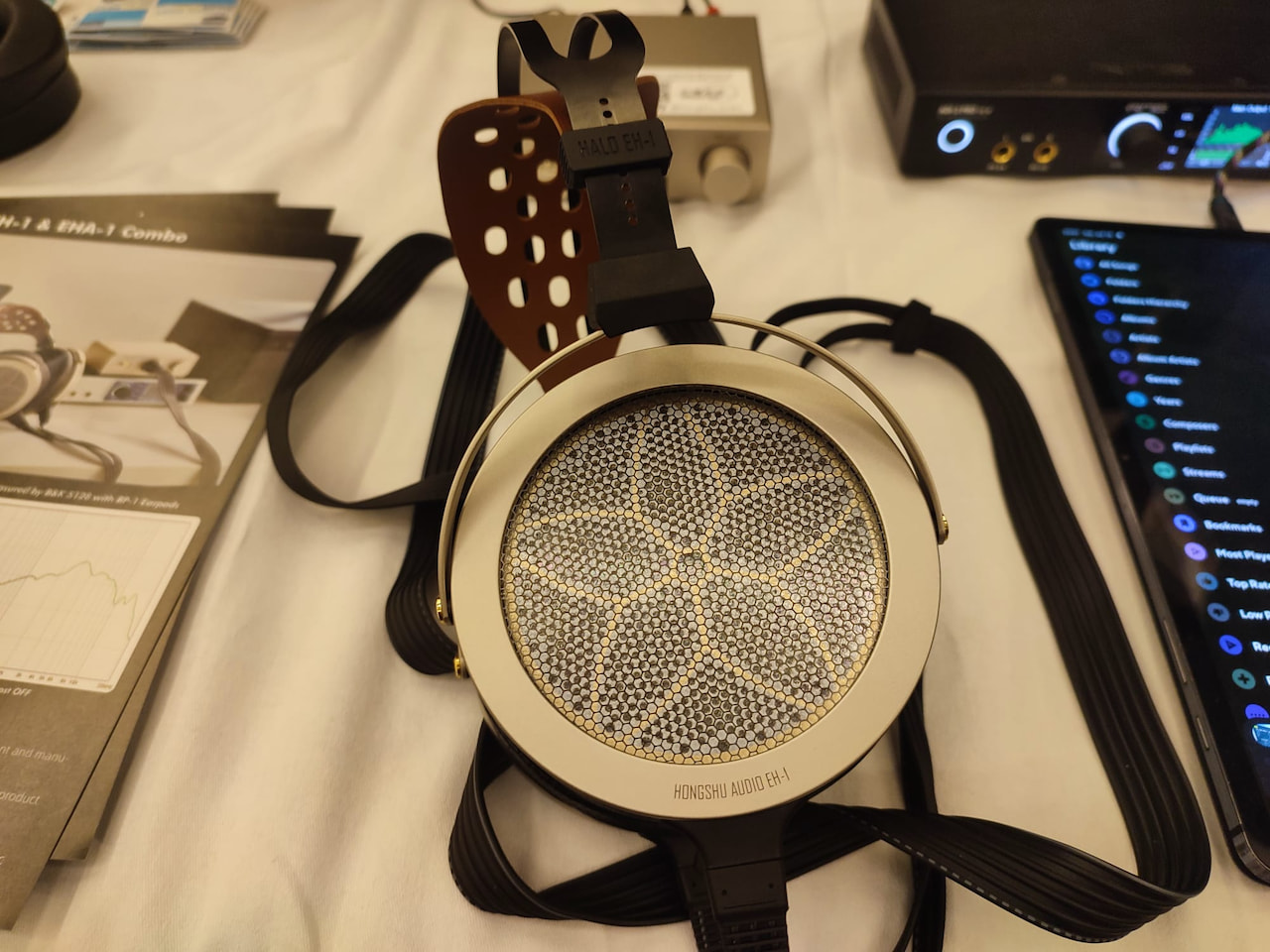
Before anyone reaches for the pitchforks, I know that $649 is hardly cheap. For a complete electrostatic headphone system, however, it qualifies as budget territory, especially because Hongshu Audio includes the dedicated EHA-1 energizer in the price.
The open back EH-1 uses a four inch electrostatic driver, weighs only 295 grams, and is designed around the standard 580 volt bias used by many electrostatic headphones. The compact EHA-1 energizer provides up to 300 Vrms of output, along with a physical channel balance control and a switchable bass boost.
The EH-1 captures the strengths of electrostatic headphones remarkably well, delivering excellent detail, speed, and control across most of the frequency range. Deep subbass rolls off somewhat, which is hardly unusual for the driver type, but Hongshu Audio has also avoided the excessively bright treble that can undermine electrostatic headphones costing several times more.
Listeners looking for greater weight can engage the energizer’s bass boost, which lifts the response from the midbass downward without destroying the headphone’s clarity. At $649 for the complete system, there is very little not to like about the EH-1.
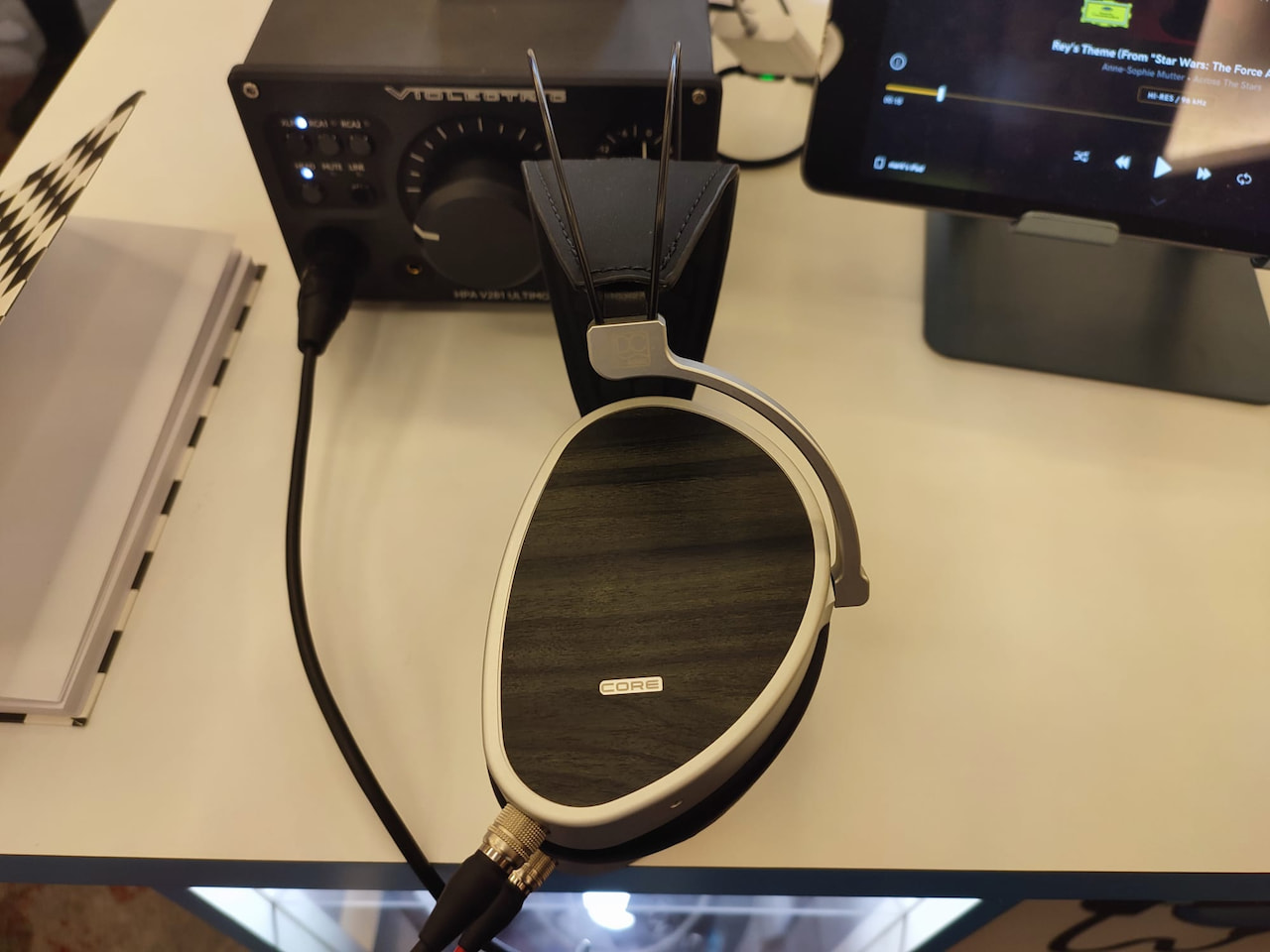
Competition among new wired headphones in the mid-price category, which now seems to hover around $1,000, was surprisingly thin at CanJam London 2026. That should not diminish what Dan Clark Audio achieved with the AEON CORE, however. This was an excellent headphone in its own right.
The closed back AEON CORE is the direct successor to the AEON 2 and uses a new, more efficient planar magnetic driver. It is also the first Dan Clark Audio headphone tuned to a revised Harman over ear target developed through research with Dr. Sean Olive. The design combines aluminum and wood ear cups with the company’s familiar suspension headband and folding frame. It weighs 440 grams, with a 17 ohm impedance and sensitivity of approximately 94 dB/mW.
The AEON CORE was probably the best fitting headphone I tried at the show. Its suspension strap distributed the weight evenly, while the moderately firm clamping pressure and compact ear cups molded comfortably against the sides of my head.
Listening through the Violectric V281 Ultimo certainly did not hurt, but the AEON CORE sounded excellent across the board. Bass was tight and controlled, the midrange remained present and expressive, and the treble added plenty of sparkle without upsetting the overall balance. Everything felt carefully judged without becoming dull, which is a surprisingly difficult trick to pull off.
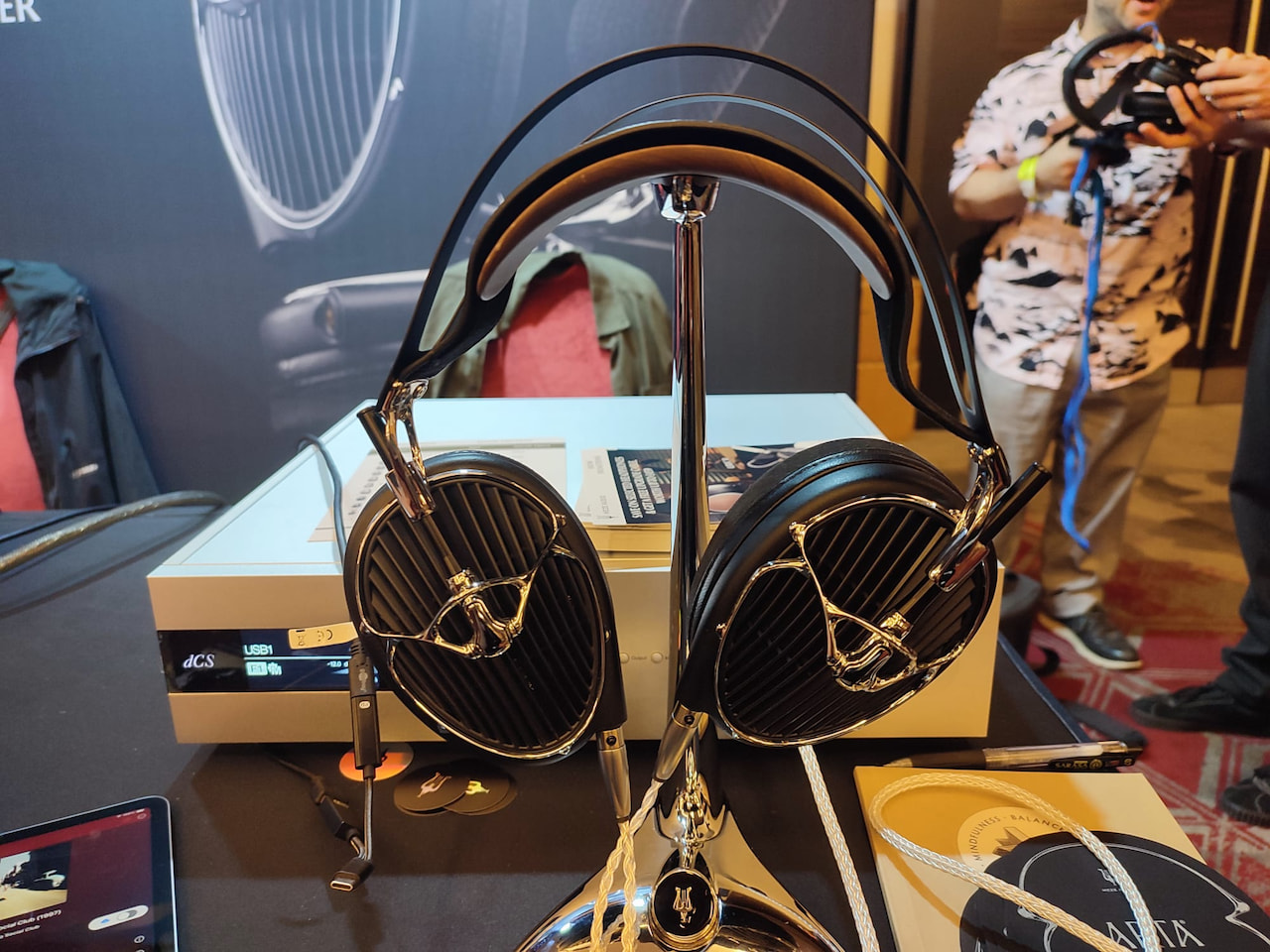
Meze Audio headphones have always looked as though they belong in an art exhibition, and the ARTA continues that tradition. Its meticulously machined components, sculpted metalwork, angled acoustic grille, carbon fiber, and leather come together in an elegant Art Nouveau inspired design that is unmistakably Meze.
The open back ARTA uses Rinaro’s newly developed MZ5 HΩ Isodynamic Hybrid Array planar magnetic driver. Its unusually high 225 ohm impedance is intended to work with higher voltage headphone amplifiers, while the angled acoustic blades behind the driver are designed to reduce internal reflections and improve openness and transient clarity. The ARTA weighs 495 grams and has a claimed frequency response of 3 Hz to 115 kHz. Every major component can also be serviced or replaced, which matters when a headphone costs $6,000.
Some listeners will expect magic at this price, although this hobby has repeatedly demonstrated that a large number on the box guarantees very little. The ARTA, however, delivered deep and beautifully textured bass, along with a remarkably open soundstage that could sound expansive or intimate depending on the recording. Tiny details emerged without requiring me to concentrate or squint into the mix, while its technical precision never came at the expense of emotional engagement.
The Meze Audio ARTA is a display piece that also happens to reproduce music with equal measures of proficiency, scale, and feeling.

Noble Audio’s less expensive wireless headphone impressed me more than the flagship FoKus Artemis. The FoKus Apollo Pro, not to be confused with the Sendy Audio headphone bearing the same name, may not look quite as luxurious, but its ANC worked far more effectively on my head and the sound quality was every bit as convincing.
The limited run Apollo Pro combines a 40 mm dynamic driver for the bass with a 14.5 mm planar magnetic driver for the midrange and treble. It also offers hybrid ANC, LDAC, aptX HD, USB C audio, app based EQ, and up to 80 hours of battery life with ANC switched off. Noble has also upgraded the tuning, earpads, headband materials, and overall finish compared with the original Apollo.
It is surprisingly rare to hear a genuinely balanced tonal presentation from wireless headphones, but the FoKus Apollo Pro delivered exactly that. Bass was tight and controlled, the midrange remained clean and present, and the treble offered clarity without becoming sharp. At $699, this was the stronger wireless headphone in Noble Audio’s CanJam London lineup.
The fact that I ran out of time before hearing every new headphone at CanJam London 2026 says plenty about the pace of innovation in personal audio.
Some headphones were genuinely exciting, while others were complete disappointments and did not make this report. The real value of CanJam is that specifications, prices, and reputations only tell part of the story. Every pair has the potential to surprise you, for better or worse, the moment you place it over your ears.
That unpredictability is precisely what makes these shows worth attending.


SOFTWARE
Office LTSC 2021, Windows Server 2022, Publisher, and Entra ID risk policies all facing the chop within weeks of each other
October 2026 is shaping up to be a busy month for administrators as it heralds the end of several big products, along with the retirement of components that could mean sleepless nights for the ill-prepared.
After the demise of Windows 10 in October 2025, sysadmins might have hoped for some respite from Microsoft’s ax, but 2026 will see the demise of more beasts.
First, there’s the end of support for Office LTSC 2021, which means everything from Access 2021 to Word 2021 is for the chop. A move to LTSC 2024 is required to keep the support lights burning, or – and we don’t doubt that this is Microsoft’s preference – a switch to Microsoft 365.
M365 isn’t a great option for organizations steering clear of the cloud. The on-prem version is very much a snapshot of where things were at release (although security patches keep flowing).
Speaking of on-premises, Windows Server 2022 will drop out of mainstream support on October 13, 2026. Extended support will linger until 2031. Windows 11 24H2 Home and Pro reach the end of the road on the same date. Windows 11 23H2 for enterprise and education will get until November 10 to tidy up their affairs.
As for the more minor products? Publisher 2021 will wrap up decades of the Microsoft Publisher brand in October. First appearing as a desktop publisher for Windows 3.0 in 1991, it has had an inexplicably long life, which will come to an end once and for all in a few short months. And unlike the rest of the Office 2021 LTSC suite, there won’t be anything to replace it (or its annoyingly proprietary file format).
There are also services due for the chop that might cause headaches for those that fail to prepare. Entra ID Sign-In risk policies, formerly known as Identity Protection, is being retired on October 1, 2026. Microsoft wants admins to migrate to Conditional Access, and make sure their policies cover user and sign-in risk. Not done the update? Then risk protection will go away after the retirement date.
A Register reader remarked, “Given how many orgs use O365 I can’t see how disabling sign-in protection might go wrong.”
October 2027 looks quieter, with only SQL Server 2017 gasping its last. However, with the coming October loaded with already announced terminations, getting the corporate house in order well ahead of time would be prudent. ®

Even if some of them are half-hearted.

Even when Star Trek: Strange New Worlds is good, you’re left with the nagging feeling that it could have been better. The show has always been uneven in quality and tone, which is distinct from its intentionally uneven storylines, dancing as it does between genres and tropes. Part of its mission statement has been to take big swings and push the edges of its format. But even if those swings weren’t the best, it was made so confidently you were still sold on the overall product. But when that confidence started to ebb away across the third season, you were suddenly left with a desire to start poking holes in the flimsier narratives.
In its fourth season, Strange New Worlds remains as unafraid as usual to take risks with each episode. The news that the series teamed up with Jim Henson Studios to do a puppet episode is already in the public domain. But while I’m forbidden from sharing specifics about any of the other episodes, suffice to say there’s more parodies-of-the-week than stock episodes of Star Trek across the season. Sadly, several of the episodes would be far more fun if the show leaned hard into the tropes they’re playing off. Instead, the show puts so much effort in justifying why it’s doing what it’s doing that it saps the energy from the fun you’re meant to be having.

Coexisting with the Muppet-y whimsy, we get more of the heavy gore emblematic of any Trek show with Alex Kurtzman’s involvement. If you thought the eye-gouging body horror of season three was a bit much, skip the second episode here. Look, I’m an adult and I’m not going to hand down pronouncements on what Is And Is Not Star Trek™. But there’s a time and a place for this sort of hard-edged content, and I don’t think that should be here. Imagine trying to sit down with your kids to watch the ostensibly main-line Star Trek series du jour. They’d only be able to watch about half the run, something unthinkable in the pre Kurtzman-era.
And, while I’m finding fault, the show’s slavish insistence on bringing Paul Wesley’s Jim Kirk into as many episodes as possible was tiring to begin with, and has gotten worse over time. As much as Strange New Worlds was greenlit on the back of Anson Mount’s star power, and Wesley was brought in while Mount was on paternity leave, his presence here is vexing. Not because I dislike Kirk, or Wesley, but because it simply feels like the show’s creative team has been trying to sideline Mount out of his own show ever since it started. If I was Kirk’s commanding officer on the USS Farragut, I’d be putting him on notice for spending too much time not doing his actual job.

But there are still moments when Strange New Worlds reminds us why it is the best live action Trek of the streaming era. The sixth episode, in particular, isn’t just a series standout, it’s one of the best episodes across Trek’s six-decade history. It’s a taught, gutsy thriller that — despite the fact I know it’s a prequel and so every character in this is guaranteed to survive — had me on the edge of my seat. The fact it includes a little hat tip to Burnistoun, no doubt included by Martin Quinn himself, made my British heart soar. But even without the nod, I’m sure it’ll top every poll for best episode of the run. Unless the final episodes of the series, which I haven’t seen, go on a run we haven’t seen since the second season.
So, Strange New Worlds season four is a lot like the rest of it: Uneven in tone, erratic in quality, sometimes gratuitous in gore and utterly charming. So, for all of its flaws, it’s best you enjoy it since it might be a few years before we get to spend any more time in this part of the future.
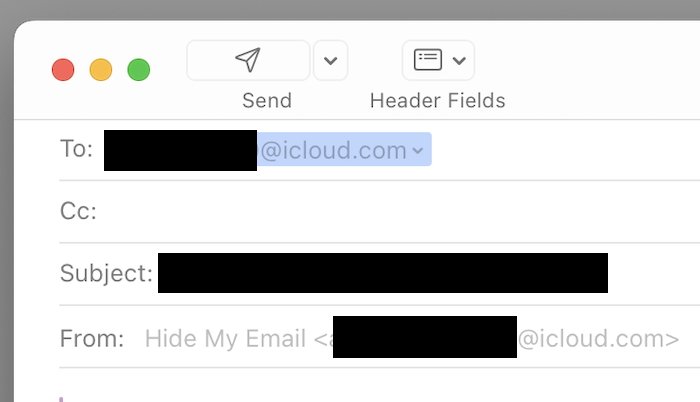
A forged Hide My Email header can make Mac Mail expose a user’s Apple Account address, extending the privacy risk beyond people who use Apple’s alias service.
Developer Jeff Johnson disclosed the Mac Mail privacy flaw on July 19. His testing showed that a specially crafted message could make Mail display a misleading sender identity while a reply went out from the email address tied to his Apple Account.
The behavior didn’t require Johnson to use Hide My Email or maintain an iCloud.com mailbox. He also found that the malicious message could arrive through an unrelated personal or business account before Mail exposed the Apple Account address in a reply.
Johnson said he doesn’t know whether the finding is technically related to an earlier flaw that could reveal the address behind a Hide My Email alias. His report documents a separate technique and doesn’t establish that both issues share the same underlying cause.
Johnson used the curl command-line tool to send himself an email containing an arbitrary X-Icloud-Hme header. Mail doesn’t give users direct control over arbitrary outgoing headers, while curl allowed him to choose the values placed inside it.
By controlling those values, Johnson could make Mail show selected addresses in the reply window. The app also displayed “Hide My Email” in the From field and added a notice saying the message had been forwarded through the service.
The result suggests Mail accepted information supplied by the sender without first establishing that Apple’s Hide My Email service had generated it. Johnson demonstrated the visible behavior, but his report doesn’t identify the app’s internal validation process.
 A crafted X-Icloud-Hme header was sufficient to trigger the Mac Mail bug in Johnson’s testing. Image credit: Jeff Johnson
The problem goes beyond a misleading label because users rely on the From field to confirm which account will send a message. Mail reportedly showed one identity while sending the reply from another, giving Johnson no accurate warning that his Apple Account address would be exposed.
Johnson said he doesn’t use Hide My Email and doesn’t have an iCloud.com email account. That makes the reported issue broader than a flaw limited to people actively using Apple’s alias service.
A crafted message can also arrive through a separate email account, yet Johnson said Mail may still send the reply from the address tied to the recipient’s Apple Account. The distinction matters for people who keep personal, business and Apple Account identities inside the same Mail app.
Apple Mail can manage multiple accounts from different providers, and users reasonably expect those identities to remain separate. Johnson’s test shows that the compose window may not always reflect the address that Mail will actually transmit.
Johnson documented a technique he reproduced in his own testing, but the report doesn’t establish which macOS versions are affected. It also doesn’t show whether the same behavior works in Mail on iPhone or iPad, and it offers no evidence that anyone has used the technique in an attack.
 The only other warning was a notice above the message saying it had been forwarded through Hide My Email. Image credit: Jeff Johnson
Crafted email headers have caused problems for Apple Mail before. In 2022, a specially formatted From field could prevent some iOS 16 users from opening Mail, although that issue caused a crash rather than exposing an email address.
The new finding also arrives while Apple faces legal scrutiny over the earlier Hide My Email disclosure. A proposed class action lawsuit filed July 15, accuses the company of misleading customers about the feature, although the complaint doesn’t allege that attackers exposed the plaintiff’s address or exploited the flaw.
Mac Mail users should stop before sending when a reply window unexpectedly labels the From address as “Hide My Email,” particularly when the original message wasn’t sent to an alias. In Johnson’s test, the disclosure occurred only after he sent the reply.
Users can inspect a received message’s complete headers by opening the View menu, selecting Message and choosing All Headers. Johnson noted that the command can also be added to the message window’s toolbar.
The presence of an X-Icloud-Hme header doesn’t establish who added it or why. An unexpected Hide My Email label combined with unusual From or To fields should still be treated as a warning.
MacGeneration independently reproduced the Mail bug and confirmed that it can expose an Apple Account address even when the user doesn’t use iCloud for email. The publication’s testing supports Johnson’s findings, though the affected Mail app versions remain unclear.
Users who need to respond should create a new message and confirm the From address before sending instead of replying directly to the suspicious email. Creating a separate message won’t fix the underlying Mail bug, but it avoids the reply behavior Johnson documented.

New TeamViewer research positions trust as the latest major barrier to AI adoption, with workers generally viewing the tool positively but struggling to hand over full independence to it.
Today, three in four workers use AI daily and only 3% say they don’t see any noticeable workplace benefits, but nearly all (95%) respondents have at least some concern about AI operating without a human in the loop.
This struggle speaks to AI’s evolution from generative to agentic, with workers most concerns about the autonomy of AI agents over AI’s actual ability to produce results.
Three in five (61%) said they’d prefer AI to take no independent action, with only around one-third (35%) willing for it to act autonomously on their behalf. Most of that group (71%) are only comfortable with AI handling defined tasks, confirming that safety and guardrails are a necessity.
As for trust’s impact on productivity, more than half (56%) often or always verify AI outputs before relying on them, spending an average of two hours per week checking AI-generated work.
“The real opportunity is to use AI and automation to prevent disruption, improve digital experiences, and free people to focus on higher-value work,” CEO Oliver Steil wrote.
Strong security and privacy protections would have the biggest impact in making autonomous AI more acceptable, followed by notifications before significant changes are made, restrictions on what information AI can access, agent activity monitoring tools and the option to reverse any actions.
“The next step is designing systems that know when to act, when to wait, and when to bring people into the decision,” Chief Product and Technology Officer Mei Dent added.

Follow TechRadar on Google News and add us as a preferred source to get our expert news, reviews, and opinion in your feeds.




London Mayor Sadiq Khan handed a peerage by Keir Starmer alongside 15 other Labour figures… just days before the PM leaves No10


Weekend Open Thread – Corporette.com


The House | The City of London can help the new chancellor deliver growth in every postcode

Two July Windows Left: The CLARITY Act’s Senate Fight and What Failure Means


CFTC blocks Kalshi from unwinding Michigan trades after court order


Ripple Payments Joins MiCA With 14 Firms, Does It Mean Anything For XRP?


Nvidia Stock Slips After Big Tuesday Rally as Huang Confirms Vera Rubin Chip Is Now in Production Today


Democrats look to World Cup watch parties to register thousands of voters

Disney’s Most Ambitious Failed Star Wars Attraction Is Coming to SDCC


Ripple wins EU-wide access as ESMA adds it to MiCA register


Grayscale Files For Worldcoin ETF, WLD Registers Sharp Rise


Palantir Shares Rise After Expanded Nvidia Partnership and Fresh Analyst Upgrades Ahead of Earnings Day


Injective Submits SEC Transfer-Agent Registration to Onchain Ownership Records


Sail Virtually Aboard The “Itanic” With IA-64 Emulator
Turtle Beach Command Series KB7 review: a nifty screen-equipped gaming keyboard


Unregistered fitter used Gas Safe logo on business flyers


Registration is now open for March for Men with Kev 2026

New Cornerback Enters Vikings Trade Rumor Mill

New Jersey voter registration controversy explained: How 6,600 noncitizens got on the rolls, and what happens next


Money | Class 12 Economics | CBSE Board Exam 2026-27

You must be logged in to post a comment Login