Tech
Porsche’s One-Off Flachbau RS Revives the Slant Nose for the Road

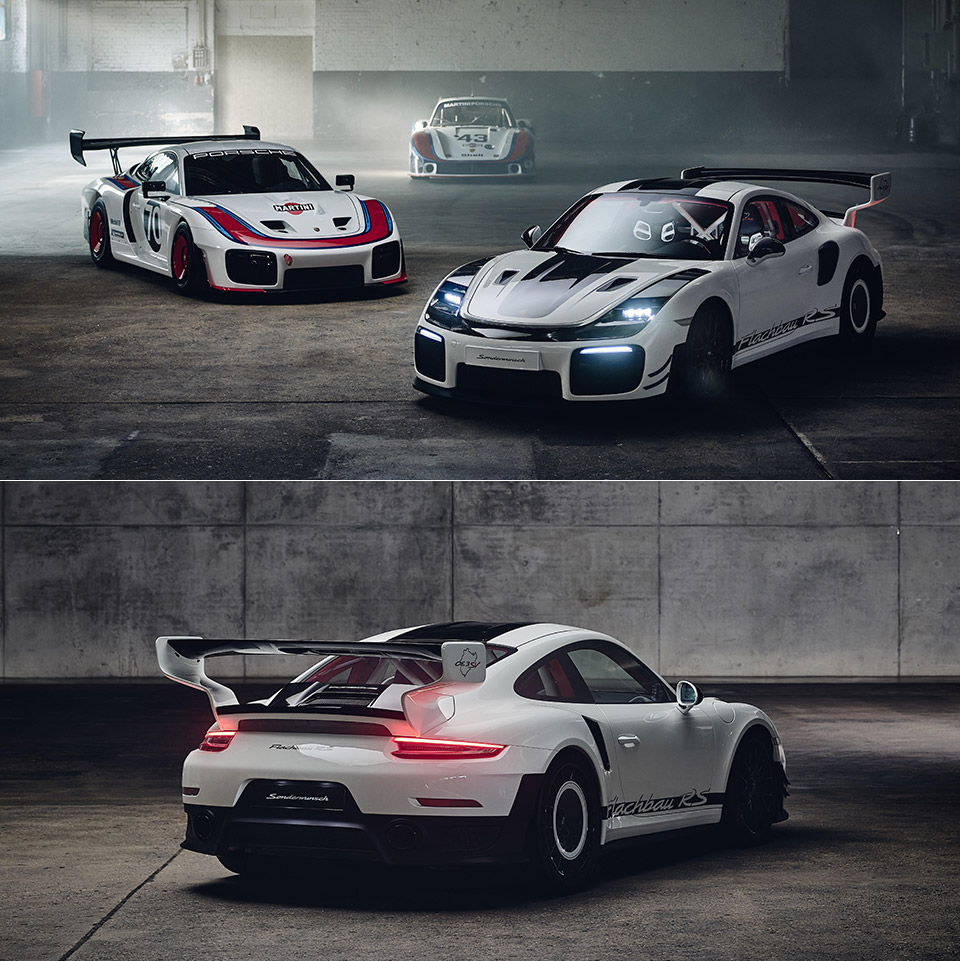
A single customer handed Porsche’s Sonderwunsch team a nearly new 2018 911 GT2 RS with the Weissach package and asked for something that had not existed in decades. The result is the Flachbau RS, a factory one-off that stretches the front of a modern turbocharged 911 into the flat, purposeful silhouette once reserved for the most extreme racing cars of the late 1970s.


The silhouette belongs to the 935/78, a long-tailed Group 5 machine commonly known as Moby Dick due to its white paint and whale-like proportions. In the early 1980s, a few 911 Turbo road vehicles featured the identical front styling. At the time, approximately 948 of the original Flachbau models left the factory. This new automobile marks the first time Porsche has explored the concept of a current generation GT2 RS while still keeping it street legal in Europe.
Sale


LEGO Speed Champions Porsche 911 GT3 RS Super Car Toy – Model Kit & Pretend Play Toy for Boys & Girls…
- BUILD A RACING LEGEND – Boys and girls ages 9 years old and up can construct the LEGO Speed Champions Porsche 911 GT3 RS Super Car (77239) building…
- AUTHENTIC PORSCHE DETAILS – Young builders can recreate the real-life vehicle’s signature elements including the famous rear wing, air intake…
- 1 PORSCHE DRIVER MINIFIGURE – Kids can place the driver minifigure with helmet and red Porsche Track Day Experience outfit behind the wheel to stage…

Work began nearly three years ago, with Style Porsche designers, Weissach engineers, Porsche Motorsport experts, and the Manthey team all contributing. Grant Larson, the designer who had already given us a modern take on the 935 for Porsche’s 70th birthday, was the one who finally got to stamp his name on the finished design – however it’s worth noting that he was already well into retirement by then. The criteria was extremely clear: keep the 3.8-liter twin-turbo flat-six with 700 horsepower and 553 lb-ft of torque exactly as is, and modify everything else around it.
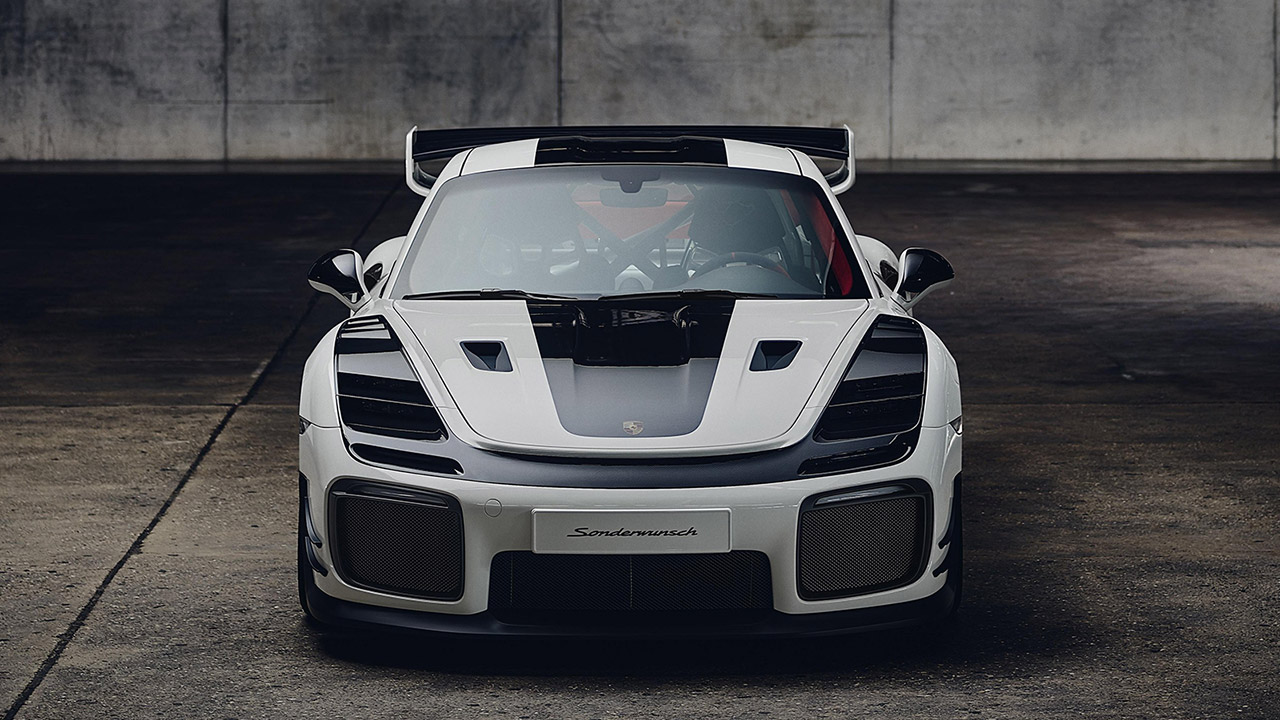
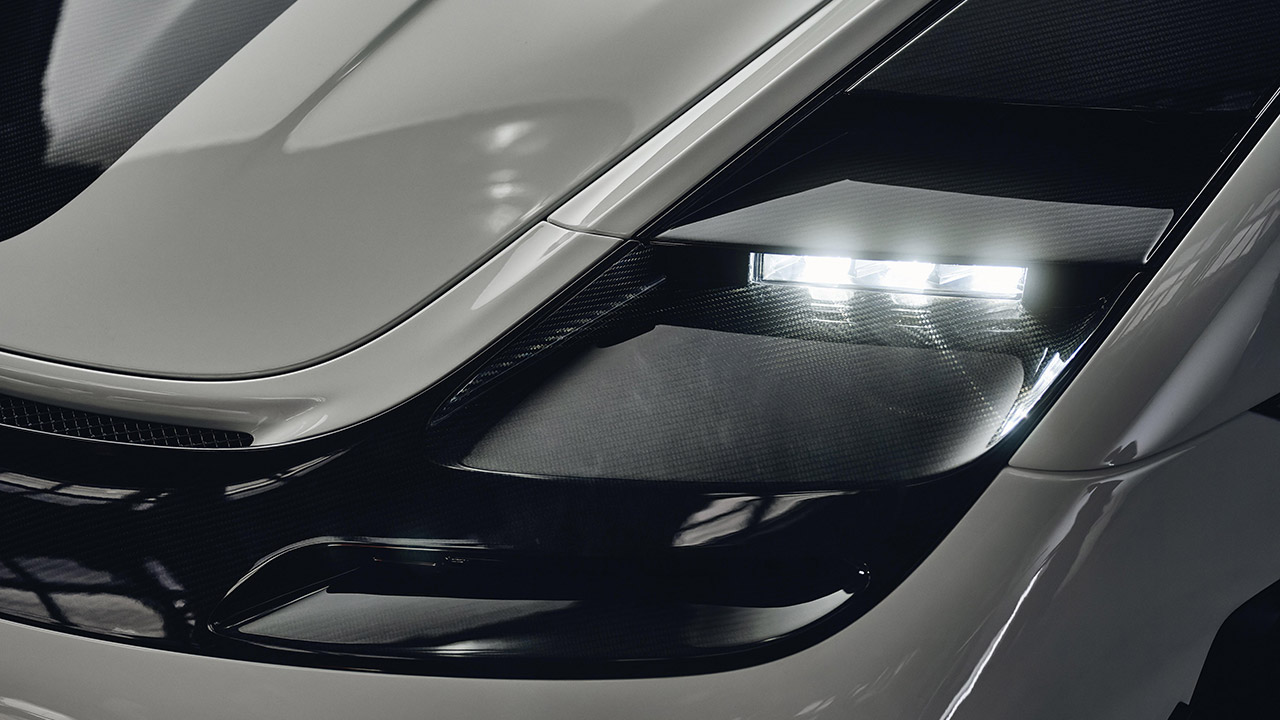
The most noticeable difference is up front, where the standard GT2 RS’s fenders have been removed. Lower, wider panels with properly positioned louvers replace them, allowing high-pressure air to exit the wheel arches more effectively. There’s a new bumper with two small canards and a deeper splitter, and the gasoline filler flap and mechanism had to be redesigned from the ground up to accommodate the changed shape. Round headlights are no longer available; instead, three thin LED units stacked vertically inside the fender provide high beam, low beam, and daytime running light. When the lights are turned out, the front end appears to have no headlights at all, similar to the vintage race vehicles. The body is primarily coated in Grand Prix White, a color first introduced on the 911 in 1974 and matching several classic cars from Porsche’s own collection. The dark panels and exposed carbon fiber provide contrast. The hood features a U-shaped carbon band that is deliberately reminiscent of the Martini-liveried Moby Dick. Aero disks in the same white are mounted over the rear wheels and brake calipers in a deep black.

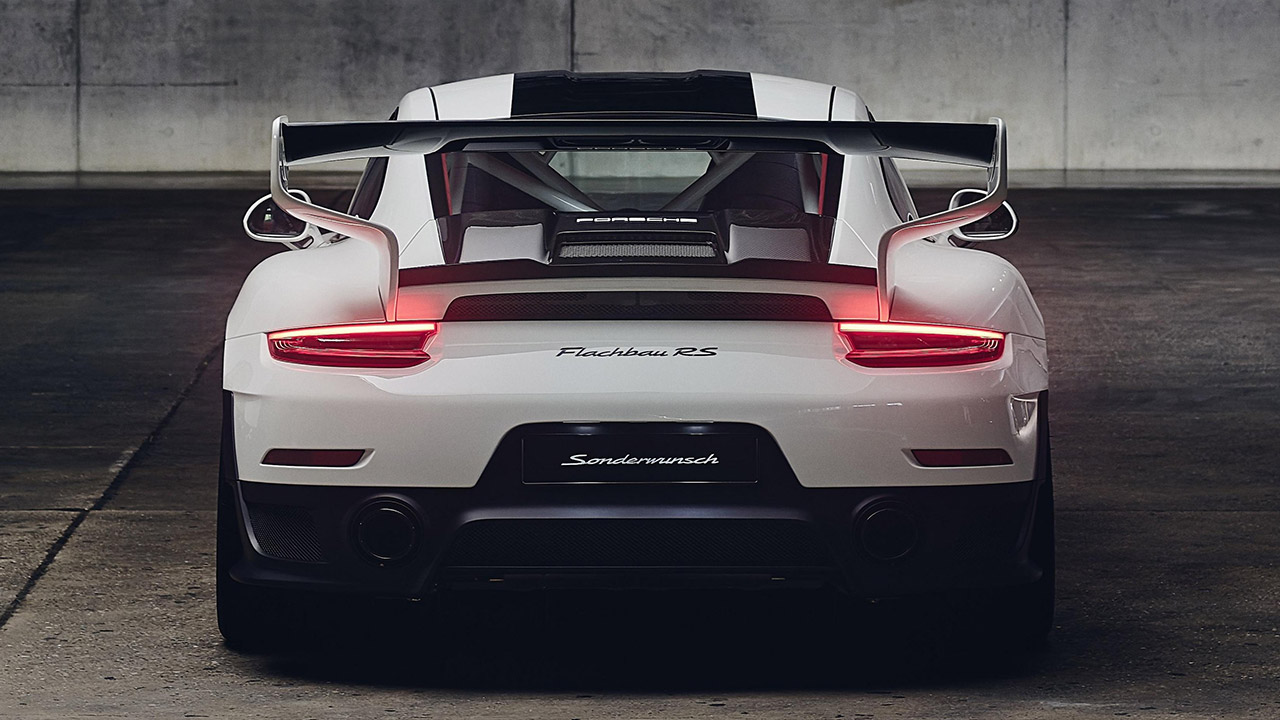
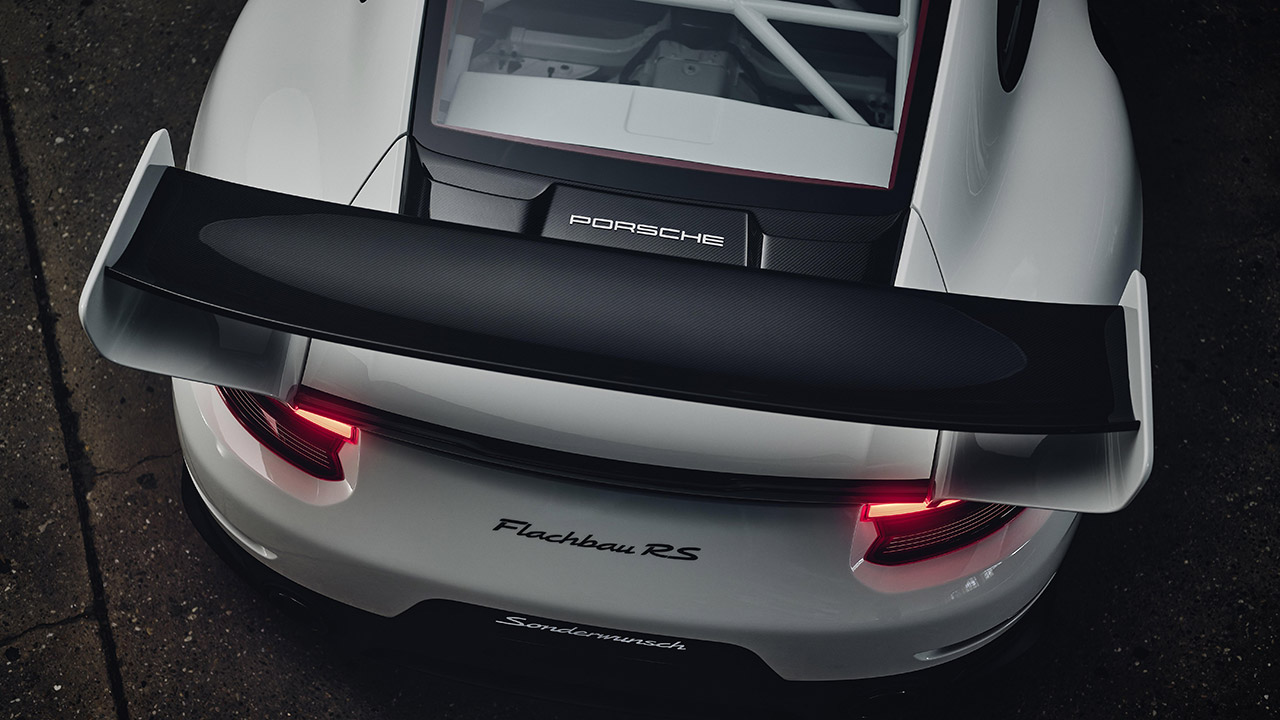
Over at the back of the car, there’s a new rear wing that’s several inches higher than the standard GT2 RS piece. The S-shaped mounts and three-position manual adjustment are all from the 992-generation GT3 R Rennsport. At high speeds, the wing can generate around 1,221 pounds of downforce on the rear axle, which is somewhat higher than a GT2 RS with the Manthey kit installed. A matching front splitter, underbody panels, and rear diffuser round out the kit. Carbon-fiber aero disks reduce drag in the rear wheels. Overall, the changes save the car nearly 70 pounds compared to the already slim Weissach-equipped donor.
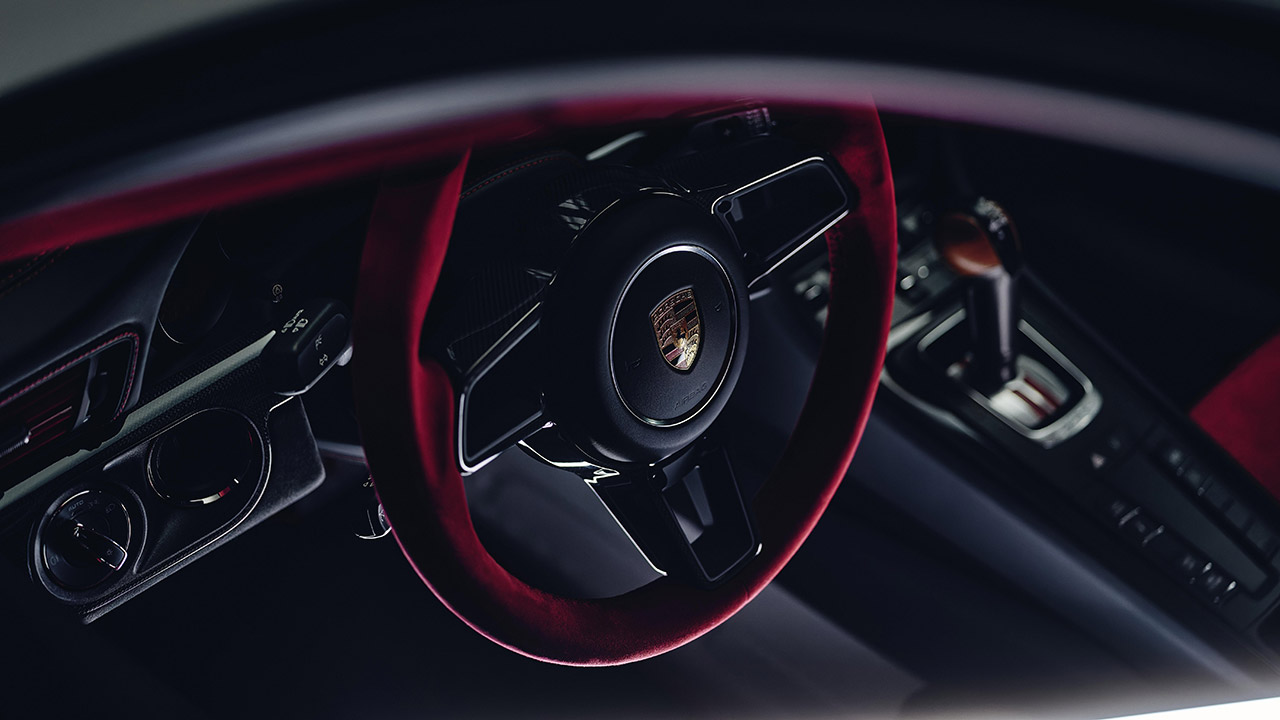
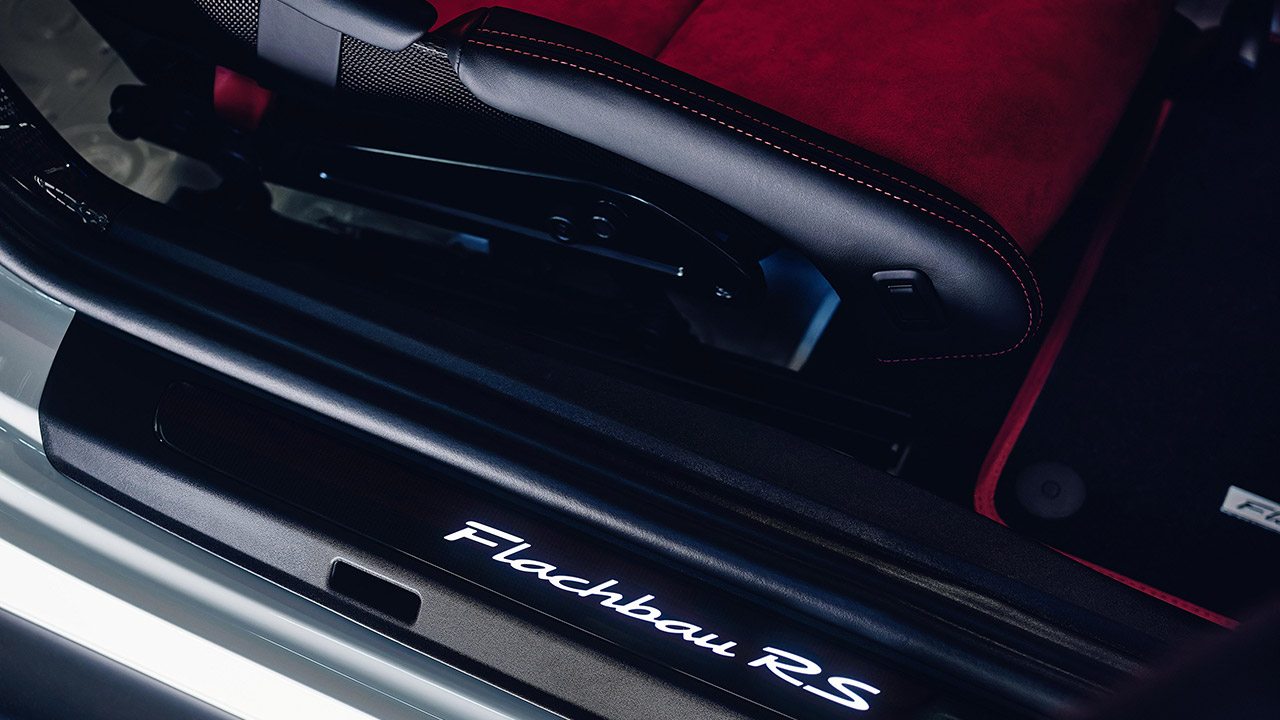
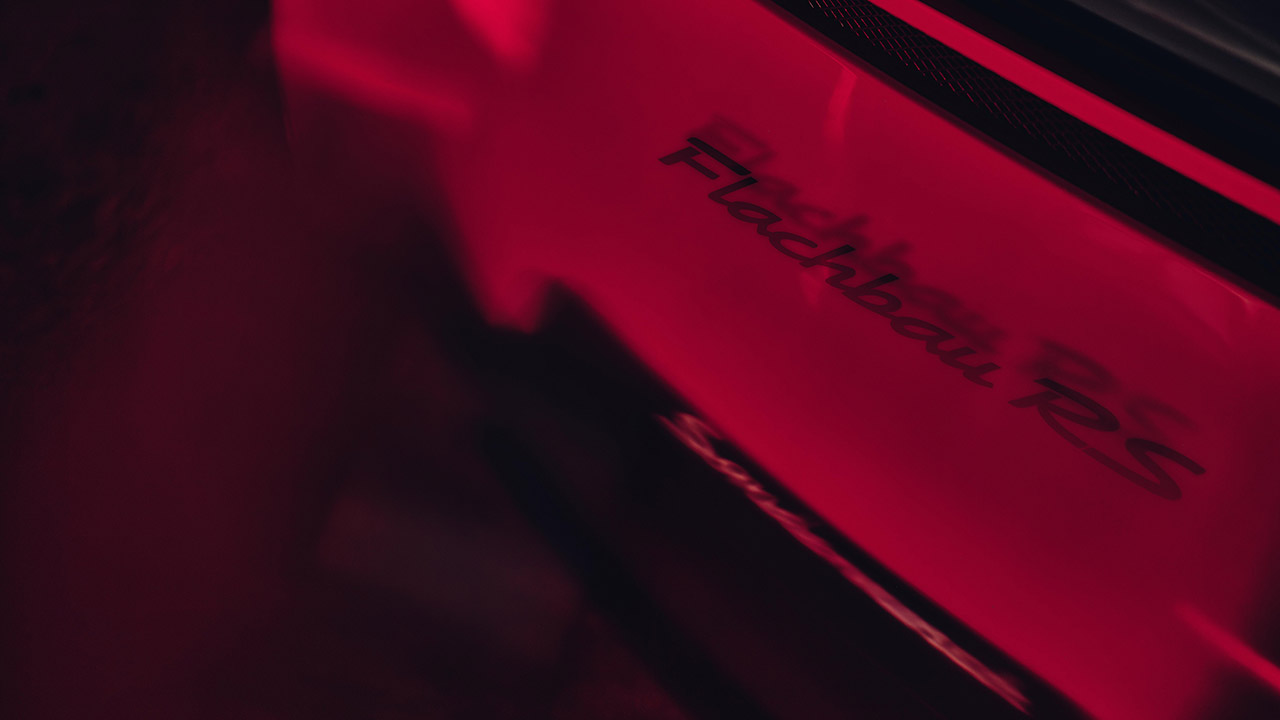
Inside, the front seats remain intact, with red Alcantara and black leather, as well as the carbon fiber shells. Everything else has been ripped out. The middle screen has been replaced by a simple storage box wrapped in leather. To conserve weight, the whole audio system was removed, as well as the majority of the sound deadening material and floor coverings. The exposed metal bits, like the bodywork, have been painted in Grand Prix White. Some parts have also been bolted with carbon cladding, and some of the wiring is still visible, but they made sure to cover the parts they couldn’t go without. The “Flachbau RS” insignia is still stitched on the headrests, along with a stylized shape of the Nürburgring Nordschleife. Even the mandatory warning triangle is tucked away in a removable box so it doesn’t get in the way on track days. A little gold plaque on the passenger side dashboard reads “Sonderwunsch” and comes with an engraved plate stating the car is a “Werksunikat 2026, Flachbau RS.”
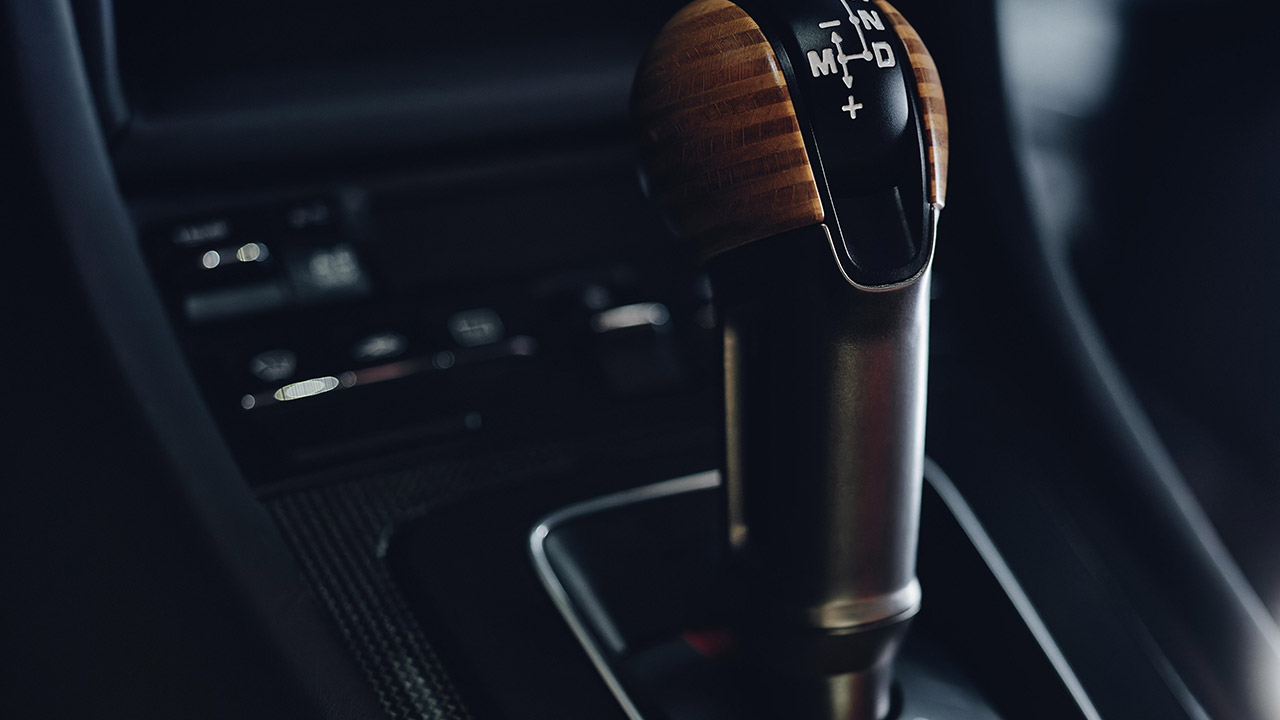
Porsche approached the validation process with the same rigor as they would with a production vehicle. First, digital accident simulations, airbag tests, and structural analysis were performed to ensure the vehicle’s safety. Then they built a few prototypes and tested them in the wind tunnel, at high speeds on the Mendig airport, and with test driver Lars Kern doing 50 laps of the Nordschleife. To ensure that all of the faults were worked out, they conducted an endurance test in Weissach that replicated 150,000 kilometers of drive in the showroom. They also built three different test mules to figure out the lighting and aerodynamics. Finally, the finished Flachbau RS contains all of the components required to be legally driven in Europe.
You must be logged in to post a comment Login