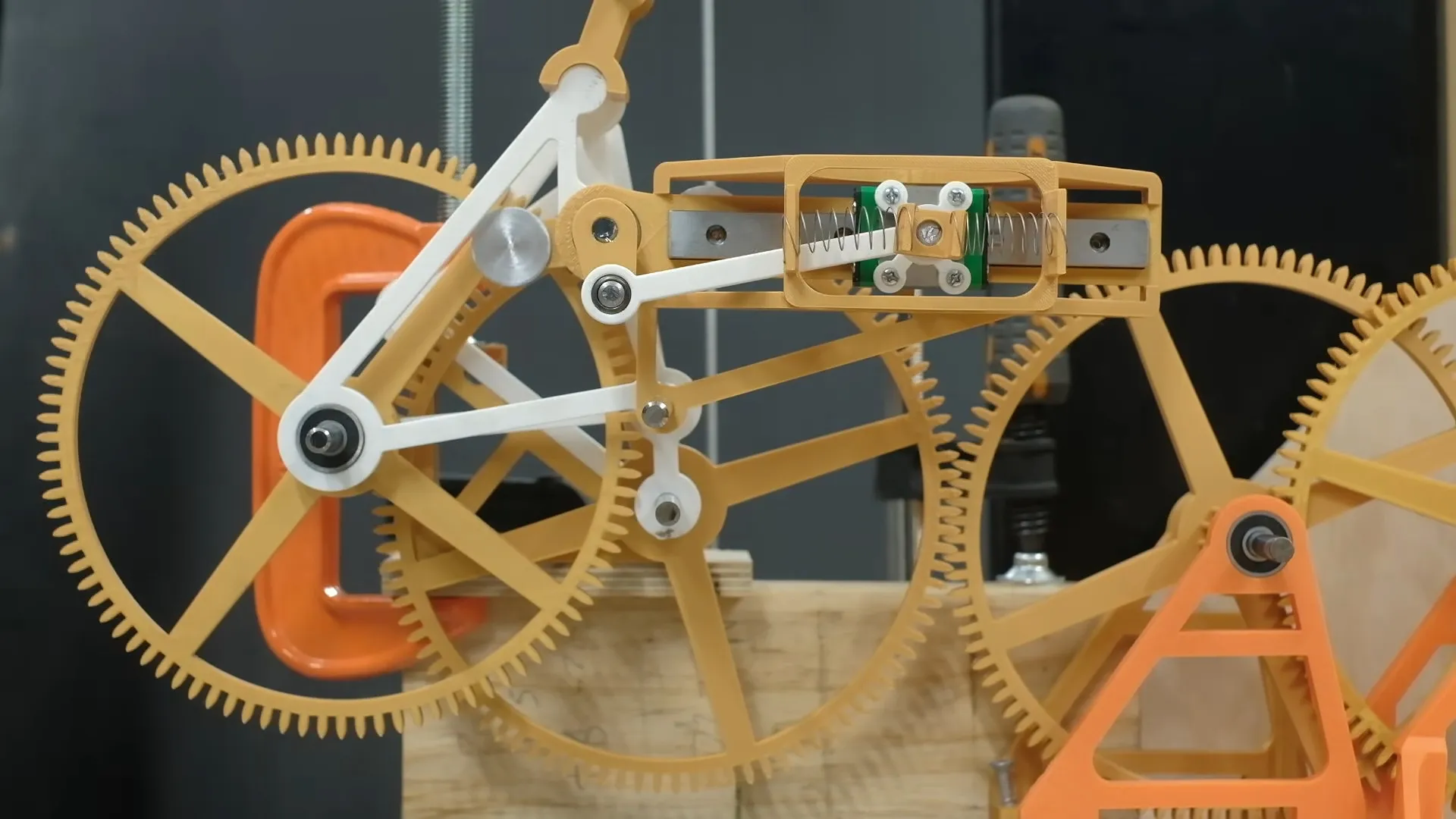
When it comes to clockwork, there is a spectrum — some people love the ticking, and some people hate it, while most fall into the broad middle of indifference. Once upon a time, Pope Alexander VII fell into the “hate it” category, and commissioned a silent timepiece from [Fratelli Campani] in 1656. Three hundred seventy years later, [Many Vices] sought out to re-create the mechanism in extruded plastic thanks to the efforts of watchmaker [Carlo G. Croce], who documented his brass recreation in this PDF file and his own videos.
While the archaeology of recreating the mechanism from old photos is interesting, the mechanism itself is the real showpiece. The secret, as you might be able to tell from the photographs, is an eccentric crank escapement that provides continuous movement rather than the traditional anchor escapement whose periodic movements creates the distinctive ‘tick’ and ‘tock’. [Many] tests both in his video so you can hear the difference and see how much power is wasted with the crank escapement, which doesn’t keep going very long.
We wonder if carefully tuning the flywheel he’s using to match the frequency of the swinging pendulum would help a little there. Likewise, his linear-rail-based spring pendulum modification — though it does look awesome and we’d love a train-themed clock using it — doesn’t come close to providing the runtime of traditional clockwork. That’s probably why the anchor escapement persisted for centuries, even if some people and Popes couldn’t stand the tick-tock.
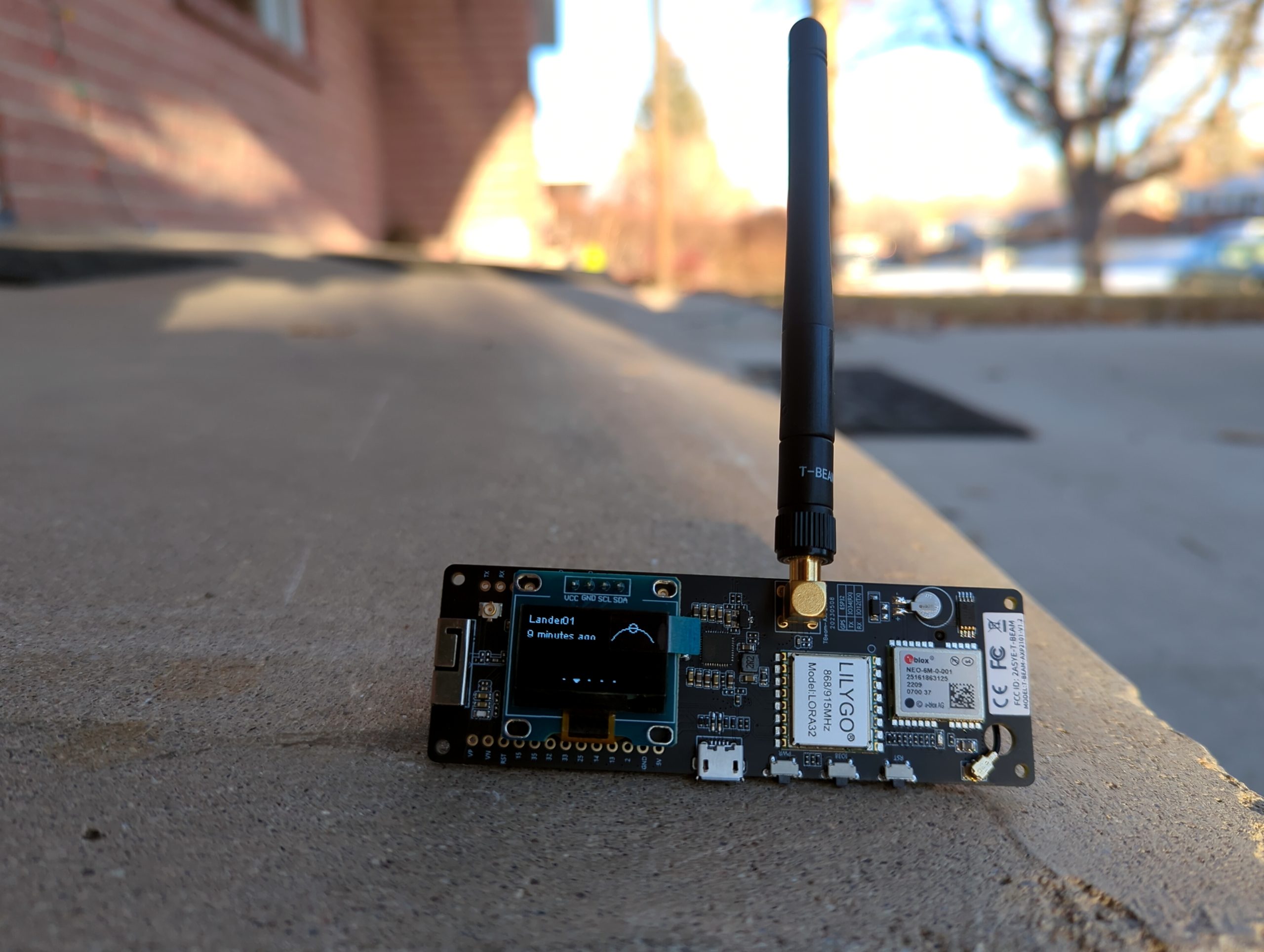
Although everyone has their own reasons for exploring a new hobby, one of the driving factors behind the popularity of Meshtastic and MeshCore has been the incredible accessibility offered by off-grid LoRa mesh networks. You don’t need any expensive hardware or a license to get on the air — armed with a $20 microcontroller dev board and open source software, you could be on the mesh in minutes. Then came the really exciting part, seeing who else was out there. The low barrier of entry and ad-hoc nature of these projects meant there was a good chance you’d soon find yourself exchanging messages with other like-minded folks in the area.
Or at least, that’s how it used to be. With the recent revelation that their default radio configurations have potentially been in violation of the Federal Communications Commission’s (FCC) regulations governing amateur usage of the 900 MHz industrial, scientific and medical (ISM) band, the users and developers of both Meshtastic and MeshCore have been sent scrambling. Getting in compliance isn’t necessarily a technical challenge. In fact, Meshtastic has already introduced changes aimed to address the issue and anyone running the latest alpha release can be sure that their initial radio configuration will meet FCC standards.
But unfortunately, this introduces a new problem. While it’s easy enough to get new installations of Meshtastic and MeshCore operating in a mode that keeps the FCC happy, doing so breaks compatibility with everything that’s already been deployed. The community will be fractured into distinct strata depending on when they first configured their hardware, with an added dash of confusion from the more rebellious users who will undoubtedly refuse to migrate over to the new settings.
What was once easy and accessible has just gotten a whole lot more complicated.
Advertisement
Wait, Are They Talking About Us?
So how is it that both projects could have gotten as far as they have without realizing that they may be in violation of regulations that date back to the 1980s? It’s actually a bit tricky to nail down the timeline. Nothing has changed recently in the rules, and while it’s possible there were some back-channel discussions, the FCC has made no public acknowledgement of Meshtastic, MeshCore, or the general handling of LoRa mesh networks.
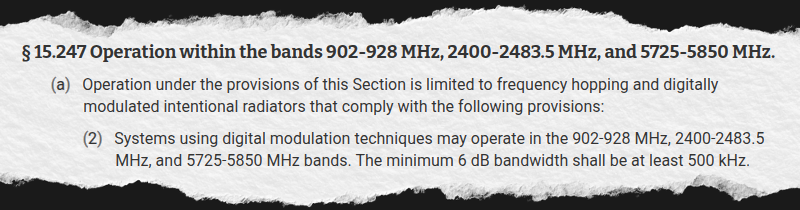
But if we go back to October of last year, we can see the first signs of potential trouble. Issue #945 in the MeshCore GitHub repository points out that the default radio settings in the US for both it and Meshtastic would appear to run afoul of FCC regulation 15.247. Specifically the second paragraph of subsection (a), which dictates the minimum allowed bandwidth. Out of the box MeshCore operates at 62.5 kHz and Meshtastic uses 250 kHz, but the FCC says it needs to be 500 kHz or higher.
The resulting discussion, which spans several hundred messages and is still seeing activity as recently as this week, paints a fascinating picture and illustrates one of the reasons it’s taken so long for the issue to gain traction. Although the text of 15.247 may seem straightforward enough at first glance, there’s always room for interpretation with documents like this.
Some pointed out that subsection (a) states that it is “limited to frequency hopping and digitally modulated intentional radiators,” as evidence that it doesn’t apply as neither project utilizes frequency hopping. Others felt that the rules were only intended for devices with higher output power, and some even expressed a disbelief that the manufacturers would allow the modules to operate in a non-compliant mode in the first place.
Advertisement
Put simply they couldn’t decide if 15.247 was something they really had to worry about, and without any official word coming down from the FCC, were reluctant to throw the community into turmoil over it.
Philly Does Their Homework
While MeshCore users debated if they should switch over to 500 kHz, many Meshtastic users started exploring alternate radio configurations for a very different reason. Its default 250 kHz mode, known as Long Fast, was never designed for networks with hundreds of radios in an urban environment. Taking advice provided by the developers themselves, operators of large networks such as the one in Philadelphia started testing other modes to see if they would fare any better.
As it so happens, one of the modes tested by the operators of Philly Mesh this summer happened to be Long Turbo, one of the two available modes that utilizes a bandwidth of 500 kHz. Their findings, which have since been widely cited online, were underwhelming to say the least. Part of the problem seems to have been due to bugs which went undiscovered up until that point due to the relatively limited testing of Long Turbo mode. Unfortunately, even after the bugs were addressed upstream, they noted some of the hardware they tested seemed unable to operate properly when switched into 500 kHz mode.
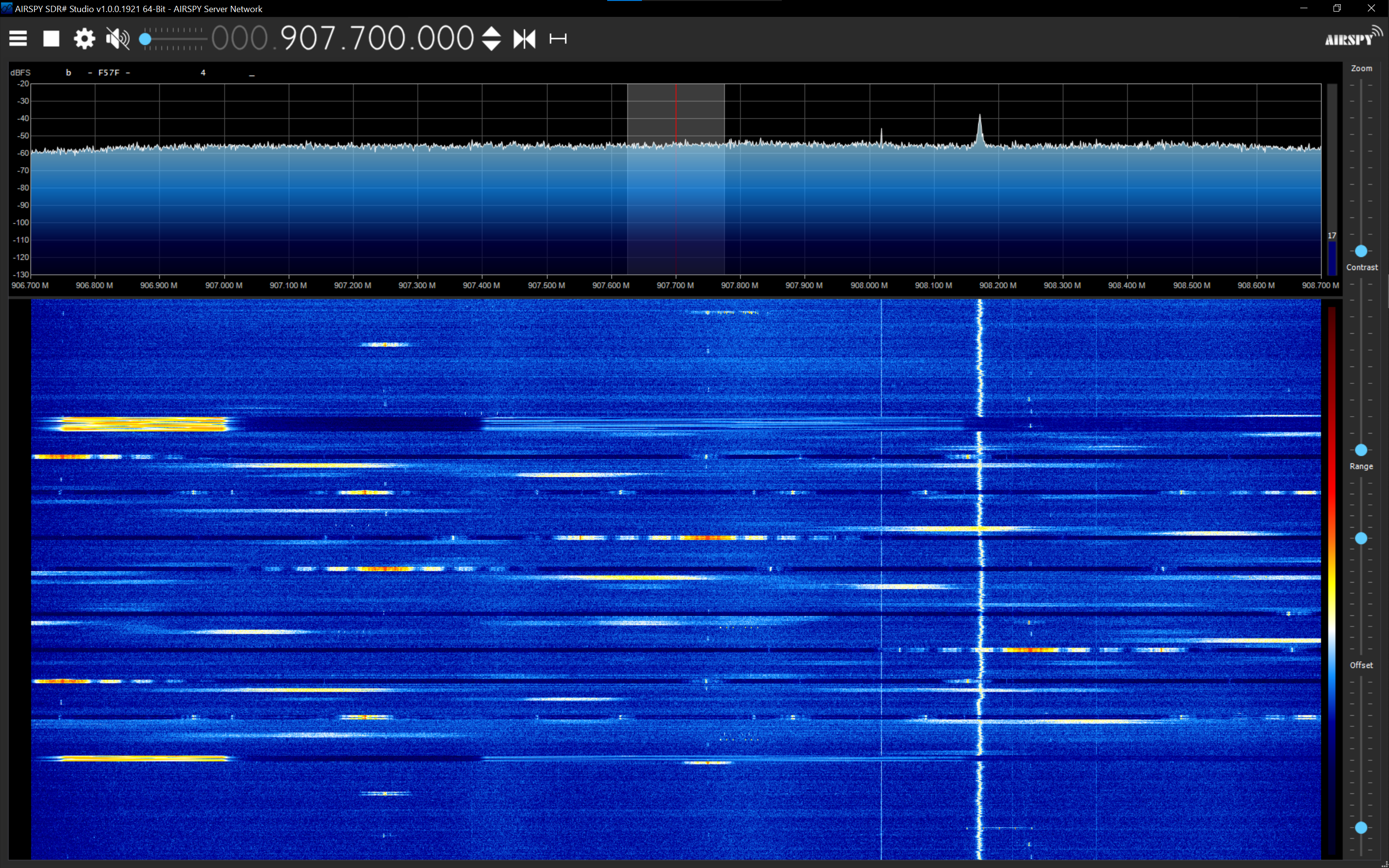
A congested ISM band as seen by a software-defined radio in the heart of Philadelphia
But the biggest problem they encountered was interference from other devices on the ISM band. In a dense urban environment like Philadelphia such interference is essentially unavoidable, but they found that Meshtastic operating at 500 kHz was especially susceptible to the electromagnetic din of the city. From their investigations, they theorize that the narrower bandwidth used by Meshtastic’s default mode was better able to slip through some of the interference, while the wider 500 kHz mode was more likely to collide with other transmissions.
Welcome to the Wild Wild Mesh
Given its poor performance at 250 kHz in an urban environment and the growing concern that anything less than 500 kHz could draw the ire of the Federal Communications Commission, Philly Mesh caused a considerable wave in the community earlier this month when they announced they would be switching to MeshCore.
Advertisement
While MeshCore was also impacted by interference at the FCC-compliant 500 kHz, during their testing Philly Mesh found that its protocol seemed to handle the situation more gracefully. The announcement also explained that they hadn’t given up on Meshtastic entirely, and that future installations may run both. But at least for the time being, it was determined that MeshCore offered them the best chance of creating a reliable mesh network in Philadelphia — a goal which superseded any loyalty they may have felt to one particular project.
This decision completely shifts the balance of the mesh community in Philadelphia and the surrounding area. Not only will users running older Meshtastic radios set to 250 kHz be unable to communicate with newer installations operating at 500 kHz, but both groups would also be separated from radios that were being switched over to MeshCore — which themselves may also be operating at various bandwidths depending on how they were configured.
One large network which could be accessed by anyone using Meshtastic’s default configuration has now been broken into several factions. In theory everyone could simply start over from scratch and move over to the same configuration, but the potent combination of tribalism and apathy is all but guaranteed to keep many users in their respective niche, kicking off what’s essentially a LoRa turf war.
It’s too early to tell what will become of Philadelphia’s mesh aspirations. There’s little reason to question their analysis of the situation on the ground, and it could very well be that using a custom MeshCore configuration is the best way for them to achieve their stated goals. But it’s still a painful transition, and you can be sure that other large mesh networks in the Northeast and beyond will be keeping an eye on the situation as they consider their own futures.
Scottish rider Danny MacAskill has wanted to experience Norway’s granite slabs for years. This summer he gathered friends, pointed a camera crew north, and spent days on the rock around Narvik while the midnight sun hung in the sky and refused to leave. Bosch eBike Systems backed the short film that came out of that trip, titled Endless Light.
Narvik stands out in Nordland, far north of the Arctic Circle, where fjords cut deep into the mountains and smooth granite hillsides blend smoothly into the scenery like a frozen waterfall. MacAskill and his crew spent three days attacking three named zones that every cyclist in the area is familiar with: Escalator, Superbowl, and Mission Ridge. On this terrain, the rock appears to continue on forever, with water and distant ice glinting tantalizingly just off the edge of the frame.
DUAL 1/1.1″ SENSORS & TRIPLE AI CHIP SYSTEM: Custom-built dual 1/1.1″ square sensors deliver unprecedented 360 image quality. Combined with a triple…
FLAGSHIP 8K50FPS 360 VIDEO: Hit record on our 360 action camera and capture your world in stunning native 8K50fps video. Every view, every highlight…
IN-HOUSE AI MODEL FOR EFFORTLESS 360 EDITING: Insta360’s own AI model, built specifically for 360 editing. New AI Director edits your footage…
He rode the Santa Cruz Vayla(CC), a powerful Bosch Performance Line CX eMTB. With 85 Newton meters of torque and a max output of 600 watts, the bike requires riders to do the work, but the motor does provide them with the ability to keep moving even when they would otherwise be trapped walking all day with a bike on their back. MacAskill believed the motor enabled the crew to cover far more land than they would have been able to on a standard bike, and that the Vayla was the ideal tool for the work in Narvik, making the entire trip a once-in-a-lifetime event.
MacAskill continues to do his own thing, even with a motor aid. One sequence has him performing a backward nose manual across a really long slab, which makes your hands sweat just seeing it. Other lines pick their way along a narrow crest before following a long, exposed granite spine flanked by nothing but air. There’s one crazy final run that is so steep that the camera can’t decide whether to follow the rider or go down the slope.
They took advantage of having a small crew and some fantastic friends to film in the continuous light of the midnight sun, which meant no frantic quest for the golden hour or wild sprint against the clock to finish filming before dark. The only thing they had to worry about was the slow, steady change in color when the moist stone was saturated by sunlight.
The soundtrack for the film includes Max Cooper’s ‘A Model of Reality (Tor Remix),’ which is an excellent pick to accompany the gorgeous film. If you’re wondering how they got all of the gear to the location without causing a logistical disaster, another behind-the-scenes video shows how crazy it was. MacAskill’s own perspective on the project is straightforward: he had always been fascinated by the slabs at Narvik, so he booked the entire thing and invited the people he wanted to experience it with along for the ride. [Source]
In 2000, after 114 years of operation, a paper mill in Plainwell, MI went bankrupt and shut down. With paper production continuing to decline, it may be surprising to hear that someone purchased the Plainwell Paper Mill and that it will operate once more after 25 years. However, it won’t be making paper — the mill has become home to the Michigan Classic Auto Mill, which will restore, store, and sell classic vehicles. This feels like a fitting business for a historical building with a lot of connections to locals in town. It felt so right, in fact, that the city sold the 255,000-square-foot property to Darius and Rimante Grigaliunas for just $1.
Advertisement
Plainwell City Manager Justin Lakamper said that the new classic car company will be “a huge thing” for the city, which makes sense: Michigan is home to the number one car city in the country. Plainwell has been debating what to do with the old paper mill for decades. Now, former employees and the public are invited to the grand opening of the Michigan Classic Auto Mill on Saturday, October 3, complete with a polka band and beer garden.
Advertisement
Plans for the Michigan Classic Auto Mill
While the Grigaliunas only purchased the property for $1, they signed a contract that requires them to fix up the property within a certain time period. Plainwell residents themselves, Darius and Rimante are excited to revitalize the property as self-proclaimed “massive environmentalists.” They previously purchased the Wurlitzer Piano plant in Illinois, which was in a state of disrepair. The duo restored it and transformed it into the Classic Auto Factory, which now stores between 75 and 175 vehicles over 20 years old — and it takes a lot of special care to properly store a classic vehicle.
For the Grigaliunas, buying the old paper mill and turning it into the Michigan Classic Auto Mill is not just about making some money — they view it as a “redemption project” for the town. On top of storing and selling classic cars, Girgaliunas envisions a possible restaurant and indoor athletic facility with batting cages. The plan is quite flexible based on what the Plainwell community wants, but the first step is to get the core business up and running so they can start creating some job opportunities. Noted Grigaliunas: “We only want local people working on the building. People from Kalamazoo, Plainwell, and Grand Rapids. I’m here to build relationships with the locals. We’re going to rebuild this and reopen this mill together.”
Signal is finally letting people sign up without handing over their phone numbers, but it’ll cost $3. The option is rolling out in the Android 8.28 beta, removing a longstanding registration requirement for people who’d rather keep their phone numbers private.
It’s a one-time payment, not a subscription. Signal says the fee is meant to discourage spammers from creating accounts in bulk, while its payment system prevents purchases from being directly linked to the accounts they create.
Why is Signal charging for privacy
Removing the phone number requirement could make it easier for spammers to create accounts at scale. Charging for each registration makes that considerably more expensive without forcing people to provide a phone number. Signal has also introduced separate protections against phishing and fraudulent profiles.
The fee is $3 in the US, although prices may differ by country. Registering with a phone number remains free, so existing users aren’t suddenly being asked to pay for Signal.
Advertisement
Signal also hasn’t committed to keeping the price at $3. If numberless accounts become a significant source of spam, the company may increase the fee to discourage mass registration.
Nathan Dumlao / Unsplash
How does Signal keep payments private
Paying for an account introduces an awkward privacy question. A purchase could potentially create a link between someone’s payment information and the account they’re trying to keep separate from their identity.
Signal uses the same zero-knowledge proof system behind its donations to prevent that connection. The company can process the purchase without directly associating it with the resulting account.
There’s a catch for anyone using an Android device without Google Play Services. Payments currently go through Google Play, so those devices aren’t supported. Signal plans to introduce additional payment methods, although it hasn’t provided a timeline.
Advertisement
What should users know before signing up
Numberless accounts come with a strict recovery system. Signal provides an Account ID and Account Key, and losing either means permanently losing access. There’s no recovery mechanism, so saving both in a password manager is essential.
Existing users can’t remove phone numbers from their accounts yet, either. Anyone hoping to switch an existing account to the new system will have to wait while Signal considers whether to support that option.
Pluralsight’s Beckey Woodard Cole discusses how advancements in technology have transformed the way modern day employees expect to climb the career ladder.
The career ladder is exactly what it sounds like. It is a workplace model that enables people to start out on what is essentially the bottom rung of an organisation and bit by bit, step by step, you work your way upwards, towards the role and career that you want.
In the days of old, people who had skill but perhaps not the necessary qualifications or experience, could find themselves, in just a few years, with the title and job they truly wanted by virtue of their hard work, dedication and achievements. So for many it was a system that rewarded commitment.
But, according to Beckey Woodard Cole, the chief people officer at Pluralsight, artificial intelligence is changing how professionals engage with the career ladder, to the extent that the system is becoming obsolete.
Advertisement
She told SiliconRepublic.com, “AI now handles the repeatable, rules-based work that used to sit at the bottom rungs of a technical career such as basic scripting, routine data checks, first-pass code review. That was how junior engineers built credibility before moving into senior, judgement-heavy work.
“With that first rung gone, people move sideways into adjacent disciplines. This can look like a data analyst picking up prompt engineering or a support engineer moving into AI operations since that’s where the gaps sit.
“Career progression is now defined by what someone can do with a model and a problem and is less about tenure within a job level. That also means we need direct ways to confirm technical ability at every level. Titles and tenure tell us less than measurable outputs.”
Pros and cons
According to Woodard Cole, the deconstruction of traditional models can be a positive for professionals whose real value shines through when work is organised around skills rather than fixed roles. Instead of a project falling into the hands of an employee who has the right title, companies can instead draw on the talents of people with the relevant skills, regardless of their current title.
Advertisement
She said, “This surfaces talent that a rigid role structure would have missed entirely and it lets people develop new capability by working on problems outside their formal remit rather than waiting for a role change to justify it.”
The downside, she explains, is that it often takes time and effort to reestablish the infrastructure that creates standard job and role definitions when moving to a skills-based, internal marketplace approach.
She added, “This approach to HR took years to settle into and changing that model means taking on the massive job of overhauling the infrastructure itself. It takes real time to build a skills taxonomy detailed enough to match people to work accurately, and to get people comfortable being evaluated on a skills profile instead of a job description they’ve held for years.”
Woodard Cole also noted the importance of not isolating older employees who are used to a more standard career ladder-based system. In dismantling a traditional workplace system, more tenured professionals may feel displaced, particularly if they have committed years to earning titles and broadening a skillset.
Advertisement
She said, “Treating tenured workers as a valuable part of the knowledge ecosystem is crucial when traditional hierarchies break down. Putting these people in mentoring roles and acknowledging their internal expert status can also help tenured employees to feel valued.
“In addition, executives and other top company leaders should encourage middle management to play the role of player coach, helping to develop talent from within. Pay tied to skill depth rather than tenure matters too and top performers should always be rewarded for their contributions.”
Out with the old
Woodard Cole predicts a working landscape in which organisations develop a ladder-based system more akin to a lattice design, than a straight upward line. She explained, career progression rarely moves in one direction nowadays and employers need to recognise the value of non-linear career decisions.
She said, “ A move sideways into a new discipline, a step back into an individual contributor role after a stint leading a team, a stretch project in an adjacent function, all of these count as progression now, not detours from it. The model that I see having the most staying power ties advancement to what someone can prove, not what a title implies.
Advertisement
“People either move up or take on lateral roles by pointing to a specific outcome, a system that cut processing time, a migration that came in under budget, rather than time served in a role. Progression looks less like a promotion cycle and more like a portfolio of solved problems, each one verified rather than self-reported.”
When it comes down to it, for Woodard Cole, a title is only representative of a point in time, whereas a skill describes the abilities someone has in the moment.
She said, “In technical fields that gap has grown wider. A senior developer title from three years ago says little about someone’s grasp of current AI tooling, security practice, or data infrastructure.
“Employers also face shortages in specific skills, certain cloud platforms, security disciplines, machine learning specialisations and a title-based search misses people who built that skill through a side project or a role with a different name entirely. Verification is the harder part now.
Advertisement
“AI tools make it easy to polish a CV to match the posting description or produce ready answers to interview questions, so a document alone tells a hiring manager less than it used to. Skill has to be tested directly, a practical coding exercise, a live technical interview, a portfolio someone can walk through and defend. These metrics will help leaders anticipate the impact that someone will have in their role.”
Don’t miss out on the knowledge you need to succeed. Sign up for the Daily Brief, Silicon Republic’s digest of need-to-know sci-tech news.
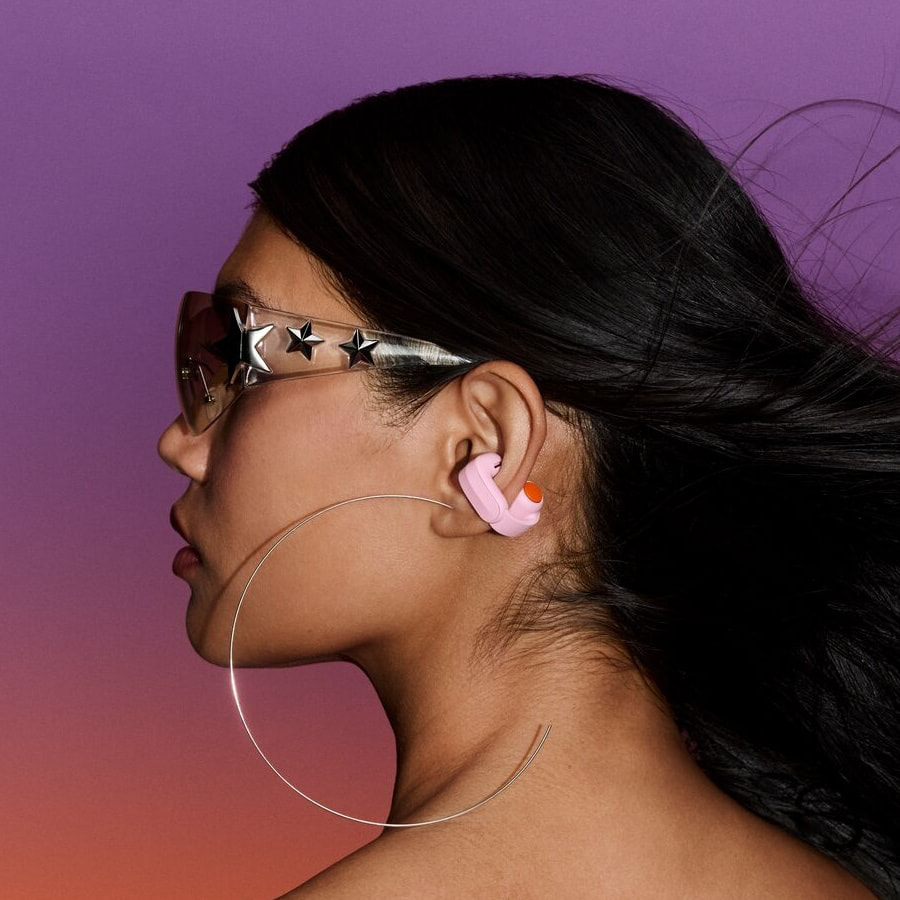
Bose is expanding its open ear audio lineup with two new models for October 1: the $199 Sport Open Earbuds and $299 Ultra Open Earbuds 2nd Gen. One is aimed squarely at runners, workouts and outdoor use, while the other updates Bose’s flagship cuff-style design with deeper bass, greater output, clearer calls, longer battery life and an expanded Immersive Audio experience.
The timing makes sense. For years, the personal audio industry has worked very hard to convince us that the ideal listening experience involves sticking something into our ear canals and blocking out as much of the outside world as possible. Judging by the enormous popularity of true wireless earbuds and increasingly aggressive noise cancellation, most of us apparently agreed that hearing absolutely nothing around us was a feature.
Open ear audio is gaining traction because there are plenty of situations where that approach makes very little sense. Runners and cyclists need to hear traffic. Commuters standing on subway platforms may want to hear announcements — or notice what is happening three feet behind them. Early morning and dusk walks are another obvious example where situational awareness matters considerably more than squeezing another few decibels of isolation out of your earbuds.
There is also the comfort factor. Open ear designs avoid sealing the ear canal, which can make them easier to wear for extended periods for listeners who dislike the pressure, heat or plugged-up sensation of conventional earbuds. They are not designed to replace noise-cancelling models on a long flight or when your neighbor decides that 7:00 a.m. is prime leaf-blower time, but that increasingly misses the point.
Advertisement
Bose has been working on this concept for years, from SoundWear and Bose Frames to the original Ultra Open Earbuds. With the new Sport Open Earbuds and second-generation Ultra Open Earbuds, Bose is making a much clearer bet that open ear audio is no longer a niche experiment.
Related Reading:
Bose Sport Open Earbuds: Same Name, Completely Different Product
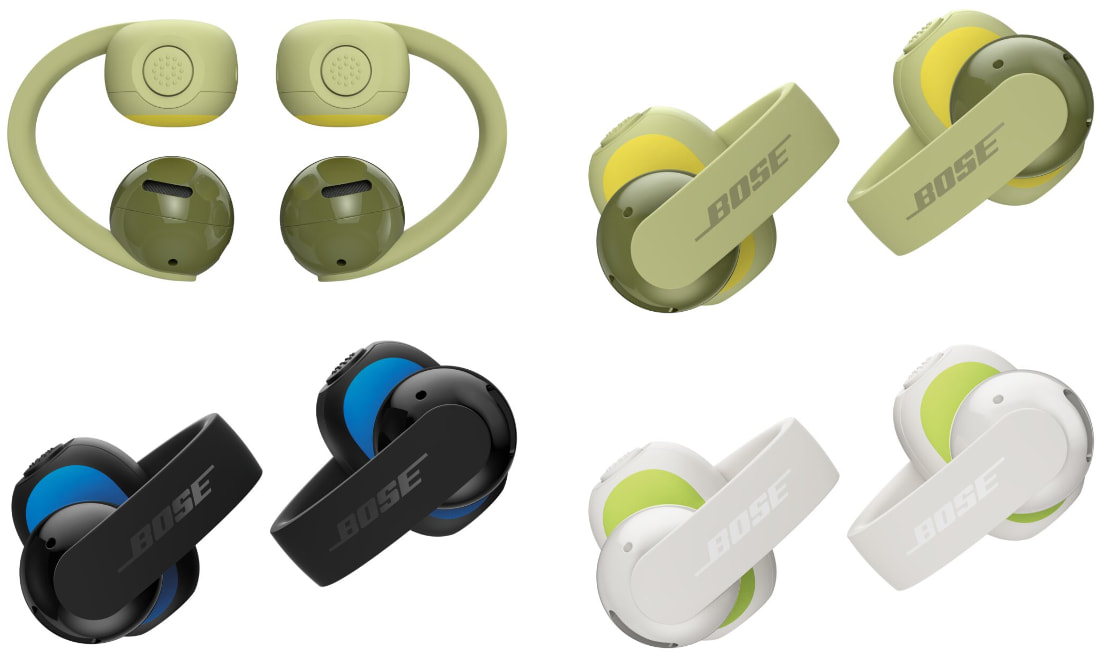
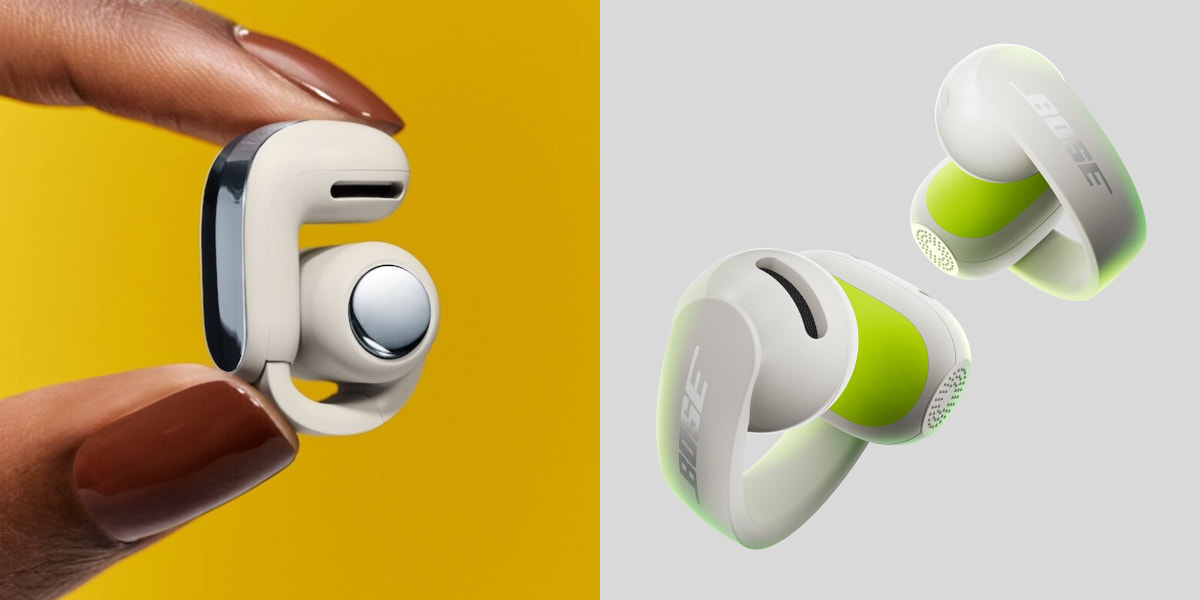
The $199 Bose Sport Open Earbuds revive a name Bose used from 2021 through 2023, but this is not a warmed-over version of the original. The old model used a large contoured ear hook; the 2026 version switches to a soft silicone C-arm cuff that anchors around the ear and is designed specifically for running, workouts and outdoor use. Bose has also moved from IPX4 protection on the original to IP54, adding dust resistance along with protection against sweat and splashes.
Bose OpenAudio uses custom dynamic drivers to direct sound toward the ear without sealing the canal or relying on bone conduction. Auto Volume automatically compensates as environmental noise changes, while textured physical buttons handle playback, calls and volume. That might sound decidedly old-school until you try operating capacitive touch controls with sweaty fingers halfway through a run.
The new SpeechClarity system is another important addition. Bose uses a dedicated microphone and voice pickup unit in each earbud with AI-enhanced processing designed to separate speech from surrounding noise. That matters considerably more on a busy street or train platform than it does while taking a call from the sofa.
Battery life drops slightly from eight hours on the original model to seven hours, but the charging arrangement is dramatically better. The 2021 Sport Open Earbuds came with a protective case and separate stationary charging base; the new case carries additional power and supports wireless charging, with up to 22 additional hours available away from an outlet.
Advertisement
These are clearly the pair for runners, gym users, cyclists and anyone whose listening happens while moving. Bose skips Immersive Audio, Cinema Mode and aptX Adaptive and focuses instead on fit, durability and straightforward stereo playback.
Bose Sport Open Earbuds Specifications
Price: $199
Design: Soft silicone C-arm cuff
Audio: Bose OpenAudio with custom dynamic drivers
Listening: Stereo
ANC: None
Auto Volume: Yes
Calls: Bose SpeechClarity
Protection: IP54
Controls: Textured physical buttons
Bluetooth: 5.4
Multipoint: Two devices
Codecs: SBC, AAC
Google Fast Pair: Yes
Battery: Up to 7 hours
Case: Up to 22 additional hours; wireless charging
Quick charge: 10 minutes for up to 1 hour
EQ: Adjustable three-band EQ through Bose app
Colors: Black, White Smoke, limited-edition Eucalyptus Green
Availability: October 1; preorders September 19
Google Find Hub, Alexa+ and an Apple Music shortcut are planned through a post-launch firmware update.
Advertisement. Scroll to continue reading.
Bose Ultra Open Earbuds 2nd Gen: More Than a Cosmetic Refresh
The $299 Ultra Open Earbuds 2nd Gen retain the cuff architecture of the original, but Bose has concentrated on the areas that mattered most: bass response, maximum output, call quality, battery life and charging.
A newly engineered driver is designed to deliver deeper bass and greater volume, while SpeechClarity tackles one of the more obvious limitations of wearing an open ear design in noisy environments. Auto Volume carries over from the original, and Bose has refined the hardware with a simplified flexible joint and beveled metallic cap.
The biggest new listening feature is Cinema Mode, which uses Bose TrueSpatial processing to widen the presentation of movies, television and podcasts while keeping dialogue centered. It works with content from any source rather than requiring a particular spatial-audio format.
Advertisement
Battery life increases to 9 hours, or 5 hours with Immersive Audio enabled. The original Ultra was rated at launch for up to 7.5 hours, or 4.5 hours with Immersive Audio. The redesigned case stores another 19.5 hours and finally includes wireless charging as standard.
There is one meaningful omission. The original Ultra Open Earbuds can work with compatible Bose Smart Soundbars through Personal Surround, effectively adding individualized side and rear information while the soundbar handles the front of the presentation.
The Ultra Open Earbuds 2nd Gen do not support Personal Surround.
Cinema Mode does not replace it. Cinema Mode processes content within the earbuds; Personal Surround integrates the original Ultra Open Earbuds with a Bose soundbar. Existing owners who use that setup have a legitimate reason to stick with what they already own.
Advertisement
The new Ultras make more sense for commuters, office users and listeners who want something comfortable enough to wear for long stretches while remaining connected to what is happening around them.
Bose Ultra Open Earbuds 2nd Gen Specifications
Price: $299
Design: Refined open ear cuff
Audio: Bose OpenAudio with newly engineered driver
Listening: Stereo, Immersive Audio, Cinema Mode
Spatial processing: Bose TrueSpatial with head tracking
ANC: None
Auto Volume: Yes
Calls: Bose SpeechClarity
Bluetooth: 5.4
Protection: IPX4
Multipoint: Two devices
Codecs: SBC, AAC, aptX Adaptive with Snapdragon Sound
Google Fast Pair: Yes
Battery: Up to 9 hours
Immersive Audio battery: Up to 5 hours
Case: Up to 19.5 additional hours; wireless charging
Total playback: Up to 28.5 hours
Quick charge: 10 minutes for up to 2 hours
EQ: Adjustable three-band EQ
Personal Surround: No
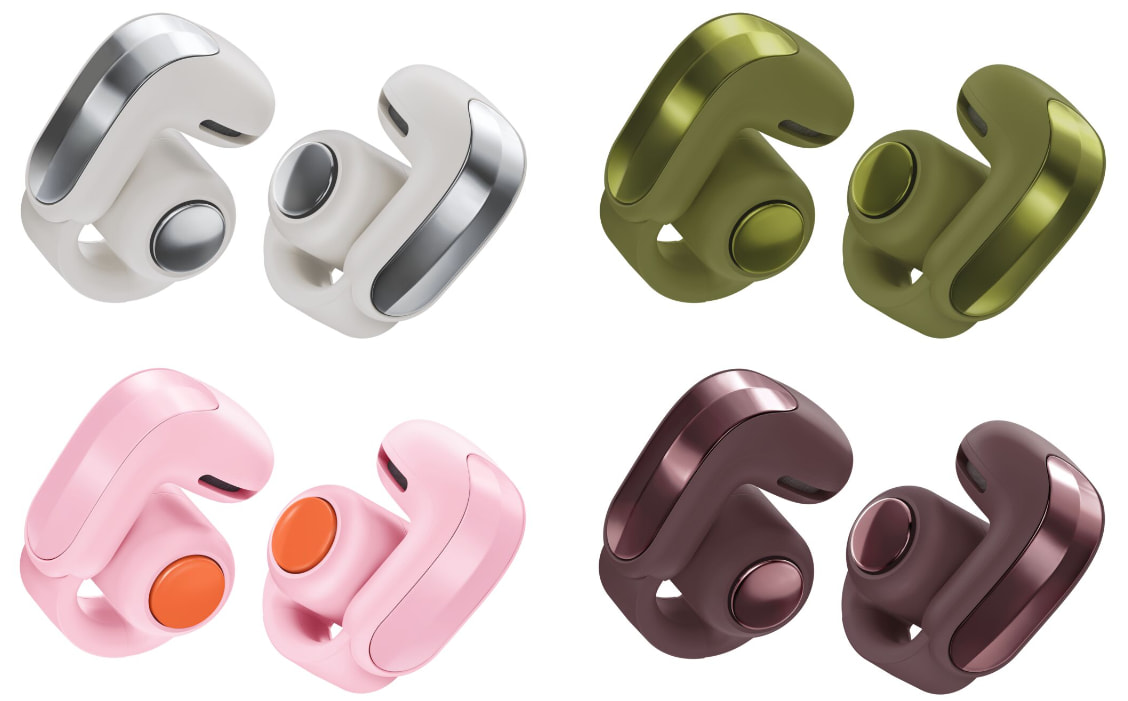
Colors: Black, White Smoke, limited-edition Cherry Chocolate, Olive Green and Sky Pink
Availability: October 1, 2026; preorders September 19
Bose Open Earbuds: Old vs. New
Feature
Sport Open (2021)
Sport Open (2026)
Ultra Open (2024)
Ultra Open 2nd Gen (2026)
Launch Price
$199
$199
$299
$299
Fit
Contoured ear hook
C-arm cuff
Cuff
Refined cuff
Battery
8 hours
7 hours
7.5 hours
9 hours
Immersive Audio
–
–
Yes
Yes
Cinema Mode
–
–
–
Yes
Auto Volume
–
Yes
Yes
Yes
SpeechClarity
–
Yes
–
Yes
aptX Adaptive
–
–
Yes
Yes
Wireless Charging
–
Yes
–
Yes
IP Rating
IPX4
IP54
IPX4
IPX4
Personal Surround
–
–
Yes
No
The original Sport used Bluetooth 5.1, provided eight hours of battery life and required a stationary charging base. The first-generation Ultra introduced the cuff design, Bose Immersive Audio, Auto Volume, IPX4 protection and aptX Adaptive.
Left: Bose Ultra Open 2nd Gen | Right: Bose Sport Open
The Bottom Line
Bose is not offering the same open ear product at two price points. The Sport Open Earbuds ($199) are the purpose-built option for running, workouts and outdoor use, with a more secure design, IP54 protection, physical controls and a much more practical charging system than the original Sport model.
The Ultra Open Earbuds 2nd Gen ($299) are the more ambitious everyday option. Deeper bass, greater output, improved calls, longer battery life, wireless charging and Cinema Mode address most of the obvious areas where Bose could improve the original.
Personal Surround is the odd casualty. Owners who use the original Ultras with a Bose Smart Soundbar should pay attention before upgrading. Everyone else now has a much clearer choice: Sport for moving, Ultra for everything that happens after the workout.
Advertisement
Advertisement. Scroll to continue reading.
Price & Availability
Both new Open Earbuds will be available for pre-order on Saturday, September 19th and will start shipping on October 1, 2026.
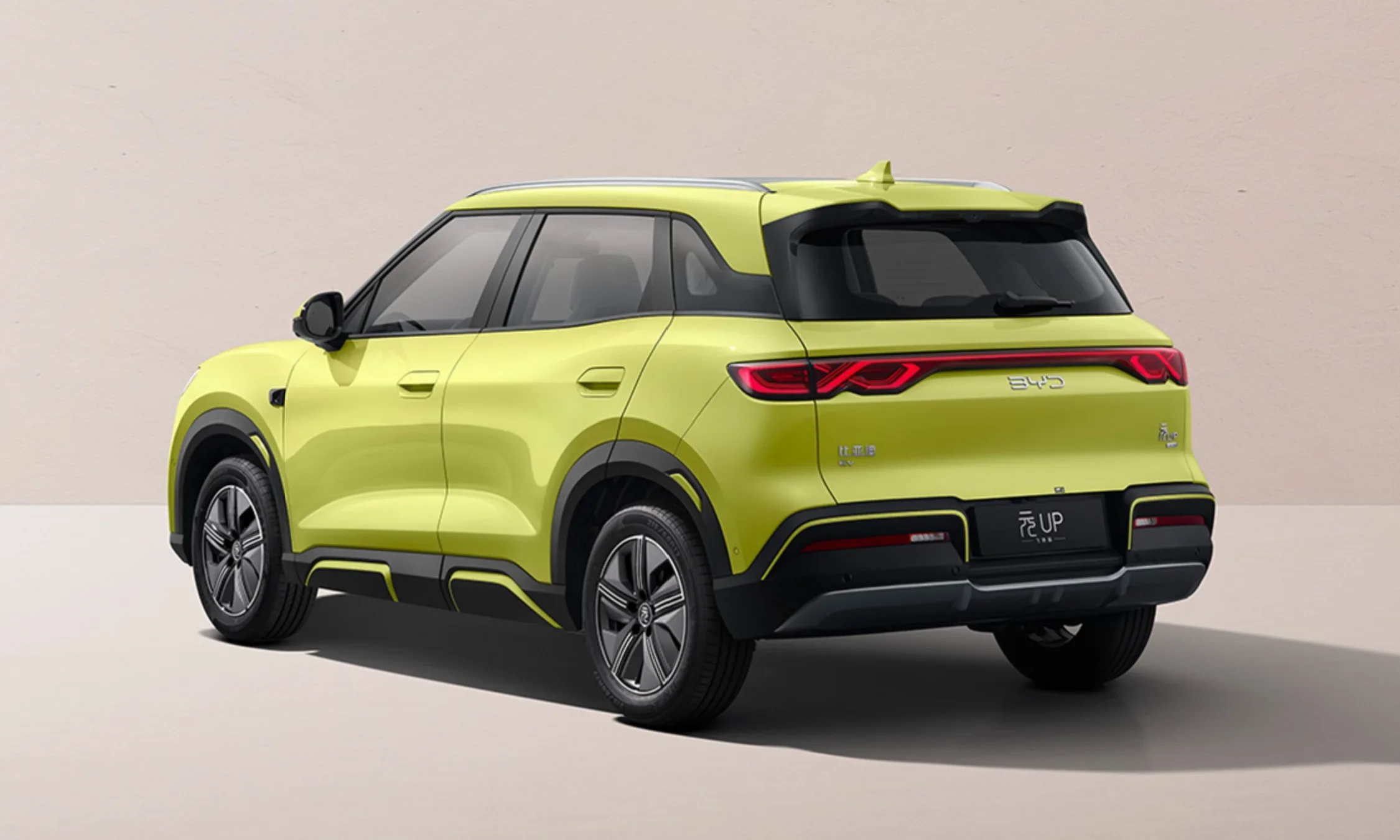
The refreshed lineup starts at just 74,800 yuan, roughly $11,150, while eligible Chinese buyers can push the effective entry price down to 69,800 yuan, around $10,400, with a trade-in subsidy.
BYD
Even the higher-mileage variants are reasonable
The new 501km model starts at 94,800 yuan, approximately $14,140, while a better-equipped version costs 104,800 yuan, around $15,630. Those figures are still remarkably low for an electric crossover with this much claimed range.
The 501km figure is also based on the optimistic CLTC cycle, so don’t read it as equivalent to 311 EPA miles. The longer-range versions use a new 51.13kWh Blade Battery, compared with 32kWh and 45.12kWh packs in the 301km and 401km models. Charging from 30% to 80% takes a claimed 30 minutes.
BYD
BYD sacrificed some power to get there
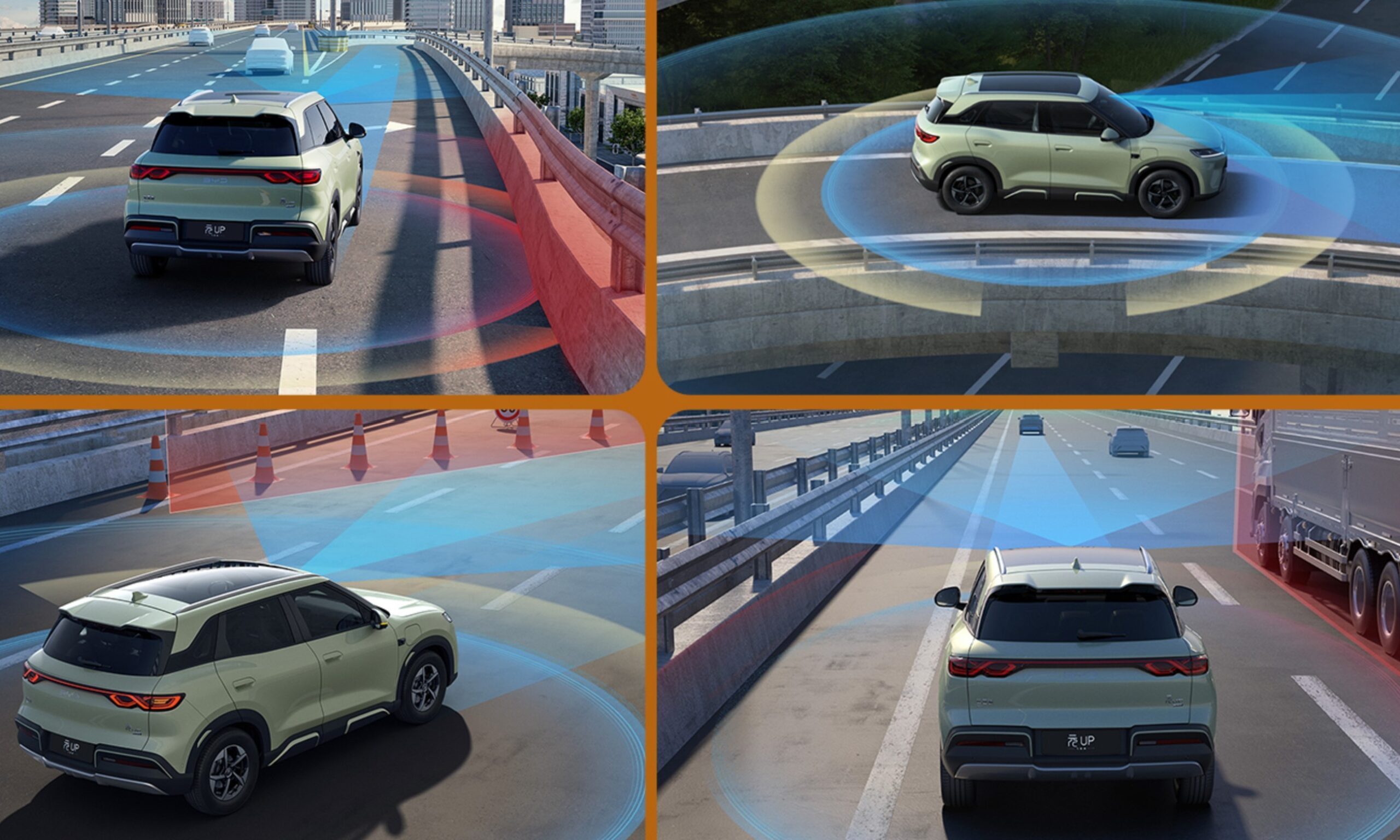
Every 2027 Yuan UP now uses the same front-mounted 70kW (94hp) motor producing 180Nm of torque. Previous models were also available with a substantially stronger 130kW motor, so BYD has clearly prioritized efficiency, simplicity, and price over outright performance this time around.
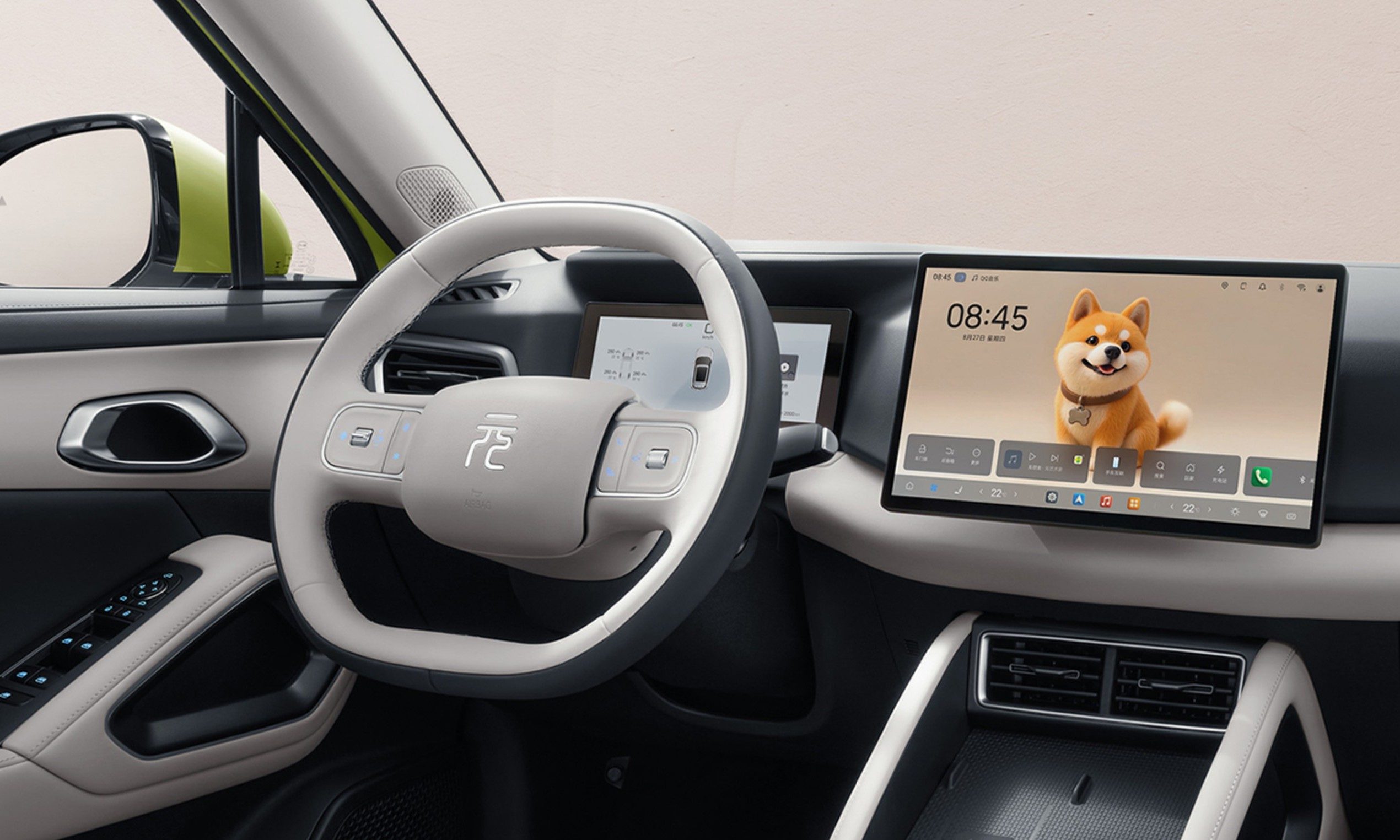
For the interiors, BYD is offering a 12.8-inch rotating touchscreen, an 8.8-inch driver’s display, heated and ventilated front seats, a panoramic roof, 50W wireless charging, and BYD’s DiPilot C driver-assistance suite on selected variants. Folding the rear seats expands cargo space to 1,320 liters.
Advertisement
BYD
Just like always, there is no word on an official US launch, so these Chinese prices shouldn’t be treated as what the car would cost if it ever reached America. BYD’s existing European Atto 2 is also configured differently, with more power and different battery options.
Even so, a roughly $14,000 electric crossover claiming more than 300 miles is another reminder of just how aggressive China’s EV market has become.
General Motors spent the past several years explaining why Apple CarPlay and Android Auto needed to disappear from its future vehicles. Now the company is introducing a new infotainment architecture in the 2027 Chevrolet Silverado 1500 and GMC Sierra 1500 that does something rather revolutionary: it gives customers GM’s native software and the smartphone interfaces they already like.
Imagine that.
The new interface integrates Apple CarPlay and Android Auto inside a large card alongside native functions such as trailering information and vehicle status. Drivers can use phone projection without abandoning the deeper vehicle controls GM has been trying to protect. GM calls it the “best of both worlds,” which is suspiciously close to what customers were asking for before this entire argument started.
Related Reading:
So Did GM Reverse Course?
Partially.
Advertisement
In 2023, GM announced that new EVs would begin dropping CarPlay and Android Auto, starting with the Chevrolet Blazer EV. The company argued that tighter integration between navigation, charging, battery management and other vehicle systems would produce a better experience than bouncing between GM software and a projected phone interface. Reuters also noted that controlling the platform could give GM greater access to vehicle and charging data.
The strategy expanded rhetorically in 2025. CEO Mary Barra said GM expected smartphone projection eventually to disappear as major new models moved to the company’s centralized software architecture, although GM subsequently clarified that gas-powered vehicles would retain CarPlay and Android Auto “for the foreseeable future.”
Now GM is launching its next-generation interface on two of its most important redesigned vehicles and CarPlay is still sitting right there.
That qualifies as a meaningful change in direction, even if GM has not announced that CarPlay is returning across its EV lineup.
Advertisement
Why Did GM Change Its Mind?
GM is not being particularly mysterious about this part.
Executive Director of Software Product Management Michael Wahlstrom says infotainment ranks among the top three purchase drivers for new-car buyers, while GM’s customer research found people struggling with buried controls and too many steps. More revealingly, Wahlstrom says customers “really like CarPlay and Android Auto” and wanted their simplicity while retaining quick access to vehicle functions.
The stupid part of GM’s original strategy was not wanting better native software. EV routing, battery preconditioning, Super Cruise, trailering and vehicle diagnostics all benefit from deep integration.
Advertisement. Scroll to continue reading.
Advertisement
The mistake was treating that integration as an either/or proposition.
The 2027 trucks demonstrate that GM can control the important vehicle functions while allowing CarPlay or Android Auto to coexist beside them. It apparently required several years of customer complaints to discover the technological concept known as “both.”
Photo by GM: 2027 GMC Sierra 1500 Denali Ultimate in Dark Ridge Metallic towing a boat. Exterior 3/4 shot. Preproduction model shown. Actual production model may vary.
Which GM Vehicles Get CarPlay?
The picture is now considerably messier than GM’s original strategy suggested.
Vehicle
Apple CarPlay / Android Auto
2027 Chevrolet Silverado 1500
Yes
2027 GMC Sierra 1500
Yes
2027 Cadillac Lyriq
Yes, wireless
2026 Chevrolet Equinox EV
No
2026 GMC Sierra EV
No
2026 Cadillac Escalade IQ
No
GM explicitly confirms CarPlay and Android Auto for the new Silverado and Sierra, while Cadillac’s current 2027 Lyriq specifications also list wireless Apple CarPlay and Android Auto alongside Google built-in.
Advertisement
Meanwhile, Chevrolet explicitly says the 2026 Equinox EV does not support either platform, GMC says the same about the Sierra EV, and Cadillac confirms that the Escalade IQ relies on Google built-in instead.
Existing GM vehicles that already support CarPlay are not scheduled to lose it through some sinister overnight software update.
The Bottom Line
GM was correct that modern vehicles need deeply integrated software. Where it went sideways was assuming customers should surrender something they already liked in order to get it.
The redesigned 2027 Silverado and Sierra offer the far more sensible solution: let GM handle Super Cruise, towing, cameras, vehicle status and other native functions while CarPlay or Android Auto handles the phone experience. GM gets its software platform; customers keep their apps, messages, music and familiar navigation.
Advertisement
This is not yet a full surrender. Several GM EVs still lack smartphone projection, and the company has not announced a wholesale reversal of its EV policy.
But after years of insisting that the future required choosing between GM’s software and your phone, GM has built a system proving that choice was never necessary in the first place.
The new system will benefit professional multi-camera shoots for sports and more.
DJI
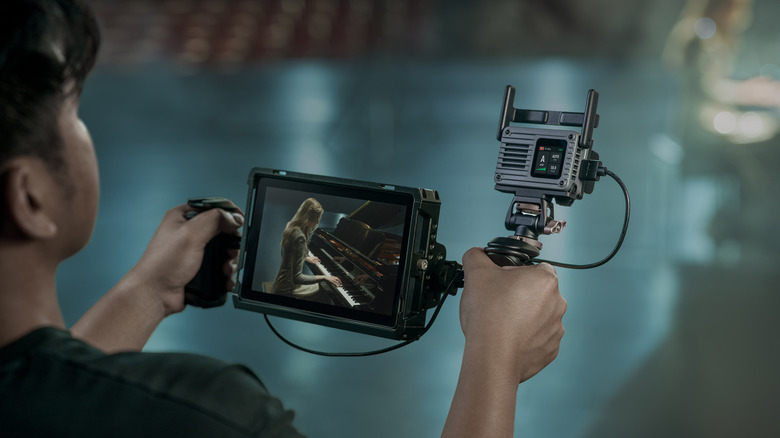
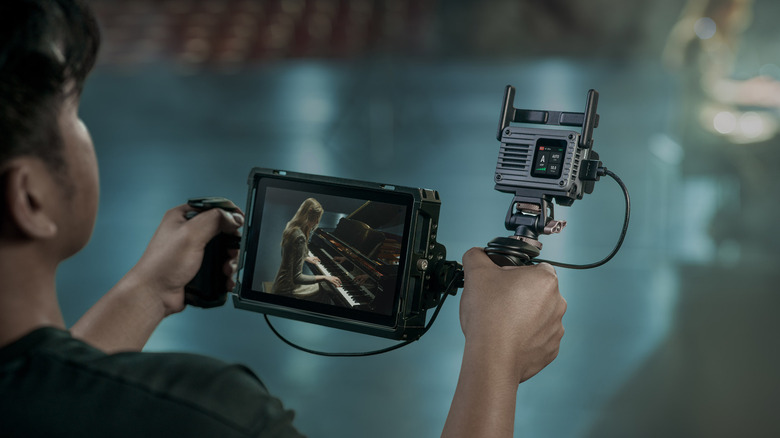
An underrated part of DJI’s success is in the area of video transmission, with the company’s drones and camera systems offering wireless video quality and range that rivals can’t match. Now, the Shenzhen-based company is significantly upping its game in the area of pro video with the its new SDR Transmission II system. It boosts both image quality and range, giving multi-camera productions more options in tricky environments.
Where the original SDR Transmission system was limited to 1080p video at a 20Mbps bitrate and range of 1.8 miles (3 km), the SDR Transmission II (“SDR” means “software defined radio”) in TX mode can send 4K 60 fps HDR video at 50Mbps to transceivers (RX mode) as far away as 2.5 miles (4 km). That means for pro productions, “a reliable link can be established in various environments from open stadiums to dense mountain forests, and through demanding car-to-car shots or challenging FPV drone work,” DJI said.
A single transceiver can connect to up to eight others with each supporting remote control. On top of providing monitoring for directors, producers and set personnel, it “lets camera operators and focus pullers remotely adjust settings and control the camera,” DJI said. For larger productions, it supports up to five transmitters and 40 receivers working simultaneously for complex multi-camera shoots.
Advertisement
Another key feature is the ability to tap to switch between camera feeds without the normal re-booting, disconnecting and searching required. Latency is as low as 35 milliseconds for more responsive commands for things like focus pulling and gimbal movement. Along with smartphone monitoring, it supports assist tools like LUTs, focus peaking and waveforms. It also supports PTP control to change functions like capture, aperture, shutter speed and ISO on compatible cameras.
Though this tech is professionally oriented, it uses the same foundational wireless tech as DJI’s OcuSync system for drones. It would be nice if DJI boosted OcuSync transmission to 4K 60p as well, as that would provide a better backup in case of on-board drone memory problems. The DJI SDR Transmission 2 transceivers start at €349 or £309, and you can a Combo two-pack for €629 (£559). There’s no US availability yet, likely due to a ban on certain DJI products.
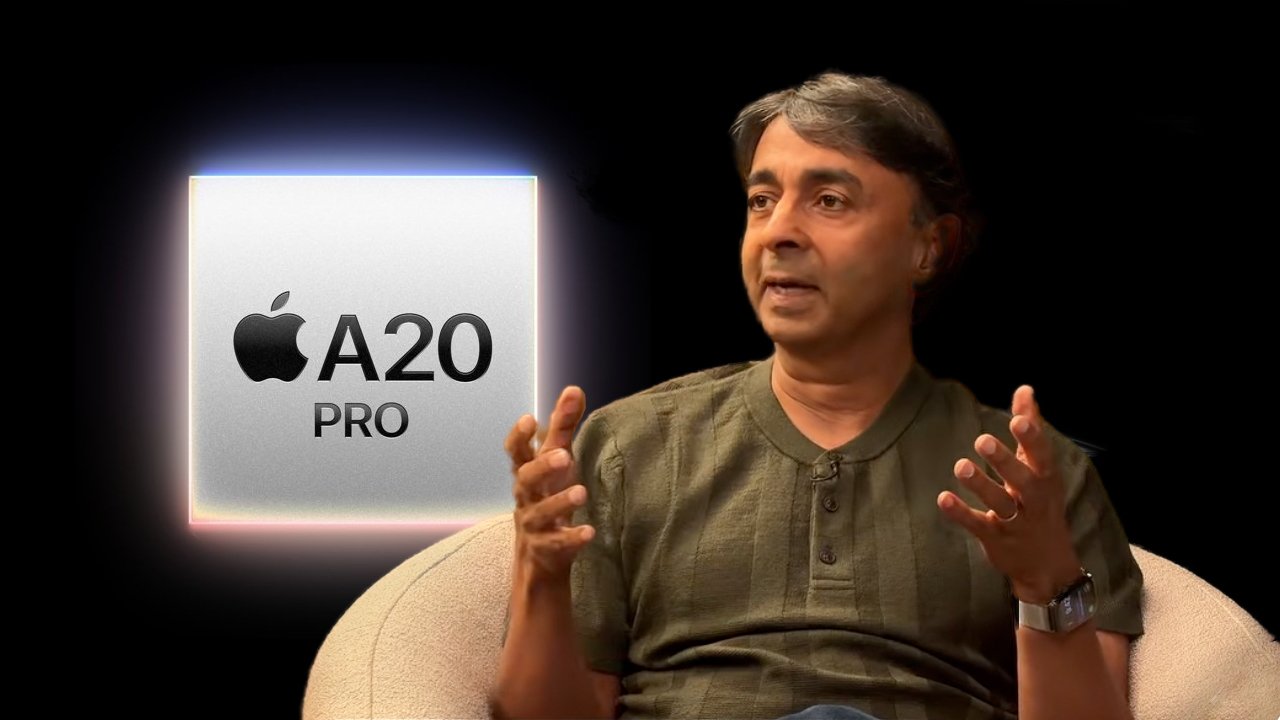
Apple executives have been talking in detail about the iPhone 18 Pro’s 2nm A20 Pro processor, but also how it was intentionally designed alongside so many other elements to provide greater speed and efficiency.
The A20 Pro processor in the iPhone 18 Pro, iPhone 18 Pro Max, and iPhone Duo is the most capable chip ever in any iPhone. Each generation is of course better than the last, but this is the first to be made to a 2-nanometer design, and the result is a 20% faster CPU and 40% faster GPU.
Apple chiefs, though, say that the 2nm processor is only part of what has been done to make the new iPhones perform better, stay cooler, and be better suited for AI work. Speaking on “The Circuit” podcast, Apple Silicon and product marketing chiefs Tom Boger, Kaiann Drance, and Sri Santhanam also detailed the side-mounted DRAM, the MCM-style packaging, and the increased neural engine count as key to the new processor.
But then even as they get into technical issues, they also step back to talk about how Apple benefits from doing everything itself.
Advertisement
“We’re not a merchant silicon vendor,” said Kaiann Drance, Vice President of iPhone Marketing. “You know, we’re really building the solutions for our own product experiences.”
What that means, according to each of these executives, is that Apple has the benefit of developing Systems on a Chip (SoC) alongside its whole hardware development effort.
“Sometimes when we build a new SoC, people talk about the process technology node, but it’s more than just that,” said Sri Santhanam, vice president of silicon engineering. “We optimise, obviously, with process in mind, but architecture, design, implementation, packaging, the entire system, the vertical stack, really is what makes our SoC shine.”
There was a difference with the 2nm process, though, as Santhanam said that its higher transistor density meant “we had some tailwind”. It let Apple double the neural engine, add extra GPU cores, and extra memory channels.
Advertisement
At the same time, the silicon team has the constraint of working within the physical dimensions of the iPhone and what this means for thermal issues. With the A20 Pro, Drance said that “we were able then to put the chip right on the vapor chamber to allow us to get the best sustained performance throughout.”
As part of the A20 Pro design, there were also heat benefits from moving DRAM from the top of the SOC to the side. This also helped connect it to the vapor chamber cooling system.
That move did, though, “increase the X/Y footprint of the device,” said Santhanam, “but we work closely with our system partners to make sure we could accommodate that in the main logic board design.”
Designing ahead
Naturally none of the Apple executives discussed future products, but they did talk about how they have to keep plans in mind. Drance described it as giving the processor headroom for future use cases in general, but also having to be more specific.
Advertisement
She said that they have to make decisions about, for instance, memory bandwidth, years in advance. That’s to enable technologies such as camera or AI features that they know will be coming, even if they can’t know when.
The speed and performance increase of A20 processor does back up Apple’s claims of benefiting from its long-standing efforts to develop hardware and software together. Moving from Intel to its own Apple Silicon has been key to this, and has shown huge performance benefits on the Mac as well.
























































You must be logged in to post a comment Login