Tech
Privacy & data security will remain tantamount for Apple’s AI

Apple will relaunch Apple Intelligence and Siri platforms with new Apple Foundation Models. Despite Google’s involvement, Apple will maintain its privacy stance.
When Apple Intelligence was revealed during WWDC 2024, Apple had a hybrid system in place that would ultimately fail to deliver. Delays ensued, and it seems that the long wait is over for Apple’s true AI strategy to emerge.
According to the Power On newsletter, Apple won’t be compromising on privacy with its new AI efforts. While the report is colored with suppositions and conjecture about what is coming, it lays out a fairly clear picture.
Apple will not be compromising on privacy for the sake of better artificial intelligence.
There aren’t any new details about Apple’s AI efforts. It repeats everything we know about the upcoming strategy and paints a picture of loss, shortcomings, and desperation on Apple’s part.
Of course, I don’t see it in quite the same light.
Apple’s place in the AI race
The AI industry lurched ahead of Apple with increasingly powerful models that could perform seemingly amazing tasks. The demos have always been something spectacular, like out of science fiction, but the real-world use has been something a little more mundane.

Apple doesn’t need to win the race if it controls the track
People have become upset that their sacrifice of the world’s knowledge and data has led to very little. Some AI is great and accelerates human workflows, but the cost to our financial markets, component availability, and environment has been incredible.
Apple has missed out on the hype cycle around AI, but has thrived in spite of it. It keeps having record quarterly results without any significant updates to its AI systems, which contradicts the grifts being sold to investors.
Apple doesn’t need AI, but AI needs Apple.
With ChatGPT set to become cash-poor by 2028 without an influx of cash and the general public becoming increasingly angry at AI companies, Apple’s position couldn’t be stronger. It isn’t one of desperation and failure, but one of success due to patience.
I’m not saying that Apple wouldn’t have been happy to see its initial launch go more smoothly. Nor am I saying Apple wouldn’t have released upgraded AI sooner if it could have.
It all just seems to be a happy accident. But instead of wallowing in self-pity, Apple is doing what it does best.
Apple is about to bust into the industry late with a solution that actually meets people where they are.
Apple’s privacy stance will hold
Expect WWDC 2026 to reveal a lot of what Apple hopes to accomplish through the following year with AI. However, it won’t reveal everything, like explicit details about working with Google Gemini.
Apple isn’t replacing its models with Gemini
Apple partnered with Google to get a version of Gemini that could run on Private Cloud Compute servers. No, it isn’t replacing Apple Foundation Models with Gemini no matter how often it is repeated, but being used to distill knowledge and train.
There are also rumors of Apple renting AI compute space from Google, which is likely given the state of the market. However, users don’t need to worry that Apple is sending data to Google servers.
Whatever servers and GPU clusters Apple uses, they will be operated no differently than Private Cloud Compute with data privacy protections in place. It is no different than Apple renting data servers from Google or Amazon for iCloud.
Those companies don’t have access to the data. Period.
Apple’s AI strategy
Anyway, the new Apple Foundation Models will be the central backbone of Apple’s new AI strategy. They will run both on-device and in Private Cloud Compute to parse data and complete tasks on behalf of the user.
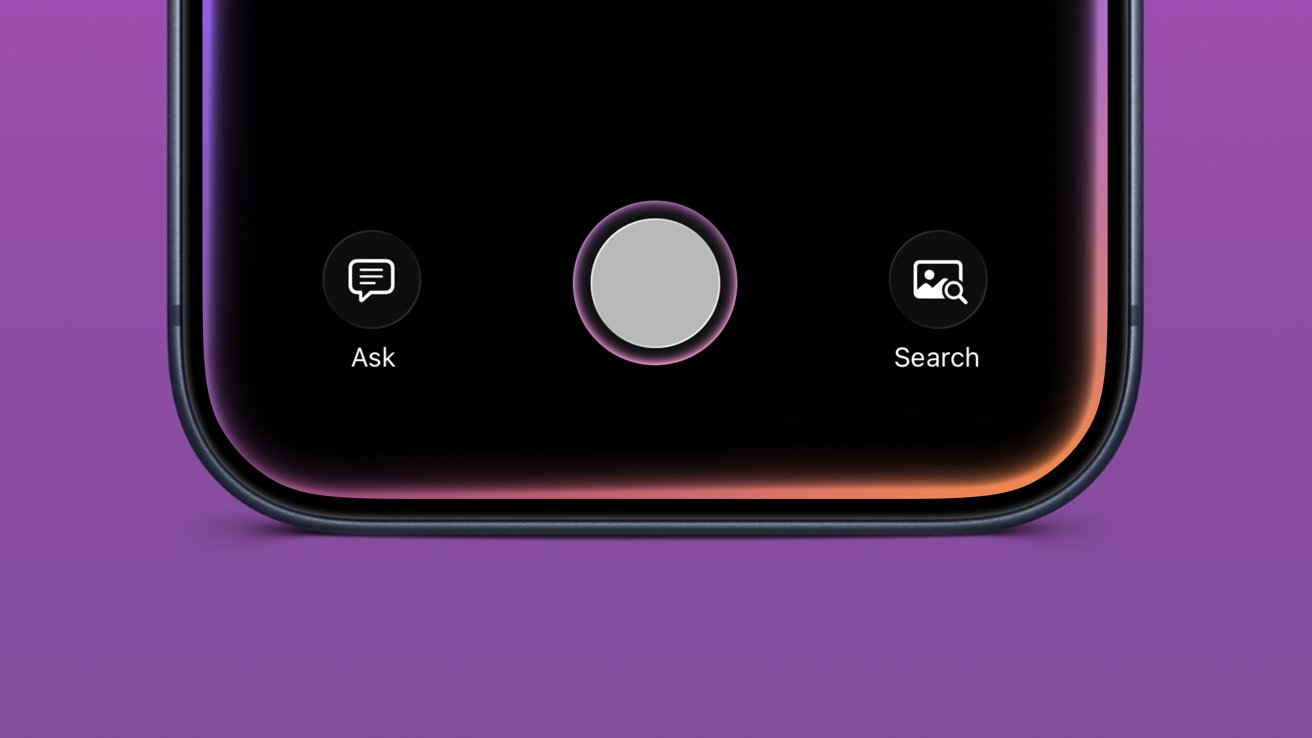
An on-device AI that stays out of the way
Most users will likely interact with Apple’s AI systems and Siri using these base models and nothing else. It will be the default, and after the Gemini training, will likely be more than enough for the features Apple will reveal during WWDC.
Anyone who wants to ignore AI on Apple platforms will be able to do so.
For those who want other options, Apple is providing developers with an API. The OpenAI relationship is fraying, and Apple will likely boot them from their privileged positions with iOS 27.
Instead, apps like ChatGPT, Gemini, or Claude will be able to be installed from the App Store and become endpoints for Apple Foundation Models. That means whether you’re invoking Siri or general Apple Intelligence programs, you can send data to third-party AI for parsing and execution.
Such integrations will maintain user privacy through the use of the API. Apple will likely establish that developers must adhere to strict privacy rules to access the API or face being revoked from access.
If Apple doesn’t go that route, then at the least, Apple will warn users of the privacy risks of using third-party models.
Apple has spent over a decade telling users that their iPhone is private and secure
The end result is a new set of (hopefully) capable Apple Foundation Models powering every AI interaction on iPhone with privacy and security intact. Users will also be able to tap into their favorite, arguably more capable, AI models as they need or want to.
Apple won’t need to be the best in the AI space. Instead, it will have a strong enough base offering with the option of supporting external AI models as an expansion of its ecosystem.
Sure, Apple is late in doing this, but coloring it as some kind of desperate move seems odd. It’s Apple doing what Apple does best, and that’s disrupting an established market with a better business model targeted at user needs above profits and grift.
Apple will own the AI ecosystem by playing host to every model on its powerful hardware while offering good-enough models on-device.
WWDC 2026 will begin on June 8 with a keynote address. Expect it to be an AI-focused event considering the amount that will need to be covered in the space.
You must be logged in to post a comment Login