



Connect with us

Tech

Pro-Ject Debut Reference 10 Arrives at Bristol 2026 While New U.S. Distribution Signals Strategic Shift

Published

on

Big moves are unfolding for Pro-Ject Audio Systems on both sides of the Atlantic this weekend. At the Bristol Hi-Fi Show 2026, the Austrian analog specialist is set to unveil the Debut Reference 10, a new flagship for its long-running Debut turntable range. At the same time, the company has confirmed a major shift in its U.S. strategy with the appointment of a new exclusive distributor, effective March 1, 2026.

The Debut Reference 10 moves the series further upmarket with a 10-inch tonearm built from a carbon-fibre and aluminium sandwich construction, positioning it as the most technically ambitious model yet within the Debut lineup. It signals that Pro-Ject is not content to let its entry-level reputation define the brand’s ceiling; the original Debut PRO was awarded our Editors’ Choice Award twice in the turntable category and was replaced by the Debut PRO B in 2024.

Equally significant is the U.S. announcement. Pro-Ject Audio Systems, part of the Vienna-based Audio Tuning Group, has named Stereo Distribution LLC as its new exclusive American distributor. The move formalizes a new structure for the U.S. market and confirms that the previous Pro-Ject alignment within the McIntosh Group ecosystem, alongside brands such as McIntosh, Sumiko, and Sonus faber under the Bose Luxury Group umbrella is no longer in place.

Debut Reference 10 Specifications

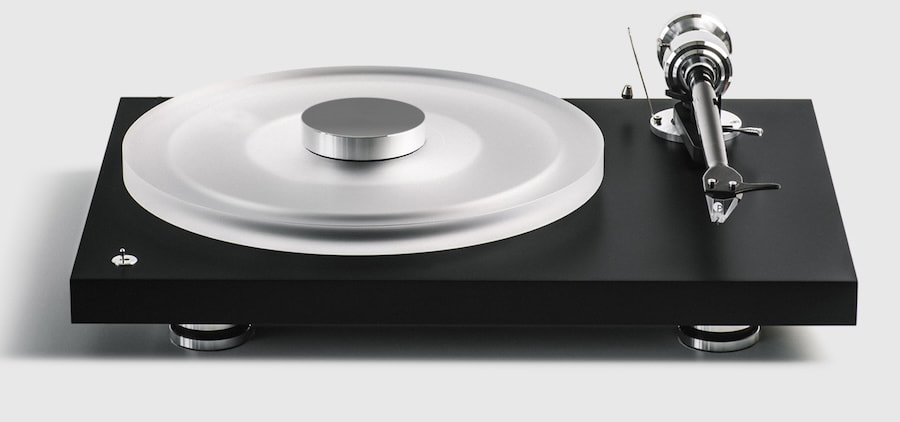
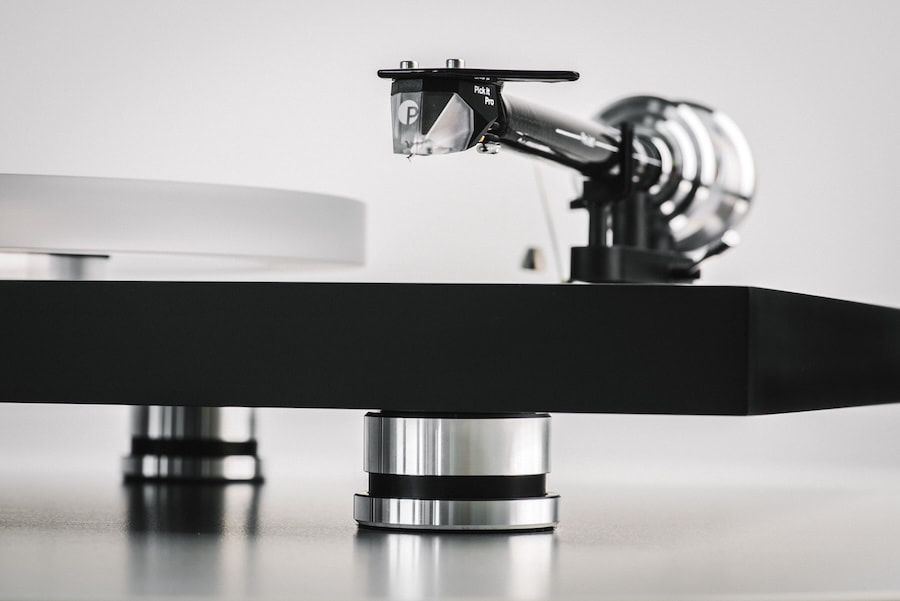
Pro-Ject Debut Reference 10 Turntable Front
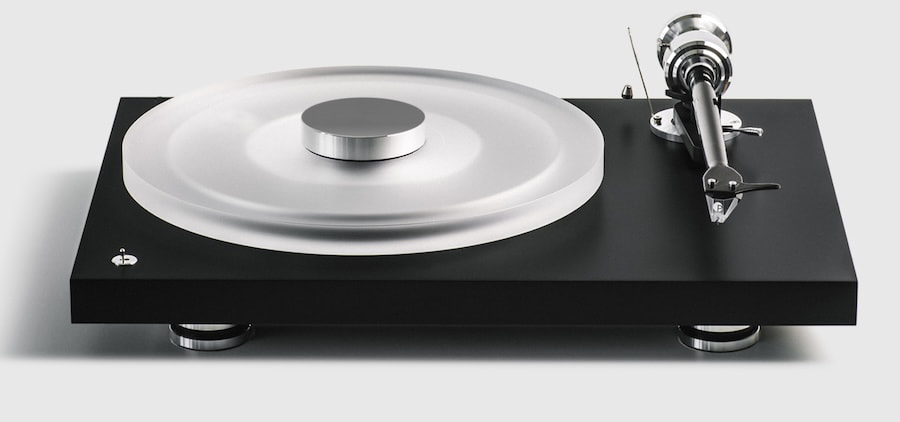
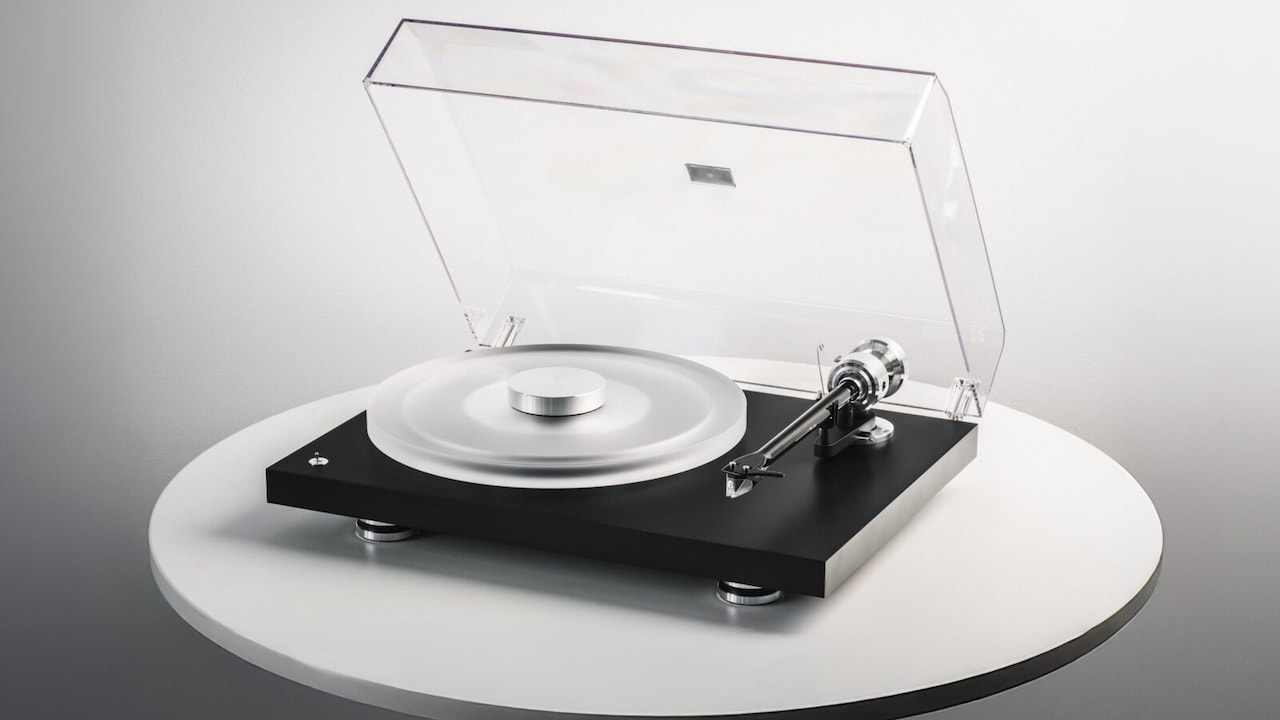
Pro-Ject Debut Reference 10 Turntable

Pro-Ject Audio Systems positions the Debut Reference 10 as the most advanced model in its long-running Debut lineup, and the engineering choices reflect that step up.

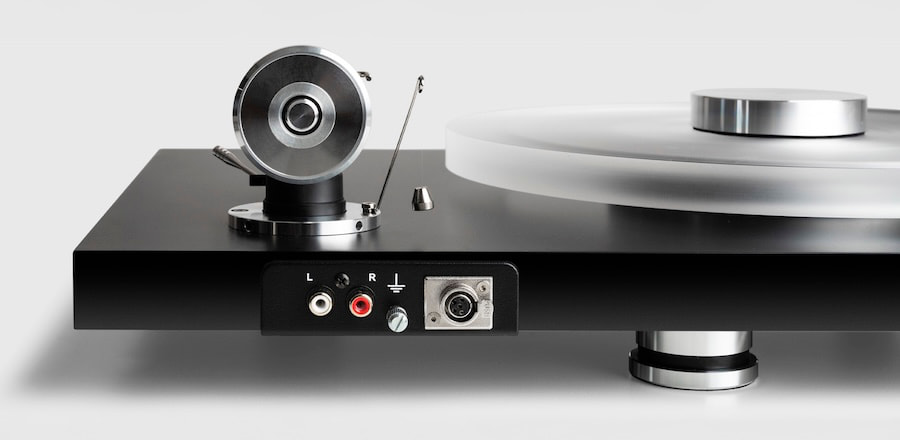
At its core, the turntable is fitted with Pro-Ject’s Pick it Pro Balanced cartridge and includes a Mini XLR balanced output. That combination allows for a true balanced signal path from cartridge to phono stage, which can reduce noise and improve signal integrity over longer cable runs. However, it does require a compatible balanced phono preamp to take advantage of the connection. Without one, you will not unlock the full benefit of the balanced design.

Advertisement

The Debut Reference 10 uses a 300 mm acrylic platter, chosen for its inherent resonance resistance. This sits atop a diamond cut aluminum sub platter, adding mass and rotational stability. The platter bearing consists of a high precision stainless steel axle seated in a bronze bushing, designed to maintain smooth rotation and long term durability.

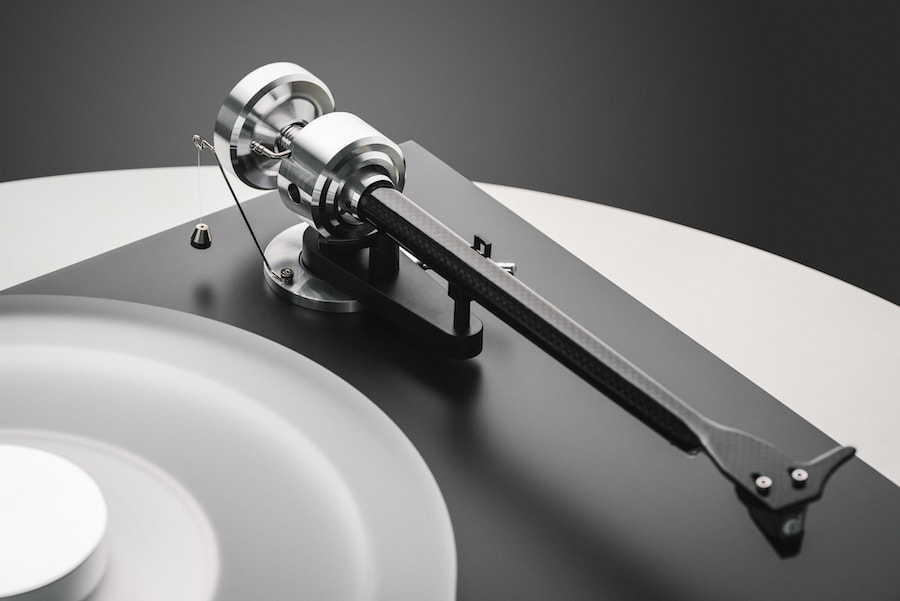
pro-ject-debut-reference-10-turntable-corner

The chassis is constructed from hand painted MDF and supported by three height adjustable, damped aluminum feet. These feet are designed to provide stable leveling while helping to reduce the risk of acoustic feedback, particularly in environments where speakers share the same surface or room structure.

This is a belt driven turntable with the motor fully decoupled and suspended within the base to minimize vibration transfer into the platter and tonearm assembly. Electronic speed control allows convenient switching between 33 and 45 RPM, while manually moving the included round belt enables playback of 78 RPM records.

A Puck E record weight is included in the box, designed to help secure records more firmly to the platter surface for improved contact and stability during playback.

Advertisement
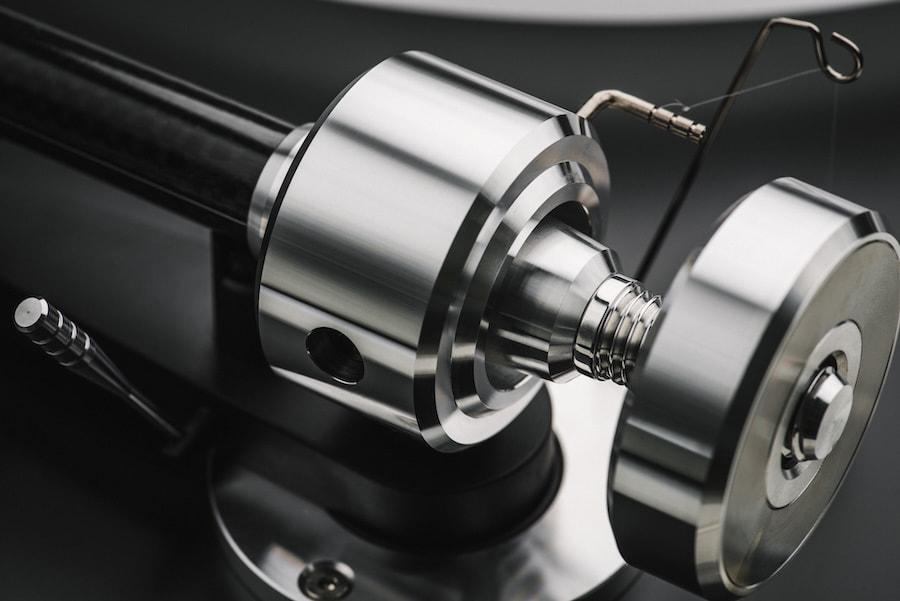
pro-ject-debut-reference-10-tonearm

The 10 inch one piece carbon aluminum tonearm measures 254 mm in effective length and has an effective mass of 16.6 g. It supports both adjustable azimuth and vertical tracking angle (VTA). By loosening two grub screws, users can continuously adjust tonearm height to accommodate cartridges of varying body heights or different platter mat thicknesses. This level of adjustability is not always standard in this price category and allows for more precise cartridge alignment.

Performance specifications are competitive for the class. Wow and flutter is rated at ±0.16 percent at 33 RPM and ±0.14 percent at 45 RPM. Speed drift is specified at ±0.4 percent at 33 RPM and ±0.5 percent at 45 RPM. Signal to noise ratio is listed at 68 dB.

Advertisement. Scroll to continue reading.

Physically, the Debut Reference 10 is not some oversized statement deck. It measures 462 x 145 x 345 mm, which translates to roughly 18.2 x 5.7 x 13.6 inches (W x H x D), and tips the scale at 6 kg, or about 13.2 pounds net. Manageable, solid, and realistic for the kind of racks and consoles most people actually own. In the box, you get the essentials: a dust cover, a dedicated 78 RPM belt, and a 7-inch single adapter.

Advertisement
pro-ject-debut-reference-10-turntable-adjust
pro-ject-debut-reference-10-turntable-rear

The Bottom Line

Now here’s where it gets interesting.

The U.S. Supreme Court issued a ruling this morning related to tariffs that could have a meaningful impact on imported audio products. Could that work in favor of American buyers when this table finally lands? Possibly. But it’s far too early to know how that decision will ripple through distribution, freight, and final retail pricing. Anyone pretending they have clarity right now is guessing. It’s basically a mess.

And all of this unfolds against the backdrop of a bigger shift.

So while the Debut Reference 10 is the headline product, the more consequential story may be the business side. New flagship table. New U.S. distributor. Potential tariff recalibration. That is a lot of moving parts for one weekend and it suggests that the next chapter for Pro-Ject in the U.S. will look different than the last.

Advertisement

A new U.S. price list is expected shortly, and dealers are reportedly receiving updated pricing ahead of the March 1, 2026 transition. From what we understand, most existing Pro-Ject retailers should not see negative disruption as the new distribution structure takes effect. That said, whenever a brand shifts logistics, and billing systems, there is always the potential for short-term hiccups. It comes with the territory.

The current U.S. website, www.pro-jectusa.com, will be discontinued after March 1, 2026. Moving forward, product information will live on the global site at www.project-audio.com, aligning the U.S. more closely with the brand’s international presence.

Heinz Lichtenegger, CEO of Audio Tuning and the driving force behind Pro-Ject Audio Systems, has built the company over decades into one of the most dominant analog brands in Europe. With that kind of track record and with the U.S. market representing significant growth potential, there is little incentive to let this transition stumble. There is simply too much at stake, both commercially and reputationally.

Pro-Ject Debut Reference 10 Turntable Lid Open

Price & Availability

The finish is satin black, understated and safe. UK pricing is set at £999, with Australia confirmed at AU$2349. U.S. customers will have to wait a bit longer, and pricing is still to be announced.

Advertisement

For more information: project-audio.com

Source link

Continue Reading
Click to comment

Leave a Reply

Your email address will not be published. Required fields are marked *

Tech

Audio Group Denmark’s Aavik M-880 Mono Amplifiers: Ultra-Luxury Pricing, Reference Ambitions, Zero Interest in Restraint

Published

on

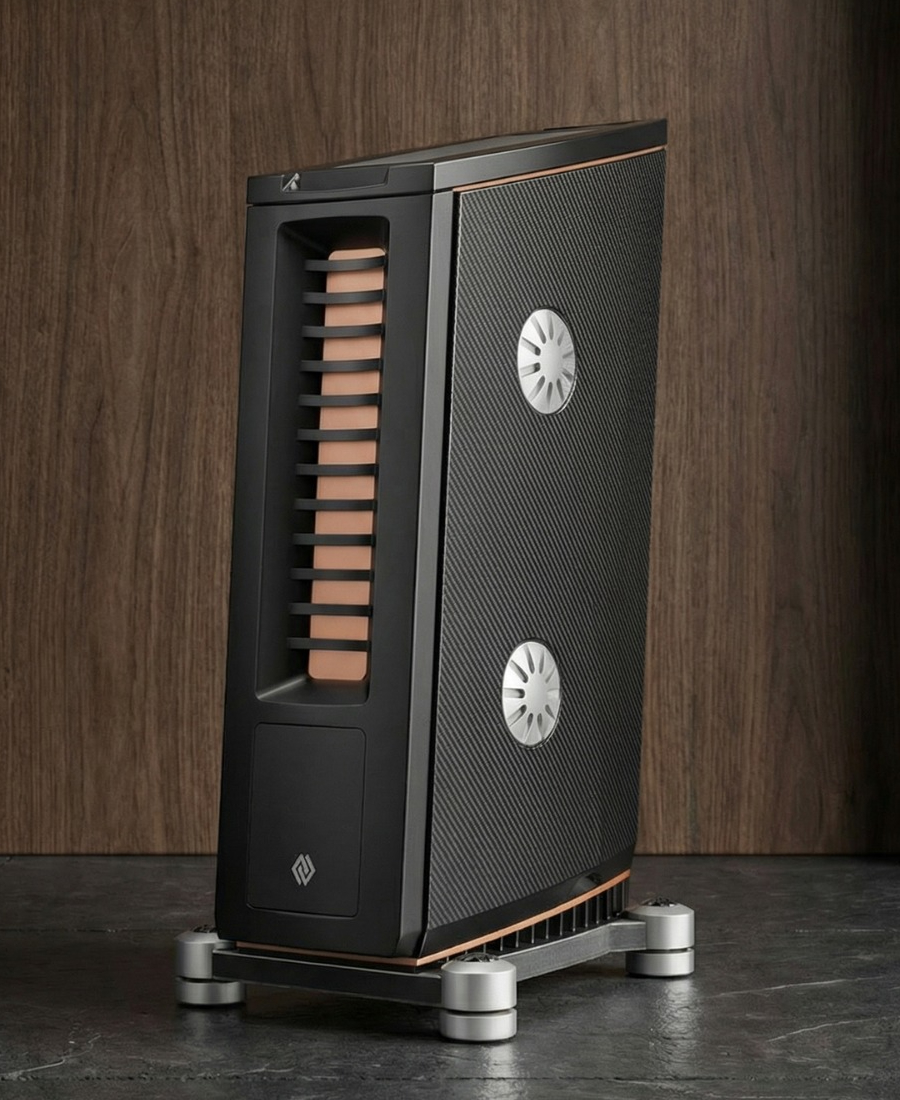
Audio Group Denmark doesn’t launch products so much as drop financial gravity wells. Last week in Aalborg, a select group of high-end press was flown in, not for a polite demo, but for a full-scale statement: the debut of Aavik’s new M-880 Monoblock Power Amplifier, now available to order at $115,000, alongside the equally subtle Børresen M8 Gold Signature loudspeakers, priced at $1,150,000 per pair. If that number made you blink, congratulations, you’re still connected to reality.

Aavik components 2026
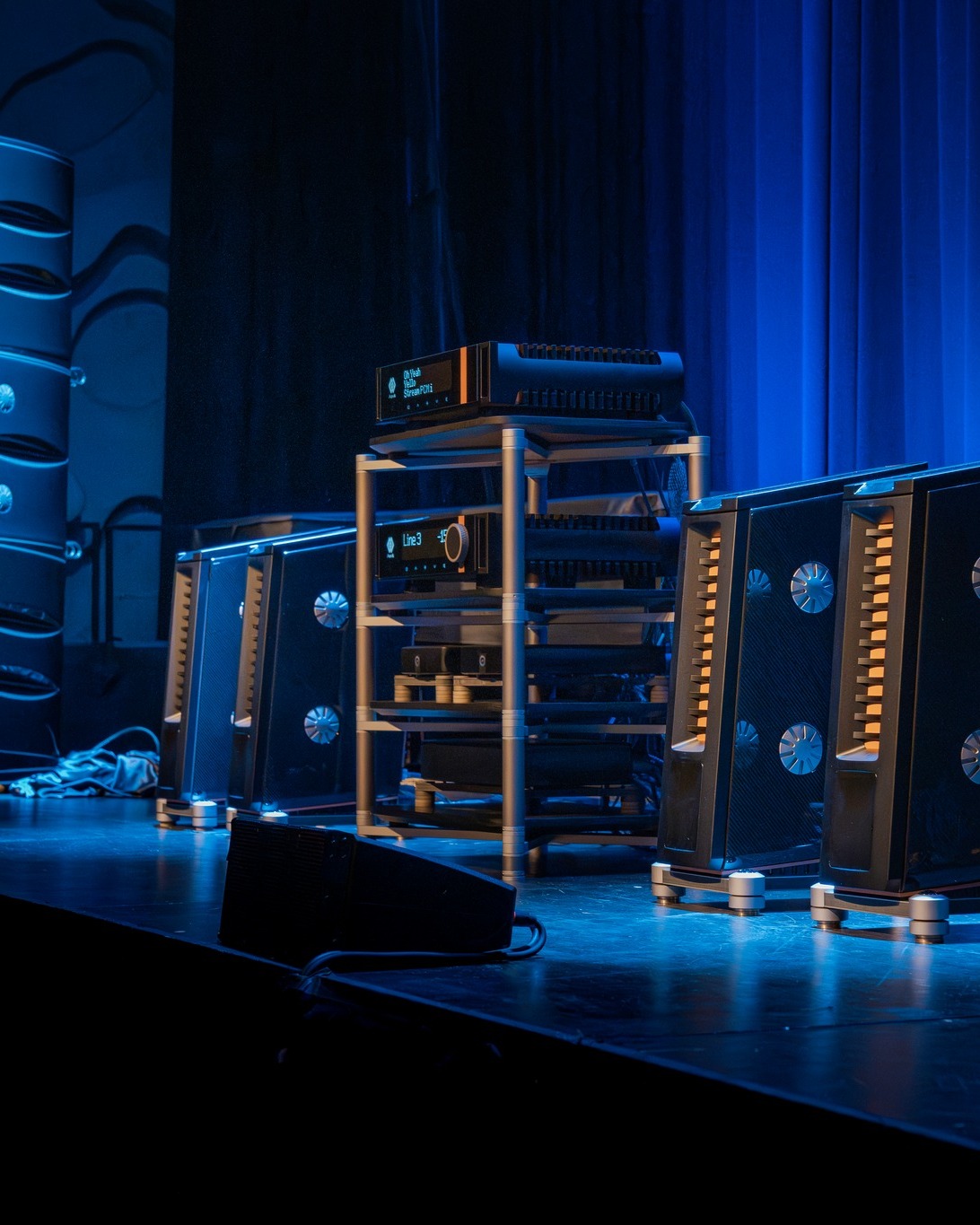
Four Aavik M-880 visible in photo during unveiling.

Aavik and Børresen may share DNA under the Audio Group Denmark umbrella, but they each stay in their own lane. Aavik handles the electronics. Borresen builds the loudspeakers. Six-figure systems aren’t aspirational here; they’re Tuesday. This is a group staffed by people with very serious résumés, including deep roots in Gryphon Audio Designs, another Danish name synonymous with “because we can” engineering and prices that don’t ask for permission.

The M-880 isn’t about chasing trends or filling a market gap. It reflects Aavik deliberately stepping outside its established lane; one it has navigated very well with its Class D designs to explore something more ambitious and more experimental. Based on what we heard and discussed at T.H.E. Show: NYC 2025, Aavik has earned credibility in modern amplification. The M-880 is what happens when a company with that foundation decides to see how far it can push its ideas when cost is no longer the primary governor.

Whether that exploration is worth $115,000 per channel is not a question for most people and pretending otherwise is pointless. That decision belongs to Persian Gulf emirs, Wall Street and tech executives, and a very small circle of listeners for whom six-figure components are a rational option, not a punchline. Dismissing the M-880 simply because almost no one can afford it misses the point. Ninety-nine point nine percent of the world can’t afford this level of audio engineering, but rarity alone doesn’t invalidate innovation.

Advertisement

Is it excessive? Absolutely. Does it make practical sense to assemble a $2 million system around amplifiers like these? Probably not. Would we do it if given the chance? Probably not. But excess has always been part of how the high-end moves forward, and among the components unveiled in Aalborg, the amplifiers are the more intellectually interesting statement. Loudspeakers at that level aim for spectacle. The M-880 aims for execution.

aavik-m-880-side-angle
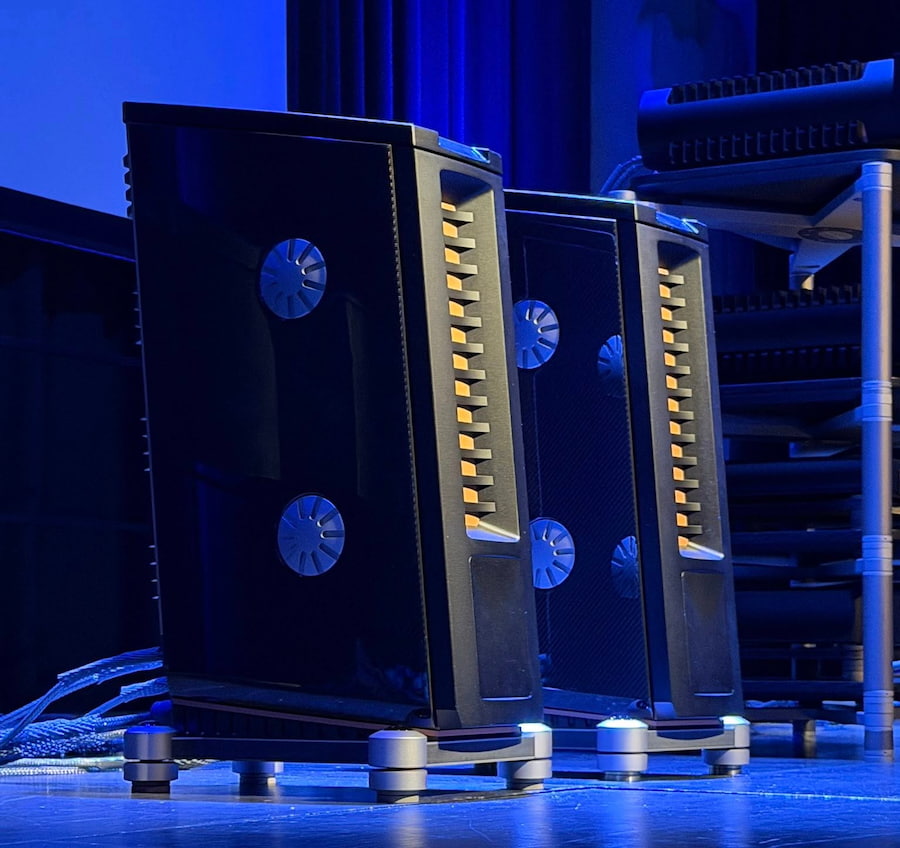
A pair of Aavik M-880 Monoblock Amplifiers at unveiling.

The M-880 was developed in direct response to the performance demands of the Børresen M8 Gold Signature loudspeaker. As the M8 Gold evolved toward higher levels of speed, resolution, and scale, Aavik concluded that conventional stereo amplifier architectures were no longer sufficient to fully exploit what the loudspeaker was capable of delivering.

The result is the M-880: a true monoblock amplifier conceived not as a standalone component, but as part of a unified system. Rather than treating amplification and loudspeaker design as separate exercises, Aavik engineered the M-880 to operate as a coherent counterpart to the M8 Gold Signature so power delivery, control, and dynamic behavior are aligned with the loudspeaker’s capabilities from the outset.

From Michael Børresen, Co-founder & CTO, Audio Group Denmark: “The M-880 is the result of pursuing absolute performance without compromise, while breaking visual conventions in the unmistakable style that only Flemming can create. For the M8 loudspeakers, nothing less would suffice — and I’m proud of what we achieved.”

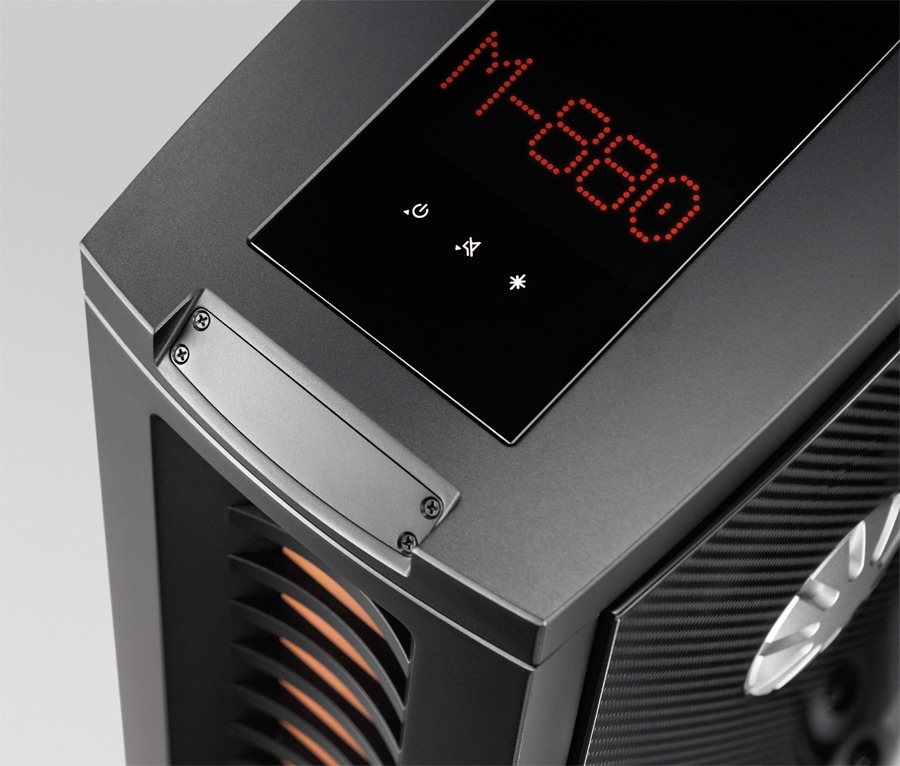
aavik-m-880-top

Class A Amplification

The Aavik M-880 is designed to push Class A amplifier performance further than conventional implementations. Its output stage maintains a precisely controlled 0.63 V bias, exceeding the current required for operation and ensuring true Class A performance at all times, regardless of load or signal dynamics.

Advertisement

This approach enables the use of smaller, locally positioned capacitor banks. Each of the eight output transistor pairs is supported by its own dedicated local reservoir placed immediately adjacent to the devices, minimizing current travel, shortening signal paths, and reducing noise.

By stabilizing the bias at this level, Aavik preserves the purity, linearity, and harmonic integrity typically associated with Class A designs, while allowing the amplifier to operate at significantly lower temperatures than traditional high-bias Class A amplifiers. The result is improved long-term stability and reliability without sacrificing performance. And for the buyers this amplifier is aimed at, concerns about efficiency or electrical bills are predictably, not part of the conversation.

Advertisement. Scroll to continue reading.
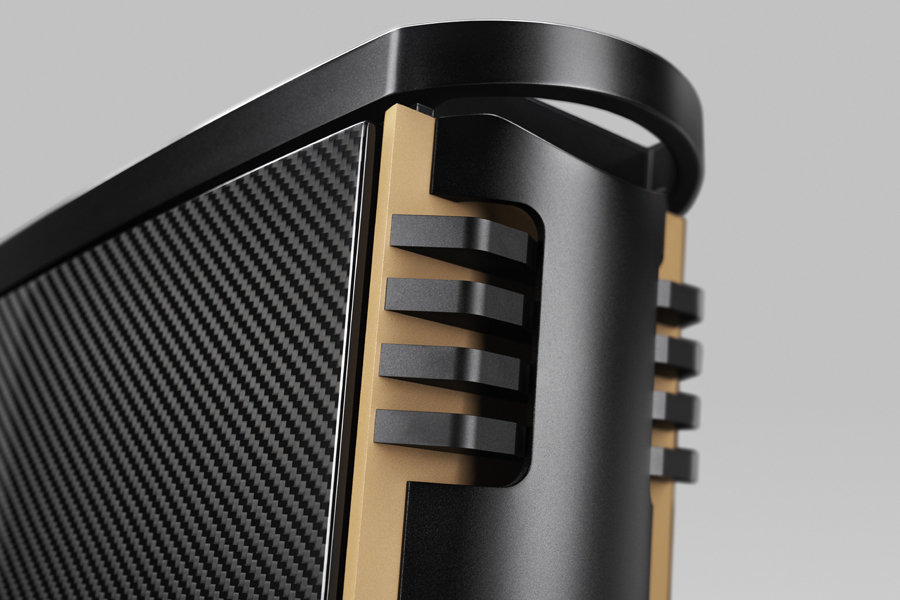
Aavik M-880 Mono Amplifier  Front Cabinet Design

Power Output: So… How Much Power Are We Talking About?

Each Aavik M-880 mono amplifier is rated to deliver 400 watts into 8 ohms, 800 watts into 4 ohms, and approximately 1,300 watts into 2 ohms. Its very low output impedance results in a damping factor exceeding 1,000 into 8 ohms, underscoring the level of control this amplifier is designed to exert over demanding loudspeaker loads.

That kind of output delivered in a true Class A operating regime is not common. At all. And while the M-880 was developed specifically to meet the requirements of the $1,150,000 Børresen M8 Gold Signature loudspeakers (ahem… very nice house), the amplifier itself opens up some rather interesting and far more flexible pairing possibilities. For listeners who may find the amplifiers more compelling than the speakers, there are flagship options from MartinLogan, Wilson Audio, Magico, Sonus faber, KEF, and DALI that would still leave room in the budget for… well, everything else.

Advertisement
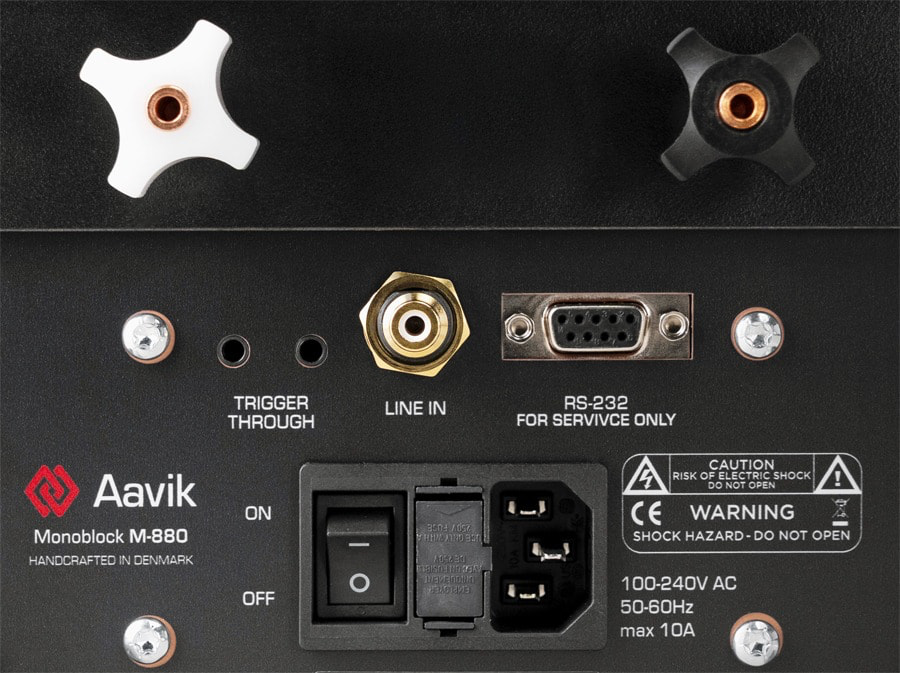
aavik-m-880-inputs

The Power Supply 

Rather than using a traditional linear power supply, the M-880 employs four high-speed, low-noise switching power supplies, each rated at 500 W / 20 A—twice the number used per channel in the earlier Aavik P-880 two-channel power amplifier.

These supplies are supported by a 266 mF local energy storage bank capable of storing up to 1,050 J and delivering peak currents of up to 130 A. The result is a power system that adapts dynamically to audio demand while maintaining an extremely low noise floor, contributing to greater stability, improved control, and a wider dynamic range.

Current Paths and Noise Suppression 

The M-880 has reduced power dissipation, which enables the use of locally placed capacitor banks, with each output transistor pair supported by its own dedicated energy storage positioned directly adjacent to the devices. This results in exceptionally short current paths, reduced noise, and improved efficiency. 

Noise rejection is system-wide through proprietary Aavik and Ansuz technologies, including Active Tesla Coils (ATC), Active Square Tesla Coils (AST), third-generation Analog Dither Technology (ADT), and Anti-Aerial Resonance Coils (AARC) applied to internal wiring. 

Advertisement

Tesla coils in Aavik amplifiers are proprietary active, double-inverted, or square coils. The coils eliminate high-frequency noise and lower the noise floor, enhancing musical detail and transparency. 

Mechanical Grounding and Enclosure Design 

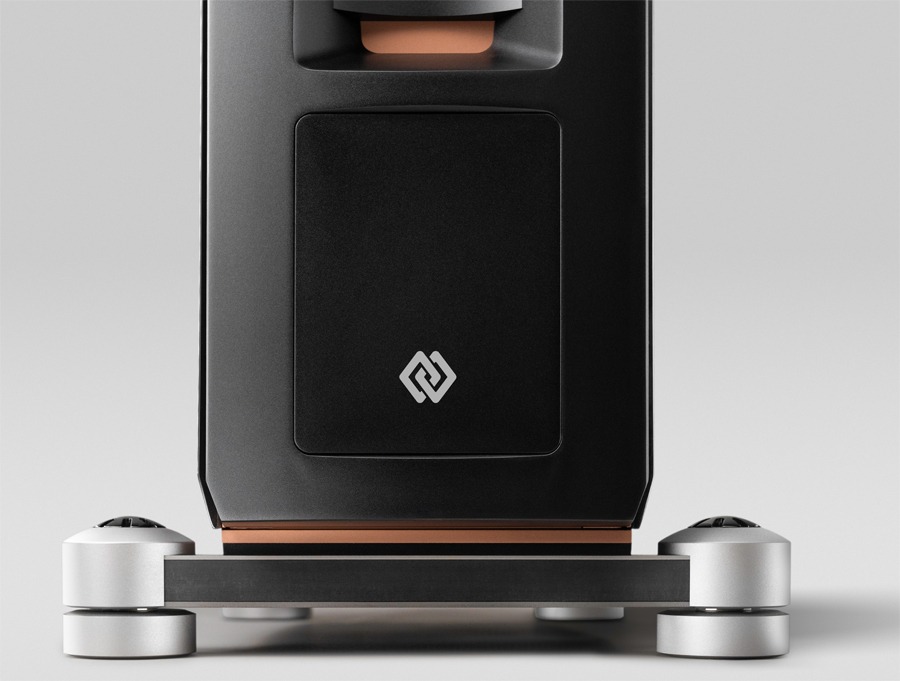
Each M-880 incorporates four Ansuz Darkz Z3w resonance control devices, providing mechanical isolation.

The enclosure, developed by Flemming Erik Rasmussen in collaboration with Michael Børresen, follows a form-follows-function philosophy. 

Advertisement

Its multi-layer construction features a wood-based laminate between a titanium base plate and an upper stainless-steel plate, topped by a internal copper chamber. This provides a controlled resonance behavior alongside exceptional EMI/RFI shielding. 

aavik-m-880-base-front

Designed and Built in Denmark 

Each Aavik M-880 monoblock amplifier is made at Audio Group Denmark’s facility in Aalborg, Denmark. The manufacturing process includes advanced CNC machining, cryogenic processing, and meticulous hand assembly. Each unit undergoes extensive electrical verification and final listening comparison against a reference before shipment. 

Comparison

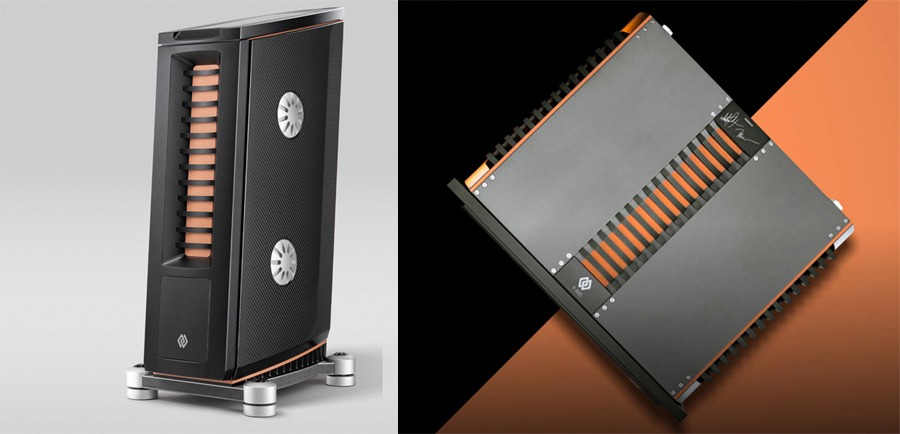
aavik-m-880-p-880
Not to scale.
Aavik Model M-880 P-880
Product Type  Mono Power Amplifier Stereo Power Amplifier
Price $115,000 $73,500
Power Output 1 × 400 W @ 8 Ohm  
1 × 800 W @ 4 Ohm
2 x 250W @ 8 Ohm  
2 x 500W @ 4 Ohm
Distortion < 0.007% (10 W, 1 kHz, 8 Ohm) <0,007% (10W, 1kHz, 8 ohm)
Active Tesla Coils N/A 182
Active GOLD Tesla Coils 112 N/A
Active Square Tesla Coils 112 411
Dither Circuitry 8 18
Active zirconium anti-aerial resonance Tesla coils N/A 20
Gold Anti-Aerial Resonance Coils 12 N/A
Active zirconium cable anti aerial resonance Tesla coils Not Indicated 4
Output Connections  Single-Wire Speaker Terminals (single channel)

Trigger (2)

Power Inlet

Advertisement
2 x Speaker Terminals Outputs (heavy-duty)

1 x Trigger Through 

1 x RS232

Power Inlet

Advertisement
Input Connections 1 x Analog (RCA). 2 x Analog (RCA)
Power consumption Standby: < 0.5 W  
Idle: 150 W
Standby: 1 W
Idle: 150 W
Dimensions  HxWxD
794.02 x 342.00 x:509.68 mm
31.26 x 13.46  x 20.07 inches
LxWxH
580 x 510 x 155 mm

22 ⁵³/₆₄ x 20 ⁵/₆₄ x 6 ⁷/₆₄ inches

Weight 70.0 kg / 154.3 lbs 41 kg / 90.4 lbs
aavik-m-880-ampliifer-angle

The Bottom Line 

The Aavik M-880 exists at the intersection of extreme engineering and unapologetic excess, but it’s not empty spectacle. What makes it genuinely interesting are the technical choices: a true Class A output stage with tightly controlled bias, unusually high power delivery for a Class A design, extremely low output impedance, massive current capability, and a power architecture built around multiple high-speed switching supplies with large local energy storage placed exactly where it matters.

Advertisement. Scroll to continue reading.

This is not a scaled-up version of a conventional amplifier; it’s a deliberate rethink of how Class A can be executed when thermal limits, noise, and stability are engineered rather than tolerated.

Advertisement

This amplifier is for a very specific audience: listeners who already own reference-grade loudspeakers, have dedicated rooms, reinforced floors, and zero interest in compromise or efficiency. At 31.26 × 13.46 × 20.07 inches and 70.0 kg / 154.3 lbs per chassis, each M-880 is effectively a small floor-standing speaker made of metal. You’ll need two for most stereo systems, and if you’re thinking about bi-amping, start counting in fours. 

Is it rational? No. Is it serious? Absolutely. The M-880 isn’t meant to be relatable; it’s meant to explore what’s possible when experience, resources, and ambition align. For most people, this will remain a thought experiment. For a very small few, it’s a statement piece that also happens to be one of the more technically ambitious Class A amplifiers to emerge from Denmark—where, apparently, there is something in the herring. 

Price & Availability

The Aavik M-880 Mono Power Amplifier is priced at $115,000 USD and available through Authorized Aavik Dealers.

For more information: audiogroupdenmark.com

Advertisement

Source link

Continue Reading

Tech

Court Orders Slavery Exhibit At George Washington’s House Restored After Trump Admin Pulled It Down

Published

on

from the history-in-the-unmaking dept

The Trump administration’s project for erasing the parts of American history they find inconvenient continues unabated. But that doesn’t mean it doesn’t hit the occasional roadblock.

In January, the administration removed portions of an exhibit at the former Philadelphia home of George Washington that made reference to 9 slaves he owned that spent time at the house. That Washington owned slaves is not a matter of opinion. He did. That he also rotated those slaves in and out of the home, moving them elsewhere for short periods of time, all to get around laws in Pennsylvania that slaves within its borders for a certain period of continuous time would be automatically freed, is also uncontroversial to state. He did that. One of our founding fathers that brought “freedom” to America was also a slave owner. He wasn’t alone.

The Trump administration doesn’t like being reminded of that history. It also prefers that younger generations never learn of that history. I’d call it jingoism, but that doesn’t feel sufficient. This rings as something far more dastardly, fit for the musings of George Orwell.

Well, the city sued to have the exhibit restored and it appears the Judge in the case, a George W. Bush appointee, agrees with my assessment. You can read as much in her blistering opening in her ruling, in which she also orders the government to restore the exhibit to its previous state.

Advertisement

As if the Ministry of Truth in George Orwell’s 1984 now existed, with its motto ‘Ignorance is Strength,’ this Court is now asked to determine whether the federal government has the power it claims — to dissemble and disassemble historical truths when it has some domain over historical facts. It does not.

The ruling, which you can read embedded below, is actually quite technical. It turns out that the agreements, under which these specific sites operate, are shared between the city and federal governments, and they are both old and complicate the government’s efforts.

The layman’s version of this is that several historical sites in Philadelphia were created by an act of Congress in the 1940s. Ownership of the site is retained by the city, while curation of the exhibits are maintained only under the agreement of both the federal government and city government. Adding to the complication is that a 2006 updated agreement between both parties had a short term attached to it, but there is also a survivabilty clause, which states that the expiration of the term of the agreement doesn’t mean that the city loses its rights to agreement on the curation of the exhibits.

Although the 2006 Agreement, as updated by the Third Amendment, ceased as of May 1, 2010,94 the terms in its Project Development Plan remained effective under the Third Amendment Survival Clause. The Survival Clause states that “provisions which, by themselves or their nature are reasonably expected to be performed after the expiration or termination of this Third Amendment shall survive.”95 Because the President’s House project was not contemplated to be completed by the expiration of the Third Amendment, it was reasonably expected that terms relating to the Project Development Plan would remain in effect to ensure that the commemorative exhibit was realized in accordance with the parties’ initial plan. While the Third Amendment granted NPS the right to interpret the exhibit after it was completed, it is the Project Development Plan that established the interpretive framework that NPS would employ. Profound alterations to that framework, seen here in the effort to remove all references to slavery, AfricanAmerican Philadelphia, and the move to freedom for the enslaved, would, under the Project Development Plan, require the written approval of both the City and NPS.

Whoops.

Now, this doesn’t mean that this judge spared words of disgust at the general plan that the federal government is attempting to carry out.

Advertisement

Defendants have completely ignored their legislatively imposed duties. They have disregarded statutory authority, compelled by Congress, by taking unilateral action without seeking agreement from the City of Philadelphia. An agency, part of the Executive branch, is not entitled to act solely as it wishes. Rather, it is the Legislative branch which authorizes agency action, and the Executive branch must comply with that direction.

There’s a lot more in there, but it’s largely legally technical in nature. What is obvious from the analysis in the ruling is that, at least in this one case, the federal government acted outside of its authority due to agreements struck as a result of legislation from Congress that are in good standing. I fully expect the Trump administration to waste time and resources by appealing this decision, but this is fairly straightforward stuff.

Trump, no matter how hard he pretends, is not a king. He does not have as much power as he desires. He cannot change history. In far too many places, he is hiding that history, but he can’t change it.

And, at least in this case, at this moment, he has found the limits to his power.

Advertisement

Filed Under: donald trump, george washington, history, orwell, philadelphia, slavery, trump admin

Source link

Advertisement
Continue Reading

Tech

Keeping the human touch in tech: what over-automation gets wrong

Published

on

Automation has become an unquestioned priority for IT and service-led organizations. AI sits in the center of service desks, sales workflows, security operations, and modern cloud environments. Leaders are under pressure to move faster, cut costs, and boost output through every tool available.

Yet the rapid shift has created an unexpected consequence: many teams are realizing that efficiency alone doesn’t build trust.

Justin Sharrocks

General Manager for EMEA, at TrustedTech.

Source link

Advertisement
Continue Reading

Tech

Best Budget Monitors: I Found 3 Impressive Screens Under $200 (2026)

Published

on

I’ll be honest. Testing out the latest OLED gaming monitor or eye-popping 6K monitor is a lot more fun than the cheap stuff. But I’m not delusional. I know that when it comes to computer monitors, most people just want something affordable that gets the job done. Not miserable to look at or use. But also not expensive.

The truth is, I don’t come across as many affordable monitors as I’d like. They’re not the hottest and most exciting thing that monitor manufacturers want to talk about. So I had to do a bit of hunting to find cheap monitors that are actually good.

The Best Monitors Under $200

When you’re shopping in the “budget” tier for monitors, you’re looking at anything under $200. And in today’s landscape, monitors under $100 will still always be 1920 x 1080 resolution. These are usually 23.8-inch or 27-inch size options, while even the cheapest 32-inch monitors will cost you over $100. (For more information, check out our How to Choose a Monitor guide.)

I will get to this lower price point in a second, but I think most people should aim to start slightly higher. Here’s where you find lots of different options that give you flexibility to trade higher resolution for a USB-C hub or higher refresh rate or better adjustability. Here are a few options in $100-$200 range that I was really impressed by.

Advertisement

I have to start with the Dell 27 Plus (S2725HSM). I had a feeling I would like this monitor, as I’m a big fan of the 4K model, which remains at the top of my list for best overall monitor. This cheaper version has everything I liked about that model, including the highly adjustable stand, the sleek white design, and the really solid image quality.

For $175 (or sometimes on sale as low as $140), it has really solid color performance and hits 300 nits of brightness. The most important feature the Dell 27 Plus has is its stand. You can adjust the height and swivel, with a built-in VESA mount, which would make it a very practical addition to your current workstation. The biggest thing it’s missing is ports. It only has two HDMI ports, so you’ll need to plug accessories directly into your laptops or into a USB hub. Still, when it comes to full-featured 1080p monitors, the Dell 27 Plus ranks among the best for the price.

The one monitor that compares to the Dell 27 Plus, only with a built-in USB hub, is the Samsung Essential Monitor S4. I haven’t seen it in person yet, but it’s also 1080p and has height adjustability at the same price. It has a lower claimed brightness as the Dell 27 Plus, though, at only 250 nits.

But like I said, if you’re shopping between $150 and $200, you’re not necessarily stuck with 1080p. I tested out the MSI Pro 27 (MP273QW E14), which has a 2560 x 1440 resolution and sells for $190. Not only does this MSI monitor offer more pixels per inch, it also has really fantastic image quality, almost so good it could be used for content creators and photographers. For a monitor of this price, that’s pretty incredible. It’s also brighter than any other monitor I’ve tested in this range, reaching all the way up to 427 nits.

Advertisement

The main drawback is the adjustability and ports. No built-in USB ports for connecting peripherals and no ability to adjust the height or swivel. The built-in stand is in a static position, so if the height isn’t perfectly suited for your desk, chair, and body, you’ll need a monitor stand. And while it technically supports VESA to connect it to a monitor arm, it doesn’t come with an included mount.

The Best Cheap Gaming Monitor

Another monitor I came across in my journey through cheap displays was the Lenovo Legion R27fc-30. This would my pick for the best budget gaming monitor and really surprised me with its image quality. I’m used to having to complain about the janky screens on cheap gaming laptops, but this far exceeded my expectations. Brightness is over 300 nits, and color performance is just as good as the MSI Pro 27.

Source link

Advertisement
Continue Reading

Tech

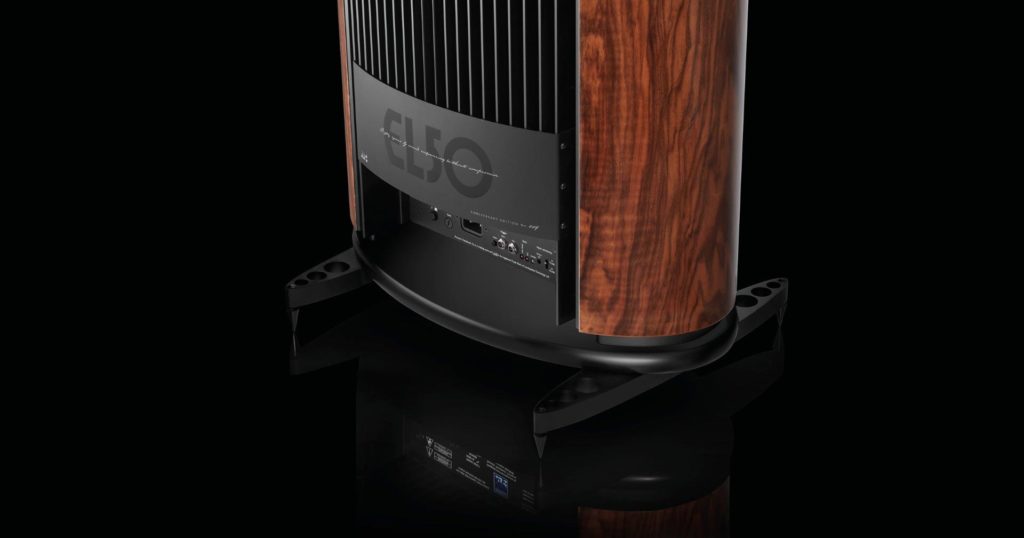
ATC unveils EL50 anniversary loudspeaker at Bristol Hi-Fi Show

Published

on

ATC has unveiled the Statement EL50 Anniversary, a limited-run active three-way floorstander that evolves the company’s long-running 50-series blueprint.

Built around a newly developed discrete tri-amp platform and housed in a sculpted elliptical cabinet, the EL50 Anniversary is aimed squarely at audiophiles. It targets those seeking reference-level performance with statement design.

At its core is an all-new proprietary three-channel active “Amp-Pack”, delivering 200W to the bass driver, 100W to the mid-range and 50W to the tweeter. The design uses balanced inputs, fourth-order active crossovers and newly developed discrete gain blocks to lower noise and distortion.

Moreover, ATC has also redesigned the power supply. Each amplifier channel now has its own toroidal transformer, plus a separate transformer for low-voltage stages. This layout is intended to improve headroom and reduce intermodulation between drivers under heavy load.

Advertisement

The drive units are built entirely in-house. High frequencies are handled by ATC’s SH25-76S ‘S-Spec’ tweeter, using a neodymium motor and dual-suspension design for low distortion and extended response beyond 25kHz.

Advertisement

The mid-band is covered by the SM75-150S ‘Superdome’. It spans frequencies from 380Hz to 3.5kHz with a large 75mm voice coil and under-hung motor system for consistent control. Low-end duties fall to the SB75-234SL 9-inch bass driver. This driver features ATC’s Super Linear motor technology to reduce harmonic distortion and improve integration with the mid-range.

Furthermore, the cabinet reflects ATC’s heritage, drawing inspiration from the elliptical EL150 design introduced in 2006. The curved front baffle is engineered to reduce edge diffraction and smooth off-axis response.

Advertisement

Additionally, internal construction has been updated for greater stiffness and damping. Each cabinet is finished in hand-selected European walnut veneer with ebony rear inlays, polished polyester lacquer, and black napa leather detailing around the mid and high-frequency drivers.

Only 50 pairs will be produced in this initial run, each supplied with a hardbound handbook celebrating ATC’s journey since 1974. After the anniversary edition sells through, the model will enter continued production.

The EL50 Anniversary will debut globally at The Bristol Hi-Fi Show in February 2026 and goes on sale in March 2026, priced at £49,500 per pair (inc. VAT).

Advertisement

Advertisement

Source link

Continue Reading

Tech

Two new Apple Studio Displays could gatecrash March MacBook announcements

Published

on

References to two new Apple Studio Display models have been found in macOS 26.3 code, stacking up more potential product announcements before the May 4 Apple “Experience.”

Colorful desktop computer setup with a large monitor showing abstract art, slim keyboard and trackpad on a white desk, headphones on a stand, and brick wall background.
Apple could be set to announce not one, but two new displays.

Apple has confirmed that it will hold a special event on March 4, with rumors suggesting it could follow a week of announcements. A low-cost MacBook is expected to be the star of the show.
Now, references to codenames J427 and J527 have been found in the macOS 26.3 update. Those codenames match a report from September 2025 that pegged both products as being Apple Studio Displays.
Continue Reading on AppleInsider | Discuss on our Forums

Source link

Continue Reading

Tech

Apple apparently has two new Studio Display models lined up for launch

Published

on

A couple of days ago, I compiled a detailed roundup of all the products we’re expecting from Apple at the upcoming media “experience” on March 4, 2026. In the story, we discussed new devices like new MacBooks, iPhone 17e, and a couple of other Apple devices, including the proposed Studio Display 2.

Now, folks over at Macworld have discovered something very interesting about Apple’s external display (or displays). Per the outlet, the public version of macOS 26.3 contains kernel extensions for not one but two new Studio Display models.

macOS 26.3 hints at two Studio Display 2 models

In total, the new software build contains alphanumeric codenames for three devices. The first, “J700,” is the internal name for the affordable 12.9-inch MacBook that is rumored to launch alongside the new M5 MacBook Air and the M5 Pro and M5 Pro Mac Pro versions.

However, the other two — J427 and J527 — are believed to be references to two different models of the Studio Display 2. Although there’s no information about the differences between the two models, Apple could use either size or features to differentiate them.

Currently, Apple’s first-generation Studio Display is available with a 27-inch 5K panel. So, there’s a chance that we see a 27-inch Studio Display 2, along with another model with either a smaller or a bigger screen.

Advertisement

Size or features: How Apple might differentiate between the models

The second (and the more likely) way is that the company could reserve some features for one model, which would be the more expensive of the two, and another, cheaper model (either retains the current set of specifications or gets only minor upgrades).

From what I know, at least one of the two rumored models could get a bump in refresh rate (up to 120Hz), a mini-LED backlighting panel for enhanced brightness and contrast, and a more capable A19 chip (also found on the iPhone 17).

Source link

Advertisement
Continue Reading

Tech

6 Best Phones With Headphone Jacks (2026), Tested and Reviewed

Published

on

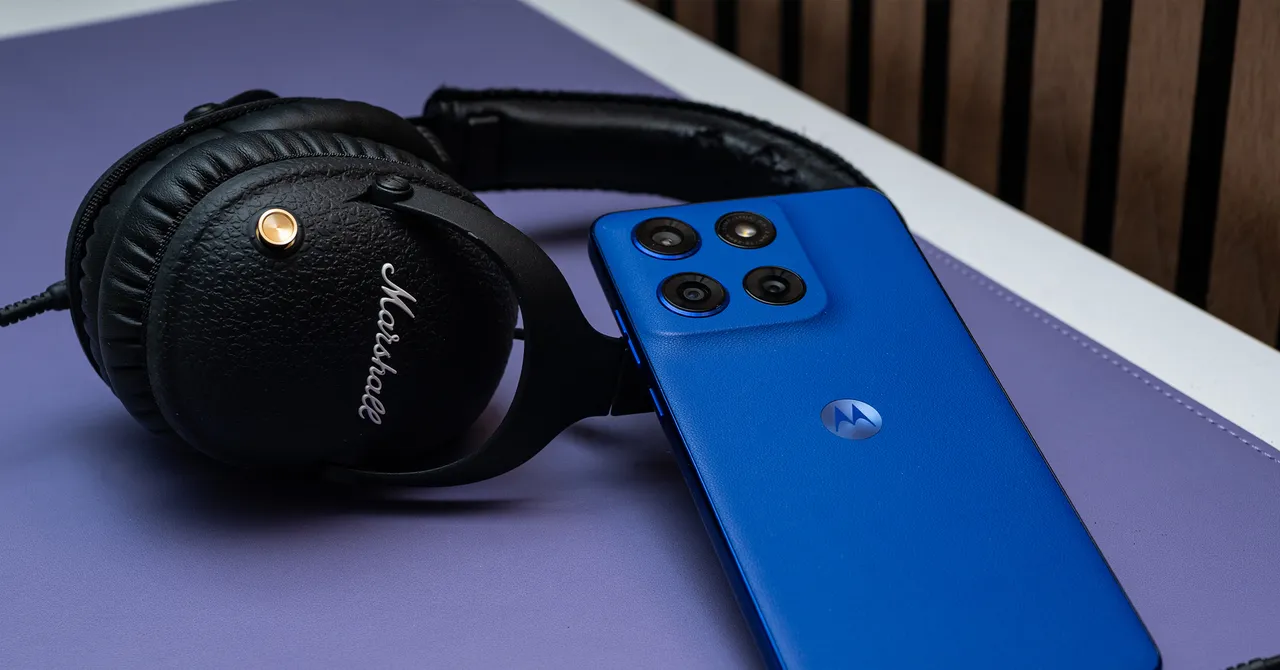
If a headphone jack is a must-have on your next phone, Motorola’s Moto G Stylus 5G 2025 strikes the best balance of performance, aesthetics, features, and price. Not only does it have the jack, but it also stores a stylus inside, an embarrassment for any other company that cited space-saving reasons to nix the port. The gorgeous blue vegan leather finish on the back truly makes this phone stand out, putting the Blue Man Group to shame. The performance, powered by Qualcomm’s Snapdragon 6 Gen 3 chipset, is nice and smooth, and you get a 120-Hz 6.7-inch OLED screen to boot. It’s slim, despite the 5,000-mAh battery, which lasts a full day and then some with average use. And the 50-megapixel main camera is reliable day or night as long as you keep still when tapping the shutter button.

Motorola goes above and beyond, stuffing this phone with twice the amount of typical storage at 256 GB; there’s also a microSD card slot to expand space, wireless charging, and an IP68 rating, so it will survive an accidental drop in the pool. For the first time, Motorola’s also offering two Android OS upgrades on its Moto G phones, meaning you can hold onto it a little longer before it won’t get new features. (You’ll still get 3 years of security updates.) Just remember that mobile phones are heavily discounted during big sale events, so I recommend waiting for a sale.

Motorola has already started launching its 2026 slate of Moto G devices, but the Moto G Stylus 2026 seems to be last on the list. Expect its arrival in the next month or two, which means you may want to wait for the latest and greatest.

Source link

Advertisement
Continue Reading

Tech

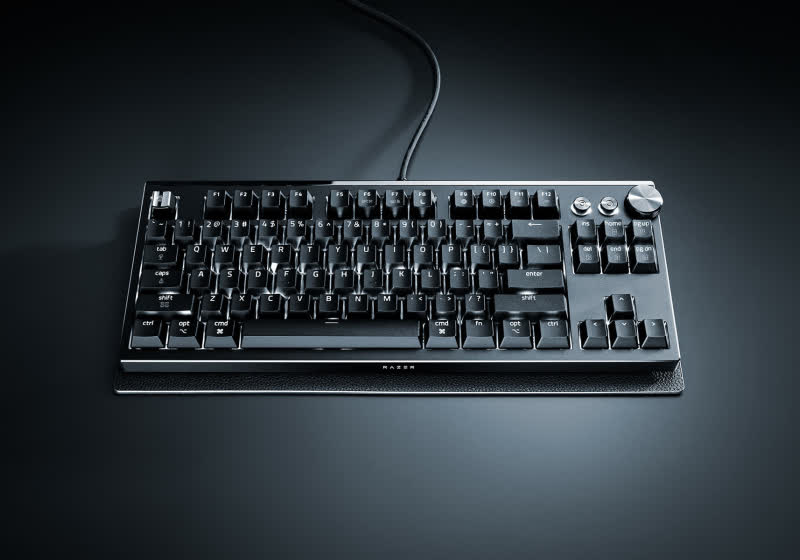
Razer unveils $500 Huntsman Signature keyboard with CNC aluminum and mirror finish

Published

on


Razer’s new keyboard is essentially an upgraded Huntsman V3 Pro, which itself is an excellent device that carries a $250 MSRP. The first production run will be limited to 1,337 individually numbered units.
Read Entire Article
Source link

Continue Reading

Tech

How infostealers turn stolen credentials into real identities

Published

on

Specops infostealers

Modern infostealers have expanded credential theft far beyond usernames and passwords. Over the past year, campaigns have accelerated, targeting users with little distinction between corporate employees and individuals on personal devices.

These infections routinely harvest credentials alongside broader session data and user activity. The resulting datasets are aggregated and sold by initial access brokers, then reused across attacks targeting both personal and enterprise environments.

To better understand the scope and implications of this activity, Specops researchers analyzed more than 90,000 leaked infostealer dumps, comprising over 800 million rows of data collected during active infections.

The datasets included credentials, browser cookies, browsing history, and system-level files stored locally on compromised machines.

Advertisement

What emerges is a clear picture of how infostealer dumps allow attackers to associate technical data with real users, organizations, and behavioral patterns, making a single infection valuable long after the initial compromise.

When stolen credentials become identity data

The biggest risk is how easily infostealer data ties multiple accounts and behaviors back to one real person. These dumps routinely expose reused account names across services, Windows usernames, files stored in user directories, active session data, and detailed records of activity across environments.

Combined, these signals let attackers move from a single compromised credential to identifying an individual, their employer, and potentially their role within an organization.

This convergence collapses the boundary between personal and professional identity that many security models still assume exists. What may start as a compromise on a personal device can quickly escalate into enterprise-level risk.

Advertisement

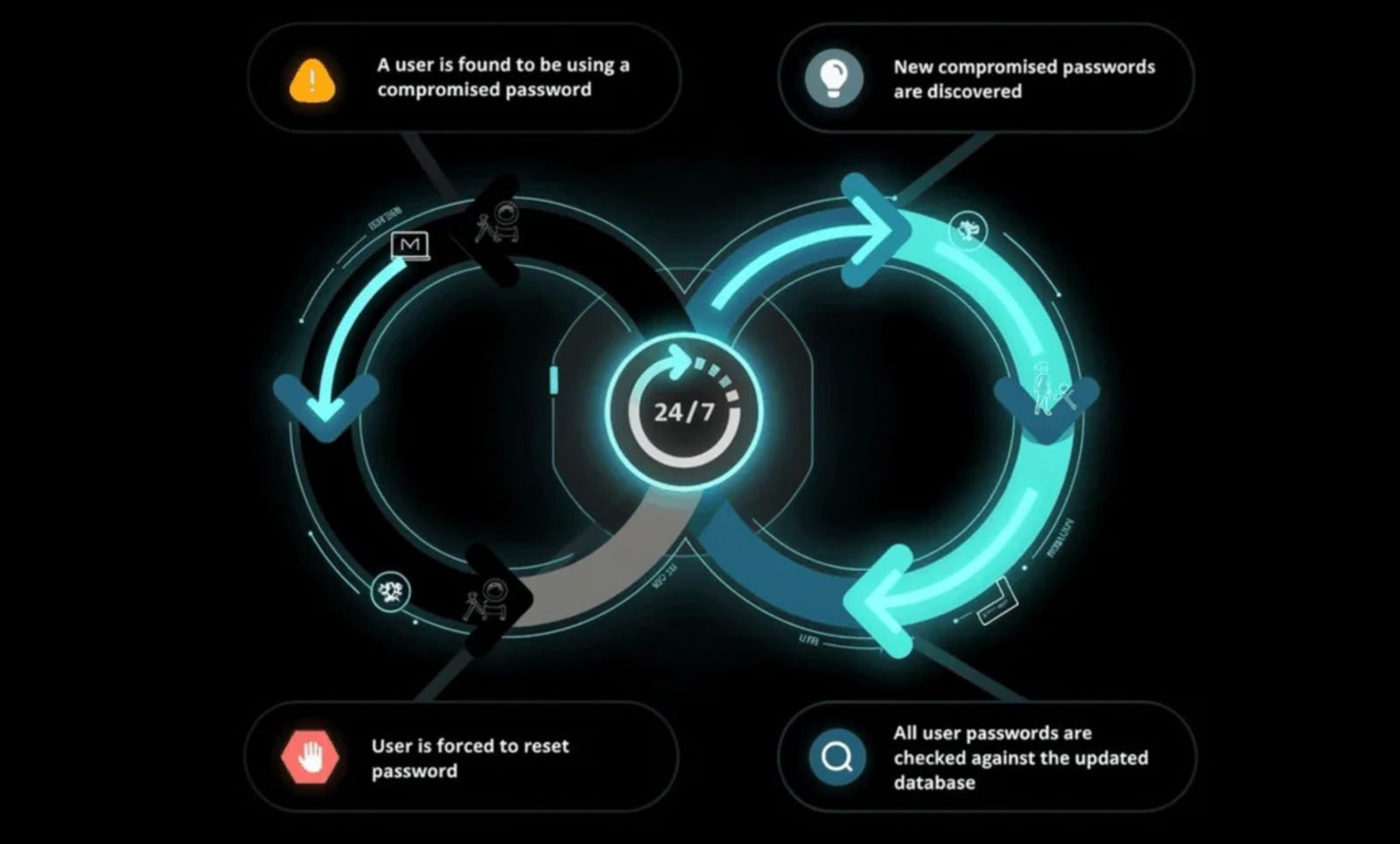
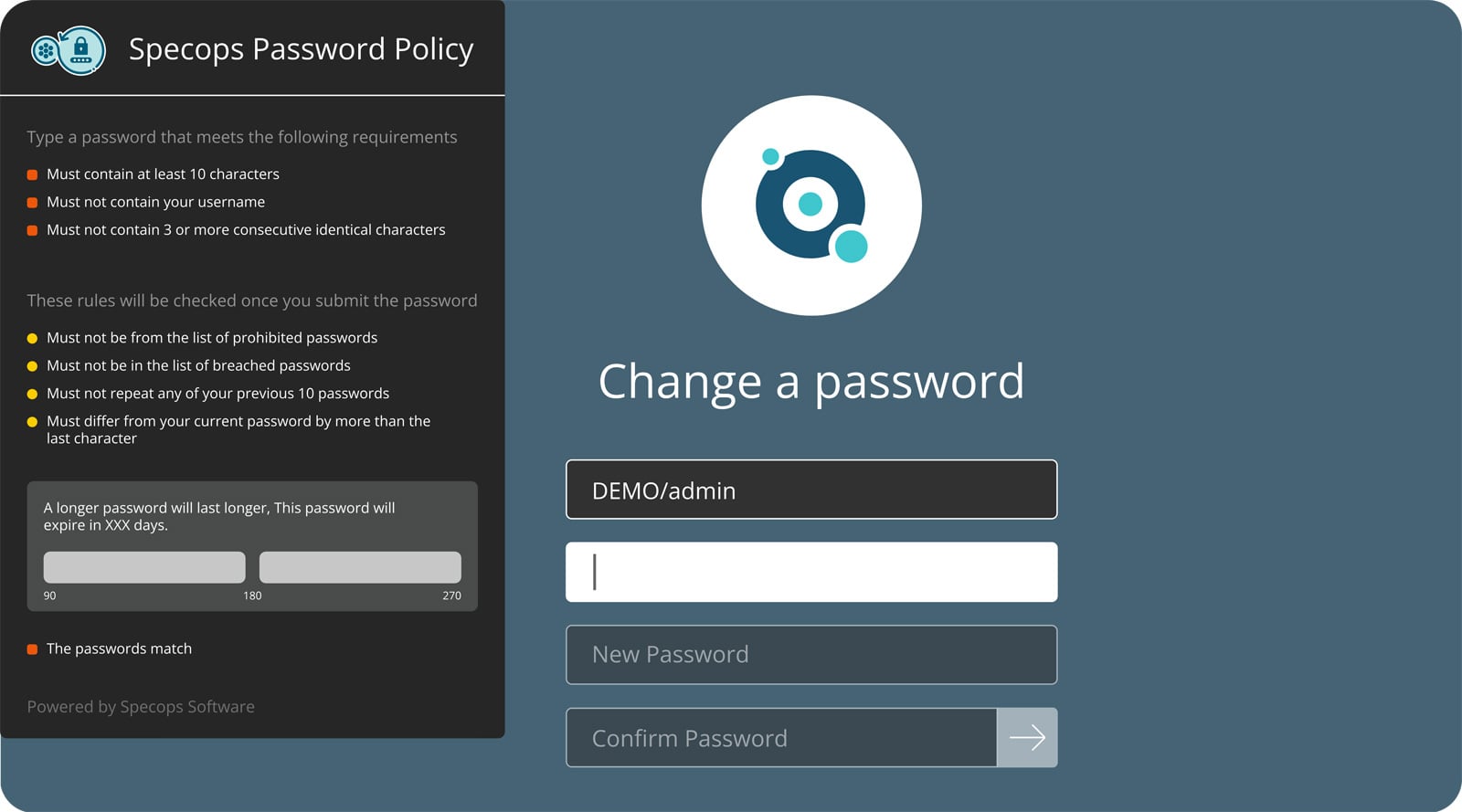
Specops Password Policy helps organizations break this link by continuously scanning Active Directory against a database of more than 5.4 billion known-compromised credentials, rather than only checking passwords at creation or reset.

Continuous scanning with Specops Password Policy

Credentials that have already been exposed are blocked from being set or reused, even if they technically comply with policy, reducing the risk of compromised passwords being reused across personal and corporate accounts.

Verizon’s Data Breach Investigation Report found stolen credentials are involved in 44.7% of breaches. 


Effortlessly secure Active Directory with compliant password policies, blocking 4+ billion compromised passwords, boosting security, and slashing support hassles!

Try it for free

Where infostealers get your data and how they abuse it

The dataset contained credentials and session data associated with a wide range of services, illustrating how infostealer data exposes both identity and access.

Professional and enterprise-linked services

LinkedIn, GitHub, Microsoft Teams, Outlook, and corporate domains appeared frequently in the dataset. LinkedIn alone accounted for nearly 900,000 records, providing a direct path from stolen data to real names, job titles, and organizational affiliations.

Advertisement

For threat actors, this information enables targeted phishing, social engineering, and prioritization of access that may lead deeper into enterprise environments, especially where password reuse exists.

Personal identity and social platforms

YouTube, Facebook, and similar social media platforms also made high-volume appearances. These services often contain real names, photos, and social connections, making it easier to validate the identity of a compromised user and link them to other accounts.

This correlation makes targeted exploitation far easier.

Sensitive and high-risk services

The dataset also included credentials and cookies associated with sensitive services, including government and tax-related domains such as the IRS and the Canada Revenue Agency, as well as adult content platforms. Access to these services introduces risks beyond traditional account takeover.

Advertisement

In previous incidents, threat actors have used data from adult platforms as leverage for extortion and blackmail. When that activity can be linked back to an individual’s real identity and employer, the potential impact escalates quickly.

Security-aware yet still exposed

Domains such as Shodan and even mil.gov appeared within the dataset, reinforcing an uncomfortable reality: technical awareness does not equal immunity.

Secure practices followed in corporate environments do not always extend to personal systems, yet exposure on those systems can still create enterprise risk.

Why infostealers remain so effective

Infostealer exposure isn’t driven by a single failure, but by a combination of common behaviors repeated at scale. Users install applications from illicit sources, reuse passwords across personal and corporate accounts, and rely on browser-based credential storage for convenience.

Advertisement

Browser-stored credentials and payment data are especially valuable to attackers.

When an infostealer compromises a system, these stores provide attackers with immediate access to high-value information, significantly increasing the impact of a single infection.

Reducing impact after credential theft

Once infostealer data has been collected and circulated, prevention is no longer the only challenge. The real question is how quickly defenders can neutralize it before it’s reused for lateral movement, account takeover, or ransomware deployment.

Because infostealer dumps often circulate for weeks or months before detection, effective mitigation must assume that some credentials are already exposed.

Advertisement

Password reuse remains one of the most reliable ways attackers operationalize infostealer data. Credentials harvested from personal devices are routinely tested against corporate environments, cloud services, and remote access systems, often with success even when those passwords meet standard complexity requirements.

Disrupting reuse directly reduces the operational value of infostealer datasets and shortens their window of exploitation.

Combined with stronger password policies that support longer passphrases and continuous enforcement, these controls shift password security from a static configuration exercise to an active containment measure.

Identity exposure increasingly begins outside the corporate perimeter, so reducing the reuse and downstream impact of stolen credentials remains one of the most effective ways to break infostealer-driven attack chains.

Advertisement
Specops Password Policy

To see how Specops Password Policy helps block compromised passwords and reduce credential reuse in Active Directory, request a live demo from a Specops expert.

Sponsored and written by Specops Software.

Source link

Advertisement
Continue Reading

Trending

Copyright © 2025