Connect with us

Tech

Protecting data during hypervisor migration

Published

on

Vmware

Broadcom’s acquisition of VMware in 2023 set off a wave of migrations that shows no signs of subsiding. But moving from VMware to another hypervisor may introduce significant technical and operational risks.

IT teams must prepare for challenges that are not always apparent at the start of a migration.

Price hikes, licensing changes and shifts in customer support have driven VMware customers to look for alternatives. Recent operational problems haven’t helped.

Last year, VMware Workstation auto-updates failed due to a Broadcom URL redirect. In 2026, the migration continues. Gartner research VP Julia Palmer recently predicted that VMware would lose 35% of its workloads by 2028.

Advertisement

Many of those workloads will shift to platforms such as Microsoft Hyper‑V, Azure Stack HCI, Nutanix AHV, Proxmox VE or KVM. Unfortunately, the journey comes with challenges. Switching hypervisors is a high-stakes infrastructure change.

IT professionals need to focus on completing a successful migration with their data intact and available.

Why hypervisor migration is technically risky

It sounds simple: Export data, convert it to a new format and then import it into a new hypervisor. But that process is far riskier than it sounds.

That’s because hypervisors don’t interoperate. Multiple technical variables increase the risk of failed or unstable migrations. Hypervisors differ in disk formats, hardware abstractions, driver stacks and networking models.

Advertisement

Virtual hardware versions, storage controllers, chipset emulation and network virtualization layers don’t always translate cleanly.

Snapshots and templates behave differently. Even subtle configuration differences can create instability that only surfaces once workloads are under real production pressure.

Migrating from VMware can increase cost, risk and operational drag, while limiting strategic options.

Acronis Cyber Protect gives IT leaders control with a flexible, AI‑powered cyber protection platform that cuts migration time by up to 60% and keeps the business secure and responsive throughout change.

Advertisement

See how Acronis delivers control

Backup is essential to a successful hypervisor migration

The most important prerequisite for any platform migration is not a conversion tool. It is verified, restorable backup.

Organizations need to protect workloads with full-image, application-consistent backups that IT pros can restore not only to the same hypervisor but to dissimilar hardware or an entirely different virtualization platform.

IT teams need to perform recovery drills before they start migration, not just after cutover.

A platform-agnostic backup architecture provides a necessary safety net. It enables restoration from the source environment to the destination environment, and it allows rapid reversion to the original platform if compatibility or performance issues arise.

Advertisement

The bottom line is that data remains safe and accessible.

Any-to-any hypervisor recovery — restoration from physical, virtual or cloud environments to any other destination — reduces migration risk and has the added advantage of reducing long-term vendor lock-in.

How to avoid three risks most teams underestimate during migration

Even the most carefully planned and executed migrations can fail for predictable reasons.

1. Teams often underestimate planned downtime

Advertisement

Too many teams plan for an ideal level of downtime as opposed to a worst-case scenario. Unfortunately, migrations frequently stretch beyond maintenance windows. If a window closes when systems are not stable, organizations can suffer missed transactions, stalled operations, SLA violations and reputational damage.

That’s why migration planning must include a formal business continuity strategy, Ask in advance:

  • How long can each workload realistically be offline?
  • What happens if rollback is required?
  • Who makes the go or no-go decision?
  • What is the communication plan if restoration time exceeds expectations?

Backup and recovery are critical. The ability to quickly restore workloads to their original platform can mean the difference between a short delay and a multi-day outage.

2. Backup and recovery gaps can plague transitions

Migration creates a dangerous gray zone for backup and disaster recovery, with environments are often split between old and new platforms. That is when recoverability must be strongest. The time it takes to restore backups from either environment is critical.

Advertisement

Common gaps appear when:

  • Backup chains are broken during VM exports.
  • Incremental backup jobs may fail after platform conversion.
  • Application-consistent snapshots are not validated on the new hypervisor.
  • DR replication targets are not synchronized during phased cutovers.

Backup and recovery must function continuously throughout the migration. IT teams need to maintain parallel protection during overlap periods so that workloads are recoverable from both the legacy and target platforms until the transition is finished.

3. An expanding attack surface means backup images need protection

Migration also expands your attack surface.

With two hypervisor stacks running, complexity spikes. Backup repositories, an image-level backups in particular, can become high-value targets. If attackers compromise them during migration, your rollback and recovery options disappear.

Advertisement

Immutability is essential during this phase. IT teams need to protect backup images against modification or deletion, even by privileged accounts. They need to tighten role-based access controls and limit administrative access.

Equally important is adherence to the 3-2-1 principle: At least three copies of data, on two different media types, with one copy stored off-site or offline. During migration, that third copy becomes critical insurance.

If both production and primary backup infrastructure are affected, an isolated copy preserves your recovery path.

The value of a natively integrated platform

Maintaining parallel protection is essential because it lowers operational risk. However, it also increases management complexity. Two hypervisor stacks, multiple storage systems and parallel protection policies must coexist without creating gaps.

Advertisement

A unified cyber protection platform can simplify this process for IT teams. A unified cyber protection platform can reduce complexity by delivering consistent backup, recovery and security controls across physical servers, hypervisors and cloud workloads through a single point of control.

Natively integrated protection and migration capabilities in Acronis Cyber Protect can reduce transition timelines while maintaining rollback readiness and continuous synchronization.

Migration as a resilience opportunity

The shift away from VMware has made one concept clear: Migration planning is a long-term competency, not a one-time project.

Teams that succeed treat hypervisor transitions as resilience exercises. They validate backups in advance, ensure cross-platform recovery capability, maintain rollback paths, harden backup storage against ransomware and verify data integrity after cutover.

Advertisement

With these safeguards in place, migration becomes more predictable and significantly more likely to succeed.

VMware migrations don’t have to be slow, risky or disruptive.

With Acronis Cyber Protect, IT teams gain a flexible, responsive platform that accelerates migration while delivering AI‑powered security, backup and recovery in one natively integrated solution.

If you’re planning a move away from VMware, see how Acronis helps organizations migrate faster and stay protected at every step.

Advertisement

Learn how Acronis Cyber Protect accelerates VMware migration.

Sponsored and written by Acronis.

Source link

Advertisement
Continue Reading
Click to comment

Leave a Reply

Your email address will not be published. Required fields are marked *

Tech

Staff departures do not mean Apple will abandon Liquid Glass

Published

on

Ex-Apple designer Alan Dye did not leave the company by himself, and a new report on Sunday says that he took others with that pioneered Liquid Glass with him. As we’ve said before, there is no possibility that Apple will ditch this overhaul.

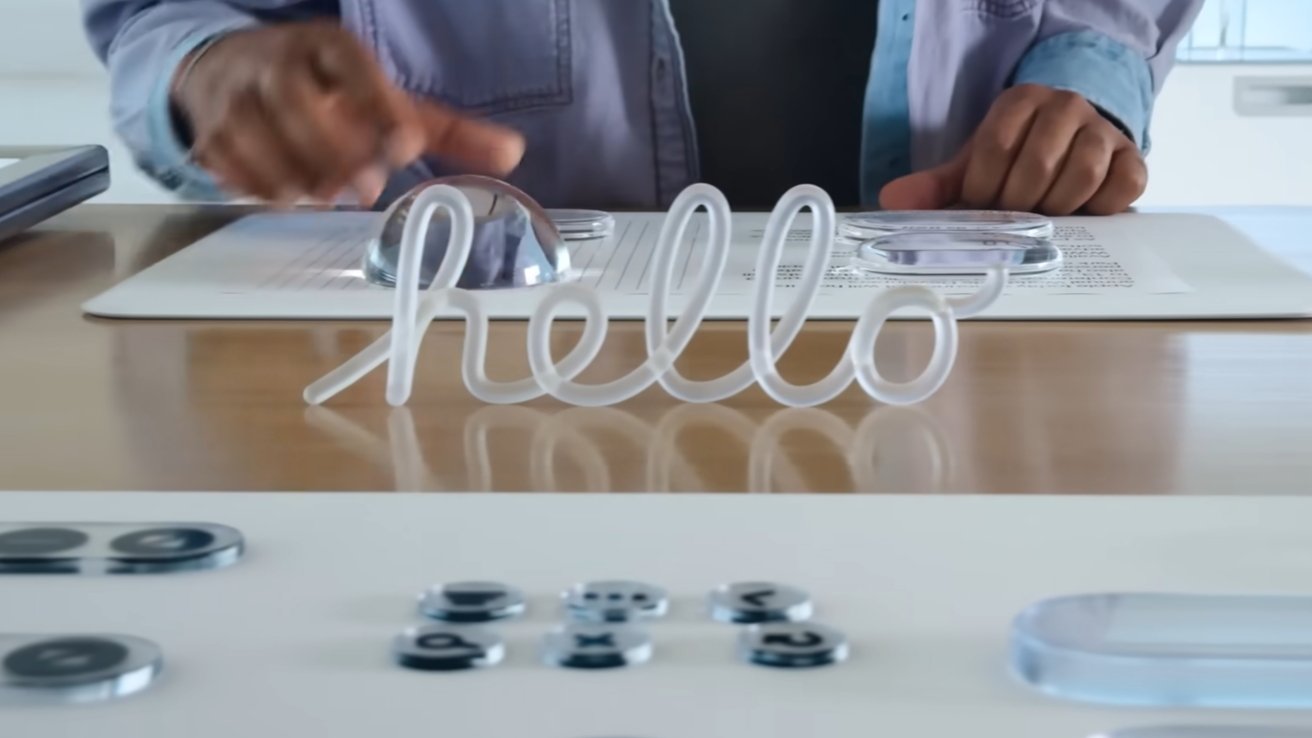
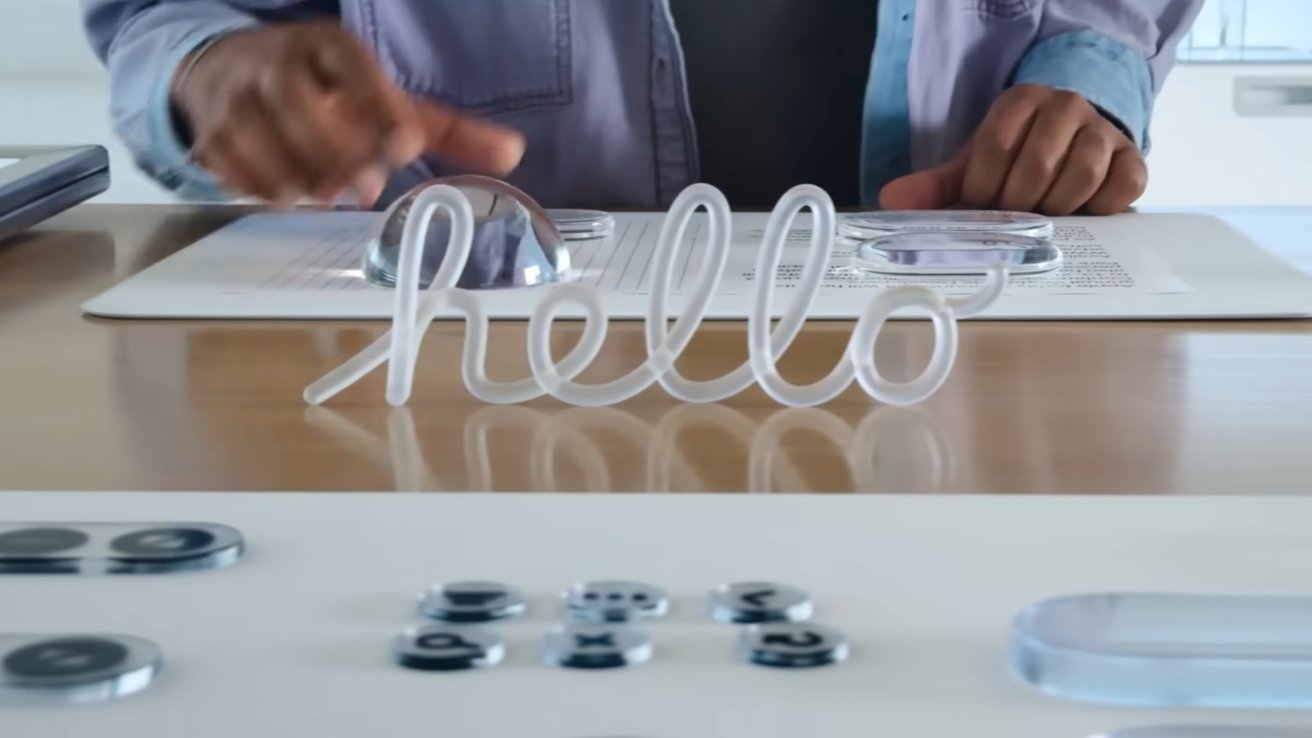
Clear cursive 'hello' sculpture, person seated at a desk with braille documents, magnifying lenses, and buttons in the foreground.
Liquid Glass is Apple’s future, like it or not

Apple’s Liquid Glass redesign of all of its operating systems from iPhone to Mac may have proven divisive, and it was certainly spearheaded by Alan Dye. But there is no possibility that it will be dropped, even as Bloomberg now reports that several designers left alongside Dye when he moved to Meta.
This new report from Mark Gurman’s “Power On” newsletter says that Apple whipped out Liquid Glass as a wild card to distract from its failings in Apple Intelligence. But then in the same breath, the report also says that Liquid Glass was many years in the making.
Continue Reading on AppleInsider | Discuss on our Forums

Source link

Continue Reading

Tech

HDR TV Formats Explained – CNET

Published

on

Nearly all new TVs and projectors have the ability to decode HDR, or high dynamic range, video. In most cases, HDR content looks better than non-HDR material, though an individual display’s ability to deal with the extra data can vary greatly. There are multiple HDR formats, including Dolby Vision, Dolby Vision 2, HDR10, HDR10 Plus and HLG. Most displays can only decode one or two of these. Likewise, streaming services and 4K Blu-rays typically offer only one or two.

Fortunately, all HDR displays can play HDR content — just not always in the best format available. Here’s what to keep in mind when shopping for a new TV or deciding which streaming service to use for a movie or show.

The basics

Advertisement
Four identical images of canoes on a lake to show the differences with HDR.

These images attempt to illustrate, on your standard dynamic range screen, what HDR can do on HDR displays. The top left shows how the image appears on an SDR display, tuned so the shadows are visible. Notice how the highlights in the clouds are “blown out,” meaning they lack detail. The upper right shows the HDR version with detail preserved in the clouds. The lower left shows the same image adjusted to preserve the highlights, which causes the shadows to disappear. HDR displays showing HDR content have a wider dynamic range — the difference between the brightest and darkest parts of an image.

HDR10plus.org

In CNET’s TV and projector reviews, we’ve found that both the capabilities of the TV itself and the way HDR is used in the movie or TV show have a greater impact on image quality than the specific HDR format. In other words, just because a display supports a “better” HDR format doesn’t mean it will look better than one that doesn’t. Here’s a tour of the HDR landscape today.

  • Everything supports HDR10, but many TVs and sources will also have at least one of the other formats.
  • Dolby Vision and HDR10 Plus can look better in specific ways compared to HDR10. All will look better than non-HDR, standard dynamic range content.
  • One format might look “better” than another on paper, but in the real world, image quality depends far more on the TV’s overall performance and how the content was made.

Most new TVs can display HDR content, which preserves more detail in both bright and dark areas of an image, creating a greater “dynamic range” than non-HDR content (i.e., pretty much everything you’ve ever watched). That older format is now called SDR, or standard dynamic range. On an HDR TV, HDR content can look far more punchy and vibrant than traditional video.

Read more: How HDR Works

Advertisement
aja-sdr-hdr-chart

The dynamic range of what’s captured by the camera (left) and what’s possible on SDR and HDR displays. 

AJA

Just having an HDR TV isn’t enough; you also need HDR content. Without it, the TV doesn’t have much to work with. It may still look good and can artificially expand SDR content for a slight improvement, but to get the most out of HDR you need content designed for it. Thankfully, there’s now plenty available, including movies, TV shows and even video games. Chances are your favorite new programs already support HDR.

HDR10

  • Supported by everything.
  • Better image quality potential than SDR, but perhaps not as good as HDR10 Plus or Dolby Vision.
  • Static metadata.

HDR10 is about as close to a universal standard as we’ve got. Because it’s free for manufacturers to use, it’s supported almost everywhere. Every HDR TV can decode it and every HDR streaming device supports it. Nearly all HDR content includes an HDR10 version, sometimes alongside more advanced formats such as Dolby Vision, which we’ll discuss shortly.

HDR10’s main limitation is its “static” metadata, meaning a single HDR “look” is applied to an entire movie or show. That’s still better than SDR, but it doesn’t allow very bright or very dark scenes to look their absolute best within the same film. This one-size-fits-all approach works, but it prevents both the content and the TV from reaching their full potential. Dynamic metadata, which most other HDR formats use, addresses this limitation.

Static metadata is like forcing an entire football team to wear the same size shirt. It might fit the quarterback and look OK on the big linebacker and tiny kicker, but everyone would look better in shirts sized for them.

Advertisement

HDR10 isn’t backward-compatible with SDR TVs, so it’s no good for broadcast. You’ll find it available with streaming content and on 4K Blu-ray.

HDR10 Plus

  • Championed by Samsung.
  • Dynamic metadata.
  • Potentially better image than vanilla HDR10.

As you may have guessed from the name, HDR10 Plus is similar to HDR10, but with a little plus. The “plus” in this case is dynamic metadata, which improves on HDR10’s static version. This means that on a per-scene — or even per-image — basis, the content can provide the TV with all the information it needs to look its absolute best.

While there are certain fees for manufacturers to use HDR10 Plus, they’re much less than what Dolby charges for Dolby Vision. Because it’s from Samsung, it’s highly unlikely there will ever be an LG TV with HDR10 Plus. Sony is another holdout, likely for similar reasons. However, Epson, TCL, Hisense, Roku and others offer HDR10 Plus compatibility.

hdr10-via-samsung

It’s a little hard to see in this graphic, but notice how the frames on the right show different levels of brightness in the sky. This example uses a standard dynamic range image on a standard dynamic range screen. HDR10 Plus’s dynamic metadata allows filmmakers to optimize how each shot or scene is displayed. HDR10, by contrast, uses static metadata — a single setting that must serve as a compromise between the darkest and brightest scenes.

Advertisement

Samsung

On the content side, there’s Amazon, Apple TV, Disney Plus, Paramount Plus and Netflix, among others. Keep in mind that just because a company or streaming service supports HDR10 Plus doesn’t mean that every product or show/movie is compatible with or has HDR10 Plus data.

Read more: What is HDR10 Plus?

Dolby Vision and Dolby Vision 2

  • Potentially the best image quality of all the formats.
  • Less content available than with HDR10.
  • The de facto “step up” HDR format.

Dolby Vision, like HDR10 Plus, can have dynamic metadata. Streaming services including Netflix, Amazon, Vudu and Apple TV support it, and you can find it on some 4K Blu-rays. Some Dolby Vision features — including dynamic metadata and color handling — are optional in HDR formatting for NextGen TV, though over-the-air HDR content remains rare.

Dolby_Vision.jpg

This is an approximation, using two SDR images, of what you’d see if you placed an SDR and HDR TV side-by-side.

Advertisement

Dolby

The downside of Dolby Vision is that manufacturers have to pay Dolby to use it. In return, Dolby helps them optimize their TVs to look their best with DV content. For some companies, that’s an easy way to improve picture quality. Larger manufacturers — like a certain Korean brand that begins with the letter S — prefer to invest in their own HDR formats instead, thank you very much.

After HDR10, this is the most popular HDR format, but that doesn’t mean it’s universal. Samsung is the biggest holdout, for reasons mentioned above. Generally speaking, if a company doesn’t support Dolby Vision, it likely supports HDR10 Plus, though some companies support both. There is less Dolby Vision content than there is vanilla HDR10 content, but big-budget movies and TV shows almost always include it. 

Dolby Vision 2

Dolby

Announced at CES 2026, Dolby Vision 2 introduces several new features. The most controversial, in my opinion, is optional motion smoothing, which would allow directors or showrunners to smooth scenes they consider too juddery, such as fast pans. The format also includes “content intelligence” features that adjust a TV’s performance based on ambient light and the content being shown. Midpriced and lower-end TVs will support the base version of Dolby Vision 2, while higher-end models will offer Dolby Vision 2 Max, which includes the motion-smoothing feature. We’ll have to see how it’s implemented once TVs and compatible content arrive, possibly later this year.

The good news is DV2 is compatible with all current Dolby Vision TVs. Older DV TVs won’t have access to the new features, of course, but the HDR and dynamic metadata will still work.

Advertisement

HLG

  • From BBC and NHK.
  • Free to use.
  • Broadcast-friendly.

Hybrid Log Gamma was created by Britain’s BBC and Japan’s NHK. Unlike the formats we’ve discussed so far, it’s actually backward-compatible with SDR TVs. One signal that works on both older TVs and newer ones is a huge deal for broadcasters. As you can imagine, it’s not without drawbacks — mainly when it comes to picture quality. Like HDR10, HLG is likely better than SDR, but it may not match the picture quality of some other HDR formats. It’s the format used for over-the-air HDR broadcasts.

hybrid-log-gamma

A graphical representation of an SDR and HLG signal. The vertical axis is the signal, from broadcast, cable or satellite, for example. “0” is black, “1” is bright white. The horizontal axis is the physical brightness coming out of your television. An SDR TV would see the HLG signal and think it was “normal,” showing an image with, perhaps, better highlight detail. An HDR TV that’s HLG-compatible would understand what to do with the HLG signal and show that brighter information as a physically brighter part of the image (i.e., how HDR normally works). 

Public Domain/Creative Commons

There’s already wide TV support. Content is still in the early stages, however. If you can get the BBC’s iPlayer (whether you’re in the UK or using a VPN), that service has HLG support. DirecTV and YouTube also support HLG, but there’s just not a lot of content so far. It’s free and fills an important niche, but it’s been years since it came out and it hasn’t been widely adopted. Some phones can record HDR via HLG, which you can playback on HLG-compatible displays.

For more info, and why it’s so different from other methods, check out our explainer on hybrid log gamma

Advertisement

Advanced HDR by Technicolor (SL-HDR1, 2 and 3)

  • Not widely supported.
  • Each “flavor” has its own niche.
  • Unlikely to see wide adoption

Technicolor’s Advanced HDR comes in multiple flavors: SL-HDR1 is similar to HLG in that it’s fully backward-compatible with SDR TVs, allowing for one signal to rule them all; SL-HDR2 has dynamic metadata like HDR10 Plus and Dolby Vision; SL-HDR3 uses HLG as a base, but adds dynamic metadata.

technicolor-hdr-path

The path to SDR and HDR in one SL-HDR1 signal. The top is the content creation, the bottom is what your TV will do with it. The SDR content is automatically created from the HDR signal.

Technicolor

Content is limited to some NextGenTV broadcasts. It’s unlikely it will get wide acceptance among streaming companies. 

Read more: What is Advanced HDR by Technicolor?

Advertisement

There can be only one. Or three. Or maybe five

Here’s the tl;dr: HDR10 is the main HDR format. Dolby Vision and HDR10 Plus are the step-up options that offer potentially better image quality. All HDR should look better than older SDR content (or the non-HDR version of modern content). NextGenTV continues its slow rollout. The potential of free over-the-air HDR is still there, but at this point it’s in the hands of the individual channels and channel owners as to how much HDR they want to broadcast. 

Generally speaking, it’s worth making sure any new TV you’re considering supports either Dolby Vision or HDR10 Plus since the dynamic metadata can make a noticeable difference, especially on the best TVs. The good news is that the majority of new shows, movies and even many games, all support HDR in one way or another. Most TVs and projectors do as well, though of course, some better than others.

Note: This story was first published in 2018 but is updated regularly to reflect new HDR formats and info.


In addition to covering audio and display tech, Geoff does photo tours of cool museums and locations around the world, including nuclear submarinesaircraft carriersmedieval castles, epic 10,000-mile road trips and more.

Advertisement

Also, check out Budget Travel for Dummies, his book, and his bestselling sci-fi novel about city-size submarines. You can follow him on Instagram and YouTube

Source link

Advertisement
Continue Reading

Tech

How a Raspberry Pi Microcontroller Saved the Super Nintendo’s Infamously Inferior Version Of ‘Doom’

Published

on

“Just the anachronism of seeing Doom, one of the poster children for the moral panic around violent video games, on a Nintendo console is novel,” writes Kotaku — especially with the console’s underpowered “Super FX” coprocessor

Hampered by a nearly unplayable framerate, especially in later levels, and mired by sacrifices, like altered levels, no floor or ceiling textures, and the entire fourth episode being cut, [1995’s] Doom on the Super NES was not a good version of the game, but it was Doom running on the Super NES, and, for that alone, [programmer Randal] Linden’s genius deserves recognition.

But then in 2022 when Audi Sorlie interviewed Linden on the YouTube show DF Retro, “Not really knowing where fate was going to take us, I asked [Linden] a throwaway question regarding the source code for Doom.”

If you ever worked on this again, Sorlie asked, would you make any improvements or do anything differently?”

Advertisement

“Yeah,” Linden replied. “I have plenty of ideas if I could go back, but, you know, I don’t think anyone’s asking me to go back to Super Nintendo Doom and improve it.”

A few years passed, and Sorlie joined Limited Run Games as lead producer for their development department. When LRG asked him to run down his craziest ideas, a new, improved release of Randal Linden’s Doom loomed large. Convincing Linden was easy, and Sorlie said even the folks at license holder Bethesda were more amused than anything.

“You want to go back and develop for Super Nintendo?” they asked Sorlie. “Like, for real…?”

“The trick was actually pretty cool,” Linden said. “It’s right here.” He pointed to a chip on the prototype SNES cartridge, similar to the one Limited Run sent me to test out the game. “It’s a Raspberry Pi 2350.” Super FX chips are no longer in production for obvious reasons, but with a clever bit of programming, Linden was able to load software onto the Raspberry Pi that fools the SNES into thinking the game has one. “The Super Nintendo doesn’t know that it’s not talking to a Super FX,” he explained. When he programs for it, he writes code almost identical to what he’d write for an authentic Super FX chip.

Advertisement

“I had to go back and reverse-engineer my own code from 30 years ago,” Linden laughed. “It’s like, what was I doing here? And what was I doing there? Yeah, it was pretty tricky, some of the code. I was like, wow, I used to be very smart.” The result of Linden’s work? It’s Doom, running right on a Super Nintendo, but it’s smoother, packed with new content, and even includes rumble.

Source link

Continue Reading

Tech

Betterleaks, a new open-source secrets scanner to replace Gitleaks

Published

on

Betterleaks, a new open-source secrets scanner to replace Gitleaks

A new open-source tool called Betterleaks can scan directories, files, and git repositories and identify valid secrets using default or customized rules.

Secret scanners are specialized utilities that scour repositories for sensitive information, such as credentials, API keys, private keys, and tokens, that developers accidentally committed in source code.

Since threat actors often scan configuration files in public repositories for sensitive details, this type of utility can help identify secrets and protect them before attackers can find them.

The new Betterleaks project is intended as a more advanced successor to Gitleaks and is maintained by the same team, with support from Aikido, a Belgian company that provides a platform for securing the development cycle.

Advertisement
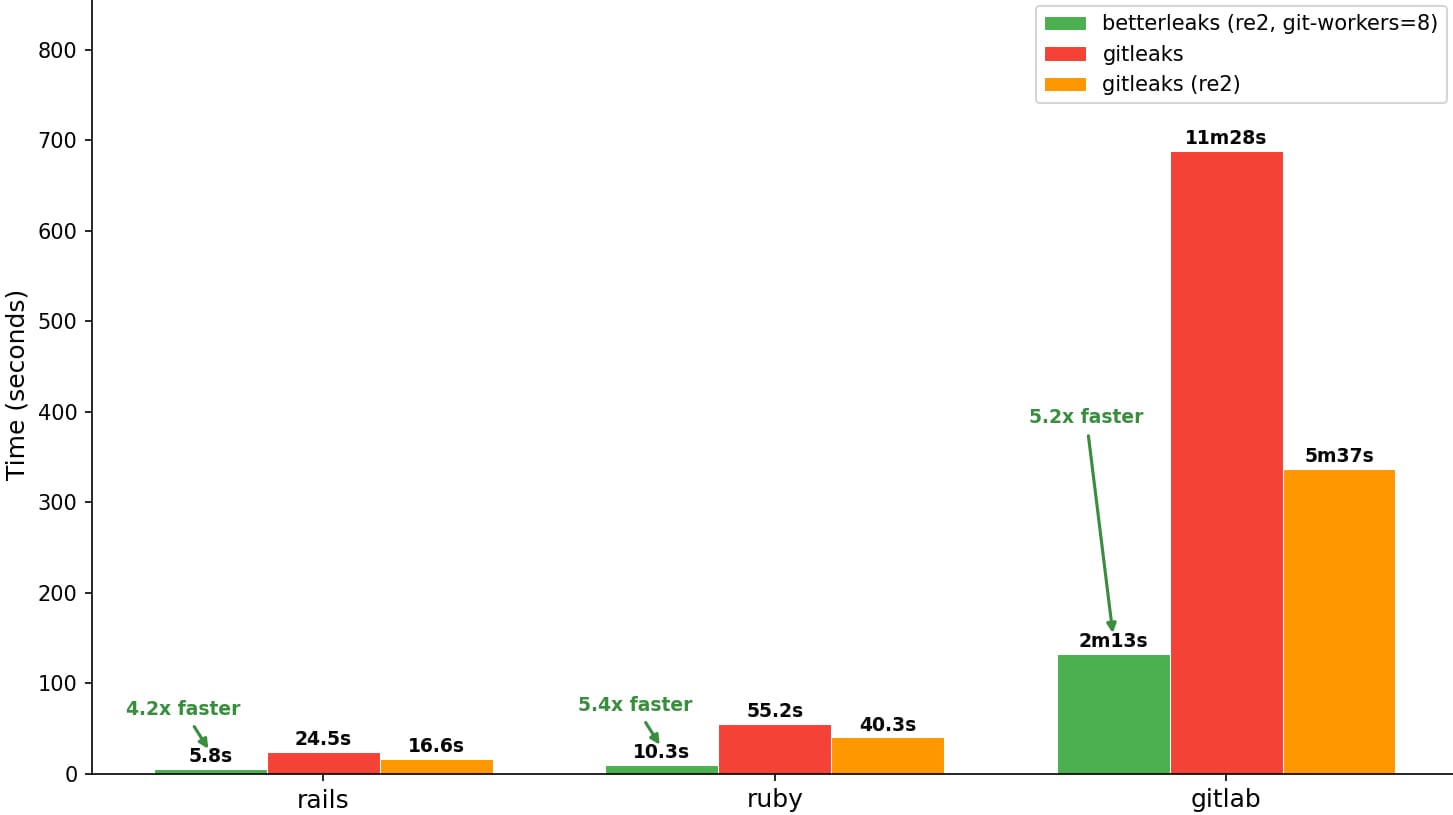
Scanning speed comparison
Source: GitHub

Betterleaks is developed by Zach Rice, Head of Secrets Scanning at Aikido Security, who also authored the popular Gitleaks with 26 million downloads on GitHub and more than 35 million pulls on Docker and GitHub Container Registry (GHCR).

“Betterleaks is the successor to Gitleaks. We’re dropping the “git” and slapping  “better” on it because that’s what it is, better,Rice says.

Betterleaks was created after Rice lost full control over Gitleaks, which he started developing eight years ago. The list of features in the new tool includes:

  • Rule-defined validation using CEL (Common Expression Language)
  • Token Efficiency Scanning based on BPE tokenization rather than entropy, achieving 98.6% recall vs 70.4% with entropy on the CredData dataset
  • Pure Go implementation (no CGO or Hyperscan dependency)
  • Automatic handling of doubly/triply encoded secrets
  • Expanded rule set for more providers
  • Parallelized Git scanning for faster repository analysis

The developer has also revealed additional features planned for the next version of Betterleaks, like support for additional data sources beyond Git repositories and files, LLM-assisted analysis for better secret classification, more detection filters, automatic secret revocation via provider APIs, permissions mapping, and performance optimizations.

Regarding the project’s governance, Rice explains that it uses the open-source MIT license and is maintained by three additional people beyond himself, including contributors from the Royal Bank of Canada, Red Hat, and Amazon.

Rice underlined that Betterleak’s design philosophy combines human-centric use with accommodation for AI agent workflows, including CLI features optimized for automated tools that scan AI-generated code.

Advertisement

Malware is getting smarter. The Red Report 2026 reveals how new threats use math to detect sandboxes and hide in plain sight.

Download our analysis of 1.1 million malicious samples to uncover the top 10 techniques and see if your security stack is blinded.

Source link

Continue Reading

Tech

Unacademy to be acquired by upGrad in share-swap deal as India’s edtech sector consolidates

Published

on

Unacademy, once a one of India’s most valuable edtech startups, is set to be acquired by rival upGrad in an all-stock deal that would bring together two major online learning platforms in the country.

On Sunday, Unacademy co-founder and CEO Gaurav Munjal said in a post on X that the companies had signed a term sheet for upGrad to acquire Unacademy in a 100% share-swap deal, adding that the valuation would not be disclosed until the transaction closes. The announcement comes more than three months after Munjal said that Unacademy’s valuation had dropped below $500 million — down roughly 85% from its pandemic-era peak of $3.5 billion in 2021.

India’s once-booming edtech sector has struggled since pandemic-era lockdowns eased, as students returned to classrooms and demand for online test prep and learning platforms cooled. Companies including Unacademy, which expanded aggressively during the pandemic, have since cut costs, scaled back offline ambitions, and refocused on core digital products.

In a separate post, upGrad co-founder Ronnie Screwvala said Munjal will continue leading Unacademy after the acquisition, adding that the combination would strengthen upGrad’s integrated model spanning K-12 education, upskilling, and lifelong learning. The companies have agreed to an undisclosed break fee if the deal does not close, Screwvala said.

Advertisement

“Unacademy helped invent the modern edtech playbook,” Munjal wrote. “Along the way we lost some focus and market share, and the sector itself has not seen enough real product innovation in recent years.”

Founded in 2015, Unacademy emerged as one of India’s most prominent edtech startups during the pandemic, when lockdowns drove millions of students to online learning platforms. But as demand cooled after classrooms reopened, the company reduced costs, laid off employees, and restructured parts of its business.

Munjal said Unacademy currently holds more than $100 million in cash reserves after spending the past year consolidating company-operated offline centers with franchise partners and refocusing on its core online learning products. The company also completed an employee stock buyback worth ₹500 million (about $5.40 million), with roughly 40% of former employees participating, he said.

Techcrunch event

Advertisement

San Francisco, CA
|
October 13-15, 2026

Unacademy has raised about $854.3 million across 13 funding rounds, according to PitchBook, and counts investors including SoftBank, Tiger Global, General Atlantic, and Peak XV Partners among its backers.

Advertisement

The upheaval has reshaped the competitive landscape of India’s edtech sector. Byju’s, once the country’s most valuable startup, has seen its valuation written down to effectively zero and entered insolvency proceedings in September 2024.

Meanwhile, rival Physics Wallah, once seen as an underdog in the sector, has turned profitable and continued expanding. The company made a strong debut in the public markets late last year.

In recent months, Munjal has devoted increasing attention to Airlearn, an AI-first language-learning app that imitates the gamified approach popularized by Duolingo. The shift has created friction with some Unacademy investors, who felt the core edtech business was being left adrift during a difficult phase, people familiar with the matter told TechCrunch.

Still, Munjal said Airlearn is gaining traction in markets including the United States, the United Kingdom, Germany, and Canada, and argued that artificial intelligence could unlock a new wave of innovation in education technology.

Advertisement

Source link

Continue Reading

Tech

Disassembling Opcodes With A Font

Published

on

Those who stay into the forbidden realm of font rendering quickly learn how convoluted and arcane it can be – LaTeX is a fully Turing-complete programming language, Unicode has over eighty invisible characters, and there are libraries that let you execute WebAssembly in a font. A great example of a font’s hidden capabilities is Z80 Sans, a font that disassembles Z80 opcodes to assembly mnemonics.


If one pastes Z80 opcodes into a word processor and changes their font to Z80 Sans, the codes are rendered as their assembly mnemonics. The font manages this by abusing the Glyph Substitution Table and Glyph Positioning Table, two components of the OpenType standard. Fonts define relations between characters (internal representations used by the computer, such as ASCII and Unicode) and glyphs (the graphics actually displayed).

In some cases, though, the way a character is displayed depends on where it appears in a word, or what appears around it (Arabic characters are a common example, but an example from English is the ligature “æ”). Z80 Sans defines all the possible glyphs for each nibble of the opcodes, then used a recursive descent parser to generate substitution rules which display the correct glyphs in context.

Advertisement

For a deeper dive into the pitfalls of text graphics, check out this font rendering engine written for a hobby OS. You can also use fonts to play games or talk to an LLM.

Source link

Advertisement
Continue Reading

Tech

New Freenet Network Launches, Along With ‘River’ Group Chat

Published

on

Wikipedia describes Freenet as “a peer-to-peer platform for censorship-resistant, anonymous communication,” released in the year 2000. “Both Freenet and some of its associated tools were originally designed by Ian Clarke,” Wikipedia adds. (And in 2000 Clarke answered questions from Slashdot’s readers…)

And now Ian Clarke (aka Sanity — Slashdot reader #1,431) returns to share this announcement:

Freenet’s new generation peer-to-peer network is now operational, along with the first application built on the network: a decentralized group chat system called River.

The new version is a complete redesign of the original project, focusing on real-time decentralized applications rather than static content distribution. Applications run as WebAssembly-based contracts across a small-world peer network, allowing software to operate directly on the network without centralized infrastructure.

Advertisement

An introductory video demonstrating the system is available on YouTube.
“While the original Freenet was like a decentralized hard drive, the new Freenet is like a full decentralized computer,” Clarke wrote in 2023, “allowing the creation of entirely decentralized services like messaging, group chat, search, social networking, among others… designed for efficiency, flexibility, and transparency to the end user.”

“Freenet 2023 can be used seamlessly through your web browser, providing an experience that feels just like using the traditional web,”

Source link

Advertisement
Continue Reading

Tech

I’ve been using Mac for decades – here are 5 new features in macOS Tahoe that I can’t live without

Published

on

Everyone remembers their first Mac. For me, it was a 2007 iMac (oh, how I miss the 24-inch model), and everything about macOS felt unique (and this was OS X Leopard, if memory serves).

Much has changed since then, of course. Continuity, Apple Silicon, iPhone mirroring, and more have all come to the platform in recent years, but macOS Tahoe feels like a sizeable update even alongside those predecessors, and now I’ve been using the operating system for a few months now, here are my favorite new features.

Source link

Advertisement
Continue Reading

Tech

A Smart Printer Enclosure For The Open Source World

Published

on

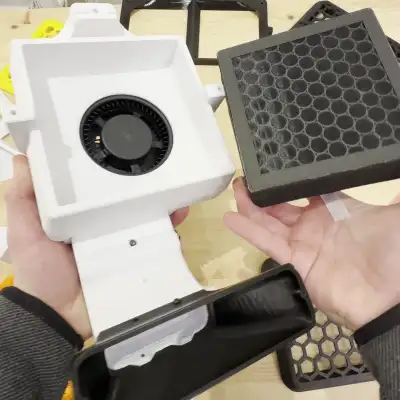
3D printing has had its time to spread its wings into the everyday home, yet many of those homes lack the proper ventilation to prevent the toxic VOCs from escaping. Because of this, [Clura] has put together an entire open-sourced smart enclosure for most open concept printers.

While certain 3D printers or filament choices lend themselves to being worse than others, any type of plastic particles floating around shouldn’t find their way into your lungs. The [Clura] enclosure design includes HEPA and carbon filters in an attempt to remove this material from the air. Of course, there’s always the choice to have a tent around your printer, but this won’t actually remove any VOCs and air located inside a simple enclosure will inevitably escape.

What makes this enclosure different from other, either commercial or open-source designs, is the documentation included with the project. There are kits available for purchase, which you may want for the custom PCB boards for smart features such as filament weighing or fume detection. Even still, if you don’t want to purchase these custom boards the Gerber files are available on their GitHub page.

Advertisement

As smart as this enclosure is, it still won’t fix the issues of what happens to the toxins in your print after it’s done printing. If you are interested in this big picture question, you are not alone. Make sure to stay educated and help others learn by checking out this article here about plastic in our oceans.

Source link

Advertisement
Continue Reading

Tech

Europe’s top 10 funding rounds this week (9 -15 March)

Published

on

From a record-breaking AI seed in Paris to Croatian drones and Lithuanian food tech, Europe’s startup ecosystem had a busy week.

The week of 9-15 March was, by any measure, an exceptional one for European venture capital. Two deals alone, one in London, one in Paris,accounted for nearly three billion dollars.

But beyond the headline figures, what the week really illustrated was the texture of where European investor confidence now sits: AI infrastructure, cybersecurity, health tech, defence, and cross-border commerce all secured meaningful rounds.

The geography stretched from Vilnius to Zagreb to the Swiss Alps. The themes, however, felt unmistakably of this moment.

Advertisement

The 💜 of EU tech

The latest rumblings from the EU tech scene, a story from our wise ol’ founder Boris, and some questionable AI art. It’s free, every week, in your inbox. Sign up now!

Here are the ten most significant funding rounds in Europe this week.


1. Nscale – €1.7 billion Series C  |  London, UK

Start with the number: €1.7 billion, or $2 billion. That is not just the largest European funding round of the week, it is, according to the company itself, the largest equity round ever raised by a European startup.

Advertisement

The investor list alone communicates the scale of ambition: Nvidia, Citadel, Dell, Nokia, Jane Street, and Point72, alongside lead backers Aker ASA and 8090 Industries.

Founded in 2024, a year ago, to underscore how fast this has moved, Nscale builds vertically integrated AI infrastructure, from GPU compute and networking to data services and orchestration software.

The Series C values the company at $14.6 billion, a more than fourfold jump from the $3.1 billion valuation it achieved at its Series B in September 2025. That September round was itself described as record-breaking.

This round follows a €1.1 billion debt facility Nscale signed in February. The company is building at a speed that has few precedents in the European tech ecosystem.

Advertisement

2. AMI Labs – $1.03 billion seed  |  Paris, France

The largest seed round ever raised by a European company, and quite possibly anywhere. Advanced Machine Intelligence, AMI, pronounced the French word for “friend”, announced its $1.03 billion raise on 10 March, just four months after it was founded.

The company is chaired by Yann LeCun, the Turing Award-winning computer scientist who spent 12 years at Meta before departing in November 2025 to build something he believes the wider AI industry is unwilling to build.

The founding team includes former Meta AI researchers Saining Xie, Pascale Fung, and Michael Rabbat. Strategic investors include Nvidia, Samsung, Toyota Ventures, Jeff Bezos, and former Google CEO Eric Schmidt. 

AMI has no product and no revenue. LeCun said the first year will be devoted entirely to research. That investors handed over a billion dollars on those terms reflects both the credibility of the team and the sheer amount of capital now looking for the next paradigm shift in AI.

Advertisement

3. Isembard – £37.5 million Series A  |  London, UK

Less than a year after its seed round, London-based Isembard raised £37.5 million ($50 million) to expand its network of AI-powered factories focused on high-precision manufacturing for the aerospace and defence sectors.

The round was led by Union Square Ventures, with participation from Tamarack Global, IQ Capital, Notion Capital, and CIV. Angel investors included Deel founder Alex Bouaziz and former Wise CFO Matt Briers.

Isembard’s model is unusual in the manufacturing space: it owns and operates its own facilities and also runs a network of franchise-operated sites built around MasonOS, its proprietary agentic operating system for factory management.

4. Waiv – $33 million  |  Paris, France

Waiv is a spinout from Owkin, the French-American biotech company, launched as an independent entity this week alongside a $33 million funding round.

Advertisement

The company, previously operating as Owkin Dx, develops AI-powered precision testing tools for oncology: analysing routine pathology slides and multimodal patient data to identify biomarkers and predict treatment response.

What distinguishes Waiv from the broader AI health cluster is its focus on making tests that already exist in the clinical workflow,  routine slide analysis, dramatically more informative. Its products include RlapsRisk BC (breast cancer relapse prediction), MSIntuit, and BRCAura.

The company has existing partnerships with pharmaceutical groups and counts leading hospital systems among its customers. Spinning out as an independent entity is intended to accelerate commercial development without the constraints of a parent company’s strategic priorities.

5. Qevlar AI – $30 million Series A  |  Paris, France

Security operations centres face a problem that is, by now, well understood: too many alerts, too few analysts, too much time per investigation.

Advertisement

The average alert at a major enterprise takes between 32 and 61 minutes to investigate manually. Qevlar AI claims its platform does it in under three minutes. On 10 March, investors decided that was worth $30 million.

The Paris-based startup, founded in 2022 by Ahmed Achchak, has built an agentic AI platform that connects to existing security tooling (SIEM, EDR, CTI) and automates the full investigation workflow at Tier-2 and Tier-3 depth. Rather than simply triaging alerts, the system builds a graph-based understanding of the attack surface. 

The round was co-led by Partech and Forgepoint Capital International, with EQT Ventures also participating. Forgepoint had led the company’s previous $14 million raise, a show of continued conviction.

The new capital will fund geographic expansion into EMEA and Asia-Pacific, and product development toward predictive threat hunting.

Advertisement

 6. Saltz – €20 million Series A  |  Vilnius, Lithuania

The food distribution sector in Europe is fragmented, largely offline, and resistant to modernisation. Saltz, founded in 2022 by Andrius Šlimas, Tomas Šlimas, and Reinis Štrodahs, veterans of Oberlo and Shopify, is attempting to do for professional kitchens what those platforms did for e-commerce merchants. It secured €20 million in Series A funding on 9 March.

The platform connects restaurants and professional kitchens with food suppliers, aggregating catalogues, orders, payments, and logistics into a single interface. It operates in roughly 20 countries, with clients including Hilton, Marriott International, and independent restaurant operators. 

The company plans to hire more than 100 people by the end of 2026 across engineering, product, sales, and operations. It is targeting fresh and frozen food products, specifically meat and seafood,  where supply chains are most complex and margins for improvement are largest.

 7. Outpost – $17.5 million Series A  |  London, UK

Cross-border selling has always been theoretically appealing and practically complicated: VAT registrations, payment infrastructure that does not travel, and tax liability in jurisdictions a merchant has never visited.

Advertisement

Outpost, a London-based platform built by former Revolut executives, raised $17.5 million on 10 March to solve those problems at the infrastructure layer.

The round was led by Ribbit Capital, the venture firm behind Revolut, Coinbase, and Stripe. Outpost’s platform handles payments and tax compliance for merchants selling internationally, creating local legal entities and payment rails in the markets they enter so the merchant carries no direct liability. 

The context matters here: 2026’s trade tariff environment has made cross-border commerce simultaneously more attractive and more legally treacherous. Outpost is building for exactly that tension. 

8. Orqa – €12.7 million Series A  |  Osijek, Croatia

Croatian drone maker Orqa has been building first-person-view drone systems since 2018, first for the enthusiast market, increasingly for defence.

Advertisement

On 10 March, it raised €12.7 million in a Series A led by Expeditions, the early-stage investor focused on European security, with Lightspeed Venture Partners, Taiwania Capital, Aymo, and Radius Capital also participating.

What distinguishes Orqa in an increasingly crowded drone landscape is its level of vertical integration: it designs and manufactures its own flight controllers, radios, motors, cameras, and printed circuit boards, with no Chinese-made components. Its facility in Osijek currently produces up to 280,000 NDAA-compliant drones annually. 

The Pentagon’s Drone Dominance Programme is planning to procure up to 300,000 small attack drones by 2027. Orqa’s CEO Srdjan Kovacevic has made clear that the company is positioning itself to compete for those contracts.

9. Seprify – €13.4 million Series A  |  Fribourg, Switzerland

Seprify develops high-performance cellulose-based ingredients for industrial applications, targeting markets where synthetic materials face regulatory pressure or sustainability scrutiny.

Advertisement

Its €13.4 million Series A, which closed this week, counts Inter IKEA Group among its backers,  a notable strategic investor for a materials company working on sustainable alternatives to petroleum-derived inputs.

The Swiss deep-tech sector has been producing a steady stream of university spinouts in materials science, and Seprify fits that pattern: founded with roots in academic research, now moving toward commercial scale. The round will fund production capacity expansion and customer development.

10. Lemrock – €6 million seed  |  Paris, France

If Nscale and AMI represent the week’s largest bets, Lemrock represents one of its most interesting ones. The Paris-based startup, founded in 2025, is building infrastructure that allows brands to sell directly within conversational AI environments, ChatGPT, Claude, Perplexity and their equivalents.

On 11 March, it announced a €6 million seed round led by Galion.exe, with Criteo founder Jean-Baptiste Rudelle joining the board.

Advertisement

 The company already works with more than 60 brands across Europe and the United States, including Maisons du Monde, Cdiscount, and Engie, and processes over 100 million interactions monthly.

The round is small relative to the others on this list. But the question Lemrock is answering, what happens to commerce when AI agents become the primary product-discovery interface, is large, and it has barely been asked yet.

Source link

Advertisement
Continue Reading

Trending

Copyright © 2025