Tech
PS Audio PMG S400 and S200 Bring Signature Amplification Into a Single Chassis

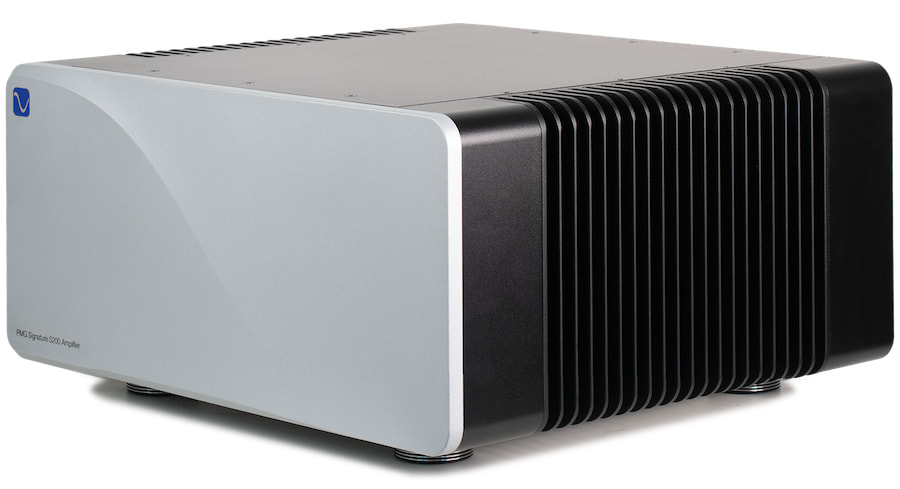
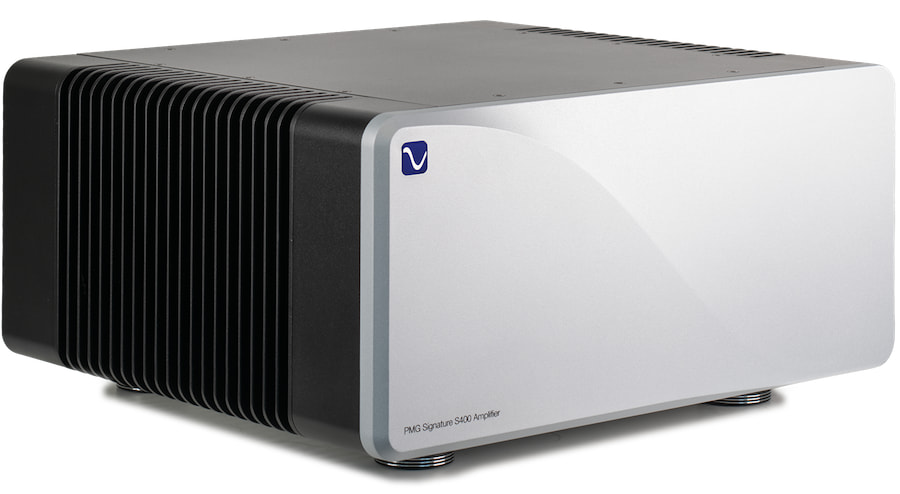
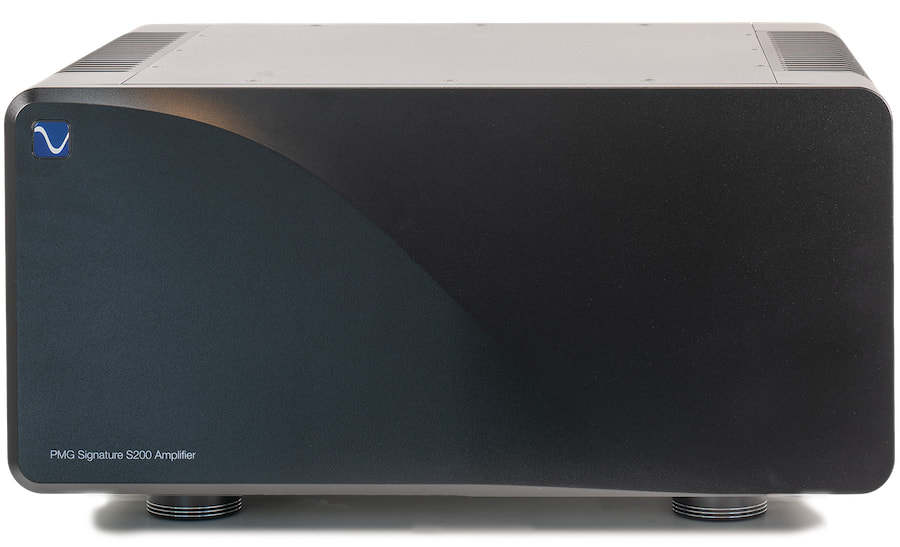
PS Audio is now shipping its PMG Signature S200 and S400 stereo power amplifiers, priced at $7,999 and $9,999 respectively. Both are hand assembled in Boulder, Colorado, available in black or silver, and designed to bring the company’s latest Signature amplifier platform into a single chassis.
The S400 delivers 200 watts per channel into 8 ohms and 400 watts into 4 ohms, while the S200 offers 100 watts into 8 ohms and 200 watts into 4 ohms. The more powerful amplifier provides 5 watts of Class A bias per channel, but the less expensive S200 doubles that to 10 watts.
Yes, the less expensive and lower powered amplifier offers twice the Class A operating window. That requires some explanation, because audiophile product hierarchies occasionally resemble family trees drawn during a power outage. The S200 remains in Class A for its first 10 watts per channel, while the S400 transitions after 5 watts in exchange for twice the maximum output. And because summer 2026 was apparently not hot enough already, the S200 consumes roughly 180 watts at idle before you play a single note.
One Architecture, Two Different Priorities

Both amplifiers were designed by Darren Myers and engineered by Bob Stadtherr around the same basic PMG Signature topology used in the company’s M400 and M800 monoblocks.
PS Audio says the output stages use very low overall negative feedback, with bandwidth extending beyond 500kHz and slew rates greater than 200 volts per microsecond. Typical total harmonic distortion is rated below 0.002 percent from 20Hz to 20kHz at 1 watt into 8 ohms.
An amplifier does not need to reproduce a 500kHz musical note, unless the local bats have taken over the listening room. Wide bandwidth and high slew rate are instead intended to help the circuit respond quickly to transients while maintaining phase performance well beyond the audible range.
Both models also use an active power supply architecture rather than relying only on the passive transformer, rectifier and capacitor arrangement found in many conventional amplifiers.
PS Audio claims the active supply can hold its output more consistently as current demand changes, reducing the extent to which one stereo channel affects the other during demanding musical passages. That matters because the two channels share a chassis and power supply, unlike the M400 and M800 monoblocks, where each channel enjoys its own very expensive apartment.
The S400 places two 200 watt Signature channels into one enclosure. The S200 reduces maximum output but provides twice the Class A operating range and is intended for smaller rooms, more efficient loudspeakers and listeners who do not routinely recreate Motörhead concerts at home.

How Much Class A Do You Need?
The S400 operates in Class A for its first 5 watts per channel, before transitioning into Class A/B operation. The S200 remains in Class A for its first 10 watts per channel.
That distinction may matter more than the power ratings suggest.
Most domestic listening uses considerably less amplifier power than people imagine, particularly with efficient loudspeakers and moderate listening distances. A 10 watt Class A window could therefore cover a meaningful portion of normal listening with the S200, while the S400 trades some of that operating range for greater output and current capability.
Neither amplifier is a pure Class A design at full power, and nobody should describe it that way. Both are high bias Class A/B amplifiers engineered to remain in Class A during lower output operation.
That also explains the idle power consumption. The S200 consumes approximately 180 watts at idle, while the S400 draws around 190 watts. These are not amplifiers one leaves running all week because the dog appreciates a warmer den.

PMG S400 & S200 Specifications
| PMG S400 | PMG S200 | |
|---|---|---|
| Price | $9,999 | $7,999 |
| Power into 8 ohms | 200W per channel | 100W per channel |
| Power into 4 ohms | 400W per channel | 200W per channel |
| Class A bias | 5W per channel | 10W per channel |
| Frequency response | Below 10Hz to 80kHz | Below 10Hz to 80kHz |
| Bandwidth | Greater than 500kHz | Greater than 500kHz |
| Slew rate | Greater than 200V/µs | Greater than 200V/µs |
| Typical THD | Below 0.002% | Below 0.002% |
| Damping factor | Greater than 240 | Greater than 240 |
| Weight | 57.2 pounds | 56.2 pounds |
| Dimensions | 17.5 x 16.75 x 8.75 inches | 17.5 x 16.75 x 8.75 inches |
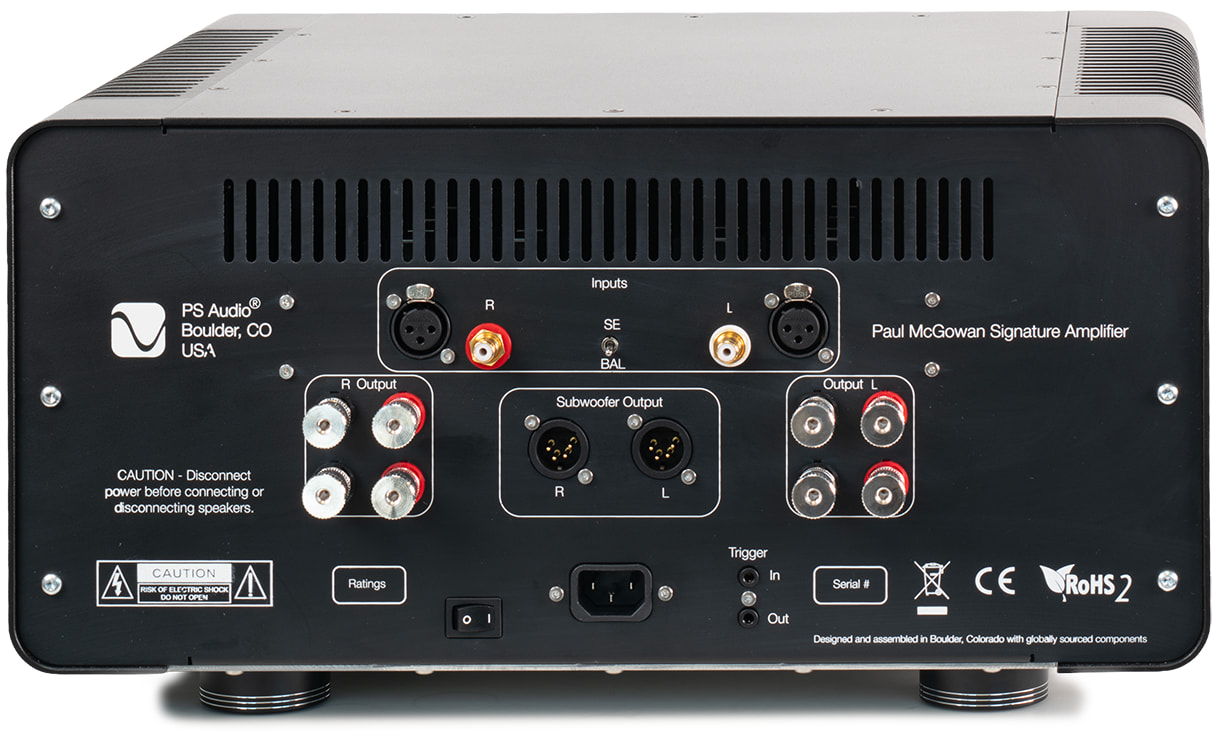
Each amplifier includes balanced XLR and single ended RCA inputs, two sets of silver plated binding posts per channel for biwiring, and 12 volt trigger input and output connections. Input sensitivity is 2 volts for the S400 and 1.4 volts for the S200, with both providing 26.2dB of gain.
Stereo Versus Monoblocks
The S400 is particularly interesting because it carries the same headline output rating as a $17,998 pair of PMG M400 monoblocks.
Both deliver 200 watts into 8 ohms and 400 watts into 4 ohms, but the M400 provides 30 watts of Class A bias, complete power supply separation and one chassis per channel. The S400 drops the Class A allocation to 5 watts and places both channels in one enclosure, saving almost $8,000 and one shelf sturdy enough to support a small Buick.
The flagship M800 monoblocks remain in another financial district at $29,998 per pair, delivering 400 watts into 8 ohms, 800 watts into 4 ohms and 50 watts of Class A bias.
The stereo models are therefore not replacements for the monoblocks. They are the rational part of a product family that still leaves room for the gloriously irrational. Or people who actually want enough money leftover to actually buy crazy things like food, clothing, and pay for college tuition.
Who Are They For?
The PMG S200 makes the most sense for listeners using efficient or moderately demanding standmount and floorstanding loudspeakers in small to medium sized rooms. Its larger Class A window may also appeal to listeners who prioritize low level listening, acoustic music, vocals and smaller ensembles over maximum output.
The PMG S400 is the better option for lower sensitivity loudspeakers, larger rooms and listeners who need greater dynamic headroom but cannot justify nearly $18,000 for the M400 monoblocks. Which is like 99% of the population.
Both models should also work in high performance home theater systems where a dedicated stereo amplifier is used for the front channels. Trigger connections make integration easier, although placing a 57 pound furnace inside a sealed equipment cabinet remains a splendid way to meet your installer again and possibly your local fire department.
Have you people not gone outside this summer?
Who Should Avoid Them?
Listeners using very efficient loudspeakers may not need this much amplifier, while owners of extremely difficult low impedance designs should confirm compatibility with PS Audio or an authorized dealer before purchasing.
Anyone expecting cool running Class D efficiency should also look elsewhere. The S200 and S400 consume substantial power at idle and require adequate ventilation.
PS Audio currently includes a 60-day in home trial for both models, with return shipping covered when purchased directly. That is useful because amplifier matching remains highly system dependent, and no specification can tell you whether ten watts of Class A will make your loudspeakers sing or merely warm the room more elegantly.
The Competition
At these prices, the PMG amplifiers are entering a crowded room where nobody arrived carrying a small transformer.

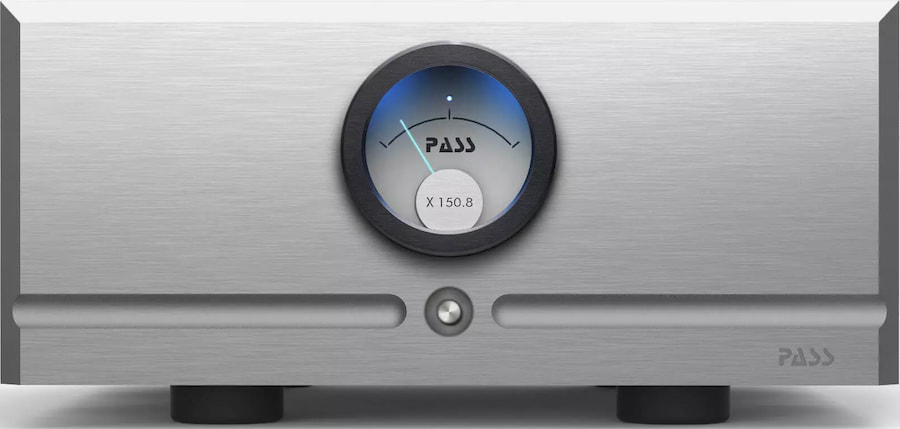
The $7,865 Pass Labs X150.8 is the most obvious rival to the S200. It delivers 150 watts per channel into 8 ohms, uses a heavily biased Class AB design and consumes 370 watts while sitting idle. Anyone attracted to the S200’s extended Class A operation will almost certainly have the Pass Labs on the same audition list, although the air conditioner may request its own dedicated circuit.
The $7,000 Parasound JC5 offers 400 watts into 8 ohms, 600 watts into 4 ohms and 12 watts of Class A operation. On paper, that makes it an uncomfortable competitor for both PS Audio models because it delivers considerably more power for less money. Specifications do not determine how an amplifier sounds, but they remain remarkably persuasive when the difference could also purchase a very good preamplifier.
The $9,499 Michi S5 turns the power contest into performance art with 500 watts per channel into 8 ohms and more than 800 watts into 4 ohms. It is larger, heavier and less focused on Class A operation, but listeners driving inefficient planar, electrostatic or large floorstanding loudspeakers will notice that it offers enormous reserves for substantially less than the S400.
McIntosh buyers will also consider the $8,500 MC312, which delivers 300 watts per channel into 2, 4 or 8 ohms through the company’s Autoformer outputs. It brings the blue meters, strong resale value and sufficient mass to alter local tides, although its design philosophy is very different from PS Audio’s wide bandwidth, low feedback approach.
The S200 and S400 therefore do not win the specification contest on power per dollar. Their case rests on the PMG circuit architecture, active power supplies, domestic construction and PS Audio’s 60 day home trial. At $8,000 to $10,000, “trust us” is not an audition strategy.

The Bottom Line
The PS Audio PMG S200 and S400 make the company’s newest amplifier architecture considerably more accessible without pretending that $7,999 is pocket change.
The S400 offers the same rated output as the M400 monoblocks for thousands less, while the S200 sacrifices maximum power in exchange for a larger Class A operating window and a lower price.
Neither model is inexpensive, lightweight or particularly concerned about your electric bill. But both bring legitimate engineering differences to the PMG lineup and give listeners a reason to consider the stereo models beyond the obvious advantage of buying one amplifier instead of two.
Sometimes sharing an apartment works. Especially when the power supply has been taught not to leave its dishes in the sink.
For more information: psaudio.com
You must be logged in to post a comment Login