Tech
Public Transit for Wild Mice Sends Coop Invaders Down a 250-Foot Homemade Gondola

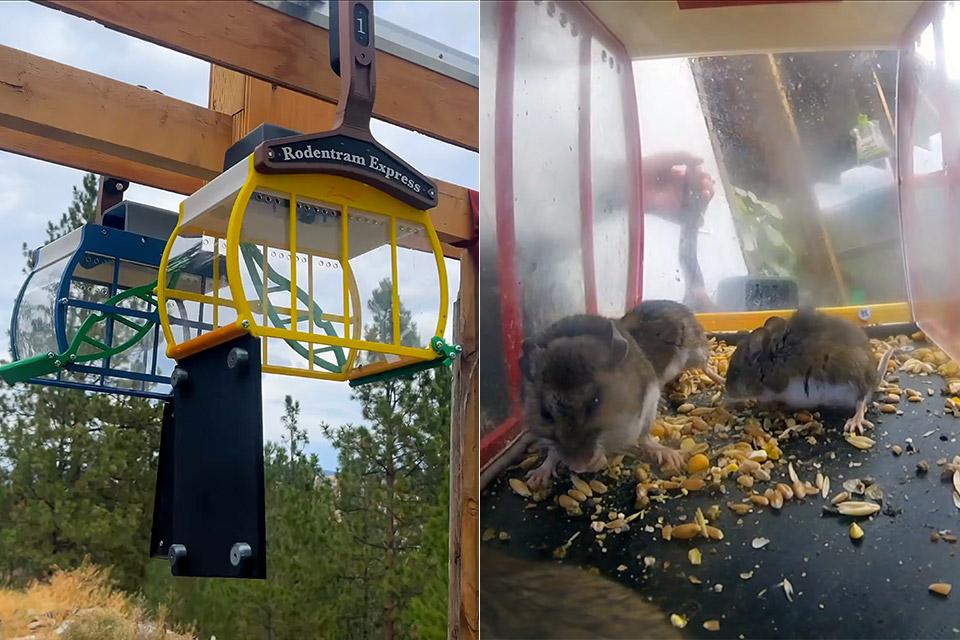
Super Valid Designs spent two months on a ski lift because mice had moved into the chicken coop and ordinary traps only opened a revolving door. Catch one batch and another arrives. Live relocation felt like a better bet than a pile of snap traps, so the plan became a pair of jobs in one machine: baited gondolas that work as traps, then a cable line that carries those cars 250 feet down a hill and dumps the passengers into brush without anyone walking the route every night.


Mice travel to the vehicles using a gravity feeder that drops them from the coop ceiling. Each automobile is 3D printed and contains a portion of clear acrylic for display. The bottom door is smartly constructed to open by itself, eliminating the need for any electronics to interfere. When a car reaches the bottom station, the floor collapses beneath them, and our little critters land on a mound of brush. The entire thing is popularly referred to as the Rodent Tram Express; whether you interpret this as a show of kindness or a sardonic joke about a peanut-butter-fueled ride to freedom is totally up to you.


Bambu Lab A1 3D Printer, Ready-to-Use FDM 3D Printer for Beginners and Kids
- High-Speed Precision: Experience unparalleled speed and precision with the Bambu Lab A1 3D Printer. With an impressive acceleration of 10,000 mm/s…
- Multi-Color Printing with AMS lite: Unlock your creativity with vibrant and multi-colored 3D prints. The Bambu Lab A1 3D printers make multi-color…
- Full-Auto Calibration: Say goodbye to manual calibration hassles. The A1 3D printer takes care of all the calibration processes automatically…
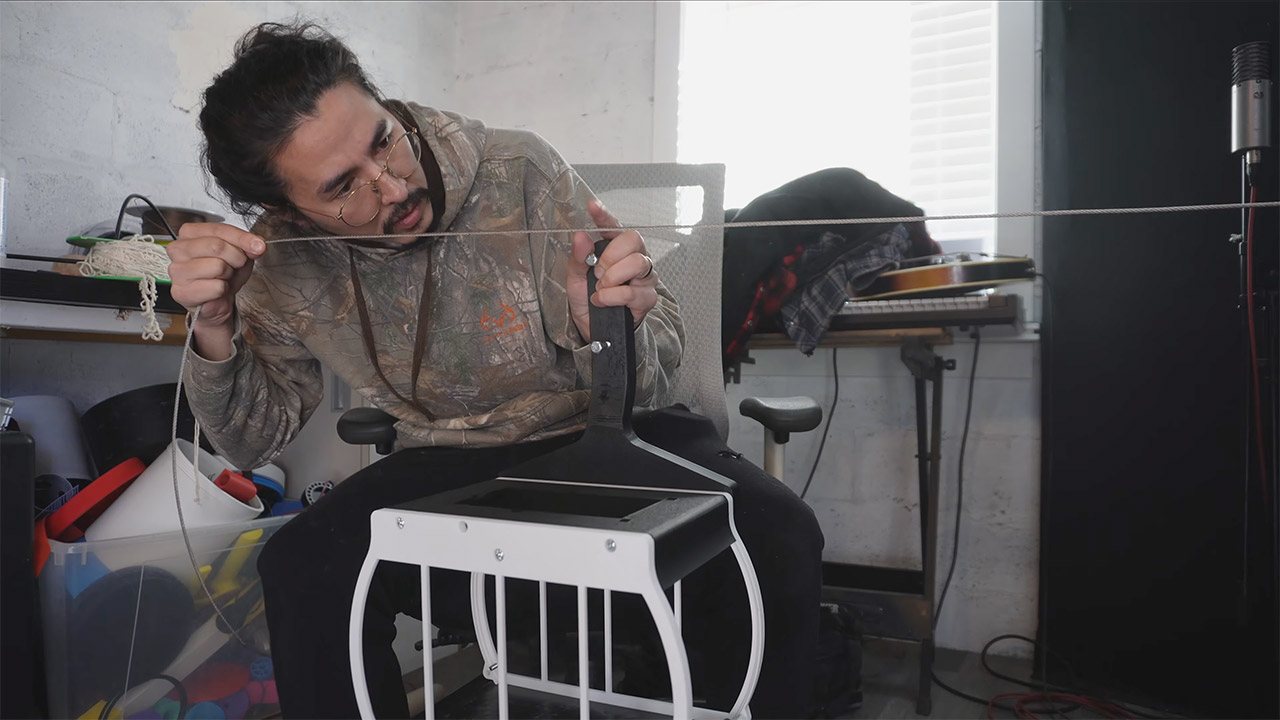
A lot of man-hours went into laying the cable work; over 500 feet of it cost around $100 and resulted in a loop that was only about 250 feet long. He utilized old bike rims for the pulley wheels, covered them in some old tire rubber to give the cable some grip, and then had to get a windshield wiper motor from an old family car to make it work. After the rope sagged slightly and the cars began to get trapped on the support rods, the towers were installed. After that, it was basically a lot of framework made from whatever scraps he had lying around and measuring? Measuring stayed optional. “Measure twice, cut once, or don’t measure at all” was the working rule, with the cars themselves getting the careful design time the lift never received.

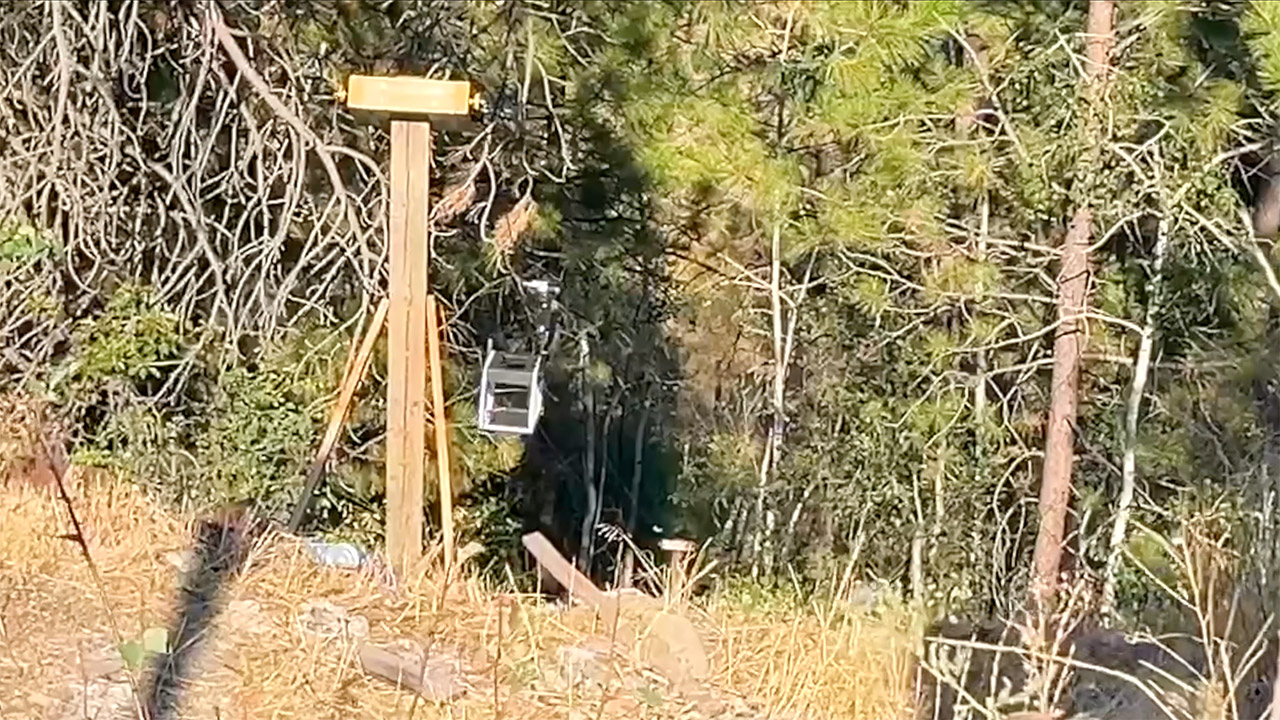
Testing was a pain in the neck, literally, because he had to hike the hill several times until all the kinks were worked out. Cars would snag on objects, the acrylic windows messed up the cable, and we even had a tower shift on us. If that wasn’t enough, he had to cope with heat and wildfire smoke, which turned our treks into a second project, as well as a host of ticks that appeared in the brush we needed to remove for the cable. He started by running two cars at once, just in case a full load of cars pulled the cable straight off the pulley wheels, but after a few runs, he eventually got everything in order and the loop held together.
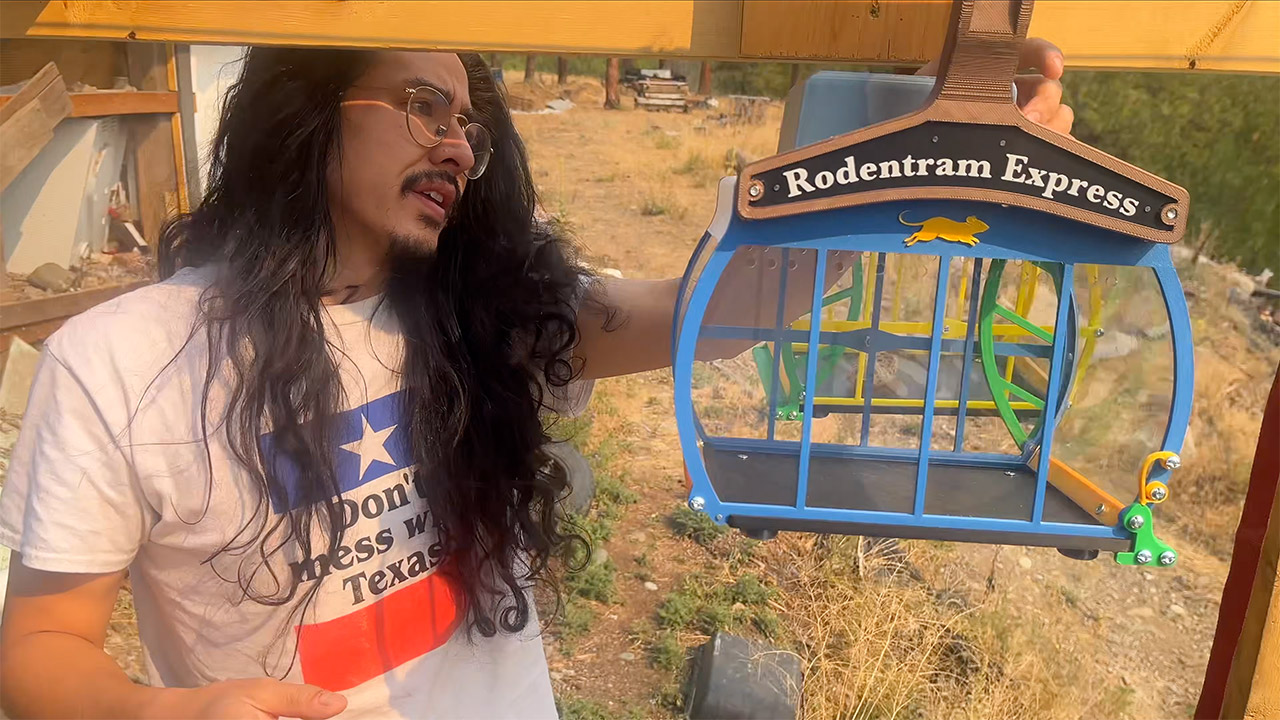
To be honest, findings are a little hard to come by, since he only managed to get a few visits in with video evidence by the time he posted it all online. Whether 250 feet is truly far enough is debatable; many people pointed out that mice have a nasty habit of simply walking home after a while, and 1/4 mile is probably about right for a commute rather than exile. Super Valid Designs is considering the lift as a temporary fix, and he isn’t thinking of it as a silver bullet answer just yet. Keeping the feed sealed and holes plugged remains the top priority; the Rodentram Express is more of a nice-to-have than a must-have, but hey, we now have a station in the coop and a line on the hill, and a few mice have had the dubious pleasure of taking public transportation without asking.
[Source]
You must be logged in to post a comment Login