Tech
Pull Once and Watch a Ukulele Transform Into a Real Guitar

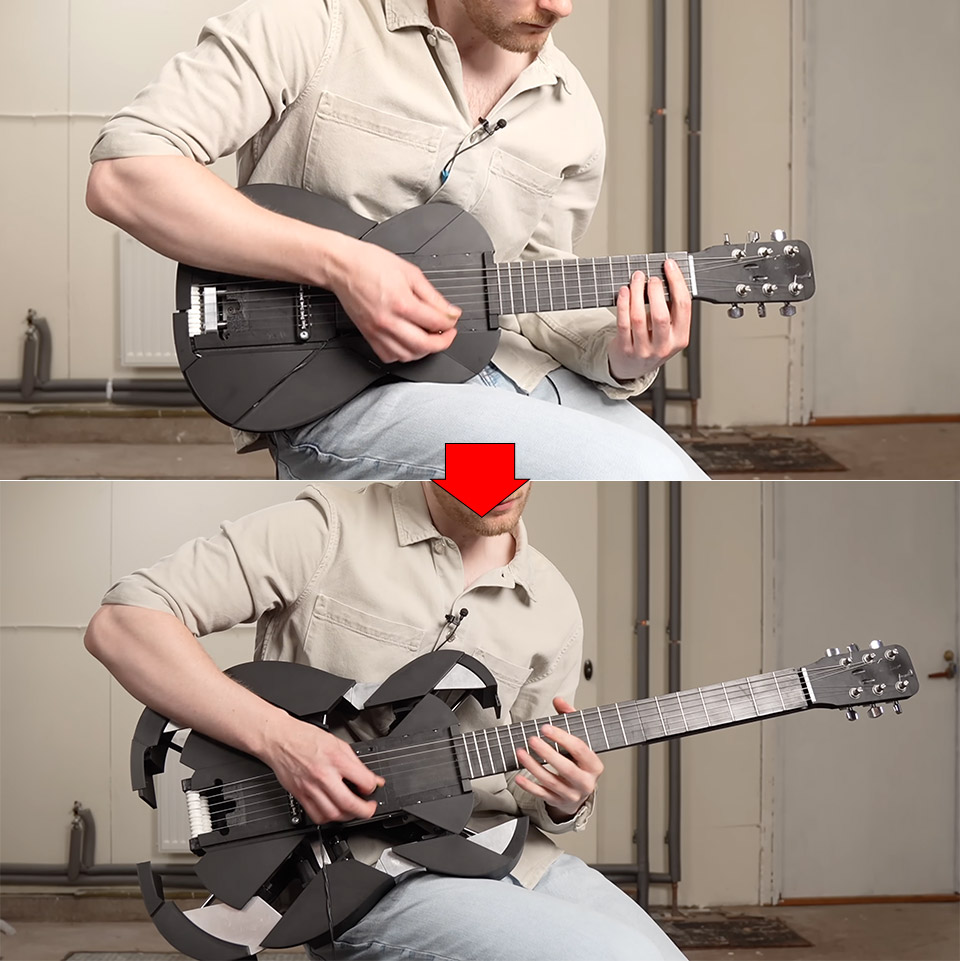
Swedish maker Mattias Krantz has spent years turning ordinary instruments into strange new ones. His latest project starts as a compact electric ukulele that fits in a backpack. One firm pull on the neck and the whole thing stretches, expands, and becomes a full-size guitar while the music is still going.


Krantz set out to address what he saw as the ukulele’s most serious shortcoming. People could easily pick it up and carry it around, yet despite its portability, it remained a curiosity. His response was straightforward: create one that can transform into a guitar in the middle of a song, eliminating the need for the musician to stop and pick up another instrument.


LEGO Editions Olivia Rodrigo’s Dual Guitar 43031
- ROCK YOUR CREATIVITY – Embrace the 2 sides of your favorite pop star’s music with the LEGO Editions Olivia Rodrigo’s Dual Guitar…
- SUPERSTAR SYMBOLS – Discover 3D decorations that represent the singer’s career and passions, including a purple butterfly, a love heart, new star…
- OLIVIA RODRIGO MINIFIGURES – Open the electric side of the guitar model to reveal 2 detailed Olivia Rodrigo minifigures, each with their own mini…
The first significant challenge was the neck. Ukuleles don’t have the same length neck as guitars. Early attempts to crumple it up so that it could fold resulted with half of the object hanging out, which was not particularly handy for playing. Krantz preferred that the excess length just disappear when needed, rather than sticking out uncomfortably. He eventually went with a telescopic design. As the neck stretches, the fretboard components rise up and lock into place directly on top of one another. Adam Damato (his coworker on this project) suggested adding a steel rod to ensure that the pieces snap into position when it’s time to play and don’t simply bend in two with the slightest touch. After several failed prototypes, he finally had a neck that felt solid and familiar under his left hand.
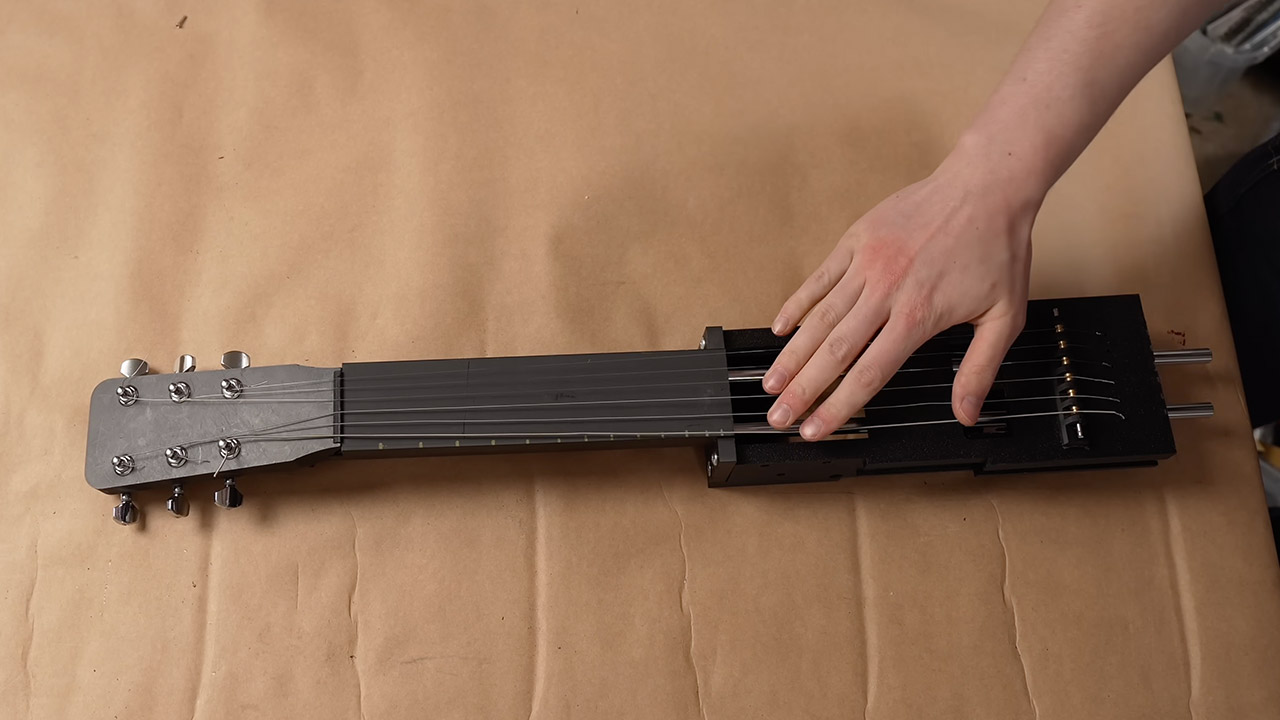
He then had to deal with the strings, which could not be stretched or compressed because they were made of metal. Attaching them when the object is short will retain it in that shape indefinitely. Attach ’em when it’s lengthy, and they’ll simply slink away as the thing collapses. Rubber bands produced a faint, muffled sound. A fishing reel design that allowed extra length to feed out worked in theory, but in fact, the rope stretched or snapped, putting the tune entirely out of sync whenever the size of the object changed. They ended up with strings that were twice as long as normal. They just wrap around some internal rollers when the device lowers, and then pay out well as it extends back up. The tension remains steady, while the tuning is stable.

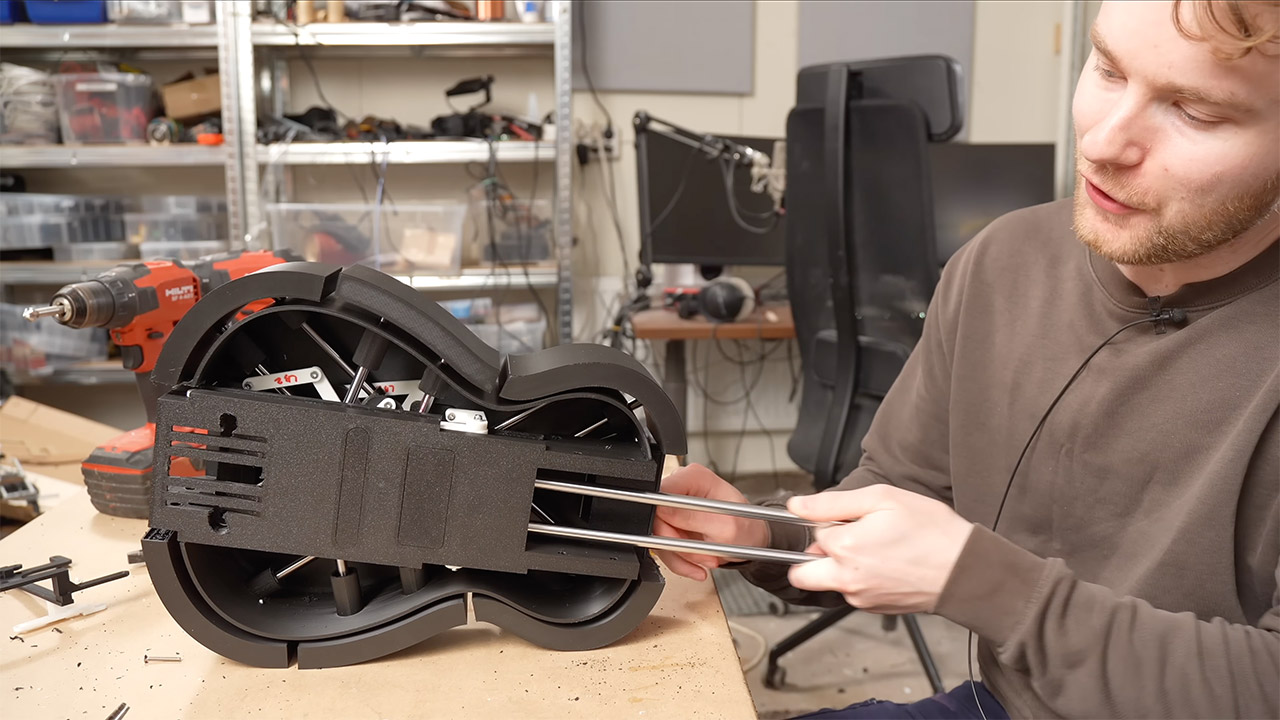
The ukulele body also had to grow up a little, as ukuleles are small, whereas guitars are much larger and have a different shape. It wasn’t just about enlarging the body; different components had to cover many distances and angles at the same time, which was a nightmare. The earlier plastic versions tended to jam. They eventually converted to metal and changed the hub, and six movable panels opened and closed beautifully. They added some decorative plates so that when it grows into a full guitar, it will resemble one.

The finished device is small enough to fit in a backpack, so Krantz would take it out on the street and play it in its compact state. Most people would pass by and handle it as if it were any other ukulele, until he yanks out the neck. The change takes just seconds. Suddenly, the same person who was playing ukulele is rocking out on a full-fledged guitar. A musician even played a few performances with a full band after that, and as soon as the body locks into position, the song continues uninterrupted.
[Source]
You must be logged in to post a comment Login