Tech
Q Acoustics, Goldring and QED Went Quiet in America. Charlie Henderson Explains What Happens Next

A year ago, Armour Home told eCoustics that appointing American Audio & Video as the exclusive North American distributor for Q Acoustics, QED and Goldring would help accelerate growth and increase the visibility of all three brands. It made sense. These were hardly unknown quantities: Q Acoustics had built an enviable reputation for affordable loudspeakers that routinely punched above their price, Goldring had more than a century of analog credibility behind it, and QED had been connecting systems since most of us were still trying to figure out which end of a DIN plug went where.
And then things got strangely quiet.
That observation comes from someone who actually uses the products. I own five pairs of Q Acoustics loudspeakers that rotate through different systems and rooms, and QED cables are part of several of them. Our contributors have reviewed and recommended products from all three brands for years. The issue was never whether Armour Home could build good products. The problem was that while competitors including KEF, ELAC, Klipsch, Monitor Audio, Cambridge Audio, Audio-Technica, Ortofon and Grado kept fighting aggressively for dealer floors, reviews, social feeds and consumer attention, Armour Home’s North American presence became much harder to see.


Charlie Henderson apparently sees the problem as well. The former Cambridge Audio CMO and Naim Audio Managing Director took over Armour Home in May 2026, and when we asked whether Q Acoustics, QED and Goldring currently receive enough dealer support and visibility in the United States, his answer was refreshingly concise: “Not yet.” That matters, because Henderson has not been hired merely to polish three logos and issue press releases about another pair of loudspeakers. Armour wants him to rethink how these brands work together, how they reach consumers and how they move beyond the increasingly small hi-fi bubble. And if younger consumers have never walked into a specialty audio retailer outside of Best Buy, how exactly does Armour Home expect them to hear any of it?
Good products are no longer enough. Armour Home already has those. We wanted to know what comes next.
Related Reviews:
Armour Home Wants an Ecosystem, Not Three Islands
Henderson does not describe his mandate as tearing Armour Home apart and starting over. His word is “evolve,” specifically evolving the brands while defining a clearer mission for where the company goes next.

That mission involves moving “beyond the HiFi bubble into music culture,” with Armour spending more time listening to artists, producers and fans rather than focusing primarily on trade shows and industry meetings. There is a marketing component to that, obviously, but Henderson also sees a structural opportunity that Armour has not fully exploited.
“The link between our three-brand portfolios” is what he considers the company’s largest missed opportunity. Q Acoustics, Goldring and QED have largely existed as recognizable individual brands, but Henderson sees an opportunity for them to share engineering, R&D and creative resources without turning them into variations of the same thing.
By the end of 2027, he wants consumers to see “bolder and more confident design and personality,” greater alignment of technologies across the ranges and much closer engagement with music.
Goldring brings 120 years of analog experience. QED has been designing cables and connectivity products since 1973. Q Acoustics has spent two decades playing the challenger, often delivering loudspeakers that compete rather effectively with more expensive alternatives. Henderson believes technologies can move between those worlds, even suggesting that Armour could explore using Q Acoustics’ Gelcore technology beyond loudspeaker cabinet design and fine tune QED products specifically around its turntable and loudspeaker portfolios.


Q Acoustics Has to Move Beyond Bluetooth
Q Acoustics has done very well with conventional passive loudspeakers, and products like the M40 have demonstrated that there is also a market for compact powered models. But Bluetooth alone is no longer enough if the company intends to compete seriously for consumers who increasingly expect their loudspeakers to connect directly to televisions, streaming services, smartphones and multiroom systems.
We asked Henderson directly whether Q Acoustics needs a fully networked active loudspeaker platform rather than simply another Bluetooth powered speaker.
“We’re watching with interest the ongoing shift to convenience solutions in audio and see a place for both Bluetooth and Wi-Fi solutions,” Henderson said.
That distinction matters. Wi-Fi opens the door to higher resolution streaming, app control, network integration and potentially multiroom playback in ways that Bluetooth alone cannot. It also puts Q Acoustics into a much tougher fight against companies that have spent years developing their connected ecosystems.
Henderson considers HDMI eARC particularly important because of the growing intersection between music and television audio. Room correction, however, is something he views as having more specific use cases rather than being universally essential. What he does consider universal is something the hi-fi industry still manages to screw up with surprising regularity: ease of use and reliability, particularly when an app sits in the middle of the experience.
Armour Home is not announcing its own software platform, nor did Henderson disclose a partnership with WiiM, BluOS, Google or another specific technology provider. He said the company already works with multiple partners across its brands and “regularly evaluate[s] our software strategy to keep up to date with tech developments and innovation.”
Could an Armour Home Amplifier Be Next?
There is another rather obvious hole in the ecosystem.
If Armour Home wants consumers thinking about Q Acoustics, Goldring and QED as pieces of a complete music system, somebody still has to provide the electronics that sit between the source and loudspeakers.
Would Armour consider building its own integrated amplifier or network amplifier?
“Never say never,” Henderson replied, before adding that the current focus remains Q Acoustics’ family of traditional and connected loudspeakers.
Then came the more interesting part.
“I would be lying though if I said I hadn’t been thinking about opportunities.”
An Armour Home network amplifier connected to a Goldring turntable through QED cables and driving Q Acoustics loudspeakers would suddenly make the word “ecosystem” considerably more meaningful.
Q Acoustics Is Not Content Being the Affordable Alternative
There is also a larger positioning question for Q Acoustics.


The company built much of its reputation by embarrassing more expensive loudspeakers. That is a fantastic way to get noticed, but eventually a successful value brand has to decide whether it wants to remain the less expensive alternative forever.
Henderson’s answer to whether Q Acoustics can move further into premium products without abandoning the value proposition was unequivocal: “100%.”
“Our reputation has been built as a challenger to the established speaker brands,” he said. “But built up over 20 years, we are no longer the new kids on the block, no longer teenagers. We have proven our design and acoustic capabilities time and time again, and now have a reputation based on performance not price.”
Q Acoustics does not want its identity permanently defined by being cheaper than KEF, Bowers & Wilkins, Monitor Audio, ELAC or anybody else. The company believes it has accumulated enough engineering credibility to compete on performance first.
Goldring May Have the Largest Room to Grow
If Q Acoustics already has the broadest consumer visibility of Armour Home’s three principal brands, Goldring may offer the greatest opportunity for expansion.

The company is best known for phono cartridges, but the GR3 turntable changed the conversation. We asked Henderson whether it was the beginning of a broader Goldring turntable range.
He did not exactly slam that door shut.
“Goldring is central to our portfolio and mission to move beyond the HiFi bubble into music culture. Vinyl sits at the heart of this. So, more to come…”
Goldring currently spans a substantial cartridge price range, with the E Series beginning at $119 and the Ethos SE reaching $1,999. The GR3 turntable with an E3 cartridge sells for $1,299. Henderson clearly believes the Goldring name has permission to travel beyond cartridges and a single turntable.
When we asked whether that could include phono stages, electronics, record cleaning products or even complete analog systems, Henderson responded that he would “find it hard to think of another brand with more permission.”
The wider Armour family also includes Milty, known for its anti-static gun, cleaning products and Exstatic record sleeves. Put those pieces together and the analog ecosystem begins to look considerably more developed than it first appears.
Goldring at 120 Is Not Just About Looking Back
Goldring’s 120th anniversary creates another opportunity, and Henderson strongly suggested that whatever Armour has planned will be about more than putting a commemorative badge on an existing product.

“Whatever we reveal in due course will reflect this and will underpin the importance of Goldring not just in the Armour Home family, but for the audio community as a whole, as well as informing the direction of Goldring for the next chapter of its history.”
What Henderson does make clear is that the anniversary will help define Goldring’s future direction.
He is also willing to use outside expertise where appropriate. Henderson says Goldring remains fiercely protective of its design heritage, but does not view authenticity as requiring every component of every future product to be created internally.
The company will partner where it believes doing so brings the right technologies together. The non-negotiable part, according to Henderson, is maintaining the integrity of Goldring’s design philosophy and balancing its heritage with contemporary materials and technology.
Is QED Ready to Cut the Cable?
Perhaps the most unexpected part of Armour’s future strategy involves the company whose entire identity is built around connecting things with wire.
QED is thinking about wireless.


Henderson would not disclose which specific wireless product categories Armour is considering, saying the company is “keeping things close to our chest for now.” But when we asked whether QED could develop products that make passive loudspeakers wireless or network compatible, his answer was considerably more interesting.
“Quite possibly. QED has always been about making the connections, and wireless tech has got us thinking for sure.”
There is a certain irony in a cable company helping consumers eliminate cables, but Henderson does not see a credibility problem.


“Demand for convenience (and wireless) is clear,” he explained, adding that QED intends to support those customers with the same enthusiasm it applies to listeners who continue to prefer traditional wired systems.
The bigger opportunity might be obvious. Millions of passive loudspeakers are already sitting in homes, and consumers increasingly want streaming convenience without replacing everything they own. A QED product designed to bridge those two worlds would make considerably more strategic sense than introducing another slightly different cable and hoping consumers can work out where it sits in the range.
Which brings us to another issue.
We asked Henderson whether QED’s lineup needs simplification so consumers can understand the differences without carrying a spreadsheet into the dealer.
He acknowledged the problem.
“It is true that it can sometimes be hard to navigate through a portfolio in this industry, and we are by no means exempt from that. News to come soon on this as we refresh and update our approach to the category.”
Armour Home Knows It Has a U.S. Visibility Problem
All of these product ideas become academic if consumers never see them.


When asked what Armour Home needs to change to grow more aggressively in the United States, Henderson did not blame tariffs, competitors or consumers suddenly losing interest in hi-fi.
His answer was two words: “Brand awareness.”
Henderson acknowledged that Armour’s recent U.S. strategy has been primarily direct to consumer with limited in-store presence. He also described the American specialist audio retail environment as “world class” and said he intends to rekindle relationships with former retail partners.
We pushed further. Are Q Acoustics, Goldring and QED receiving enough dealer support and visibility in the United States today?
“Not yet.”
The U.S. specialist dealer network may be excellent, but it is not 1987 anymore. Consumers can walk into an Apple Store, Best Buy or phone retailer almost anywhere and experience the latest personal technology. Finding a store where someone can demonstrate the difference between two pairs of passive loudspeakers, explain cartridge setup or show why one cable product exists alongside six others requires considerably more effort.
Armour needs dealers, but dealers cannot be the entire strategy.
Forget the Weekend Pop-Up. Henderson Wants Permanent Listening Spaces
One of the more intriguing pieces of the plan involves putting Armour Home products into spaces where people are already engaging with music rather than expecting consumers to discover hi-fi through the traditional retail funnel.
Conversations are already underway about potential listening spaces in Brooklyn, including discussions involving Grado, which Armour distributes in the U.K. Henderson says conversations are also taking place elsewhere in the United States.
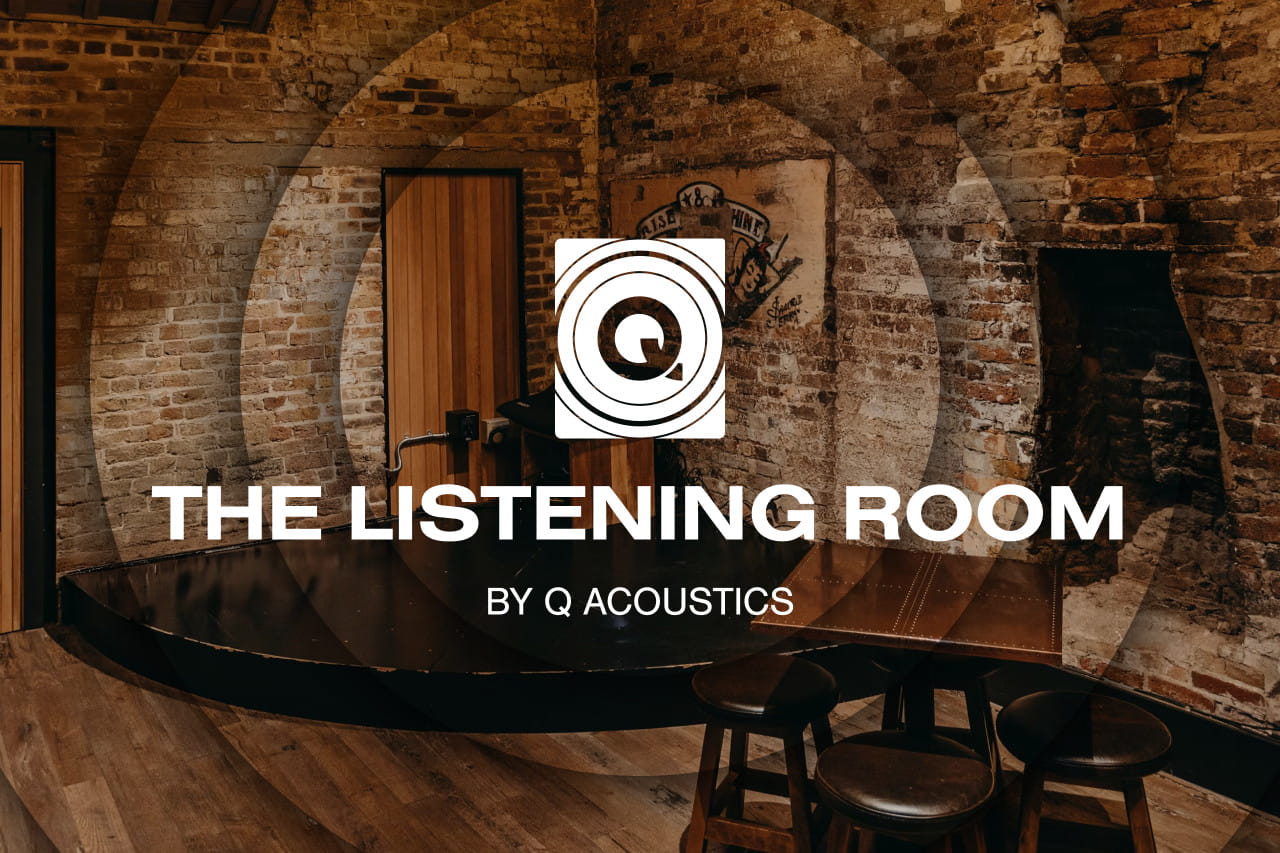

He is particularly interested in Japanese Kissa listening bar culture, and notably does not believe Armour should restrict the idea to New York, Los Angeles or the other predictable major markets.
“The solution is not necessarily the biggest cities or obvious choices for city locations,” he explained.
That could prove far more interesting than another hotel room demonstration at an audio show.
Henderson is also skeptical of temporary promotional installations. When asked how much Armour was prepared to commit beyond short-term events, he replied that he is “not a fan of temporary promotional events.”
“Our mission is clear, when we talk about being a part of music culture it means that we are physically embedded in these spaces. Not for a weekend, but for everyday.”
Armour says it is open to requests from venues that share that perspective and will evaluate opportunities individually.
There are no announced locations, budgets or opening dates yet, so this remains an ambition rather than an established U.S. network. But the premise makes sense.
If younger consumers are not walking into hi-fi stores, putting good audio systems into places where they already listen to records, drink coffee, socialize and discover music might be a more productive introduction than waiting for them to spontaneously develop an interest in two-channel retail.
Younger Listeners Are Coming to Hi-Fi From a Different Direction
Henderson also rejects the idea that younger listeners are interested only in headphones, Bluetooth speakers and soundbars.
His reasoning comes partly from his time at Skullcandy, when portable listening dominated the younger market, and partly from what he sees happening around vinyl now.
“Younger listeners want access to their music full stop,” Henderson said.
He points specifically to what he calls the “inheritance community”: younger listeners who are handed down a turntable, amplifier or pair of loudspeakers and subsequently begin exploring more traditional audio systems themselves. Henderson says that trend has also contributed to increased interest in older electronics.
That is a consumer the traditional hi-fi industry should be paying considerably more attention to.
Someone inheriting Dad’s amplifier and a pair of 30-year-old loudspeakers is not necessarily looking for a $20,000 system. They may need a turntable, cartridge, cable, compact pair of loudspeakers or an easy way to stream Spotify or Qobuz through equipment built before Wi-Fi existed.
Smaller Rooms Are Changing the Products Too

Armour is also paying attention to where younger customers actually live.
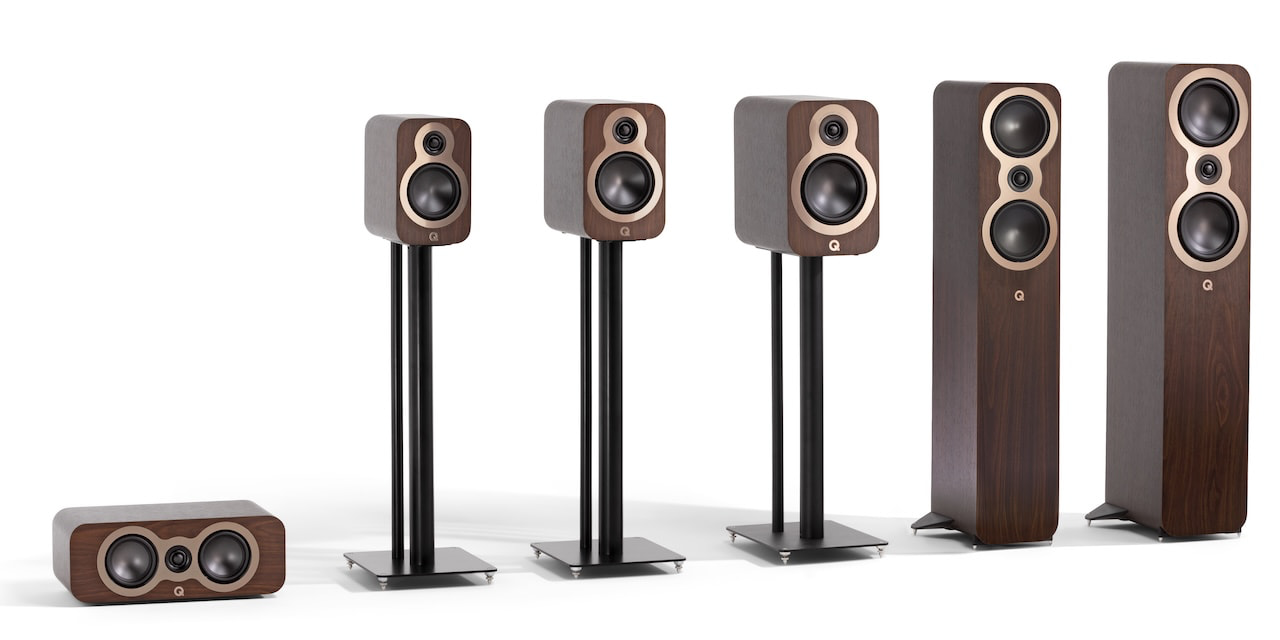
Smaller homes, apartments and desktop systems are increasingly important, and Henderson points to the ongoing demand for the Q Acoustics M20 powered loudspeakers as evidence that customers want compact products as they move beyond headphones and portable Bluetooth speakers.
He says Q Acoustics will continue expanding in that direction alongside its traditional passive loudspeaker range.
Modern interiors are influencing the conversation as well. Henderson says Armour sees opportunities to use more contemporary materials while paying closer attention to color and fashion trends.
Before anyone reaches for the audiophile smelling salts, this is not an admission that engineering suddenly matters less than whether the loudspeaker matches the sofa.
It is recognition that products live in rooms.
For decades, the audio industry has occasionally behaved as if normal consumers should simply accept a pair of enormous black boxes in the living room because somebody produced an impressive waterfall plot. That argument becomes more difficult when buyers have dozens of visually sophisticated consumer electronics alternatives competing for the same space.
Competing With China Requires More Than a Spec Sheet
The value equation is becoming harder as well.
Chinese manufacturers have demonstrated that enormous feature lists, excellent measured performance and aggressive pricing can coexist. That puts pressure on established British, European, Japanese and American audio manufacturers that can no longer assume heritage alone will justify the difference.
Henderson says Armour does not intend to compete solely on price.
“We pride ourselves on our design, engineering excellence and product quality,” he said. “We strive to develop and support products that are defined through understanding our audience, not just responding to tech opportunities.”
He also believes British design and brand heritage still matter when consumers compare products online, but his reasoning goes beyond sticking a Union Jack on the carton.
In a market increasingly influenced by AI recommendations, Henderson believes reviews, customer feedback, reputation and experience will become even more important. That places an even greater burden on Armour to make products people actually use, recommend and understand.
Entry Level Still Matters
Material and component costs are also creating pressure, particularly at QED, where Henderson says volatility in raw materials and metal prices has created challenges. Armour says it is using forecasting and future product planning to manage those costs while maintaining performance and quality.
More importantly, Henderson says the company remains committed to entry-level products.

“We see our role as ensuring that we offer systems and components that enable the widest possible audience to fall in love with music.”
That does not mean cramming every possible feature into the cheapest product.
Henderson argues that fewer features at lower price points can sometimes be an advantage because reduced complexity can make a product more desirable and easier to use.
He has a point.
The affordable audio market does not necessarily need another app with 14 menus, three firmware updates during setup and a privacy agreement longer than the Torah. Sometimes a good pair of loudspeakers, an amplifier with the connections people actually use and a product that works every morning is the stronger value proposition.
And There Are Parts of High-End Audio Armour Wants No Part Of
Our final question may have produced Henderson’s most revealing answer.
We asked which product category Armour Home would deliberately avoid regardless of market demand.
Rather than naming a specific category, Henderson took aim at “some of the more controversial extremes of high-end audio,” particularly products supported by what he called “‘lightweight’ technical evidence.”
“For me, our role and responsibility is to deliver the best music experience, and not simply to try and maximise the $$$ from a customer.”
Henderson would rather customers have money left for concerts, listening bars and artist merchandise.
Armour Home wants Q Acoustics, Goldring and QED to become more connected without losing their identities. It wants more technology, but not technology merely because another manufacturer put it on a spec sheet. It wants premium products without abandoning entry level customers, stronger U.S. retail relationships without relying exclusively on traditional dealers, and more involvement in music culture without treating every interaction as a weekend marketing activation.
The Hard Part Starts Now
There is a lot to like in Henderson’s vision, and there are also plenty of unanswered questions.
We still do not know what a true Armour Home ecosystem will ultimately include. There is no confirmed Q Acoustics Wi-Fi platform, Armour amplifier, expanded Goldring electronics range or QED wireless product to put on a calendar. The proposed American listening spaces are still in the conversation stage, and Henderson openly acknowledges that dealer support and visibility in the United States are not where they need to be.
That makes the next 18 months considerably more important than another round of awards.
Q Acoustics, Goldring and QED do not need to prove that they can make excellent products. They have already done that. They need to make themselves easier to discover, easier to experience and easier to understand as parts of something larger.
Charlie Henderson clearly has ideas about how to make that happen.
Now Armour Home has to execute.
For more information: armourhome.co.uk
You must be logged in to post a comment Login