
TL;DR
Trump told Axios that Anthropic has “behaved very responsibly” and signalled he may ease restrictions on its Fable 5 and Mythos 5 AI models.




The original version of this story appeared in Quanta Magazine.
For the past few decades, researchers have understood that quantum computers should eventually be able to crack the widely used codes that secure much of the digital world. To protect against this fate, they’ve spent years developing new codes that appear to be safe from future safecrackers armed with quantum computers.
At the same time, they’ve also devised ingenious ways to use the rules of quantum mechanics to keep communications secure. But quantum mechanics, just like the “classical” mechanics that preceded it, is just a theory of nature. What if it eventually gets superseded by a fuller theory, just as quantum mechanics supplanted Newtonian physics a century ago? Will these quantum communication techniques still be secure in a world where there’s an even more fundamental set of rules?
“In terms of these cryptographic protocols, it’s good to be paranoid,” said Ravishankar Ramanathan, a quantum information theorist at the University of Hong Kong who works on quantum cryptography. “Let’s try to minimize the assumptions behind the protocol. Let’s suppose that at some future date people realize that quantum mechanics is not the ultimate theory of nature.”
It’s a possibility worth considering. The difficulty of outstanding problems—like reconciling quantum mechanics and gravity—suggests that a post-quantum theory of nature might involve something quite unexpected.
To guard against the possibility that their protocols are based on faulty assumptions, some quantum cryptographers search for even more basic principles to build upon. Instead of starting from quantum mechanics, they dig deeper, down to the very concept of causality.
One way to understand developments in this area is to consider quantum key distribution, which involves taking advantage of the rules of quantum mechanics to pass along a key—something that can be used to decode a secret message—in a way that cannot be covertly tampered with. Quantum key distribution makes use of quantum entanglement, which locks two particles together through one of their properties, like spin. Quantum entanglement contains something of a trip wire. If anyone tries to mess with the entanglement—as they would if they tried to steal the key—the intrusion will destroy the entanglement, revealing the sabotage. This is because of a fundamental quantum mechanical principle called the “monogamy of entanglement.”
But what if this principle no longer held? In such a case, if the people passing the message did not have complete control of their devices, an outsider could potentially subtly change the particles’ entanglement, disrupting the communication without leaving a trace.
This process is called quantum jamming, and efforts to understand it have surged in recent years.
For many scientists, jamming is appealing because it can help them better understand both quantum mechanics and the nature of cause and effect. They wonder: Are there deep principles that forbid jamming, that make it impossible? Or, if no principle forbids it, could jamming occur in the real world?
Michał Eckstein, a theoretical physicist at the Jagiellonian University in Krakow, Poland, likes to illustrate jamming with a story. Its protagonists are the classic characters from explanations of quantum mechanics, Alice and Bob.
“Suppose you have Alice and Bob, and they meet a magician, Jim the Jammer,” Eckstein said. “The magician says, ‘I have two balls; one is white, and one is black.’”
The balls stand in for a pair of entangled particles. If two particles are entangled, they have a property that is linked in some way—if you measure the first particle and find that its spin is up, for example, the other particle’s spin will inevitably be down, and vice versa. This holds true even if the other particle is halfway across the universe. Here the balls are linked such that if one is white, the other will always be black.
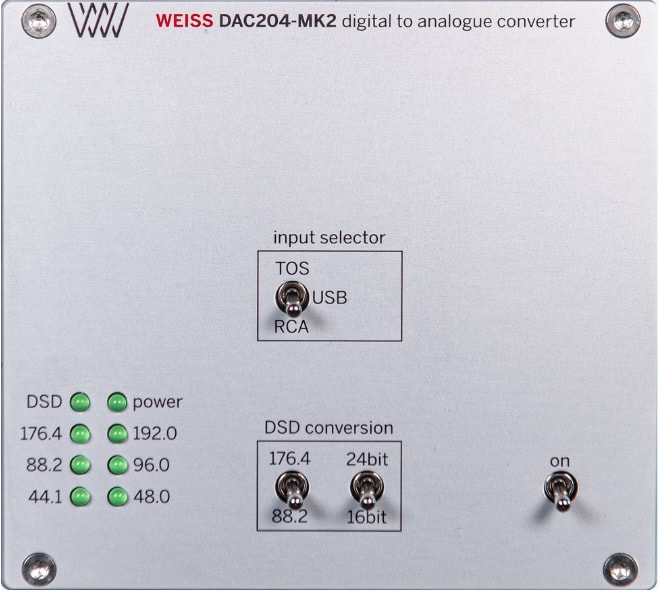
High-end DACs face a slightly uncomfortable dilemma in 2026. Spend a few hundred dollars and the market will happily offer a compact unit from overseas with a color display, Bluetooth, balanced outputs, a headphone amplifier, app control, enough filter options to occupy a rainy weekend, and sample-rate support that looks impressive in a product listing. Feature density has never been higher. Whether all of that translates into superior digital conversion, lower real-world noise, better clock recovery, a more convincing analog stage, or simply a more natural and involving presentation is another matter entirely.
That is the space Weiss Engineering continues to occupy. Bluebird Music has announced the DAC204-MK2 for the U.S. and Canadian markets, updating the Swiss company’s compact DAC204 with an ESS ES9028PRO conversion chip, improved jitter rejection, and a revised near-zero-ohm analog output stage. Weiss has also said that its distortion behavior and reconstruction filters were optimized by ear, which is a refreshingly direct reminder that a DAC is not supposed to win a spreadsheet contest; it is supposed to make the system sound better.
Related Reading: WTF is a DAC?

The DAC204-MK2 updates the original DAC204 with a completely redesigned DAC board, an upgraded ESS ES9028PRO DAC chip, enhanced jitter elimination, and a new near-zero-ohm analog output stage. Weiss says these revisions are intended to improve conversion performance while making the DAC better suited to a wider range of connected components and cable loads.
Designed by Swiss digital-audio engineer Daniel Weiss, the DAC204-MK2 reflects the company’s long-standing mastering-studio background and its belief that technical performance should serve the musical result. The goal is not feature overload, but clean, stable digital conversion with careful attention paid to the analog output stage and final voicing.
The DAC204-MK2 is deliberately focused in its execution. It forgoes network streaming, onboard DSP, remote control, and a built-in headphone output in favor of a compact DAC designed around USB, Toslink, and S/PDIF inputs, balanced XLR and single-ended RCA outputs, and support for PCM up to 384 kHz and DSD64/128.
Rather than competing on menus, displays, or an endless list of digital extras, the DAC204-MK2 concentrates on the fundamentals: clocking, conversion, output-stage design, and the quality of the analog signal delivered to the rest of the system.
Redesigned DAC Section: The DAC204-MK2 replaces the original DAC board with a new design built around the ESS Sabre ES9028PRO DAC chip and a revised analog output stage.
Enhanced Jitter Elimination: Weiss says the ES9028PRO incorporates an advanced jitter-elimination circuit intended to preserve conversion quality when connected to sources or digital links with higher jitter levels.
Near-Zero-Ohm Output Stage: The new analog output stage offers near-zero-ohm output impedance, which Weiss says improves compatibility with difficult cable loads and low-impedance headphones used with a suitable external adapter.
Acoustically Optimized Filters: Weiss has also fine-tuned the DAC204-MK2’s distortion behavior and reconstruction filters by ear, rather than relying exclusively on laboratory measurements. The company’s aim is a more natural and musically convincing result without adding unnecessary features or complexity.
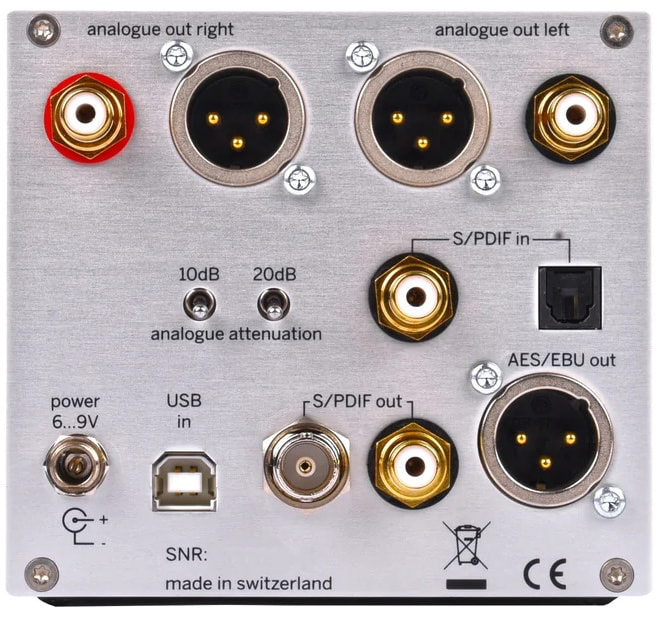
Source Inputs: The DAC204-MK2 provides three digital inputs: USB, RCA, and optical Toslink. The RCA and Toslink connections accept AES/EBU or S/PDIF signals.
Input Selection: Multiple digital sources can remain connected at once, with a front-panel Input Selector switch used to choose between USB, Toslink, and RCA.
Input Signal Compatibility: USB accepts PCM from 44.1 kHz to 384 kHz, along with DSD64 and DSD128. The RCA input supports PCM through 192 kHz, while the Toslink input supports PCM through 96 kHz. DSD signals received via USB can be converted to PCM.
Analog and Digital Outputs: Analog output is available simultaneously through balanced XLR and unbalanced RCA connectors. Digital output is provided on XLR, RCA, and BNC connectors for use in digital-to-digital conversion applications.
D/A Conversion and Clocking: The DAC204-MK2 uses four oversampling sigma-delta D/A converters per channel, operated in parallel to improve signal-to-noise performance. Weiss also combines several reclocking schemes to provide high jitter attenuation.
External Power Supply: An external power supply is included. Weiss uses separate linear regulation for sensitive voltage rails, a design intended to minimize digital noise and channel crosstalk at the analog output.
Note: The specifications below are the same for the DAC204-MK2 and DAC204 unless otherwise indicated
– All inputs accept professional or consumer standard, i.e., accept AES/EBU or S/PDIF signals.
– Sampling frequencies: 44.1, 48.0, 88.2, 96.0, 176.4, or 192 kHz on the RCA (digital coaxial) input. – Sampling frequencies: 44.1, 48.0, 88.2, 96.0 kHz on the Toslink input.
– Maximum input word-length: 24 Bits.
(1) USB connector – Accepted sampling frequencies: 44.1, 48.0, 88.2, 96.0, 176.4, 192, 352.8, 384 kHz, DSD64, DSD128
(2) RCA connectors, DC coupled, short circuit proof output circuitry – Output impedance: DAC204: 22 Ohm, DAC204-MK2: Close to 0 Ohm
Output level: Selectable by two toggle switches, 4 settings
XLR outputs: RCA outputs: Extremely efficient Jitter attenuation. – At 0 dBFS input level, maximum output level, 4 kHz, all components at less than −115 dBr
Weiss Model
DAC204-MK2 / DAC204
Product Type
DAC
Price
$3,990 US,
$4,895 CAD (price point retained from the DAC204)
DAC Chip
ES9028PRO (DAC204-MK2)
ES9018S (DAC204)
Digital Inputs
(1) RCA (digital coaxial) connector,
(1) Toslink connector (optical)
Analog Outputs
(2) XLR connectors (hot output on pin 2, not servo controlled), DC coupled, short circuit proof output circuitry – Output impedance: DAC204: 44 Ohm, DAC204-MK2: Close to 0 Ohm
7.5 Vrms, +19.7 dBu, with a 0 dBFS sinewave input
2.3 Vrms, +9.7 dBu, with a 0 dBFS sinewave input
0.75 Vrms, -0.3 dBu, with a 0 dBFS sinewave input
0.23 Vrms, -10.3 dBu, with a 0 dBFS sinewave input
3.75 Vrms, +13.7dBu, with a 0 dBFS sinewave input
1.15 Vrms, +3.7dBu, with a 0 dBFS sinewave input
0.375 Vrms, -6.3dBu, with a 0 dBFS sinewave input
0.115 Vrms, -16.3dBu, with a 0 dBFS sinewave input
Digital Outputs
(1) XLR connector
(1) RCA connector
(1) BNC connector
Synchronization
Synchronized via the input signal in the case of RCA (digital coaxial) or Toslink inputs. In the USB input case, the DAC204 is the master clock. –
Sampling frequencies supported: 44.1 kHz, 48.0 kHz, 88.2kHz, 96.0kHz, 176.4khz, 192kHz, 352.8kHz, 384kHz, DSD64, DSD128
Power
– DC input voltage: 6 to 9 volts
– DC input current: 1050mA at 6V, 700mA at 9V
– Power consumption: 6.3 W
Frequency Response at Sampling Frequency Points
Fs = 44.1 kHz, 0Hz-20kHz: within +- 0.25dB
Fs = 88.2 kHz, 0Hz-20kHz: within +- 0.25dB
Fs = 88.2 kHz, 0Hz-40kHz: within +- 0.8dB
Fs = 176.4 kHz, 0Hz-20kHz: within +- 0.25dB
Fs = 176.4 kHz, 0Hz-40kHz: within +- 0.8dB
Fs = 176.4 kHz, 0Hz-80kHz: within +- 2.5dB
Total Harmonic Distortion plus Noise (THD+N)
−116 dBr (0.00016 %) at −3 dBFS input level
−125 dBr (0.000056 %) at −40 dBFS input level
−125 dBr (0.000056 %) at −70 dBFS input level
Linearity
At 0 dBFS to −120 dBFS input level: less than ±0.4 dB deviation from ideal
Spurious Components (including harmonics)
At 0 dBFS input level, maximum output level, 1 kHz, all components at less than −120 dBr
Crosstalk
Better than 120 dB, 20 Hz–20 kHz
Interchannel Phase Response
+- 0.05° 20 Hz–20 kHz +- 0.30° 20 Hz–80 kHz
Dimensions (HWD)
3.8” x 4.2” x 6.5”
Weight
2.4 lbs
The DAC204-MK2 is housed in a compact black chassis with a silver faceplate and follows a deliberately focused design philosophy. Unlike Weiss’s more fully featured DAC501-MK2 and DAC502-MK2, it does not include onboard DSP, remote control, network streaming, Roon support, or a dedicated headphone output.
That is not an oversight. The DAC204-MK2 is designed as a straightforward digital-to-analog converter, concentrating its engineering budget on conversion, clocking, jitter suppression, and the analog output stage rather than features that many listeners may already have elsewhere in their system.
Pro Tip: Although the DAC204-MK2 does not include a built-in headphone jack, Weiss offers an optional headphone adapter that allows the DAC’s analog output stage to be used with headphones. Contact Weiss Engineering or an authorized dealer for compatibility and availability details.
At $3,990 in the U.S. and $4,895 in Canada, the Weiss DAC204-MK2 is not trying to be the least expensive or most feature-packed DAC on the market. The MK2 upgrade is focused where it matters: a redesigned conversion board built around the ESS ES9028PRO DAC chip, improved jitter elimination, a new near-zero-ohm output stage, and acoustically optimized reconstruction filters.
That makes the DAC204-MK2 a compelling option for listeners who already own a streamer, transport, preamp, or integrated amplifier and want a compact, Swiss-engineered DAC with serious mastering-studio pedigree. It offers flexible digital connectivity, balanced and single-ended analog outputs, DSD-to-PCM conversion, and digital output capability, but skips streaming, DSP, room correction, phono, remote control, and a built-in headphone output.
There are certainly DACs near this price that offer more functionality. The Denafrips Venus 15th, at $3,999, is a similarly priced R-2R alternative for listeners looking for a different conversion approach. The Ferrum WANDLA HP, at $3,295, adds a preamp stage, remote control, HDMI ARC, I2S, touchscreen interface, and a powerful balanced headphone amplifier. Benchmark’s DAC3 HGC is considerably less expensive at $2,399 and remains a strong option for listeners who value a compact DAC with headphone capability and a more studio-oriented feature set.
But the Weiss is not competing on screen size, streaming platforms, or menu depth. The DAC204-MK2 is for listeners who want to put their money into digital conversion, clocking, output-stage quality, and a straightforward component that can disappear into an existing high-end system. Sometimes fewer features are not a compromise.
The Weiss DAC204-MK2 has a suggested US retail price of $3,990 ($4,895 in Canada), and is available now from Bluebird Music and authorized Weiss dealers throughout the United States and Canada.

Trump told Axios that Anthropic has “behaved very responsibly” and signalled he may ease restrictions on its Fable 5 and Mythos 5 AI models.
President Donald Trump said in a pretaped Axios interview that he no longer views Anthropic as a national security threat, marking a sharp reversal from the administration’s aggressive posture toward the AI company over the past three months. Asked whether he considers Anthropic a threat, Trump replied, “Well, not now. But a week ago, maybe.” He added that the company has “behaved very responsibly.”
The comments come just days after the Commerce Department issued a directive on June 12 ordering Anthropic to seek US government approval before foreign nationals access its Fable 5 and Mythos 5 models, the company’s most powerful AI systems. That order followed months of escalating tension between the administration and Anthropic over the company’s refusal to remove certain safety guardrails from its military-facing products. The directive effectively triggered crisis-level talks between Anthropic and Commerce Department officials last week.
Trump met Anthropic CEO Dario Amodei on Wednesday at the G7 Summit in Évian-les-Bains, France, an encounter that appears to have shifted the president’s stance. The meeting came after Anthropic senior technical staff held separate discussions with Trump administration officials earlier in the week. Trump told Axios he would consider easing the restrictions, saying, “I would, but I’m not sure I have to do that,” when asked about a potential rollback.

The 💜 of EU tech
The latest rumblings from the EU tech scene, a story from our wise ol’ founder Boris, and some questionable AI art. It’s free, every week, in your inbox. Sign up now!
The dispute traces back to March 2026, when the Pentagon designated Anthropic a supply-chain risk after the company refused to strip guardrails related to surveillance and autonomous weapons from products used by the US military. Commerce Secretary Howard Lutnick subsequently sent a letter threatening criminal charges against the company, a move that drew criticism from technology industry groups and prompted allied governments, including the UK, to lobby for exemptions.
The timing of Trump’s conciliatory tone is significant. Anthropic confidentially filed for an initial public offering in early June, with a valuation that Fortune reported at approximately $965 billion. The ongoing federal restrictions had cast uncertainty over the listing, and any signal of de-escalation from the White House could stabilise investor confidence ahead of the offering.
Trump described the situation as creating “tremendous liability” for the administration, an acknowledgment that the crackdown had drawn backlash from both industry and allies. The president also said he would not shut down Anthropic, though he stopped short of committing to a specific timeline for lifting the Commerce Department directive.
The shift does not erase the underlying disagreement. The Pentagon’s supply-chain designation remains in place, and the Commerce Department’s June 12 order has not been formally rescinded. Anthropic has not publicly indicated whether it plans to modify its guardrail policies to satisfy the military’s demands.
What has changed is the political signal from the top: Trump appears willing to negotiate rather than escalate.
Amodei has been working multiple channels to resolve the standoff. At the G7 summit, he and Google DeepMind CEO Demis Hassabis jointly pitched a US-led AI coalition to G7 leaders, positioning Anthropic as a cooperative partner in American technology diplomacy rather than a regulatory adversary. The strategy appears to have given Amodei direct access to Trump at a moment when the president was receptive.
Whether the warm words translate into policy remains an open question. The Commerce Department operates with considerable independence on export control matters, and rolling back a formal directive requires bureaucratic steps that a single interview cannot shortcut. For Anthropic, the Axios interview is a political win, but the legal and regulatory constraints remain until the administration acts on them.

Would you run into a crowded university lecture hall, fart into a megaphone, and bellow “fartcoin” at the top of your lungs? If so—and should you have the means to document this stunt on video, preferably capturing the audience’s reaction—you may claim a reward of approximately $1,000.
The money, of course, will be dispensed in fartcoin, a meme cryptocurrency trading at a little over 10 cents at time of publication, with a total market capitalization hovering around $130 million.
Such is the promise of Pump.Fun GO, a new feature on Pump.Fun, one of the fastest-growing crypto businesses of the past few years. It supposedly allows users to “pay anyone to do anything.” Crypto bounties are put up by individuals—or pooled from multiple wallets—and held in escrow by Pump.Fun until a countdown clock runs out. Finishing a task is supposed to net you the prize payout; creators get a refund if nobody completes the mission.
Pump.Fun, whose legal department did not return a request for comment, has said without clarifying its process that it moderates and approves the submissions of bounties as well as relevant collection claims. An initial wave of GO bounties included enticements to parachute into a World Cup game in a memecoin-themed costume and a prompt for a Black person to cover themselves in watermelon and repeat the phrase “I’m your friend, the watermelon man.”
Terms of service state that GO users are responsible for their own “actions, decisions, wallet security, submissions, communications, and compliance with law.” They also warn that the platform may remove content, suspend accounts, and cooperate with third-party authorities in cases of “fraud, scams, market manipulation, infringement, hacking, scraping, abusive or illegal content, stolen property, unlawful financial activity, or other harmful or prohibited conduct.” Crypto transfers and rewards are “not guaranteed,” according to these terms.
The GO feature, arriving just as the platform is contending with a massive crash in user engagement, seems to promise further accusations of lawlessness and deceptive practices for Pump.Fun, already a lightning rod for controversy. Many of the bounties, such as one requesting footage of a memcoin-themed car exploding in a ball of flame, are flooded with AI-generated imagery presented as evidence of a completed task. People who actually carry out a challenge have no apparent recourse if someone else’s submission is selected as a winner by Pump.Fun according to some unspecified backroom criteria.
Fine print can also complicate the picture: a $215 bounty titled “Go to McDonalds and get a burger” specifies that the payout will be split between the first 20 valid entries, coming out to $10.75 in crypto each—less than what most paid for their meal.
While that bounty is rather mundane, others still open at the moment are strikingly dystopian, exploitative, or harmful. There are multiple requests for users to get the names of various cryptocurrencies tattooed on their body, and a man in India has already had his forehead tattooed for the equivalent of $3,000. (Video replies depicting people completing more degrading tasks frequently come from users in countries outside the US.) You can record yourself begging a gas station attendant for a pill to help with your flaccid penis for about $100, interview multiple homeless people and ask who they voted for ($700), or quit your job on camera ($3,000). “Bonus points for style, creativity, and chaos,” the last prompt reads. “This is your severance package.”
Andrew Ford Lyons, a technologist who works on digital security and safety projects for human rights groups and other organizations, tells WIRED that GO is incentivizing coercion, harassment, and significant physical and legal risks, “leveraging inequality” for online entertainment. “This is essentially what the digital economy is boiling down to,” he says.


SOFTWARE
More Rust, but more trouble with AI slop, too
bcachefs boss Kent Overstreet has announced version 1.38.6 of the Linux filesystem, dubbing it “the performance release” and declaring the project is no longer experimental.
The new code is ostensibly a relatively modest point release, but is noteworthy as it’s only the second release this year that project leader Kent Overstreet has described on his Patreon blog.
His latest post reveals he no longer considers the filesystem experimental. “Consider this the belated official announcement :)” he wrote, noting that he dropped the experimental tag some unspecified time ago.
Overstreet’s last blog post was a very brief mention of the release of version 1.37 back in mid-March, and this was rather overshadowed by his announcement soon afterwards that his AI coding assistant PoC was conscious – and female.
Although the bcachefs Git repo is sufficiently busy that it’s hard to track progress, the repo for the accompanying bcachfs-tools is much more readable. Starting with January’s 1.35.0 it shows 18 releases so far this year. So, strictly speaking, the version number applies to the accompanying utilities rather than the filesystem module itself. However, a peek into the Debian APT repository shows that kernel DKMS module has a matching version number, and neither the blog post about the release nor the changelog distinguishes between them.
According to said changelog, this version bumps the number of devices in a filesystem to 255, and contains fixes for half a dozen bugs.
More significantly, it also identifies another six performance optimizations.
The Reconcile operation – previously called “rebalance” – is now faster and more parallel. Erasure coding (which Register sister site Blocks & Files explains) is “in use and seems to be working quite well”. The post refers to the handbook, bcachefs Principles of Operation [PDF], which has been updated since we last looked – the current revision is from April. There’s also a handy Getting Started guide.
Overstreet notes that all the major distributions he’s checked now enable kernel Rust support, and he says that work has already started at converting the filesystem and tools into Rust:
“The bcachefs userspace code has already been converted to Rust, and that work has included safe Rust interfaces for the core btree iterator API and quite a bit of utility code. The next release will pull these bindings into the DKMS module, and we’ll start to convert core code.”
That’s a long-term project, though. In the Phoronix forums, Overstreet explains a little more about the task. In one comment, he says:
I don’t know how long it’ll take for it to be fully Rust – e.g. converting the journal to safe Rust will be… interesting.
But it should be ~50% Rust this year, maybe in the next few months depending on how it goes with deploying a mixed C/Rust DKMS module.
We were also pleasantly surprised to see him expressing considerable skepticism towards AI-authored code contributions in the discussion:
I’m definitely not against AIs, but I am starting to see the lazy patch submissions/bug reports where someone clearly is just asking an LLM to do all the work, and that’s not ok.
We find the performance comparisons in the Patreon post interesting because in places they’re slower than XFS…
On the Epyc 9454 I’ve been testing on, 48 Zen4 cores, 1.38.6 is pushing 16.5 GB/sec through dbench 48 clients – vs. 16 GB/sec for XFS.
And later:
Testing 4k random writes with fio, bcachefs is now hitting 700k iops on this hardware, vs. 1 million for XFS.
Overstreet explains that bcachefs is doing much more work here than XFS, but for us, these values feel more plausible simply because he’s not claiming vastly superior results.
As an interesting side-note, in the course of researching this article, we also discovered an experimental Linux NAS OS based around bcachefs, which rejoices in the name of NASty. If you want to experiment with bcachefs without getting down and dirty and building the OS by hand, this could be a good way to do it.
We are still sad that the personality clash between Overstreet and Torvalds resulted in bcachefs being booted out of the Linux kernel. However big its main developer’s ego may be, bcachefs is a very promising project, and we hope that one day it may get merged again… Perhaps as the kernel’s first filesystem implemented in Rust. ®

Why you can trust TechRadar
We spend hours testing every product or service we review, so you can be sure you’re buying the best. Find out more about how we test.
The Klipsch The Nines II are a tough pair of small speakers to beat for a large room. The amount of power and the clean, slightly overly bassy, sound are just some of what make these speakers special. There’s also a ton of features on offer, including virtualized spatial audio (which is admittedly limited) Wi-Fi streaming, and even Dirac Live (though I couldn’t seem to get it to work during my testing).
In fact, the buggy nature of the Dirac Live is my only real gripe with Klipsch’s The Nines II (well, that and their cumbersome name if you’re writing a review…), and the Dirac issue could be more due to environmental factors than a fundamental problem. My other issue — the fact that the speakers are heavy — is more just inconvenient than a real flaw.
Whenever I listen, I’m convinced that The Klipsch The Nines II are among the best stereo speakers to come out this year. And the amount of connectivity and features make them a nice alternative to the best soundbars, especially if you still want a bit of that more traditional stereo speaker setup.
Just be aware that these are quite a bit more expensive than the original Klipsch The Nines. That said, The Klipsch The Nines II offer a lot more than the first version as well.

The original Klipsch The Nines have been out for a few years now, so the Spring release of the Klipsch The Nines II in 2026 is perfect timing. Speakers may not benefit from the yearly iterations of something like phones or TVs, but it’s about time for the upgrade considering the improvements in Bluetooth technology and W-iFi streaming over those last few years.
Interestingly enough, the Klipsch The Nines II are more than an iterative upgrade. Dolby Atmos (even if it’s a virtualization) and Dirac Live support are on offer in the new version, along with support for more Hi-Res codecs and a wider frequency range, which is why this newer version also comes with a much higher price tag — they’re $700 / £700 more than the originals. That’s quite a price hike.
|
Dimensions |
18.13” (460.38mm) H x 9.62” (244.5mm) W x 14.75” (374.65mm) D |
|
Weight |
Active speaker: 32.8lbs (14.9kg); Passive speaker: 31.7 lbs (14.43kg)) |
|
Active or passive |
Active |
|
Subwoofer |
No (has sub out) |
|
Frequency response |
31Hz-25kHz +/- 3dB |
|
Dolby Atmos / DTS:X enabled |
Yes (virtualized) |
|
Maximum output |
107dB |
The Klipsch The Nines II speakers may be limited in terms of features just by their form factor compared to a soundbar system like the Klipsch Flexus Core 300, but they have the right amount of options for a pair of bookshelf speakers.
Dolby Atmos and DTX:S is available on these speakers, though the spatial audio support is virtualized due to the fact that there aren’t any upward-facing speakers, and obviously limited width. Still, the virtualization does give a sense of height to the audio that works decently with a blockbuster movie.
Along with Bluetooth connectivity (5.4 specifically), the Klipsch The Nines II also support Wi-Fi streaming, specifically Google Cast, Apple AirPlay 2, Spotify Connect, Tidal Connect, Qobuz Connect, and more. Since they work with Google Cast, they can be set up with Google Home for smart home users.
There’s a tiny bit of a lag between source and speaker when going wireless. However, there is a Lip Sync setting in the app to better synchronize when using the speakers with a wireless source with visuals, such as watching a video on a laptop with the audio coming through the Klipsches.
There will still be a lag between play, pause, etc. but that’s not something that I found to really affect my experience of the speakers.
Image 1 of 4
Speaking of the app, this is the central place for any deeper fine tuning. If you want to tweak the audio, there’s a five-band EQ in the app along with some presets. If you want to set up or use Dirac Live, you do that through the app — by the way, the speaker comes with a limited license that will adjust the audio between 200 and 500 Hz (the full frequency is paywalled).
Lastly (well, I’m leaving a few less consequential things out), you can turn on a few different modes: Dynamic Bass, Dialog mode, and Night Mode, and they all work decently enough with the latter being the most effective at its purpose (bringing up quiet sounds and bringing down loud ones).

Klipsch’s The Nines II are really good sounding speakers, and they might be the most weighty sounding speakers I’ve heard for the size, too. Despite not having a subwoofer (or maybe because of it and still providing a lot of bass), every element seems to have a thickness or robustness to it that I usually don’t hear with a lot of audio equipment.
Listening to music the low end is there in spades, whether I was listening to pop, hip hop, or even Counting Crows. The massive bass gives a boominess to the mid-range that is not unpleasant, but is far from neutral or accurate. Using the app to bring the 400Hz slider down one or two notches does clean up the sound a lot, but know that this is fundamentally built into its audio profile.
The high end is slightly on the warm side due to that weightiness I spoke about. Boosting the 8kHz slider in the app does brighten the affair though, if you prefer. Regardless, the Klipsch The Nines II did retain all the detail in the high-end in elements such as the strings in Radiohead’s Pyramid Song or Joni Mitchell’s higher register in A Case of You.
The soundstage, while dependent on correctly setting up the speakers, is not only nice and wide but has good separation thanks to the amount of headroom on these speakers. After all, I never really had them higher than halfway up in volume and they filled a good sized room full of distortion-free, clean audio.
The Klipsch The Nines II are big at over 18 inches tall, over nine and a half inches wide, and almost 15 inches deep, weighing up to 33 lbs per speaker (the one without all the controls is two measly pounds lighter). They’re also attractive, thankfully, coming in three colorways: walnut, red oak, and black (reviewed here).
In terms of controls, the active speaker only has a volume dial and a single power / input cycle button. There’s also an LED indicator above the power button that changes colors depending on the input selected and, while there may only be two physical controls (there’s also a pairing button on the back of each speaker labeled Utility), there are quite a few inputs.
There’s HDMI eARC, optical, phono, USB, Bluetooth, coaxial, and ethernet. It’s easier to select them through the app, because remembering which color corresponds to which port isn’t easy to remember.
All the ports are situated on the back of the primary speaker. Besides the physical ports for the channels listed above that need them, there’s also a sub out and a mic in, the latter of which is for the Dirac Live feature.
Also included are speaker covers that attach magnetically, along with a matte black remote, the aforementioned wired mic, an HDMI cable, power cable, and cable to connect the two speakers to each other physically, if you don’t want to have them speaking to each other wirelessly (they’re automatically paired with each other out of the box, so going wireless is no hassle).

The Klipsch The Nines II are both easy and not easy to set up, entirely based on their weight. The primary and secondary speakers are automatically paired out of the box and just need to be plugged in to power. Pairing via Bluetooth requires just being on the Bluetooth input and connecting via your smart phone.
And the physical connections just need their respective cables and possibly a settings change — changing a TV’s audio output to eARC, for instance. In terms of functionality, that’s all you have to do to use them.
That said, each speaker is heavy at over 30 lbs each (or over 14.5kg). That’s cumbersome to move. Even if that weight is not a problem for you, these are big boxes. Add in speaker stands, which I believe are ideal for getting the best sound out of these speakers (an additional $475 for a pair if you want Klipsch’s own…) and setup becomes more of a physical challenge than it might be for some speakers.
The stand just takes time to assemble: connect the proper rubber feet based on flooring, the base to the stand, and the stand to the speaker. But if you connected the stand to the speaker upside down like I did, you’ll encounter my least favorite part… flipping the speaker over while connected to the stand, which weighs an additional 24.1 lbs (10.9kg), by the way.
Each complete 57 lbs unit was unwieldy, to say the least, and I felt like I had to be careful so as not to let these fairly pricey speakers accidentally fall and get damaged.
Outside of that, adjusting the speakers for placement is similar to any other pair of bookshelf speakers, if heavier, and it didn’t take me long to get them situated for a listening sweet spot on the couch.
Using the speakers is likewise a slightly mixed bag. Using the remote is easy and I appreciate the ability to remap the two bottom buttons to my favorite inputs. The app is generally intuitive as well.
However, as much as I enjoy the difference Dirac Live can make with speakers, I had an incredibly difficult time getting the calibration test to run even though I had the upgrade for the full frequency range (an additional $99).
I know that the microphone is very sensitive so needs as much quiet as possible, but no matter how hard I tried, that degree of quiet threshold I just could not reach.

When the original Klipsch The Nines came out, they were priced similarly to the KEF LSX II LT, one of the most popular active stereo speaker systems out there. The Klipsch The Nines II are not only seven hundred bucks more than the original, but the KEF speakers have come down to $999 / £899 since they came out. That’s a massive price difference.
That said, the KEF LSX II LT are compact so are not able to really fill a room the way The Nines II can. Plus, there’s no analog connectivity or the extensive set of features the Klipsch The Nines II have.
When it comes to being a complete and yet powerful stereo system in two (reasonably) compact boxes, The Nines II are good value — but no one’s going to claim they’re a bargain.
|
Attributes |
Notes |
Rating |
|---|---|---|
|
Features |
Dolby Atmos, Wi-Fi streaming, Dirac Live and a huge suite of connectivity options. |
4.5 / 5 |
|
Sound quality |
You might want to do some minor EQing, but they sound immersive and full, with enough bass to skip adding a subwoofer. |
4.5 / 5 |
|
Design |
They look good, the controls are nicely done, and the connectivity is well-handled. |
4.5 / 5 |
|
Setup and Usability |
Setup is easy but does take some muscle or a second person to do properly. Dirac Live calibration has issues. |
3.5 / 5 |
|
Value |
The price hike from the previous version may seem too much, but it’s worth it with the added features. |
3.5 / 5 |
I used the Klipsch The Nines II for a few weeks, listening to all sorts of genres of music, such as hip hop, EDM, pop, rock, jazz, and folk to get a better feel for these speakers. They were also tested with some TV viewing and computer games.
I’ve tested a lot of tech gear over the years from laptops to keyboards and speakers, and so have been able to use my expertise towards giving an honest and fair opinion, not to mention a critical eye, to any product I test.

Here it is: the dumbest defense of automatic license plate readers I’ve ever read. While we can subtract some points because the person writing it has no power to install/un-install/cover in garbage bags surveillance tech, he’s a regular contributor to a long-running newspaper in a major city. And since this paper is still willing to give him a byline and inches (or digital equivalent), he’s not going to get a pass.
This would be the work of Ted Diadiun, who at least appears to be the MAGA ideal of a centrist. (This means he occasionally criticizes Trump but also gets big mad when people suggest this nation might be better off if Trump was dead.)
I don’t expect everyone — even those with newspaper staff credentials — to get into the weeds when it comes to surveillance tech. On the other hand, I fully expect them to present a better argument in favor of ALPR systems than “Man, I wish the cops were pulling over every driver I think they should be pulling over.”
And, yet, this is Ted Diadiun’s opening argument:
How many of us have witnessed an idiotic driver and muttered, “Why is there never a cop around when you need one?”
That is why – getting to the point – I’m a big fan of surveillance cameras. Speed cameras, red-light cameras, Flock cameras … all of them.
They’re always around, even when a cop isn’t. And they give me some assurance that people who think laws are for others will get what’s coming to them. And those, like me and my friend, who think that scofflaws are increasing exponentially, can cling to the hope that the number will come down if people know or suspect they’re on camera.
Bro, I hear you. I share the road (and see it not equally shared) with assholes. I do wish vengeance upon them. But I also would rather keep my rights than give them up in exchange for traffic enforcement that subjectively pleases me.
I’m on the other side. And that would be the other side that Ted feels is too stupid, too soft on crime, or otherwise misinformed.
Not everyone, unfortunately, thinks that way.
How can you tell you’re the greatest? Well, it’s when you present your side (me and my friend think “idiotic” drivers need more punishment) and follow it up with a statement that says anyone opposed to your subjective views on traffic enforcement are “unfortunately” wrong.
Ted Diadiun is upset because city leaders are trying to do their best to serve their constituents. Many are opposed to the ALPR system imposed on them. This system belongs to Flock, which has become a surveillance tech front runner — one that has often greeted legitimate criticism with “go fuck yourself” vibes.
Immediately after invoking the unholy name of Flock, Diadiun says a number of things very quickly. First, he admits ALPRs won’t do anything to punish the speeders and scofflaws that so incensed him and his neighbor. Then he says something even Flock itself might not want him to say:
These cameras do not identify speeders or people who bust through red lights – there are other devices for that. What they do is capture the license numbers of every vehicle that drives by. Their gaze can also capture other things, such as porch pirates and car thieves and vandals and other dregs of society lurking in our neighborhoods.
Wow, Ted, wow. These ALPRs are great because… they do so much more than collect the plate/location records the public assumed AUTOMATIC LICENSE PLATE READERS (ALPRs) would be limited to doing.
But you’re fine with surveillance, surveillance creep, and giving the finger to your fellow Cleveland residents because?
There are more than 1,700 of these devices scattered around Cuyahoga County, but at current issue are 100 Flock cameras in Cleveland. Mayor Justin Bibb, who correctly understands their value, has tried to renew the city’s contract with the company, but has been beset by objections from, among others, a raucous group called “Flock No.” As a result, he tossed the decision to Cleveland City Council. Flock No members disrupted a recent council meeting with clapping and chanting, but there’s been no decision as yet.
That organization has also taken on the Cleveland Metropolitan School District, which has 200 Flock cameras outside its buildings in an effort to help police solve cases of car break-ins, vandalism, street takeovers in parking lots and sex offenders illegally visiting school property.
Hmmm. The citizens protested a council meeting. The mayor punted. And while Flock may have installed 200 cameras in the school district, naming the things Flock claims it cameras will prevent isn’t even in the same galaxy as naming the things Flock’s cameras have actually prevented. Why, I could claim my use of the letter “e” in this post has been done to prevent sex offenders from being appointed by the Trump administration. And it would be every bit as credible as claiming a couple hundred cameras are “helping” police do everything from investigating petty theft (they don’t care) or keeping sex offenders off school property (citation PLEASE).
And then Diadiun goes on to both (1) make it clear Flock’s cameras aren’t limited to license plate readings and (2) pretend fighting for rights is just advocacy for criminals.
The American Civil Liberties Union, which can always be counted on to throw roadblocks in front of efforts to stop crime and capture criminals, of course has weighed in on the anti-camera side, charging that it amounts to mass spying that turns its plate-reading into surveillance cameras, and that its recordings of bumper stickers amount to an invasion of privacy.
(Ironically, it was the photos of bumper stickers on a Chevrolet Camaro captured by Flock cameras that allowed federal agents to capture and arrest an armed robber who had held up ten local stores at gunpoint in 2021, as chronicled in a Thursday story on cleveland.com. Guess the ACLU would have preferred that the guy remain free to continue to terrify and perhaps harm additional clerks and customers.)
If the first paragraph doesn’t make you want to punch the columnist in the face, read it again. This is not what the ACLU does. It’s not there to protect criminals. It’s there to protect rights. Rights apply to everyone, even (alleged) criminals. Ted is here to declare he’d rather see a thousand innocent people jailed than allow a single criminal to go free.
Then he goes on to (unhelpfully — in the case of Flock) note that Flock captures more than plate images and allows law enforcement to run searches on things that aren’t normally considered to be part of day-to-day ALPR business… like bumper stickers.
And, again, Diadiun closes out the paragraph by pretending the ACLU’s intervention in this case was in the interest of increasing crime, rather than forcing the government to respect constitutional rights.
Having already demonstrated he’s a facile dolt, Ted Diadiun wraps things up by ensuring there can be no debate about his (barely) “useful idiot” status:
Unless you have something to hide, why would you object to cameras that record license plates and other information?
Please post your location history data publicly, Ted. You have nothing to hide. Let’s see where you’ve been and who you’ve associated with. Just dump it out in a future column so we can sift through like the cops you love so much. Until you’re willing to that much, please shut the fuck up about location tracking, ALPRs, civil liberties, and drivers who will now feel increasingly justified in their attempts to run you off the road.
[I have reached out to Ted Diadiun to see if he’ll provide readers with location data collected by his phone and/or other services since he’s apparently has nothing to hide. I’ve also asked him to explain why it’s okay for the government to have this information by default, if he’s unwilling to share it with his readers. I will update this post in the unlikely event that Ted chooses to respond to my inquiries.]
Filed Under: 4th amendment, aclu, alpr, location tracking, surveillance, ted diadiun, traffic cameras
Companies: cleveland.com, flock safety

Amazon’s $99 AirPods deal makes a great gift for Dad, as delivery by Father’s Day is still available to many locations.

Early Prime Day deals are running now at Amazon as the retailer gears up for its mega sale starting on June 23. If you’re looking for a last-minute gift for Dad, AirPods 4 are marked down to $99 after a $30 discount.
Buy AirPods 4 for $99
Continue Reading on AppleInsider | Discuss on our Forums
Pool robots have become remarkably capable over the last few years. What started as simple cleaners designed to remove debris from the bottom of a pool has evolved into a new category of intelligent systems capable of navigating entire pools, adapting to changing conditions, and taking on multiple maintenance tasks at once. As expectations around smart home technology continue to rise, pool owners are increasingly looking for the same combination of automation, convenience, and reliability from their pool-care equipment.
Few brands have embraced that shift more aggressively than Beatbot. Available through the Beatbot website and Amazon storefront, the company has established itself as a leader in premium robotic pool care by combining advanced robotics, AI-powered vision systems, and intelligent navigation technologies into products designed to reduce the time and effort required to maintain a clean pool. This Prime Day, Beatbot’s lineup offers a closer look at how far automated pool care has progressed, from flagship systems capable of real-time decision-making to versatile robots designed to handle multiple aspects of maintenance in a single cleaning cycle.
Rather than focusing on a single product category, Beatbot has spent the last several years building a broader pool-care ecosystem powered by advanced robotics, intelligent navigation, and AI-driven automation. From flagship robotic cleaners capable of real-time decision-making to surface skimmers and more accessible cleaning solutions, the goal remains the same: reducing the time, effort, and guesswork traditionally associated with pool maintenance.

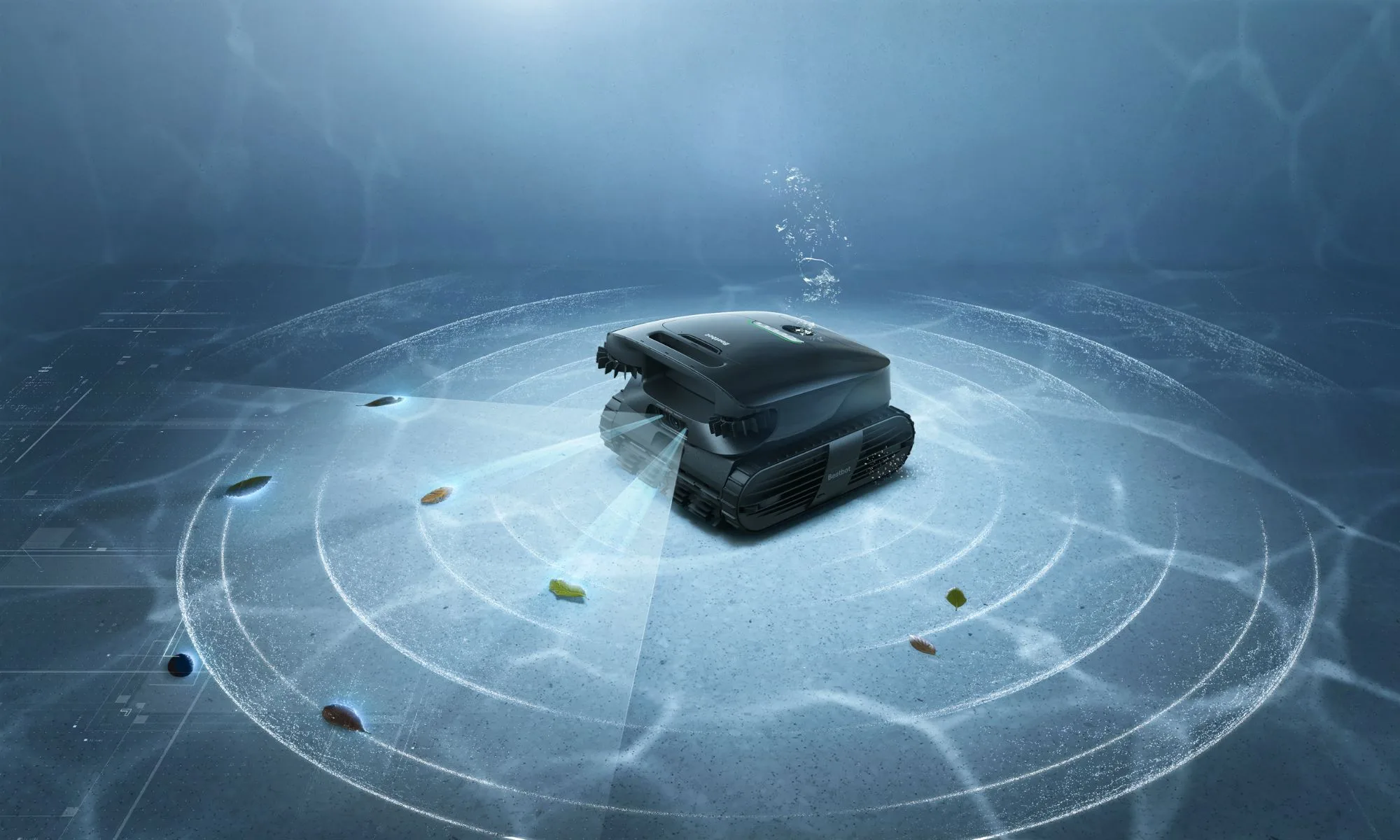
Beatbot’s vision for AI-powered pool care comes together most clearly in the AquaSense X. Combining an autonomous self-cleaning station with HybridSense™ AI Vision, CleverNav™ AI Path Planning, AI debris detection, intelligent obstacle avoidance, auto-recovery functionality, and night cleaning capabilities, it brings a deeper level of awareness and adaptability to the cleaning process.
The system continuously analyzes its surroundings, identifies obstacles and debris, and adjusts cleaning routes in real time to improve coverage across the entire pool. Instead of relying on fixed cleaning patterns, it adapts as conditions change, helping deliver a more thorough and efficient clean while reducing the need for user intervention.
The autonomous self-cleaning station further reinforces that hands-off approach. By minimizing routine maintenance after each cleaning cycle, it allows pool owners to spend less time managing their cleaner and more time enjoying their pool. For those looking for the most advanced option in Beatbot’s ecosystem, the AquaSense X combines intelligent navigation, adaptive cleaning, and automated maintenance in a single platform.
Prime Day price: $3,999 (regularly $4,250).

While many robotic pool cleaners focus primarily on debris removal, the AquaSense 2 Ultra takes a broader view of pool maintenance. As the world’s first AI-powered 5-in-1 robotic pool cleaner, it combines floor cleaning, wall cleaning, waterline cleaning, surface skimming, and water clarification within a single system.
HybridSense™ AI Vision and CleverNav™ AI Path Planning help the AquaSense 2 Ultra navigate multiple cleaning zones while adapting to changing pool conditions. Combined with AI debris detection and intelligent obstacle avoidance, the system is built around what Beatbot calls full-pool intelligence, allowing it to tackle different maintenance tasks through a single platform.
Water clarification is what further separates the AquaSense 2 Ultra from traditional robotic cleaners. Beyond collecting debris, it actively contributes to cleaner, clearer water while reducing the need for additional maintenance tools. For pool owners looking for a more comprehensive approach to pool care, it brings cleaning, water care, and intelligent automation together in a single solution.
Prime Day price: $1,999 (regularly $3,150).

The AquaSense 2 Pro focuses on simplifying pool maintenance without sacrificing capability. Combining floor cleaning, wall scrubbing, waterline cleaning, surface skimming, and water clarification within a single platform, it is built for pool owners who want a more complete maintenance solution without juggling multiple tools.
Features such as the ClearWater™ Clarification System, Smart Water Surface Parking, and one-touch app retrieval help streamline day-to-day ownership, while Full Coverage Path Optimization supported by 22 sensors helps ensure efficient navigation and consistent cleaning performance across the pool. By continuously assessing its surroundings and adjusting cleaning routes as needed, the AquaSense 2 Pro is designed to deliver thorough coverage with minimal intervention.
The result is a system that brings together intelligent navigation, water care, and multi-zone cleaning in a way that feels practical rather than complicated. For pool owners looking for a balance between advanced automation and everyday usability, the AquaSense 2 Pro sits comfortably in the middle of Beatbot’s growing pool-care ecosystem.
Prime Day price: $1,699 (regularly $2,299)
Not every pool owner needs a flagship-level solution, which is where the Sora Series fits into Beatbot’s broader lineup.

The Sora 70 is the most capable model in the range, delivering 4-in-1 cleaning across the floor, walls, waterline, and surface. By incorporating dedicated surface cleaning alongside traditional robotic cleaning functions, it provides broader coverage than many mid-range alternatives. Features such as Smart Surface Parking, shallow-area accessibility, SonicSense™ AI Ultrasonic Obstacle Avoidance, and intelligent path planning help improve cleaning consistency while making retrieval easier once a cleaning cycle is complete.
SonicSense™ AI Ultrasonic Obstacle Avoidance and intelligent path planning help the Sora 70 navigate more efficiently while improving cleaning consistency across the pool. Together with its 4-in-1 cleaning capabilities, those technologies make it one of the most capable options in Beatbot’s mid-range lineup.
Prime Day price: $999 (regularly $1,499)
The Sora 30 focuses on delivering stronger day-to-day cleaning performance without the premium investment associated with flagship models. Its enhanced 3-in-1 cleaning capability covers floors, walls, and waterlines, providing broader coverage and greater versatility than many entry-level cordless cleaners. For buyers looking to step into Beatbot’s ecosystem, it offers an appealing balance of performance, convenience, and value.
While positioned as a more accessible option, the Sora 30 still benefits from the design philosophy that runs throughout Beatbot’s lineup: broader coverage, smarter operation, and less manual effort. For pool owners seeking dependable day-to-day maintenance, it offers a practical entry point into Beatbot’s intelligent pool-care ecosystem.
Prime Day price: $649 (regularly $999)

Beatbot’s Prime Day offers extend well beyond the flagship models. Alongside deals on the AquaSense X, AquaSense 2 Ultra, AquaSense 2 Pro, Sora 70, and Sora 30, shoppers can also save across the company’s broader pool-care ecosystem. The Sora 10 drops from $699 to $449, while the AquaSense 2 is available for $799, down from its regular $1,298 price. Surface-cleaning solutions are also seeing significant discounts, with the iSkim available for $299 (normally $499) and the iSkim Ultra reduced from $999 to $549.
Available from July 8 through July 11, these promotions make it one of the best opportunities of the year to upgrade to Beatbot’s AI-powered pool-care ecosystem. Whether you’re looking for a flagship robotic cleaner, a comprehensive maintenance solution, or a dedicated surface-cleaning system, the lineup offers options across a range of pool sizes, maintenance needs, and budgets.
For pool owners ready to spend less time cleaning and more time enjoying their pool, Prime Day may be the ideal time to make the switch.

Norway will largely prohibit generative AI use for elementary kids ages 6 to 13 beginning with the new school year, while allowing limited, teacher-supervised use for older students. The government says the restrictions are intended to prevent children from skipping foundational reading, writing, and mathematics skills amid declining test scores. Reuters reports: Facing a broad decline in education test scores, the government in 2024 banned smartphones from schools and has given teachers back more powers to enforce discipline in the classroom. Using AI increases the risk that young children skip important steps in their education, Prime Minister Jonas Gahr Stoere told a press conference on Friday. “The most important thing in school is that our children learn to read, write and do mathematics,” Stoere said, adding that the new standards will be imposed from the new school year beginning in late August.
Pupils from first through seventh grade, aged 6 to 13, should as a general rule not be using AI, while those in lower secondary school, aged 14 to 16, can cautiously adopt tools under teachers’ supervision, the government said. In upper secondary education, from ages 17 to 19, students should learn to use AI appropriately so that they are prepared for further education and work, it added. In a related statement, the Norwegian government also said it would propose legislation to fund the use of more books in classrooms, reversing the trend towards computer tablets.


Pause not a permanent withdrawal from drone delivery operations in Ireland, Manna said.
Drone delivery firm Manna is taking a “strategic pause” in operations in Ireland over what it describes as a lack of a clear national framework surrounding the technology.
The Irish company is instead shifting focus to the US, UK and other international markets where “regulatory, and planning frameworks are advancing and commercial drone delivery is accelerating”, it said in a statement. The company already has operational authorisation in both the US and UK and anticipates full authorisation to operate in the United Arab Emirates.
“The absence of a clear national policy framework for commercial drone delivery means there is currently no defined pathway for the sector to scale in Ireland,” Manna said.
“In the absence of such a framework, decisions are assessed locally, creating uncertainty around the planning and infrastructure requirements needed to support commercial drone delivery at scale.” The pause is not a permanent withdrawal from drone delivery operations in Ireland, the company said.
Manna was refused planning permission for drone aerial delivery hub in Dublin’s Dundrum region this week.
Last year, it was refused permission to retain a drone delivery hub in Blanchardstown, meanwhile, Cork City Council has also sent the company letters raising concerns about its operation there.
Despite the supposed regulatory setbacks, Manna has completed more than 300,000 deliveries and partnered with more than 120 Irish businesses.
It has also teamed up with companies such as food delivery platforms JustEat and Deliveroo – and Uber, more recently, primarily servicing parts of Dublin. And last year, it expanded its focus and announced an entry into Cork’s airspace.
“This is a difficult decision because Ireland is where Manna was founded, built and first proven,” said Bobby Healy, the founder and CEO of Manna.
“However, in the absence of a clear national pathway to scale commercial drone delivery, we have to focus our investment in markets where that pathway is now clear.”
Manna has launched and operated drone delivery services in Ireland in Moneygall, Oranmore, Balbriggan, Blanchardstown and Cork, and has expanded services internationally to Finland and Texas.
It has made nearly 90,000 deliveries in its most mature market in Blanchardstown, where Manna has operated since early 2024.
Manna has been at the receiving end of criticism from residents – especially in Dublin 15 – where it runs four sites. Complaints include the frequency of drones, with one telling the Irish Independent that they saw “at least” 50 drones every day, as well as noise and environmental concerns.
According to Manna’s own account, its three planning permissions drew objections from 255 individuals.
Manna currently employs nearly 200 people across engineering, technology, operations and corporate functions in Dublin. It said that future employment and planned expansion at local delivery hubs will not proceed “at this time”. Earlier this year, the company announced around 300 new jobs in the country, alongside a $50m Series B raise.
“This decision does not affect Manna’s continued investment in Ireland, which will remain the company’s primary base for research and development, engineering, robotics, regulatory affairs, customer operations and corporate functions,” Manna clarified.
Responding to Manna’s decision, Minister for Enterprise, Tourism and Employment Peter Burke, TD, said: “I regret the announcement and the uncertainty that this creates for workers and their families.
“Government are ensuring that all available supports are put in place for workers that may be impacted, including supports for retraining and job search assistance.”
Last August, the Department of Transport published a national policy framework for Unmanned Aircraft Systems that aims to foster “growth and innovation, while ensuring that operations remain safe and secure and environmental and social concerns are managed”.
An action plan, published in March, laid out sixteen goals across planning, compliance, enforcement and innovation.
Don’t miss out on the knowledge you need to succeed. Sign up for the Daily Brief, Silicon Republic’s digest of need-to-know sci-tech news.
Updated, 07:40pm, 19 June, 2026: The article has been updated with the Government’s response and background information.





No Jackpot Winner as $257 Million Prize Rolls Over to $269 Million Monday Draw

Zimbabwe Requires Crypto Businesses to Register Annually Under New FIU Regulations


Bitget enters Argentina’s regulated crypto market through PSAV registration


Weekend Open Thread: Miami – Corporette.com

Matt Damon’s Viral Sci-Fi Thriller Has Taken Over HBO Max


Anthropic staff to meet White House officials next week, Axios reports


As AI companies race to go public, who else is along for the ride?

Bitcoin could crash to $48,000, if this historical pattern is triggered

Warning of disruption as Cardiff Crossrail works to start


“Israel’s” ban on ICRC visits ruled illegal, but Knesset moves to stop them permanently

Tributes to former deputy head teacher at Cambridge school among death and funeral notices


Deion Sanders Shares Powerful Post After Viral Advice To Deiondra


Financial Accounting | Last Day Revision Strategy and Booster | CMA Inter – June 2026

what doctors are seeing in ebike crashes

Kate Middleton Glare Goes Viral After Kids Booed At Royal Event


XRP ETFs Outperform As Bitcoin And Ethereum Funds Extend Outflow Trend

Market Preview: SpaceX (SPCX) IPO Record, Federal Reserve Meeting, and Iran Nuclear Agreement


Over 400 Arch Linux packages compromised to push rootkit, infostealer


Invesco Quality Income Fund Q1 2026 Commentary

44 Years Later, This Is the Greatest Star Trek Quote in Sci-Fi History



You must be logged in to post a comment Login