The pair are considered originators in their field, which blends physics and computer science in treating quantum mechanical phenomena as resources for processing and transmitting information.
This year’s Turing Award has gone to an American physicist and a Canadian computer scientist for their foundational collaborative work in the field of quantum information science.
Charles H Bennett and Gilles Brassard received the annual ACM (Association for Computing Machinery) award “for their essential role in establishing the foundations of quantum information science and transforming secure communication and computing”, said the body.
The pair’s pioneering work in quantum cryptography and quantum teleportation is recognised for having redefined secure communication and computing, according to the ACM.
Advertisement
The award, often referred to as the ‘Nobel Prize in Computing’, is named after Alan Turing, who articulated the mathematical foundations of computing. The winner receives a $1m prize in recognition of their major contributions of lasting importance to computing.
Bennett and Brassard are considered originators in their field, which blends physics and computer science in treating quantum mechanical phenomena as resources for processing and transmitting information.
In 1984, the pair introduced the first practical protocol for quantum cryptography, now known as BB84, by demonstrating that two parties could establish a secret encryption key with security guaranteed by the laws of physics.
This established a fundamental property of quantum information: it cannot be copied or measured without disturbance, and any attempt at ‘eavesdropping’ leaves detectable traces before any information can be compromised.
Advertisement
Prior to this breakthrough, the consensus around secure communications held that mathematical and computational encryption barriers were the foundation of information secrecy.
“Bennett and Brassard fundamentally changed our understanding of information itself,” said ACM president Yannis Ioannidis. “Their insights expanded the boundaries of computing and set in motion decades of discovery across disciplines. The global momentum behind quantum technologies today underscores the enduring importance of their contributions.”
Variants of BB84 have already been implemented in operational quantum communication networks around the world, using both landlines via fibre and free space communication through satellites, according to the ACM, which also noted that progress in this arena could represent one pathway for achieving secure digital communications in the coming decades.
“Charles Bennett and Gilles Brassard’s visionary insights laid the groundwork for one of the most exciting frontiers in science and technology,” said Jeff Dean, a chief scientist at Google DeepMind and Google Research. “Their work continues to influence both fundamental research and real-world innovation.” Google gives financial support to the annual award.
Advertisement
Bennett and Brassard’s other work of note includes contributions in quantum teleportation and entanglement, which are significant to the application of quantum networking.
In Ireland, interest in the quantum computing sector features at both private and public levels.
Last year, Andrew Barto and Richard Sutton won the Turing award for developing the foundations of reinforcement learning, which is key to AI. Previous winners include theoretical computer scientist Avi Wigderson, AI leader Geoffrey Hinton and Lisp programming inventor John McCarthy.
Advertisement
Don’t miss out on the knowledge you need to succeed. Sign up for the Daily Brief, Silicon Republic’s digest of need-to-know sci-tech news.
Spotify has quietly added a feature that many desktop listeners have been requesting for years. The company’s new Exclusive Mode allows Spotify Premium subscribers using the Windows desktop app to bypass the computer’s normal audio processing and deliver bit perfect playback directly to an external DAC or audio device.
The idea is straightforward. Modern operating systems often resample audio, mix system alerts with music, or apply their own volume processing before the signal ever reaches your DAC. Spotify’s Exclusive Mode takes control of that pipeline and locks the desktop app directly to the output device so the audio stream is passed through without alteration. In practical terms, that means the data sent to your DAC should match the original digital file that Spotify is delivering.
The timing is notable. After years of teasing higher fidelity streaming tiers, Spotify finally launched its long promised Lossless audio option in 2025, putting the service closer to competitors like Apple Music, Amazon Music, and TIDAL that already offer CD quality streaming. Exclusive Mode does not increase the bitrate of Spotify’s stream, but it removes one more layer of processing that could potentially alter the signal on the way out of your computer.
For listeners using a desktop setup with an external DAC, powered speakers, or a headphone amplifier, the feature gives Spotify something it has historically lacked compared with more audiophile focused platforms: a way to deliver the stream without the operating system getting in the middle of it.
Advertisement
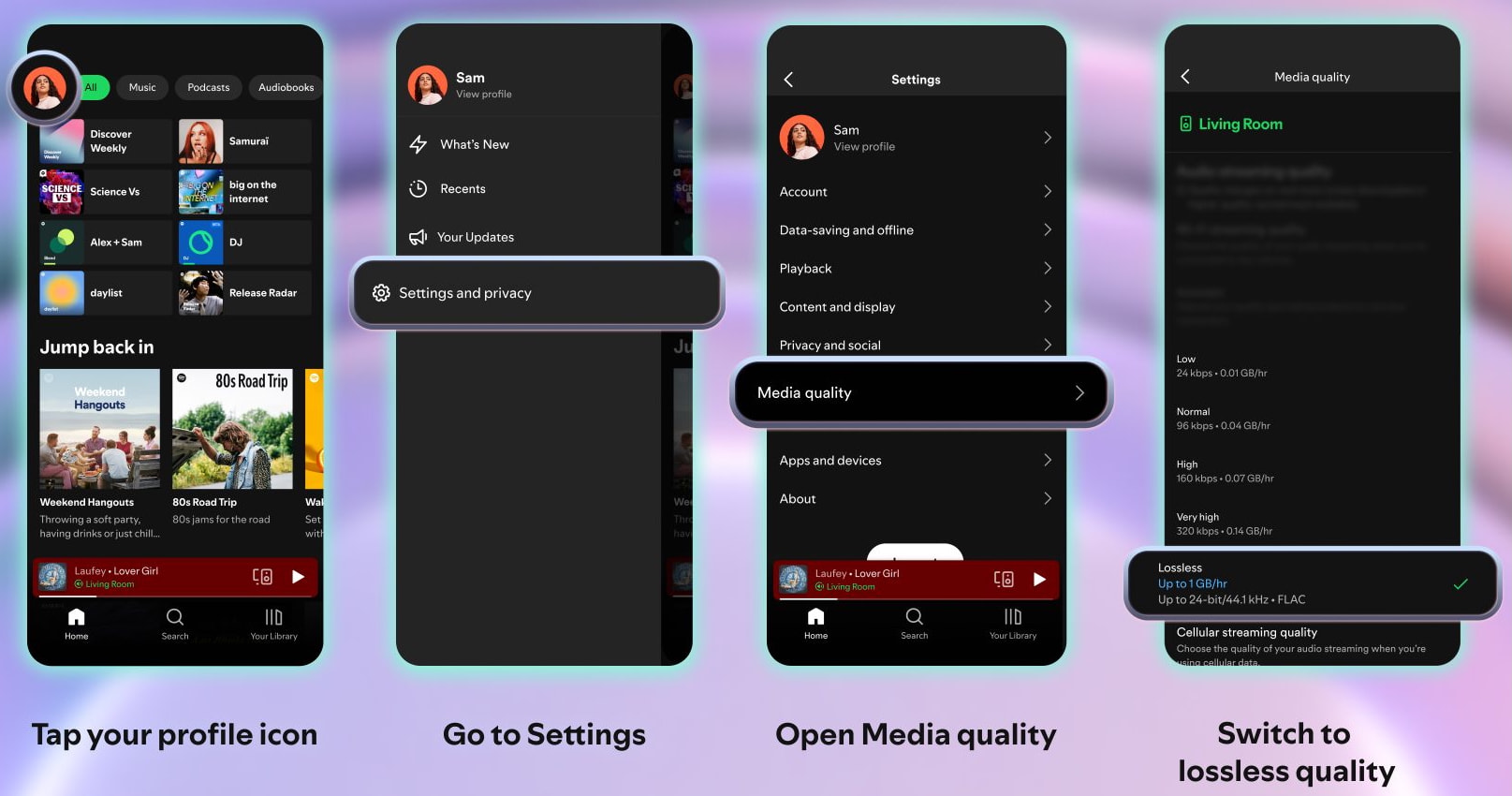
How to Enable Spotify Lossless
What is Bit Perfect Audio?
Bit perfect audio refers to digital playback where the data leaving a music player is identical to the original digital file, with no changes introduced by the operating system, software mixer, or audio driver.
When music is played on a typical computer, the audio often passes through a system level mixer before reaching the output device. During that process the operating system may:
Resample the audio to match the system’s selected sample rate
Mix in other system sounds like notifications or alerts
Apply volume scaling or DSP processing
Each of those steps technically alters the original digital data stream. Bit perfect playback avoids that entirely.
In an exclusive playback mode, the music application takes direct control of the audio output device. The operating system mixer is bypassed, system sounds are blocked, and the audio stream is sent to the DAC at its native sample rate and bit depth.
For audiophiles using external DACs and dedicated headphone or speaker systems, this ensures the converter receives exactly the same digital information contained in the music file or stream. The DAC then performs the only conversion that matters: turning that digital signal into analog sound.
Advertisement
In short, bit perfect playback does not magically improve a recording. What it does is ensure that nothing in the computer changes the signal before it reaches your DAC.
How to Enable Spotify Exclusive Mode
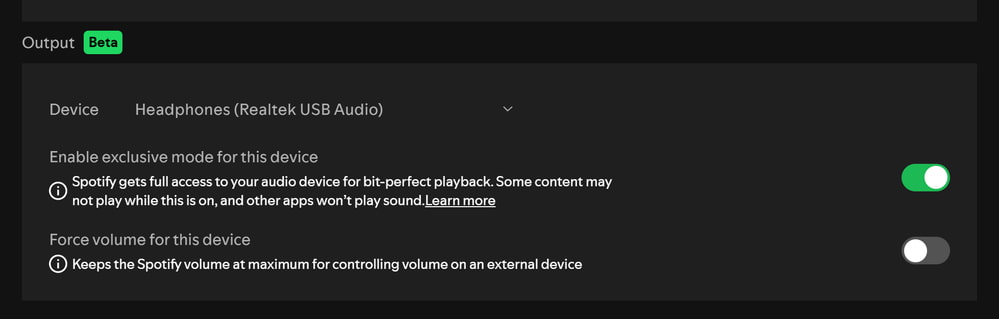
Getting started with Spotify’s Exclusive Mode takes only a few seconds inside the desktop app. Open Spotify, go to Settings, and scroll down to the Playback section. Under Audio Output, select your preferred device from the dropdown menu. Once your DAC, interface, or audio device is selected, toggle Exclusive Mode to On.
Advertisement. Scroll to continue reading.
When enabled, Spotify takes direct control of that audio device and bypasses the operating system’s standard audio mixer. The result is a direct signal path from the Spotify desktop app to your DAC, avoiding the resampling, mixing, and volume adjustments that can occur when the operating system manages audio output.
There is one important trade off. With Exclusive Mode active, Spotify has sole control of the selected output device. System alerts, browser audio, video calls, and other applications will not be heard through that device while music is playing. If you need to hear other audio sources, those applications will have to use a different output device.
Advertisement
At launch, Exclusive Mode is available only on the Spotify desktop app for Windows. The feature does not currently apply to mobile playback, and Spotify has indicated that macOS support is expected in a future update.
The Bottom Line
Spotify’s Exclusive Mode is a useful technical upgrade for desktop listeners, but it doesn’t change the limits of Spotify’s audio quality.
The feature simply bypasses the computer’s audio mixer so the Spotify desktop app can send the stream directly to your DAC without resampling or system sounds interfering. That’s good news for listeners using external DACs, headphone amps, or powered speakers on a computer.
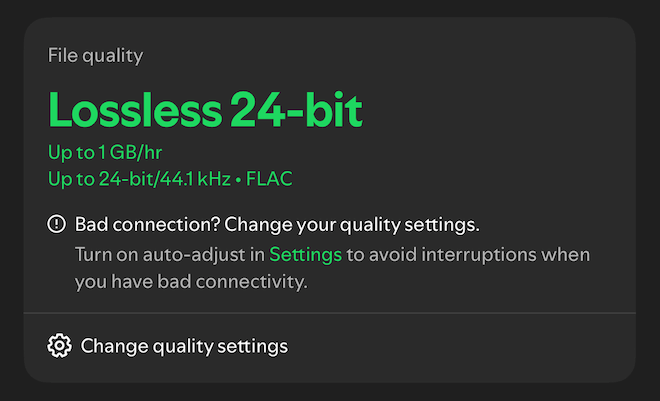
What it does not do is increase resolution. Spotify Lossless remains CD quality at 16 bit 44.1 kHz, and the service still does not offer 24-bit/96 kHz or 24-bit/192 kHz streams like Apple Music, TIDAL, or Qobuz.
So while Exclusive Mode ensures the signal leaving Spotify is cleaner, it does not suddenly make Spotify higher resolution than competing services. It simply ensures you hear the stream exactly as Spotify delivers it.
Poopee’s indoor grass patches are even drawing franchise enquiries from across Southeast Asia
What do you do when your dog refuses to use a pee pad, your schedule won’t allow constant trips downstairs, and your carpet is slowly turning into a wreck day after day?
For 32-year-old Royce Tan, the answer was simple: start a company called Poopee—and bring a patch of real grass straight into the living room as an indoor potty solution.
It all started with his own struggles at home.
Royce’s dogs were grass-trained, but as they aged, daily trips downstairs became increasingly difficult. Plastic pee pads simply didn’t make sense to them, leaving Royce with the familiar frustration of accidents on the carpet.
Advertisement
That’s when the idea clicked: if dogs instinctively understand grass, why not bring it indoors? “The behaviour problem would solve itself naturally,” he said.
After researching existing options, Royce realised there wasn’t a well-designed real grass solution available locally. And that gap in the market became the starting point for the Eco-Turf, Poopee’s signature product.
Entrepreneurship isn’t new to him
Image Credit: @supersalami_ via Instagram/ Sonia Yeo
Royce is no stranger to entrepreneurship.
Before Poopee, he founded The Fragment Room in 2017, Singapore’s first rage room, where people could smash objects to relieve stress. “It was exciting, chaotic, and honestly a lot of fun,” he recalled.
Yet after a few years, the novelty began to fade, and Royce realised he wasn’t “waking up excited” about the business anymore. It no longer felt like something that “reflected who he was or what he wanted to build.”
Advertisement
Eventually, Royce exited the venture sometime in 2019 and took on a full-time job, which he stayed in for about three years.
While it provided financial stability and a fresh perspective on work, he quickly realised that simply clocking in and out every day wasn’t the life he wanted. He needed to build something again—and that drive ultimately led to Poopee.
Image Credit: @poopee, @bossdedoberman via Instagram
In 2023, Royce self-funded the launch of Poopee, bringing his indoor grass solution to the market.
He did not disclose the exact investment; however, he described it as modest, adding that it required “careful spending and a lot of experimentation.”
Keeping the grass alive
According to Royce, most of the initial capital went into “sourcing grass, developing packaging, logistics testing, and building the website.”
Advertisement
The early stages also involved a lot of trial and error.
Working with real grass meant dealing with a living product. He had to consider drainage, airflow, and how to keep it alive and healthy throughout packaging, transport, and delivery.
Image Credit: @poopee via Instagram
Unlike most products, grass cannot sit in a warehouse for long periods. “It has to be inspected, packed, and delivered within a short timeframe,” said Royce, adding that it took considerable effort to balance freshness, reliability, and cost.
Even after delivery, external factors in customers’ homes—such as sunlight and airflow—can affect the grass. To address this, Royce stays in close contact with customers via WhatsApp, troubleshooting issues and finding solutions directly with them.
“With product businesses, the real learning only begins once customers start using the product,” he said. It’s a very hands-on process, and even today, the team is still refining the product.
Advertisement
Poopee’s Eco-Turf has become a necessity for several dog owners
Poopee’s pop-ups at Singapore Dog Festival (left) and Crane (right)./ Image Credit: @sgdogfest, @poopee via Instagram
It seems Poopee’s Eco-Turf has been well-received by dog owners, Royce shared, although he didn’t disclose exact take-up rates.
While most sales happen online, Poopee also hosts pop-ups at fairs and events to reach new customers and give people a chance to experience the product in person.
Some owners have even told him, “You can’t ever close down because we would be lost without you,” highlighting just how much Eco-Turf has become a part of their daily routine.
Image Credit: @poopee via Instagram
Part of the product’s appeal is how simple it is to use: the grass naturally absorbs urine, so customers don’t have to worry about accidents. Solid waste still needs to be cleaned up, though, and watering the turf every one to two days keeps it healthy.
Owners will know it’s time to replace the patch when dogs start peeing at the edges—a sign it’s saturated with their scent, and they’re looking for a fresh spot.
Typically, each patch lasts between one and four weeks, depending on how frequently it’s used.
Advertisement
That’s why Poopee offers a subscription model, with deliveries weekly, bi-weekly, or monthly. Subscriptions make it easier for owners to maintain a fresh patch and allow Royce to plan production.
Because grass cannot be grown instantly, our nursery needs advance notice of how much to grow. Subscription demand helps us forecast how much grass will be needed ahead of time.
Royce Tan, founder of Poopee
Image Credit: @poopee, @maxfromsingapore via Instagram
Beyond positive reviews from customers, what has surprised Royce even more is that Poopee’s Eco-Turf has been recommended by several veterinarians—particularly for older dogs or pets recovering from surgery who struggle with mobility. They can benefit greatly from the Eco-Turf’s easy-to-access, indoor setup.
That said, Royce occasionally meets owners who say their dogs “hate grass.” In many cases, it simply means the dog was never exposed to it early on. “Dogs adapt to the environments we create for them, so part of what we do is gently reintroduce that natural behaviour,” he explained.
He recommends a few simple strategies for these cases: place the Eco-Turf in the spot where the dog usually relieves itself and gradually move it to the desired location, or use a small amount of pee residue under the turf to attract them with a familiar scent. Positive reinforcement—treats or praise when the dog uses the Eco-Turf—also helps encourage the behaviour.
Advertisement
Beyond just grass patches
Royce Tan setting up Poopee’s pop-up booth at Good Pet Fair 2024./ Image Credit: @poopee via Instagram
Running The Fragment Room taught Royce the value of building a brand people actually connect with.
Even though Poopee solves a functional problem, I never wanted it to feel like a boring utility product. I wanted it to feel like a lifestyle brand for dog owners.
Royce Tan, founder of Poopee
That’s why the team puts thought into shaping Poopee’s brand personality, and expanding into merchandise is part of that.
Image Credit: @supersalami_, @poopee via Instagram
Beyond Eco-Turf and its complementary products—such as deodorising sprays—Poopee now offers items like dog carriers, graphic tees, stickers, and even cooling neck wraps for dogs.
All of the merchandise is designed in-house, with some pieces developed through collaborations. For instance, the brand has worked with local streetwear label Koterie on several of its designs.
Making everyday life with dogs more “natural, comfortable & well designed”
Image Credit: @poopee via Instagram
For now, Royce still handles most aspects of the business himself, supported by a small group of part-timers and freelancers who assist with packing, logistics, and marketing when needed.
The team recently moved from a small warehouse setup into a proper office space—a shift that has improved both working conditions and operations, allowing for more organised packing and better quality control.
Advertisement
While operations remain lean, Royce sees clear demand for products like the Eco-Turf.
“Singapore has a large number of high-rise homes, and many pet owners have busy schedules,” he shared. “Solutions that make pet care easier while still respecting a dog’s natural behaviour are becoming increasingly important.”
As the brand grows, Royce plans to expand beyond just the Eco-turf and build a whole ecosystem of products for pet owners. “The idea is to create a cohesive world around the brand for people who love animals.”
Interest in Poopee is also spreading beyond Singapore. According to Royce, the brand has received franchise enquiries from markets like Malaysia, Thailand, and the Philippines, with discussions still ongoing as the team explores potential regional expansion.
Advertisement
Ultimately, Royce hopes to make everyday life with dogs more natural, comfortable, and well-designed.
If Poopee can become something that dog owners trust and rely on, something that genuinely improves the quality of life for both pets and their owners, then we’ve done what we set out to do.
Eclypsium co-founders Yuriy Bulygin, left, and Alex Bazhaniuk. (Eclypsium Photo)
Eclypsium, a Portland-based cybersecurity startup, raised $25 million in new funding to expand its hardware and firmware security platform.
The round was led by PEAK6 Strategic Capital, with participation from Ten Eleven Ventures and an undisclosed bank. Existing investors Andreessen Horowitz, Madrona, Qualcomm Ventures, and others also participated.
Founded in 2017 by former security engineers at Intel, Eclypsium serves private and public sector customers. It scans the hardware and firmware of laptops, servers, network devices, and AI infrastructure for vulnerabilities that sit below the operating system.
The company plans to use the funds to expand further into AI infrastructure and a growing array of edge devices — including GPU servers, NVIDIA BlueField-based appliances, SASE and SD-WAN edge devices, 5G equipment, and CCTV cameras.
The company is led by CEO Yuriy Bulygin and CTO Alex Bazhaniuk and is ranked No. 115 on the GeekWire 200, our list of top tech startups in the Pacific Northwest.
Advertisement
Eclypsium raised $45 million in equity and debt as part of a Series C round last January. Total funding to date is $110 million.
Despite heavy investment in AI tools, many organizations are struggling to realize its promised productivity gains. The issue is not the technology itself, but a widening gap between leadership ambition and employee capability. This gap
Ciara Harrington
Chief People Officer at Skillsoft.
Advertisement
Recent research from Workday reveals a clear disconnect. While 66% of leaders say AI skills development is a top priority, only 33% of employees report having received any AI-related training. This gap is reflected at the executive level as well, with 74% of CEOs citing a lack of AI skills as a key barrier to capturing value from AI investments.
When skills visibility is limited, organizations cannot reliably connect strategy to execution or build the capabilities required for effective human and AI collaboration. The result is predictable: productivity gains are eroded by rework, error correction, and low confidence in using AI tools.
Article continues below
Advertisement
In short, organizations are buying the future faster than they are building the skills needed to run it.
Closing this AI learning gap must become a leadership imperative, not solely a learning and development challenge. And in an increasingly skill-based economy, skills, not job titles, are the new currency of growth and performance.
The question, then, is how leaders can bridge this divide and ensure AI learning is embedded across their organizations.
Advertisement
Aligning leadership goals with employee skills
The persistence of the AI learning gap is often misunderstood. It’s rarely caused by a lack of employee willingness to learn, but rather by organizational misalignment. This isn’t a surprise when there is a lack of clarity around which skills exist today, which are needed next, and how quickly gaps can be closed.
Sign up to the TechRadar Pro newsletter to get all the top news, opinion, features and guidance your business needs to succeed!
At the leadership level, AI is framed in terms of strategy, transformation and competitive advantage. On the frontline, however, employees experience AI as a set of tools that affect daily workflows, including drafting content, analyzing data, supporting decisions or automating tasks.
Advertisement
Without a clear skills framework connecting these perspectives, learning efforts become fragmented and difficult to scale. When learning initiatives fail to bridge these two perspectives, employees struggle to see relevance, and leaders struggle to see returns.
Prioritization is another challenge. In many organizations, AI skills development competes with immediate operational pressures. Training is delayed, treated as optional, or delivered too generically to be useful.
Employees are left to ‘learn by doing’ without clear guidance or guardrails, leading to inconsistent adoption and increased rework. Leaders may see this as resistance, when in reality it reflects a lack of structured support.
Advertisement
To close the gap, leaders must move beyond aspirational statements about AI and embed skills development directly into the flow of work.
That means managing skills deliberately – identifying the capabilities that matter most, addressing gaps that limit execution, and ensuring learning is timely, practical and clearly connected to organizational goals. When employees see how AI supports their work and receive relevant support, confidence and competence grow together.
Which skills matter most now
To ensure effective human and AI collaboration, both leaders and employees must develop digital fluency. This includes understanding how AI systems work, critically interpreting their outputs and applying insights with emotional intelligence.
Advertisement
At the same time, they must continue to strengthen the irreplaceable qualities of humans to create a more resilient, responsive and people-focused organization.
Critical thinking and validation skills are equally essential. Workday’s research shows that anticipated productivity gains are often lost to rework, including correcting errors, rewriting content or double-checking outputs. Training employees to prompt effectively and review carefully can dramatically reduce this friction.
Power skills also matter more than ever. As AI takes on routine tasks, skills such as communication, collaboration, ethical judgement and emotional intelligence become increasingly valuable. These skills enable employees to apply AI outputs responsibly and creatively in real-world contexts.
For managers, an additional layer of capability is required. Leaders must be able to coach teams through AI adoption, set clear expectations and model responsible use. When managers lack visibility into their teams’ skills, the learning gap widens rapidly beneath them.
Advertisement
AI as a catalyst for leadership development
AI itself can play an important role in closing the learning gap, particularly when developing leaders at scale. When applied effectively, it transforms learning from a one-time event into a continuous, personalized journey that evolves alongside both the individual and the organization.
AI-powered learning can analyze skills data, identify gaps in real time, and recommend targeted development aligned to role, experience and business priorities. This creates a continuous skills supply chain — one that connects insight, development and execution as business needs change.
For leaders, this means faster access to the learning that matters most, whether that involves responsible AI use, data-informed decision-making, or strengthening people leadership skills.
Advertisement
AI can also create continuous feedback loops that traditional learning models struggle to deliver. Leaders gain greater insight into how learning translates into behavior change, team performance and organizational impact, shifting development from activity-based to outcome-driven.
Ultimately, organizations that succeed will treat AI as a partner to human leadership, not a substitute for it.
From ambition to execution
Closing the AI learning gap requires intentional action. Leaders must align vision with capability, strategy with skills and technology investment with human development. That means treating skills as a strategic asset and one managed with the same rigor as capital or operations.
Advertisement
When employees understand how AI supports their work and have the skills to use it effectively, productivity gains become real, sustainable and scalable. More importantly, organizations build a workforce that is not just AI-enabled, but AI-ready.
Ultimately, whether organizations capture AI’s full value depends on how effectively leaders bring their employees along on the journey.
This article was produced as part of TechRadarPro’s Expert Insights channel where we feature the best and brightest minds in the technology industry today. The views expressed here are those of the author and are not necessarily those of TechRadarPro or Future plc. If you are interested in contributing find out more here: https://www.techradar.com/news/submit-your-story-to-techradar-pro
After watching the James Bond film GoldenEye, Gavin Free of The Slow Mo Guys couldn’t shake a childhood memory. The explosions on screen were something else to say the least, but what really caught his eye was a tiny detail in the corner of the frame. He then discovered that the crew utilized a method in which they recorded real flames from underneath to achieve that effect.
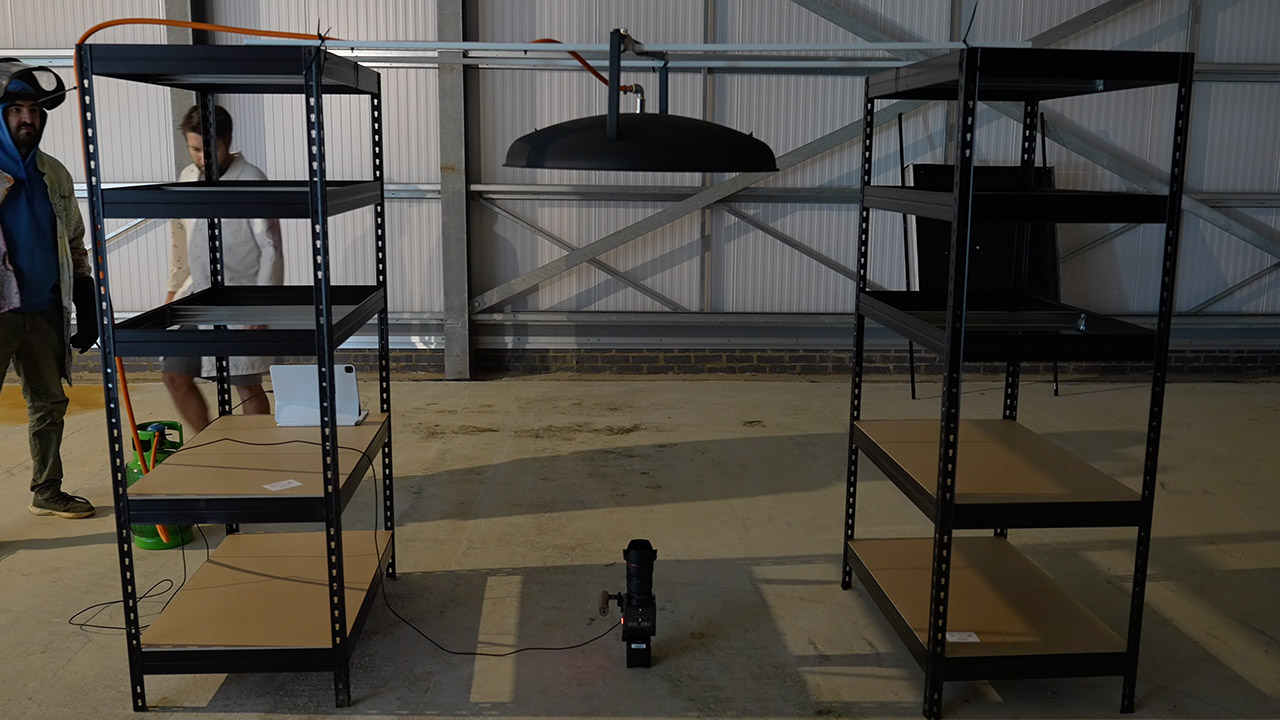
Gavin and his partner Dan Gruchy decided to try it for themselves, with a simple but compelling goal in mind: film fire from directly underneath in super slow motion. A conventional fire pit was flipped upside down and then a large ring burner loaded with propane was suspended above it, while a sturdy framework of curtain poles, tin sheets, as well as metal fittings was rigged up to keep everything stable.
Sharper Action, Brighter Details – Osmo Nano’s 1/1.3″ sensor captures more light for crisp, vivid shots. Ideal as a 4K POV camera or vlogging…
Ultra-Wide 4K Clarity – Record every moment in 4K/60fps with a 143° ultra-wide view. Ideal as a small action camera or for immersive Pet POV…
Effortless Portability & Versatility – The lightweight, magnetic Osmo Nano is the ideal pocket camera for easy carrying. Use it as a portable camera…
Down on the floor, their camera, the Ember 2.5k, was sitting well, calibrated to shoot between 300 and 1,000 frames per second at a shutter speed that kept everything in sharp focus. That transformed ordinary seconds into minutes of the most intricate movement on film, but even with simple gas flames, the pictures lacked drama and force, so Gavin began sprinkling in cinnamon as a fine burning powder. The cinnamon took fire well, sending sparks flying everywhere, creating the clear sources of light and interest that they were looking for.
When the slowed down footage played back, it was unlike anything they had seen before. The flames moved in ways that felt almost biological, stretching lazily outward in every direction as they searched for oxygen, their edges folding and rolling over in smooth, unhurried waves that looked more like silk than fire. Swirling patterns rippled across the edges as the gas dropped lower, and the colors shifted from teal into deep blues, forming small delicate structures that resembled inverted clouds drifting down toward the camera.
Adding cinnamon brought the whole thing to life, with particles sparkling and scattering through the gas cloud like a shower of tiny stars. The extra material pushed the temperature up and the flames grew brighter and more frantic in response. Without oxygen near the bottom the fire had been dim and almost eerily calm, but the moment it found air higher up it took off in an instant. Cutting the gas supply brought everything to a controlled stop quickly and safely. [Source]
According to cybersecurity firms Flare Research and IBM X-Force, North Korea is using a network of more than 100,000 hackers, developers, and IT operatives to infiltrate global companies, steal people’s private data, and funnel hundreds of millions of dollars to the Kim Jong-Un regime. Read Entire Article Source link
Moxie Marlinspike, the privacy advocate who created the secure communication app Signal and its widely used open source encryption protocol, said this week that his privacy-focused AI platform, Confer, will start incorporating its technology into Meta’s AI systems.
Every day, billions of chat messages sent through Signal, Meta’s WhatsApp, and Apple’s Messages are protected by end-to-end encryption. The feature, which makes it impossible for tech companies and anyone other than the sender and recipient to snoop on your messages, has become mainstream over the past decade. As generative AI platforms explode in popularity, though, people are now also exchanging billions of messages a day with AI chatbots that don’t offer the protection of end-to-end encryption—making it easy for AI firms to access what you talk about.
This is by design, given that platforms often want to train their AI models on as much user data as possible and have made it hard to opt out of having your information used as training data. But as chatbots and AI agents have become more capable, some technologists and companies are pushing to create more constrained and privacy-focused systems.
“As LLMs continue to be able to do more, we should expect even more data to flow into them,” Marlinspike wrote in a short blog post about his collaboration with Meta published on Tuesday. “Right now, none of that data is private. It is shared with AI companies, their employees, hackers, subpoenas, and governments. As is always the case with unencrypted data, it will inevitably end up in the wrong hands.”
Advertisement
Marlinspike wrote that he will “work to integrate Confer’s privacy technology so that it underpins Meta AI.” He also emphasized that Confer, which debuted at the beginning of this year, will continue to operate independent of Meta. The project’s goal, Marlinspike added, is to offer a technology that “allows everyone to get the full power of AI along with the full privacy of an encrypted conversation.”
In 2016, Marlinspike worked with WhatsApp, which is owned by Meta, to roll out end-to-end encryption to more than a billion accounts simultaneously. Over the last year, WhatsApp has introduced a Meta AI chatbot into its app, which isn’t shielded from the company in the same way individual chats are.
“People use AI in ways that are deeply personal and require access to confidential information,” WhatsApp head Will Cathcart wrote on Wednesday on the social media platform X about the collaboration with Confer. “It’s important that we build that technology in a way that gives people the power to do that privately.”
The adoption of encrypted AI is still emerging. The cryptographic schemes used in end-to-end encryption for traditional digital communication aren’t easily or directly translatable into data protections for generative AI. For its part, Confer is still a new project, and Marlinspike’s blog post did not provide specific details about how exactly the collaboration with Meta will work or what the specific goals are for integration.
Advertisement
Neither Marlinspike nor Meta provided WIRED with additional comment ahead of publication.
Mallory Knodel, a cryptography researcher at New York University, says it would be “great for people using chatbots that use Meta AI to have confidentiality and privacy within that exchange.” Crucially, that means Meta would not be able to access AI chat data for training, says Knodel, who along with colleagues recently published a study on end-to-end encryption and AI. “I really hope more AI chatbots adopt this approach.”
Knodel’s preliminary, initial assessments of Confer indicate that the platform isn’t perfect, but is an important example of how to build a private AI chatbot.
With the launch of Artemis II from Cape Canaveral potentially just weeks away, NASA has been releasing a steady stream of information about the mission through their official site and social media channels to get the public excited about the agency’s long-awaited return to the Moon. While the slickly produced videos and artist renderings might get the most attention, even the most mundane details about a flight that will put humans on the far side of our nearest celestial neighbor for the first time since 1972 can be fascinating.
The Artemis II Moon Mission Daily Agenda is a perfect example. Released earlier this week via the NASA blog, the document seems to have been all but ignored by the mainstream media. But the day-by-day breakdown of the Artemis II mission contains several interesting entries about what the four crew members will be working on during the ten day flight.
Of course, the exact details of the agenda are subject to change once the mission is underway. Some tasks could run longer than anticipated, experiments may not go as planned, and there’s no way to predict technical issues that may arise.
Conversely, the crew could end up breezing through some of the planned activities, freeing up time in the schedule. There’s simply no way of telling until it’s actually happening.
With the understanding that it’s all somewhat tentative, a look through the plan as it stands right now can give us an idea of the sort of highlights we can expect as we follow this historic mission down here on Earth.
Advertisement
Test Drive in Orbit
The first day of Artemis II will be focused entirely on testing out the Orion Multi-Purpose Crew Vehicle (MPCV) in the relative safety of low Earth orbit. Should any critical issues be found that would endanger the life of the crew, they can return home in a matter of hours — disappointed surely, but alive.
That might sound dramatic, after all, the Orion already flew on Artemis I back in 2022. But that was a relatively stripped-down version of the spacecraft, which was missing several key systems. Chief among them, the Environmental Control and Life Support System (ECLSS). This system provides breathable air, drinkable water, and manages the temperature, humidity, and pressure inside the capsule to provide the same sort of shirtsleeves working environment that crews have experienced on Apollo, the Space Shuttle, and the International Space Station.
Before performing the trans-lunar injection (TLI) burn that will send them on the way to the Moon, the crew will put the ECLSS through its paces. To stress test the system, the schedule even includes a period on the second day in which the crew will perform aerobic exercise using a flywheel-based device built into the capsule. Exercise is not strictly required on a mission as short as Artemis II, but the fact that the Orion can support such activity could be important for more ambitious flights in the future.
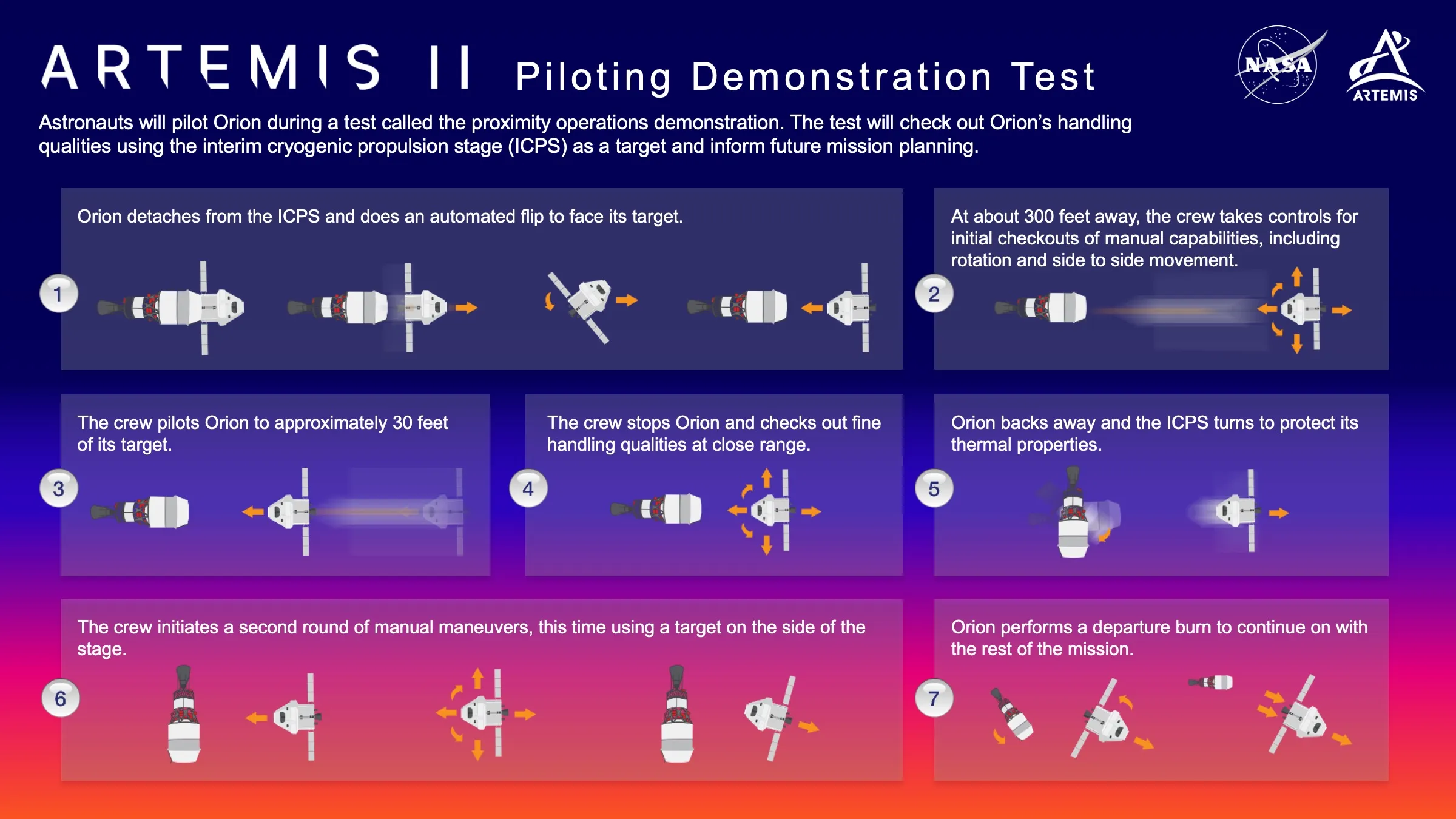
Assuming the ECLSS is operating as expected, the crew will move on to a series of tests that will demonstrate Orion’s ability to navigate and maneuver in close proximity to another spacecraft. This is not a capability that is actually required on Artemis II, but it will be absolutely critical for future missions. In Artemis III and beyond, the Orion will need to rendezvous and dock with a commercially developed lander that will be waiting for it in orbit, not unlike the Command Module and Lunar Module architecture of Apollo.
Advertisement
There won’t be a lander in orbit for Artemis II, and in fact, the Orion that’s flying this mission doesn’t even have a docking hatch. But they can still simulate the act of docking with another vehicle by using the spent upper stage of the Space Launch System (SLS) rocket, known as the Interim Cryogenic Propulsion Stage (ICPS), as a stand-in.
With this shakedown of the Orion complete, the crew will finish the day off by testing their connection to the Deep Space Network. This link will be vital as they journey beyond low Earth orbit, and this test must be completed successfully before the crew will be given the go-ahead by ground controllers to initiate the TLI maneuver that will set them on course for the Moon.
Setting Course for Luna
With all of the systems tests out of the way, the crew will focus most of their second day on preparing for and ultimately executing the trans-lunar injection burn.
In many ways, this is the most critical element of Artemis II. Up until the point that the TLI is initiated, the Orion can easily return home by simply slowing down and dropping back into the Earth’s atmosphere. But once the engines are fired and the vehicle is accelerated to the velocity necessary to intersect with the Moon’s gravitational sphere of influence, they are fully committed.
Interestingly, the completion of the TLI maneuver on day two marks the final major engine burn of the mission. Because Artemis II will be flying what’s known as a free-return trajectory, the same engine burn that puts them on course for the Moon also enables their return eight days later. That is, the flight path of the vehicle is such that it will go around the Moon and then “fall” back towards the Earth automatically.
Advertisement
This is a fault-tolerant flight path which will bring the spacecraft back to Earth even in the event of a propulsion failure. The same approach was used during the Apollo missions as a contingency should the spacecraft fail to enter into lunar orbit — a plan famously utilized to bring the crippled Apollo 13 home.
On the Road to the Moon
Once the TLI burn is completed, Orion is essentially “on rails” for the rest of the flight. A few minor course correction burns are expected over the next several days to fine-tune the spacecraft’s closest approach to the lunar surface, but later, its ultimate splashdown point back on Earth. Obviously you can’t correct a deviation in your course until you actually know how far off the mark you are, so the exact timing and frequency of these adjustments will need to be determined on the fly as the vehicle is in transit.
With the Orion sailing through its predetermined trajectory for the next few days, the crew will have time to perform various experiments and prepare themselves for the later elements of the mission. A number of medical tests are scheduled for this period to see how the crew is performing, and they will perform drills to determine how quickly they can get into their Orion Crew Survival System (OCSS) spacesuits in the event of a emergency.
The crew will also be given time to study the areas of the lunar surface they will be asked to photograph once the spacecraft makes its closest approach. Since the exact position of Orion relative to the Moon won’t be known until the vehicle is on its way, the crew can’t really prepare ahead of time. Once the Orion is on course, ground controllers will be able to calculate what parts of the lunar surface will be visible through the windows, and can inform the crew as to the points of interest that they would like close-up imagery of.
Advertisement
The Big Day
If everything goes according to plan, day six of the mission should see the Orion capsule swing around the far side of the Moon at a distance of less than 10,000 kilometers. The only thing officially on the schedule for this period is, as you might expect, lunar study.
Earthrise as seen by Apollo 8
As Artemis II won’t be entering into lunar orbit, this is the only chance the astronauts will get to gather video and images of the surface. They’ll document all of their observations, some of which will need to be recorded and transmitted back to Earth later as mission control will lose contact with the crew for about an hour while the Moon itself is between Earth and Orion.
Soon after the spacecraft emerges from this communications blackout, its expected that scientists on the ground will get a chance to interview the crew about what they saw while the memory is still fresh in their minds.
Given the flurry of activity expected in this relatively brief period, the crew will remain largely off-duty for day seven so they can rest up for the final leg of the mission.
Heading Back Home
With the Moon officially behind them, the final three days of the mission will be largely focused on the splashdown and recovery procedures. It’s expected that several course correction burns will be performed during this period to fine-tune the spacecraft’s course and bring it down safely in the Pacific Ocean. In between these maneuvers, the crew is also scheduled to demonstrate manual attitude control of the Orion.
Advertisement
There are a few more experiments to perform and a bit of housekeeping to do, but it’s safe to say that — save for the fiery reentry into the Earth’s atmosphere — the most exciting aspects of the mission are all completed by this point. There is however one experiment that stands out: on day eight the crew will perform a radiation drill meant to simulate a solar flare, and will use supplies stored in the capsule to quickly erect a radiation shelter. A suite of radiation sensors will be used to determine the effectiveness of the makeshift shielding.
Must-See TV
Most of the people reading this weren’t alive to follow along with the Apollo missions as they happened, and have only experienced them in a historical context. We’ve seen the photos, watched the recordings, and read first-hand accounts from the astronauts. But there has always been a certain detachment — we know that humanity visited the Moon in the same way we know of Marco Polo’s travels through Asia or Edmund Hillary’s trek up Mount Everest. It’s something that happened in a bygone era, the accomplishments of another generation.
But Artemis II and the missions that follow it represent a new generation; an adventure that we’ll all get the chance to experience together in real-time. NASA will be bringing the full capabilities of the Internet and social media to bear, and the world will get to watch every moment unfold in high-definition. If the weather holds and there are no technical issues, we should be seeing the crew work their way though this ambitious agenda in just a few weeks.
Luke Bell had a nagging worry following his last year’s test flight with the first solar-powered drone. Could a drone truly run solely on solar power and stay aloft for far longer than anyone imagined possible on a clear day? He was previously familiar with how the basic components worked in a lesser scale. The initial version flew for about three minutes before the panels snapped and it crashed to the ground.
This time, he wanted to go even further, so he shortened the arm length on his quadcopter frame by 70 grams, resulting in a loss of around 4 watts of power right away. The solar panels themselves received a significant boost, with new stronger TPU sleeves wrapped around each one to withstand a little of wind without snapping. To further reduce mass, he rerouted the wiring to make it shorter and neater.
Lightweight and Regulation Friendly – At just 135g, this drone with camera for adults 4K may be even lighter than your phone and does not require FAA…
Palm Takeoff & Landing, Go Controller-Free [1] – Neo takes off from your hand with just a push of a button. The safe and easy operation of this drone…
Subject Tracking & QuickShots – Effortlessly capture stunning vlogs as DJI Neo smartly follows you. Getting professional footage has never been easier…
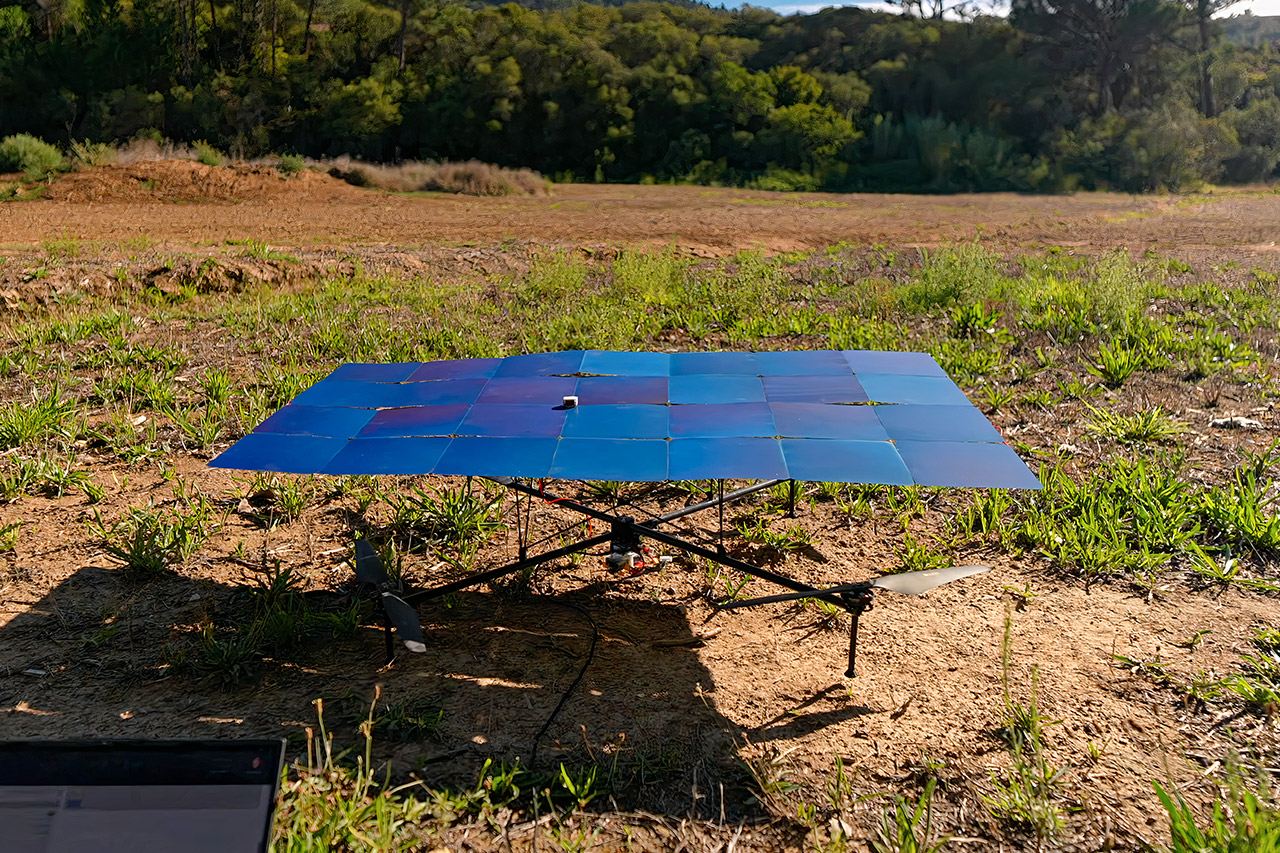
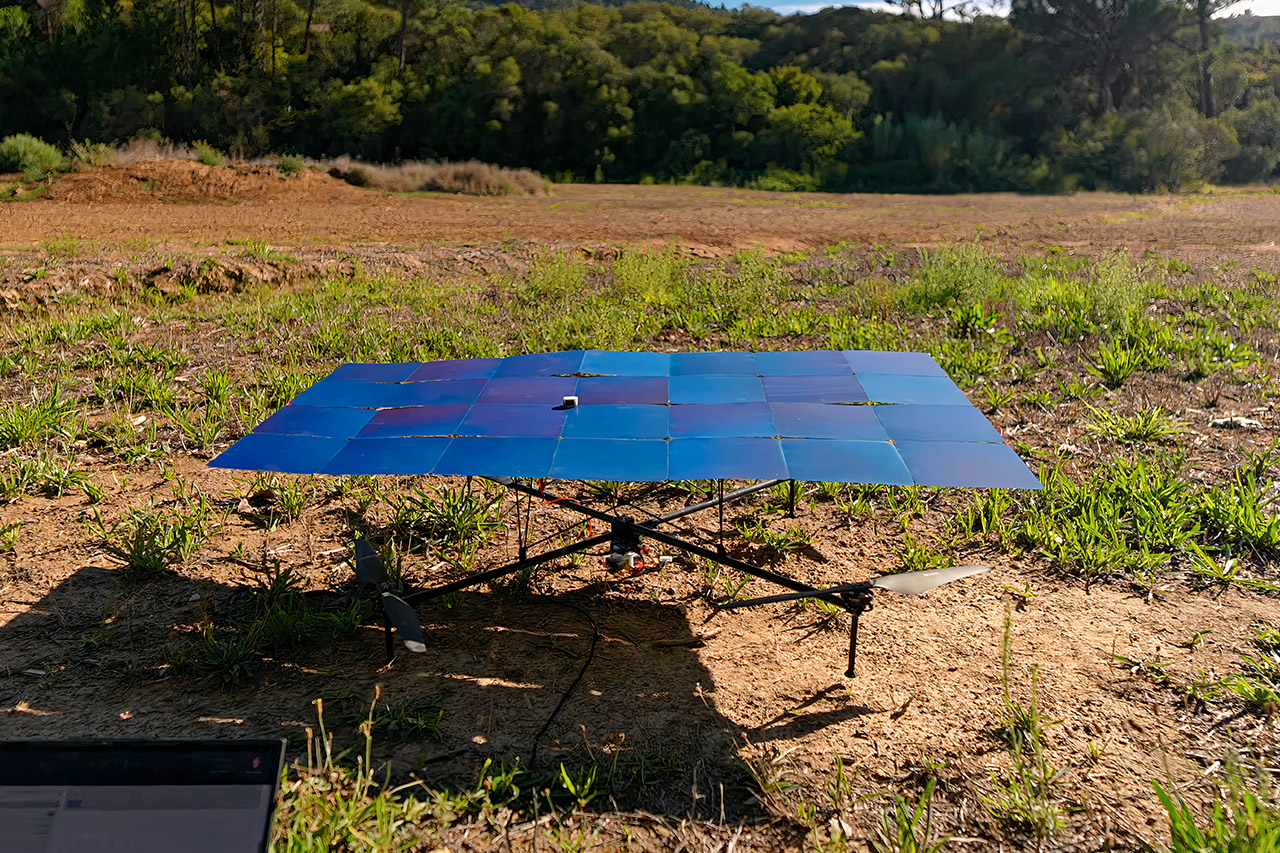
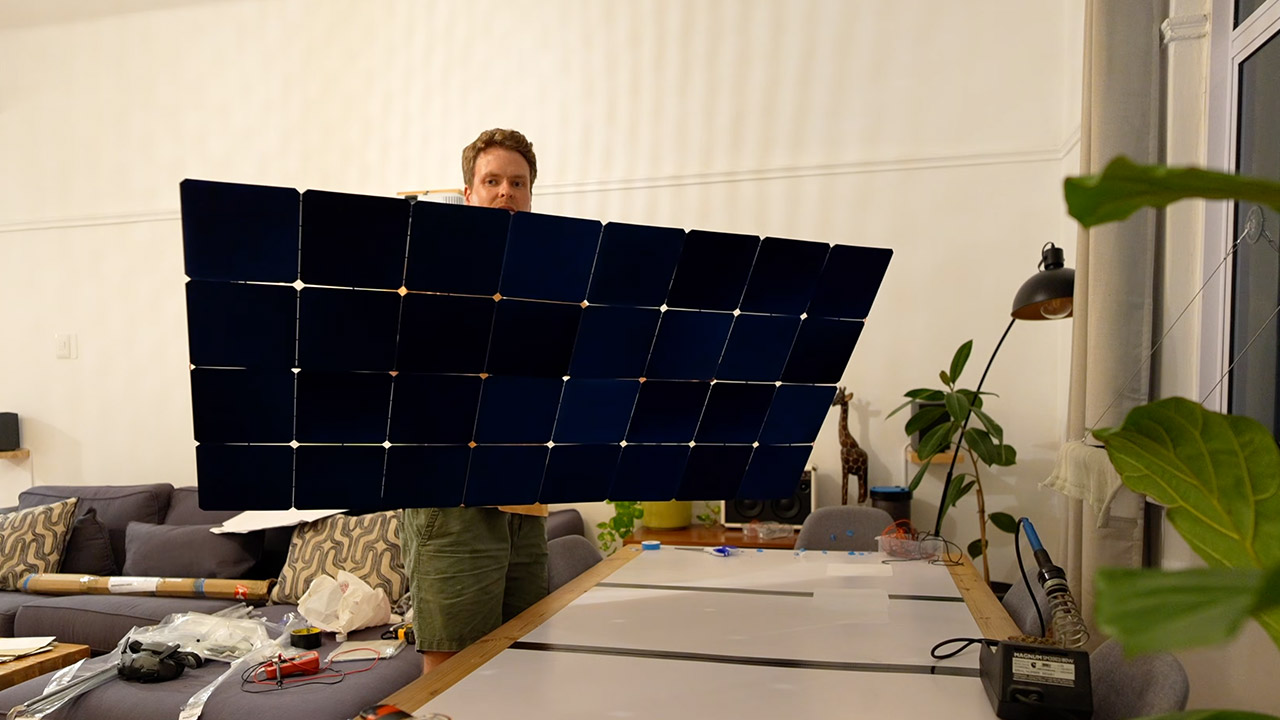
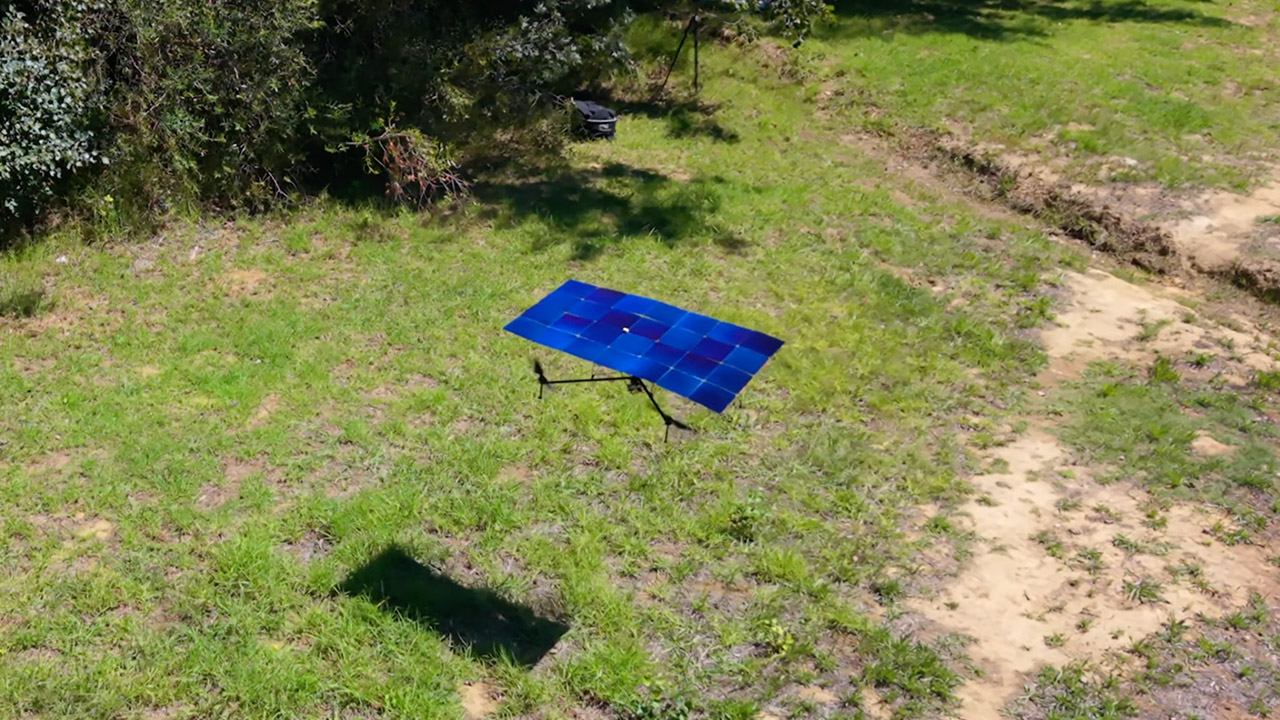
Thirty two small solar panels were arranged in an eight by four grid and soldered together into a single unified array, capable of pushing out 110 watts in full daylight, more than enough to keep the drone airborne. Getting the balance right took some careful thinking. Bell mounted the entire panel platform lower on the carbon fiber frame to bring the center of gravity into the right place, which cleared up the stubborn wobble that had been showing up during early test flights. Computer simulations confirmed that the propellers kept spinning cleanly even with the panels sitting directly above them, which was one of the trickier design questions to answer.
Under the hood, a pair of T-Motor Antigravity MN4004 motors spin compact 18 by 6 inch propellers through a T-Motor F60A Mini speed controller, with a T-Motor H7 Mini flight controller and a GPS unit keeping everything stable once the settings were dialed in. Getting to that point took some patience though. Early flights revealed that the solar panels were interfering with the GPS signal, making it difficult to lock onto satellites reliably. Bell had to reposition the unit and recalibrate the compass several times before it was consistently picking up 20 or more signals and holding its position the way he needed it to.
Cape Town’s unpredictable winds created sudden power spikes that the solar panels couldn’t handle on their own, and passing clouds could cut the output in a matter of seconds. To smooth things out, Bell added a small five cell lithium ion pack connected through a set of diodes. It would only kick in when the solar array needed backup, feeding power to the motors just in time to keep things steady, and whenever the sun was generous enough it would quietly recharge at around 11 watts.
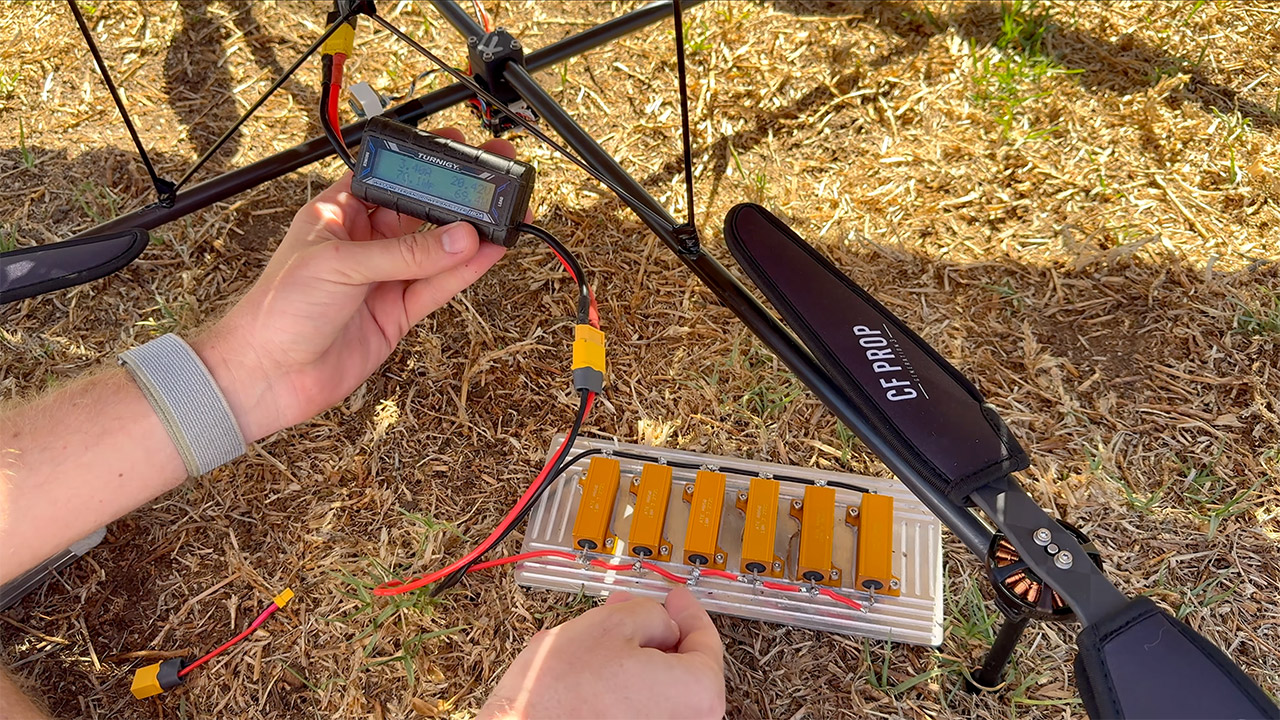
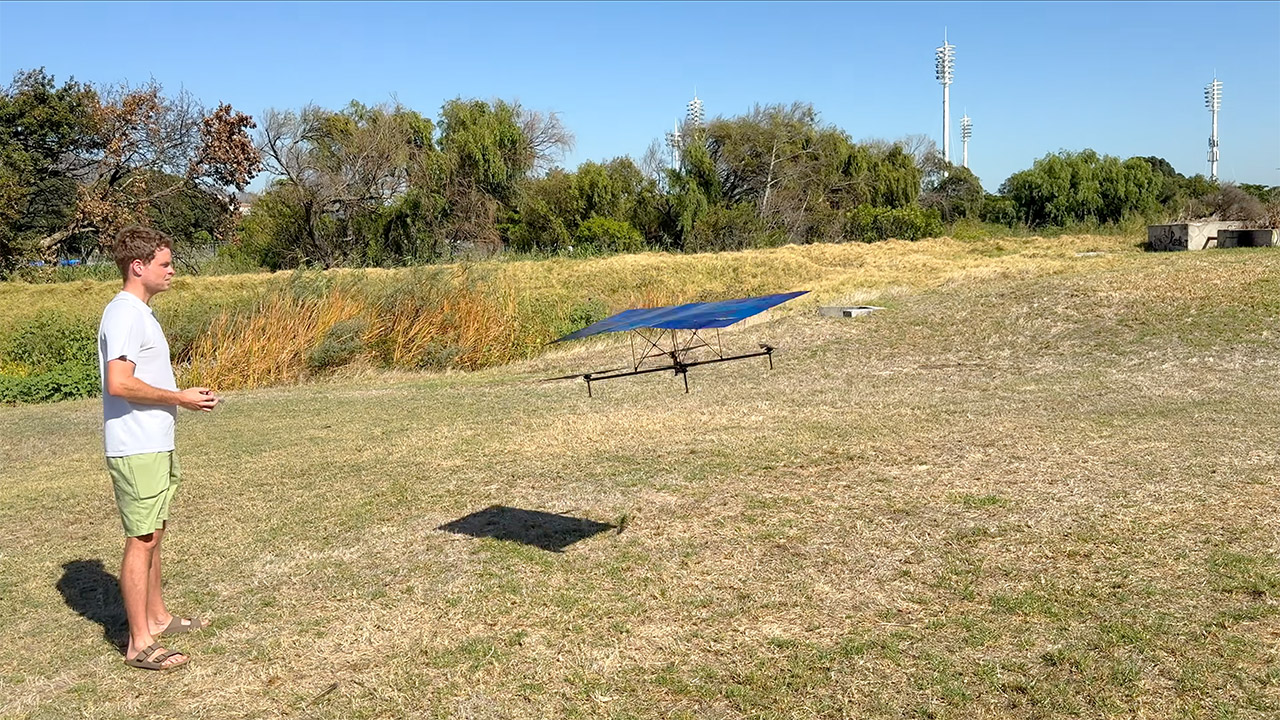
So, with the drone completely completed, he took it to the skies over Stellenbosch for a real test. A sunny morning meant he could start it and watch the voltage rise to 20.66 volts in the bright sunlight. The drone took off effortlessly and locked into position hold. Minutes passed, and with only a little manual correction here and there, he watched it sail along slowly. An hour passed, then two, then three and a half, and the machine kept buzzing away smoothly.
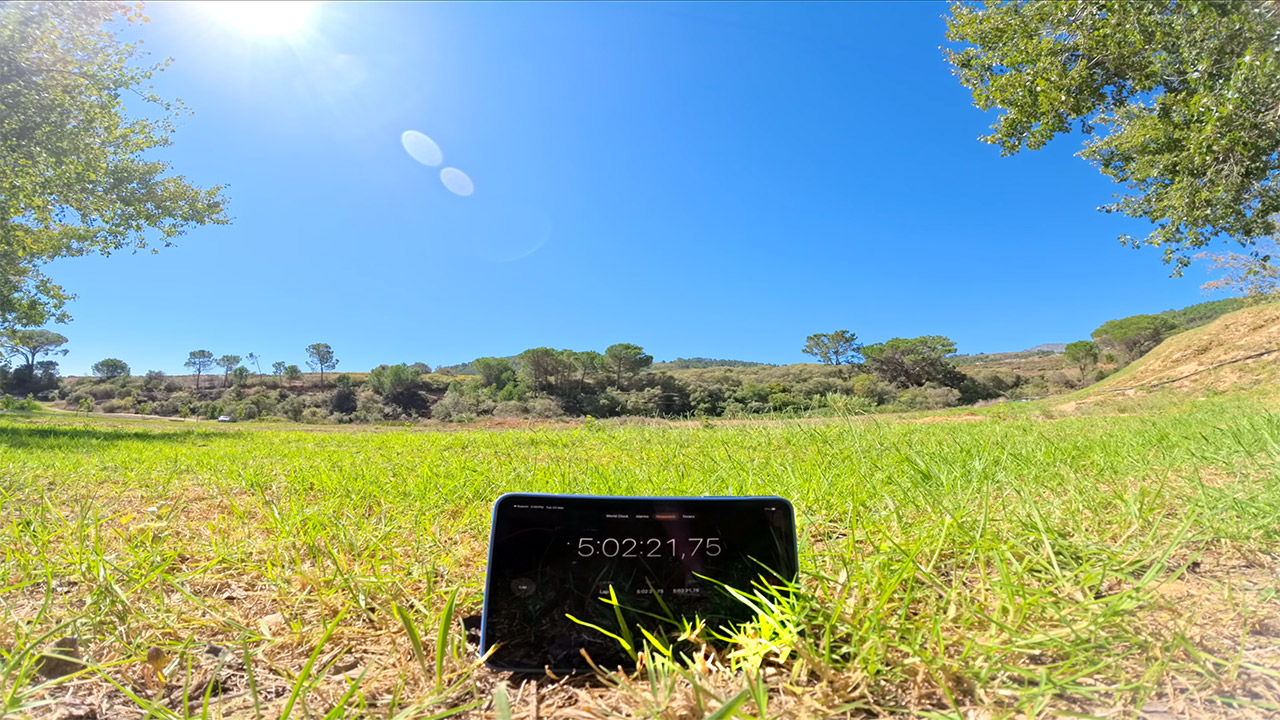
At the five hour mark the numbers told the story, 5 hours, 2 minutes, and 21 seconds in the air before Bell finally brought it in for a gentle landing. The entire flight ran on solar power alone, with a small backup battery there purely as a safety net for moments when the panels weren’t pulling in quite enough sunlight. No fuel, no heavy battery pack, just a handful of solar panels drinking in as much South African sunshine as they could manage.
That time shattered the previous flight record for a radio controlled quadcopter, and it will take something special to beat it. Bell is already thinking about what comes next, with plans to ditch the backup battery entirely and squeeze even more efficiency out of the design, likely with a few more tweaks to the frame along the way. [Source]
Part of the Seattle skyline as seen from the waterfront. (GeekWire Photo / Kurt Schlosser)
Seattle ranks No. 3 nationally in AI industry growth according to a new study that measures employment, salaries, job concentration and more in metropolitan areas across the U.S.
The new report from CoworkingCafe puts Seattle behind San Jose, Calif., (Silicon Valley) and New York City. San Francisco and Dallas round out the top five.
“Seattle strikes a balance between Silicon Valley’s intensity and New York’s breadth,” the report notes. With 12,726 AI job postings between November 2024 and November 2025, AI roles are nearly three times as common in the Seattle area as they are nationwide.
(CoworkingCafe graphic)
Average AI pay reaches $169,633 in the Seattle area, according to CoworkingCafe. However, “rising expenses have become a constraint and local living costs sit well above the national average,” with Seattle among the most expensive large metros.
By comparison, AI job pay in San Jose averages almost $216,000 — the highest of any metro studied — and in New York it’s $151,000.
Whether the momentum continues in Seattle remains to be seen, at least for some tech leaders, who have been warning that the passage of a new state “millionaires tax” could stall the region’s AI growth.
Advertisement
The study, which measured 300 cities, focused on AI-native technical roles, including software developers, data scientists, computer systems analysts, QA testers and related engineering positions.
The study also compared broadband readiness and co-working infrastructure, which CoworkingCafe considers a necessity for keeping connected and productive. Seattle is home to 145 co-working spaces.
Among smaller-market AI growth, Fayetteville, Ark., and Boulder, Colo. topped the rankings for mid-size and small-size metros, respectively.


































































You must be logged in to post a comment Login