Tech
Quantum XDR5-8K Video Wall Debuts at CEDIA 2026 With Multiple Native 8K Streams

When eCoustics walked into the Quantum Media Systems room at CEDIA Expo 2025, we were not expecting a 20-foot-wide video wall to become one of our favorite displays of the show. The company’s XDR4-8K delivered excellent color, deep black levels, enormous scale, and most importantly, none of the distracting seams that can undermine modular MicroLED displays. The approximately 20-foot-wide system started around $350,000 and ultimately earned our Best Ultra Large TV award for CEDIA Expo 2025.
Quantum Media Systems is returning to CEDIA Expo 2026 with the fifth-generation XDR5-8K, but the story this time is not simply another gigantic display with more pixels. The new processing platform can handle multiple simultaneous native 8K video streams without downscaling, while an integrated Visual Media Server allows different sources, graphics, widgets, control interfaces, security feeds, sporting events, games, and digital artwork to share the same massive canvas.
That makes the XDR5-8K more than another demonstration designed to make people stare at an enormous screen for five minutes before returning to something they can actually afford.


Quantum XDR5-8K: What’s New?
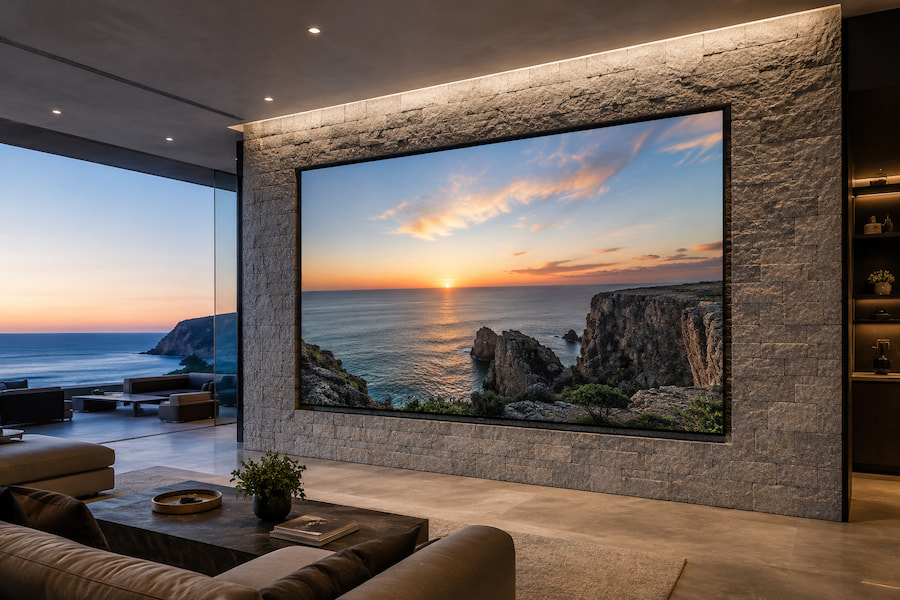
At the heart of the XDR5-8K is Quantum’s next-generation Visual Media Server, which is designed to process multiple native 8K streams simultaneously while retaining their resolution. Users can arrange those sources in customizable windows, including combinations of 8K and 4K content, without having the processor reduce an 8K source to a lower resolution simply because several images are being displayed at the same time.
For a conventional television, that might be overkill. On a video wall measuring 15, 18, or 20 feet across, it starts to make considerably more sense. A homeowner could watch several sporting events simultaneously, keep a security feed or statistics window open alongside them, display artwork when the system is not being used for movies, or create entirely different layouts depending on the application.
The XDR5-8K uses a 0.9mm pixel pitch and is designed to provide studio-reference color accuracy and Digital Cinema-compliant performance. One important clarification, however, is that the pixel pitch itself is not an improvement over the specific XDR4-8K demonstration eCoustics saw last year. Quantum described that 20-foot XDR4 system as using a finer 0.7mm pixel pitch, so the significant generational change with XDR5 appears to be centered more on processing, system flexibility, visualization, and installation support than simply shrinking the distance between pixels.
Native 8K Finally Has Something to Play
One of the longstanding problems with 8K displays has been painfully obvious: what are you supposed to watch on them?
That situation has started to change. Kaleidescape introduced its $4,995 Strato K in June 2026, giving its movie ecosystem native 8K playback for the first time while also introducing the higher-bitrate 4K Cinematic format with up to 4:4:4 chroma. The Strato K supports native 8K playback in SDR and HDR10 and is the first movie player certified under the 8K Association’s current performance and interoperability requirements.
When eCoustics covered the Strato K in June, we noted that the more interesting feature at launch might actually be 4K Cinematic, because native 8K movie availability remained extremely limited. The important difference at CEDIA 2026 is that Quantum can now demonstrate an 8K display using a consumer movie player capable of delivering actual native 8K content instead of relying exclusively on demonstration material, upscaling, or specialized professional playback equipment.
The XDR5-8K will be demonstrated in CEDIA Expo Room 201 with the Strato K supplying native 8K material. Quantum will also provide an 18-foot-wide LED wall at Kaleidescape’s Booth 3706.
Why Does This Matter?
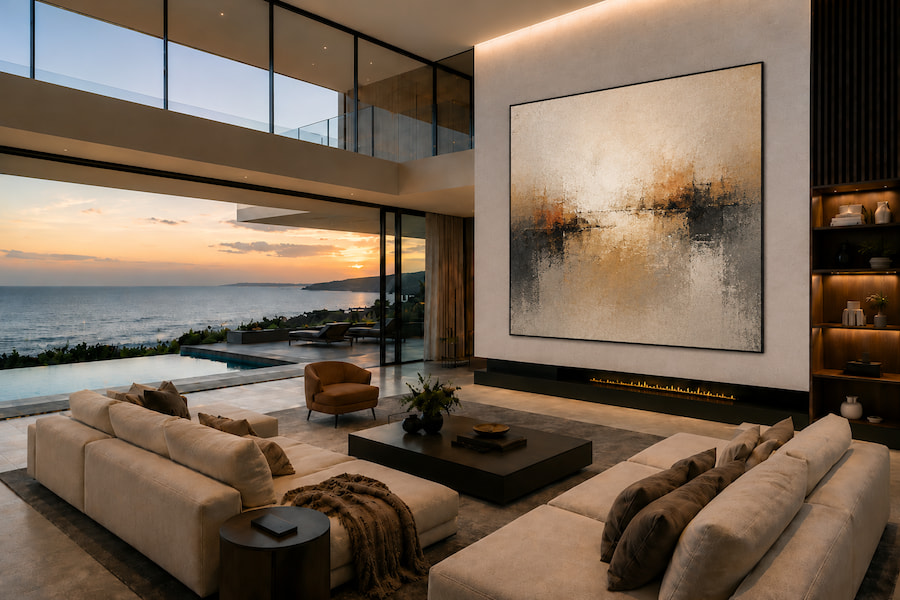
For most consumers, an enormous custom video wall costing well into six figures remains about as relevant to the monthly household budget as yacht maintenance. But technologies demonstrated at this level have a habit of moving downstream, and direct-view LED systems are increasingly challenging the assumption that projection is the only practical route to truly enormous home theater images.
Projection remains capable of delivering spectacular results, particularly in properly designed dark rooms, but a direct-view LED wall does not require a projector hanging from the ceiling or a projection surface across the room. It can also serve as a large-format display for television, sports, gaming, artwork, and other content rather than functioning primarily as a cinema screen.
Our experience with Quantum at CEDIA 2025 demonstrated the potential. The biggest issue we have encountered with modular LED walls has been visible seams and differences in brightness or color between individual display modules. Quantum’s precision installation and extensive calibration made those module boundaries essentially disappear on the XDR4 system we saw, even from unusually close viewing distances.
The XDR5 expands on that concept by treating the wall as something closer to a giant programmable visual environment instead of merely an enormous television.
That is probably its most interesting feature.
More Than Hardware
Quantum is also addressing one of the less glamorous problems associated with a system of this complexity: getting the damn thing installed correctly.
The company is introducing an integrated visualization platform that allows custom integrators to create realistic renderings of a proposed room before construction begins, including the video wall, loudspeakers, seating, lighting, and furnishings. Quantum also offers engineering, system configuration, installation assistance, calibration and commissioning, remote diagnostics, ongoing support, and spare display modules stored on-site for servicing.
That turnkey approach matters when the display costs more than many houses. A modular LED wall is not something you want delivered on Tuesday afternoon with an Allen key and a QR code linking to a YouTube installation video.

Who Is the Quantum XDR5-8K For?
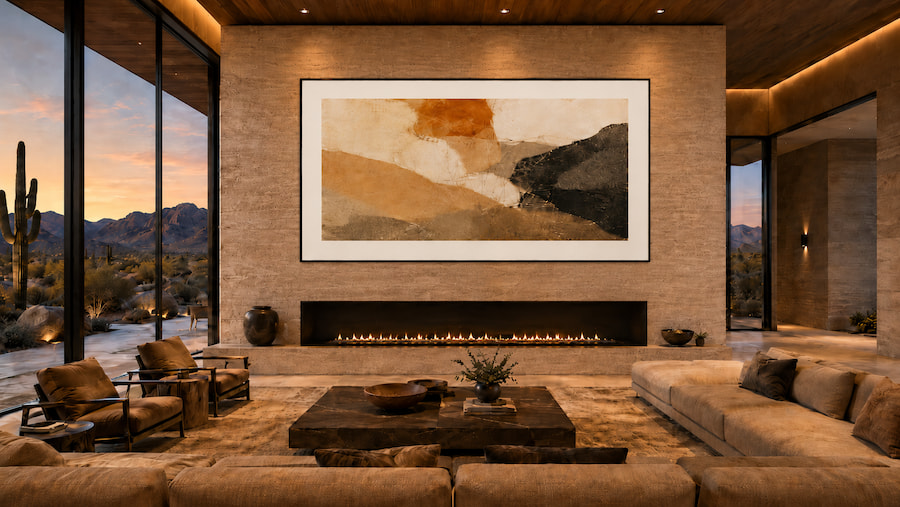
The obvious audience is the ultra-high-end custom-installation market: dedicated home theaters, luxury media rooms, sports-focused entertainment spaces, yachts, and residences where a conventional 100- or 115-inch television simply is not large enough.
It is also aimed at customers who want one giant display to perform several jobs. The ability to divide an enormous screen among multiple sporting events, games, security feeds, artwork, videoconferencing, and other sources makes more practical sense in a multipurpose entertainment space than buying an 8K wall solely to watch the still-small selection of native 8K movies.
Quantum has not announced pricing for the XDR5-8K in its current CEDIA 2026 announcement. For context, the 20-foot Quantum system eCoustics experienced at CEDIA 2025 started at approximately $350,000, with configurations capable of exceeding $550,000 depending on options.
Nobody should therefore expect this to appear beside the 98-inch TVs at Costco anytime soon.
The Bottom Line
We were already impressed with what Quantum Media Systems accomplished at CEDIA Expo 2025.
The XDR5-8K takes a different step forward. Native 8K support itself is no longer particularly shocking, but processing several native 8K sources simultaneously without downscaling them, integrating those sources into customizable layouts, and turning the wall into a broader entertainment and smart-home interface makes this considerably more interesting than another resolution upgrade.
Native 8K content still needs to catch up with the hardware, and nobody is going to confuse the XDR5 with a mainstream television. But pairing Quantum’s enormous direct-view display with Kaleidescape’s new Strato K means that, for perhaps the first time at CEDIA, we can evaluate a genuine consumer 8K source-to-display chain rather than watching another carefully selected 8K demo loop.
After what we saw from Quantum last year, this is one room we will be visiting again at CEDIA Expo 2026.
For more information: quantummediasystems.com
You must be logged in to post a comment Login