Tech
Quarters for a Moment Inside the Short and Strange Life of the Vend-O-Vision

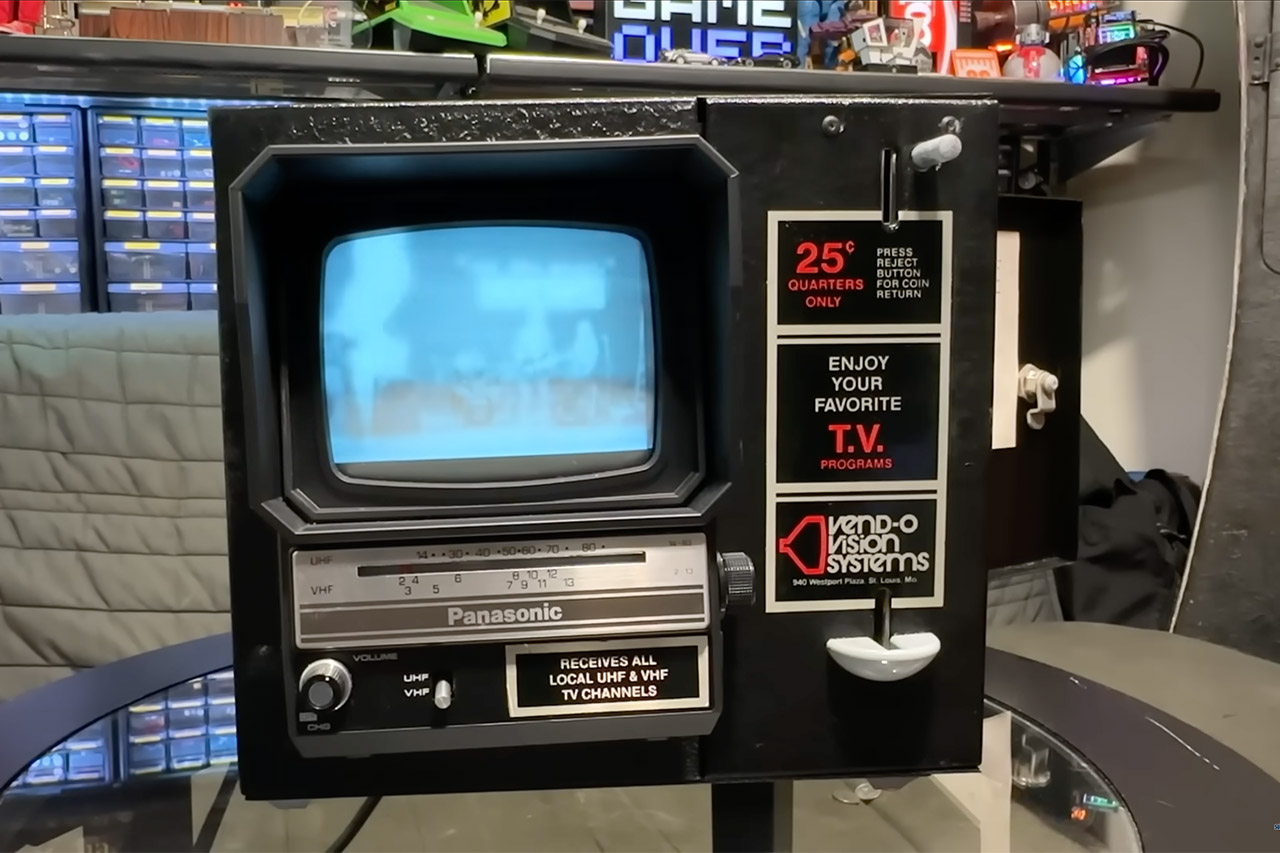
In the late 1980s, a little monochrome television appeared in certain public spaces, and for a few quarters, you could see some programming on it. Known as the Vend-O-Vision, this small device transformed idle waiting into something you might pay to see.

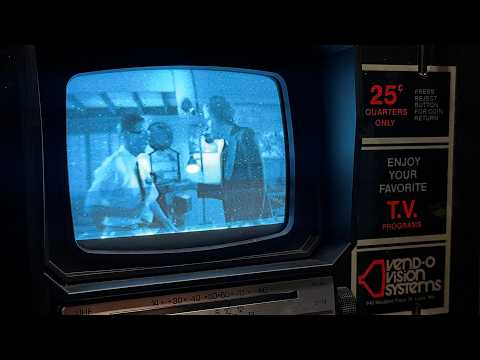
Mini-TV USA got the ball rolling in 1989, with the first documented use being on November 29th of that year. Whether it be a laundromat, restaurant, an airport, or a hotel, you could install one of these devices and make some additional money while customers waited. The idea was simple: put one in a waiting area and collect the quarters. Customers faced no monthly bills or ownership hassles, just the straightforward act of inserting a coin.
Each Vend-O-Vision contained a regular Panasonic black and white set, such as a TR5040P, housed inside a strong metal case. The screen was modest, which was common for portable TVs at the time. It picked up VHF and UHF channels fine with a simple antenna setup, and a coin acceptor on the front had a reject button for when customers put in bad coins. Then, once a quarter was inserted, a timer activated and powered the set for the duration you specified, which might be 10 minutes, 15 minutes, or 20 minutes, depending on your settings.
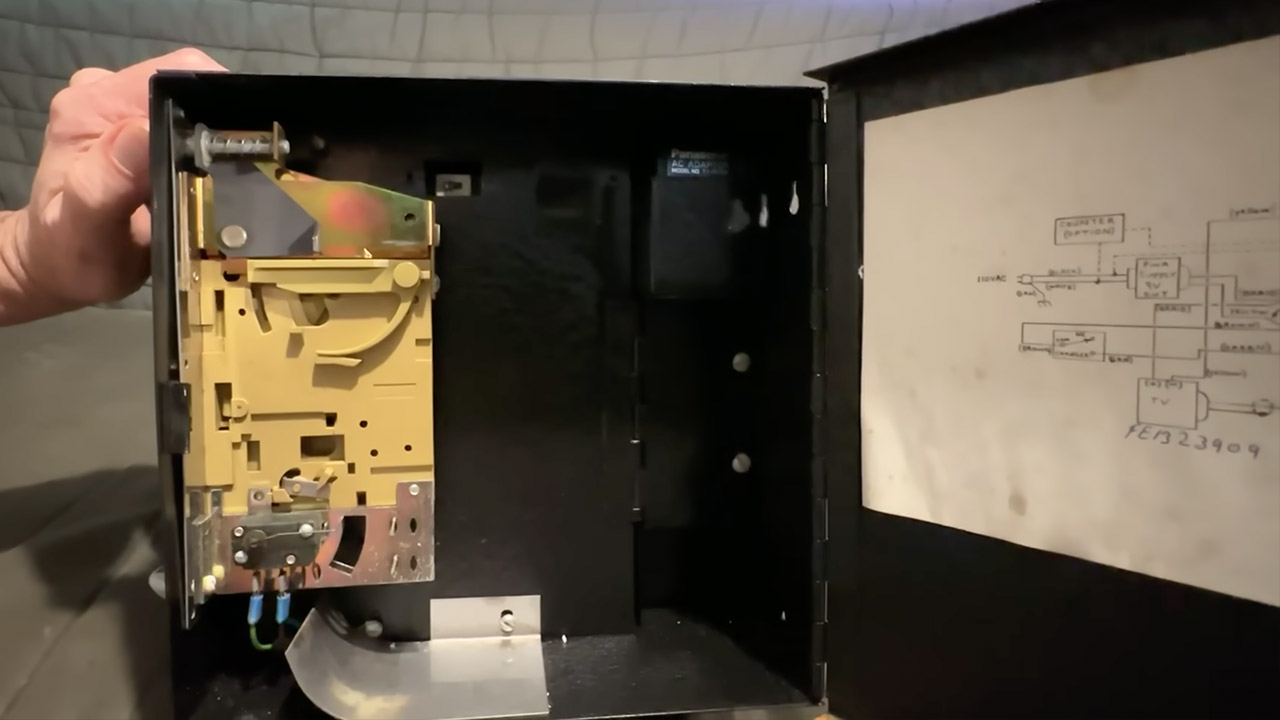
A small slider on the device allowed you to adjust how long the set would stay on for each quarter. You had to manually tune the channels and use the TV’s knobs / dials to get what you wanted. When the timer ran out of time, it turned the power back off. You could even keep your quarters in the closed box, and some versions included a counter to track total insertions for easy revenue checks. It ran everything on a compact 9-volt power supply and had a power pass-through outlet out back for added convenience.

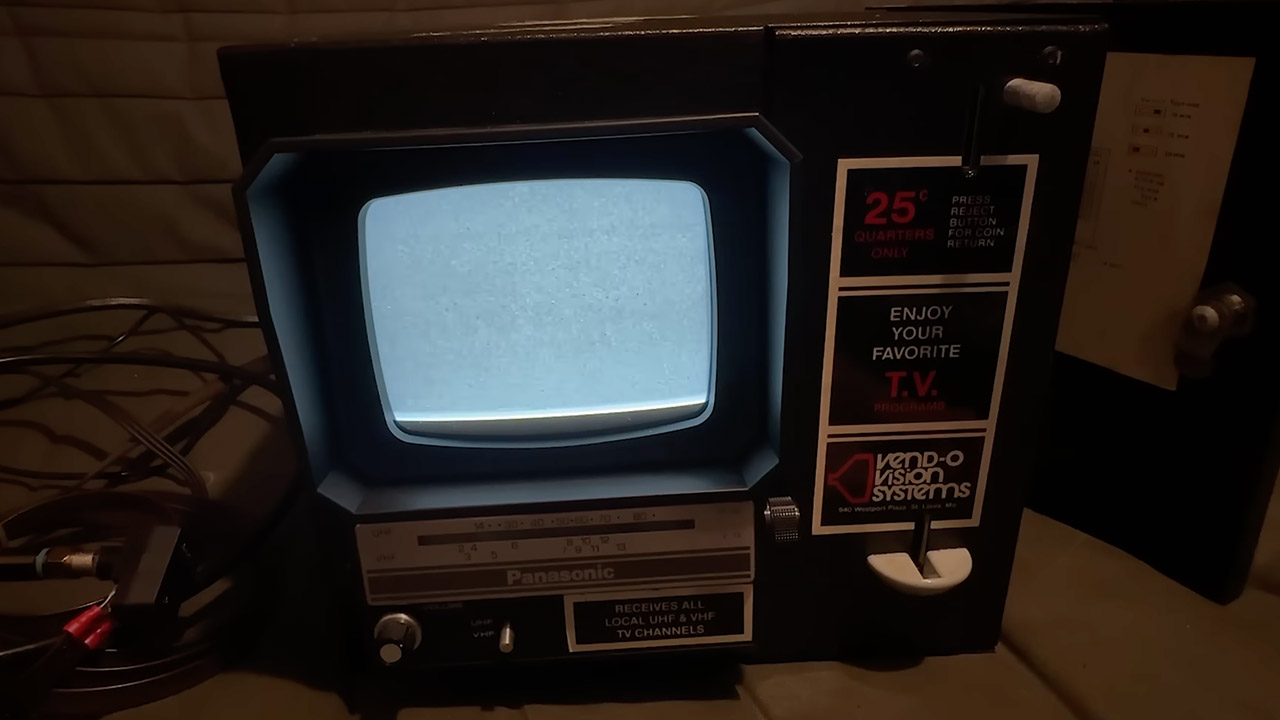
It’s difficult to find any of these devices today because Mini-TV USA ran into some problems early on. Starting around 1990, corporate salesmen were exhibiting these items off at trade exhibitions, assuring customers they could earn a fortune, but it’s safe to say that wasn’t exactly accurate. By 1995, the Federal Trade Commission had taken action against the corporation for deceptive marketing practices. Operations were mostly winding down by then, and a few years later they were gone for good, leaving behind a handful of units, some of which were still sealed in their original packaging.
[Source]