Tech
Ray-Ban Meta Audio Glasses Drop the Camera and Suddenly Make More Sense

Meta has spent years trying to convince consumers that putting cameras on their faces is perfectly normal. With the new Ray-Ban Meta Audio, it is trying something refreshingly different: removing the camera entirely, which also means the person sitting across from you no longer has to wonder whether they are being recorded.
For a lot of people, that alone may be the feature that finally makes smart glasses feel less creepy.
Announced at Meta Connect 2026, Ray-Ban Meta Audio combines open-ear speakers, six microphones, Meta AI and conventional prescription-compatible eyewear in a 43-gram frame. Prices start at $349, preorders are open now, and shipments begin October 13, 2026.
That makes them Meta’s first audio-only glasses, although not the first product to try the concept. The more interesting question is whether Ray-Ban styling, Meta’s AI ecosystem and substantially longer battery life can make audio glasses relevant again after Bose, Amazon and smaller competitors spent years poking at the category.
Related Reading:

No Camera Is The Feature
Ray-Ban Meta Audio uses two open-ear speakers positioned in the temples and a six-microphone array for calls and voice commands. Meta claims the microphone system can capture the wearer’s voice more clearly than earbuds, while the open design keeps the ear canal unobstructed for greater situational awareness.
Removing the camera does more than avoid having strangers wonder whether dinner is being livestreamed to Instagram. It allows Meta and Ray-Ban to make the frames lighter and extend battery life to up to 12 hours, compared with nine hours for the camera-equipped Ray-Ban Meta Gen 3. The included charging case adds up to another 48 hours, according to Meta.
There is a tradeoff. Without a camera, Ray-Ban Meta Audio cannot use Meta’s multimodal AI features that analyze what the wearer is looking at, and Live AI visual interaction is unavailable. Voice-based Meta AI, text translation, live translation, music, podcasts, messaging and calls remain available.
That may be enough for a lot of people.

Meta also unveiled its much more ambitious Meta VR Glasses at Connect, but the two products share little beyond being worn on your face.
Meta VR Glasses weigh about 100 grams, use dual micro-OLED displays with 2412 x 2288 pixels per eye, support Dolby Vision and Dolby Atmos, and rely on eye tracking and hand gestures for navigation. A tethered compute puck contains the Snapdragon Reality Elite processor, storage and battery, with up to three hours of high-resolution media playback. They arrive in spring 2027 for $1,299.99.
Those are portable VR computers designed for movies, gaming, spatial workspaces and immersive sports. Ray-Ban Meta Audio is essentially an open-ear audio wearable and AI interface disguised as normal glasses.
One replaces much of what a VR headset does. The other wants you to leave your earbuds at home.
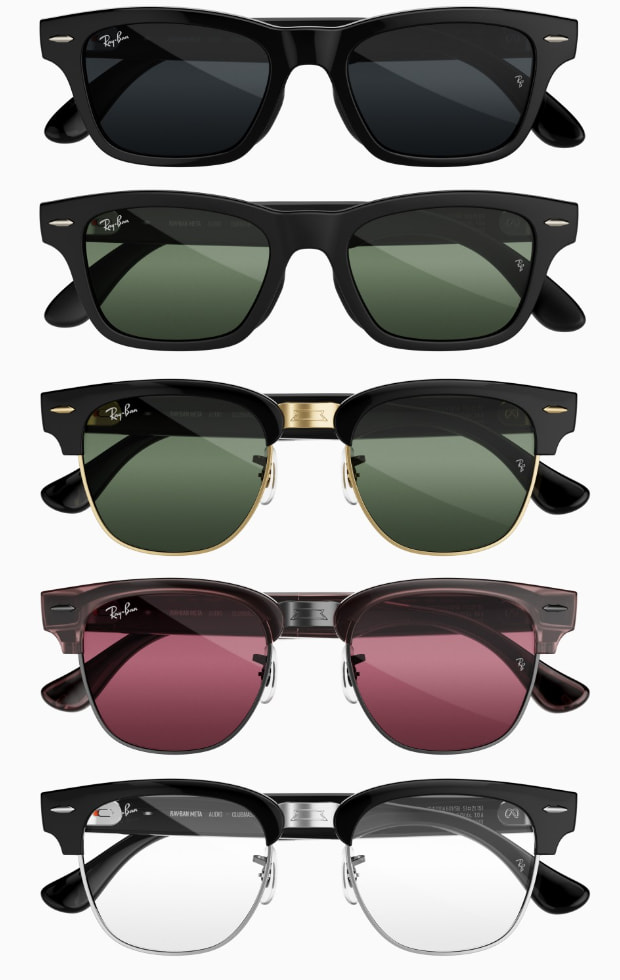
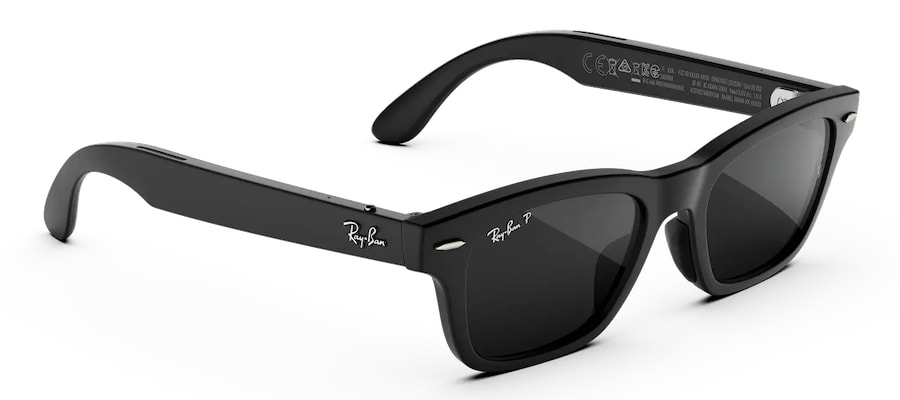
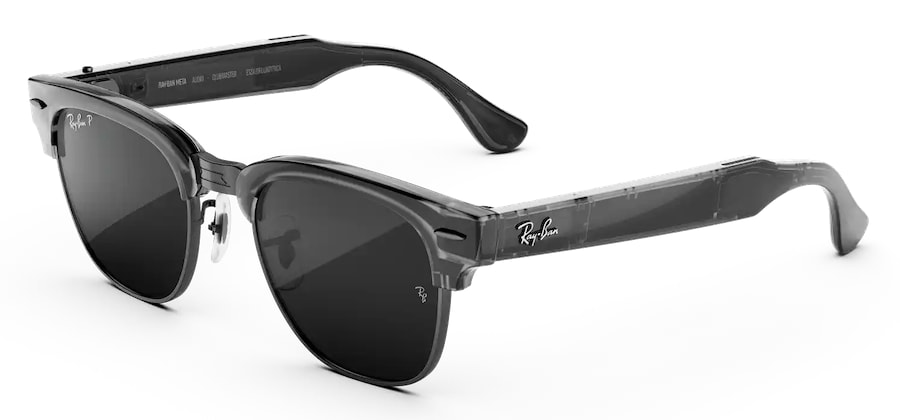
Ray-Ban’s advantage is the eyewear side of the equation. The Meta Audio lineup launches with Clubmaster and Burbank frames in 23 lens and color combinations, including clear, tinted, polarized and Transitions options, with support for a wide range of prescriptions.
People might actually want to wear them, which is apparently still an important feature for glasses.

- Type: Audio-only AI smart glasses
- Weight: 43 g
- Audio: Dual open-ear speakers
- Microphones: 6-mic array
- Battery Life: Up to 12 hours
- Charging Case: Up to 48 additional hours
- Wireless: Bluetooth 5.3, Wi-Fi 6
- Water Resistance: IPX4
- Frames: Clubmaster, Burbank
- Lens Options: Clear, tinted, polarized, Transitions and prescription
- AI: Meta AI with voice interaction and translation
- Camera: None

The Bottom Line
Ray-Ban Meta Audio may prove more interesting than Meta’s camera-equipped glasses precisely because it does less. There is no camera, no display and no attempt to turn every walk to the deli into a mixed-reality demonstration.
What remains is open-ear audio, calls, AI assistance and translation built into glasses that weigh 43 grams and can potentially last through an entire day. For listeners who like the awareness of open-ear earbuds but already wear glasses, that combination makes considerably more sense than adding another device around their ears.
The only irony is that Meta may have made its most socially acceptable smart glasses by making them slightly less smart.
You must be logged in to post a comment Login