Connect with us

Tech

Razer’s new limited-edition Huntsman keyboard offers you a premium build at an equally premium price

Published

on

After launching the resurrected Boomslang mouse earlier this month, Razer is back with another limited-edition release. The company has unveiled the Huntsman Signature Edition, a premium tenkeyless mechanical keyboard that sits at the top of its Huntsman lineup. While not as outrageously priced as the Boomslang mouse, it still carries a hefty $499.99 price tag and will be sold in a limited run of just 1,337 units directly through Razer.

What sets the Huntsman Signature Edition apart is its build. Instead of featuring a plastic chassis like other Huntsman models, Razer has crafted this keyboard from CNC-milled anodized aluminum, giving it a more solid, premium feel. A mirror-finished back and a metallic snake keycap enhance the aesthetic, while foam and rubber dampening materials on the inside deliver a more satisfying, rounded typing sound and improved key feel.

Performance-wise, the keyboard is not entirely different from the Huntsman V3 Pro, featuring Razer’s second-gen analog optical key switches, a Rapid Trigger Mode, and an ultra-high 8,000Hz polling rate for near-instant input. Key actuation is adjustable from 0.1mm to 4mm, letting users fine-tune the feel for gaming or typing. The keyboard also includes full RGB lighting, on-the-fly macro recording, and supports both Mac and PC with a physical toggle to switch between the two systems.

The Huntsman Signature Edition only offers wired connectivity over USB-C and will go on sale through Razer’s website at 8 AM PT on February 22. In the box, you’ll get a vegan leather signature box, a vegan leather sound-dampening mat, a cleaning cloth, a keycap puller, additional keycaps, and a USB-A to USB-C Speedflex cable. Given how quickly the Boomslang pre-order sold out, you’ll need to act fast to get your hands on this premium mechanical keyboard.

Source link

Advertisement
Continue Reading
Click to comment

Leave a Reply

Your email address will not be published. Required fields are marked *

Tech

Bondi Bragged About Forcing Facebook To Censor Speech. Now FIRE Is Suing.

Published

on

from the every-accusation-is-a-confession-tweeted-out dept

I seem to recall a years-long freakout among MAGA folks about the Biden administration pressuring social media companies to remove content. You may have heard about it.

Anyway. In unrelated news FIRE (the Foundation for Individual Rights and Expression), has filed suit against Attorney General Pam Bondi and DHS Secretary Kristi Noem on behalf of Kassandra Rosado, who ran a 100,000-member Facebook group called “ICE Sightings – Chicagoland,” and Mark Hodges, who created the Eyes Up app for documenting and archiving videos of ICE enforcement activity.

The suit alleges that Bondi and Noem coerced Facebook into disabling the group and coerced Apple into pulling the app from its App Store, in direct violation of the First Amendment. Because, you know, government officials calling social media companies and demanding they remove content is… bad.

The legal theory is straightforward, the evidence is overwhelming, and perhaps most remarkably, the government handed FIRE much of its case on a silver platter. In other words, for all the talk of “censorship” during the Biden admin, which went nowhere due to the lack of any actual evidence, here there not only is evidence, it was eagerly and readily provided by Pam Bondi and Kristi Noem themselves. In public. Repeatedly. Proudly.

Advertisement

Let’s start with the basics of what actually happened, because the facts here are almost embarrassingly damning. Kassandra Rosado created her Facebook group in January 2025, initially as a small community resource for Chicago-area small business owners trying to understand how ICE raids were affecting foot traffic and community events. The group grew to nearly 100,000 members by October as ICE enforcement escalated under what the agency publicly branded “Operation Midway Blitz.” According to the complaint, Facebook’s own moderators reviewed thousands of posts and found exactly five that violated its guidelines. Just five. Which Facebook removed, telling Rosado that participants acting badly don’t impact the group themselves (a good policy!).

Out of thousands of posts and tens of thousands of comments that members of the Chicagoland group created through October 2025, Facebook’s own moderators found and removed only five purportedly violating its guidelines.

Even as to these five posts, Facebook advised Rosado that they were “participant violations” that “don’t hurt your group.” Facebook further explained: “Groups aren’t penalized when members or visitors break the rules without admin approval.”

Then, on October 12, 2025, Laura Loomer tagged Noem and Bondi in a social media post flagging the group. Loomer’s role here deserves a moment of appreciation. This is a person who sued Facebook, claiming it was literally RICO to moderate her posts. Who sued all the major tech companies, arguing that content moderation violated her First Amendment rights. Her entire public identity has been built on the premise that private platforms moderating her speech is unconstitutional censorship.

And here she is, tagging federal officials to demand they force Facebook to suppress other people’s speech. The First Amendment, which constrains government action, apparently only matters when Loomer is the one being moderated. When she wants someone else silenced, she calls in the actual state.

Advertisement

The next day, a DOJ source confirmed to Loomer that DOJ had contacted Facebook to demand removal.

That same day, Facebook disabled the entire group. Then Bondi posted on social media claiming credit:

That’s the AG admitting to a pretty clear First Amendment violation. Not in a leaked email discovered through litigation. Not in a deposition. On X, taking credit. Proudly.

Today following outreach from @thejusticedept, Facebook removed a large group page that was being used to dox and target @ICEgov agents in Chicago.

…. The Department of Justice will continue engaging tech companies to eliminate platforms where radicals can incite imminent violence against federal law enforcement.

Noem piled on with her own post, crediting the DOJ for the takedown.

That’s the Secretary of Homeland Security saying:

Anti-ICE radicals are using social media apps to dox, threaten, and terrorize the brave men and women of ICE and their families.

Today, thanks to @POTUS Trump’s @TheJusticeDept under the leadership of @AGPamBondi, Facebook removed a large page being used to dox and threaten our ICE agents in Chicago.

These officers risk their lives every day arresting murderers, rapists, and gang members to protect our homeland. Platforms like Facebook must be PROACTIVE in stopping the doxxing of our @ICEgov law enforcement.

Advertisement

We will prosecute those who dox our agents to the fullest extent of the law.

The Eyes Up situation is even more instructive. Mark Hodges built Eyes Up specifically as a documentation and archiving tool for videos of ICE enforcement activity. The app uses manual moderation—meaning Hodges or other moderators personally review every video before it becomes publicly accessible.

The complaint specifically notes that:

Eyes Up is not useful for tracking ICE location or movement in real time. Because Hodges or other moderators manually review each video before it becomes publicly available, any ICE officers would be long gone by the time a video is posted.

Apple had independently reviewed and approved Eyes Up for the App Store in August 2025, raising no concerns about the content. On October 3, Apple removed it anyway—citing “information provided by law enforcement” that the app violated its guidelines on “Defamatory, discriminatory, or mean-spirited content.”

Advertisement

Bondi again made no effort to be subtle about DOJ’s role, gleefully telling Fox News:

“We reached out to Apple today demanding they remove the ICEBlock app from their App Store—and Apple did so.”

She later boasted at a roundtable that:

“We had Apple and Google take down the ICEBlock apps.”

For years, MAGA world has treated Murthy v. Missouri as a foundational text of government overreach—proof that the Biden administration ran a sophisticated censorship operation by pressuring social media companies to remove content. Jim Jordan convened hearings. The case went all the way to the Supreme Court, though MAGA folks love to ignore or downplay what the Supreme Court decision actually said about the case. The argument, reduced to its essence, was that White House officials sending emails asking platforms to review posts against their existing policies constituted unconstitutional “jawboning.”

The Supreme Court threw the case out because the plaintiffs couldn’t prove that the government’s communications actually caused the platforms to take action. The majority opinion by Justice Amy Coney Barrett found that the platforms were making their own independent decisions, often rejecting the government’s requests, and that the plaintiffs couldn’t trace any specific content removal directly to government coercion. The evidence, the Court concluded, just wasn’t there. Barrett’s opinion uses the phrase “no evidence” five times. And the little evidence plaintiffs did offer? She called it out as “unfortunately appear[ing] to be clearly erroneous.”

Advertisement

Bondi and Noem have now done something remarkable: they have provided, entirely on their own initiative and through public statements made to friendly media outlets, every single piece of evidence that was missing in Murthy.

Traceability? Bondi literally said “We reached out to Apple today demanding they remove the ICEBlock app—and Apple did so.” Coercion versus mere persuasion? The complaint details how Noem announced she was “working with the Department of Justice to see if we can prosecute” app developers, how Bondi told Fox News that ICEBlock’s creator “better watch out” because the speech was “not protected,” and how these explicit criminal threats preceded the removals.

The NRA v. Vullo standard, which the Supreme Court articulated just before the Murthy ruling (on a case they heard the same day as Murthy), holds clearly that a government official cannot use “the power of the State to punish or suppress disfavored expression” through third-party intermediaries. The complaint quotes this directly. There is no ambiguity here about what happened or who caused it.

In Murthy, investigators spent years poring over internal communications trying to find proof that the government’s requests had actually caused the platforms to act. And found nothing concrete. Here, the government’s own press releases and Fox News appearances serve that function. You don’t need subpoenas or discovery depositions when the Attorney General is posting on X to take credit.

Advertisement

The complaint captures the legal significance:

Attorney General Pamela Bondi and Homeland Security Secretary Kristi Noem want to control what the public can see, hear, or say about ICE operations. Wielding the power of federal criminal law, they coerced Facebook to disable Rosado’s Facebook group and coerced Apple to remove Kreisau Group’s Eyes Up app from its App Store. That’s unconstitutional. The First Amendment prohibits the government from coercing companies to censor protected speech. NRA v. Vullo, 602 U.S. 175, 190–91 (2024) (“[A] government official cannot do indirectly what she is barred from doing directly.”). Without this Court’s intervention, this unconstitutional coercion will continue.

That last line is important as well, because a key piece of Murthy was that to get an injunction, the plaintiffs had to show that these suppression efforts were likely to continue. That wasn’t there in Murthy. But here, we (again) have Noem and Bondi screaming to the heavens that they’re going to keep doing this.

The “officer safety” justification doesn’t survive contact with the actual facts. An app that archives manually reviewed videos of past ICE activity cannot be used to track officers in real time. The complaint notes that Apple had previously approved the app with full knowledge of what it did, then reversed course only after receiving “information from law enforcement”—which appears to mean a phone call from Bondi’s DOJ:

Apple cited its app review guideline 1.1.1, which prohibits “Defamatory, discriminatory, or mean-spirited content, including references or commentary about religion, race, sexual orientation, gender, national/ethnic origin, or other targeted groups.”

Apple had never previously stated that Eyes Up purportedly violated guideline 1.1.1 or included “Defamatory, discriminatory, or mean-spirited content.”

Advertisement

In fact, when Apple had independently reviewed Kreisau Group’s application to include Eyes Up in the App Store in August 2025, Apple did not conclude that Eyes Up violated guideline 1.1.1. During that review, Eyes Up was already available on its website, and Apple had full knowledge of the purpose of Eyes Up, of actual videos available on it, and of how it worked (including its location features). Apple flagged some unrelated issues, which Kreisau Group resolved before Apple approved the app. Apple raised no concern that Eyes Up contained “Defamatory, discriminatory, or mean-spirited” content in violation of guideline 1.1.1.

This appears to be the exact opposite of the situation in Murthy, where tech companies frequently rejected government requests if they didn’t violate policies. Here, it appears that, under pressure from Bondi, Apple changed its interpretation of the policies in a weak pretext to justify the government-led censorship.

And it was so clearly pretext:

Apple’s transparency reports show that from 2022 to 2024, it almost never removed apps for “Defamatory, discriminatory, or mean-spirited” content under guideline 1.1.1. Apple removed only three apps by US-based creators under guideline 1.1.1 in 2022, four apps in 2023, and none in 2024.

Eyes Up was not tracking anyone. It was creating an archive of documented government behavior in public spaces, exactly the kind of activity the First Amendment—and the Seventh Circuit’s precedent in ACLU v. Alvarez—exists to protect.

Advertisement

The viewpoint discrimination point in the complaint is also notable. The government targeted speech that was critical of ICE operations, while ICE itself actively posts on social media about its own enforcement activities, including specific locations and neighborhoods:

Bondi and Noem are not suppressing laudatory speech about ICE’s operations. ICE’s own social media accounts, for example, frequently share videos and photos of ICE arrests and other information indicating where enforcement operations occurred. Bondi and Noem only target such speech, like with Rosado’s Facebook group, that shares information about ICE operations in ways that are critical of those operations or that defendants perceive as such.

The same footage, in the government’s hands, becomes a success story, which make it textbook viewpoint discrimination.

Which brings us back to the political context that makes this so extraordinary to watch.

The people who spent years insisting that Biden’s White House committed the gravest sin against free speech in living memory by asking Twitter to look at some posts about COVID vaccines are, by and large, completely untroubled by Pam Bondi going on Fox News to brag about forcing Apple to remove an app.

Advertisement

The people who elevated Murthy v. Missouri into a constitutional crisis, who convened hearings and issued subpoenas and demanded that the “censorship industrial complex” be dismantled, have found absolutely nothing to say about a case where the Attorney General of the United States explicitly announced that she demanded a tech company remove an application and the company complied within hours.

Their position was, of course, never really about the principle. It was always about which direction the government’s thumb was pressing. When the Biden administration asked platforms to review COVID misinformation posts against their own existing policies—and platforms rejected the vast majority of those requests—that was tyranny.

When Bondi demands Apple remove an app and Apple does it the same day, that’s apparently just law enforcement doing its job.

The lawsuit asks for declaratory relief and injunctions preventing Bondi and Noem from continuing to coerce Apple and Facebook into suppressing this speech.

Advertisement

These irreparable harms will continue absent declaratory and prospective injunctive relief.

At no point have Bondi or Noem backtracked from their position that any involvement in ICE-tracking speech exposes an individual or business to criminal prosecution, nor from their demands that Apple and Facebook suppress such speech.

Accordingly, Bondi and Noem’s threats continue to hang over Apple and Facebook, who would risk adverse government action were they to reinstate Kreisau Group’s app or Rosado’s Facebook group

FIRE’s complaint frames the stakes with appropriate directness:

Our First Amendment right to speak “to oppose or challenge police action without thereby risking arrest is one of the principal characteristics by which we distinguish a free nation from a police state.” City of Houston v. Hill, 482 U.S. 451, 462–63 (1987). Plaintiffs bring this case to preserve our country’s fundamental character as a free nation, asking this Court to protect the basic First Amendment right to share information about our government and its activities.

The MAGA world spent four years constructing an elaborate theory of shadow-government censorship—one that required stretching reality to its breaking point, cherry-picked emails, and ultimately couldn’t survive Supreme Court scrutiny—when the actual government censorship they always claimed to fear was apparently just one phone call from the AG’s office away. They finally got the “coercive jawboning” they warned everyone about. Bondi and Noem are doing it out in the open, on television, and bragging about it in official social media posts.

Advertisement

And the free speech warriors have nothing to say.

Which tells you everything you need to know about what they actually believed all along. The principle was never “the government shouldn’t pressure platforms to remove speech.” The principle was “the government shouldn’t pressure platforms to remove our speech.” Now that the thumb is pressing in the direction they like, the constitutional crisis has mysteriously resolved itself.

Filed Under: 1st amendment, censorship, eyes up, free speech, ice sightings, iceblock, jawboning, kasandra rosado, kristi noem, laura loomer, mark hodges, pam bondi

Companies: apple, facebook, fire, meta

Advertisement

Source link

Continue Reading

Tech

Trump fights back, replaces struck-down reciprocal tariffs with 10% global import tax

Published

on

Hours after the Supreme Court struck down broad “reciprocal” tariffs as unlawful, President Donald Trump lashed out at justices, and said he will impose a 10% global tariff under a different trade law with more restrictions and a timetable.

Four suited men sit at a conference table; the central man with blond hair and red tie has eyes closed, appearing contemplative, while others look forward in a formal meeting setting
President Trump introduces a global import tax. Image credit: Chip Somodevilla/Getty Images

The announcement follows a 6-3 ruling that the earlier tariffs, imposed under the International Emergency Economic Powers Act, exceeded presidential authority and required congressional approval. The now-invalidated tariffs have cost Apple about $2 billion.
Section 122 provides a narrower legal pathway, but it doesn’t soften the economic impact. The statute permits temporary tariffs of up to 15% total for 150 days unless Congress votes to extend them.
Continue Reading on AppleInsider | Discuss on our Forums

Source link

Continue Reading

Tech

Final expands its gaming headphones line with the A2000 and VR3000

Published

on

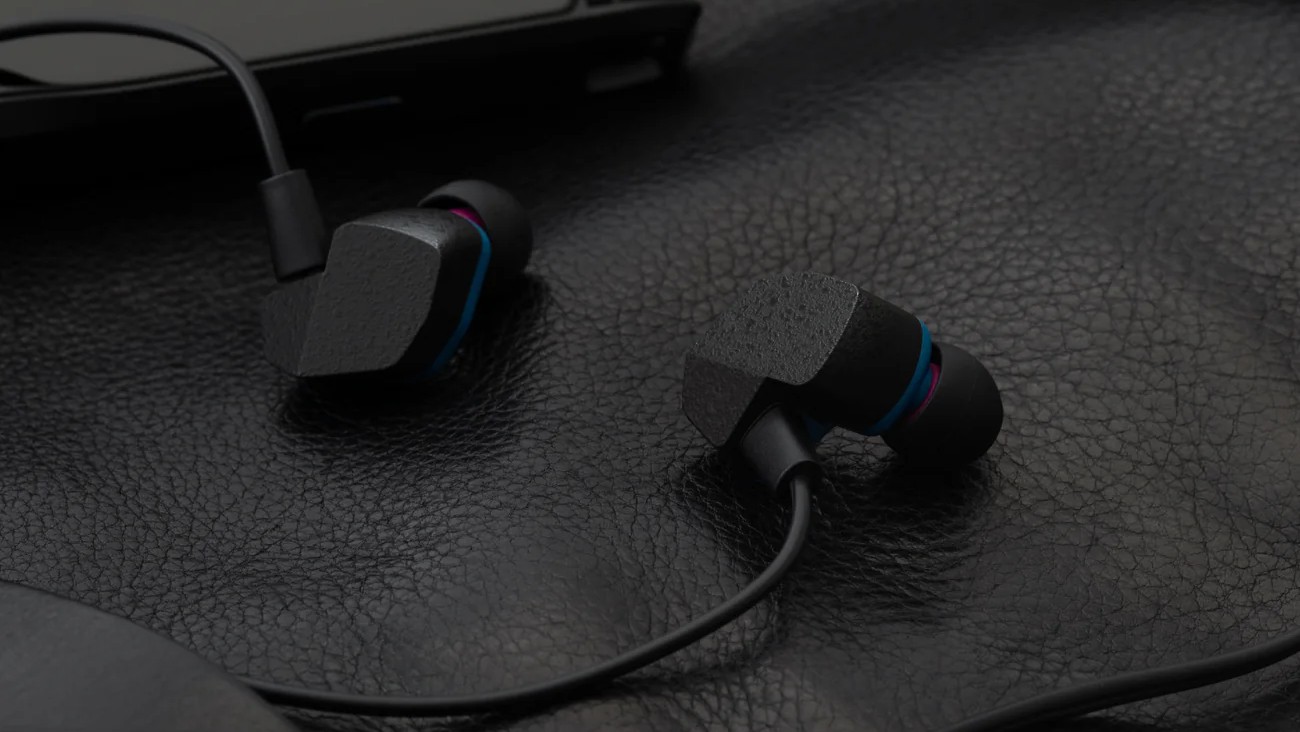
Final has introduced a new wired in-ear monitor, the A2000, expanding its headphone line-up with a focus on affordable performance.

At the core of the A2000 is Final’s in-house 6mm “f-Core DU” dynamic driver, developed entirely by the company — from diaphragm and voice coil to magnet assembly.

Final says the result is a sound signature built around “exceptional clarity” paired with tight, energetic bass. Sensitivity is rated at 99 dB/mW, with 19Ω impedance. This makes it relatively easy to drive from everyday devices.

The A2000 is also the first model in its class to benefit from Final’s revised sound evaluation process, originally developed for its flagship A10000.

Advertisement

Instead of relying purely on lab-based sound pressure testing, the company evaluated performance across real-world listening scenarios. This included varied volumes and recording quality. The goal, according to Final, is more natural and controlled playback in everyday use.

Advertisement

Build details are equally considered. A brass front housing is used to reduce magnetic interference, while an ultra-fine 30μm CCAW voice coil is designed to improve transient response. Each diaphragm is pressed in small batches to ensure consistent performance and lower distortion.

Comfort remains a priority. Borrowing from the brand’s B Series design philosophy, the A2000 uses a three-point support fit across the ear pocket, eartip and tragus to reduce pressure while maintaining stability. The housing features a two-tone black-and-blue finish with Final’s textured “shibo” coating to resist fingerprints.

Advertisement

The earphones connect via a 0.78mm 2-pin connector, paired with a 1.2m black OFC cable designed to minimise microphonics. Five sizes of dual-hardness silicone eartips (SS to LL) are included to help achieve a secure seal.

While the A2000 leads this latest expansion, Final continues to offer models like the VR3000, aimed specifically at gamers seeking accurate positional audio.

Priced at $79.99 / £79.99 / €74.99, the A2000 is available to buy globally right now. It aims to deliver high-end tuning without the flagship price tag and, just as importantly, without straying from its audiophile roots.

Advertisement

Advertisement

Source link

Continue Reading

Tech

Porting Super Mario 64 To The Original Nintendo DS

Published

on

Considering that the Nintendo DS already has its own remake of Super Mario 64, one might be tempted to think that porting the original Nintendo 64 version would be a snap. Why you’d want to do this is left as an exercise to the reader, but whether due to nostalgia or out of sheer spite, the question of how easy this would be remains. Correspondingly, [Tobi] figured that he’d give it a shake, with interesting results.

Of note that is someone else already ported SM64 to the DSi, which is a later version of the DS with more processing power, more RAM and other changes. The reason why the 16 MB of RAM of the DSi is required, is because it needs to load the entire game into RAM, rather than do on-demand reads from the cartridge. This is why the N64 made do with just 4 MB of RAM, which is as much RAM as the ND has. Ergo it can be made to work.

The key here is NitroFS, which allows you to implement a similar kind of segmented loading as the N64 uses. Using this the [Hydr8gon] DSi port could be taken as the basis and crammed into NitroFS, enabling the game to mostly run smoothly on the original DS.

Advertisement

There are still some ongoing issues before the project will be released, mostly related to sound support and general stability. If you have a flash cartridge for the DS this means that soon you too should be able to play the original SM64 on real hardware as though it’s a quaint portable N64.

Advertisement

Source link

Continue Reading

Tech

Metadata Exposes Authors of ICE’s ‘Mega’ Detention Center Plans

Published

on

A PDF that Department of Homeland Security officials provided to New Hampshire governor Kelly Ayotte’s office about a new effort to build “mega” detention and processing centers across the United States contains embedded comments and metadata identifying the people who worked on it.

The seemingly accidental exposure of the identities of DHS personnel who crafted Immigration and Customs Enforcement’s mega detention center plan lands amid widespread public pushback against the expansion of ICE detention centers and the department’s brutal immigration enforcement tactics.

Metadata in the document, which concerns ICE’s “Detention Reengineering Initiative” (DRI), lists as its author Jonathan Florentino, the director of ICE’s Newark, New Jersey, Field Office of Enforcement and Removal Operations.

In a note embedded on top of an FAQ question, “What is the average length of stay for the aliens?” Tim Kaiser, the deputy chief of staff for US Citizenship and Immigration Services, asked David Venturella, a former GEO Group executive whom The Washington Post described as an adviser overseeing an ICE division that manages detention center contracts, to “Please confirm” that the average stay for the new mega detention centers would be 60 days.

Advertisement

Venturella replied in a note that remained visible on the published document, “Ideally, I’d like to see a 30-day average for the Mega Center but 60 is fine.”

DHS did not respond to a request for comment about what the three men’s role in the DRI project is, nor did it answer questions about whether Florentino had access to a PDF processor subscription that might have enabled him to scrub metadata and comments from the PDF before sending it to the New Hampshire governor. (The so-called Department of Government Efficiency spent last year slashing the number of software licenses across the federal government.)

The document itself says that ICE intends to update a new detention model by the end of September of this year. ICE says it will create “an efficient detention network by reducing the total number of contracted detention facilities in use while increasing total bed capacity, enhancing custody management, and streamlining removal operations.”

“ICE’s surge hiring effort has resulted in the addition of 12,000 new law enforcement officers,” the DHS document says. “For ICE to sustain the anticipated increase in enforcement operations and arrests in 2026, an increase in detention capacity will be a necessary downstream requirement.”

Advertisement

ICE plans on having two types of facilities: regional processing centers that will hold between 1,000 to 1,500 detainees for an average stay of three to seven days, and the mega detention facilities, which will hold an average of 7,000 to 10,000 people for an average of 60 days. It’s been referred to as a “hub and spoke model,” where the smaller facilities will feed into the mega ones.

“ICE plans to activate all facilities by November 30, 2026, ensuring the timely expansion of detention capacity,” the document says.

Beyond detention centers, ICE plans to buy or lease offices and other facilities in more than 150 locations, in nearly every state in the US, according to documents first reported by WIRED.

The errant comment in the PDF sent to New Hampshire’s governor is not the only issue the set of documents apparently had; according to the New Hampshire Bulletin, a previous version of an accompanying document, an economic impact analysis of a processing site in Merrimack, New Hampshire, referenced “the Oklahoma economy” in the opening lines. The errant document remains on the governor’s website, as of publication.

Advertisement

Across the country, ICE’s mega detention center projects have sparked controversy. ICE’s purchase of a warehouse in Surprise, Arizona, spurred hundreds to attend a city council meeting on the topic, according to KJZZ in Phoenix. In Social Circle, Georgia, city officials have pushed back against DHS’s proposal to build a mega center there, because officials say the city’s water and sewage treatment infrastructure would not be able to handle the influx of people.

Source link

Continue Reading

Tech

BeyondTrust RCE flaw now exploited in ransomware attacks

Published

on

CISA: BeyondTrust RCE flaw now exploited in ransomware attacks

Hackers are actively exploiting the CVE-2026-1731 vulnerability in the BeyondTrust Remote Support product, the U.S. Cybersecurity and Infrastructure Security Agency (CISA) warns.

The security issue affects BeyondTrust’s Remote Support 25.3.1 or earlier and Privileged Remote Access 24.3.4 or earlier, and can be exploited for remote code execution.

CISA added it to the Known Exploited Vulnerabilities (KEV) catalog on February 13 and gave federal agencies just three days to apply the patch or stop using the product.

Wiz

BeyondTrust initially disclosed CVE-2026-1731 on February 6. The security advisory classified it as a pre-authentication remote code execution vulnerability caused by an OS command injection weakness, exploitable via specially crafted client requests sent to vulnerable endpoints.

Proof-of-concept (PoC) exploits for CVE-2026-1731 became available shortly after, and in-the-wild exploitation started almost immediately.

Advertisement

On February 13, BeyondTrust updated the bulletin  to say that exploitation had been detected on January 31, making CVE-2026-1731 a zero-day vulnerability for at least a week.

BeyondTrust states that the report from researcher Harsh Jaiswal and the Hacktron AI team confirmed the anomalous activity that they detected on a single Remote Support appliance at the time.

CISA has now activated the ‘Known To Be Used in Ransomware Campaigns?’ indicator in the KEV catalog.

For customers of the cloud-based application (SaaS), the vendor states the patch was applied automatically on February 2, so no manual intervention is needed.

Advertisement

Customers of the self-hosted instances need to either enable automatic updates and verify that the patch was applied via the ‘/appliance’ interface or manually install it.

For Remote Support, the recommendation is to install version 25.3.2. Privileged Remote Access users should switch to version 25.1.1 or newer.

Those still at RS v21.3 and PRA v22.1 are recommended to upgrade to a newer version before applying the patch.

Modern IT infrastructure moves faster than manual workflows can handle.

In this new Tines guide, learn how your team can reduce hidden manual delays, improve reliability through automated response, and build and scale intelligent workflows on top of tools you already use.

Advertisement

Source link

Continue Reading

Tech

Videos: Humanoid Robot Martial Arts, Perseverance, More

Published

on

Video Friday is your weekly selection of awesome robotics videos, collected by your friends at IEEE Spectrum robotics. We also post a weekly calendar of upcoming robotics events for the next few months. Please send us your events for inclusion.

ICRA 2026: 1–5 June 2026, VIENNA

Enjoy today’s videos!

So, humanoid robots are nearing peak human performance. I would point out, though, that this is likely very far from peak robot performance, which has yet to be effectively exploited, because it requires more than just copying humans.

Advertisement

[ Unitree ]

“The Street Dance of China” Turning lightness into gravity, and rhythm into impact.This is a head-on collision between metal and beats. This Chinese New Year, watch PNDbotics Adam bring the heat with a difference.

[ PNDbotics ]

You had me at robot pandas.

Advertisement

[ MagicLab ]

NASA’s Perseverance rover can now precisely determine its own location on Mars without waiting for human help from Earth. This is possible thanks to a new technology called Mars Global Localization. This technology rapidly compares panoramic images from the rover’s navigation cameras with onboard orbital terrain maps. It’s done with an algorithm that runs on the rover’s Helicopter Base Station processor, which was originally used to communicate with the Ingenuity Mars Helicopter. In a few minutes, the algorithm can pinpoint Perseverance’s position to within about 10 inches (25 centimeters). The technology will help the rover drive farther autonomously and keep exploring.

[ NASA Jet Propulsion Laboratory ]

Advertisement

Legs? Where we’re going, we don’t need legs!

[ Paper ]

This is a bit of a tangent to robotics, but it gets a pass because of the cute jumping spider footage.

Advertisement

[ Berkeley Lab ]

Corvus One for Cold Chain is engineered to live and operate in freezer environments permanently, down to -20°F, while maintaining full flight and barcode scanning performance.

I am sure there is an excellent reason for putting a cold storage facility in the Mojave desert.

Advertisement

[ Corvus Robotics ]

The video documents the current progress made in the picking rate of the Shiva robot when picking strawberries. It first shows the previous status, then the further development, and finally the field test.

[ DFKI ]

Data powers an organization’s digital transformation, and ST Engineering MRAS is leveraging Spot to get a full view of critical equipment and facility. Working autonomously, Spot collects information about machine health – and now, thanks to an integration of the Leica BLK ARC for reality capture, detailed and accurate point cloud data for their digital twin.

Advertisement

[ Boston Dynamics ]

The title of this video is “Get out and have fun!” Is that mostly what humanoid robots are good for right now, pretty much…?

[ Engine AI ]

Advertisement

ASTORINO is a modern 6-axis robot based on 3D printing technology. Programmable in AS-language, it facilitates the preparation of classes with ready-made teaching materials, is easy both to use and to repair, and gives the opportunity to learn and make mistakes without fear of breaking it.

[ Kawasaki ]

Can I get this in my living room?

Advertisement

[ Yaskawa ]

What does it mean to build a humanoid robot in seven months, and the next one in just five? This documentary takes you behind the scenes at Humanoid, a UK-based AI and robotics company building reliable, safe, and helpful humanoid robots. You’ll hear directly from our engineering, hardware, product, and other teams as they share their perspectives on the journey of turning physical AI into reality.

[ Humanoid ]

This IROS 2025 keynote is from Tim Chung who is now at Microsoft, on “Catalyzing the Future of Human, Robot, and AI Agent Teams in the Physical World.”

Advertisement

The convergence of technologies—from foundation AI models to diverse sensors and actuators to ubiquitous connectivity—is transforming the nature of interactions in the physical and digital world. People have accelerated their collaborative connections and productivity through digital and immersive technologies, no longer limited by geography or language or access. Humans have also leveraged and interacted with AI in many different forms, with the advent of hyperscale AI models (i.e., large language models) forever changing (and at an ever-astonishing pace) the nature of human-AI teams, realized in this era of the AI “copilot.” Similarly, robotics and automation technologies now afford greater opportunities to work with and/or near humans, allowing for increasingly collaborative physical robots to dramatically impact real-world activities. It is the compounding effect of enabling all three capabilities, each complementary to one another in valuable ways, and we envision the triad formed by human-robot-AI teams as revolutionizing the future of society, the economy, and of technology.

[ IROS 2025 ]

This GRASP SFI talk is by Chris Paxton at Agility Robotics, on “How Close Are We To Generalist Humanoid Robots?”

Advertisement

With billions of dollars of funding pouring into robotics, general-purpose humanoid robots seem closer than ever. And certainly it feels like the pace of robotics is faster than ever, with multiple companies beginning large-scale deployments of humanoid robots. In this talk, I’ll go over the challenges still facing scaling robot learning, looking at insights from a year of discussions with researchers all over the world.

[ University of Pennsylvania GRASP Laboratory ]

This week’s CMU RI Seminar is from Jitendra Malik at UC Berkeley, on “Robot Learning, With Inspiration From Child Development.”

For intelligent robots to become ubiquitous, we need to “solve” locomotion, navigation and manipulation at sufficient reliability in widely varying environments. In locomotion, we now have demonstrations of humanoid walking in a variety of challenging environments. In navigation, we pursued the task of “Go to Any Thing” – a robot, on entering a newly rented Airbnb, should be able to find objects such as TV sets or potted plants. RL in simulation and sim-to-real have been workhorse technologies for us, assisted by a few technical innovations. I will sketch promising directions for future work.

[ Carnegie Mellon University Robotics Institute ]

Advertisement

From Your Site Articles

Related Articles Around the Web

Source link

Advertisement
Continue Reading

Tech

How Streaming Became Cable TV’s Unlikely Life Raft

Published

on

Cable TV providers have spent the past decade losing tens of millions of households to streaming services, but companies like Charter Communications are now slowing that exodus by bundling the very apps that once threatened to replace them.

Charter added 44,000 net video subscribers in the fourth quarter of 2025, its first growth in that count since 2020, after integrating Disney+, Hulu, and ESPN+ directly into Spectrum cable packages — a deal that grew out of a contentious 2023 contract dispute with Disney. Comcast and Optimum still lost subscribers in the quarter, though both saw those losses narrow.

Charter’s Q4 numbers also got a lift from a 15-day Disney channel blackout on YouTube TV during football season, which drove more than 14,000 subscribers to Spectrum. Charter has been discounting aggressively — video revenue fell 10% year over year despite the subscriber gains. Cox Communications launched its first streaming-inclusive cable bundles last month, and Dish Network has yet to integrate streaming apps into its packages at all.

Source link

Advertisement
Continue Reading

Tech

Japanese tech giant Advantest hit by ransomware attack

Published

on

Japanese tech giant Advantest hit by ransomware attack

Advantest Corporation disclosed that its corporate network has been targeted in a ransomware attack that may have affected customer or employee data.

Preliminary investigation results revealed that an intruder gained access to certain parts of the company’s network on February 15.

Tokyo-based Advantest is a global leader in testing equipment for semiconductors, measuring instruments, digital consumer products, and wireless communications equipment.

Wiz

The company employs 7,600 people, has an annual revenue of more than $5 billion, and a market capitalization of $120 billion.

On February 15, the firm detected unusual activity in its IT environment, prompting a response in accordance with incident response protocols, including the isolation of affected systems.

Advertisement

As part of its response, the company contracted third-party cybersecurity specialists to help isolate the threat and investigate its impact.

“Preliminary findings appear to indicate that an unauthorized third party may have gained access to portions of the company’s network and deployed ransomware,” Advantest states.

“If our investigation determines that customer or employee data was affected, we will notify impacted persons directly and provide guidance on protective measures.”

Currently, no data theft has been confirmed, but Advantest noted that this may change as more information emerges from the ongoing investigation.

Advertisement

Should customers or staff be determined to be impacted, Advantest will notify them directly and provide instructions on mitigating the associated risks.

At the time of writing, no ransomware groups have claimed the attack on the Japanese tech giant.

BleepingComputer has contacted Advantest directly to request more details about the attack, but we have not heard back by publishing time.

Multiple Japanese companies have been the target of cyberattacks recently, as several high-profile entities suffered data breaches and operational disruptions. Notable examples include Washington Hotel, Nissan, Muji, Asahi, and NTT.

Advertisement

Advantest says that the investigation continues and that it will provide updates on the incident when new details emerge.

Modern IT infrastructure moves faster than manual workflows can handle.

In this new Tines guide, learn how your team can reduce hidden manual delays, improve reliability through automated response, and build and scale intelligent workflows on top of tools you already use.

Source link

Advertisement
Continue Reading

Tech

Top Android AI photo and video editor exposes nearly two million user images and videos

Published

on


  • Cybernews found misconfigured database in “Video AI Art Generator & Maker” app
  • Leak exposed 8.27m media files, including 2m private user photos and videos
  • Developers secured database after disclosure; similar flaws seen in another Codeway app

Yet another misconfigured database leaking sensitive user data was found, but this one is even more worrying since the data being leaked is – user-uploaded photos and videos.

Researchers from Cybernews recently discovered an Android app called “Video AI Art Generator & Maker” contained a misconfigured Google Cloud storage bucket which was accessible to anyone who knew where to look.

Source link

Advertisement
Continue Reading

Trending

Copyright © 2025