In any MMORPG, the average user will generally only encounter the client side of the system. This makes building a compatible open source version of the proprietary server into a bit of a chore. Of course, sometimes you get a bit of a break, such as with the – still active – MMORPG Ultima Online, when the disc for the 1998 The Second Age expansion contained a stand-alone demo. This also meant a (stripped-down) server which has been gratefully reverse-engineered by the community, with [draxinar] now claiming to have made the most complete server based on this demo server.
To make things extra challenging, the originally written in C++ server binary was reverse-engineered into C99 code, meaning that the use of classes and associated vtables had to be left intact, just without the critter comforts provided by C++.
The total process took about a decade with occasional progress, with the current server binary being mostly identical to a 1998-era Ultima Online server. Some features that were stubbed out or disabled in the demo server had to be re-enabled or reimplemented, including the user account system.
Features that were left out of the final release like the ecology system were also enabled in so far as they were implemented. Although there is probably still a lot more work to be done on the code, [draxinar] reckons that this is a good point for the community to get involved to do some testing and provide feedback. There are also some missing server-related resource files that may still be saved somewhere.
Just in time for World Password Day, Kaspersky is reminding everyone that outdated hashing algorithms such as MD5 remain among the worst choices for storing passwords. In a recent post, the security firm revisited a 2024 study examining the “crackability” of real-world passwords. The conclusion is not surprising: password cracking… Read Entire Article Source link
In Canada, gamers will pay $679.99 for the Switch 2 and in Europe, it’s going up to €499.99. Nintendo’s home country of Japan isn’t excluded from the price hike – in fact, the situation is worse there as the original Switch, the Switch OLED, and the Switch Lite will also… Read Entire Article Source link
If your iPhone 14 won’t turn on, the most likely cause is one of three things: the battery is completely drained, the device is frozen on a black screen due to a software glitch, or a charger or charging port issue is preventing it from powering up at all. As long as there is no physical drop damage or liquid exposure involved, you can almost certainly fix this yourself — no tools required.
These steps apply to iPhone 14, iPhone 14 Plus, iPhone 14 Pro, and iPhone 14 Pro Max. The hardware buttons and fix sequence are identical across all four models.
Quick Take: Start by charging for at least 30 minutes with a known-good cable before assuming something is wrong. If it still won’t respond, do a force restart — this fixes the majority of black screen and software freeze cases with no data loss. If neither works, move to Recovery Mode via a computer. Physical or liquid damage is the only scenario that requires a technician.
Before You Begin
Two things to check before touching any buttons. First, make sure you are not looking at a failed screen on a phone that is actually powered on — some iPhone 14 units show a completely black screen due to display failure while the phone itself is running normally. If you can hear a ring tone or vibration when someone calls, the phone is on and the screen is the issue, not the power. Second, if your iPhone was recently dropped in water or exposed to liquid, Apple’s official handling guidance is clear: do not attempt to charge or connect any accessory until the device is completely dry — wait at least 5 hours. Plugging in a wet iPhone can cause additional internal damage.
Advertisement
Step 1: Charge It for at Least 30 Minutes
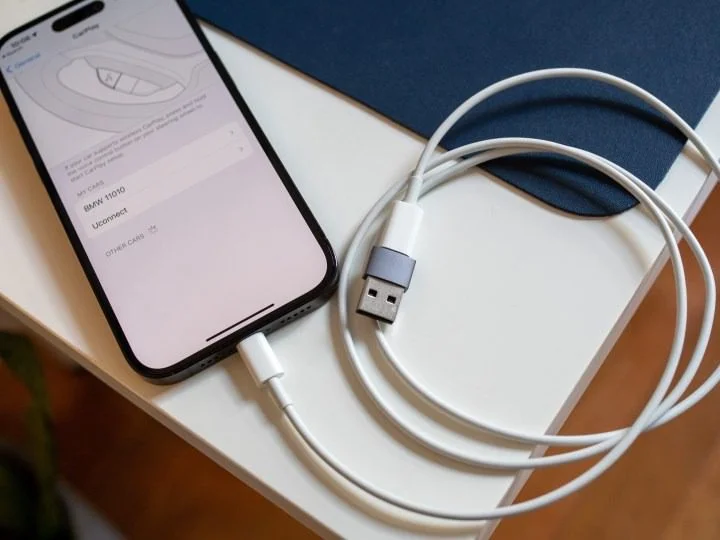
Use the cable that came with your iPhone, or an Apple-certified (MFi) cable and wall adapter — not a computer USB port, which often delivers inconsistent power. Plug it in and wait.
If the battery is deeply drained, the screen may stay completely black for the first 5–15 minutes. That is normal. After a few minutes, you should see either a red battery icon (very low charge) or the charging icon (battery outline with a lightning bolt). If you see the red icon, leave it charging for a full 30 minutes before attempting anything else. Do not interrupt the charge cycle by pressing buttons during this window.
If the screen shows nothing at all after 30 minutes — no charging icon, no response — move to Step 2.
Step 2: Force Restart Your iPhone 14
A force restart clears a software freeze or a stuck boot process without deleting any of your data. This is the most effective single fix for an iPhone 14 that shows a black screen or won’t respond. Apple’s official force restart instructions for all current iPhones are as follows:
Quickly press and release the Volume Up button.
Quickly press and release the Volume Down button.
Press and hold the Side button (the button on the right edge of the phone) until the Apple logo appears — then release.
The most common mistake here is releasing the Side button too early. When you press and hold it, you will first see a “slide to power off” prompt on screen. Do not release the button. Keep holding through the prompt. The screen will go black, and then the Apple logo will appear. This can take up to 20 seconds. Once the Apple logo shows, release the Side button and wait for the phone to finish booting.
If the first attempt does not work, try the sequence again two or three times before concluding it won’t work. The timing needs to be precise — the Volume Up and Volume Down presses need to be quick, not held.
Step 3: Inspect the Charger and Charging Port
If the phone responded to neither charging nor the force restart, the charger or port may be the problem. Check the cable for visible fraying or damage, and try a different wall adapter if you have one available.
Advertisement
For the charging port itself, shine a flashlight into it and look for compacted lint or debris — this is a surprisingly common cause of charging failure, especially in phones carried in pockets or bags. To clean it safely: use a dry soft-bristled toothbrush or a can of compressed air. iFixit’s port cleaning guide and Apple’s own guidance both specify the same caution: do not use metal tools, toothpicks, or pins inside the port. The pins inside the Lightning connector are fragile, and bending them means a port replacement. A few careful passes with a dry brush is all that is needed in most cases.
After cleaning, plug in again and wait 5 minutes before moving on.
Step 4: Use Recovery Mode to Fix a Software Problem
If the phone still won’t respond after charging and multiple force restart attempts, the next step is Recovery Mode — a built-in iOS diagnostic state that lets you reinstall iOS software from a computer without losing your data (if you choose “Update” rather than “Restore”). This is the correct escalation path for a device stuck in a boot loop, frozen on the Apple logo, or completely unresponsive after a software update.
Connect your iPhone to the computer with the Lightning cable and open Finder (Mac) or iTunes (Windows).
Quickly press and release Volume Up.
Quickly press and release Volume Down.
Press and hold the Side button — but this time, keep holding past the Apple logo until you see the recovery mode screen (a cable icon pointing to a laptop). Then release.
In Finder or iTunes, select your iPhone when it appears.
Choose Update first. This reinstalls iOS without erasing your data. If Update fails or is not offered, you can then choose Restore — but be aware that Restore erases everything on the device. If you have a recent iCloud or iTunes backup, your data can be recovered afterward.
If your iPhone gets stuck in recovery mode during this process, perform another force restart (Step 2) with the cable still connected to exit it.
Step 5: Check for Physical or Liquid Damage
If none of the above steps produce any response, the problem is most likely hardware rather than software. Think back: has the phone been dropped from a significant height, submerged in water, exposed to rain, or left in a hot car? Even a short drop on a hard surface can dislodge internal components without leaving visible exterior damage.
Liquid damage is a particularly difficult scenario. The iPhone 14 has an IP68 water resistance rating, which means it can handle accidental splashes and brief submersion — but it is not waterproof, and even rated devices can suffer internal damage depending on the liquid, depth, and duration of exposure. If liquid damage is suspected, book a service appointment through Apple rather than attempting to charge, power, or dry the device with external heat. Unauthorized drying methods (rice bags, blow dryers, direct sunlight) can cause additional damage and may complicate a repair assessment.
Overheating is a separate issue: if the iPhone was left in direct sunlight or a hot vehicle, move it to a cool, shaded location and wait 30 minutes before attempting to power it on. Do not put it in a freezer — rapid temperature change creates condensation inside the device.
When These Steps Won’t Help
Software fixes — force restart, recovery mode — will not resolve hardware failures. If your phone has visible screen cracks, a damaged charging port that cannot be cleaned, swollen battery symptoms (a slightly bowed back panel), or confirmed water ingress, these require physical repair. Understanding your Apple warranty and repair options before you walk into an Apple Store or authorized service center will save time and set realistic expectations on cost.
Advertisement
If you are outside your Apple warranty period, an independent repair shop is a legitimate alternative for issues like port replacement or screen repair, though it will void any remaining warranty coverage.
Key Takeaways
A deeply drained battery may show no response for up to 15 minutes after plugging in — always charge for a full 30 minutes before assuming a bigger problem.
The force restart is the most effective single fix for iPhone 14 black screen and software freeze issues. The most common reason it fails is releasing the Side button when the “slide to power off” prompt appears — keep holding past it.
Recovery Mode (via Finder or iTunes) is the correct next step when force restart alone doesn’t work — try “Update” before “Restore” to avoid unnecessary data loss.
Liquid-exposed iPhones must not be charged for at least 5 hours — attempting to charge a wet device can cause permanent damage.
If none of the software steps produce any response, the issue is hardware, and a professional assessment from Apple or an authorized repair provider is the right call.
Frequently Asked Questions
Will a force restart delete my photos and apps?
No. A force restart is equivalent to pulling the battery on a device — it cuts power and forces a reboot. No data is written or erased during the process. Your photos, messages, and apps will be exactly as you left them when the phone boots back up.
My iPhone 14 shows only a red battery icon — is something wrong?
A red battery icon means the battery charge is critically low but the device is responding to power. Leave it charging for at least 30 minutes before pressing any buttons. Trying to force restart a phone in this state often fails simply because there is not enough charge to complete the boot sequence.
The force restart sequence is not working no matter how many times I try. What am I doing wrong?
The two most common errors are: (1) holding Volume Up or Volume Down instead of pressing and quickly releasing them, and (2) releasing the Side button when the “slide to power off” screen appears. The presses must be quick — less than a second each. Then hold the Side button continuously for up to 20 seconds, past the slider, until the screen goes black and the Apple logo appears. If timing is the issue, try performing the sequence slightly faster.
Can I use iCloud to fix an iPhone that won’t turn on?
Not directly. iCloud’s Erase iPhone feature (via iCloud.com or the Find My app) sends a remote erase command, but the device must be online to receive and execute it. A phone that is powered off or completely unresponsive cannot receive that command. The fix will queue and execute the next time the phone connects to the internet — but that doesn’t help you get it back on. Recovery Mode via a computer is the correct software-level fix for an unresponsive device.
Advertisement
My iPhone 14 got wet recently and now won’t turn on. What should I do?
Do not charge it. Apple’s handling guidelines specify waiting at least 5 hours after liquid exposure before connecting any cable or accessory. Do not use rice, a hair dryer, or direct heat — these can cause condensation or heat damage. Leave the phone in a dry, room-temperature environment and allow it to air dry naturally. If it still won’t power on after drying, contact Apple or an authorized service provider for a physical inspection.
What is the difference between Recovery Mode and DFU Mode?
Recovery Mode reinstalls iOS while keeping the bootloader intact — it is the right first choice because it has a lower chance of complications and can restore data from a backup. DFU (Device Firmware Update) Mode performs a deeper reinstall that replaces both the iOS software and the device firmware. DFU mode is a last resort before hardware repair — it erases everything and is harder to exit if something goes wrong. Try Recovery Mode first; move to DFU mode for iPhone only if Recovery Mode fails.
How long does Recovery Mode restoration take?
Typically 15–30 minutes for the “Update” option, depending on your internet speed (the firmware file is several gigabytes) and your computer’s processing speed. Do not disconnect the cable during the process — interrupting a restore can leave the device in a non-bootable state and require the process to be started over.
Rocket Lab’s Q1 revenue grew 64 per cent to a record 200 million dollars, its backlog reached 2.2 billion, and its stock hit a record high. The only thing that has not launched is Neutron, the rocket the valuation depends on.
Advertisement
Rocket Lab’s revenue grew 64 per cent, its stock hit a record high, and its backlog reached 2.2 billion dollars. The company sold more launches in the first quarter of 2026 than in the entire previous year. The only thing that has not launched yet is the rocket the market is pricing in.
First-quarter revenue was 200.3 million dollars, up from 122.6 million a year earlier, beating analyst estimates that had already been raised twice in the past three months. Space systems, the division that builds satellites and spacecraft components, generated 136.7 million dollars. The launch business contributed 63.7 million. Both exceeded expectations. The stock rose 30 per cent in after-hours trading to a record high, valuing the company at approximately 45 billion dollars.
The quarter
The financial results showed a company accelerating across every segment. Gross margin reached 38.2 per cent, up from the low thirties a year ago. The net loss narrowed to 45 million dollars from 60.6 million in the first quarter of 2025. Adjusted EBITDA loss was 11.8 million, a figure that suggests profitability is within reach if the revenue trajectory holds.
The 💜 of EU tech
Advertisement
The latest rumblings from the EU tech scene, a story from our wise ol’ founder Boris, and some questionable AI art. It’s free, every week, in your inbox. Sign up now!
Rocket Lab signed 31 new Electron and HASTE launch contracts in the quarter, plus five contracts for Neutron, its medium-lift rocket that has not yet flown. The company announced its largest launch deal in history, a bulk purchase of Neutron and Electron flights from an undisclosed customer whose identity and order size the company declined to reveal.
The same day, Rocket Lab disclosed a 30 million dollar contract from Anduril Industries for three HASTE hypersonic test flights from its Virginia launch complex. The HASTE vehicle, a suborbital variant of Electron, serves as a testbed for hypersonic technologies at speeds exceeding Mach 5. Anduril is funding the flights with its own capital, not government money, a distinction that signals private-sector demand for hypersonic testing infrastructure that previously existed only within government programmes.
The backlog
The 2.2 billion dollar backlog is the number that explains why investors added 10 billion dollars to the company’s market capitalisation in a single evening. A year ago, Rocket Lab’s backlog was approximately 1.1 billion. It has doubled in twelve months. The largest component is an 816 million dollar prime contract to build a missile defence constellation for the Space Development Agency, the satellite procurement arm of the Space Force.
Advertisement
Second-quarter guidance of 225 to 240 million dollars in revenue exceeded Wall Street’s estimate of 205 million by a margin wide enough to suggest that analysts had not fully accounted for the acceleration. CEO Peter Beck said the pipeline supports continued growth into the second half and beyond.
The company’s customer base spans government and commercial clients. It launches satellites for the National Reconnaissance Office, NASA, the Space Force, and allied militaries. It builds spacecraft components for constellations operated by companies including GlobalStar. It is developing the SDA’s Tranche 2 Transport Layer satellites. The breadth of the business is the argument for the valuation: Rocket Lab is not just a launch company, it is a vertically integrated space infrastructure provider.
The rocket
Neutron is the medium-lift launch vehicle on which Rocket Lab’s ambitions depend. It is designed to carry 13,000 kilograms to low Earth orbit in a reusable configuration and 15,000 kilograms expendable. It is intended to compete for the constellation deployment, national security, and deep space missions that are currently served almost exclusively by SpaceX’s Falcon 9.
The rocket has not flown. Beck said first-flight hardware integration is underway, Archimedes engine qualification is progressing, and the second stage and reusable fairing systems are advancing. The debut launch is targeted for later this year. Rocket Lab has said “later this year” about Neutron before. The original target was late 2024. It slipped to mid-2025, then to 2026. Each delay has been accompanied by plausible technical explanations and continued investor patience.
Advertisement
The patience is partly justified by Electron’s track record. Dawn Aerospace, the New Zealand spaceplane company, has demonstrated that small nations can produce credible launch vehicles, but Rocket Lab has gone further than any non-American, non-SpaceX company in building a commercially successful orbital launch business. Electron has completed more than 60 missions with a success rate exceeding 95 per cent. It is the most frequently launched orbital small rocket in the world. The question is whether the engineering discipline that made Electron reliable can scale to a vehicle ten times larger.
The market
SpaceX, which disclosed in its IPO filing that orbital data centres may not be viable, dominates the launch market with a cadence and cost structure that no competitor has matched. Falcon 9 launched more than 100 times in 2025. Rocket Lab launched 21 times. The gap is enormous. But the gap in market positioning is narrower than the gap in launch frequency suggests.
SpaceX’s backlog is dominated by its own Starlink constellation. Rocket Lab’s 2.2 billion dollar backlog is almost entirely third-party customers. The distinction matters because it means Rocket Lab’s revenue is diversified across dozens of government and commercial clients, while SpaceX’s launch revenue is heavily self-referential. For customers who want an alternative to SpaceX, or who need a launch provider that is not controlled by Elon Musk, Rocket Lab is increasingly the answer.
Peter Beck drew Rocket Lab’s logo on a napkin on a flight back to New Zealand in 2006. He had skipped university, taken an apprenticeship at a tools manufacturer, built a steam-powered rocket bicycle, and decided he was going to start a launch company. Twenty years later, the company he founded has a 45 billion dollar market capitalisation, a 2.2 billion dollar backlog, and contracts with the most sensitive national security programmes in the United States.
European defence technology alliances are forming between AI companies and military contractors, but Rocket Lab has built something rarer: a non-American company that the American defence establishment trusts with its most classified satellite programmes. The SDA constellation contract, the NRO missions, and the Anduril hypersonic flights all require security clearances and operational trust that take years to establish.
The stock’s 30 per cent surge reflects a market that believes the backlog will convert to revenue, the Neutron delays will end, and the defence and commercial pipelines will sustain growth rates above 50 per cent. Beck has delivered on every commitment except the one that matters most. Neutron’s first flight will determine whether Rocket Lab is a successful small-launch company with a large valuation or a full-spectrum space company that justifies one. The backlog says the customers are ready. The question is whether the rocket is.
Looking for the most recent Mini Crossword answer? Click here for today’s Mini Crossword hints, as well as our daily answers and hints for The New York Times Wordle, Strands, Connections and Connections: Sports Edition puzzles.
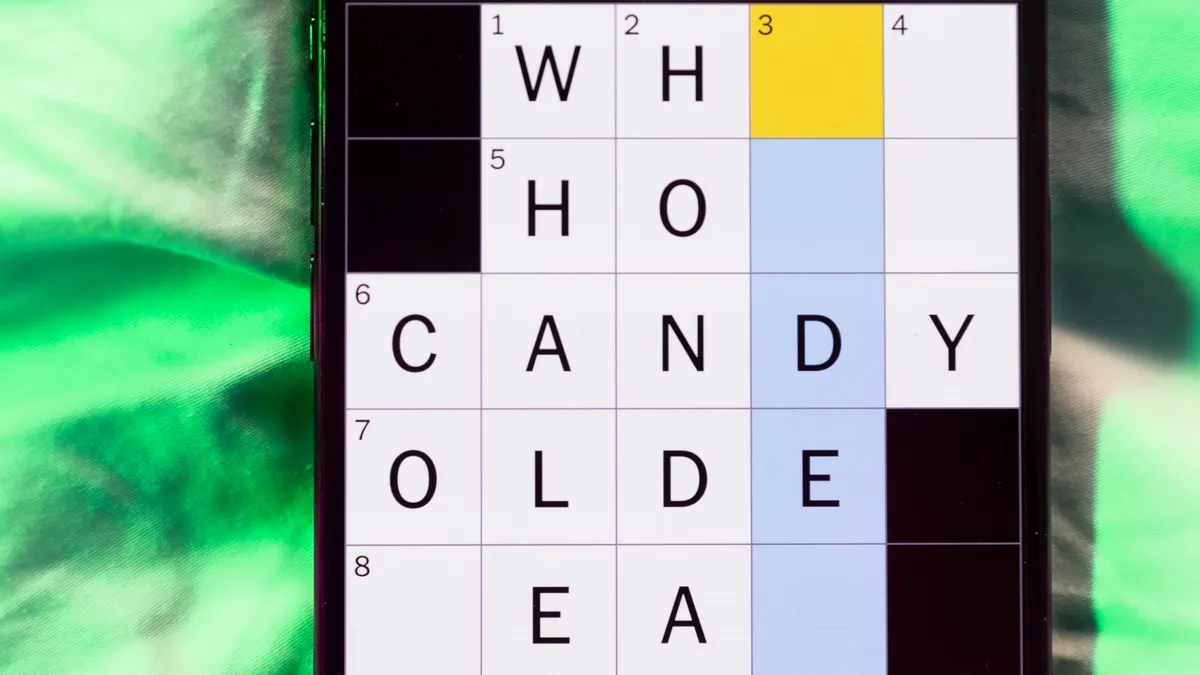
Need some help with today’s Mini Crossword? It’s a big one, and a fun, interactive one — finish it, and a little red car races around the grid. See the letters it’s driving on? They spell out CIRCLING, which is exactly what the car is doing. Read on for all the answers. And if you could use some hints and guidance for daily solving, check out our Mini Crossword tips.
If you’re looking for today’s Wordle, Connections, Connections: Sports Edition and Strands answers, you can visit CNET’s NYT puzzle hints page.
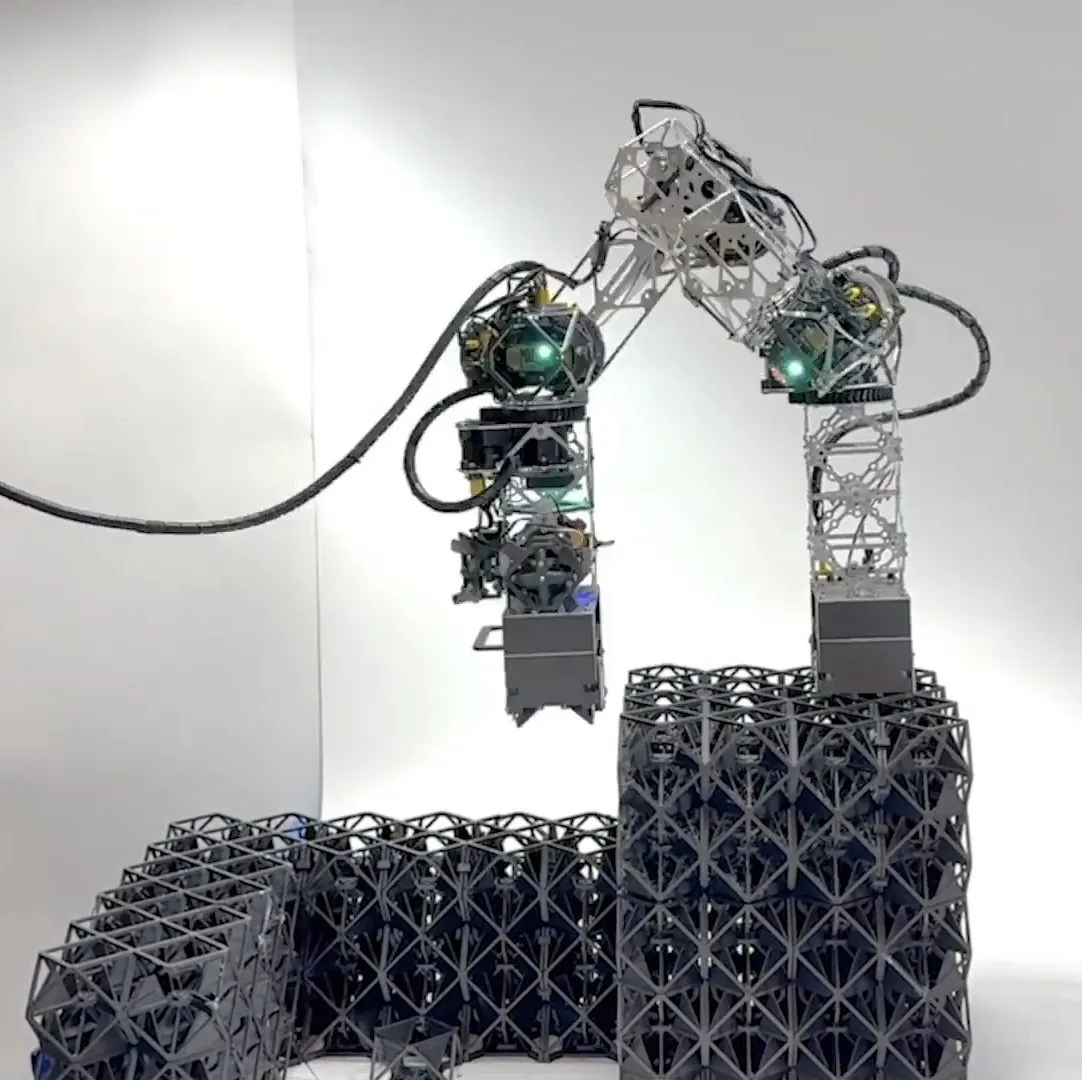
Well, it depends when you’re going to be househunting– if it’s anytime soon, Betteridge’s law applies, but if your time horizon is a ways further out, [Miana Smith] at MIT wants to make it happen. She’s got a paper out with an open-source inchworm robot designed to assemble structures from voxels– and what is a voxel but a giant, LEGO-esque brick?
There’s a demo video below, and it’s easier to understand the motion of this thing when you see it in action. The 5 degree-of-freedom MILAbot has actuators on both ends, and no traditional base– that’s the inchworm part. It grabs a brick while anchored to one part of the structure, then stays anchored to the new brick to keep building from that locale, so on and so on.
Note that we’re not talking about concrete bricks here, though conceivably you could use an inchworm-style actuator to assemble those. The ‘voxels’ in the study are engineered space-frame blocks which come together very easily, though admittedly would make for a very drafty home– you’d want to fill them with spray foam as a finishing step. So it’s more of a framing technique than a one-and-done thing. Still it is a technique that has something to recommend it compared to the 3D-printed concrete houses that get so much hype— and are already being torn down.
For instance, the researchers find that weather the voxels are plywood, PLA, or metal, the resulting structure has less embodied energy than any concrete structure, with 3D printed concrete being worst option by that metric– though the balloon-frame stick-build we in North America consider “conventional” is still the lowest of all. On the other hand, that balloon-frame building takes a crew to put together, and labour is expensive compared to robots. At the moment, however, the study admits balloon-framing wins on price, but that doesn’t mean it always will, and it’s a fun hack regardless.
Advertisement
So while your next house might not be made of LEGO by a robot inchworm, we’re still grateful to [Miana] for the tip.
Apple has seeded a second round of release candidate builds of iOS 26.5 and iPadOS 26.5, bringing the updates a step closer to public release with a smaller round of fixes and feature additions.
The RC builds arrived one week after the fourth betas. Release candidates are typically the final versions Apple ships publicly unless major bugs force additional revisions during last-minute testing.
Build number 23F77 appears on Apple’s developer portal for both iOS 26.5 and iPadOS 26.5, replacing the earlier 23F75 RC build released on May 4.
iOS 26.5 focuses on smaller platform updates
iOS 26.5 focuses on bug fixes, interoperability updates, and smaller feature additions instead of major interface changes or new Apple Intelligence features. The lighter update fits Apple’s usual pattern ahead of WWDC, where the company typically introduces its next generation of operating systems.
Advertisement
Support for encrypted RCS is one of the more notable additions discovered during the beta cycle. The feature depends on carriers adopting the latest GSMA Universal Profile specifications and expands encrypted messaging support beyond Apple’s existing iMessage ecosystem.
New Pride-themed wallpapers are also included in the update alongside additional changes tied to the European Union’s Digital Markets Act. Expanded support for Live Activities and notification forwarding on some third-party accessories and connected devices appeared during testing as part of those compliance efforts.
Apple is continuing work on Apple Maps ads in iOS 26.5, but the sponsored search and recommendation features don’t appear publicly active in the current builds. The company hasn’t announced a release date for iOS 26.5 or iPadOS 26.5, and RC builds usually arrive shortly before public rollout.
Most of the visible changes in iOS 26.5 focus on stability improvements and incremental feature updates rather than major platform shifts. Apple will preview iOS 27, macOS 27, and its next round of platform updates at WWDC 2026 in June.
Longtime Slashdot reader cellocgw writes: Hiding inside another layoff report, Fidelity is reorganizing: “The changes are aimed at moving the teams away from an ‘agile’ makeup — comprising smaller, siloed squads — and toward larger teams built to move faster on projects.” OMG, as they say: “Sudden outbreak of common sense.” According to the Boston Globe, Fidelity is cutting about 1,000 jobs even as it plans to hire roughly 5,300 new workers, many of them early-career engineers. Half of the 3,300 new workers hired this year “will be in tech or product-related roles,” the report says, noting that “about 2,000 of those jobs are currently open, and 400 of them are in tech/product-delivery.”
“The company also plans to add almost 2,000 new early-career workers, with the goal of making the tech and product-delivery teams more hands-on. In all, that means roughly 5,300 new jobs in the pipeline for Fidelity.” The company says AI isn’t driving the shift; as cellocgw noted, it’s about moving toward larger teams that Fidelity says can move faster on priority projects.
The financial services firm also reported a strong 2025 under CEO Abigail Johnson, with managed assets rising 19% from 2024 to $7.1 trillion and revenue climbing 15% to $37.7 billion. “Throughout the company’s history, our investments in technology have fueled our growth and customer service capabilities,” Johnson wrote in a letter (PDF) included in the company’s annual report. “We will continue to prioritize technology initiatives that help us advance digital capabilities, simplify our technology ecosystem, and protect the firm and our customers.”
A new Quordle puzzle appears at midnight each day for your time zone – which means that some people are always playing ‘today’s game’ while others are playing ‘yesterday’s’. If you’re looking for Friday’s puzzle instead then click here: Quordle hints and answers for Friday, May 8 (game #1565).
Quordle was one of the original Wordle alternatives and is still going strong now more than 1,400 games later. It offers a genuine challenge, though, so read on if you need some Quordle hints today – or scroll down further for the answers.
Enjoy playing word games? You can also check out my NYT Connections today and NYT Strands today pages for hints and answers for those puzzles, while Marc’s Wordle today column covers the original viral word game.
Advertisement
SPOILER WARNING: Information about Quordle today is below, so don’t read on if you don’t want to know the answers.
Latest Videos From
Quordle today (game #1566) – hint #1 – Vowels
How many different vowels are in Quordle today?
• The number of different vowels in Quordle today is 4*.
Advertisement
* Note that by vowel we mean the five standard vowels (A, E, I, O, U), not Y (which is sometimes counted as a vowel too).
Quordle today (game #1566) – hint #2 – repeated letters
Do any of today’s Quordle answers contain repeated letters?
• The number of Quordle answers containing a repeated letter today is 2.
Advertisement
Quordle today (game #1566) – hint #3 – uncommon letters
Do the letters Q, Z, X or J appear in Quordle today?
• No. None of Q, Z, X or J appear among today’s Quordle answers.
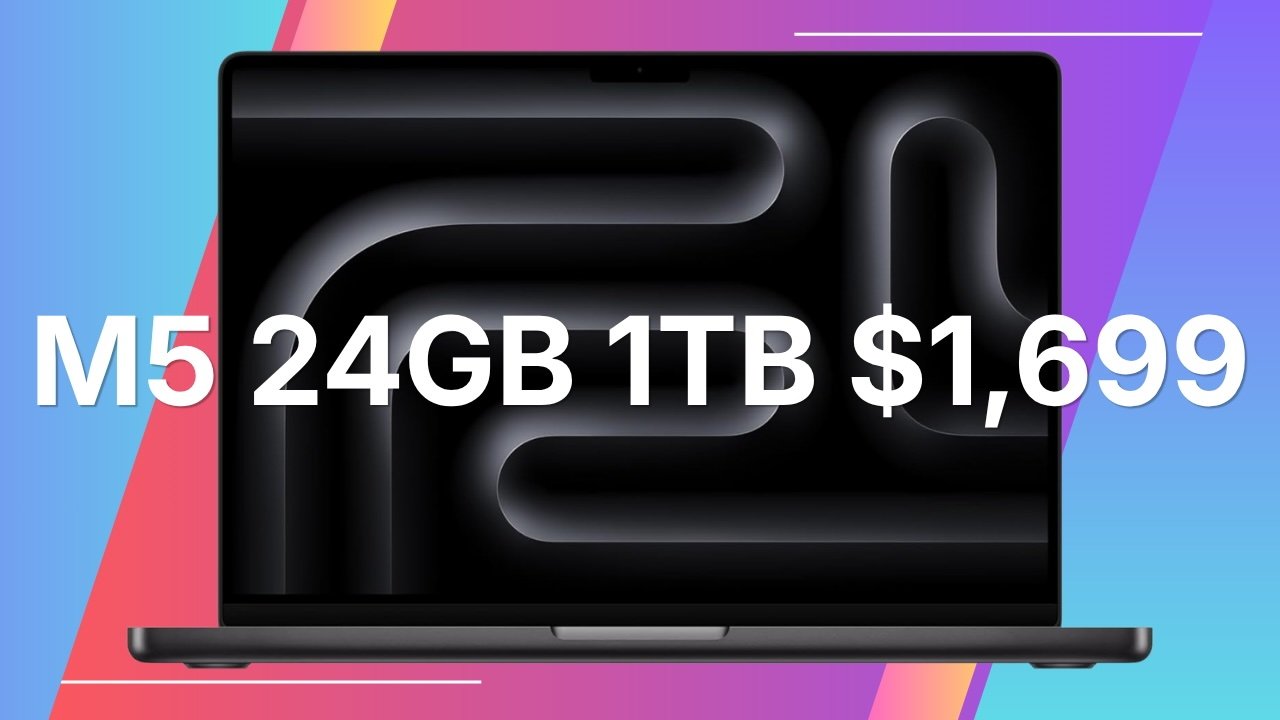
Apple retailers are competing for your business with a $200 discount this weekend on the 1TB M5 14-inch laptop with an upgrade to 24GB of memory.
Both Amazon and B&H Photo are offering a $200 discount on Apple’s M5 MacBook Pro with 24GB of RAM and 1TB of storage, bringing the Space Black model down to $1,699.
In 2026, Apple made an update to the MacBook Pro range, eliminating the 512GB SSD option and making 1TB of storage standard. This configuration has a bump up to 24GB of memory, which is 8GB more than the standard 16GB found in the entry model.
Advertisement
According to our M5 MacBook Pro Price Guide, Amazon and B&H’s $200 discount delivers the lowest price for model number MDE34LL/A. B&H states the deal ends on Mother’s Day, but the store’s online checkout closes for 24 hours on Friday evening, before reopening Saturday night.
You can also save on the 2026 MacBook Pro with your choice of an M5 Pro or M5 Max chip, which was released in March. A highlight of the best MacBook Pro deals across both 14- and 16-inch models can be found below, with a full rundown of offers in our MacBook Pro Price Guide.
14-inch MacBook Pro M5 sale
14-inch MacBook Pro M5 Pro and M5 Max deals
Advertisement
M5 Pro, 15C CPU, 16C GPU, 24GB, 1TB, Standard Display: $1,949 ($250 off) with in-cart coupon




 In any MMORPG, the average user will generally only encounter the client side of the system. This makes building a compatible open source version of the proprietary server into a bit of a chore. Of course, sometimes you get a bit of a break, such as with the – still active – MMORPG Ultima Online, when the disc for the 1998 The Second Age expansion contained a stand-alone demo. This also meant a (stripped-down) server which has been gratefully reverse-engineered by the community, with [draxinar] now claiming to have made the most complete server based on this demo server.










































You must be logged in to post a comment Login