
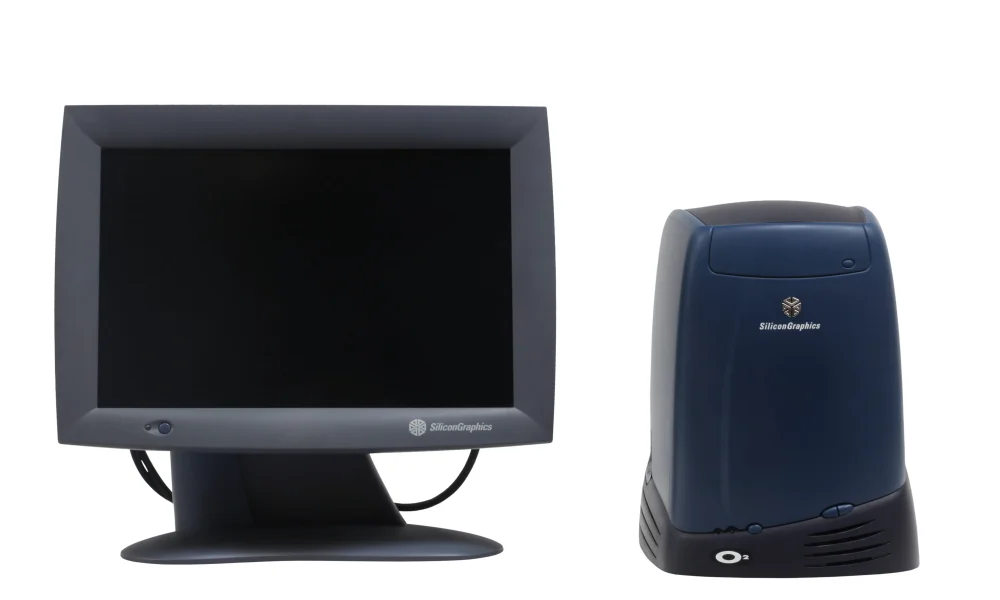
The SGI O2 was SGI’s last-ditch attempt at a low-end MIPS-based workstation back in 1996, and correspondingly didn’t use the hottest parts of the time, nor did it offer much of an upgrade path. None of which is a concern to hobbyists who are more than happy to work around any hardware- and software limitations to e.g. install much faster CPUs. While quite a few CPU upgrades were possible with just some BGA chip reworking skills, installing the 900 MHz RM7900 would require some PROM hacking, which [mattst88] recently took a shake at.
The initial work on upgrading SGI O2 systems was done in the early 2000s, with [Joe Page] and [Ian Mapleson] running into the issue that these higher frequency MIPS CPUs required a custom IP32 PROM image, for which they figured that they’d need either SGI’s help or do some tricky reverse-engineering. Since SGI is no longer around, [mattst88] decided to take up the torch.
After downloading a 512 kB binary dump of the last version of the O2’s PROM, he set to work reverse-engineering it, starting by dissembling the file. A big part of understanding MIPS PROM code is understanding how the MIPS architecture works, including its boot process, so much of what followed was a crash-course on the subject.
With that knowledge it was much easier to properly direct the Capstone disassembler and begin the arduous process of making sense of the blob of data and code. The resulting source files now reassemble into bit-identical ROM files, which makes it likely that modifying it to support different CPUs is now possible with just a bit more work.
For those who want to play along, [mattst88] has made his ip32prom-decompiler project available on GitHub.
Thanks to [adistuder] for the tip.
Top image: Silicon Graphics 1600SW LCD display and O2 workstation. (Source: Wikimedia)