Sila CEO and co-founder Gene Berdichevsky, left, and Chris Dougher, Sila’s VP of operations, at the startup’s Moses Lake facility. (Sila Photo)
Sila raised its first round of funding in September 2011 — the same month solar power manufacturer Solyndra went bankrupt, sullying the sustainability sector.
But the California-based startup developing high-performance battery materials kept plugging away, and eventually batteries started booming as EV sales and concerns about the lack of domestic battery production accelerated in the U.S.
Last fall, Sila began manufacturing material in Moses Lake, Wash., at the first automotive-scale, silicon-anode plant for both the company and the nation.
“With something like this, you just keep plugging away at it,” said Gene Berdichevsky, Sila’s CEO and co-founder. “And you ride the waves.”
Keep reading to learn more about Berdichevsky’s sustainability journey. His quotes have been edited for clarity and length.
Advertisement
What was the moment you realized you had to work in energy?
In my freshman year, I discovered the Stanford Solar Car team. We were student-run group, and the group was building a solar-powered electric car for a race that would go 2,300 miles from Chicago to L.A., and I started participating. It was very little adult supervision, lots of students. And I fell in love with energy, like everything energy. It’s really at the foundation of civilization. And what was super interesting to me is it felt like there was still so much opportunity to make an even better energy system.
What gives you the most hope for the planet?
The creativity of people and the opportunities for science and technology to solve impossible problems. It wasn’t that long ago that the world faced a choice between depopulation or starvation, as the world was thought to not have enough resources for the food needed for a few billion people. But crop science solved it. The same can be said as we face energy challenges today — and I believe material science can solve it.
Advertisement
Gene Berdichevsky. (Sila Photo)
What’s your biggest concern when it comes to addressing climate change?
You cannot cut your way to solving climate change, yet that is often the temptation and the rhetoric. The only way we will solve climate change is by harnessing scientific breakthroughs, technology, and the power of markets to make the clean option simply the better, more economical option.
What’s the biggest misconception about building an energy company?
In the end, there is no such thing as a billion-dollar energy company. When you start an energy company from zero, you have to understand what it takes to succeed at a $10 billion or $100 billion scale and stay rooted in the long term because that’s the minimum threshold to have an impact on the world of energy — and nothing smaller will survive.
What’s one habit you’ve changed personally because of sustainability concerns?
Advertisement
None. I drive an EV because they are more fun to drive — but they happen to be clean. When I travel internationally, I try to fly on 787’s because they’re designed for more passenger comfort — and they happen to be more efficient. When I travel in major cities, I take the metro because it’s faster to get around. Let’s make the cleaner option simply the better one.
Coffee with any energy leader, past or present — who do you pick?
Nikola Tesla and George Westinghouse. The scientist and the entrepreneur responsible for transforming our world and making electricity flow as freely as water in our lives. While Thomas Edison was the stronger businessman, Tesla was so ahead of his time, and his partnership with Westinghouse created the competition with Edison that revolutionized our world.
What impact do you hope your work has in 20 years?
Advertisement
A better energy foundation for the world. Oil, coal, and gas have created immense prosperity and transformed our society for the better in the 20th century. But an even better, more resilient, lower-cost, and cleaner energy foundation is possible with batteries, geothermal, and renewables. That is the path to yet more prosperity for the world in the 21st century — and it requires innovation, commercialization, and incredible scaling. My hope is for Sila to play an important part in that energy foundation.
AWS’ me-south-1 region has been offline for months, so more like beating a dead cloud
Iran’s Islamic Revolutionary Guard Corps (IRGC) claims it hit an AWS datacenter in Bahrain months after taking it offline for the first time, in a move it claimed as retaliation for a US attack on a nuclear plant that was under construction.
The IRGC said in a statement on Tuesday that it had struck back at what it called the “child-killing US Army” by attacking Amazon infrastructure in Bahrain, claiming AWS’s “central data infrastructure” had been “destroyed” after being hit by “several cruise missiles,” according to Google Translate. The IRGC said the claimed strike was retaliation for what Iran described as a US attack on the under-construction Darkhovin nuclear facility.
Advertisement
A look at the AWS Health Dashboard shows that there are definitely issues in Bahrain and the UAE, with issues in both regions being blamed on the US-Iranian conflict. While the status of AWS me-central-1 (UAE) is just “unable to reliably support customer applications,” me-south-1 (Bahrain) is said to be “currently unavailable.”
The last update to the state of AWS services in Bahrain and the UAE in the open issues area of the Dashboard was on April 30, and the Service History tab shows that every single AWS service in Bahrain has been offline for months.
Per our previous reporting, Iranian state-affiliated media claimed that strikes on AWS infrastructure in Bahrain and the UAE were deliberate, after US and Israeli attacks on Iran in late February. AWS-hosted providers including Snowflake and Red Hat subsequently urged affected customers to fail over or move workloads to other regions after the facilities were damaged.
AWS waived all usage-related charges for March 2026 in its me-central-1 region in the UAE following the attacks on its infrastructure. Iran has also reportedly designated facilities associated with Google, IBM, Microsoft, Nvidia, Oracle, and Palantir as legitimate targets for retaliatory strikes, citing their alleged support for US military operations.
Advertisement
The fact that services in Bahrain have been unavailable for months, and continue to be offline, makes it challenging for El Reg to confirm the legitimacy of Iranian claims it hit the site again. We’ve reached out to AWS to learn more, but didn’t hear back. ®
The biggest publicly traded tech companies in the world, commonly known as the “Mag 7” — or magnificent seven — may not be enjoying their stranglehold at the top of the US economy for much longer. That’s, of course, if the leaders of a swathe of new AI-centric tech firms, including OpenAI and Anthropic, have their say as they plan to IPO in the coming months. But positioning these businesses in the new big tech landscape has been a major challenge.
“If you pick a business model that fundamentally conflicts with your values, you’re gonna have a hard time. Either you betray your own values, or you become irrelevant… It’s far better to pick a business model that’s compatible with your values.”
Ethics in AI
The Anthropic CEO Dario Amodei was reflecting on his history in the AI industry during an interview with Bloomberg that aired earlier this year.
Advertisement
Quote of the day
This article is part of TechRadar Pro’s QOTD project to provide an insight into the minds of the brightest and most recognized figures in the technology industry today and in years gone by. Read the full series here.
In an exchange themed around the success of Anthropic’s enterprise-centric AI tools like Claude Code and Claude Cowork, Amodei took the opportunity to opine on the nature of doing business and the importance of business models that align with your values.
Advertisement
Latest Videos From
Commenting that many in the tech industry prioritize models that tap into elements like engagement, advertising, and the promotion of AI slop, Amodei noted that compromising your own values is not a long-term and sustainable way forward.
This is at least as far as he’s concerned. That’s why, he suggested, he’s attempting to make Anthropic more “useful” to the world by targeting enterprise customers.
Bad blood
Amodei, an ex-OpenAI executive, co-founded Anthropic in 2021 largely as a rejection of the values that drove OpenAI at the time and the paths the company had taken.
Advertisement
In particular, reports suggest that Amodei was frustrated and disturbed by the willingness to bypass what he considered to be crucial safety measures, like the slowing of updates to prevent malicious use of AI.
Sign up to the TechRadar Pro newsletter to get all the top news, opinion, features and guidance your business needs to succeed!
Critics of Anthropic, however, also point out that despite positioning itself as a safety-first AI company, engineers are releasing increasingly powerful models — including Mythos lately — that threaten to undermine safety if they get into the wrong hands.
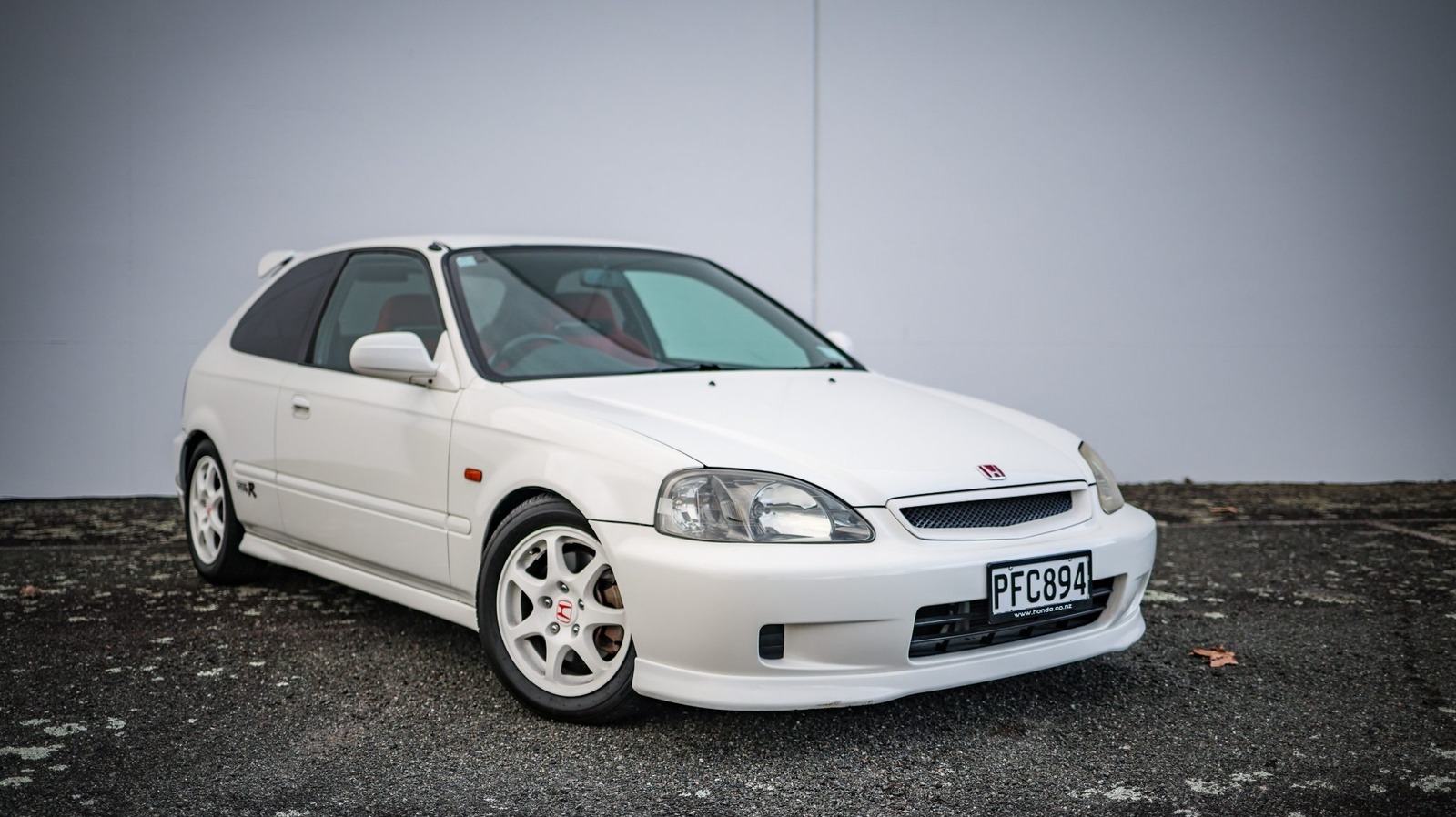
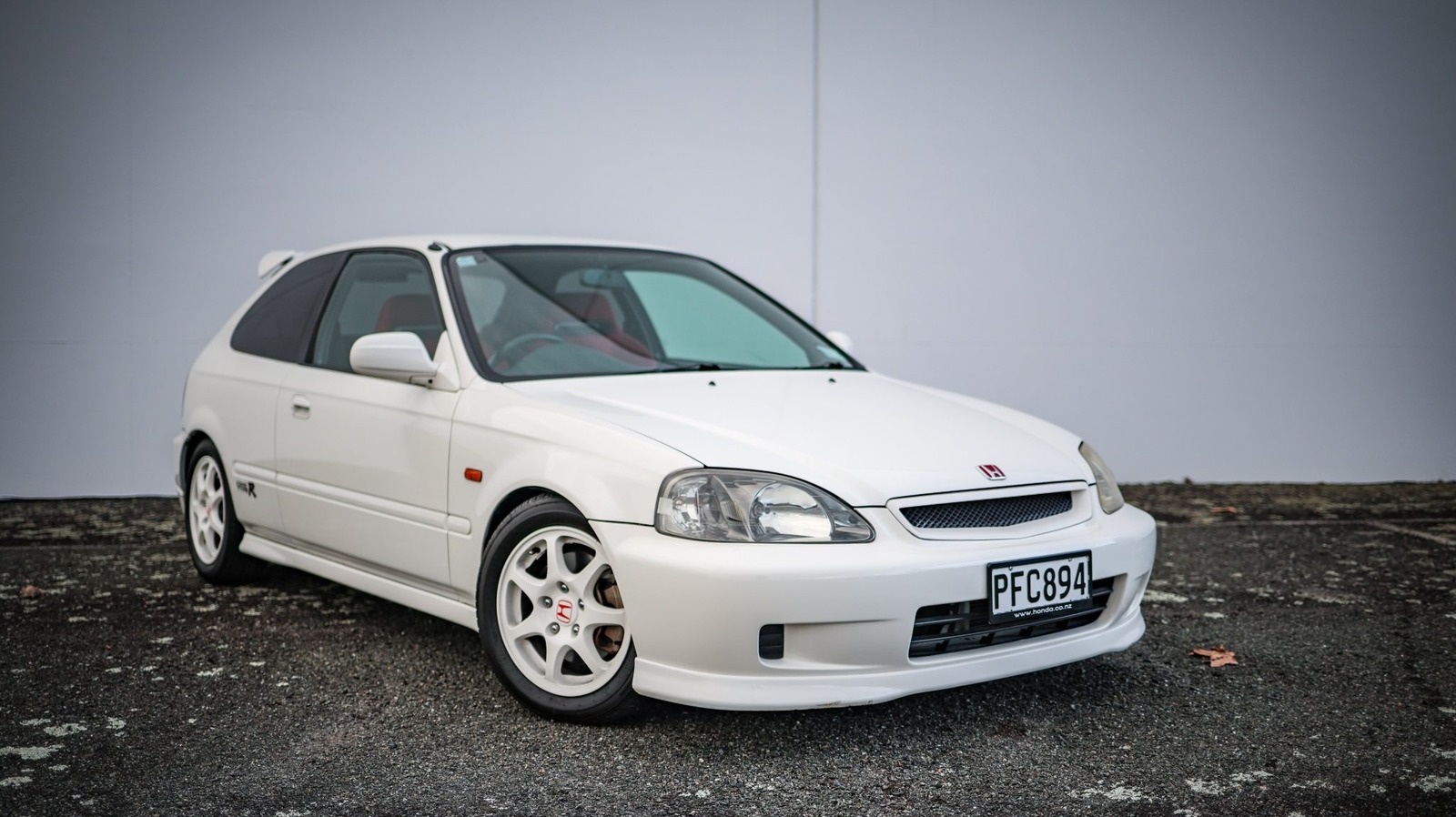
Honda New Zealand has listed 16 vehicles from the heritage car collection up for auction. Before the auction went live, these collectible cars were located on the Nelson Bays site. The auction is the result of Honda New Zealand closing this location and moving distribution to Auckland. Proceeds from the auction, which closes on July 29th, 2026, will go to various charities.
Assembled in New Zealand, the 16 vehicles range in age from a 1981 Accord to a 2000 Civic Type R. The latter is the highlight, a desirable JDM with manual transmission and high-revving engine with a starting price of $30,000 and no reserve. The first-generation Type R is a fun drive, with great handling and a loud engine. Other standout listings include a 1995 Accord LXi with just 4,722 miles — which is possibly the lowest mileage example in the world — currently at $11,000, and a 1988 Honda City Jazz, a cute compact car with a quirky design, lightweight construction, and manual transmission with a current bid of $6,050 at the time of writing.
Advertisement
Honda’s history in New Zealand and the closing Nelson plant
Honda was founded in Hamamatsu, Japan in 1948, but quickly established itself as a global company. By 1959, the American Honda Motor Co. Inc was established in Los Angeles, California — the first overseas subsidiary — and the Honda N600 became the first car sold in the United States in 1969. However, the United States wasn’t where the expansion ended.
Advertisement
The 1976 Honda EB1 Civic was the first vehicle Honda assembled outside of Japan — and the first hatchback car it assembled in New Zealand. Its design was boundary pushing at the time for its fun, small look. Every EB1 was assembled at Petone, but Honda later started assembling the second-generation Civics at the Panmure and Nelson Bays plants.
Before Honda moved in, however, the Nelson Bays assembly plant location originally manufactured Jaguar, Triumph, and other British vehicles. These brands started to lose favor in New Zealand in the 1970s, which is when it switched to Honda. When Petone shut down completely in 1982 and sporty cars started gaining popularity, Honda ramped up production at Nelson Bays. Honda continued to assemble vehicles at Nelson Bays for 50 years, although it largely served as a location to store new cars and prepare them for sale in recent years.
Don’t worry – it can autonomously attack ground targets, too
The US military is adding autonomous gun-based counter-drone systems intended to reduce its reliance on expensive interceptor missiles. They also have the potential to kill humans.
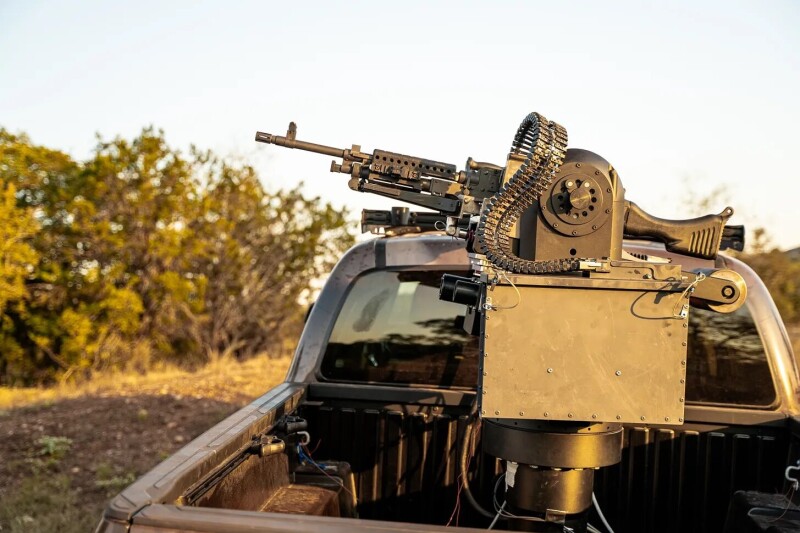
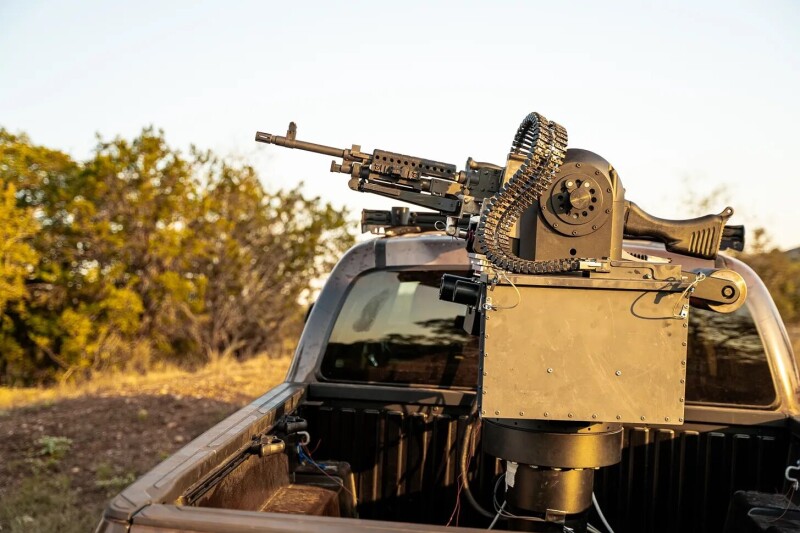
Defense robotics firm Allen Control Systems (ACS) announced a deal with the US Marine Corps on Monday to get its Bullfrog autonomous weapon system attached to the Light Marine Air Defense Integrated System (L-MADIS) expeditionary counter-drone platform. L-MADIS consists of pairs of off-road vehicles, one carrying a suite of sensors and the other slated to be outfitted with a Bullfrog autonomous weapon station.
Advertisement
Videos on ACS’ YouTube page demonstrate the Bullfrog in action, taking down a number of small drones in demonstrations over the past couple of years. While we didn’t hear back from ACS about the Bullfrog’s capabilities to target manned vehicles and troops, a short video on the company’s channel also shows a Bullfrog unit switching from targeting aerial drones to ground targets with ease. This suggests that Bullfrog systems aren’t just capable of knocking drones out of the sky. They are also fully capable of – and lack any software protections against – the fully autonomous targeting and killing of humans with complete autonomy.
Advertisement
Bullfrog systems are a little different from your typical AI-controlled counter-drone systems in that they’re not built with an attached weapon, but are designed to slot in “any legacy or modern firearm” in order to turn them into systems able to “detect, track, and defeat incoming threats at a fraction of the cost of even the least expensive kinetic interceptors.”
In other words, ACS claims it’s cheaper to build a system that can adapt existing military firearms than to invest in a purpose-built counter-drone weapon system. Bullfrog units provide the AI, computer vision, and precision aiming robotics to take out drones, while the military only has to plug in its own hardware.
There are several variants of the Bullfrog available from ACS, with units designed for everything from the M240 machine gun to the M2 50-caliber machine gun. The company is currently working on M230 chain gun and M134 minigun variants as well. In the case of the Marine Corps contract, it appears the service is taking on some M240 variants based on a link in ACS’s press release to the M240-variant’s page.
The M240, the smallest of the weapons designed for the Bullfrog, fires up to 850 7.62×51 mm NATO rounds per minute and is effective up to 800 meters in the Bullfrog. The Bullfrog M240 is capable of taking down drones up to DoD Group 3, meaning anything with a max gross takeoff weight less than 1,320 lbs, able to operate as high as 18,000 feet above sea level, and with an airspeed of less than 250 knots. The DoD grouping goes up to Group 5, which includes some of the military’s largest drones, such as the RQ-4 Global Hawk.
Advertisement
The US Army and US Navy are both already fielding Bullfrog units, making the Marines the third branch to get their hands on the system. ACS cited the proliferation of cheap drones in the Russia/Ukraine conflict and in the Middle East as a need for comparable cheap counter drone tech. ®
In an ideal world, the role of technology would be to make all of our lives easier. And although all the ads suddenly appearing in our smart TVs and gaming systems might make it seem otherwise, some technology can still improve our lives if we work hard at it. For [Cian], that meant training a neural network to read his gas meter so he wouldn’t have to do it himself.
The root issue here is twofold, first that [Cian]’s gas company hasn’t upgraded their own technology to modern, remote-readable meters, and second that the meter can’t be read by a gas employee because it’s hidden in the depths of [Cian]’s basement. This latter fact requires him to delve into Moria-like depths to get to the meter, so the solution here was to place a Raspberry Pi in this location instead. With a camera pointed at the meter, it’s not quite capable of discerning digits on its own so a neural network was trained in order to get accurate readings of the dial. And, finally, since the machine is networked already [Cian] set it up to automatically notify the gas company of its reading so he is now completely out of the loop.
For automating tedious tasks like these, the Raspberry Pi with something like OpenCV as a computer vision tool is a fairly mature platform for light machine learning duties like these. We’ve seen license plate readers as well as neighborhood traffic surveys built on these platforms to help automate human labor away, making our lives easier one single-board computer at a time.
One of Singapore’s oldest vintage furniture businesses runs a 7,000 sq ft store and offers refurbished furniture ranging from S$15 to tens of thousands of dollars.
In a world driven by consumerism, one Singapore business is giving pre-loved furniture a second life. Meet Hock Siong & Co., a family-run business that has spent decades collecting, restoring, and reselling secondhand furniture.
Today, the business is run by sisters Brillyn Toh, 38, Beaunice Toh, 33, and Blessance Toh, 30, who grew up surrounded by used furniture and discarded household items.
The trio are the second generation of a family deeply rooted in Singapore’s karung guni trade. Their grandfather went door to door collecting unwanted newspapers, clothing, and household items, while their father, Toh Chin Siong, 65, grew up helping in the trade before founding Hock Siong & Co.
We spoke with Brillyn about how she and her sisters have grown Hock Siong into a 7,000 sq ft showroom in Tai Seng, with no plans of slowing down.
Advertisement
It started with old newspapers & used clothing
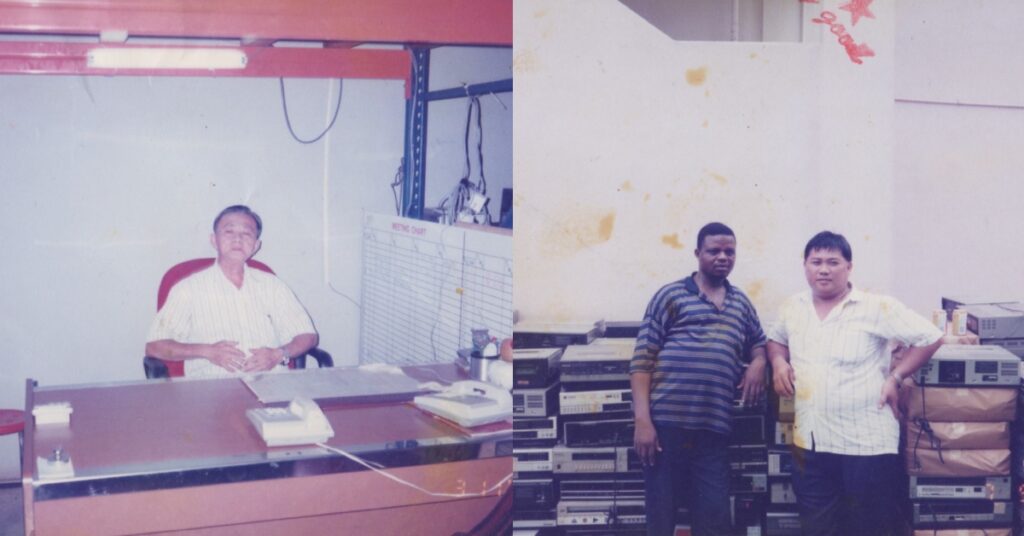
(Left): The elder Toh and (Right): the sisters’ father./ Image Credit: Hock Siong
The story of Hock Siong began not with furniture, but with old newspapers and used clothing.
It started with Brillyn’s grandfather, a karung guni man (rag-and-bone man) who, in the 1970s, travelled through Singapore’s housing estates sounding a horn to announce his arrival and collecting whatever residents no longer needed.
His son, Toh Chin Siong, grew up helping with the collections. After finishing school, he worked briefly as a lorry driver before founding Hock Siong in the early 1990s.
The business initially served as a middleman in the karung guni trade, buying from individual collectors, sorting the items, and exporting them to overseas markets where there was demand. Used clothing was shipped mainly to Indonesia, while electronics found buyers across developing countries in Southeast Asia.
The pivot into furniture came in 1998. That year, Chin Siong learned of an opportunity to tender for the contents of the former Marco Polo Hotel, which was slated for demolition in 1999. The once-prominent hotel has since been replaced by a condominium on the same site.
Advertisement
He partnered with a Malaysian agent to purchase everything inside the hotel—beds, mirrors, tables, chairs, restaurant furnishings and lounge pieces from roughly 300 rooms.
The pair split the haul, with half going to Malaysia and the other remaining in Singapore to be sold through Hock Siong. At the time, storage was inexpensive, and the family had access to a large warehouse in the old Sungei Kadut area, making it feasible to keep such a massive inventory.
That single project transformed the business. From then on, secondhand furniture became Hock Siong’s primary focus.
What Hock Siong won’t buy
Blessance and Uncle Lye, who works at Hock Siong./ Image Credit: Hock Siong
Today, Hock Siong is run by sisters Brillyn, Beaunice and Blessance Toh.
Each oversees a different part of the business. Brillyn heads procurement, assessing and purchasing incoming furniture; Beaunice manages operations, overseeing how pieces are sorted, stored and displayed in the showroom; while Blessance handles the administrative side, including finance and payroll.
Advertisement
Hock Siong acquires furniture from homes, restaurants, corporate offices and hotels that are renovating or clearing out their spaces. The team is sometimes even called upon to help families empty the homes of loved ones who have passed away.
Most enquiries begin with a WhatsApp message. Customers send photographs of the items they wish to part with, and Brillyn personally reviews each one to determine whether Hock Siong can take it.
Rare pieces of art often come by Hock Siong’s hands such as “Faces” by Naidee Changmoh, Bronze Edition and 优胜 Champion by Chua Boon Kee./ Image Credit: Hock Siong
Material is the biggest deciding factor. Pieces made from solid wood, such as teak, mahogany, or elm, are far more likely to be purchased, as they are durable enough to be restored and represent decades of growth.
“Sometimes I find that this wooden piece is beautiful, and I think it has the potential to be remade,” she said. “I will buy it.”
On the other hand, Hock Siong passes on items whose storage costs would outweigh their resale value, or pieces that would require so much refurbishment that the time and effort simply wouldn’t justify the eventual selling price.
Advertisement
Today, Hock Siong’s sprawling showroom carries everything from a S$15 vintage desk lamp to a three-metre Raffles statue priced at S$3,000. At the top end are bronze sculptures by Chinese artist Liu Ruo Wang, which can fetch tens of thousands of dollars.
What the refurbishment process looks like
Image Credit: Hock Siong
The carpentry team at Hock Siong typically performs two distinct types of work. Structural refurbishment addresses what daily use does to a piece of furniture: loose joints, stuck drawers, shelves that have buckled under weight.
The other form is exterior refurbishment, such as sanding, refinishing, and revarnishing, which helps to make something look almost brand new.
Brillyn said that most pieces typically need both types of restoration. For example, a sideboard cabinet that arrives with cloudy, discoloured lacquer goes through structural fixes first, then sanding and refinishing.
The refurbishment capability wasn’t baked into the business from the start, but developed gradually as a necessity. With the design of furniture evolving with the changes in interior design, some items from the Marco Polo Hotel could not be sold as-is, and so Hock Siong had to innovate and repurpose some furniture.
Advertisement
Image Credit: Hock Siong
As such, there are some larger modifications made to match current interior design trends, like adding fluted glass to cabinets that previously had plain glass, because that conveys a contemporary look to some buyers who prefer a modern element in their secondhand furniture.
Another example is old television cabinets, the hulking built-in units that were standard in Singapore homes a generation ago. They’re often solidly built, sometimes from good wood, and almost impossible to sell as they were.
Hock Siong’s experienced carpentry team has developed ways around this by removing the TV cavity, adding shelving, and making what was unsaleable into a storage cabinet with some character.
Such work is labour-intensive, and with skilled carpenters becoming increasingly difficult to find, every restoration has to make commercial sense.
It’s this ability to reimagine old furniture for modern homes that has become one of Hock Siong’s defining strengths—and one reason the business has remained relevant for decades.
Advertisement
Of course, not every item that passes through Hock Siong is an ordinary cabinet or dining table. Over the years, the business has handled its fair share of unusual pieces, each with a story of its own.
One of the most memorable was an old Mini Cooper. The team had it cut in half at a workshop before transforming it into a sofa with custom cushions. Today, it sits inside Brunches Café.
Another was a three-metre-tall statue of Sir Stamford Raffles salvaged from a hotel before it closed.
The statue was eventually bought by a retired private collector known for filling his home with unusual finds. Rather than placing it indoors, he displayed it prominently in front of his house.
Advertisement
The economics of a traditional business
Image Credit: Hock Siong
Hock Siong currently occupies a 7,000 sq ft store at Tai Seng with a team of 28, split across sales, operations, delivery, carpentry, and administration.
With years of being in the business, Brillyn is honest about the structural limitations of Hock Siong’s business model. “This is really not a super scalable business,” she said.
A conventional furniture retailer can look at a catalogue, identify a bestselling chair, and order 20 more, but Hock Siong cannot.
Everything in the store has arrived from a different location, in varying conditions and at an unpredictable time. When something sells, there is no restocking, and it’s more likely than not that the next piece of rosewood will be different from the last.
Brillyn explained that this means the business has to be exceptionally good at managing what it cannot control and at creating the ideal conditions for pieces to sell.
Advertisement
As such, store arrangement matters more than it might appear to strangers to the business. Hock Siong’s team regularly repositions items because changing how a piece sits in the space changes how customers imagine these restored pieces in their own homes.
Image Credit: Hock Siong
Being a family business, Hock Siong is also open to dynamic pricing and bargains as they see fit. With global geopolitical instability, rising raw material costs have squeezed profit margins in ways that are harder to manage.
For example, turpentine, a material regularly used by Hock Siong’s carpentry team, has gone from S$30 to S$40 per tin to S$50, by nearly 20 to 40%.
Diesel for the collection trucks has climbed too.
Despite rising costs, Hock Siong has held its free delivery threshold at S$400, absorbing some of the increase rather than passing it on, partly because it considers its relationship with regulars as a long-term asset.
Advertisement
“Customers are very understanding,” Brillyn said. “I’m really very grateful.”
A sunset industry that is slowly rebounding
Image Credit: Hock Siong
When Brillyn joined the business full-time in 2011, after graduating from NUS Business School, the secondhand furniture trade was not exactly seen as a growth sector.
Over the years, cheap imports from China had compressed the prices of furniture and made buying new a reasonable alternative to buying restored secondhand items. Brillyn used to refer to her family’s line of work as a “sunset industry,” a traditional business that is facing long-term stagnation.
However, what Brillyn and her sisters did instead of accepting that was to begin marketing Hock Siong online.
Facebook pages were new in the early 2010s, and it cost almost nothing to ride the wave of social media and share about the business. On Hock Siong’s Facebook page, Brillyn would post pictures of restored pieces for sale, and that eventually led to a following.
Advertisement
Later, Hock Siong hopped onto other digital platforms like Instagram and eventually established its online store.
Image Credit: Hock Siong
Besides digitalising the business, Brillyn shared that the secondhand furniture market in Singapore has changed over the past decade in ways that have worked in the business’s favour.
Western thrifting culture, globalised by social media, has made buying secondhand feel like an intentional choice rather than a compromise for something brand-new.
Moreover, a growing number of younger homeowners are prioritising items with a backstory, while more interior designers want something that stands apart from the usual offerings, leading to a demand for secondhand furniture from businesses like Hock Siong.
I think it’s really very heartening that people are beginning to accept all this and really find the beauty in old things.
Brillyn Toh
Advertisement
Looking ahead, the Toh sisters are focused on growing their family business further, adding to the family history of dealing with secondhand items.
A second update to Apple Invites for iOS in as many months adds two small changes: emoji replies and a pile of confetti.
Apple has already made one update to the Apple Invites app this summer with some handy new features. Its second is smaller, but still quite celebratory in nature.
The release of version 1.10 on the App Store explains there are two changes made to the app. The first is that the host and guests are able to reply to each other using emoji, rather than words.
The change makes responses quicker, and as Apple says, it allows everyone to “share the excitement as the guest list comes together.”
Advertisement
The other main change to the app is the addition of a confetti animation, which fires off when guests reply. There’s also the usual collection of bug fixes and performance improvements.
The previous update, which took place in June, added a co-hosting capability, as well as quality-of-life improvements.
Hackers are actively exploiting the critical CVE-2026-50522 vulnerability in Microsoft SharePoint to steal machine keys and maintain access even after affected servers are patched.
An attacker obtaining them can create valid authentication tokens to impersonate users and access available resources such as SharePoint sites and documents with the privileges of the forged identity.
Microsoft describes the security issue as a deserialization-of-untrusted-data flaw that allows a remote attacker to execute code over a network without authentication.
The flaw was addressed in July’s security updates from Microsoft. It was not marked as actively exploited, but the advisory noted an increased likelihood of being leveraged.
Offensive security company watchTowr has observed that hackers started to leverage CVE-2026-50522 against on-premise vulnerable SharePoint deployments, immediately after a valid proof-of-concept (PoC) exploit became public.
Advertisement
“On July 20th, watchTowr identified proof-of-concept exploit code for this vulnerability,” watchTowr states. “Within hours, our global honeypot network, Attacker Eye, captured exploitation attempts using this PoC that successfully compromised target systems.”
The researchers note that the attackers are stealing machine keys that allow them to maintain long-term access on breached systems.
Early warning threat intelligence company Defused detected “an undocumented SharePoint deserialization vector” being used in attacks as early as July 17 but could not link the activity to a flaw.
Yesterday, the company said that the attacks were likely driven by exploiting the CVE-2026-50522 SharePoint vulnerability.
Advertisement
Exploit released publicly
At least one PowerShell demonstrative exploit for CVE-2026-50522 is available on GitHub from security researcher Janggggg.
The PoC attempts to trigger remote code execution by delivering a malicious .NET ‘BinaryFormatter’ payload as the cookie of a forged ‘SecurityContextToken’ within a WS-Federation sign-in response posted to SharePoint’s ‘/_trust/default.aspx’ endpoint.
If the token is processed by a vulnerable deserialization path, the payload results in arbitrary code execution on the SharePoint server.
BleepingComputer did not test the PoC exploit, but it looks structurally and technically legitimate.
Advertisement
It should be noted that Janggggg’s published the PoC on the same day watchTowr started to detect attacks leveraging it. However, it is unclear if the observed incidents made use of the publicly available exploit.
While applying the latest SharePoint security updates removes the vulnerability, watchTowr advises defenders to also rotate credentials on any asset that may have been exposed.
Security teams log 54% of successful attacks and alert on just 14%. The rest move through your environment unseen.
The Picus whitepaper shows how breach and attack simulation tests your SIEM and EDR rules so threats stop slipping by detection.
SK On says solid-state cells can give industrial robots the 8+ hour runtime of a human shift, but adoption might be another story
While upcoming solid-state batteries boost productivity through longer operating times and lower overall operating costs, they are prohibitively more expensive than some of their lithium-ion peers
Modern Li-on-based batteries are under 2% of a robot’s manufacturing cost today, and solid-state would push that share to around 8%, a premium that could come with serious tradeoffs for manufacturers
Modern robotics is a field that continues to grow over time, fueled by a mix of smarter AI, manufacturing efficiencies and at times, better materials that change what is possible on the ground.
The robots currently in use in factories and warehouses however have a key limitation that has yet to be addressed properly: Lithium-ion batteries often can not keep up with the power demand that modern robots have.
This is particularly reflected in how often they require a battery swap or a recharge: most lithium-ion-powered robots typically operate for one to two hours on a charge, a far cry from the industry’s ambitions of machines that can work a full eight-hour shift.
Latest Videos From
A costly solution to a robot’s current battery limits
Speaking at the 2nd Battery Foundry Forum in Seoul on July 15 2026, Ko Young-seok, the executive vice president and head of product planning at the Korean battery maker SK On, argued that solid-state cells can deliver meaningful value for industrial robots that need extended runtime.
Advertisement
He also explained that whether manufacturers actually adopt them will come down to total cost of ownership (TCO), weighed against two cheaper rival approaches: battery swapping and ultra-fast charging.
The TCO framing implies that solid-state batteries, the battery industry’s most hyped next-generation technology and inherently expensive to boot, might attract industrial buyers simply because the math works in their favor relative to conventional Li-ion setups.
This is because one must factor in the cost of keeping spare battery packs, charging and/or swap times, and potentially additional robots to cover the resulting downtime, which could leave solid-state with a lower TCO than the competition despite the higher sticker price.
Advertisement
Sign up to the TechRadar Pro newsletter to get all the top news, opinion, features and guidance your business needs to succeed!
The framing may also be unavoidable given how batteries sit in a robot’s bill of materials today. A Li-ion battery accounts for under 2% of the total cost of an industrial robot, according to SK On, essentially a rounding error in the grand scheme of things, but switching to a solid-state battery could push that share to around 8%, a significant jump in overall costs.
For context, a widely circulated teardown of Tesla’s Optimus Gen 2 puts the battery pack at about $300 in a roughly $55,000 hardware cost structure, around 0.5% of the bill of materials, comfortably under 2%, though units with larger packs or lower overall costs would land higher, and some independent estimates, including McKinsey’s, put battery modules at 5–10% of a humanoid’s bill of materials.
Solid-state cells, with their higher energy density, are one of the most promising routes to a robot that works a human shift without stopping, but given their comparatively steep cost versus the competition, one can understand why SK On is aiming this pitch at the robotics and industrial players that need the technology and can afford to pay for it.
Advertisement
For applications with short duty cycles, swapping a cheap lithium-ion pack or fast-charging between tasks may simply remain the better economic answer, but for customers willing and able to pay for more sustained power, solid-state seems to be the new play, even as it remains elusive for commercial EVs given its cost.
SK On has skin in this game on a specific timeline. The company completed its all-solid-state pilot plant at its Future Technology Institute in Daejeon last September, built in partnership with US solid-electrolyte firm Solid Power.
It is developing two chemistries: a polymer-oxide composite cell targeted for commercialization in 2028 and a sulfide-based cell in 2029, a timeline it has already accelerated by a year. But it has competition waiting in the wings: rival Samsung SDI, working with the same American partner, is aiming for 2027.
Advertisement
Whether this leads to widespread adoption of tech expected to appear only in the most expensive EVs on the market this decade remains to be seen, but the TCO argument Ko makes might stick more easily with industrial customers than with consumer EV buyers, for whom pricing and budgets are key factors.
Saronic’s Port Alpha facility could expand from 835 acres to nearly 4,400 acres
The shipyard could eventually build vessels exceeding 1,200 feet long
Saronic expects Port Alpha to create up to 10,000 direct jobs
Saronic has selected Brownsville, Texas, for ‘Port Alpha‘, a planned shipyard designed to produce autonomous vessels at unprecedented industrial scale.
The project is expected to attract more than $3 billion in private investment and begin construction during 2026.
When operational in 2028, the facility will combine shipbuilding, advanced manufacturing, robotics and software development across an 835-acre site.
Latest Videos From
Port Alpha aims to rebuild American shipbuilding capacity
The site could eventually expand to nearly 4,400 acres, giving Saronic space to develop one of the largest shipbuilding facilities in the United States.
Advertisement
Its initial production facilities will support vessels up to 850 feet long, while later expansion could accommodate ships exceeding 1,200 feet.
The Brownsville location includes waterfront access, a deep-water channel and multimodal transport links needed for large-scale maritime manufacturing.
Saronic selected the site after a year-long search that assessed workforce availability, infrastructure, logistics and future expansion opportunities.
Advertisement
Sign up to the TechRadar Pro newsletter to get all the top news, opinion, features and guidance your business needs to succeed!
The company expects Port Alpha to create up to 10,000 direct jobs over the next decade, covering welding, machining, robotics, software engineering and naval architecture.
Governor Greg Abbott said the project could generate approximately $750 million in annual wages once the workforce reaches its projected scale.
“America’s maritime future depends on our ability to build again,” said Saronic co-founder and CEO Dino Mavrookas. “Port Alpha is our commitment to that mission.”
Advertisement
Saronic plans to work with technical colleges, universities and local institutions to develop apprenticeships and training programmes supporting the facility’s workforce.
The company says the project could generate more than $160 billion in regional economic impact for Cameron County and $264.5 billion across Texas.
Advertisement
Autonomous vessels will drive the shipyard’s production model
Port Alpha will not operate as a conventional shipyard focused solely on constructing traditional crewed vessels for established naval fleets.
Saronic intends to combine software-defined manufacturing with autonomous maritime systems and large-scale production methods.
The company already operates a growing shipbuilding network, including a Franklin, Louisiana, facility acquired in early 2025.
Saronic is investing $300 million there to add 300,000 square feet of production capacity for its 180-foot Marauder autonomous vessel.
Advertisement
The company is known for autonomous vessels including Corsair and Mirage, while Marauder is competing in the medium unmanned surface vessel programme.
These systems form part of a broader effort to expand autonomous maritime operations across different mission types.
Saronic says Port Alpha will support production at a scale and speed not seen in American shipbuilding since World War II.
The company has not yet disclosed detailed production numbers, vessel schedules, or the exact mix of autonomous platforms planned for the facility.

























































You must be logged in to post a comment Login