Connect with us
DAPA Banner
DAPA Coin
DAPA
COIN PAYMENT ASSET
PRIVACY · BLOCKDAG · HOMOMORPHIC ENCRYPTION · RUST
ElGamal Encrypted MINE DAPA
🚫 GENESIS SOLD OUT
DAPAPAY COMING

Tech

RugOne Xlink 7 rugged walkie-talkie review

Published

on

Why you can trust TechRadar


We spend hours testing every product or service we review, so you can be sure you’re buying the best. Find out more about how we test.

RugOne Xlink 7: 30-second review

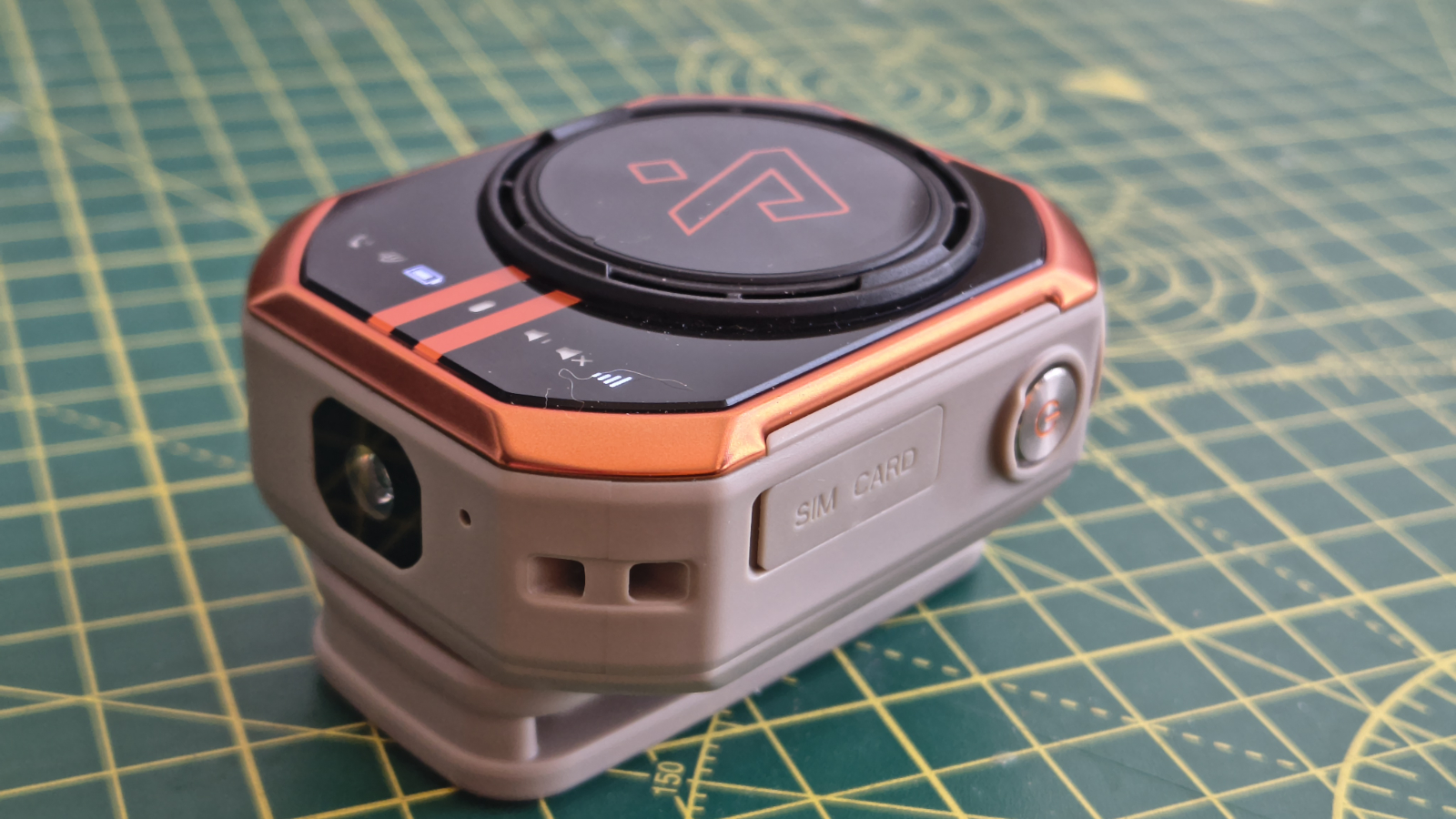
The RugOne Xlink 7 wants to solve an old problem in a new way. Traditional walkie-talkies are brilliant until you walk out of range. Hills block them. Buildings block them. Distance blocks them. The Xlink 7 sidesteps all of that by using 4G instead of short-range radio, so two or three people can stay in touch across a city, a country, or, in theory, the whole planet, as long as there’s signal.

That idea alone makes it worth a look. Add a genuinely tough build, IP68 and IP69K rated, plus MIL STD 810H certification, and you have a device that will survive rain, dust, a drop, or a dunking, all while weighing just 84g. It comes loaded with sensible extras too. A wireless PTT (push-to-talk) remote means you never have to fumble for the unit itself while riding or climbing. An emergency SOS mode, backed by GPS, GLONASS and Beidou positioning, can sound an alarm and share your live location with five quick presses. There’s even a basic AI assistant for weather checks and settings, and a noise cancellation system tuned for wind and speed.

Advertisement

Source link

Continue Reading
Click to comment

You must be logged in to post a comment Login

Leave a Reply

Tech

FBI Arrests Man Accused of Using Steam Games To Drain Victims’ Crypto Wallets

Published

on

The FBI arrested a Florida man accused of uploading fake Steam games containing malware that stole passwords, data, and cryptocurrency wallet credentials from victims. Prosecutors say the scheme infected about 8,000 people, compromised roughly 80 crypto wallets, and stole at least $220,000 through games that appeared legitimate but secretly carried malware. TechCrunch reports: On Tuesday, the FBI arrested Zyaire Wilkins, a 21-year-old Florida resident and student. On Wednesday, prosecutors accused him and a number of unnamed co-conspirators of hacking crimes. Over the past two years, Wilkins and his partners allegedly published several malware-laden video games on Steam, including BlockBlasters, Dashverse, Lampy, Lunara, and PirateFi. Using that malware, says the FBI, Wilkins and his accomplices infected around 8,000 victims, and then hacked around 80 cryptocurrency wallets to steal at least $220,000 worth of crypto. Wilkins and the others marketed their malicious video games on Discord, LinkedIn, and Telegram, according to the authorities.

[…] After the FBI identified another person involved in the crimes, according to the complaint, federal agents interviewed them. The unnamed person said they worked with other people to raise money to launch and market the malicious games in return for sharing some of the stolen cryptocurrency. The FBI identified a specific crypto account involved in the scheme, and then traced cryptocurrency payments made with that account to buy several gift cards, including for UberEats. After subpoenaing Uber, the feds were able to see that the gift cards were linked to an account that made deliveries to Wilkins, who went by the nickname Sibel.eth online, according to the complaint. The feds then got a search warrant for Wilkins’ residence, where they seized his MacBook laptop, cellphones, other devices, and digital wallets. According to the complaint, he refused to speak or answer any questions.

Source link

Continue Reading

Tech

Thousands of Google workers sign petition seeking layoff protections

Published

on

The petition was delivered by leaders of the Alphabet Workers Union to Sundar Pichai’s office at Google’s California headquarters.

More than 4,500 Google employees have signed a petition calling for layoff protections, as sweeping workforce cuts continue to hit the tech industry.

The petition was brought to Google’s California headquarters yesterday (16 July) by leaders of the Alphabet Workers Union, with union president Parul Koul delivering it to Google CEO Sundar Pichai’s office.

Koul, a software engineer at the tech giant, reportedly left the petition with a staff member who committed to deliver it to Pichai, while more than 100 Google employees rallied outside. Koul stated that upon delivering the petition, the group was “greeted with closed doors and no response for the most part”.

Advertisement

“We are demanding that Google workers have the conditions and the security to do their best work, where they can actually bring new ideas and innovations to life instead of working in an environment driven by fear, where you might be pit against your colleagues or every day you’re not sure how much longer you will have this job,” said Koul at the demonstration outside Google’s headquarters, according to San Francisco’s ABC7 News.

According to The Guardian, the union-led petition calls for guaranteed severance, buyouts before mandatory layoffs in all product areas and the option to take severance as extended paid leave.

Union members have also asked to end performance ratings, which they say are based on achieving quotas rather than on merit.

The petition comes as scores of layoff decisions continue to affect thousands of tech workers across the industry, with a significant number of cuts being announced in 2026 alone.

Advertisement

Since the start of the year, companies including Meta, Microsoft (as well as its gaming division Xbox), Amazon, LinkedIn, GitLab, Cloudflare, Coinbase, eBay, Oracle, Snapchat, Epic Games, Atlassian and Block have all laid off scores of employees – as many of the same companies ramp up expenditure on AI around the same time. Some companies, such as Block and Atlassian, have also explicitly stated that their decision to cut jobs was directly linked to their increased focus on AI.

Google has also reportedly been quietly laying off employees this year, with the company recently cutting roles from its Google Cloud division, according to Business Insider. One source reportedly told the publication that Google cited “the need to reinvest in growth areas, such as AI”, to justify the cuts.

The tech giant also reportedly laid off more than one-third of managers overseeing small teams between August 2024 and August 2025, according to CNBC.

Commenting on the Alphabet Workers Union petition and the wider trend of layoffs in favour of AI, Rebecca Hinds, head of the Work AI Institute at Glean, told SiliconRepublic.com that business leaders need to adjust their view on AI in regards to workforce reductions.

Advertisement

“Leaders should stop asking how many roles AI can remove and start asking how work should be redesigned – what AI should do, what humans must continue to own and how the productivity gains will be reinvested in people,” she said.

“Companies that use AI only as a headcount lever may cut costs in the short term, but they will also hollow out the skills and institutional knowledge they need to compete.”

Don’t miss out on the knowledge you need to succeed. Sign up for the Daily Brief, Silicon Republic’s digest of need-to-know sci-tech news.

Advertisement

Source link

Continue Reading

Tech

Surgeon General Advisory Wants Kids to Live ‘Beyond the Confines

Published

on

The U.S. Surgeon General’s office issued a warning yesterday about the harms of extended uses of screens on children, raising concerns about its impact on academic performance, physical health and mental well-being.

The advisory follows a contentious debate over screen time that has been fraught in recent years as schools that implemented 1-to-1 device ratios amid the pandemic now struggle with student attention, behavioral and mental health issues that took root around the same time.

The latest advisory urges kids to pursue — and for the adults in their lives to encourage — a “broader world, beyond the confines of screens,” Health and Human Services Secretary Robert F. Kennedy Jr. said in an opening letter. The role of U.S. surgeon general has been vacant since January 2025, but the advisory was issued by a committee led by Kennedy Jr.

The report encapsulates what researchers and education experts have been long saying: Excessive time in front of devices like smartphones and tablets can worsen mental health and academic outcomes for students.

Advertisement

The American Academy of Pediatrics took a more nuanced approach to a similar report it released, Whitney Raglin Bignall, associate clinical director of The Kids Mental Health Foundation, tells EdSurge. Researchers rolled back their specific limits on screen time in favor of “family media plans” that set boundaries for media consumption.

The Surgeon General’s advisory calls on schools to implement plans that many districts are already adopting or considering: bell-to-bell cellphone bans, or bans that do not allow the use of phones during the entirety of the school day, including passing periods and lunchtime. It also proposes screen time limits. The advisory specifies that screen time limit exceptions should be made for students who have individualized education programs or other needs for assistive devices — something about which disability advocates have expressed worry.

It also urges schools to teach digital citizenship and digital literacy along with offering students social and physical activities that don’t involve screens.

The report hits back against tech companies, like those that recently lost a California civil case over social media addiction. They were called by the advisory to eschew designing their apps for engagement in favor of user well-being by incorporating warnings about harmful screen use every time a user opens the app. The advisory also calls for tech companies to encourage children to socialize with friends and play outside, and get rid of features like recommendation algorithms and notifications.

Advertisement

Correlation, Not Causation

Raglin Bignall, associate clinical director of The Kids Mental Health Foundation, cautions that while research has found a correlation between screen time and poor mental health, there’s not yet cause-and-effect evidence.

NEWSLETTERS

STAY AHEAD IN EDUCATION.

Sign up for EdSurge newsletters for timely news, insights and analysis.

“There might be kids who need less [screen time], or those who are doing lots of different types of things with that content that’s interactive that is not harmful,” Raglin Bignall says. “Nevertheless, it should be monitored. By doing that, we make sure that we’re not doing too much [with screens], and that whatever we are doing is beneficial.”

Advertisement

Teachers might notice students being distracted, not listening, being irritable or having a hard time being away from screens, Raglin Bignall says. Fatigue or lack of sleep among students may also be signs of too much screen time. She adds that screen time should especially be monitored for children who have attention or hyperactivity disorders.

Not all screen time or content is equal, Raglin Bignall says. Teachers don’t need to rush to boot quality, evidence-based education apps from their lesson plans.

The warning calls attention to harmful online behaviors like bullying and gambling. The content children encounter on these platforms can encourage risky behaviors like self-harm and substance use, the advisory claims, or put them in the path of exploitative strangers.

Advertisement

In general, good content is educational, slow-paced and isn’t trying to market any products, Raglin Bignall says. Adults should pay special attention to what teens and tweens are seeing online, as those who struggle with confidence could be particularly vulnerable to harmful content like accounts that promote eating disorders.

“I wouldn’t want to make it seem that all screen time is bad,” Raglin Bignall says. “I often recommend co-watching with adults during those younger ages. As kids get older, it’s still important for adults to monitor the level of content and what is being offered to them.”

Nadia Tamez-Robledo (@nadiatamezr) is a reporter covering K-12 education for EdSurge with focuses on student and teacher mental health and changing demographics. You can reach her at ntamez-robledo [at] iste [dot] org

Advertisement

Source link

Continue Reading

Tech

Tesla Launches a Balance Bike That Lets Kids Practice Staying Upright in Style

Published

on

Tesla Balance Bike for Kids
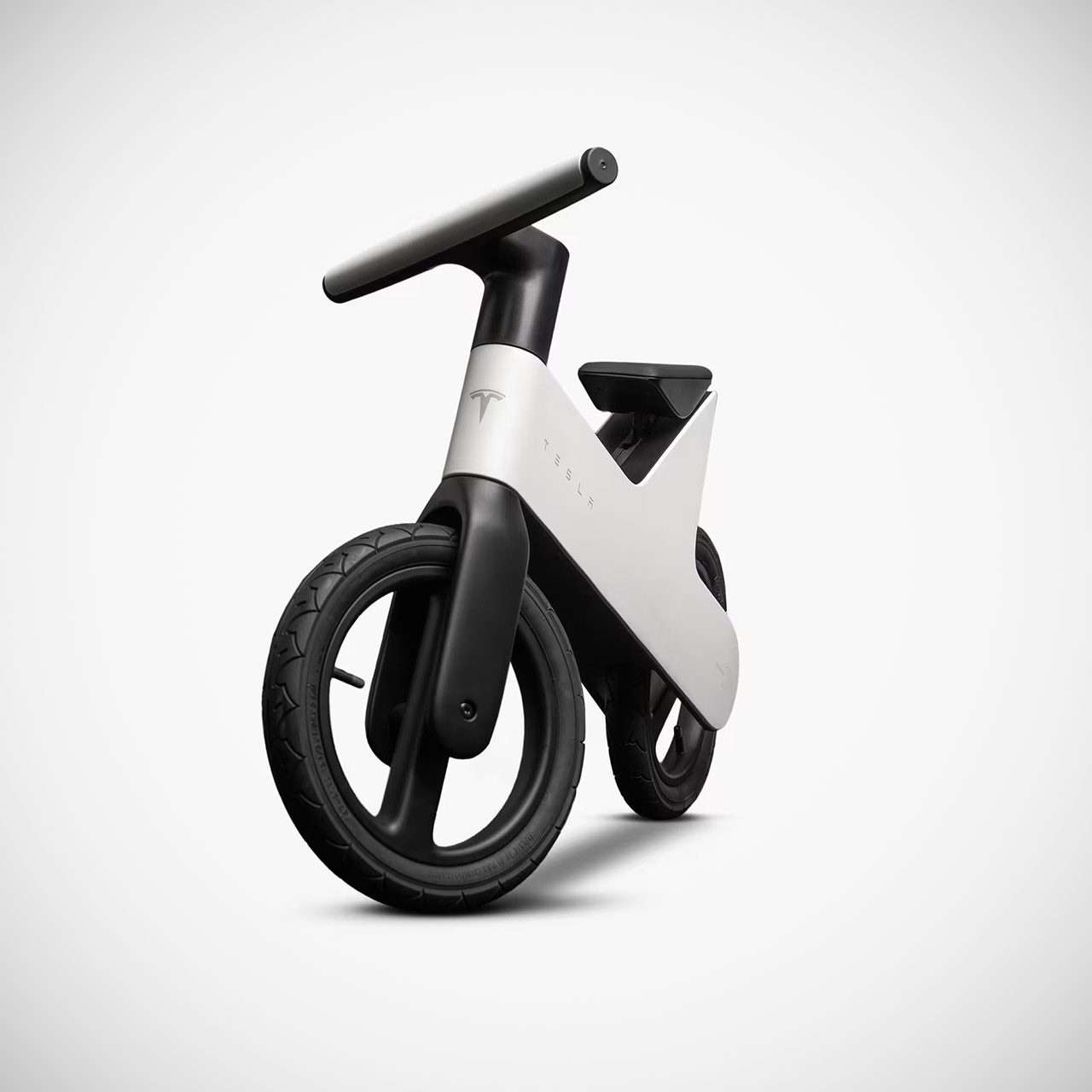
Tesla surprised owners and enthusiasts this morning when it added a new item to its online store. A balance bike designed for children aged two to five debuted unexpectedly. There is no battery, motor, or pedals, just a lightweight frame and two wheels intended to teach young riders the most important skill on two wheels.


Tesla Balance Bike for Kids
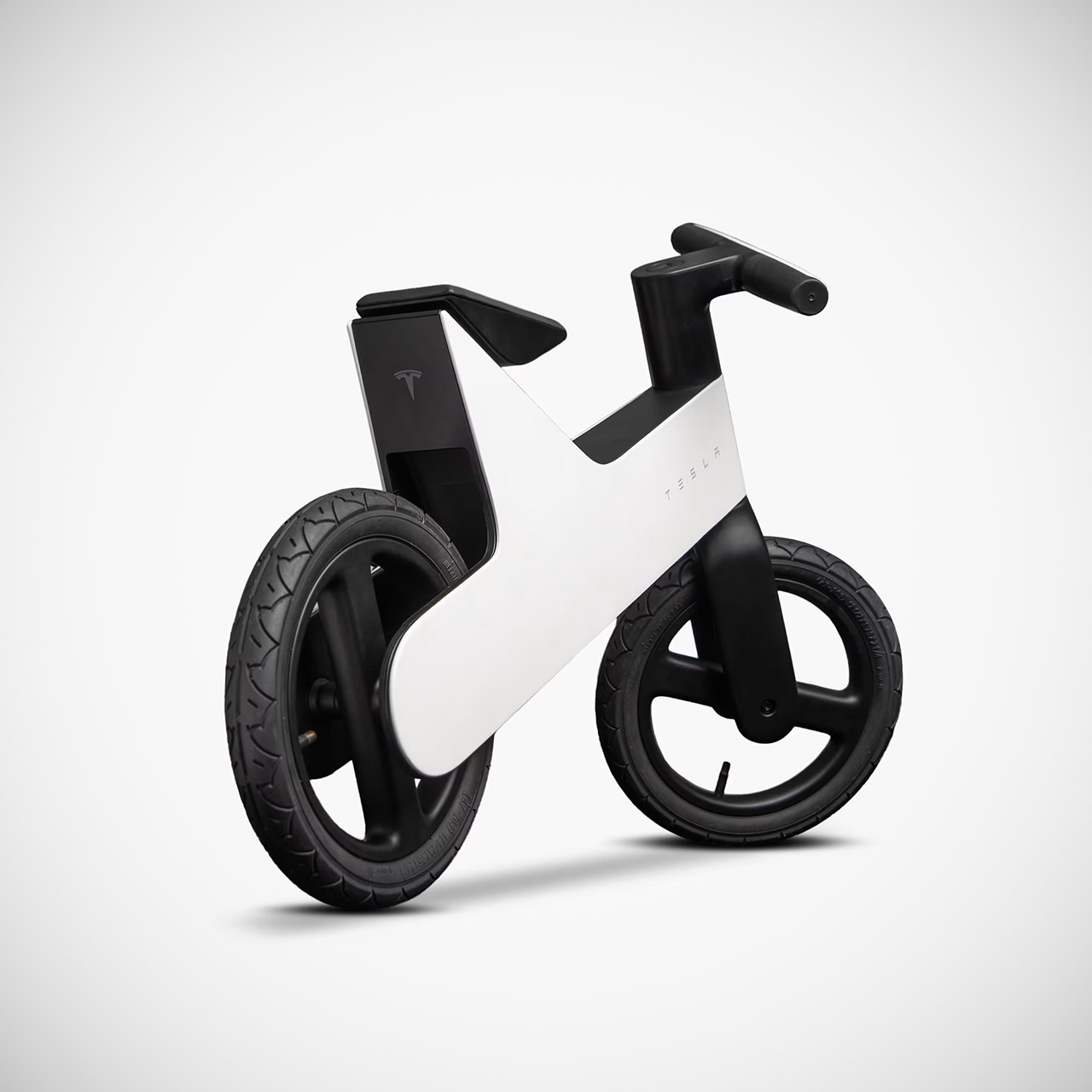
The bike’s frame is made of magnesium, which keeps the overall weight low enough for even the tiniest children to handle. The white finish is appealing, and the black accents on the seat and other elements complement it well. The Tesla logo runs along the side, while the T logo is clearly displayed in the front for all to see. You may also move the seat to one of five different locations as your youngster grows taller. This bike is designed for children, with a minimum leg length of 13.7 inches and a maximum weight capacity of 77 pounds.

Sale


SEREED Toddler Balance Bike 2 Year Old, No Pedal Kids Toy Bike for 2-5 Years Old, Tool-Free Adjustment…
  • STURDY AND SAFE- What you think for your kids is what SEREED toddler balance bike have. Wide and tough carbon steel frame, supports up to 110 lbs…
  • GROW WITH KIDS- Equipped with quick-release mechanism, parents can adjust the seat height(12.6-17.1inch) and handlebars height(19.6-22.5inch) without…
  • WHY YOU NEED IT?- With the no pedals bicycle, child will learn balance and steering, boost self-confidence, which makes transitioning to a pedal bike…

Kids use the bike as intended, by sitting on the seat and pushing off the ground with their feet. They can cruise at their own pace, and as their confidence grows, they can try lifting both feet off the ground and gliding. The low center of gravity and broad handlebar make it seem very stable from the first ride; no training wheels are required, and there are no sophisticated brakes to worry about; and the greatest thing is that parents may accompany them the entire time.

Tesla Balance Bike for Kids
The bike itself costs $225, which is quite expensive, but keep in mind that it is a luxury product made of premium materials such as magnesium. Other manufactures provide similar bikes for roughly the same price, but their magnesium versions are a step above in terms of appearance and feel. You’ll get a set of tools to assist you put everything together, and most families can have it up and running in under an hour. The bike was in high demand; the listing sold out in a matter of hours, and new orders will not be shipped until late August, when they are back in stock. If you live in Canada, be prepared to pay a little extra, around $310, but the specifications don’t change.

Tesla Balance Bike for Kids
This isn’t the first time Tesla has dabbled in children’s products, having previously collaborated on a Cyberquad ATV and a toy Model Y radio flyer, but this time they’ve gone for something a little more low-key, as the bike is pretty basic, just getting kids riding and having fun without all of the bells and whistles.

Advertisement

Source link

Continue Reading

Tech

AI Meets ESL, and Teachers Are Intrigued

Published

on

As he instructs bilingual learners in the humanities and social studies, Daniel Gomez sees big promise in artificial intelligence.

“Teachers in general cannot be knowledgeable about every single subject,” and certainly not in multiple languages, says Gomez, who teaches at the bilingual K-12 Ideal School in Tampa, Florida. AI can help close the gaps. “It will be able to pick up any topic students are interested in and handle the topic reasonably well.”

He isn’t alone in this assessment. Harvard researchers, for example, are actively exploring how AI-powered chatbots can support bilingual student learning and parent–child dialogues.

“There are lots of opportunities to use AI to adapt learning materials into different languages, which can expand access for bilingual learners,” says Ying Xu, an assistant professor of education at Harvard and one of the researchers involved in the work.

Advertisement

“Some projects are also exploring how AI can provide additional scaffolding to help children comprehend content in their home language,” she adds. “For example, a multilingual language model might keep the core learning content in English while offering explanations, prompts or supports in the child’s home language.”

Experts see great potential for AI to elevate bilingual education — if it’s done right.

Chatbots as Educational Aids

“Bilingual learners are obviously learning the language and culture of the classroom and the environment that they’re in,” says Krystle Salas, assistant director of special populations at Second Mile, which operates alternative education charter schools for at-risk students in several states.

“They don’t necessarily have access to the instructional materials or even just the conversations going on in the classroom — and certainly not at the level of their peers,” she continues. And teachers may not have the experience or the tools to scaffold the necessary supports for these students.

Advertisement

AI can help teachers to be more effective, and it can help bilingual learners thrive. A chatbot “can give [students] pieces of the content in Spanish or give them smaller sentences that are simpler,” Salas says.

Chatbots can also help bilingual students build confidence. “Maybe I don’t want to talk in English in front of other people, but I’ll talk in English to the chatbot because the chatbot doesn’t care if I’m doing it wrong,” says Melissa Henning, the K-12 educational content manager at The Source for Learning.

“You can have a conversation with the chatbot about what you meant to say and what came out, and it can help you rephrase it,” she adds. “That can really empower you as a multilingual learner.”

Gomez sees a role for AI in helping young learners master the concepts being taught in the classroom. Perhaps the chatbot will teach it to them in their native language, but that’s alright. Students can get a handle on the materials, “and later on we can worry about knowing whether [they] also know the word” in English, he adds.

Advertisement

Chatbots can be a boon, too, because of their 24/7 availability. Although there are many ways to master learning materials, they don’t help “if you are not actively practicing,” Gomez says. Especially for those learning in a foreign language, AI’s ever-present availability creates more opportunities for practice.

Using SchoolAI, education strategist and ISTE Certified Educator Stephanie Howell has seen the benefits of AI firsthand. Students use it as a “guide on the side,” annotating as they read, she adds, “and if they don’t know a word, they can go over to the AI and say, ‘Explain this to me in another way.’ It creates that self-awareness skill. I’m not the one always finding the words that they need help with.”

As a second- and third-grade intervention specialist at Lancaster City Schools in Ohio, she’ll create a learning activity and tell the AI, “When they get it wrong the first time, I don’t want you to super-scaffold for them. I want them to have that productive struggle. But if they miss it a second time, I want you to provide a sentence starter.”

And she’s using AI herself to support her students. As a co-teacher, she’ll take what the main teacher has assigned and break it down, asking AI, “What vocabulary in this article might my students struggle with?” or “Help me analyze the patterns that you notice.” This gives her greater insight and more time in the day to focus on one-on-one learning and other high-value strategies.

Advertisement

Chatbots as Family Engagement Tools

Chatbots can also help close the gap for students who otherwise wouldn’t be able to talk fully about their schoolwork at home.

“A lot of parents speak Spanish. Their kids are coming home with this English stuff, and they don’t speak [the language]. Rather than having students speak in both languages, they can actually use both languages at the same time to build concepts,” with the chatbot translating simultaneously, Henning says.

“A lot of times the students are stronger English speakers than their parents,” she continues. With help from a chatbot, “they can engage in dialogue, positioning the home language as an asset rather than a barrier.”

Teachers can foster this. With their prompting, “a bot could send a family a nightly question tied to the day’s lesson, like ‘Ask your child about the bravest thing this character did in the book,’” she adds. “That gives non-English-speaking parents a way to have a conversation about that content.”

Advertisement

Best Practices for Using Chatbots

For schools looking to leverage chatbots in support of bilingual learners, experts say it’s important to move ahead thoughtfully. They need to be careful about “the unintended consequences of widening existing gaps,” Xu says.

“For example, many AI systems are still less accurate at recognizing bilingual children’s speech, especially when children have accented speech or dialectal variation or are moving between languages,” she adds.

As a result, “bilingual learners may benefit less from these tools if the system cannot accurately understand their speech,” she continues. “This concern also applies to the use of AI for assessment, where dialectal variation or accented speech could lead to inaccurate evaluation.”

Then there’s the digital divide to consider, since students will need access to the chatbots for any of this to work. “You want to make sure that we’re not widening the gap because they don’t have devices available at home or they don’t have internet at home,” Henning says.

Advertisement

Howell encourages teachers to make intelligent use of AI’s built-in multilingual capabilities. With some tools, “[students] can actually start typing in Spanish if I don’t set up the requirement to stay in English,” she adds.

That can be helpful, but it needs to used thoughtfully. “Sometimes as a teacher, I can’t have my students go back and forth because they have to learn it in English,” she continues. “It always goes back to the learning goal.”

Educators also need to be mindful about the AI models their chatbots are using. Tools may be trained on academic language, but students need to tackle school subjects informally as well. The AI should suit the need.

“If we need more technical vocabulary or something that is more prone to be used on an everyday basis, we can train it to do that,” Gomez says. “We can customize it to our needs.”

Advertisement

And the teacher’s voice should always be the most prominent. “Even though AI can be a very valuable tool — it can help with a great many things — you always need that human touch,” he adds.

At Second Mile, Salas echoes this notion. “Children need that human interaction,” she says. “A teacher can read their emotions; they can see the full context of the situation and adjust in real time. And AI can make mistakes, so we always want to make sure the majority of the instruction and support is coming from the humans.”

Source link

Advertisement
Continue Reading

Tech

Chinese memory maker CXMT’s output has grown from 40,000 to 720,000 wafers in a few years, and it’s closing in on Micron

Published

on

The big picture: Traditional DRAM and memory manufacturers have been forced to allocate nearly all of their production capacity toward supporting massive AI data center projects. Every other device requiring memory chips is now a secondary priority, but China-based companies could soon turn these unprecedented market conditions upside down.

According to a new report from Citrini Research, ChangXin Memory Technologies (CXMT) is growing much faster than expected. The Chinese memory and IDM manufacturer is expected to produce between 350,000 and 375,000 DRAM wafers per month by the end of 2026. In 2020, CXMT had a capacity of 40,000 WPM for DDR4 production. By the end of 2025, the company had reached a quarterly output of 720,000 wafers.

The new research highlights the growing presence of Chinese DRAM manufacturers amid ongoing semiconductor supply chain challenges and Big Tech’s AI data center expansion. The traditional “Big Three” memory manufacturers are US-based Micron, along with South Korean giants Samsung and SK Hynix. If CXMT can reach 375,000 WPM in 2026, its production capacity would be comparable to Micron’s.

Citrini researchers explain that CXMT can add manufacturing capacity faster than memory makers in other parts of the world. Funding is no longer the primary obstacle, as AI companies have driven memory prices and profits sharply higher. The major constraint affecting CXMT and other Chinese manufacturers is now access to advanced semiconductor manufacturing equipment, which is far more difficult to export legally from the EU to China.

Advertisement

DRAM products “made in China” are quickly gaining ground in Western markets. Memory companies such as Corsair are increasing their reliance on CXMT-produced chips, providing a potential escape from the “unprecedented” prices affecting today’s DDR5 memory products.

Citrini said CXMT could eventually expand its production capacity to 950,000 WPM by 2030, becoming China’s largest memory manufacturer and one of the biggest memory producers in the world. CXMT still lacks the capability to produce high-performance memory such as HBM products or even high-end DDR5 modules designed for extreme overclocking.

Even if CXMT DRAM modules are not the fastest available, they could still bring a major shift to a struggling memory market where Big Tech and AI companies have left little room for affordable custom PC builds or gaming consoles. As a result, some users are increasingly looking toward a Chinese memory manufacturer as a potential alternative, arguing that AI-driven demand from Western technology companies is making many consumer electronics products significantly more expensive.

Advertisement

Source link

Continue Reading

Tech

Hackaday Podcast Episode 378: C Coders, Ceramic Printers, And Shadow Archives

Published

on

It’s a hot one at both microphones, as Elliot Williams and Kristina Panos wilt in the heat with ice lollies and freezer packs. But still, we persevered long enough to make a podcast.

In Hackaday news, Supercon is on! It’s going down in Pasadena, California, but the talks will be somewhere slightly larger, with a courtyard instead of an alley. Get your talk proposals in now! In other Hackaday news, we still have our Frikkin’ Lasers Contest going on until Thursday, July 23rd.

Interestingly enough, we got a comment on an older article from none other than [Michael J. Van de Graaff], whose grandfather invented the Van de Graff generator and was “quite upset” when plans for a DIY version appeared in Scientific American. And finally, Google Earth’s desktop client is being discontinued, but you can still travel the globe on your phone, or in your PC’s browser.

Not only do we have another triple mailbag this week, we have another failed attempt at guessing the Sound by Kristina. However, [Alexander] knew that it was CD-ROM drive a-spinnin’. Speaking of What’s That Sound, be sure to let us know your ideas for the new prize.

That sounds like a lot of preamble, but we quickly get to a full slate of hacks, a couple of which are pretty retro in retrospect. Check out the links below if you want to follow along, and as always, tell us what you think about this episode in the comments!

Advertisement

Download in lovely MP3.

Episode 378 Show Notes:

News:

Mailbag:

  • Two-fer! [Jonathan Comer] has many ideas for generating random numbers when it comes to rolling for the What’s That Sound winner, and [Paul Clyne] wants to know how to get a jolly wrencher sticker.

Interesting Hacks of the Week:

Quick Hacks:

  • Elliot’s Picks:
  • Kristina’s Picks:

Can’t-Miss Articles:

Source link

Advertisement
Continue Reading

Tech

Lenovo’s new gaming laptop is the first to feature a 240Hz inkjet-printed OLED display

Published

on

TCL has spent years saying inkjet-printed OLED could improve image quality, efficiency, lifespan, and manufacturing costs. Back in 2024, the company was still showing prototype laptop panels and promising a “comprehensive breakthrough” once the technology was ready for commercial products.

Two years later, it has finally arrived in a gaming laptop. Lenovo’s new Legion R9000P uses a 16-inch panel that TCL CSOT describes as the world’s first inkjet-printed OLED display integrated into a laptop.

What makes inkjet-printed OLED different?

Traditional OLED manufacturing deposits light-emitting material inside expensive vacuum equipment using highly precise metal masks. Inkjet printing places the organic material directly onto the panel in controlled patterns, much like a printer laying ink onto paper.

TCL says the process is simpler, wastes less material, and could make OLED panels cheaper to manufacture at scale. Earlier company estimates claimed a 20% reduction in total cost, better light efficiency, and a longer material lifespan.

Advertisement

The Legion’s panel has a 240Hz refresh rate and covers more than 99% of the DCI-P3 color gamut. Its standard RGB stripe layout should produce sharper text and reduce the colored edges sometimes visible around letters on OLED screens using triangular subpixel arrangements.

What hardware could Lenovo put behind it?

Lenovo has not revealed the laptop’s processor, graphics card, pricing, or release date. Previous R9000P models suggest it will sit somewhere between the upper mid-range and premium gaming segments. The 2024 version paired a Ryzen 9 7945HX with an RTX 4060, while the 2025 Ultimate Edition offered a Ryzen 9 9955HX3D and RTX 5080.

An RTX 5080 alongside a current AMD or Intel processor is possible if Lenovo wants to give the new display a flagship debut. R9000P models are commonly sold internationally under the Legion Pro 5 family, though Lenovo has not confirmed any global plans yet.

Source link

Advertisement
Continue Reading

Tech

If You Own One Of These Routers, You’re At Risk

Published

on


We may receive a commission on purchases made from links.

According to recent research, about 94% of American households have internet access, and 87% of these are through a fixed broadband subscription. This means that many homes rely on a router as the central point of their network. And, while there is no doubting their convenience, routers aren’t always as secure as they should be. Even secure routers can have weakened security just through common home WiFi mistakes. But even with all the proper steps taken, the problem can be inherent within the hardware itself. A point that the recent discovery of a “backdoor” into certain Tenda routers adequately demonstrates. 

Advertisement

Essentially, the problem is integrated into the firmware of the router itself. Researchers at CERT Coordination Center, based at Carnegie Mellon University, reported a login pathway that bypasses the normal username-and-password check. If someone knows the right password — one that shipped with the router — the device will simply let them in as an administrator. The hack is simple; all that needs to be done is to enter this password on the router’s login screen. It doesn’t matter what the username is; it can be Joe Blogs, Administrator, or just left blank. The router doesn’t check this. As long as the password matches the one stored in the router, it will quite happily grant administrator access. 

Once someone is logged into your router, they can carry out cyberattacks, like redirecting your traffic through malicious servers, opening network ports to expose devices on the network, installing ransomware, and launching man-in-the-middle attacks. They could even lock you out of your own router entirely. The vulnerability appears to be present in five firmware versions, and as of the time of writing, there is no confirmation that the Chinese manufacturer intends to release a patch for the flaw. 

Advertisement

What Tenda routers are affected and what should I do if I have one?

The CERT report has listed the affected firmware versions. You can check whether your router has affected firmware by accessing your router’s interface. The default IP address is 192.168.0.1 for Tenda routers. Entering this number into a browser’s address bar should bring up the router’s login page. From here, navigate to System Tools and from there select Upgrade. This will display your router’s current firmware version. Of course, if you wanted to take a shortcut, you could always just enter the rogue password, widely reported to be “rzadmin”, and see if it lets you in. 

The affected firmware is present in several older product lines. The list includes the FH1201 wireless router, W15E wireless hotspot routers, AC10 AC1200 Smart Dual-Band router (v1), AC5 AC1200 Smart Dual-Band router(v1), and the AC6 AC1200 router(v2). If you’re affected, there are a couple of things you can do. The first is to disable remote access on the router. Similar to checking the firmware version, this can be done through the router’s interface. Log on as described above, and click on AdvancedSecurityRemote Web Management. You should see a tick box that enables or disables remote management. Ensure this is unchecked. 

CERT also recommends you change the default LAN IP address. It’s best to keep the 192.168. part of the number, as this is an address range reserved for private networks. However, changing this to something like 192.168.201.1 or similar keeps you within that range. Although it’s important to note that neither value can exceed 255. It might also be time for a new router, as routers may need to be replaced quite often

Advertisement


Source link

Advertisement
Continue Reading

Tech

Why Did Automakers Stop Using Bulky Bumpers On Their Cars?

Published

on


At one time, automobiles in the United States were big, boxy, and often covered in swathes of chrome. But over the years, vehicles have become more compact and streamlined, ditching chrome in favor of other options. The bulky bumpers that characterized American-market cars gradually disappeared as well, thanks to amended government regulations introduced in 1983.

Those regulations were set forth by the National Highway Traffic Safety Administration (NHTSA) and lowered the front and rear impact requirement from 5 mph to 2.5 mph. The updated rules also reduced corner impact requirements to 1.5 mph. These changes allowed automakers to be more flexible with their bumper designs. So, instead of relying on massive front and rear structures, designers could focus more on creating bumpers that blended into the vehicle’s body. As a result, the big and heavy bumpers that were the norm during the 1970s gave way to newer setups that were more integrated into the automobile’s overall shape while still offering protection in low-speed collisions.

This change came after the NHTSA reviewed both the costs and benefits of the Bumper Standard as it existed at the time. In a 1981 evaluation, the agency determined that the requirements, while strict, may not have benefited consumers enough. Taking the findings and public comments into account, the NHTSA amended the Bumper Standard in 1982, with the changes taking effect for 1983 model year vehicles.

Advertisement

The evolution of the automobile bumper

During the early days of automobiles, carmakers used bumpers as protective equipment for the vehicle and its passengers. But bumpers were also seen as an important style element that added to the vehicle’s overall appearance. However, that changed when the NHTSA’s Federal Motor Vehicle Safety Standard No. 215 (FMVSS 215), known as Exterior Protection, was introduced for model year 1973. That standard listed a specific front and rear impact requirement, also known as the 5-mph bumper rule, leading automakers to design new, bigger bumpers to comply.

Some car manufacturers actually just attached large steel bumpers to existing designs instead, which contributed to the new era of bulky front ends. These new bumpers often extended farther from the body than previous structures, which increased the front and rear overhangs. They also added significant weight. Not all automakers went down this path, though; some chose instead to develop bumpers that fit the vehicle and didn’t ruin the lines. The Corvette C3 is a great example of this.

Advertisement

Today’s bumper systems are not as visible as they were in years past, with automakers now hiding the necessary safety components behind a plastic cover. Underneath that cover lies thick, energy-absorbing foam and metal reinforcement, a combination that allows manufacturers to maintain low-speed impact protection, per government standards, without compromising on aesthetics.


Advertisement

Source link

Continue Reading

Trending

Copyright © 2025