Tech
Russia Returns World’s Most Heavily-Armed Warship To The Sea After $5B Facelift

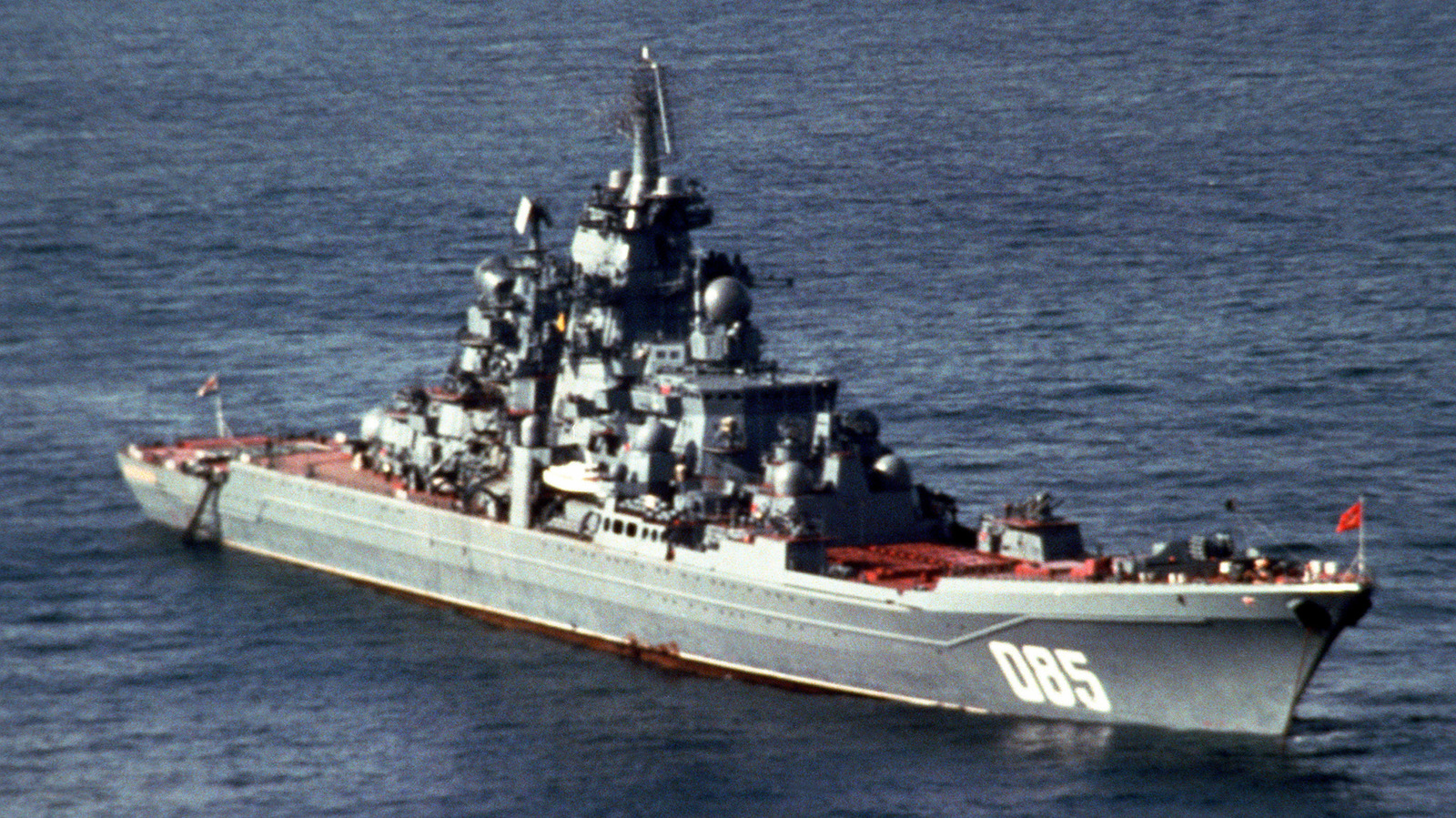

The Russian nuclear-powered missile cruiser the Admiral Nakhimov is believed to be close to a return to operational status after it was spotted by satellite undergoing sea trials in Kola Bay on June 25, 2026. The Kirov-class ship, which will likely be assigned as the new flagship of Russia’s Northern Fleet, has undergone a lengthy $5 billion refit. Indeed, calling the refit lengthy is something of an understatement. The ship has been out of commission for 27 years, although the refit didn’t start seriously until 2014. For comparison, the world’s most advanced carrier, the USS Gerald R. Ford, took 12 years to build.
The Nakhimov first entered service in 1988 and was originally known as the Kalinin but was renamed in 1992. Weighing in at about 28,000 tons, the 823-foot ship is the only nuclear-powered surface warship in the world apart from aircraft carriers. However, by 1997 the ship had been taken out of service and spent two years laid up in Severomorsk, the main base for the Russian Northern Fleet. It was then towed to Severodvinsk and placed in dry dock. And, for a few years, not much happened.
As noted, it wasn’t until 2014 that the project to modernize the massive ship began. Originally, this was meant to be a relatively modest refit, and work was initially cited to be completed by 2018. However, the program suffered continual delays, resulting in a near three-decade absence from operational duties.
With the latest development suggesting that progress has been made, let’s have a closer look at what we know about the ship and its twenty-year-long refit.
What we know about the Admiral Nakhimov and its refit
The Admiral Nakhimov refit project may have started as the naval equivalent of a quick service, but this quickly became a massive project and one of the largest ever undertaken by the Russian Navy. While we don’t know the full details of the refit, there are some blanks that we can fill in.
Starting with the propulsion system — this ship is fast, with a top speed thought to be around 32 knots (36.8 mph). This is faster than most large warships, and just pips the top speed of a US Navy aircraft carrier. Providing all this power are two nuclear reactors that can produce an impressive 140,000 hp. While these weren’t replaced in the refit, they were refurbished and refueled. Both reactors were back online by February 2025. As a side note, the reactors used are pressurized water reactors — which are also the world’s most common nuclear reactor type.
In terms of armament, the Admiral Nakhimov also packs a serious punch. The original P-700 Granit anti-ship missile system was stripped from the ship as part of the refit and replaced with 10 eight-cell, universal launch modules, supporting a total of 80 UKSK vertical launch system cells. As the name would suggest, these are versatile modules that can deploy a wide range of Russian missiles. This includes anti-submarine, anti-ship, and land attack missiles as well as the 3M22 Zircon missile, the world’s fastest hypersonic missile.
Additionally, the ship is believed to have been fitted with improved sensors, upgraded radar systems, and more advanced air defense missiles.
Admiral Nakhimov a massive asset — but a tempting target
When the Admiral Nakhimov is welcomed back after its nearly three-decade-long hiatus, its mission will be of strategic significance. The ship is expected to lead Russia’s Northern Fleet, a formation that largely supports the country’s most valuable naval assets — its ballistic missile submarines. Essentially, the Northern Fleet acts as part of the “bastion” of defenses that Russia has established to protect its operations in the Barents Sea. A ship with Nakhimov’s speed, virtually unlimited range, and long-range air defense and attacking capabilities is designed to strengthen this defense.
However, just how effective the ship will be in the role is a matter of conjecture. A lot has changed since the original Kalinin battlecruiser took to the seas. The emergence of drone warfare has significantly changed the playing field. Nowhere is this more apparent than in the Black Sea. In terms of sheer size, comparing Russian Navy resources in the Black Sea to Ukrainian resources is like comparing Goliath to David — yet we all know how that ended. The Ukrainian use of drones has reduced the Russian Navy to defensive duties and greatly restricted the use of its major surface warships.
This is the world that the Nakhimov will enter. While it’s considered the most heavily armed surface warship, it exists in an age where packing so many “eggs in one basket” is being increasingly challenged in naval doctrine. The changing face of naval warfare is one of the reasons that the US Navy is looking for long-range drone ships. Time will tell whether the Nakhimov remains relevant in such a rapidly evolving field.
You must be logged in to post a comment Login