
Connect with us

Tech

SambaNova bags $350m, unveils deals with Intel, SoftBank

Published

on

Japan’s SoftBank will be the first to deploy the new SN50 chips, while Intel is partnering with SambaNova to roll out its Intel-powered AI cloud.

Intel-backed Nvidia rival SambaNova has raised $350m in a Series E round led by Vista Equity Partners and Cambium Capital, with strong participation from Intel Capital.

Reuters was first to report the planned raise earlier this month. While details of the investment were not disclosed at the time, sources had told the publication that Intel Capital’s contribution would be around $100m, with potential commitments of up to $150m.

Other participants in the round included Gulf Development, Assam Ventures, Battery Ventures, Atlantic Bridge, GV and BlackRock.

Advertisement

According to SambaNova, proceeds from the raise will be used to expand the production of the company’s newly introduced SN50 chip – touted to deliver “the best tokens per watt” – as well as to scale ‘SambaCloud’ and deepen enterprise software integrations.

SoftBank will be the first to deploy SN50 within its AI data centres in Japan, powering inference services for sovereign and enterprise customers across the Asia-Pacific.

Intel has close ties with the 2017-founded SambaNova, with CEO Lip-Bu Tan serving as chairperson on SambaNova’s board. Alongside the raise, the two companies have also jointly announced a multi-year collaboration to deliver cost-efficient AI inference solutions for AI companies, model providers, enterprises and governments worldwide.

As part of the collaboration, Intel is making a strategic investment in SambaNova to accelerate the rollout of an Intel-powered AI cloud.

Advertisement

“AI is no longer a contest to build the biggest model,” said Rodrigo Liang, co‑founder and CEO of SambaNova.

“With the SN50 and our deep collaboration with Intel, the real race is about who can light up entire data centres with AI agents that answer instantly, never stall, and do it at a cost that turns AI from an experiment into the most profitable engine in the cloud.”

The company positions itself as a rising competitor looking to take some of Nvidia’s gigantic share in the AI chips market. Liang, who previously worked as an executive at cloud provider Oracle, said in 2024 that Nvidia had “lost some of its sheen” and that “rivals are biting at its heels”.

Kevork Kechichian, the executive vice-president and general manager for Intel’s data centre group, said: “Customers are asking for more choice and more efficient ways to scale AI.

Advertisement

“By combining Intel’s leadership in compute, networking and memory with SambaNova’s full-stack AI systems and inference cloud platform, we are delivering a compelling option for organisations looking for GPU alternatives to deploy advanced AI at scale.”

Other companies are also looking for alternatives to Nvidia. Meta yesterday (24 February) said that it would buy billions of dollars’ worth of AMD’s chips to develop AI tech and power new data centres. The deal could see Meta taking a stake of up to 10pc in AMD.

Earlier this month, Cerebras Systems, which also positions itself as a rival to Nvidia, raised $1bn in a Series H round led by Tiger Global with participation from AMD. In January, Cerebras and its early backer OpenAI announced a partnership to deploy 750MW of Cerebras’s wafer-scale systems to make OpenAI’s chatbots faster.

Positron, another Nvidia competitor that offers energy-efficient AI chips for inference, raised $230m from Arm Holdings and the Qatar Investment Authority in recent weeks, taking its valuation above $1bn.

Advertisement

Don’t miss out on the knowledge you need to succeed. Sign up for the Daily Brief, Silicon Republic’s digest of need-to-know sci-tech news.

Source link

Advertisement
Continue Reading
Click to comment

Leave a Reply

Your email address will not be published. Required fields are marked *

Tech

Riley Walz, the Jester of Silicon Valley, Is Joining OpenAI

Published

on

Riley Walz, a software engineer famous for his online stunts, is joining OpenAI to research and develop new ways for humans to interact with AI, WIRED has learned. An OpenAI spokesperson confirmed the hire.

Walz built a reputation as Silicon Valley’s jester and has created a series of viral web projects that double as social commentary. His most recent initiative, Jmail, lets users search Jeffrey Epstein’s emails as if they’re accessing his personal Gmail inbox. Another project, Find My Parking Cops, used publicly available data to reverse engineer San Francisco’s parking ticket system to show people exactly where each parking enforcement officer last wrote a ticket.

Now, Walz’s skills creating novel web experiences will be put to use in OAI Labs, a relatively new team led by research leader Joanne Jang. The team is secretive about what it’s been working on but has been tasked with “inventing and prototyping new interfaces for how people collaborate with AI,” according to Jang.

OpenAI has spent the past several years racing with Google and Anthropic to create new, compelling ways for people to use its AI models. While ChatGPT has been a hit with consumers, now reaching more than 800 million people every week, the company is eyeing new interfaces to improve these experiences. The move comes as millions of developers have started using coding agents such as Claude Code as their main interface to access AI models. With hires like Walz, OpenAI hopes to get ahead of the next big AI product.

Advertisement

Walz’s online stunts have landed him in hot water from time to time. The Find My Parking Cops website lasted just four hours before San Francisco city officials shut down the live data feed Walz’s tool relied on. A San Francisco Municipal Transportation Agency representative said at the time that it shut down the tool to ensure “employees are able to do their jobs safely and without disruption.”

It’s not always city officials giving him a hard time, though. After the CEO of UnitedHealthcare was shot dead in New York City, and police said the killer had fled on a CitiBike, Walz tried to analyze trip data he had previously scraped for a separate project to help with the search. Walz told The New York Times that people online called him a “bootlicker” for helping authorities and threatened his safety.

Source link

Advertisement
Continue Reading

Tech

Stop Ironing 3D Prints | Hackaday

Published

on

If you want smooth top surfaces on your 3D printed parts, a common technique is to turn on ironing in your slicer. This causes the head to drag through the top of the part, emitting a small amount of plastic to smooth the surface. [Make Wonderful Things] asserts that you don’t need to do this time-consuming step. Instead, he proposes using statistical analysis to identify the optimal settings to place the top layer correctly the first time, as shown in the video below.

The parameters he thinks make a difference are line width, flow ratio, and print speed. Picking reasonable step sizes suggested that there were 19,200 combinations of settings to test. Obviously, that’s too many, so he picked up techniques from famous mathematician [George E. P. Box] and also used Bayesian analysis to reduce the amount of printing required to converge on the perfect settings.

Did it work? Judging from the video, it appears to have done so. The best test pieces looked as good as the one that used traditional ironing. Compared to ironing, the non-ironed parts saved about 34% of print time. Not bad.

Advertisement

Of course, there are variations on traditional ironing, so your results may vary.

Advertisement

Source link

Continue Reading

Tech

Skate’s developer is laying off staff before the game leaves early access

Published

on

Full Circle, the developer behind the new Skate game, has announced that it is restructuring and laying off staff. It’s not yet clear how many roles will be impacted by the changes, but the restructuring is happening less than six months after skate. launched in early access on September 15, 2025.

“We’re reshaping Full Circle to better support skate.’s long-term future,” Full Circle says. “These shifts mean making changes to our team structure, and some roles will be impacted. The teammates affected are talented colleagues and friends who helped build the foundation of skate. Their creativity and dedication are deeply ingrained in what players experience today. This decision is not a reflection of their impact and we’re committed to supporting them through this transition.”

Engadget has contacted Full Circle’s owner EA for more information about the layoffs. We’ll update this article if we hear back.

EA originally formed Full Circle in 2021 with a staff of development talent from the original Skate team. Skate was often positioned as a more realistic competitor to the Tony Hawk’s Pro Skater series, but the new studio has ultimately taken the franchise in a slightly different direction than fans may have expected. Previous Skate games were paid experiences with single-player and multiplayer modes, while skate. is a free-to-play live-service game supported with microtransactions.

Advertisement

Recent history, both the failure of Concord and the ongoing struggles of Highguard, serves as a testament to how hard it is to launch a live service game in the 2020s. Full Circle’s announcement notes the “tens of millions” of players that have tried the new game, but it’s possible a struggle to keep players interested and spending on microtransactions could be why it’s restructuring.

Source link

Continue Reading

Tech

Richard Hammond Meets BYD Yangwang U9 Xtreme, the Fastest Production Car on Earth, and Survives

Published

on

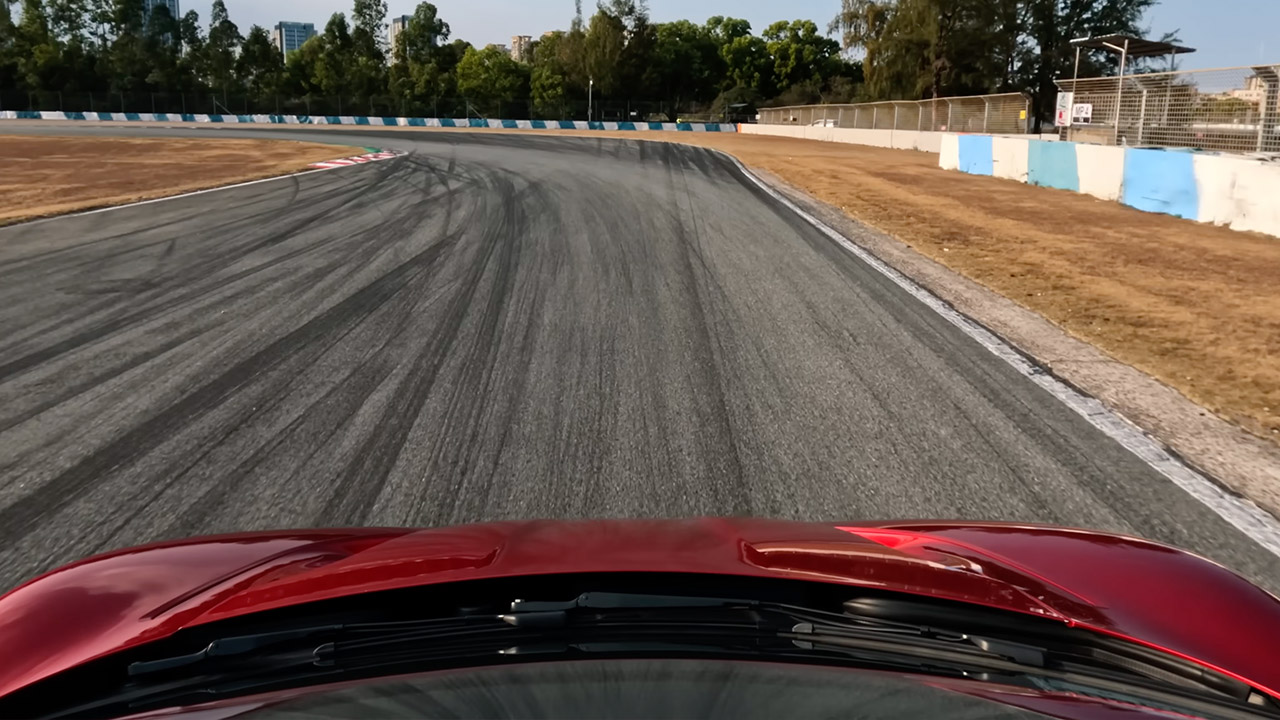
Richard Hammond BYD Yangwang U9 Xtreme Fastest Car
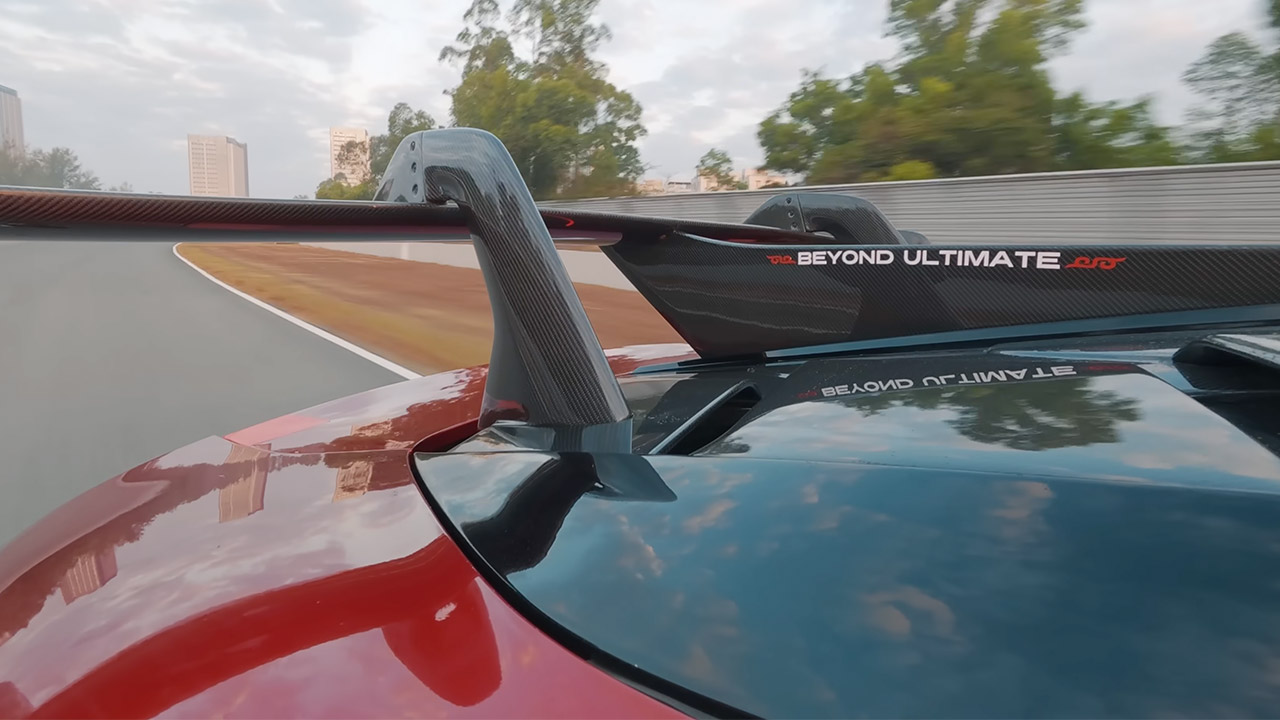
Richard Hammond slid into the driver’s seat of BYD’s Yangwang U9 Xtreme with a good mix of caution and exhilaration. With a top speed of 308 miles per hour, this Chinese hypercar had already broken the manufacturing speed record. Its four electric motors together produced an astounding nearly 3,000 horsepower. He was well-versed in the specification sheet, which included a 1,200-volt battery system, torque vectoring, adaptive suspension capable of lifting the vehicle over obstacles, and much more.


Without a wind-up or crescendo, the hypercar went from being motionless to warp speed in an instant. The strange thing was that the 200 mph didn’t even feel that significant. With such great power, you would think the U9 Xtreme would be a monster, but instead it just drove smoothly without any hiccups.


LEGO Technic McLaren MCL39 F1 Car Building Set for Adults – Room or Office Decor for Men & Women, Ages…
  • F1 CAR BUILDING KIT – Race to glory with this detailed LEGO Technic McLaren MCL39 F1 Car (42228) model kit for adults ages 18 years old and up
  • AUTHENTIC FEATURES & FUNCTIONS – Explore the car’s realistic details, including push-rod and pull-rod suspension, steering and differential as you…
  • V6 ENGINE & DRS ACTIVATOR – Remove the engine cover to examine the F1 car model’s V6 engine, then check out the 2-speed gearbox and DRS activator…

Richard Hammond BYD Yangwang U9 Xtreme Fastest Car
Hammond was surprised when a new aspect of the vehicle emerged in the cornering arena. The U9 Xtreme was quite sharp and kept its body flat in the turns, contrary to his belief that it would be best suited for driving in a straight line. He questioned his function in operating the vehicle because the active systems handled the weight transfer and grip so efficiently. Was he pushing something that could already handle the tough sections, or merely directing the car? Even under some very harsh corners, the chassis refused to roll or pitch too much.

Richard Hammond BYD Yangwang U9 Xtreme Fastest Car
Every time he floored it, the pull and response were immediate and unrelenting, making the power addictive in a positive way. He was thrilled by the car’s accuracy and composed application of force, yet he was constantly on edge due to its immense power. He acknowledged that he was afraid, which was probably rather common. There’s a problem if you’re not a little afraid in a car like this.

Richard Hammond BYD Yangwang U9 Xtreme Fastest Car
Ultimately, the U9 Xtreme left him both unnerved by its potential and genuinely impressed by its ingenuity. The fastest production automobile in the world is made in China, and it’s actually rather astonishing how confidently they’ve done it. The U9 Xtreme quietly gave its unadulterated performance instead of being all show and no substance. After everything was said and done, Hammond left with a smile on his face, his nerves unharmed, and a fresh appreciation for what BYD had accomplished.

Source link

Advertisement
Continue Reading

Tech

Everyone Speaks Incel Now | WIRED

Published

on

At the beginning of the year, The Cut kicked off a brief discourse cycle by declaring a new lifestyle trend: “friction-maxxing.”

The idea, in a nutshell, is that people have overconvenienced themselves with apps, AI, and other means of near-instant gratification—and would be better off with increased friction in their daily lives, which is to say those mundane challenges that ask some minor effort of them.

Whatever your feelings on that philosophy, the use of “maxxing” as a suffix assumed to be familiar or at least intelligible to most readers of a mainstream news outlet is evidence of another trend: the assimilation of incel terminology across the broader internet. The online ecosystem of incels, or “involuntarily celibate” men, is saturated with this sort of clinical jargon; its aggrieved participants insulate, isolate, and identify themselves through in-group codespeak that is meant to baffle and repel outsiders. So how did non-incels (“normies,” as incels would label them) end up adopting and recontextualizing these loaded words?

Slang, no matter its origins, has a viral nature. It tends to break containment and mutate. The buzzword “woke,” as it pertains to our current politics, comes from African American Vernacular English and once referred to an awareness of racial and social injustice—this usage dates to the middle of the 20th century, preceding even the civil rights movement. But the culture wars of this century have turned “woke” into a favorite pejorative of right-wingers, who wield it as a catchall term for anything that threatens their ideology, such as Black pilots or gender-neutral pronouns.

Advertisement

Back in 2014, the eruption of the Gamergate harassment campaign set the stage for a different linguistic realignment. An organized backlash to women working in the video game industry, and eventually any sort of diversity or progressivism within the medium, it exposed a vein of reactionary anger that would gain a fuller voice during Donald Trump’s 2016 presidential campaign. This was a period when many in the digital mainstream got their first taste of the trollish nihilism and invective that fuels toxic message boards such as 4chan and gave rise to a network of anti-feminist manosphere sites collectively known as the “PSL” community: PUAHate (a board for venting about pickup artists, it was shut down soon after the 2014 Isla Vista killing spree carried out by Elliot Rodger, who frequented the forum), SlutHate (a straightforward misogyny hub), and Lookism (where incels viciously critique each other’s appearance).

Lookism, named for the idea that prejudice against the less attractive is as common and pernicious as sexism or racism, is the only forum of the PSL trifecta that survives today, and while we don’t know who coined the “maxxing” idiom, it’s the likeliest source for the first verb with this construction. “Looksmaxxing,” which borrows from the role-playing game concept of “min-maxing,” or elevating a character’s strengths while limiting weaknesses, became the preferred expression for attempts to improve one’s appearance in pursuit of sex. This could mean something as simple as a style makeover or as extreme as “bonesmashing,” a supposed technique of achieving a more defined jaw by tapping it with a hammer.

If the 2000s introduced people to pickup lingo like “game” and “negging,” the 2010s ushered in language that extended the Darwinian vision of the dating pool as a cutthroat and strictly hierarchical marketplace. “AMOG,” an initialism for “alpha male of the group,” gave us “mogging,” a display where one man flexes his physical superiority over a rival. An ideally masculine specimen might also be recognized as a “Chad,” who allegedly enjoys his pick of attractive partners, while a Chad among Chads is, of course, a “Gigachad.” Women were disparaged as “female humanoids,” then “femoids,” and finally just “foids.”

Source link

Advertisement
Continue Reading

Tech

Snap is hosting its own creator awards show

Published

on

It seems like any and every industry can have its own awards show these days. And why not? Most of us appreciate a chance to bust out the sequins and satin from time to time. If you can celebrate excellent work or make some extra biz dev bucks at the same time, all the better. Snap is the latest social media company to launch its own take on the glitz and glam. The Snappy Awards Show will be held at the company’s headquarters on March 31. Comedian and content creator Matt Friend will host the event.

Snapchat has been adding more tools for influencers to build audiences, most recently launching individual creator subscriptions. An awards show seems to be part of that same agenda, spotlighting popular personalities from many different fields. There will be Snappys handed out for categories such as Spotlight MVP, Best Storyteller and Breakout Creator of the Year, plus awards for collaboration, cultural impact and success in single subjects.

Snapchat isn’t the first social media platform to honor the personalities using it. TikTok hosted its inaugural awards show in the US last year.

Source link

Advertisement
Continue Reading

Tech

Random Number Generator Uses Camera Noise

Published

on

Random numbers are very important to us in this computer age, being used for all sorts of security and cryptographic tasks. [Theory to Thing] recently built a device to generate random numbers using nothing more complicated than simple camera noise.

The heart of the build is an ESP32 microcontroller, which [Theory to Thing] first paired with a temperature sensor as a source of randomness. However, it was quickly obvious that a thermocouple in a cup of tea wasn’t going to produce nice, jittery, noisy data that would make for good random numbers. Then, inspiration struck, when looking at vision from a camera with the lens cap on. Particularly at higher temperatures, speckles of noise were visible in the blackness—thermal noise, which was just what the doctor ordered.

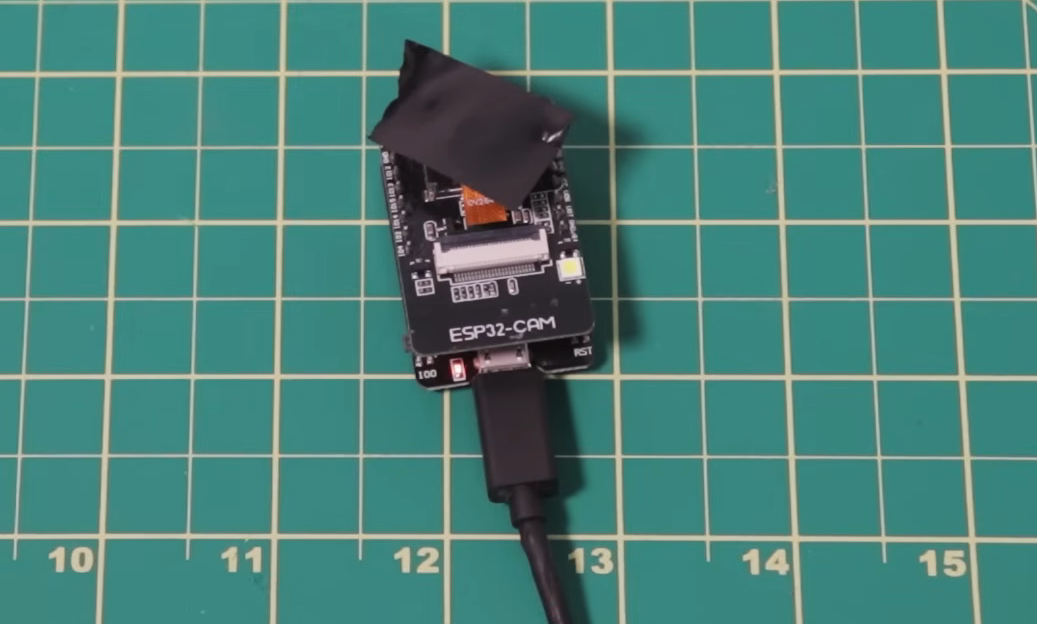
Thus, the ESP32 was instead hooked up to an OV3660 camera, which was then covered up with a piece of black electrical tape. By looking at the least significant bits of the pixels in the image, it was possible to pick up noise when the camera should have been reporting all black pixels. [Theory to Thing] then had the ESP32 collate the noisy data and report it via a web app that offers up randomly-generated answers to yes-or-no questions.

Advertisement

[Theory to Thing] offers up a basic statistical exploration of bias in the system, and shows how it can be mitigated to some degree, but we’d love a deeper dive into the maths to truly quantify how good this system is when it comes to randomness. We’ve featured deep dives on the topic before. Video after the break.

Advertisement

Source link

Continue Reading

Tech

Apple’s First Touchscreen MacBook Could Redeem Liquid Glass

Published

on


Apple has cultivated a reputation for its meticulous attention to detail, both in software design and hardware polish. But not all the big swings taken by the company have quite landed as the company had expected. Over a decade ago, Scott Forstall was famously fired from Apple following a disastrous Apple Maps launch. In 2025, Apple divided opinions with its ecosystem-wide Liquid Glass design. The new design language, inspired by the clarity of glass and motion of liquid, was criticized for inconsistencies and legibility problems, forcing the company to make multiple changes and eventually offer dedicated controls to minimize the glass effect on the UI. 

But it seems the whole Liquid Glass makeover was an exercise that preps the Apple hardware for the future, especially for the MacBook and its highly-anticipated OLED refresh with a touchscreen display. According to Bloomberg, Apple’s overhauled MacBook Pro should arrive towards the end of 2027, rocking a touch-sensitive panel with an iPhone-inspired Dynamic Island cutout at the top. Now, there are two ways to look at it. The ugly and mostly unused notch is going away. Its place will be taken by a pill-shaped camera cutout that will now become interactive, expanding to show activity progress and offering a whole host of functionalities woven around it. 

If you take a look at the Mac developer community, there are plenty of apps out there that have turned the notch into a calendar hub, a playback zone, a clipboard slot, and a lot more. But fundamentally, you can only do so much with a mouse click or trackpad. Imagine the level of interactivity that can be baked into it if it supports long and short finger presses or swipe-based gestures, similar to widget stacking. Both these ideas have been implemented on iPhones and iPads already.

Advertisement

It’s already here in spirit

A touch-sensitive screen on MacBooks is going to be a lot more than just a showcase of Dynamic Island interactions. And it seems the Liquid Glass design was merely a preparatory phase in gradually shifting macOS away from a vanilla keyboard and mouse input to a hybrid format. “The update includes more padding around some icons and notifications, as well as sliders in the control center menu that look optimized for touch,” reports Bloomberg. I’ve repeatedly felt this in my own time spent across Apple’s laptops and tablets. 

I use my iPad Pro nearly as much as my trusty Apple laptop, and I prefer the Liquid Glass look on it far more than the MacBook Air, and it’s not just because the tablet has a better OLED screen. The mix of touch and keyboard-based inputs actually feels more productive, especially when I am editing design assets for my sister’s garments website or editing videos. In iPadOS 26, Apple actually ported plenty of macOS elements, such as the Menu Bar, and they feel pretty much at home on the iPad. 

Advertisement

That’s not a coincidence. Apple will likely never let the iPad dual-boot macOS, but the recent makeover of its design with desktop-grade utilities such as Stage Manager is a clear sign that Apple is using the increasingly computer-like iPad (Air and Pro) as a testbed for transitioning macOS to a touch-friendly operating system. Just take a look at the pro-grade apps that have recently landed on the iPad, including Apple’s Creator Studio bundle in 2026, to see how well they integrate traditional keyboard and touch-based inputs. I strongly believe there won’t be a functional shock or learning curve when Macs become touchscreen-friendly. On the contrary, it will be a redemption for Liquid Glass.


Advertisement

Source link

Continue Reading

Tech

Rega Aos Brings Aura Reference DNA to Its MC Only Phono Preamplifier

Published

on

Rega has been on a quiet tear lately. First it shocked its traditionally sensible customer base with a flagship preamplifier and power amplifier combo that wanders deep into five-figure territory. Now it pivots back toward vinyl loyalists with something far more on brand, but still firmly premium. Enter the new Aos MC, a moving coil only phono stage derived directly from the company’s reference Aura.

First shown at the Bristol Hi-Fi Show 2026, the Aos MC borrows heavily from the £4620 Aura MC stage in both circuit topology and layout, with the stated goal of bringing listeners closer to that reference level performance without crossing into cost-no-object insanity. U.S. pricing has not been finalized, but expectations place it in the $2300 to $2500 range when it lands stateside; a bracket packed with serious competition from MOON by Simaudio, Pro-Ject, Musical Fidelity, EAT, EAR, MoFi Electronics and others.

Rega promises exceptional definition and greater realism, and the Aos MC is designed to partner with a wide range of moving coil cartridges thanks to flexible gain and loading options. The question is not whether Rega knows how to build a phono stage — it clearly does. The question is whether Aura-inspired circuitry at roughly one third the price can dominate one of the most competitive segments in high performance analog right now.

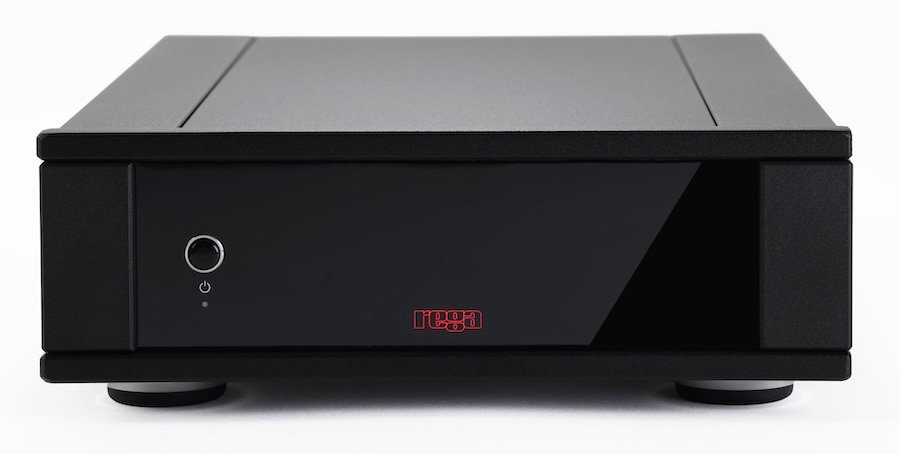
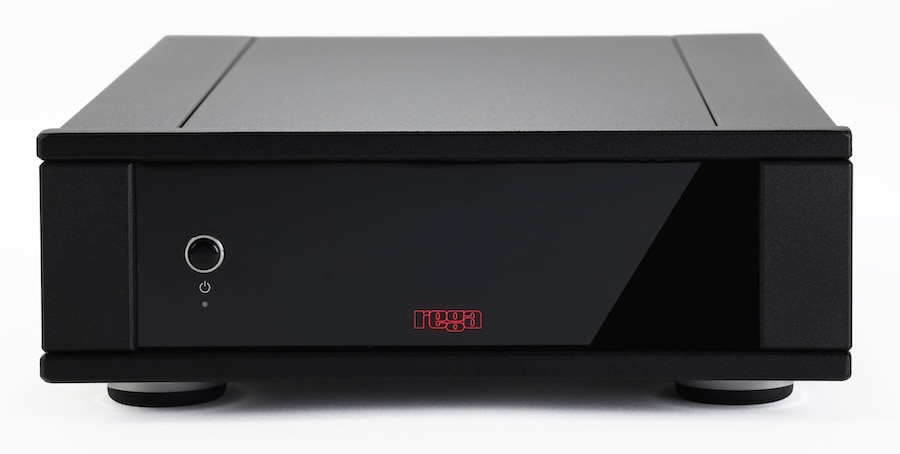
rega-aos-mc-front
Rega Aos MC

Aura Inspired Circuitry Targets $3,000 High End Market

The Rega Aos MC is a two stage, all analogue moving coil phono preamplifier with no digital control circuitry in the signal path. The layout is deliberately simple and tightly organized to avoid unnecessary components that could compromise performance. At its core is a symmetrical, complementary Class A amplifier using parallel low noise FETs configured as compound pairs.

Advertisement

That choice is not cosmetic. FET devices ensure that no bias current flows into the cartridge coil, which protects the cartridge’s magnetic geometry and avoids altering its behavior. The input circuit also minimizes coupling components between the cartridge and the first gain stage, further reducing opportunities for signal degradation.

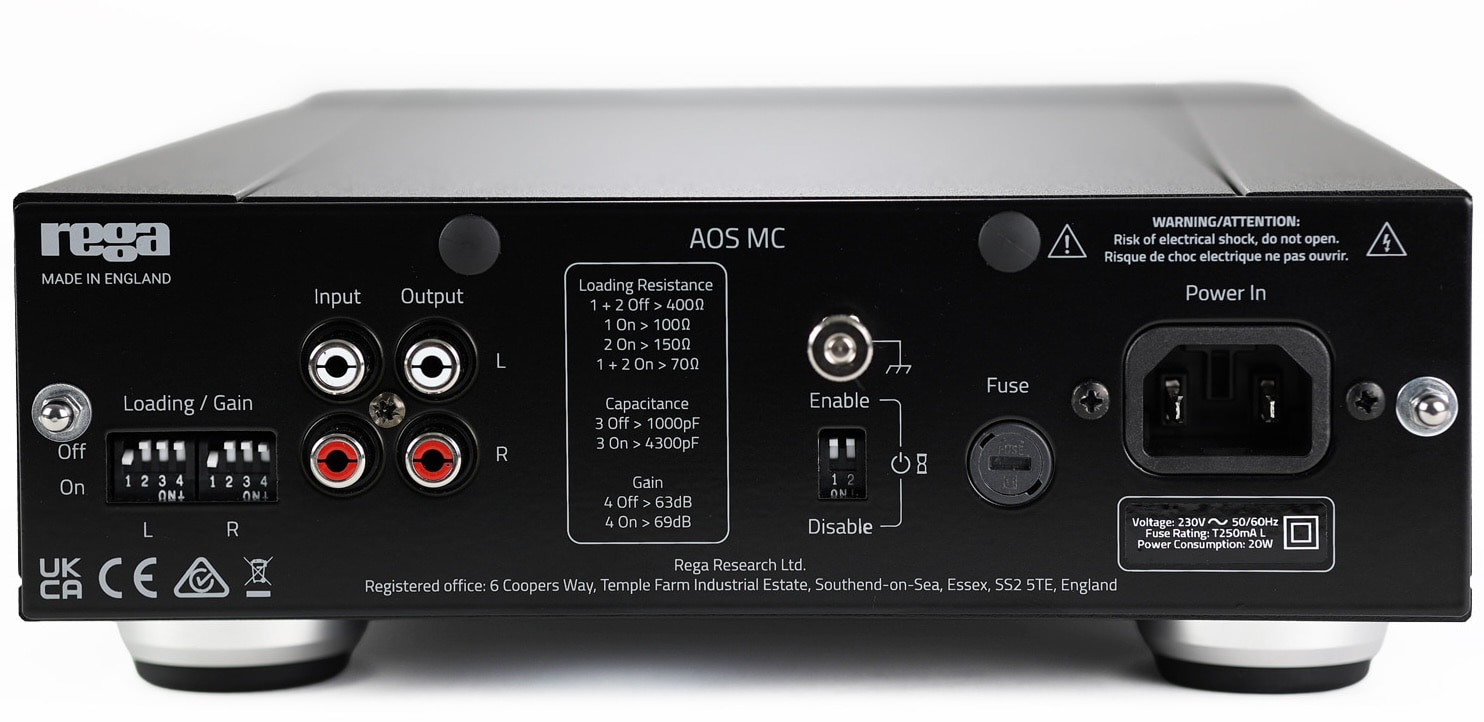
rega-aos-mc-rear

Loading and gain flexibility are handled in a straightforward, hardware based way. Users can select resistive loading at 70, 100, 150, or 400 ohms, and capacitive loading at 1000 or 4300 pF, allowing the Aos MC to accommodate a broad range of moving coil cartridges.

Gain can be switched between 69.3 dB and 63.5 dB, a 6 dB difference accessible from the rear panel, where you will also find RCA inputs and outputs. RIAA equalization accuracy is rated at better than ±0.2 dB from 65 Hz to 70 kHz, with a frequency response extending from 17.5 Hz to 100 kHz. THD is specified at 0.03 percent.

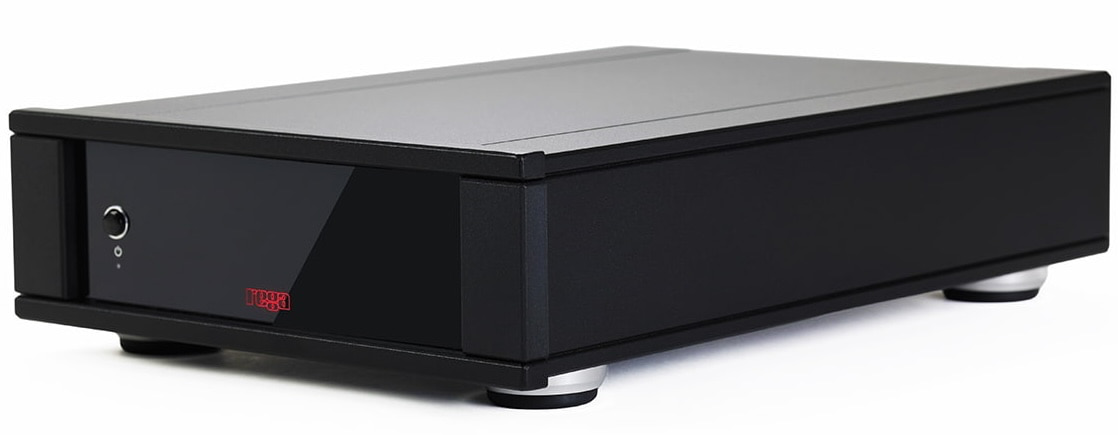
The half width aluminum enclosure is not just about aesthetics. It provides shielding against stray RFI while keeping the footprint compact at 220 x 80 x 330 mm and 2.9 kg. A self adjusting servo control compensates for temperature variations to maintain stable operation, and an automatic standby mode reduces power consumption to 0.4 W when idle, though it can be disabled via rear panel dip switches. In short, the Aos MC focuses on careful analogue execution, sensible adjustability, and measured performance rather than feature creep.

Advertisement
rega-aos-mc-angle-right

The Bottom Line

The Aos MC stands out because it keeps the signal path strictly analogue, uses parallel low noise FETs to avoid bias current in the cartridge coil, and offers meaningful loading and gain flexibility without drifting into feature overload. It is clearly aimed at serious moving coil users who care about circuit integrity, RIAA precision, and long term cartridge compatibility rather than app control or digital displays.

At an expected $2,300 to $2,500 in the U.S., it walks straight into competition from the MoFi UltraPhono Pro, EAT E-Glo 2, and Cyrus Audio 40 PPA — three fully featured and well engineered options in the same performance bracket.

If you are running a quality MC cartridge and want something derived from Rega’s Aura platform without stepping into five figure territory, the Aos MC makes a clear case for itself. And for MM users feeling left out, relax. An Aos MM version is on the way.

Advertisement. Scroll to continue reading.
Advertisement

For more information: rega.co.uk

Source link

Advertisement
Continue Reading

Tech

Bloomberg: Stripe considers PayPal acquisition

Published

on

Stripe has hit a $159bn valuation, according to a recent letter from company founders.

Irish fintech giant Stripe is considering acquiring some or all of PayPal, reports Bloomberg, citing insiders.

According to the publication, Stripe has already expressed preliminary interest in a potential acquisition of the US payments company or some of its assets. Stripe declined to respond to queries put forth by SiliconRepublic.com. PayPal has not yet responded.

PayPal share prices shot up by around 6.74pc since Bloomberg first reported the story yesterday (24 February).

Advertisement

The US company, which went public in 2002, has a market capitalisation of $43.2bn. The 2010-founded Stripe was valued at $159bn earlier this week. Stripe’s co-founders are seemingly in no rush to take the company public.

Founded in the late 1990s, PayPal has struggled to modernise against emerging rivals in the payments space such as Apple and Google.

Earlier this month, PayPal snatched HP’s CEO Enrique Lores to replace Alex Chriss, who struggled to revitalise the company after being hired during the post-pandemic period when faced with low trading volume and newer fintech rivals.

However, the executive switch-up did not sway investor confidence after the company missed revenue expectations in the quarter past, sending share prices down by 20pc. Company shares have dropped more than 80pc over the last five years.

Advertisement

Stripe, however, has remained “robustly profitable”, according to a letter from the founding brother-duo Patrick and John Collison. The company is investing heavily in product development and making strategic acquisitions that include programmable wallet company Privy, stablecoin orchestration platform Bridge and Metronome, which “powers the intricate usage-based billing models used by companies like OpenAI, Anthropic, Confluent and Nvidia”.

In September, Stripe launched a joint crypto venture called Tempo, which reportedly raised $500m at a $5bn valuation just weeks after coming out from stealth. In November, Swedish fintech giant Klarna become the first bank to launch a stablecoin on Tempo with KlarnaUSD. The coin is set to launch this year.

Don’t miss out on the knowledge you need to succeed. Sign up for the Daily Brief, Silicon Republic’s digest of need-to-know sci-tech news.

Advertisement

Source link

Continue Reading

Trending

Copyright © 2025