Tech
Samsung HW-QS90H Soundbar Review: Samsung’s Loaded New Standalone Atmos Bar Takes on Sonos

The Sonos Arc and newer Arc Ultra have long been among the standalone soundbars to beat for those seeking convincing Dolby Atmos sound in a minimalist design. Protracted app issues aside, Sonos’ chic sonic tube combines versatile multi-room expandability with a potent mix of expansive spatial audio effects, musicality, and authoritative bass, even without a sidecar subwoofer. While there have been plenty of challengers over the years, few have matched their performance for the money.
This year brings some impressive new contenders jockying for your console, including Samsung’s all-new HW-QS90H. This bar may have an uninspired name, and the design isn’t as striking as the Arc Ultra’s Scandi minimalism or Bose’s flashy new Lifestyle Ultra bar, but Samsung came to play. Within the QS90H’s brick-like frame is a well-balanced collection of drivers for solid immersion with 3D audio formats and enough bass to carve out serious cinematic drama from your favorite content.
The QS90H is no “Sonos killer,” and it doesn’t try to compete with the brand’s multi-room flexibility, but it offers plenty of forward-thinking features, especially for those with a newer Samsung TV. Most importantly, after dominating the multi-component soundbar space with the fantastic Q990 series for several generations, Samsung finally has its own standalone Atmos bar with competitive performance in a superbly simplified package.
Design and Features: Brute Force Meets DSP

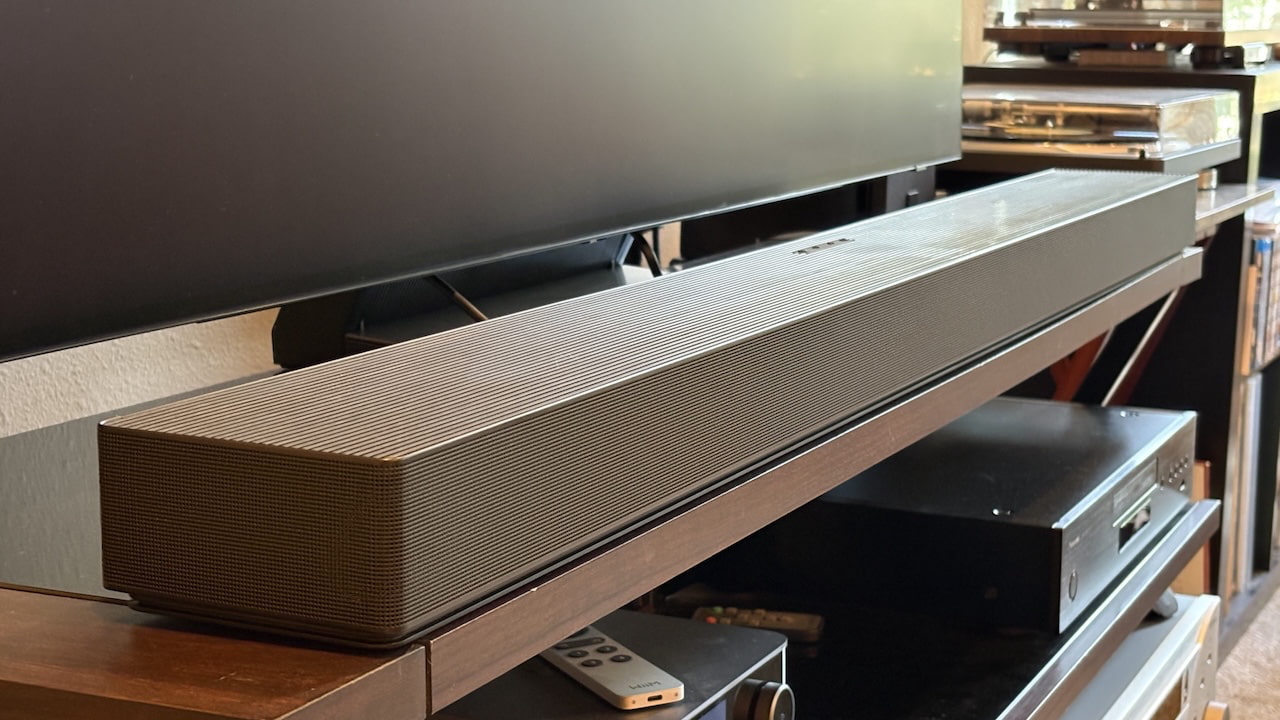
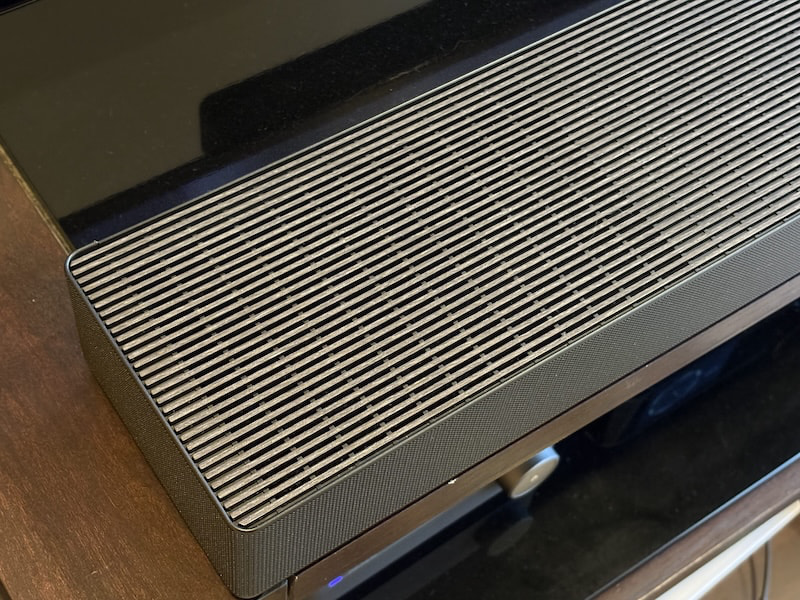
The QS90H’s uniform industrial aesthetic feels blatantly basic when you first pull it from the foam, but a closer look reveals a few stylish deviations from Samsung’s other soundbars. Most notable are the thin chocolate ribbons of woodgrain plastic along the top, which add some personality to the otherwise faceless front grille.
A small collection of LEDs at the bar’s right face indicates settings and source changes, including a satisfying Knight Rider-esque volume beam, but like a lot of new models, the system is minimalist at best. The bar’s lengthy 49-inch frame makes it best suited for larger TVs like the 65-inch S90H OLED I used for my review, while its 2.7-inch height should slip beneath most modern screens. I do wish Samsung would follow Sony’s lead and add adjustable feet, which can help the bar’s 5-inch depth rise above a butting pedestal stand.
As I’ve come to expect from modern soundbars, there’s little variety for wired connection, with exactly zero analog inputs for legacy devices like a turntable, but unlike the pricier Arc Ultra and Bose Lifestyle Ultra, the QS90H does have a spare HDMI input for a Blu-ray player or game console. Oddly for 2026, it doesn’t support HDMI 2.1, meaning no passthrough for gaming features like VRR or 4K @ 120 Hz, but at least it’s an extra connection. A separate HDMI eARC port provides TV connection for seamless control of volume and power with most TV remotes, alongside an optical input for older devices (not compatible with 3D audio).
Those with select newer Samsung TVs like the S90H OLED can connect the bar wirelessly over Wi-Fi, no HDMI required. Other wireless connection options include Bluetooth and Wi-Fi streaming via Google Cast, Apple AirPlay, Spotify Connect, and TIDAL Connect. The bar is also Roon Ready for multi-room connectivity with other Roon hardware.
Unlike Sonos and Bose, Samsung doesn’t skimp on DTS, providing expansive support including DTS:X and full-range DTS-HD Master Audio and DTS-HD High Res Audio, along with lossless Dolby Atmos and Dolby Atmos Music. Unsurprisingly, it’s also compatible with Samsung and Google’s new Eclipsa Audio format.
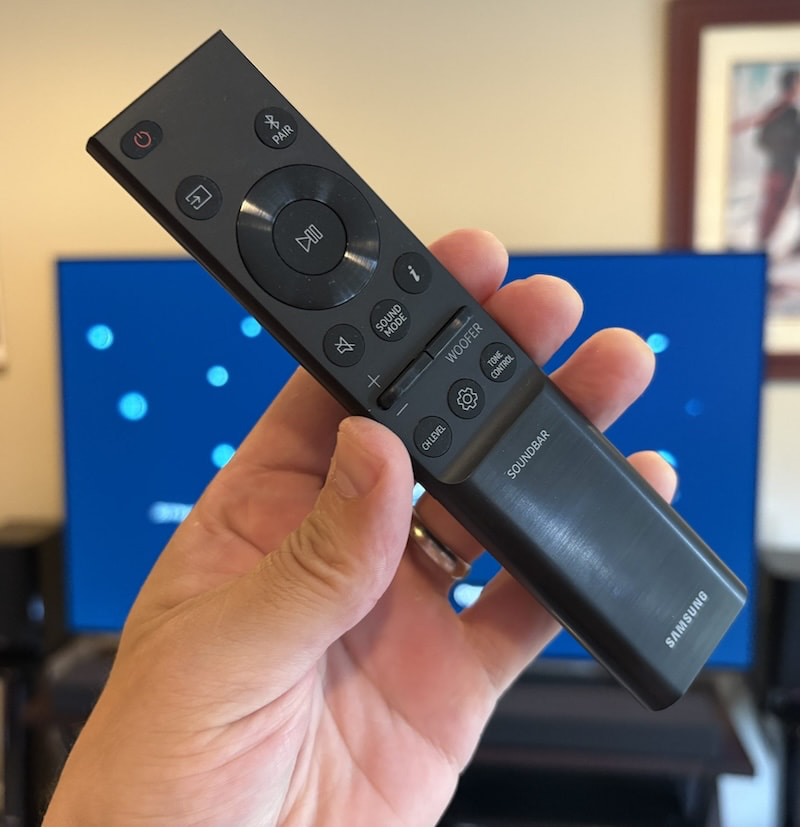
Another Sonos omission the QS90H offers? A dedicated remote, which looks a lot like Samsung’s latest TV remotes, but with battery power instead of solar/USB-C. It’s mostly redundant between your TV remote and Samsung’s controller app, but it’s nice to have a backup.

The bar’s 7.1.2-inch configuration comprises 13 drivers, including nine “full-range” drivers across the left, right, and center channels, dual side-firing channels, and dual upfiring drivers to provide the height element for 3D audio. The final four drivers make up the bar’s Quad Bass Woofer system, which faces two drivers upward and two downward, designed for balanced and powerful bass down to a claimed 38Hz. It can’t replace a full subwoofer, and the bar steps lightly into that register at best, but it’s enough to anchor the rest of the sound for serious punch.
Like previous Samsung models, the QS90H can be turned on its front for wall-mounting, using an internal gyroscope to reroute the primary sound to the top speakers. I wasn’t able to test this feature at home, but it’s a cool option, though I’d be surprised if you don’t lose at least a little fidelity.
Samsung supplements its physical hardware with plenty of digital trickery, starting with its “AI Adaptive Sound” mode, designed to automatically pick the proper sound format based on your source. While the “AI” part is new(ish), Adaptive Sound has long provided an effective set-it-and-forget-it setting for most content. That pairs with Samsung’s Space Fit Pro sound analyzer, designed to adapt the sound to your room for limited but noticeable tightening of detail, though it also tends to sharpen the sound signature.
Other digital settings include Sound Elevation, which effectively raises the soundstage to feel more even with your TV screen, Voice Amplifier Pro, which gets a little too bright for my taste and proved unnecessary, and a Night Mode for lowering bass in the wee hours.
Setup and Control: Simple and Samsung-friendly

Connecting the QS90H is as easy as you’d expect from a modern premium soundbar, with most folks able to simply connect the HDMI eARC port to their TV’s corresponding port with the included cable for full-bandwidth audio. Older TVs with HDMI ARC only will compress the sound, and some may require you to engage HDMI CEC to use your TV remote for basic controls.
For network connection, you’ll be prompted to download the new Samsung Sound app. I was initially annoyed at the need to download yet another dedicated Samsung app, but the bar connected quickly and the app’s layout and design are much friendlier than the broader Samsung SmartThings app.
As I expected, the QS90H automatically chose Samsung’s Q-Symphony mode when connecting to my review TV, designed to combine the S90H and soundbar in concert for bigger, more directional surround sound. No offense to the 2.1-channel system in Samsung’s slimline OLED (actually, some offense), but the sound was much better when I pulled the TV out of the chain. On the other hand, when I dropped the HDMI cable and connected to the TV wirelessly, I was pleased to find no major loss in fidelity, providing a clean way to lose a cable.
As for the app, it’s responsive and relatively intuitive, laying out nearly everything on the main page for quick access to settings like EQ, sound modes, woofer and channel levels, and add-on speakers like Samsung’s SWA-9500S wireless surrounds ($297.99). If you want to go more hands-on, the Standard sound mode provides a full multi-band EQ rather than just treble and bass, though it didn’t sound as clear to me by default.
The app is also helpful for streaming, though not in the same way as Sonos’ app and its 100+ built-in streaming services. Instead, Samsung simply points you to a few suggested services for streaming directly, like Spotify Connect. However, as I’ve noticed in other soundbars like Samsung’s own HW-Q990H ($1,997.99), changing volume within Spotify awkwardly moves the level multiple notches per tap, forcing me to go back to the Samsung app or remote for more precise control. It’s an annoying quirk, but not uncommon.
Listening: Distractingly Cinematic Sound
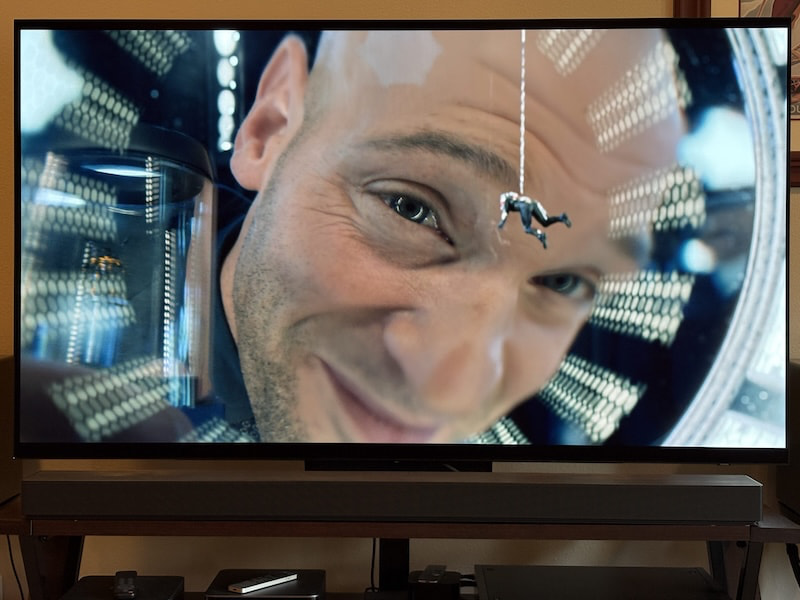
I knew Samsung’s new bar had something cooking when its sweeping, theatrical soundstage repeatedly drew my attention away from its sister model OLED, a fantastic performer in its own right. From crashing ocean tides and thunderous symphonic backing tracks of nature shows like Netflix’s Our Planet to the haunting dialogue and bellowing muscle cars of Mad Max: Fury Road, I was increasingly distracted and drawn to the sound behind the sights.
In many ways, the QS90H reminds me of a dressed-down version of one of my favorite standalone soundbars ever, the now-decommissioned Sony HT-A7000. The QS90H doesn’t offer the same level of near-holographic virtual surround, and it doesn’t sound quite as big either, but like Sony’s bar, it does a great job focusing on fundamental bass. The Quad Bass’ potency anchors the rest of the sound for a pulse-raising experience with your best content. Just as impressively, it does for much less than the A7000’s original $1,300 list price.
The QS90H does a fine job with regular fare like sitcoms and light dramas, with upfront dialogue even in muddled scenes, and often with some solid definition. It can sometimes sound thin, but details like the click of a gun or a creaking door pop out for a major upgrade over regular TV sound.
The QS90H is at its best when barreling through sweeping effects across the front of its soundstage with well-mixed films and TV shows. Bombastic soundtracks like the pumping percussion, flashy brass, and crunching car crashes in Sean Mendes’ Skyfall pull you in with a theatrical wall of sound. The depth and immersion increase further with Dolby Atmos content. Going back to Netflix’s Our Planet, scenes like the convergence of a pod of humpback whales provide palpable intensity as the giant sea creatures rise and crash with their massive dripping jaws slamming shut.
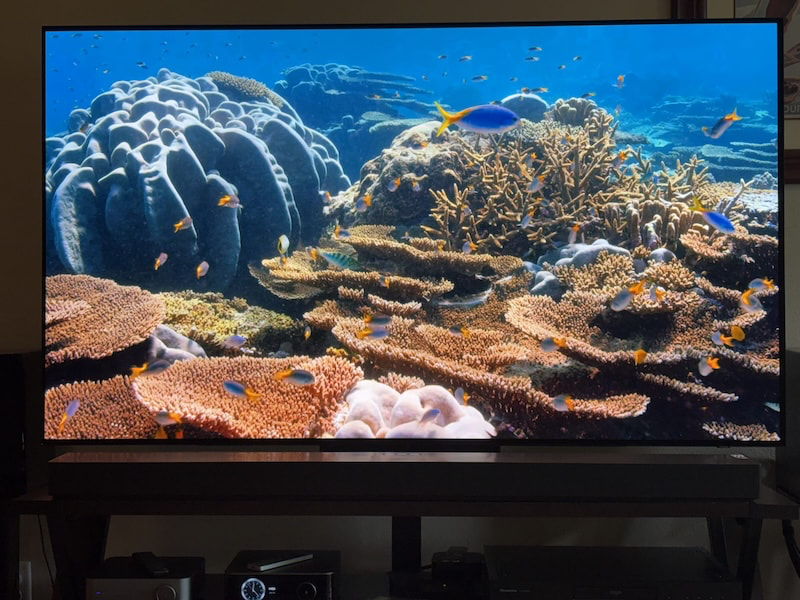
Testing more primed Atmos content like the “Amaze” scene from Dolby’s demo test disc, the QS90H effectively immerses you in jungle insects at the intro, while the storm scene brings some raucous thunder and a well-defined crescendo of rain overhead. The soundbar feels closer to cheaper systems like Klipsch’s Core 200 than the Arc Ultra here, with scenes like a bird flying behind you or the swirling vacuum in Marvel’s Ant-Man offering more dimensionality from Sonos’ model. Still, there’s enough to feel the hemispheric expansion that makes 3D audio so exciting, including the occasional “brush past your face” effect, and the hearty bass response helps elevate the other elements for a fun ride.
When it comes to music, the QS90H provides a pleasing presentation, led by its forward bass and solid clarity up top. Acoustic guitars have a warm, natural tone, while horns and strings come through with pleasing fluidity. Piano and vocals carry convincing presence. Instruments like a tight snare and trap set come through cleanly, and pad instruments spread out nicely across the bar’s wide frame, though particularly bright instruments sometimes sound brittle. You’ll find better overall instrumental definition in speakers like Denon’s Home 400, but the QS90H does about as well as I’d expect from its thin profile.
Dipping into some Dolby Atmos Music over AirPlay from Amazon Music Unlimited opened up the soundstage significantly. While most tracks are primarily confined to the front of the room, there’s expansive spacing, including some subtle effects that seem to slip toward your ears in tracks like Elton John’s “Goodbye, Yellow Brick Road” and George Harrison’s “My Sweet Lord.” John Batiste’s “Freedom” sounds fuller in Atmos, with some nuanced spherical effects and better spacing than the stereo version. Like much of the QS90H’s performance, the song leans foremost on its full and musical bass for an impressive listen.
The Bottom Line
Samsung’s latest all-in-one Dolby Atmos bar won’t replace Sonos at the top of the heap, and its 3D audio effects are middle of the pack for its price, but its mix of heart-pounding bass and versatile features makes it an excellent new option, especially for Samsung TV owners. It also offers some traditional features Sonos and other rivals lack, like full DTS support, a spare HDMI input, and a dedicated remote.
Not for nothing, the QS90H’s $1,000 list price is likely to come down quickly, helping it undercut Sonos, Bose, and several others. In fact, as I write this, the QS90H is already on sale for $800, making it a serious value. Those looking for a slim and powerful one-piece Dolby Atmos system to pair with a newer Samsung TV, or simply to upgrade their aging TV audio setup, will find a game companion in the QS90H.
Pros:
- Fantastic bass response for a standalone soundbar
- Clear and balanced sound across content
- Full support for DTS and Dolby 3D audio formats
- Slim, convertible design
- Samsung TV extras like wireless connection over Wi-Fi
- Loaded Wi-Fi streaming support, including Roon Ready
Cons:
- Less immersive for side and height effects than Arc Ultra
- Streaming music volume can be awkward with some apps
- Spare HDMI doesn’t support top gaming features
- Limited multi-room audio support
- An analog input would be nice
Our Ratings
★★★★★★★★★★ Performance
★★★★★★★★★★ Usability
★★★★★★★★★★ Build Quality
★★★★★★★★★★ Value
You must be logged in to post a comment Login