Tech
Samsung R95H Micro RGB Hands-On TV Review: RGB LED gets real

The Samsung R95H Micro RGB TV the company had on display at CES 2026 was a sight to behold, its bright picture and rich color managing to punch through even under the bright lights of Samsung’s First Look exhibit at the Wynn Las Vegas.
It was a solid next step for the company’s new RGB LED display tech, which made its debut in late 2025 with the launch of a 115-inch model priced around $29,999. At 130 inches, the Samsung R95H shown at CES made its predecessor look small in comparison. It also begged the questions of whether RGB LED TVs would be made available in real-world screen sizes, and if so, when?
The answer to those questions are yes, and now. Samsung has announced the availability of its R95H Micro RGB TV lineup in 65, 75, and 85-inch screen sizes priced at $3,199.99, $4,499.99, and $6,499.99, respectively. As for the 130-inch model shown at CES, that one is scheduled to arrive later this year at a price that will likely make your head spin. Samsung also previously announced a 115-inch version of the R95H though pricing and availability of that size are not yet available. For now the 2025 model 115-inch R95F Micro RGB TV is carrying over into 2026.
In terms of new 2026 models, alongside the R95H series Micro RGB TVs, Samsung also announced the step-down R85H series Micro RGB TVs, which will be available in 55- to 85-inch screen sizes priced from $1,599.99 to $3,999.99.

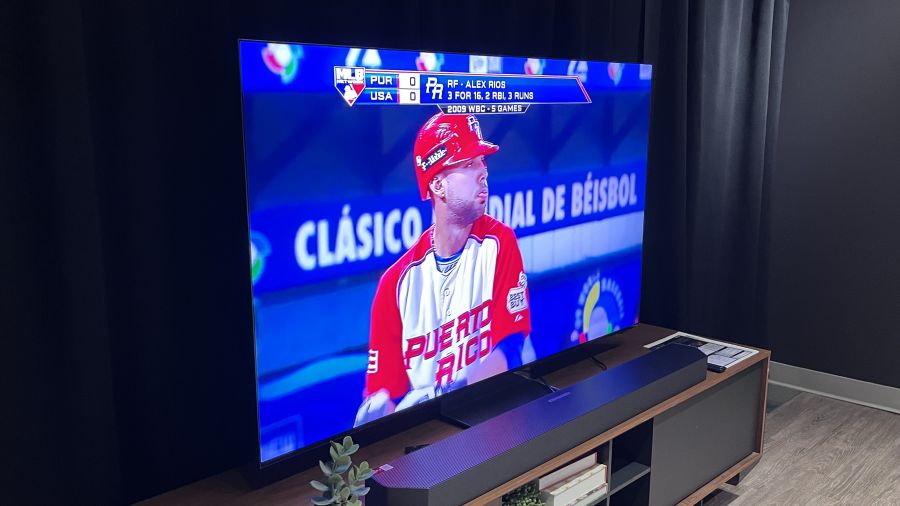
Samsung R95H Micro RGB Features & Design
Samsung’s Micro RGB tech uses micro-sized red, green, and blue LEDs in place of the blue or white light modules found in typical mini-LED TVs like Samsung’s own Neo QLED models. The promise here is of greater color accuracy and 100% “full UHD color spectrum” coverage, along with more refined local dimming to eliminate backlight blooming.
Other features found in the new Samsung R95H series TVs include a Glare Free screen similar to the one found in the company’s 2025 flagship mini-LED and OLED models, Wide Viewing Angle, Ultimate Micro Dimming Pro, and Auto HDR Remastering Pro to upscale standard dynamic range programs to HDR. There’s also something new called Micro RGB HDR Pro, along with Real Depth Enhancer, a feature that debuted in the company’s 2025 models which analyzes pictures in real time to better define the foreground and background elements.
Samsung continues to go all in on AI features for its TVs, and the R95H series offers 4K AI Upscaling Pro, AI Motion Enhancer Pro, and Micro RGB AI Engine Pro. There’s also an Adaptive Picture feature that uses AI to optimize images based on program genre and also provides an AI Customization mode that can create a custom picture preset based on your response to an array of displayed images.
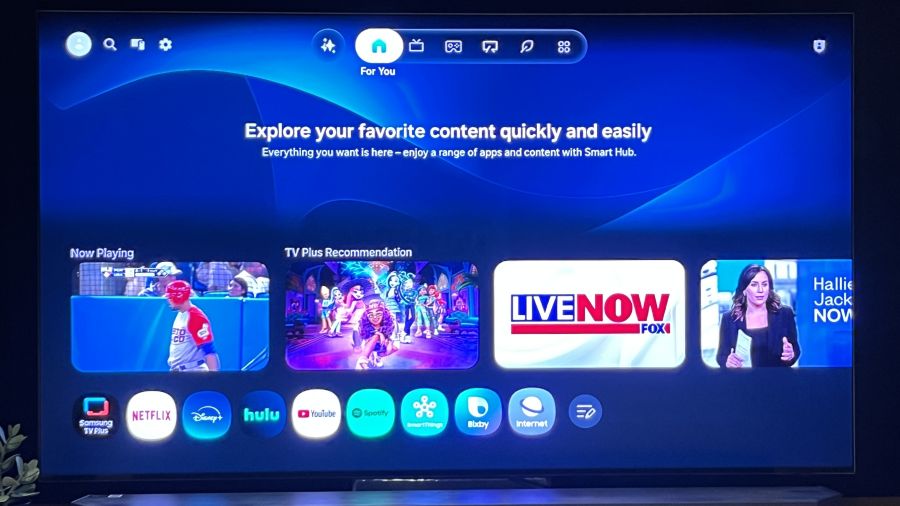
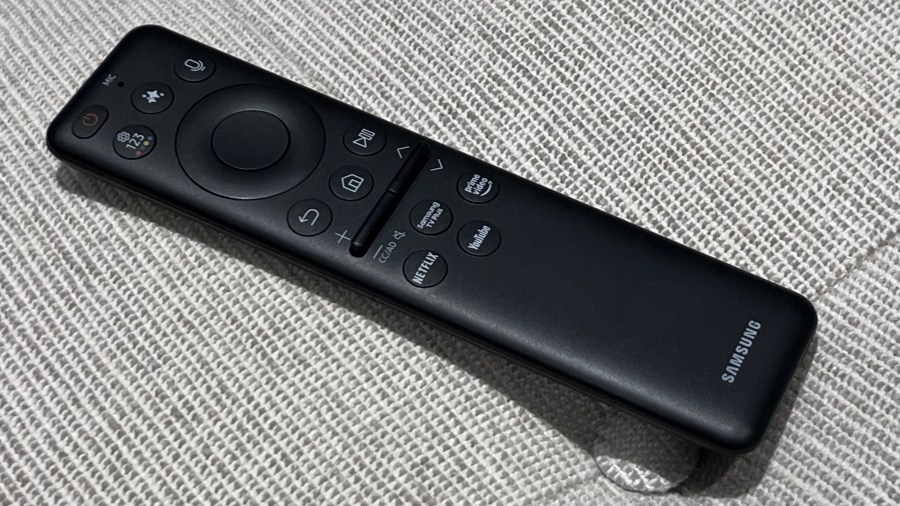
AI also gets top billing in Samsung’s updated Tizen Smart TV interface, which repositions tabs from the side to the top of the screen. The new layout is cleaner and more-user friendly, and it features a Vision AI Companion tab that lets you explore all manner of topics via Copilot or Perplexity using either the TV’s built-in far-field mic, or the one located in the TV’s Solar Cell Bluetooth remote control. Other Tizen features include Generative Wallpaper for creating custom screensavers, and access to the subscription-based Samsung Art Store that was previously limited to the company’s The Frame TVs.
Samsung TVs have long been a top option for gaming, and the R95H series continues that tradition with 165Hz support across four HDMI 2.1 ports, Freesync Premium Pro, and HDR10+ gaming. There’s also cloud-based gaming available on Samsung’s Gaming Hub, which features Xbox, NVIDIA, GeForce Now, Luna, Blacknut, Antstream, Boosteroid, and more.
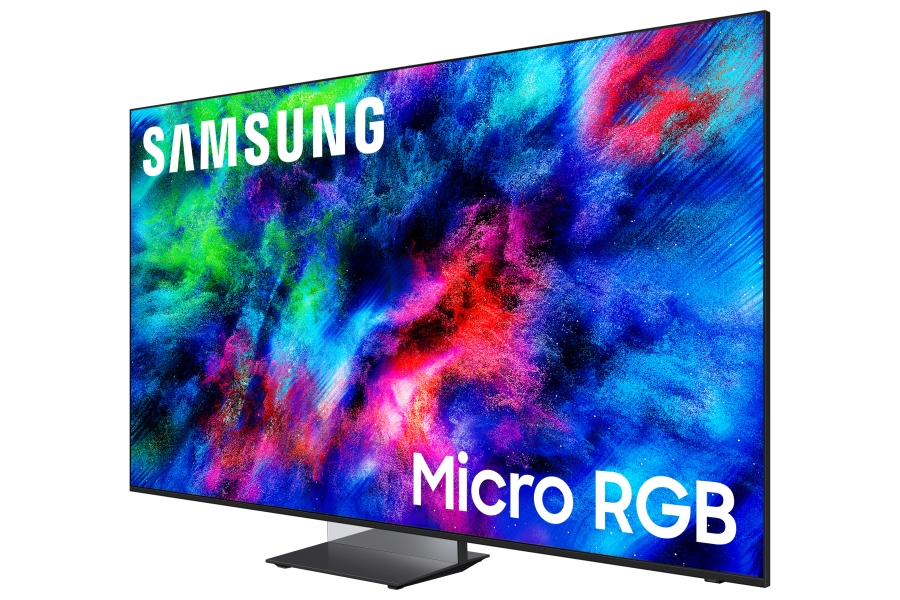
While the 130-inch R95H model Samsung showed at CES 2026 featured a “Timeless Frame” floor mount, the 65-85-inch models come with an Infinity Air stand that, combined with the four-side Bezel-less screen, gives the display something of a floating effect. A 4.2.2-channel speaker array powered by 70W delivers Dolby Atmos audio, and there’s Object Tracking Sound+, along with a Q-Symphony feature that combines the TV’s speaker output with that of a compatible Samsung soundbar. Additionally, the R95H is Wireless One Connect Ready, giving you the option for a wireless 165Hz connection using Samsung’s optional Wireless One Connect Box.
Hands-on with the Samsung R95H Micro RGB TV
Samsung invited eCoustics to its New Jersey headquarters in early March to get hands-on experience with a 65-inch R95H, and I was provided with ample time to make a full set of measurements.
As stated above, Samsung claims “full UHD color spectrum coverage” for the R95H, which is another way of saying BT.2020 color space coverage. In the set’s default Filmmaker Mode, P3 color space coverage measured 98.8% and BT.2020 was 92%. That BT.2020 number is obviously lower than what Samsung cites for the TV, but as I learned in a demonstration put on by the company’s engineers at Samsung HQ, they based their specification on the TV’s Dynamic picture mode rather than the more accurate Filmmaker Mode.
By way of comparison, when I measured the Samsung QN90F, the company’s flagship mini-LED TV, P3 color space coverage measured 93.6% and BT.2020 was 76.5% so this TV represents a marked improvement in color reproduction.
The R95H’s REC.709 grayscale delta-E averaged out to 6 in Filmmaker mode, which is a higher than average result. (A delta-E lower than 3 is considered to be imperceptible). This variation would likely be mitigated by a full calibration.
The R95H’s peak HDR brightness in Filmmaker Mode measured on a 10% white window pattern was 1,541 nits, and it was 639 nits on a 100% (fullscreen) pattern. In the Standard picture mode, peak HDR brightness measured higher at 2,223 nits on a 10% window, and 654 nits fullscreen. The R95H’s Standard mode results exceed what I measured on the Samsung Q90F, though the QN90F’s peak brightness was higher in Filmmaker Mode.
In a nutshell, the new Samsung R95H Micro RGB TV offers a wider color space coverage and higher brightness than last year’s top Samsung mini-LED TV, a model that is carrying over to 2026.
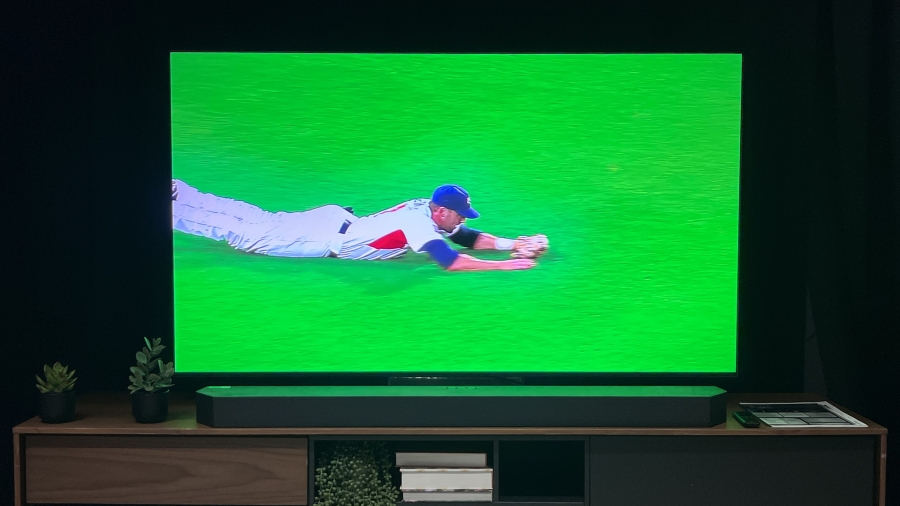
Alpha is a movie I’ve only seen specific clips from because, as an example of a 4,000 nits HDR transfer, it’s a good test for a display’s HDR tone mapping capability. (It involves prehistoric tribes, and there’s a wolf.) Watching a scene where the boy, Keda, and his wolf companion commune in front of the setting sun, there was a fine level of detail in the bright highlights, indicating that the TV’s Micro RGB HDR Pro feature was properly doing its job.
Two picture quality improvements promised by RGB LED tech are a reduction of backlight blooming artifacts and improved off-axis picture uniformity. A check of the white on black scrolling text that opens Blade Runner confirmed the R95H’s ability to deliver solid, halo-free performance, while the uniformity test pattern from the Spears & Munsil Ultra HD Benchmark showed that its picture could retain solid contrast and color saturation even when viewed from a far off-center seat.
Wrapping things up with the opening title sequence of Baby Driver, the R95H displayed only a limited level of motion judder as the titular character strolls along a city street. If that doesn’t sound like a big deal, I’ve seen the picture on some other TVs get seriously wobbly during this sequence, so the Samsung’s motion handling here was nothing short of impressive.

The Bottom Line
My take on the Samsung R95H Micro RGB TV after doing an initial test is that it provides an appreciable step up in picture quality over Samsung’s also-impressive flagship mini-LED TV, the QN90F. My limited time with the R95H meant I didn’t have an opportunity to do a deep dive into its many AI-related picture enhancements, and I also didn’t have a chance to evaluate its built-in sound. But as the first example of an RGB LED TV I’ve spent hands-on time with, I’m excited for this new category, which is finally creating serious picture quality competition for OLED TVs.
For more information: Samsung Micro RGB Product Pages
Pros:
- Wide color gamut coverage
- High peak HDR brightness
- Glare Free screen
- No visible backlight blooming
- Sleek Infinity Air stand design
- Excellent HDR tone mapping and motion handling
Cons:
- Pricey
- High grayscale delta-E in Filmmaker Mode
You must be logged in to post a comment Login