Samsung’s first ‘affordable’ Micro RGB TV confirms the technology has a bright future
Unprecedented colour response
Uncompromising Filmmaker Mode
Exceptional backlighting
No Dolby Vision support
Slight motion blur
Expensive for an LCD TV
Squirrel Widget
Advertisement
Key Features
Micro RGB screen
Replaces the traditional white or blue light shone through colour filters LED TV approach with tiny, separate red, green and blue LEDs
Advertisement
Up to 8 HDMI inputs
You can buy an optional Wireless One Connect box for the set that adds another four that send picture and sound to the TV wirelessly
Advertisement
Tizen smart system with AI
Comprehensive collection of streaming apps and lots of AI support for content searching and learning your viewing habits
Advertisement
Introduction
Having dipped a (very big) toe into Micro RGB technology waters towards the end of 2025 with an ultra-expensive 115-inch model, Samsung has now followed that up with the much more affordable (though still premium) R95H TV series.
Does the technology still feel as exciting and cutting edge on smaller, more affordable screens? And is the huge colour gamut it’s capable of delivering really worth worrying about?
Advertisement
Price
The 75R95H costs £4299 in the UK, and $4499 in the US. The 65-inch model that’s also available from the range’s launch goes for £3399 and $3199.
Advertisement
This means Samsung is pitching the R95H range below – albeit only slightly – its flagship S99H OLED TVs. Though the closest screen size to the QE75R95H in the S99H range is two inches bigger.
While this shows that Samsung sees its QD OLED TVs as the absolute pinnacle of its TV performance, the still-premium pricing of the R95H series suggests Samsung believes Micro RGB capable of doing some pretty special things.
Design
Slender sides and rear
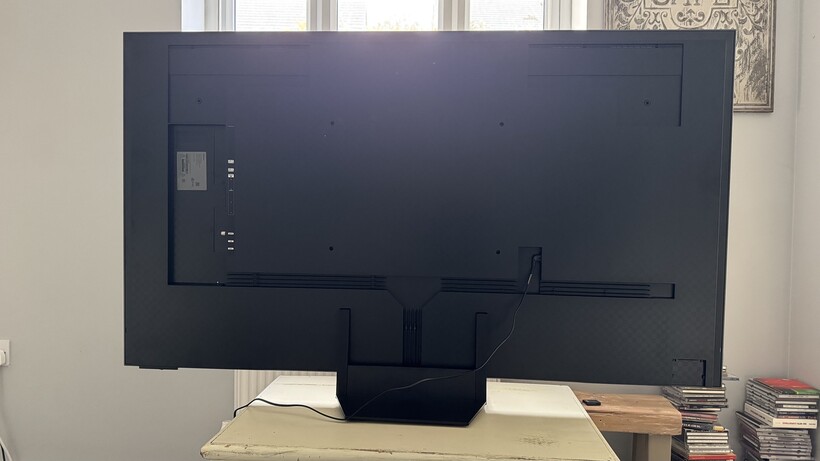
Centrally mounted stand with floating effect
Anti-reflection screen and Art Store create an artwork effect
The R95H has no truck with the wide frame Samsung added to the S99H OLED series. In fact, both the R95H’s screen frame and rear are exceptionally slim by LCD TV standards.
This makes it a great all hanging option – thoughh it actually ships with a desktop stand. This stand slots without screws into to grooves near the centre of the bottom edge, meaning the TV can be placed on even quite narrow bits of furniture. The neck of this stand wears a mirrored finish that creates the optical illusion that the screen is somehow just hovering above the base plate.
Advertisement
Advertisement
Image Credit (Trusted Reviews)
The TV carries well defined and extensive cable channelling on its rear panel to try and stop dangling cables from spoiling the 75R95H’s minimalist chic. Though actually, in a highly unusual move, it’s possible to connect four sources to the TV without any cabling if you add one of Samsung’s new, optional Wireless One Connect boxes to the R95H.
This lets you attach up to four HDMI sources to it, and then broadcasts their pictures and sound wirelessly to the TV from potentially metres away.
One last unusual design feature is the 75R95H’s combination of Samsung’s digital store of digital art screensavers, and an extremely effective anti-reflection screen. Put these together and you can make the TV look like a painting when you’re not watching it.
Image Credit (Trusted Reviews)
Connectivity
Wireless One Connect box option
Four gaming-friendly HDMI 2.1 ports as standard
Wi-Fi, Bluetooth and Airplay 2 support
Advertisement
I’ve already obliquely covered the R95H’s main connection story: Its potential for adding an optional Wireless One Connect Box. This warrants further attention, though, for as well as opening up the potential for cable free connection of up to four external sources to the TV, it also opens up the possibility of the QE75R95H taking in as many as eight HDMI sources at once.
The four HDMI ports built into the R95H’s bodywork and the four on the optional Wireless One Connect box are all fully HDMI 2.1 specified – something I’ll come back to in the Gaming section.
Advertisement
Image Credit (Trusted Reviews)
The Wireless One Connect hosts a couple of USB ports too, again doubling the number of those available.
There are also optical digital audio outputs on the TV and Wireless One Connect box, while the TV’s own ‘built in’ wireless capabilities include Wi-Fi, Bluetooth and AirPlay 2.
Image Credit (Trusted Reviews)
Advertisement
User Experience
Tizen OS smart system
Voice and Gesture control
Two remote controls
The Tizen OS that provides your main interface with the R95H’s smart features is pretty effective. The appearance of the home screen has been improved by shifting the usual roster of sub-menu links from down the side to along the top of the screen, and Samsung has also added a new AI home menu accessed via a direct button now included on the smart remote control.
This AI menu provides manual access to the third-party Co-Pilot and Perplexity AI systems, as well as a Generative AI image creation system that lets you create your own images from a few prompts.
The R95H’s extensive use of AI extends to its support for both the Bixby and Alexa voice recognition systems, and impressively sophisticated tools for coming up with relevant content recommendations based on your viewing habits. This can include the viewing habits of other members of your household, too, thanks to the TV supporting multiple individual user profiles.
Tizen carries a huge array of apps and streaming services, including the individual catch up apps for the UK’s main terrestrial broadcasters. Though there’s no support for Freely ‘wrappers’ carried by some rival brands these days.
Advertisement
Image Credit (Trusted Reviews)
Advertisement
The R95H ships with two remote controls: One traditional button-heavy one, and a much more slender affair with a stripped back button count and a solar panel on its rear that means you’ll never have to change its batteries again. This ‘smart’ remote also carries a built-in mic and Samsung’s new AI button when the other remote doesn’t, so all in all I’m confident this smart remote will be the one most users stick with.
The R95H can also be controlled to some extent via gestures if you’re wearing a Samsung Galaxy Watch, or you can add the TV to Samsung’s SmartThings app for iOS and Android devices, and then control it from your phone via a ‘virtual remote’
The sophistication of the R95H’s Tizen OS makes it a little intimidating initially, but after exploring it for a little while you start to appreciate its depths. Its biggest flaw, ultimately, is its desire to get you to accept adverts on the UI. You can opt out of these during the initial install, but if you do the basic layout of the UI remains unchanged, leaving areas where ads might have appeared often feeling like a fairly substantial waste of space.
Features
Micro RGB panel
Local dimming
Dedicated Micro RGB AI processor
The R95H is the second TV Samsung has released to use Micro RGB technology. This new tech, which is set to appear in 2026 from other brands too, under different names such as RGB LED, Mini RGB and True RGB, replaces conventional LCD TV lighting systems, which shine white or blue lights through colour filters, with dedicated red, green and blue LEDs.
This an approach which has the potential to greatly increase colour gamuts, colour volumes (colour plus brightness), power efficiency and general brightness
Advertisement
Advertisement
The Micro RGB lights on the QE75R95H are working within a VA type of panel, backed up by a potent local dimming system. In the QE75R95H’s case this local dimming zone system operates across a commanding 1792 individually controlled LED clusters. On top of this, of course, there’s the extra dimming effect you can get from each red, green and blue LED.
Image Credit (Trusted Reviews)
Samsung has created a dedicated Micro RGB AI processing system for its new screen technology to, among other things, drive the backlighting system, deliver high-level upscaling of HD sources, and apply the huge colour gamut the screen can provide to real-world content.
The R95H supports the HDR10, HLG and HDR10+ HDR formats, and will eventually, following a firmware update later this year, support the new HDR10+ Advanced format (designed to take on the recently announced Dolby Vision 2 format) by boosting brightness, cloud gaming, motion and the approach the TV takes to different content genres. As ever with Samsung TVs, the R95H doesn’t support Dolby Vision in either of its formats.
Gaming
Up to 165Hz frame rate support
VRR support including AMD FreeSync
Game Hub source screen and dedicated Game menu screen
The R95H leaves no stone unturned on the gaming front. For starters all four onboard and all optional Wireless One Connect HDMI ports support high frame rates for gaming up to 165Hz. They also all support variable refresh rates right across its frame rate range, with the VRR support encompassing the AMD FreeSync Premium Pro format.
Advertisement
Advertisement
Auto low latency support enables the R95H to automatically switch to its Game mode, in which mode the time the screen takes to render graphics drops to 10.4ms. Slightly higher than the S99H OLED, but not by enough for even the most competitive gamer to notice.
Where lag might become an issue, though, is if you’ve connected your console or PC to one of the HDMI inputs on an optional Wireless One Connect Box. The wireless transmission process associated with these boxes adds just under 20ms extra lag time.
The R95H helpfully organises all of your game sources, be they connected by HDMI or streamed via the many cloud gaming services Samsung support, onto a dedicated Game Hub home screen within the Tizen OS GUI, and also calls up a dedicated gaming menu if you press and hold the play button on the remote while playing a game.
Image Credit (Trusted Reviews)
This menu provides detailed information on the incoming gaming feed, and provides a host of cheats – sorry, gaming aids – such as mini map zooming, brightening dark areas so enemies are easier to spot, calling up an onscreen crosshair, and calling in different levels of motion smoothing for those (increasingly rare) occasions where you find yourself playing a low frame rate game.
As a tasty prelude to the video picture quality we’re going to cover in the next section, gaming on the Samsung R95H is a mostly a fantastically fun but also seriously immersive experience. The huge colour vibrancy the Micro RGB screen can achieve (I measured almost 150% of the DCI-P3 colour spectrum) together with brightness that hits peaks as high as around 2200 nits, results in colours that explode off the screen, making titles as varied as Crimson Desert, Forza Horizon and Rayman Legends look radiantly engaging to a degree they’ve seldom looked before.
Advertisement
Advertisement
HDR titles are handled well, with the screen doing a good job of optimising game HDR engines to its capabilities without the results looking clipped or unstable, and gaming feels responsive via the TV’s built-in HDMI ports.
My only gripes with gaming are that blooming around stand-out bright objects seems a little more noticeable if you’re sat off to the side of the screen than it does with video, and that fast pans and rapidly moving objects can look a touch soft compared with the S99H. Though they do look equally fluid.
Picture Quality
Remarkable colour range
High brightness
Excellent backlight controls
While we’ve become pretty accustomed now to TVs that push brightness far beyond the levels commonly used by content creators, doing the same thing for colour is for me much more noticeable – and, therefore, trickier to do convincingly.
Samsung’s Micro RGB AI processor, though, makes a remarkably good job of it. Especially considering it’s dealing with such a new technology.
Advertisement
Starting with just how aggressively the R95H leans into Micro RGB’s wider colour gamut capabilities, measurements taken using Portrait Displays’ Calman Ultimate software, G1 signal generator and C6 HDR5000 light meter reveal that the screen can deliver essentially 150% of the DCI-P3 colour range. An unprecedented figure that at least some of Samsung’s picture presets seek to venture into when showing today’s more constrained HDR images.
Advertisement
The Dynamic preset really goes for it, and is worth checking out for the fullest evidence of the sort of spectacle Samsung’s TV can deliver. While this mode is surprisingly even-handed in how it expands colours across the spectrum, and how little noise it suffers with compared with some rival similar modes I’ve seen on some early Micro RGB/Mini RGB samples, it still looks forced sometimes, particularly when it comes to skin tones.
The Standard preset, while certainly not measuring accurately, is for the most part a joy to watch. I watched multiple favourite 4K Blu-ray test discs in this default mode (having turned off the interfering Eco and ambient sensor-related modes) and for most of the time was both dazzled by seeing such familiar titles looking like they’d been remastered in some new next-gen HDR format, and amazed at how well this ‘expansion’ of their native images had been achieved.
Advertisement
Image Credit (Trusted Reviews)
Especially when it came to avoiding such potentially distracting nasties as exaggerated colour noise, certain tones suddenly jumping out of the picture more than others, and saturations so extreme that the screen is no longer able to express the sort of subtle colour blends required to make objects feel three-dimensional and natural.
Just as importantly as the spectacular but surprisingly authentic feeling colours to the Standard mode’s appeal is the prowess of the Samsung R95H’s backlight system. The more than 1700 local dimming zones in the QE75R95H’s screen together with the extra light control created by using separate red, green and blue LEDs for each lighting ‘unit’ creates light control mechanics which, under the watchful eye of Samsung’s dedicated Micro RGB processor, deliver both fantastically deep black colours by LCD TV standards, but also impressive stability and freedom from either general clouding and backlight blooming around stand-out bright objects.
What’s more, even when a little blooming can occur around extremely bright, colourful objects, unlike normal LED TVs the blooming actually adopts the chief colour tone of the ‘offending’ object. This makes it much less noticeable than the usual grey blooming effect, as your eye more often than not perceives the bloom as natural colour radiance.
Advertisement
Making the capabilities of the backlight controls even more impressive is the fact that the R95H can deliver its deep black colours and clean local dimming effects despite it also being extremely bright.
Advertisement
Calman Ultimate tests reveal brightness peaks of nearly 2300 nits on 10% and more than 660 nits on full 100% light windows, which contributes to an outstanding HDR sensation in terms of baseline brightness and the intensity of classic HDR highlights like sunlight reflecting on glass or metal, or bright streetlights against a night sky.
This impressive brightness doesn’t remotely start to overwhelm the screen’s huge colour capabilities. In fact, far from any tones looking faded or pallid in bright areas, the screen delivers huge levels of colour volume that complete the sense that RGB TVs are in a world of their own where colour is concerned.
Exciting though all of this is, many home cinema fans will still want the QE75R95H to be able to handle movies in a much more ‘as the director intended’ fashion as well, at least for serious film nights.
As with its S99H OLED flagships, Samsung has again managed to cater for this need much more successfully than we might have expected given the extravagant capabilities of the R95H’s screen. Right out of the box, the Filmmaker Mode achieves DeltaE 2000 average measurements with every Calman Ultimate HDR test I tried it with bar one below the 3.0 level beyond which deviations from industry standards might potentially be visible to the human eye. And even on that one test where it strays further than three, it only does so by a half mark.
Advertisement
Filmmaker Mode images inevitably look much less bright and much less vibrant than Standard mode, simply because sticking to today’s common mastering standards means using much less of what the screen can do. But this is as it should be – and the demands of switching into accurate settings don’t cause subjective viewing issues such as pale colour tones, heavily reduced backlight controls or poor dynamic peaking of bright light sources.
Advertisement
Image Credit (Trusted Reviews)
The R95H delivers SDR content in the Standard mode with just as much measurable and subjectively enjoyable precision, while again managing to drastically open SDR up in terms of brightness and colour in the Standard mode – and/or when using a pretty effective SDR to HDR conversion option – without the results looking gaudy.
Inevitably the R95H isn’t perfect. Sometimes the mostly excellent Standard mode can push skin tones, especially in dark scenes, too much, that they look too ripe. A slight pinkish tone can sometimes appear over bright shots in Standard mode too, and very occasionally subtle colour differences, especially over misty backgrounds, can become too overt.
Blooming around bright objects, while disguised by its colour component versus regular LED TVs, is present in a way it isn’t with OLED, and becomes slightly more noticeable if you’re watching the TV from an angle. The Standard mode can sometimes exhibit obvious baseline brightness ‘jumps’ during hard cuts between dark and light shots.
Advertisement
Motion looks slightly softer than it does on Samsung’s regular premium LCD TVs, as well as looking too smooth and noisy if you leave the Standard present’s default Picture Clarity settings in play.
Finally, while for the majority of the time I think most viewers in typical home viewing conditions will love the way the R95H’s anti-glare filter suppresses basically all reflections, it can flatten black levels a little in really extreme bright ambient light.
Advertisement
Upscaling
Well controlled processing side effects
Impressive, 4K-like sharpness and detail
Good noise suppression
The potent, heavily AI-influenced processors in Samsung’s premium TVs over the past few years have consistently delivered some of the best upscaling around – a handy benefit, I suspect, of Samsung’s longer devotion to the 8K TV cause than any other brand.
This trend continues with the Micro RGB AI processor, happily, as the R95H turns HD and even SD into convincing 4K look-a-like territory when it comes to detailing and clarity, without exaggerating source noise or grain, or generating distracting side effects such as colour shift or haloing around hard object edges.
Advertisement
The fact that the upscaling holds up well on a screen as big as 75-inches underlines how effective Samsung’s processing is, too.
Sound Quality
Object Tracking Sound works well
Good power and soundstage creation
Can struggle with sustained deep bass
For most of the time the R95H sounds good. Despite its slender bodywork, for starters, it manages to produce impressive volume levels capable of satisfying pretty substantial rooms. Especially as the sound is projected well beyond the TV’s physical extremities, creating a soundstage larger than even the 75-inch screen.
Advertisement
This large soundstage is exceptionally coherent, too, thanks to the ear-catching efforts of Samsung’s Object Tracking Sound system. Combining clever audio processing with a multi-speaker set up that places speakers all around the screen, OTS does a remarkably accurate job of placing key effects in the right place.
Image Credit (Trusted Reviews)
This applies to everything from dialogue to gunfire and engine noise from moving vehicles, and the number of objects that the OTS engine is capable of handling in any given scene is remarkable.
There’s a lovely crisp, clean but also rounded quality to the QE75R95H’s detailing, and shrill trebles sound controlled, even and free of warbling or buzzing distortions.
Advertisement
The R95H doesn’t quite hold it together at the low frequency end of the sound spectrum, though. Short, impactful bass sounds hit fine, but where there are longer, really deep and pressurised rumbles to handle the pair of dedicated low frequency speakers can descend into various distortions, including buzzing noise, crackling, and a general coarsening of the low frequency sound as the speakers try to push beyond what they’re really capable of achieving.
Squirrel Widget
Advertisement
Should you buy it?
Advertisement
It delivers colours like you’ve never seen before
With a measured ability to cover nearly 150% of the DCI-P3 colour spectrum and nearly 95% of the most extreme BT2020 colour spectrum, and equipped with presets that actually venture into such colour extremes, the 75R95H can deliver some genuinely remarkable colour extremes
Advertisement
Content needs to catch up
While the 75R95H delivers an unprecedented LCD colour response, there’s no real content out there that can fully exploit such wide colour. Though Samsung’s processing does a very good job in some picture presets of mapping current pictures to the TV’s capabilities.
Advertisement
Final Thoughts
With the QE75R95H Samsung has not only proven that Micro RGB and similar technology is relevant even in a world where content doesn’t yet exist that could fully unlock its capabilities, it’s delivered a TV that also breaks new ground with its LCD backlight control and AI features.
And which does things in the colour department that even Samsung’s S99H OLED can’t but that’s not to say you should necessarily buy it over the S99H. There are also areas, inevitably, where the pixel-level light control of OLED remains unmatched.
But the fact that the 75R95H even stands as a credible alternative to a TV as brilliant as the S99H is an outstanding achievement for such a new technology.
How We Test
The R95H was tested over a period of 10 days in both dark test room and regular living room environments.
It was fed a wide variety of content, including console games, 4K Blu-rays, streams of various resolutions and HDR formats from all of the main streaming platforms, as well as broadcast tuner footage.
All of this content was watched on the 75R95H in both daylight and dark conditions, and we explored all of the TV’s many picture setting options to find the best set ups for both regular living room environments and blacked out home cinemas.
Finally, the Samsung 75R95H was tested for both SDR and HDR playback in multiple presets using Portrait Display’s Calman Ultimate software, G1 processor and a C6 HDR5000 colorimeter.
Advertisement
Tested in dark and bright room settings
Tested with real-world content
Benchmarked with Portrait Displays’ Calman Ultimate Software, G1 signal generator and KC6 HDR5000 colorimeter
Gaming input lag was measured with a Leo Bodnar signal generator
FAQs
What HDR formats does the Samsung R95H support?
The 75R95H supports HDR10, HLG, and HDR10+ right away, and the new HDR10+ Advanced system will be added via firmware update later in the year.
What panel technology does the Samsung R95H use?
The QE75R95H uses Samsung Display’s second generation Micro RGB display, applied to a VA panel with more than 1700 local dimming zones.
Advertisement
Test Data
Samsung QE75R95H
Input lag (ms)
10.4 ms
Peak brightness (nits) 5%
2190 nits
Peak brightness (nits) 2%
2000 nits
Peak brightness (nits) 100%
654 nits
Set up TV (timed)
360 Seconds
Full Specs
Samsung QE75R95H Review
UK RRP
£4299
USA RRP
$4499
Manufacturer
Samsung
Screen Size
74.5 inches
Size (Dimensions)
1658.8 x 349.1 x 1019.2 MM
Size (Dimensions without stand)
946.2 x 1658.8 x 29.8 MM
Weight
30.1 KG
Operating System
Tizen
Release Date
2026
Resolution
3840 x 2160
HDR
Yes
Types of HDR
HDR10, HLG, HDR10+, HDR10+ Advanced
Refresh Rate TVs
48 – 165 Hz
Ports
Four HDMI 2.1, two USB, Ethernet, RF input, optical digital audio output; (optional wireless One Connect box) – four HDMI 2.1 ports, two USBs, optical audio port, RF and satellite tuner inputs
Pinterest reported its first billion-dollar quarter with $1.008 billion in Q1 2026 revenue, up 18 per cent year on year, driven not by social media engagement but by 80 billion monthly visual searches that generate commercial intent data no other platform can match. Its AI-powered Performance+ advertising suite delivered 24 per cent higher conversion lift and 80 per cent A/B test win rates, proving that advertising attached to search intent outperforms advertising attached to content browsing. The question is whether Pinterest’s visual search advantage endures as Google, Amazon, and OpenAI build their own AI commerce layers.
Pinterest reported its first billion-dollar quarter last week. Revenue hit $1.008 billion in the first three months of 2026, up 18 per cent year on year, with monthly active users reaching 631 million for the tenth consecutive quarter of double-digit user growth.
Advertisement
The stock jumped on guidance that projects second-quarter revenue of $1.133 billion to $1.153 billion, a further 14 to 16 per cent increase. Wall Street treated the results as confirmation that Pinterest has finally become the advertising platform it always promised to be. But the interesting part of the earnings is not that Pinterest grew. It is why.
Pinterest did not cross a billion dollars in quarterly revenue by becoming a better social media platform. It crossed a billion dollars by becoming a search engine that happens to show pictures.
Pinterest processes more than 80 billion searches per month. That number is not a vanity metric. It is the foundation of an advertising model that works differently from every other social platform. When someone opens Instagram or TikTok, they are browsing. When someone opens Pinterest, they are looking for something: a kitchen renovation, a wedding dress, a pair of boots, a recipe for Thursday dinner.
The distinction matters because advertising attached to intent converts at rates that advertising attached to browsing cannot match. Pinterest’s Performance+ suite, its AI-powered campaign automation tool, delivered 24 per cent higher conversion lift in advertiser tests and won 80 per cent of A/B comparisons against manual campaigns. Its return-on-ad-spend bidding system now accounts for 22 per cent of lower-funnel retail revenue on the platform.
These are not engagement metrics. They are commerce metrics, and they explain why advertisers are spending more on Pinterest while scrutinising every dollar they put into platforms that sell attention rather than action.
Advertisement
The AI layer is what changed. Pinterest has spent the past two years rebuilding its advertising stack around machine learning models that match advertiser objectives to user intent signals extracted from visual searches.
When a user photographs a lamp and searches for similar products, or saves a series of pins showing mid-century modern furniture, Pinterest’s models construct an intent profile that is qualitatively different from the interest graphs that Facebook and Instagram build from likes and follows.
The arrival of advertising inside AI platforms like ChatGPT has reframed the conversation about where ad dollars flow, but Pinterest’s results suggest that the most valuable advertising real estate is not inside a chatbot or alongside a social feed. It is at the moment someone is actively searching for something they intend to buy.
The geography
The revenue breakdown tells a story about where the growth is coming from and where it is going. United States and Canada revenue grew 13 per cent. Europe grew 27 per cent. Rest of World revenue surged 59 per cent.
Advertisement
The US and Canada business is mature, generating the majority of Pinterest’s revenue from a user base that has been on the platform for years. The international growth is the early stage of a monetisation curve that Pinterest’s management believes will follow the same trajectory: users arrive for visual discovery, build intent-rich search histories, and become increasingly valuable to advertisers as Pinterest’s AI models learn to match their searches to commercial outcomes.
The 59 per cent Rest of World growth is particularly notable because it is happening on a platform that does not rely on the creator economy, influencer partnerships, or viral content loops that drive growth on TikTok and Instagram.
Pinterest’s brand safety advantage has become a competitive moat. Meta faces lawsuits alleging that its platforms have profited from billions of dollars in fraudulent advertising, with internal documents suggesting that a significant share of ad revenue comes from scam accounts. TikTok’s advertising model depends on algorithmic content distribution that periodically surfaces material advertisers do not want their brands associated with. X’s advertising business has contracted since Elon Musk’s acquisition.
Advertisement
Pinterest, by contrast, operates a platform where the content is overwhelmingly aspirational, commercial, and brand-safe by design. People pin products they want to buy, rooms they want to build, meals they want to cook. The content moderation challenge on Pinterest is trivial compared to platforms built around user-generated video and text, and that structural advantage translates directly into advertiser willingness to spend.
OpenAI has shifted ChatGPT’s advertising from impression-based pricing to cost-per-click after its initial $60 CPM launch pricing eroded within weeks, a sign that even the most hyped new advertising platform struggles to prove that its ads drive purchases rather than just visibility. Pinterest does not have that problem. Its advertising model was built from the ground up around commercial intent, and the Performance+ results demonstrate that the AI layer is making the match between intent and advertiser spend more efficient, not less.
The question for advertisers is not whether Pinterest’s ads work. It is whether Pinterest can scale the model fast enough to capture a meaningful share of the $295 billion US digital advertising market before the AI commerce platforms catch up.
The investors
Elliott Investment Management’s $1 billion convertible note investment in Pinterest, disclosed in March, was the activist firm’s bet that the visual search commerce thesis would translate into sustained revenue growth. The Q1 results validated that bet. Pinterest also announced approximately $2 billion in share repurchases, a capital return programme that signals management confidence in the durability of the revenue trajectory.
Advertisement
Elliott’s involvement typically accelerates operational discipline: cost management, margin expansion, and strategic focus on the highest-return initiatives. For Pinterest, that means doubling down on the AI-powered advertising infrastructure that produced the Q1 results rather than diversifying into social features, creator tools, or other distractions that would make Pinterest look more like the platforms it is outperforming precisely because it is not like them.
Alphabet’s Q1 earnings pushed its market capitalisation toward $5 trillion, driven by search advertising revenue that remains the single most profitable business model in technology. Pinterest’s billion-dollar quarter is a fraction of Google’s scale, but the underlying logic is the same: advertising attached to search intent is more valuable than advertising attached to content consumption. Google proved that model with text.
Pinterest is proving it with images. The difference is that Pinterest’s visual search captures intent that text queries often cannot express, the shape of a chair, the colour of a wall, the silhouette of a dress, and converts that visual intent into advertising revenue through an AI pipeline that improves with every search.
The question
Pinterest’s risk is that the same AI capabilities powering its advertising engine are being deployed by competitors who have more users, more data, and more capital. Google’s AI Mode shopping experience combines Gemini with its Shopping Graph to handle product discovery, fit uncertainty, and price timing. Amazon’s Rufus AI assistant now includes an auto-buy function. OpenAI is building conversational ad formats inside ChatGPT that turn advertisements into interactive dialogues. Shopify has launched Agentic Storefronts that make merchant catalogues available inside AI platforms. The commerce layer of AI is being built by companies with resources Pinterest cannot match, and the question is whether Pinterest’s head start in visual search intent data is a durable advantage or a temporary one.
Advertisement
The answer depends on whether visual search remains a distinct category or gets absorbed into the broader AI commerce infrastructure. If consumers continue to use Pinterest as the place where they search for things they want to buy by looking at pictures of things they like, then Pinterest’s intent data is irreplaceable, because no other platform has 80 billion monthly visual searches generating the same density of commercial signals. If AI assistants from Google, Amazon, and OpenAI learn to interpret visual intent as well as Pinterest does, the moat narrows.
Pinterest crossed a billion dollars in quarterly revenue not by winning the social media competition but by refusing to play it. The company built a search engine for visual intent, wrapped it in an AI-powered advertising model that converts searches into sales, and proved that the model scales across geographies and advertiser categories.
Whether that is the beginning of Pinterest becoming a major advertising platform or the high-water mark before AI commerce platforms subsume the category depends on a question Pinterest cannot answer alone: in a world where every platform is adding AI-powered shopping, does the platform that understood visual search first retain the advantage, or does the advantage migrate to whoever has the most compute, the most merchants, and the most aggressive AI deployment?
Pinterest’s billion-dollar quarter is the best argument the company has ever made that the answer is the former. The next four quarters will determine whether the market agrees.
A recent survey from Internet Matters reveals that the UK’s Online Safety Act has had limited effectiveness in stopping minors from accessing social media and adult content. Read Entire Article Source link
The hype is steadily building around Summer Game Fest 2026 and the show’s June calendar is starting to fill out. The fine folks at Wholesome Games will host their seventh annual digital showcase on Saturday, June 6 at 12PM ET on YouTube and Twitch, featuring more than 50 joyful and just plain adorable games from new and established studios alike. Wholesome Direct 2026 promises to feature world premieres, demo reveals and a handful of fun surprises.
The list of confirmed participants includes Planet Coaster series creator Frontier Developments, Fields of Mistria team NPC Studio, The Wandering Village dev Stray Fawn Studio, and Cozy Grove maker Spry Fox. The Spry Fox update is of particular note, considering some recent upheaval at the studio: Netflix bought Spry Fox in 2022, published its Cozy Grove sequel in 2024, and then sold Spry Fox back to its original founders in December 2025. Netflix had already greenlit Spry Fox’s next game, a cozy life-simulation MMO called Spirit Crossing, and the streamer is still on tap to publish it on mobile, with Spry Fox self-publishing on Steam. It’ll be nice to get a peek at Spirit Crossing now that the corporate dust has settled.
Advertisement
The Wholesome Games Presents publishing arm will also provide updates on Usagi Shima (a bunny atsume-style game coming to Steam in 2026), Is This Seat Taken? (Poti Poti Studio’s beloved little puzzler that came out in mid-2025), and Milki Delivery (a sweet-looking community-building game from Minami Lane creators Blibloop and Doot).
Merch sales tied to this year’s Wholesome Direct showcase will benefit the Transgender Law Center. Wholesome Direct fundraising efforts have raised more than $300,000 since 2020 for charities including the American Heart Association, Point of Pride, Save the Children, AbleGamers, Palestine Children’s Relief Fund and the International Rescue Committee.
Summer Game Fest 2026 kicks off on Friday, June 5 at 5PM ET with its big live show, and the surrounding days will be packed with additional streams and news dumps. We’ll go hands-on with fresh games at iam8bit’s Play Days event in downtown Los Angeles and we can all watch another Day of the Devs: SGF Edition together, plus whatever else is announced in the coming weeks. If you want to keep up with Wholesome Games news specifically, check out the Discord.
Microsoft’s unofficial Ninja Cat mascot rides the OpenClaw lobster. (Image via Omar Shahine’s blog)
Bob. Clippy. Cortana. Copilot. Microsoft has been trying to unlock the personal-assistant puzzle for decades. Now a fledgling team inside the company that’s been experimenting with OpenClaw — an open-source framework that acts both a virtual assistant and platform for building and managing proactive agents — is taking a stab at the problem.
That team, headed by Corporate Vice President Omar Shahine, already has a working agent prototype and, as of May 1, more than 3,000 daily users inside Microsoft testing “Project Lobster,” the team’s OpenClaw-based desktop environment, up from 100 the previous week.
Not bad for a technology that CEO Satya Nadella dismissed as a security risk akin to “a virus” just a few months ago. A number of other companies, including OpenAI and NVIDIA, are also rushing to integrate the technology with their own.
Omar Shahine. (LinkedIn Photo)
The vision of Shahine’s team is to create “an always-on agent team (a Chief of Staff agent, an Executive Assistant agent, and a roster of specialist agents) that works 24/7 on your behalf within the Microsoft 365 ecosystem,” as he described it in a blog post.
It’s a “persistent runtime that monitors your signals continuously, prepares your day before you wake up, triages your inbox while you’re in meetings, and follows up on action items without being asked,” he explained.
OpenClaw, developed by Peter Steinberger (who, as of Feb. 2026, works for OpenAI) has only been publicly available since Nov. 2025, originally under the name Clawdbot.
Advertisement
Shahine had been dabbling with OpenClaw since earlier this year to automate tasks at home, such as drafting an email or investigating concert-ticket prices. He demonstrated how Lobster works during a presentation to Microsoft’s AI Accelerator group on Feb. 26. And by March 31, he had a new role at Microsoft: To bring OpenClaw and personal agents to Microsoft 365.
Microsoft recently has made forays into the autonomous-agent space with Copilot Tasks, an agent in preview for consumers that is designed to help with chores like triaging email and booking travel. On the business side, Microsoft is integrating Anthropic’s Cowork technology with Microsoft 365 Copilot in the form of “Claude Cowork,” which takes action inside the various Microsoft Office apps.
But neither of these approaches provides a virtual assistant working on users’ behalf 24/7 with access to people’s full, real lives, Shahine maintains. They can’t do things like order from DoorDash if a user is in back-to-back meetings or reschedule a call if it interferes with a family dinner. That gap is why he decided to target knowledge workers, he says.
Shahine’s team, known as Ocean 11, includes a handful of people, each running his/her own Lobster agent. The team is building out the runtime and supporting infrastructure needed to make Lobster work in an enterprise environment.
Advertisement
As Lobster is currently envisioned, it will work across all kinds of apps and Microsoft 365 and other data sources. It won’t need constant prompting, but instead, will suggest courses of action it can take, pending user approval.
And this is why Nadella and other security-minded professionals have qualms about OpenClaw: It works autonomously, can ingest untested inputs, maintains persistent credentials, and could turn things like prompt-injection attacks into action-injected ones.
Microsoft’s own Defender security team’s current guidance states: “OpenClaw should be treated as untrusted code execution with persistent credentials. It is not appropriate to run on a standard personal or enterprise workstation.”
In an interview, Shahine acknowledged that enterprise-hardening Microsoft’s OpenClaw-based offerings needs to be job No. 1. His team is designing prototype agents to have their own Microsoft 365 identities, meaning their own Entra IDs for governance, their own Exchange mailbox, their own Teams presence, and integration with the Microsoft Graph.
Advertisement
“My goal is to contribute to make OpenClaw better but also consume it and run it so that it’s also a reference design, reference pattern that people can look to and say, ‘Well, you know, it’s great. Microsoft figured out how to make this thing enterprise great,” he said.
Shahine wasn’t ready to talk timetables or deliverables, beyond the Teams plug-in available for OpenClaw. But the team already has developed a Mac and Windows desktop environment called ClawPilot (no relation to clawpilot.ai) that it’s using internally to work with “claw-like agentic workflows.” Shahine said ClawPilot is acting as his personal assistant and goes by “Sebastien” (a nod to “The Little Mermaid”).
Microsoft Vice President Scott Hanselman has built a Windows node for OpenClaw which could get some airtime at Microsoft’s upcoming Build developer conference in San Francisco in June. Shahine said “there will be some concrete information about how we’re working to make Windows a fantastic environment for OpenClaw and other agentic systems to operate.”
A new NYT Strands puzzle appears at midnight each day for your time zone – which means that some people are always playing ‘today’s game’ while others are playing ‘yesterday’s’. If you’re looking for Monday’s puzzle instead then click here: NYT Strands hints and answers for Monday, May 4 (game #792).
Strands is the NYT’s latest word game after the likes of Wordle, Spelling Bee and Connections – and it’s great fun. It can be difficult, though, so read on for my Strands hints.
Want more word-based fun? Then check out my NYT Connections today and Quordle today pages for hints and answers for those games, and Marc’s Wordle today page for the original viral word game.
Advertisement
SPOILER WARNING: Information about NYT Strands today is below, so don’t read on if you don’t want to know the answers.
Article continues below
NYT Strands today (game #793) – hint #1 – today’s theme
What is the theme of today’s NYT Strands?
• Today’s NYT Strands theme is… Get up!
NYT Strands today (game #793) – hint #2 – clue words
Play any of these words to unlock the in-game hints system.
Advertisement
CLAM
MEAL
SPIRE
TONE
ZOOT
SOON
NYT Strands today (game #793) – hint #3 – spangram letters
How many letters are in today’s spangram?
• Spangram has 12 letters
NYT Strands today (game #793) – hint #4 – spangram position
What are two sides of the board that today’s spangram touches?
First side: left, 2nd row
Last side: right, 8th row
Advertisement
Right, the answers are below, so DO NOT SCROLL ANY FURTHER IF YOU DON’T WANT TO SEE THEM.
Advertisement
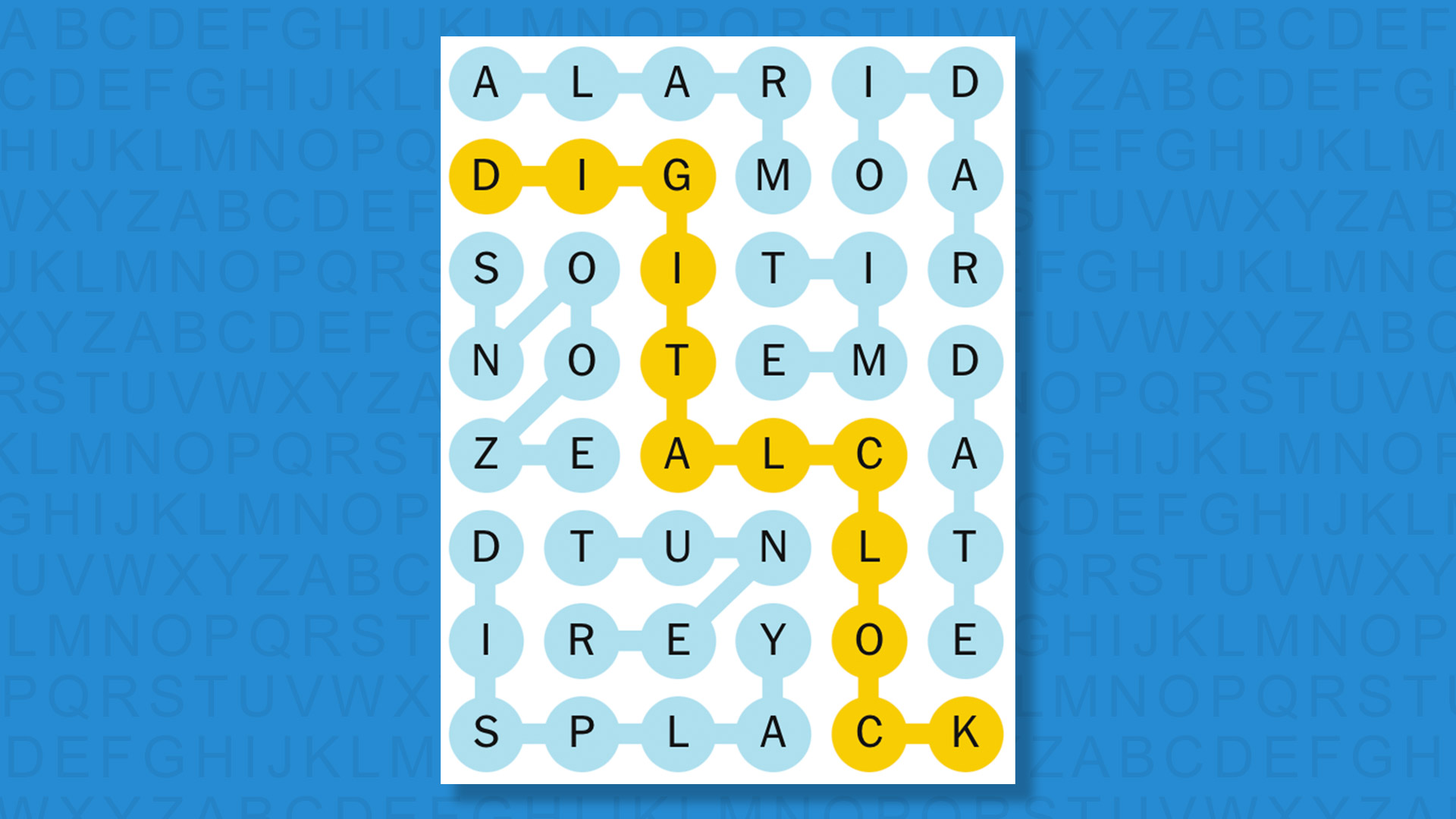
NYT Strands today (game #793) – the answers
(Image credit: New York Times)
The answers to today’s Strands, game #793, are…
ALARM
SNOOZE
TIME
RADIO
DATE
DISPLAY
TUNER
SPANGRAM: DIGITALCLOCK
My rating: Easy
My score: Perfect
Does anyone still use a DIGITALCLOCK? I know they do in TV shows and movies — especially when the storyline needs to indicate the drudgery of the daily grind. But in real life?
Sign up for breaking news, reviews, opinion, top tech deals, and more.
My memory was instantly jogged by today’s search, back to simpler times and this piece of tech’s most-used feature: the SNOOZE button.
Today, I use my phone as an alarm clock and set three alarms to nag me awake. The first is the ideal waking time if I was a properly functioning adult, the second is the “you need to wake up now” alarm, and the third is the “if you have not cancelled this alarm you are going to be late” alarm.
Advertisement
Yesterday’s NYT Strands answers (Monday, May 4, game #792)
CEDAR
ASPEN
DOGWOOD
BIRCH
CYPRESS
EUCALYPTUS
SPANGRAM: BRANCHOUT
What is NYT Strands?
Strands is the NYT’s not-so-new-any-more word game, following Wordle and Connections. It’s now a fully fledged member of the NYT’s games stable that has been running for a year and which can be played on the NYT Games site on desktop or mobile.
I’ve got a full guide to how to play NYT Strands, complete with tips for solving it, so check that out if you’re struggling to beat it each day.
When life gives you lemons, you make lemonade. What if life gives you a pile of old e-book readers? Well, when [spiritplumber] got box of old Nook Simple Touch devices, he decided to design solar-powered cases to help boost the old batteries. It makes perfect sense to us: sunlight readable screen, sunlight chargeable battery.
It looks like he’s got a pair of panels built into the 3D printed case. He recommends using any TP4056-based charger, and tying into the battery test points, not the 5 V supply. It won’t hurt anything if you do, apparently, but the device will think it’s plugged in an refuse to turn off the WiFi. That’s no big deal when you’ve got a continental power grid on the other end of the cable, but charging from a small panel on the back of the case doesn’t always give you enough juice to waste on unneeded radio activity. Especially indoors — these panels are apparently big enough to trickle-charge the device under artificial light, which is a nice, if doubtless slow feature.
The design is open source, and includes SketchUp design files as well as the exported .STL, so if you’ve got a hankering to edit this to fit a different e-book reader, you can. He also provides a handy-dandy guide to root this model of Nook, and if you’re on Hackaday we probably don’t need to explain why you might want to.
Advertisement
We’ve seen the Nook Simple Touch go some interesting places — like into the clouds as a glider computer — but solar power is a new hack for this device, at least on this site. We don’t know if [spiritplumber] has a green thumb, but he’s evidently got some environmental bones in his body: his last featured project was about improving quadcopter efficiency with a wing and a prayer.
American Express (Amex) is building a system that lets AI agents shop and pay on behalf of users — but right now it’s only within its own payment network, and still involves a black box that could hinder trust and auditability.
Amex already participates in agentic commerce protocol projects, especially Google’s Agent Pay Protocol (AP2), which focuses on interoperability. Amex’s Agentic Commerce Experiences (ACE) developer kit, on the other hand, touches on something most protocols currently lack: Full transaction control in the payment layer.
But it still isn’t completely transparent in how it handles validation. ACE uses a closed-loop system — serving as both the card issuer and the payment network — to validate agent-led transactions.
Luke Gebb, Amex’s EVP and global head of innovation, told VentureBeat that the company believes this model is the missing piece in agentic commerce.
Advertisement
“Some of what is missing so far is the perspective of a company like ours: We feel that trust and security are critical to advancing this space,” Gebb said. “This is really the first time that an issuer is coming to the table.”
Amex sits in that interesting space: Unlike other financial institutions or card providers like Chase or Bank of America, Amex can route transactions through its American Express Network. Visa and Mastercard are two of the most well-known payment networks, but these companies don’t issue cards themselves and must work with a bank.
The continued black box of agentic commerce
The ACE kit is just one approach to addressing some of agentic commerce’s biggest problems: trust, control, accountability, validation, and security.
Consumers generally don’t want rogue agents to run away with their bank accounts and start buying things. Merchants don’t want to be stuck with unpaid items. Banks don’t want to deal with an influx of chargebacks and the potential for fraud.
Advertisement
Projects like the ACE kit aim to build trust and accountability by verifying an agent’s identity and goals. This can build the trust agentic commerce desperately needs.
Amex claims it offers validation, too, although the process behind that is unclear. It is abstracting how it performs validation, even though it explains at which layer it does it. More traditional systems feature a mix of deterministic checks and a flexible, semantic evaluation that helps match intent and outcome for validation. Amex said agents built with ACE can submit user shopping carts and check them against the agent’s original intent. However, they did not disclose how this works.
Practitioners building to the agentic commerce ecosystem lament that, despite strides in creating a trust layer, many black boxes remain that could hinder widespread adoption.
Raj Ananthanpillai, founder and CEO of identity and verification system provider Trua, told VentureBeat that payment protocols and software kits like Agentic Commerce Suite from Stripe, Google’s Verifiable Intent proof chain, and the ACE developer kit “excel at handling proofs, verifiable authorizations and the mechanics of fund movement, but leave upstream human validation opaque and underdeveloped.”
Advertisement
Ananthanpillai continued: “Without a clear, high-assurance cryptographic link proving that an agent is acting under the explicit authority of a verified human owner, merchants, issuers, and networks face heightened risks of repudiation, massive chargebacks, sanctioned people conducting financial transactions, and fraud.”
The ACE kit
The ACE developer kit solves several running issues with agentic commerce, Gebb said, and gives developers access to integrated services:
Agent registration
Account enablement
Intent intelligence
Payment credentials
Cart context
First, it deals with agent registration, establishing identity and trust with both the consumer and company agents. When a transaction begins, the agent acting on behalf of the customer and the merchant’s agent can verify each other’s identities and trust that they are dealing with the correct entity.
Next comes account enablement, which links the user’s Amex account to their agent and grants the agent permission to act, or, in the case of agentic commerce, buy something.
Advertisement
Intent intelligence creates what Amex calls an intent contract, where the user defines what they want the agent to do. Once the intent is defined, the ACE system generates an Intent ID and a Proof of Intent Token that definitively proves authorization in the event of a dispute.
Amex handles the actual transaction part, where the user pays for the product through a single-use token. ACE establishes payment credentials used for the transaction, bound to intent and constraints.
“Once the agent has found the item that the customer has asked for, like red shoes, they’ll make a call for the payment credentials, which is a token that has the boundaries that the card member has provided,” Gebb said. “So, for instance, if they said they only wanted to spend $500, that token won’t allow for a purchase of $600 because it has controls built in.”
The last piece is cart context and validation, which Gebb said helps banks and brands compare a user’s cart that their agent submitted to their intent.
Advertisement
Amex’s approach shows that for agentic commerce to really soar, providers must understand what systems will allow agents to do and who is ultimately accountable if something goes wrong.
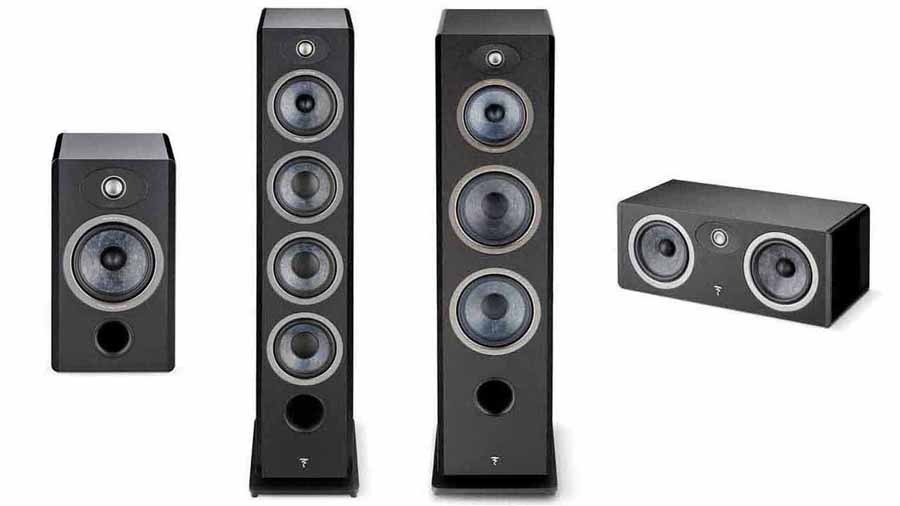
Focal’s Omada speaker line just became a lot more interesting for anyone building a serious stereo or home theater system at a more attainable price. Four models in the series are now on sale for up to 35% off, with the promotion running through June 21, 2026, while supplies last. That last part matters. The best speaker deals rarely hang around long enough for endless spreadsheet therapy.
What Are Focal Omada Speakers?
Focal’s Omada series is an exclusive loudspeaker line for ProSource members that has been available since November 2025. The lineup sits between Focal’s Theva and Vestia series, giving buyers a mid tier option for both two channel listening and home theater systems without jumping into the brand’s more expensive models.
What’s on Sale?
Omada N1 (Bookshelf Speaker) – $1,399$898/pair at Crutchfield or Amazon (save $500)
Omada N3 (Floorstanding Speaker) – $3,798$2,598/pair at Crutchfield or Amazon (save $1,200)
Omada N4 (Floorstanding Speaker) – $4,598$2,998/pair at Crutchfield or Amazon (save $1,600)
Omada Center (Center Channel Speaker) – $699$499 at Crutchfield or Amazon (save $200)
Focal Omada Core Features:
The Omada series uses Focal’s TAM tweeter and Slatefiber cone technology, both of which first appeared higher up in the company’s lineup. That matters because Omada is not just a pretty cabinet with a familiar badge on the front. The goal is to deliver natural, detailed sound for both two channel listening and home theater systems, using proven Focal driver technology without pushing buyers into the brand’s more expensive loudspeakers.
Design: Omada speakers come in a high gloss black finish with a subtly curved front baffle and a leather like texture on the front panel. It gives the line a cleaner, more refined look without turning the room into a hi-fi showroom crime scene. The finish, cabinet shape, and front panel detail should help the speakers fit into a wide range of rooms, which matters if the system has to share space with actual furniture and people.
TAM Tweeter: Focal’s M-shaped dome TAM tweeter is designed to deliver clean, controlled treble with wide dispersion and low distortion. Originally developed for Focal’s car audio products and later adapted for home loudspeakers, it gives the Omada series a proven high frequency platform that fits neatly into Focal’s broader loudspeaker ecosystem.
Advertisement
Slatefiber Cone: The Omada series also uses Focal’s Slatefiber cone technology, first introduced in the Chora line in 2019. Made from recycled carbon fibers, Slatefiber was developed to deliver a useful mix of rigidity, damping, and tonal balance. Focal has continued to refine the material since its debut, and it has since appeared across other parts of the catalog, including Alpha Evo studio monitors and Slatefiber automotive kits.
Bass Reflex: Every Omada model uses a bass reflex design to improve low frequency extension and output. The N1, N3, and N4 feature a front firing port, while the Center speaker uses two smaller rear ports. The port directs air pressure generated inside the cabinet into the room, reinforcing bass response without requiring more amplifier power. The result is fuller, more impactful low end while helping the Omada lineup maintain useful efficiency across the range.
10 1/8 x 14 3/4 x 44 1/8 in . 25.6 x 37.5 x 112.2 cm
12 x 16 7/8 x 44 3/8 in
30.4 x 43 x 112.6 cm
21 1/8 x 10 1/4 x 8 1/2 in
Advertisement
53.7 x 25.9 x 21.6 cm
Net weight (with grille)
15.4 lbs (7 kg)
58.4 lbs (26.5 kg)
69.45 lbs (31.5 kg
22 lbs (10 kg)
The Bottom Line
The Focal Omada series is for listeners who want proven Focal driver technology, clean styling, and a practical speaker lineup for both music and movies without paying for features they may not need. With the TAM tweeter, Slatefiber cones, and a focused range of models, Omada makes the most sense for buyers building a solid two channel or home theater system who want Focal performance at a more accessible price.
Sale Pricing
The Focal Omada Speaker sale runs through June 21, 2026.
Omada N1 (Bookshelf Speaker) – $1,399 $898/pair at Crutchfield or Amazon (save $500)
Omada N3 (Floorstanding Speaker) – $3,798 $2,598/pair at Crutchfield or Amazon (save $1,200)
Omada N4 (Floorstanding Speaker) – $4,598 $2,998/pair at Crutchfield or Amazon (save $1,600)
Omada Center (Center Channel Speaker) – $699 $499 at Crutchfield or Amazon (save $200)
To round out an Omada system, the speakers can be combined with the SUB 600P subwoofer for deeper and encompassing bass for $1,399 at Amazon. Meanwhile, the speaker stands for the N1, which is available for $269/pair at Crutchfield.
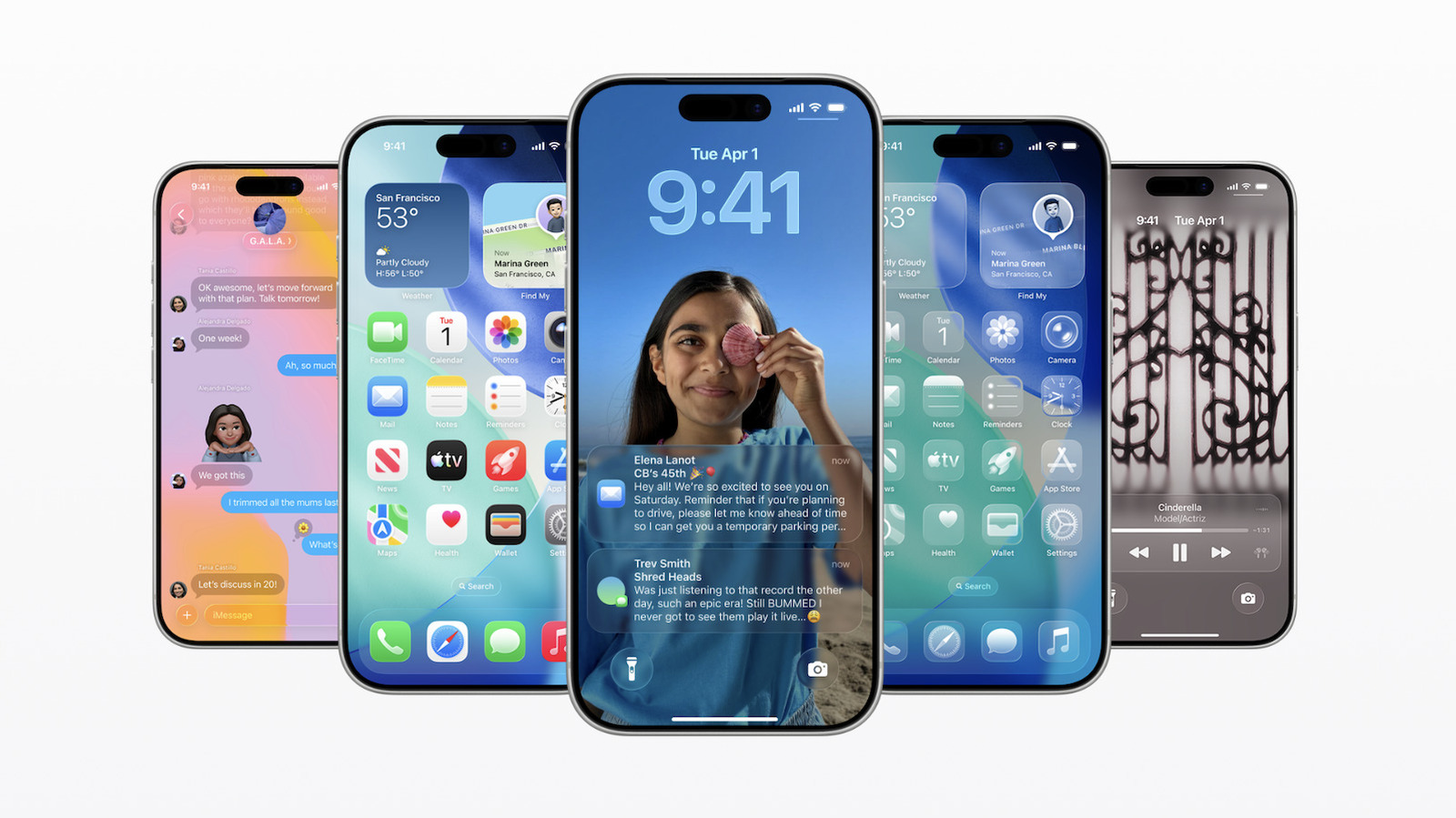
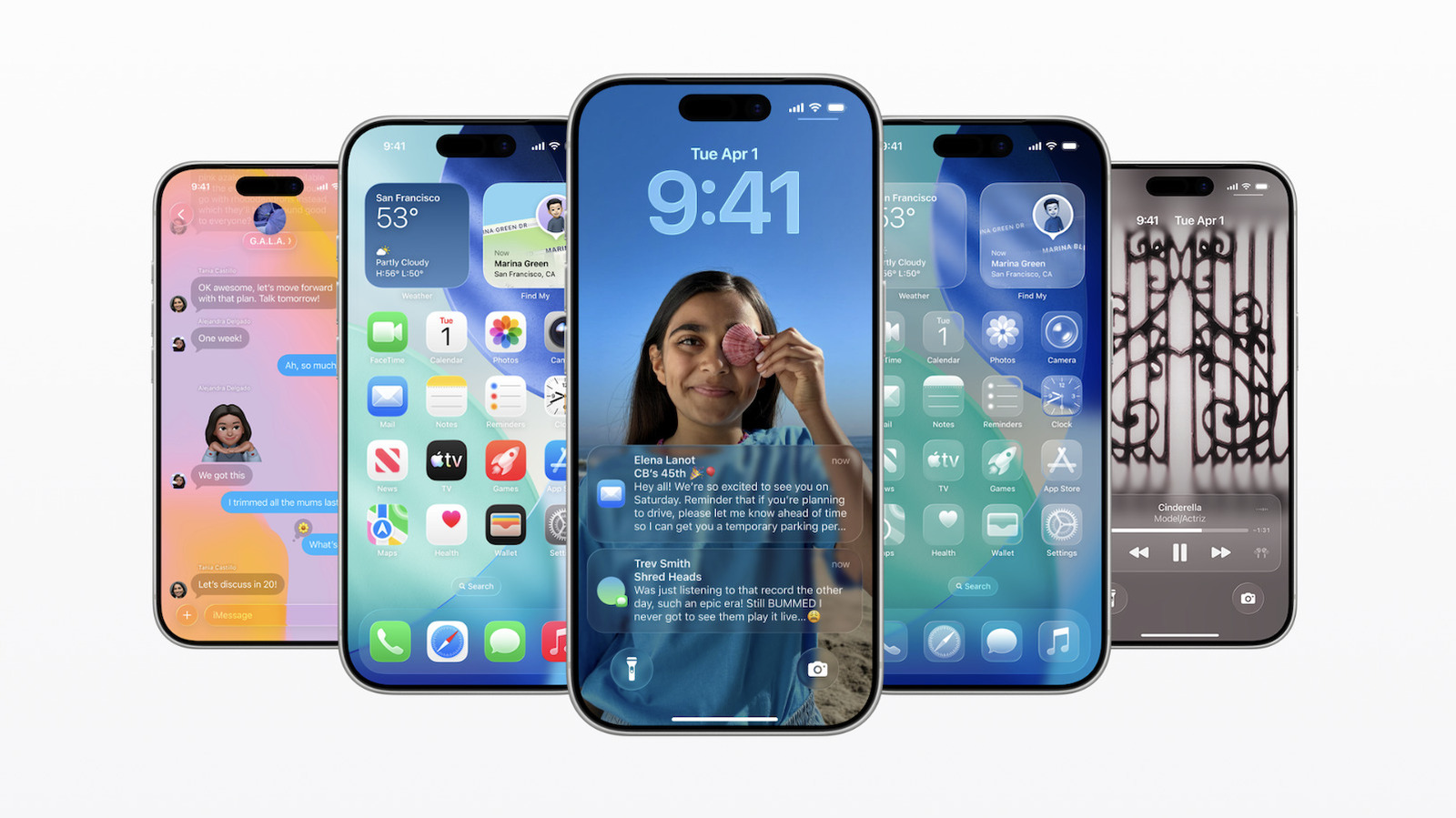
The latest test version of iOS 26.5 includes a changelog about bringing some new protections to texts. The smartphone operating system will be rolling out end-to-end encryption for RCS messages between Apple and Android devices. “End-to-end encrypted RCS messaging (beta) in Messages is available with supported carriers and will roll out over time,” is Apple’s official wording about the addition. The setting will be on by default, but Apple device owners can confirm it in Settings under the RCS Messaging menu of the Messages section once they are running iOS 26.5.
According to 9to5Google, a lock icon will appear in an iPhone user’s Messages app when chats to an Android device are taking advantage of the encryption. On the Android side, the Google Messages chats to iOS devices will look the same way they do when messaging another user (or users) with encrypted RCS.
Advertisement
Apple added the option for RCS messaging as part of iOS 18. The GSM Association, which operates the RCS protocol, added support for E2EE between the operating systems last year. At the time, Apple said it would bring the added security layer “in future software updates” that seem to have finally arrived. The tech company began testing this tech back in February as part of iOS 26.4, although Apple specified that it did not plan to officially roll out the encryption feature with that launch. More protections to keep communications private is pretty much always a good thing to see, so that’s a welcome addition to what might otherwise be a more incremental iOS 26.5 update.



























































You must be logged in to post a comment Login