Tech
Samsung Spent a Decade Fighting OLED With QLED: Now It May Be Moving On?

Samsung spent the better part of a decade convincing TV buyers that QLED was the premium LCD alternative to OLED. According to a new report from South Korea, that strategy may now be heading for a rather abrupt rewrite.
ETNews reports that Samsung Electronics has cut production of quantum dot LCD TVs from roughly 10 million units in 2025 to between 2 million and 3 million in 2026, a reduction of as much as 80%. The publication also reports that Samsung plans to reduce Neo QLED output further in 2027, with one industry source claiming production could fall to roughly half of this year’s level before potentially ending as early as 2028. Samsung has not announced the end of QLED or Neo QLED, so that timeline should be treated as an industry report rather than a confirmed product roadmap.
Related Reading:

Samsung’s QLED Retreat Is Already Visible
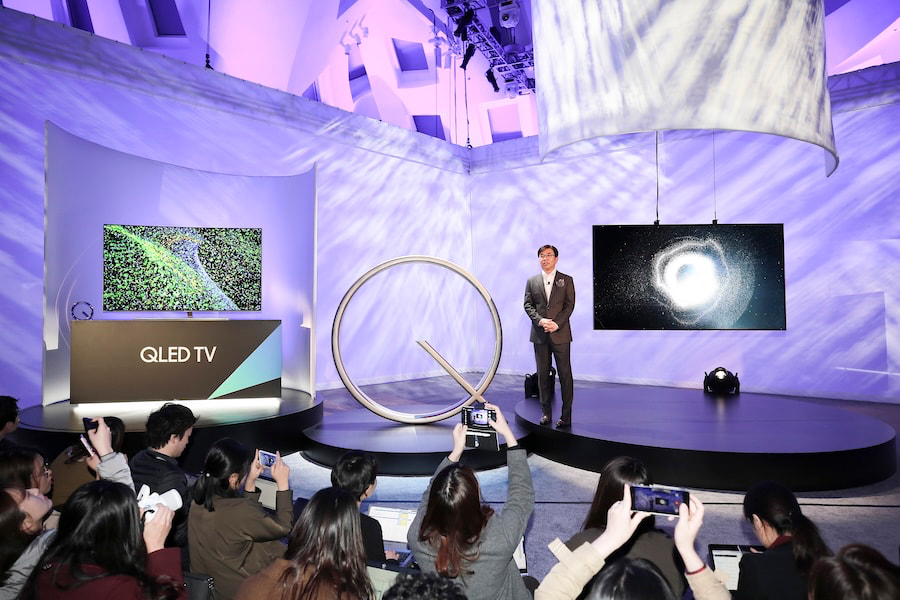
Samsung introduced the QLED name in 2017 with its Q9, Q8 and Q7 series, positioning quantum dot enhanced LCD as its premium display platform and a direct technological counterweight to OLED. QLED did not mean that quantum dots created the image themselves; these were LCD televisions using quantum dots to improve color reproduction.
Neo QLED arrived later, combining quantum dots with Mini LED backlighting. For years, that combination occupied a large portion of Samsung’s premium LCD lineup, but the 2026 range already tells a different story.
Samsung now sells the M70H, M80H and M90H as Mini LED TVs, while the QN70H and QN80H remain under the Neo QLED banner. Its current U.S. lineup prices the 65 inch M80H at $799.99, compared with $1,599.99 for the 65-inch QN80H, illustrating how much space Samsung has created between conventional Mini LED and its remaining Neo QLED models.
ETNews reports that Samsung replaced its entry QLED tier with Mini LED models that do not use quantum dot film and attributes the strategy in part to aggressive pricing from Chinese manufacturers. Quantum dot LCD becomes a much weaker premium differentiator when TCL, Hisense and others can sell similarly labeled televisions for substantially less.
![Quest For Perfect Color [Teaser]│Samsung at CES 2026](https://i.ytimg.com/vi/gjPwHRKva6k/hqdefault.jpg)
Micro RGB Changes the Equation
Samsung is not walking away from LCD. It is changing what sits at the top of the LCD food chain, and Micro RGB is increasingly looking like the technology it wants consumers to notice.
The company has expanded Micro RGB from the original 115 inch model into a 2026 range spanning 55, 65, 75, 85, 100 and 115 inches. Instead of relying on a conventional blue or white backlight combined with quantum dots, Samsung’s Micro RGB system uses tiny red, green and blue LEDs behind an LCD panel.
We have already measured the technology. In our testing of the Samsung R95H Micro RGB, it covered 92% of the BT.2020 color gamut in Filmmaker Mode, compared with 76.5% for Samsung’s QN90F Mini LED TV. The R95H also reached 1,541 nits on a 10% HDR window in Filmmaker Mode.
Micro RGB is still an LCD technology, so it does not suddenly acquire OLED’s self emissive pixels or perfect black capability. Its wider color gamut and strong brightness, however, give Samsung a far more obvious technology to position at the top of its LCD range than another variation on the QLED formula.

And Then There Is OLED
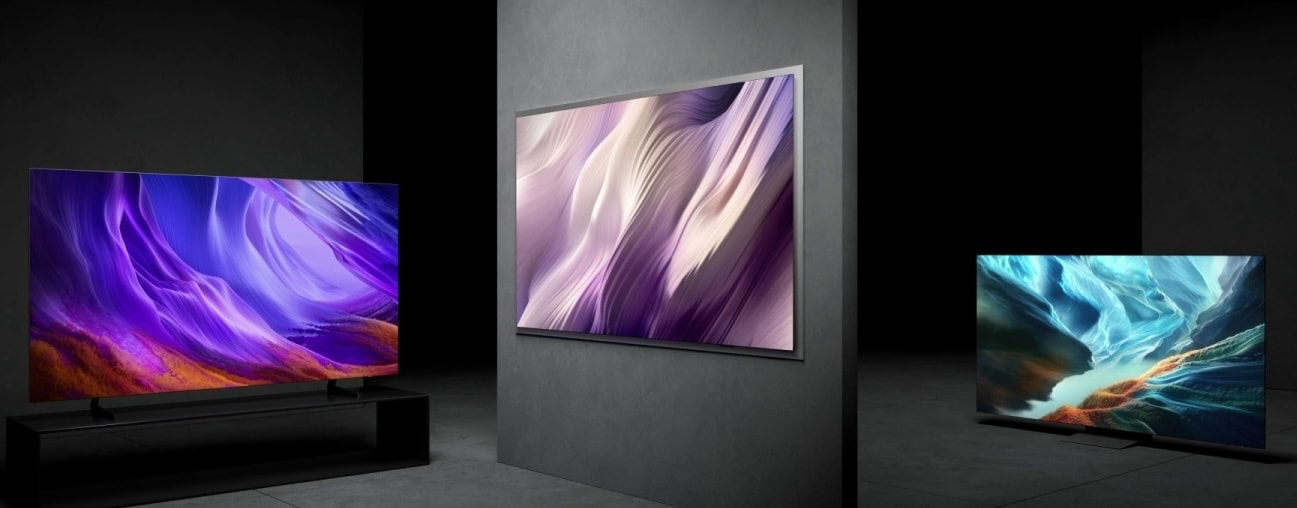
The irony is rather difficult to miss. Samsung spent years positioning QLED as the answer to OLED, yet its 2026 premium lineup now includes the S85H, S90H and S95H OLED TVs, with Samsung using both QD-OLED and WOLED panels depending on model and screen size. Guess OLED isn’t dead after all.
That does not mean Samsung is abandoning quantum dots entirely. The production cuts reported by ETNews concern quantum dot enhanced LCD televisions. Samsung Display’s QD-OLED panels also use quantum dots, but within a fundamentally different display architecture. Saying Samsung is “getting out of quantum dots” would therefore be inaccurate.
The more interesting development is that Samsung no longer appears to need QLED as its primary weapon against OLED. It sells OLED itself, while Micro RGB gives the company a new premium LCD story for customers who want higher brightness, very wide color reproduction and increasingly large screen sizes.
Why This Matters
For consumers, this is more than Samsung rearranging letters on a box. QLED became one of the most recognizable labels in the television market, but it also became so widely used that the name stopped telling shoppers very much about how a TV would actually perform.
Two televisions can both contain quantum dots while delivering dramatically different brightness, local dimming, processing, contrast and HDR performance. Samsung’s evolving lineup suggests the company may see more value in differentiating its TVs by the actual backlight and display architecture rather than continuing to stretch QLED across multiple price categories.
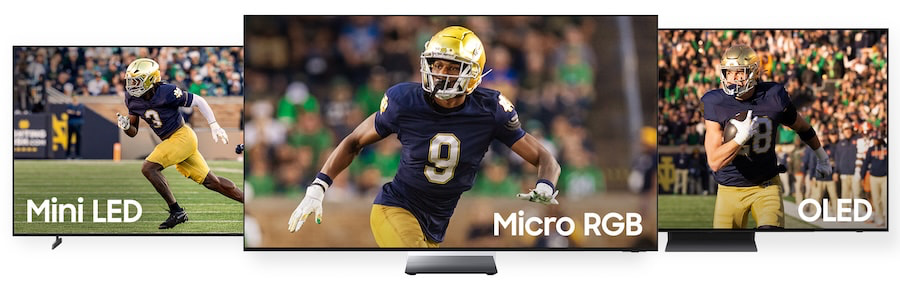
The emerging hierarchy is fairly easy to understand. Conventional Mini LED can attack aggressive price points, Micro RGB can carry the premium LCD banner, and OLED can serve buyers who prioritize black levels, viewing angles and pixel level light control.

The Bottom Line
Samsung is not shutting down QLED tomorrow, and Neo QLED remains part of its 2026 lineup. But a reported 80% reduction in quantum dot LCD production is hardly a minor inventory adjustment when Samsung has already inserted conventional Mini LED beneath Neo QLED and Micro RGB above it.
If ETNews is correct about the 2028 timeline, QLED will have gone from Samsung’s great OLED challenger to a technology the company largely outgrew in little more than a decade. OLED survived the assault, LCD survived as well, and the real casualty may simply be the idea that adding a Q to the box was enough to make one LCD TV special.
You must be logged in to post a comment Login