

Tech
Samsung’s Affordable 27” Odyssey OLED G5 (G50SF) Gaming Monitor Bet Pays Off Handsomely

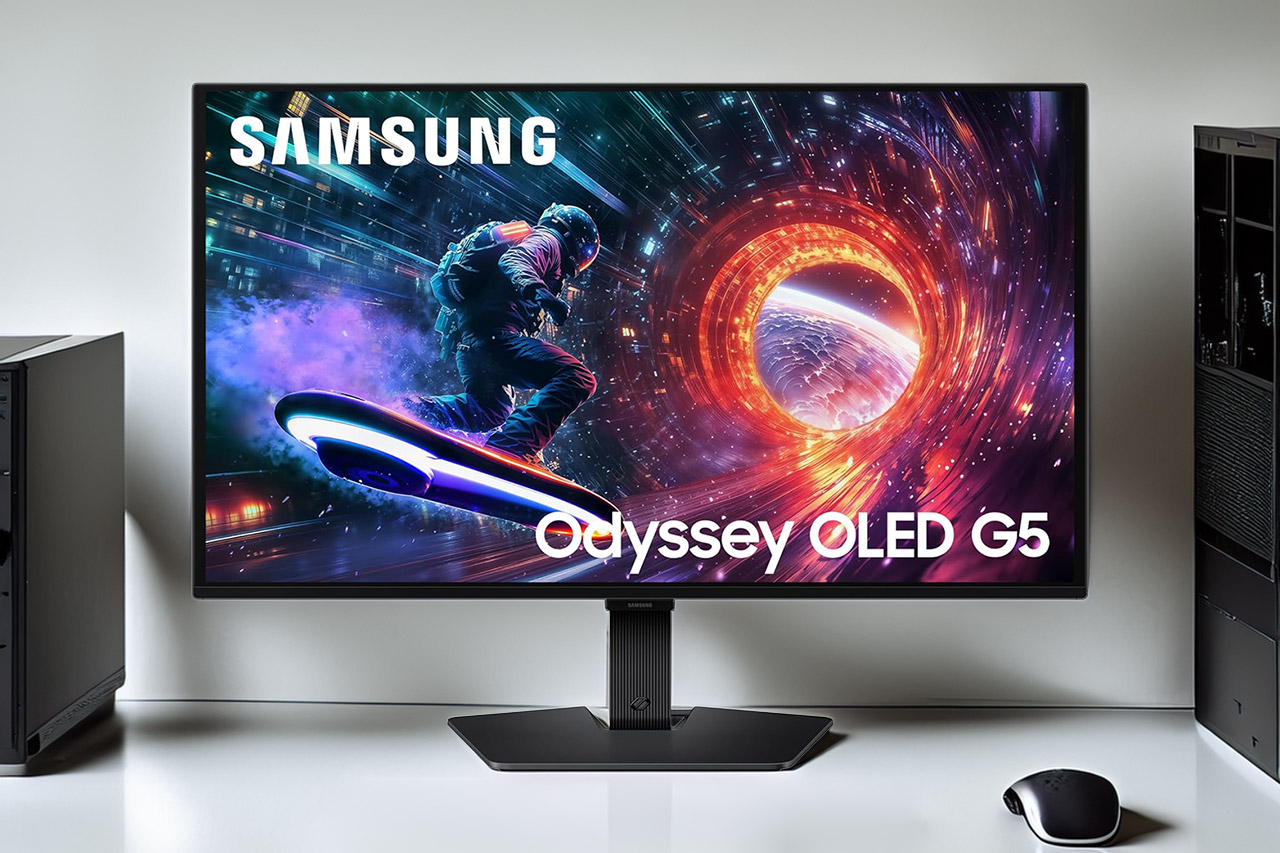
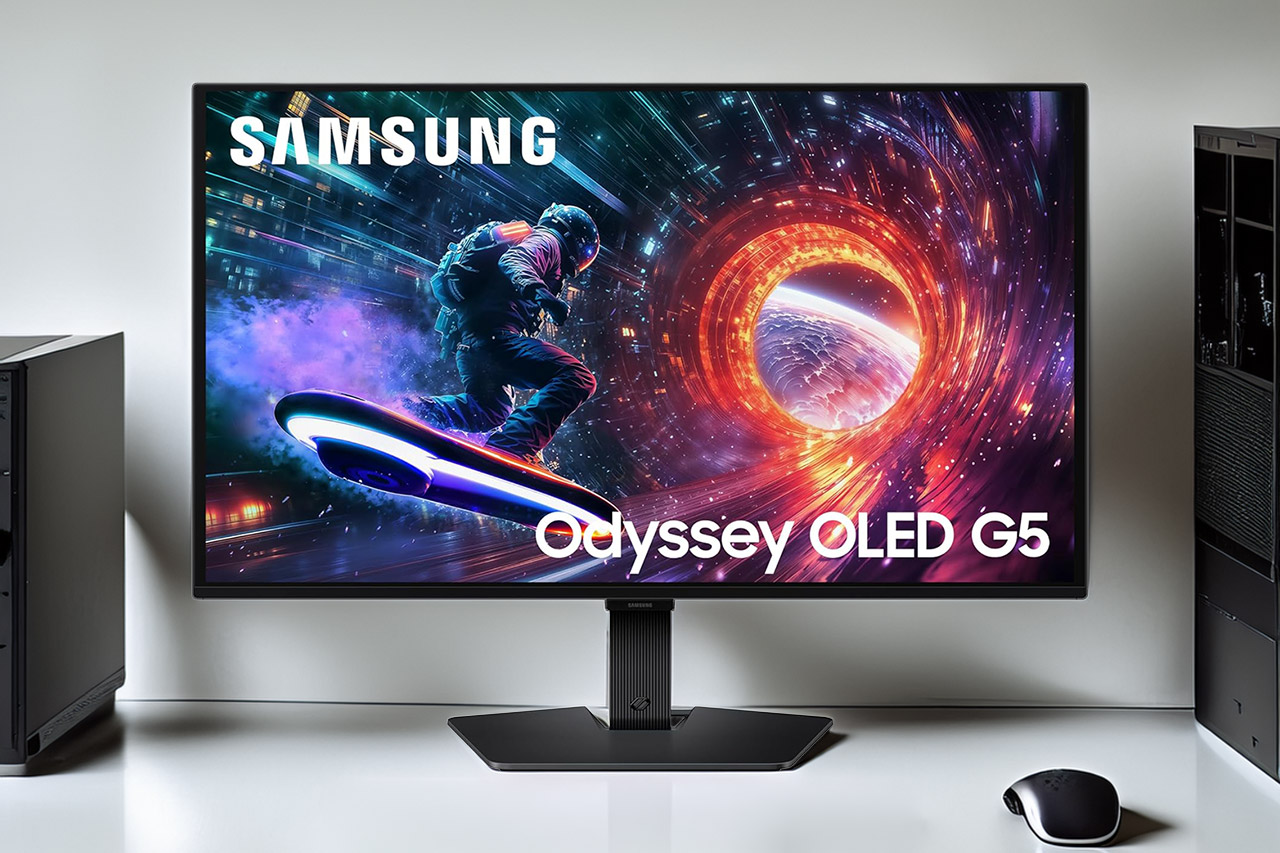
Samsung quietly slipped a 27-inch QD-OLED gaming monitor onto the market at a much lower price than anyone expected. The Odyssey OLED G5, that’s the G50SF model, comes in with a 2560×1440 resolution and a 180Hz refresh rate, a 0.03 millisecond response time, gray to grey, being the icing on the cake. It’s currently selling for around $350, which is significantly cheaper than the original asking price of close to $550.
QD-OLED technology combines quantum dots and organic LEDs to provide per-pixel lighting. The end product is true black. In other words, the individual pixels just turn off, resulting in a contrast ratio of millions to one. The colors also provide a lot of bang for their buck, with a wide gamut and 99 percent DCI-P3 coverage in tests, and Pantone even approves the panel for accurately reproducing more than 2100 colors and skin tones. In addition, HDR10 support is incorporated, which adds depth to highlights and shadows without relying on local dimming zones, as other display types do.
The monitor’s motion performance definitely punches above its weight, as the 180Hz limit via DisplayPort keeps frames flowing smoothly in fast-paced games, and the super-fast response time effectively eliminates ghosting when making quick turns or performing frenzied action scenes. It also receives a thumbs up from NVIDIA and AMD for G-Sync and FreeSync compatibility, which means tearing and stutter are eliminated, but if you’re confined to HDMI, it still max out at 144Hz, which is still quite decent for consoles or secondary setups.

Despite the fact that OLED screens can be prone to long-term issues, Samsung has made steps to limit those concerns. A thermal modulation system adjusts the brightness dynamically to help manage heat, and logo and taskbar detection activates to automatically dim static elements. If the monitor has been idle for ten minutes, a screen saver activates to prevent screen burn-in, which is a big deal for anyone concerned about permanent image retention. As an added benefit, the three-year guarantee specifically covers burn-in if you use it normally.

Another thing to note is that the Glare Free coating effectively reduces reflections when compared to a regular anti-glare film. This means it’s much easier to operate the monitor even if it’s illuminated from above or by a nearby window. The matte finish does a fantastic job of keeping clarity, although it sacrifices some perceived sharpness in exchange for the ability to use the monitor in brighter settings.


On a warm fall afternoon at Walt Disney Studios in Burbank, California, a gentle breeze blows through the meticulously landscaped trees lining the walkways. A ray of sunshine hits the famed Team Disney building, where 19-foot-tall stone carvings of the seven dwarfs of Snow White fame hold up the roof.
The renowned sculptural architecture is a nod to the film that helped build the Disney empire. And just across the lot, inside Disney’s Main Street Cinema, the entertainment giant is exploring ways to preserve that legacy with the help of technology, such as artificial intelligence. Four startups are gathered in the theater to present their technology to a crowd of executives and media attendees. One startup, Animaj, is demonstrating how it uses AI to accelerate the animating process.
Brightly colored, blobby figures prance and bound across a wide screen in front of me, characters from a children’s YouTube series called Pocoyo. Animaj — selected by Disney as one of its 2025 cohort of startups to finance, platform and mentor via the Disney Accelerator Program — is now using human artists and AI to produce these shorts, allowing it to bring the series to screens quickly.
“Thanks to this tool, it takes less than five weeks to produce a 5-minute-long episode, whereas it used to take five months,” Animaj CEO and co-founder Sixte de Vauplane tells me, speaking in front of the company’s demo space after the presentation.
That dramatic acceleration of a traditionally painstaking process flows directly from the rapid advances in generative AI in the past several years, and those advances aren’t just for professionals: AI-powered video-generating tools surged into the mainstream in 2025. Google’s Veo 3 and OpenAI’s Sora 2 now allow anyone to create a cartoon animation from the comfort of their phone, without any sketching experience or even artistic inclination required. The use of generative AI is something that Hollywood is fighting to keep at bay, lest it take jobs away from human artists.
But Animaj says that its technology doesn’t replace animators. It simply makes their jobs less tedious. An animator will still be sketching out each of the main poses, and then AI will be used to fill in all the in-between movements of the character that move them from A to Z. And even then, the company says, an animator is in control of tweaking those AI-generated movements.
It’s an interesting perspective when I think about the building right across from me, which houses hundreds of Disney animators. Will they see AI the same way? Disney confirmed it will soon introduce its partnership with Animaj, with the two companies in discussions around how to potentially use this AI system in animation across Disney Branded Television and Disney Television Studios.
“The plan is to announce something in the coming months,” says David Min, vice president of Disney Innovation.
Keeping artists centered with AI tools
Hand sketches become instant 3D animations.
Animators will control the AI feature as another part of their digital toolkit, according to de Vauplane. The storyboarding process will remain the same as it is with more traditional computer-generated imagery, he says. The AI tool will just “bring the idea to life much faster.”
“The artist is in control. For us, it’s super important because we know that AI can be seen as a threat for the artist,” de Vauplane says. “We want to show that there is another way to use AI in a very ethical way.”
I reached out to the Animation Guild for comment and am still awaiting a response. But late last year, after four months of bargaining, the union representing animators was unable to include many AI safety provisions in its contract. They would not be able to avoid using AI tools if required by a job, for instance, or to opt out of having their work used to train those AI tools.
But artistic expression has a long history of evolving with technology.
Animators moved on from watercolor hand sketches — used to animate Snow White and the Seven Dwarfs and Sleeping Beauty in the 1930s and 1950s, respectively — to CGI for movies like The Little Mermaid and Aladdin in the 1980s and 1990s. It transitioned into 3D CGI with the release of Tangled and Frozen in the 2010s. Each technological innovation has sped up the animation process. So is AI simply another tool in the modern CGI toolkit, especially if it preserves the key elements of an animator’s workflow?
To maintain the “creator-first approach” that centers human artists — a hallmark of last century’s Walt and Roy Disney partnership — Min says that Disney looked into “pretty much all of the AI companies.”
“We looked at thousands of companies, all big and small, and what Animaj does well is that the artist is really driving the process,” he says, adding that you don’t really see this in video-generating AI apps like Sora and Veo, which read your text prompts and spit out (usually nonsensical) videos. “This is the artist drawing the key frames from A to Z, and then allowing things to be filled in in between. That’s why we selected Animaj.”
Expediting the animation process
The “motion in-betweening” feature from Animaj lets artists input main character positions, with the AI model filling in the blanks of what gets the character from standing to sitting position.
Animaj’s AI tool is used to expedite the animation process. Trained only on images from the show in question, and working within the parameters of an animator’s real-time sketches, the AI tool predicts the character’s next moves — and the animator corrects it when it goes awry. This can save a lot of time: hours, weeks, months, depending on the type of animation and show being worked on.
Min says it takes much longer to make an animated series than many people understand.
“It can be like a year before you can even get a pilot of something to test out. With Animaj, they can do it in 30% of the time,” Min says. We’re standing in front of Disney’s Stage 1 building, amid a throng of Disney cast members, startup reps and other tech execs and enthusiasts. “The future of animation is a big, broad statement, but definitely this is where the future of animation is going and trending.”
Like so many media companies in the age of streaming, Disney needs to produce high-quality content at a faster rate to keep up with audience demand. Animaj also uses AI to collect data to understand what themes are trending or resonating with online audiences, and then animate episodes quickly to meet those interests while they’re current and popular.
Because its animation process moves so rapidly, Min says, Animaj can also test new ideas much faster.
“Not only do they have the content production AI to actually help build the animated shorts faster,” Min says, “but then they’re using AI to also read the analytics on what’s going on with the viewing of the video that can then help inform the storytelling as well.”
How does AI animation work?
Outside, sitting under a tree in the California sunshine, a Pocoyo animator sketches a character on a screen with a 3D model popping up on a screen beside it. I watch as he uses a stylus to make slight adjustments to arm and leg movements generated by the AI.
An animator sketches Pocoyo characters while the AI model instantly generates the sketches into 3D versions.
“Our proprietary animation tool allows the artist, Joe sitting here, to draw a sketch and to control the animation just based on the sketch,” says Antoine Lhermitte, Animaj’s chief technology officer, as we watch the artist work. It’s a big time-saver, he adds.
Blog posts by Animaj detail how it uses AI to bring sketches to animated life, while still retaining the unique art style of an animation. The company used four seasons of Pocoyo to build a database of more than 300,000 poses, using both sketches and their corresponding 3D poses for each character that the AI model could learn from. Artists were also asked to produce more sketches of the characters to be used in the next season.
Artists can input into a 3D pose-modeling program various positions of the character, for instance, standing and then sitting. The AI model would then fill in the blanks of what gets the character from standing to sitting position, something Animaj calls “motion in-betweening.”
Working with the AI model, the artist makes corrections to any of the AI-generated animations, like shifting an arm or a leg to where it should be. The time savings with not having to hand-draw every single pose that comes with a character’s actions means animators can “concentrate more on refining the style and flow of scenes rather than starting from scratch with each new pose,” Animaj says.
As a result, the artists are freed up from repetitive tasks to spend more time on the creative side. At the same time, it’s enabling those artists to use an AI tool that is matched up with their working style, and not one producing text prompt-based AI slop, like all those horrific animations invading YouTube or social media, where the characters’ features change in every frame or have three tails and 17 fingers.
“We know how frustrating it can be when you use third-party AI models and you prompt something, it creates something so different than what you have in mind,” de Vauplane says. “Here, it creates something, generates something you can easily tweak…something which is fully consistent with the brand DNA.”
Preserving that Disney DNA is critical as the entertainment giant seeks to uphold its 100-year legacy while keeping pace with modern technology. As the seven dwarfs sang in the 1937 classic Snow White, which established Disney as an animation powerhouse, “Heigh ho, heigh ho, it’s off to work we go.” For tomorrow’s animators, it’s off to work with the help of AI.

More recently, Iran has been a regular adversary in cyberspace—and while it hasn’t demonstrated quite the acuity of Russia or China, Iran is “good at finding ways to maximize the impact of their capabilities,” says Jeff Greene, the former executive assistant director of cybersecurity at CISA. Iran, in particular, famously was responsible for a series of distributed-denial-of-service attacks on Wall Street institutions that worried financial markets, and its 2012 attack on Saudi Aramco and Qatar’s Rasgas marked some of the earliest destructive infrastructure cyberattacks.
Today, surely, Iran is weighing which of these tools, networks, and operatives it might press into a response—and where, exactly, that response might come. Given its history of terror campaigns and cyberattacks, there’s no reason to think that Iran’s retaliatory options are limited to missiles alone—or even to the Middle East at all.
Which leads to the biggest known unknown of all:
5. How does this end? There’s an apocryphal story about a 1970s conversation between Henry Kissinger and a Chinese leader—it’s told variously as either Mao-Tse Tung or Zhou Enlai. Asked about the legacy of the French revolution, the Chinese leader quipped, “Too soon to tell.” The story almost surely didn’t happen, but it’s useful in speaking to a larger truth particularly in societies as old as the 2,500-year-old Persian empire: History has a long tail.
As much as Trump (and the world) might hope that democracy breaks out in Iran this spring, the CIA’s official assessment in February was that if Khamenei was killed, he would be likely replaced with hardline figures from the Islamic Revolutionary Guard Corps. And indeed, the fact that Iran’s retaliatory strikes against other targets in the Middle East continued throughout Saturday, even after the death of many senior regime officials—including, purportedly, the defense minister—belied the hope that the government was close to collapse.
The post-World War II history of Iran has surely hinged on three moments and its intersections with American foreign policy—the 1953 CIA coup, the 1979 revolution that removed the shah, and now the 2026 US attacks that have killed its supreme leader. In his recent bestselling book King of Kings, on the fall of the shah, longtime foreign correspondent Scott Anderson writes of 1979, “If one were to make a list of that small handful of revolutions that spurred change on a truly global scale in the modern era, that caused a paradigm shift in the way the world works, to the American, French, and Russian Revolutions might be added the Iranian.”
It is hard not to think today that we are living through a moment equally important in ways that we cannot yet fathom or imagine—and that we should be especially wary of any premature celebration or declarations of success given just how far-reaching Iran’s past turmoils have been.
Defense Secretary Pete Hegseth has repeatedly bragged about how he sees the military and Trump administration’s foreign policy as sending a message to America’s adversaries: “F-A-F-O,” playing off the vulgar colloquialism. Now, though, it’s the US doing the “F-A” portion in the skies over Iran—and the long arc of Iran’s history tells us that we’re a long, long way from the “F-O” part where we understand the consequences.
Let us know what you think about this article. Submit a letter to the editor at mail@wired.com.


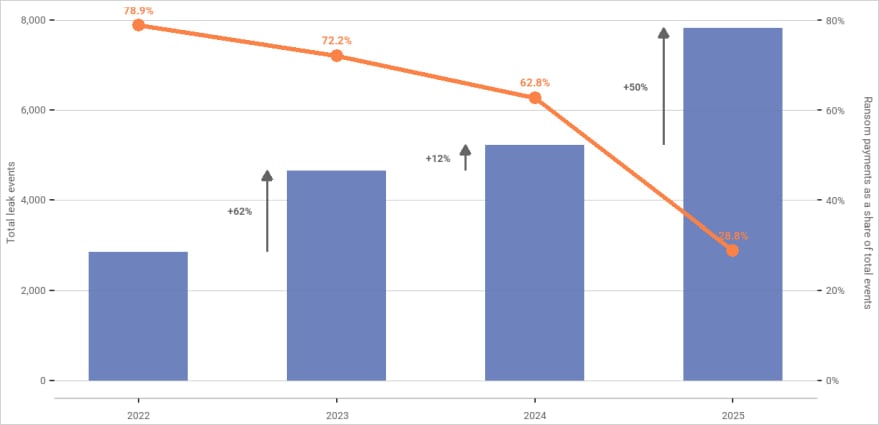
The number of ransomware victims paying threat actors has dropped to 28% last year, an all-time low, despite a significant increase in the number of claimed attacks.
A downward payment trend has been observed for the past four consecutive years by the blockchain intelligence platform Chainalysis.
At the moment, the total of on-chain ransomware payments in 2025 stands at $820 million, but the company notes that “the 2025 total is likely to approach or exceed $900 million as we attribute more events and payments.”
Chainalysis reports a relative stability in the total number of payments, despite a 50% increase of ransomware attacks year-over-year.
In 2024, the payment rate recorded by Chainalysis was more than double, at 62.8%, while in 2022, it was at 78.9%.
Source: Chainalysis
Data from Chainalysis also aligns with previous reports by Coveware, which showed a steady decline in victim payment rates throughout 2025.
According to the blockchain company, some of the factors that influenced the ransomware economy include improved incident response, regulatory scrutiny, international law enforcement actions, and market fragmentation.
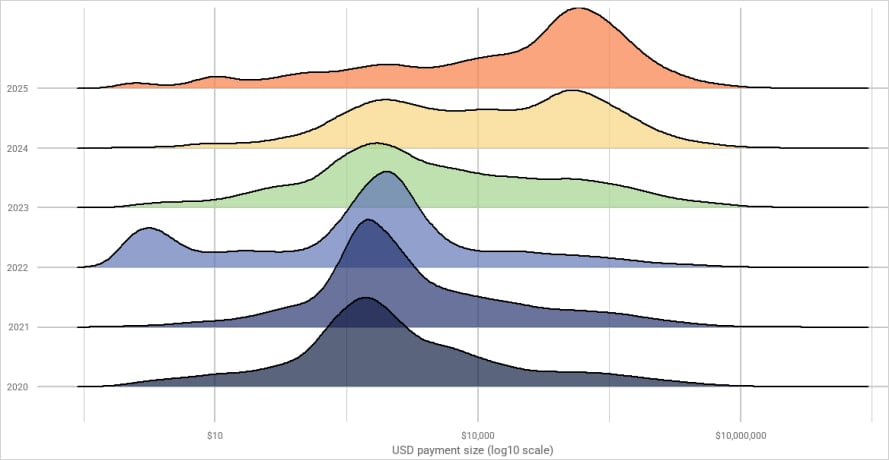
Current Chainalysis data shows that while aggregate revenue from ransomware activity declined, the median ransom payment rose significantly, up 368% from $12,738 in 2024 to $59,556 in 2025.
This indicates that ransomware victims pay larger amounts for the hope that cybercriminals will delete the stolen data and not sell it to other threat actors or trade it.
Source: Chainalysis
In 2025, the analysts observed 85 active extortion groups, far higher compared to previous years, when the ransomware space was dominated by a small number of threat groups and RaaS platforms.
A few high-impact incidents Chainalysis highlights in its report include the attack at Jaguar Land Rover, which inflicted an estimated $2.5 billion in damages, the Marks & Spencer breach by the Scattered Spider threat group, and the DaVita Inc. ransomware breach that exposed 2.7 million patient records.
For another year, the most targeted country was the United States, followed by Canada, Germany, and the U.K., showing threat actors’ preference for concentrating their efforts in developed economies.

Source: Chainalysis
Initial access brokers (IABs), hackers who sell access to compromised endpoints to ransomware operators, reportedly made $14 million in 2025, roughly the same as last year. This is only 1.7% of the total ransomware revenue last year, though initial access is a key enabler.
Analysis shows that spikes in IAB payment inflows are followed by increases in ransomware payments and victim leak posts roughly 30 days later, suggesting IAB activity can act as a leading indicator.
The average price for network access declined from approximately $1,427 in Q1 2023 to just $439 in Q1 2026, indicating that automation, AI-assisted tooling, and oversupply from info-stealer logs have shaped the industry.
Chainalysis says that although ransom payments declined last year, the scale, sophistication, and real-world impact of ransomware attacks continued to grow, impacting organizations of all sizes and backgrounds globally.
The researchers believe ransomware is going through a phase of adaptation, rather than losing the fight, evolving tactics to extract more value from an ever-decreasing number of consenting victims.

Malware is getting smarter. The Red Report 2026 reveals how new threats use math to detect sandboxes and hide in plain sight.
Download our analysis of 1.1 million malicious samples to uncover the top 10 techniques and see if your security stack is blinded.
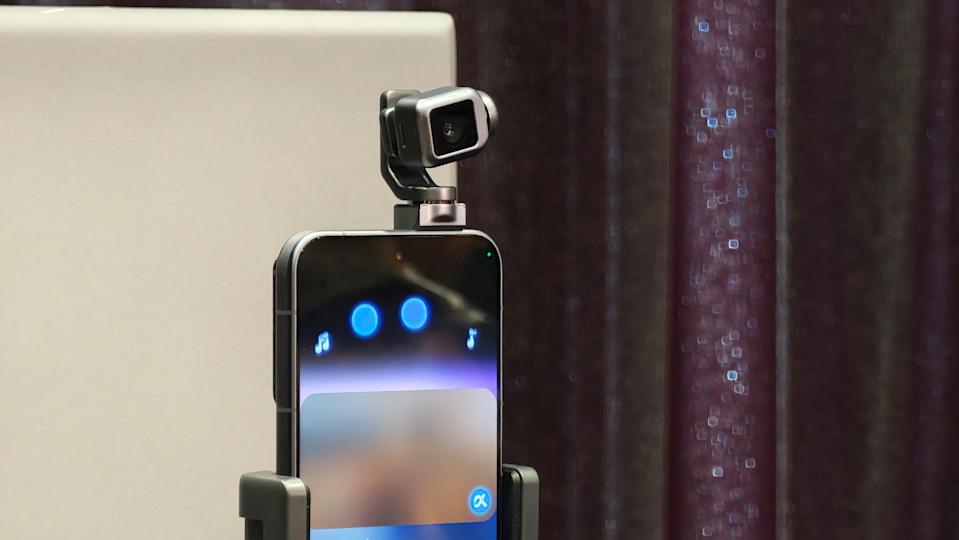
While Honor has already made plenty of product announcements, with tablets, foldables and more, its most interesting device at MWC 2026 is the Robot Phone — and maybe the humanoid robot that came alongside it.
After briefly showing off a model at CES, Honor isn’t quite ready to launch its Robot Phone. However, we got more specs, tech demos and a closer look following the company’s MWC press event in Barcelona. The Robot Phone is currently set to launch later this year.
Image by Mat Smith for Engadget
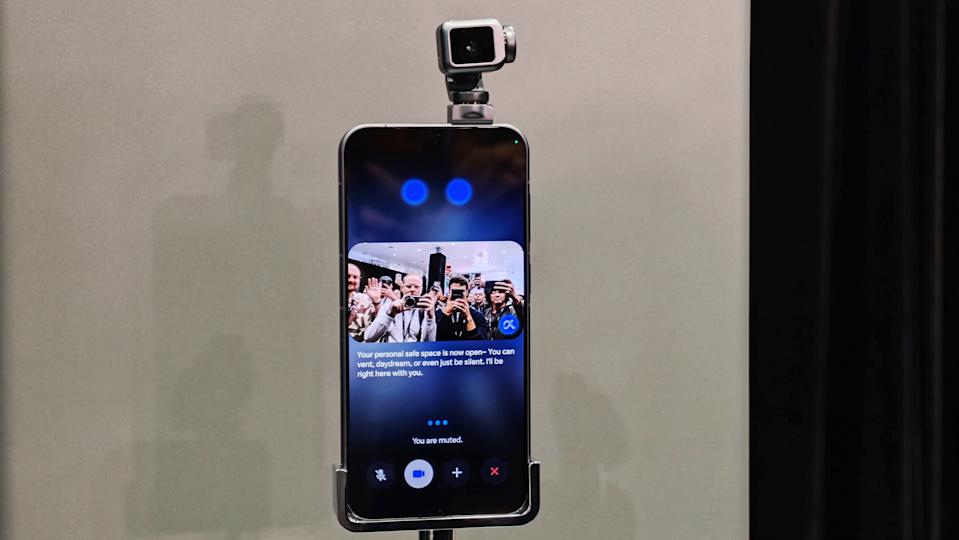
Honor has put a lot of effort into ensuring its camera gimbal is highly mobile, to the point of creating a tiny personal robot that is, dare I say, adorable? The Robot Phone’s pop-up camera can cock its head, shake to say no, nod to agree, and even “flip” – or at least rotate 360 degrees. According to Honor’s presentation, it can even bop along to songs. A spokesperson told me that it’s got five songs in its repertoire, so it’s not clear whether they’re programmed for these kind of demos, or will be a feature of the final retail device.
Another demo here at MWC showed how you could make the Robot Phone “sleep” by covering its gimbal eye, though it’s odd that the camera is still exposed rather than folded away. My main concern with the Robot Phone is the robustness and durability of its robotic mechanisms. We’ve lived through several waves of smartphones that attempted much simpler mechanical camera functions and the threat of dust or heavy-handed users can’t be ignored.
Image by Mat Smith for Engadget
The company says it’s taken what it learned from foldables, regarding high-performance materials and simulation accuracy, and applied it to shrinking the camera module. On stage, Honor CEO James Li revealed what he calls the industry’s smallest micro motor, much smaller than a 1-euro coin and, he added, 70 percent smaller than existing micro motors.
As this component has been reduced substantially, the Robot Phone’s gimbal will be the industry’s smallest 4-degrees-of-freedom gimbal system. That’s a spec – we finally got a spec! It’ll also offer three-axis stabilization in this tiny camera package, with the primary camera using a 200-megapixel sensor.
The fold-away panel that the primary camera tucks into also reveals more typical cameras, so you’re not forced to use the gimbal if you don’t need it. Still, that’s one very thick camera unit:
Image by Mat Smith for Engadget
Honor has already started building out camera modes and features, with a Super Steady Video mode that enhances stability while swinging the Robot Phone around to capture video. AI Object Tracking will apparently intelligently follow subjects, while AI SpinShot supports intelligent 90-degree and 180-degree rotational movement for more cinematic transitions. We’ve seen these sorts of pre-programmed movements and functions in full-size phone gimbals and action cams. If Honor can nail it in such a tiny form, it’ll be impressive.
Other specifications during Honor’s press event were sparse, although the company announced a collaboration with ARRI Image Science to bring its cinematic smarts to the Robot Phone’s gimbal camera.
In a press release, Honor’s Li said the collaboration would bring ARRI’s “cinematic standards and professional workflows” into mobile imaging. It’s apparently the first time elements of ARRI Image Science are being integrated into a consumer device. Dr. Benedikt von Lindeiner, VP at ARRI, said the goal is to bring a true cinematic aesthetic, such as “natural color, gentle highlight roll-off, and a sense of depth,” to shooting with an Honor smartphone.
Image by Mat Smith
Honor also made a humanoid robot companion for its Robot Phone. The bot took to the stage alongside the Robot Phone, danced alongside human dancers, did a backflip and shook hands with CEO James Li. It didn’t say a thing, but fortunately, during some on-the-rails banter between the robot, Robot Phone and Honor’s CEO, the Robot Phone was particularly chatty.
Like the many humanoid robots we’ve reported on and seen in person, Honor hopes to put it to work in both industrial and domestic settings, pitching it as a central part of the company’s multi-million-dollar push into AI. For now, it’s being called Honor Robot.
MWC 2026 officially gets underway on March 2 and will continue through March 5, but the announcements are already coming ahead of its start. We can always count on the annual tech event to bring tons of new phones, laptops and tablets, and we’re expecting to see some robots and other gadgets too — plus plenty of AI news, of course. In addition to the announcements, MWC is our chance to get hands-on time with some of the most interesting new devices, like the Xiaomi 17 Ultra and Honor’s Robot Phone.
Engadget’s Mat Smith is on the ground in Barcelona, and we’ll be updating this story as the week goes on to keep you in the loop on everything that caught our attention. Keep checking back here for the latest MWC news.
Honor
The Robot Phone. (Image by Mat Smith for Engadget)
Honor teased its Robot Phone this past fall and we just finally got a proper look at it at MWC. And it’s pretty freakin’ cute. The phone is equipped with a camera that’s mounted on a highly mobile 4-degrees-of-freedom gimbal, which tucks away into a compartment on the back when it’s not in use (making for a pretty beefy camera bump). In a demo at MWC, the camera, which behaves like a little robot head, bobbed along to music and showed off some of its gesture skills, like cocking its “head” and nodding in agreement.
Honor didn’t reveal too much spec-wise, but the company says the primary camera uses a 200-megapixel sensor. The gimbal will offer three-axis stabilization, which will be coupled with camera modes such as Super Steady Video and AI Object Tracking. The Robot Phone isn’t quite ready for release at the moment, but the company says it will launch later this year.
Be sure to check out Mat Smith’s writeup on the Robot Phone for a more in-depth look.
Honor’s humanoid robot. (Image by Mat Smith for Engadget) (Image by Mat Smith)

It’s not a humanoid robot reveal without some backflips and a choreographed dance performance. Honor introduced its robot at MWC with all the spectacle we’ve come to expect (though the bot didn’t do any talking). It’s simply called the Honor Robot, and the company has plans for it to be used in both industrial and domestic settings.
Honor Magic V6 (Honor)
The Robot Phone isn’t the only phone Honor showed off at MWC. The company also announced its Magic V6 smartphone, which it says is the thinnest phone in its category, measuring 8.75mm folded and 4.0mm open in the white colorway. The other three colors — black, gold and red — are slightly thicker, at 9mm folded and 4.1mm open.
Not too much has changed from the V5, though, which only came out in August 2025. It does however have the Snapdragon 8 Elite Gen 5, with 16GB RAM and 512 GB storage. As for the cameras, there are two 50-megapixel lenses and a 64-megapixel telephoto, plus a 20-megapixel f/2.2 selfie lens on the cover and internal display.
The international version of the Magic V6 will have a 6660mAh battery with 25 percent silicon content, while the version sold only in China will boast a battery with a rated capacity of more than 7000mAh and 32 percent silicon content. Honor hasn’t yet shared details about pricing and availability.
Honor MagicPad (Honor)

Ahead of MWC, Honor also announced what it claims is the thinnest Android tablet in the world: the 4.8mm thick MagicPad 4. We’re expecting to hear more about this at Honor’s press conference on Sunday, but so far we know it features a 12.3-inch 165Hz OLED display and weighs just 450g. It comes with up to 16GB of RAM and 512GB of storage, and is powered by Qualcomm’s Snapdragon 8 Gen 5 chipset. The thinness doesn’t count the camera bump, Honor notes. The MagicPad 4 has 13MP rear and 9MP front cameras. It also boasts spatial audio, with eight speakers.
Just as the display is slightly smaller than the previous MagicPad, the MagicPad 4 has a smaller battery at 10100 mAh. It comes with a 66W fast charger. The MagicPad 4 will run Honor’s MagicOS 10. We don’t yet know how much it will cost, but we’ll update this after Honor’s press conference (where we’re also expecting to see the company’s robot) with any new details.
Xiaomi x Leica
Mat Smith for Engadget
Xiaomi kicked off MWC this year by announcing the global launch of its 17 Ultra smartphone, which debuted first in China back in December. It’s unclear if the phone will ever come to the US, but it’s now rolling out in Europe. Xiaomi teamed up again with Leica to make a photography-focused smartphone, and the 17 Ultra sports a 1-inch 50-megapixel camera sensor with a f/1.67 lens, a telephoto setup with a 200MP 1/1.4-inch sensor, and a 50MP ultrawide camera. There’s also a manual zoom ring around the camera.
Check out our hands on for our first impressions of what it’s like shooting with the Xiaomi 17 Ultra. And there’s more to it than just the camera. The 17 Ultra has a 6.9-inch OLED 120 Hz display that peaks at 3,500 nits of brightness, and a 6000mAh silicon-carbon battery. The Xiaomi 17 Ultra starts at £1,299 (roughly $1,750).
Leica also announced a new phone made in partnership with Xiaomi at MWC. It looks a whole lot like Xiaomi’s 17 Ultra, but isn’t the 17 Ultra, exactly.
Leica Leitzphone by Xiaomi hands-on at MWC 2026 (Image by Mat Smith for Engadget)

Like the 17 Ultra, Leica’s Leitzphone by Xiaomi has a 1-inch camera sensor and physical controls for zoom and other settings, using a mechanical ring around the camera unit. It features a Leica-designed intuitive camera interface with the option to show just the essentials when you’re shooting, hiding all the modes and labels. There’s a monochrome shooting mode and Leica filters.
The Leica branding is splashed all over it in design and wallpapers, but it’s otherwise pretty similar to the 17 Ultra, with the same specs. Like the 17 Ultra, it has a Snapdragon 8 Elite Gen 5 chip and a 6.9-inch 120Hz display. This one’s priced at €1,999 (roughly $2,362).

The Xiaomi Pad 8 Pro (Xiaomi)
In addition to the 17 Ultra, Xiaomi announced two new tablets at MWC this year: the Xiaomi Pad 8 and Xiaomi Pad 8 Pro. There’s nothing revolutionary here, but they’re lightweight and thin, with both being 5.75mm thick and weighing 485g, and have a 9200mAh battery. The Pro model is powered by a Snapdragon 8 Elite chip, while the regular Pad 8 uses the Snapdragon 8s Gen 4 chipset.
Xiaomi also unveiled a new 5000mAh powerbank, the UltraThin Magnetic Power Bank 5000 15W. The 6mm thick power bank comes in three colors with an aluminum alloy shell: orange, silver and charcoal gray. Along with that, the company introduced the Xiaomi Tag, its own take on the Bluetooth item tracker. The Xiaomi Tag has a built-in hanging loop so it can be attached directly to a keyring, and the company says it will work with both Apple Find My and Google’s Find Hub for Android.
Tecno
Tecno
We can always expect to see some wild phone concepts at MWC, and this year we’re starting with one from Tecno. The company unveiled a modular concept smartphone design that can be as thin as 4.9mm in its base configuration. There’d be 10 modules to choose from based on the announcement, including various camera lenses, a gaming attachment and a power bank, relying on magnets to keep it all together — or Modular Magnetic Interconnection Technology, as Tecno is calling it.

A number of Apple Store locations in the United Arab Emirates have temporarily closed, in line with government recommendations as Middle East tensions rise.

Apple Al Maryah Island
Joint strikes on Iran by the United States and Israel has led to an escalation of tensions in the Middle East, including the death of Iranian leader Ayatollah Ali Khamenei. Following the initial strikes and retaliation by Iran, as well as the threat of future incidents, Apple has moved to close its stores in the United Arab Emirates.
The UAE’s Ministry of Human Resources and Emiratisation has made a recommendation to private sector companies in the country. The advisement seeks to minimize the number of workers in open areas, excluding anyone in essential roles requiring physical attendance.
Continue Reading on AppleInsider | Discuss on our Forums

In a lengthy post on Truth Social on February 27, President Trump ordered all federal agencies to “immediately cease all use of Anthropic’s technology” following strong disagreements between the Department of Defense and the AI company. A few hours later, the US conducted a major air attack on Iran with the help of Anthropic’s AI tools, according to a report from The Wall Street Journal.
The president noted in his post that there would be a “six-month phase-out period for agencies like the Department of War who are using Anthropic’s products,” so federal agencies are still expected to eventually move away from using Claude or other Anthropic tech. It’s also not the first time that the US used Anthropic’s AI for a major military operation, as the WSJ previously reported that Claude was used in the capture of the now-removed Venezuelan president Nicolás Maduro.
Moving forward, the Department of Defense may begin transitioning towards other AI options, especially after reaching deals with both xAI and OpenAI to use their models within the federal agency’s network. However, the WSJ reported that it would take months to replace Anthropic’s Claude with other AI models.
Although Honda is known for legendary sports cars like the Honda Civic Type-R and the Honda NSX, it didn’t get its start with four-wheeled vehicles. Founder Soichiro Honda began the business with a motorized bicycle in 1947, meaning it has been making motorcycles for nearly 80 years now. While the company started in Japan, it has since expanded worldwide, building bikes in various countries around the world, including Vietnam, Pakistan, Indonesia, and China, and more.
Even as Honda is churning out motorcycles from these factories, it has been busy developing new models to launch in 2026. It has announced several available models across multiple categories, including adventure bikes, scooters, and dirt bikes for the model year. So, if you’re looking to get a new motorcycle, you can definitely find a Honda bike that fits your taste or needs.
Given that, we decided to pick out some of the coolest Honda motorcycles we expect to hit the showrooms this year. We included the MSRP of each of these models, giving you a rough idea of how much you’ll have to spend to get these two-wheelers into your garage.
XR150L
The XR150L is one of the cheapest motorcycles you can buy in 2026, but that doesn’t mean that you’re not getting much out of it. This dual-sport motorcycle straddles the best of both worlds — a capable bike that can handle off-road trails and a comfortable motorcycle that’s good for stop-and-go riding along city streets. Honda designed it to be simple and rugged, aiming to make it an affordable and reliable option for beginners, commuters, and lighter or smaller dual-sport fans.
This motorcycle is powered by a 149cc air-cooled single-cylinder engine mated to a five-speed manual transmission. This is then supported by a steel frame, ensuring it can withstand the rigors of off-road driving, while its conventional fork suspension and single rear shock help maintain comfort on both dirt and pavement. You also get a large 19-inch wheel up front and a 17-inch wheel in the back, helping you maintain control over rough terrain and poorly maintained infrastructure while still offering stability as you cruise through city streets and mountain roads.
More importantly, you don’t have to spend an arm and a leg just to get this bike. The XR150L starts at $3,399 (plus a $300 destination charge), making it one of the most affordable ways you can get mobility through town and country.
Dax 125
The Super Cub is one of the most reliable Honda motorcycles you can buy, but it looks pretty vanilla and is designed to cater to everyone. If you want the same reliability but desire something more distinctive, then you should look at the Dax 125. This model has been derived from the popular Super Cub through the CT series, but it comes with modern features that make riding easier. Aside from that, it’s designed with old-school charm in mind, making it stand out from the crowd.
Even though it only features a small 124cc engine with a four-speed semi-automatic transmission, it is still capable of cruising up to 55 mph, even with two passengers on board (depending on their weight, of course). You also don’t have to worry about shifting, as its centrifugal clutch design means that you don’t need a clutch lever to engage or shift gears — just choose the gear you want with the left foot lever and it will operate automatically and smoothly as you get going.
The Dax 125 costs at least $4,199, and you’ll have to shell out an extra $300 for the destination charge. But if you’re after its iconic looks and design, this premium is worth paying for.
Monkey
You might be thrown off by the name Monkey, but it’s one of Honda’s most recognizable minibikes thanks to its retro appearance. The model just received a facelift for 2026 — while it still kept the original styling its fans know and love, the company added several modern features, like all-LED headlights and taillights, plus a full-LCD circular display for its speedometer and odometer.
This little retro bike isn’t the fastest one on the market with its tiny 124cc single-cylinder engine paired with a five-speed manual transmission. But that is no issue because this isn’t designed for speed. It’s a commuter bike that is happiest puttering around town, enjoying life. Though it’s not meant to go very fast, it still comes with front-wheel ABS for safety, and even with 12-inch wheels, it’s still a pretty nimble bike. The Monkey has a tiny 1.5-gallon gas tank, but with an EPA rating of 162.6 MPG, one full tank could potentially last you several days inside the city.
One downside to the Monkey is that it’s a bit pricey for its small stature, coming in at $4,399 with a $300 destination charge. But if you want a motorcycle that looks good, is easy to ride, and fits easily in the back of your pickup truck, then this retro bike is definitely worth every penny.
CB500 Hornet/CBR500R
After focusing on smaller motorcycles, we’re now looking at the big boys of Honda’s motorcycle lineup, starting with the CB500 Hornet. This is Honda’s entry-level streetfighter, which originally hit the market in 2013. This bike comes with a 471cc two-cylinder engine mated to a six-speed manual transmission. Its engine performance is slowed by dual-disc brakes up front and a single-disc brake at the rear, both equipped with ABS for safety and maneuverability.
If you find the CB500 Hornet the perfect fit for your riding style, but desire more performance, consider the CBR500R instead. This sports bike has practically the same specifications, but it’s tuned for a sportier ride and a more aggressive riding position at the expense of a little bit of comfort. The differences between these two models are similar to what makes the CB650 and CBR650 different. The CB model is a naked street bike for day-to-day use, while the CBR is designed for more spirited riding
As one might expect, the sportier bike costs a bit more. The CB500 Hornet starts at $5,899 while the CBR500R costs $6,399, meaning you have to pay as $500 premium for the latter. Since these motorcycles are also larger than the previous models we’ve mentioned, they have a $600 destination charge.
NX500
While naked bikes are great for day-to-day commutes and sports bikes deliver speed and exhilaration, if you prefer taking the long way round on both dirt and pavement, Honda is continuing the NX500 for the 2026 model year. This adventure bike was first released in 2013 as the CB500X, but Honda renamed it in 2024 to set it apart from the CB500 family and give it its own distinct personality.
What makes this different from the CB500 Hornet is that Honda built this to be comfortable, not just as an urban cruiser, but also as a long-distance warrior. While it retains the same 471cc engine, six-speed manual transmission, and ABS brakes from the CB500 Hornet, the NX500 is taller, has a longer wheelbase, and a slightly greater fuel capacity, edging out the 4.5 gallons of the Hornet with a 4.7-gallon capacity. It also has a larger rake for better stability, especially at high speeds.
The NX500 starts at $6,899, with a destination charge of $600 — this makes it $1,000 more expensive than the CB500 Hornet and $500 pricier than the sporty CBR500R. But if you plan on going on long rides that will take you off the beaten trail, your body may thank you for spending that extra amount on this adventure bike.
SCL500
Some people love the retro looks of the Dax 125 and the Monkey, but find them too small. If you’re one of them, you should look in the SCL500. Just like the NX500, it has the same engine, transmission, and brakes as the CB500 Hornet and the CBR500R, but Honda built it with a scrambler-style body and frame. This gave it a natural, upright riding position that delivers an easy, comfortable ride for up to two people.
Despite its old-school aesthetics, this bike comes with several modern features for your convenience and safety. It comes standard with ABS brakes and LED lights, plus an LCD screen that displays crucial information, such as gear position and fuel consumption. More importantly, engine components are placed at an optimal position near the SCL500’s center of gravity, helping give the motorcycle a docile ride and making it perfect for both new riders and seasoned motorcyclists.
You can get the SCL500 starting at $6,999, but you’ll have to pay an extra $600 for the destination charge. This makes it the most expensive option among Honda’s 500-series bikes, but it’s also one of the most iconic.
CB650R/CBR650R E-Clutch
Experienced riders who find the Honda CB500 Hornet a bit too small may consider looking at the CB650R or CBR650R. These two models share the same powertrain — a 649cc four-cylinder engine with a six-speed manual transmission that utilizes Honda’s E-Clutch technology, which automates the clutch engagement on these motorcycles. But for the sport riders who enjoy more control over their shifts, these bikes still come with a manual clutch lever, allowing you to override the computer.
Since these bikes come with more powerful engines, Honda also equipped them with dual 310 mm discs with four-piston calipers at the front and a single 240 mm disc at the rear for added braking power. They also come standard with ABS, helping you maintain control during sudden stops and emergency braking. Both of these motorcycles are also equipped with LED headlights and a five-inch full-color TFT screen with a customizable display to suit your preferences.
Pricing for the naked street fighter CB650R starts at $8,699, while the fairing-equipped CBR650R is $500 more expensive at $9,199, with both models getting a $600 destination charge. These are more expensive than the entry-level Honda 500-series motorcycles, but you’re getting a larger four-cylinder engine that delivers more power in a middleweight sportbike.
NC750X DCT
This is the second adventure bike on our list of cool Honda motorcycles, delivering the best of both worlds for daily use and long-distance riding. The NC750X DCT comes with a more powerful 745cc parallel-twin engine and a six-speed dual-clutch transmission. This results in quick, seamless gear shifting that gives you a smooth ride, reducing the stress and fatigue caused by gear-change shock. It also uses throttle-by-wire control and offers four shifting schedules, allowing you to customize how easy or spirited the bike will respond to your throttle inputs.
The NC750X DCT also offers several electronic controls, allowing you to change the bike’s feel to your preference. There are five Riding Modes that adjust power levels, engine braking, and torque control — Sport, Rain, and Standard, plus two more customizable user modes. You can also manage rear-wheel traction with Honda Selectable Torque Control, or HSTC, through three different levels, or switch it off if you want full manual control.
You will have to shell out at least $9,499 to purchase this mid-range adventure bike. And when you add the $600 destination charge on the NC750X DCT, that means you’re paying over $10,000 for this motorcycle. This might seem like a pretty penny, but the performance and technology that this model offers do come at a cost.
Montesa Cota 4RT 260R/301RR
If dual-sport bikes aren’t enough to satisfy your desire for an off-road adventure, Honda is offering the Montesa Cota 4RT 260R and 301RR. These are hardcore trials bikes that are built with off-road performance in mind, so don’t expect creature comforts on these models. Honda consulted with FIM World Champion Toni Bou during the development of these models, helping them set the benchmark in their category.
The 2026 Montesa Cota 4RT comes in two flavors — the 260R with its 259cc engine and the 301RR with its larger 298cc engine. The former is designed for those who want a highly capable bike while still maintaining accessibility and affordability, while the latter is for competition-level performance. But whichever model you choose, you’re getting maximum mobility with its 26.7-inch seat height, as well as several protective barriers around the front-brake caliper, an aluminum skid plate with rubber protection under the engine, and a carbon fiber clutch guard. This allows it to absorb the punishment of the toughest trials while helping you stay agile with its low seat area.
Given that these are competition-focused bikes, they’re also priced accordingly. The 260R starts at $9,849, while the more powerful 301RR begins at $12,949. Each bike also demands a $600 delivery fee.
CB1000 Hornet SP
Literbikes are among the fastest street motorcycles available, with a majority of the most powerful Japanese sports motorcycles equipped with engines displacing around 1000 cc. However, unlike many supercars, you do not have to spend an arm and a leg for supercar performance. This is where the CB1000 Hornet SP comes in.
This naked street bike comes with a 1000cc liquid-cooled inline-four engine mated to a six-speed manual. All that power is managed by two 17-inch wheels, with the front equipped with dual 310mm disc brakes with four-piston Brembo calipers, while the back sports a single 240mm disc. Aside from that, they’re both equipped with ABS to ensure maneuverability and safety, especially in emergency stops.
You’ll also be spoiled for tech with the CB1000 Hornet SP, featuring a 5-inch full-color instrument display and Honda RoadSync. The latter lets you connect your phone to your motorcycle via Honda’s tech management app, letting you use your iOS or Android device for navigation and the option to make calls and listen to music via a Bluetooth helmet headset.
When you compare the CB1000 Hornet SP to some motorcycles on our list, you’ll find that it is quite pricey at $10,999 plus a $775 destination charge. You’ll be hard-pressed to find a sports car that offers the same kind of performance and adrenaline for the same price, making this 1000cc street bike your gateway to “budget” adrenaline.
NT1100 DCT
The NT1100 DCT is the first sport touring bike on our list. Now, these types of bikes are modeled after sport bikes for the speed they deliver, but offer much more in terms of comfort. This makes them ideal for high-speed long-distance riding that would be uncomfortable or impractical on a pure sportbike. Despite being built for the open road, Honda still managed to keep them agile for driving in tight city streets and remain comfortable and practical for your day-to-day needs.
Honda added several features to this motorcycle to make riding convenient. For example, its fairings envelope the rider, offering them protection from the wind and weather while cruising along the highway, and it also has a five-stage adjustable windscreen that you can change on the fly. It comes with two separate seats (unlike some smaller motorcycles that only come with a single, longer one), ensuring that both the rider and the passenger remain comfortable even on long rides.
If you want to get your hands on this bike, be prepared to spend at least $11,999, plus a $775 destination charge. This might seem like a lot, but you’re essentially getting two bikes in one with the NT1100 DCT.
Africa Twin
Honda claims the Africa Twin is the original adventure touring motorcycle and that this model is its offering for those who want to go anywhere on a two-wheeler. This bike is available in four trims, all of which are powered by a 1084cc liquid-cooled engine with either a six-speed manual or a six-speed DCT.
The base Africa Twin is ideal for riders who prefer a powerful dual-sport bike that they can take off-road, while the Africa Twin Adventure Sports ES is ideal for those who want a more comfortable ride and anticipate spending more time on the highways without sacrificing the motorcycle’s off-road capabilities. It includes less suspension travel than the base model. The ES also comes with Electronically Equipped Ride Adjustment (EERA), which allows the bike’s suspension to dynamically adjust to surface conditions.
The Africa Twin has a base price of $15,199, but you’ll have to shell out more if you want the higher trims. The most expensive variant with a DCT and the EERA will set you back $18,599, plus you’ll have to pay a $775 destination charge.
CBR1000RR-R Fireblade SP
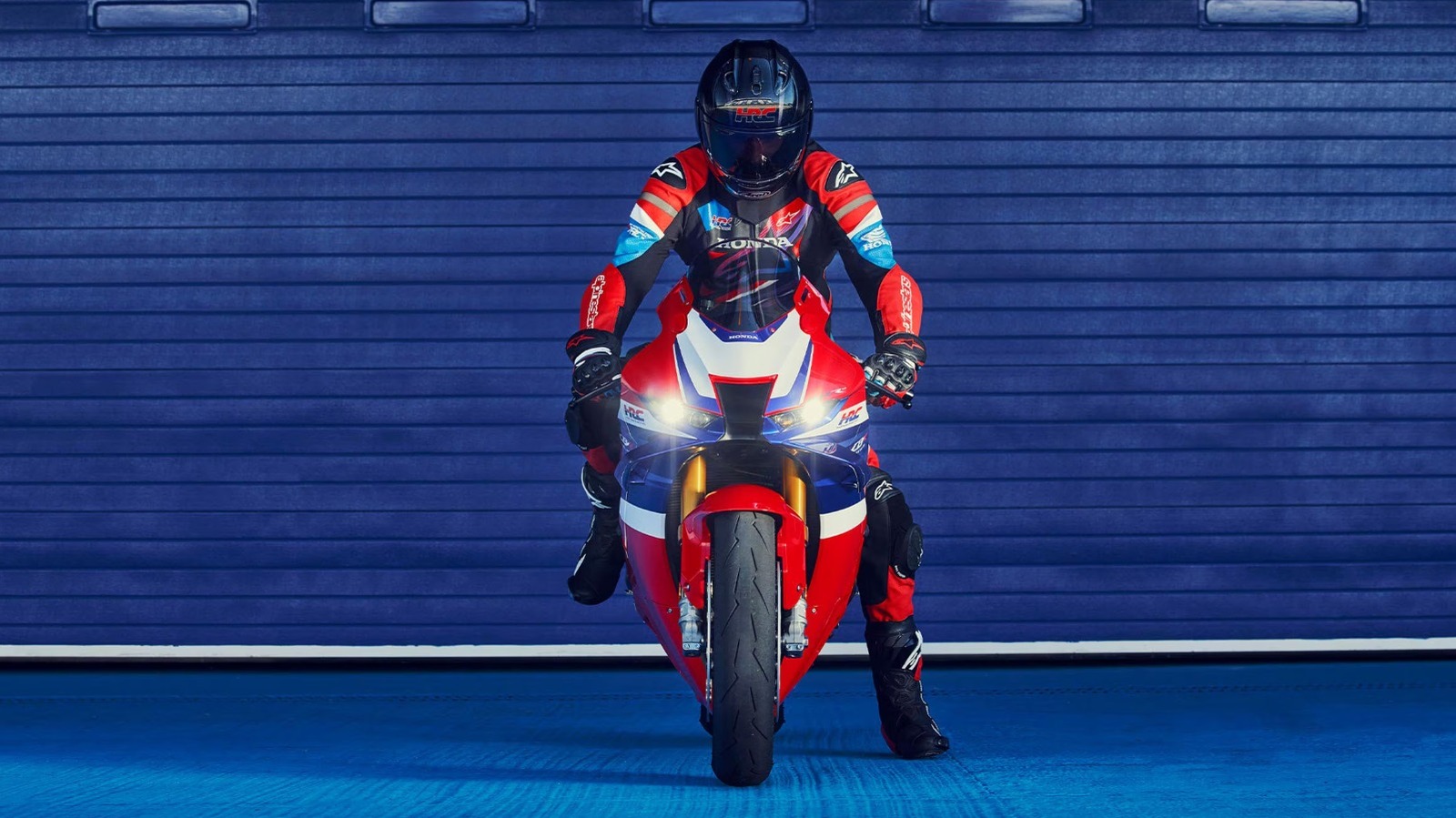
If you want a motorbike that you can push to its limits on the race track but still bring you home at the end of the day, look no further than the CBR1000RR-R Fireblade SP. This is Honda’s flagship supersport model, and was built using Honda Racing’s experience developing MotoGP bikes.
While this has a similar 999.9cc inline-four engine as the other bikes we listed above, it uses special components that reduce friction and weight while increasing durability. It also features a throttle-by-wire system that delivers power in a linear manner, ensuring precise throttle inputs, as well as a plethora of electronic controls to help you manage the motorcycle.
As one would expect, this halo motorcycle comes at a price — the CBR1000RR-R Fireblade SP has a starting price of $28,999, with an additional $775 destination charge. Even though this is more than twice the price of most of the motorbikes in our list, you’re getting supercar performance in Honda’s premier street-legal sport bike.


A Ukrainian man has pleaded guilty to operating OnlyFake, an AI-powered website that generated and sold more than 10,000 photos of fake identification documents to customers worldwide.
27-year-old Yurii Nazarenko (also known as “John Wick,” “Tor Ford,” and “Uriel Septimberus”) admitted that his OnlyFake subscription-based platform used artificial intelligence to generate realistic-looking counterfeit passports, driver’s licenses, and Social Security cards.
“We rely on government issued IDs to combat terrorism, hijackings, fraud, money laundering, and a host of other crimes,” said U.S. Attorney Jay Clayton on Thursday. “OnlyFake’s manufacture of fraudulent IDs and other documents puts us all at risk and must be stopped.”
According to the indictment, Nazarenko’s OnlyFake platform allowed customers to generate fake digital versions of U.S. driver’s licenses for all 50 states and U.S. passports and passport cards, as well as digital versions of identification documents for roughly 56 other countries.
Customers could also customize the fake digital documents with personal details, opt for randomized information, and choose whether the finished product appeared as a scan or a tabletop photograph.
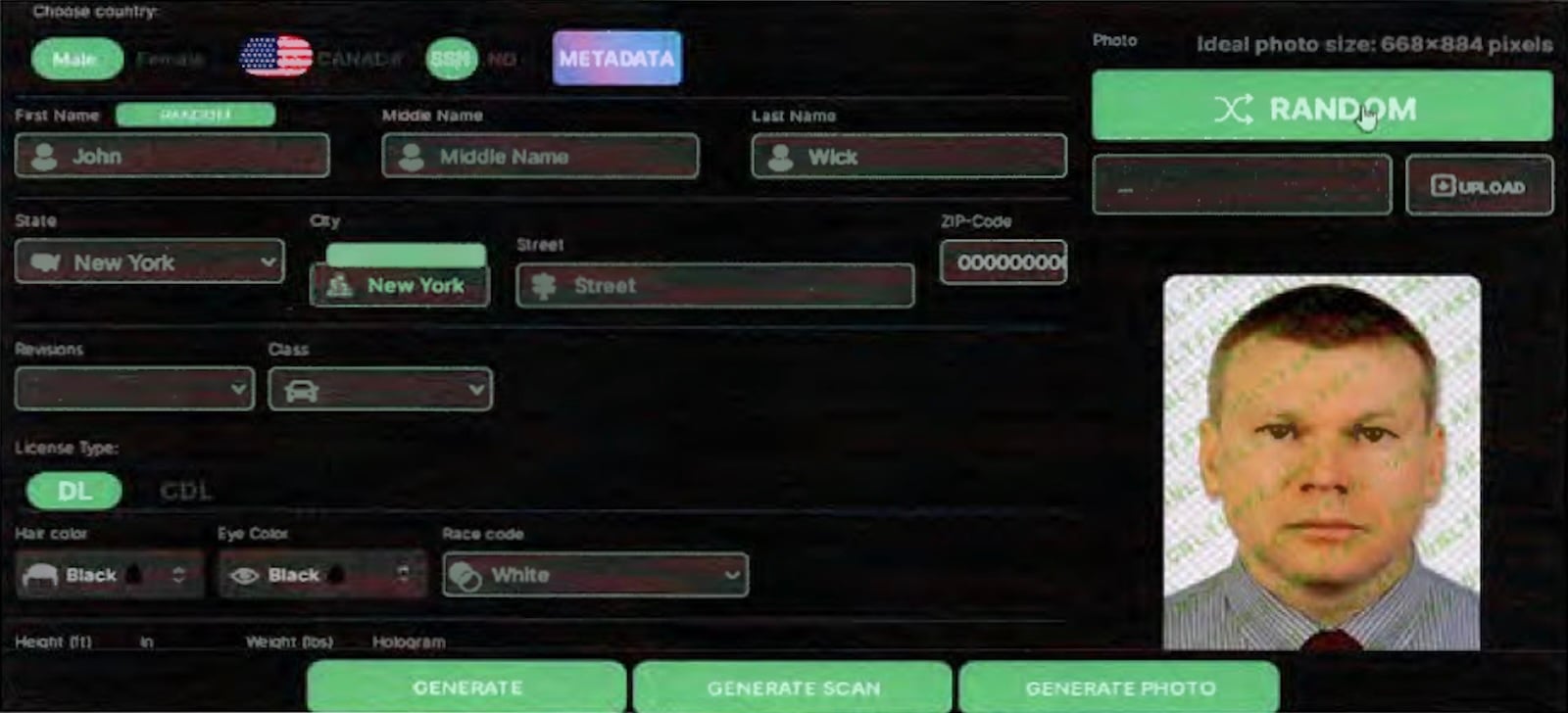
New York federal prosecutors said that the primary use of these fake digital documents was to circumvent Know Your Customer (KYC) verification requirements at banks and cryptocurrency exchanges, which are safeguards designed to prevent money laundering mandated under the Patriot Act.
Undercover FBI agents made multiple purchases from the OnlyFake website between May and June 2024, obtaining fake New York state IDs, U.S. passports, and a Social Security card.
OnlyFake only accepted cryptocurrency payments, and also offered bulk packages of up to 1,000 fake documents at a discount. Nazarenko further attempted to cover his tracks by routing cryptocurrency payments through multiple wallets and deleting emails after 404 Media reported on the site in February 2024.
“Yurii Nazarenko developed a website to produce more than 10,000 fake identification documents, earning hundreds of thousands of dollars from these illicit sales,” added FBI Assistant Director in Charge James C. Barnacle, Jr. “This platform offered its clients a myriad of criminal opportunities, including bypassing traditional regulations to launder money.”
Nazarenko was extradited from Romania in September 2025 and has agreed to forfeit $1.2 million. He is now facing a maximum sentence of 15 years in prison and is scheduled for sentencing on June 26, 2026.
Malware is getting smarter. The Red Report 2026 reveals how new threats use math to detect sandboxes and hide in plain sight.
Download our analysis of 1.1 million malicious samples to uncover the top 10 techniques and see if your security stack is blinded.

The Marshals is a new Yellowstone spin-off airing on CBS (but don’t drop Paramount Plus — it’ll stream there too).
Luke Grimes reprises his role as Kayce Dutton in the Yellowstone sequel series. The former Navy SEAL joins an elite unit of US Marshals to bring range justice to Montana, according to a synopsis from CBS. In addition to Grimes, the show includes Yellowstone actors Gil Birmingham as Thomas Rainwater, Mo Brings Plenty as Mo and Brecken Merrill as Tate. Spencer Hudnut is the showrunner of Marshals — formerly known as Y: Marshals — and Taylor Sheridan is an executive producer.
When to watch the Marshals premiere on Paramount Plus
In addition to airing on CBS on Sunday, March 1, the premiere of Marshals will stream on Paramount Plus — and the subscription tier you have matters. You can watch the first episode live with Paramount Plus Premium, which includes your local CBS station. If you subscribe to Paramount Plus Essential, you can watch the premiere on demand the following Monday, but not live on Sunday.
Here’s a clear breakdown of how to watch the first four episodes of Marshals.
- Episode 1, Piya Wiconi: Premieres on CBS/Paramount Plus Premium on March 1 at 8 p.m. ET/8 p.m. PT/7 p.m. CT. Streams on Paramount Plus Essential on March 2.
- Episode 2, Zone of Death: Premieres on CBS/Paramount Plus Premium on March 8 at 8 p.m. ET/8 p.m. PT/7 p.m. CT. Streams on Paramount Plus Essential on March 9.
- Episode 3, Road to Nowhere: Premieres on CBS/Paramount Plus Premium on March 15 at 8 p.m. ET/8 p.m. PT/7 p.m. CT. Streams on Paramount Plus Essential on March 16.
- Episode 4, The Gathering Storm: Premieres on CBS/Paramount Plus Premium on March 22 at 8 p.m. ET/8 p.m. PT/7 p.m. CT. Streams on Paramount Plus Essential on March 23.
You can also watch CBS and the first episode of Marshals without cable with a live TV streaming service such as YouTube TV, Hulu Plus Live TV or the DirecTV MyNews skinny bundle. In addition to being a lower-cost option, Paramount Plus allows you to watch the other two Yellowstone spin-offs — the prequels 1883 and 1923.
After a price increase in early 2026, the ad-supported Essential version runs $9 per month or $90 per year, and the ad-free Premium version runs $14 per month or $140 per year. Paying more for Premium gives you downloads, the ability to watch more Showtime programming than Essential and — as mentioned — access to your live, local CBS station.

300,000 Poses in an AI Instant: My Visit to Disney Studios and the New Reality for Animation

The Next Crypto BULL MARKET Begins…FIND OUT HERE!

Z Score of Bitcoin-to-Gold Ratio Signals ‘Major’ Rally Coming: Analyst


-

 Sports6 days ago
Women’s college basketball rankings: Iowa reenters top 10, Auriemma makes history
-

 Fashion2 days ago
Weekend Open Thread: Iris Top
-

 Politics6 days ago
Nick Reiner Enters Plea In Deaths Of Parents Rob And Michele
-

 Business5 days ago
True Citrus debuts functional drink mix collection
-

 Politics3 days ago
ITV enters Gaza with IDF amid ongoing genocide
-
Sports2 days ago
The Vikings Need a Duck
-

 Tech15 hours ago
Unihertz’s Titan 2 Elite Arrives Just as Physical Keyboards Refuse to Fade Away
-

 Crypto World5 days ago
XRP price enters “dead zone” as Binance leverage hits lows
-

 Tech5 days ago
Unsurprisingly, Apple's board gets what it wants in 2026 shareholder meeting
-
 NewsBeat1 day ago
Dubai flights cancelled as Brit told airspace closed ’10 minutes after boarding’
-

 NewsBeat4 days ago
Cuba says its forces have killed four on US-registered speedboat | World News
-
 NewsBeat1 day ago
The empty pub on busy Cambridge road that has been boarded up for years
-
 NewsBeat4 days ago
Manchester Central Mosque issues statement as it imposes new measures ‘with immediate effect’ after armed men enter
-

 NewsBeat4 hours ago
‘Significant’ damage to boarded-up Horden house after fire
-
 NewsBeat6 days ago
‘Hourly’ method from gastroenterologist ‘helps reduce air travel bloating’
-

 NewsBeat22 hours ago
Abusive parents will now be treated like sex offenders and placed on a ‘child cruelty register’ | News UK
-
 NewsBeat5 days ago
Police latest as search for missing woman enters day nine
-

 Business4 days ago
Discord Pushes Implementation of Global Age Checks to Second Half of 2026
-

 Business3 days ago
Only 4% of women globally reside in countries that offer almost complete legal equality
-
 Sports6 days ago
2026 NFL mock draft: WRs fly off the board in first round entering combine week