Amazon’s best MacBook Air deals deliver prices as low as $1,199 for M5 models, with discounts of up to $150 off.
A 30-day low price is in effect on Apple’s M5 13-inch MacBook Air in your choice of Silver or Midnight, bringing the cost down to $1,199. This standard configuration has a 10-core CPU, 8-core GPU, 16GB of memory, and 512GB of storage, but you can also save triple digits on higher-end retail models during Amazon’s laptop sale.
Dario Amodei’s essay on Saturday made the case that the AI industry must slow itself down. It also asked Washington to “not sell powerful AI chips or semiconductor manufacturing equipment to China” and to crack down on smuggling and on remote access to data centres outside the country.
China’s commerce ministry called the essay “further proof that the US is pursuing technological hegemony in AI”, in remarks carried by the Global Times on Monday.
The paper built a full report around the theme, gathering three Chinese researchers to argue that the Anthropic chief wants cooperation and containment at the same time.
Xiang Ligang, a telecoms and technology policy observer, called the proposal inappropriate, groundless and hostile.
Advertisement
He said Amodei accepts that pacing AI would eventually require cooperation with China while advocating restrictions on chips, computing power and models to slow China down, and openly seeking to widen the American lead. Xiao Qian of Tsinghua’s Institute for AI International Governance pointed out that Anthropic competes with Chinese open-source models.
Liu Shaoshan, who directs embodied AI at the Shenzhen Institute, put the sharpest version of the argument. Once AI is described as a technology that settles national security and the future of civilisation, he said, an AI company stops being an ordinary tech company and becomes “strategic infrastructure”.
A separate Global Times commentary, circulated on WeChat under the headline “Targeting China’s AI: America’s ‘tech right’ rolls out a Cold War script”, called the plan a “quiet AI Cold War” and described it as hypocritical and short-sighted.
Amodei’s essay proposes three steps: third-party evaluators with employee-like access, which Anthropic has committed to on its own; common safety standards and capability limits among frontier labs in democracies; and an eventual attempt to coordinate pacing with authoritarian governments.
The two governments have been circling this for weeks. The NSA, FBI and CISA named six Chinese firms over industrial-scale distillation on 9 September, and Beijing called that unfounded the next day.
In June, Wang Yi pitched a global AI cooperation organisation offering cheap models to developing countries while the G7 argued over who should get access to American ones.
A Public First survey of 18,000 people across 15 countries, published days later, found that most already believed China had pulled ahead on capability.
Advertisement
What has changed is who is being argued with. Beijing has spent months contesting export controls as government policy, and the commerce ministry has a standing script for that.
This time it aimed the script at a private company’s chief executive, on the strength of a post he published himself, two days after he asked his own industry to go slower. Trump, for his part, dismissed the slowdown case last week on the grounds that America has to win.
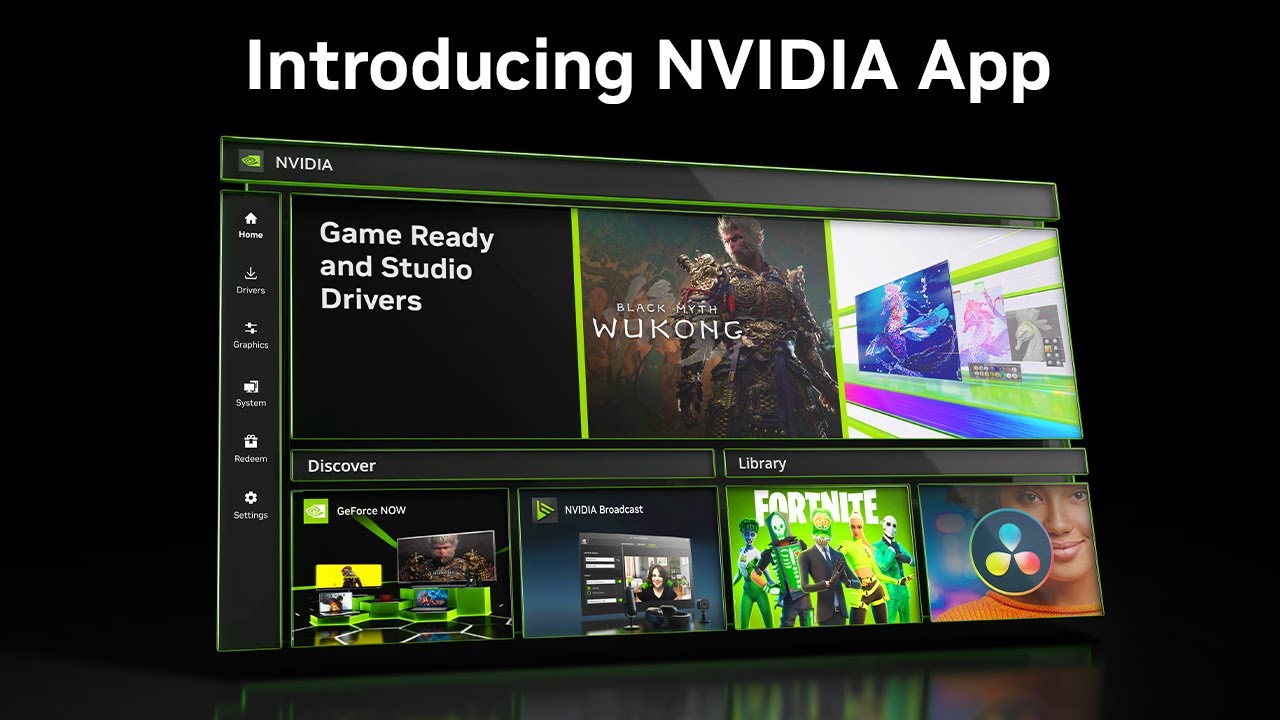
Optimize games and applications with a new unified GPU control center, capture your favorite moments with powerful recording tools through the in-game overlay, and discover the latest Nvidia tools and software.
Features
Unified GPU Control Center
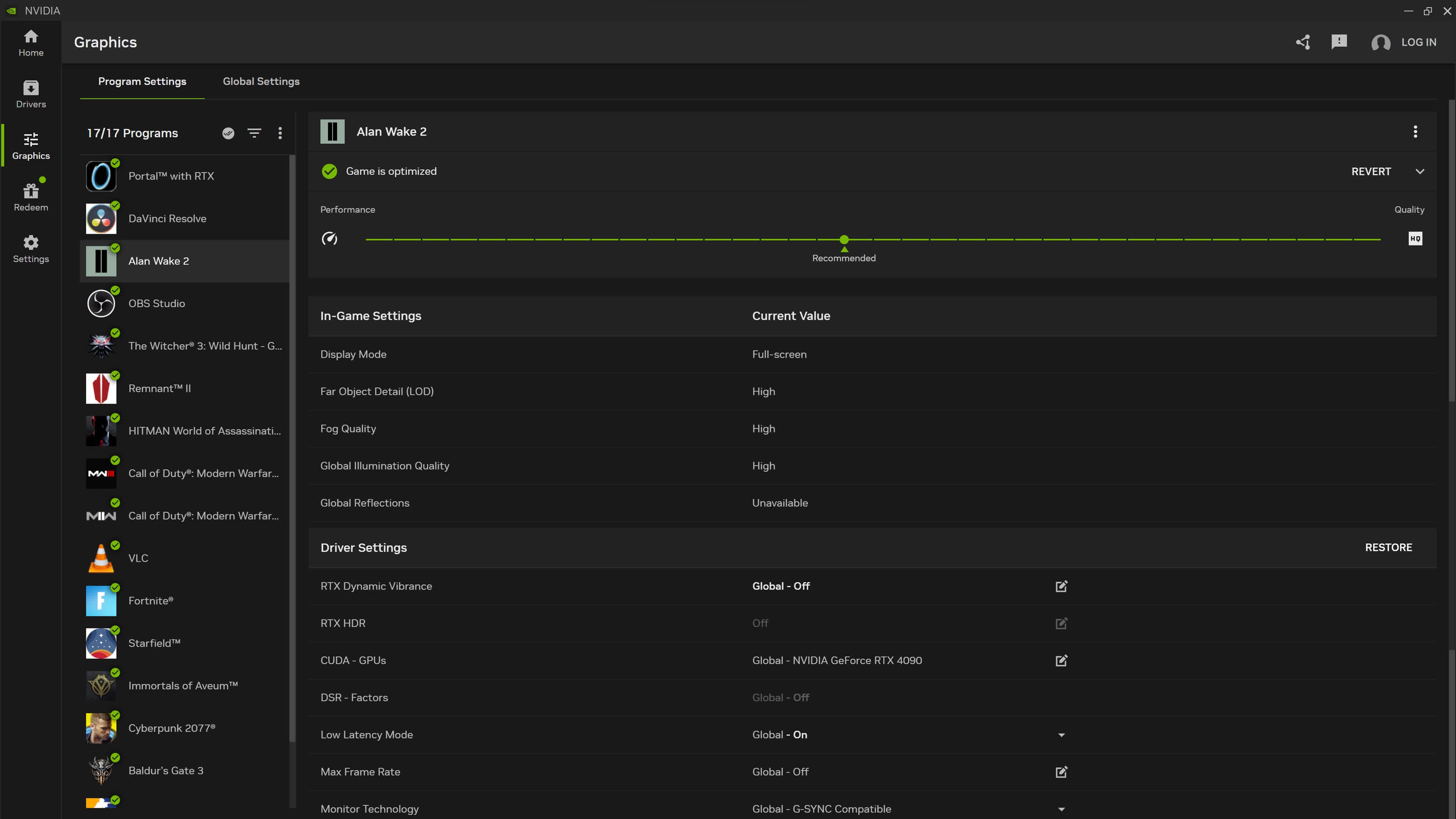
The Nvidia app integrates GeForce Experience’s Optimal Game Settings and Nvidia Control Panel’s 3D Settings into a unified interface. This becomes a centralized place to review or modify optimizations while adjusting driver settings. You can customize it on a per-applications basis, or use a global profile across all games and applications.
Improved Driver Information
When it comes to your favorite games or applications, Game Ready Drivers and Studio Drivers ensure the ultimate experience for gamers and creators. A popular request from GeForce Experience users is for a quicker, more straightforward way to understand what’s included in the latest driver updates.
Advertisement
In the new Driver page, we’ve introduced easy-to-scan bullet points of “what’s new” and “what’s fixed,” alongside quick callouts on game support. All driver related articles are accessible on a single carousel so you can read about game announcements or technologies associated with the driver.
Redesigned In-Game Overlay
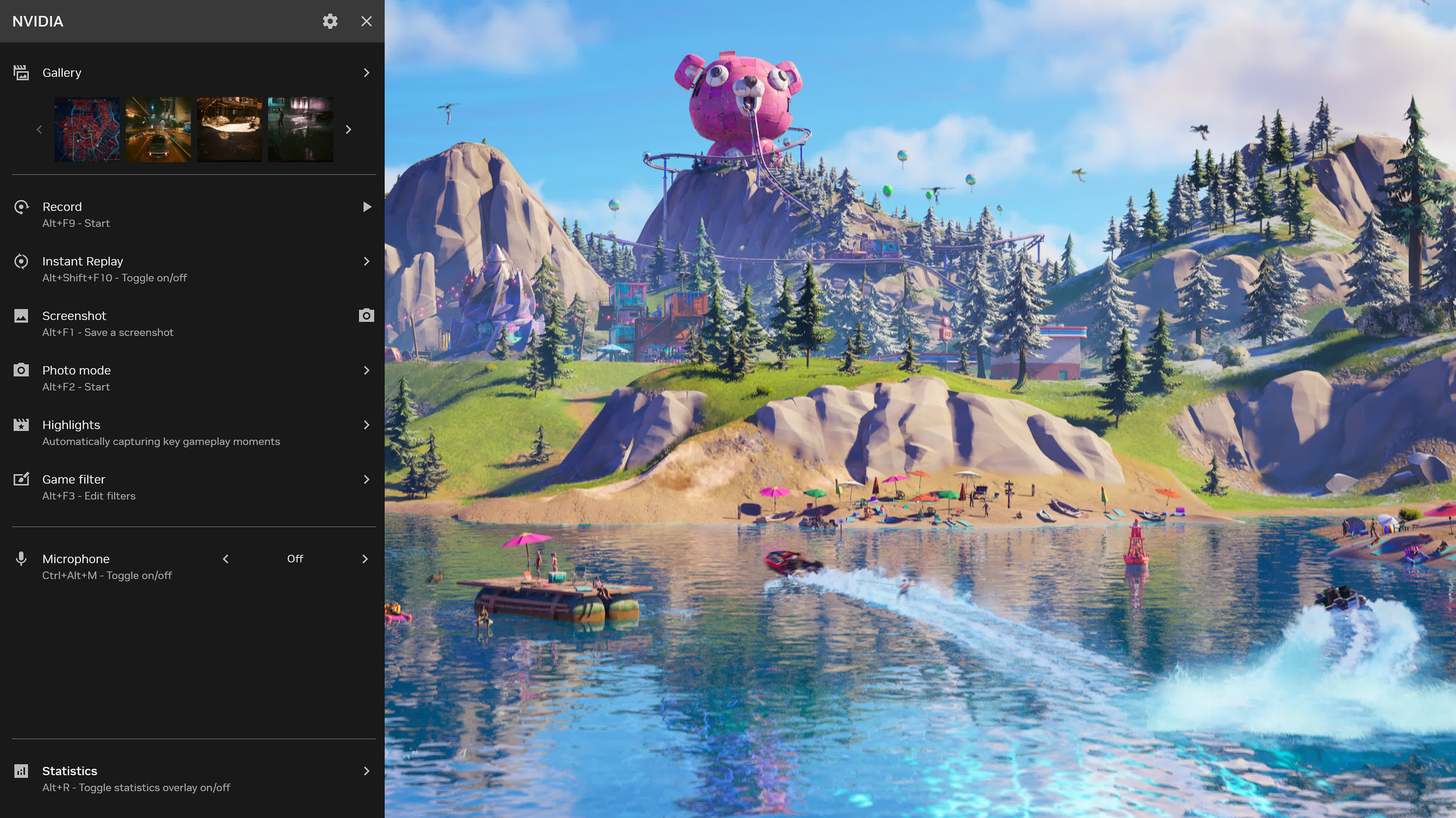
Our In-Game Overlay has undergone a comprehensive redesign. As before, use the convenient “Alt+Z” hotkey to swiftly access Shadowplay recording tools, Freestyle Game Filters, Nvidia Highlights, photo mode, and performance monitoring tools.
In the Nvidia app, we’ve improved the user interface, enabling quick access to features while playing your favorite game or using an application. And your captured content is now readily available in the gallery through user-friendly thumbnails.
Advertisement
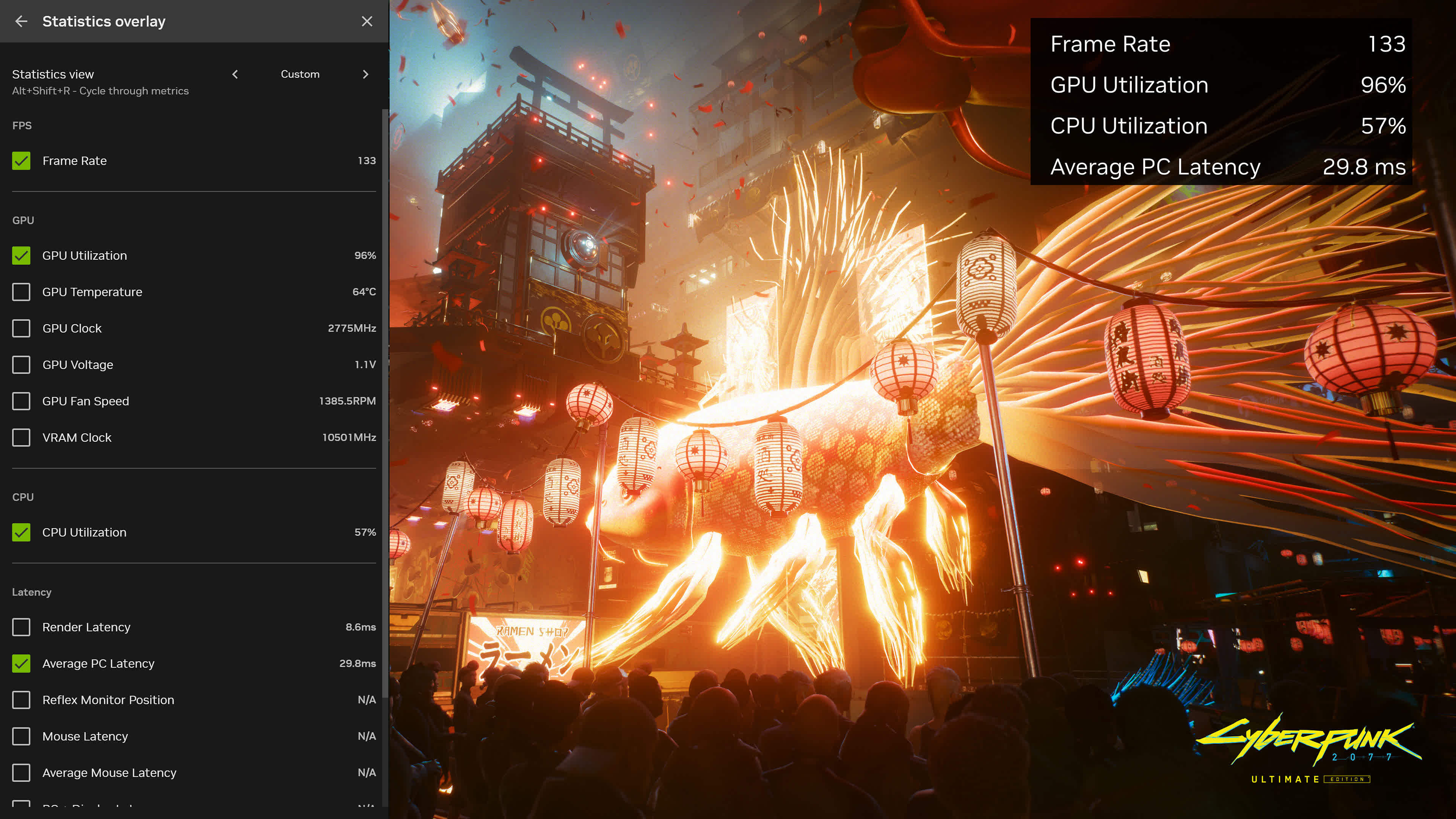
We’ve also enhanced performance monitoring with a new statistics overlay. Gamers can now customize how the performance overlay is displayed during their gaming session with options to minimize the footprint of the HUD.
Additionally, gamers can now customize which performance metrics they would like to see during their gaming session. Simply hit Alt + R to toggle performance monitoring statistics.
Nvidia app also introduces Shadowplay 120 FPS video capture which enables a new level of smoothness in recorded content.
New AI Freestyle Filters
Advertisement
Nvidia Freestyle empowers you to personalize the visual aesthetics of your favorite games through real-time post-processing filters. This feature boasts compatibility with a vast library of more than 1,200 games, and now NVIDIA app offers AI-powered filters, accelerated by Tensor Cores on GeForce RTX GPUs.
RTX Dynamic Vibrance is an AI-powered Freestyle filter that improves upon the beloved Digital Vibrance feature in the Nvidia Control Panel. RTX Dynamic Vibrance enhances visual clarity on a per app basis, providing players with a flexible and convenient way to tune their visual settings for each game. Colors pop more on screen, with perfect balance to minimize color crushing, preserving image quality and immersion.
RTX HDR, a new AI-powered Freestyle filter seamlessly brings the vibrant world of High Dynamic Range (HDR) to games that were not originally equipped with HDR support. Remarkably, only 10 of the top 50 most-played GeForce games offer HDR support and there are thousands of games that only support SDR. However, with the RTX HDR filter, you can now take advantage of your HDR-compatible monitor for a broad spectrum of games running on DX12, DX11, DX9, and Vulkan platforms.
Redeem GeForce Bundles & Rewards
Advertisement
Nvidia app users get access to rewards, such as in-game content, exclusive GeForce Now premium membership offers, and more. Simply start the Nvidia app and visit the Redeem tab to check out the latest rewards.
For a limited time, users of the Nvidia app beta can redeem the GeForce Call of Duty: Modern Warfare III and Call of Duty: Warzone reward. Experience DLSS 3 in either game with a free 1 hour Double XP Boost and 1 hour Double Weapon XP Boost.
Nvidia App System Requirements
Supported Hardware
Advertisement
CPU: Intel Pentium G Series, Core i3, i5, i7, or higher, AMD FX, Ryzen 3, 5, 7, 9, Threadripper or higher
GPU: GeForce RTX 20, 30, 40 and 50 Series GPUs, GeForce GTX 800, 900, 1000, 1600 Series GPUs, GeForce MX100, MX200, MX300, 800M, and 900M GPUs
What’s New
New Updates:
DLSS 4.5 Ray Reconstruction Available Now
Added support for DLSS 4.5 Ray Reconstruction on GeForce RTX Series GPUs. Access these DLSS features under Graphics > Program Settings > Driver Settings > DLSS Override – Model Presets > “Recommended”.
New Graphics Settings
Per-app Resizable BAR controls are now available in the NVIDIA app to help optimize game performance for your specific hardware setup. Access this feature under Graphics > Program Settings > Driver Settings > Resizable BAR.
Additional Updates
Added a green dot notification badge for new features, along with hover-enabled sidebar links for quick access.
Added a toggle for Windows Desktop right-click context menu for the NVIDIA app.
Migrated CUDA System Fallback policy from the NVIDIA Control Panel.
Added Borderless Windowed mode support to Optimal Playable Settings.
DLSS Override Support Added For:
007 First Light
Assassin’s Creed Black Flag Resynced
Beast of Reincarnation
Blades of Fire
Conan Exiles Enhanced
Corsair Cove
Dead as Disco
Deep Rock Galactic: Rogue Core
Directive 8020
Empulse
Fatekeeper
Forza Horizon 6
GOALS
Gothic 1 Remake
Halo: Campaign Evolved
Hell Let Loose: Vietnam
I Am Jesus Christ
LEGO Batman: Legacy of the Dark Knight
Luminary
Luna Abyss
Mistfall Hunter
Mortal Shell II
NBA THE RUN
Reaper Actual
SAND: Raiders of Sophie
Starminer
Subnautica 2
The Mound: Omen of Cthulhu
The Sinking City 2
Tides of Tomorrow
World of Tanks: HEAT
Zenless Zone Zero
STAR WARS Zero Company™
Painkiller RTX
Onimusha: Way of the Sword
NBA 2K27
The Blood of Dawnwalker
Resonance: A Plague Tale Legacy
Optimal Settings Support Added For:
007 First Light
Halo: Campaign Evolved
Mistfall Hunter
Subnautica 2
STAR WARS Zero Company™
Painkiller RTX
Onimusha: Way of the Sword
NBA 2K27
The Blood of Dawnwalker
Resonance: A Plague Tale Legacy
Squashed Bugs:
Fixed an issue where Game filters stopped working in Battlefield 4.
Fixed an compatibility issue with video playback and statistics overlay in multi-GPU configurations.
Fixed an issue where Photo Mode Super Resolution produced incorrect color output.
Fixed an issue where Image Sharpening was not working on a per-app basis.
Fixed an issue where statistic logging failed to start.
Fixed an issue where 10 bpc was unavailable for Output Color Depth on selected displays when YCbCr444 was selected.
Various stability fixes.
Nvidia App Beta 11.0.7:
New Updates
DLSS 4.5 Dynamic Multi Frame Generation Available Now
Update to DLSS 4.5 Dynamic Frame Generation on GeForce RTX 50 Series GPUs. Select “Dynamic” mode to intelligently adjust the number of generated frames during gameplay to a target frame rate, balancing frame rate, image quality, and responsiveness.
New DLSS 4.5 Multi Frame Generation 5X and 6X modes on GeForce RTX 50 Series GPUs increase 4K frame rates in path-traced titles. Paired with NVIDIA Reflex, they generate additional frames with minimal impact on responsiveness.
DLSS 4.5 Frame Generation model update on GeForce RTX 50 Series and GeForce RTX 40 Series GPUs enhances in-game user interfaces by incorporating additional engine data available for some games, improving visual quality and clarity of static UI elements.
For optimal image quality and peak performance when using ShadowPlay, the latest GeForce Game Ready Driver is required.
Access these DLSS features under Graphics > Program Settings > Driver Settings > DLSS Override – Frame Generation mode
Automatic Shader Compilation (Beta)
Rebuilds DirectX 12 shaders while your system is idle, reducing the frequency of game runtime compilation after driver updates
Control Panel Updates
Added Custom Resolution in System > Displays > Display Properties
DLSS Override Support Added For:
Arknights: Endfield
Black One Blood Brothers
Carmageddon: Rogue Shift
CODE VEIN II
Corsairs Legacy
Crimson Desert
DEATH STRANDING 2: ON THE BEACH
Demonologist
For Honor
Grounded 2
Half Sword
High On Life 2
John Carpenter’s Toxic Commando
LET IT DIE: INFERNO
LORT
Marathon
Monster Hunter Stories 3: Twisted Reflection
Nightmare Frontier
Nioh 3
NORSE: Oath of Blood
Of Ash and Steel
Quarantine Zone: The Last Check
REANIMAL
Resident Evil Requiem
Star Trek: Voyager – Across the Unknown
StarRupture
Styx: Blades of Greed
The Gold River Project
The Legend of Heroes: Trails Beyond The Horizon
Vampires: Bloodlord Rising
Yakuza Kiwami 3 & Dark Ties.
Optimal Settings Support Added For:
Arknights: Endfield
Ashes of Creation
Highguard
StarRupture
The Last Caretaker
Squashed Bugs
Overlay
Fixed an issue where Statistics shows N/A after a client update
Fixed an issue where CPU stats could flicker in idle state
Fixed an issue where microphone selections would revert to default after switching devices
Fixed an issue that prevented the use of Numpad keys for overlay shortcuts
Graphics
Fixed an issue where NVIDIA Smooth Motion setting was missing in Global Settings
Fixed an issue where NVIDIA app resolution changes were not occurring in-game
Display
Fixed an issue where changing display modes caused flickering
Installation
Fixed an intermittent issue where NVIDIA app installation did not install if PC was offline
Removed redundant restart prompt after upgrading from GeForce Experience
Various stability fixes to improve overall app reliability
Project G-Assist
Adjusted the voice prompt shortcut to prevent overlapping voice prompts while a response is still processing various UI improvements for G-Assist
Nvidia App 11.0.6.383:
New updates DLSS 4.5 Super Resolution Models Available Now
Advertisement
Update to the latest DLSS 4.5 Super Resolution Models for your RTX Series GPU. Access these DLSS features under Graphics > Program Settings > Driver Settings > DLSS Override – Model Presets > “Recommended.”
Replaces “Latest” with “Recommended” mode to better align with DLSS 4.5’s new models: Model M (optimized for DLSS Performance) and Model L (optimized for 4K DLSS Ultra Performance), and Preset K for remaining DLSS modes.
Control Panel Updates
Added NVIDIA Surround features like Hotkey shortcuts and Bezel correction.
Added Debug Mode, and GPU Performance Counters in System > Advanced tab.
DLSS Override Support Added for 77 DLSS Games:
171
A Difficult Game About ROLLING – ReUpRise
A.I.L.A
AION 2
Anno 117: Pax Romana
Arc Raiders
Ashes of Creation
Assetto Corsa Rally
Astrometica
Automate It: Factory Puzzle
Bastide
Beyond Hanwell
Bum: Revenge
Call of Duty: Black Ops 7
Carpathian Survival
Chernobylite 2: Exclusion Zone
Chip ‘n Clawz vs. The Brainioids
Cursed Deal
DAVY x JONES
DEADCAM | ANALOG • SURVIVAL • HORROR
Deathground
DREADZONE
DUET NIGHT ABYSS
Echoes of the End: Enhanced Edition
Electronic Market Simulator
EMOTIONLESS: The Last Ticket
ENTITY: THE BLACK DAY
Europa Universalis V
FINAL FANTASY VII REBIRTH
Firefighting Simulator: Ignite
Goofy Gorillas
Greedland
Heroic Kingdom: Origins
Infinity Nikki
Jurassic World Evolution 3
Keeper
Legend of Ymir
Little Nightmares III
Mother Machine
Night of the Dead
Night Project
Ninja Gaiden 4
Noble Legacy
Nowhere Near
Otherplane
Outbreak: Shades of Horror
Palworld
Park Studio
PERISH
Pizza Bandit
Project Motor Racing
Prologue: Go Wayback!
Real Life
Renovation Simulator
Rocket Squad: Infinity
RV There Yet?
Seafarer: The Ship Sim
Small Spaces
Sophonce
SpongeBob SquarePants: Titans of the Tide
Storage Hunter Simulator
TEKKEN 8
The Black Pool: Arena Survivors
The Bus
The Last Caretaker
The Outer Worlds 2
Tower of Fantasy
Trench Tales
Vampire: The Masquerade – Bloodlines 2
Violet
Wacky West
Where Winds Meet
Why don’t they laugh?
Winter Survival
Wreckreation
Yakuza Kiwami 2
Zombie City
Optimal Settings Support Added For 10 New Games:
Anno 117: Pax Romana
ARC Raiders
Call of Duty: Black Ops 7
Digimon Story: Time Stranger
Escape From Duckov
Europa Universalis V
Football Manager 26
RV There Yet?
The Outer Worlds 2
Vampire: The Masquerade – Bloodlines 2
Squashed Bugs!
Fixed an issue where NVIDIA app overlay would disappear after changing display resolution.
Fixed an issue where the recording bitrate would incorrectly set to 150 Mbps after a system restart.
Fixed an issue preventing users from changing the destination folder for saved recordings.
Fixed an issue where images captured using Photo Mode > Super Resolution appeared blank for 50 Series GPUs
Previous Release Notes:
New Updates
DLSS Override Support Added for 6 DLSS Games:
FBC: Firebreak
Monster Energy Supercross 25 – The Official Video Game
REMATCH
Strinova
The Alters
Warhammer 40,000: Speed Freeks
Optimal Settings Support Added For 5 New Games:
Dune: Awakening
EA SPORTS F1 25
FBC: Firebreak
REMATCH
Stellar Blade
Squashed Bugs!
Addressed a bug where DLSS Overrides did not appear for manually added games.
Corrected an issue where DLSS Overrides were unavailable for certain supported titles.
Various stability fixes.
Previous Release Notes:
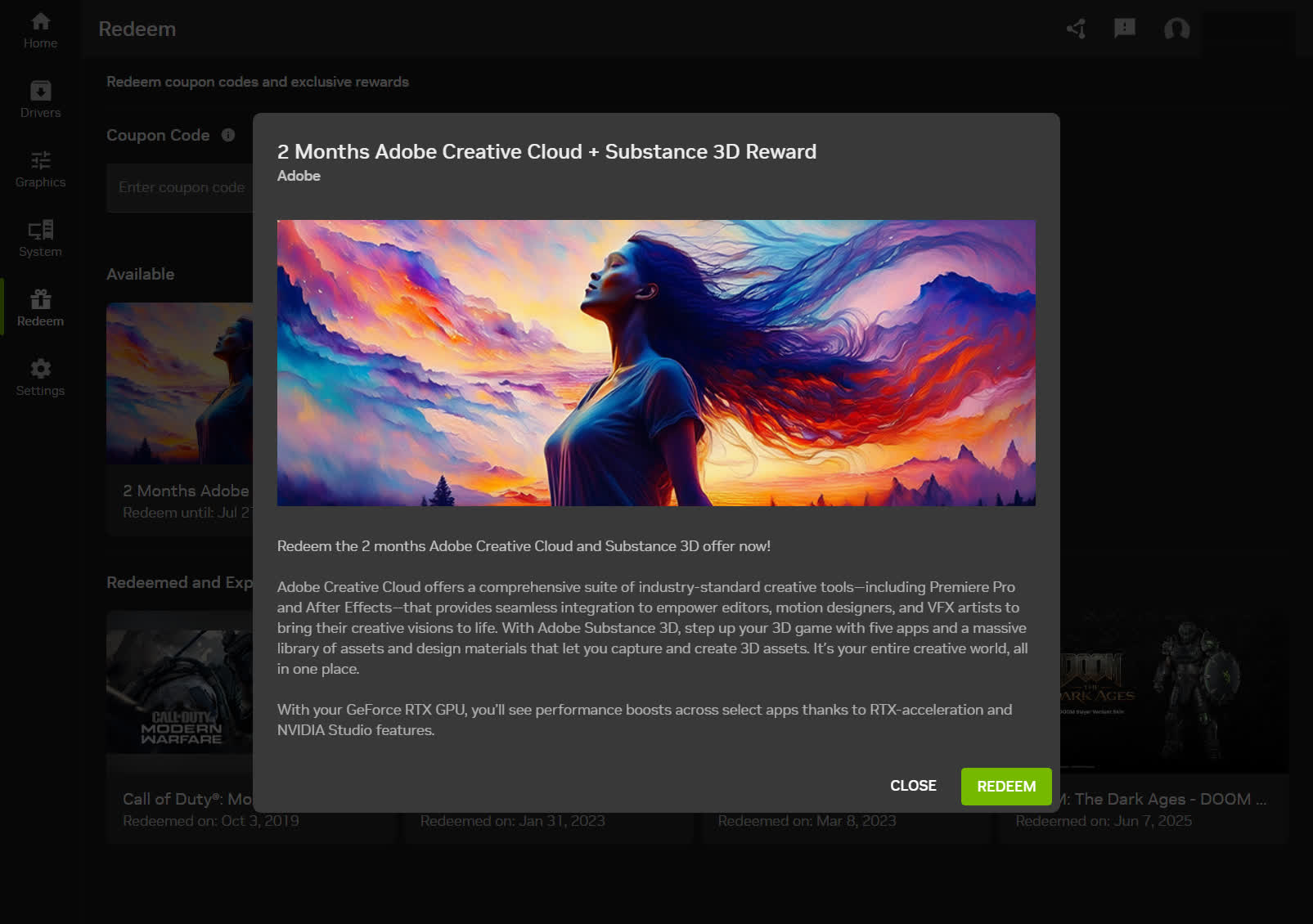
Redeem the 1 or 2 months Adobe Creative Cloud offer now!
Nvidia is currently offering a free Adobe Creative Cloud subscription to users with eligible RTX GPUs via the Nvidia App Rewards system:
Advertisement
Owners of GeForce RTX 30 or 40 series GPUs get 1 free month of Adobe Creative Cloud.
Owners of the newer RTX 50 series get 2 free months-plus access to Adobe Substance 3D apps like Sampler, Designer, and Painter, with a full asset library included
Adobe Creative Cloud offers a comprehensive suite of industry-standard creative tools, including Premiere Pro and After Effects, that provides seamless integration to empower anyone-from hobbyists to professionals–to bring their visions to life. You also get built-in templates to jump-start your designs and step-by-step tutorials to help you get up to speed quickly and sharpen your skills. It’s your entire creative world, all in one place.
With your GeForce RTX GPU, you’ll see performance boosts across select apps thanks to RTX-acceleration and Nvidia Studio features.
Previous Release Notes:
New Updates
Advertisement
User Accessibility Features
Added support for Light and Dark theme modes, with the option to automatically adapt based on Windows settings. Choose your preferred theme in Settings > Features > Theme.
Added support for Windows Narrator, allowing on-screen content to be read aloud for improved accessibility.
Optimal Settings Support Added For 12 New Games:
Assassin’s Creed Shadows
Clair Obscur: Expedition 33
Deadlock
ELDEN RING NIGHTREIGN
Grand Theft Auto V Enhanced
Half-Life 2 with RTX
Indiana Jones And The Great Circle
inZOI
Monster Hunter Wilds
Split Fiction
The Last of Us Part II Remastered
The Elder Scrolls IV: Oblivion Remastered
Squashed Bugs!
Fixed an issue where DLSS-FG defaults to 2x irrespective of in-game setting when DLSS override model is set to “Latest” and Frame generation is set to “Use the 3D application setting”.
Fixed an issue where the driver download could not be completed.
Fixed an issue where the recording bitrate setting was not saved.
Fixed an issue where HDR video colors were not encoded properly for HEVC and AV1 playback.
Fixed a bug where the in-game overlay was not accessible on the GeForce RTX 5070.
Fixed an issue where a PC reboot would reset microphone boost to an incorrect value.
Fixed an issue where Highlights summary window could not be disabled.
When Petra Ferraz de Novaes isn’t at work, she’s probably lost in a fantasy crafted with the help of artificial intelligence.
Novaes, a 36-year-old software engineer from Brazil, has always loved storytelling. But making every little decision that goes into it—from style and syntax to character development—felt impossible. So in 2024 she asked an AI model to bring one of her ideas to life.
Novaes was delighted by the eccentric, sometimes wayward interpretations of her prompts, which carried the narrative in unexpected directions. “What fascinates me is the unpredictability,” Novaes tells WIRED. “People say that AI hallucinates a lot. But in this case, it’s probably what you want.”
These days, Novaes spends hours at a time building stories with AI, using a program called SillyTavern to run open-source models on her computer. She sketches out a concept—an elven warrior battles the queen of the Amazons and seizes her throne, for example—and watches the model fill in the gaps.
Advertisement
In a single session, Novaes switches between multiple fantasy worlds. Some are hers, and others she borrows—she likes Star Wars, Pokémon, and Mass Effect. Sometimes, Novaes works up self-contained stories the length of a small novel, which she might share online. Otherwise, she participates in private role-plays. “It can be never-ending. You find a quest, you complete it, you go for the next one,” says Novaes. “The limit is your imagination.”
According to a recent study, plenty of people share Novaes’ hobby. “They know [the stories are] produced by an AI model, and they don’t care,” says Melanie Walsh, an assistant professor at the University of Washington Information School who coauthored the study. “In fact, that seems to be a big part of the attraction.”
Lately, the publishing industry has suffered a series of scandals involving the suspected use of AI by professional authors. One publisher canceled a $2 million book deal; another withdrew a novel from the shelves; readers alleged that a prize-winning short story was AI-generated. Implicit in all of these incidents is the idea that nobody wants to read stories generated by machine—that using AI to craft fiction devalues the art form.
But the commotion has distracted from the behavior of readers, Walsh and her colleagues argue, and what it might signal about the appetite for AI fiction.
Advertisement
Analyzing more than 500,000 prompts fed into ChatGPT, drawn from a public dataset called WildChat, the researchers found that more than a third of chatbot interactions involve some form of fiction generation, including prose and poetry, fan fiction, erotica, or role-play.
The vast majority of fiction prompts, the researchers found, stem from a small collection of “power users” who generate and tweak stories obsessively. In one case, a single user prompted ChatGPT to generate versions of the same fan-fiction narrative—set in the world of anime video game Doki Doki Literature Club!—thousands of times over the course of several months. But even controlling for heavy use, the researchers estimate that 7 percent of chatbot users engage in fiction generation.
The WildChat dataset has its limitations. Because the prompts are anonymized, it’s impossible to capture any demographic data. Participants also had to agree to make their prompts public, meaning the group may not reflect the population at large; OpenAI told WIRED that “WildChat is not a representative sample of all ChatGPT users.” A 2025 study by OpenAI and the National Bureau of Economic Research suggests that 1.4 percent of ChatGPT prompts are fiction-related, a long way short of the researchers’ estimate. (OpenAI’s figure does not include role-play; the company could not confirm whether it counts erotica.)
A gadget roughly the size of a US quarter can take over the flight computers on Boeing 737. Once in place, it does so quietly, rewriting where the plane is headed while keeping that change off the pilot’s screen. That may sound scary at first, but the thing’s actually been developed by researchers at the University of California San Diego and Oberlin College. They showed off the device – assembled for $100 in parts – in August at an academic security conference.
Specifically, the device slots into a maintenance connector inside a compartment called the Electronics and Equipment bay under a 737’s nose, where most of the plane’s computers sit. The hatch covering that compartment has no lock either and sits low enough for a bad actor to be able to reach it from the tarmac itself, without using a ladder. The whole job would take about 60 seconds, according to the researchers.
The connector itself works by tapping the line between the Flight Management Computer, which plots the route the autopilot follows, and the display unit the pilots type into. It’s able to do this because those two talk over a 1977 wiring standard with no authentication.
Advertisement
Is it really that big of a deal?
For what it’s worth, the researchers have actually never tested any of this on an actual aircraft – gaining access to one simply isn’t easy. Instead, the research was performed by buying used 737 parts and then wiring them together on a bench, following Boeing’s own schematics. Boeing isn’t oblivious to all this. In fact, the company has known about the flaw since 2020. And in 2023, the company even let the team run the attack inside its own test facility, where it worked as well. However, Boeing doesn’t seem too worried. It told Wired that the way planes get operated and the protections built into them make a real attack difficult to succeed.
The attacker would firstly need months of reverse engineering before they’re able to build anything. Even if they’re able to clear that hurdle, they’d have to defeat security by walking up to a parked 737, and then actually opening the hatch without anyone asking why.
Still, even if the device is able to hide from the pilot’s screen, it doesn’t control the rest of the cockpit. If it does manage to turn the plane the wrong way, the change of direction would still show up on other instruments. A crew would catch it and simply turn autopilot off to correct the course.
Another Y Combinator Demo Day took place on Thursday, but this batch looked a little different. While every cohort brings a fresh wave of founders, the startups presenting this week skewed far more toward deep tech than in past years.
As we do every quarter, TechCrunch asked early-stage VCs to name the hottest startups in this batch — both their top picks and the deals everyone was talking about. And as usual, we put together a list of startups flagged by at least two investors as the buzziest in the batch.
The tech in this batch felt “like science fiction,” as one investor put it. But beyond the wild ideas, the consensus was that valuations were far more grounded than in recent cohorts.
What it’s building: Nuclear-powered data centers floating at sea
Why it’s a fav: Power is in short supply and local communities are increasingly opposing the buildout of new data centers. Atomarine — co-founded by an MIT computer science and naval engineer and an MIT PhD in nuclear engineering — wants to solve the compute shortage by putting data centers on barges at sea, where seawater could provide near-free cooling. The startup plans to launch a gas-powered pilot by 2028 and plans to transition to floating nuclear power ships in 2032. Atomarine claims it has already secured over $4 billion in customer interest through letters of intent. That revenue potential has helped make it one of the highest-valued startups in the batch, one VC told TechCrunch.
What it’s building: Effective and energy-efficient high-speed optical networking hardware for AI data centers
Why it’s a fav: The idea is that GPU clusters waste a lot of compute time simply waiting for data to move between each chip. Within the networking layer, data is converted from light to electricity and back again in a process that burns lots of power and yields lots of heat. But Dipole Labs says it built an optical switch that skips the conversion so the data can stay as light and go directly where it needs to go. It’s a timely problem to tackle as GPUs are crazy expensive and data centers want the most out of their compute hardware without leaving any time to spare.
What it’s building: Locally producible, jet-powered strike and counter-drones
Advertisement
Why it’s a fav: Isengard aims to mass-produce jet-powered attack and counter-drones directly within allied countries, at a fraction of what prime contractors charge to build them in the U.S. Co-founded by a former Australian Army officer and a defense entrepreneur who previously scaled another Ukraine-focused drone startup to $60 million in revenue, Isengard is already generating $10 million in revenue itself. The startup has generated strong VC buzz, garnering one of the loftiest valuations in this YC batch, according to two investors.
What it’s building: Custom inference chips with hardcoded AI model weights
Why it’s a fav: Traditional AI chips burn massive amounts of energy during inference, fetching model weights from memory. Co-founded by an Imperial College London AI Ph.D. and an Oxford theoretical physicist, Lamb Labs wants to build ultra-efficient chips by hardcoding AI model weights directly into silicon. Dubbed “Model Processing Units” (MPUs), these custom chips eliminate memory-bandwidth bottlenecks.
What it’s building: Collecting real-world data on which to train robots
Why it’s a fav: This company partners with businesses to collect videos and data of humans doing work, which it then turns into training material for companies building robots. It says it’s already working with publicly traded companies and has captured video data in more than 150 different environments. This company could become important as businesses start experimenting more with which tasks are best for humans — and, as AI continues to refine itself, which tasks are better left to a robot.
What it’s building: Creating affordable robots to handle everyday tasks
Why it’s a fav: Launched just six weeks ago, this company already touts almost half a million in sales. That’s not shocking — it’s a humanoid robot that is promising to help clean and fold clothes. Users can also operate their robot via a laptop app. It’s priced at around $1,600, which is a steal compared to other humanoids like Neo, priced around $20,000. One of the biggest questions in robotics is if it is possible to create an affordable at-home robot that can actually stack a dishwasher and do everyday home tasks. Nori is another swing at taking on the task.
What it’s building: Autonomous robots that can lift heavy objects
Advertisement
Why it’s a fav: The founders of this company want to build a city on Mars. The first step to that? Building robotic technology that performs heavy-duty tasks. It says its tech is already installing solar panels across the U.S. and that it has $25 million in contracts through 2027. The vision is that this technology can help automate construction for colonizing Mars. The startup is racing with SpaceX’s timeline for building on Mars, as it hopes to begin an exploratory mission by 2028.
What it’s building: Training human brain cells to one day power compute
Why it’s a fav: Another company trying to find the best way to tackle how much power and energy is needed to run models. This time, Parasma is looking at using human brain cells as an effective, more energy-efficient alternative to today’s AI computing hardware.
What it’s building: An API layer that writes robot control code
Why it’s a fav: Investors and tech enthusiasts are hoping that the ChatGPT moment for robots is around the corner. That excitement is driving different approaches to creating a general robotics model. Instead of training foundation models on raw video or human teleoperation data, Waddle Labs uses a layer of LLM agents to write code and control robots directly. The startup, founded by Harvard graduates, is positioning itself as “Claude Code for robotics.” The startup claims that by plugging any hardware into Waddle’s API, developers will be able to tell the robot what to do in natural language, and its AI agents will autonomously generate executable control code, check that it worked, and set up the robot in about 20 minutes.
When you purchase through links in our articles, we may earn a small commission. This doesn’t affect our editorial independence.
Apple recently unveiled the Apple Watch Series 12, its latest flagship smartwatch. The Apple Watch Series 12 isn’t too different from its predecessor, the Apple Watch Series 11, but that’s not necessarily a bad thing. The most important thing that didn’t change is its price. The starting price still remains at $399.
If you’re looking to save money, however, it’s worth looking at Apple’s more economical smartwatch offering, the Apple Watch SE 3, which starts at just $249. It doesn’t have the same level of features as its pricier siblings, but if all you want is a capable fitness wearable, the Watch SE 3 is a pretty solid option.
Here’s a more detailed breakdown of how these two Apple wearables compare.
The Apple Watch Series 12, in gold titanium (left) and bronze aluminum.Vanessa Hand Orellana/CNET
Design and display
The Apple Watch Series 12 looks and feels very similar to its predecessor, the Apple Watch Series 11. It has a rectangular OLED Retina display (up to 2,000 nits of brightness), rounded edges, and it comes in 42mm and 46mm sizes. In addition to aluminum and titanium, the Apple Watch Series 12 now also comes in ceramic, a callback to the Apple Watch Series 5 in 2019.
It’s worth noting that the ceramic version is quite a bit heavier. While the 42mm aluminum model is 32.2g, the titanium is 36.5g, the pearl white ceramic is 41.7g (interestingly, the night blue hue of the ceramic is 42.8g).
Advertisement
Speaking of which, the Apple Watch Series 12 comes in a variety of colors depending on the case. The aluminum comes in dark bronze, light gold, black and space gray, the titanium comes in radiant gold and natural hues, while the ceramic comes in the aforementioned pearl white and night blue.
The Apple Watch SE 3 also has a rectangular display design with rounded edges, but it comes in 40mm and 44mm sizes instead. Rather than an OLED Retina display, the SE 3 uses an always-on LTPO OLED display that gets up to 1,000 nits of brightness. It doesn’t refresh quite as often as the Series 12, however.
The SE 3 comes in 100% recycled aluminum in either midnight or starlight colors. It’s also very lightweight compared to the Series 12; it weighs only 26.4 grams (40mm) or 33 grams (44mm).
Both watches are IP6X-rated for dust and water resistance up to 50 meters. The Series 12 has Ceramic Shield 2 glass, while the SE 3’s cover glass is made out of Ion-X and is four times more resistant to cracks than the SE 2.
Advertisement
Sleep tracking on the Apple Watch SE 3.
Vanessa Hand Orellana/CNET
Health and fitness features
The Series 12 has many of the same sensors as the Series 11, including a second-generation electrical heart sensor, an always-on optical heart sensor, and a temperature sensor. Though it doesn’t have on-the-spot blood pressure monitoring, it can analyze data and detect signs of hypertension, which can help your doctor make a diagnosis.
The SE 3, on the other hand, lacks the electrical heart sensor found on the Series 12, so it can’t take heart readings using the ECG app or detect signs of atrial fibrillation. It does, however, have a second-generation optical heart sensor that can track heart rate during exercise or sleep. In other words, if all you want is a wearable that will track your heart rate during a workout, the SE 3 could be good enough.
Though both watches are water-resistant, the SE 3 lacks a water temperature sensor and a depth gauge, whereas the Series 12 does. The Series 12 is therefore a better option if you want to track swim workouts or dives more effectively.
Both watches offer emergency features like fall detection, emergency SOS and crash detection.
Advertisement
Battery life and specs
Both watches have a decent battery life. The Apple Watch Series 12 offers 24-hour battery life and fast charging from 0% to 80% in just 30 minutes. The Apple Watch SE 3, meanwhile, has an 18-hour battery life but can fast-charge to 8 hours of normal use in just 15 minutes.
The SE 3 ships with an S10 chip with a 64-bit dual-core processor and a W3 Apple wireless chip, plus 64 gigabytes of storage. It doesn’t have Apple’s second-generation Ultra Wideband chip, which supports precise location tracking, but you can still use Find My on an iPhone to see if it’s with you. You just won’t be able to pinpoint its location exactly by getting closer to it.
The Series 12 has an Ultra Wideband chip and Apple’s new S11 chip with a 64-bit dual-core processor, which enables features such as heart rate readings every 5 seconds.
Check out the chart below to further compare the Apple Watch Series 12 and the Apple Watch SE 3.
Aluminum: Dark bronze, Light gold, Black, Space Gray Titanium: Radiant gold, Natural, Ceramic: Pearl white, Night blue
100% recycled aluminum, midnight and starlight
Durability
IP6X dust resistant, water resistant to 50 meters, Ceramic Shield 2 glass
Cover glass is 4X times more resistant to cracks than the SE 2; made of Ion-X glass. Water resistant up to 50 meters.
Battery life
24-hour battery life; Fast-charge capable 0% to 80% in 30 minutes
All-day, 18-hour battery life; Fast charging with 8 hours of normal use in just 15 minutes on the charger.
Sensors
Health sensing system, second-generation electrical heart sensor, always-on optical heart sensor, temperature sensor, water temperature sensor, depth gauge and depth app to 6m, speaker, microphone with voice isolation, always-on altimeter, high dynamic range gyroscope, compass, waypoints, backtrack and elevation view, ambient light sensor
Emergency SOS, Fall detection, Crash detection, Check-in and Backtrack
Fall Detection, Crash Detection, Emergency SOS, and Check-In
AI & coaching
Apple Intelligence, Siri AI; Workout Buddy
Siri (voice assistant); Workout Buddy
Processor
S11 chip with 64-bit dual-core processor
S10 SiP with 64-bit dual-core processor, W3 Apple wireless chip
RAM/Storage
64GB (storage)
64GB (storage)
Payments
Apple Pay
Apple Pay
Price (US)
$399 to $949
$249 to $329
I started my career with CNET all the way back in 2005, when the (original) Motorola Razrs were all the rage. Since then, I’ve written about everything from consumer electronics to internet culture for outlets like CNET, Engadget and Yahoo. Outside of work, I’m a big fan of baseball, board games, tabletop RPGs and improv comedy.
See full bio
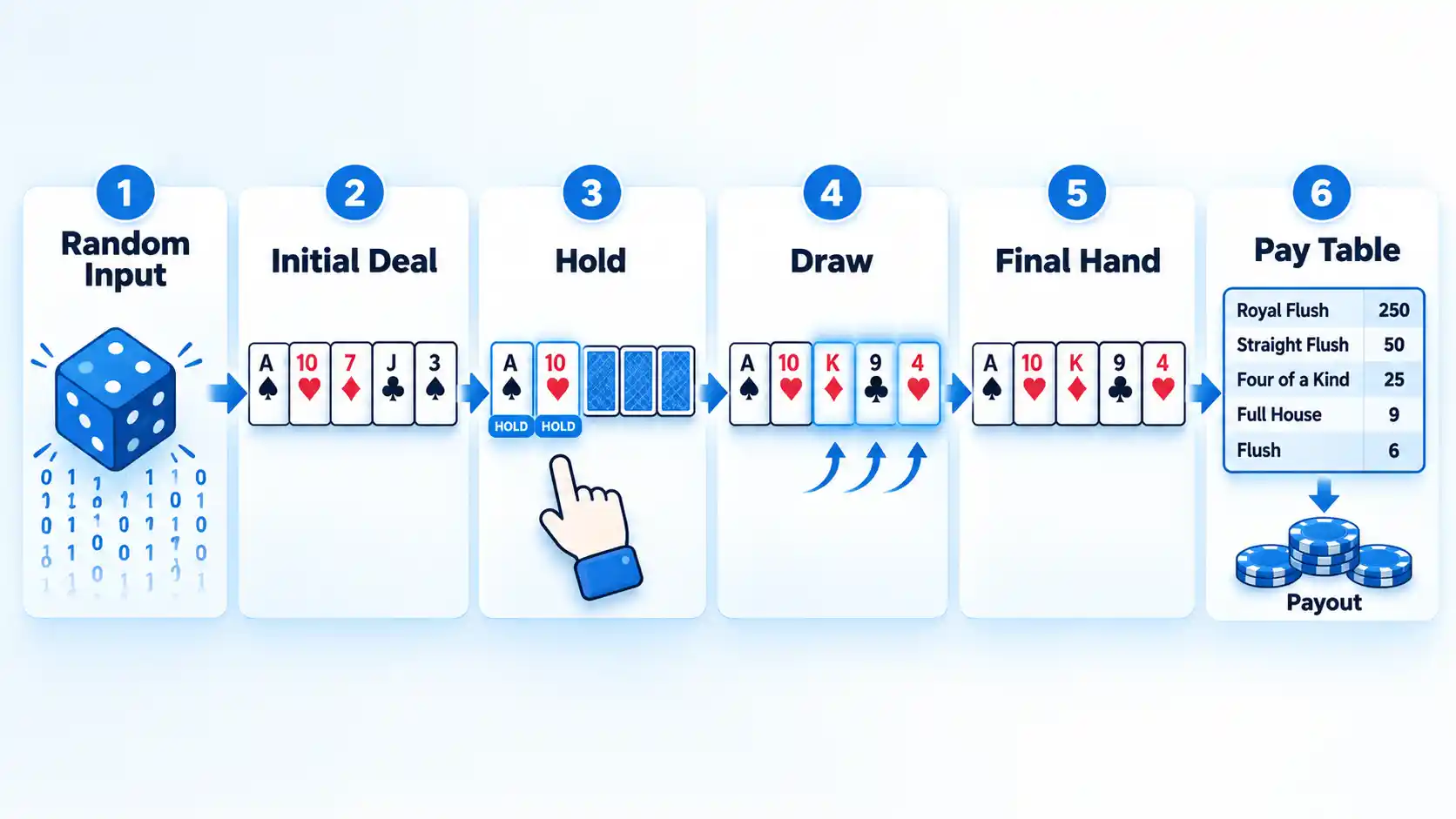
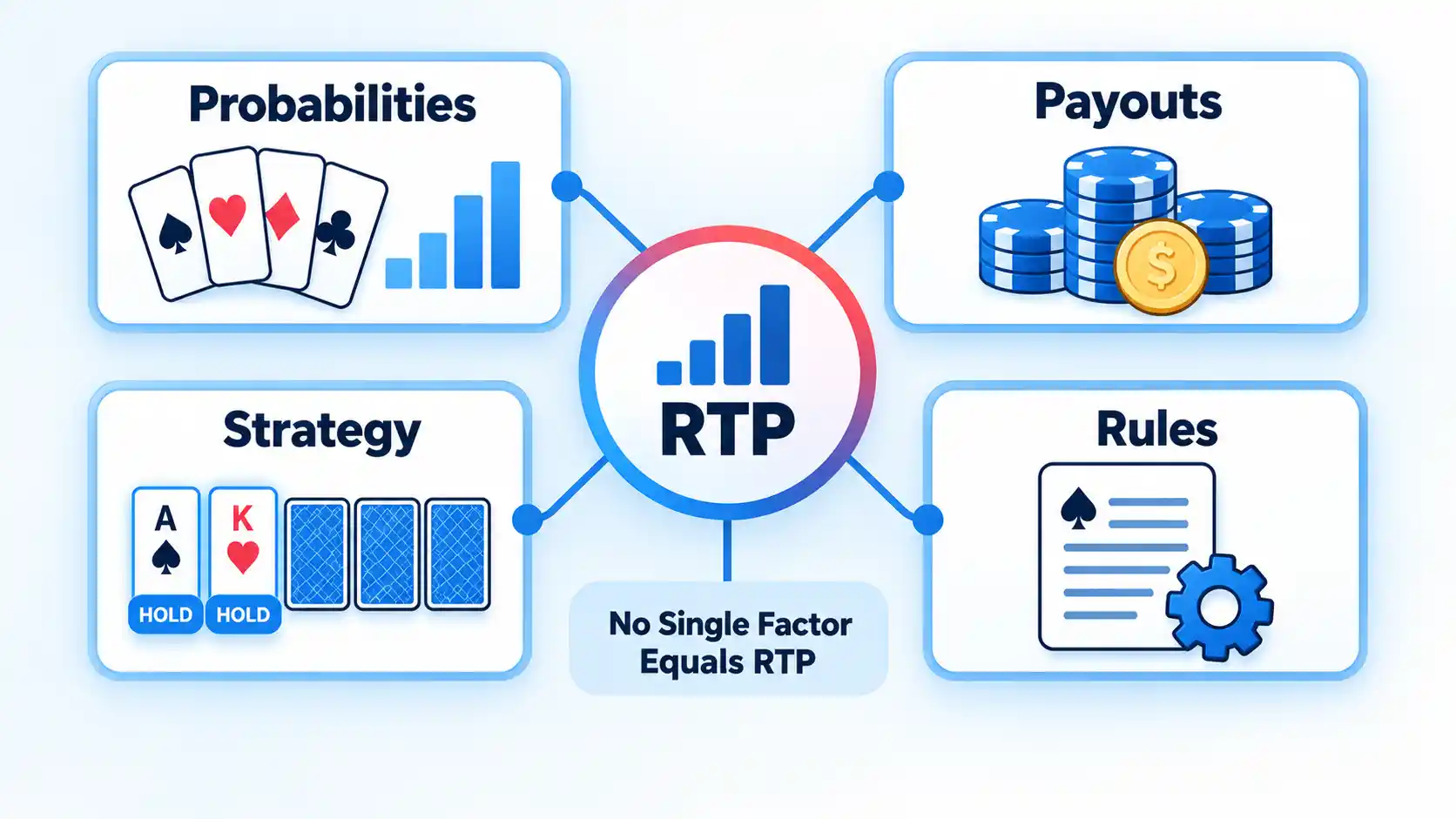
Video poker RNGs, pay tables and return to player (RTP) describe different parts of the same mathematical system. The RNG supplies random input, the game rules turn that input into cards and outcomes, the pay table assigns payouts, player decisions change which final hands remain possible, and theoretical RTP summarizes the long-run result under a stated strategy.
The Four Parts People Commonly Mix Up
The easiest way to understand video poker is to separate four mechanisms that are often treated as if they were the same thing: random number generation, game rules, player strategy, and the pay table.
A random number generator (RNG) produces unpredictable random inputs. Those inputs do not, by themselves, mean “win,” “lose,” “flush,” or “full house.” The game software maps the random inputs to cards or other game outcomes according to its rules.
A pay table specifies how much each qualifying final hand pays. A pair of Jacks may pay one amount per unit wagered, a full house another amount, and a royal flush much more. Changing those payouts can change the game’s theoretical return even when the random-selection process remains valid.
Advertisement
Strategy enters between the initial deal and the final result. You choose which cards to hold and which to discard. That decision changes the collection of final hands that can be reached from the current position.
Return to player, or RTP, is the designed long-run return under the game’s stated rules and assumptions. It is not a separate mechanism inside the machine that decides whether an individual hand wins.
The UK Gambling Commission makes an important distinction in its random-outcome technical standard: random inputs must be mapped to game outcomes according to prevailing probabilities and pay tables. That separates random generation from the rules that convert random inputs into meaningful game results.
The same distinction matters when common video poker myths are evaluated. A belief about streaks concerns randomness, while a claim about 9/6 versus 9/5 Jacks or Better concerns payouts. Mixing those layers produces misleading explanations.
Advertisement
What the RNG Actually Does
An RNG generates unpredictable random values. In a regulated implementation, the resulting random output and game outcomes must behave consistently with the probabilities the game claims to use.
The UK Gambling Commission requires applicable remote games to produce results that are “acceptably random.” Its standard says RNG output should be appropriately distributed and unpredictable, and that seeding or scaling methods should not introduce predictability. It also prohibits adaptive behavior that changes outcome probabilities during ordinary play.
That last point matters because the game is not permitted under that standard to become more generous after a losing streak or less generous after a win simply because of previous outcomes. Properly defined bonus or special features can use different disclosed rules, but that is different from secretly changing the probability of ordinary results.
The RNG is only one layer. A random value still has to be mapped to something meaningful in the game. In video poker, that mapping contributes to the selection of cards or outcomes under the game’s defined rules. The exact implementation can vary, which is why it is safer to explain the regulatory requirement than to claim that every machine uses one particular algorithm, sampling rate, or shuffle process.
Advertisement
The broader role of random number generators in digital casino games follows the same general principle: random generation supplies unpredictable input, while game-specific logic determines what that input means.
How a Video Poker Hand Moves From Deal to Draw
In conventional draw-style video poker, the visible sequence is straightforward. The game presents an initial hand, you choose which cards to hold, you initiate the draw, discarded positions receive replacement cards, and the final hand is evaluated against the pay table.
For example, suppose the initial hand contains two Jacks and three unrelated low cards. Holding the pair leaves three positions to replace. The replacement cards are selected according to the game’s random-selection process, and the resulting five-card hand is then evaluated for a payout.
One regulatory example makes the timing especially clear. Nevada Gaming Control Board Technical Standard 1 states that video poker games must not determine replacement cards before the player selects hold cards and initiates the draw. The same standard requires the RNG and random-selection process to be protected from outside influence.
Advertisement
That Nevada requirement should not be turned into a claim that every video-poker-style product worldwide uses an identical internal architecture. It establishes a documented rule for that regulated model. Other jurisdictions or nonstandard products may use different technical implementations while presenting a similar interface.
What a Pay Table Controls
The pay table answers a different question from the RNG: how much does each final hand pay? It does not determine which random cards arrive. Instead, it assigns value to the final outcome after the hand has been completed.
Jacks or Better provides a useful example because the same game family can use several payout schedules. The shorthand “9/6” means the referenced schedule pays 9 units for a full house and 6 for a flush per unit wagered under that structure. Other schedules change one or both of those payouts and therefore change the calculated return.
The table below uses figures from the current Jacks or Better return analysis. It illustrates how payout changes alter theoretical return rather than ranking one version as a recommended game.
Advertisement
Selected Jacks or Better pay tables and calculated optimal-strategy returns
Pay Table
Full House
Flush
Calculated Return
9/6
9
6
99.5439%
9/5
9
5
98.4498%
8/6
8
6
98.3927%
The relationship is visible immediately. The card game can still be called Jacks or Better, but a lower full-house or flush payout changes the weighted value of the outcomes and therefore changes theoretical RTP.
This is why reading the complete video poker pay table is more reliable than identifying a game only by its title. Even familiar shorthand describes only part of the payout structure, so the remaining rows still need to match the calculation being cited.
Why Strategy Changes RTP Even Though the Cards Are Random
Randomness and strategy are not opposites. The RNG controls which cards become available, while strategy controls what you do with the cards you have already been dealt.
Suppose an initial hand offers both a low pair and four cards to a flush. Keeping the pair creates one set of possible final outcomes. Discarding the pair and drawing to the flush creates another. The random draw remains uncertain in either case, but the probabilities and average value of those two decisions are not equal under the referenced 9/6 Jacks or Better pay table.
Advertisement
Expected value is the average mathematical value of a choice across many repetitions of the same situation. A play with the higher expected value is not guaranteed to win on the next hand. It simply performs better on average under the model’s assumptions.
The optimal strategy analysis for 9/6 Jacks or Better illustrates this directly. Its strategy ordering ranks four cards to a flush above a low pair for the relevant situation because the former has the higher average return under that pay table.
This relationship also appears in regulatory RTP guidance. The UK Gambling Commission’s RTS 3 rules on likelihood-of-winning information state that when a non-peer-to-peer game contains an element of skill, theoretical RTP should be calculated using either an auto-play strategy or a standard or published strategy.
That qualification is important. A published RTP for a skill-influenced game is tied to an assumed way of playing. Using a different strategy can produce a different player return even if the RNG and pay table remain unchanged.
Advertisement
How Theoretical RTP Is Calculated Conceptually
Theoretical RTP is better understood as an output of the game’s mathematics than as a setting controlled directly by the RNG.
At a conceptual level, each possible final outcome has two important properties: how often it occurs under the stated rules and strategy, and how much the pay table awards when it occurs. The contribution from an outcome is its probability multiplied by its payout. Add those contributions across the complete set of outcomes and you obtain the expected return.
In plain text, the idea is:
theoretical RTP = sum of each outcome’s probability × its payout
Advertisement
Video poker adds an extra layer because the player’s hold-or-discard choices influence the probabilities of the final hands. That means the theoretical calculation depends not only on the pay table but also on the assumed strategy.
For full-pay 9/6 Jacks or Better, Wizard of Odds calculates a total optimal-strategy return of 0.99543904, or approximately 99.54%. That figure is the combined contribution of all final outcomes under the stated rules and optimal strategy. It is not produced by instructing the RNG to “return 99.54%.”
This is the central relationship: the RNG supplies randomness, but theoretical RTP emerges from probabilities, payouts, rules, and player decisions working together.
Theoretical RTP Is Not Your Session Return
A theoretical RTP of 99.54% does not mean that wagering $100 produces exactly $99.54 in returned winnings during a particular session.
Advertisement
The UK Gambling Commission distinguishes theoretical RTP from actual RTP. Actual RTP can be measured by dividing recorded wins by turnover over a defined period. Its RTP calculation guidance gives a worked example in which a game designed for one theoretical percentage records a different actual percentage over a limited sample.
Volatility describes how widely results can vary around the mathematical average. A volatile game can produce substantial short-run deviations because outcomes do not occur in a perfectly even sequence.
The Commission’s guidance explains that the statistical tolerance around theoretical RTP is wider when only a limited amount of play has been measured and decreases as the volume of play grows. Larger samples therefore provide a more stable basis for comparing actual performance with the theoretical design.
That does not mean a particular person’s balance must converge to the published RTP after a specific number of hands. Statistical convergence describes behavior across large samples, not a repayment schedule for an individual session.
Advertisement
Why the Same Game Name Can Produce a Different RTP
A familiar name such as Jacks or Better identifies a game family, not necessarily one exact mathematical configuration.
The pay table can differ. The treatment of special hands can differ. Wild-card rules can differ. Maximum-wager payouts can differ. Even the handling of discarded cards can differ in an unusual implementation.
That is why an RTP figure should always be attached to a specific rule set and pay table. Saying “Jacks or Better returns 99.54%” without qualification is incomplete. The approximately 99.54% figure belongs to the full-pay 9/6 configuration under optimal strategy described by the cited mathematical analysis.
The same principle applies when comparing video poker with slots. Both categories can use random generation, but the way player choices, outcome probabilities and payout structures contribute to theoretical return differs by game design.
Advertisement
Important Exception: Not Every Video-Poker-Looking Game Uses the Same Draw Rules
Conventional Jacks or Better analysis assumes that discarded cards stay out of the draw pool for the remainder of that hand. That assumption matters because changing which cards can return on the draw changes the final-hand probabilities.
A documented nonstandard example analyzed by Wizard of Odds instead returned discarded cards to the deck before the replacement draw. Under those rules, a single 52-card deck is used, the player receives five cards, discarded cards are placed back with the remaining undealt cards, and replacement cards are then drawn.
The mathematical consequence is substantial. Using the listed 9/6 pay table, the with-replacement analysis calculates an optimal-strategy return of about 96.60%. On the same source page, conventional Jacks or Better with the same pay table and no replacement is calculated at about 99.54%.
Warning!
Advertisement
Do not assume that a familiar video poker name guarantees familiar draw mechanics. Check the game’s rule screen, pay table, treatment of discarded cards, wild-card rules and jurisdiction before applying an RTP or strategy figure calculated for another implementation. Some online gambling systems also use provably fair verification, which is a different transparency model from conventional regulator-tested game implementations.
This edge case is a useful reminder that RTP is inseparable from the rules used in the calculation. Identical-looking payout numbers do not guarantee identical probabilities if the draw mechanics are different.
How to Evaluate an RTP Claim Correctly
You do not need to reproduce the entire probability model to tell whether an RTP claim is properly specified. Check whether the figure identifies the assumptions that materially affect the calculation:
Exact game or variant: Jacks or Better, Deuces Wild and bonus variants do not share one universal model.
Complete pay table: small payout changes can alter theoretical return.
Wager assumptions: some schedules change payouts at specific wager levels.
Strategy assumption: a skill-influenced game’s theoretical RTP may assume optimal or another published strategy.
Draw and card rules: replacement, wild-card and special-feature rules can change outcome probabilities.
Type of figure: theoretical RTP and measured actual RTP are not interchangeable.
A common failure is copying the approximately 99.54% return associated with full-pay 9/6 Jacks or Better and applying it to a game that has a 9/5 or 8/6 schedule. Another is using a strategy designed for one pay table while quoting the optimal return for another.
The UK Gambling Commission’s rules reinforce this need for specificity. Applicable games must make information about their rules and likelihood of winning available, and for skill-influenced games the RTP calculation must be tied to an identifiable strategy basis.
Advertisement
Bottom Line
Video poker RTP is not something the RNG independently chooses. The RNG supplies unpredictable random input, the game rules map that input into cards, your hold-or-discard decisions affect the probabilities of final hands, and the pay table assigns value to those outcomes.
Combine those probabilities and payouts under a defined strategy and you get theoretical RTP. Change the pay table, strategy or draw rules and the result can change even when the random-number process remains valid. That is why a useful RTP figure always belongs to a specific game configuration rather than to a game name alone.
What just happened? California is tightening the rules on how tech companies keep children glued to their screens. Governor Gavin Newsom has signed a package of laws targeting addictive social media features and potentially harmful AI companions, with large platforms facing penalties of up to $1 million per child for negligently causing harm.
Newsom’s office describes the chatbot and social media protections as the strongest in the country, including the nation’s first requirements for independent child safety audits and annual risk assessments for companion chatbots.
The measures, which were signed on September 10, include AB 1709, which prohibits social media companies from offering addictive features to users under 16. That covers autoplay and algorithmic feeds built around a user’s history and profile.
“Innovation comes with responsibility and protecting our children comes first,” Newsom said.
Advertisement
The chatbot centerpiece is SB 1119, also known as Adam’s Law. Named after teenager Adam Raine, whose parents sued OpenAI over claims ChatGPT encouraged his suicide in 2025, it requires risk assessments before new or substantially modified companion chatbots are released, alongside independent compliance audits.
According to the bill’s authors, operators must use age-bracket signals supplied through operating systems. Default protections include usage limits, disabled notifications, and restrictions on persistent conversational memory, with changes reserved for parents.
Companies also face liability if they fail to take reasonable measures against harmful outputs, including sexual content, romantic roleplay, and emotional manipulation that encourages children to withdraw from friends and family. Crisis support and parental notification requirements address credible threats of imminent self-harm.
Families harmed by violations of specified protections can seek legal action. Operators must also implement incident reporting, while independent audit findings will be submitted to the California Attorney General.
Advertisement
“We cannot make the same mistakes that were made with social media,” said Senator Steve Padilla.
Last year, 44 attorneys general warned AI companies they would be held accountable for harm to children. That followed revelations about Meta’s internal chatbot guidelines permitting romantic exchanges with minors. Meta said the offending sections had been removed and were inconsistent with its policies.
Unsurprisingly, Meta isn’t happy about the new feed restrictions. The company argues that personalization helps it provide teenagers with relevant, age-appropriate content, according to the Associated Press.
“Personalization is also how we deliver age-appropriate content for teens that is relevant to them – all with the proper guardrails in place,” spokesperson Jim Cullinan said.
Advertisement
The package also restricts targeted advertising to children and the use of school pupil data in AI systems. Families will be able to opt out of school-issued laptops, too.
The signing follows two AI oversight laws approved on September 9. SB 813 establishes a framework for independent organizations to assess AI systems’ compliance with state law, while AB 1405 creates a registry of AI auditors and standards for their independence.
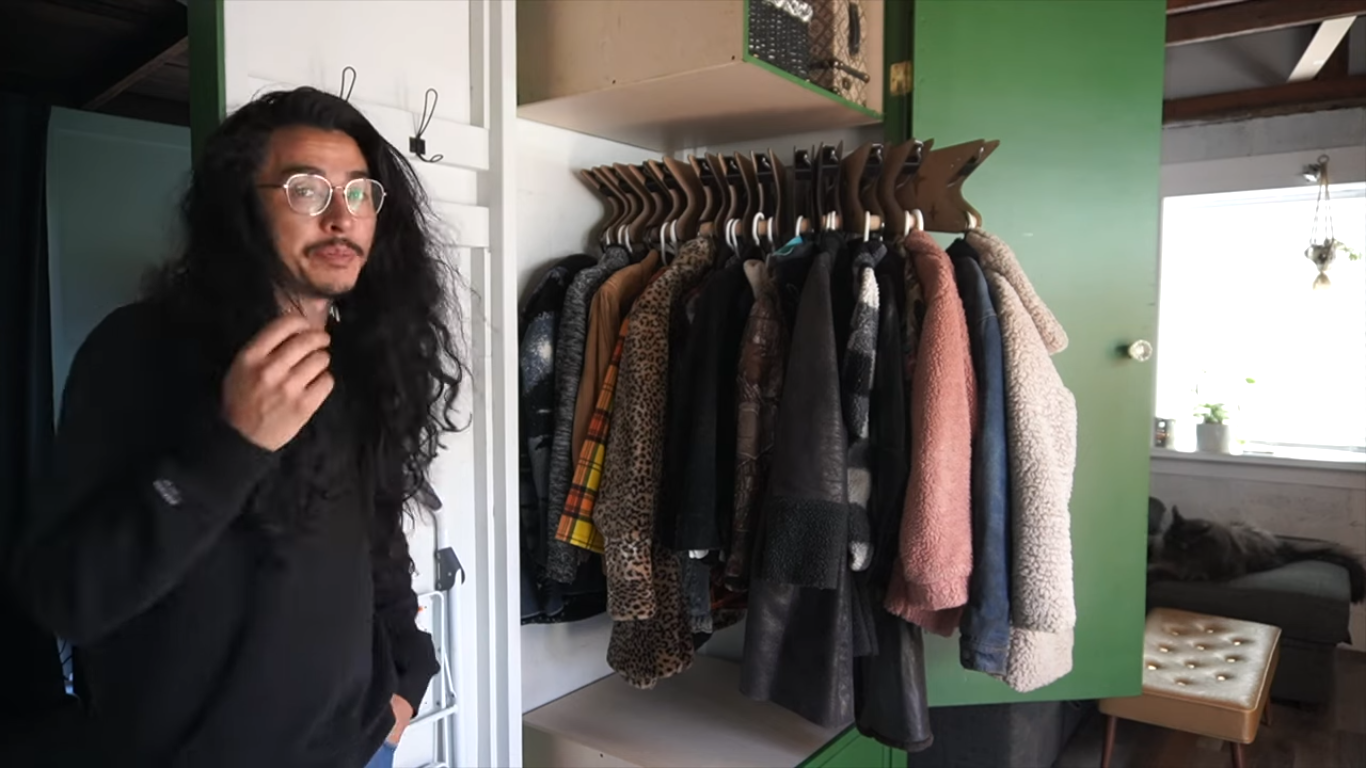
As any science YouTuber or first-year physics student is quick to point out, the universe is mostly empty space. Not just space itself, but the amount of “empty” space between nuclei and their electrons is also huge. Getting rid of this empty space results in all kinds of interesting phenomena like degenerate matter and black holes. But the concept can be extrapolated into our daily lives as well; many things are so filled with air that we can get a lot more usable storage space by compressing them down a little bit. [Super Valid Designs] took this concept to a coat closet, building one that can hold an impressive number of coats.
He started by looking at an existing closet, which could hold around 21 coats but only if someone used two hands to cram the coats into the space. After a trip to a store which sells rugs, he saw a much better design that lets all the rugs pivot like the pages on a book, and took this idea to his closet using a similar mechanism designed for storing large blueprints instead of rugs. The closet he built around this mechanism has two hinged doors which allow a person easy access to the coats, and when opened the blueprint hangers pivot out like a book, allowing the coats to not only be easily accessed without disrupting the other coats, but also allow them to be compressed down by the closet door for storage.
For comparison, the original closet could only hold 10 coats when restricted to single-hand operation and 21 when using both. The new closet design is smaller, and can hold 24 coats with a single hand and over 30 when using both, a dramatic improvement of closet efficiency. To top it off, a set of cupboards on top and bottom allow for storing shoes and hats as well, and there’s even a garage for a robotic vacuum cleaner. Surprisingly, we don’t see many closet optimization builds around here. The closest we can come is another traditionally small space, a college dorm.
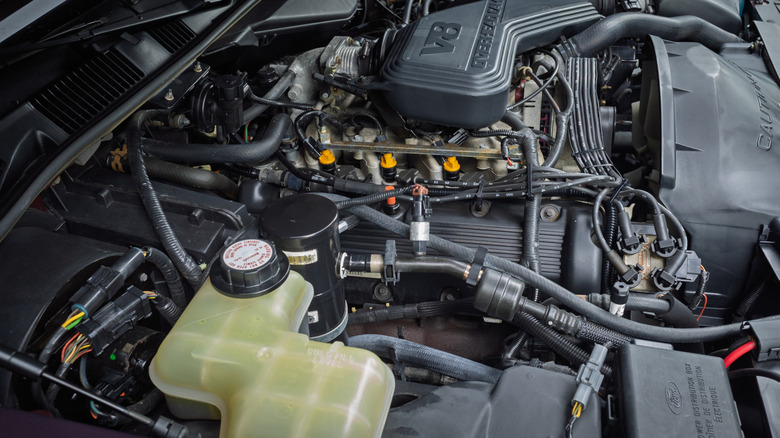
The Ford Crown Victoria is an American icon, instantly recognizable due to its prominence as a police car. In the 1990s, 85% of police cars in the United States and Canada were Crown Vics. That’s because this sedan is known for its body-on-frame build, simplicity, and reliability, making fleets affordable to run, fix, and replace. One reason for the Crown Victoria’s reliability was its engine, the Ford 4.6-liter V8.
This V8 was initially released in 1991 for the Lincoln Town Car and was used in later models like the Mustang GT and Crown Victoria. It was recognized throughout the years for its durability and solid construction until it was discontinued in 2014, replaced by the 5.0-liter Coyote V8. The 4.6-liter V8 was the first in Ford’s modular camshaft engine line — modular meaning the engine assembly was simplified, efficient, and easy to swap. While the engine gets a lot of respect now, it was actually a bit ridiculed back in the 1990s for its lack of power, as the 1992 Ford Crown Victoria only had 190 horsepower — 220 hp for police who equipped a dual exhaust.
Advertisement
Why did police use the Ford Crown Victoria?
A. Viduetsky/Shutterstock
Ford vehicles have been used by law enforcement since the 1910s, prompting Ford to even create police packages for some of their vehicles by the 1950s. These police trims came with modifications focused on speed, comfort, and safety. By 1961, 58% of police cars in the largest cities across the United States were using Ford vehicles. When the Mustang entered the service in 1982, Ford highlighted its fast acceleration, warning drivers that it could even catch exotic sports cars.
In 1983, police started adopting the LTD Crown Victoria, with its 5.8-liter V8 engine and police package. The Crown Victoria became its own model in 1992 and the police-focused Interceptor variant quickly became the majority of police cars in the U.S. and Canada by 1998. It continued to serve in the police force until 2012, not long after Ford discontinued the Crown Vic in 2011.
Even though police have used plenty of other vehicles — Ford and otherwise — since then, the Crown Victoria still gets respect for its time thanks to its speed, handling, good crash rating, pretty roomy cabin space, and ability to serve well past 200,000 miles with minimal and cheap maintenance. The 4.6-liter V8 also has plenty of endurance, making up for it not being the fastest in cars like the P71. For these reasons, you’ll still see some police departments using Crown Victoria sedans to this day.




















































You must be logged in to post a comment Login