Tech
Schiit LYR 5 Lands with Forkbeard and Fusion: Serious Headphone Amp or More Schiit for Your Rack?

Schiit Audio doesn’t do nostalgia for the sake of it, but it does know when to keep a good thing alive and sharpen the edges based on what the market actually needs right now. At $799, the new Lyr 5 is the latest stop on a line that started with the Lyr 3, got more serious with the Schiit Lyr+, and now lands somewhere between old-school tube romance and app-controlled reality. Same idea, cleaner execution.
The formula hasn’t changed for those in the Head-Fi crowd who might be looking through its tube stash at this exact moment; it’s still a hybrid headphone amp that lets you run a real tube or ditch it entirely for MOSFET gain. The Lyr 5 adds Schiit’s Forkbeard control system, which means this thing actually tells you what it’s doing instead of leaving you to trust your ears and your mood.

Class A, Class A/B, output levels; it’s all visible, adjustable, and perfect for those within the headphone community who change headphones more frequently than they change their clothes; based on CanJam NYC 2026 last weekend, not often enough.
Power isn’t the problem. With up to 6000mW on tap from both balanced 4.4mm and single-ended outputs, Lyr 5 will drive pretty much anything short of a small refrigerator. The relay ladder volume control keeps channel balance tight, the linear power supply keeps things stable, and the Fusion setup lets you flip between tube and solid state without committing to either lifestyle full time. Not that there’s anything wrong with that.
Schiit Lyr 5 Specs That Actually Matter: Power, Noise, and Why It Drives Anything
On paper, the Lyr 5 is overbuilt in all the right ways. It delivers up to 6 watts per channel into 32 ohms, which is more than enough for demanding planar magnetics, while still offering 900mW into 300 ohms and 450mW into 600 ohms—right in the wheelhouse for high-impedance models from Beyerdynamic and Sennheiser. In other words, it’s not running out of gas no matter what you plug into it, short of electrostatics. This is not that kind of party.

Noise is essentially a non-issue. In low gain, the amp is quiet enough for most IEMs, with a signal-to-noise ratio above 110dB, and distortion levels so low (as little as 0.002% or lower) that your headphones will introduce far more character than the amp ever will. Output impedance stays low; around 0.4 to 0.6 ohms—which means better control and consistent performance across different headphones.
The hybrid design gives you flexibility. You can run tube mode for a bit of harmonic texture or switch to solid state MOSFET gain for cleaner, more linear output, and when you do, the tube shuts off completely to extend its lifespan. Gain is switchable between low and high, so it works with everything from sensitive IEMs to power-hungry over-ears.
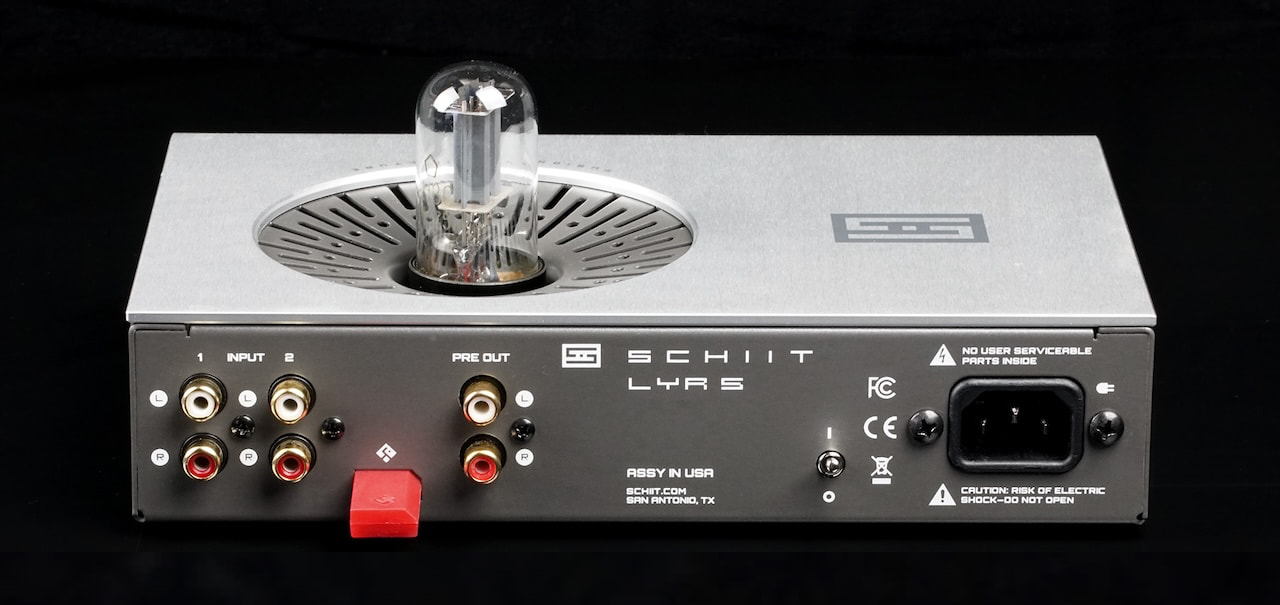

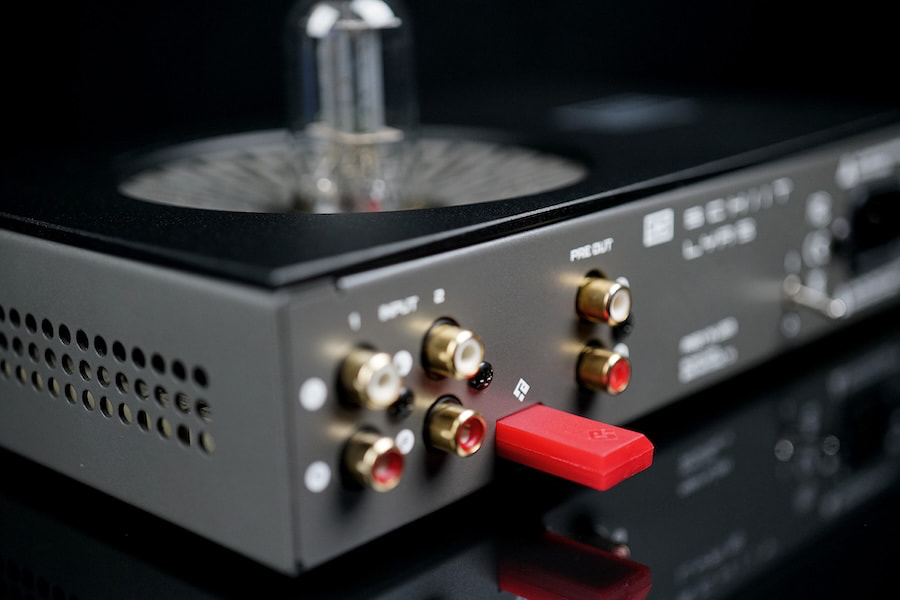
Connectivity is straightforward but useful. You get two single-ended inputs and a preamp output, so yes, this can pull double duty as a preamp in an active speaker system or with an external power amplifer, not just a headphone amp sitting on your desk.
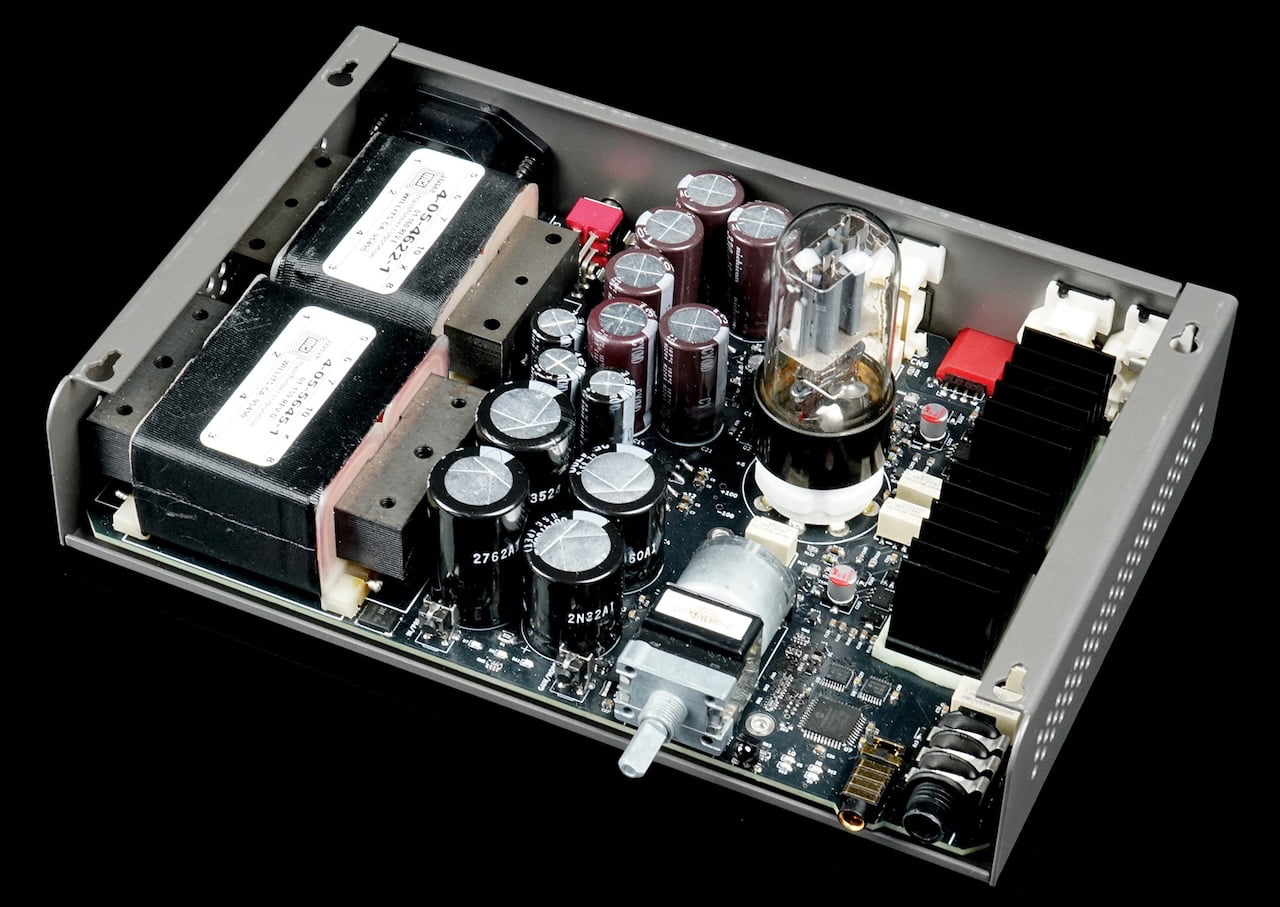
Under the hood, Schiit leans into a fully discrete design with a relay-based volume control, which keeps channel balance tight even at low listening levels. The dual-transformer linear power supply and substantial internal filtering keep things stable, while built-in protection monitors temperature, current, and tube status so nothing goes sideways.
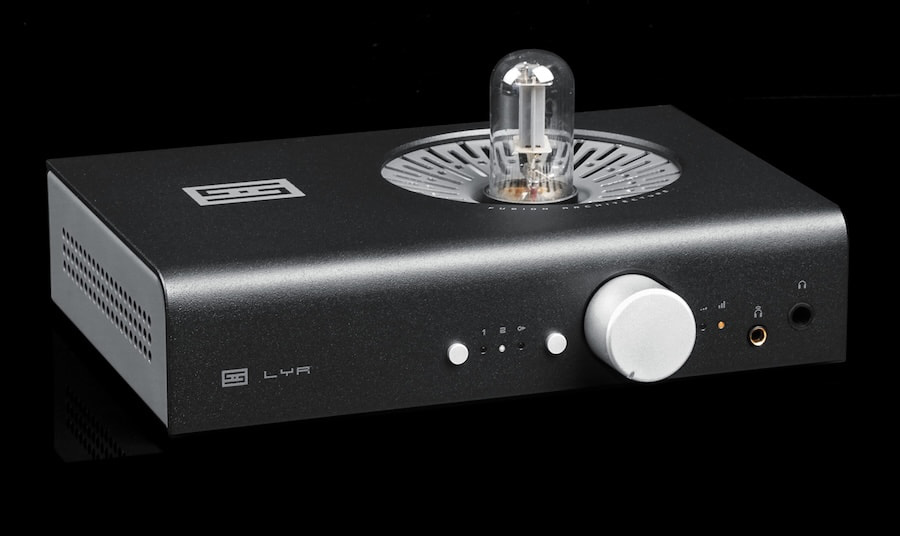
Physically, it’s compact enough for a desk at 9 x 6 x 2 inches and about 6 pounds, though it does run moderately warm—no surprise given the power on tap. Add in full remote control and Forkbeard app integration, and you’ve got an amp that’s not just powerful, but actually tells you what it’s doing while it does it.

The Bottom Line
The Lyr 5 offers a practical choice between tube and solid state operation in one amp, with the ability to switch between them without changing your setup. It combines strong output power, relay based volume control, a linear power supply, and Forkbeard system monitoring in a single design.
It does not include balanced inputs, a built in DAC, or support for electrostatic headphones, so it is not intended for fully balanced systems or all in one use.
It is best suited for listeners using a range of headphones, including high impedance models from Beyerdynamic and Sennheiser, who want one amplifier that can handle different use cases without needing multiple components.
Where to buy: $799 at Schiit
You must be logged in to post a comment Login