Tech
Sennheiser HD 480 Pro Plus Review: Excellent Studio Design, Questionable Studio Tuning

Sennheiser has spent decades building headphones for recording studios, broadcast facilities, and working musicians. Audiophiles might claim the brand as one of their own, but professional audio has always been central to Sennheiser’s identity, which makes the new HD 480 Pro Plus particularly interesting.
The Sennheiser HD 480 Pro Plus is a full-size professional monitoring headphone designed around the things studio users actually care about: comfort, durability, replaceable parts, and the ability to survive long sessions without becoming a distraction. From a design perspective, Sennheiser gets a lot of that right.
The tuning, however, is where things become more complicated.
Rather than chasing the ruler-flat response many engineers expect from a studio monitor, the HD 480 Pro Plus rolls off the frequency extremes and places greater emphasis on the midrange. That approach can work extremely well with vocals, acoustic instruments, and less bass-dependent recordings, but it also raises an obvious question: is this really the kind of tuning professionals want from a studio headphone?
Related Reading:
Design & Build

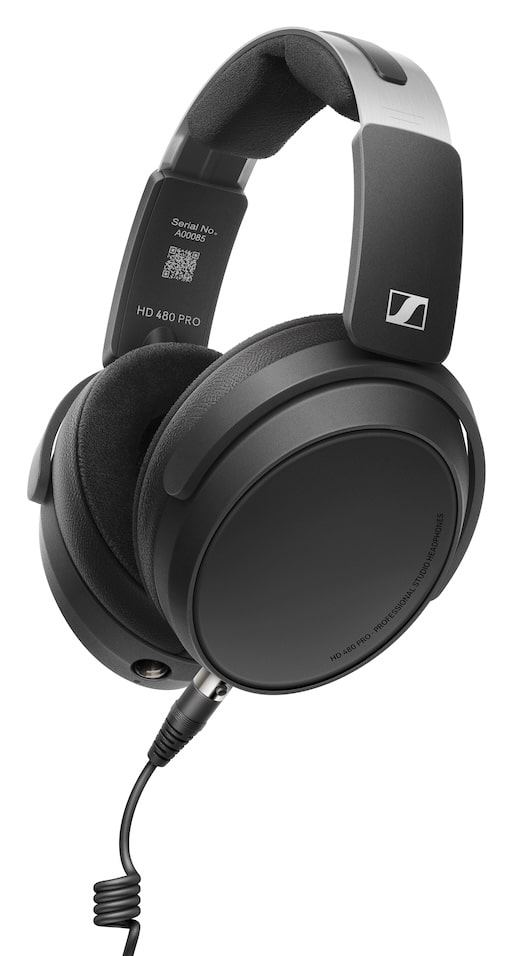
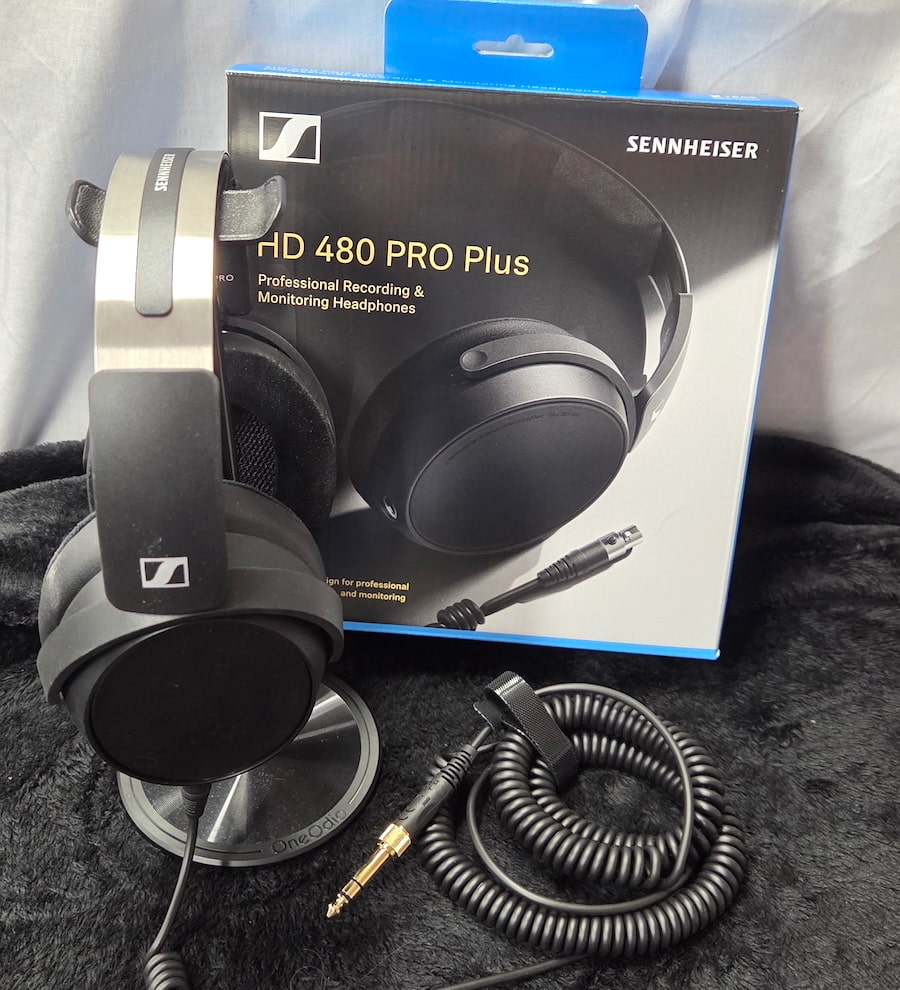
The HD 480 Pro comes in two versions. The headphone itself is sold as the HD 480 Pro for $399, while the HD 480 Pro Plus adds a hard case and retails for $439. The headphone is identical in both packages, so while I received the Pro Plus for review, buyers of the standard HD 480 Pro are giving up nothing beyond the case.
The HD 480 Pro follows a familiar Sennheiser design approach with large oval earcups, a broad padded headband, and a mostly plastic construction intended to keep the weight under control. It is very clearly the closed-back counterpart to the previously reviewed HD 490 Pro, with identical dimensions and considerable parts commonality between the two models.
One change worth noting is production. While the HD 490 Pro was designed in Germany, production takes place in Romania.
The extensive use of plastic is a double-edged sword. At 272 grams, the HD 480 Pro is relatively light, which matters when a headphone might be worn through an entire recording session. That weight savings only works, however, if durability has not been substantially compromised in the process.
Studio headphones are tools. They get dropped, thrown into gig bags, bounced between locations, and subjected to considerably more abuse than most headphones sitting beside an amplifier at home. Sennheiser strikes a good middle ground here, with enough metal reinforcement in the headband that a slight twist is unlikely to cause any damage and polymer components thick enough that a few trips to the floor should not leave pieces behind.
Fit and finish are fairly middle of the road. There is only so much that can be done to hide the seams between polymer components, but the adjustments are clearly defined and feel solid, which again reflects Sennheiser’s effort to balance weight, durability, and cost.
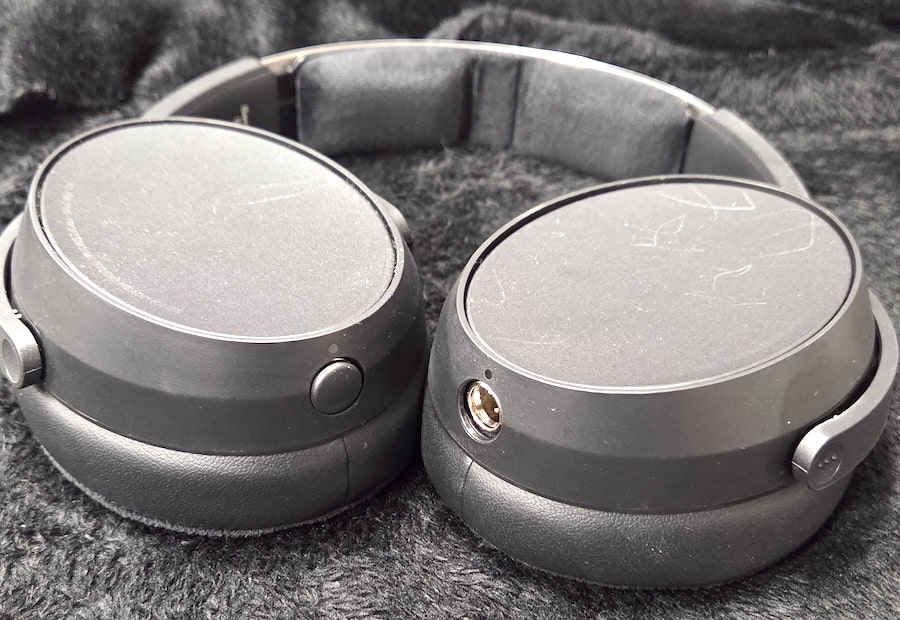
The earcups rotate sufficiently to make storage and transport easier, while the broad headband spreads pressure evenly across the top of the head.
The detachable cable terminates in a 3.5mm plug with a screw-on 6.35mm adapter at the source end, while the headphone end uses a micro-XLR connector that can be attached to either earcup depending on user preference. The cable also reflects the HD 480 Pro’s intended professional use, combining straight and coiled sections in an effort to provide additional working length without turning storage into a wrestling match.
Comfort & Fit

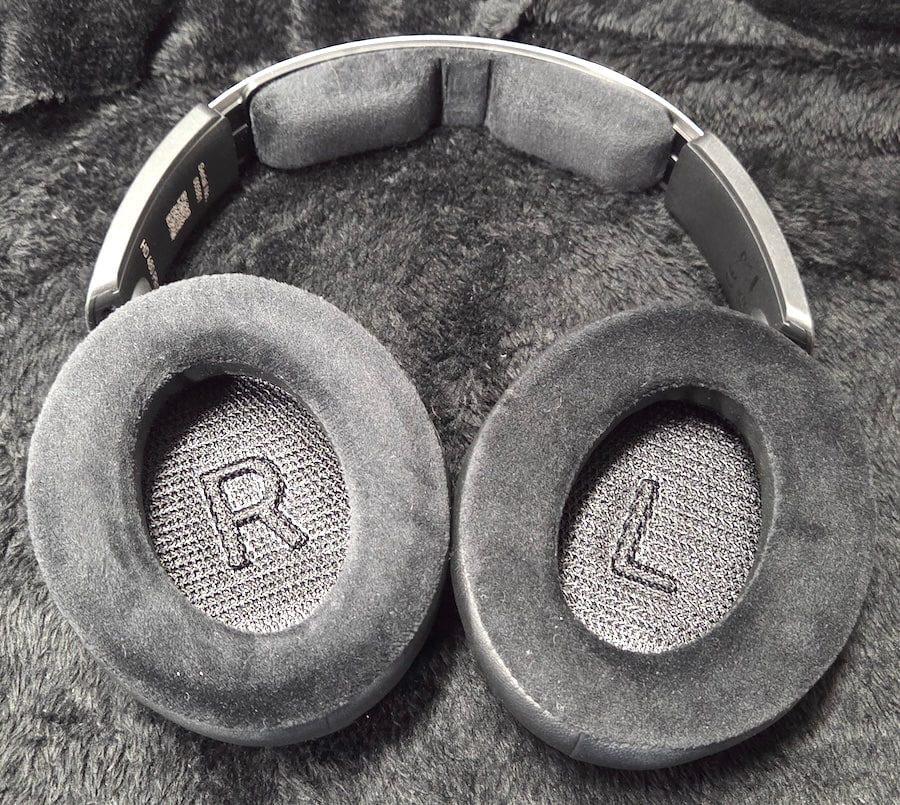
Comfort is one of the HD 480 Pro Plus’s strongest characteristics. At just 272 grams, it is light enough for extended listening, while the broad headband distributes pressure effectively across the top of the head. Clamping force is noticeable but not excessive. Listeners with larger heads may find the fit somewhat snug at first, but the pressure becomes less intrusive once the headband is adjusted and the pads begin to settle.
The velour pads are smaller than those used on the HD 6xx series, but there is still enough room that my ears did not touch the inside of the pads. The use of velour does reduce passive isolation somewhat compared with leather or more heavily sealed pads, but it also helps keep heat under control during longer sessions.
With a closed-back design, that choice may be deliberate. The open-back HD 490 Pro offers a more sealed pad option that will also fit the HD 480 Pro, giving listeners some flexibility if they prefer greater isolation or a slightly different feel.
As with any full-size headphone, eyeglasses can affect the seal. Listeners with thicker frames may notice some variation in bass weight depending on how the pads sit, although I found it relatively easy to make small adjustments and achieve a consistent fit.

Drivers & Specifications
The design of the HD 480 Pro relies on more than just the driver itself to improve performance. Sennheiser’s Vibration Attenuation System is integrated into the earcups to reduce unwanted vibrations, reflections, and distortion, while the geometrically angled earcups position the drivers to provide a more consistent path to the ear.
The 38mm dynamic drivers use neodymium magnets and an ultralight voice coil, with the latter intended to improve speed and transient response.
Nominal impedance is listed at 130 ohms, with a sensitivity of 98 dB SPL at 1 mW. While that impedance figure might suggest the need for substantial amplification, the HD 480 Pro is easier to drive than a number of traditional studio headphones and worked well with the portable sources I used during testing. With most modern portable gear, sensitivity is the more immediate concern, and the HD 480 Pro does not require an especially powerful amplifier to reach useful listening levels.
Frequency response is specified at 3 Hz to 28,700 Hz (-10 dB), which is oddly specific at the upper end. That level of precision suggests those figures are tied to actual measurement results rather than the conveniently rounded marketing numbers we often see printed on the box.
Listening
The HD 480 Pro Plus has limited sub-bass presence, beginning to roll off below about 50 Hz. While the published frequency response claims extension down to 3 Hz, output is already substantially reduced well before reaching that point, which makes me wonder what tolerance was used for that specification. Sub-bass is neither emphasized nor especially well defined, and even with EDM or dedicated bass test tracks, the HD 480 Pro produces relatively little energy in the lowest octave. Anyone looking for serious low-end weight will not find it here.
What the HD 480 Pro does offer is fairly clean and uncolored mid-bass. There is more presence here than in the sub-bass, but it never takes a starring role. Think supporting cast rather than lead actor. Above roughly 40 Hz, the bass response is close to neutral and remains fairly even as it transitions into the lower midrange.
The midrange is somewhat more prominent, but not artificially pushed forward. Vocals cut through the mix cleanly, guitars retain good clarity and rasp, and strings have enough energy through their lower registers to sound natural. Some of that realism is lost as strings move into the upper registers, largely because of the polite treble and the closed-back design, which limits the sense of air.
Lower-register vocals have good weight, while higher voices sit slightly farther forward and carry somewhat less body. Sibilance and nasal coloration are clearly audible when they are present in the recording, so the HD 480 Pro does not hide mistakes. Just as importantly, I did not find it prone to creating either problem when they were not already there.
Treble is on the polite side, with reasonable extension but limited energy. There is a modest rise from roughly 3 kHz through 5 kHz, followed by a more substantial reduction above about 7 kHz. That helps keep the HD 480 Pro from becoming fatiguing, but it also limits air and sparkle and prevents cymbals from sounding entirely realistic.
The result is a presentation that feels more closed-in than the open-back HD 490 Pro. It also explains why strings can sound somewhat octave-dependent, with a more natural presentation through the midrange than in the upper registers.
On a consumer headphone, I understand tuning the treble to reduce fatigue. On a headphone intended for professional monitoring and mastering, however, I find the choice more difficult to justify. A significant reduction above 7 kHz could potentially mask an overly bright master, allowing excess energy in that region to hide behind the headphone’s own tuning.
The soundstage is solid for a closed-back design, although it does not create the same sense of openness as the HD 490 Pro. Width is respectable, and the presentation avoids feeling trapped inside the earcups, but it remains fairly intimate overall. Imaging is good, with instrument placement easy enough to follow and individual elements maintaining clear positions within the mix.

The Bottom Line
The Sennheiser HD 480 Pro Plus gets a lot right. It is light, comfortable, durable enough for studio use, and the detachable cable can be connected to either earcup. The midrange is clean and revealing, making vocals, guitars, and acoustic instruments especially convincing.
Its biggest weakness is the tuning at the frequency extremes. The rolled-off sub-bass and restrained upper treble reduce fatigue, but they also make the HD 480 Pro less revealing than I would expect from a professional monitoring headphone.
For acoustic music and vocal-heavy material, that balance works well. For EDM, bass-heavy recordings, or mastering work where problems at both ends of the spectrum need to be obvious, it is a much harder sell.
Pros:
- Lightweight 272-gram design is comfortable for long sessions
- Durable construction strikes a good balance between weight and studio use
- Detachable cable can connect to either earcup
- Clean, natural midrange with strong vocal and guitar clarity
- Good imaging and respectable soundstage for a closed-back headphone
- Non-fatiguing presentation works well with acoustic and vocal-heavy material
Cons:
- Sub-bass rolls off early and lacks weight
- Upper treble is too restrained for a professional monitoring headphone
- Tuning may mask problems at the frequency extremes
- Less convincing with EDM and bass-heavy music
- Fit and finish are functional rather than premium
Our Ratings:
★★★★★★★★★★ Sound Quality
★★★★★★★★★★ Build Quality
★★★★★★★★★★ Comfort
★★★★★★★★★★ Isolation
★★★★★★★★★★ Value
You must be logged in to post a comment Login