Tech
Shock Your Way to Victory with the Chessboard That Zaps Mistakes

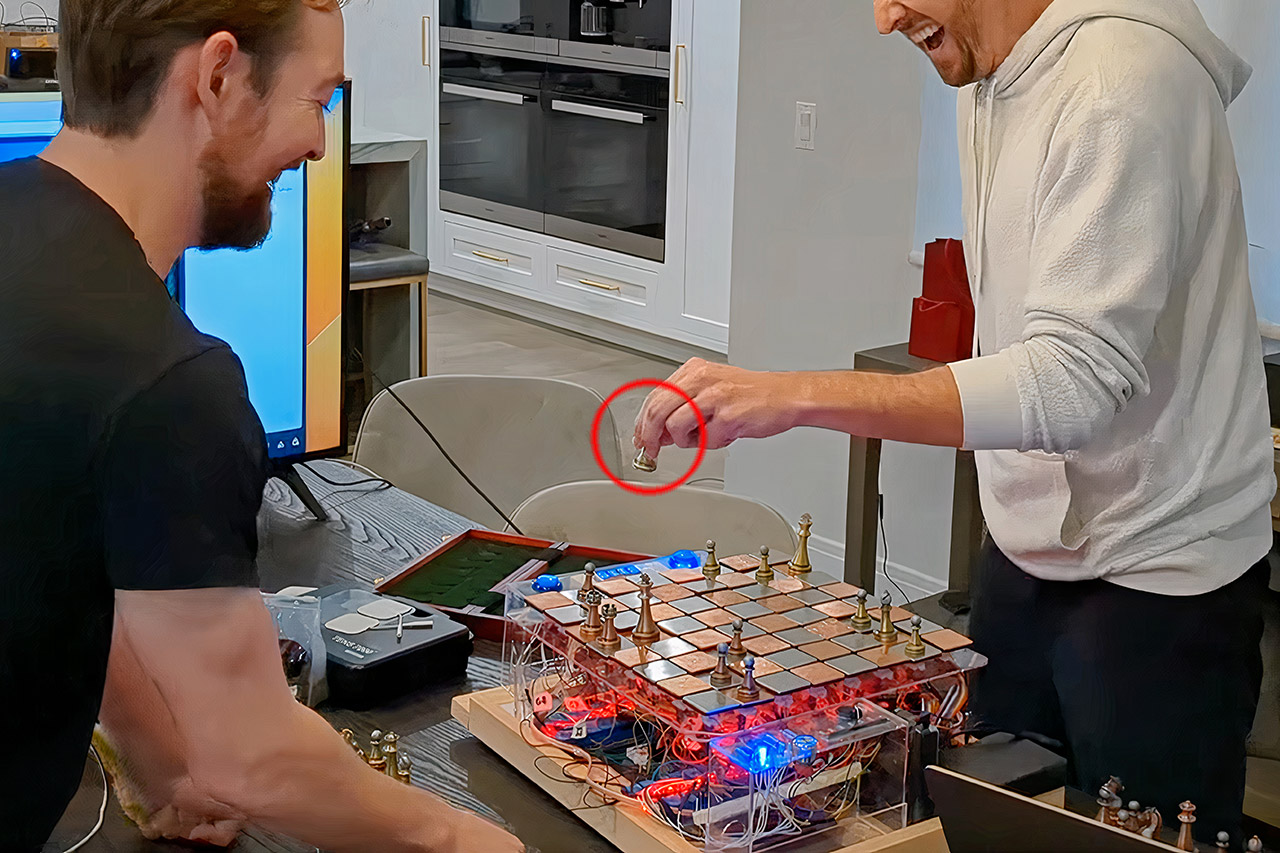
Fletcher Heisler was beaten by chess hustlers in the park, so he wanted revenge, but regular practice wasn’t cutting it. So he reasoned, “Maybe I need some negative reinforcement,” thus taser chess was born, or a chessboard that would literally penalize you for making blunders by delivering an electric shock.


Each square on this regular 8×8 grid has a secret. A mechanical keyboard switch sits underneath, activated by a magnet in the conductive chess pieces. When you lift a piece, the Raspberry Pi running Python chess library software detects it. When you put it back in the wrong spot, one of the relay switches turns on, and a TENS unit with the maximum setting shoots a shock straight through the metal square into your arm, which is strapped to the board. The discomfort brings the point home quickly.
Sale


2 in 1 Magnetic Chess Set & Checkers Board Game, 15″ Wooden Folding Chess Board with 2 Extra Queens…
- 2 In 1 Chess Set & Checkers – In addition to 34 standard chess (Including 2 extra queens), this set also includes 24 checkers game pieces, offering…
- Magnetic Chess And Chess Board – Our chess sets have strong magnets on the surface of the board and on the bottom of the pieces(Notice: The checkers…
- Quality Materials And Workmanship – This chess and checkers set is made of natural high-quality solid wood material, which is very sturdy and durable…
The chess pieces began as low-cost Amazon buys, and he used acetone to remove the lacquer as well as make them conductive. The felt bottoms melted away. He covered half of the squares with copper tape to show the colors without interrupting the circuit. There are four relay boards in there, each with 16 squares, to keep the electricity separated. To be honest, he didn’t bother with en passant; who does that anyway? The Pi just assumes a normal starting position and maintains track of when you lift or drop the pieces, thus it is simple, dependable, and quite effective at surprising you.
The system’s settings provide a wide range of punishment. The “illegal move” setting shocks you simply for picking the wrong piece up on your turn. The “capture” mode illuminates a little display to indicate you where you can go and, if you touch the wrong location, the board bites.The “Engine” option allows you to compete against stockfish and becomes extremely harsh if you make any mistakes. The “Timed” setting forces you to move quickly because you only have 5 seconds, and the pain increases if you stay too long. If you try to solve a puzzle and get it wrong, the board will punish you severely. When you fail, a current travels straight through your muscles, causing your arm to jerk, similar to a terrible handshake.

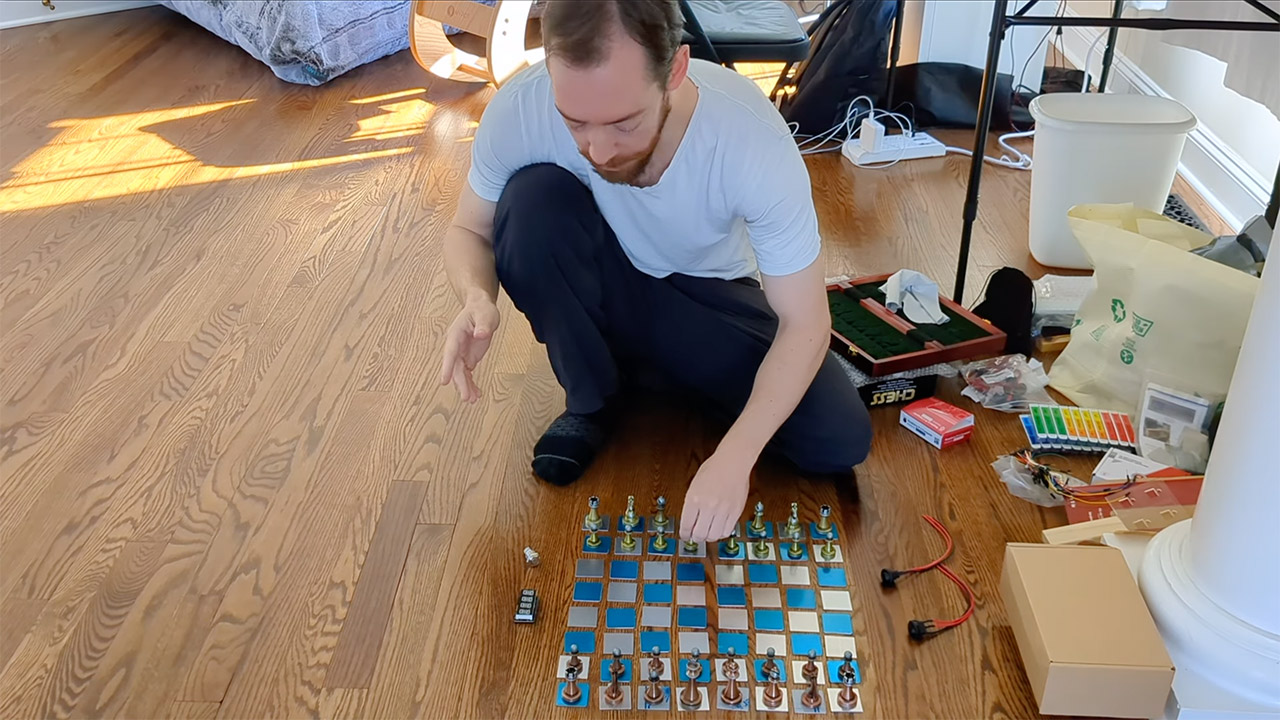
It took him a year to assemble the thing, starting with prototypes crammed in diaper boxes and breadboards, and spending the most of his time traveling with the wiring in disarray in Airbnb homes, with people becoming suspicious in the Cat Café lab, which he used as a makeshift workshop. The airline broke the checked luggage on its way to the Open Sauce Maker Fair, and one of the hotel rebuilds nearly set the room on fire by getting the wiring backwards and melting the power rails. In the end, duct tape held the final version together during demos.
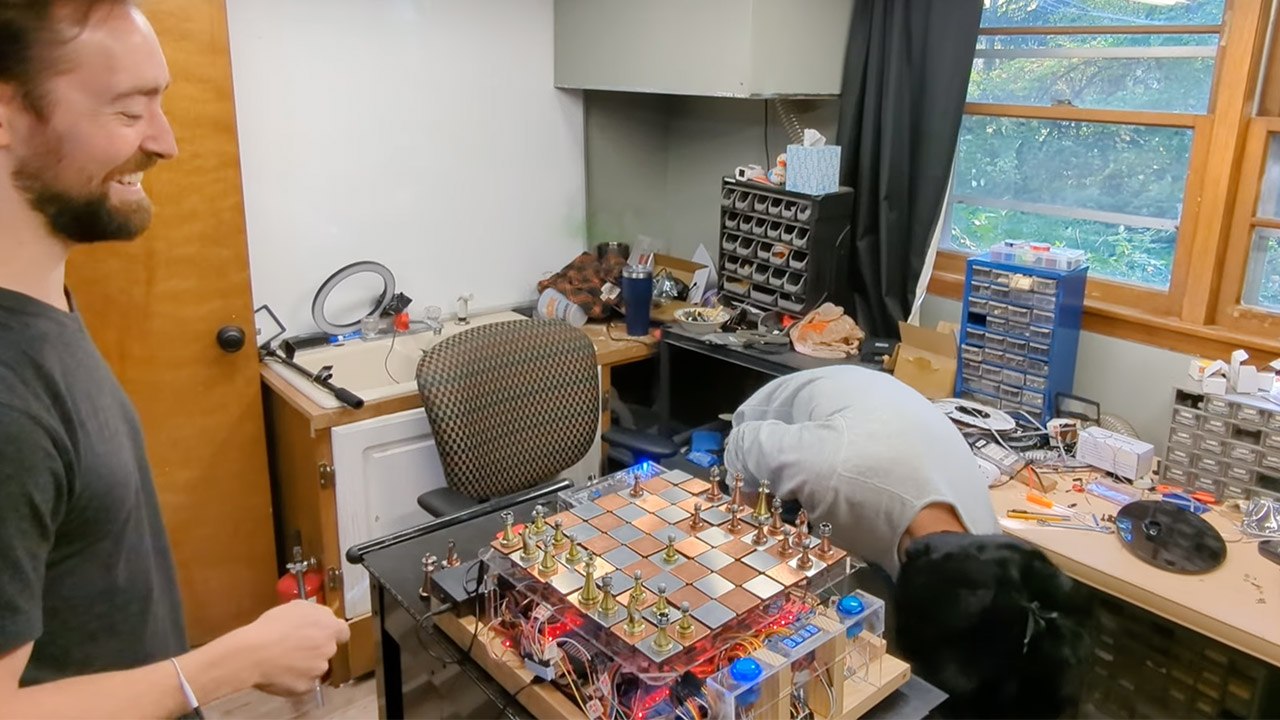
The shocks begin mildly, with a tingling sensation at level 2, but by level 8, you are experiencing full-body flinches. The pads did not last long, and the voltage continued to diminish. Heisler ended up spending far more time rewiring than attempting to understand the openings. As a result, chess expertise stalled; the whole thing was too delicate to continue working with.The board was constantly breaking down and needing to be repaired, until he acquired some conductive epoxy and sealed up all the loose connections. He also found a purpose for a bunch of old Ethernet cables, which provided him enough extra wire to fix some of the other wiring, including several battery adapters to make it more portable.
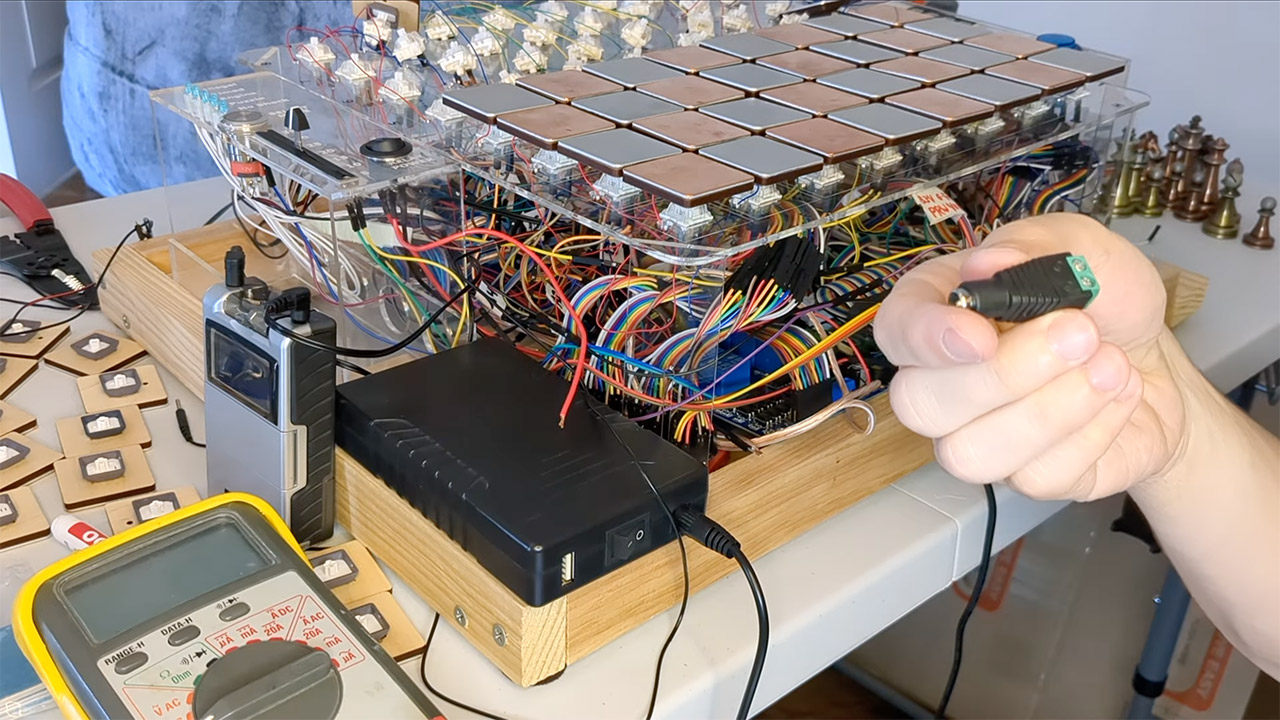
Taser chess completely reverses the learning process, since it turns out that the pain it causes is far more effective at getting ideas stuck in your head than repetition alone. As it turns, behavioral research actually supports this strategy, dating back to those old Skinner boxes and the penalties in video games; basically, both humans and animals are extremely attentive to consequences. This board, however, takes things to a whole new level. One solid game against some of those hustlers, and the surprises might just start working in your favor. Until then, every jolt feels like progress, even if it’s the hard way.
[Source]