Today, fireplaces, their cozy glow once a household staple, are mostly a thing of the past. In fact, a decent amount of old fireplaces are completely blocked up! [David Capper] brings back the atmosphere without the actual flames, with his RP2040-based fireplace glow simulator.
It’s not just a string of LEDs with some PWM brightness control, either. No, [David] goes into detail about the black body radiation that gives these fires their colors. He then uses the theory of black-body radiation to determine the colors that the LEDs glow to simulate the colors of a real fire.
But the colors alone don’t make for a good simulated fire, so [David] adds the heat equation. It starts with a grid wherein each cell has a temperature. Over time, cells are randomly selected to have heat added to them (increasing the cell’s temperature), then he applies the heat equation to diffuse and decay the heat within the grid for a nice simulated crackling fire. Add in a custom PCB and a nice little 3D-printed case and you’re ready for a cozy hacker time.
We spend hours testing every product or service we review, so you can be sure you’re buying the best. Find out more about how we test.
Dreame Miracle Pro: two-minute review
The Dreame Miracle Pro is a premium dryer that does a lot more than just dry your hair. Alongside six modes — Cool, Scalp, Essence, Comfort, Quick Dry, AI Smart — it comes with a built-in essence mister, a ring of red and near-infrared light therapy around the barrel, and a distance sensor that automatically adjusts heat and airflow depending on how close the dryer is to your head.
All of these features are designed to protect your scalp, improve the health of your hair, and add a level of customization that’s rare on rival models. As a result, it’s one of the most feature-packed hair dryers on the market, at any price.
Advertisement
During my tests, the main drying performance was strong. Using Comfort mode on high speed, my mid-length, fine hair went from wet to dry in around under five minutes with a smooth, frizz-free finish. Quick Dry mode got there faster, but the result wasn’t quite as polished. Not bad, just not as smooth as on Comfort mode. The essence mister – activated in Essence mode for the final minute or two of a drying session – left my hair noticeably softer and smelling great. It’s one of those features that sounds gimmicky until you’ve used it and seen how great it is.
The distance-sensing heat adjustment works well for rough drying but responds slower than I’d like and the constant change in sound as it switches between each speed just ends up being irritating. For more precise and less annoying styling one of the fixed modes tends to give more predictable results. The red and near-infrared light therapy ring is harder to evaluate in the short term, because any real benefit to scalp health takes months to show up, but it’s a nice addition. It’s also worth noting that fitting an attachment blocks most of the light, so getting the full benefit requires using the dryer without a nozzle.
At $399.99 / £399, the Miracle Pro sits at the same price point as the best hair dryers on the market. If you want a dryer that treats hair health as seriously as drying speed, it makes a compelling case. Keep reading to learn more in my Dreame Miracle Pro review.
At $399.99 / £399 (about AU$560), the Miracle Pro sits towards the top end of the price scale. That’s approaching the same price bracket as the $549.99 / £399.99 / AU$749 Dyson Supersonic Nural which, for a brand that has historically positioned itself as a more accessible alternative to its luxury rival, is a notable shift.
Sign up for breaking news, reviews, opinion, top tech deals, and more.
The Miracle Pro’s drying performance is strong, but strong drying alone doesn’t justify $400. What you’re really paying for is the smart heat regulation, a built-in essence mister and the red light ring. There isn’t another dryer on the market that offers this combination of features, making it stand out.
Advertisement
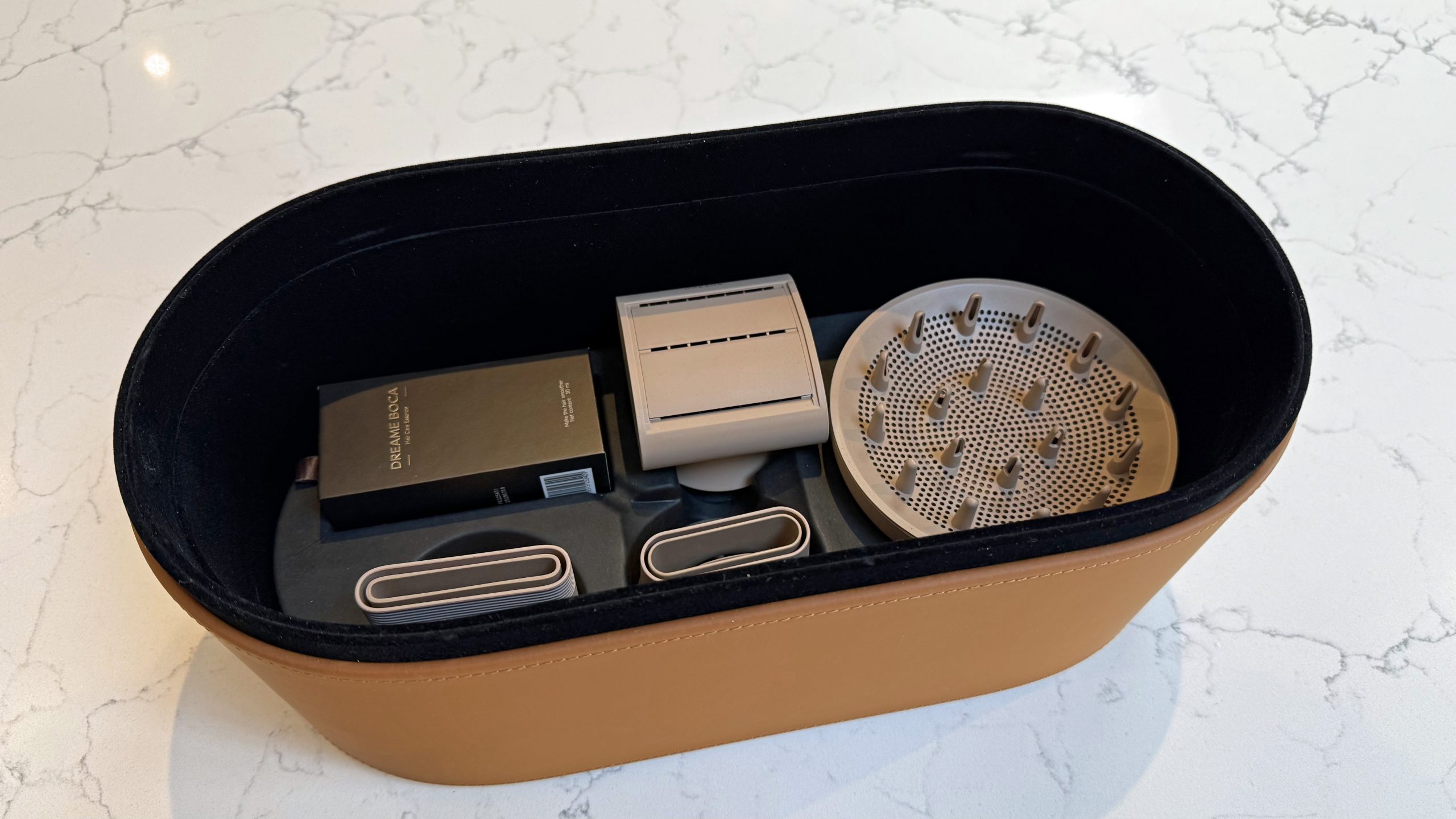
The Miracle Pro comes in a faux-leather storage case complete with a diffuser (pictured right), two styling nozzles (bottom left and bottom centre), an anti-frizz attachment (top center) and Dreame Boca Essence (top left) (Image credit: Future)
The essence capsule ships with one 30ml bottle of Dreame’s own Boca formula, and replacing the essence will be an ongoing cost. It’s not currently possible to buy the Boca essence on its own but the cartridge is refillable so you can spend as much or as little as you want on an alternative essence.
Four attachments are included in the box — a styling nozzle, smoothing nozzle, anti-frizz nozzle and diffuser. This is generous (albeit an expectation at this price) and compares well to the Nural, which ships with five attachments. The Miracle Pro also comes in a velvet-lined gift box, which adds to the premium feel.
At this price, the most obvious comparison is the Dyson Supersonic Nural, which is the benchmark for premium hair dryers and the closest rival in terms of smart heat technology. The L’Oreal AirLight Pro, at $475, is also worth considering if light-based technology appeals — it uses infrared rather than red light therapy, with the focus on faster drying rather than scalp health, and comes with an app for precise heat and airflow controls. In the UK, the GHD Speed at £299 is a strong alternative if pure drying performance is the priority — its halo airflow tech keeps the barrel cool to the touch and delivers super fast results, though it doesn’t attempt any of the Miracle Pro’s more advanced, smart features.
Whether it’s good value for money or not is that it’s complicated. If the scalp light and essence mist appeal to you, and you’d use them consistently, you will be able to justify the price. If you’re only really after the fastest, most powerful dryer, you can spend less on the likes of the GHD Speed to get there.
Six modes, illuminated display, four magnetic attachments
Red light and essence mister built into the barrel
For the price, you get the Miracle Pro dryer, four attachments — a styling nozzle, smoothing nozzle, anti-frizz nozzle and diffuser — and a bottle of Boca essence (pictured) (Image credit: Future)
There was a time when a tall, rather than wide, hair dryer was rare, but the ubiquity of Dyson‘s Supersonic shape has not only made the design more common, it also makes all rivals look high-end by association.
The Miracle Pro has the same barrel-over-handle shape as most has added a couple of features to make it look noticeably different. The handle is covered in textured faux leather, the barrel and attachments come in a matte gold, and the whole thing arrives in a velvet-lined box.
It’s a bold look that won’t suit everyone but it does feel genuinely premium. In testing, the leather grip felt solid and comfortable — even if it left my hand feeling clammy after long periods — but it’s unclear yet how well it will hold up to daily use over many months.
The front barrel (pictured) has a built-in slot for the essence cartridge. When Essence mode is enable, the airflow diffuses the essence gently onto the hair (Image credit: Future)
At 0.9lb / 420g, it’s light for a dryer with this much going on inside, and it’s well balanced. Most of the weight sits in the handle, which makes it easy to move around your head without your wrist getting tired. The filter sits at the bottom of the handle and is a feature I generally dislike in hair dryers because it’s easy to block with your hand mid-drying. However, Dreame has made the handle long enough on the Miracle Pro to prevent this happening, and without throwing the balance out of sync in the process.
Advertisement
The barrel is on the smaller side, which is useful for getting close to the roots and working around the hairline. Yet this is a slightly moot point because the built-in AI Smart mode uses a distance sensor to automatically adjust the heat and airflow depending on how close the dryer is to your head anyway.
The controls include a sliding switch on the handle to turn the Miracle Pro on and off and flip between the two speed settings – High (72 m/s) and Low (50 m/s) (Image credit: Future)
The controls are simple enough. A sliding switch on the handle turns the Miracle Pro on and off and flips between the two speed settings — High (72 m/s) and Low (50 m/s.)
While two speeds are fewer than most rivals — the Dyson Supersonic Nural offers three, for example — it’s the default on Dreame dryers and has never proved a problem for my mid-length, thin hair. Thicker or natural hair styles may need more options but, on the Pro particularly, the range of modes and the way AI Smart mode adjusts airflow in real time means you’re unlikely to feel the gap.
A single button on the handle cycles through the Pro’s six modes — Smart, Essence, Cool, Comfort, Quick Dry, or Scalp.
Advertisement
A single button on the handle cycles through the Pro’s six modes – Smart, Essence, Cool, Comfort, Quick Dry, or Scalp (pictured) – and the selected mode appears on the display on the rear of the dryer (Image credit: Future)
The six modes cover a good range.
Cool: 86 F / 30 C
Scalp: 100 F / 38 C
Essence: 122 F / 50 C
Comfort: 140 F / 60 C
Quick Dry: 176 F / 80 C
AI Smart: Adjusts in real time based on distance from scalp
Cool runs at 86 F / 30 C and is mainly for finishing. Scalp mode sits at 100 F / 38 C and is intended for anyone with a sensitive scalp. Essence mode runs at 122 F / 50 C, which is warm enough to activate the mist, but not so hot it defeats the point.
As 140 F / 60 C, Comfort is the most practical everyday setting, and Quick Dry goes up to 176 F / 80 C for when you need speed. AI Smart mode works across all of these, using a distance sensor to adjust the heat and airflow depending on how close the dryer is to your head, and every time you switch the dryer on, it starts in AI Smart mode by default.
A small screen on the rear of the barrel shows which mode you’re in and this is much easier to read than the tiny color-coded LED ring on the Dreame Gleam, for instance.
The same sensor used by the AI Smart mode also feeds into the auto-pause feature, which recognizes when you’ve put the dryer down and dials back the heat and airflow automatically. It’s a sensible safety feature, to avoid items on your desk being blown around every time you place it down, but I found it really irritating. The constant changes in noise as you pick it up and put it down was not an enjoyable sensory experience.
Advertisement
Around the front of the barrel is a ring of red lights (pictured) that Dreame calls “dual red light therapy” and is designed to stimulate scalp circulation and boost hair health over time (Image credit: Future)
Around the front of the barrel is a ring of red lights that cover two wavelengths at 633nm and 1064nm. Dreame calls it “dual red light therapy,” although the 1064nm wavelength is technically near-infrared.
The idea is that red light/infrared light stimulates scalp circulation during drying to support hair strength over time. It’s visible in use but not distracting, and worth knowing that fitting an attachment blocks most of it so if scalp health is the main draw, you’ll want to spend some time using the dryer without a nozzle attached.
Speaking of nozzles, Pro ships with four magnetic attachments by default:
Styling nozzle: Directed airflow for sectioning and precise blow-drying
Smoothing nozzle: Concentrated airflow for a smooth finish
Anti-frizz nozzle: Neutralizes static and smooths frizzy hair
Diffuser: Distributes airflow evenly for curls and volume
Each one clicks on and off easily, and the dryer recognizes which one is attached, automatically recalling your last-used settings for that specific nozzle.
It’s a small touch but it means you’re not manually resetting your preferences every time you switch between drying and diffusing, for example. The filter at the base of the handle is magnetic too, so it pulls off easily for cleaning.
Advertisement
Dreame Miracle Pro review: performance
Fast drying, smooth results
Essence mister is a genuine highlight
Red light benefits hard to assess short-term
The Miracle Pro is a strong everyday dryer. Using it most mornings on my long, fine hair, I found the Comfort mode on High speed to be the best setting for a regular wash-day routine. My hair went from wet to dry in just under five minutes, with a smooth, frizz-free finish that I’d normally need a separate serum to achieve.
Quick Dry mode gets there faster, in under three minutes, but the result is noticeably less polished. Scalp mode is the gentlest option and while it adds time to the overall dry, the finish is noticeably softer.
Essence mode – which activates the built-in mister – is the feature I didn’t expect to care about and ended up using every time. It runs at a moderate heat and is designed to be used for the last couple of minutes of your routine, rather than the full session.
Switching into it at the end left my hair noticeably softer, smooth and smelling great. It’s a small thing that adds up over time and was a genuine highlight for me.
Advertisement
The essence cartridge (pictured) is small and simple, designed to slot conspicuously into the barrel (Image credit: Future)
AI Smart mode is the headline feature, and it largely delivers. The dryer adjusts heat and airflow as you move it closer to and further from your head, which takes some getting used to. There’s a slight lag between changing your distance and feeling the adjustment, which the Dyson Supersonic Nural handles more quickly, and you’ll notice the airflow change before you notice the temperature shift.
In practice, this works well for rough drying where you’re moving quickly and not thinking too hard about distance. For precision styling, I tended to switch to a fixed mode where the output was more predictable. Plus, like with the constant changes in noise with the auto-pause feature, the fluctuations soon became irritating.
You remove the cartridge by pressing the front until it clicks and pops out (pictured) (Image credit: Future)
The red light therapy ring is harder to evaluate over a relatively short period. Dreame’s claims – improved scalp circulation and stronger hair over time – are plausible, but any real difference would take months to show up. What I can say is that using the dryer without an attachment, which is required for the red light to reach the scalp unobstructed, feels slightly counterintuitive mid-routine.
Noise-wise, the Miracle Pro is genuinely quiet for its power output. Dreame claims 56.6 dB but it’s not clear if that’s just the lowest reading – on Cool – or an average. In my tests, the average readings for each of the modes were:
Advertisement
Cool: 58 dB
Scalp: 60 dB
Essence: 62 dB
Comfort (low speed): 63 dB
Comfort (high speed): 68 dB
Quick Dry (low speed): 65 dB
Quick Dry (high speed): 72 dB
Performance score: 4 out of 5
How I tested the Dreame Miracle Pro
I used the Dreame Miracle Pro as my main hair dryer for four weeks, replacing my usual dryer for daily morning use on my mid-length hair.
I worked through each of the six modes, both speed settings and the attachments systematically in the first week, then settled into more natural everyday use to get a realistic sense of how it performs over time.
I timed dry sessions across the different modes and speeds, and tracked decibels using the DecibelX app. I also compared the results to other dryers I’ve tested at similar and higher price points.
For once, we can avoid debating in the comments what constitutes a “cyberdeck”, because [LCLDIY] does not refer to his cyberpunk masterpiece as such — he calls it a laptop. Considering the form factor is more like an all-in-one with a built-in laser projection keyboard, that’s arguably an even more controversial label to use, but as stylish this build is, it’s what’s inside it that interests us most.
This would be much easier than the original for our old eyes, especially in the dark.
No, not the cash-register motherboard that serves as the brain, though that has got to be worth some hacker cred. No, it’s the graphics card [LCLDIY] designed to drive 10″ electroluminescent (EL) displays that really has us interested. EL screens have a unique and beautiful glow that many find captivating, but we don’t see them all that often for two reasons. One is price: if you can’t find them surplus, they’re not cheap. The other is driving them, which [LCLDIY]’s project helps with, because the graphics card is open source.
The card is PCI, so you’ll need an adapter to plug it into a modern PCIe slot, or you’d have to redesign the thing. Since this isn’t elegant-engineering-a-day, we know which we’d do. The card is based on the CHIPS65548/5 chip, which means you should be able to find driver support under Linux and Windows. [LCLDIY] seems to be using Windows 2000, but that might just be because it’s all been downhill since then.
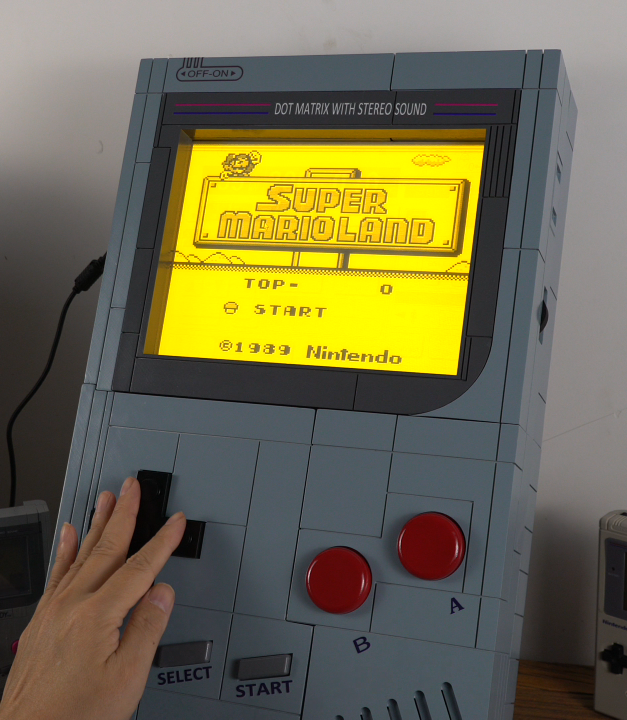
If the cyberpunk laptop wasn’t enough inspiration, [LCLDIY] also created a giant-scale Game Boy using the same 10″ screen and DIY graphics card. The soft glow of the EL display is particularly suited to the low-res nature of the retro games, as it’s not entirely unlike a CRT. You can see it in action–both builds!– in videos embedded below.
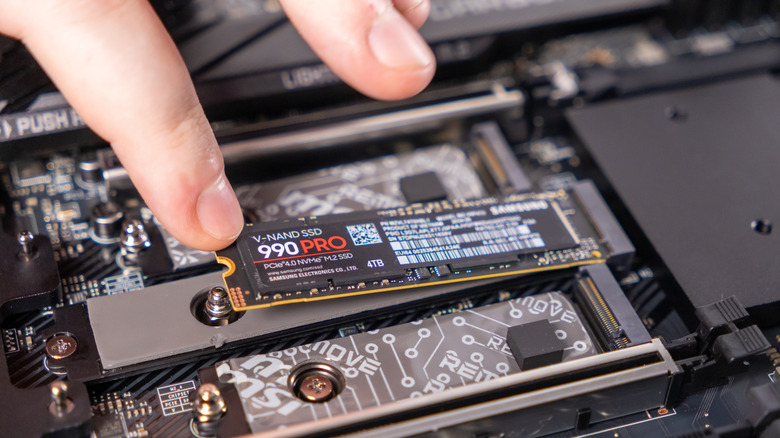
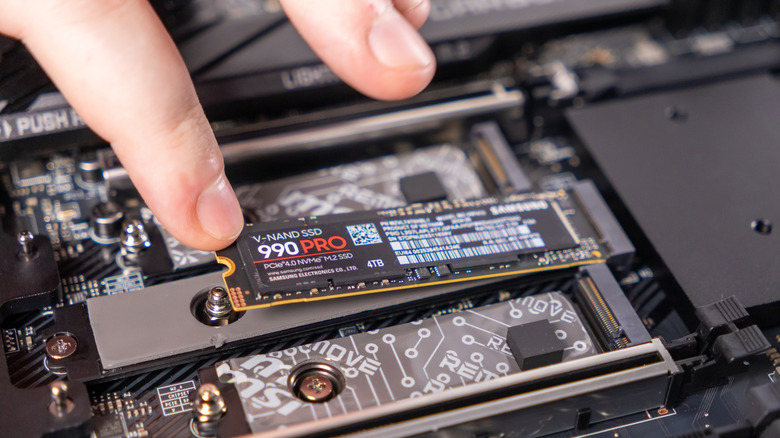
Solid-state drives have completely changed the game for storage on computers and laptops. No moving parts, no RPM (revolutions-per-minute) to worry about, and lightning-fast read and write speeds. Even early SSDs were impressive, but once the M.2 format hit the market, things got even better. While SSDs are currently monstrously expensive, pretty much every modern desktop and laptop uses them, mostly due to the demands of modern software, video games, and operating systems.
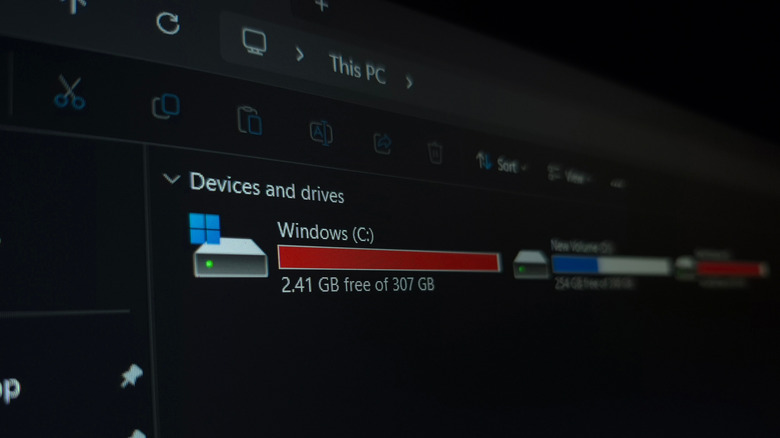
Here’s the thing, though. Even though modern SSDs are super fast, and they will last a lot longer than most hard drives due to their lack of moving parts, they can still slow down. As you fill them up with data, which can happen very quickly if it’s a smaller SSD, that advertised speed of several thousand megabytes per second goes down fast.
Fortunately, modern operating systems like Windows support a standard hardware command to help you solve this issue, with a very fitting name: TRIM. TRIM cleans up so-called blocks of data so that the SSD knows which ones to use, making it more efficient and increasing its lifespan.
Advertisement
Why should you use TRIM?
Nwz/Shutterstock
Although it has a much cooler name, TRIM is essentially the modern equivalent of disk defragmentation, which Windows can still do. Defragmenting old hard drives brought all the data closer together in a more accessible spot, allowing the hard drive to cycle through the data more efficiently and make it faster. TRIM doesn’t work on the same principle as defragmentation, as SSDs and HDDs store data in different ways, but TRIM does serve a similar purpose. It increases your SSD’s efficiency and lifespan by clearing up empty blocks of data that are no longer in use.
Recent releases of Windows run this process automatically in the background, and you can check this through the drive’s properties from inside This PC on your computer. If the scheduled optimization (which you can find inside of Properties > Tools > Optimize) is set to On, then Windows runs TRIM for you on a weekly basis.
Advertisement
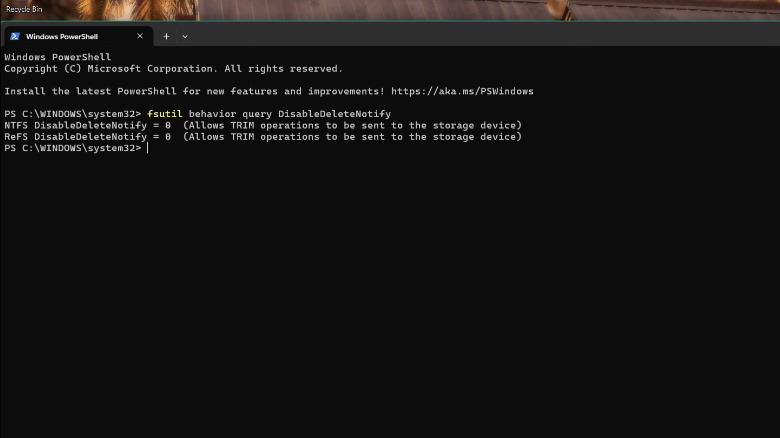
Another way to check if TRIM is on is through PowerShell. Simply run PowerShell with administrator privileges. Next, type “fsutil behavior query DisableDeleteNotify” without the quotes, then hit Enter.
Marko Sokolovski / SlashGear
If both values are zero, then TRIM is on, and you don’t need to worry about it. We would not recommend disabling it, as in this era of highly unpredictable SSD prices and the importance of keeping our data safe and secure, it’s always a good idea to keep your SSD on its best behavior, and TRIM definitely helps out with that.
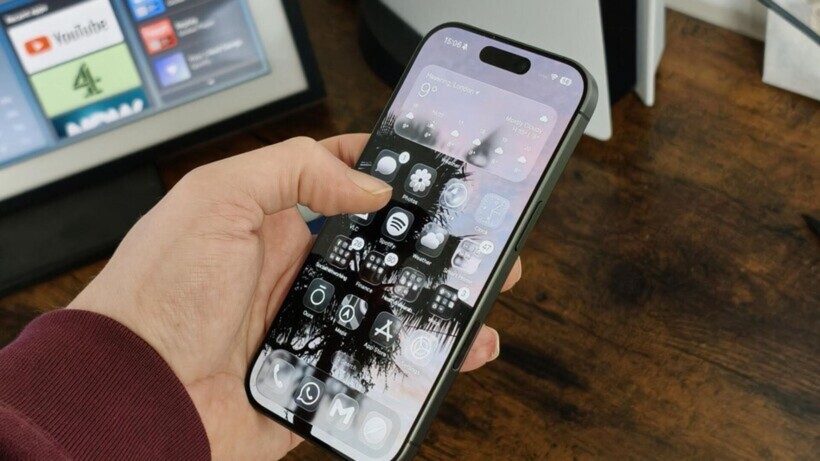
We’ve all been there at one point or another; you unlock your iPhone with the intention of checking the weather or sending a quick text, only to be greeted by a sea of little red circles.
They’re everywhere, screaming for your attention like a digital toddler until you open the app and clear it. It’s a core part of the iOS experience, sure, but after years of staring at these tiny stress-inducers, I’ve had enough. The problem? I can’t really do much about it.
App badges are my worst enemy
The problem with app badges is that they are designed to be addictive. They’re pitched as helpful reminders, but in reality, they’re designed to draw you into an app to see what’s “new,” even when there’s nothing of substance actually waiting for you.
Every time I unlock my iPhone and see a bunch of badges on my home screen, I’m immediately distracted. Instead of doing what I actually set out to do, I find myself mindlessly scrolling through a feed just to make the number go away.
Advertisement
Image Credit (Trusted Reviews)
Advertisement
It’s even more infuriating when the badges refuse to leave. We’ve all dealt with that one stubborn app – it’s the Oura app for me at the moment, oddly enough – where you’ve cleared every notification, read every message, and checked every update, yet the badge remains.
For a company that prides itself on “clean” design, the home screen often looks like a messy desk covered in red Post-it notes.
No, I’m not going to disable them one by one
Now, I know what the power users among you are going to say, “Just go into Settings and turn them off!” And yes, technically, you can.
But, there’s the catch: Apple forces you to do it on an app-by-app basis. I have hundreds of apps installed on my iPhone, and the idea of diving into the notification settings for every single one of them to toggle off “Badges” leaves me in a cold sweat – and besides, it’d take the better part of an afternoon.
Advertisement
It begs the question: why isn’t there a system-wide toggle? Apple gives us “Silence Unknown Callers” and “Focus” modes to reclaim our digital sanity, yet it won’t give us a single master switch to kill the red dots. It’s a bizarre omission when you really think about it, especially for an operating system that is supposed to be the very pinnacle of user-friendliness.
Advertisement
Android fixed the issue years ago
What makes this even harder to swallow is that our friends over in the Android camp solved this ages ago.
Image Credit (Trusted Reviews)
On most Android skins, app badges (or “dots”) are intrinsically linked to the notification shade. If you swipe away a notification because you’ve seen it and decided it’s not important, the badge on the app icon vanishes too. A system that, in my mind, makes a lot of sense.
On iOS, the badge and the notification centre live in two completely different worlds. You can clear your entire lock screen, but those red circles will stay pinned to your icons until you manually open the app.
Advertisement
At the very least, Apple should give us the option to mirror that Android-style functionality in the Settings menu for those of us who find the current system a little bit archaic.
It probably won’t change any time soon
As much as I’d love to be optimistic, I’m not holding my breath. With the reveal of iOS 27 scheduled for WWDC in early June, the rumour mill is buzzing about the long-awaited reveal of the Gemini-powered Siri and even more powerful AI features, but a badge overhaul is nowhere to be found.
Advertisement
Badges have been a staple of the iPhone since the very beginning, and despite Apple redesigning the notification system multiple times over the last decade, they’ve remained largely untouched. It seems Apple is perfectly happy with the status quo, even if it means our home screens remain a cluttered, distracting mess for the foreseeable future.
Long-time GNOME/OpenOffice.org/LibreOffice contributor Michael Meeks is now general manager of Collabora Productivity. And earlier this month he complained when LibreOffice decided to bring back its LibreOffice Online project, as reported by Neowin, which had been inactive since 2022. After the original project went dormant — to which Collabora was a major contributor — they forked the code and created their own product, Collabora Online.
But this week Meeks blogged about even more changes, writing that the Document Foundation (the nonprofit behind LibreOffice) “has decided to eject from membership all Collabora staff and partners.
That includes over thirty people who have contributed faithfully to LibreOffice for many years.” Meeks argues the ejections were “based on unproven legal concerns and guilt by association.”
This includes seven of the top ten core committers of all time (excluding release engineers) currently working for Collabora Productivity. The move is the culmination of TDF losing a large number of founders from membership over the last few years with: Thorsten Behrens, Jan ‘Kendy’ Holesovsky, Rene Engelhard, Caolan McNamara, Michael Meeks, Cor Nouws and Italo Vignoli no longer members. Of the remaining active founders, three of the last four are paid TDF staff (of whom none are programming on the core code). The blog It’s FOSScalls it “LibreOffice Drama.” They’ve confirmed the removals happened, also noting recently adopted Community Bylaws requiring members to step down if they’re affiliated with a company in an active legal dispute with the Foundation. But The Documentation Foundation “also makes clear that a membership revocation is not a ban from contributing, with the project remaining open to anyone, and expects Collabora to keep contributing ‘when the time comes.’”
Collabora’s Meeks adds in his blog post that there’s “bold and ongoing plans to create an entirely new, cut-down, differentiated Collabora Office for users that is smoother, more user friendly, and less feature dense than our Classic product (which will continue to be supported for years for our partners).
Advertisement
This gives a chance to innovate faster in a separate place on a smaller, more focused code-base with fewer build configurations, much less legacy, no Java, no database, web-based toolkit and more. We are excited to get executing on that.
To make this process easier, and to put to bed complaints about having our distro branches in TDF gerrit [for code review], and to move to self-hosted FOSS tooling we are launching our own gerrit to host our existing branch of core…
We will continue to make contributions to LibreOffice where that makes sense (if we are welcome to), but it clearly no longer makes much sense to continue investing heavily in building what remains of TDF’s community and product for them — while being excluded from its governance. In this regard, we seem to be back where we were fifteen years ago.
It’s about to become more expensive for Claude Code subscribers to use Anthropic’s coding assistant with OpenClaw and other third-party tools.
According to a customer email shared on Hacker News, Anthropic said that starting at noon Pacific on April 4 (today), subscribers will “no longer be able to use your Claude subscription limits for third-party harnesses including OpenClaw.” Instead, they’ll need to pay for extra usage through “a pay-as-you-go option billed separately from your subscription.”
The company said that while it’s starting with OpenClaw today, the policy “applies to all third-party harnesses and will be rolled out to more shortly.”
Anthropic’s head of Claude Code Boris Cherny wrote on X that the company’s “subscriptions weren’t built for the usage patterns of these third-party tools” and that Anthropic is now trying “to be intentional in managing our growth to continue to serve our customers sustainably long-term.”
Advertisement
The announcement comes after OpenClaw creator Peter Steinberger said he was joining Anthropic rival OpenAI, with OpenClaw continuing as an open source project with support from OpenAI.
Steinberger posted that he and OpenClaw board member Dave Morin “tried to talk sense into Anthropic” but were only able to delay the increased pricing by a week.
“Funny how timings match up, first they copy some popular features into their closed harness, then they lock out open source,” Steinberger said.
Techcrunch event
Advertisement
San Francisco, CA | October 13-15, 2026
Cherny, however, insisted that Claude Code team members are “big fans of open source” and that he himself “just put up a few [pull requests] to improve prompt cache efficiency for OpenClaw specifically.”
Advertisement
“This is more about engineering constraints,” he said, adding that Anthropic is still offering full refunds for subscribers. “We know not everyone realized this isn’t something we support, and this is an attempt to make it clear and explicit.”
Meanwhile, OpenAI recently shut down its Sora app and video generation models, reportedly to free up computing resources and as part of a broader effort to refocus on winning over the software engineers and enterprises that are increasingly relying on products like Claude Code.
Todd talks about what it was like fielding calls from distraught users on the night of the announcement. John offers his thoughts on what the shutdown says about the VR hype cycle, and whether everyone betting on the AI boom should take notes.
Plus: Major League Baseball’s new automated ball-strike system is already exposing umpires and creating a whole new kind of showboating — including one player who was so confident the robot would overrule the ump that he just started walking to first base.
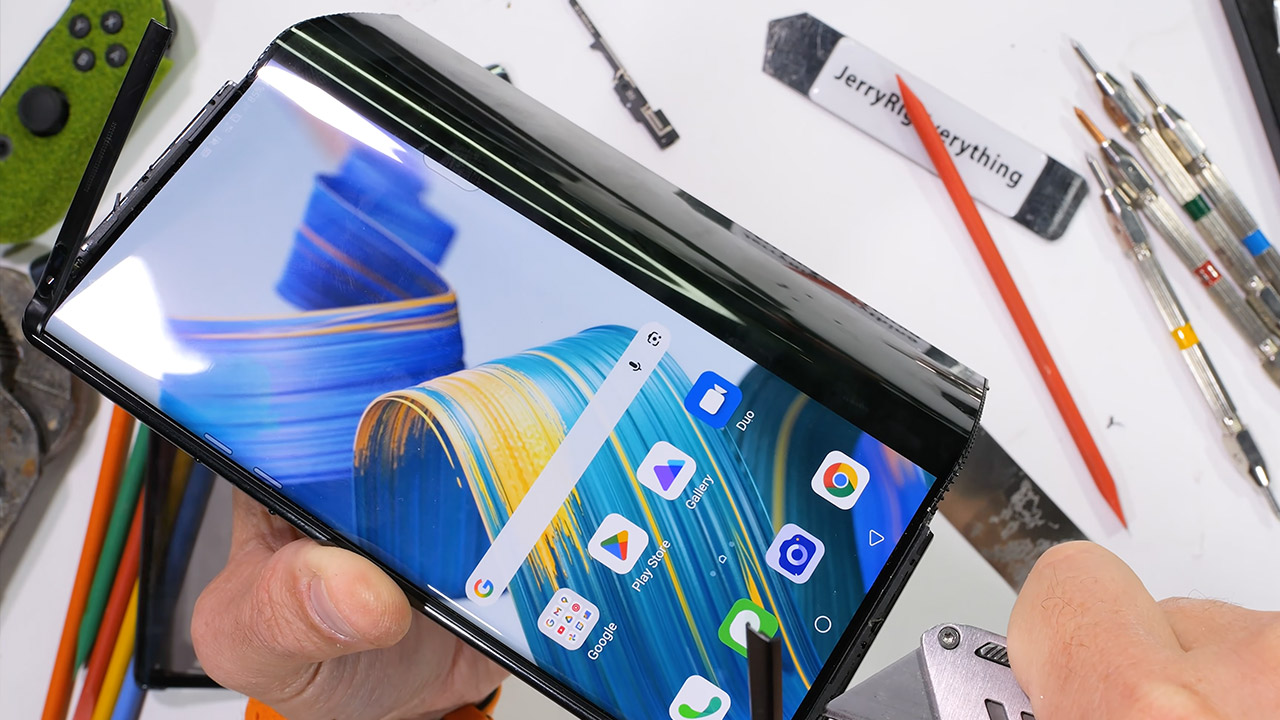
Back in 2021, rumors circulated about a new LG phone with a screen that unfurled like a scroll, similar to a roll-up map rather than a fold. Interestingly, they had planned to release it that year, but LG decided to discontinue its entire mobile division. As a result, the idea fizzled, only to resurface recently with a prototype reaching Zack Nelson (of JerryRigEverything fame).
Zack Nelson began by looking at the exterior elements. In its compressed state, the screen measures around 6.8 inches diagonally. With a simple command, the display expands to 7.4 inches diagonally, thanks to the internal motors. It generates a rather mild buzzing noise, which is thankfully muffled by software that includes some great sound effects. Users can watch the item expand in size in real time and even get dynamic backgrounds that adapt on the fly.
BIGGER, YET SLIMMER THAN EVER: Who would’ve guessed that wider could also be lighter? The design of Galaxy Z Fold7 is refined to feel like a…
BEST CAMERA ON A FOLD YET: You asked for more – now you can have the most. Galaxy Z Fold7 now boasts an ultra-premium 200MP camera with Pro-Visual…
SCREENSHARE FOR STREAMLINED ASSISTANCE: Intrigued by something you see? Go Live with Google Gemini, then screenshare or point your camera at it for…
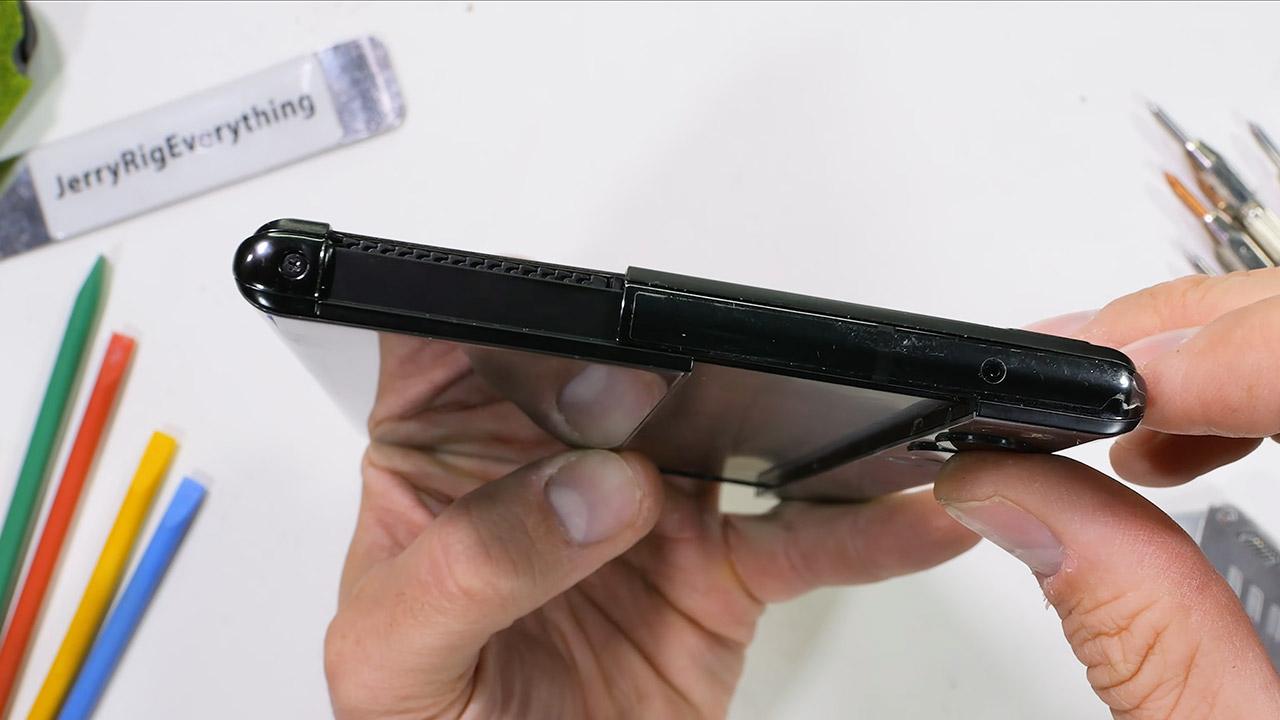
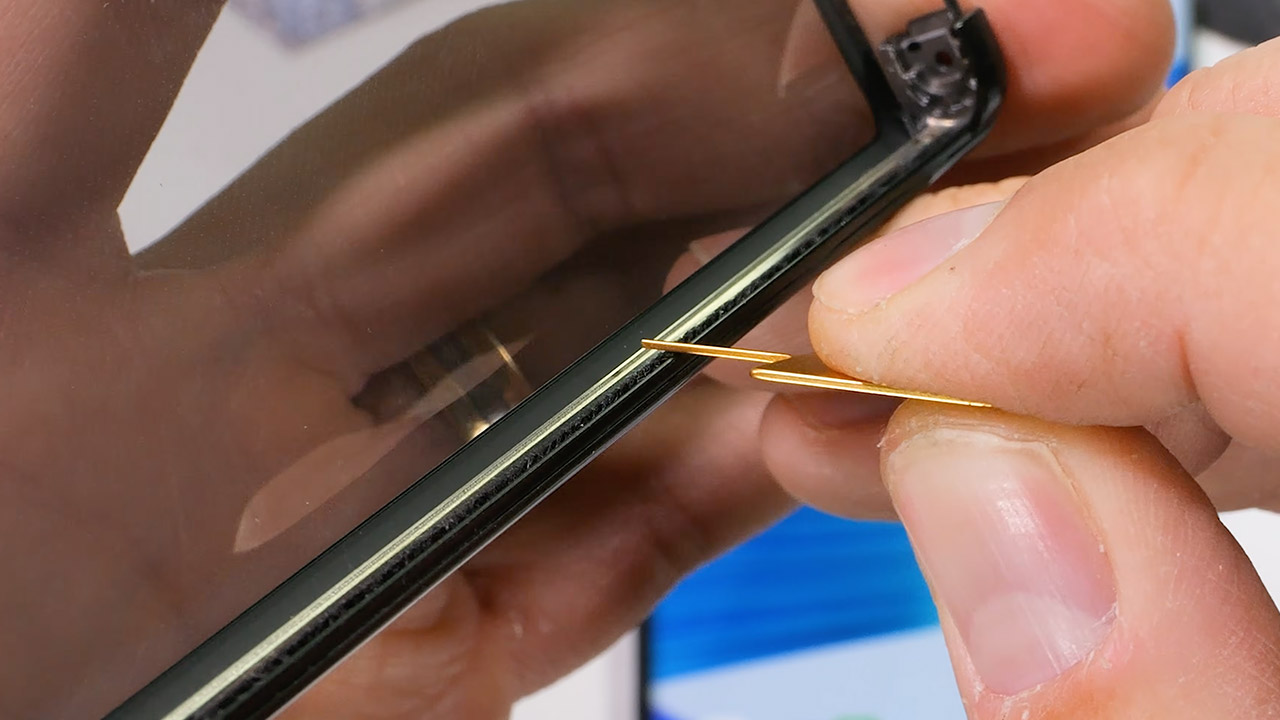
Nelson removed two Phillips head screws near the roller bit as he began to disassemble it. He applied heat to the back glass, and it popped straight off in one piece. With the glass removed, the side panel came away, and he discovered all these minuscule little hair-like things designed to keep dust from entering the flexy screen area. These tiny hairs are enclosed in a metal cage that protects the part that rolls up.
After that, Nelson proceeded on to check the actual roll component itself, which required him to retract it completely for some extra wiggle room to free it from the frame. He was surprised to see the screen curved around a pretty mild radius, compared to the other folding phones. Behind the screen, there are a series of elevated slats that rise upwards like escalator steps, helping to keep the entire structure flat and stable during expansion.
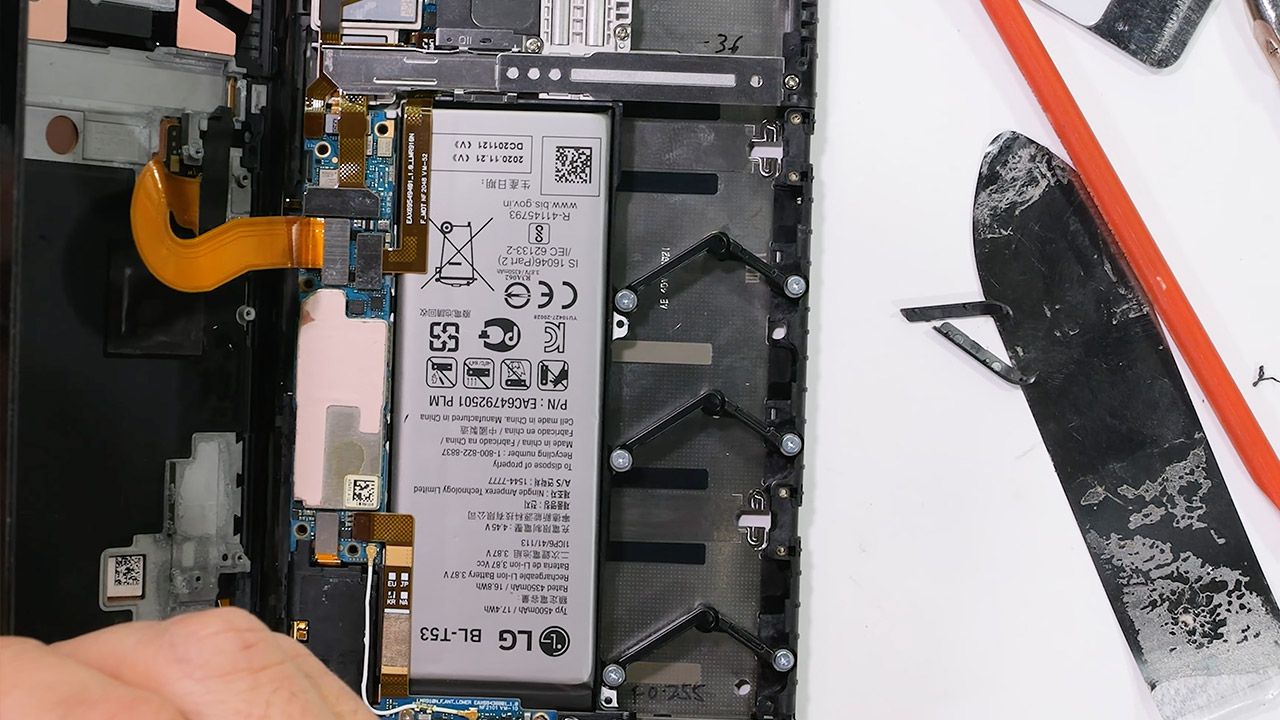
Other interesting features include little zipper-like linkages along the top and bottom margins of the screen. The sides have metal guides going along them to keep everything neat and tight. It all operates in tandem with two geared motors that communicate via a rack system. There are even three little spring-loaded arms that help keep the entire thing straight and smooth during extension, ensuring that it does not wobble or become stuck. LG stated that the entire system can withstand around 200,000 cycles, which is a significant number given the amount of stress placed on it.
Deeper inside the phone, you’ll find a battery rated a solid 4500 milliamp hours, as well as the usual suspects like a Snapdragon processor, 12 gigs of RAM, and 256 gigs of storage. The rear camera configuration includes a 64-megapixel primary sensor with optical stabilisation and a 12-megapixel ultra-wide lens. On the back, you’ll find a power button that also serves as a fingerprint reader. All of the connection wires are arranged in a fairly straightforward manner that may be simply disassembled.
The screen has a plastic layer that may be scratched with a fingernail, similar to the flexible screens on other phones. When you roll it up, the active portion rests behind the rear glass, allowing you to quickly check alerts and even take selfies (with the main cameras). If anything gets in the way, the software will pause the roll and offer a friendly warning.
Nathan Fielder, best known for his Comedy Central show, Nathan For You (and cringe comedy), writes, directs and stars in this new HBO series. In the show, the comedian goes to extraordinary lengths to let people rehearse moments before they happen. In the first episode, Fielder helps a man prepare for a confession to a friend, and builds an exact replica of the bar they’re planning to meet at (the attention to detail is incredible). After planning for any outlandish thing that might happen, we see how the real exchange between the two friends plays out. Bizarre and truly fascinating, The Rehearsal should get some time on your screen.
Glen Anderson has been brokering trades in private company shares since 2010, back when the number of institutional investors focused on the late-stage private market could be counted on two hands. Today, he says, there are thousands.
As president of the investment bank Rainmaker Securities, whose focus includes private securities markets — it facilitates transactions in roughly 1,000 stocks — Anderson has a front-row seat to one of the most nail-biting moments in the history of the secondary market. And right now, he suggests, the narrative has three main characters: Anthropic, OpenAI, and SpaceX.
But the storyline is more complicated than the headlines suggest.
Anderson’s read on Anthropic is consistent with what Bloomberg reported earlier this week: demand for the company’s shares has become almost insatiable. Bloomberg quoted Ken Smythe, founder and CEO of Next Round Capital, saying that buyers had indicated to his outfit that they had $2 billion of cash ready to deploy into Anthropic, even as roughly $600 million in OpenAI shares that investors are trying to sell haven’t found takers.
Advertisement
Anderson sees something similar at Rainmaker. “The hardest stock to source in our marketplace is Anthropic,” he told TechCrunch yesterday afternoon from his Miami home. “There’s just no sellers.”
Part of what turbocharged that demand, Anderson argues, was Anthropic’s very public standoff with the Department of Defense — a turn of events that initially seemed like bad news for the company but has wound up becoming a gift.
“The app got more popular, people rallied around the company as kind of a hero, taking on big government,” he said. “I think it amplified the story and made it even more differentiated from OpenAI.”
Techcrunch event
Advertisement
San Francisco, CA | October 13-15, 2026
That distinction is becoming increasingly meaningful to investors navigating a market where, for years, the prevailing logic was to bet on everyone. Anderson notes that many institutional investors still want exposure to both Anthropic and OpenAI. “The jury’s still out,” he said, on which AI model will ultimately win – but the momentum, at least in the secondary market, has shifted.
Advertisement
That doesn’t mean OpenAI has fallen off a cliff. Anderson pushes back slightly on a binary reading of the situation.
“I wouldn’t say it’s a one-or-the-other conversation,” he said.
But the excitement isn’t there. “It’s not nearly as vibrant a market as Anthropic right now,” he acknowledged.
On valuation, Anderson broadly confirmed Bloomberg’s reporting that OpenAI shares on the secondary market are trading as if the company were valued at $765 billion — an appreciable discount to the company’s newest $852 billion primary-round valuation. He cautioned that he was working from memory, but said the Bloomberg figure was “in the right range.”
Advertisement
OpenAI itself has tried to assert more control over secondary trading. “People should be extremely cautious of any firm that purports to have access to OpenAI equity, including through an SPV,” an OpenAI spokesperson told Bloomberg, noting the company had established authorized channels through banks, with no fees, to counter what it described as a high-fee broker model.
Perhaps tellingly — at least for now — banks including Morgan Stanley and Goldman Sachs have begun offering OpenAI shares to their high-net-worth clients without charging carry fees, according to Bloomberg. Goldman, meanwhile, is charging its customary carry – often 15% to 20% of profits – for clients seeking Anthropic exposure.
What none of this accounts for is SpaceX, which stands apart amid shifting sentiment around these other powerful brands. Anderson describes it as one of the only names in Rainmaker’s universe that never experienced the punishing correction that hit much of the private market between 2022 and 2024, a period when many private companies’ shares fell 60% to 70% from their peaks (after their valuations were run up just as fast).
The rocket and satellite behemoth has “been pretty much consistently up and to the right,” Anderson said.
Advertisement
Anderson, who, naturally, has an economic interest in flattering the company and its earlier backers, credits SpaceX’s management with disciplined pricing and not squeezing every last dollar out of each funding round or tender offer.
“A lot of companies will fall for the temptation to maximize the price of their stock in every round,” he said. “The problem is that that doesn’t leave any room for error.”
SpaceX, by contrast, played it conservatively, by “not getting too greedy,” and the payoff for earlier investors has been enormous. “You can imagine if someone got in in 2015 what kind of gain they’re sitting on right now,” said Anderson.
To put a finer point on that comment: SpaceX was valued at roughly $12 billion in 2015, when Google and Fidelity jointly invested $1 billion in the company. Someone who got in at that price is now sitting on a gain of more than 100x, with the company valued at more than $1 trillion ahead of its planned IPO.
Advertisement
That IPO is now imminent, seemingly. SpaceX filed confidentially this week for an initial public offering, setting the stage for what could be one of the largest market debuts in history, with Elon Musk reportedly aiming to raise between $50 billion and $75 billion, possibly in June. Only Saudi Aramco’s 2019 debut, which valued the energy giant at $1.7 trillion, has come close.
Unsurprisingly, the rumored filing has already changed the dynamics of the secondary market for SpaceX shares, according to Anderson.
“Today, I saw a flood of SpaceX investors coming to me saying, ‘Can you give me SpaceX?’” he noted. “It’s been a very active buy side.” But supply is drying up. The closer a company gets to an IPO, the less incentive existing shareholders have to sell because they can see the liquidity event on the horizon.
That’s where things get a little dicier for OpenAI and Anthropic. Both companies are reportedly exploring public offerings of their own and have signaled they could move this year. But SpaceX, by filing first, is about to test the market’s appetite in a major way, and Anderson suggested that whoever follows will be at a disadvantage.
Advertisement
“SpaceX is going to soak up a lot of liquidity,” he said flatly. “There’s only so much money out there allocated to IPOs.” The first mover gets to the trough first; those who follow face both more scrutiny and, potentially, less capital.
It’s a dynamic that plays out in every so-called vertical and from which the AI companies aren’t completely immune, despite the attention being showered on them right now. Time your IPO too early and you’re the one testing market receptivity. Wait for someone else to go first, and you may find the biggest checks have already been written.
You can hear more of our interview with Anderson in the upcoming episode of the StrictlyVC Download podcast, which drops every Tuesday. In the meantime, check out recent episodes, including those with Whoop CEO Will Ahmed and investor Bill Gurley.




















































You must be logged in to post a comment Login