Tech
SIVGA Lyrebird Review: A $149 Quadbrid IEM That Undercuts Much Pricier Rivals

New high-performance IEMs are hitting the shelves at a dizzying rate in 2026. It seems that every month, five, six, or even 10 new products clamor for customers’ attention and cash. Not every IEM is worth the investment, however, and between worsening global economic conditions and ballooning IEM price tags, audiophiles are getting hit hard.
Enter the SIVGA Lyrebird. On paper, it does everything right. Price tag? $165, which puts it well within reach for most consumers. Materials? Premium, with quality aluminum and genuine hardwood. Technology? Advanced, thanks to an impressive quad-driver array. But as I’ve said many times before, the number of drivers doesn’t matter if the sound quality isn’t there. So, does the Lyrebird deliver on audiophile expectations? Let’s get into it.
About My Preferences: This review is a subjective assessment and is therefore influenced by my personal preferences. While I try to mitigate this as much as possible during the review process, I’d be lying if I said my biases were completely eliminated. So, for you, my readers, keep the following in mind:
My ideal sound signature includes competent sub-bass, textured mid-bass, a slightly warm midrange, and extended treble.
I have mild treble sensitivity.
Testing equipment and standards can be found here.


Key Specifications:
- Driver Configuration: Quad-driver hybrid system per earpiece
- 10mm polymer-composite dynamic driver
- Balanced armature driver
- Micro-planar driver
- 9.2mm multilayer piezoelectric ceramic driver
- Frequency Response: 20 Hz – 20 kHz
- Impedance: 14 ohms ±15% at 1 kHz
- Sensitivity: 108 ±3 dB at 1 kHz
- THD: ≤1% at 1 kHz
- Connector: Detachable 0.78mm 2-pin
- Cable: 120 ±10 cm hybrid cable
- Cable Construction: 30-core Furukawa OFC, 10-core silver-plated copper, and 10-core enameled gold-plated silver-copper
- Termination: 4.4mm balanced plug
Related Reviews:
Build
Once again, SIVGA’s engineering and material choices blow away those of its peers. The Lyrebird is constructed from a gorgeous combination of aluminum and stabilized hardwood, creating a unique industrial-luxury aesthetic.


The top of the Lyrebird’s shells houses its slightly recessed 0.78mm 2-pin sockets. They’re set firmly within the shell and don’t noticeably wiggle. SIVGA went with metal nozzles here, which is great from a durability perspective. The Lyrebird’s nozzles are capped with two layers of debris filtering, with a decorative metal plate sitting just above a hydrophobic mesh.
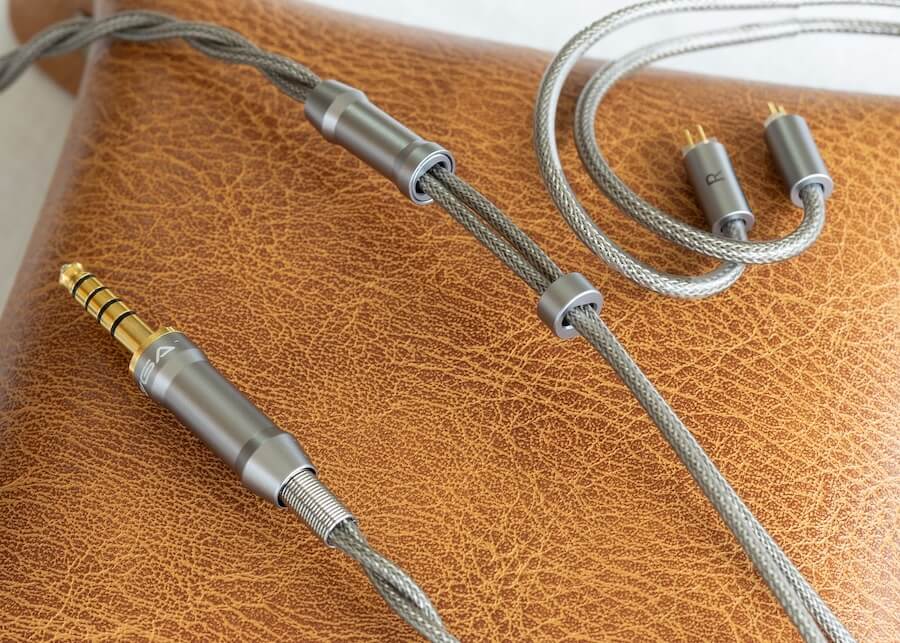

The Lyrebird’s stock cable could easily have come with a $500 IEM. It is generously thick but remains soft and ergonomic. Every component aside from the wire itself is made from precisely cut metal, including the spring-based strain relief at the base of its fixed 4.4mm termination.
Comfort
Comfort is a metric that depends heavily on your individual ear anatomy, so mileage will vary.
The Lyrebird is light and somewhat compact for a four-driver “quadbrid” IEM. It has a below-average insertion depth and sits relatively shallow in the ear canal. I was able to get several hours of comfortable listening from the Lyrebird, though imprecise positioning could lead to minor earaches after roughly 75 minutes.
Accessories

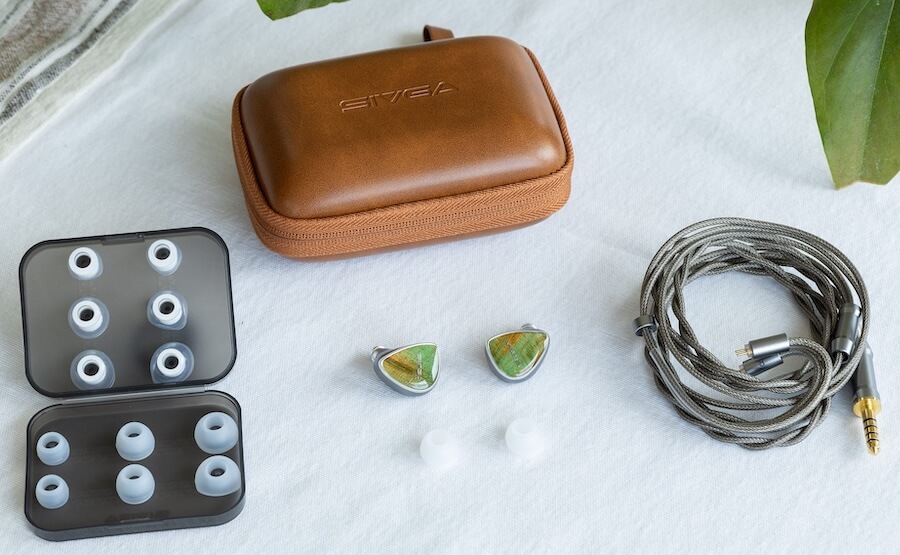
Inside the box, you’ll find:
- 1x Semi-hard carrying case
- 1x 4.4mm cable with 0.78mm 2-pin connectors
- 7x Pairs of silicone ear tips
Is this a particularly luxurious accessory package? Well, no, but it’s perfectly usable out of the box. Between the Lyrebird’s well-sized, protective carrying case and its comfortable stock ear tips, there’s no real need to supplement the package with third-party accessories. While it would have been nice to see SIVGA include foam ear tips, they’re hardly a necessity at this price point.
Listening

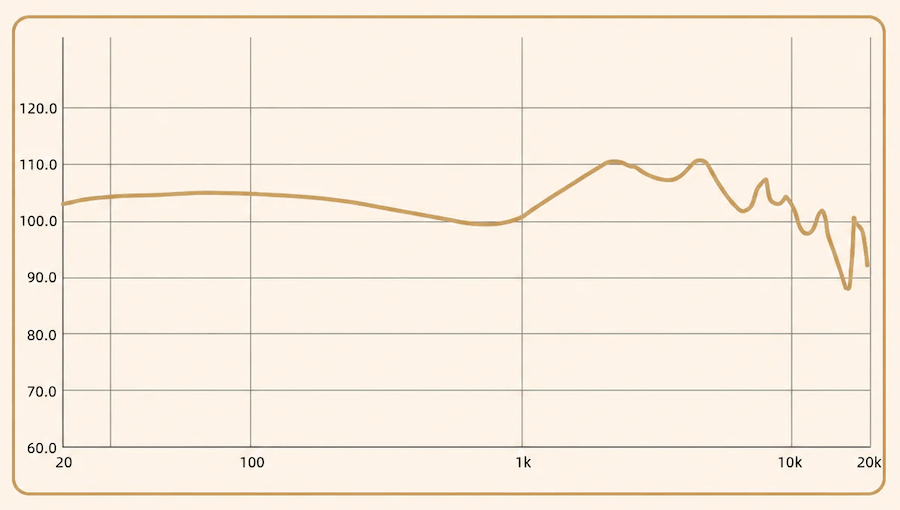
Broadly speaking, the Lyrebird is a linear IEM with a bright, lifted upper register. That means it has well-extended but slightly rolled-off sub-bass, a mild lift in the mid-bass, and a warm, linear lower midrange. The Lyrebird dips just below 1 kHz before rising into a substantial upper-midrange peak in the 2–3 kHz range. Its treble sits just above the upper mids, extending nicely beyond 10 kHz. The bulk of the Lyrebird’s treble energy is concentrated in the lower treble, though the upper treble isn’t lacking in emphasis and maintains a healthy presence in the 12–15 kHz range.
Impressively Performant Treble
My gut feeling when looking at the Lyrebird’s spec sheet was that its BA + planar + piezo driver array would leave the treble a disjointed mess. These are very different driver technologies, and each demands careful engineering to be properly exploited. Thankfully, my assumption was wrong. The Lyrebird’s treble is performant, cohesive, and free from harshness. Busy, sharply mastered tracks don’t generate any discomfort for me, even when played at elevated volumes.
The Lyrebird’s treble is refined and performant, delivering levels of texture, control, and expressiveness typically reserved for far more expensive IEMs. Listening to tracks like Paramore’s “Misguided Ghosts,” it becomes obvious just how much technical headroom this IEM has. Air, nuance, and spatiality are phenomenal, and the Lyrebird beautifully renders the edges of the string instrumentation with precision. Airy tracks like M83’s “Midnight City” are similarly well staged, with the Lyrebird competently capturing the vast sense of emptiness and space generated by the recording.
SIVGA’s Cleanest Midrange to Date
SIVGA’s habit of tuning the midrange to be warm and flat(ish) is one that is certainly divisive. While useful from a reference perspective, this style of tuning generally produces IEMs far warmer than I prefer. The Lyrebird iterates on the SIVGA house sound, ditching overt thickness for moderate warmth. Vocals are centered but not pushed, and they’re intelligible to boot. The Lyrebird’s vocal clarity is nothing to scoff at, as it delivers weighty, rich timbre while matching the detail retrieval and separation levels found at higher price points with more sterile sound signatures.
The Lyrebird presents instrumentation nicely as well, rendering drum slams with harmonic completeness and substance. Guitars, ranging from acoustic to drop-D electric, sound detailed and textured. The wobbly, distorted guitar in Pearl Jam’s “Dark Matter” is a nice example, filled with grit and crunch. The Lyrebird’s layering ability is also impressive, with it staging a wide swath of instrumentation in Manchester Orchestra’s “Apprehension.” The Lyrebird’s delicate balance between warmth and cleanliness pays off here, placing the lonesome piano, guitar, and drums with convincing depth and space.
Polite but Firm Bass
The Lyrebird is not a basshead IEM, nor is it designed to appeal to the V-shaped-loving masses. It is gentler and more linear. The Lyrebird’s bass is therefore polite but firm. Its sub-bass is lifted above the lower mids, blending into a small mid-bass peak. The Lyrebird’s mid-bass is punchy, clean, and textured but doesn’t produce much in the way of sheer size. That said, the Lyrebird one-ups your average meta mid-bass scoop by properly capturing organic bass tonality. Far from being dry, the Lyrebird properly renders the juicy bass drops in “Gold Dust (Flux Pavilion Remix),” giving them life and vigor. It still doesn’t pack very much punch or rumble, however, rendering clean and distinct bass elements in a way that will primarily appeal to audiophile-minded listeners. Similarly, the bass drops in “Hello (Schoolboy Remix)” possess texture and contrast while maintaining a restrained degree of body and presence.
Rock and alternative tracks fare much better, synergizing with the Lyrebird’s restraint. Sonically complex elements like the bass guitars and drum beats in Incubus’ “Wish You Were Here” sound deep and full-bodied, lending a solid and cohesive foundation to the track.
Comparisons
Comparisons are selected solely based on what I think is interesting and relevant. If you’d like me to add more comparisons, feel free to make a request in the comments below.
Melody Wings Venus

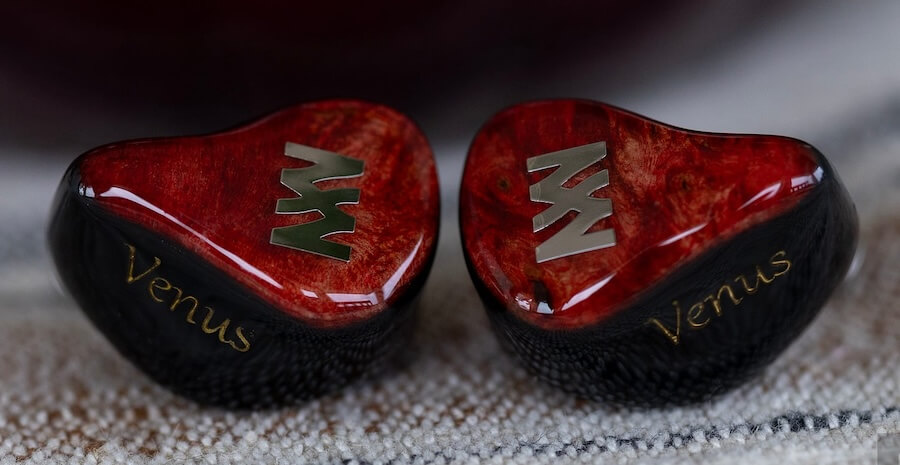
The Venus is the debut IEM from Melody Wings, a brand based in China. Coming in at $168, the Venus sits just above the Lyrebird in terms of price. The Lyrebird features metal shells with wooden faceplates, while the Venus is built from HeyGears-derived resin with similar stabilized-wood faceplates. Both IEMs have metal nozzles and detachable cables, though the Venus comes with a modular termination that includes a USB-C plug. The Lyrebird’s fixed 4.4mm cable is comparatively limiting, though it looks and feels much nicer in the hand.
Sonically, the Venus and Lyrebird have a lot in common. Both adopt a gently V-shaped sound signature, though the Venus leans into its lower register with more substance. The Venus’s fuller and moderately richer low end plays better with large-scale bass drops, such as in Nero’s “Satisfy.” The Lyrebird trades some of the Venus’s mid-bass weight and warmth for a more forward upper-midrange peak. The Lyrebird’s treble is brighter across the board, offering an increase in air and overall treble energy. Neither IEM is sharp or sibilant, though the Lyrebird delivers its upper register with a little more sparkle and shine. Tracks with dense, treble-heavy texturing surface their details more easily on the Lyrebird, though the Venus does resolve most of them further back in the mix.
While I have immense respect for what the Lyrebird pulls off, and I enjoy its build quality much more, I have to go with the Venus here. Its richer, higher-contrast sound signature is addictive, and the Lyrebird’s comparatively colder tuning doesn’t mesh as well with my preferences. The Lyrebird, while the more technically capable of the two, is better suited to listeners with brighter, north-of-reference tuning preferences.
Kefine Quatio


The Quatio is another all-metal hybrid IEM, featuring 2x dynamic drivers and 2x balanced-armature drivers per side. It costs $129, which is about $40 less than the Lyrebird. Both IEMs feature nice stock cables, though the Quatio’s cable is modular, with 3.5mm and 4.4mm terminations, while the Lyrebird’s is fixed at 4.4mm. The Quatio’s cable is thinner and chain-braided, and I prefer the weightier, softer cable that comes with the Lyrebird.
The Quatio comes with tuning filters, though I only ever use its gold (treble) filters. The others are varying degrees of “too dark,” so I won’t be covering them in this comparison.
Sonically, the Quatio is much more of a “reference” IEM than the Lyrebird. It is linear, with mild increases in treble and bass emphasis. That means it possesses noticeably less bass presence than the Lyrebird, as well as a bit more warmth. The Quatio’s upper mids are more relaxed, placing instrumentation and vocals closer to the center of the mix.
The Lyrebird has a moderate increase in lower-treble emphasis and a slight increase in upper-treble energy compared to the Quatio. Both IEMs are cohesive and performant, though the Lyrebird extracts more detail in the upper register, particularly during the decay of metallic instruments like hi-hats and cymbals. Male vocals and deeper string instrumentation sound slightly fuller and more complete on the Quatio, though that’s at least partially due to brain burn-in.
Between the Quatio and Lyrebird, I’m probably going with the Lyrebird. While it’s not a “clear winner” in the sense that the Lyrebird is a strict upgrade over the Quatio, it does possess a more exciting sound signature and delivers a bit more technical acumen in the upper register. Paired with its better synergy with bass-driven electronic music, the Lyrebird is generally better suited to my listening preferences.
ZiiGaat Odyssey 2

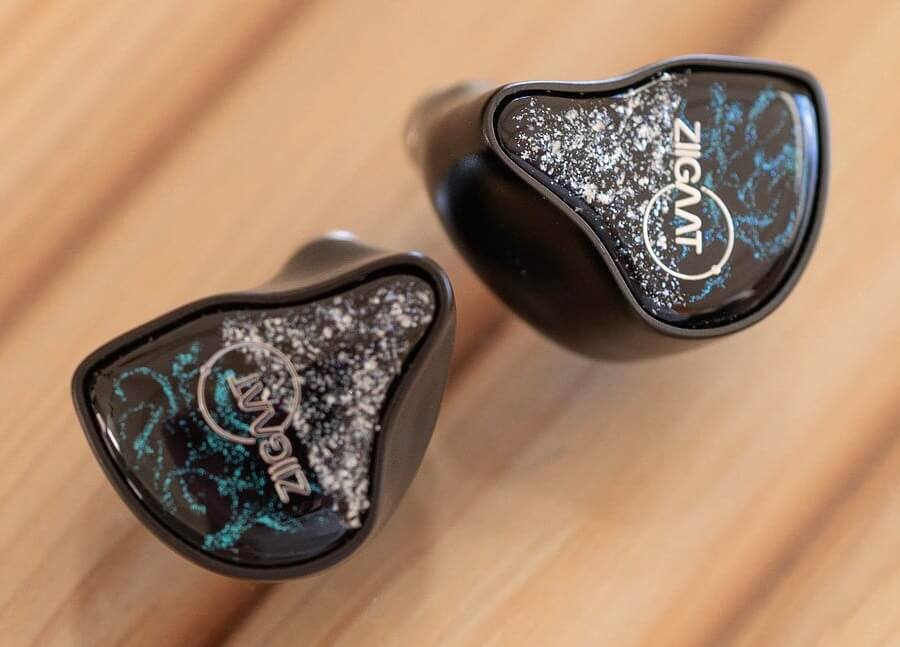
The Odyssey 2 is a well-tuned hybrid IEM featuring metal shells and a modular cable. It comes with a wider selection of accessories and costs $249, making it roughly $90 more expensive than the Lyrebird. Both IEMs are materially sound, though the Lyrebird’s fixed 4.4mm cable is thicker and feels more durable in the hand.
Sonically, the Odyssey 2 has moderately increased bass presence and warmth in the lower register. The Lyrebird has a smoother, less peaky upper-midrange hump while also packing more emphasis into the lower treble. Both IEMs have lifted upper treble, though each places its peaks at slightly different points on the frequency-response curve. These are both performant IEMs, each possessing strong extension and overall detail retrieval.
The Odyssey 2, while more present below 150 Hz overall, is roughly in line with the Lyrebird in terms of bass texture. The Lyrebird’s midrange is cooler and smoother than the Odyssey 2’s, offering an alternative tuning with similar vocal intelligibility and instrumental separation. The Lyrebird’s treble is brighter overall and places treble-bound details closer to the front of the mix. The Odyssey 2’s treble is a tad grainier and doesn’t capture ultra-fine transients as well during busy passages.
At a nearly $100 discount, the Lyrebird stacks up against the Odyssey 2 extremely well. It competes evenly on build quality while including a superior stock cable, has a largely equivalent selection of ear tips, and comes with a solid carrying case. The Odyssey 2 doesn’t present a clear improvement in technical ability either, further strengthening the Lyrebird’s comparative value proposition. I wholeheartedly recommend the Lyrebird to those looking for a price-efficient, “lean and clean,” gently V-shaped IEM, given its notably lower price. But for those who want something meatier and warmer than the Lyrebird, the Odyssey 2 is still a solid choice in the sub-$250 range.
The Bottom Line
The SIVGA Lyrebird feels like a genuine step forward for the company’s IEM lineup. Its quad-driver architecture, excellent build quality, premium stock cable, and impressive upper-register resolution make the $165 asking price feel almost aggressive. More importantly, the different driver technologies sound cohesive rather than stitched together, with clean mids, refined treble, strong separation, and better technical performance than many IEMs hovering around the $200 mark.
The tradeoff is tuning. The Lyrebird leans bright, clean, and comparatively lean, with enough bass to sound balanced but not enough weight or warmth to satisfy bassheads or listeners who favor richer, more relaxed presentations. If your tastes run toward a gently V-shaped, north-of-neutral sound with plenty of air, detail, and treble energy, the Lyrebird is an easy recommendation. If you want deep bass impact, substantial warmth, or a softer upper register, there are better matches elsewhere.
Pros:
- Beautiful, premium construction with aluminum and stabilized hardwood
- Excellent tonal cohesion across its four-driver architecture
- Refined, highly articulate treble with strong extension and air
- Impressive detail retrieval, separation, and layering for the price
- Clean, textured midrange with excellent vocal intelligibility
- Well-extended, controlled sub-bass
- Excellent stock cable with premium materials and ergonomics
- Comfortable fit and high-quality silicone ear tips
- Outstanding overall value at $165
Cons:
- Fixed 4.4mm termination limits compatibility without an adapter
- Bright-leaning tuning will not suit treble-sensitive listeners
- Mid-bass lacks enough weight and impact for some EDM and electronic music
- Not enough bass quantity or rumble for bassheads
- Cooler presentation may leave listeners wanting more warmth and richness
- No foam ear tips included
Our Ratings:
★★★★★★★★★★ Sound Quality
★★★★★★★★★★ Comfort
★★★★★★★★★★ Build Quality
★★★★★★★★★★ Value
You must be logged in to post a comment Login