Tech
Skullcandy Launches Crusher 1080 ANC With Bose Technology and Crusher 720 With THX Spatial Audio

Skullcandy has introduced two new wireless over-ear headphones built around its defining Crusher feature: adjustable bass that is designed to be physically felt as well as heard.
The Crusher 1080 ANC costs $279.99 and combines Skullcandy’s sensory bass system with a suite of licensed Sound by Bose technologies. Those include Bose QuietControl active noise cancellation, TrueSpatial audio, the WaveForm Audio Engine, SpeechClarity voice processing and Bose Sound Design tuning.
The Crusher 720 costs $209.99. It retains adjustable Crusher Bass but drops active noise cancellation and the Bose processing package. In their place are THX Spatial Audio, Personal Sound by Mimi, an adjustable Stay-Aware mode and up to 65 hours of battery life.
Although they share the same basic concept and industrial design, these are not simply one headphone offered with or without ANC.
Related Reviews:
What Makes Crusher Bass Different?
Conventional bass-heavy headphones rely on larger drivers, elevated low-frequency tuning or digital signal processing. Crusher adds dedicated bass drivers that create physical vibration alongside the sound produced by the primary full-range drivers.

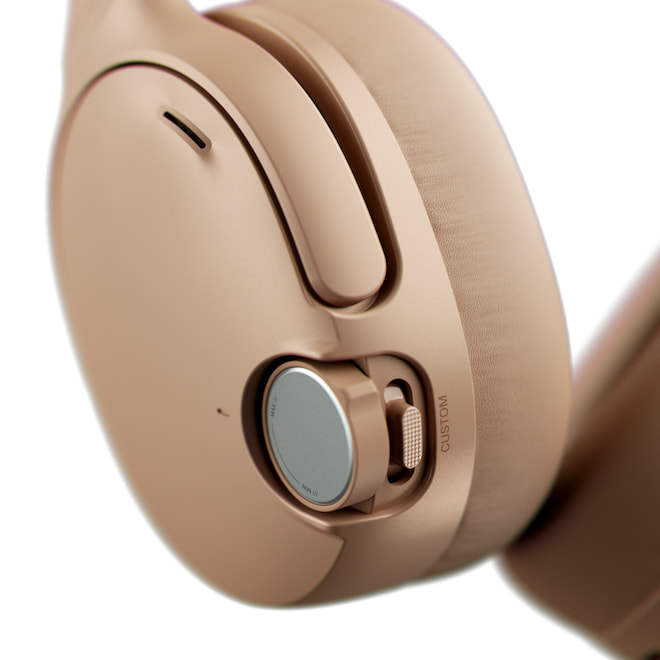
The level can be adjusted using a wheel on the earcup or through the Skullcandy app. Users can reduce the tactile effect to a mild reinforcement or increase it until subtlety leaves the building by the nearest available exit on the Garden State Parkway.
Skullcandy positions the system for music, movies and gaming, where low-frequency impact can add another dimension to kick drums, electronic bass, explosions and vehicle effects. The company does not disclose the size, frequency range or power requirements of the separate bass drivers in either new model.
That adjustable tactile system remains the feature competitors do not directly replicate. Sony, Beats, Bose and Sennheiser can deliver substantial conventional bass, but they do not offer a separate physical bass control performing the same role.
Crusher 1080 ANC

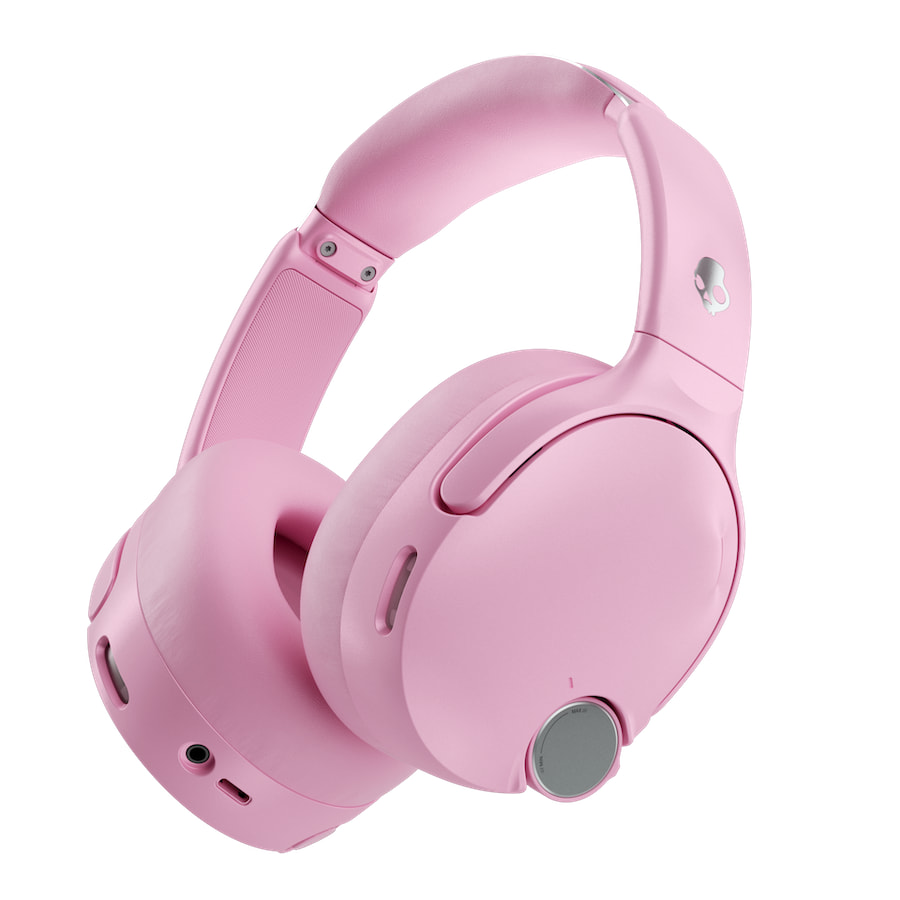
The Crusher 1080 ANC is the flagship of the pair and the more consequential release.
Skullcandy describes Sound by Bose as a suite of Bose-licensed audio technologies. Bose is not manufacturing or selling the headphone; the underlying hardware, product design, app integration and Crusher Bass system remain Skullcandy’s.
The Bose package includes:
- Bose QuietControl active noise cancellation
- Bose TrueSpatial audio with head tracking
- Bose WaveForm Audio Engine
- Bose SpeechClarity voice pickup
- Bose Sound Design tuning
- Bose-tuned Music, Movie and Podcast EQ modes
- Adjustable Aware transparency mode
QuietControl uses six microphones and adaptive processing to reduce surrounding noise. Users can switch among Quiet, Aware and ANC Off modes using the headphone controls or Skullcandy app. Skullcandy has not published attenuation measurements, so comparisons with Bose’s own QuietComfort models will require independent testing.
TrueSpatial is intended to create a wider, more speaker-like presentation for music, movies and games. Skullcandy also lists head tracking, which keeps the apparent soundstage in place as the listener moves.
The WaveForm Audio Engine manages the overall presentation across different playback levels. Skullcandy says the processing is intended to preserve vocal clarity, tonal balance and lower distortion as the volume and Crusher Bass settings increase. That is a useful objective because tactile bass is not particularly valuable if the midrange has been buried beneath it.
SpeechClarity handles voice pickup during telephone and video calls, while natural sidetone lets users hear some of their own voice rather than shouting into a conference call like someone directing aircraft on a carrier deck.
The Crusher 1080 ANC uses 36mm primary drivers with a claimed frequency response of 20Hz to 20kHz, a nominal impedance of 36 ohms and a listed weight of 374.2 grams. That is heavy for a wireless travel headphone and substantially heavier than the existing 332-gram Crusher ANC 2. Comfort and weight distribution will therefore matter almost as much as the specifications.
Battery life is rated at:
- 60 hours with ANC off
- 50 hours with ANC on
- Four hours of playback from a ten-minute charge
Bluetooth 5.3 includes LE Audio, Auracast, multipoint pairing, Google Fast Pair, automatic reconnection and a low-latency mode. Wear detection can pause playback and activate automatic power-off.
The Skullcandy app provides control over Crusher Bass, Bose noise cancellation, spatial processing, preset EQ modes, a customizable five-band equalizer, button assignments, sidetone and other smart features.
The headphones fold flat and collapse for storage. Skullcandy includes a 3.5mm analog cable, USB-C charging cable and roll-top travel bag.
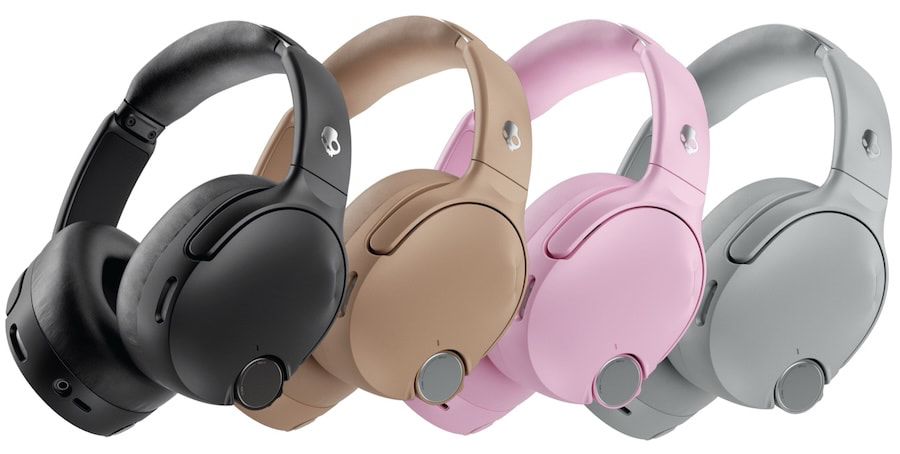
Available finishes are True Black, Candy, Primer and Cement.
Crusher 720
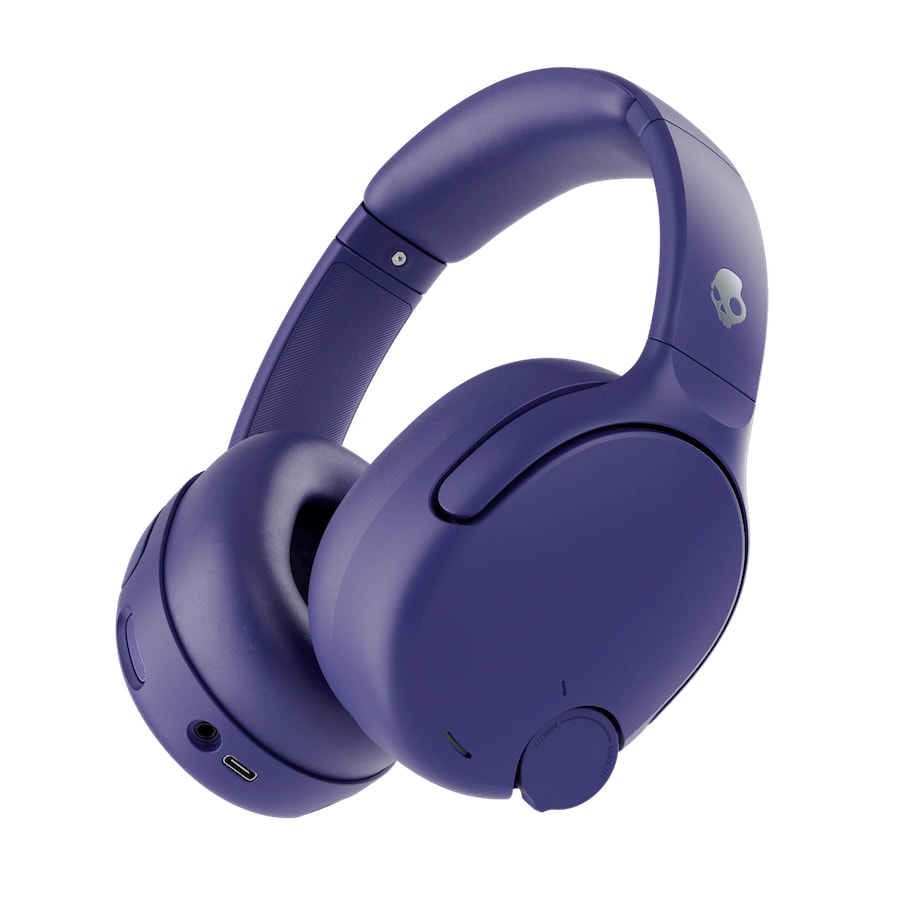
The Crusher 720 is the less expensive model, but it is not merely a stripped-down Crusher 1080 ANC.
It uses larger 40.7mm primary drivers and retains the independently adjustable Crusher Bass system. Instead of Bose TrueSpatial, it includes THX Spatial Audio, which Skullcandy says creates a more immersive, multidimensional presentation for music, movies and gaming.
Skullcandy’s dedicated Crusher 720 product description does not clearly confirm head tracking, so we would not assume that the feature is included based solely on the company’s currently inconsistent comparison tables.
The Crusher 720 also includes Personal Sound by Mimi. The system analyzes the user’s hearing and creates a customized profile intended to compensate for frequencies that may be less audible to that individual.
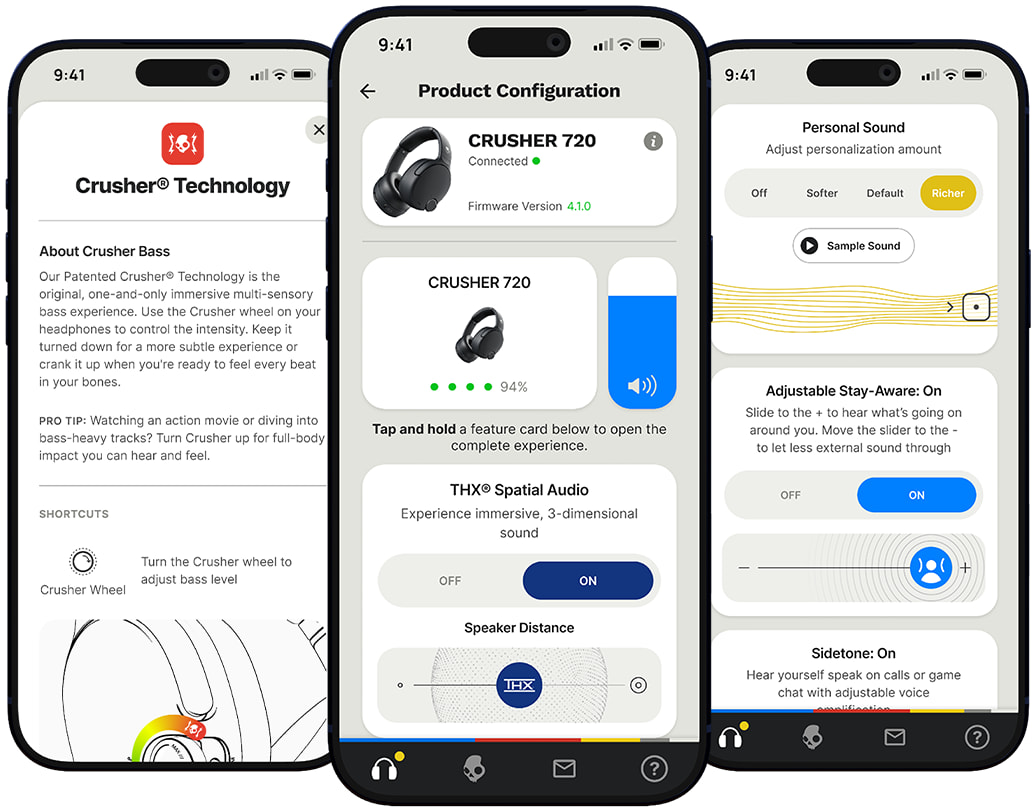

There is no active noise cancellation. An adjustable Stay-Aware mode uses the microphones to pass surrounding sound through the headphones when the listener needs to hear traffic, announcements or another human being attempting to attract their attention.
Battery life is rated at 65 hours, with four hours available from a ten-minute charge.
Other features include:
- Bluetooth 5.3
- LE Audio and Auracast
- Multipoint pairing
- Google Fast Pair
- Wear detection and automatic power-off
- Low-latency audio
- Clear Voice microphone processing
- Adjustable call sidetone
- Music, Bass Boost and Podcast EQ modes
- Five-band custom EQ
- App customization
- 3.5mm analog input
- Flat-folding and collapsible construction
The Crusher 720 has a claimed frequency response of 20Hz to 20kHz, a nominal impedance of 36 ohms and a listed weight of 362.8 grams. It is lighter than the Crusher 1080 ANC, but nobody is likely to mistake it for a featherweight travel headphone.
Skullcandy includes a 3.5mm cable, USB-C charging cable and drawstring travel bag.
The five finishes are Future, Plasma, True Black, Cement and Primer.
Crusher 1080 ANC vs. Crusher 720
The $70 price difference buys more than active noise cancellation.
The Crusher 1080 ANC adds Bose QuietControl ANC, TrueSpatial with head tracking, the WaveForm Audio Engine, SpeechClarity and Bose-developed sound tuning. It is the better option for frequent travelers, commuters and anyone who wants the most complete version of Skullcandy’s sensory bass platform.
The Crusher 720 offers longer battery life, THX Spatial Audio and hearing personalization for less money. It is likely the more sensible choice for home listening, casual gaming and movie playback when active noise cancellation is not required.
The 720 also avoids paying for ANC that some users will rarely activate. That matters because a substantial portion of the Crusher audience is likely using these headphones at home, in a dorm room or in front of a television rather than attempting to erase the sound of an aircraft cabin.
Who Are They For?

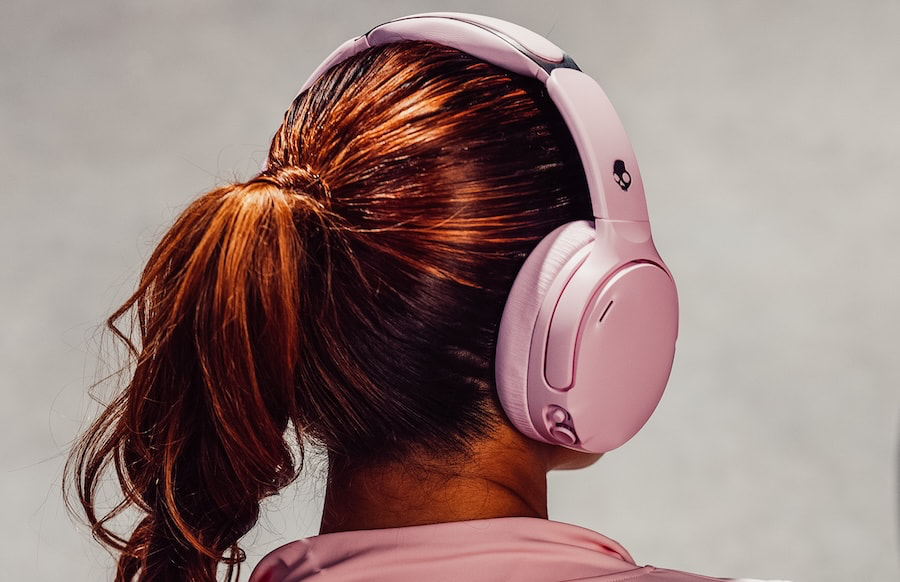
Both models are aimed first at listeners who actively want elevated, physical low-frequency impact.
Hip-hop, electronic music, pop, action movies and games are the obvious applications. The adjustable bass system may also appeal to listeners who use headphones at lower playback levels but still want to feel some of the scale normally associated with loudspeakers and subwoofers.
The Crusher 1080 ANC is better suited to:
- Frequent travelers and commuters
- Listeners who want strong bass without giving up ANC
- Mobile gaming and movie playback
- Existing Crusher users looking for a more complete flagship
- Buyers interested in Bose processing at a lower price than Bose’s premium headphones
The Crusher 720 is more appropriate for:
- Home listening
- Casual gaming
- Buyers who do not require ANC
- Users who value battery life and hearing personalization
- Existing Crusher Evo owners looking for spatial processing and newer connectivity
Neither model is aimed primarily at listeners seeking neutral studio-monitor tuning, the lowest possible weight or a traditional audiophile presentation. These are sensory-bass headphones by design, not a secret replacement for an open-back headphones from Beyerdynamic or Grado Labs.
Main Competitors
The most direct external rival is the Sony ULT Wear. Sony also targets bass-focused listeners and includes ANC, an ambient mode and up to 30 hours of battery life at a regular price of $249.99. Sony uses conventional driver tuning and DSP rather than dedicated tactile bass drivers, making it the closest competitor in audience but not in operation.
The Sennheiser Momentum 4 Wireless currently sits close to the Crusher 1080 ANC in price. It offers adaptive ANC, a 42mm driver, customizable sound and up to 60 hours of battery life. Sennheiser is the more obvious choice for listeners prioritizing tonal balance and conventional high-fidelity sound, while Skullcandy offers the more physical and deliberately bass-focused experience.
The Beats Studio Pro provides ANC, transparency, personalized spatial audio with dynamic head tracking and lossless wired playback through USB-C or 3.5mm. Battery life reaches 40 hours with ANC disabled. Beats also offers tighter integration with Apple and Android devices, but it does not provide adjustable tactile bass.
The standard Bose QuietComfort Headphones remain a major competitor for travel and noise cancellation. They offer Bose’s established ANC and a significantly lighter, more conventional design, but only 24 hours of battery life and none of Skullcandy’s tactile low-frequency hardware.
Skullcandy’s Crusher ANC 2 from 2023 sits directly between the two new models at $239.99 but is often on sale for less at Amazon. It offers adjustable four-microphone ANC, Mimi Personal Sound and up to 60 hours of battery life, but lacks the newer Bose processing, spatial audio and Auracast support of the Crusher 1080 ANC.
Unless it receives a substantial price cut, the Crusher ANC 2 may now occupy an awkward middle seat sandwiched between siblings that don’t feel the need to share those lousy airline crackers. Do people actually eat that garbage?
Key Features Compared
| MODEL | CRUSHER 720 (2026) | CRUSHER 1080 ANC (2026) | CRUSHER ANC 2 (2023) |
| MSRP | $209.99 | $279.99 | $239.99 |
| BATTERY LIFE | Up to 60 Hours of Playtime (ANC Off) | Up to 60 Hours of Playtime (ANC Off) | Up to 60 Hours of Playtime (ANC Off) |
| RAPID CHARGE | 10 min charge = 4 hr playtime | 10 min charge = 4 hr playtime | 10 min charge = 4 hr playtime |
| ADJUSTABLE CRUSHER BASS | Yes | Yes | Yes |
| SKULLCANDY APP COMPATIBLE | Yes️ | Yes️ | Yes |
| ACTIVE NOISE CANCELING / STAY-AWARE | Bose QuietControl ANC / Aware | Bose QuietControl ANC / Aware | Adjustable ANC / Stay-Aware |
| SPATIAL AUDIO | THX Spatial Audio | Bose TrueSpatial with head tracking | – |
| CLEAR VOICE SMART MIC | Bose SpeechClarity | Bose SpeechClarity | – |
| PERSONAL SOUND | – | – | Yes |
| EQ MODES | Music, Movie, Podcast, Custom | Music, Movie, Podcast, Custom | Music, Movie, Podcast, Custom |
| WEAR DETECTION | Yes | Yes | – |
What Skullcandy Has Not Confirmed
Skullcandy does not list support for LDAC, aptX Adaptive or aptX Lossless. Both models support LE Audio and Auracast, but the complete Bluetooth codec set has not been published.
The company also does not state whether the USB-C connection supports digital audio playback or is limited to charging.
Neither model has a published IP resistance rating.
Skullcandy has not confirmed whether Crusher Bass, spatial processing and other powered features remain available through the 3.5mm connection or when the battery is depleted.

The Bottom Line
The Crusher 1080 ANC and Crusher 720 are unusual because Skullcandy is not attempting to copy the premium wireless headphone market feature for feature.
The company already owns a distinct position with adjustable tactile bass. The new models attempt to build better-rounded wireless headphones around that technology.
The Crusher 1080 ANC is the more important of the two. Bose’s licensed technologies address noise cancellation, spatial presentation, call quality, volume-dependent processing and overall sound tuning. The intention is clear: retain the physical impact of Crusher Bass while improving everything around it.
The Crusher 720 makes a different calculation. It removes ANC, lowers the price and adds THX Spatial Audio, Mimi personalization and longer battery life. For buyers who use their headphones primarily at home, that may be the better value.
Neither model will appeal to listeners who regard tactile bass as an attack on public order. For the audience that already understands why Crusher exists, however, these are the most complete versions of the concept so far.
Now we need to hear whether Bose has helped Skullcandy control the bass or merely taught it better tray table manners for those awkward meals next to Karens at 30,000 feet.
You must be logged in to post a comment Login