Tech
Sonny Rollins Remembered, Peter Sellers Brings Beautiful Disaster to The Party, and Maybe Pedro Should Have Kept the Helmet On: Editor’s RoundUp

It was a helluva week or so.
Sonny Rollins, one of the last towering figures of modern jazz, left us at 95. Rob Base, who reminded an entire generation that it took two to make the room move, is gone at 59. And there I was, sitting through an early morning showing of The Mandalorian and Grogu, because apparently torture no longer has the decency to wait until after that first cup of Wawa coffee.
The cruel part? It reminded me that Hollywood used to know how to write great movies. Blake Edwards’ The Party, starring Peter Sellers as Hrundi V. Bakshi, is hardly a clean artifact by modern standards, but it understands timing, chaos, discomfort, and the slow-motion collapse of polite society better than most of what passes for franchise filmmaking today. Sellers walks into a Hollywood party and turns social awkwardness into a controlled demolition. No multiverse. No legacy cameo begging for applause. Just a comic actor with lethal timing and a room full of people too smug to realize the walls are already cracking.
Rollins understood space. Sellers understood timing. Rob Base understood momentum. The Mandalorian and Grogu understands that Disney paid a lot of money for Star Wars and will keep feeding the machine until the helmet falls off, the mystery is gone, and we are left wondering whether Pedro Pascal might have been better off leaving the bucket on.
The Saxophone Colossus Who Made Space Swing

The woman who will always have my heart does not love jazz.
I know.
Nobody’s perfect.
She once told me that aside from Chet Baker, it wasn’t really her thing. Ironic, perhaps, since I know a little something about broken men with talented fingers, pretty tone, and bad wiring.
She has impeccable taste in most things and more fight in her than people twice her size. But Rollins? Not happening. He was never going to be her pair of Golden Goose. For me, he was custom Red Wings: built for the long walk, scuffed in all the right places, and still standing when the pretty stuff falls apart.
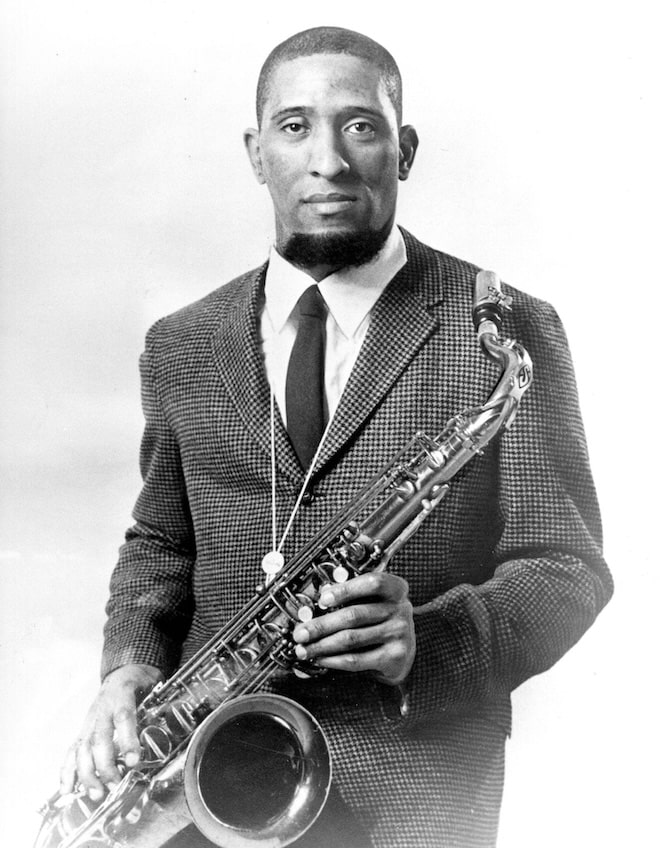
Sonny Rollins was born Walter Theodore Rollins in Harlem in 1930 and became one of the defining tenor saxophonists in modern jazz. Not “important” in the decorative museum-wall sense. Important as in the room changed when he played. He came up around Thelonious Monk, Bud Powell, Miles Davis, Charlie Parker, Max Roach, and Clifford Brown, then carved out a sound that was muscular, searching, funny, fearless, and unmistakably his own.

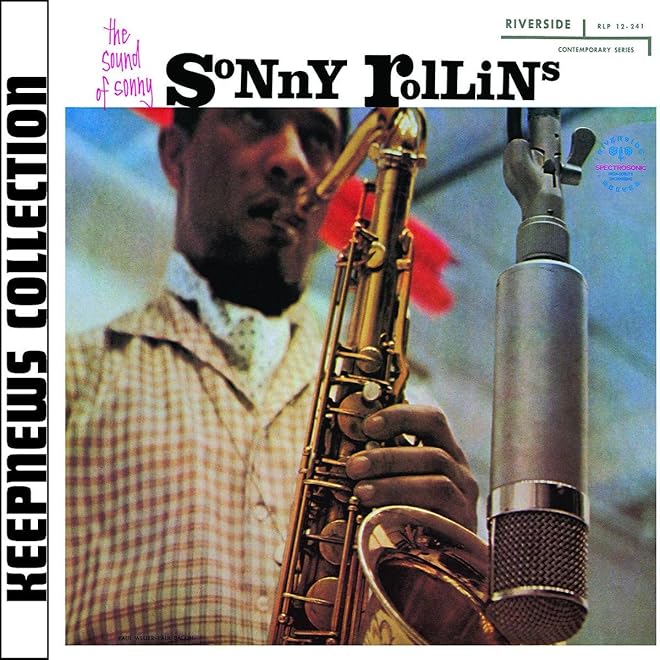
The records that matter are not hard to find because they have been staring us in the face for decades: Saxophone Colossus, Tenor Madness, Way Out West, A Night at the Village Vanguard, Freedom Suite, and later The Bridge, after he famously stepped away and practiced on the Williamsburg Bridge like a man trying to wrestle the horn into telling the truth. Saxophone Colossus gave the world “St. Thomas.” Tenor Madness put Rollins and John Coltrane together. Way Out West proved he could stretch the form without losing the thread. Freedom Suite had spine, politics, and purpose before some artists discovered courage came with better press photos.
I own it all, but I have always been more attached to the early work. That is the Rollins I reach for first: hungry, huge-toned, restless, built for impact, and still loose enough to swing like he knew where the floorboards would give way.
If I had to pack one crate of records for the great gig in the sky — or some cabin in the woods with a sturdy bed, clean sheets, a lifetime supply of pho, and a vintage system that doesn’t hum like a dying refrigerator — Sonny Rollins is in that crate.
Peter Sellers Turned Hollywood Manners Into Controlled Demolition

Peter Sellers’ most iconic screen work is probably still Dr. Strangelove, where he played multiple roles and helped turn nuclear annihilation, Cold War paranoia, the Führer, the mineshaft gap, and male insecurity in uniform into one of the blackest comedies ever made. It remains terrifying because it is funny, and funny because the people in charge are exactly as deranged as we suspected.
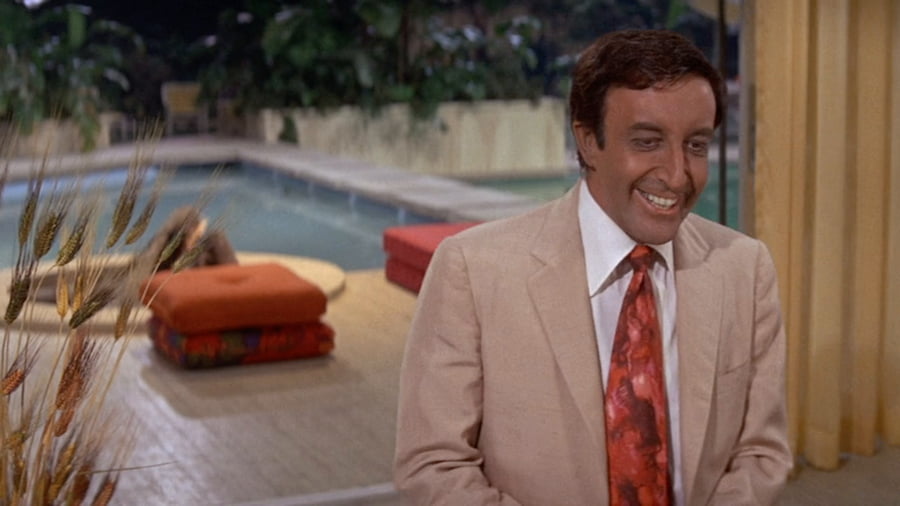
But I would argue that Sellers may have been even better in Blake Edwards’ The Party. Edwards produced, co-wrote, and directed the 1968 film, with Sellers starring as a bungling Indian actor who is accidentally invited to a lavish Hollywood party instead of being fired.

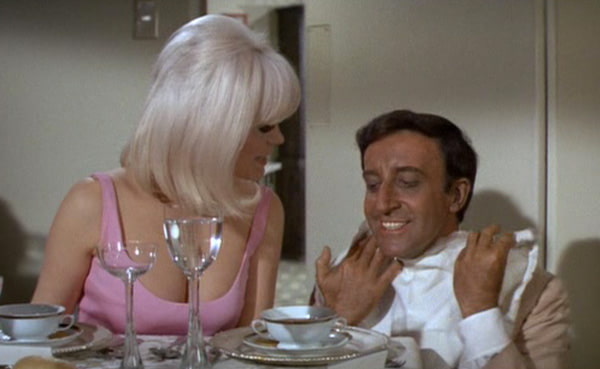
Claudine Longet co-stars as Michèle Monet, and her recent death at 84 adds another shadow to the film this week. Longet’s soft, bossa nova-style presence — especially “Nothing to Lose” — gives The Party one of its strangest and most delicate pauses before the whole mansion starts coming apart.
That will sound odd to anyone who has not seen it, which is probably most people under the age of 50. The Party is an uncomfortable film. It is too strange, too slow-burning, too dependent on silence, timing, embarrassment, and social collapse to survive our current era of instant outrage and algorithmic stupidity.
You cannot discuss The Party honestly without stepping over the landmine: Peter Sellers, a British actor, plays Hrundi V. Bakshi, an Indian actor, in brownface. No varnish. No waiver. No “different time” excuse stapled to the forehead like a studio memo from 1968. It is there, and it should make you uncomfortable.
But that is not where the film stops.
The miracle is that Sellers somehow finds humanity, dignity, timing, and innocence inside a role that could have collapsed into cheap caricature before the first broken chair hit the floor. Bakshi is treated as the outsider, the mistake, the social infection inside a room full of polished Hollywood frauds. Yet he becomes the only person in the mansion who does not feel morally vacant. Everyone else has money, manners, crystal, booze, and imported furniture. He has decency. That is what makes the film sting.
Which is why The Party still matters. Not because it is clean. It isn’t. Not because every joke survives the trip intact. Some don’t. It matters because it is alive in ways most modern comedies are not. Sellers does not perform comedy so much as detonate it in slow motion. He enters a Hollywood party by mistake and turns the evening into a precision-guided disaster: one broken object, one awkward pause, one perfectly timed humiliation at a time.
We live in remarkably stupid times, so I can already imagine the bad-faith readings from every direction. Some would condemn the film without watching it. Others would defend it without thinking. Both sides would miss the point, which is usually how these things go now. The Party is not a safe movie. It is not a comfortable movie. It is a deeply flawed, deeply funny, strangely elegant Hollywood satire built around one of the greatest comic actors who ever lived.

The irony is that almost nobody I know has seen The Party, yet two very different women who left marks on my heart both had.
One arrived with biltong and a cultural passport that made most people look unfinished: British, Indian, South African, Jewish, and sharp enough to shave the edge off Table Mountain. The other was a fierce Space Princess with more decency and warmth than the binary suns, and an understanding of my love for great cinema that still feels rare.
That matters. Not because The Party needs a sentimental defense. It doesn’t. The film can defend itself, flaws and all. It matters because the people who understand why a movie like this still works tend to notice things others miss: timing, discomfort, elegance, cruelty, grace, and the tiny human moments hiding inside the wreckage. Sellers understood that. Edwards understood that. And somehow, so did they.
This Is the Way, Apparently, Into Franchise Exhaustion

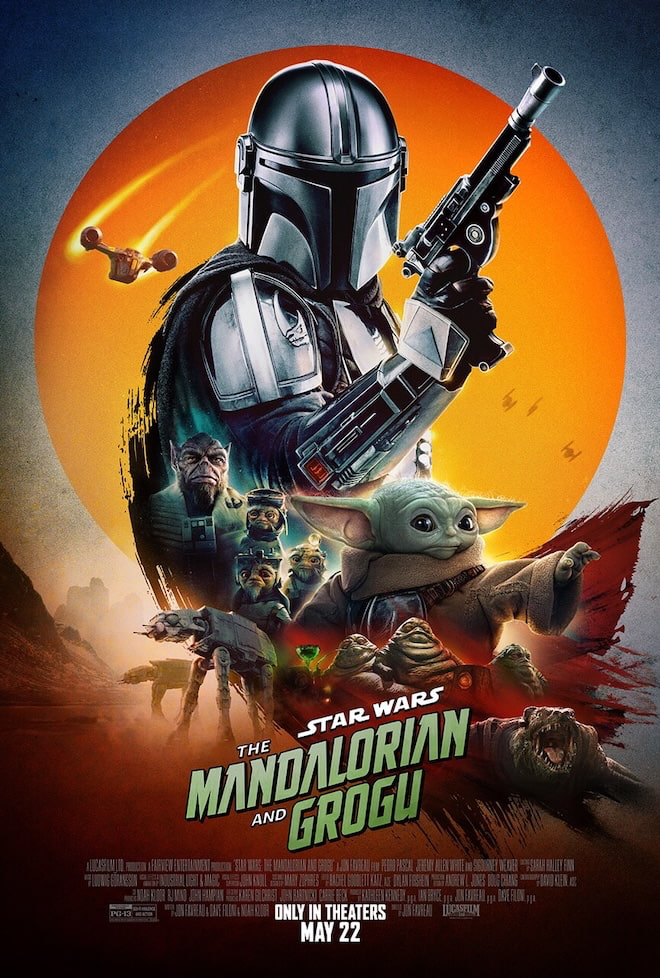
The Mandalorian and Grogu feels less like a movie than four disjointed episodes of The Mandalorian welded together in a dark room by people who mistook continuity for storytelling.
Set in the mess between the fall of the Empire and the rise of the First Order, the film should have had real weight. That period is loaded with dramatic potential: Imperial warlords trying to hold the corpse together, the New Republic struggling to police a galaxy that has already been burned once, and a power vacuum big enough to swallow entire systems. Instead, Favreau and Filoni give us Hutts, callbacks, cameos, Zeb from Rebels, and Rotta the Hutt as if fan recognition is the same thing as narrative momentum. It isn’t. It is a receipt for time already spent elsewhere.
Whatever charm the series once had is gone here. The Force is barely a rumor. The Sith and the dark side are nowhere to be found. The Empire’s aftermath feels strangely undercooked, which is impressive considering this franchise has been dining out on that wreckage for almost fifty years. Even Ludwig Göransson’s musical identity from the original series feels poorly stitched into the action, less a pulse than a reminder that this used to have one.
And Mando? Anyone could have played him. Pedro Pascal’s delivery is so flat and drained of feeling that you start wondering if Anton Chigurh wandered into the armor and decided bounty hunting paid better than coin-tossing. “What’s it to you, Mando?” Apparently not much. The helmet should have stayed on, if only to preserve the illusion that there was a human being somewhere inside the suit.
The special effects are not up to the usual Lucasfilm standard, which is a problem when spectacle is doing this much of the unpaid labor. Sigourney Weaver gets stuck with dialogue so lifeless it makes the dinner scene in Alien sound like Noël Coward. That takes effort. Not good effort. But effort.
The larger problem is Favreau and Filoni. They clearly love Star Wars, but love is not a substitute for discipline, structure, or knowing when to stop waving action figures in front of the camera. Filoni’s cameos only make the problem louder. This is not Andor. This is not Rogue One. Those projects understood cost, sacrifice, politics, fear, and the machinery of empire. The Mandalorian and Grogu understands branding, helmet management, and the comforting sound of Disney feeding another familiar thing into the franchise grinder.
I felt a great disturbance in the Force. It was the sound of a movie mistaking Easter eggs for a spine.
You must be logged in to post a comment Login