Tech
Sonos Tries to Repair Its App With Tabs, Better Volume Controls and Speaker Sorting

Sonos has begun rolling out one of the most substantial updates to its mobile app since the company’s disastrous 2024 redesign made basic multiroom audio controls unreliable, alienated longtime customers, damaged the brand, contributed to a dramatic leadership overhaul and handed rivals an opening that may take years to close.
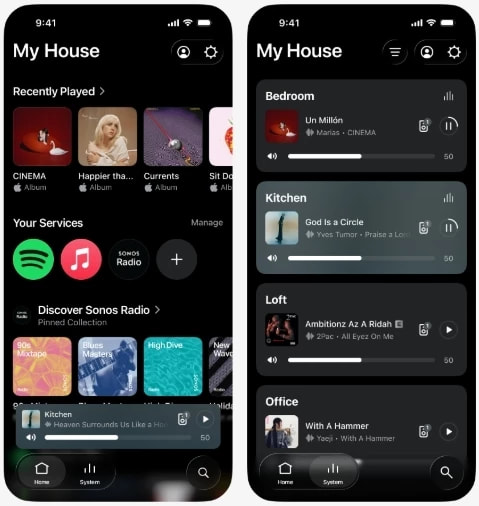
The new update adds optional tab-based navigation, speaker and room sorting, pinned products and a redesigned volume interface on iOS. Android users will receive the new volume controls later. Sonos says the phased rollout began on July 14 and may take up to two weeks to reach every compatible device.

The relevant versions are:
- 87.00.36 for iOS
- 87.00.35 for Android
The update also includes player software version 96.0-78270 for modern Sonos products and 86.8.78270 for legacy hardware.
Related Reviews:
Sonos Brings Back Familiar Navigation
The largest change is the return of clearly visible tabs across the bottom of the app.
Users can now move directly among Home, System and Search rather than relying on the stacked screens and gestures introduced with the 2024 redesign. Sonos is making the interface optional for now; it can be enabled through Settings > Enable Improved Navigation and disabled again if users prefer the current layout.


Putting Home, System and Search where people can actually see them is not a software revolution. It is, however, considerably more useful than making customers remember which screen needs to be dragged, swiped or politely negotiated with before music appears.
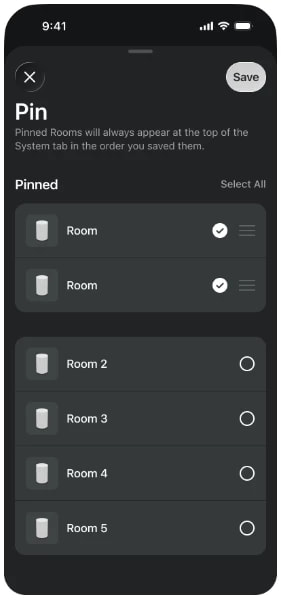
The System tab now supports custom speaker and room sorting. Users can arrange products alphabetically, organize them manually or pin frequently used rooms to the top. That should be particularly useful for larger Sonos installations where finding the correct speaker had begun to resemble sorting through airport departure boards.
Other changes include:
- A dynamic volume slider on iOS
- Updated Now Playing background colors based on album artwork
- Swipe-to-delete controls for Sonos Favorites
- General performance improvements and bug fixes
Android users receive the new navigation and speaker sorting now, but Sonos says the redesigned volume interface is still coming.

The App Disaster Sonos Is Still Trying to Escape
The update matters because the Sonos app is not merely a remote control. It is the control center for grouping rooms, configuring speakers, tuning systems with Trueplay, managing music services and integrating products across the home.
In May 2024, Sonos replaced its established mobile app with a heavily redesigned version released ahead of the Sonos Ace headphones. Customers quickly reported missing and unreliable features, including speaker grouping, queue management, alarms, local music-library access and the ability to switch consistently among streaming services.
As eCoustics reported at the time, some of the company’s most loyal users suddenly found expensive whole-home systems harder to control after a mandatory software update. Owners with large local music libraries were hit especially hard because search and playback functions either disappeared or stopped working properly.
Former CEO Patrick Spence eventually issued an apology and announced seven commitments intended to repair both the software and Sonos’ relationship with customers. One of those promises was that major app changes would be introduced gradually, with optional experimental features made available before becoming the default.
The version 87 rollout follows that commitment almost exactly. The navigation is optional, the deployment is phased and customers can return to the previous interface.
It is remarkable what can happen when software controlling thousands of dollars of hardware is tested before being imposed on everyone.


The Fallout Went Beyond the App
The damage did not remain confined to software reviews and angry support forums. Spence stepped down in January 2025 and was replaced on an interim basis by board member Tom Conrad, who became permanent CEO in July 2025.
The turmoil also overshadowed the company’s hardware.
The Sonos Ace headphones arrived with strong build quality, comfort and sound, but their integration with the broader Sonos ecosystem was more limited than many customers expected. They could not function as a normal Sonos room or wireless multiroom endpoint, and some of their most useful home-theater features required a compatible Sonos soundbar.
The Arc Ultra and Sub 4 followed in October 2024 with meaningful hardware improvements, including Sonos’ Sound Motion bass technology and wider Android support for Trueplay. Those products still depended on the same app that the company was attempting to repair.
Sonos later canceled its reported Pinewood video-streaming project amid the wider leadership and product reset. More recently, the company has returned to hardware expansion with products including the professional Amp Multi, an eight-channel streaming amplifier designed for custom installations.
That makes dependable app control even more important. A professional installer cannot sell a multi-zone platform on simplicity and reliability if the homeowner needs a support ticket to locate the kitchen.

The Bottom Line
Version 87 does not erase the damage caused by the 2024 app disaster, nor does it prove that Sonos has finally resolved every remaining software problem.
It does show that Sonos is listening to complaints that should have been addressed before the original redesign reached customers. Clear tabs, customizable speaker sorting and more predictable volume controls are practical improvements for people who use the system every day.
The decision to make the new navigation optional and roll it out gradually is equally important. Sonos promised it would stop treating paying customers as an involuntary quality-assurance department. This release suggests somebody inside the company remembered.
The new interface is not revolutionary. It is an overdue return to the idea that software controlling a whole-home audio system should disappear into the background rather than becoming the most memorable part of the experience.
For more information: support.sonos.com
You must be logged in to post a comment Login