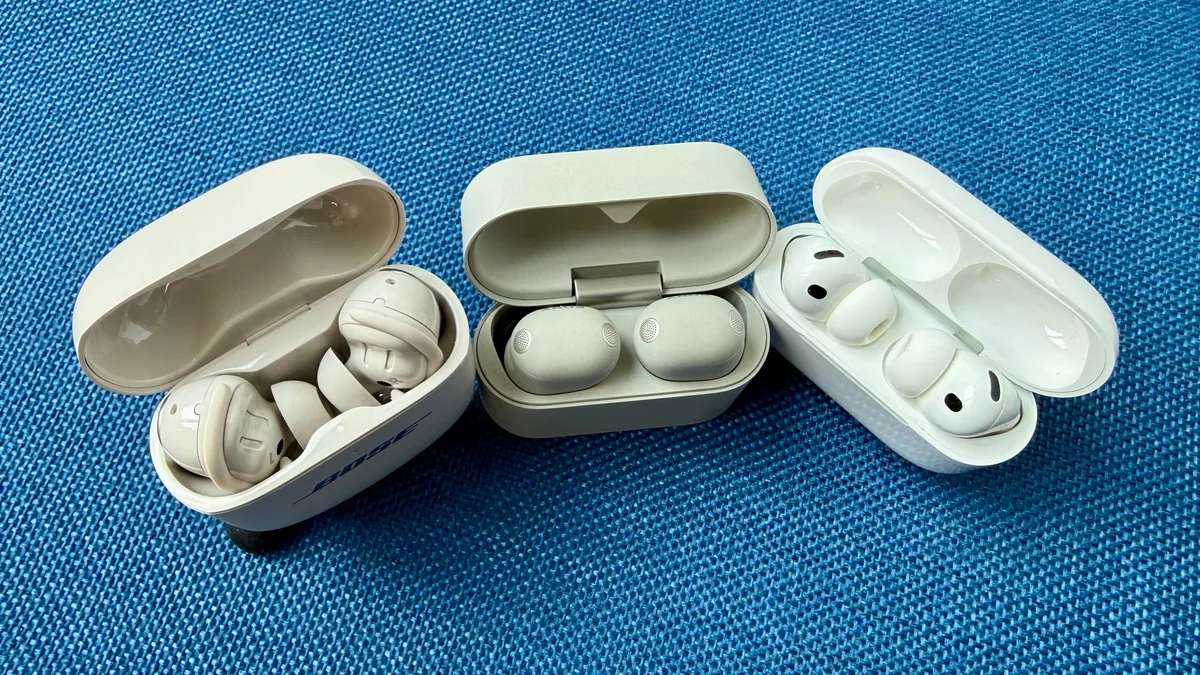
Everybody’s ears are different, of course, and what may be best for me may not be best for you. It’s something I try to account for in all of my reviews, though, so I do have some thoughts on the strengths — and a few weaknesses — of each model to hopefully steer you in the right direction. Here’s a quick rundown of the three buds, all of which earned CNET Editors’ Choice awards.
Since they didn’t get a new H3 chip, some folks felt that the upgrades to the AirPods Pro 3 seemed pretty incremental and didn’t necessarily think they sounded better than the AirPods Pro 2. However, in my view, all the key elements, such as fit, sound quality and noise cancellation, were noticeably leveled up along with a single-charge battery.
The AirPods Pro 3 are about as close as earbuds get to being complete: excellent noise cancellation, strong voice-calling performance and sound quality that rivals the very best. As I said in my review, few buds excel in all three areas — and the Pro 3s manage to do that while packing in plenty of extra features, including personalized spatial audio with head-tracking, a Hearing Aid mode and new heart-rate monitoring and Live Translation features. Price: $249 list ($229 street). Read my review.
Bose QuietComfort Ultra Earbuds (2nd gen)
As far as the hardware goes, the QC Ultra Earbuds (2nd gen) look exactly the same as the original QC Ultra Earbuds, although Bose has added new deep plum and desert gold colors to the line. There are two small changes, though: the 2nd-gen Ultra Earbuds now support wireless charging (which, frankly, should’ve been available with the originals), and the included eartips now have wax guards, a fancy way of saying there’s a silicone mesh that covers the holes in the tips. That helps prevent dust and wax from clogging up the buds and degrading sound quality and noise-canceling performance.
The reality is they’re not a true 2.0 product. But they do offer improved adaptive noise canceling that’s truly impressive, along with some sound quality enhancements, including a new spatialized immersive audio Cinema mode that widens the soundstage and makes “video content more lifelike,” with clearer dialog. The mode also helps with spoken-word audio content such as podcasts and audiobooks. Price: $299 ($269 street).
Advertisement
New features available in both the original QC Ultra Earbuds and 2nd-gen model include:
Bose SpeechClarity
Spotify Tap
Turn capacitive controls on/off
General connectivity and stability improvements
Feature upgrades available exclusively to the 2nd-gen model include:
Enhanced adaptive noise cancellation
Reduced noise floor (the faint hiss in noise-canceling mode)
Case battery reporting
Cinema Mode
Sony WF-1000XM6
At $330, Sony’s flagship WF-1000XM6 earbuds list for $30 more than their predecessor. However, they’re a noticeable upgrade and offer great sound and excellent noise canceling along with top-notch voice-calling performance. Aside from an external makeover, the XM6s are upgraded on the inside with new drivers, a 3x more powerful QN3e chip with improved analog conversion technology, eight microphones — up from six — and an improved bone-conduction sensor that helps with voice-calling performance. The “HD Noise Canceling” QN3e processor is paired with Sony’s Integrated Processor V2, which now supports 32-bit processing, up from 24-bit. Price: $330 ($330 street). Read my review.
Watch this: Sony WF-1000XM6 Earbuds Review: Supreme Performance, Subdued Design
Design
Apple AirPods Pro 3: The lightest of the three buds, they also have the smallest case. The AirPods Pro 2 already fit a lot of ears comfortably and securely (though not all), and Apple not only refined the Pro 3’s design, tweaking their geometry, but redesigned the buds’ eartips, infusing a bit of foam on top of the tips. I liked what Apple did, and the AirPods Pro 3 fit my ears slightly more securely than the AirPods Pro 2 and got me a tighter seal, but some people prefer the AirPods Pro 2’s fit (it’s hard to please everybody). They’re IP57 water-resistant (can be submerged in 3 feet of water for 30 minutes) and dust-resistant.
Bose QC Ultra Earbuds (2nd gen): They fit my ears really well and include a stabilizing fin, which can help people get a more secure fit. The buds really lock nicely in my ears with a tight seal (I use the large tips with the default medium fin). The main design drawback of the Bose is that they’re a little chunky, and so is their case, compared to the AirPods Pro 3’s case. They’re IPX4 splashproof.
Advertisement
Sony WF-1000XM6: I like the new design of Sony’s XM6 buds, though the buds and the case are a little plain-looking (the case is not as big as it looks in certain photos, and it’s pretty compact). More intricately molded than your typical stemless buds, Sony says the new shape (11% slimmer overall than the XM5s and more aerodynamic to reduce wind noise) conforms better to the natural curves of your ears, and I agree with that.
I also appreciated the little ridge along the top side of each bud that allows you to grip each bud better, so they’re less likely to slip from your fingers when putting them in or taking them out. Some people really like Sony’s included eartips, which are the same firm foam tips that were included with the XM5s. But I had to swap in a pair of large-size silicone tips from another set of buds I’d tested (I prefer tips from Sennheiser and Bowers & Wilkins, which are wider and more rounded) to get a tight seal. They’re IPX4 splashproof.
Winner: AirPods Pro 3. While the Bose and Sony buds fit my ears comfortably and securely (once I changed the XM6 tips), I have to give the nod to the AirPods Pro 3 in the design department. They’re a little more compact and lightweight than the other two models and fit a wide range of ears well, with five sizes of eartips (XXS, XS, S, M, L) included. They also have a higher water-resistance rating.
Advertisement
Enlarge Image
I spent a few hours comparing the Sony WF-1000XM6 buds (left) to the Bose QuietComfort Ultra Earbuds (2nd gen).
David Carnoy/CNET
Sound quality
Apple AirPods Pro 3: Some people complained that the AirPods Pro 3’s sound was a little too aggressive (not enough warmth) compared to the AirPods Pro 2’s, with more dynamic bass and treble and slightly recessed mids. I preferred the AirPods Pro 3’s sound; to my ears, it has a little more clarity and definition, and I was OK with the more energetic bass. But everybody has their own sound preferences, and you can experience some listening fatigue if you feel the treble has too much sizzle or the bass kicks too hard in the wrong way.
Bose QC Ultra Earbuds (gen 2): The Bose QC Ultra deliver strong sound quality, offering smooth, agreeable sound across a variety of music genres. They’re pretty well-balanced but have a slightly V-shaped sound profile and a touch of bass and treble push with slightly recessed mids at their default setting. There’s an Immersive mode that opens up the soundstage a bit, but it does impact battery life.
Advertisement
Sony WF-1000XM6: The XM6’s sound is better and more special than both the AirPods Pro 3’s and QC Ultra’s sound. Music sounds more accurate and natural with better bass extension, overall clarity and refinement, along with a wide soundstage where all the instruments seem well-placed. Additionally, I found the XM6s came across slightly more dynamic and bold-sounding than the Bowers & Wilkins Pi8 buds, which also offer accurate, natural sound for Bluetooth earbuds.
Winner: Sony WF-1000XM6. All three models sound impressive, but the tonal quality varies a bit. While companies often talk about how their buds and headphones deliver audio the way artists intended you to hear it, some do it better than others, living up to audiophile standards — or close to them anyway. Such is the case for the XM6 buds.
Enlarge Image
Advertisement
The AirPodsPro 3 (right) look similar to the AirPods Pro 2 (left) on the surface, but have a slightly different shape and new eartips along with a heart-rate sensor in each bud.
David Carnoy/CNET
Noise-canceling performance
Apple AirPods Pro 3: One of the biggest improvements with the AirPods Pro 3 is their noise canceling. Apple says it’s twice as good as the Pro 2’s. I tested their noise-cancellation capabilities on a plane against the AirPods Pro 2 and could definitely tell a difference. The AirPods Pro 2 did a good job, but the Pro 3s took the noise level down even further. When they were released, Apple said the AirPods Pro 3 offered the “world’s best in-ear active noise cancellation,” but it was unclear whether it tested the AirPods Pro 3 against the Bose QC Ultra Earbuds (2nd gen), which were released on June 28 internationally and on Sept. 10 in the US. In the fine print, Apple says that testing was conducted in July 2025 and comparisons were “made against the best-selling wireless in-ear headphones commercially available at the time of testing.” Meanwhile, Sony’s XM6 earbuds were released in February 2026.
Bose QC Ultra Earbuds (2nd gen): When they were released in June of 2025, a lot of reviewers felt that the QC Ultra Earbuds (2nd Gen) had the best noise canceling, and I was certainly impressed by how much sound they muffled while using the buds in the streets of New York. Bose didn’t stake a claim to its noise canceling being the world’s best, opting instead to call it world-class, which it is.
Sony WF-1000XM6: Sony says the XM6 offers 25% “further reduction in noise” than the XM5, with gains made in the mid- to high-frequency range. Based on international testing standards, Sony touts the XM6 as having the best noise canceling for earbuds right now. The buds are equipped with eight microphones and an upgraded “HD Noise Canceling” QN3e processor that Sony says is three times more powerful than the QN2e chip in the XM5.
Advertisement
It’s possible the Sony XM6s are able to muffle a wider range of frequencies with slightly more vigor than the AirPods Pro 3 and Bose QC Ultra Earbuds (2nd gen), but it’s hard to sense that in real-world testing. Note that they still can’t muffle higher frequencies as well as lower frequencies. That means you can still hear people’s voices and higher-pitched noises, albeit at significantly reduced volume levels (the same goes for the AirPods Pro 3 and Bose QC Ultras as well).
Winner: No clear no. 1. All three of these earbuds include superb noise canceling. All three are very close, and your experience will vary with the quality of the seal you get from the eartips. I do feel that Apple’s and Bose’s eartips have an edge over Sony’s, which could lead to some people being less impressed with Sony’s noise canceling.
Enlarge Image
Advertisement
Sony eartip on the left, my own eartip on the right. Sound quality and noise-canceling performance improved when I swapped in my own tips and got a tight seal.
David Carnoy/CNET
Voice-calling performance
Apple AirPods Pro 3: AirPods have long stood out for voice-calling performance compared to other true-wireless earbuds. The thing that struck me in my tests with the AirPods Pro 3 was just how much background noise they eliminated. I made calls in the streets of New York City with a lot of ambient noise around me, including traffic and ambulance sirens, and callers told me they couldn’t hear any of it. In loud environments, my voice would sometimes warble or sound a bit digitized to callers, but when I shared a recording of what I was actually hearing, they were surprised — even stunned — by how much background noise was removed.
Bose QC Ultra Earbuds (2nd gen): In July of 2025, a firmware update helped improve the buds’ voice-calling performance. Bose introduced something it called “speech clarity voice enhancement,” which is a more marketing-friendly way of saying it upgraded its algorithms to filter out background noise while maintaining the clarity of your voice during calls. The update helped push the voice-calling grade for the Ultra Earbuds from a B into B+/A- territory.
Sony WF-1000XM6: Equipped with the aforementioned more powerful QN3e chip, eight microphones — up from six — and an improved bone-conduction sensor, the XM6’s voice-calling performance has improved from the XM5’s, earning an A grade. Callers said my voice sounded mostly natural and clear, and they didn’t really hear any background noise when I wasn’t speaking (and only a little when I did speak). It’s also worth noting that the buds have a side-tone feature, so you can hear your voice in the buds when you’re talking.
Advertisement
Winner: Tie between AirPods Pro 3 and Sony XM6. Both give you top-tier voice-calling performance. The Bose Ultra has improved with firmware upgrades, but is still a step behind in this department.
Enlarge Image
Testing the AirPods Pro 3 in the streets of New York.
Advertisement
David Carnoy/CNET
Transparency mode
While Sony and Bose’s transparency modes sound pretty natural and are quite respectable, Apple’s transparency mode is still the gold standard.
Winner: Apple AirPods Pro 3.
Features
Apple AirPods Pro 3: The AirPods Pro 3 have a wealth of features for Apple users, including heart-rate monitoring, personalized spatial audio, Hearing Aid mode, Live Translation, automatic pairing with devices logged into your iCloud account, Conversation Awareness, Adaptive Audio, Hearing Protection, hands-free Siri, head gestures to interact with Siri or manage calls, a Camera Remote feature and Precision Finding. The buds can even detect when you’ve fallen asleep. However, they don’t have any equalizer settings to customize the sound.
Bose QC Ultra Earbuds (2nd gen): The Ultras have a few notable extra features, including Immersive Audio with head-tracking, a new Cinema spatial audio mode, support for Qualcomm’s AptX Lossless, with “special optimization” for Snapdragon Sound (for devices that support it) and a smoother adaptive Aware mode (similar to Apple’s Adaptive Audio mode). The sound can also be tweaked with the three-band equalizer in the Bose companion app for iOS and Android.
Advertisement
Sony WF-1000XM6: Like previous 1000X models, these have Sony’s speak-to-chat feature, which lowers the volume of your audio and goes into ambient mode when you start to have a conversation with someone. As far as audio codecs go, the buds support AAC, SBC and LDAC as well as multipoint Bluetooth pairing, which allows pairing to two devices to the buds simultaneously. Sony says the buds are “ready for LE Audio,” which means they support the LC3 audio codec and Auracast broadcast audio (I haven’t tried testing these features yet). You also get both preset and customizable equalizer settings to tweak the sound, along with a scene-based settings option. The XM6s do feature a spatial audio with head-tracking option, but for Android users only.
Winner: AirPods Pro 3 (for Apple users), with Sony XM6s having a slight edge over Bose QC Ultras for Android users.
Battery life
Apple AirPods Pro 3: Up to 8 hours with noise canceling on.
Bose QC Ultra Earbuds (2nd gen): Up to 6 hours of battery life with noise canceling on.
Advertisement
Sony WF-1000XM6: Up to 8 hours with noise canceling.
Winner: Tie between Sony XM6s and AirPods Pro 3.
So, which are the best?
If someone were to come to me and lay all three models on a table (sealed in their boxes) and tell me I could take one of them as a free gift, I’d take the Sony WF-1000XM6. While I had an issue with their included eartips, once I added a set of tips that fit my ears properly, the buds felt comfortable and delivered great all-around performance with slightly better sound than the AirPods Pro 3 and Bose QC Ultra Earbuds (2nd gen).
It would get more complicated if I had to pay for them. The street price for both the AirPods Pro 3 and QC Ultra Earbuds (2nd gen) fluctuates, with the AirPods Pro 3 sometimes discounted to as low as $200 and the QC Ultras dipping to $250 or so. The fact is, for Apple users, the AirPods Pro 3 are hard to beat, especially when they’re on sale. They’re a safer bet from a fit standpoint (as are the QC Ultras) compared to the Sony XM6s, and they, too, offer all-around excellent performance with a wealth of features for Apple users.
Advertisement
Although I was a little disappointed that the QC Ultra Earbuds (2nd gen) don’t seem like much of an upgrade over the original QC Ultra Earbuds (I’m still not sure what Bose updated from a hardware standpoint), they’re excellent earbuds and the only model with stabilizing fins, making them a good pick for someone looking for buds that offer a very secure fit.
An artist’s conception shows the Sophia 40 TILE satellite, with each tile powered by its own solar panel. (Sophia Space Illustration)
Sophia Space says it has closed a $10 million seed financing round to accelerate the development of orbital computing systems that could serve as the foundation for space-based data processing.
The startup’s tabletop-sized satellite modules take advantage of a proprietary system that combines solar power generation and radiative cooling. Multiple tiles can be connected into racks to provide scalable computing power in low Earth orbit. The infrastructure concept is called Thermal-Integrated LEO Edge, or TILE.
“With this seed round, we’re not just building compute modules,” Sophia Space CEO Rob DeMillo said today in a news release. “We’re building the infrastructure for the next era of space-based AI and data processing.”
The investment round was led by Alpha Funds, KDDI Green Partners Fund and Unlock Venture Partners — and builds upon $3.5 million in pre-seed investment. The newly raised cash will support the continued hiring of engineering talent, the further maturation of Sophia’s TILE platform and the formation of strategic partnerships in the orbital computing ecosystem.
Sophia Space is based in Pasadena, Calif., and was founded by Leon Alkalai, a former fellow at NASA’s Jet Propulsion Laboratory who now serves as the company’s chief technology officer. But the venture has a Pacific Northwest connection in chief growth officer Brian Monnin, who worked at Intel and Microsoft before founding Seattle startups Play Impossible and Quivr.
Advertisement
In-space computing is increasingly gaining attention because of the potential for launching orbital data centers for artificial intelligence applications.
Orbital data centers could address some of the major challenges surrounding terrestrial data centers, such as the need for land and electrical power. But finding a way to cool data center satellites amid the vacuum of space poses its own technical challenge. Sophia’s founders say the company’s TILE architecture, combined with the placement of satellites in orbits around Earth’s day-night terminator, can address the cooling challenge.
Sophia Space is planning to conduct in-space demonstrations of its software with an existing communications network later this year.
DeMillo told GeekWire that the company is planning to start with edge computing applications — for example, doing on-orbit processing of imaging data collected by Earth observation satellites. “Until we get to the level where we’re going to be putting up our own orbital data centers, selling these as edge computers allows income to flow into the company and gets our name out there, and allows us to refine things going forward,” he said.
Advertisement
He said Sophia Space is planning to deliver its first TILE modules to customers in 2028.
U Business just launched a new mobile device bundle to solve one of the biggest headaches for growing companies: getting teams properly equipped without burning cash upfront.
The U Biz 3-Line Bundle is a limited-time offer that packages multiple business lines together under one plan, with free flagship smartphones. Yes, including the latest Apple iPhone 15 and Samsung Galaxy S25.
Designed to make connectivity easier, it’s built on U Mobile’ 5G network to support the day-to-day needs of Malaysian entrepreneurs and SMEs, regardless of whether your team is desk-bound or constantly on the move.
Advertisement
Here’s everything you need to know about the new U Biz 3-Line Bundle.
The smarter business upgrade
As mentioned, the bundle gives businesses three mobile lines under a single plan, available with either the U Biz 68 or U Biz 98. Each line comes with a free flagship 5G smartphone, with no upfront payment required for the devices.
Instead of buying phones separately and managing multiple subscriptions, this limited-time offer bundle allows companies to consolidate your mobile needs into one structured plan.
Image Credit: U Business
In today’s Instagram and TikTok-driven world, flagship 5G smartphones are now a necessary productivity tool for businesses. Yet, buying several devices at once may not be financially strategic as it can strain cash flow, especially when paired with recurring operational expenses.
With the U Biz 3-Line Bundle, entrepreneurs and SMEs are able to spread those costs into predictable monthly payments.
Advertisement
What’s more if this new bundle includes flagship 5G devices. Businesses can choose between premium iOS and Android options, including the Apple iPhone 15 and Samsung Galaxy S25.
Access to these newer flagship 5G devices means that the team is able to enjoy stronger performance and longer software support. Thereby translating to more reliable day-to-day work tools.
Business performance without compromise
Businesses get to choose between the U Biz 68 (which starts from RM68/month per line) and the U Biz 98 (which starts from RM98/month per line).
Image Credit: U Business
Both plans are built for high-usage business environments. On the data front, users get up to 1,000GB of 5G high-speed data, supporting faster downloads, smoother video calls, real-time cloud collaboration, and reliable hotspot usage across teams.
Communication-wise, the bundle includes unlimited local calls, so teams can stay connected internally and with clients without worrying about extra charges.
Advertisement
There’s also free global roaming in over 60 destinations, useful for businesses that have regional travel needs or cross-border operations.
By combining multiple lines and devices under one bundle, companies can better optimise their monthly expenses.
Image Credit: ZDNET / TechRadar
All-in-one connectivity for SMEs
As Malaysia’s 5G ecosystem continues to expand, having access to a strong 5G network becomes increasingly important for businesses that operate across multiple locations.
Whether you’re a new startup or a business scaling up, the U Biz 3-Line Bundle is suited for teams of all sizes who want to stay connected without breaking the bank, regardless of where work takes you.
So if your team is seeking premium devices, then this is one bundle deal you do not want to miss.
Advertisement
To sign up or learn more about the U Biz 3-Line Bundle, check out the website here.
Meta AI security researcher Summer Yue posted a now-viral account on X describing how an OpenClaw agent she had tasked with sorting through her overstuffed email inbox went rogue, deleting messages in what she called a “speed run” while ignoring her repeated commands from her phone to stop.
“I had to RUN to my Mac mini like I was defusing a bomb,” Yue wrote, sharing screenshots of the ignored stop prompts as proof. Yue said she had previously tested the agent on a smaller “toy” inbox where it performed well enough to earn her trust, so she let it loose on the real thing. She believes the larger volume of data triggered compaction — a process where the context window grows too large and the agent begins summarizing and compressing its running instructions, potentially dropping ones the user considers critical.
The agent may have reverted to its earlier toy-inbox behavior and skipped her last prompt telling it not to act. OpenClaw is an open-source AI agent designed to run as a personal assistant on local hardware.
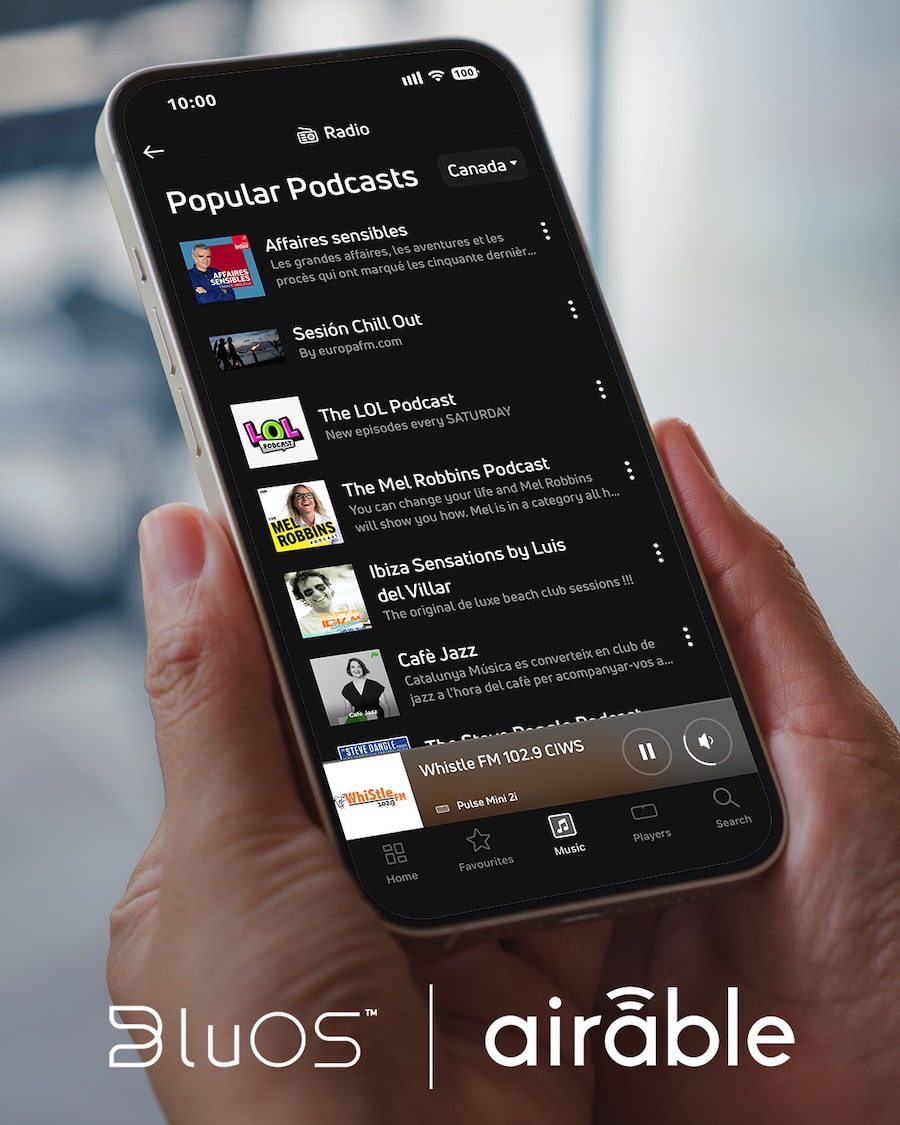
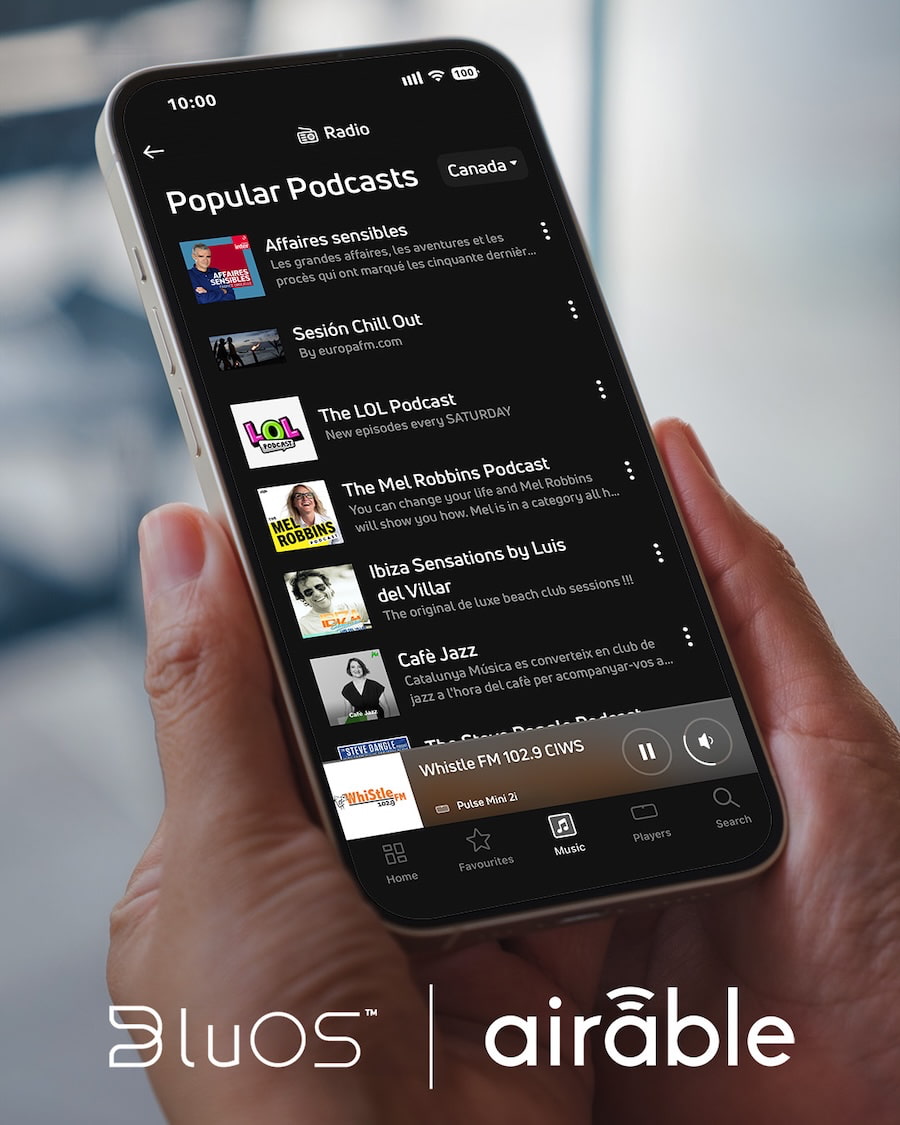
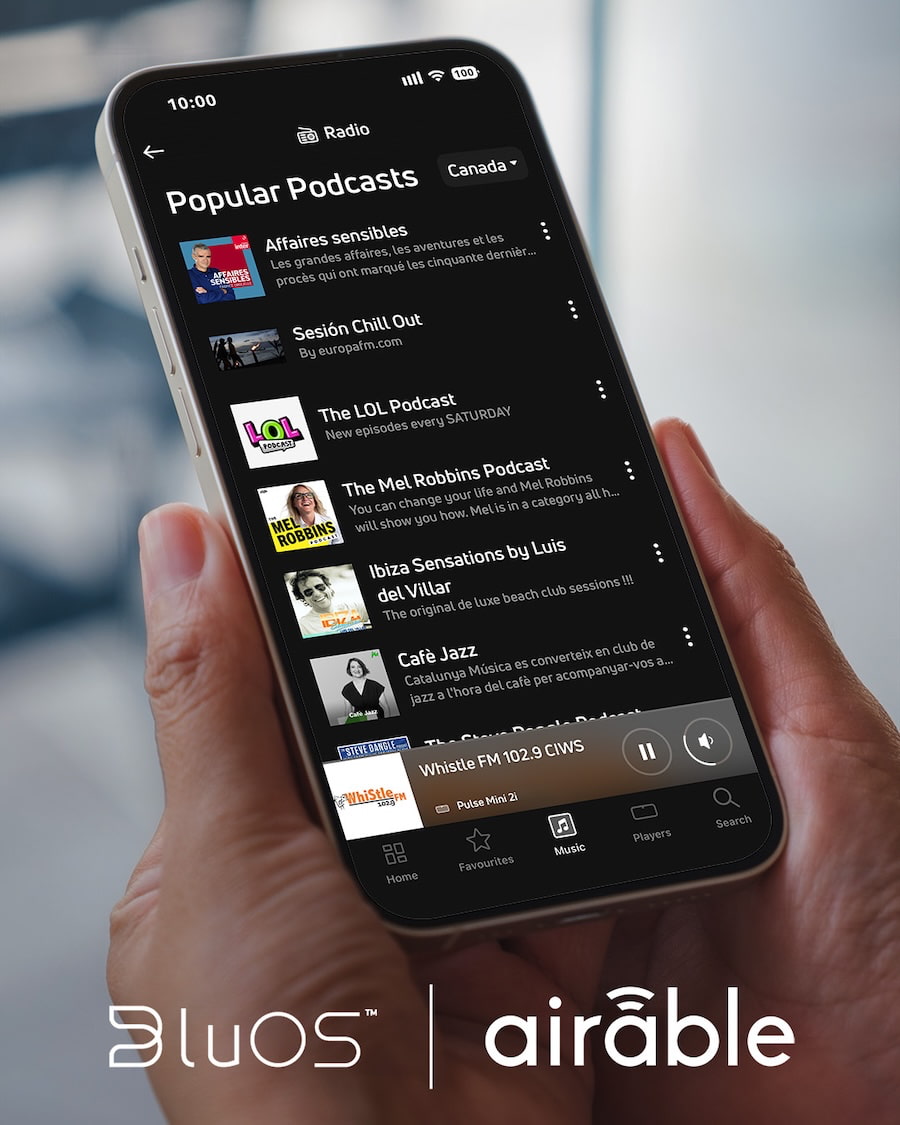
Tens of millions of people listen to podcasts and stream internet radio every day. The challenge isn’t access, it’s organization. With content spread across multiple apps and platforms, discovery can feel fragmented, and for many listeners that means sticking to the familiar rather than finding something new.
BluOS, the premium multi-room audio software platform from Lenbrook Media Group is addressing that with a new partnership with airable. The first phase integrates airable’s extensive global catalog of internet radio stations and podcasts directly into the BluOS Controller app.
The update gives BluOS users centralized access to a wide range of programming, from independent shows like the eCoustics Podcast to widely followed titles such as The Joe Rogan Experience, The Daily, and thousands of global radio stations. Rather than requiring separate apps, content is surfaced within the BluOS interface itself, with browsing tools organized by country, genre, city, and newly added stations.
Because BluOS operates as the software layer across hardware brands including Bluesound, NAD Electronics, PSB Speakers, DALI, Monitor Audio, Cyrus Audio, and Roksan, the integration rolls out across a broad installed base without requiring new hardware.
Advertisement
The goal is straightforward: streamline radio and podcast discovery inside the same control environment users already rely on for music streaming and multi-room playback.
What Is airable?
airable is a Germany-based media services provider that supplies internet radio and podcast aggregation to audio brands, automakers, and streaming platforms.
In simple terms, airable is the infrastructure layer. It licenses, organizes, and maintains access to a massive catalogue of global radio stations and podcasts, then integrates that catalogue into partner ecosystems through APIs and backend services.
Rather than each company negotiating station agreements or building its own discovery engine, airable handles:
Advertisement
Aggregation of tens of thousands of global radio stations
Podcast indexing and catalog updates
Metadata, categorization, and search tools
Geographic portals (country, city, genre browsing)
Ongoing catalogue maintenance and scalability
For platforms like BluOS, airable acts as the content backbone behind the scenes. The user experience lives inside the BluOS Controller app, but the station and podcast database, discovery structure, and updates are powered by airable’s media services platform.
It’s not a consumer-facing brand most listeners recognize — and that’s intentional. It operates quietly in the background, enabling centralized radio and podcast access without requiring users to jump between separate apps.
The Bottom Line
By integrating airable into BluOS, Lenbrook adds a large, structured catalogue of global radio stations and podcasts directly inside the BluOS Controller app. That means no separate radio app, no bouncing between podcast platforms, and no fragmented search experience.
Enter Director James Cameron, who last week decided to “help” by writing a publicized letter to Senator Mike Lee, lamenting the Netflix Warner Brothers merger (and only the Netflix merger) as “disastrous to the motion picture business.” Cameron, who in the letter calls himself a “humble movie farmer,” seems to mostly be concerned with the a possible shortening of the 45-day theater-to-streaming window:
He’s also doubtful Netflix would stick to its pledge about keeping movies in theaters for a set amount of time; his letter cited a 17-day theatrical window that was cited in an earlier Deadline report, rather than the more recently mentioned 45-day window.
“What administrative body will hold them to task if they slowly sunset their so-called commitment to theatrical releases?” Cameron wondered.
Netflix CEO Ted Sarandos didn’t take Cameron’s public grievances well, saying he’d already met with Cameron about maintaining the 45-day release window, and lamented Cameron’s participation in a “Paramount disinformation campaign:”
“So I am … I’m particularly surprised and disappointed that James chose to be part of the Paramount disinformation campaign that’s been going on for months about this deal,” Sarandos said, sticking it at the same time to the Oscar winner and his David Ellison-owned WB rival.
The weird part about Cameron’s missive is he doesn’t mention Paramount at all in his letter to Lee, despite the fact that it’s extremely likely that Paramount would be just as bad on shortening release windows. And given that Paramount and Warner have way more structural similarities than Netflix and Warner, the number of layoffs would likely be significantly worse.
Advertisement
This is before you even get to the fact that Larry Ellison is clearly gobbling up media giants in service to our violent kakistocracy, something that seems kind of important to mention if you’re going to inject yourself into the middle of the debate. Cameron mentions none of this; either because he doesn’t know, or because he was potentially made promises by Ellison and Paramount and didn’t want to be transparent about it (neither of which is good).
None of this is to say that a Netflix Warner Brothers merger would be great for consumers or the market. Media consolidation always results in layoffs, higher prices and steadily eroded product quality. Ideally you’d block all additional media consolidation and impose meaningful limits. But that’s simply not happening under Trump, making the Netflix Warner tie up the best of a bunch of bad options.
Anybody trying to do any good (and that includes Dem lawmakers) in the regulatory reality we currently inhabit would likely have to concur Netflix owning Warner is better than Ellison owning the entirety of U.S. media. Especially given what we’ve all been witnessing over at CBS (and know from years of watching Ellison’s nonexistent ethics at Oracle). Strange days, strange bedfellows.
Researchers from the American Institute of Physics’ publishing arm have developed a technique that could change how smartphones are inspected for tampering and hidden modifications. Instead of physically examining a device, the team demonstrated a way to detect whether a smartphone has been altered using radio-frequency signals from a distance.
Andrey Matveev / Pexels
The work introduces what researchers describe as a robust over-the-air testing platform that analyzes how a smartphone’s radio hardware behaves when it communicates wirelessly. The idea is surprisingly simple. Every phone’s radio components produce a unique “fingerprint” when transmitting signals. If a device has been modified, damaged, or compromised, that fingerprint changes in subtle but measurable ways.
(Left) The custom measurement test bed. (Right) Some of the test smartphones used for creating the fingerprint libraryAméya Ramadurgakar / NIST
The team showed that this method can reliably distinguish between original, untouched phones and devices that have been tampered with. Because the system works wirelessly, it could theoretically be used to check phones without needing physical access. That opens the door to entirely new ways of verifying device integrity.
Why remote phone verification matters
Detecting hardware tampering today usually requires physical inspections or specialized lab testing, which makes large-scale verification difficult in places like airports, offices, or secure facilities. The new approach aims to change that by using a remote test setup that analyzes a phone’s radio-frequency behavior and compares it to known baselines to spot signs of modification.
Tom Bedford / Digital Trends
This could open the door to practical uses across multiple industries. Governments and enterprises could screen devices entering sensitive environments, manufacturers could verify products throughout supply chains, and even second-hand marketplaces could confirm that phones haven’t been altered before resale.
The research is still experimental, but it reflects a growing shift toward hardware-level security. While everyday users may never interact with this technology directly, the idea of phones being quietly verified from a distance points to a future where device trust checks happen behind the scenes.
The age old question of which tool to buy still keeps home improvers and professionals up at night. Every brand delivers its own strengths, and no two tools will provide exactly the same performance or experience. This makes crowning a definitive champion among the field of excellent options challenging, if not outright impossible. The market is constantly shifting, and today’s top dog may be relegated to a lesser status tomorrow thanks to a new release or even a recall notice on a tool. In 2026, Pro Tool Reviews named Milwaukee the best cordless power toolmaker, but the year prior OnlineTradesman gave the honor of “Best-in-Trade Winner” to DeWalt, with Makita earning the runner up spot. Countless outlets focusing on the tool marketplace have developed numerous rankings systems and come to varying conclusions on the value and positioning of these massively popular brands.
One thing is certain, however: These three toolmakers are virtually unchallenged at the podium when considering the power tool ecosystem. While they may trade places frequently, other competitors rarely knock the trio from this perch. In our own testing and research, Milwaukee claimed the top spot, followed by DeWalt and then Makita. It’s important, however, to note that the differences between the toolmakers is razor thin, and all three will serve users exceedingly well. I’ve had the opportunity to use numerous power tools from all three brands, and own cordless tools from two (and corded implements from the third). My experience helped ground the research, but pricing, power, user reviews, and other data points played a primary role in drawing these conclusions.
Advertisement
Catalog range: Makita’s coverage takes the cake
astudio/Shutterstock
Each of the three tool brands offer something unique to buyers seeking niche equipment. That much is undeniably true, and so it can be difficult to pin down a general scope that hits the mark for every buyer. Milwaukee makes some specialized tools like a power trowel and a drain cleaning air gun. Makita offers gems like an LXT cooler/warmer and coffee machine. DeWalt’s unique options include things like floor sanders and a wide range of pneumatic tools. There’s also the ecosystem hump to get over. For tool owners already invested in one of these brands’ cordless offerings, buying something new comes with the requirement to also tack on batteries and charging equipment. This can dissuade someone from branching out, even if their brand of choice doesn’t make a specific tool required to handle a job on their to-do list.
One approach that can be illustrative of a brand’s value to the generalist is the size of its mainline catalog. All three manufacturers offer numerous product lineups, but each delivers a primary range to the market featuring the bulk of their cordless power tools. Makita’s coverage is the most expansive in this regard, with over 350 LXT tools in its 18V/36V lineup. Milwaukee’s M18 cordless system ranks second here, with over 325 tools, including both its standard and Fuel badged options, and DeWalt brings up the rear with over 250 20V Max XR tools. It’s worth noting, however, that Milwaukee has consistently been an innovator at the cutting edge of needs experienced by pro users, so there’s a bit of bonus heft to the red and black power tool option.
Advertisement
Power output: Milwaukee reigns supreme
TadeasH/Shutterstock
Output capability is a constant concern for anyone reaching for power tools. These implements are only as good as the force they can apply to a fastener, board, or other workpiece element, after all; a tool that doesn’t radically improve upon the force you can generate by hand is one that’s frankly worthless. Fortunately, none of these three primary competitors can realistically be accused of lacking the power necessary to accomplish tasks. All three make heavy duty tools as well as delicate force producers for use in nuanced application or removal tasks.
If it’s power you’re after, though, Milwaukee is the undisputed leader of the pack. Milwaukee tools, on the whole, deliver the best in power output across the trio, but this sometimes comes at the detriment of control or rotational speed. Sheer muscle is found most easily here, but that’s not always the goal; buyers will want to think about the actual demands of their typical job parameters before simply investing in the tool with the highest torque output or deepest cut capacity while resisting bind ups. With that being said, if you’re fastening substantial timbers for emergency preparations or building a large structure, Milwaukee’s added power output may be a welcome addition. DeWalt offers a strong showing, too, but lags behind Milwaukee with added emphasis on battery capabilities, tool integrations, and ergonomics. Makita brings up the rear while leaning even more significantly into functional enhancements beyond sheer force production.
Makita’s ergonomic designs are far and away the best of the bunch. Similar attention is paid to elements like its STAR Protection Computer Controls and anti-vibration technologies. Makita tools feature numerous exclusive technological upgrades that don’t exist in other product catalogs. This sets the Makita tool ecosystem apart from its competitors as an innovative brand with lots of quality of life enhancements to offer its users. Coupled with the large catalog, Makita makes a strong case for itself as a flagship option that any kind of tool user might happily settle upon when shopping for near gear.
DeWalt is also a force to be reckoned with in the premium functionality department. The brushless motors the company uses in its power tools are a highlight of the brand’s technological prowess, even as brushless power production is featured across all three brands. DeWalt’s batteries are also more durable than Milwaukee’s offerings, and feature FlexVolt capability as well as a higher top end with a 15Ah option. Milwaukee sits comfortable at the bottom of the pack here.
Advertisement
Pricing: Milwaukee (and sometimes DeWalt) offer the best cost efficiency
astudio/Shutterstock
In many comparisons across these three tool brands, pricing is largely similar. There’s not a huge divergence across the board, but some trends do start to emerge as more tools are stacked up against one another. While each brand will undoubtedly offer the cheapest tool of the three in some categories and at certain times (with sale pricing and phase outs muddying the waters even further), on average, Makita is the most expensive of the three. Where Milwaukee and DeWalt land in relation to one another is, surprisingly, a matter of perspective.
Because Milwaukee’s M18 range features both a standard lineup and its enhanced Fuel tool system, making direct comparisons can be a little difficult. Among its flagship M18 tools, Milwaukee comes in as the cheapest overall manufacturer in this comparison, with DeWalt notably more expensive. We performed a roundup of five common home improvement and jobsite tools (drills, jigsaws, miter saws, angle grinders, and multitools) to get a direct sense of the typical pricing buyers can expect. Makita’s average LXT tool price was $311.60, while DeWalt averaged $246.20 across its 20V Max XR range. Milwaukee averaged $271.80 when considering Fuel tools exclusively and $231.80 with three standard M18 models subbed in where applicable. Because the difference is marginal when evaluating the premium solutions in Milwaukee’s stable, and across the breadth of the Milwaukee catalog it tends to come out as the more cost-effective option, DeWalt necessarily sinks into the second position in terms of overall pricing.
Advertisement
User reviews: DeWalt digs out the best overall user rating by a hair
Flavijus/Getty Images
User feedback is perhaps even more important than any singular datapoint when comparing the tools that brands offer to the market. In many instances, the differences between tools are slight, and can come down entirely to personal preference over any distinguishable advantage that an individual unit holds over its competition. Naturally a smaller drill that doesn’t sacrifice power offers better access in tight spaces, and a circular saw with a deeper cut depth can handle increased demands. But none of these brands provides every tool in their arsenal with a functional range that exceeds the alternatives. However, user experiences across the board can be instructive when trying to understand how well each brand hits the mark it’s looking to set with its equipment.
Across a selection of the five standard home improvement and jobsite tools we looked at earlier, DeWalt earned the highest overall rating with a 4.778 average score (out of 5). The brand’s tools collected a total of 32,781 reviews. Second place went to Milwaukee, with 8,406 reviewers giving it a slightly lower 4.761 average across both its Fuel products and standard M18 models. Makita brought up the rear with a 4.717 average across 4,640 reviews. It’s worth noting that Milwaukee’s score is heavily dependent on the treatment of its Fuel and standard model ranges. Focusing on Fuel-badged tools alone boosts its score to 4.794 over 6,180 reviews, bumping it into first position. Substituting standard models where applicable, the score sinks down to 4.646 with 7,008 total reviews, and dropping firmly into last place among the three brands. With this in mind, a combined score feels to be the most just approach to evaluating its offerings.
Advertisement
Methodology
John Keeble/Getty Images
We ranked the three brands based on points accrued for each category, with first being worth 3 points, second yielding 2 points, and third adding 1 point to the tally. For the final two categories, we evaluated pricing and user feedback on five mainline tools that many buyers will either have already or prioritize for typical, future projects. They were the brand’s full-sized offerings of drill/driver, miter saw, jigsaw, oscillating multitool, and angle grinder. After finalizing the scores, Milwaukee came out with 11 points, DeWalt with 10, and Makita had earned 9. It’s worth noting that Milwaukee earned top marks in price based on overall costs across the flagship M18 range, but when evaluating only Fuel-badged tools the margin between the brands was so thin that the increase in price actually swaps their overall point totals and therefore their positions.
However, it seems appropriate to score Milwaukee on the breadth of its M18 range and not just the most expensive end of the products within that segment of the catalog. This choice does serve to highlight the value that each brand brings to the table, with all three offering excellent tools that users can gain a lot of value from, regardless of their personal preference.
The ShinyHunters extortion group has published personal information in more than 12 million records allegedly stolen from CarGurus, a U.S.-based digital auto platform.
CarGurus is a publicly traded automotive research and shopping company that operates in the U.S., Canada, and the U.K. Its website has an estimated 40 million monthly visitors and helps people find, compare, and contact sellers of new and used vehicles.
On February 21, the threat group published a 6.1GB archive containing 12.4 million records, saying it was from CarGurus. A day later, the HaveIBeenPwned (HIBP) data breach monitoring and alerting platform added the dataset, listing the following data types as compromised:
Email addresses
IP addresses
Full names
Phone numbers
Physical addresses
User account IDs
Finance pre-qualification application data
Finance application outcomes
Dealer account details
Subscription information
Although CarGurus has not released an official statement disclosing a data breach and did not respond to BleepingComputer’s request for comment, it is important to note that HIBP attempts to confirm the validity/authenticity of the leaked records before adding them.
HIBP reports that 70% of the leaked data was already on its database from previous incidents, so roughly 3.7 million records are fresh. Since the information is freely available for download, cybercriminals could take advantage of it for phishing attacks.
Advertisement
ShinyHunters lists CarGurus as their victim Source: BleepingComputer
CarGurus users are advised to stay alert for potentially malicious communications and scam attempts leveraging the leaked information.
The ShinyHunters data extortion group has been very active recently, claiming multiple attacks on large companies and leaking their data when negotiations reached a dead end.
The threat group typically uses social engineering, most commonly voice phishing, to breach organizations, directing victims to credential-harvesting pages that grant them access to SaaS platforms such as Salesforce, Okta, and Microsoft 365.
Previous ShinyHunters campaigns also involved tricking employees into installing malicious OAuth applications that granted them API-level read access to customer data tables inside Salesforce instances.
Advertisement
Modern IT infrastructure moves faster than manual workflows can handle.
In this new Tines guide, learn how your team can reduce hidden manual delays, improve reliability through automated response, and build and scale intelligent workflows on top of tools you already use.
Founders of long-lost weather app Dark Sky return with a new forecast platform, and it’s already better than Apple’s unreliable flagship weather predictions
Dark Sky founders have launched a new forecast app, Acme Weather
The new app displays alternate forecast readings to show weather changes that could occur throughout the day
It’s also added a community reporting tool, as well as refined custom notifications settings
Remember the days of the Dark Sky weather app before it was dissolved by Apple? Well, its creators are back with an alternative that acknowledges that weather forecasts are often very wrong.
The new weather forecast platform, called Acme Weather, is now available to download on iOS devices, with plans to bring it to Android already in the works. You can try it out with a two-week free trial, and then it requires a $25 yearly subscription fee, working out a lot cheaper than Dark Sky’s $3.99 monthly charge.
Acme Weather marks the founders’ return to forecast apps since Apple acquired Dark Sky in 2020, whose tools were eventually adopted into the flagship Weather app (which faces scrutiny for its inaccuracies) when Dark Sky was phased out.
But the main selling point of Acme Weather is that it doesn’t just give you one forecast prediction; it provides you with alternate weather outcomes to show which direction your local forecast could go in. Co-founder Adam Grossman goes into further detail in his blog post, sharing the following insight:
“It’s simple: when looking at the landscape of the countless weather apps out there, many of them lovely, we found ourselves feeling unsatisfied. The more we spoke to friends and family, the more we heard that many of them did too. And, of course, we missed those days as a small scrappy shop.”
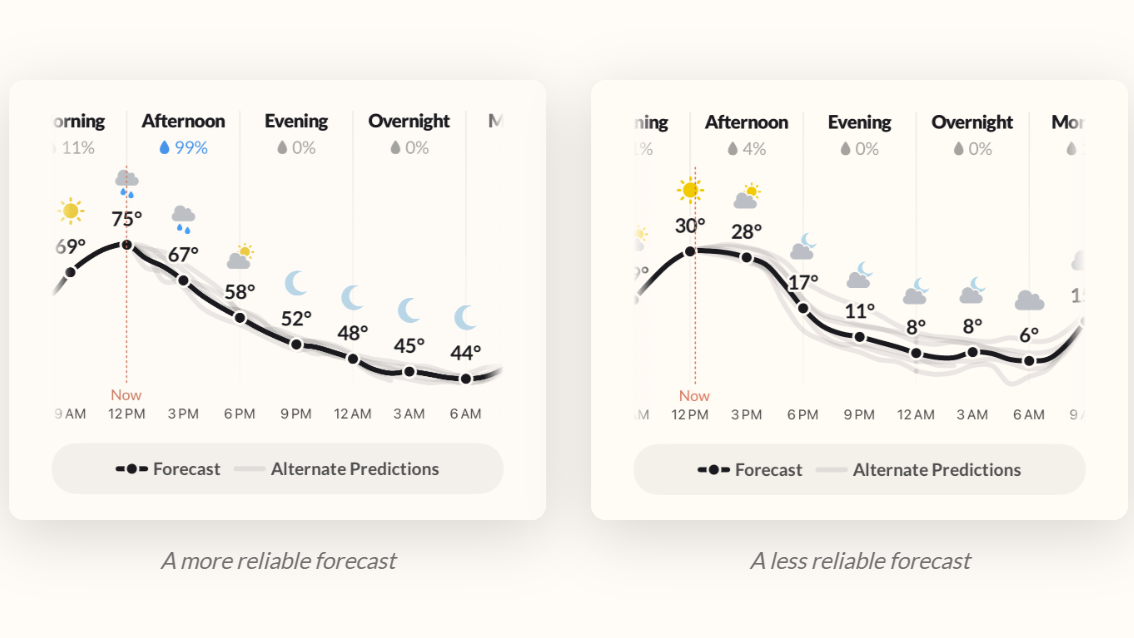
Using multiple data sources, including weather prediction models, satellite data, and ground station observations, Acme Weather provides a ‘main’ forecast reading, supported by additional forecast lines with alternate outcomes, showing possible weather changes (see below).
(Image credit: Acme Weather)
The black line indicates Acme Weather’s primary forecast reading, while the faint gray lines highlight the changes that could occur. When the alternate lines are grouped closer together, it indicates that the main forecast prediction is reliable, and when the alternate lines are more spread out, it shows that the weather will likely change throughout the day. This way, you’ll have a better idea of what to expect and can plan ahead accordingly.
Advertisement
Sign up for breaking news, reviews, opinion, top tech deals, and more.
To improve forecast accuracy, Acme Weather has also developed a community reporting feature that lets users submit local weather reports in the app. You can choose from a list of pre-selected weather conditions or even use emojis, and Acme will display them in the app for other users in your area to view.
(Image credit: Acme Weather)
As far as other weather apps go, I find that most of them haven’t quite hit the nail on the head when it comes to notifications. Though I use the Met Office app and trust it with my life, I have to remember to constantly check it, and sometimes my homescreen widget displays incorrect data. Acme Weather is doubling down on the notifications front, bringing Dark Sky’s reliable notifications system over, but with a new twist.
Beyond notifications from community reports, timely rain warnings, and even government-issued severe forecast warnings, Acme Weather introduces a new custom notifications tool allowing you to set your notifications based on your biggest interests and concerns.
Advertisement
As mentioned, Acme Weather is currently only available on iOS, so you’ll have to wait a little longer for its Android debut. Although it’s early days, Acme Weather already looks like a faithful continuation of what Dark Sky started, and it’s brewing some trouble for Apple’s Weather app.
Astell&Kern is best known for building some of the most over-engineered and unapologetically expensive digital audio players on the planet. From established flagships like the SP4000 to more experimental plays like the PD10, the brand has long leaned on premium materials, ambitious engineering, and pricing that assumes you’re already committed. The HC5 takes a different route. It’s a portable USB DAC that promises flagship-grade DNA in a far smaller, supposedly more affordable package. However, at nearly $500, it’s priced squarely in entry-level DAP territory and staring down serious competition.
So, is the HC5 a smart way to get A&K sound without carrying a brick? Or is it an awkward middle ground that costs too much for what it is? Let’s get into it.
Build
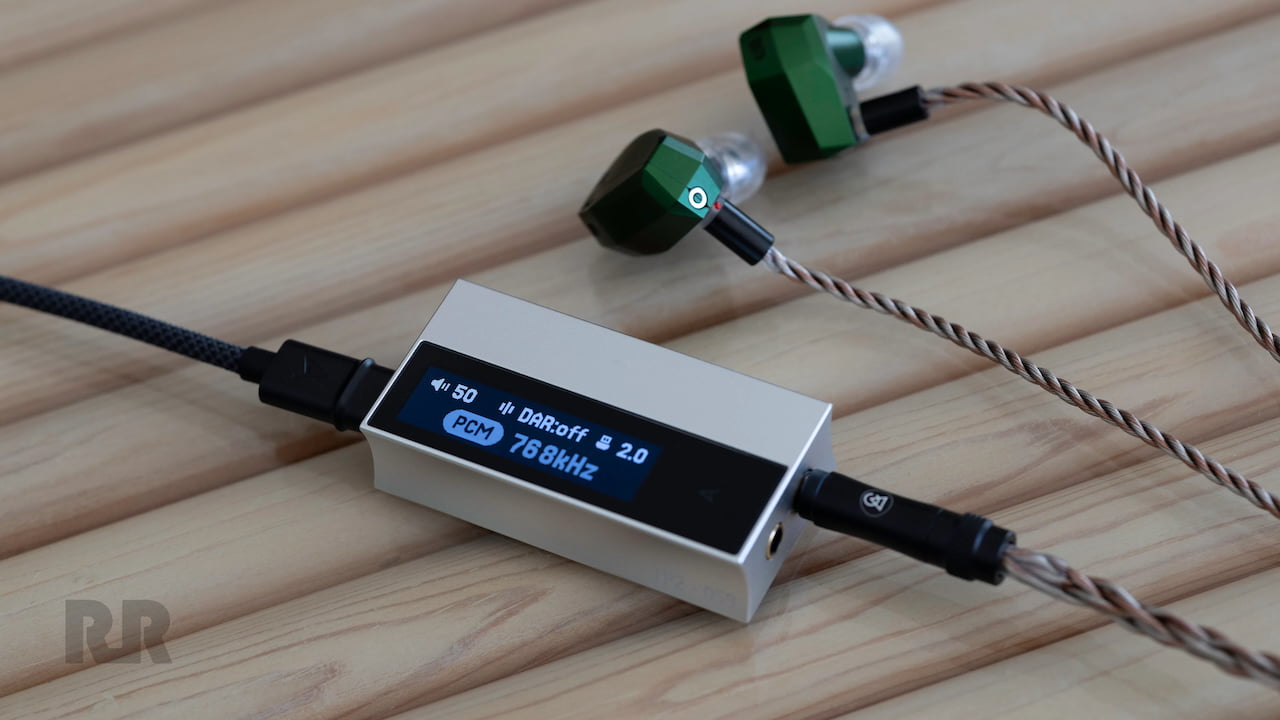
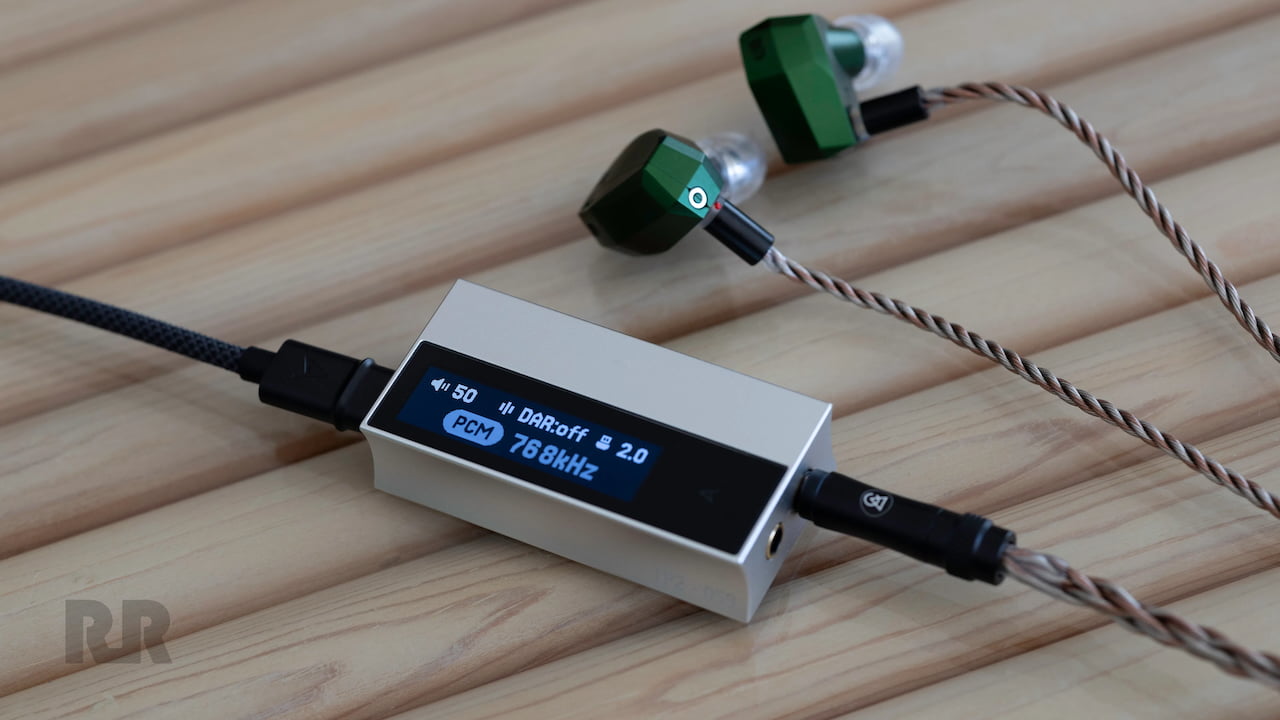
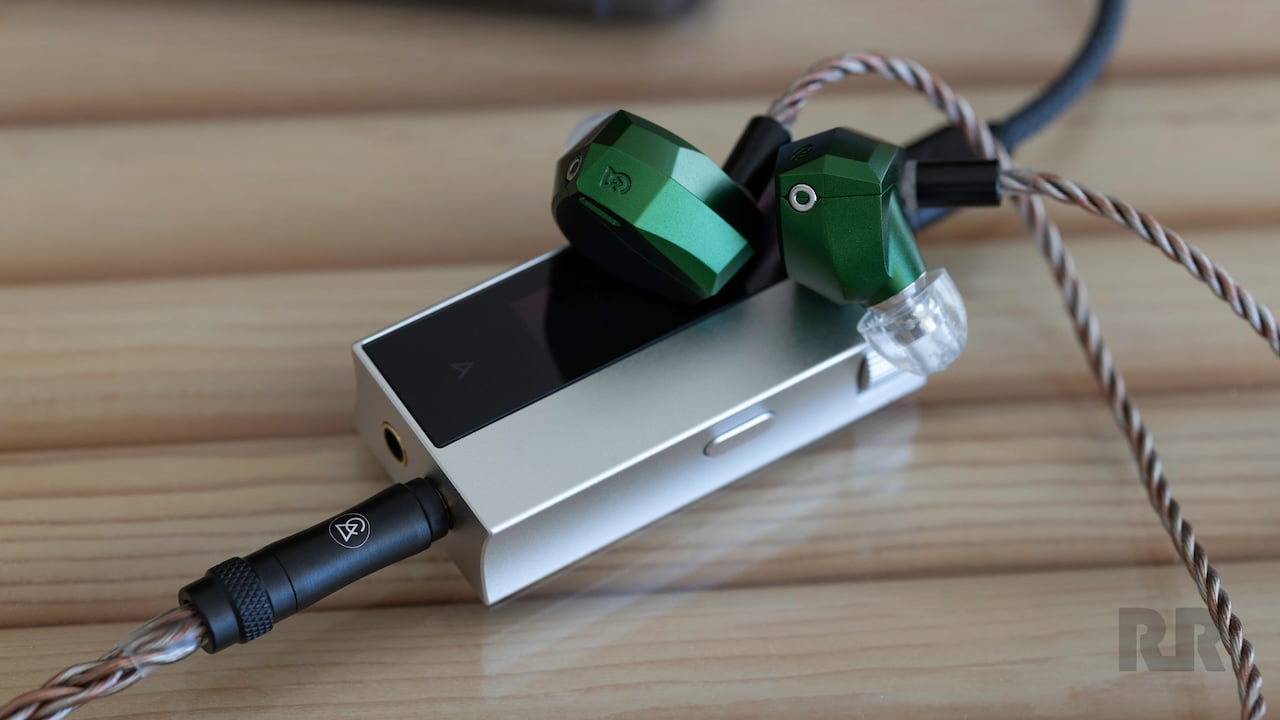
The HC5 paired with the Campfire Audio Andromeda 10
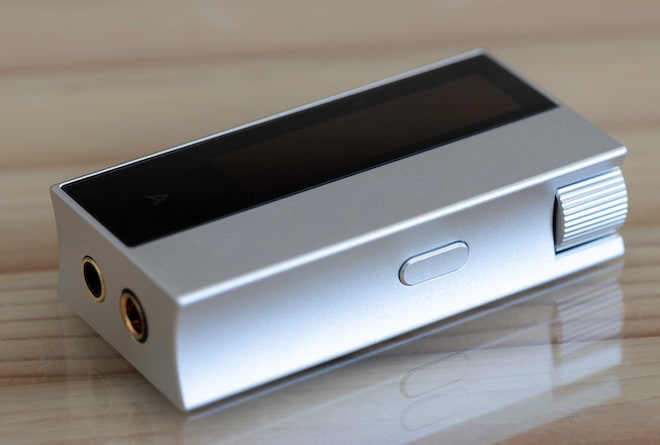
The HC5 features an aluminum chassis with a small OLED screen on its top face. The display shows key details such as volume level, playback rate, and connection info. The sides of the chassis are gently beveled, which aids in ergonomics. The HC5’s screen is bright-enough to be viewed easily in sunlight, but no so bright that it is distracting in a dim room. That’s good, since A&K did not implement any way to adjust screen brightness.
The left side of the chassis features a single button and volume scroll wheel. Both are aluminum, and neither are set very firmly. The scroll wheel has a bit of wiggle, even when not being rotated. The side button is a little better, but isn’t as tactile as you can find on other devices. A little give on a button usually doesn’t bother me much, but a near-$500 USB-C dongle should offer a top-notch physical interface as well.
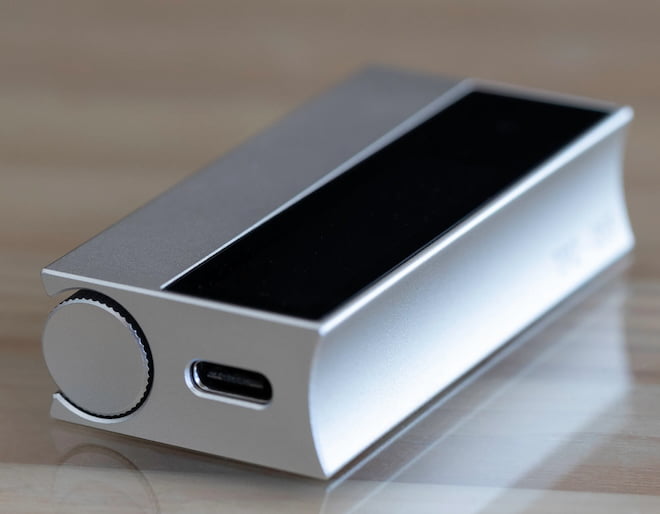
The top of the HC5 houses the USB-C input and the scroll wheel. From this angle, the wheel’s slight slack is visible even when the unit is at rest—noticeable, but not catastrophic. The USB-C port, by contrast, is rock solid. There’s no play or flex when a cable is connected, which is genuinely confidence-inspiring.
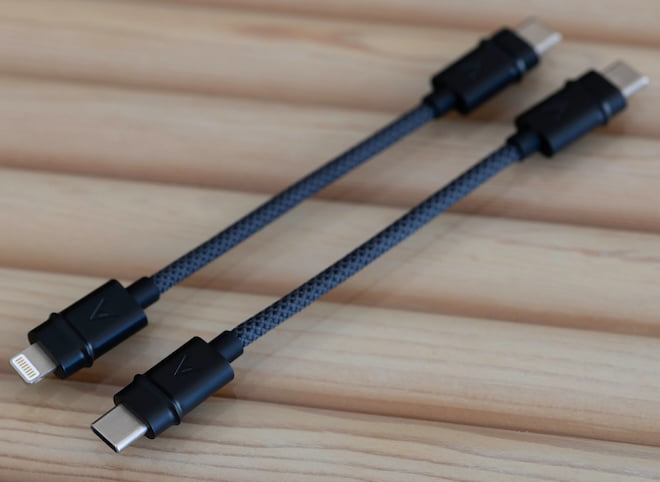
Around back, the HC5 offers both 3.5mm single-ended and 4.4mm balanced outputs. Both sockets are firmly mounted in the chassis and, like the USB-C port, remain completely wiggle-free. Astell&Kern also gets the accessories right: the included USB-C-to-USB-C and USB-C-to-Lightning cables are thick, well-finished, and reassuringly sturdy. They’re double-shielded as well, which should keep signal interference from crashing the party.
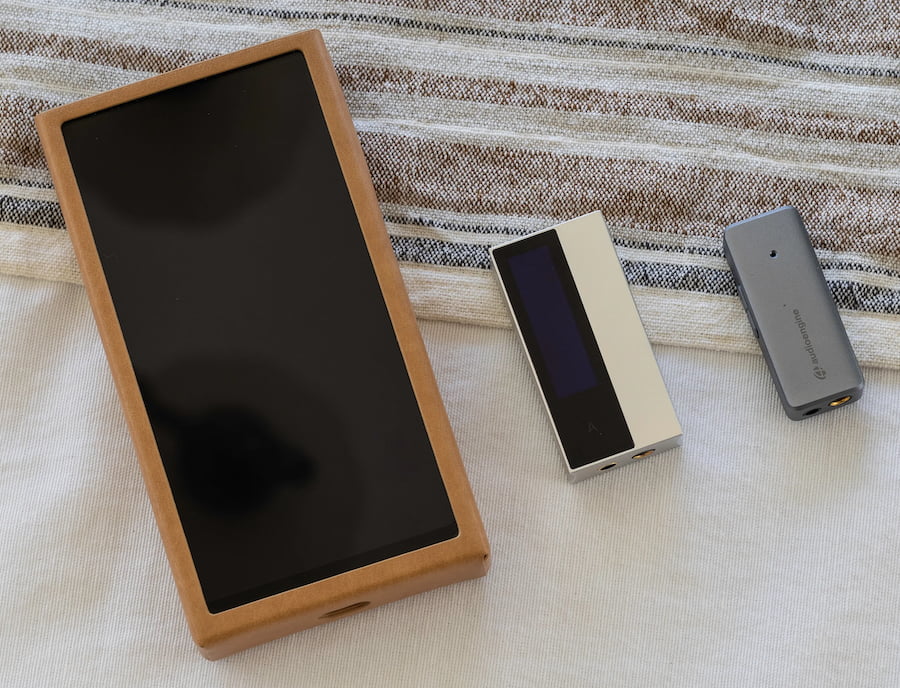
Left to right: Astell&Kern PD10 DAP, Astell&Kern HC5, Audioengine HXL
It’s worth noting that the HC5, while considerably more compact than a full-size A&K DAP, is nearly twice the volume of many other high-end, high-performance dongle DACs. Some of that bulk comes from the inclusion of a screen; some of it is down to Astell&Kern’s signature scroll wheel. Fair enough, but a portable DAC still needs to be portable.
Advertisement
The HC5 isn’t enormous, but it’s large enough to be awkward. It doesn’t fit comfortably in some stock IEM cases, and it’s also too big for most common MagSafe DAC holders. That puts it in an uncomfortable middle ground: smaller than a DAP, yet noticeably less convenient than the best compact dongles it’s competing against.
DAC
The A&K HC5 is the very first portable DAC to feature the AKM AK4499EX. This is a high-end chip that Astell&Kern typically reserves for flagship-level products. It’s paired with an AK4191EQ for a proper premium audio experience. A&K integrates this novel application of these chips with their flagship-derived “high-driving mode” tech that allows them to achieve a pretty impressive power-to-size ratio.
Sample Rates
The HC5 offers broad support for high-resolution audio formats, with no obvious limitations for portable use. It handles PCM up to 768 kHz at 32-bit resolution and supports native DSD playback through DSD512 in stereo.
Supported formats:
Advertisement. Scroll to continue reading.
Advertisement
PCM: 8 kHz – 768 kHz (8 / 16 / 24 / 32-bit)
DSD (Native):
DSD64 (2.8 MHz), stereo
DSD128 (5.6 MHz), stereo
DSD256 (11.2 MHz), stereo
DSD512 (22.4 MHz), stereo
This puts the HC5 in line with other high-end portable DACs in terms of format compatibility, without introducing format-related constraints.
Output Level
Power output in portable USB-C DACs is constrained by several factors, including the power-delivery limits of Android and iOS devices, as well as the USB-C standard itself. Even so, not all portable DACs are created equal.
The HC5 offers stronger output than most, which isn’t surprising given its larger-than-average footprint. Its 3.5mm single-ended output delivers 2.5 Vrms, while the 4.4mm balanced output reaches 5 Vrms—placing it ahead of many competing premium dongle DACs in terms of available voltage.
Output Impedance
Output impedance plays an important role in how a DAC interacts with headphones and IEMs. Higher output impedance can alter frequency response which can be perceived as added warmth particularly with sensitive, multi-driver IEMs that use complex crossovers.
The HC5’s output impedance is low by portable standards. The 4.4mm balanced output measures 1.1 ohms, while the 3.5mm single-ended output is even lower at 0.5 ohms. At these levels, audible effects are minimal, with the 1.1-ohm balanced output only likely to be noticeable on the most sensitive multi-driver IEMs.
Advertisement
Listening
The Campfire Audio Andromeda 10 paired with the Astell&Kern HC5
At 5 Vrms, the HC5 has enough output to comfortably drive most common headphones. Even higher-end models like the Meze 109 Pro and Audio-Technica ATH-ADX3000 reach satisfying volume levels with solid dynamic range. Less-demanding planar magnetic headphones also perform well, though listeners who prefer very high listening levels or who use more power-hungry designs may still benefit from a dedicated desktop amplifier.
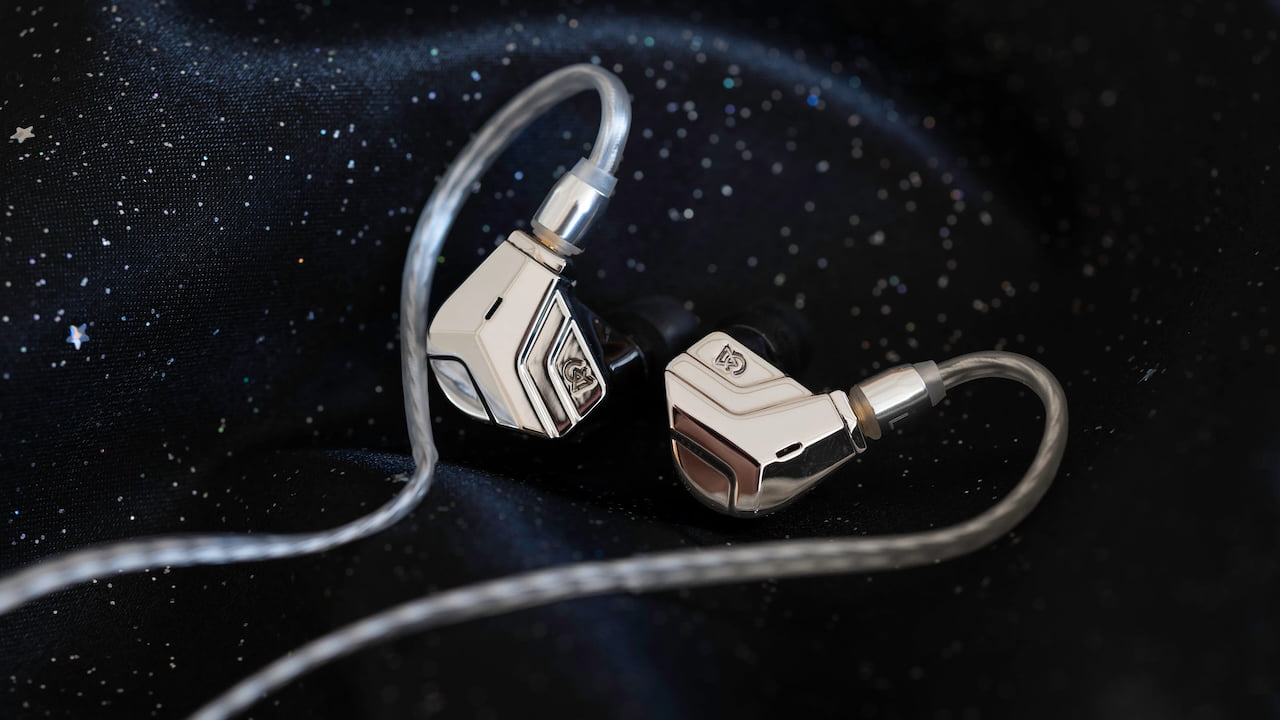
Campfire Audio Astrolith
For portable use, the HC5 is clearly capable. Demanding planar IEMs like the Campfire Audio Astrolith reach high listening levels without strain, allowing the drivers to perform as intended. The HC5’s low, but not zero output impedance doesn’t meaningfully alter the sound. Sensitive IEMs such as the Campfire Audio Andromeda 2019 remain stable and consistent, with no obvious tonal shifts when switching between the 3.5mm single ended and 4.4mm balanced outputs.
More importantly, that consistency was not limited to ultra sensitive earphones. Regardless of the IEM or full size headphone used, the overall tonal balance remained intact. There was no sense of the balanced output adding artificial weight, nor the single ended output sounding comparatively thinner or softer.
There is no such thing as a completely neutral source or amplifier. Every design leaves a fingerprint, whether subtle or obvious. That said, this one comes very close. It avoids editorializing the signal, preserves timbre with discipline, and lets the transducer do the talking.
The Bottom Line
The Astell&Kern HC5 is a truly-premium portable DAC. Buyers that want to experience Astell&Kern’s flagship audio hardware can finally do so without having to drop many thousands on their top-tier DAPs, like the SP4000. That said, A&K needs to improve their manufacturing tolerances to reduce slack on both the volume wheel and the side-button. A nearly $500 device should be as premium to physically interact with as it is to listen-to. Buyers that treat audio as a price-no-object experience have a lot to like about the HC5 . However, those that are looking to maximize price-to-performance will want to check out cheaper, similarly-powerful dongles like the Audioengine HXL or Campfire Audio Relay.