Tech
Sony WF-1000XM6 Wireless Earbuds Review: Best Buds?

It wasn’t that long ago that wireless earphones were a punchline. “Truly wireless” (TWS) only made it worse. A gold rush followed, quality collapsed, and the market flooded with flimsy, rebranded ODM junk sold at premium prices. Enough of it crossed my desk that I eventually stopped playing along and checked out of the mainstream audio scene altogether. It felt generic, cynical, and value poor. For a long stretch, that assessment was dead accurate.
Then something shifted. Quietly at first. The latest generation of truly wireless earbuds is no longer about gimmicks or excuses. They are genuinely good. In some cases, uncomfortably good. Sony enters that moment with the WF-1000XM6, a product they absolutely had to get right. Apple, Bose, and Sennheiser are all fighting for the same customers, the same mindshare, and the same billions.
There is no margin for a misstep. Strip away the overwhelming technical sophistication and the takeaway is simple and slightly unsettling for traditional audiophiles. TWS earbuds can actually sound quite good… even excellent. Good enough to force a serious rethink about value in personal audio. So did Sony stick the landing when it mattered most?
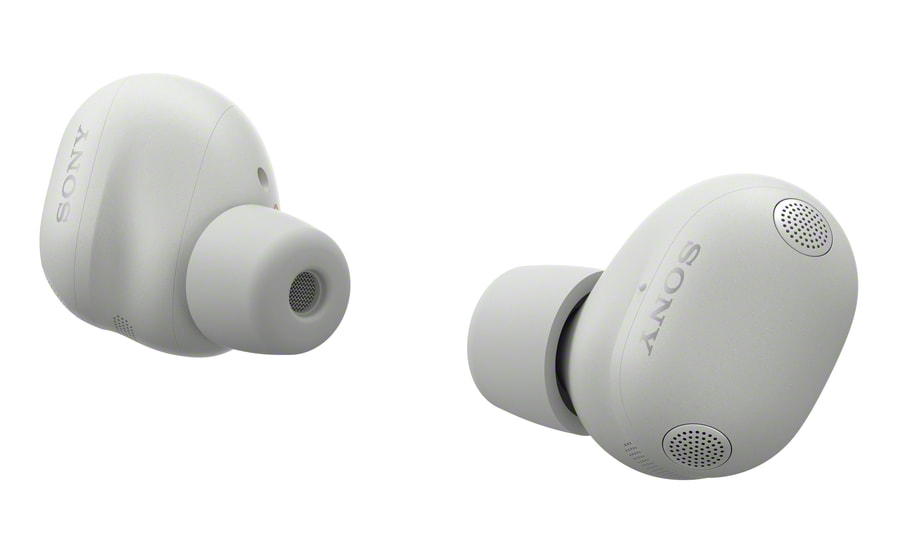

What is it?
Today (February 12, 2026) Sony released its new flagship wireless noise cancelling earbuds, the WF-1000XM6 for $329.99, which replace the WF-1000XM5 ($299.99) from mid-2023 — a previous Editors’ Choice winner. The street price of the older model now typically resides around $250, so it’s reasonable to ask: should you spend $80 more on the new model, or should you upgrade if you already own the WF-1000XM5? Let’s take a look.
Tip: It’s easy to be confused by Sony’s model numbers. The Sony WH-1000XM6 (notice the “H”) is their latest over-ear wireless headphone we’ve also reviewed.
Unboxing

What’s Changed?
From a core feature standpoint, the WF-1000XM6 doesn’t reinvent Sony’s strategy. Codec support remains unchanged, covering SBC, AAC, LDAC, and LC3, with multipoint connectivity supported out of the box. Bluetooth LE (Low Energy) and Auracast functionality are also included, which were added to the XM5 late last year via a software update. Wireless charging returns, IPX4 water resistance is unchanged, and the earbuds are offered in two finishes: black and platinum silver.
The noteworthy changes exist mostly under the hood. The WF-1000XM6 introduces a new audio processor, paired with new driver units and a revised acoustic tuning. Call quality has also been improved thanks to additional mics with AI-based beamforming and a new bone-conduction sensor that further stabilizes voice detection in challenging environments. This helps to identify the wearer’s own voice while speaking, and eliminates other voices.
Active noise cancellation (ANC) sees meaningful refinement as well. Sony’s updated Adaptive Noise Canceling Optimizer is better at handling changing acoustic conditions, allowing the WF-1000XM6 to maintain stronger and more consistent noise reduction across a wider range of environments.
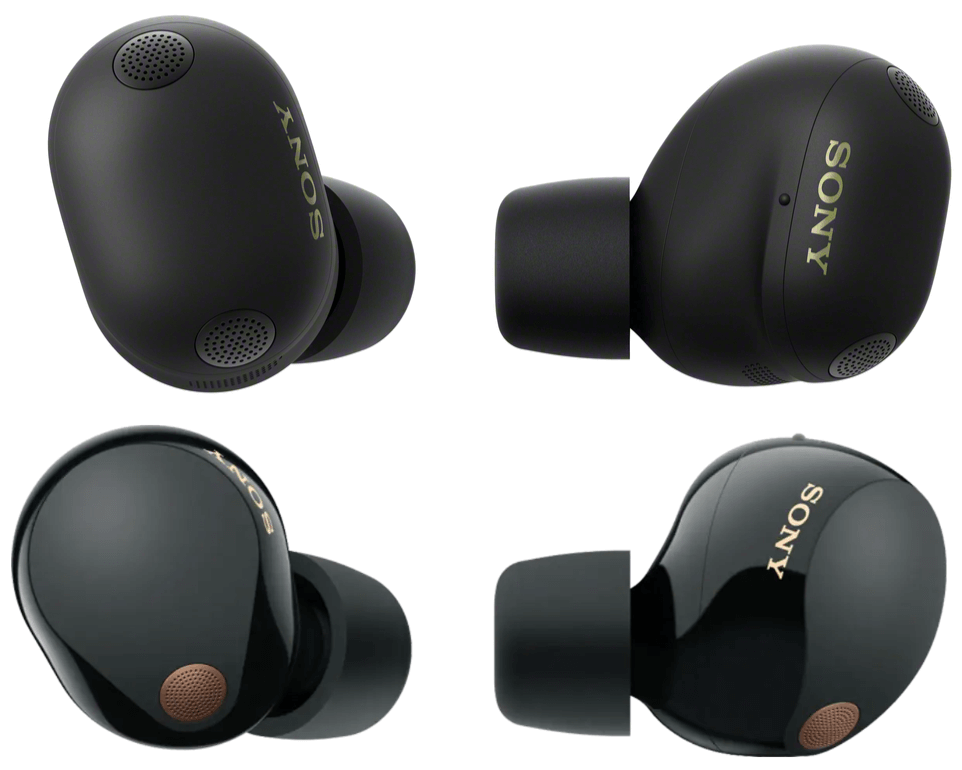

Physically, the earbuds have been redesigned for improved comfort, with subtle shape changes that make long listening sessions more manageable. Battery life remains unchanged at up to 8 hours per charge, with a total of 24 hours including the charging case—still competitive, if not class-leading, given the level of onboard processing at work.
The WF-1000XM6 uses four microphones per side, up from three on the WF-1000XM5, all embedded cleanly into the semi-matte earbud shell. Those microphones feed Sony’s new QN3e audio processor; a meaningful step forward in both raw performance. Sony puts that hardware to work with genuinely impressive results. Call quality is great for a truly wireless earbud. Even basic voice memos sound clean and intelligible.
Improved beamforming and a substantial upgrade to Sony’s onboard AI voice isolation make the WF-1000XM6 practical in places where most earbuds and headphones fail. I took calls while walking through crowded malls and sitting in busy coffee shops, handling meetings and interviews without issue. Even in noise-sensitive environments like a doctor’s office waiting room, calls are perfectly manageable. The WF-1000XM6 also captures speech reliably at lower speaking volumes, avoiding the clipped or hollow sound that still plagues many competitors.
The WF-1000XM6’s charging case mirrors the earbuds’ restrained, monochromatic aesthetic. It uses a simple vertical housing with magnetic seating and traditional pin charging, keeping everything secure and reliable. Charging is handled via USB-C, with wireless charging support for those who prefer to ditch cables entirely.


Battery Life & Wireless Performance
I consistently logged 7.5 to 8 hours of listening time from the WF-1000XM6 on a single charge with no intermediate top ups. The charging case provided a little more than two full recharges, translating to an effective 24 hours of total listening time, depending on volume level, ANC usage, and ambient temperature. That’s an impressive result given how much real-time sensing and processing the WF-1000XM6 is doing in the background. Long flights, extended road trips, and even an entire night of sleep are all well within reach on a single charge. And when you do need more juice, a quick stint back in the case gets you up and running fast.
Connectivity is another strong point. The WF-1000XM6 delivers excellent range and stability. I was able to move more than 20 feet away, through multiple walls, and even step outside my home without a single hiccup when set to prioritize connection strength. Even while streaming high fidelity audio over LDAC, the WF-1000XM6 never once buffered or dropped out. That kind of reliability is no longer optional at this level, and Sony got the memo.


Real World Noise Cancellation
A major area of improvement Sony highlights with the WF-1000XM6 is its ability to process rapid changes in background noise and reduce transient intrusions. That has long been a weak spot for ANC, which traditionally works best in environments with predictable noise patterns like airplanes and trains. Sudden, sharp, sounds have a habit of weaseling through ANC’s isolation.
While it’s still not perfect, the WF-1000XM6 adapts noticeably faster than many current competitors, including earbuds like the Master & Dynamic MW09. It’s also a clear step up from earlier generations such as the MW08, MW07, and even Sony’s own WF-1000XM5. One of my go to real world tests is sitting near the ordering line at a favorite coffee shop, a place that reliably fills with loud groups of office workers on lunch break.
Sudden bursts of laughter in that environment usually cut right through most ANC implementations. The WF-1000XM6 handled this better than expected, significantly reducing their presence and, in several cases, nearly erasing those outbursts altogether.
Companion App That Actually Improves the WF-1000XM6 Experience
Sony’s companion app is called Sound Connect, and in typical Sony fashion it prioritizes stability and functionality over visual flair. The design is unapologetically utilitarian, but it gets the job done. On first launch, the app walks you through the WF-1000XM6’s touch and gesture controls with a clear and genuinely helpful visual guide.
From there, control is deep and refreshingly flexible. Nearly every aspect of the WF-1000XM6’s behavior can be configured, and anything you don’t like can be disabled outright. Think gesture controls are dumb? Turn them off. Hate touch controls altogether? No problem. For power users, the menus are logically organized and easy to navigate, avoiding the clutter and guesswork that plague many competing apps. Sony also allows control schemes to change based on device state. As an example, the WF-1000XM6 can automatically disable touch controls when you’re lying down in bed; a small but thoughtful detail that shows this app was designed for real world use.
Proper EQ Support?
If you’re not satisfied with the WF-1000XM6’s stock tuning, the Sound Connect app includes a built-in 10 band EQ. EQ settings are saved directly to the earbuds, so switching from your phone to a PC doesn’t reset your sonic tweaks. That’s a small but important detail that many competitors still get wrong.
For listeners who don’t want to dive into manual tuning, Sony also preloads a selection of sound profiles that can be toggled quickly. None of them improved on the stock tuning for my ears, but they’re there if you feel like experimenting or tailoring the sound to specific genres or use cases.


Do You Still Need Dedicated HiFi Gear?
As someone who’s been immersed in the audiophile scene for well over a decade, the question almost feels laughable. Of course I need high-end gear! I demand a lot from my earphones, headphones, and speakers. After all, fidelity matters. And, after spending a few weeks with the WF-1000XM6, it’s hard to imagine many listeners walking away needing more. Right out of the box, both the tuning and the technical performance are leagues better than I expected.
Sonic Performance
The WF-1000XM6 delivers a mild ‘W’ shaped sound signature, with a gentle emphasis on mid and sub bass, a lift through the upper midrange, and a smooth upward slope from the lower treble into the upper treble. Sony clearly aimed for an accessible stock tuning and wisely avoided aggressive upper treble peaks that can lead to fatigue. There’s no sharpness and no sibilance to speak of, which is especially welcome for treble sensitive listeners like myself.
Sony also addressed one of the most common complaints about the WF-1000XM5 by reworking the bass response on the WF-1000XM6. The bloated, mid bass heavy presentation is gone. In its place is a more disciplined and better balanced blend of mid and sub bass. Electronic tracks like “Miracle Man” (Zeds Dead Remix) hit with authority and energy, landing just on the fun side of neutral without losing control. The new driver is genuinely resolving, and dense mixes make it clear how far truly wireless IEMs have come. Subtle background details are rendered cleanly, and contrasting textures are separated in a natural, unforced way.
While dedicated audiophile IEMs can still offer better price to performance or extract a bit more detail and immersion, the WF-1000XM6 isn’t nearly as far behind a typical hi-fi enthusiast’s setup as many believe. The added value of features like ANC and Gemini integration make a real-world difference–and that’s the force for pause.

The Bottom Line
The Sony WF-1000XM6 isn’t pretending to replace a dedicated audiophile IEM and that honesty matters. What it delivers instead is one of the most complete and convincing daily driver packages in the truly wireless space. Sound quality is far more refined than most mainstream alternatives, active noise cancellation is among the best available right now, call quality is genuinely class leading, and battery life is strong enough for real world travel and long days without anxiety. Add reliable multipoint, LDAC support, wireless charging, and one of the most flexible companion apps in the category, and the feature stack is hard to fault.
The drawbacks are mostly about expectations. At $330, these aren’t cheap, and listeners chasing ultimate resolution per dollar will still find better value in wired audiophile IEMs. They also don’t radically extend battery life beyond the previous generation, and Sony’s app, while powerful, remains visually utilitarian. None of that undermines what the WF-1000XM6 does exceptionally well.
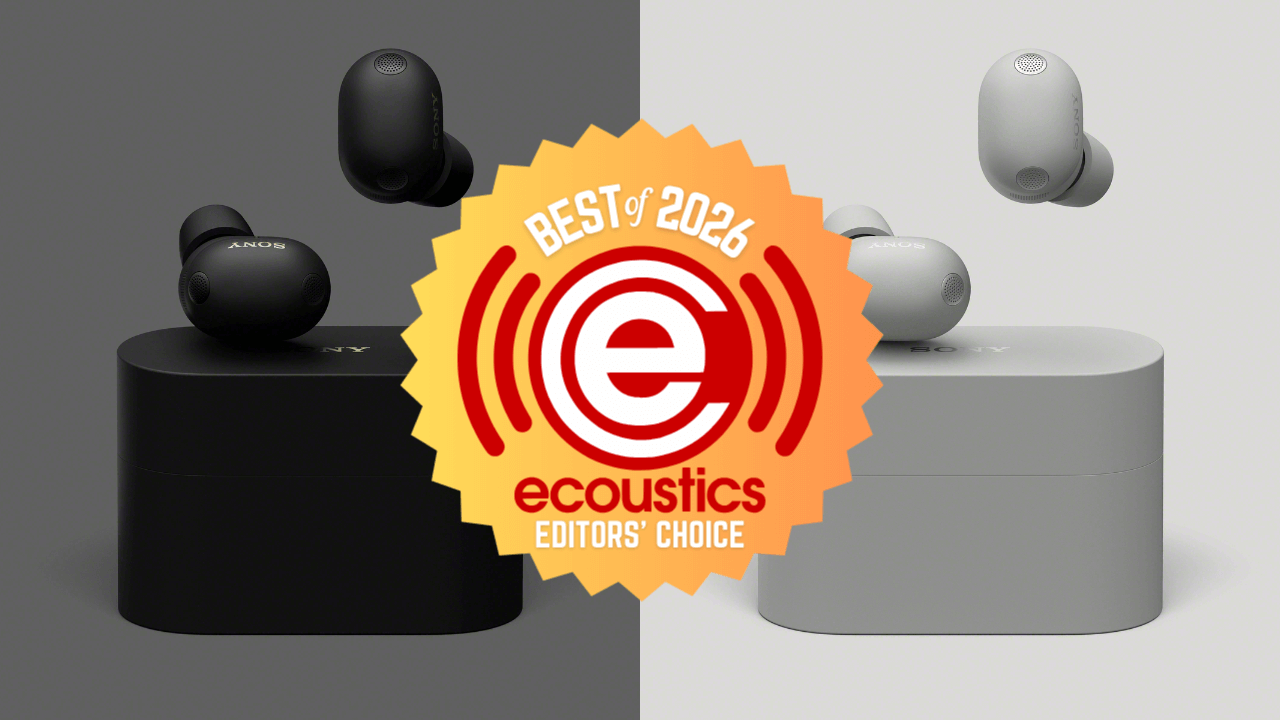
The WF-1000XM6 earns an eCoustics Editors’ Choice award for 2026 because Sony nailed the delicate balance between sonic performance and real-world usability. These buds are for listeners stepping up from AirPods, Galaxy Buds, or older Sony models who want real sonic credibility without giving up convenience. It’s also for audiophiles who need a no-compromise wireless option for travel, work, and daily use and don’t want to feel like they’re slumming it. In the current TWS landscape, few products blend sound quality, noise cancellation, call performance, and real-world usability this effectively. Highly recommended.
Pros:
- New, better-performing driver
- Effective ANC
- Excellent microphone performance
- Great battery life
- Strong stock tuning
- Comfortable eartips
Cons:
- Odd shell shape, visually
- Utilitarian app design
- No touch control support for disabling ANC
- Insufficient bass response for hardcore bassheads
You must be logged in to post a comment Login