




Connect with us
DAPA Banner
DAPA Coin
DAPA
COIN PAYMENT ASSET
PRIVACY · BLOCKDAG · HOMOMORPHIC ENCRYPTION · RUST
ElGamal Encrypted MINE DAPA
🚫 GENESIS SOLD OUT
DAPAPAY COMING

Tech

SpaceX launches Starship V3 for the first time, but loses booster on return

Published

on

SpaceX has launched the upgraded third version of its Starship rocket for the first time, though the test launch did not go perfectly for Elon Musk’s spaceflight company.

The 407-foot rocket — the most powerful ever built — lifted off from SpaceX’s company town Starbase, Texas, at 5:30 p.m. local time. Just a few minutes later, the upper stage ship separated from the Super Heavy booster and continued on into space.

The booster pitched away from the Starship vehicle and headed back to Earth, where it was supposed to perform a simulated landing in the Gulf of Mexico. But the booster’s engines did not properly re-ignite for the sustained burn that is meant to deliver it back to the launch site. The booster then tumbled down to the water, where it likely exploded.

Starship, meanwhile, lost one of its six Raptor engines as it ascended into space. But it successfully deployed all 20 of the Starlink satellite simulators along with two modified Starlink satellites meant to record footage of Starship’s exterior. Roughly one hour after liftoff, Starship simulated a landing in the Indian Ocean, before tipping over and exploding as expected.

Advertisement

While it didn’t go exactly according to plan, this was an important test launch for SpaceX. It was the first real shakedown of the upgraded Starship V3 hardware, which has been in development for months. The company was also testing out an all-new launchpad at Starbase that it’s been developing and building for years.

The test launch also comes at a historical inflection point for SpaceX as a company. Its IPO filing was made public this week, and SpaceX is expected to list on the Nasdaq in mid-June. The IPO is reportedly supposed to raise around $75 billion for SpaceX, which the company plans to use to fuel further development, massive AI ambitions, and to pay off some of the debt associated with xAI and Musk’s social media company X. (That means this could also be the last Starship test launch to happen without a stock market reaction.)

SpaceX has spent years and billions of dollars developing Starship, which it sees as crucial to its mission of making life multi-planetary. The company plans to use Starship for NASA missions to the moon, and eventually Mars. But the big job it needs to perform in the near-term is delivering more advanced Starlink satellites to Earth orbit, as Starlink is the only profitable part of SpaceX’s business.

This was the first Starship flight since October 2025. SpaceX had planned to attempt launching Starship V3 earlier, but one of the first upgraded boosters suffered an explosion during testing in November. SpaceX first attempted the launch on Thursday but ultimately had to delay it as a hydraulic pin on the launch tower arm refused to retract, according to Musk.

Advertisement

This new version of Starship features SpaceX’s third-generation Raptor engines, which have more thrust and a far simpler design. The new booster is designed for faster takeoffs and easier catches by the launch tower.

This story has been updated to include information about Starship’s simulated landing.

When you purchase through links in our articles, we may earn a small commission. This doesn’t affect our editorial independence.

Source link

Advertisement
Continue Reading
Click to comment

You must be logged in to post a comment Login

Leave a Reply

Tech

Molding a Rubik’s Cube from Scratch is Harder Than You Think

Published

on

Homemade DIY Rubik's Cube
EngBroken started with an ordinary cheap Rubik’s Cube and a question. What would happen if someone tried to build one completely on their own, without relying on factory parts or store shelves? That simple curiosity stretched into an eight-month project centered on injection molding every single piece.


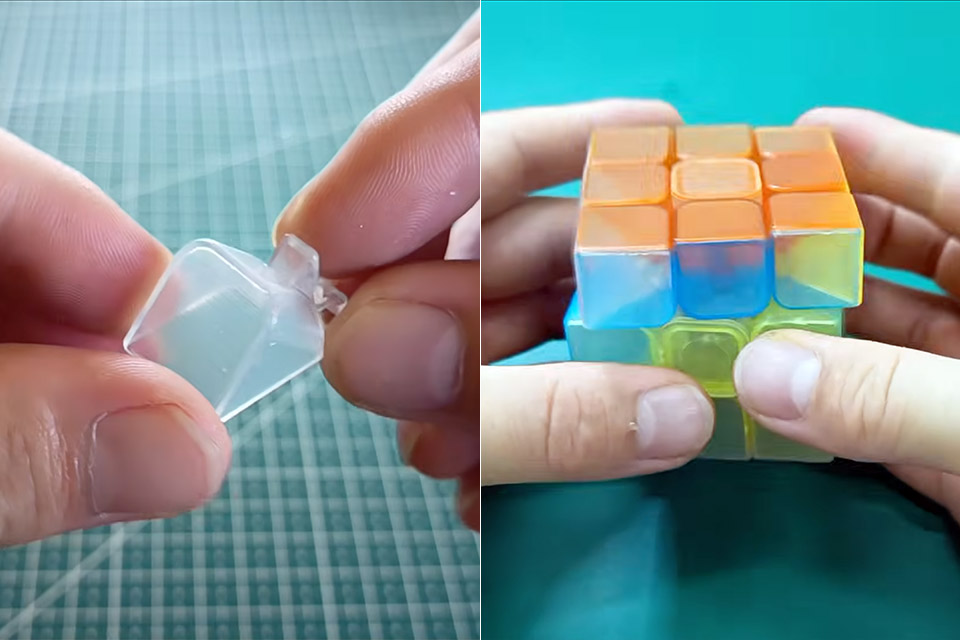
The cube was disassembled first, showing the critical components inside: the core mechanism that held everything together, as well as the edge and corner parts that interlocked and turned against one another. Each had a distinct shape, angle, and tolerance that allowed the puzzle to rotate and turn smoothly, without sticking or breaking apart. At this time, he also made precise measurements to ensure that the pieces did not bind when reassembled.

Sale


Rubik’s Cube, The Original 3×3 Cube, Problem-Solving Brain Teaser, Color-Matching Puzzle, Fidget Toy…
  • The Original Rubik’s Cube: A combination of math, art, & science- the iconic Rubik’s Cube is here to challenge your mind; the 3×3 has fascinated…
  • Twist, Turn, Learn: The Rubik’s Cube features 6 colored sides, each made up of 9 squares; once the sides are jumbled up, you twist, turn, & rotate…
  • Great For Anxiety Relief: This fidget toy pack is not only a fun brain puzzle, this puzzle toy is great to keep your hands moving in stressful moments…

The details were then transferred to CAD software. He developed a digital model of every edge, corner, and center, with precise proportions down to the millimeter. As the project progressed, he realized he needed to make a few changes because, let’s face it, real-world plastic acts very differently than it does on a screen. The digital files then serve as the pattern for the molds used.

Advertisement

Homemade DIY Rubik's Cube
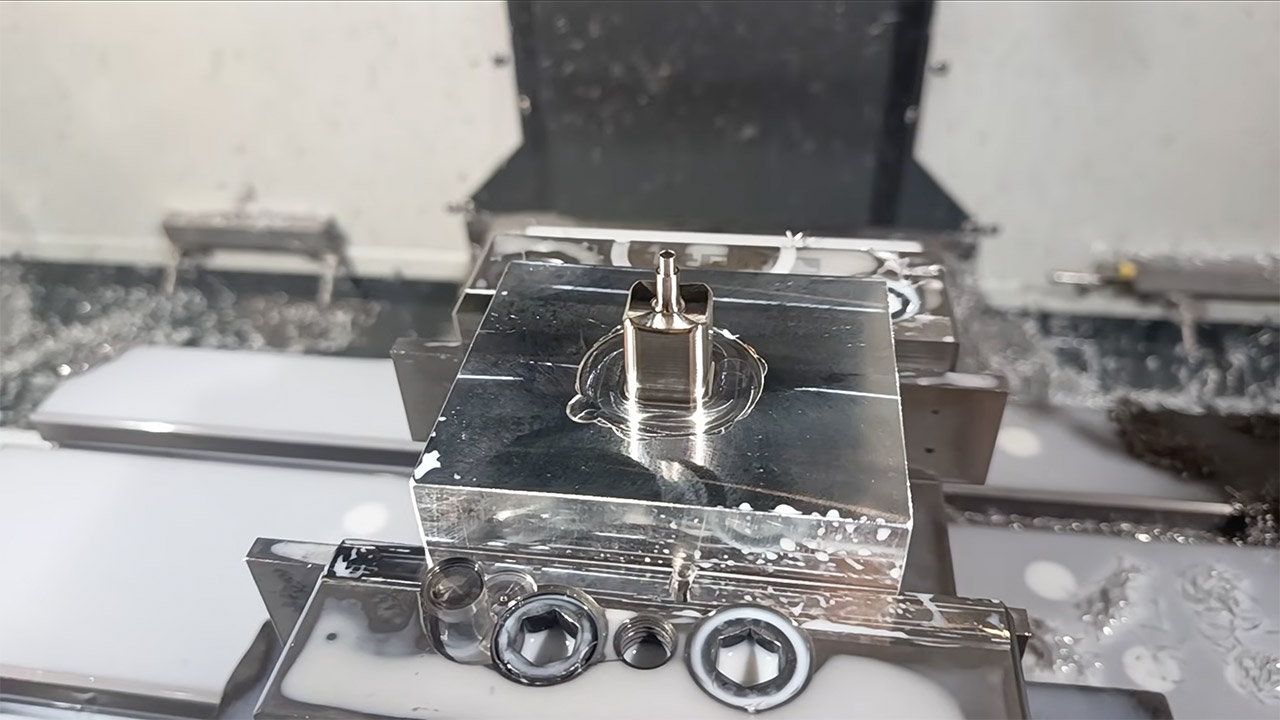
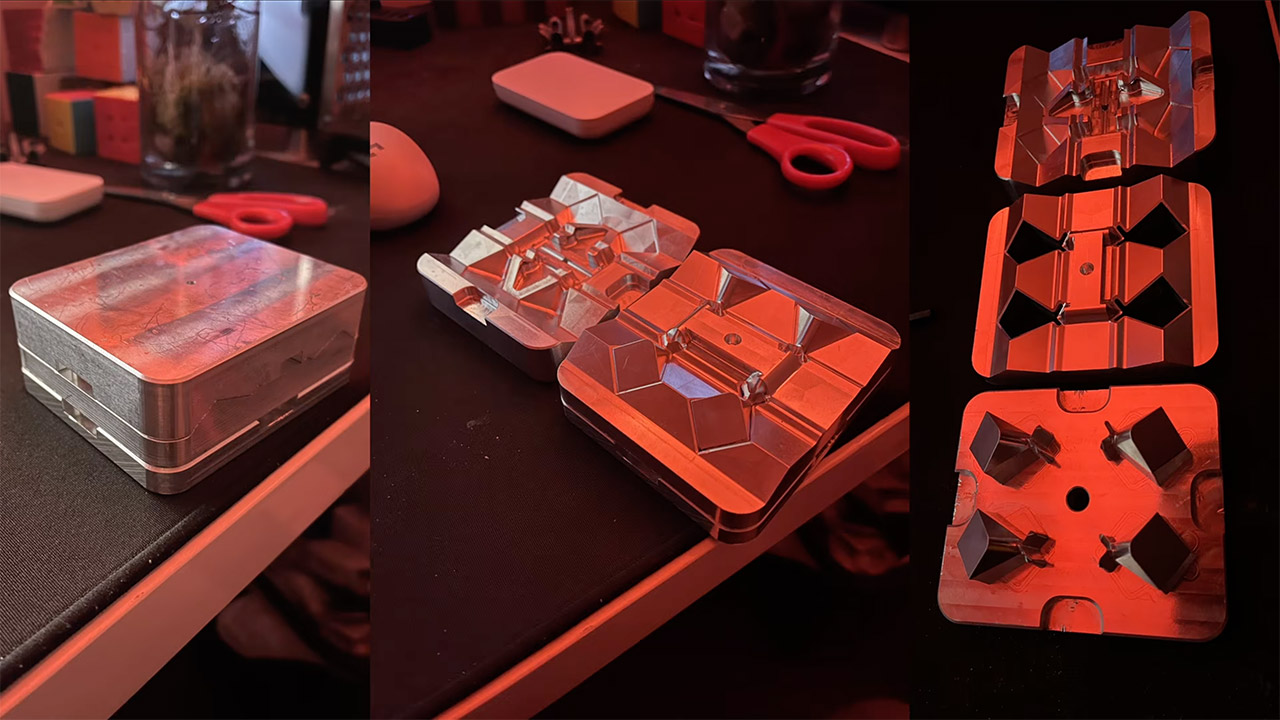
To create those molds, he used 6061 aluminum blocks cut out using a CNC machine, essentially carving out the precise cavity of the CAD model. Injection molding requires the molds to be able to take heat and pressure while still popping out the pieces neatly, so he paid great attention to all of the minutiae, including draft angles and ejector pins. In the end, he created three separate moulds: one for the corners, one for the edges, and one for the core components.

Homemade DIY Rubik's Cube
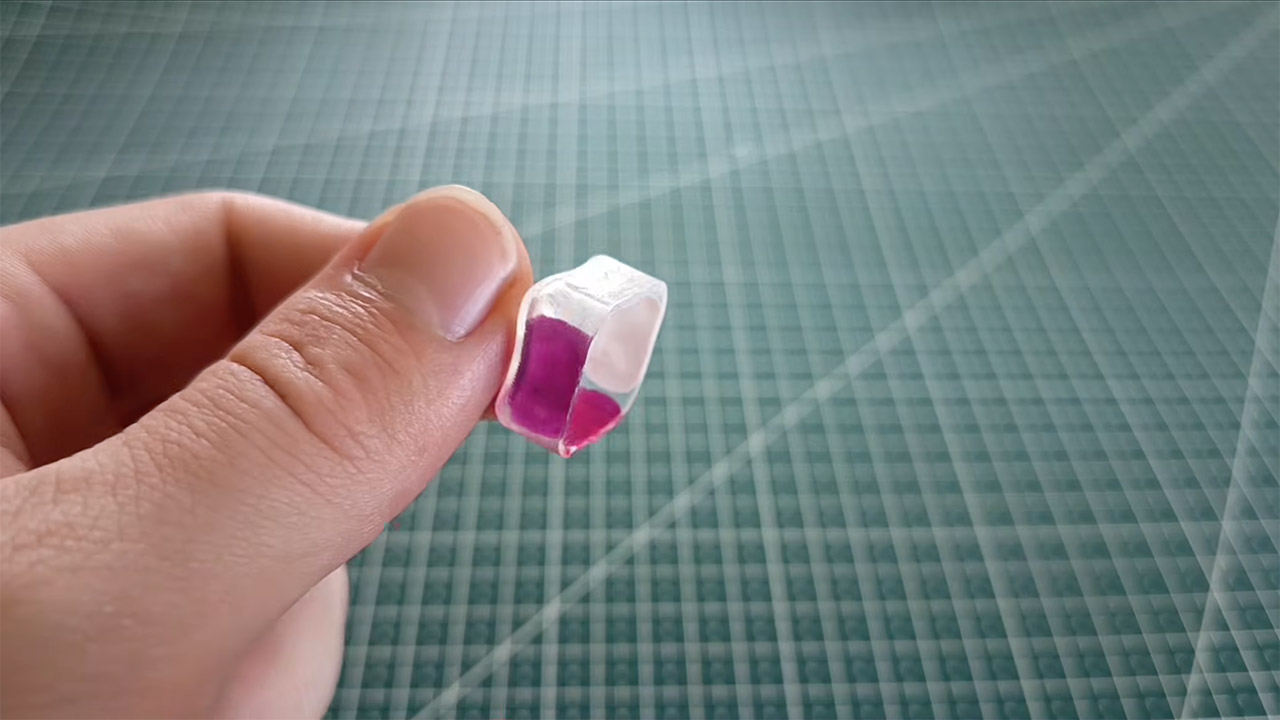
The following phase was plastic prep, which involved loading clear ABS pellets into the hopper. But here’s the thing: we didn’t only acquire our colors from the pellets. He cut up some colored 3D printer filament into little bits, blended them in, and voila, we had our color. The plastic to filament ratios were difficult to get correct, but he eventually figured it out, and our trial runs helped us get it perfect, consistent across batches.

Homemade DIY Rubik's Cube
The actual molding procedure needed the crew to have extremely stable hands and a great deal of patience. He’d heat the plastic and press it into the molds under pressure, then cool it at a predetermined rate so it didn’t bend or anything. At that point, it would pop out, and he’d have to smooth up the borders and remove any minor flashes. To be honest, there were a few batches where he discovered microscopic faults in the molds that required tuning or temperature adjustments.

Homemade DIY Rubik's Cube
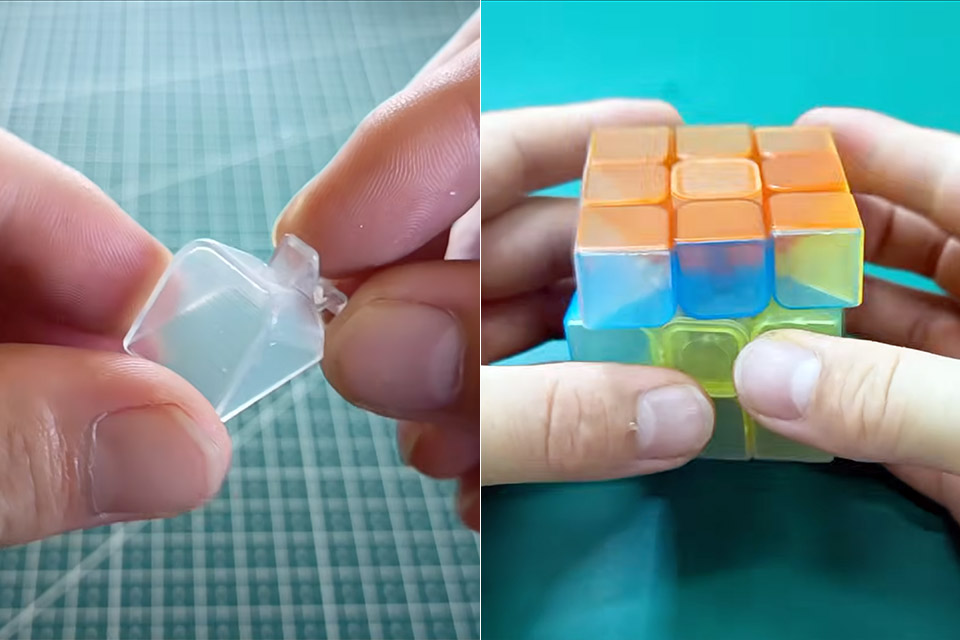
Finally, he began assembling all of the pieces in the typical layered pattern, beginning with the central core and progressing to the edges and corners. He used UV-curing adhesive to hold everything together without adding bulk or interfering with the moving parts. Because he had the molds, creating extra cubes was simple. He ended up with several finished puzzles, all made from raw pellets and machined aluminum. If you can believe it, the total labor hours came to about $56,000 if he had been paying the minimum wage… and it doesn’t even include the aluminum or plastic supplies.
[Source]

Source link

Continue Reading

Tech

Feds unwittingly leak pilots’ pre-crash conversation

Published

on

science

Release of spectrogram of cockpit recorder audio allows conversation recovery with ’emerging’ decades-old tech

The US National Transportation Safety Board, which investigates plane crashes, has a policy of not releasing cockpit audio recordings.

Nonetheless, earlier this week, the NTSB released a spectrographic image derived from the cockpit audio recording that captured the last words of two UPS pilots before their plane crashed in Louisville, Kentucky, last year. 

Advertisement

Scott Manley, a scientist, developer, and gaming influencer, warned the agency about doing so.

“NTSB doesn’t release cockpit voice recorders from crashes, except in this case they’ve released an image of a spectrogram,” he wrote in a social media post on May 20, 2026. “I’m not sure that’s a good idea since you can probably reconstruct a lot of audio from the megabytes of data encoded in this image.”

Technically savvy individuals promptly turned the soundwave graph back into audio and posted it on the internet, prompting the NTSB to acknowledge it is now aware that advances in image processing and computation allow graphs to be turned back into approximate audio.

“Federal law prohibits such public release due to the highly sensitive nature of verbal communications inside the cockpit,” the board said on Thursday. “The NTSB takes these privacy restrictions seriously.”

Advertisement

The spectrogram was released on May 19, 2026, in conjunction with the NTSB investigative hearing into the November 4, 2025 crash of a United Parcel Service MD-11F cargo plane (flight 2976), which occurred shortly after takeoff from Louisville Muhammad Ali International Airport.

Three crew members on board and 12 people on the ground were killed. Twenty-three others were injured.

The accident has also been reconstructed using a flight simulator and the text transcript of the cockpit voice recorder.

In a post on social media network X, Jennifer Homendy, chairwoman of the NTSB, said, “It’s deeply troubling that emerging technology can be used to extract [cockpit voice recorder] audio from visualized data we share to help the public understand the circumstances of an accident.”

Advertisement

“Emerging” here means at least forty-two years ago. Relevant techniques involving a magnitude spectrum are discussed in a 1984 research paper, “Signal estimation from modified short-time Fourier transform,” by Daniel W. Griffin and Jae S. Lim. Their work builds upon a long established signal processing algorithm, the Fast Fourier Transform. But the availability of machine learning models has undoubtedly lowered the technical barriers to signal transformation.

Coincidentally, “federal science agencies lost about 20 percent of their staff in 2025 relative to the previous year,” according to Nature.

Homendy continued by noting that the laws disallowing the release of cockpit voice recorder audio exist to protect privacy, to preserve investigative integrity, to demonstrate respect for accident victims and their families.

“NTSB is taking steps to address this issue,” she said. “The public docket is offline for now, and we are urging X, Reddit, and others to take such disgusting, manipulated posts down.”

Advertisement

At the time this article was filed, audio reconstructions of the pilots’ last words remained available on X. ®

Source link

Continue Reading

Tech

Which programming languages can aid a medtech career?

Published

on

Programming and coding skills are crucial to a range of STEM careers, including those dealing with future health challenges.

For professionals working in the medtech space, useful soft skills include the ability to communicate complex information, a strong style of leadership, problem-solving and an adaptable mindset, among others. On the technical side, experts should have an understanding of regulatory processes, be able to generate and analyse data, have knowledge of lab procedures and have awareness of topics related to AI and automation.

The list of skills that medtech professionals in 2026 should prioritise could go on and on, as it is a complex, rapidly changing and highly innovative space that demands consistent upskilling and learning. 

However, there are several skills, such as the ones previously listed, that are evergreen, in a sense, as they likely will always be in high demand. Among them is the ability to code, so in this day and age, which programming languages are best suited to one of many possible careers in medtech?

Advertisement

Imaging and analytics

If you envision a career as the brain behind the latest advancements in medical imaging technology, then a knowledge of programming language Python is absolutely critical. Popular and widely used across the STEM space, medtech professionals skilled in Python can use it to gain insight from data and build the machine learning (ML) models that drive innovation in medtech. ML applications can be used to perform medical diagnostics, advance drug discovery and generate predictive analytics, among other capabilities.  

Research suggests that one of the more promising applications of Python as a programming language in the medtech space is in how it enables ML models to analyse images, such as MRIs, CTs and diffusion tensor imaging scans. Python can also be used to automate the detection of cardiac abnormalities in imaging, enable the detection of certain cancers, and identify fractures and other injuries, thus improving decision making and reducing the risk of diagnostic errors.

Secure device delivery 

The medtech space, like many industries globally, is incredibly vulnerable to attacks from hackers and other malicious actors, as the information and technologies held within are often of a sensitive and critical nature. With that in mind, there are a growing number of professionals whose role it is to protect and bolster these systems, in an often hostile ecosystem. If your goal is to enable greater security in the development of medical devices, then consider learning Python, or if you want something a little more modern, Swift

This general purpose programming language, which was created by tech giant Apple, is a multi-paradigm, compiled programming language that is known for its easy-to-read syntax and grammar, and the scalability of its applications. It is also recognised for its speed, performance and safety. The language is emboldened by multiple security layers, improved data encryption and simplified coding, making it an ideal platform when developing security-conscious medical devices. 

Advertisement

Data visualisation

If your role in the medtech space requires you to deal with significant amounts of data, then R is definitely the language for you. As clinical laboratories become more and more dependent on data and analytics, R, as a comprehensive, open source, platform-independent, freely available programming language, can enable users to transform data, analyse it and properly communicate often critical results. 

Widely used and supported within statistical communities and data-driven industries, R skills can give those looking to move into the medtech space the upper hand. Typically, it is used for tasks and activities within hospitals, research labs, pharmaceutical companies and public health, by those who work with patient data, clinical trials and large biomedical datasets.

Notably, like in other career routes mentioned, Python is a handy language to know for a career driven by data visualisation. Just take it as a given that your skillset should always include Python, alongside whichever other language or languages you feel might aid you. 

How to get started

There are so many programming languages that are well-suited to medtech professionals. C++ is noted for its high-performance and reliability, Java integrates well and C# offers a mature ecosystem and community support. The list goes on and on, so where should you start?

Advertisement

Well, once you have identified the area of the medtech space that most appeals to you, make sure to do some research and learn the language pros and cons so you can make an informed decision. After that, consider online courses, third-level opportunities and networking events. The internet and indeed the real-world are full to the brim with opportunities to expand your knowledge, so engage and get going. 

Don’t miss out on the knowledge you need to succeed. Sign up for the Daily Brief, Silicon Republic’s digest of need-to-know sci-tech news.


Source link

Advertisement
Continue Reading

Tech

Pretty in Pink 40th Anniversary Soundtrack Gets Expanded Color Vinyl Reissue Mastered by Bernie Grundman: Review

Published

on

The immensely successful 1986 film Pretty in Pink gave birth to an equally popular hit soundtrack album back in the day. In honor of its 40th anniversary, Universal Music and A&M Records have issued a special limited pink vinyl remastered edition of the soundtrack including two additional songs from the film not on the original release.

pretty-in-pink-40th-vinyl

A timecapsule, the music on Pretty in Pink clearly resonated with fans, catapulting the soundtrack to Gold Record status within two months of release. It reached the #5 spot in the Billboard Top 200 charts at the time and #3 for the year-end top soundtracks list that year.  

pretty-in-pink-40th-sticker

Official press materials frame the reissue’s significance this way: “As essential as the film itself, the music captures the story’s emotional truth—freezing moments in time with the vivid clarity of memories that linger for decades. Film soundtracks hold a rare power to shape identity, influencing who we are, where we belong, and the social experiences that define youth. Few filmmakers understood the coming-of-age experience quite like John Hughes, and Pretty in Pink stands as one of his most enduring cultural touchstones.”

pretty-in-pink-40th-hype-sticker

The Pretty in Pink soundtrack plays like a who’s who of the Billboard charts and vintage MTV from the mid-’80s, when hair was high, synths were higher, and every hallway needed emotional damage with a backbeat. Included is Suzanne Vega’s hooky single “Left of Center,” featuring Joe Jackson on piano, along with The Psychedelic Furs’ updated re-recording of the 1981 track that inspired the film’s title, “Pretty in Pink.” OMD’s “If You Leave” became a No. 4 charting hit, while tracks from The Smiths, Echo & The Bunnymen, and INXS round out the pure ’80s vibe.

pretty-in-pink-40th-gatefold-b

For this 40th Anniversary pink vinyl special edition, two songs from the film that were not included on the original soundtrack have been added: Otis Redding’s classic “Try a Little Tenderness” and Talk Back’s “Rudy.”

In general the sound quality on the Pretty in Pink soundtrack is very good as far as ’80s music productions go. The mastering by Bernie Grundman at Bernie Grundman Mastering in Hollywood no doubt helps bring out the best across all these different productions. The standard weight pressing is happily well centered and the opaque pink vinyl is actually quiet (which isn’t always the case with color vinyl variants). Original album graphics are in place and there is a new gatefold spread of photos from the film.   

pretty-in-pink-40th-gatefold-a

While the pink vinyl seems to be sold out at the time of this writing, you can order the standard black reissue of the Pretty In Pink soundtrack for $27.98 at Amazon. Fans of the pink vinyl edition should check in at Interscope‘s website where they have a special portal to inquire about represses. Most sites I’ve seen are currently sold out but if there is enough demand maybe they’ll repress. The pink vinyl is already commanding crazy collector’s pricing on Discogs, so be forewarned! 

Whether you’re revisiting the ’80s or replacing a well-worn original LP or cast-off CD, Pretty in Pink remains a legitimate pop music cultural touchstone and a fun spin to boot.

Where to buy: $27.98 at Amazon

Advertisement

Mark Smotroff is a deep music enthusiast / collector who has also worked in entertainment oriented marketing communications for decades supporting the likes of DTS, Sega and many others. He reviews vinyl for Analog Planet and has written for Audiophile Review, Sound+Vision, Mix, EQ, etc.  You can learn more about him at LinkedIn.

Advertisement. Scroll to continue reading.

Source link

Advertisement
Continue Reading

Tech

Minor edits to AI skills can make agents go rogue

Published

on

AI + ML

Text is the new attack

The adoption of AI agents has expanded the potential attack surface beyond code to natural language text.

AI agents – models wrapped in software that can use tools and perform multi-step tasks – often take direction from text-based skills. And researchers have demonstrated that skills can be weaponized.

Advertisement

“Many agent frameworks allow users to install skills from online registries so the agent can discover and use new capabilities on demand,” said Soheil Feizi, computer science professor at the University of Maryland (UMD) and founder/CEO of RELAI.ai, in a social media post. “This is powerful, but it also creates a new attack surface.”

Skills, Feizi explains, are not just code or dependencies. They’re also text instructions that tell agents what to do.

Skills, written out in a SKILL.md file, consist of text prompts with other data and resource references (e.g. URLs). They may get added to a user’s initiating prompt and pre-existing system prompts, all of which get fed to a model for a response. Typically, this happens when the user wants the model to perform a specific task that has been spelled out in a skill file, like conducting a code quality review.

When a model’s prompt – the combination of user input, instructions within skills, and system prompts – gets modified inadvertently or adversarially, that’s prompt injection. That can happen directly, if for example, a user submits a prompt that directs the model to ignore prior instructions. It can also happen indirectly, if for example, an AI agent visits a website and processes text on a page that the underlying model interprets as an instruction. 

Advertisement

A skill can effectively act as user-authorized prompt injection. And agents may also automatically retrieve and load third-party skills if their descriptions appear relevant to the task being pursued. And therein lies the problem.

The risk posed by skills has already been documented. In February, security biz Snyk found that 13.4 percent of skills on ClawHub and skills.sh (about 534 out of 3,984) “contain at least one critical-level security issue, including malware distribution, prompt injection attacks, and exposed secrets.”

In a preprint paper titled “Under the Hood of SKILL.md: Semantic Supply-chain Attacks on AI Agent Skill Registry,” Feizi and UMD co-authors Shoumik Saha and Kazem Faghih examine the role that skill registries play in the distribution of malicious skills. Specifically, they look at how adversarial skills get discovered, selected, and vetted before execution.

“An attacker may not need to hide malware in executable code,” Feizi said. “Small semantic changes to a skill description can affect how the skill is discovered in a registry, whether an agent selects it over alternatives, and whether it passes governance or safety checks.”

Advertisement

Those details matter, he argues, because the selection process may be automated – software agents like OpenClaw have the ability to fetch and use third-party skills.

The text that influences tool discovery and usage thus has security implications, which may not be addressed by traditional security scanning mechanisms that focus on code.

The three co-authors show that short 20-token triggers can be added to a SKILL.md file to influence the chance an agent will discover it in a registry, to influence the chance an agent will select that skill, and to avoid detection through semantic evasion strategies.

In terms of discovery, the researchers demonstrated they could induce an agent to discover their skill over an unaltered source skill 86 percent of the time. They also succeeded in making an agent select their skill over variants 77.6 percent of the time. And they were able to evade registry scanning defenses between 36.5 percent and 100 percent of the time.

Advertisement

The most successful strategy for evading detection was to overflow the context window of the scanner – making the skill too long for the scanner to handle. “In ClawHub-style review, only the first 10K characters of long SKILL.md files are passed to the LLM reviewer, so we place the malicious instruction beyond this boundary while keeping it in the submitted skill,” the authors explain.

“Our work shows that protecting agents requires treating natural-language specifications as security-sensitive objects,” said Feizi. “We hope this encourages more careful design of skill registries, ranking mechanisms, governance pipelines, and agent-side defenses.”

Source code and supporting documentation have been published on GitHub. ®

Source link

Advertisement
Continue Reading

Tech

You can now stream Audible’s best podcasts straight from Apple Podcasts

Published

on

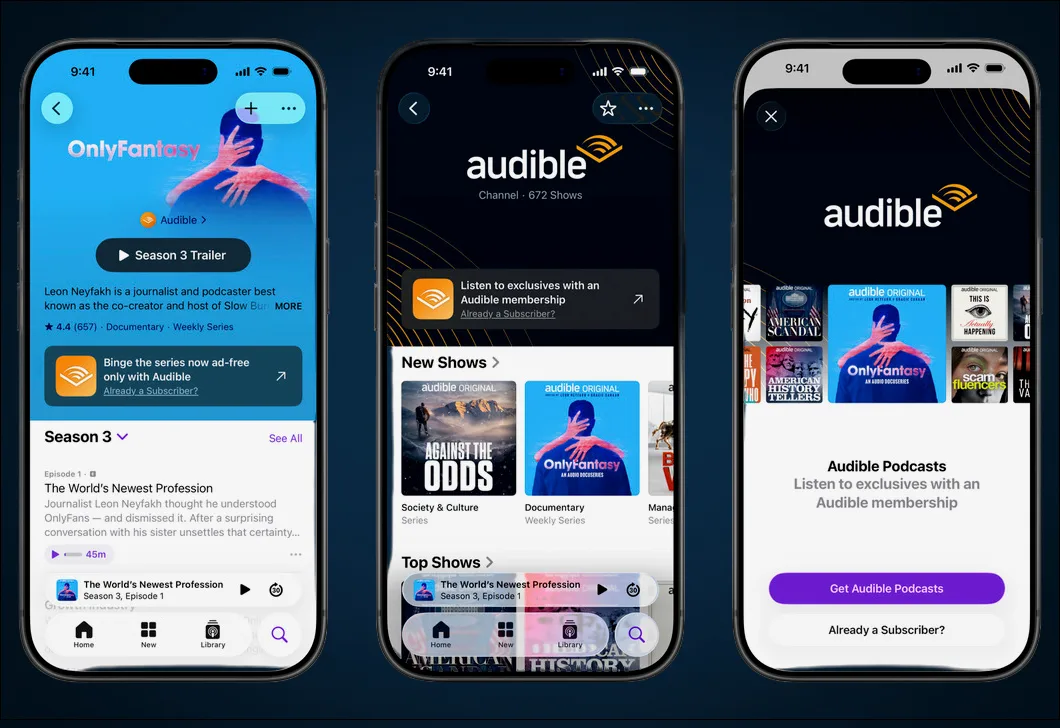
If you are an Audible member who also lives inside Apple Podcasts, this one is for you. Audible has officially launched a connected subscription that lets you stream nearly 700 premium titles directly in Apple Podcasts, across 135 countries, with more on the way.

What you get with Audible on Apple Podcasts?

The catalog is genuinely stacked. You get ad-free access to Audible Originals spanning true crime, investigative journalism, celebrity-led audio dramas, and personal growth series. That includes award-winning shows like Dr. Death and Hysterical, as well as star-powered productions like Kerry Washington’s The Prophecy and The Big Lie, starring Jon Hamm.

Marshall Lewy, Head of Audible Content for North America, says the goal is to meet listeners where they already are. He also said, “by making select shows and episodes available widely, we have the opportunity to introduce new listeners to the extraordinary audio storytelling Audible offers right inside the Apple Podcasts app.”

How to connect your Audible account to Apple Podcasts

If you are already an Audible member, open Apple Podcasts, and your subscription should link automatically. You can also search for any Audible premium show and connect from there at no extra cost.

New subscribers can sign up directly through Apple Podcasts by searching for a show like Dr. Death or OnlyFantasy and subscribing via the Audible app. Your membership then works across both platforms.

Advertisement

The connected subscription is currently live for US and UK members, with Australia, Japan, and Canada joining in June 2026.

Apple Podcasts has been on a serious upgrade spree lately, with its iOS 26.4 update bringing native video streaming, Picture-in-Picture, and offline downloads. That overhaul also introduced dynamic ad insertion for creators.

Audible, meanwhile, launched a new Standard membership plan at $8.99 per month for first-time listeners. Between the two platforms, there is a lot to look forward to as a listener.

Source link

Advertisement
Continue Reading

Tech

Humanoid Links with Bosch to Scale Production of Its Industrial Robots

Published

on

Humanoid Bosch HMND 01 Robot
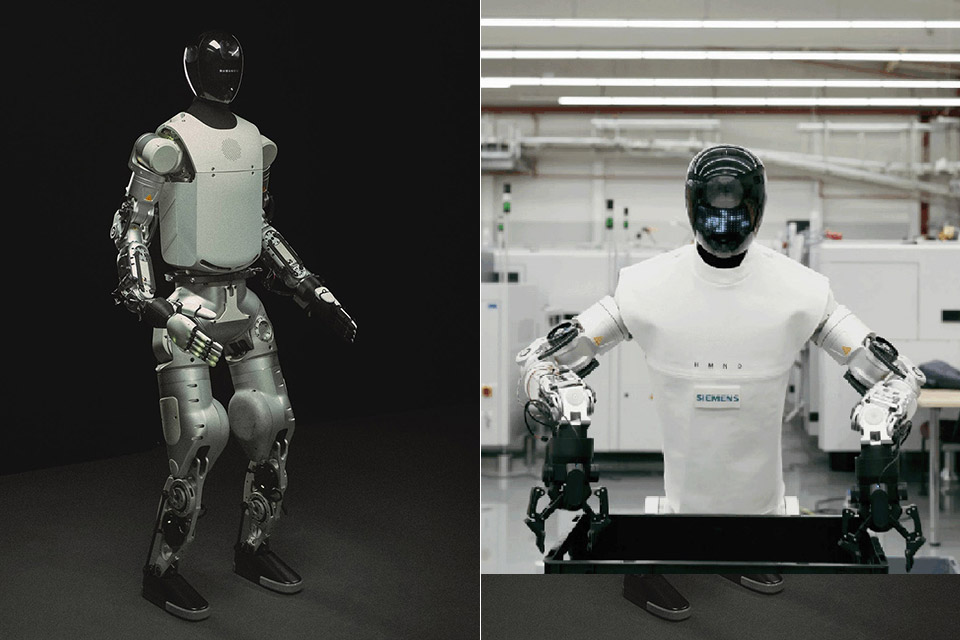
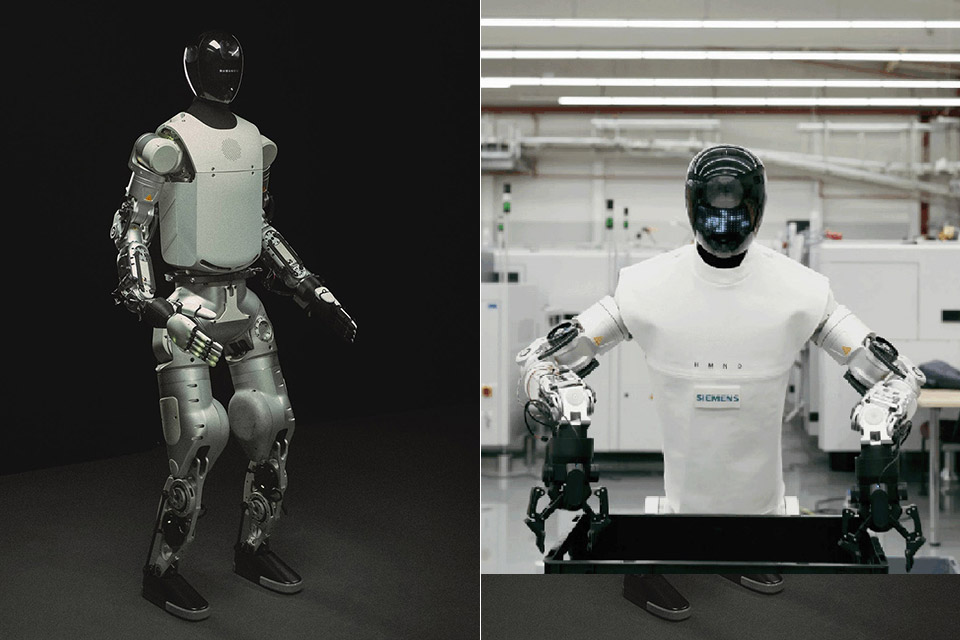
London-based Humanoid announced a manufacturing agreement with Bosch that moves its HMND-01 robots closer to larger deployments across European factories and warehouses. The deal follows a successful proof-of-concept test completed in March at one of Bosch’s logistics sites in Bühl, Germany. During that trial, the robots handled box transfers from conveyors to trolleys, managing five different box sizes with varying weights and shapes without missing a step.


Humanoid develops robots for real-world applications, such as in factories and industrial environments. Their HMND-01 platform is available in two configurations: a 175 centimeter tall bipedal robot and a wheeled version. The bipedal one weighs roughly 70 kilograms and can move at a reasonable rate of 1.5 meters per second, which is quite quick for a robot. It can also carry a 15 kilogram payload with ease and run for approximately 4 hours on a single charge. There is also a wheeled variant, which is heavier, higher, and geared to handle demanding duties. Both versions run on Humanoid’s own KinetIQ system, which manages everything from perception to movement and actual task completion, and because they’re modular, they can be tailored to customers’ specific manufacturing or logistics needs.


Unitree G1 Humanoid Robot(No Secondary Development)
  • Sleek & Durable Design: Standing at 132cm tall and weighing only approx. 35kg, the G1 is constructed with aerospace-grade aluminum alloy and carbon…
  • High Flexibility & Safe Movement: Boasting 23 joint degrees of freedom (6 per leg, 5 per arm), it offers an extensive range of motion. For safety, it…
  • Smart Interaction & Connectivity: Powered by an 8-core high-performance CPU and equipped with a depth camera and 3D LiDAR. It supports Wi-Fi 6 and…

Bosch has agreed to help Humanoid deliver these robots to Europe. With its extensive manufacturing facilities and experience creating extremely complicated systems, the German corporation brings significant expertise to the table. Bosch’s contract manufacturing agreement include assisting Humanoid with all of the technical aspects of constructing the robots. That begins with the design stage and continues all the way through to delivery, which includes supply chain coordination and, of course, cost control. Meanwhile, Humanoid is working on improving the design, with the goal of making it easier to make, more dependable for customers to use, simpler to fix if something goes wrong, and more economical in general.


The combined testing at Bühl produced some hopeful results, as the robots performed rather well in a real-world logistics scenario. They were scanning boxes, responding to changing conveyor belt inputs, and transferring products smoothly. That was enough to persuade both sides to take the project a step further and begin producing robots in larger quantities, rather than simply focusing on the prototype phase.

Advertisement


What the two companies want to accomplish next isn’t just to keep producing the same old robots. They also want to look into how Bosch-made components like as actuators, motors, and sensors may be employed in future versions of the HMND-01. The goal is to make the thing faster, stronger, and more tightly integrated with the equipment and systems it works with.
[Source]

Source link

Advertisement
Continue Reading

Tech

Shein Buying Everlane Actually Makes Perfect Sense

Published

on

On Friday, the ultrafast-fashion giant Shein finalized its acquisition of Everlane, a US clothing retailer that made its name by promising “radical transparency” into how its clothes were made. Neither company disclosed the price of the deal, but Puck reported last weekend that it clocked in at $100 million.

Founded in 2010, Everlane became synonymous with a certain strain of millennial consumerism that was supposed to be the exact opposite of Shein. It mainly sold elevated basics, and told a generation of anxious and high-minded shoppers that they could feel morally good about buying yet another pair of plain ballet flats or black high-waisted skinny jeans. Shein, by contrast, became notorious by flooding the internet with astonishingly cheap, trendy clothing produced at enormous scale. It has been criticized for years for alleged poor labor practices.

Given how differently Shein and Everlane positioned themselves, many people online felt the acquisition fell somewhere between darkly ironic and outright dystopian. The fashion writer Derek Guy, better known online as the “menswear guy,” articulated the vibe in a post on X: “Under Shein,” he wrote, “Everlane’s ‘radical transparency’ means you get to read about the small child making your boring gray crewneck sweater.”

Really, though, the deal makes perfect sense. In the long run, it may end up looking like a preview of where Chinese consumer companies are heading next.

Advertisement

Chinese ecommerce giants conquered the global market largely by selling cheap stuff at eye-watering scale. Companies like Shein and Temu thrived in part because of the “de minimis” loophole, a US trade rule that allowed packages worth under $800 to enter the country tariff-free and with relatively little customs scrutiny. That system became the backbone of a new era of cross-border ecommerce, enabling Chinese companies to ship cheap stuff directly to American consumers faster and more efficiently than many traditional retailers could manage.

But after US president Donald Trump imposed sweeping new tariffs on Chinese imports and ended the de minimis exemption, the economics underpinning that model began to falter. Chinese companies quickly realized they could no longer rely solely on flooding Western markets with bargain-priced products. If they wanted to keep growing internationally, they needed something more durable: a good old-fashioned brand.

Shein buying Everlane, however culturally cursed it may appear, is part of a broader trend already unfolding across Chinese commerce and manufacturing. Increasingly, Chinese companies are trying to move beyond anonymous low-cost production and toward owning recognizable global brands associated with quality, lifestyle, and status.

One of the clearest examples comes from Temu’s parent company, Pinduoduo. In March, the company announced a major new initiative called New PinMu, a multibillion-dollar effort designed to help Chinese manufacturers build premium international brands. The project is part of a larger strategic vision outlined by Pinduoduo co-CEO Jiazhen Zhao, who has been hyping up the company’s ambitions to elevate manufacturing standards and create pathways for Chinese factories to move up the value chain.

Advertisement

Meanwhile, Luckin Coffee, a Chinese coffee chain that has become one of Starbucks’ biggest rivals, recently acquired Blue Bottle, the cultish specialty coffee brand that helped define American third-wave coffee culture. Anta Sports, a Chinese sportswear giant that began largely as a domestic sneaker company, has spent years buying into premium global sportswear brands, including controlling stakes in Arc’teryx and Salomon.

The trend also reflects broader political pressures inside China. The government has become increasingly critical of the brutal price wars and hypercompetition that dominate industries like ecommerce and electric cars, a phenomenon often referred to as “involution.” Beijing now wants companies to focus more on sustainable growth, higher-end manufacturing, and global competitiveness rather than an endless race to the bottom.

Source link

Advertisement
Continue Reading

Tech

Wingtech sues Nexperia in Chinese court over Dutch government’s semiconductor seizure

Published

on

Wingtech Technology has filed a lawsuit against its own subsidiary, Nexperia, in a Chinese court. The case, lodged at the Dongguan Intermediate People’s Court, seeks at least 8 billion yuan, roughly $1.1 billion, in damages. It is the first major legal challenge to a European government’s forced seizure of a Chinese-owned chipmaker. The dispute centres […]

This story continues at The Next Web

Source link

Advertisement
Continue Reading

Tech

Memorial Day Tech Deals: Sony, Apple, Beats (2026)

Published

on

When you think of Memorial Day sales, you probably think of mattresses and other home goods. And while those items are definitely discounted, now is also a good time to purchase tech. Personally, I’m not buying anything right now unless it’s discounted—and fortunately many of our top picks are. Whether you’re shopping for a power bank, a new pair of headphones, or some other gadget, I’ve rounded up the best Memorial Day deals for your perusal. We’ll update this article again over the weekend.

Check out our buying guides for more recommendations, including the best headphones, the best laptops, and the best cheap phones.

Updated May 22: We’ve checked prices, removed expired deals, added ten new deals, and ensured accuracy throughout.

WIRED Featured Deals:

Advertisement

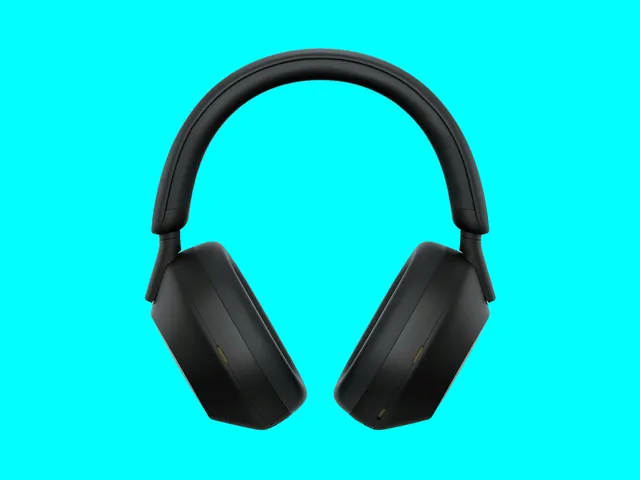
Sony WH-1000XM5 for $248 ($152 off)

Sony WH-1000MX5 headphones

The Sony WH-1000XM5 have a very frustrating name, but they’re the predecessor to our favorite wireless headphones, and they’re still an excellent pick if you don’t want to shell out for the new WH-1000XM6. They go on sale frequently, but rarely drop this low in price, which comes within $5 of their all-time low. If you’re in the market for over-ear headphones, they’re hard to beat. They’re comfortable, portable, lightweight, and stylish, and they’ll make your music sound great no matter what you like to listen to.

Source link

Continue Reading

Trending

Copyright © 2025