
Security teams log 54% of successful attacks and alert on just 14%. The rest move through your environment unseen.
The Picus whitepaper shows how breach and attack simulation tests your SIEM and EDR rules so threats stop slipping by detection.



SpaceX has agreed to acquire Cursor for $60 billion in stock, adding the popular AI coding assistant to Elon Musk’s newly public aerospace-and-AI conglomerate. CNBC reports: Cursor built a popular AI coding tool that helps software developers generate, edit and review code, and the company has experienced explosive growth since its founding in 2022. In November, Cursor said it crossed $1 billion in annualized revenue, according to a release at the time. Cursor was also ranked at No. 37 on the annual CNBC Disruptor 50 list in 2026.
[…] Musk merged SpaceX with his AI startup, xAI, earlier this year, and the Cursor deal looks set to help revitalize the company’s efforts to compete with rivals like Anthropic and OpenAI, which also offer popular coding tools. SpaceX expects the merger to close during the third quarter of this year, according to a filing with the Securities and Exchange Commission. The transaction is subject to “requisite regulatory approvals,” the filing said.


An Illinois man was sentenced on Tuesday to 76 months in prison and three years of supervised release for hacking the Snapchat accounts of over 750 women to steal nude photos, which he later traded or sold online.
After being charged in December, 26-year-old defendant Kyle Svara admitted in February to having used various social engineering tactics to phish Snapchat access codes from over 750 women.
Between May 2020 and February 2021, he targeted more than 4,500 victims while posing as a representative of Snap Inc and using anonymized phone numbers.

After stealing the victims’ credentials, Svara accessed approximately 517 women’s Snapchat accounts without permission to download nude or semi-nude photos and activated two-factor authentication to lock them out of the compromised accounts.
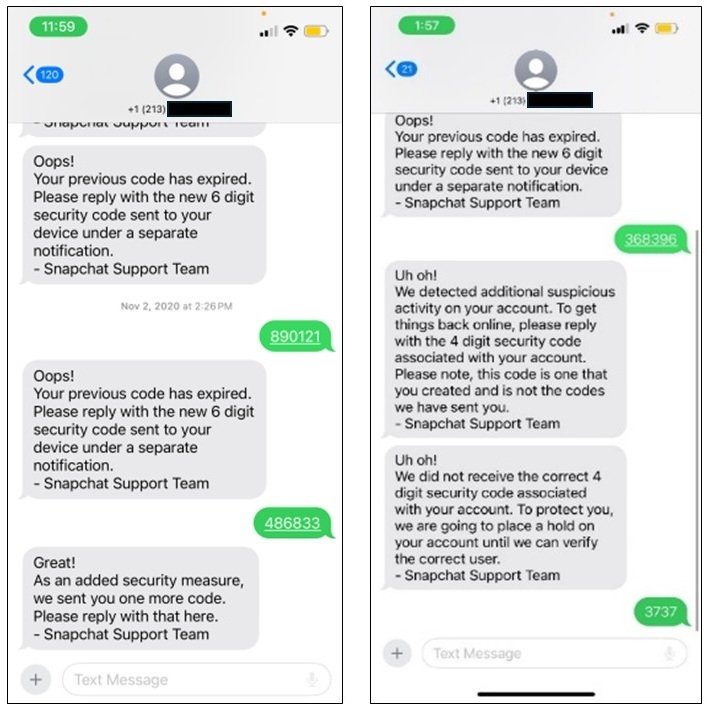
The investigators also found that Svara distributed child sexual abuse material (CSAM), finding approximately 530 images and 600 videos depicting CSAM in his Mega account.
“When Svara was interviewed by investigators, he falsely stated that he did not know anything about hacking Snapchat,” the Justice Department said in February.
“Additionally, he falsely stated that had no interest in child pornography and had never actively sought out or accessed child sexual abuse material (CSAM). Contrary to these statements, the defendant collected, distributed and solicited CSAM.”
According to court documents, he also advertised his “services” online, trading the stolen images, offering to “get into girls snap accounts,” and asking potential clients to reach out through the Kik encrypted messaging app.

Steve Waithe, a former Northeastern University track and field coach and one of his clients, hired Svara to hack the Snapchat accounts of students at Northeastern and members of the women’s track and field and soccer teams.
After being found guilty of targeting at least 128 women and stealing thousands of explicit photos from more than 100 women, Waithe was sentenced in March 2024 to five years in prison for cyber fraud, cyberstalking, and sextortion.
Between paid hacking jobs, Svara also independently hacked into the accounts of many women in Plainfield, Illinois (including neighbors, family friends, classmates, his own personal friends), as well as students at Colby College in Waterville, Maine.

Security teams log 54% of successful attacks and alert on just 14%. The rest move through your environment unseen.
The Picus whitepaper shows how breach and attack simulation tests your SIEM and EDR rules so threats stop slipping by detection.

Forget cheating on homework and chatbot friends. Some kids are getting in on a new AI trend: thinking it sucks.
In the four years since chatbots went mainstream, and their marketing campaigns went into overdrive, young people have grown increasingly skeptical of the hype around LLMs. Yes, many of them still use the tech for school assignments and companionship, but according to market research firm YPulse, 37 percent of teens aged 13 to 17 cringe when they see AI content like music and videos, and more than half worry about misinformation and deepfakes.
The polling on youthful AI attitudes shows a great deal of contradiction. Adoption rates are high, with a majority of America’s teens reporting they use chatbots, but enthusiasm is mixed. A recent Pew Research report found that while many teens think AI will be good for them personally, over a fourth of their cohort believe AI will have a negative impact on society in the next 20 years, citing job loss, the decline of critical thinking skills, and environmental impacts as concerns.
Young people typically adopt new consumer technology eagerly, but Melanie Green, a communications professor at the University at Buffalo, says AI is different. This time, the moral panic isn’t coming from older generations—in fact, kids are turned off by the way AI is being pushed on them by adults and tech corporations. They’re also, Green says, “acutely aware that whatever disruption happens, their generation is going to be bearing the brunt of it.”
Ergo, the eye-rolls. On Bluesky, parents bond over their kids’ distrust of AI, with many claiming that their children come home saying “that’s AI” to mean “that’s BS.” On Reddit, educators share that students—even those who use AI—worry about its consequences and can’t stand the art it produces. WIRED spoke to young people, their parents, and their teachers to find out why some kids don’t want to be on the AI bandwagon.


science
Super Heavy booster had a super heavy landing, but other reusability tech did the trick
The 13th flight of SpaceX’s Starship made it off the launchpad on Friday and ticked off just about everything on the company’s to-do list.
After delays and engine replacements, Elon Musk’s colosso-launcher took to the skies at beer-o’clock on Friday evening – 5:51PM Texas time.
One hour, five minutes and 21 seconds later, Starship made a controlled splashdown in the Indian Ocean, where it floated after landing.
SpaceX says it was able to gather critical data on the performance of Starship’s heatshield, and that the craft made “a dynamic banking move to mimic the trajectory that future missions returning to Starbase will fly.”
Gathering data on Starship’s heatshield performance will help SpaceX ensure the craft is re-usable. Simulating missions that land at Starbase, SpaceX’s Texas home, builds toward future missions that launch and land at the same facility, speeding turnarounds for re-usable hardware.
The test flight also saw SpaceX test a new routine for de-orbiting the Super Heavy booster used to hoist Starship into space. “The booster successfully completed the high thrust portion of the boostback burn with all 33 engines, the first time with a Super Heavy V3, before ending the burn early,” SpaceX said. “It attempted to relight its engines for the landing burn, with a subset successfully igniting before experiencing a hard splashdown in the Gulf.”
That part of the mission didn’t go perfectly, as SpaceX hoped for a softer landing and more engines lighting to make it possible.
Once Super Heavy and Starship separated, the latter vehicle used its six Raptor engines to reach desired speed and orbit. It then deployed 20 Starlink V3 satellites. SpaceX crew verified the sats worked and half a dozen of them got a look at Starship’s heatshield. While the satellites were functional, SpaceX did not intend them to form part of the Starlink constellation and allowed them to re-enter Earth’s atmosphere. Or as the company’s mission report put it, the satellites “demised upon reentry approximately 20 minutes after deployment.”
Starship performed one more trick on its way back to Earth, by starting one of its Raptor engines while coasting through space. The success of that test again demonstrated tech that will be needed for future missions, in this case flights that push Starship into sustainable orbit – or allow it to reach a trajectory capable of reaching the Moon, as NASA envisages will be the case for future Artemis missions that land humans on Earth’s permanent natural satellite.
SpaceX boss Elon Musk said he hopes the next Starship test flight will see the Super Heavy booster caught by robot arms at Starbase, another step towards improved reusability and turnaround times between flights. ®
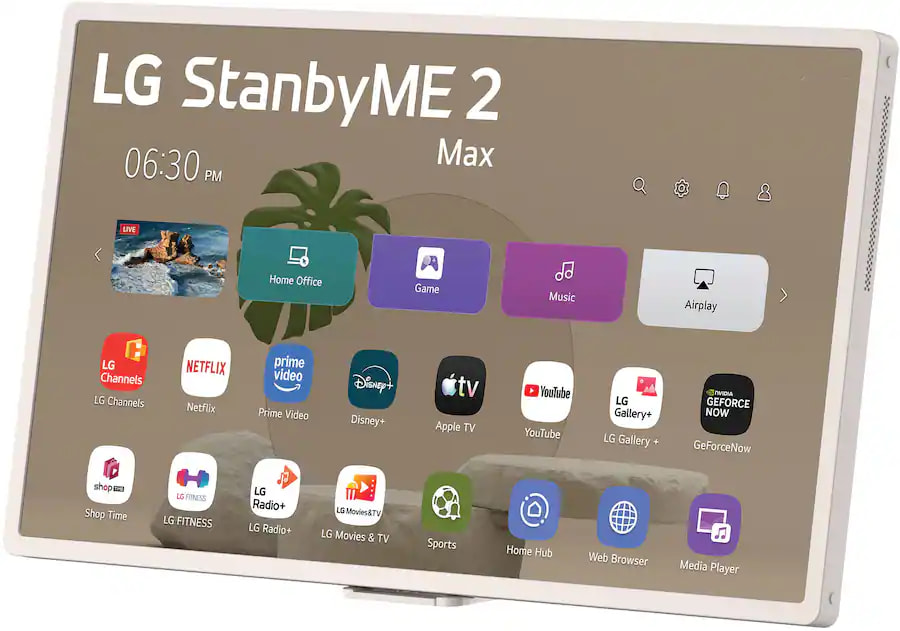
Televisions spent decades getting larger, thinner and increasingly difficult to move without a second person, a furniture dolly and a brief argument about who scratched the wall.
LG took a different approach with StanbyME: put the display on wheels, add a battery and let it follow you between rooms without requiring an electrician or a marriage counselor.
The original idea was clever, but the 27-inch StanbyME 2 still felt more like an oversized tablet than a television. LG’s new StanbyME 2 Max moves the concept considerably closer to being a legitimate secondary TV with a 32-inch 4K touchscreen, improved wireless connectivity and the same $1,299.99 launch price as its smaller predecessor.
That is still a lot of money for 32 inches of LCD real estate, but conventional televisions cannot follow you into the kitchen, rotate into portrait mode for a workout or detach from their stands when you need the screen on a desk.
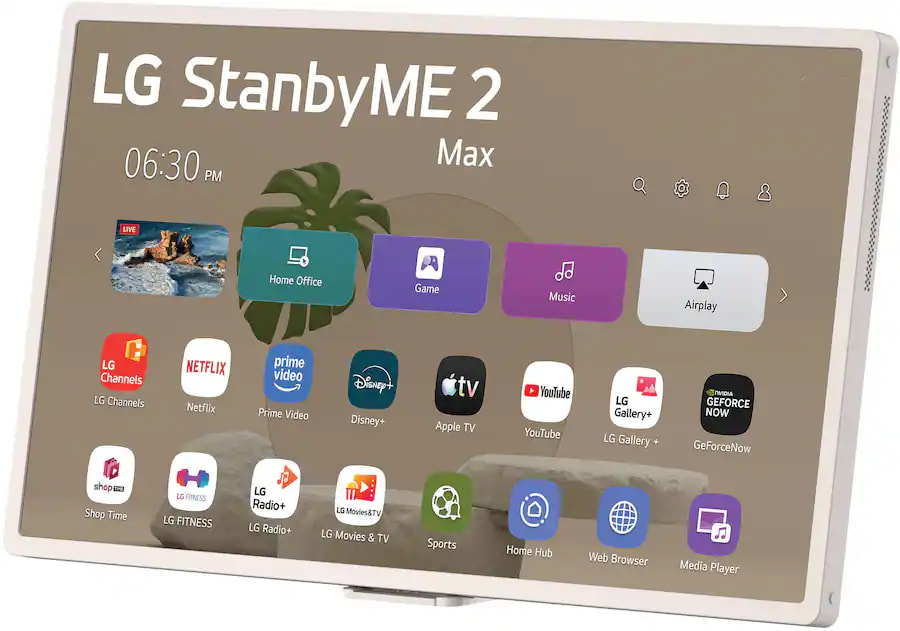
The most important upgrade is the display itself. StanbyME 2 Max increases the screen size from 27 to 32 inches while jumping from QHD resolution to full 4K UHD at 3840 x 2160 pixels. It remains an edge-lit LCD panel with a native 60Hz refresh rate, so nobody should confuse it with one of LG’s premium OLED TVs. Mobility, not reference-level black performance, is the reason this exists.
LG has equipped the new model with its Alpha 8 AI Processor Gen3, including AI Picture Pro, AI Super Upscaling and Dynamic Tone Mapping Pro. Dolby Vision HDR is supported, while Dolby Atmos and LG’s AI Sound Pro processing can create a virtual 11.1.2-channel presentation through the built-in side-firing 2.0-channel speaker system.
A 32-inch television is never going to replace a proper home theater system, but that is not really the assignment. StanbyME 2 Max is intended for recipes, exercise videos, casual streaming, gaming, video calls and those moments when somebody else has taken control of the main television and refuses to surrender the remote.
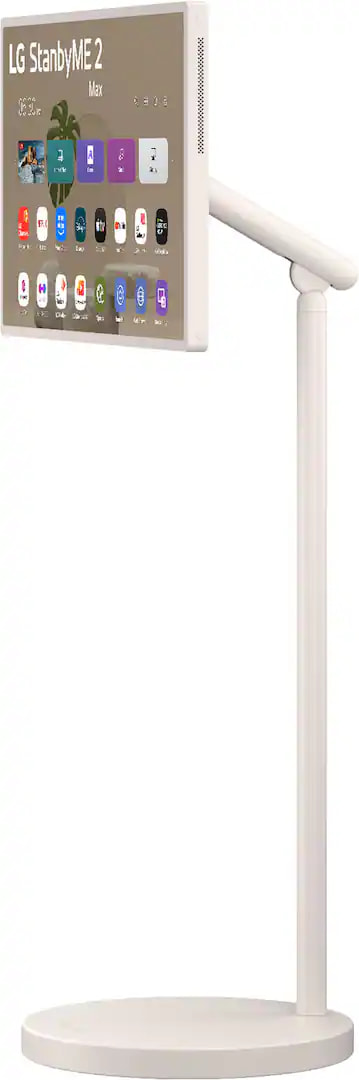
The touchscreen can rotate 90 degrees in either direction for landscape or portrait viewing, tilt up to 25 degrees and swivel as much as 90 degrees. The display also detaches from the rolling stand and can be placed on a table using the included one-click tabletop stand. A small magnetic remote clips directly to the enclosure, which should reduce the likelihood of it disappearing into the sofa cushions within the first 48 hours.
The screen weighs approximately 12.3 pounds on its own, while the complete display and rolling stand weigh 44.8 pounds. In other words, roll the complete unit between rooms and save the lifting for when the display is detached.

Battery life has increased slightly from four to a claimed 4.5 hours, which should cover two average-length films or approximately one modern streaming drama whose director was never told that editing exists. The screen can also be powered or charged over USB-C, including through a compatible external battery.
Connectivity represents another meaningful improvement. The previous StanbyME 2 was saddled with Wi-Fi 5, which felt dated on a premium wireless display. The Max moves to Wi-Fi 6 and Bluetooth 5.3, while supporting Apple AirPlay, Google Cast and mobile-device screen mirroring. LG also includes HDMI, USB and dual USB-C connectivity, with USB-C DisplayPort Alt Mode supported for compatible computers and mobile devices.

LG’s webOS platform provides access to streaming applications and more than 400 free LG Channels in the United States. Gallery+ can turn the display into a mobile digital-art frame, while Mood Maker, touchscreen board games and the generative AI-powered Let’s Draw application provide something to do when another season of television about wealthy people behaving badly begins to feel repetitive.
There is an important distinction, however: StanbyME 2 Max runs a television operating system rather than iPadOS, Android or Windows. It offers touch controls and tablet-like flexibility, but it is not a general-purpose tablet capable of running every mobile productivity or creative application.
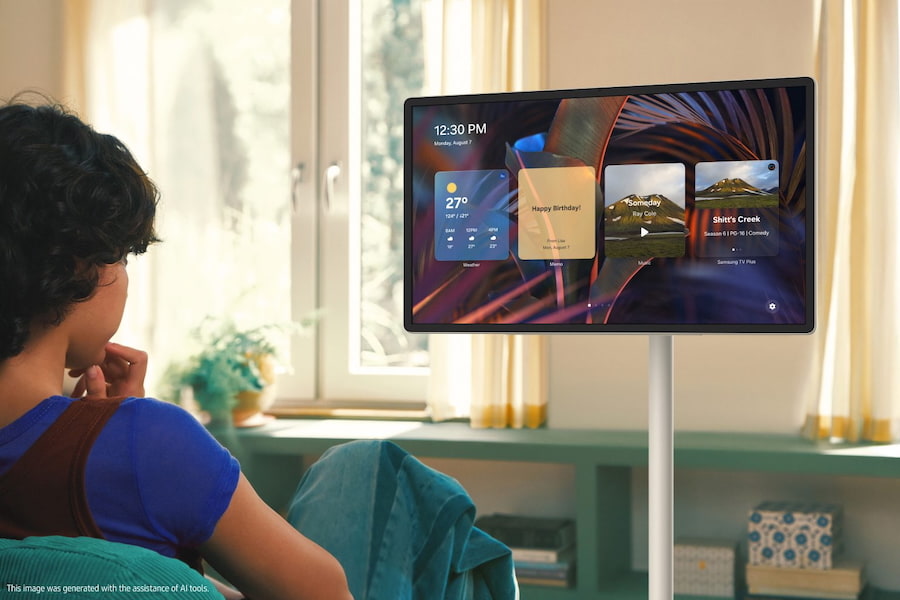
Samsung’s closest rival is the 27-inch Movingstyle, which offers a QHD touchscreen, 120Hz refresh rate, HDR10+, Dolby Atmos, a detachable display and approximately three hours of battery life for a $1,199.99 MSRP. Samsung has the advantage for gaming and faster motion, but LG provides a larger 4K screen, longer battery life and Dolby Vision for an additional $100.
Samsung also sells the 32-inch Movingstyle M7 for $699.99. It provides a 4K display and rolling stand at nearly half the price of the LG, but it requires continuous AC power and lacks both touchscreen operation and the ability to detach the display for portable use. It is closer to a smart monitor on wheels than a battery-powered personal screen.
The more serious threat might be the Hisense S6 FollowMe, which combines a 32-inch 4K touchscreen with an anti-glare panel, Wi-Fi 6, an integrated camera and a claimed battery life of up to 10 hours. Hisense announced U.S. availability for May 2026, but its official launch materials still did not provide pricing, which is an effective way to win a specifications comparison without asking anyone to open their wallet.
What makes the StanbyME 2 Max different is not any single feature. It is the combination of a 32-inch 4K touchscreen, detachable battery operation, a mature smart TV platform, Dolby Vision and Atmos support, extensive wired and wireless connectivity and confirmed U.S. pricing in one relatively polished product.
At $1,299.99, the LG StanbyME 2 Max will never win a dollars-per-inch contest. The same money can purchase a substantially larger conventional 4K TV with better picture quality, greater brightness and possibly enough left over for a soundbar.
That television will not roll next to a treadmill, rotate vertically for a recipe, detach for use on a desk or operate for more than four hours without an electrical outlet.
LG has addressed the two most obvious limitations of the previous model by increasing the screen size and resolution, while Wi-Fi 6 fixes a networking specification that should never have been missing from a premium wireless display.
The edge-lit panel, 60Hz refresh rate and high price still require some perspective. This is not the television for someone building a dedicated home theater or chasing premium HDR performance. It makes far more sense for apartments, bedrooms, kitchens, home offices, workout spaces and households where a flexible secondary screen would actually move throughout the day.
The StanbyME concept is no longer unique, but the 2 Max may be its most convincing execution so far. LG did not reinvent television. It simply gave one better resolution, a battery and permission to leave the living room.
The LG StanbyME 2 Max, model 32LX6BWGA, is priced at $1,299.99 in the United States. LG opened preorders on June 29, 2026, with initial shipments expected to begin during the week of July 26, 2026.
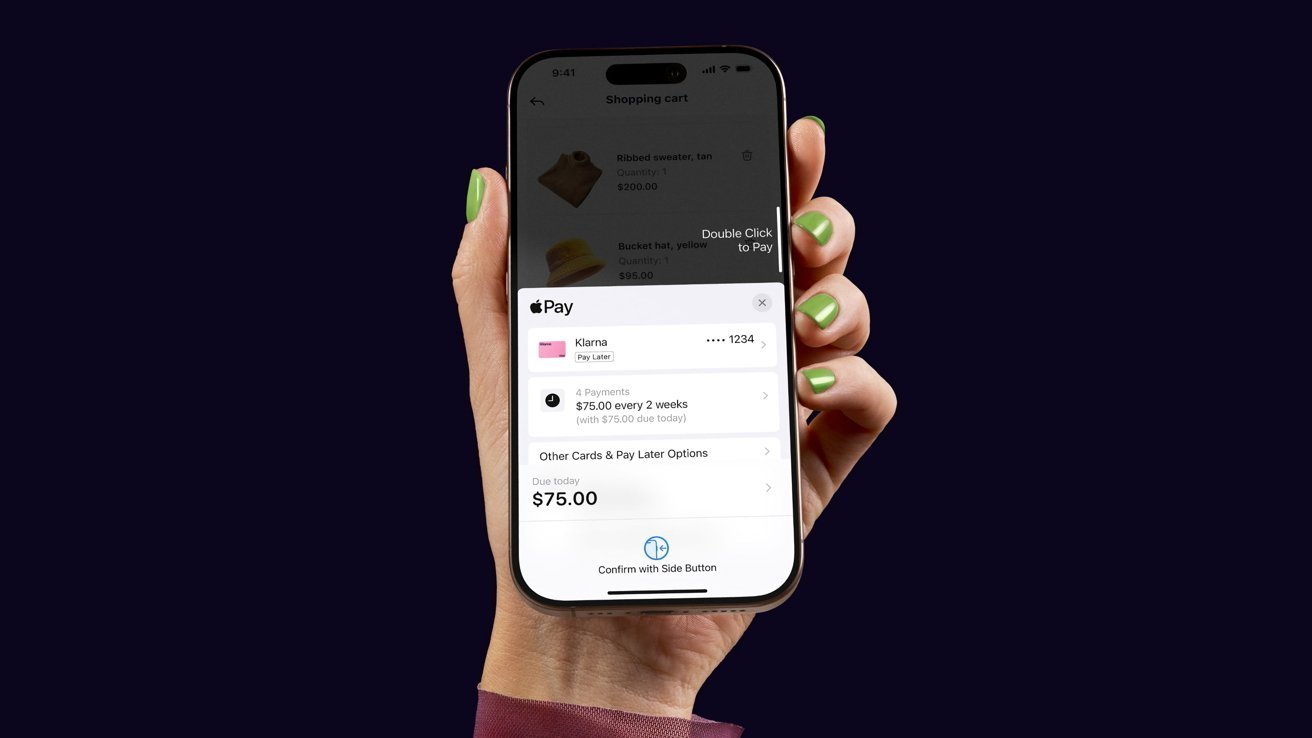
Apple Upgrade, the company’s new installment program, will be going live on July 28, coinciding with the ending of sign-ups for the iPhone Upgrade Program.
On July 21, a report surfaced claiming that the iPhone Upgrade Program was on borrowed time, and was due to be replaced. It seems that the replacement, Apple Upgrade, will be arriving very soon.
Posted as part of Sunday’s “Power On” newsletter for Bloomberg, Mark Gurman writes that Apple Upgrade will launch on Tuesday. At the same time, Apple will stop new enrollments for the iPhone Upgrade Program.
Consumers already on the iPhone Upgrade Program can continue to use it, but new plans will not be set up.
While a leasing program at its core, Apple Upgrade differs from the iPhone Upgrade Program in a few ways.
The first big change is that it’s not just limited to iPhones. Consumers will be able to sign up for an iPhone, iPad, Mac, or Apple Watch.
Plans will last 24 or 36 months, depending on the product, and subscribers will be allowed to upgrade early to newer models instead of completing the entire term.
Not every model will be available either, with budget-oriented options like the Apple Watch SE and the MacBook Neo apparently off-limits. Business and education purchases will not be able to use the facility, either.
A second variation from the old program is that there won’t be AppleCare included in the plan. The iPhone Upgrade Program included it as standard, but now consumers have to pick it up separately.
Lastly, the backer of the program is different. The iPhone Upgrade Program was backed by Citizen Bank, but now Apple Upgrade will be handled financially by Klarna.
Looking for a different day?
A new NYT Strands puzzle appears at midnight each day for your time zone – which means that some people are always playing ‘today’s game’ while others are playing ‘yesterday’s’. If you’re looking for Sunday’s puzzle instead then click here: NYT Strands hints and answers for Sunday, July 26 (game #875).
Strands is the NYT’s latest word game after the likes of Wordle, Spelling Bee and Connections – and it’s great fun. It can be difficult, though, so read on for my Strands hints.
Want more word-based fun? Then check out my NYT Connections today and Quordle today pages for hints and answers for those games, and Marc’s Wordle today page for the original viral word game.
SPOILER WARNING: Information about NYT Strands today is below, so don’t read on if you don’t want to know the answers.
Latest Videos FromTechRadar
• Today’s NYT Strands theme is… Let the journey begin
Play any of these words to unlock the in-game hints system.
• Spangram has 12 letters
• First side: left, 8th row
• Last side: right, 8th row
Right, the answers are below, so DO NOT SCROLL ANY FURTHER IF YOU DON’T WANT TO SEE THEM.

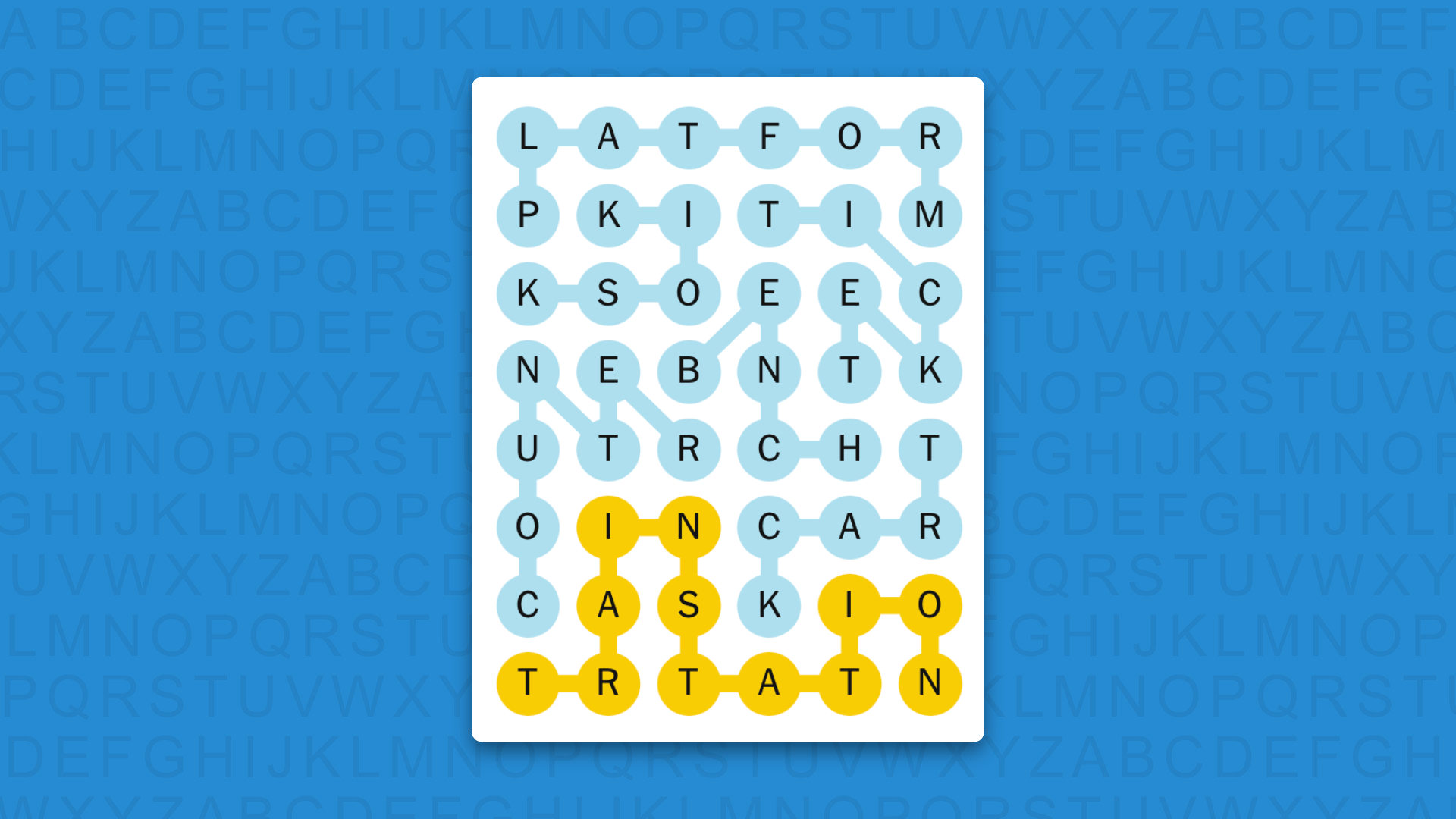
The answers to today’s Strands, game #876, are…
Another Spangram First for me today, although it did come in two parts as I saw “station” before making the connection for TRAINSTATION.
From here it was a case of collecting the more obvious railway-related words — PLATFORM, TRACK, TICKET — before connecting the less obvious like KIOSK.
A nice, easygoing start to the week.
Strands is the NYT’s not-so-new-any-more word game, following Wordle and Connections. It’s now a fully fledged member of the NYT’s games stable that has been running for a year and which can be played on the NYT Games site on desktop or mobile.
I’ve got a full guide to how to play NYT Strands, complete with tips for solving it, so check that out if you’re struggling to beat it each day.
For decades, the four-door, rear-wheel-drive sedan with an internal combustion engine up front was a core part of the global auto industry. Whether it was a plush American luxury sedan or an athletic European sport sedan, rear-drive sedans were once a ubiquitous sight in dealer showrooms and on the streets.
Today, though, the rise of SUVs and EVs means that the traditional rear-drive sedan has fallen out of favor among many automakers. As an example of this, look no further than Lexus, which killed off its GS sport sedan in 2020 and its flagship LS luxury sedan in 2026, with only the smaller Lexus IS sedan still hanging on for now.
However, it’s not all bleak news for lovers of the rear-drive sedan. Brands like BMW have kept their traditional sedans alive despite the SUV boom, and it now appears that other brands are intent on following the German marque’s lead. Some of these cars are expected to be revivals of discontinued models, while others would tread new ground entirely. Below we’ve rounded up five potential rear-drive sedan revivals that we’re especially excited about.
To say that Buick’s current lineup offers little to car enthusiasts would be a bit of an understatement. This is unfortunate, because Buick is the brand that once brought us iconic performance cars like the 455-powered GSX muscle car of the early ’70s and the turbocharged Buick Grand National of the 1980s. Even Buick’s more recent Regal GS models of the 2010s are quite exciting compared to what the brand sells now.
The only vehicles that Buick sells as of mid-2026 are crossover SUVs, but it seems like that might be changing — and in a big way. General Motors is reportedly developing an updated version of its rear-drive Alpha 2 platform, which will underpin, among other things, a new Chevrolet Camaro. What’s just as exciting, though, is that the platform will also be used for a new Buick sedan model.
It’s been a long time since Buick has sold a rear-drive passenger car of any type: the last was the full-size Buick Roadmaster from the 1990s. Right now there isn’t any solid info about which engine(s) this new Buick will have or what it will be called. If it’s using the well-regarded Alpha platform, though, we’re expecting something worthy of Buick’s 20th-century performance heritage. After all, who wouldn’t want a four-door Camaro with some Buick badges and a more upscale interior?
Mazda is a brand that’s well regarded by car enthusiasts, with the lovable and iconic MX-5 Miata considered one of the world’s most enjoyable sports cars. When it comes to sedans, though, Mazda’s current lineup is pretty lacking, with the entry-level, front-drive-based Mazda3 being the only sedan it sells.
Mazda discontinued its mid-sized Mazda6 sedan in 2021. Since then, there have been on-again, off-again rumors about a more upmarket, rear-drive sport sedan replacement. Mazda already has the platform to build it, with its CX-80 and CX-90 crossovers using the company’s new rear-drive-based platform, complete with inline-6 engines. At one point, Mazda was fully planning for a next-generation Mazda6 to use this new platform, but the company later backed off that plan to focus on SUVs.
Mazda, however, has maintained the stance that the rear-drive, inline-six sedan could come back on the table if the market calls for it. While a new Mazda sport sedan has yet to become reality, and we aren’t sure exactly what form it would take, it’s clear the company is still taking the idea seriously. This is evidenced by recent concept cars like the rotary-powered 2025 Vision X-Coupe — which, despite the name, actually has four doors.
Ford made headlines in 2020 when it axed its sedans to focus on SUVs, but the company has more recently expressed some interest in getting back into the sedan game. This time, however, rather than competing with the Camry and Accord, a new Ford sedan would likely be a more sporty, upmarket product. Speculation has this new car sharing a platform and perhaps its branding with the Mustang, with Mach 4 hinted at as a possible name.
Ford expanding the internal combustion Mustang family to include a sedan makes a lot of sense. The latest Mustang is a fantastic performance car with lots of throwback appeal, but the 2020s haven’t been kind to the Mustang sales-wise. Branching the platform out into a sport sedan would likely expand its appeal to buyers who need something more practical than a two-door coupe with a tiny back seat.
To see how well this could potentially work, look no further than the previous generations of the Dodge Challenger and Dodge Charger. These cars took the same LX rear-drive platform and made it available in both coupe and sedan styles with great success. Would purists be upset if Ford were to use the Mustang name for a sedan? Maybe, but we don’t see how that’d be any more egregious than using the name for an all-electric crossover SUV, which Ford has already been doing for several years with the Mustang Mach-E.
Over the last 20 years, the Cadillac brand has made big strides in the car enthusiast space. It started with models like the CTS-V from the mid-2000s, with the torch passing to fire-breathing sport sedans like the CT4-V Blackwing and the incredible CT5-V Blackwing, with its 668-hp supercharged V8.
Cadillac, however, is in a bit of an uncertain situation, with the current CT4 and CT5 leaving production after 2026. Without these two internal combustion sedans, Cadillac’s lineup would consist only of crossovers, SUVs, and electric vehicles, and there was some concern that Cadillac was done with gasoline sedans completely.
Fortunately, it seems the CT5 won’t be gone for long. Industry sources have said that a new version of the Cadillac CT5 is one of the models GM will build on its updated Alpha 2 platform. Not much is known about the powertrain options the next-gen CT5 will have, but the high-end CT5-V Blackwing is likely to return packing big power. There have been rumors that even the non-Blackwing CT5-V will get a naturally aspirated V8 and a manual transmission, a combination that enthusiasts have long been clamoring for.
Nissan has done a commendable job in keeping its legendary Nissan Z sports car alive in a market that isn’t always easy for two-seat sports cars, but the Z isn’t the only historic nameplate that Nissan is focusing on right now. In a 2026 preview of future products, Nissan confirmed it’s working on a new Skyline sedan for the Japanese market, which should share the current JDM Skyline sedan’s rear-drive layout.
While Nissan doesn’t sell the Skyline in America, it did make its way to these shores as the now-discontinued Infiniti Q50. It appears, though, that rather than being taken away for good, the Q50 has only been on hiatus. Industry sources say the Q50 is coming back soon, likely with rear-drive and even a manual transmission. It makes sense then that the next-gen Q50 and this recently-teased JDM Skyline would again be the same car with different names.
It remains to be seen whether the new sedan will use an all-new platform or be a heavily updated version of the old one. After all, despite getting a new engine and updated styling, the newest Nissan Z actually isn’t too much different from the previous generation Z beneath its skin. It’s very possible that Nissan could go a similar route with the new Skyline and Infiniti Q50.
We compiled this list based on official manufacturer announcements and industry reporting. Some of these vehicles have yet to be officially announced by automakers, while others have merely been hinted at or mentioned as part of broader product plans. As with all news gathered from anonymous sources, it’s important to have some degree of skepticism — but, as of now, these brands are indeed bringing the classic RWD sedan back. We also focused specifically on front-engine, rear-drive sedans with internal combustion engines, and not battery electric vehicles.
While the Steam launch of “Character Limit” isn’t the end of Malcolm’s game development journey, he still has to combat the oddities of promotions and scammers. That, and get the iOS release done.
The Character Limit launch on July 21 was a weird day for a number of reasons. For a start, that it actually happened at all.
When I last left off, I was in a predicament of waiting for Steam’s review process to approve the game on a second attempt, after the first failed on a technicality. Thankfully, instead of waiting for five days, Steam’s support approved the game on Monday, meaning I could release on Tuesday as originally intended.
The actual launch itself was a weird process, timing-wise. While you did have to confirm to Steam the date and time for your intended release and it would be locked in the system two weeks beforehand, it didn’t actually matter.
The system said that a launch could’ve happened earlier if the game was approved. The timing was also useless when it came to the actual launch, because it’s not automatically released.
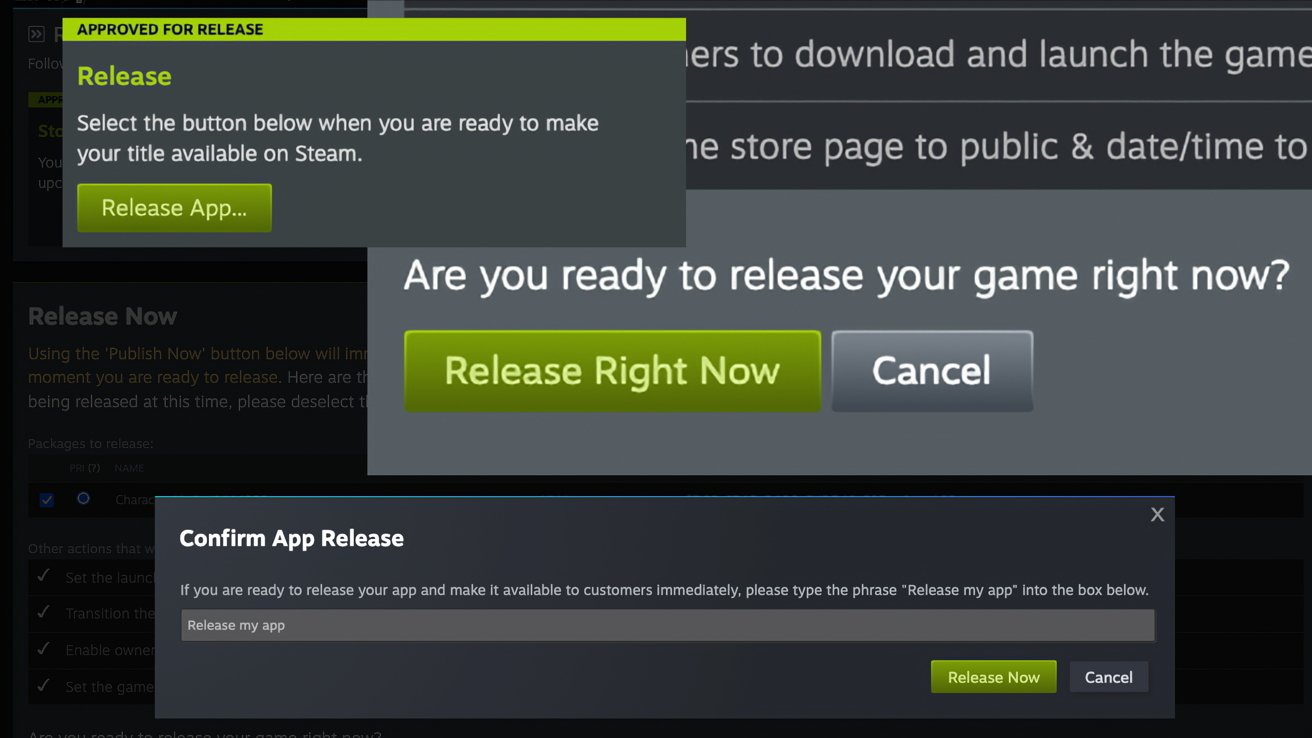
Instead, the person in charge of the project has to tell SteamWorks multiple times that the game needs to be released. You had to click Release App, then click a second button to Release Right Now, then enter “Release My App” into a text box, followed by clicking “Release Now.”
There is undoubtedly a good reason or two for this process. Especially when a game could cost millions to produce and be especially harmful to the brand if shipped early with bugs.
To me, it felt like a dual-key missile launch on a submarine in a war film, but with much lower stakes.
I was expecting that seeing the game live and for sale in Steam would be an emotional moment. The culmination of all the work and releasing it to the public. Tears and all that.
There were no tears, no massive explosions, no ticker tape parade. It felt about as emotional as buying cat litter on Amazon.

You have to tell Steam four times to release a game.
It probably helped that it was the start of the working day for me here at AppleInsider. I had other things to think about for about eight hours after launch, which probably saved me from repeatedly refreshing the sales data screen.
It’s still the opening week, and for a small game with little typical promotion, there were no expectations of buying a Ferrari. Quite the opposite.
That said, I am glad that it did make some sales. It’s far from stellar, but it’s thankfully not zero either.
I did eventually celebrate the launch by taking Emma to KFC late at night and trying to find a Toblerone. The chicken was nice, but I couldn’t find the chocolate.
If there was one thing working for AppleInsider has taught me, it’s that if you put something on the Internet, you’re going to get emails. It’s the same for releasing a game, but with a different quality of communication.
In the days just before and following the launch, emails have been coming in as one of three categories.
The first are people promoting their services to get the game in front of news outlets and influencers on YouTube and Twitch. These are paid services, and by the looks of a few of them, don’t really seem that legitimate.
I know that if I had funding for marketing, I would be talking to a few existing firms that can do just that. Well before the launch date too, not after.
The second category is for Steam Curators, that is someone in control of a group that people follow, just dealing with game recommendations. All of whom wanted a copy or four of the game so they could make a “curated review” for their subscribers.

An ancient Twitch account a scammer tried to get a free game key with.
Yes, I understand completely the parallels of publications like AppleInsider talking to companies about review products and so on. The irony is not lost on me.
I know there are probably legitimate curator groups on Steam, but some of the emails seem to be quite questionable in nature. It’s an area to explore in the coming week or so, but the messages asking for keys didn’t help.
The third, and adjacent to the curators, were people trying to get keys and claiming they were streamers. They said they’d stream the game on Twitch, if only they got a key.
The problem here is that I was warned beforehand of people claiming to be influencers doing this, and checked the supposed accounts. They hadn’t streamed on Twitch in ages, with one account’s last recording dated for nine years ago.
Sometimes, you get a feel for something not being right. Sometimes, it’s painfully obvious.
As with any software project, the end is never really the end. It’s a new beginning.
The release of Character Limit on Steam is only one release, as there’s still the work to be done to get it on iOS and iPadOS. I would say most of the work is done, but I still want to make sure it runs properly with TestFlight again before declaring that version live.
The plan for that is for the middle of August. I know that early September is going to be wall-to-wall iPhone coverage, and late August will be preparing for it, so I would want to launch before the circus begins.
At some point, I’ll also have to look at other platforms, as I’ve had queries about Linux and Android versions. I’ll spare the audience of an Apple-centric publication the trials and tribulations of that, but they’re now on the to-do list.
Speaking of to-do lists, I now have multiple to deal with. One is listing bugs to fix before the first update of the game comes out.
A second is a “would be nice to do” list of game improvements and other tasks that aren’t essential or urgent, but I would like to get to at some point. Think adding more languages, more background videos, a way for players to submit “missing” words, and new gameplay modes.
The last list is promotional, to get the game promoted and out in the world. That has included a press release and some social media posts so far, as well as lines for outreach to influencers and streamers.
I may be someone who sees many request emails and press releases in their line of work. It doesn’t mean that I’m any good at doing that sort of thing myself, but I’m going to try anyway.
As it stands, I’ve managed to release an actual game that I made, on Steam, a platform I am very familiar with from years of gaming. The 15-year-old version of me would be over the moon about this.
That same younger me just wouldn’t have understood that the work isn’t over by a long shot.


Europol has flagged 4,340 URLs for removal during a multi-week operation targeting online content linked to “The Com,” a loosely organized network of nihilistic violent extremist groups.
Investigators from nine countries (i.e., Belgium, Finland, Hungary, Ireland, Luxembourg, the Netherlands, Portugal, Spain, and Sweden) took part in what Europol called “Referral Action Days” between June and July 2026.
The joint action, which ties into the European Commission’s ProtectEU counterterrorism agenda and was organized by Europol’s EU Internet Referral Unit (EU IRU) and Spain’s Intelligence Centre against Terrorism and Organised Crime (CITCO), aimed to disrupt The Com’s online ecosystem, limit nihilistic violent extremism content disseminated online by The Com groups, and generate new investigative leads.
“The Com’s content is laced with coded language and emojis that adults may struggle to decipher, conveying sinister messages that encourage self-harm and the sexual exploitation of minors. [..] The content referenced in this operation includes violent videos and images depicting self-harm, suicide, child sexual abuse material (CSAM), animal cruelty, and violent attacks,” Europol said. “
“Other types of content include videos of violent street attacks, a practice known as ‘manhunt,’ or arson. Additionally, The Com produces manuals or guides covering topics such as grooming, murder, improvised explosives, or ideological viewpoints. These manuals are created by groups to instruct members on methods for committing violent attacks, grooming and (s)extorting vulnerable minors, or conducting doxing and swatting.”
This builds on Project Compass, a yearlong operation launched in January 2025 and led by Europol’s European Counter Terrorism Centre, which has brought together law enforcement from 28 countries.
As BleepingComputer previously reported in February, that broader effort has resulted in 30 arrests and identified 179 suspects tied to The Com, along with 62 victims.
In January 2025, Europol also published a notification on the rise of online cult communities specifically targeting young people.
Europol describes The Com (short for Community) as a decentralized network lacking unified ideology, where some factions pursue violent right-wing extremist and accelerationist beliefs.
The Com-affiliated groups recruit and groom victims through social media, messaging apps and gaming platforms, coercing them into self-harm, violence and the production of child sexual abuse material, often through extortion.
“They distribute propaganda on accessible platforms to attract young individuals, funnelling potential members and victims into private forums and chat rooms where radicalisation and victimisation occur. Victims are typically coerced into remaining under the perpetrators’ influence through (s)extortion,” Europol added on Friday.
According to Europol’s February announcement, The Com is organized into multiple subgroups, including:
Two alleged 764 leaders (20-year-old Prasan Nepal and 21-year-old Leonidas Varagiannis) were arrested in April 2025and are now facing life in prison for operating an international child exploitation ring.
The Com has previously been linked to high-profile ransomware attacks against Las Vegas casino breaches in September 2023 and Marks & Spencer, Co-op, and Harrods in April 2025.
Security teams log 54% of successful attacks and alert on just 14%. The rest move through your environment unseen.
The Picus whitepaper shows how breach and attack simulation tests your SIEM and EDR rules so threats stop slipping by detection.

 After previously using the fermenting of sugar to obtain ethanol fuel, [Hyperspace Pirate] figured that it’d be a waste to just blast the other half of the yeast production in the form of carbon dioxide into the air. This poses the slight problem that gaseous CO2 is fairly bulky, while compressing it into a liquid isn’t exactly for the faint of heart. This of course means that it’s a fun challenge, involving a beach ball, vapor-compression and various compressors.
Although at room temperature compressing CO2 into a liquid requires quite extreme pressures, if you lower it to freezing temperatures it becomes quite feasible to use more typical off-the-shell compressors.
In the video both oil-less and regular compressors are used, mostly because ultimately you want to get pure CO2 into the bottle, without oil or water. Here a few methods are explored, including a pre-cooler with the oil-less compressor as it cannot quite hit the same pressures. With a typical compressor linked to an oil-separator you can directly fill the tank, which is pretty nice, though even with this removal of water turned out to be a chore.
Desiccating the gas that comes out of the fermentation vat, is attempted using a converted water filter that’s filled with desiccant beads, but as the later tests show, this isn’t quite good enough to prevent moisture to make it into the bottle and clogging its nozzle. Of course, moisture here is more acceptable than oil for most applications, so with some more work this could be quite a feasible method to fill bottles with liquid CO2 for various nefarious applications like paintball guns and more.





Weekend Open Thread: Brooks Brothers


Grayscale Files For Worldcoin ETF, WLD Registers Sharp Rise


How a former Blue Peter presenter stunned America’s Got Talent judges


Sail Virtually Aboard The “Itanic” With IA-64 Emulator

Turtle Beach Command Series KB7 review: a nifty screen-equipped gaming keyboard


Unregistered fitter used Gas Safe logo on business flyers


Intel is reversing course and bringing hyper-threading back to its server chips

New Jersey voter registration controversy explained: How 6,600 noncitizens got on the rolls, and what happens next

Johnny Depp’s R-Rated Gothic Cult Classic Gets New Release Ahead of Sydney Sweeney Remake


Ethics, other provisions in crypto Clarity Act to be further discussed


Watch Flock Safety CEO Garrett Langley discuss the future of surveillance at TechCrunch Disrupt 2026

Shanghai science forum photos show China’s AI and robotics advances in rivalry with US


Circle’s President Sold Over 360,000 Shares, The Filings Explain Why

Commonwealth Games boxing: Jadumani Singh seals dominant 5-0 win over Pakistan’s Sumama Rehman to enter quarter-finals | Commonwealth Games News


The Peugeot Family: How 200 Years of an “Old Money” Dynasty Died in A Boardroom


Spain sweeps the board at 2026 World Cup with individual awards


2026 3M Open leaderboard: Scottie Scheffler finds putter in Round 1, sits three back


16 Dresses for the High Summer Event


Andrew Cuomo joins OKX board as crypto exchange expands in U.S.


The 35 Best Board Games for Family Game Night


You must be logged in to post a comment Login