Tech
Spring Loading the Screw, How a Maker Finally Stopped His Adjustable Wrench From Rounding Bolts

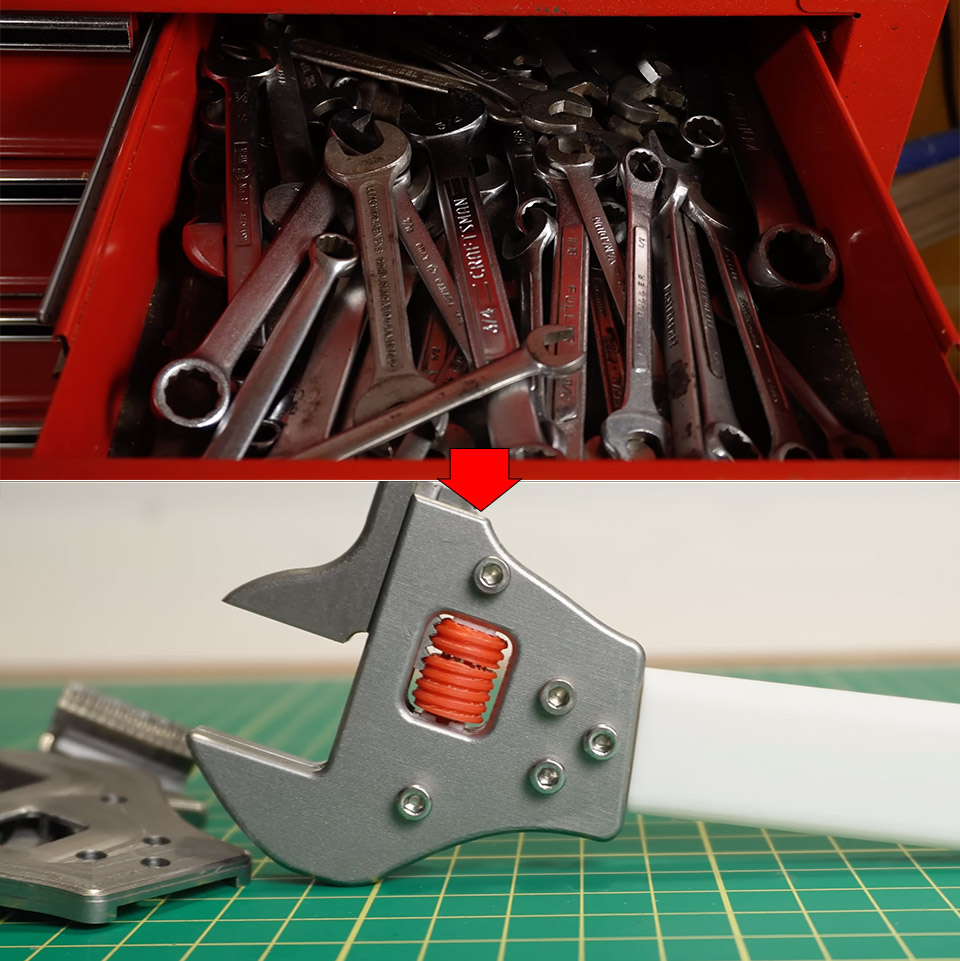
Most of us keep one of those adjustable wrenches around even when we know better. It sits in the toolbox because it covers a range of sizes without forcing a full set of fixed wrenches onto the job. Then the jaws shift just enough during use, the head of the bolt loses its sharp edges, and a five-minute task stretches into a longer recovery session. Someone Should Make That decided enough was enough. He walks through the exact problem that turns ordinary fasteners into rounded messes and the method he used to solve it on a small CNC mill.

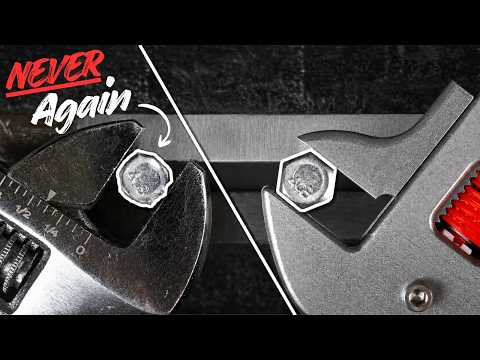
The difficulty stems from the interaction between the moving jaw and its adjustment screw. When you apply some force to the wrench to get things started, the flexibility in the jaw allows it to flex, and the contact transfers from the flat sides of the hex to the corners. Try to get a good grasp on the bolt with the wrench, and it’ll be a coin flip whether it’s snug or loose again. Eventually, many people simply push their thumb against the adjustment wheel to keep things from slipping, which typically works until it doesn’t.


Bambu Lab A1 3D Printer, Ready-to-Use FDM 3D Printer for Beginners and Kids
- High-Speed Precision: Experience unparalleled speed and precision with the Bambu Lab A1 3D Printer. With an impressive acceleration of 10,000 mm/s…
- Multi-Color Printing with AMS lite: Unlock your creativity with vibrant and multi-colored 3D prints. The Bambu Lab A1 3D printers make multi-color…
- Full-Auto Calibration: Say goodbye to manual calibration hassles. The A1 3D printer takes care of all the calibration processes automatically…
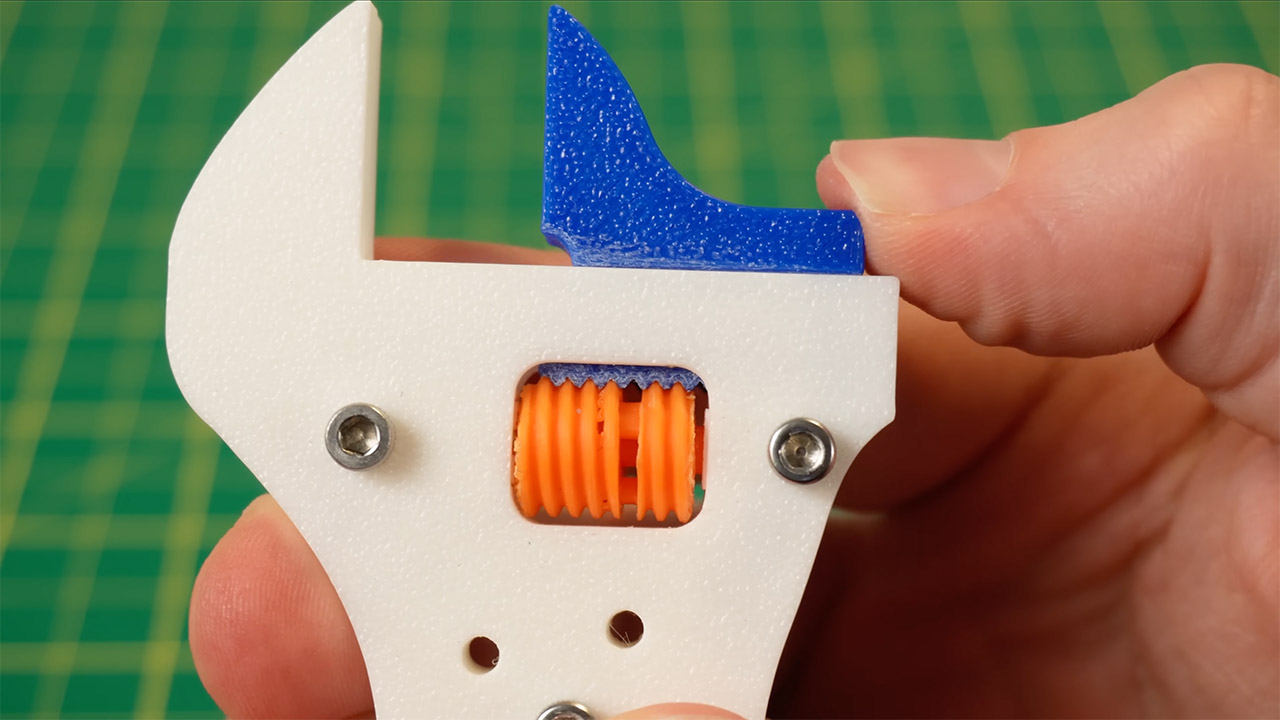
He tested his first idea, preloading the moving jaw with a spring to keep the threads engaged at all times. He created a few plastic prototypes to test it out, but it only underlined the problem. As the jaws closed, the spring compressed harder, giving the sensation of struggling against a brick wall when attempting to make exact adjustments. A softer spring was only a temporary remedy, not a permanent solution.

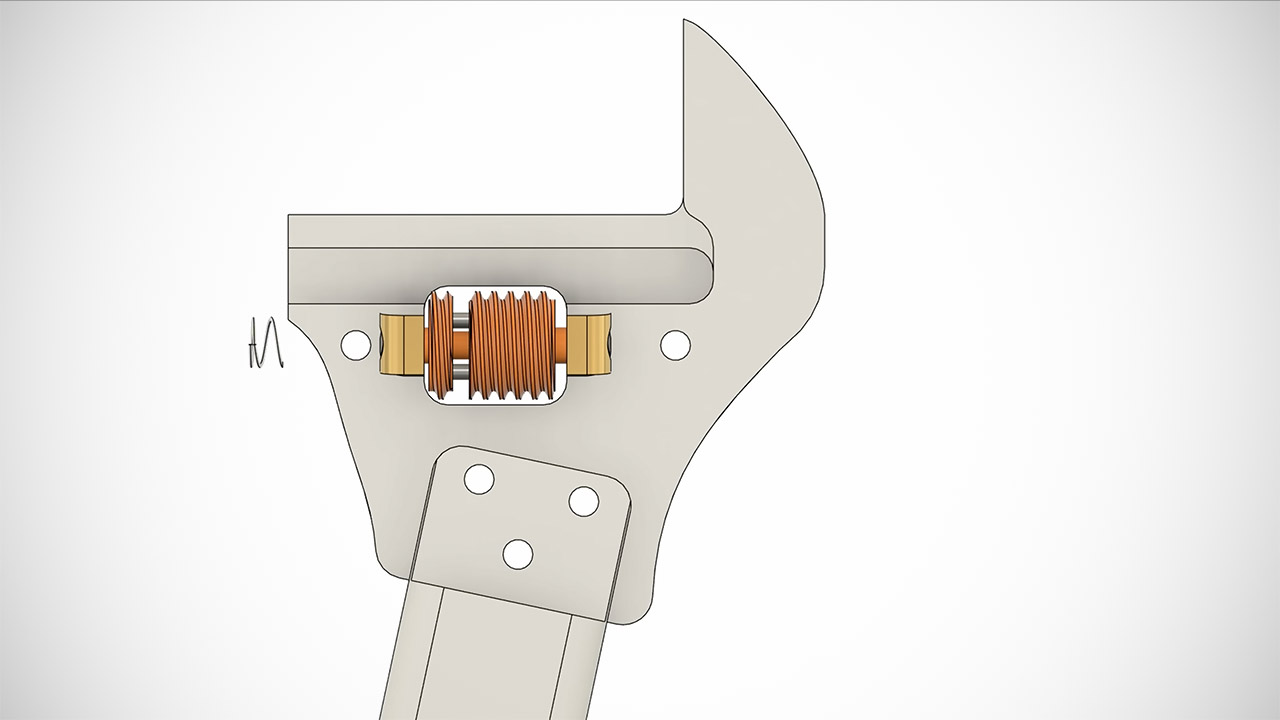
The better approach comes from machines that would later be used to cut metal parts, namely anti-backlash nuts found in CNC mills and 3D printers. These nuts use a spring to keep the driving threads under constant strain, preventing free play. He tried the same technique with his wrench, splitting the adjustment screw in half and attaching a spring between them. One half of the screw threads are forced into the moving jaw, while the other half is pushed into the bushing by the jaw. As a result, the preload remains constant regardless of the jaw opening size.
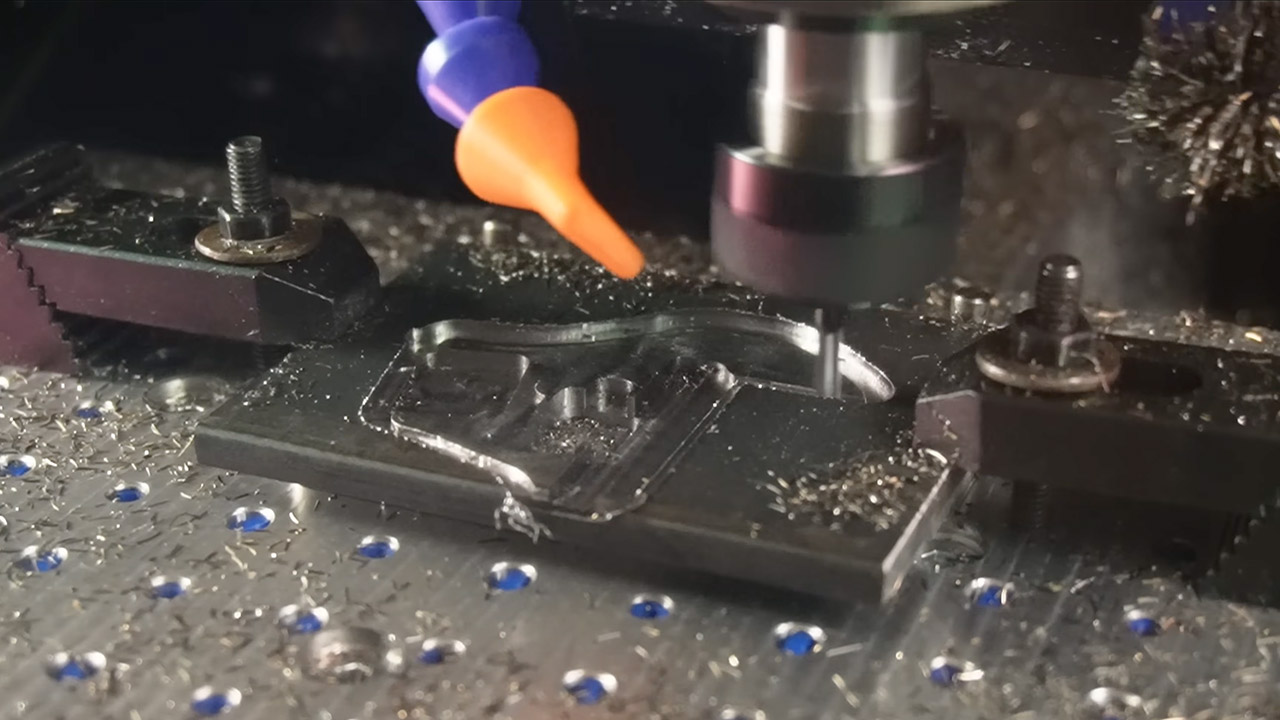
A second plastic prototype of his design proved that it functioned. Then he built a steel version with a DMC2 micro mill. After a lot of fixture work, tool path changes, and probing adjustments, he successfully removed the housing, screw halves, and moving jaw from the machine. His early runs were troubled by uneven height readings using conductive pucks, so he moved to an optical tool setter and built bespoke Mach3 procedures to handle offsets. He had to be careful with material removal when the threads were too tight, and a lathe attempt on the thumb screw failed miserably, so he settled on a 3D printed plastic version.
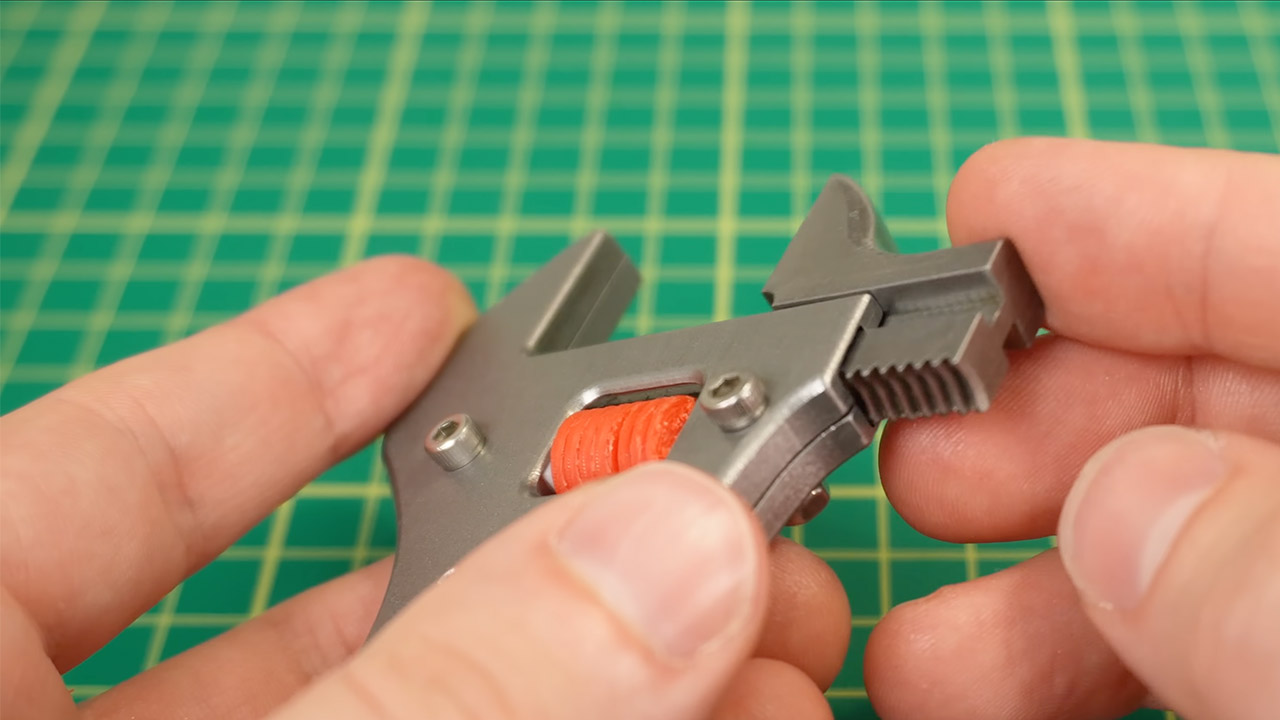
When all of the components were finally put together, they fit perfectly without any filing. Once adjusted, the spring holds the jaws firmly attached to the bolt, removing any play. You no longer need to press your thumb on the adjustment wheel to keep everything in line, and the fastener’s flats take the load rather than the corners. The plastic screw still has some flex, but it holds up well under daily use.
[Source]
You must be logged in to post a comment Login