


Connect with us
DAPA Banner
DAPA Coin
DAPA
COIN PAYMENT ASSET
PRIVACY · BLOCKDAG · HOMOMORPHIC ENCRYPTION · RUST
ElGamal Encrypted MINE DAPA
🚫 GENESIS SOLD OUT
DAPAPAY COMING

Tech

Starlink’s New V5 Home Dish Is Smaller And More Energy-Efficient

Published

on

Starlink quietly released its latest V5 residential dish, and while it doesn’t boost data speeds, it offers several improvements. Compared to the previous V4 dish, the new model is smaller, lighter and more energy efficient, which should make it easier to install while also reducing your power bill. 

SpaceX confirmed in a post on X that the product will arrive today in the US in certain regions at first. It follows the V4 model that debuted in 2023 and will continue to be offered via the Starlink Residential plan.  “Starlink V5 has a smaller form factor, new lightweight design, greater power efficiency than the Starlink V4,” according to a support page that compares the two models. 

You may expect a speed boost with a new dish, but the V5 actually supports a slightly lower data rate of 375+ Mbps compared to 400+ Mbps for the V4. However, the new model is considerably smaller at 2.4 pounds rather than 6.5 pounds and is just 5.12 x 12.05 x 1.34 inches in size, compared to 23.4 x 15.1 x 1.5 inches for the V4. It also consumes less power at 35 to 50 watts compared to 75 to 100 watts for the previous model. 

It weighs nearly the same as the portable Starlink Mini, but unlike that model, the V5 isn’t designed for in-motion use, Starlink says. It will be bundled with the Router Mini and come with a “pipe adapter” for rooftop installation. 

Advertisement

One region offering the new dish, according to a Reddit post seen by PCMag, is Drummond, Montana. There, the V5 dish is offered only with the least expensive $55 per month 100Mbps Residential plan. The pricier Residential and Residential Max plans only support the V4 dish with the superior Router 3, for now. 

Elon Musk showed the new dish off recently in a video post on X, saying the new dish would be made in “much higher volume than the current terminals.” The company recently announced its next-gen Starlink Mobile network, set to launch in mid-2027, that would provide up to 150 Mbps speeds and “feel like you’re connected to a high-performing 5G terrestrial network.” Last year, the company also showed off a new $2,000 Performance dish designed to handle gigabit internet speeds. 

Source link

Advertisement
Continue Reading
Click to comment

You must be logged in to post a comment Login

Leave a Reply

Tech

Drake Anthony Recreates the Mechanical Bulb First Seen in 1675

Published

on

Drake Anthony StyroPyro Mechanical Bulb 1675
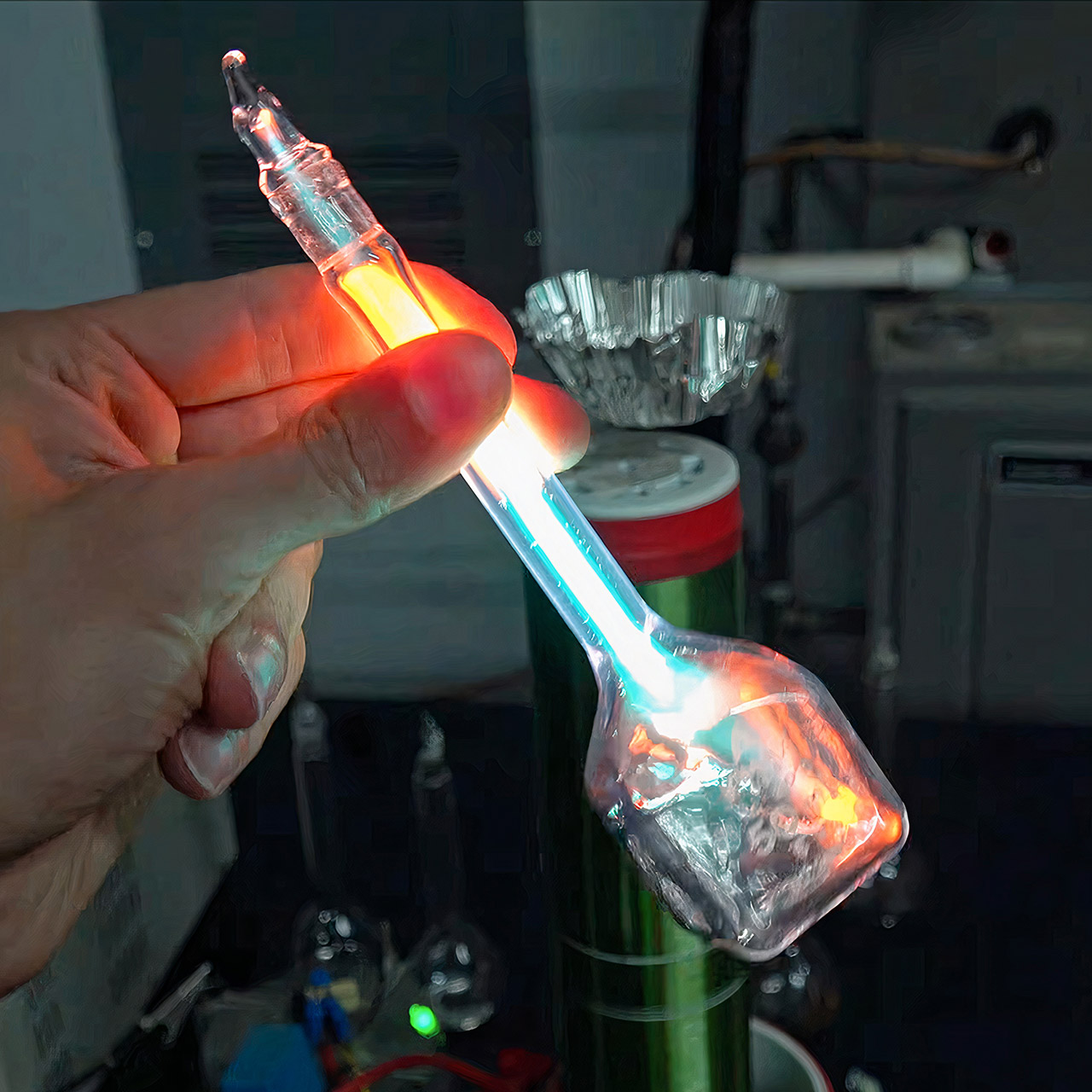
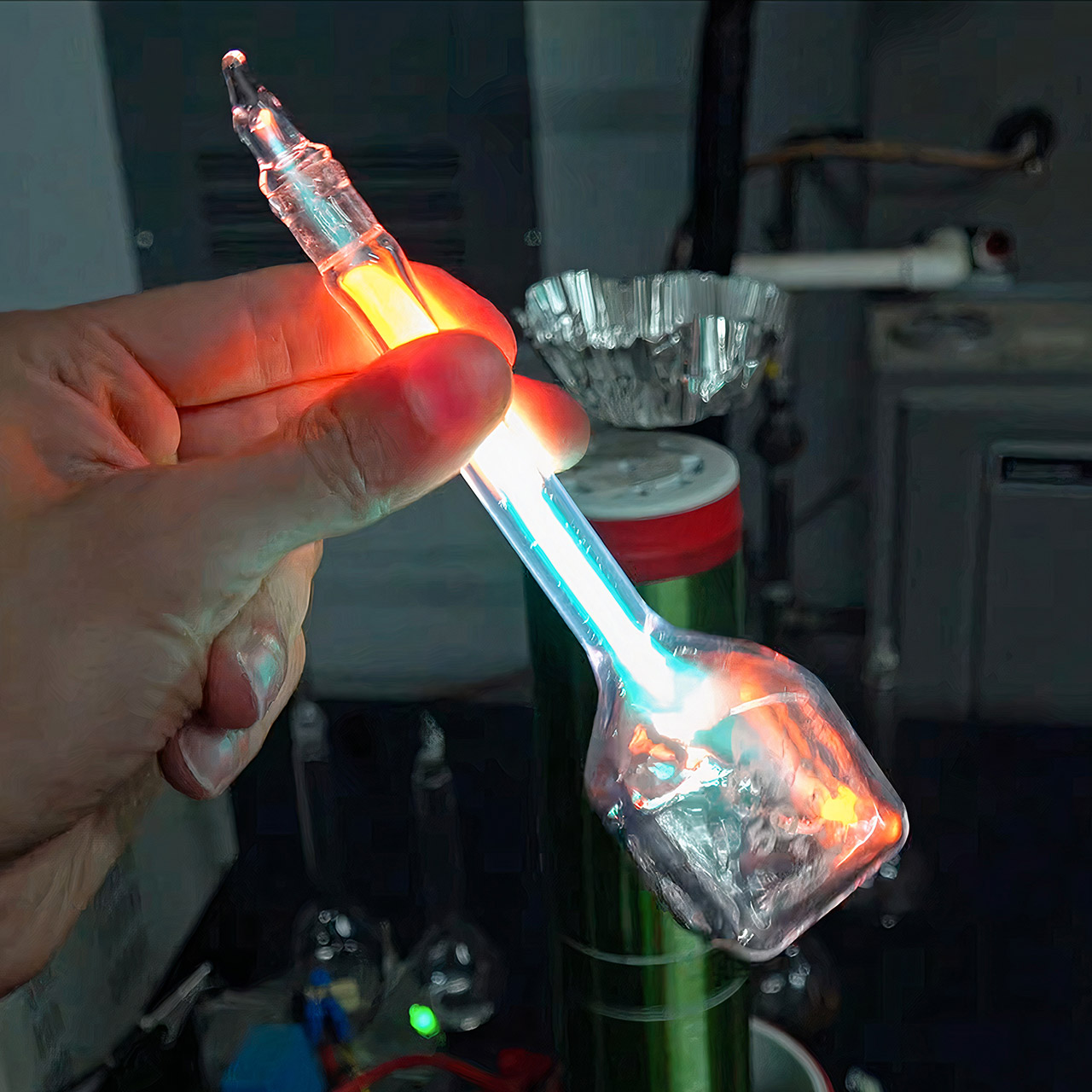
Drake Anthony spends a lot of time in the workshop, continually pushing the boundaries of what you can produce with basic materials. His recent video on the styro pyro 2 channel attempts to replicate a phenomenon discovered over three centuries ago. The ultimate result is a glass flask that emits visible light when shaken, eliminating the need for batteries, wiring, or other external power sources.


The story begins in 1675, with French astronomer Jean Picard out on the streets of Paris on a dark, clear night. He’s carrying a mercury barometer, and as he moves, a small glow begins to form in the glass tube above it. This light appears only when he stirs the mercury and exposes some new glass for it to play on. The whole thing is a strange sight, which he describes to several of his scientific friends at the time and ends up giving the nickname ‘barometric light’.


YIERBLUE Rechargeable Spotlight Flashlight with 2000000 High Lumen LED, IP67 Waterproof Long Running Spot…
  • EXTRA BRIGHT HEAVY DUTY FLASHLIGHT: Its brightness is several times that of the small model.This extra bright LED spotlight casts a super bright…
  • WATERPROOF & FLOATING, IMPACT RESISTANT: This spot lights outdoor handheld is IP67 waterproof and submersible up to 3ft, and even float back up to the…
  • LONG TIME LIGHTING & POWER PORT: Built-in rechargeable batteries, YIERBLUE’s proprietary battery technology give you up to 9 hours lighting on lower…

It takes the scientists some time to figure out what’s going on, but friction turns out to be the key to everything. When mercury flows smoothly over a clean glass surface, it leaves a trail of electric charge that can travel through the air inside the container. When that electric charge strikes the gas molecules within, they begin to emit light, which is similar to how neon signs work, except that the energy comes from friction and contact between the two materials.

Drake Anthony StyroPyro Mechanical Bulb 1675
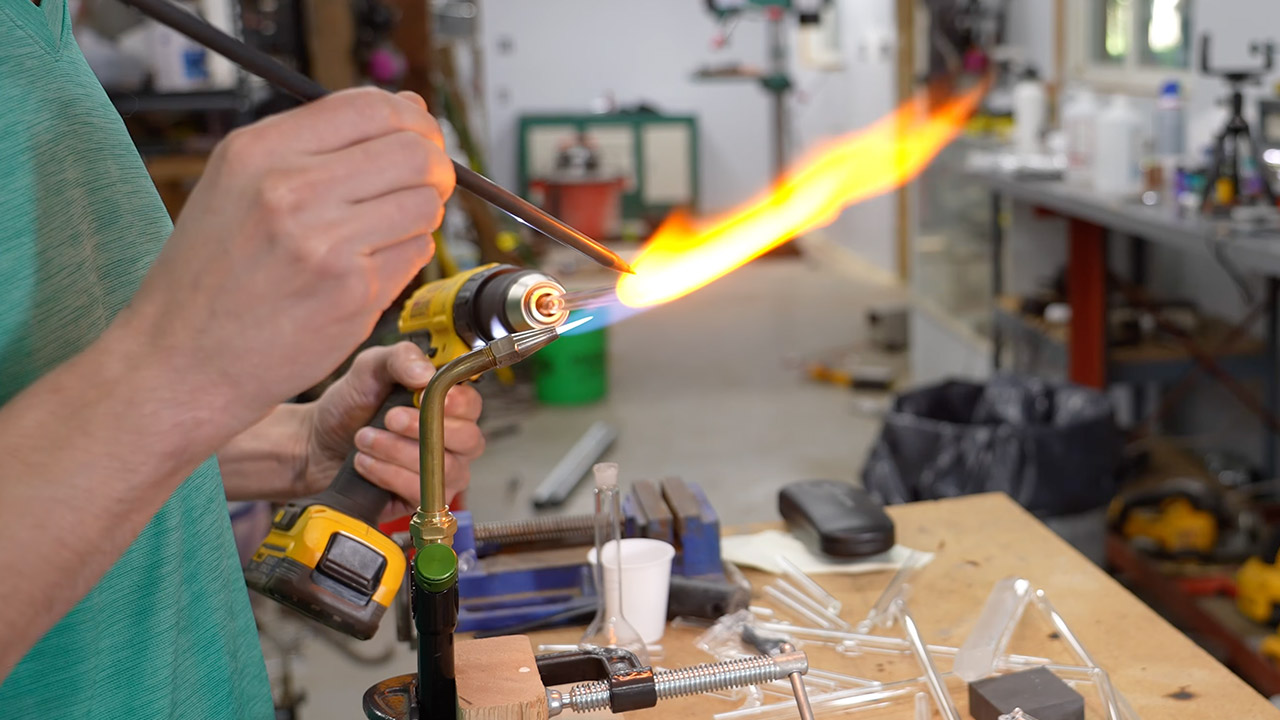
Anthony sets out on a journey to recreate this entire effect from scratch. First, he takes a round glass flask and uses a propane-oxygen flame to create a slender glass stem for it. Glassblowing was a completely new ability for him, and things became even more difficult because he only has limited depth vision in one eye. Nonetheless, he completed it successfully. After attaching the stem, he connects the flask to a vacuum pump and gradually drops the pressure to approximately 5 millitors, leaving only a whisper of the original air inside. There was still some residual gas and mercury vapour within, which he later learned was necessary for the light to work.

Drake Anthony StyroPyro Mechanical Bulb 1675
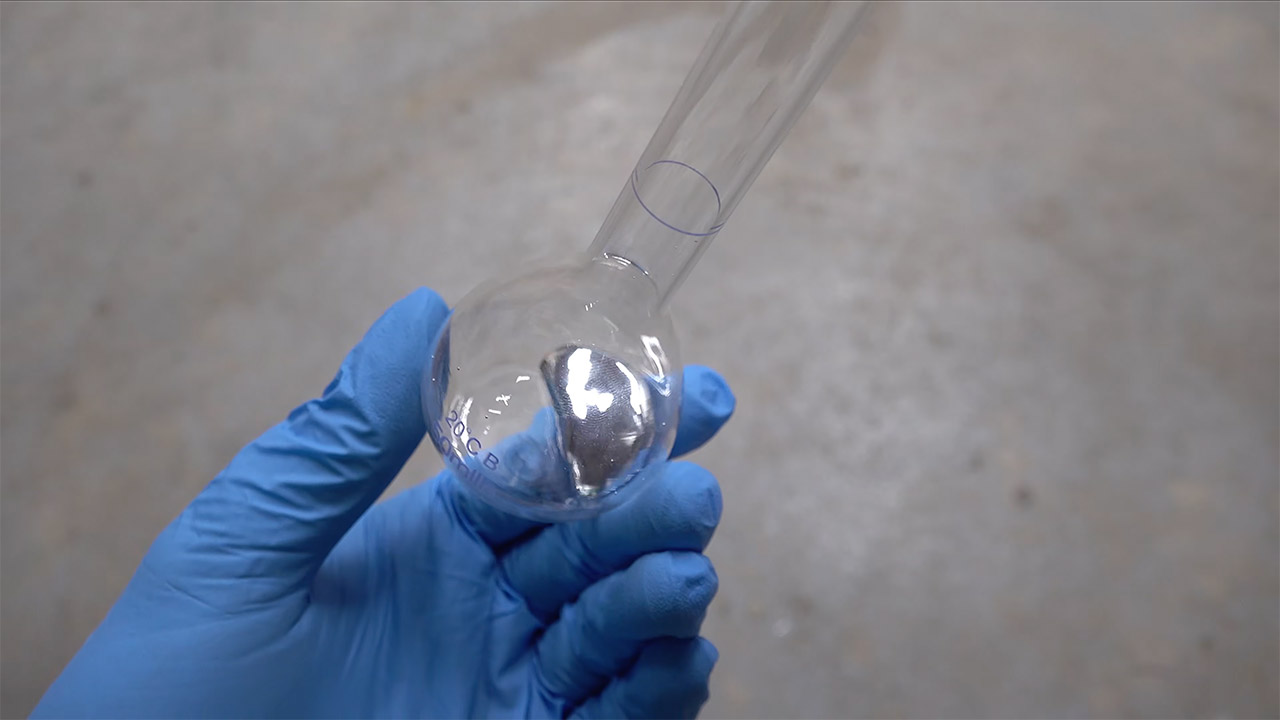
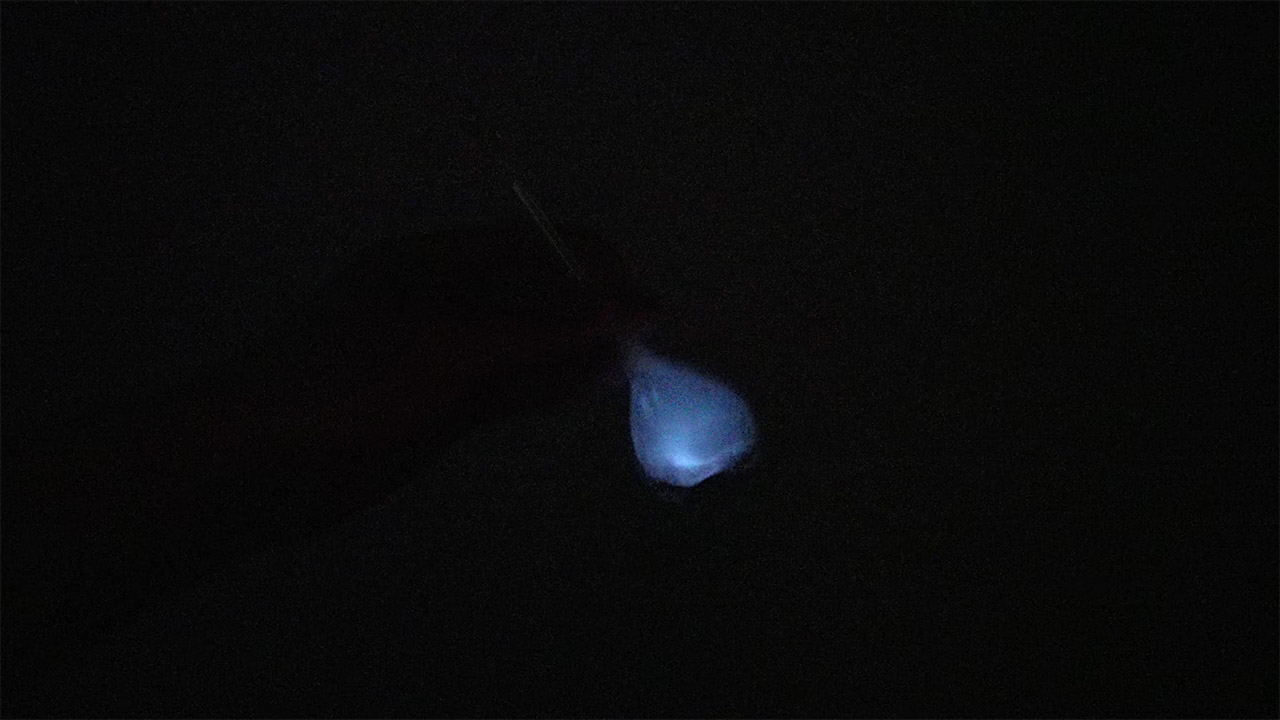
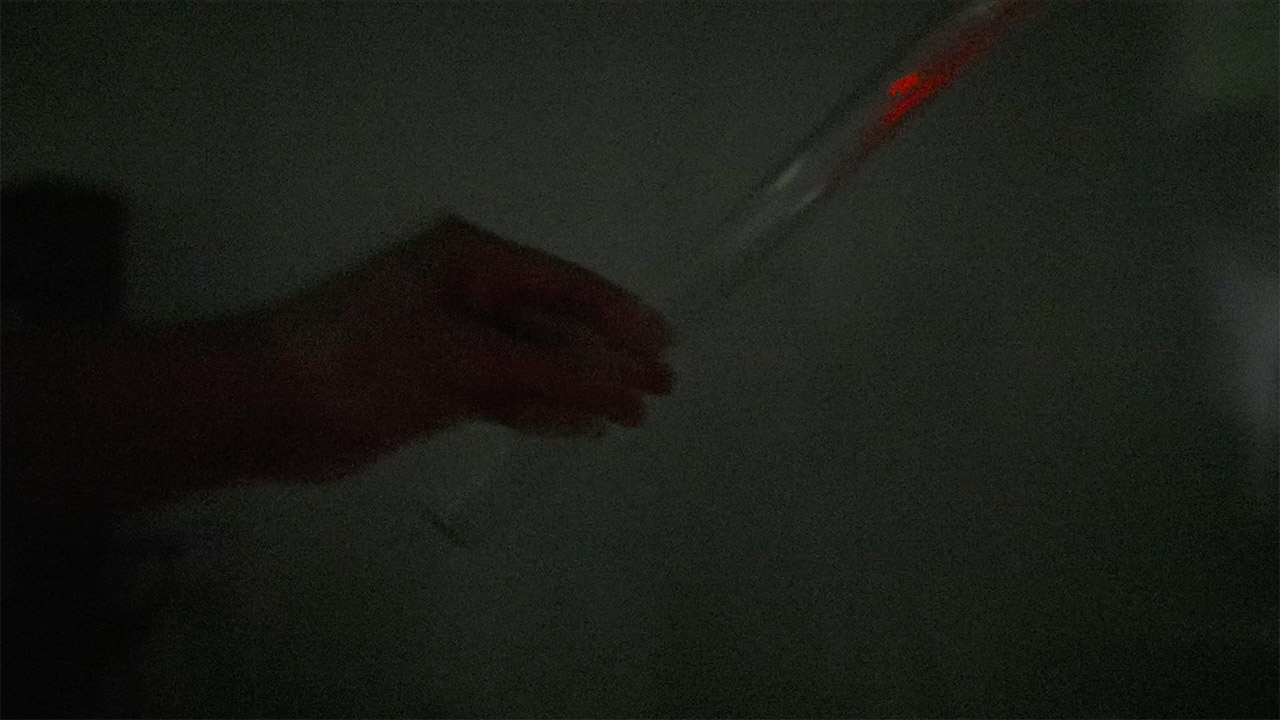
The next step is to transfer the mercury into the flask. He puts a little more in and then screws the top back on. When he initially shakes the flask in full darkness, you may see a faint blue-white glimmer. The reason it’s so faint is that the mercury he’s using isn’t pure, which limits the amount of charge that accumulates when the mercury passes over the glass. Even so, the light illuminates whenever he shakes the device, which is a pretty good indicator given that the technology is nearly 350 years old.

Drake Anthony StyroPyro Mechanical Bulb 1675
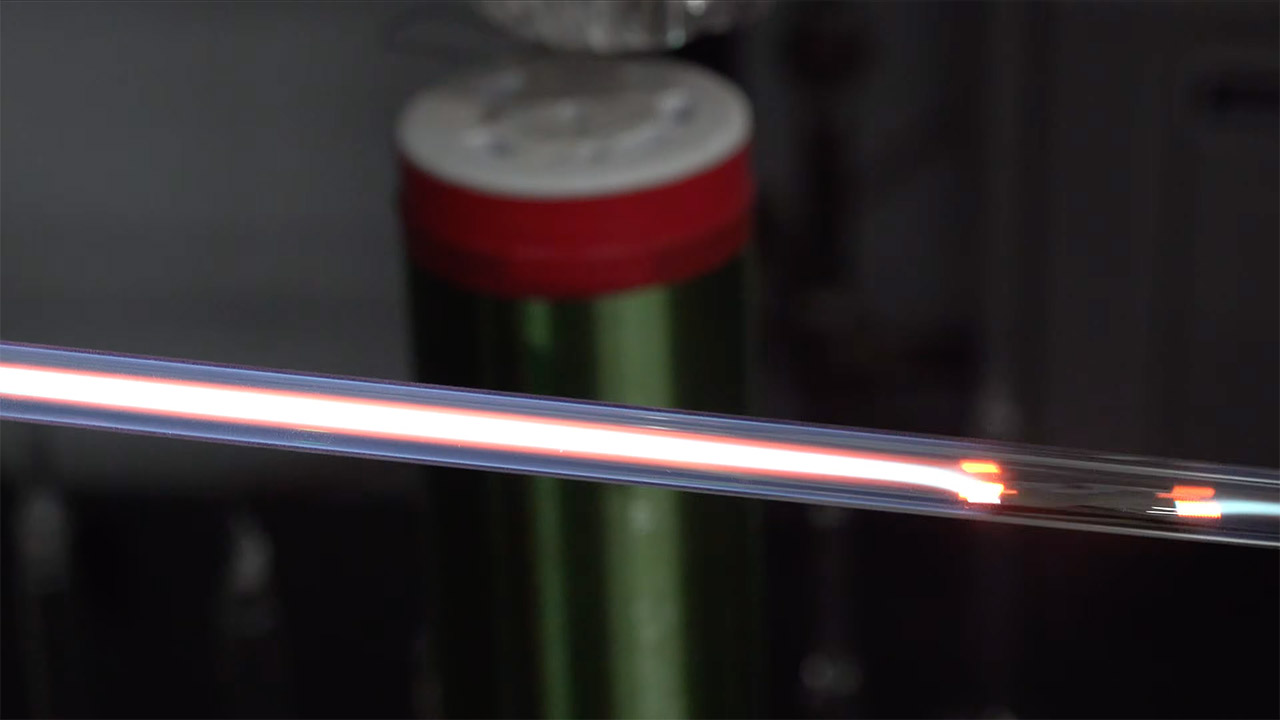
Anthony wanted to brighten up his own light display, so he started experimenting with adding little amounts of noble gases to the flask after he had the vacuum running. It was a feeling that starting with neon at around 100 torr would be a good place to start, and boy was it correct, as shaking the flask generated a really dazzling light that appeared almost electric and could be seen in regular room lighting. The neon seemed to make the entire process more easier from beginning to end, getting the discharge started and maintaining it flowing.

Drake Anthony StyroPyro Mechanical Bulb 1675
The other experiments he carried out in identical flasks were quite interesting. Adding copper pellets appeared to work just as well as glass in producing a decent light through friction, but then he tossed in a few of chunks of Teflon, which resulted in a few little sparks. The Galinstan experiment was similarly a failure, as he attempted to use a liquid metal alloy instead of mercury, but it stuck to the flask’s glass walls, making it nearly difficult to generate a sufficient charge. As expected, employing a straight tube was far less effective than using a curved or bent one since the gas would simply break contact and re-form whenever it encountered an edge, giving him even more possibilities to build a charge.

Drake Anthony StyroPyro Mechanical Bulb 1675
Anthony decided to add a Tesla coil to the mix just for fun, to give the gas within the flask a little extra kick from the outside. And let me tell you, the results were just plain cool, as the coil supplied a little more juice to the previously charged region, resulting in some amazing plasma displays with nice pinching effects and distinct color zones.

Advertisement

Source link

Continue Reading

Tech

Astronauts Take First X-Rays In Space

Published

on

Astronauts on SpaceX’s Fram2 mission successfully captured diagnostic X-ray images in orbit for the first time. The milestone gives space medicine a second imaging option beyond ultrasound and could help future crews diagnose injuries, inspect equipment, and support longer missions to the moon or beyond. Popular Science reports: Commercial off-the-shelf X-ray machines like the ice cooler-sized MinXray TR90BH now allow users to perform scans on subjects far away from traditional facilities. In 2022, [Mayo Clinic researcher Sheyna Gifford] assisted in preparing a crew to successfully generate digital X-rays while experiencing microgravity during a parabolic flight. Gifford’s team then spent years collaborating with SpaceX to plan another feasibility study. This time, they didn’t want to operate an X-ray machine aboard an aircraft simulating the conditions in space — they intended to use the equipment during an orbital mission.

The process was detailed in a recently published study in the journal Radiology, and focuses on last year’s Fram2 mission. Instead of days of medical training, astronauts spent only four hours learning how to use their portable radiography device. They then took preflight X-rays of a hand, forearm, chest, abdomen, and pelvis ahead of their SpaceX Falcon 9 rocket launch on March 31, 2025. Once in orbit, the team calibrated the system before testing their MinXray on the same body parts as well as a smartwatch.

Once the crew returned, a trio of independent radiologists reviewed the orbital X-ray images based on their positioning, spatial and contrast resolutions, and general scan quality. Although positioning scores were slightly decreased for the central body images, every other scan held up to similar examples created on Earth. Meanwhile, the astronauts reported that using the machine was easy despite minimal prior coaching. Looking ahead, researchers hope to conduct further X-ray tests during orbital missions, while continuing to reduce the overall size of equipment.

Source link

Advertisement
Continue Reading

Tech

I test 4K Blu-rays for a living and these are my 6 picks from Amazon’s big sale, including reference-level discs from Disney, Marvel, and 20th Century Studios that I use for AV testing

Published

on

If you’re looking to add more 4K Blu-rays to your collection, then Disney’s Summer Days, Movie Nights 4K Blu-ray sale has arrived at the perfect time, where it’s 2 for £30 on discs including titles from Disney, Marvel, Star Wars and 20th Century Studios. The same 2 for £30 sale is also live at HMV.

I regularly test 4K Blu-ray as part of our monthly Blu-ray Bounty feature, where we test the best new 4K releases. I’ve picked six discs from the sale that all featured as part of the Blu-ray Bounty, so I know just how good they look and sound.

Source link

Continue Reading

Tech

Microsoft just released its biggest Patch Tuesday ever, with a mammoth 622 fixes including three dangerous zero-days

Published

on


  • Microsoft’s July 2026 Patch Tuesday fixed a record 622 vulnerabilities, including 58 critical, two exploited in the wild, and one publicly disclosed, plus 428 Chromium bugs
  • Actively abused flaws include CVE‑2026‑56155 (AD FS privilege escalation) and CVE‑2026‑56164 (SharePoint privilege escalation), alongside notable issues in BitLocker and Copilot
  • Surge in fixes is linked to Microsoft’s use of Anthropic’s Mythos AI, with patch volumes rising sharply since its adoption

Microsoft has released its July 2026 Patch Tuesday download, marking another record-breaking update, addressing hundreds of flaws across the ecosystem.

The release, which is currently rolling out to Microsoft users, fixes a staggering 622 vulnerabilities, including 58 critical-severity ones, two that were observed as being abused in the wild, and one which has already been publicly disclosed.

Source link

Advertisement
Continue Reading

Tech

Australia tells AI data centres to put back more power than they take out

Published

on

Anthony Albanese has told the AI industry that Australian books, music, and journalism are not free training data, and that any large data centre built in the country will have to put more electricity into the grid than it draws out. Neither of those things is law yet.

The prime minister used a speech at the University of Sydney on Wednesday to announce an Office of AI inside his own department, effective immediately, plus Australian Standards covering energy, water, copyright, and siting.

It lands two days after Anthropic and others were reported to be weighing tens of billions in data centre investment against a copyright carve-out Canberra had already ruled out.

The energy obligation is the sharpest thing in the speech. Operators of the next generation of large data centres would be required to underwrite new power supply, pay their full share of grid connection so that no costs land on homes or businesses, and put at least as much energy into the grid as they take out of it.

Advertisement

“To be net-generators, not net-users,” Albanese said. That means funding new renewable generation and firming rather than joining a queue for someone else’s electrons, a heavier ask than anything hyperscalers face in Europe or the US, where grids are already buckling under connection requests.

The 💜 of EU tech

The latest rumblings from the EU tech scene, a story from our wise ol’ founder Boris, and some questionable AI art. It’s free, every week, in your inbox. Sign up now!

Water got similar treatment. Operators would have to minimise water use, maximise energy efficiency, and pay for any additional water infrastructure they need, on a continent Albanese called both the sunniest and the driest on earth.

Advertisement

Copyright got the rhetoric. “Let me make this crystal clear: not everything produced in Australia is up for grabs,” he said. “Not at all.” Australian writers, musicians, artists, and journalists “must retain ownership and control of their work”, and no company should train on it without the artist’s control of its price and value. “Anything less, is theft.”

What the speech did not contain was a mechanism. The policy has been read as obliging AI firms to reach agreements with local artists and media before using their content, but Albanese never said how that control would be enforced, and the attorney-general’s consultation on copyright is still open.

The distance between announced and legislated is the story here. Nothing unveiled on Wednesday binds anyone: the Office of AI is an executive creation, the standards go to National Cabinet next month, and legislation is only targeted for introduction early next year.

Albanese was candid that he does not want an exhaustive rulebook. “It is not our goal to try and legislate for every possible eventuality or risk,” he said. That is a lighter touch than the language around it implies, and closer to the ground Brussels has been retreating to than to the AI Act as drafted.

Advertisement

His claim that Australia “will be the first country in the world to bring these issues into a single, national framework” is doing work it cannot carry. The EU adopted the AI Act in 2024 and built an AI Office to run it, as legal scholars noted within hours.

Reaction divided on schedule. Greenpeace Australia’s Joe Rafalowicz called the facilities “water-guzzling energy vampires”, accusing the government of rolling out the red carpet while leaving them unregulated until at least 2027. Opposition Leader Angus Taylor said the office would just create more bureaucracy.

New York, hours before Albanese spoke, halted large data centre builds for a year, the pause Australia has now declined to take. Washington is still arguing over who pays when data centres raise power bills, the question Albanese thinks he has answered in advance.

Anthropic, which told Treasurer Jim Chalmers that its A$21.6bn Australian investment depended on copyright certainty, said it respected the process and would meet the terms the government sets. That is a company waiting for the fine print.

Advertisement

APRA AMCOS chief executive Dean Ormston welcomed the certainty but said the Office of AI “must seriously interrogate the numbers AI platforms are putting on the table”. The numbers are not on the table yet. Neither is the bill.

Source link

Advertisement
Continue Reading

Tech

China takes another step toward approving Apple Intelligence

Published

on

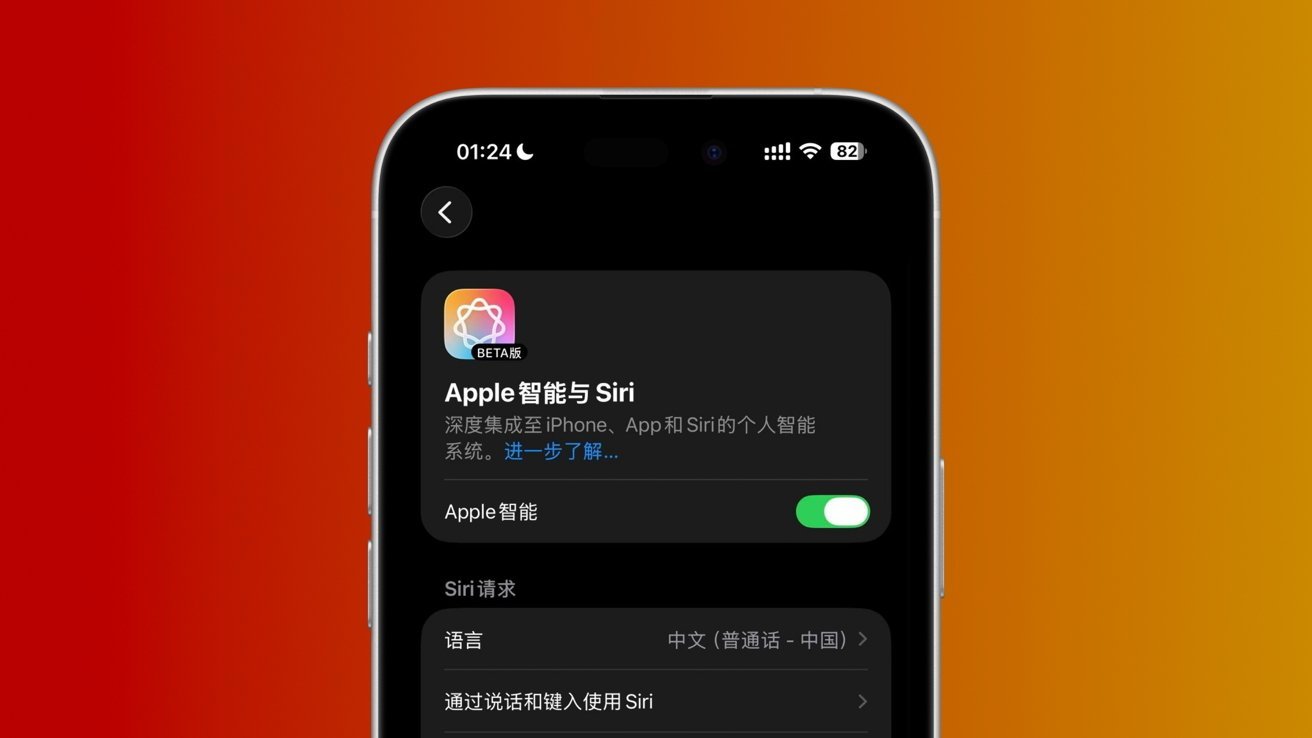
A new official filing marks the conclusion of another regulatory hurdle that has been preventing Apple Intelligence from launching in Apple’s crucial Chinese market.

In mid-June 2026, Apple’s Chinese partner Alibaba unveiled its latest AI model and, most significantly, revealed that it was now compatible with Apple Intelligence. Now according to Reuters, China’s cyberspace regulator has allowed Apple Intelligence to be registered for use on iPhones in the region.

China has complex requirements for regulatory approval, and sufficiently so that US firms typically need to involve a local partner. It’s not certain yet whether this latest listing is the final step toward Apple Intelligence launching in China, but it appears to be, and it marks more than two years of effort from Apple.

Apple has not commented on the regulator’s listing, and Alibaba has only confirmed certain details that were already presumed. Specifically, the company stated that its new Qwen AI model will be integrated into Apple Intelligence, when that becomes available for iPhone, iPad, Mac, and Apple Vision Pro users in China.

Advertisement

The report also cites an unspecified source saying that Apple Intelligence will also incorporate technologies from Baidu. This has also been presumed, as despite seemingly choosing against Baidu as a full partner in 2024, Apple reportedly signed with the company for specific functions such as Visual Intelligence.

Apple Intelligence has effectively required partnerships with local companies even though Apple has been able to release iOS in the country without the same level of scrutiny. This is because China has restrictive laws about generative AI software, large language models, and data privacy.

It’s sufficiently difficult to obtain Chinese government approval for any such services, that OpenAI is banned in the country. Apple needed to partner with firms such as Alibaba and Baidu which already had certain approvals. Use of these Chinese firms, though, also raises issues over how Apple Intelligence will be censored in the country.

Apple appears to have worked through all the technical issues, though, and has been waiting only for regulatory approval. That’s because in March 2026, Apple Intelligence was briefly enabled in China, apparently by mistake.

Advertisement

Source link

Continue Reading

Tech

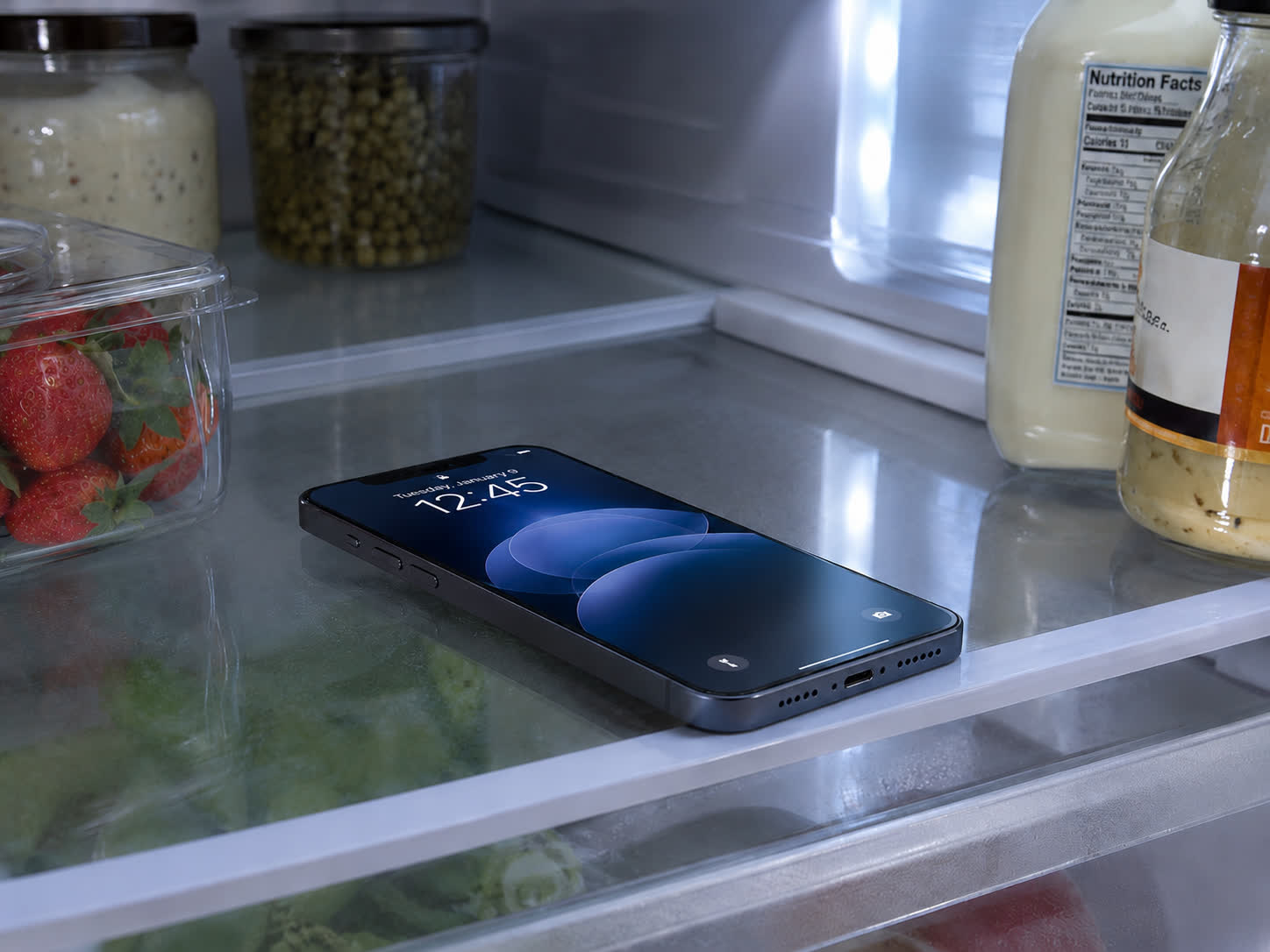
Repair shops are booming during heatwaves as people keep putting phones in fridges

Published

on

Facepalm: The UK and Europe are going through an unprecedented heatwave right now. It’s causing a lot of problems, including devices that keep overheating as temperatures soar. To try to cool them down, some Brits have been placing them in their fridges and freezers, but the only thing this results in is more work for repair shops.

Jamie Farnell, a repair shop owner in the UK town of Wem told the BBC that he has been flooded with devices suffering from internal moisture damage recently.

Farnell believes the damage was caused by phones and tablets being put in fridges and freezers as the mercury soared.

During last month’s extreme heatwave, an iPad exploded in the shop after a customer brought it in with a swollen lithium battery.

Advertisement

For a lot of people, placing a device in a fridge or freezer when it shows an overheating warning, or obvious signs it is getting too hot, seems like a good idea. The practice has become more popular since social media videos started pushing it as a smart and easy solution.

@itsprincemarko Putting your phone in the Fridge helps actually 📲 #android #androidtips #princetechtips ♬ original sound – Prince Marko

In reality, of course, it’s very risky. One of the biggest problems is condensation. When a warm device enters a fridge or freezer, warm, humid air trapped around or inside the phone cools rapidly. As that air drops below its dew point, water vapor can condense on the phone’s surfaces, ports, speaker openings, or potentially inside the casing.

When the chilled phone is removed, the risk can become greater because warm room air hits the cold device and condenses on it – similar to moisture forming on a cold drink.

Moisture inside a device can lead to lots of issues, from corrosion to short circuits.

There are also risks from thermal shock, in which a sudden temperature change can stress the screen, glass, seals, adhesives, and internal components; and battery damage from the extreme cold.

Advertisement

So, while these measures will technically cool a device, there are plenty of other methods that won’t likely break them.

Farnell says this practice is reminiscent of another popular myth: drying out a wet phone with rice. This was especially popular at a time when phones had removable batteries and weren’t water-resistant. But it’s ineffective as rice cannot draw liquid out of sealed internal spaces very well. This method can also cause problems, such as the rice dust and starch entering ports and speakers.

Both Apple and Samsung recommend letting an overheating phone cool naturally in a cooler, shaded environment – not putting it in a fridge or freezer.

Advertisement

Source link

Continue Reading

Tech

Making A Locked Down Wearable Work Without A Subscription

Published

on

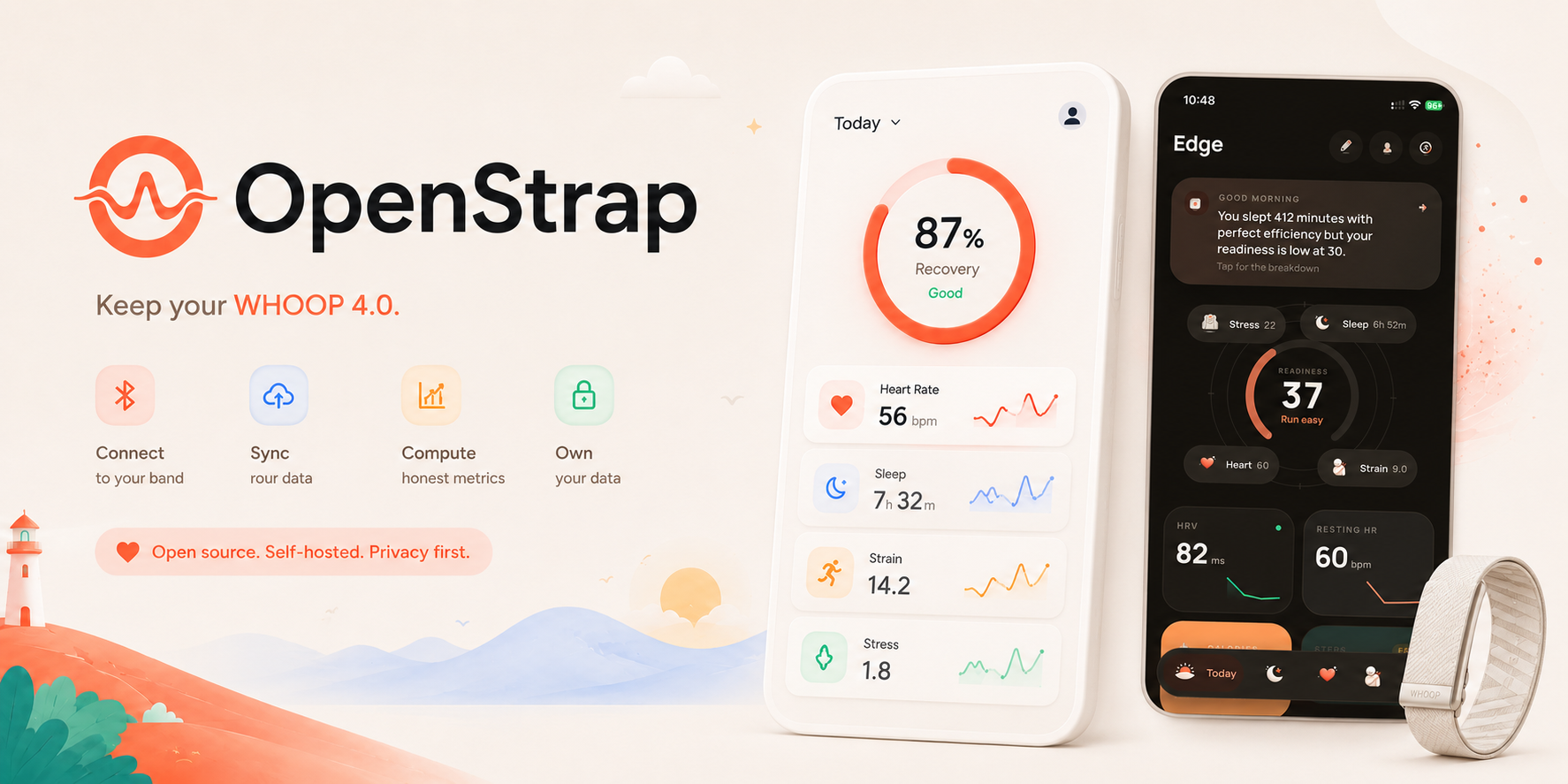
WHOOP does not have the presence in the wearable space as other brands, but in certain circles, it’s a household name. Their business model requires you to have a yearly app subscription to use their fitness tracker, but here at Hackaday, we are big fans of actually owning the devices you buy — which is why we were happy to hear about an open source and subscription free WHOOP compatible app!

The goal of the so-called OpenStrap project is not to re-create the WHOOP app. Rather, the algorithms and processing methods are developed from scratch, based on public research. It’s all calculated locally on a 1 Hz interval, based on the data the WHOOP 4.0 device feeds the app. As such, the health data collected from the watch, never leaves the phone. While not the main goal of the project, the privacy improvement of the app’s serverless nature cannot be overstated. However, to display metrics, you first need to get data off the WHOOP to begin with.

The crux of the issue with making the WHOOP 4.0 work without the official app is the reliance on proprietary Bluetooth protocols. Fortunately, the protocol itself ended up being relatively simple. The WHOOP 4.0 amounts to little more than a series of sensors that sit on the user’s wrist. As such, the app can subscribe to the Bluetooth feed and decode the data, right? Well, the devil is always in the details with such things, and the protocol came with its fair share of quirks. The hardware clock needs to be synchronized, or it simply defaults to zero Unix time. Moreover, the analog sensors like, ambient temperature are given in relative ADC values, and are not terribly useful without calibration. Regardless, the result of the reverse engineering effort speaks for itself with the OpenStrap app able to recreate much of the functionality in WHOOP’s official app.

Quite often, devices reliant on proprietary apps are little more than manufactured e-waste. While we don’t expect many of you to actually own a WHOOP 4.0, we do hope to see the OpenStrap project keep at least a few out of the landfill in the future.

Advertisement

Source link

Continue Reading

Tech

Startup Spotlight: Hedgehog bets that open-source networking will power the next generation of AI clouds

Published

on

Marc Austin of Hedgehog.

As AI workloads drive soaring cloud bills, more companies are weighing whether to move computing out of public clouds and into their own data centers. But building and operating AI infrastructure is far more complicated than simply buying servers — networking has become one of the biggest technical hurdles.

That’s the opportunity Seattle startup Hedgehog is chasing.

Founded in 2022 by CEO Marc Austin, a Cisco networking veteran, Hedgehog develops open-source software designed to make private AI data centers operate more like hyperscale clouds. It has raised $11 million in seed funding, with plans to raise a series A financing round.

We caught up with Austin for the return of GeekWire’s Startup Spotlight to learn more about the 20-person company, the AI networking boom and what surprised him most about building a startup in one of tech’s fastest-moving markets.

In 50 words or less, give us your elevator pitch?

Advertisement

Hedgehog is open-source software that makes AI networking simple. AI clouds and enterprises use it to run GPU networks the way hyperscalers do — deployed in hours instead of months, operated by DevOps teams instead of armies of network engineers, on open hardware with no vendor lock-in.

What problem are you obsessed with solving?

Time to GPU value. A GPU cluster is the most expensive asset most companies will ever buy, and every day it sits idle waiting on the network is money burning. That wait is rarely the hardware — it’s the fabric: weeks or months of scarce network engineers hand-designing, cabling, tuning, and validating it across proprietary CLIs and locked-in vendor gear.

Meanwhile the people told to “own the network” usually aren’t network engineers at all — they’re platform and DevOps teams. We’re obsessed with collapsing that timeline: declare your network like intent in Kubernetes and go from racked GPUs to inference in hours instead of months — on open hardware, no lock-in, no room full of specialists. Cloud-grade networking without hyperscaler headcount.

Advertisement

What surprised you after talking to customers?

How rarely the buyer is a network engineer. It’s platform and DevOps teams, often at AI clouds who just took delivery of thousands of GPUs who are told “you own the network now.” They don’t want to learn BGP; they want a network that behaves like the rest of their cloud-native stack. The other surprise: they don’t just want to run the network, they want to sell it by carving up capacity for their own customers, like a cloud provider does.

How has AI changed the way you build your company?

Twice over.

Advertisement

Our product exists because AI broke traditional networking. Training and inference traffic melts networks designed for web apps.

And AI changed how we build: we use it heavily across engineering, testing, and go-to-market, which lets a small team continuously test every supported device and configuration in our lab and ship with hyperscaler-grade rigor. AI raised the bar for what a startup-sized team can deliver.

What’s one thing people misunderstand about your startup?

That “open source” means hobbyist. The opposite is true: openness is the enterprise feature. Our customers can audit every line of code that runs their fabric, extend it, and never get locked in. Nearly every competitor markets “open networking” while shipping a proprietary controller. Hedgehog is the only one that actually publishes the repo.

Advertisement

What’s the toughest decision you’ve made in the past year?

Betting entirely on Ethernet. We decided open, standards-based Ethernet would win AI networking and put everything behind it. Watching the industry’s largest AI operators now standardize on that same approach makes us feel good about the call — but saying no was hard.

What’s the one piece of advice you give to other entrepreneurs?

Pick the wave, not just the surfboard.

Advertisement

Product decisions are recoverable; betting against a structural industry shift isn’t. Find the standard, the architecture, or the buyer behavior that’s inevitable, align everything to it early, and be patient while the market catches up to your bet.

We’ll know our company has made it when…

Networking is boring again. When a platform engineer stands up a multi-tenant GPU cloud and the network is just a few lines of declared intent that nobody thinks twice about. When “network like a hyperscaler” describes every AI cloud, not just the giants running on Hedgehog, then we will have made it!

Source link

Advertisement
Continue Reading

Tech

Anthropic safety hiring targets nuclear and bio harm

Published

on

A look at Anthropic safety hiring shows exactly what it fears: analysts brought in to stop its models teaching anyone how to build nuclear, chemical, and biological weapons.

Most job ads sell a mission. Anthropic’s read like a threat assessment.

The company has posted a run of openings for enforcement analysts whose job is to keep its AI from helping people build weapons, run scams, or commit cybercrime, Axios first reported. One listing seeks an “Enforcement Analyst focused on Radiological & Nuclear Harms.” Others cover chemicals and explosives, financial fraud, and more.

The pay lands in the mid- to upper-$200,000s. The work is not coding. Anthropic wants real-world expertise in fields like biology and explosives. It also wants people who can think like an attacker trying to slip past its defences.

Advertisement

Naming the harm on purpose

The blunt job titles are deliberate. “Ensuring our models don’t provide potentially harmful information is central to responsible development,” a spokesperson said. The company said it regularly hires experts in sensitive fields to stress-test its models before a release.

Advertisement

Spelling out the exact harm, it added, is how you recruit the right people. Anthropic says hundreds of staff now work on safety, probing for weak spots and patching them.

This is the company that critics call the industry’s biggest doomsayer. The pattern in Anthropic safety hiring is its answer to that label. It is spending real money on the risks it keeps describing.

The catastrophe Amodei keeps describing

Chief executive Dario Amodei has spent months sketching the downside. In a January essay he called biological attacks the scenario that worries him most.

“I do not think biological attacks will necessarily be carried out the instant it becomes widely possible,” he wrote. “But added up across millions of people and a few years of time, I think there is a serious risk of a major attack, with casualties potentially in the millions or more.”

Advertisement

He has also warned about AI helping cybercriminals and empowering authoritarian states. Earlier this year Anthropic broke with the US Defense Department over the use of its technology for mass surveillance and autonomous weapons.

The labs are writing their own rules

OpenAI is doing the same. It is hiring a researcher on biological and chemical risks, at a base salary of up to $445,000. As models grow more capable, every serious lab is racing to staff a red team.

That race is happening in a vacuum. The US still has no comprehensive AI safety law. Congress has tried for years and passed nothing. Some want a referee: Google’s Demis Hassabis has floated a Wall Street-style watchdog for frontier models. Fewer than one in a hundred AI PhDs go into government, so the expertise sits inside the companies.

The result is a strange kind of self-regulation. The firms building the most dangerous capability are also the ones deciding how to fence it in. Amodei has named that tension himself, calling AI companies the next tier of risk after hostile states. His careers page is the argument and the warning in one place. The people best placed to stop the catastrophe work for the company that could help cause it.

Advertisement

Source link

Continue Reading

Trending

Copyright © 2025