Connect with us
DAPA Banner

Tech

Startup Radar: Seattle-area founders use AI for music videos, real estate, debugging, and more

Published

on

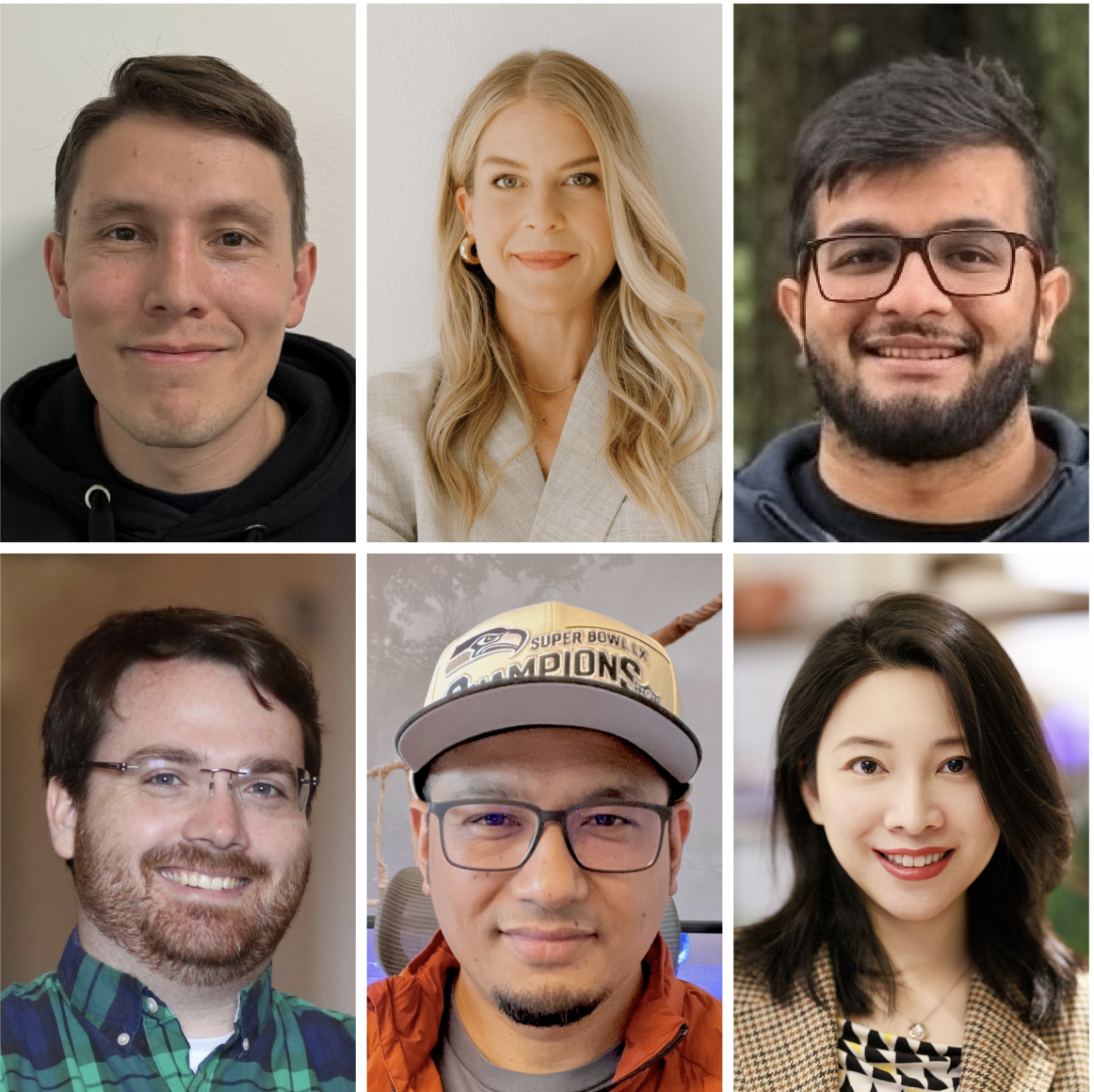
From top left, clockwise: Tambo CEO Michael Magán, The Carry CEO Esther Sedgwick; Logcat CEO Varun Chitre; Rockhood CEO Monica Li; Color42 CEO Prince Bajracharya; Tarka CEO Dan Moore.

From fitness equipment to voice AI agents to autonomous debugging, our latest Startup Radar spotlight features Seattle-area founders solving problems across a wide range of use cases.

Read on for brief descriptions of each company — along with pitch assessments from “Mean VC,” a GPT-powered critic offering a mix of encouragement and constructive feedback.

Check out past Startup Radar posts here, and email tips@geekwire.com to flag other companies and startup news.

The Carry

Founded: 2024

Esther Sedgwick (left) and Cortney Bigelow.

The business: Strength training company starting with a line of stylish weighted vest tailored to women, and more broadly targeting the fem-tech longevity sector. It is shipping pre-orders to customers this spring, priced at $299, and has raised a friends and family round.

Leadership: CEO Esther Sedgwick spent a decade at Microsoft in marketing leadership roles and was head of B2B marketing for Seattle startups Statsig and Convoy. Co-founder Cortney Bigelow was a marketing manager at TUNE and a marketing planner at Nordstrom.

Advertisement

Mean VC: “Great positioning, but a $299 vest is easy to copy and ‘longevity’ is too vague to anchor repeat demand. Pick one clear customer segment, prove results with a simple program + data, and lock in trainer/clinic partnerships to scale beyond Instagram.”

Color42

Founded: 2025

Silviu Andrei (left) and Prince Bajracharya.

The business: AI that automatically turns a song into a shareable video. Aimed at musicians, content creators, labels, and creative agencies that need fast, repeatable video content for music marketing. The product soft-launched in November and has more than 1,000 users across free and paid plans.

Leadership: CEO Prince Bajracharya was a product leader at Google and Microsoft. CTO Silviu Andrei spent more than seven years at Amazon working on computer vision.

Mean VC: “Nice wedge, but ‘song to shareable video’ is a crowded feature set. Double down on one buyer (indie artists vs labels/agencies), prove retention with repeat weekly output, and build a differentiated template/style engine plus distribution hooks (TikTok/IG/YouTube) so you’re not just a one-click gimmick.”

Advertisement

Logcat.ai

Founded: 2025

Varun Chitre.

The business: Log analysis software for Android and Linux systems that autonomously debugs issues for device manufacturers and enterprise teams managing fleets of devices. The company has more than 200 engineers using its platform and has multiple paying customers.

Leadership: Varun Chitre spent more than eight years in various engineering roles at Seattle-area startup Esper.

Mean VC: “Autonomous debugging for fleets is a real, expensive problem, but ‘we analyze logs’ isn’t defensible unless you’re meaningfully better than existing observability stacks and in-house scripts on the ugliest edge cases. Focus on one high-value fleet use case, prove ROI with a tight pilot-to-expansion playbook, and bake in integrations with existing logging/issue-tracking so adoption doesn’t stall at ‘neat tool.’”

Rockhood

Founded: 2025

Advertisement
Monica Li.

The business: Voice AI agent software for residential real estate. Helps consumers explore buying and selling and matches them with professionals. The software integrates with Multiple Listing Services and is live in Washington and Arizona with hundreds of active users; a consumer iOS app is coming soon.

Leadership: Founder and CEO Monica Li is a real estate broker who previously worked at Flyhomes and LinkedIn. CTO Wei Lu was a senior applied scientist at Meta and Amazon.

Mean VC: “Voice agents for real estate is tempting, but it’s a trust-heavy, commoditizing space where ‘match with pros’ quickly turns into a noisy lead-gen game with ugly unit economics. Nail one side first (buyers or sellers), prove you can drive qualified appointments that close for a small set of broker partners, and lean into MLS-driven accuracy + compliance as your differentiator instead of another chatty app.”

Tambo

Founded: 2024

Michael Milstead (left) and Michael Magán.

The business: Open-source toolkit positioned for enterprise use cases that lets AI agents respond with interactive charts, calendars, and forms — beyond just text — directly inside a product’s existing interface. It’s being used by developers at companies like Zapier, Rocket Money, and Solink. Investors include The General Partnership, Convoy co-founder Dan Lewis, Dropbox CEO Drew Houston, and VSCO CEO Eric Wittman.

Leadership: Co-founders Michael Magán and Michael Milstead met at an AI Tinkerers event in Seattle. Magán previously worked at Indeed, Convoy, and TaxBit. Milstead worked at Microsoft.

Advertisement

Mean VC: “Strong concept — agents need UI, not just text — but open source alone won’t protect you if this turns into a checkbox feature for bigger platforms. Focus on a managed enterprise layer (security, audit, analytics), pick one workflow to dominate, and turn it into the default ‘agent UI’ integration for a couple major ecosystems.”

Tarka

Founded: 2023

Dan Moore.

The business: “AI-first GTM engineering” for startups aimed at automating manual revenue operations work such as lead routing, follow-ups, and data entry. The software also optimizes CRMs and marketing automation tooling. Tarka is bootstrapped and has seven customers.

Leadership: Founder Dan Moore is a longtime software engineering leader with years of go-to-market experience. He previously helped lead a software development agency called Vaporware and was a venture executive at Mach49.

Mean VC: “This reads like ‘we’ll fix your messy CRM with AI,’ which is common, hard to scale, and easy to get blamed when revenue doesn’t move. Pick one repeatable workflow you can own end-to-end, ship it as a plug-in with clear ROI metrics, and price on usage/outcomes instead of custom revops projects.”

Advertisement

Source link

Continue Reading
Click to comment

You must be logged in to post a comment Login

Leave a Reply

Tech

Anthropic’s Claude can now control your Mac, escalating the fight to build AI agents that actually do work

Published

on

Anthropic on Monday launched the most ambitious consumer AI agent to date, giving its Claude chatbot the ability to directly control a user’s Mac — clicking buttons, opening applications, typing into fields, and navigating software on the user’s behalf while they step away from their desk.

The update, available immediately as a research preview for paying subscribers, transforms Claude from a conversational assistant into something closer to a remote digital operator. It arrives inside both Claude Cowork, the company’s agentic productivity tool, and Claude Code, its developer-focused command-line agent. Anthropic is also extending Dispatch — a feature introduced last week that lets users assign Claude tasks from a mobile phone — into Claude Code for the first time, creating an end-to-end pipeline where a user can issue instructions from anywhere and return to a finished deliverable.

The move thrusts Anthropic into the center of the most heated competition in artificial intelligence: the scramble to build agents that can act, not just talk. OpenAI, Google, Nvidia, and a growing swarm of startups are all chasing the same prize — an AI that operates inside your existing tools rather than beside them. And the stakes are no longer theoretical. Reuters reported Sunday that OpenAI is actively courting private equity firms in what it described as an “enterprise turf war with Anthropic,” a battle in which the ability to ship working agents is fast becoming the decisive weapon.

The new features are available to Claude Pro subscribers (starting at $17 per month) and Max subscribers ($100 or $200 per month), but only on macOS for now.

Advertisement

Inside Claude’s computer use: How Anthropic’s AI agent decides when to click, type, and navigate your Mac

The computer use feature works through a layered priority system that reveals how Anthropic is thinking about reliability versus reach.

When a user assigns Claude a task, it first checks whether a direct connector exists — integrations with services like Gmail, Google Drive, Slack, or Google Calendar. These connectors are the fastest and most reliable path to completing a task, according to Anthropic’s documentation. If no connector is available, Claude falls back to navigating the Chrome browser via Anthropic’s Claude for Chrome extension. Only as a last resort does Claude interact directly with the user’s screen — clicking, typing, scrolling, and opening applications the way a human operator would.

This hierarchy matters. As Anthropic’s help center documentation explains, “pulling messages through your Slack connection takes seconds, but navigating Slack through your screen takes much longer and is more error-prone.” Screen-level interaction is the most flexible mode — it can theoretically work with any application — but it is also the slowest and most fragile.

When Claude does interact with the screen, it takes screenshots of the user’s desktop to understand what it’s looking at and determine how to navigate. That means Claude can see anything visible on the screen, including personal data, sensitive documents, or private information. Anthropic trains Claude to avoid engaging in stock trading, inputting sensitive data, or gathering facial images, but the company is candid that “these guardrails are part of how Claude is trained and instructed, but they aren’t absolute.”

Advertisement

There is nothing to configure. No API keys, no terminal setup, no special permissions beyond what the user grants on a per-app basis. As Ryan Donegan, who handles communications for Anthropic, put it in a press briefing: “Download the app and it uses what’s already on your machine.”

Claude Dispatch turns your iPhone into a remote control for AI-powered desktop automation

The real strategic play may not be computer use itself but how Anthropic is pairing it with Dispatch.

Dispatch, which launched last week for Cowork and now extends to Claude Code, creates a persistent, continuous conversation between Claude on your phone and Claude on your desktop. A user pairs their mobile device with their Mac by scanning a QR code, and from that point forward, they can text Claude instructions from anywhere. Claude executes those instructions on the desktop — which must remain awake and running the Claude app — and sends back the results.

The use cases Anthropic envisions range from mundane to ambitious: having Claude check your email every morning, pull weekly metrics into a report template, organize a cluttered Downloads folder, or even compile a competitive analysis from local files and connected tools into a formatted document. Scheduled tasks allow users to set a cadence once — “every Friday,” “every morning” — and let Claude handle the rest without further prompting.

Advertisement

Anthropic’s blog post frames the combination of Dispatch and computer use as something of a paradigm shift. “Claude can use your computer on your behalf while you’re away,” the company wrote, offering examples like creating a morning briefing while a user commutes, making changes in an IDE, running tests, and submitting a pull request.

One early user on social media captured the broader ambition succinctly. Gagan Saluja, who describes himself as working with Claude and AWS, wrote: “combine this with /schedule that just dropped and you’ve basically got a background worker that can interact with any app on a cron job. that’s not an AI assistant anymore, that’s infrastructure.”

First hands-on tests reveal Claude’s computer use works about half the time — and that may be the point

Anthropic is calling this a research preview for a reason. Early hands-on testing suggests the feature works well for information retrieval and summarization but struggles with more complex, multi-step workflows — particularly those that require interacting with multiple applications.

John Voorhees of MacStories, the Apple-focused publication, published a detailed hands-on evaluation of Dispatch the same day as the announcement. His results were mixed. Claude successfully located a specific screenshot on his Mac, summarized the most recent note in his Notion database, listed notes saved that day, added a URL to Notion, summarized his most recently received email, and recalled a screenshot from earlier in the session. But it failed to open the Shortcuts app on his Mac, send a screenshot via iMessage, list unfinished Todoist tasks (due to an authorization error), list Terminal sessions, display a food order from an active Safari tab, or fetch a URL from Safari using AppleScript.

Advertisement

Voorhees’ verdict was measured: Dispatch “can find information on your Mac and works with Connectors, but it’s slow and about a 50/50 shot whether what you try will work.” He added that it is “not good enough to rely on when you’re away from your desk” but called it “a step in the right direction.”

Meanwhile, on GitHub, users are already surfacing technical issues. One bug report filed against Claude Code describes a scenario where the Read tool attempts to process multiple large PDF files in a single turn without checking whether the combined payload exceeds the 20MB API limit, causing the request to fail outright. The issue, which has been tagged as a bug specific to macOS, highlights the kinds of rough edges that come with shipping an early preview of a complex agentic system.

OpenClaw, NemoClaw, and the startup swarm: Why Anthropic is racing to ship AI computer use now

Anthropic’s timing is not accidental. The company is shipping computer use capabilities into a market that has been rapidly reshaped by the viral rise of OpenClaw, the open-source framework that enables AI models to autonomously control computers and interact with tools.

OpenClaw exploded earlier this year and proved that users wanted AI agents capable of taking real actions on their computers — and that they were willing to tolerate rough edges to get them. The framework spawned an entire ecosystem of derivative tools — what the community calls “claws” — that turned autonomous computer control from a research curiosity into a product category almost overnight. Nvidia entered the fray last week with NemoClaw, its own framework designed to simplify the setup and deployment of OpenClaw with added security controls. Anthropic is now entering a market that the open-source community essentially created, betting that its advantages — tighter integration, a consumer-friendly interface, and an existing subscriber base — can compete with free.

Advertisement

Smaller startups are also pushing into the space. Coasty, which offers both a desktop app and browser-based AI agent for Mac and Windows, markets itself as providing “full browser, desktop, and terminal automation with a native experience.” One user on social media directly pitched Coasty in the replies to Anthropic’s announcement, claiming it offers “much better user experience and more accurate” results — a sign of how crowded and competitive the computer-use agent space has become in a matter of months.

The competitive dynamics extend beyond just computer use. Reuters has reported that OpenAI is sweetening its pitch to private equity firms amid what the wire service described as an “enterprise turf war with Anthropic.” The two companies are locked in an escalating battle for enterprise customers, and the ability to offer agents that can actually operate within a company’s existing software stack — not just chat about it — is increasingly the differentiator.

Prompt injection, screenshot surveillance, and the unsolved security risks of letting AI control your desktop

If the competitive pressure explains why Anthropic shipped this feature now, the safety caveats explain why the company is hedging its bets.

Computer use runs outside the virtual machine that Cowork normally uses for file operations and commands. That means Claude is interacting with the user’s actual desktop and applications — not an isolated sandbox. The implications are significant: a misclick, a misunderstood instruction, or a prompt injection attack could have real consequences on a user’s live system.

Advertisement

Anthropic has built several layers of defense. Claude requests permission before accessing each application. Some sensitive apps — investment platforms, cryptocurrency tools — are blocked by default. Users can maintain a blocklist of applications Claude is never allowed to touch. The system scans for signs of prompt injection during computer use sessions. And users can stop Claude at any point.

But the company is remarkably forthright about the limits of these protections. “Computer use is still early compared to Claude’s ability to code or interact with text,” Anthropic’s blog post states. “Claude can make mistakes, and while we continue to improve our safeguards, threats are constantly evolving.”

The help center documentation goes further, explicitly warning users not to use computer use to manage financial accounts, handle legal documents, process medical information, or interact with apps containing other people’s personal information. Anthropic also advises against using Cowork for HIPAA, FedRAMP, or FSI-regulated workloads.

For enterprise and team customers, there is an additional wrinkle. Cowork conversation history is stored locally on the user’s device, not on Anthropic’s servers. But critically, enterprise features like audit logs, compliance APIs, and data exports do not currently capture Cowork activity. This means that organizations subject to regulatory oversight have no centralized record of what Claude did on a user’s machine — a gap that could be a dealbreaker for compliance-sensitive industries.

Advertisement

One user flagged this concern on social media with particular precision. NomanInnov8 wrote: “when the agent IS the user (same mouse, keyboard, screen), traditional forensic markers won’t distinguish human vs AI actions. How are we thinking about audit trails here?”

The question is not academic. As AI agents gain the ability to take real-world actions — sending emails, modifying files, interacting with financial systems — the ability to distinguish between human and machine actions becomes a foundational requirement for governance, liability, and compliance. Anthropic has not yet answered it.

From excitement to anxiety: How users are reacting to Claude’s new power over their machines

The social media reaction to the announcement split roughly into three camps: those excited about the productivity implications, those concerned about the security risks, and those frustrated that they cannot yet use it.

The enthusiasm was genuine and widespread. “Legit just got the update and used it with dispatch — exactly the feature I wanted,” wrote one X user. Mike Joseph called the speed of Anthropic’s feature releases “fantastic.” Another X user noted the significance for non-technical users: “Very exciting for non-tech folks who don’t want or know how to set up OpenClaw.”

Advertisement

But the security concerns were equally pointed. One user, posting as Profannyti, wrote: “Granting that kind of control over your personal device doesn’t sit right. It’s almost like letting someone you barely know take the wheel and trusting everything will be fine.” 

As Engadget reported, experts have warned that one major concern with agentic AI is that “it can take major, sometimes dramatic actions quickly and with little warning,” and that such tools “can also be hijacked by malicious actors.”

Several users flagged practical frustrations as well. Windows users — excluded from the macOS-only research preview — expressed predictable dismay. Others reported that the new features were consuming their usage quotas at alarming rates. One Max 20x subscriber paying $200 per month complained that Dispatch was “eating my quota like crazy,” consuming 10% of their allowance in a single prompt. Another user linked to the GitHub bug report about the 20MB payload issue, calling the situation “quite urgent.”

Anthropic’s enterprise playbook: Plugins, pricing tiers, and the bet that AI agents can replace entire workflows

The pricing structure reveals where Anthropic sees the real market. While individual Pro users get access to Cowork, the company notes that agentic tasks “consume more capacity than regular chat” because “Claude coordinates multiple sub-agents and tool calls to complete complex work.” Heavy users are nudged toward Max plans at $100 or $200 per month.

Advertisement

For teams, the pricing starts at $20 per seat per month for groups of five to 75 users. Enterprise pricing is custom and includes admin controls to toggle Cowork on or off for the organization.

The plugin architecture is where Anthropic’s enterprise ambitions become clearest. Plugins bundle skills, connectors, and sub-agents into a single install that turns Claude into a domain specialist — for legal work, finance, brand voice management, or other functions. Anthropic already lists plugins for legal workflows (contract review, NDA triage), finance (journal entries, reconciliation, variance analysis), and brand voice (analyzing existing documents to enforce guidelines). The company is betting that the combination of computer use, Dispatch, scheduled tasks, and domain-specific plugins will create an agent capable enough to justify enterprise procurement.

The testimonials Anthropic has gathered suggest the pitch is landing with at least some organizations. Larisa Cavallaro, identified as an AI Automation Engineer, described connecting Cowork to her company’s tech stack and asking it to identify engineering bottlenecks. Claude, she said, returned “an interactive dashboard, team-by-team efficiency analyses, and a prioritized roadmap.” Joel Hron, a CTO, offered a more philosophical framing: “The human role becomes validation, refinement, and decision-making. Not repetitive rework.”

The AI industry’s defining tension: Shipping fast enough to win, slow enough to be safe

Anthropic is shipping these capabilities at a moment of extraordinary velocity in the AI industry — and extraordinary uncertainty about what that velocity means.

Advertisement

The company’s own research quantifies the transformation underway. Its economic index, published in March 2026, tracks how AI is reshaping labor markets and productivity across sectors. The data suggests that AI adoption is accelerating unevenly, with knowledge workers in technology, finance, and professional services seeing the most dramatic shifts.

Anthropic is also navigating significant external pressures beyond the product arena. Recent reporting has highlighted scrutiny from Senator Elizabeth Warren regarding Anthropic’s defense and supply chain relationships — a reminder that the company’s ambitions to build powerful autonomous agents exist within an increasingly complex political and regulatory environment.

For now, the computer use feature remains early and imperfect. Complex tasks sometimes require a second attempt. Screen interaction is meaningfully slower than direct integrations. The audit trail gap for enterprise users is a genuine liability. And the fundamental tension between giving an AI agent enough access to be useful and limiting that access enough to be safe remains unresolved.

But Anthropic is not waiting for perfection. The company is building in public, shipping capabilities it openly describes as incomplete, and betting that users will tolerate a 50 percent success rate today in exchange for the promise of something transformative tomorrow. It is a calculation that only works if the failures remain minor — a missed click, a stalled task, an unread email. The moment a failure isn’t minor, the calculus changes entirely.

Advertisement

The AI industry has spent the last three years proving that machines can think. Anthropic is now asking a harder question: whether humans are ready to let them act. The answer, for the moment, is a provisional yes — hedged with permissions dialogs, blocklists, and the quiet hope that nothing important gets deleted before the technology catches up to the ambition.

Source link

Continue Reading

Tech

Chandra Resolves Why Black Holes Hit the Brakes On Growth

Published

on

alternative_right shares a report from Phys.org: Astronomers have an answer for a long-running mystery in astrophysics: why is the growth of supermassive black holes so much lower today than in the past? A study using NASA’s Chandra X-ray Observatory and other X-ray telescopes found that supermassive black holes are unable to consume material as rapidly as they did in the distant past. The results appeared in the December 2025 issue of The Astrophysical Journal.

[…] The team ran tests of the three main possible scenarios currently being considered for the slowdown of black hole growth. These options were: could the decline in black hole growth be caused by less efficient rates of consumption, or by smaller typical black hole masses, or by fewer actively growing black holes? Their analysis of the data, extending over billions of years of cosmic history, led them to the conclusion that black holes are indeed consuming material less rapidly the later they are found after the Big Bang. The researchers expect this trend of slower-growing black holes to continue into the future.

Source link

Continue Reading

Tech

HP Imagine 2026: New AI PCs, Z Workstations, OMEN Gaming Desktops Announced

Published

on

At its latest HP Imagine 2026 event in New York, the company launched a wide range of new products and technologies, covering everything from high-performance workstations and AI PCs to gaming desktops and cross-device connectivity solutions. Here’s everything you need to know about them.

HP Doubles Down on AI PCs and Hybrid Work

HP EliteBook 6 G2q

Leading the lineup are HP’s new commercial PCs, including the EliteBook 6 G2q Next Gen AI PC, designed to deliver on-device AI performance while enabling seamless productivity across locations. HP also introduced HP IQ, a new platform designed to create a connected ecosystem across devices and workspaces. The idea is simple: your devices should work together intelligently, whether you’re at home, in the office, or on the move.

Complementing this is HP NearSense, a cross-device connectivity solution built with Google. It aims to enable smoother interoperability across devices, operating systems, and environments, something that’s becoming increasingly important in hybrid setups.

New Z Workstations Focus on AI and High-Performance Computing

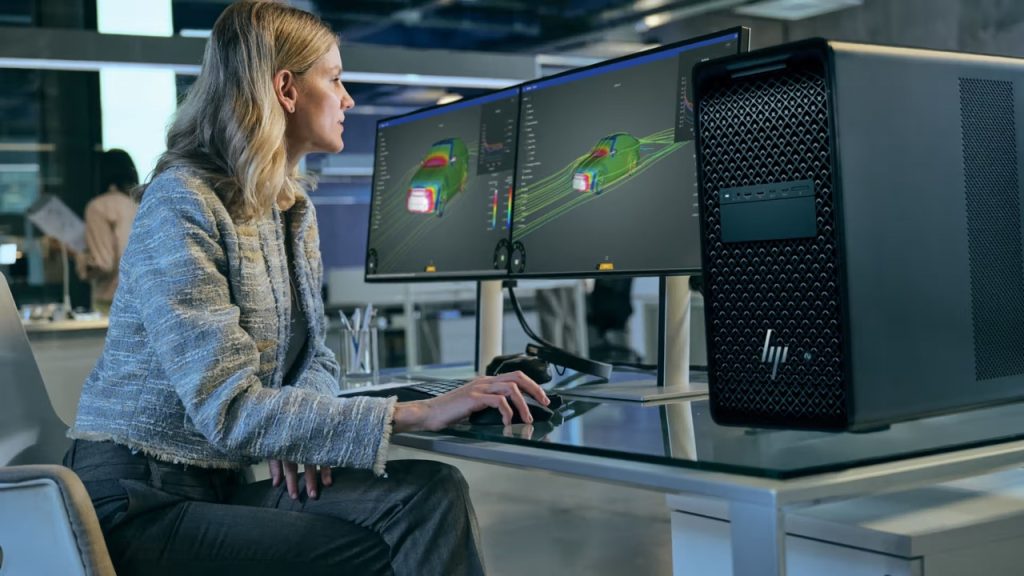
hp workstation

For professionals working on demanding workloads, HP unveiled its next-gen Z Workstations, including the flagship Z8 Fury G6i. This machine is built for serious compute tasks like AI development, simulations, and visual effects, with support for up to four high-end GPUs and next-gen Intel processors. HP is also introducing a new chassis design that allows larger GPU installations without compromising thermal performance.

On the mobile side, HP refreshed its ZBook lineup, including the ZBook X G2i and ZBook 8 G2i. These are designed to deliver workstation-level performance in a portable form factor, targeting engineers, designers, and creators who need power on the go.

New HyperX OMEN Gaming Desktops

HP’s gaming division also had a major presence at the event, with new HyperX OMEN desktops and software updates. The new OMEN MAX 45L is aimed at high-end gamers, featuring top-tier CPUs, GPUs, and advanced cooling for sustained performance. Meanwhile, the OMEN 35L offers similar capabilities at a more accessible price point.

Advertisement

On the software side, HP is expanding OMEN AI, which uses machine learning to automatically optimize performance. In some cases, HP claims up to a 50% FPS improvement in supported games. The OMEN Gaming Hub is also getting new AI-powered features, including integrations with platforms like HeyGen and Voicemod, allowing users to create content, customize voices, and enhance communication during gameplay

Source link

Continue Reading

Tech

3 Countertop Dishwashers With The Best Reviews

Published

on


We may receive a commission on purchases made from links.

Sometimes it feels like everything is bigger in America — we are, after all, the fourth-largest country in the world in terms of area and go big or go home may as well be our unofficial motto. Our food portions, our cars, and even our homes are often much bigger than what is found elsewhere in the world, especially Europe. Yet not every American lives in a sprawling home with an eat-in kitchen. Millions across the country occupy smaller spaces like apartments, cottages, studio spaces, and lofts, and there are more people renting now than at any point since 1965. Many Americans don’t have space for a built-in dishwasher or simply aren’t allowed to install one because they don’t own their home.

If you’re living in a dishwasher-less home and are tired of dishpan hands, you may want to consider investing in a countertop dishwasher. These portable appliances join the ranks of gadgets made for small spaces and are intended to sit on your kitchen counter. Most models attach to your kitchen faucet via a hose, and though they hold less than your standard dishwasher, it’s a great way to give your scrub brush a break. Prices vary, starting at around the $200 mark through $500 or $600, depending on the size and features. Here are three highly recommended models that deserve a spot on your shortlist.

Advertisement

Danby countertop dishwasher

If you’re not lacking in countertop space, this countertop dishwasher by Danby is included on several lists detailing your best choices, including Good Housekeeping. It’s taller than some options (so be sure pull out your trusty tape measure before you invest) but it has room for six place settings and includes a basket for your silverware. The interior is stainless steel, and it has more wash cycles than some standard dishwashers, with eight in total including an Eco option and a Baby Bottle cycle. The normal cycle uses just over three gallons of water, and users attach the dishwasher to the kitchen faucet with a hose and the included faucet adapter.

Advertisement

Good Housekeeping likes that this washer has physical buttons with indicator lights that offer immediate feedback when you’re scheduling a wash. It has a delay start option in two-, four-, six-, or eight-hour increments and a countdown display while it’s running. Reviews found that it washed well and is very quiet compared to other models, but it’s heavy at 44 pounds, so it may not be a good option if you’ll need to move it frequently. This Danby model currently retails for about $400 on Amazon.

Advertisement

Comfee countertop dishwasher

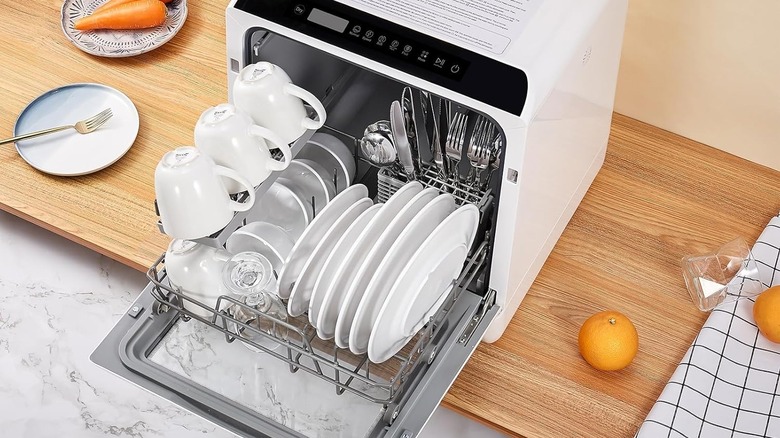
If space is at a premium and the budget is tight, this little dishwasher by Comfee is also consistently named as a top choice. It’s small, so you may want to keep looking if there are more than one or two people in your family and you don’t want to run it constantly, but it holds up to four large dinner plates on an adjustable rack. Its size makes it the perfect option for small apartments or add it to your list of RV must-haves. Perhaps the most useful feature on this little dishwasher is its 1.5-gallon water tank — simply plug it in and don’t worry about connecting it to your sink. If you’d rather not mess with a tank every time you run it, it comes with a quick connect water hose.

The Comfee washer has five wash settings, including a rapid wash and a fruit wash for cleaning your snack. The door automatically pops open when the wash is complete to help your dishes dry more quickly. Serious Eats found that this dishwasher leaves “dishes sparklingly clean and bone-dry.” Decor and home website The Spruce noted that though a bit heavy and bulky, the Comfee washed well and is easy to drain and clean. This dishwasher is currently available for about $325 on Amazon.

Advertisement

Hava compact countertop dishwasher

Good Housekeeping named the Hava R01 dishwasher (on sale at Amazon for about $289) as its top choice for sanitizing. That makes this appliance is a great option if you have a new addition to your family and you’re trying to keep the baby-specific tech to a minimum. This small machine can be connected to your faucet, but it also has a water tank, so you can put it just about anywhere. It holds four place settings and has a tray for your cutlery. The wash settings include a Heavy/Baby Care setting, along with a fruit mode and an included fruit basket to clean your produce.

The Baby Care mode washes at a high temperature to sanitize your dishes or baby bottles. This dishwasher also has a drying mode and provides 72 hours of automatic ventilation to help prevent odor build-up. The Spruce named the Hava dishwasher as its best overall pick, citing its wash performance and clear instructions. Reviewers found that this option is a bit noisier than competitors and some experienced difficulty attaching the hose to the sink faucet.

Advertisement


Source link

Continue Reading

Tech

Spotify says AI slop is flooding your music feed, adds artist control tool

Published

on


Spotify is testing a new tool that lets artists approve songs before release, as AI-generated spam and fraud expose how easily fake tracks can hijack profiles and distort payouts.

Source link

Continue Reading

Tech

Big ideas, early traction: AI founders pitch VCs at Seattle-area startup showcase

Published

on

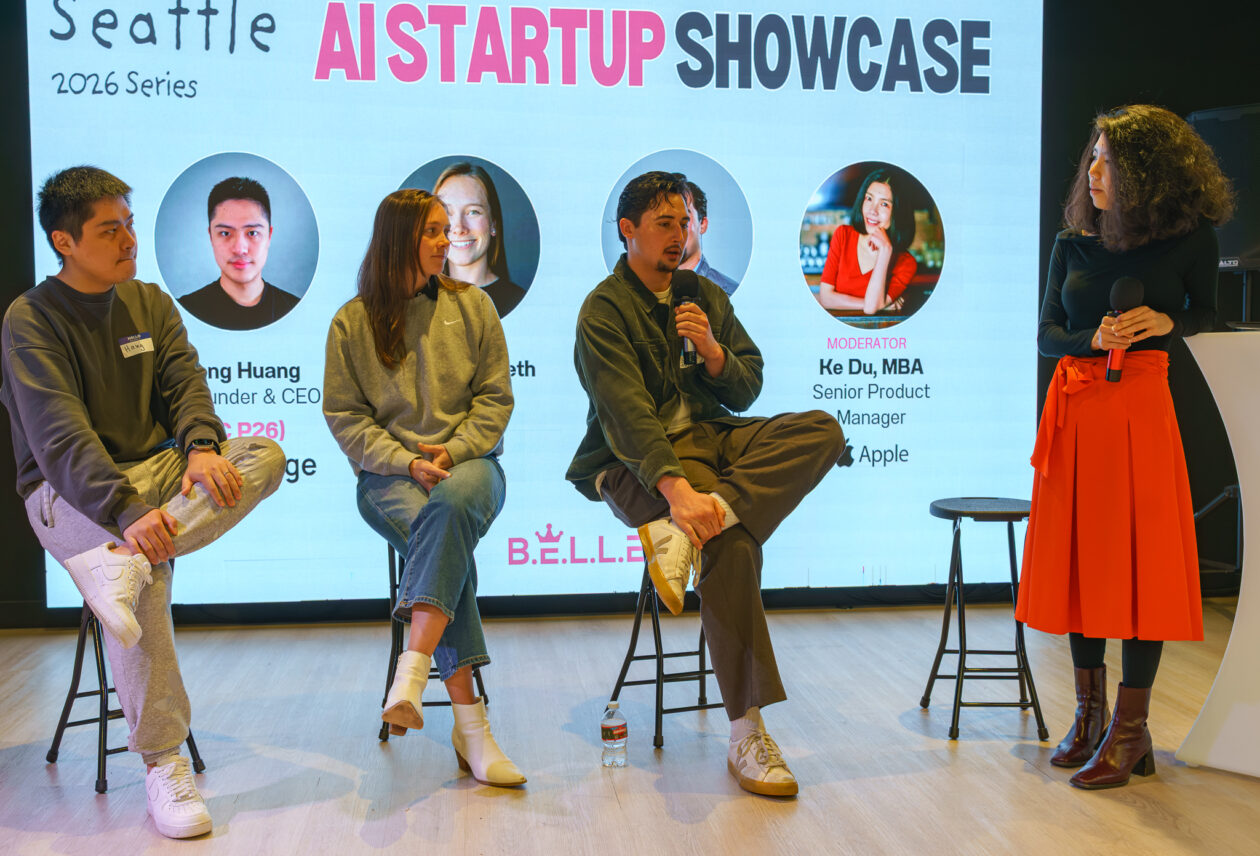
Panelists Hang Huang (InsForge), Brooke Borseth (FUSE), and Nate Bek (Ascend) with moderator Ke Du, offer the perspective from investors at the Seattle AI Startup Showcase. (Photo courtesy B.E.L.L.E)

Imagine you’re a property manager, and a washing machine breaks in one of your units. You text a vendor, who shows up without context and replaces it for $1,200. Turns out it was still under warranty. Had you known that, the repair would have cost $150.

Multiply that across 200 units and dozens of appliances, said Nicole Rémy, and you start to see how mid-size property managers lose tens of thousands of dollars a year — not from negligence, but from the absence of shared visibility.

Nicole Rémy pitches Pelly at the Seattle AI Startup Showcase in Bellevue. (Photo via B.E.L.L.E)

“I’m not guessing at customer problems,” said Rémy, founder of Pelly and a property manager herself. “I am a customer.”

Pelly is a coordination platform that puts property managers, vendors, residents, and owners on the same page: tracking assets, warranties, and service history in one place. Rémy runs a 215-unit property management company and built Pelly in part to solve her own problem.

Rémy was one of the founders who pitched Friday, March 20, in Bellevue at the Seattle AI Startup Showcase, hosted by B.E.L.L.E (Boundless, Entrepreneurship, Liberty, Liaison, Empowerment), a nonprofit focused on connecting early-stage founders with investors. 

Ten startup leaders pitched their companies, which covered everything from mental health and fintech to R&D infrastructure and online fraud prevention. 
Advertisement

Anna Hong, who co-founded B.E.L.L.E with Lenka Huang, said she started the organization to empower female founders, though the community is inclusive and welcomes founders of all backgrounds, as reflected in the diversity of the founders who pitched at the showcase.

Hong is a three-time startup founder and venture partner at Aves Ventures; Huang is a lead AI strategist at Qurrent and former product manager at Meta and Zynga. 

The showcase was designed to give founders a stage and direct feedback from investors.

A panel of venture capitalists — Brooke Borseth from FUSE, Nate Bek from Ascend, and Hang Huang from InsForge — offered feedback on the pitches. Ke Du, a senior product manager at Apple and VP of programs at B.E.L.L.E, led the Q&A session.

Advertisement

“We’re looking for big ideas, and fundamentally we’re just looking to back exceptional people who are building big things,” Borseth said.

Anna Hong, co-founder and CEO of B.E.L.L.E, addresses the crowd at the Seattle AI Startup Showcase in Bellevue. (Photo via B.E.L.L.E)

The panelists gave advice on what they look for in a pitch, red flags they see, and what information founders need to bring to an investor meeting. One of the biggest takeaways: the best pitches show “inevitable” growth — projections that sell a vision of a huge opportunity, educating investors on why the space is ready for a massive shift.

The founders weren’t pitching AI as a novelty. They were pitching it as a way to fix slow, regulated, and deeply inefficient systems where automation alone isn’t enough.

Examples include Precognition Labs, which is building tools to help marketplaces catch fraud in real time; Kednus, an AI compliance platform for model governance and digital asset monitoring; and Forge, which helps R&D projects manage budgets and stay compliant with government funding requirements.

In many cases, the pitches weren’t about replacing existing systems, but combining intelligence to make decisions faster and more reliable. 

Advertisement

The pitches included companies at various stages of development. Some founders had customers, revenue, and pilots, while others were in early stages with prototypes and market projections but no signed customers. 

The panelists emphasized that for a founder to be ready to pitch, they must be able to articulate how big their product can be and demonstrate that it warrants venture capital.

Founders who pitched: Jordan Bain, Forge; Andy Yu, MeowSprout; Vinaya Kansal, Naptick; Rachel Wilka, Groforma; Suhas Manangi, Precognition Labs; Bella Davis, Monarch AI; Clement Utuk, Kednus; Victoria Yang, vicino.ai; Peeyush Kumar, Aquarius; Nicole Rémy, Pelly.

Source link

Advertisement
Continue Reading

Tech

Is Amazon’s Big Spring Sale better than Prime Day? I’ve hand-picked the 55 best deals on TVs, appliances, cheap tech gadgets, and more

Published

on

Refresh

Welcome to today’s live coverage of Amazon’s 2026 Big Spring Sale. The sale officially kicks off today and runs through March 31, with new deals released every day.

Advertisement
Please follow our community guidelines.” data-join-the-conversation-text=”Join the Conversation”>

You must confirm your public display name before commenting

Please logout and then login again, you will then be prompted to enter your display name.

Source link

Advertisement
Continue Reading

Tech

Need a new laptop? You might want to buy now, as Asus just warned that prices could soon jump by up to 30%

Published

on


  • An Asus exec has warned of big price hikes for PCs
  • Prices could rise by 25% to 30% in the second quarter in Taiwan, we’re told
  • This is likely to be reflected globally, and with other increasingly gloomy predictions hanging over the PC industry, it would seem the time to buy is now

Asus has warned that its laptops are going to get a lot more expensive in Taiwan, and while this doesn’t necessarily apply globally, you can bet it’s reflective of the situation worldwide — and the scale of the increase is seriously worrying.

As reported by UDN in Taiwan (flagged by VideoCardz), Asus said that PC prices in the country are going to rise by 25% to 30% in the second quarter of this year on average (with varying increases depending on the exact model, of course).

Advertisement

Source link

Continue Reading

Tech

B-2 Bombers Meet ‘Gunslinger’ Missiles In Impressive US Navy Drill

Published

on


US Air Force (USAF) B-2 Spirit stealth bombers recently trained alongside US Navy jet fighters in a maritime strike exercise conducted off the coast of California. The drill brought together aircraft from Carrier Air Wing 11 — the aviation element assigned to the USS Theodore Roosevelt (one of the oldest aircraft carriers still in service) — and at least one B-2 bomber from the USAF’s 509th Bomb Wing based at Whiteman Air Force Base in Missouri. While the USAF publicly announced the exercise, officials didn’t specify exactly when the exercise took place. 

The drill was focused on integrated maritime strike operations — a mission that involves coordinating multiple aircraft types to engage seaborne targets. It was a mission that also introduced the $2 billion Spirit bomber to the Navy’s new AIM-174B “Gunslinger” missile — an air-launched weapon based on the service’s SM-6 interceptor. The Gunslingers were loaded on two of the participating Navy F/A-18E/F Super Hornets. 

Advertisement

The exercise in itself is not unusual; the Navy and USAF regularly conduct such exercises. However, this one drew attention because it highlighted both the introduction of the AIM-174B and the evolving role of strategic bombers like the B-2 in maritime strike scenarios. 

Essentially, this sort of exercise is designed to give military planners an opportunity to test how long-range weapons, stealth aircraft, and naval aviation resources can operate together in complex missions designed to better defend US assets.

Advertisement

Meet the Gunslinger

The AIM-174B “Gunslinger” was not developed from scratch. Rather, it traces its roots back to the Navy’s Standard Missile-6 (SM-6). Developed by Raytheon, the SM-6 is something of a multitool in the missile world. Originally designed for launch from Aegis-equipped warships, it can be used for anti-air warfare, ballistic missile defense, and against sea and ground targets at long ranges (thought to be about 230 miles). 

Essentially, the Gunslinger is the same missile as the SM-6 but adapted for air launch. Officially, it’s known as the SM-6 AIM-174B Air Launch Capability; the system is designed to pair with the F-18 Super Hornet, which remains one of the fastest US fighter jets in service today. This combination gives the Navy’s carrier-based fighters access to a much longer-range missile than traditional air-to-air missiles. 

Physically, the weapon is larger than many air-to-air missiles, stretching to more than 15 feet in length and weighing close to a ton. This is what allows it to carry both a larger propulsion system and a larger warhead. The result is a new weapon in the Navy’s armory that allows its jet fighters to engage threats at far greater distances. 

Advertisement

Why the B-2 is showing up in naval warfare exercises

At first glance, the partnership between Naval assets and the B-2 Spirit might seem like a strange one. After all, the B-2 is more widely known as a platform for delivering precision weapons against land targets, sometimes flying on missions that can last for over 30 hours. However, what this exercise shows is how the US military is increasingly exploring a changing role for the aircraft and how it can be used to target ships. 

Advertisement

One area of development is the USAF’s QUICKSINK program (the clue is in the name). This program converts existing weapons platforms into guided anti-ship weapons capable of striking moving targets. Instead of using more expensive purpose-built anti-ship missiles, the concept allows aircraft to use modified munitions equipped with guidance systems to target and sink enemy ships. This approach allows a lower-cost way to expand the military’s anti-ship arsenal, without building advanced missile systems. 

This isn’t the first involvement the B-2 has had with the program. In September 2025, a B-2 bomber from Whiteman Air Force Base joined Norwegian F-35 fighters during an exercise in the North Atlantic. The exercise included a maritime strike using a QUIKSINK weapon.

Advertisement


Source link

Continue Reading

Tech

‘Small enough to be tempting’: I need this award-winning turntable company’s new mini automatic vinyl-cleaning machine more than I’ll admit

Published

on


  • Pro-Ject unveils the VC-E Mini
  • It’s a vacuum-based automatic vinyl record cleaner
  • Designed to use few moving parts

My record collection isn’t mine, but an inheritance I try to take good care of. Or I thought I took great care of, but Pro-Ject’s new release has me thinking I could be doing a better at keeping them pristine.

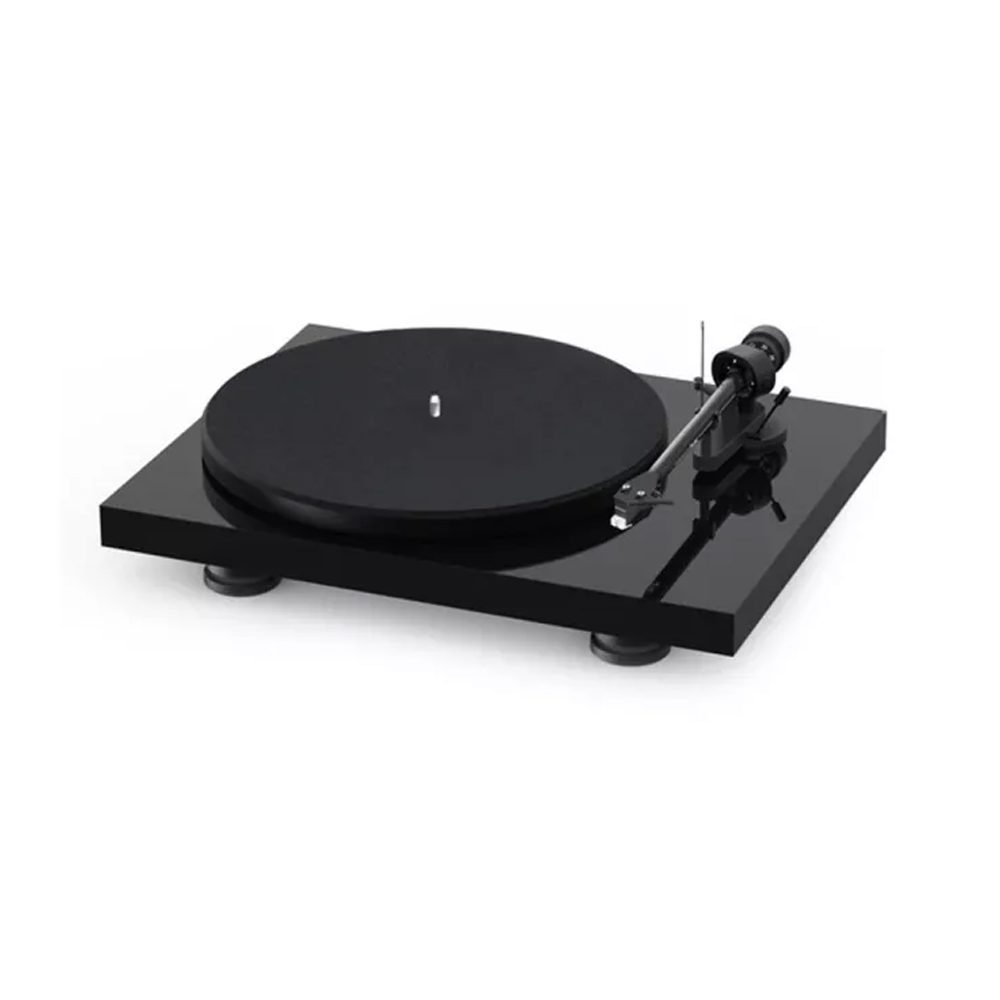
The company behind the five-star Pro-Ject Debut Carbon and numerous more of the best turntables, has unveiled its latest vinyl cleaning device.

Source link

Continue Reading

Trending

Copyright © 2025