



By SuperWest Sports Staff
Sports
As RCB, RR become billion-dollar teams, can franchise economics keep up? | Business

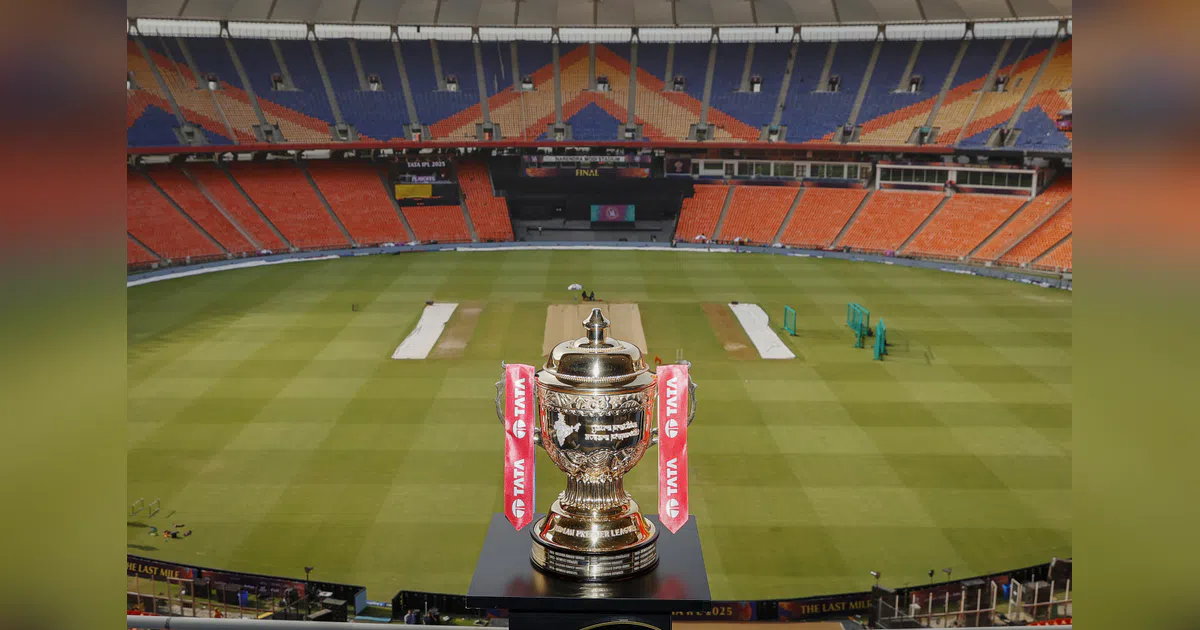
For years, owning a sports team sat somewhere between indulgence and identity. It signalled wealth, access, sometimes legacy, but it did not, in the traditional disciplined financial sense, signal an asset class.
On March 24, Rajasthan Royals (RR) was sold at a valuation of $1.6 billion (around ₹15,032 crore), backed by global investors. On the same day, another deal pushed valuations even higher with a definitive agreement to acquire 100 per cent of Royal Challengers Bengaluru (RCB) from United Spirits at $1.78 billion (about ₹16,660 crore).
At the league level, the IPL’s overall business value has climbed to about $18.5 billion in 2025, while its 2023-27 media rights cycle fetched roughly $6.2 billion, among the richest deals in global sport.
The question is sharper now: are these valuations backed by financial fundamentals, or driven by scarcity and expectation?
Why private equity is investing in sports globally
The answer perhaps lies in how media economics has changed. Most content today is fragmented and consumed on demand. However, live sport remains one of the few formats that consistently delivers mass, real-time audiences and that predictability keeps advertiser demand intact.
And the IPL illustrates this clearly. The 2025 season crossed 1 billion unique viewers across TV and digital platforms. The final between RCB and Punjab Kings drew 169 million TV viewers, surpassing the 166 million viewership of the 2021 India-Pakistan T20 World Cup match. On digital, JioHotstar recorded 892 million video views, a peak concurrency of 55 million, and 16.74 billion minutes of watch-time for the final alone.
“Investors today are not buying a conventional sports team; they are acquiring a hybrid asset combining media rights, brand equity, and long-term monetisation optionality,” said Sourav Choudhary, managing director at Raghunath Capital.
There are only so many premium sports franchises globally, and leagues tightly control expansion. As more capital chases a fixed pool of assets, valuations rise.
This has already played out across football, Formula One and US sports leagues. The IPL fits this global template, but with an added advantage: centralised revenues.
Broadcast and central sponsorship income are pooled and distributed across franchises, providing predictable baseline earnings. “While central revenue pools provide some visibility on cash flows, this is not yet a mature yield-generating asset. It is best understood as a media-led platform with embedded brand upside,” Choudhary said.
What makes IPL teams attractive to investors
Even within global sport, the IPL stands out for scale and structure. It routinely draws over a billion viewers, while its per-match revenues rank just behind the NFL. And the most important lure to the league is in how the revenues are organised.
The BCCI centralises key income streams, primarily media rights and sponsorships, retains 50 per cent, and distributes the rest across franchises. This ensures a stable base.
The latest media cycle translates into $50-55 million annually per franchise from central pools, before local revenues are added.
That base has lifted average team revenues to ₹300-400 crore annually, with central distributions forming the largest share. Additional income comes from sponsorships, ticketing, hospitality and licensing. And beyond current revenues, investors are betting on expansion.
“Three structural shifts have altered the investment case — the sharp escalation in media rights values, the expansion of digital distribution, and a more mature franchise model with clearer revenue sharing,” Choudhary said.
Together, these have turned the IPL into a scalable, institutionally investable platform.
The bull case: scarcity, scale and long-term upside
The recent Rajasthan Royals and Royal Challengers Bengaluru deals reflect a clear investment logic that scarcity comes first. There are only 10 IPL teams, and entry is tightly controlled. Additionally, any opportunity to buy into a franchise is rare, and that alone supports premium pricing.
Then follows the scale part of IPL. “Digital distribution has expanded reach significantly, bringing in younger and more geographically diverse audiences,” Choudhary noted. The IPL sits at the centre of that ecosystem, commanding premium ad rates and consistent demand.
And what builds on this expanding reach is the monetisation potential. Investors see room in direct fan engagement, global expansion and brand licensing.
“At implied valuations of $1-1.5 billion per franchise, investors are pricing in multi-year compounding. A key assumption is continued growth in media rights, with expectations of double-digit expansion in future cycles. There is also a belief that franchises will evolve into global sports brands, extending into other leagues and geographies,” Choudhary said.
In other words, current prices reflect what the IPL could become, not what it is today, he added.
IPL valuation concerns: do the numbers justify the hype?
However, the challenge emerges when expectations meet financial reality. Top IPL teams are now valued at $1.5-2 billion, while annual revenues remain a fraction of that, typically in the low hundreds of crores. This creates valuation multiples that are difficult to justify using conventional metrics.
“The most critical risk lies in a potential plateau in media rights growth, which forms the backbone of franchise valuations. Any moderation in bidding intensity could directly impact perceived value,” Choudhary noted.
There is another potential risk of valuation inflation, as increasing pools of capital chase a limited number of assets, he said, adding that any disruption involving the BCCI could also affect investor confidence.
The result is a market where pricing reflects future potential as much as present earnings.
The bear case: risks beneath the surface
And the investment thesis is not without fault lines. A Brand Finance report in December last year estimated the IPL’s brand value at $9.6 billion in 2025, down 20 per cent from $12 billion a year earlier, citing geopolitical risks, a reminder that momentum is not linear.
Media rights remain the biggest variable. The last cycle jumped to ₹48,390 crore from ₹16,347 crore (2018–22), but any slowdown feeds directly into franchise revenues.
Sponsorships, the second pillar, are cyclical. Advertising spends tend to contract in weaker economic conditions.
Revenue concentration adds further risk. A large share of income comes from central distributions, tying franchises to league-level decisions. Within sponsorships, the skew is evident: in 2025-26, total team sponsorship revenue crossed ₹1,000 crore, with nearly 45 per cent coming from Mumbai Indians, RCB and Chennai Super Kings.
Lower-tier franchises are attempting to close the gap through diversification. Gujarat Titans has built a 1 million-plus fan app. Lucknow Super Giants generates ₹20–30 crore annually through e-commerce merchandising. Punjab Kings earns ₹10–15 crore from overseas academies. Non-matchday venue monetisation is also being explored.
These efforts can add 10-20 per cent to local revenues and target 15-25 per cent growth, but remain incremental relative to central income.
“Evolving consumption patterns — particularly the shift towards short-form and non-sport digital content — could dilute long-term audience engagement. Investors must contend with limited control, as key economic levers such as media rights remain centrally managed,” Choudhary said.
What are the exit risks for investors
For private equity, exit risk is the final constraint. At elevated valuations, the buyer universe narrows, complicating returns.
“Exit pathways in sports are evolving and differ from traditional private equity models. One route is a strategic sale to global media companies, technology platforms, or large family offices seeking trophy assets. Another is a secondary transaction, where larger funds acquire stakes from early investors,” Choudhary said.
How cricket and PE investments will play out in the long run
IPL teams are no longer being valued as cricket franchises. They are being treated as financial assets, and the attraction is clear: scarcity, scale, media relevance and brand power.
“The durability of this thesis will hinge on whether growth in media rights and fan engagement can keep pace with already elevated valuations,” Choudhary said.
Continue Reading
Sports
Did Tim David Show Middle Finger During Mumbai Indians Match? RCB Star’s Obscene Gesture Viral
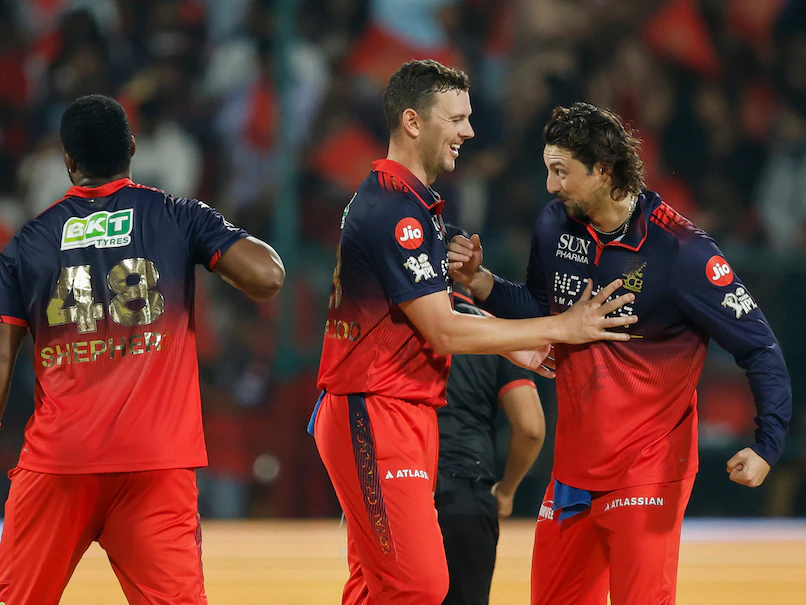
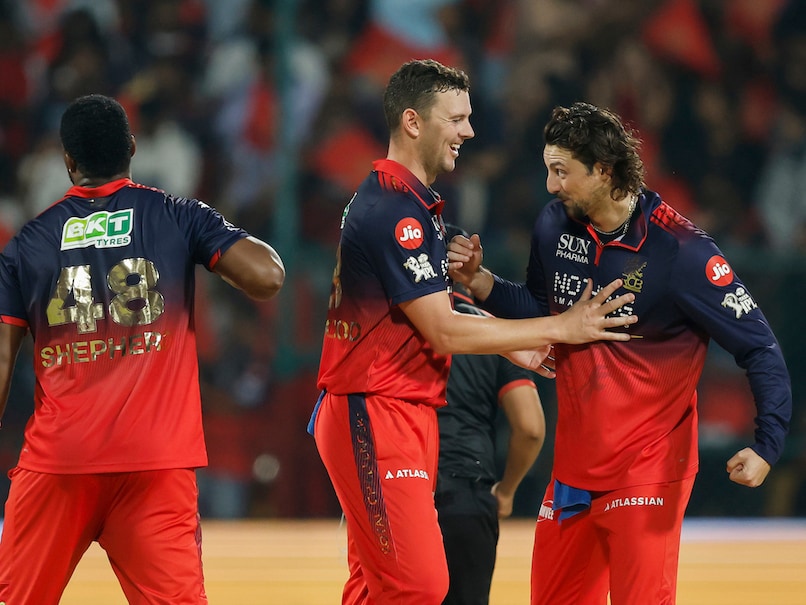
Royal Challengers Bengaluru (RCB) batter Tim David had a forgettable outing in the match against the Mumbai Indians (MI), his former side, on Sunday. David, who was dismissed for a golden duck, continued to cheer for his teammates from the RCB dugout. However, as the Rajat Patidar-led franchise defeated MI in a last-ball thriller, David’s middle-finger gesture left fans stunned. David, who has previously represented the Mumbai Indians, was understandably thrilled to register a win against his former team, but such a gesture in the Indian Premier League (IPL) was unexpected.
As the video of David’s gesture went viral on social media, NDTV was unable to verify the authenticity of the footage. It is also unconfirmed whether the gesture was made by the Australian batter during the RCB vs MI match in Raipur. No punishment for the gesture has yet been announced by the BCCI or the IPL. RCB coach Andy Flower, however, was penalised by the Governing Council over a heated argument with the fourth official, but no action has been taken against RCB’s Australian finisher yet.
Andy Flower Penalised By Tim David Spared
RCB head coach Andy Flower has been fined “15 per cent of his applicable match fee” for breaching Level 1 of the IPL’s Code of Conduct for Players and Team Officials during the match.
IPL, in its statement, said, “Andy was found to have breached article 2.3 of the IPL’s Code of Conduct, which relates to ‘use of an audible obscenity during a match’”
The incident occurred in 17.2 over when Andy spoke aggressively with the fourth umpire after a contentious boundary call involving Krunal Pandya.
Facing AM Ghazanfar, Krunal lofted the ball towards wide long-on, where Naman Dhir took the catch near the ropes and parried it towards Tilak Varma while stepping over the boundary line. Tilak did not complete the catch and appeared to signal a six, perhaps mistaking Naman clipping one boot with the other for contact with the boundary cushions.
Replays, however, showed Dhir had not touched the cushions during the effort. Krunal, who was cramping up, did not attempt a run, and the delivery eventually resulted in a dot ball.
As per IPL code of conduct, Article 2.3 covers “the use of words commonly known and understood to be offensive, obscene and/or profane (in any language) and which can be heard by the spectators and/or the viewing public whether by way of the stump-microphone or otherwise. This conduct may include, for example, swearing in frustration at one’s own play or fortune.”
Andy has admitted to the offence and accepted the sanction imposed by match referee Amit Sharma.
With IANS Inputs
Featured Video Of The Day
IPL 2026 | Delhi Capitals Wins By 6 Wickets Against Mumbai Indians: Redemption For Sameer Rizvi
Topics mentioned in this article
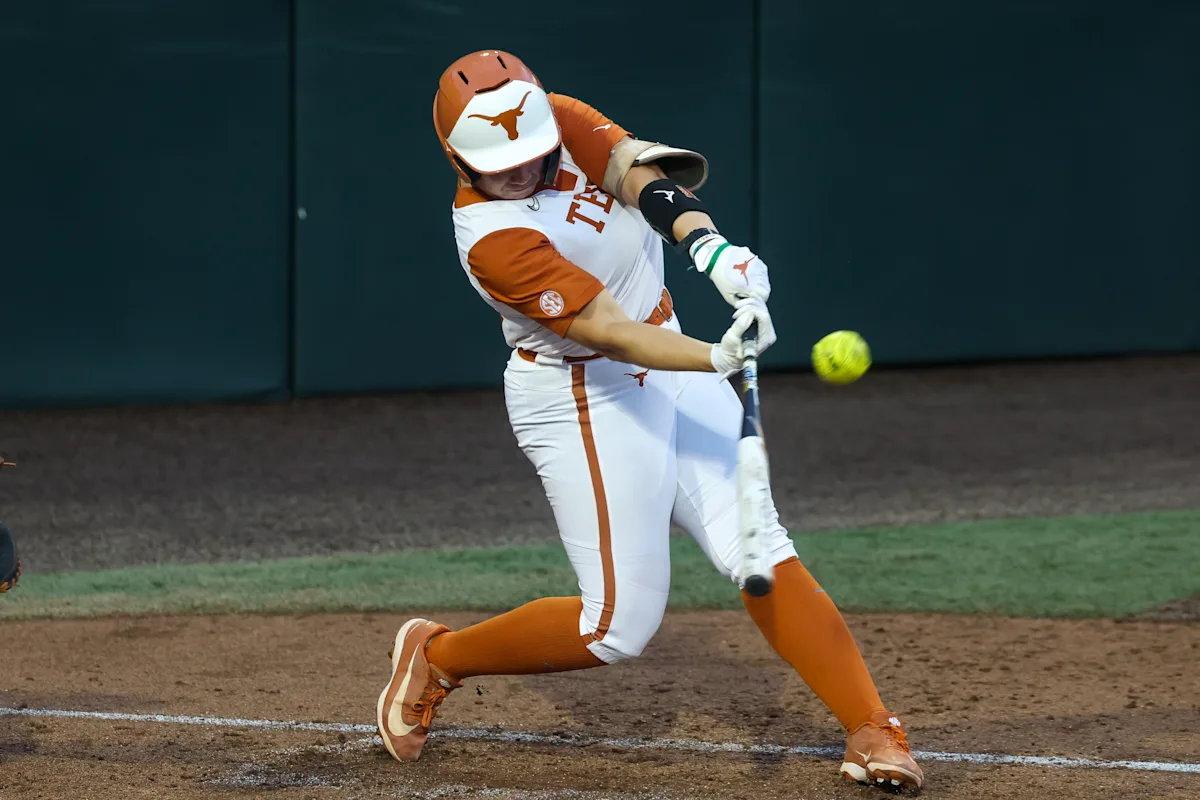
The SEC’s softball coaches announced late last week that Katie Stewart, a first baseman for Texas softball, is the conference’s latest Player of the Year.
WHAT THEY’RE SAYING ABOUT THE LONGHORNS
247Sports: Evaluating the health of Texas baseball’s resume — and roster — after the Longhorns drop series at Tennessee
Advertisement
247Sports: Horns247 Roundtable: The Longhorns’ most difficult football game in 2026 – other than Ohio State on Sept. 12
247Sports: ‘We’re super grateful’: Why this mother-son pair means everything to Texas baseball
Inside Texas: Which wins matter most? Ranking Texas’ 2026 schedule by importance to Longhorn fans
Inside Texas: Steve Sarkisian is set to battle three of 2026’s highest paid head coaches
ICYMI IN BURNT ORANGE NATION
No. 4 Texas drops series with 14-9 loss to Tennessee
Ethan Mendoza injured as No. 4 Texas loses to Tennessee, 5-1
Jermaine Bishop sets stage for big-time Texas career
Big changes coming to the surface at UFCU Disch-Falk Field
Advertisement
RECRUITING ROUNDUP
Inside Texas: No. 1 WR, five-star Texas commit Easton Royal: In his own words
Inside Texas: Five-star Texas WR commit Easton Royal news, notes, and intel from LHSAA State Track
Inside Texas: Texas baseball commit Brody Bumila strikes out 20 in no hitter
Inside Texas: Texas Football Recruiting: Three NIL scenarios playing out right now
Inside Texas: Texas facing growing national battle for rising WR Briceson Thrower
SEC SHOWDOWN
Austin American-Statesman: Texas baseball beats Tennessee, becomes 1st program to 1,500 wins
Austin American-Statesman: How could Texas softball play Texas A&M in the NCAA Tournament
Advertisement
Dallas Morning News: SEC receives 6 of the top 8 seeds in NCAA softball bracket, including No. 2 Texas
Dallas Morning News: Teagan Kavan dominates on the mound as Texas wins SEC softball championship
247Sports: Texas Baseball: Jim Schlossnagle explains why he scratched Ruger Riojas from Saturday start vs Tennessee
Rock M Nation: Missouri baseball breaks SEC drought in home finale victory
Rocky Top Talk: Where Tennessee baseball stands in the SEC after dropping series finale to Texas
Dawg Sports: Bigger isn’t better
A Sea Of Blue: Twitter celebrates Franck Kepnang and Iveon Lewis becoming Kentucky Wildcats
Advertisement
WHAT WE’RE READING
SB Nation: One stat to highlight Kimi Antonelli’s hot start to the 2026 F1 season
SB Nation: Sun Day Red has launched a PGA Championship-themed collection
SB Nation: Cameron Boozer is the No. 1 player in the 2026 NBA Draft, don’t overthink it
NEWS ACROSS LONGHORN NATION AND BEYOND
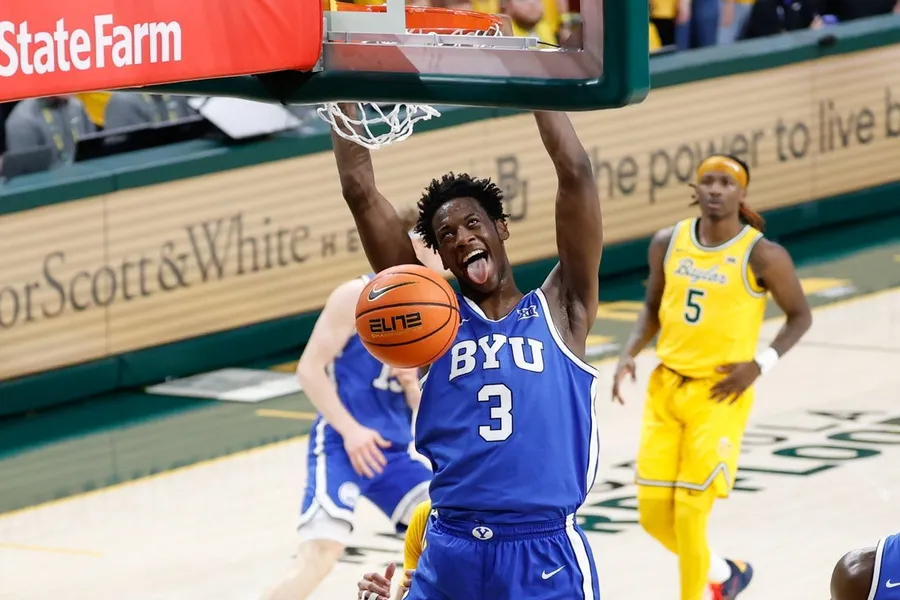
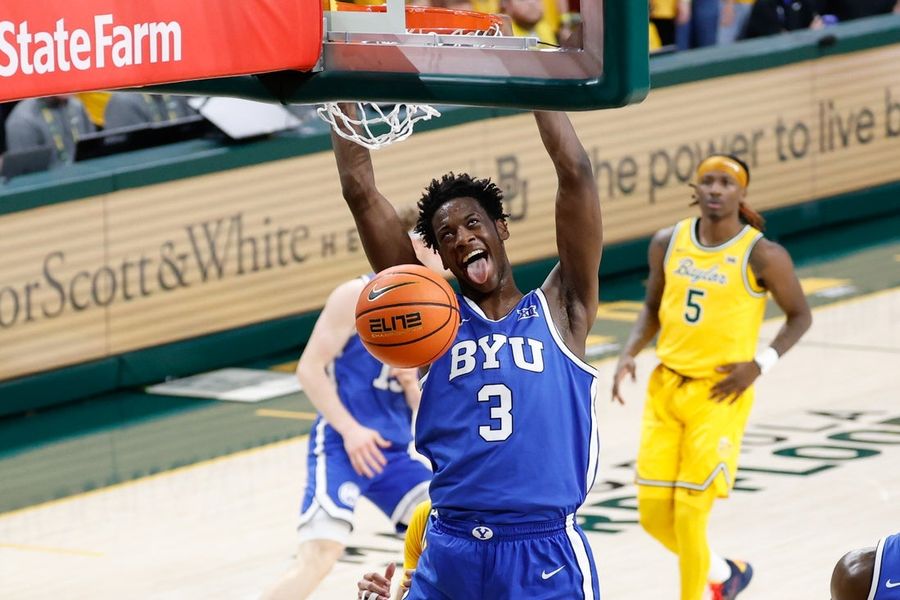 Feb 10, 2026; Waco, Texas, USA; BYU Cougars forward AJ Dybantsa (3) dunks the ball ahead of Baylor Bears guard Cameron Carr (43) during the first half at Paul and Alejandra Foster Pavilion. Mandatory Credit: Chris Jones-Imagn Images
 After a much-maligned race to the bottom of the standings, the first round of the draft board is finally set. As the pre-draft process ramps up and NBA front offices get their ducks in a row, here is my initial post-lottery 2026 mock draft (assuming the lottery order is not beset by trades). The NBA draft will be held June 23-24 in New York.
1. Washington Wizards: AJ Dybantsa
Forward, BYU, freshman, 6-foot-9, 210 pounds, 19 years old
Washington signaled an intention to expedite their rebuild by buying low on Trae Young and Anthony Davis midway through the 2025-26 campaign, and their plea for lottery glory has finally come to bear.
While the Darryn Peterson vs. AJ Dybantsa conversation depends on the eye of the beholder, Dybantsa slots in perfectly between the Wizards’ incumbent youngsters and acquired stars as the keystone for their future. Dybantsa is a swingman with high-end potential as a dribble penetrator and mid-post savant, commanding defensive attention in the middle of the floor. He is equally effective attacking closeouts and slashing into openings. Most importantly, he can be brought along at his own pace and avoid being overburdened in D.C.
2. Utah Jazz: Darryn Peterson
Guard, Kansas, freshman, 6-5, 205, 19
The Jazz fell just short of first dibs on their hometown hero but wind up with a superb consolation prize in Peterson. After pushing several of their chips in for Jaren Jackson Jr., Utah is full steam ahead for a winning trajectory.
Peterson can thrive at either guard spot because of his boundless off-ball movement and willingness to coexist with other primary creators. The Jazz have a colossal front-line to free him up off screens, a dependable lead ball carrier in Keyonte George, as well as a burgeoning wing stopper in Ace Bailey. Peterson’s frenetic zip, shot-making variety, and hybrid M.O. will allow coach Will Hardy to truly tap into his offensive ingenuity after a multi-year rebuild.
3. Memphis Grizzlies: Cameron Boozer
Forward, Duke, freshman, 6-9, 250, 18
If the Grizzlies were hellbent on making it work with Ja Morant, Caleb Wilson would be the pick here to expand Memphis’ stout, rangy supporting cast two through five. But all indicators point to a break-up and subsequent clean slate.
Boozer is a high-floor prospect with all the outlines of an offensive linchpin. His IQ, touch and floor game should provide offensive juice in the absence of a true first option, and the inside-outside nature of his skillset is compatible with Zach Edey — who Memphis has made clear is a pillar of their future. Boozer is the safest pick with projectable polish despite athletic limitations.
4. Chicago Bulls: Caleb Wilson
Forward, North Carolina, freshman, 6-10, 215, 19
Chicago’s highest selection since 2020, there is a credible argument to pursue a lead-creator at this spot in Darius Acuff Jr. or Kingston Flemings — especially with spindly young forwards Matas Buzelis and Noa Essengue in tow. However, this is a prime opportunity to take the best player available.
Wilson is a physical marvel with unmistakable all-defense potential. Bereft of a true interior force for more than a decade in the Windy City, Wilson blends interior ferocity, mid-range finesse and open floor dominance. His jump shot remains a lingering question, but he would serve as a valuable building block for a team in desperate need of competitive fervor.
5. Los Angeles Clippers: Keaton Wagler
Guard, Illinois, freshman, 6-6, 185, 19
The Clippers waited with baited breath for a 48% chance at pillaging Indiana’s pick, a gamble that should pay immense dividends for a franchise that does not own its first-round pick until 2030. Drafting a lead guard in Darius Acuff Jr. or Kingston Flemings would clash with the presence of true point guard Darius Garland, rendering Illinois’ Wagler a cleaner fit.
A late-blooming prospect that ascended as a freshman, Wagler is an off-guard that brings laser 3-point shooting and a refined off-the-dribble game. Despite his mid-tier athleticism and a slender build, Keaton profiles as an ideal secondary running mate to insert next to All-Star forward Kawhi Leonard and Garland.
6. Brooklyn Nets: Darius Acuff Jr.
Guard, Arkansas, freshman, 6-3, 190, 19
On the outside looking in once again, Nets general manager Sean Marks must make-do with his options in the mid-lottery for back-to-back drafts. Luckily for him, this range is littered with lead-initiators that check a lot of the boxes on Brooklyn’s wish list. Chief among them is Acuff, a potent scorer and on-ball self-starter who notched ridiculous counting stats and sterling efficiency under Razorbacks coach John Calipari.
The Nets have yearned for a go-to guy offensively since jettisoning Kyrie Irving and Kevin Durant. Acuff just might be the answer as a three-level menace who can eviscerate the first line of defense — although his defensive drawbacks loom large. The 6-8 guard Egor Demin’s positional size would make for a fascinating dual-wield backcourt experiment for the Nets to build on going forward.
7. Sacramento Kings: Kingston Flemings
Guard, Houston, freshman, 6-4, 190, 19
Death, taxes and lottery misery in Sac-Town. The Kings have lacked a gear-shifting guard presence since De’Aaron Fox forced his way out of town. Enter Flemings, a jitterbug lead-guard with the ball handling and creative dynamism to puncture halfcourt defenses as well as the defensive activity to remain viable on both sides of the ball.
Sacramento needs to dig itself out of a monumental, albeit entirely self-inflicted, organizational rut. Taking a swing on Flemings’ all-around scoring and facilitative upside is about as good a lifeline as you can hope for at No. 7.
8. Atlanta Hawks (via New Orleans): Brayden Burries
Guard, Arizona, freshman, 6-4, 205, 20
Atlanta’s hopes of nabbing a bona fide fortune-shifting prospect ran dry when it wound up outside the top four. While most draft evaluators may pencil in a primary creator like Acuff, Flemings or Mikel Brown Jr., Burries as an ideal fit given the Hawks’ trajectory.
He boasts a largely ancillary skillset — spot-up shooting, straight-line driving, read-and-react playmaking — and, as such, theoretically has a lower ceiling. However, he makes perfect sense orbiting, and amplifying, Jalen Johnson and Dyson Daniels’ ever-growing facilitative qualities. Most importantly, Burries is a serial transition threat that could seamlessly weaponize Johnson’s affinity for early offense in a manner that few ever could.
9. Dallas Mavericks: Mikel Brown Jr.
Guard, Louisville, freshman, 6-5, 190, 20
Brown had glimpses that could have you falling head over heels for his long-term outlook. A 6-5 lead-guard with smooth shooting mechanics and shot-making fearlessness that is impossible to ignore, Brown’s draft stock is inherently divisive. On one hand, you have a tight handle, buoyant athleticism, instinctive passing chops and limitless 3-point range. On the other, you have reckless turnovers, iffy shot selection, and a wiry build.
In a more streamlined role, Brown could blossom into one of the league’s premier dribble pull-up shooters with downhill punch to match. The Mavs could use a perimeter wild card to pair with Cooper Flagg and lighten the offensive load.
10. Milwaukee Bucks: Nate Ament
Forward, Tennessee, freshman, 6-10, 207, 19
With their future in relative shambles, a swing for the fences feels apropos in light of the Bucks’ current standoff with franchise superstar Giannis Antetokounmpo. Not to mention this being their first lottery pick since Thon Maker in 2016. A 6-10 forward who can pass, dribble and shoot (at least in theory), Ament’s freshman season was a tale of two halves with his efficiency skyrocketing at the turn of the calendar.
While his offensive game is glaringly unpolished and he has plenty of bulking up to do, there are clear outlines of a capable dribble attacker, movement shooter and auxiliary facilitator that, if they eventually bolden, could provide Milwaukee with a foundational piece in the post-Giannis era.
11. Golden State Warriors: Yaxel Lendeborg
Forward, Michigan, senior, 6-9, 240, 23
Fresh off clinching the national championship, Lendeborg is finally primed and ready to make the NBA leap after years in the draft consciousness. After extending coach Steve Kerr, the Warriors are faced with a harsh duality — maximizing Stephen Curry’s twilight years while keeping an eye to the future.
Despite turning 24 years old in September, Yaxel bridges that gap while addressing a positional need. He is a 6-10 (with shoes) forward that can scale up and down the positional spectrum defensively with his 7-4 wingspan and rock-steady base strength. Offensively, he can put the ball on the deck, set sturdy screens and improved his jump shooting to the tune of 37.2% as a super senior. Lendeborg is a seasoned, all-purpose, two-way force that can get in where he fits in for a well-traveled Warriors core.
12. Oklahoma City Thunder: Karim Lopez
Forward, Mexico/New Zealand Breakers, 6-9, 220, 19
With center Isaiah Hartenstein’s contract expiring in 2027, the stashing of 2025 first-round draft pick Thomas Sorber obviates an immediate need for frontcourt reinforcements. While Jayden Quaintance (Kentucky), Hannes Steinbach (Washington) or Aday Mara (Michigan) could each be a worthy successor, the Thunder’s rotation could use a combo-forward.
Lopez spent the past two seasons in New Zealand honing his sensibilities as a supplementary 3-and-D wing. Thunder general manager Sam Presti is familiar with the New Zealand Breakers pipeline, trading up to No. 11 in 2022 to select Ousmane Dieng. Lopez’s role player experience in a professional setting may well put him ahead of the developmental curve.
13. Miami Heat: Labaron Philon Jr.
Guard, Alabama, sophomore, 6-4, 185, 20
Stuck in basketball purgatory with options aplenty from a team building perspective, Miami once again finds itself in the mid-first round. It is difficult to identify a specific need for such a competent-but-not-elite roster, but Philon’s on-ball brilliance and massive sophomore leap makes him a frontrunner in this range.
Philon is as shifty and surgical a ball handler as you’ll find in this class. He makes up for a lack of verticality with various dribble combinations, cunning tempo changes, and a trusty floater. If guard Tyler Herro is not long for Miami, Labaron is a great contingency plan in the backcourt who can theoretically play alongside Kasparas Jakucionis for a dual-creator look.
14. Charlotte Hornets: Hannes Steinbach
Forward/center, Washington, freshman, 6-11, 220, 20
The Hornets flexed a competent defense for the first time in eons. Aday Mara presents an intriguing man-in-the-middle option to add to their center rotation of Moussa Diabate and Ryan Kalkbrenner, but Charlotte should prioritize optionality above all else. Accordingly, Steinbach stands out from the pack.
A hybrid big that vacuums rebounds on both ends with physicality and inside positioning, Steinbach’s offensive upside is a major selling point. A sophisticated low-post repertoire, deft touch, elbow playmaking and, most notably, a hint of 3-point aptitude (18-for-53 at a 34% clip as a freshman) gives coach Charles Lee much-needed versatility to work with from the high post. If Steinbach’s 3-point range manifests, he could coexist with Diabate in unprecedented double-big lineup machinations.
–Ethan Ward, Field Level Media
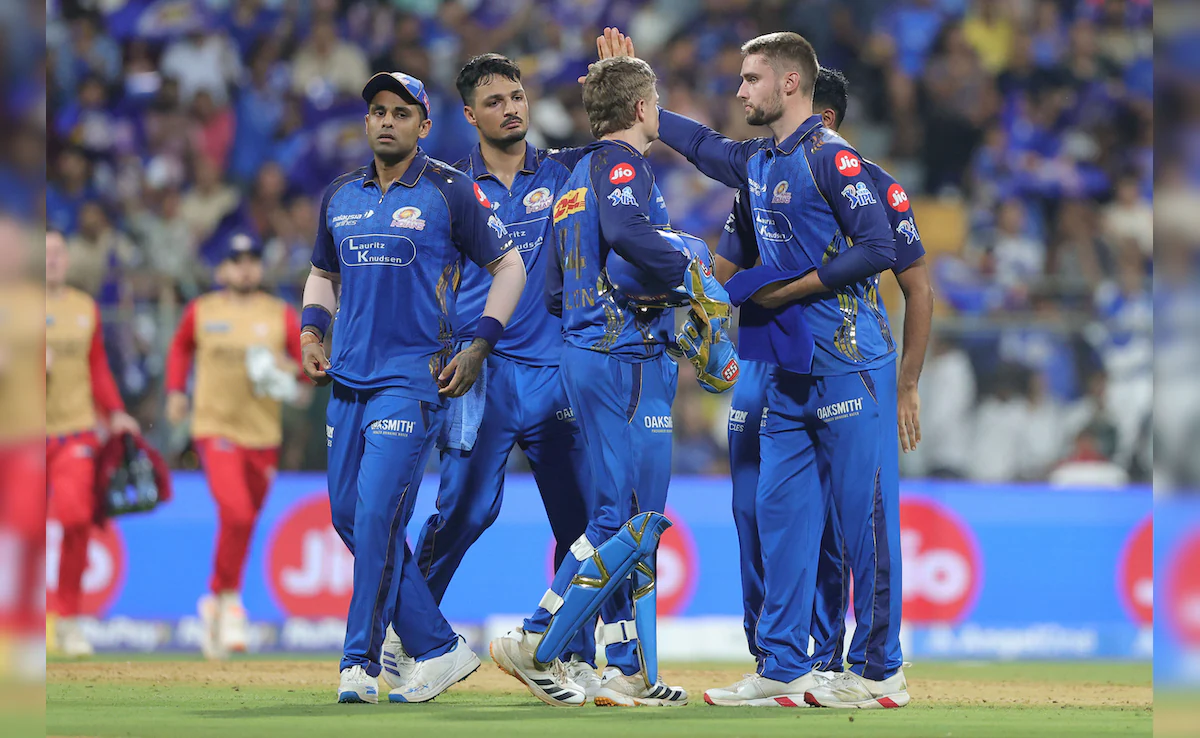
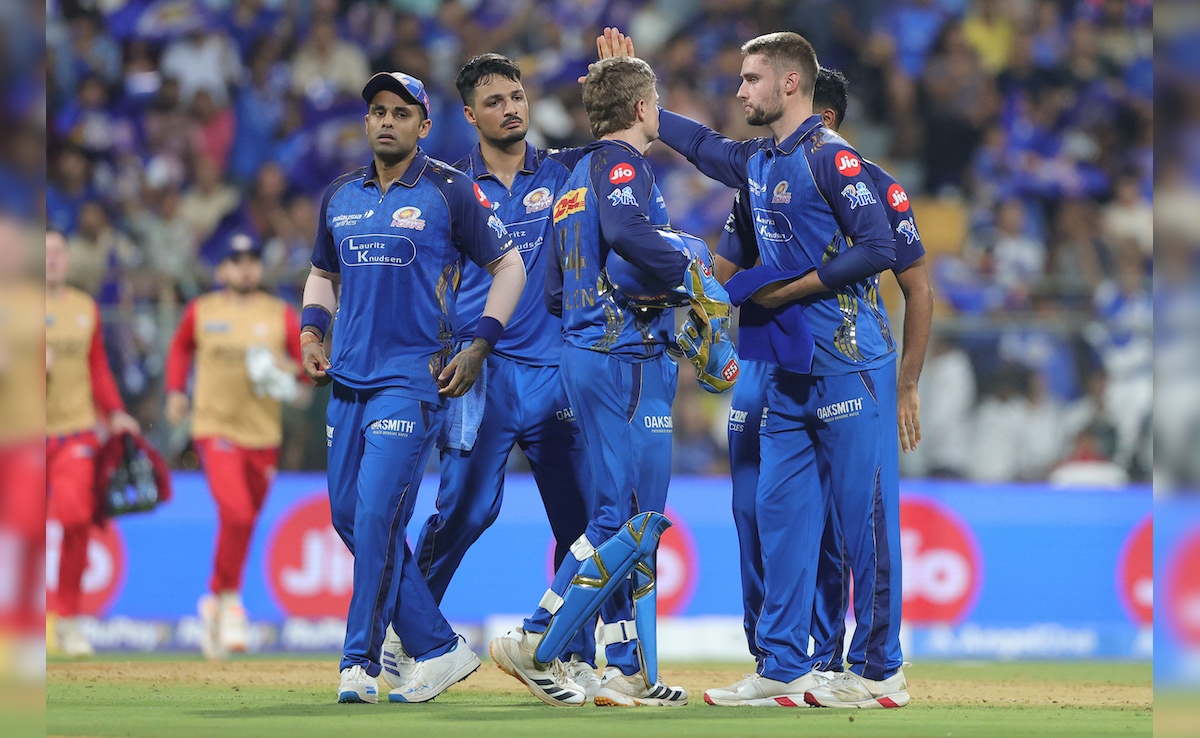
Image for representative use© BCCI
The Board of Control for Cricket in India (BCCI) has taken serious note of repeated violations of the guidelines issued to franchises participating in the Indian Premier League (IPL). As per the recently released directives by BCCI Secretary Devajit Saikia, franchise owners were instructed to stay away from the playing area and refrain from making any physical or verbal contact with players or team staff during matches. However, these protocols were allegedly breached on multiple occasions by some team owners, leaving the BCCI displeased.
According to a report by The Indian Express, the board has made it clear to all franchises that any further violations of the guidelines will invite strict action.
“One of the most worrying aspects has been the behaviour of the team owners. They have been flouting rules and haven’t been cooperating. By way of evidence, there are photographs of them near the dugout. Some even carry their phones to the ground. They have been warned but it hasn’t helped,” an official aware of the league’s policing process told The Indian Express.
Earlier, BCCI issued a formal communication to all 10 IPL franchises, warning of potential ‘honey-trap’ concerns during the 2026 season.
The board has adopted a stricter stance to prevent serious allegations, including sexual misconduct, against players or officials participating in the T20 league.
In the statement, Saikia told the franchises: “The BCCI draws the attention of all franchises to the well-documented risks of targeted compromise and honey-trapping that pervade high-profile sporting environments. The possibility of incidents giving rise to serious legal allegations, including those under applicable laws on sexual misconduct, cannot be discounted. IPL franchise management must remain vigilant and proactive in mitigating such risks at all times,” Saikia stated in a seven-page guideline issued on Thursday.
A task force has been established, comprising members from the BCCI and the IPL Operations team. This team will be responsible for conducting hotel room checks. Any case of unauthorised access will be met with strong disciplinary action, with potential punishments already outlined.
Featured Video Of The Day
IPL 2026 | Delhi Capitals Wins By 6 Wickets Against Mumbai Indians: Redemption For Sameer Rizvi
Topics mentioned in this article
NEWYou can now listen to Fox News articles!
The Indiana Pacers’ risky move backfired after the 2026 NBA Draft Lottery saw them lose their top pick altogether in a disastrous turn of events on Sunday afternoon.
Heading into the lottery, the Pacers, who went 19-63 just one season after reaching the NBA Finals out of the Eastern Conference, had a 52.1% chance of having a top-four pick.
However, when they didn’t see their team chosen in the first four picks – Indiana also had a 14% chance of getting the No. 1 overall pick – it was time to panic.
CLICK HERE FOR MORE SPORTS COVERAGE ON FOXNEWS.COM
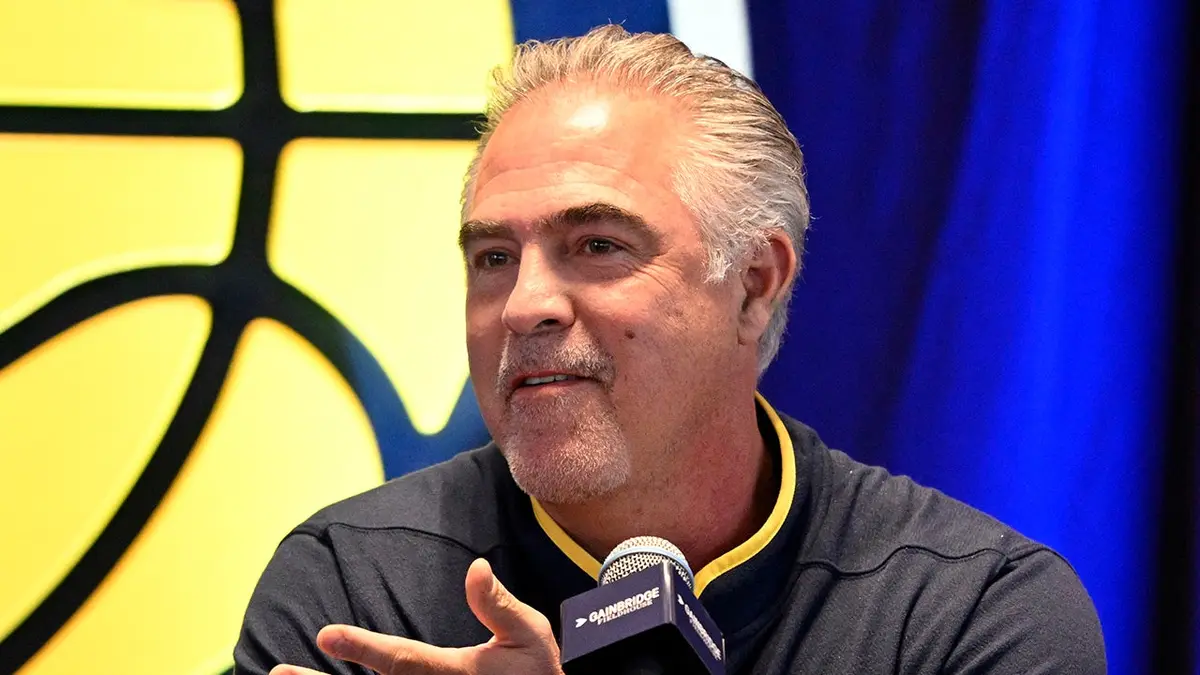
Indiana Pacers president of basketball operations Kevin Pritchard speaks during a press conference to announce center Miles Turner’s contract extension at Gainsbridge Fieldhouse in Indianapolis, Ind., on Jan. 30, 2023. (Marc Lebryk/USA TODAY Sports)
The reason? The Pacers included their first-round pick in a trade with the Los Angeles Clippers for Ivica Zubac, but they only made it a top-four protected pick. That means, if the Pacers were chosen in the lottery as a top-four selection, they would be able to keep it.
But the Pacers were chosen as the No. 5 pick, and the Clippers now own the selection in next month’s draft.
NBA LOTTERY CHAOS: WASHINGTON WIZARDS STRIKE GOLD, PACERS PAY FOR TANKING GAMBLE NIGHTMARE
As a result, Pacers team president of basketball operations Kevin Pritchard took full responsibility for the move, apologizing on social media.
“I’m really sorry to all our fans,” he wrote on X. “I own taking this risk. Surprised it came up 5th after this year. I thought we were due some luck. But please remember – this team deserved a starting center to compete with the best teams next year. We have always been resilient.”
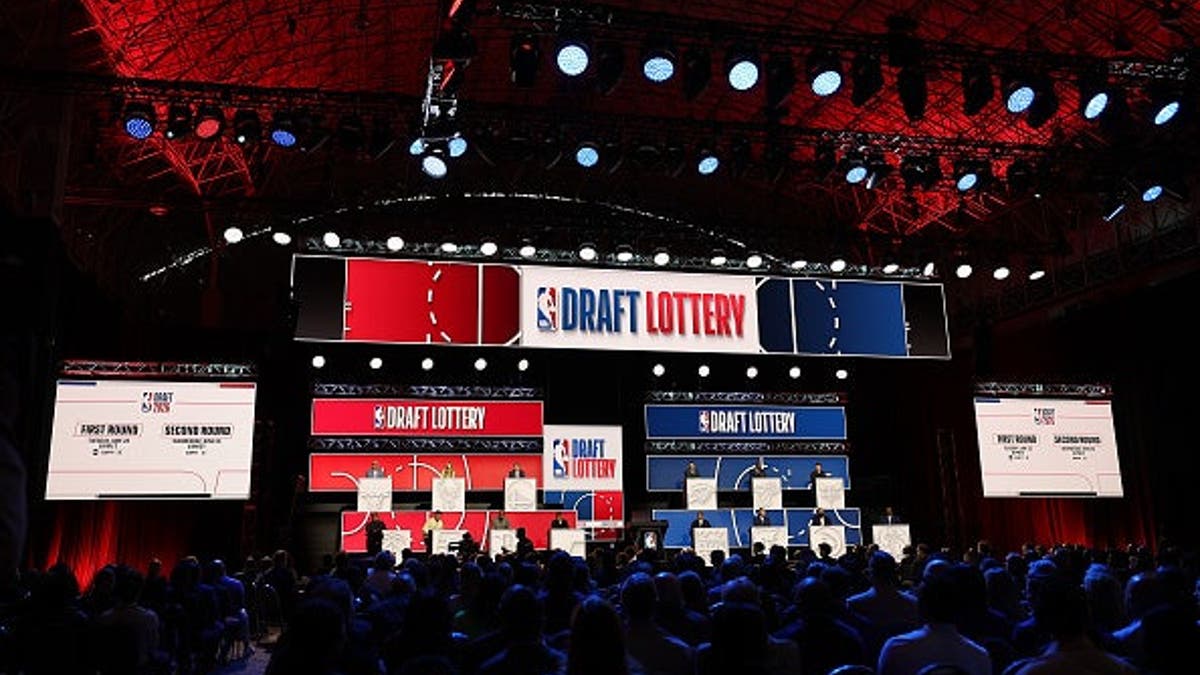
Signage is displayed during the 2026 NBA Draft Lottery at Navy Pier in Chicago, Illinois, on May 10, 2026. (Melissa Tamez/NBAE/Getty Images)
The Pacers were viewed as a team that were actively tanking despite the NBA’s attempt to crack down on such a season, with the lottery being one way of that. And it clearly worked this time around.
Pritchard was trying to be transparent and honest with the Pacers fan base, but people were quick to jump in the comments to make their thoughts, and gripes, known.
“You lose Myles Turner and add Zubac,” one X user began. “You lose [Benedict] Mathurin and the number 5 pick with absolutely nothing in return. This is why fans are upset, for a center who not even a top 5 center in the NBA. Who trades their future away for Ivan [sic] Zubac???”
Another X user called this a “generational draft,” and couldn’t fathom the Pacers won’t be picking from a deep class.
“If I were a Pacers fan and my team traded away a top 5 pick for Ivica Zubac in the middle of a tanking season I would be beyond devastated,” a fellow X user wrote.
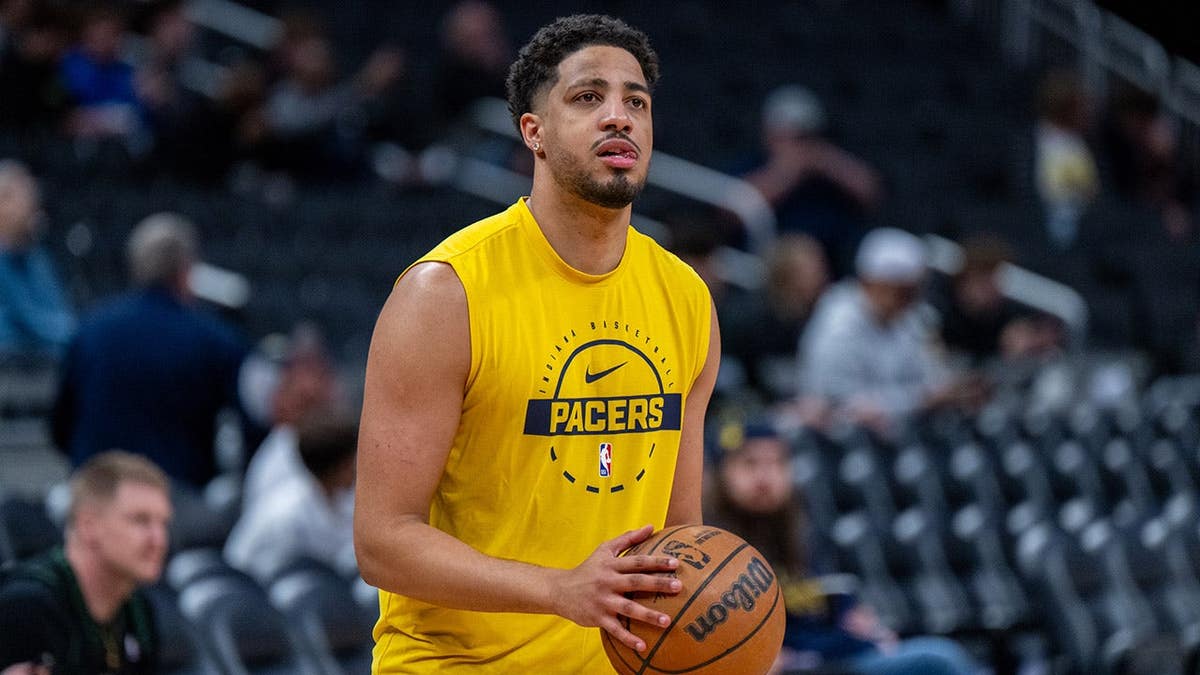
Indiana Pacers guard Tyrese Haliburton shoots around on the court before an NBA game against the Minnesota Timberwolves in Indianapolis on April 7, 2026. (Doug McSchooler/AP)
CLICK HERE TO DOWNLOAD THE FOX NEWS APP
The Pacers were without their All-Star point guard Tyrese Haliburton all season long after he suffered an Achilles injury during the NBA Finals against the Oklahoma City Thunder. But Indiana still has key members of that team returning next season, including Pascal Siakam, Andrew Nembhard, and Aaron Nesmith.
However, this 2026 draft class is quite the spectacle, with many believing it to be deep considering the talent of BYU’s AJ Dybantsa, Kansas’ Darryn Peterson, UNC’s Caleb Wilson, and Duke’s Cam Boozer, among others.
Follow Fox News Digital’s sports coverage on X and subscribe to the Fox News Sports Huddle newsletter.

Nonconference games can make or break a team’s season.
Preseason victories can propel a team into Playoff consideration, or hold it back.
The table below shows the nonconference win percentages and win-loss records for the region’s top programs over the last 20 seasons.
Breakdown of Records Against Nonconference Foes (2006-2025)
| Team | Non-Conf Win | Non-Conf Loss | Win % |
|---|---|---|---|
| Oregon | 62 | 15 | 80.5 |
| Utah | 62 | 15 | 80.5 |
| Cal | 49 | 20 | 71.0 |
| USC | 52 | 22 | 70.3 |
| Boise State | 67 | 30 | 69.1 |
| Arizona | 44 | 21 | 67.7 |
| BYU | 120 | 60 | 66.7 |
| Washington | 49 | 25 | 66.2 |
| ASU | 43 | 27 | 61.4 |
| Air Force | 57 | 36 | 61.3 |
| WSU | 49 | 34 | 59.0 |
| UCLA | 40 | 28 | 58.8 |
| Stanford | 39 | 30 | 56.5 |
| Colorado | 37 | 30 | 55.2 |
| SDSU | 49 | 44 | 52.7 |
| Wyoming | 45 | 41 | 52.3 |
| Hawai’i | 52 | 48 | 52.0 |
| Fresno State | 46 | 46 | 50.0 |
| Oregon State | 41 | 41 | 50.0 |
| Nevada | 43 | 49 | 46.7 |
| New Mexico | 37 | 47 | 44.1 |
| CSU | 35 | 50 | 41.2 |
| SJSU | 36 | 52 | 40.9 |
| Utah State | 36 | 47 | 38.7 |
| UNLV | 32 | 53 | 37.7 |
| UTEP | 31 | 52 | 37.4 |
Sports
Mumbai Indians Pay Huge Cost As Tilak Varma-Naman Dhir Confusion Leads To Stunning Dropped Catch Against RCB
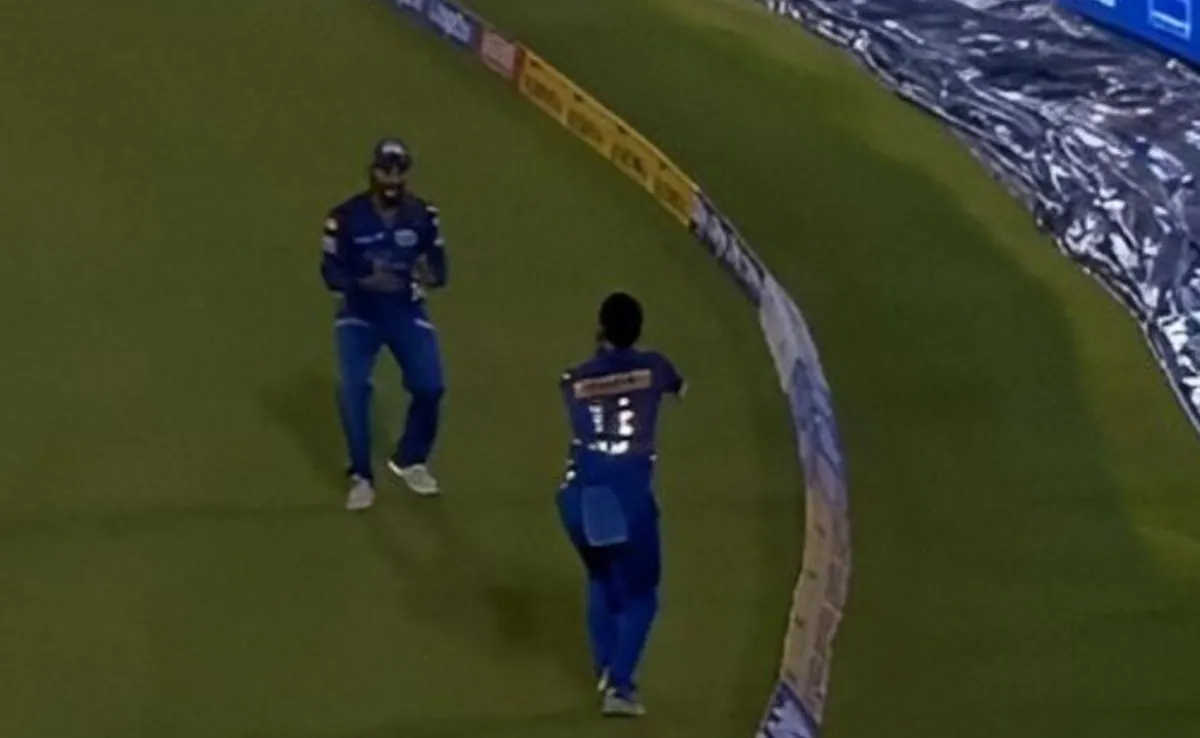
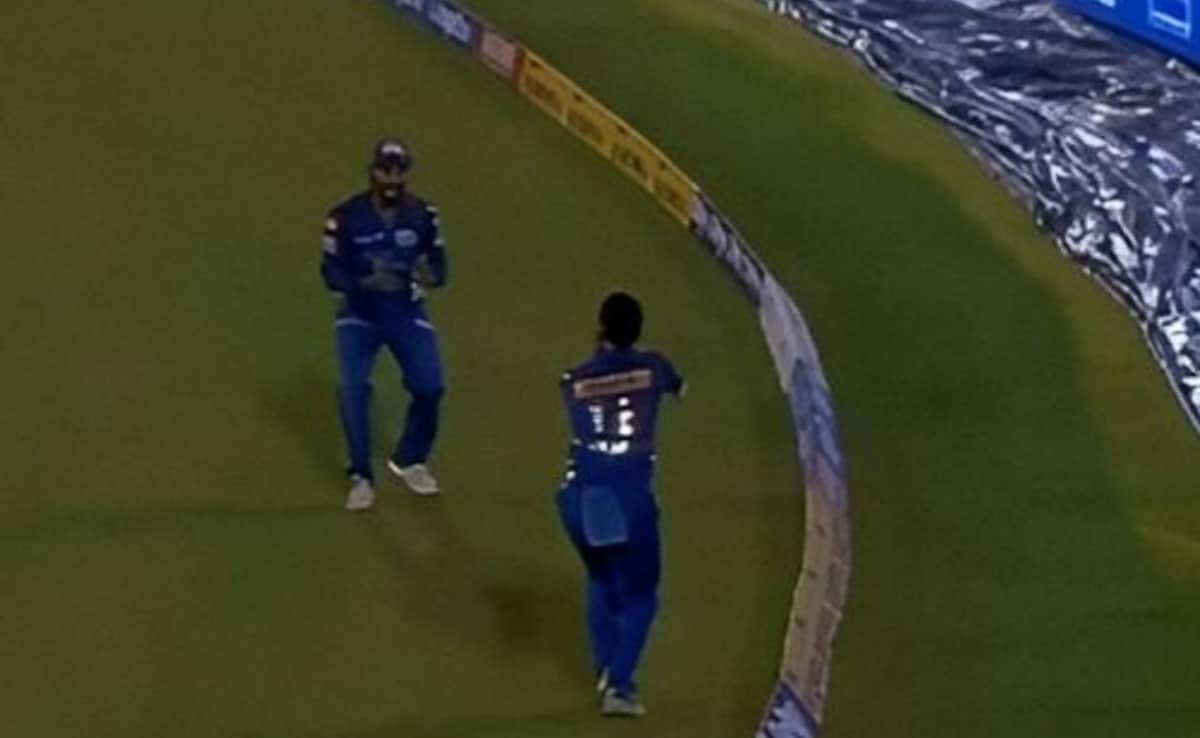
Tilak Varma (L) and Naman Dhir© X (formerly Twitter)
A dropped catch by Tilak Varma and Naman Dhir proved to be extremely costly as Royal Challengers Bengaluru clinched a last-ball thriller against Mumbai Indians in Raipur on Sunday. The incident happened in the 18th over of the match when Krunal Pandya slammed the ball from Allah Ghazanfar towards the long-on boundary. Dhir completed the catch but could not control himself from crossing the boundary. While he was able to throw the ball back into the ground in time, Tilak thought that it was already a six and did not go for the relay catch. It led to an animated chat between the two cricketers and although the batters did not take a run, it proved to be quite costly as Krunal slammed two sixes in the over before his dismissal.
This is where we lost the game, Naman Dhir saved six runs with his fielding and threw back ball to the fielder. Tilak Verma didn’t go for the catch and krunal survived. Krunal Pandya smashed 2 sixes in the same over which costed us the match. This was game changing moment pic.twitter.com/iao1tBjrZC
— JB (@93Yorker) May 10, 2026
Coming to the match, Suryakumar Yadav admitted his side fell short in key moments after their heartbreaking two-wicket defeat to Royal Challengers Bengaluru at the Shaheed Veer Narayan Singh International Stadium on Sunday ended MI’s campaign in the Indian Premier League (IPL) 2026.
Defending 166 on a challenging surface, Mumbai pushed the contest to the final ball before RCB escaped with a dramatic win. Reflecting on the defeat, Suryakumar felt the batting innings lacked the extra cushion required on such a difficult pitch. “I think we were 10-15 runs short. We can say the wrong timing of wickets (while batting). Naman and Tilak batted beautifully and showed character,” he said after the loss.
After early blows from Bhuvneshwar Kumar had reduced Mumbai to 28/3, Tilak Varma and Naman Dhir rebuilt the innings impressively. Naman struck a fluent 47 while Tilak anchored the innings with a composed 57, helping MI recover to 166/7 after a difficult start.
Suryakumar Yadav also reserved special praise for young all-rounder Raj Bawa, who nearly defended 15 runs in a tense final over before RCB sealed victory off the last ball. “I think he had been practising that (death bowling) really well, and he was a completely different all-rounder this year. Almost pulled it off for us,” he said.
(With IANS inputs)
Featured Video Of The Day
IPL 2026 News | Shami’s Sensation Leads Lucknow to First Win of Season
Topics mentioned in this article
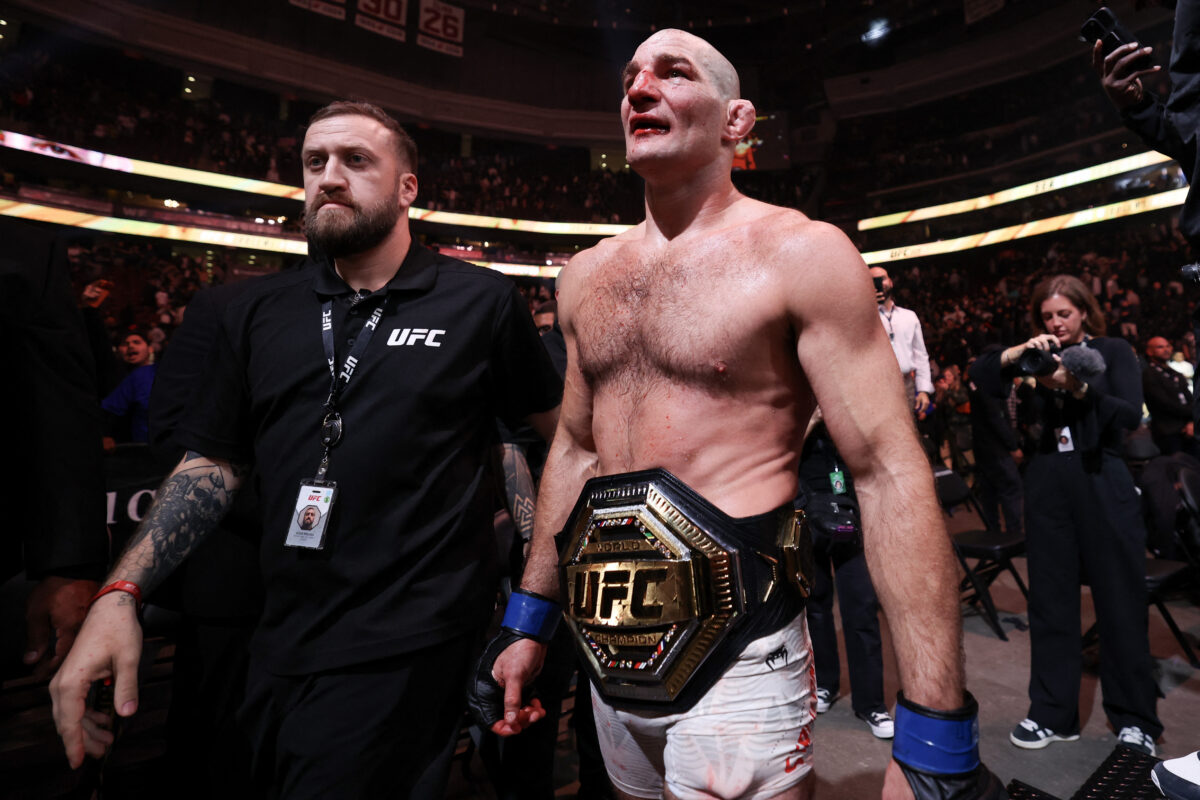

Sean Strickland of the United States exits the ring after his victory via split decision over Khamzat Chimaev of the United Arab Emirates ,not pictured, in a middleweight title bout during UFC 328 at the Prudential Center on May 09, 2026 in Newark, New Jersey. Ishika Samant/Getty Images/AFP
NEWARK, New Jersey — Sean Strickland won UFC’s 185-pound championship for the second time in his career on Saturday night, defeating Khamzat Chimaev via split decision in a bout that never rose to the level of vitriol and threats of violence outside the cage both fighters engaged in ahead of the main event of UFC 328.
Strickland won two scorecards 48-47 while Chimaev took the other scorecard at 48-47 in front of a crowd of 17,783 fans at the Prudential Center.
Article continues after this advertisement
Strickland, the second former middleweight to regain the title, mimed putting the belt around his waist after the fifth round ended to wrap a fight where neither fighter ever seemed in serious danger. He had help with his shiny new fashion accessory when Chimaev did the honors for him inside the cage.
READ: UFC 297: Du Plessis edges Sean Strickland, wins undisputed belt
The moment @SStricklandMMA regained the UFC middleweight title at #UFC328! 🏆 pic.twitter.com/flst5hrnU6
— UFC (@ufc) May 10, 2026
“I should be a better (expletive) example when I try to sell these fights for you fans,” Strickland said.
UFC beefed up security at hotels, public events and around the cage for this one following one of the more loathsome displays — specifically, Strickland — of trash talk in recent fight history. Strickland threatened to shoot Chimaev and labeled him a terrorist because of his ties to Chechen warlord Ramzan Kadyrov.
Article continues after this advertisement
Chimaev, who lost for the first time in 16 pro fights, is of Chechen ethnicity and fights under the United Arab Emirates banner, had countered by saying he would “take off” Strickland’s head.
UFC CEO Dana White — who expressed confidence Conor McGregor would return to fight this summer — said Chimaev told him after the fight he wanted to move up in weight class.
The fighters tapped gloves to start the fight to prove they were professionals and the prefight hostilities never spilled over into the cage.
Article continues after this advertisement
READ: Adesanya stunned by Sean Strickland for middleweight title at UFC 293
The 35-year-old Strickland, who won the 185-pound belt in September 2023 and lost it in his first title defense, apologized after the fight to fans of all ethnicities and acknowledged he “went too (damn) hard” in weaponizing stereotypes to sell the fight.
“I respect all you guys,” Strickland said, rattling off Christians, Muslims, and also races.
Van retains flyweight title in co-main event
Joshua Van mauled Tatsuro Taira into a bloody mess in the co-main and successfully defended his 125-pound championship in the first title fight in company history contested between two Asian fighters.
Van dominated with elite boxing and won via stoppage at 1:32 of round five and had the crowd roaring in his first title defense since he beat Alexandre Pantoja at UFC 323.
Van (17-2) seized control in the second round with a violent right hand to the jaw for the knockdown and he repeatedly bashed Taira (18-2) in the face. Van failed to finish the round but continued to rip shots the rest of the rounds to the face and body that left Taira’s face and chest smeared with blood.
Van and Taira marked the first time UFC has a title fight with both competitors born in the 2000s.
The 24-year-old Van, of Myanmar, has won seven straight fights and 10 of 11 since he signed with UFC — and few bigger than in the co-main event of UFC’s 11th stop in Newark.
Taira failed in his try to become the first Japanese fighter to become UFC champion.
UFC held its last major card before its June 14 show at the White House to fete President Donald Trump, a proud proponent of cage match politics. The show — what White dubbed a “1 of 1 event” — is timed for Trump’s 80th birthday and as part of the nation’s 250th anniversary. Trump, who frequently attends major UFC events, did not attend Saturday night at the Prudential Center.
In other fights of note on the main card, Sean Brady defeated Joaquin Buckley via unanimous decision; King Green chocked out Jeremy Stephens; and Alexander Volkov defeated Waldo Cortes-Acosta via unanimous decision.
White said the company was aware of abnormal betting patterns ahead of the Brady fight but found nothing wrong.
“It’s not surprising when a card is this good, and a fight like that, the line will move,” White said.
Miller win first fight since teenage son beats childhood cancer
On the undercard, 42-year-old Jim Miller used a submission victory to boost his record totals for UFC fights and career victories in his first return to the cage since his teenage son beat a rare form of childhood cancer.
A New Jersey native, Miller defeated Jared Gordon in a lightweight bout at UFC 328 with a rear naked choke at 3:29 of the first round and his family cheering him on from the Prudential Center. Miller extended his record with 28 career wins in 47 fights under the UFC banner.
Miller, who signed a new five-fight deal Saturday, also earned his 20th finish, second most in UFC history.
Wyatt Miller, 14, was diagnosed last year with rhadbomyosacroma, a rare type of cancer that starts as a growth of cells in soft tissue and is more common in childhood. Wyatt underwent two courses of chemotherapy and five weeks of proton radiation at Rutgers University Cancer Institute and was eventually given a clean bill of health.
“My son went through some really difficult times the last couple of months,” Miller said inside the octagon. “He ended up kicking the (heck) out of cancer. He’s all good today. He’s cancer free. One of the things I told him when he first got diagnosed was, Millers have been called a lot of names over the years, but fragile’s never been one of them. He fought his way through it.”
His son’s cancer scare kept Miller out of the cage for 13 months, an eternity for a fighter who made a habit of competing multiple times a year. Miller lost to Chase Hooper in his last fight at UFC 314 in April 2025.
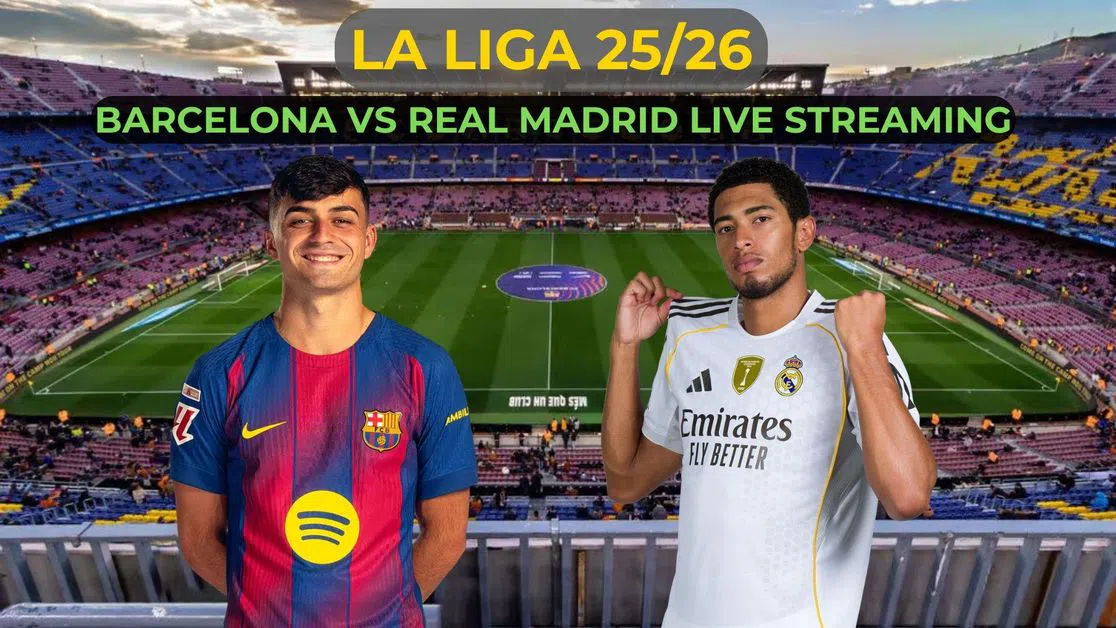
FC Barcelona host arch-rivals Real Madrid CF at Camp Nou on Sunday in a potentially title-deciding El Clasico clash. Barcelona need just one point from the encounter to officially seal the 2025-26 La Liga crown after building an 11-point lead at the top of the table over second-placed Real Madrid.
The Catalan giants have been the dominant force in Spanish football this season, winning 29 of their 34 league matches and arriving into the contest on the back of 10 consecutive La Liga victories. Hansi Flick’s side also defeated Real Madrid 3-2 in the Spanish Super Cup final earlier this year, although Los Blancos had won the reverse league fixture 2-1 at the Bernabeu in October.
In contrast, Real Madrid head into the game surrounded by uncertainty both on and off the pitch. The reported training-ground altercation between Federico Valverde and Aurelien Tchouameni has added to tensions within the squad, while questions continue to surround the dressing-room atmosphere and the club’s future direction.
Despite their struggles, Madrid remain dangerous and will be desperate to delay Barcelona’s title celebrations. Carlo Ancelotti’s side recently defeated Espanyol 2-0 and have taken seven points from their last three league games. However, another defeat in El Clasico would effectively confirm Barcelona as champions and cap off a disappointing domestic campaign for Los Blancos.
|
El Clasico broadcast details |
|
|
Region/Country |
Broadcaster / Streaming Platform |
|
Spain |
DAZN |
|
Portugal |
DAZN |
|
Germany |
DAZN |
|
Italy |
DAZN |
|
Austria |
DAZN |
|
Belgium |
DAZN |
|
United Kingdom & Ireland |
Disney+ |
|
France |
beIN Sports |
|
Poland |
Eleven Sports, Canal+ |
|
United States |
ESPN, ESPN App, ESPN+ |
|
Mexico |
Canal 5, Sky Mexico, Izzi |
|
Latin America |
Disney+, ESPN |
|
Brazil |
ESPN, Disney+ |
|
Nigeria |
SuperSport |
|
South Africa |
SuperSport |
|
French-speaking African countries |
Canal+ Sport |
|
MENA Region |
beIN Sports |
|
Thailand |
beIN Sports |
|
Singapore |
beIN Sports |
|
Indonesia |
beIN Sports |
|
India |
FanCode |
|
Pakistan |
Begin |
|
China |
MIGU, CCTV, iQiyi, Leisu |
La Liga: Barcelona vs Real Madrid live telecast and streaming details
When will the La Liga 25/26 match between FC Barcelona and Real Madrid CF be played?
The La Liga 25/26 match between Barcelona and Real Madrid will be played on May 11 (according to IST).
What time will the La Liga 25/26 match between Barcelona and Real Madrid begin on May 11?
The La Liga 25/26 match between Barcelona and Real Madrid will start at 12:30 am IST (May 11).
What will be the venue for the La Liga 25/26 match between Barcelona and Real Madrid?
Camp Nou will host the La Liga 25/26 match between Barcelona and Real Madrid.
Where will the live telecast of the La Liga 25/26 match between Barcelona and Real Madrid be available in India?
The live telecast of the La Liga 25/26 match between Barcelona and Real Madrid will not be available in India.
Where will the live streaming of the La Liga 25/26 match between Barcelona and Real Madrid be available in India?
The live streaming of the La Liga 25/26 match between Barcelona and Real Madrid will be available on the FanCode app and website.
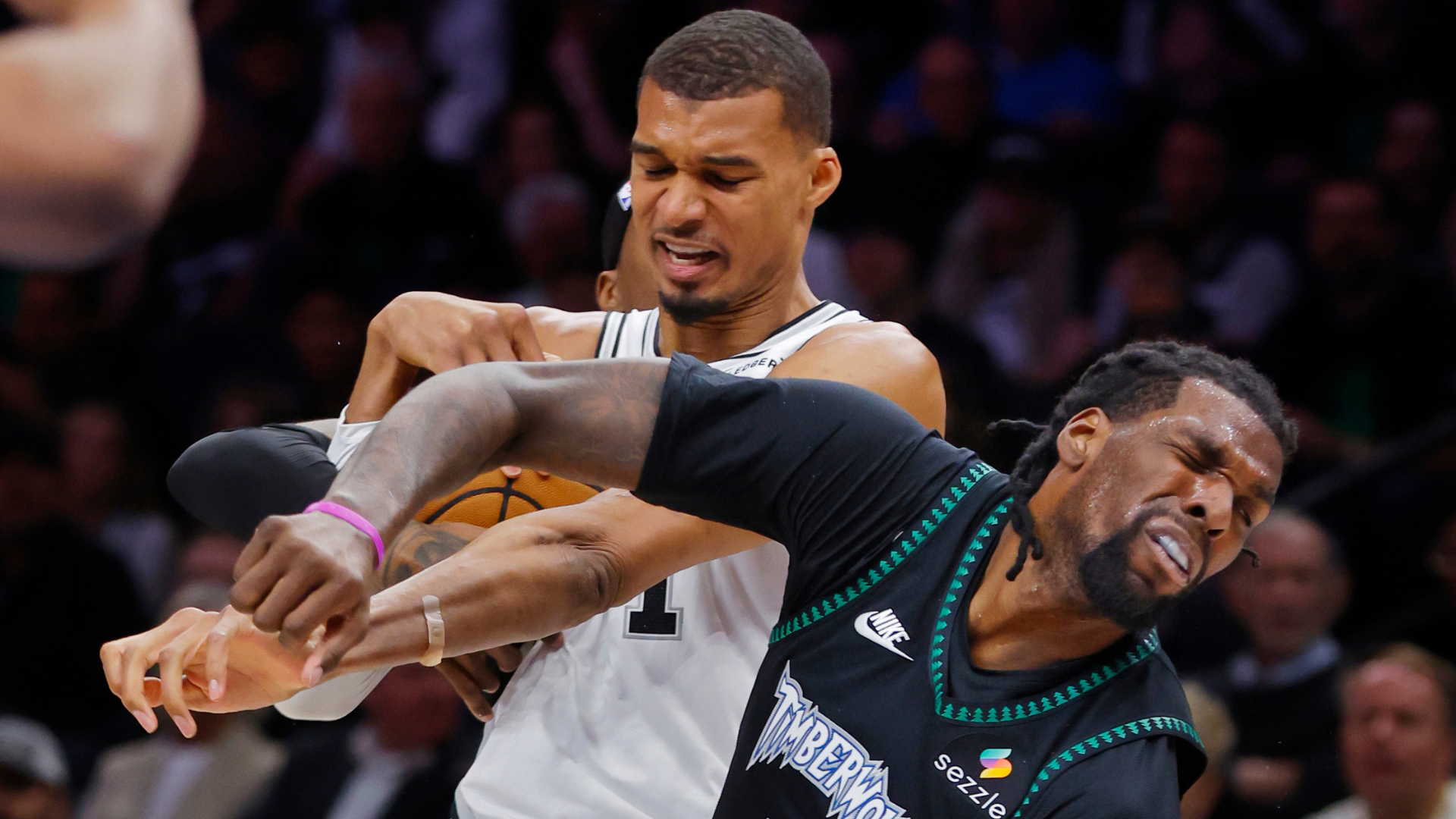
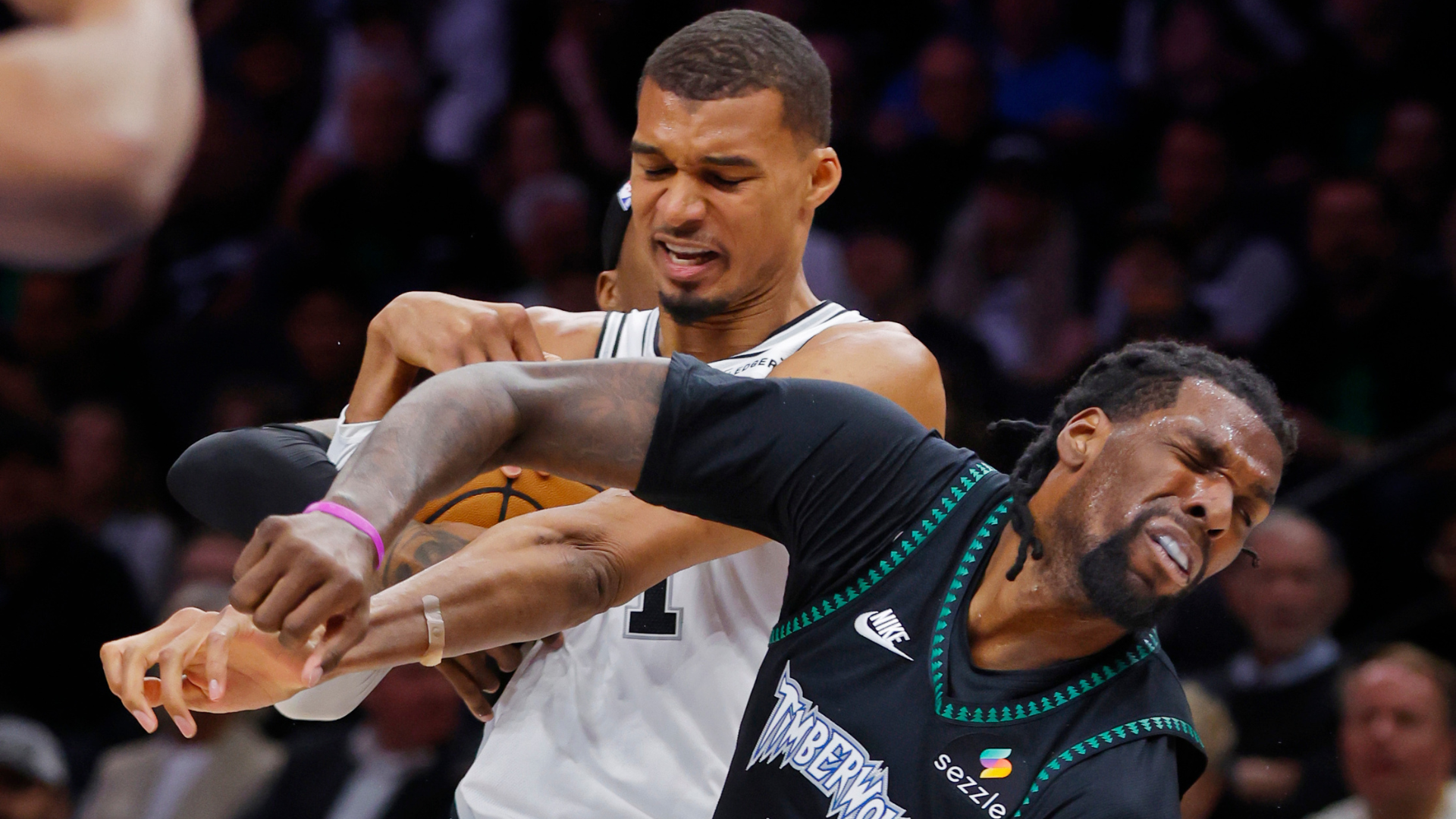
Spurs star Victor Wembanyama was ejected from Game 4 against the Timberwolves on Sunday for elbowing Naz Reid. The incident happened early in the second quarter after Wembanyama reached over the top of Reid for a rebound.
As Reid aggressively boxed Wembanyama out, the Spurs center got tangled up with Mike Conley and Jaden McDaniels. Wembanyama then threw a clear elbow that connected squarely with Reid’s chin. After review, the referees assessed Wembanyama a Flagrant 2 foul, and he was ejected from the game. Take a look:
This was the first ejection of Wembanyama’s career, and it cost the Spurs dearly as Minnesota wound up winning the game, 114-109, to even the series 2-2 ahead of Game 5 on Tuesday in San Antonio.
Will Wembanyama be a part of that game? We’ll see. The league could suspend him. It was a pretty vicious elbow on Reid. It’s hard to imagine the league making a ruling like that for such a marquee player in such a pivotal playoff game, but on the action alone, it wouldn’t be unwarranted.
The ejection already was, in fact, the earliest an All-Star player has been ejected from a playoff game since at least 1997.
The elbow that Wembanyama threw didn’t occur in a vacuum. He’s been clearly frustrated by the level of physicality that has been applied to him in these playoffs and the lack of calls he has gotten as a result. Through the first two games of the series, he only went to the free-throw line a combined five times, but it should be noted that over 50% of his attempts in those games were from beyond the 3-point line.
Once Wembanyama started attacking inside in Game 3, he went to the line 12 times. That’s not to say he hasn’t been getting a tough whistle. Big guys almost always get hit more than they get rewarded for by the refs.
Spurs coach calls out how Wemby is officiated
Listening to Spurs coach Mitch Johnson following Game 4, it sounds like Wembanyama’s reaction on Sunday was, at least in part, one of frustration over the way Minnesota has gotten away with getting physical with him and the Spurs as a whole in this series.
“In general, I do think it’s getting to the point that if the people that are in charge of controlling the game, and protecting the physicality of the game, don’t do that, then at some point [Wembanyama] is going to have to protect himself. We’ve been asking him to do that for a while.
“So, that call with Naz Reid was OK, and it sounded like the call was warranted,” Johnson continued, “but in terms of the game plan of every single team we’ve faced since [Wembanyama] has been in the league and the physicality that people try to impose on him, and the lack of protection, is really disappointing. At some level, it’s starting to get actually disgusting.
“… I’m glad he took matters into his own hands,” Johnson concluded. “Not in terms of hitting Naz Reid. I want to be very clear about that. I didn’t want him to elbow [Reid]. But he’s going to have to protect himself if [the officials are not going to]. And I think it’s disgusting.”
So here we go with the all-too-familiar “coach thinks his star player gets a terrible whistle” rant. JJ Redick said after the Lakers’ Game 2 loss to the Thunder that LeBron James gets “the worst whistle of any star player I’ve ever seen.” Go talk to Warriors fans about the way Stephen Curry gets mauled off the ball without getting very many calls, or Nuggets fans about Nikola Jokić’s whistle. Jaylen Brown believes he’s under a personal attack by the refs.
In other words, nothing new here. Wemby is going to face physical defense for the rest of his career because the only chance opponents have to even marginally disrupt a human skyscraper. He’ll probably never get the benefit of the type of whistle he or his coaches and teammates believe he should.
But right now, Johnson is just hoping to have some influence over the way Wemby is officiated for the rest of this series, and if you’re a Spurs fan, hopefully beyond. Frankly, he’s most concerned with making this sound as justifiable as possible to avoid Wemby getting suspended for Game 5.
“There was no intent,” Johnson said when asked about the possibility of a suspension. “… I think it would be ridiculous.”
But the fact is, even if Wemby plays in Game 5 and beyond, this series is an official dogfight. The Wolves are way tougher than most anyone gave them credit for entering these playoffs. Even the loss of Donte DiVincenzo hasn’t altered their high-pressure, defensive, no-back-down identity. They won Game 1 of this series even though Anthony Edwards didn’t start and was on a minutes restriction and Ayo Dosunmu didn’t play.
The Spurs, who managed to beat Portland in Game 3 of their first-round series while Wemby was out with a concussion, were in a solid position to steal Game 4 even after Wembanyama went out. They led by eight in the fourth quarter, but the Wolves outscored them 28-15 over the final 8:51. They may end up regretting not closing this one out.

Crypto World3 seconds ago
Australia Proposes CGT Change for Crypto, Raising Compliance Risk

Politics3 minutes ago
Establishment media are STILL trying to have a go at Zack Polanski
Tech4 minutes ago
How AI Is reshaping cross-border accounting & financial advisory

NewsBeat2 months ago
Manchester United reach agreement with Casemiro over contract clause amid transfer speculation

Politics1 month ago
US brings back mandatory military draft registration

NewsBeat1 month ago
Steven Gerrard disagrees with Gary Neville over ‘shock’ Chelsea and Arsenal claim | Football


-
 Crypto World3 days ago
HarrisX Poll Found 52% of Registered Voters Support the CLARITY Act
-

 Crypto World4 days ago
Upbit adds B3 Korean won pair as Base token gains Korea access
-

 Fashion3 days ago
Weekend Open Thread: Marianne Dress
-

 Tech7 days ago
Image AI models now drive app growth, beating chatbot upgrades
-
 NewsBeat4 days ago
NCP car park operator enters administration putting 340 UK sites at risk of closure
-

 Politics2 days ago
Politics Home Article | Starmer Enters The Danger Zone
-
 Business2 days ago
Ignore market noise, India’s long-term story intact, say D-Street bulls Ramesh Damani and Sunil Singhania
-
 Sports7 days ago
2026 NHL playoff picks: Second-round predictions, series odds, Stanley Cup bracket
-

 Crypto World6 days ago
UAE Free Zone Deploys Blockchain IDs to Verify Registered Firms
-

 Tech2 hours ago
GM Agrees To Pay $12.75 Million To Settle California Lawsuit Over Misuse Of Customers’ Driving Data
-

 Crypto World5 days ago
BlackRock CEO Larry Fink Discusses a New Asset Class
-

 Crypto World4 days ago
Robinhood says Wall Street is building onchain
-

 Tech1 day ago
Auto Enthusiast Carves Functional Two-Stroke Engine from Solid Metal
-
Entertainment6 days ago
Serena Williams hits Met Gala in metallic dress after GLP-1 reveal
-

 Tech5 days ago
Apple and Samsung are dominating smartphone sales so thoroughly that only one other company makes the top 10
-
 Entertainment7 days ago
Skai Jackson Responds To AI Baklash After Viral Snapchat Photos
-

 Politics6 days ago
Met Gala 2026: Madonna’s Dramatic Red Carpet Look Steals The Show
-

 Fashion4 days ago
The Best Work Pants for Women in 2026
-
 Sports7 days ago
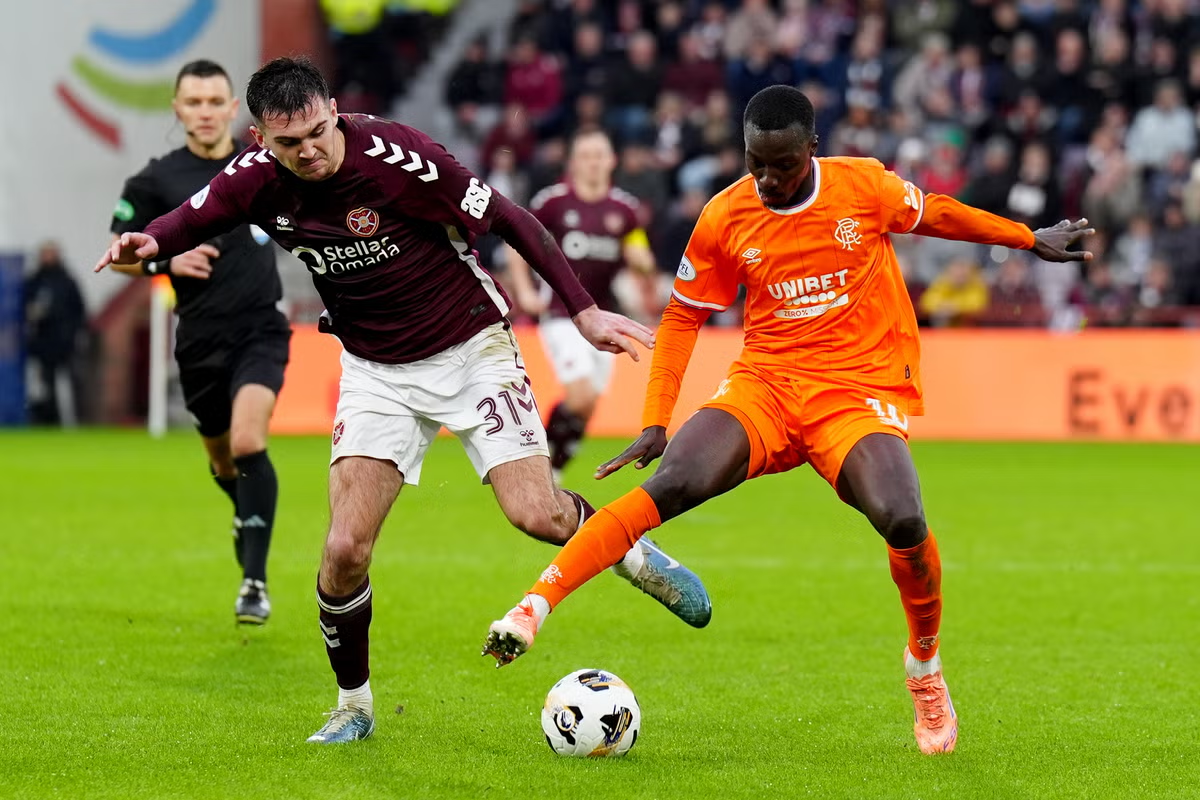
Hearts v Rangers LIVE: Prediction, team news and line-ups as Scottish Premiership title rivals meet at Tynecastle
-

 Tech5 days ago
I tested the Xiaomi 17 Ultra’s camera and I don’t think I’ll ever go back to an iPhone
You must be logged in to post a comment Login